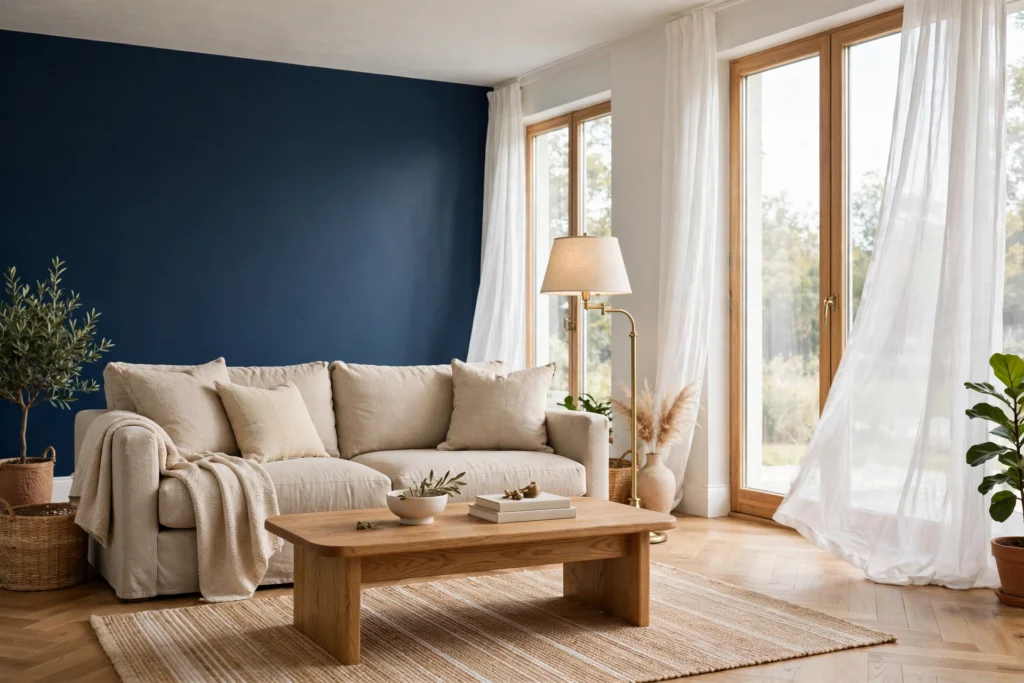

A single bold wall can do what a roomful of accessories cannot. The right living room accent wall ideas give your space a focal point, add depth, and set the mood — all without repainting the entire room or replacing your furniture.
Below are fifteen living room accent wall ideas with real impact, from one-afternoon paint projects to statement millwork. Each one is practical, renter-aware where it matters, and easy to picture in an actual home.
1. Deep Navy Painted Wall
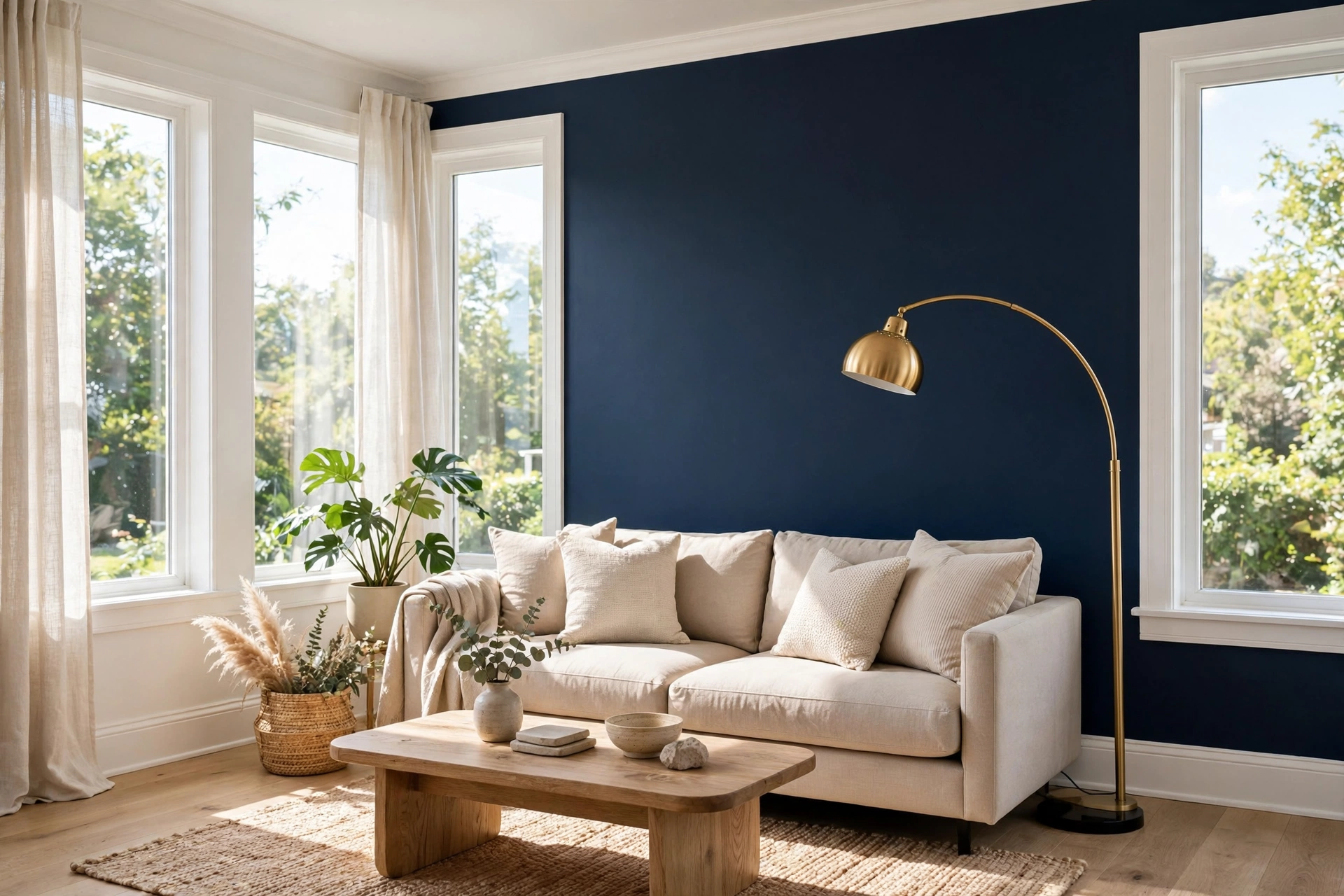
Paint the wall behind your sofa a deep, inky navy and watch the whole room change. Dark blue paint makes white trim pop, lets warm wood tones glow, and turns a flat-screen TV into something that nearly disappears against the wall. Choose a paint with a slight green or gray undertone to keep it from reading purple under warm lamplight.
Prep matters more than the paint itself. Fill nail holes, sand lightly, and use a tinted primer so the dark color covers in two coats instead of four. For more moody inspiration, see our 15 moody living room design ideas full of dark drama. Pair navy with brass accents, and keep the other walls warm white.
2. Board and Batten in a Soft Neutral
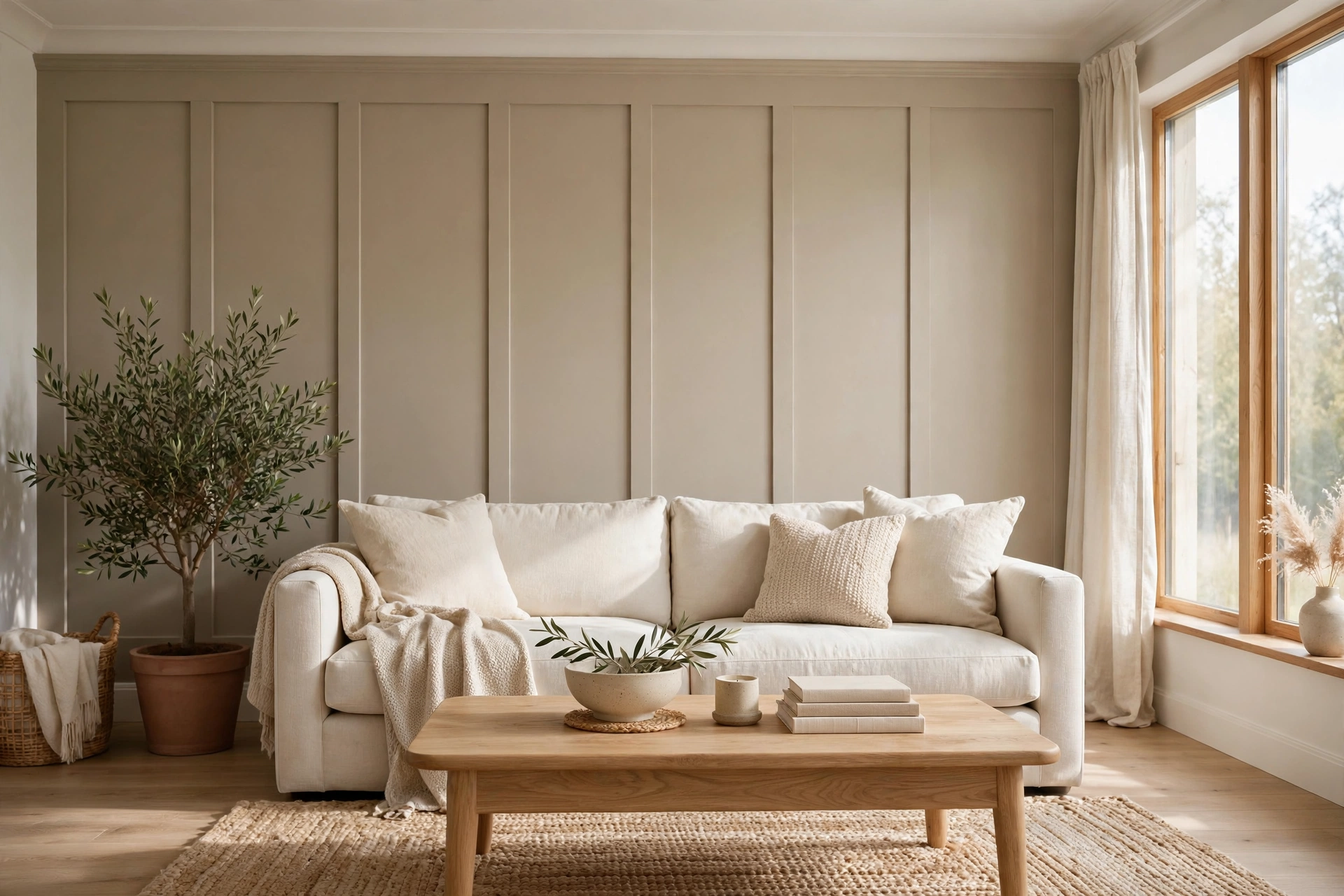
Board and batten gives you architecture where there was none, and it is one of the most forgiving DIY projects in home decorating. Attach narrow trim boards in a simple grid or vertical pattern on the focal wall, caulk every seam, and paint the whole thing one soft neutral like warm greige or creamy white. The result reads custom and calm rather than busy.
The Spruce’s wainscoting guide shows how many styles work in both traditional and modern rooms. This treatment suits cottage, farmhouse, and transitional living rooms especially well, and it hides imperfect drywall beautifully.
3. Horizontal Shiplap for Coastal Calm
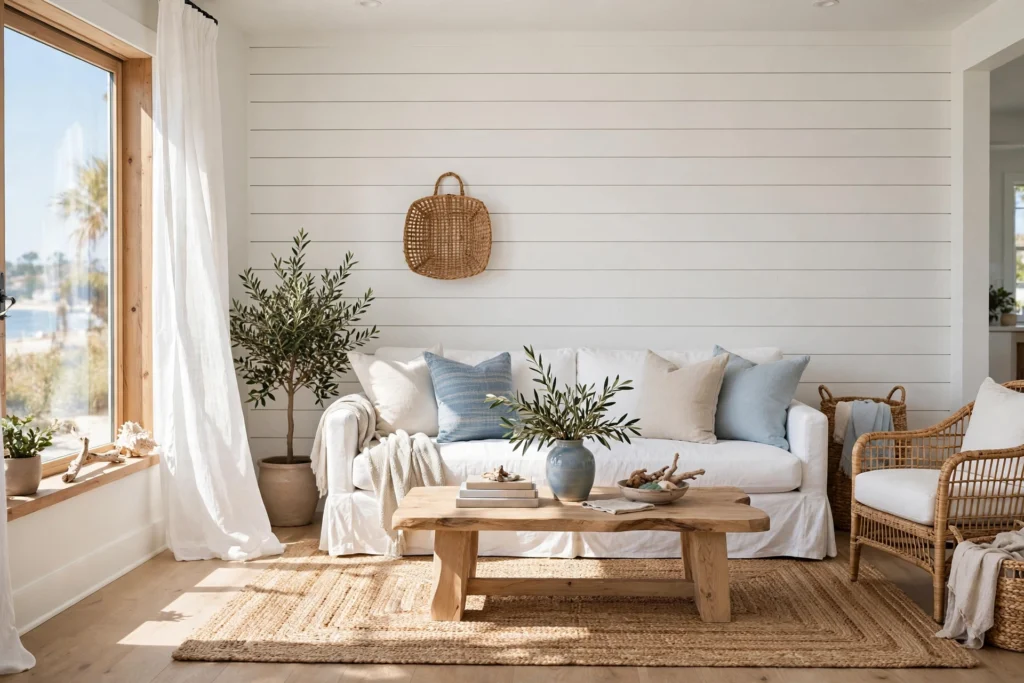
Shiplap instantly signals a relaxed, breezy room, and it is especially good at making low ceilings feel taller when run horizontally. Use real tongue-and-groove boards or a paintable MDF version, and finish it in a warm white or pale blue-gray. Leave a tiny gap between boards for that classic shadow line — caulked-shut shiplap just looks like drywall.
Behind a sofa or flanking a fireplace, shiplap adds texture without competing with your art or rug. Keep the board width consistent (about six inches is the sweet spot) and paint with a satin finish so the wall wipes clean easily.
4. Bold Botanical Wallpaper
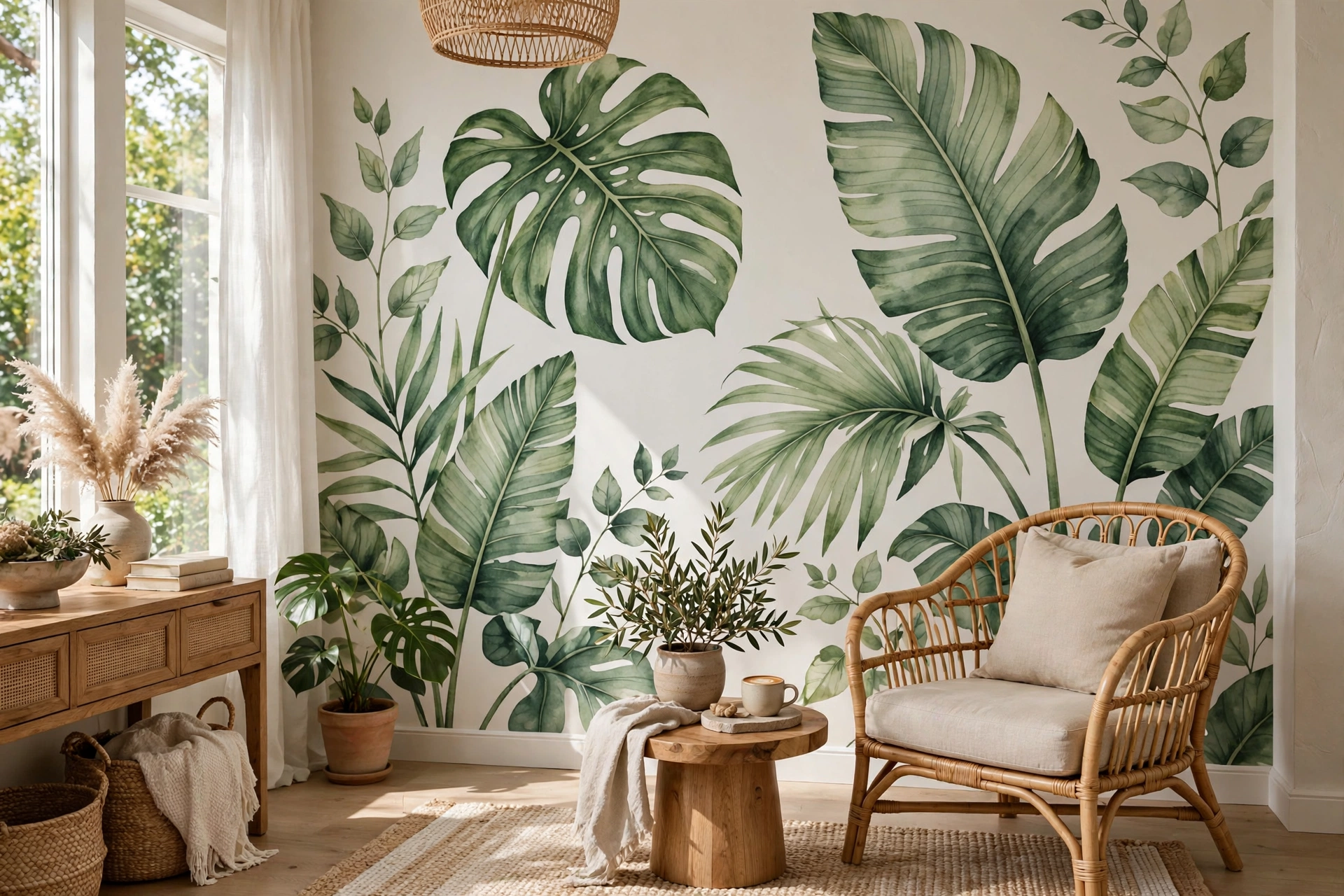
One wall of large-scale botanical wallpaper brings in pattern, color, and a sense of the outdoors in a single step. Choose a print with a light background and oversized leaves or florals so it feels airy rather than heavy, and hang it on the wall you face most often — behind the television console or opposite the main seating.
Measure carefully and order ten percent more paper than you need; pattern repeats waste more than beginners expect. Peel-and-stick versions make this renter-friendly. For a free-spirited take, see our 15 boho living room design ideas full of free-spirited charm. Pull two colors from the print for your throw pillows.
5. Vertical Wood Slat Panels
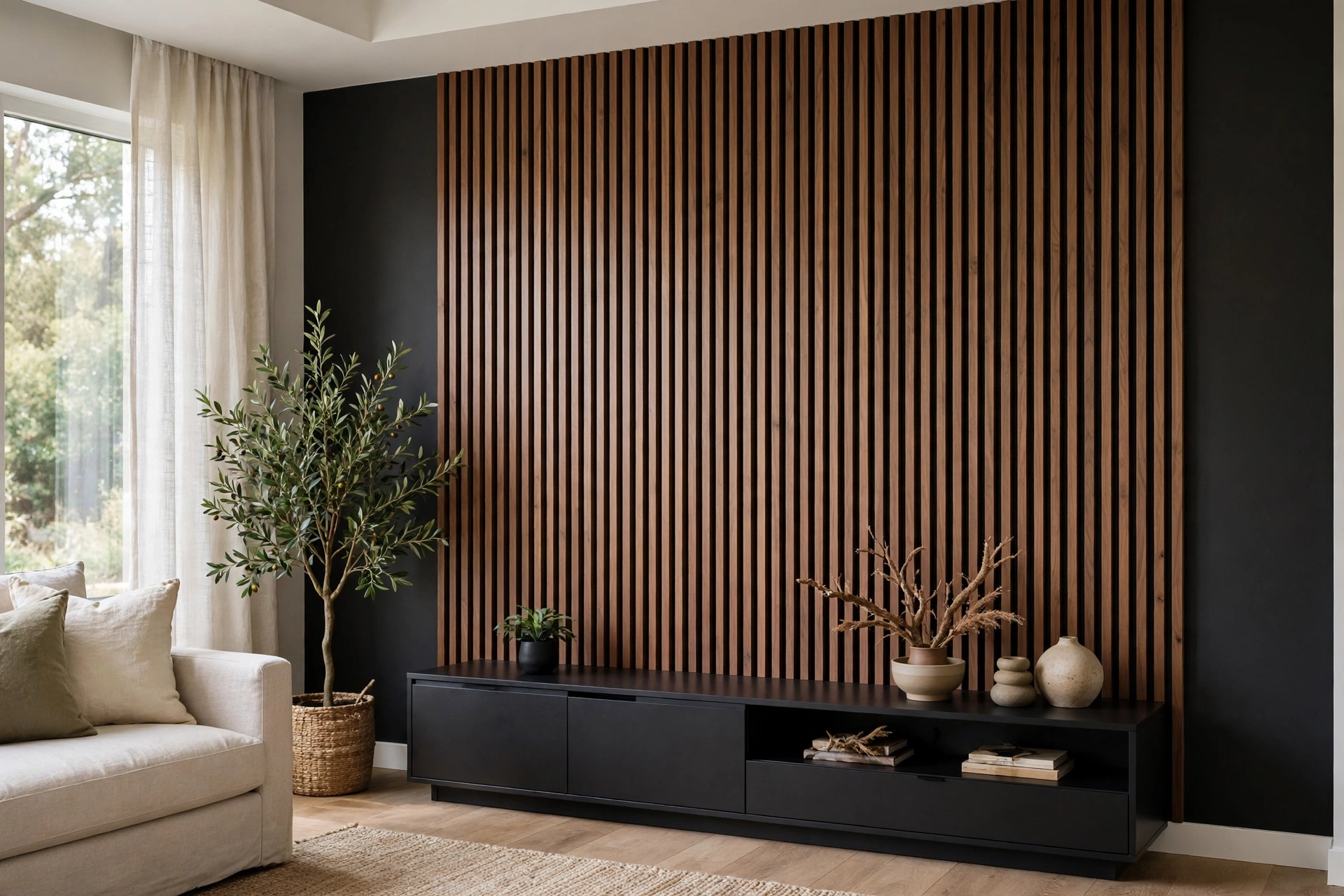
Wood slat walls add warmth and rhythm, and they are having a major moment in modern living rooms. Thin vertical battens in white oak or walnut, spaced evenly over a dark-painted base, create a textured backdrop that feels expensive but is mostly just lumber and patience. A fireplace wall or the wall behind a media console is the natural spot.
Stain or paint your slats before installation — finishing them on the wall is far harder. The Spruce’s wood slat roundup shows how different stains shift the mood from Scandinavian-pale to richly mid-century. Keep slat spacing tight (half an inch or less) so the dark base reads as shadow, not stripes.
6. Limewash for Soft Old-World Texture
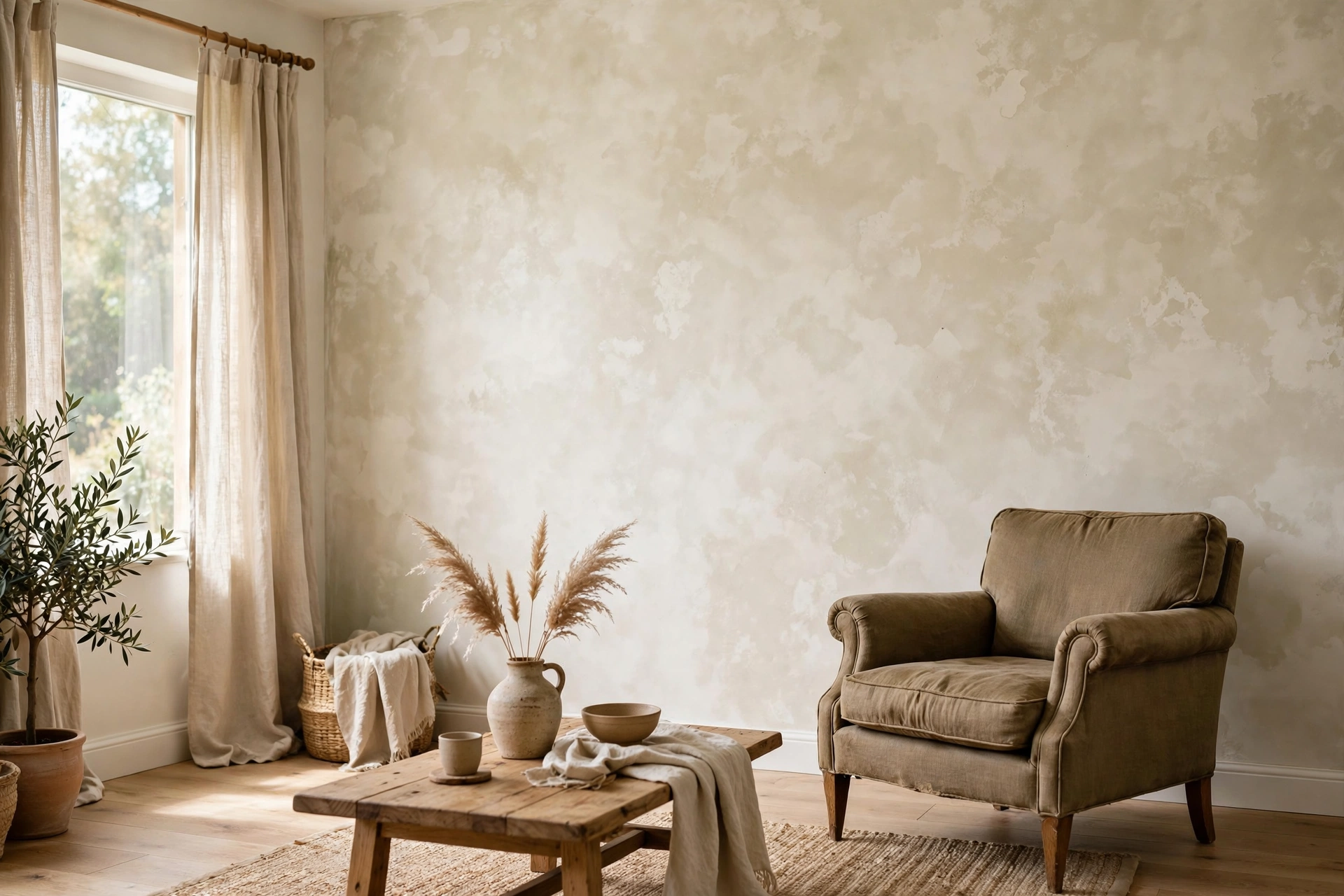
Limewash paint gives flat drywall the cloudy, movement-filled finish of old plaster, and it is far more forgiving than a mural. Brush it on in loose crisscross strokes over a mineral primer, working in three-foot sections, and let the mottled texture be the point. Warm whites, clay pinks, and soft sages all look stunning in limewash.
It works best on walls with natural light, which brings out the variation. One caution: true limewash is not wipeable like latex, so skip it behind the snack table if you have small children. For a dressier take on old-world texture, see our 15 art deco living room design ideas full of glamour.
7. Classic Picture-Frame Molding
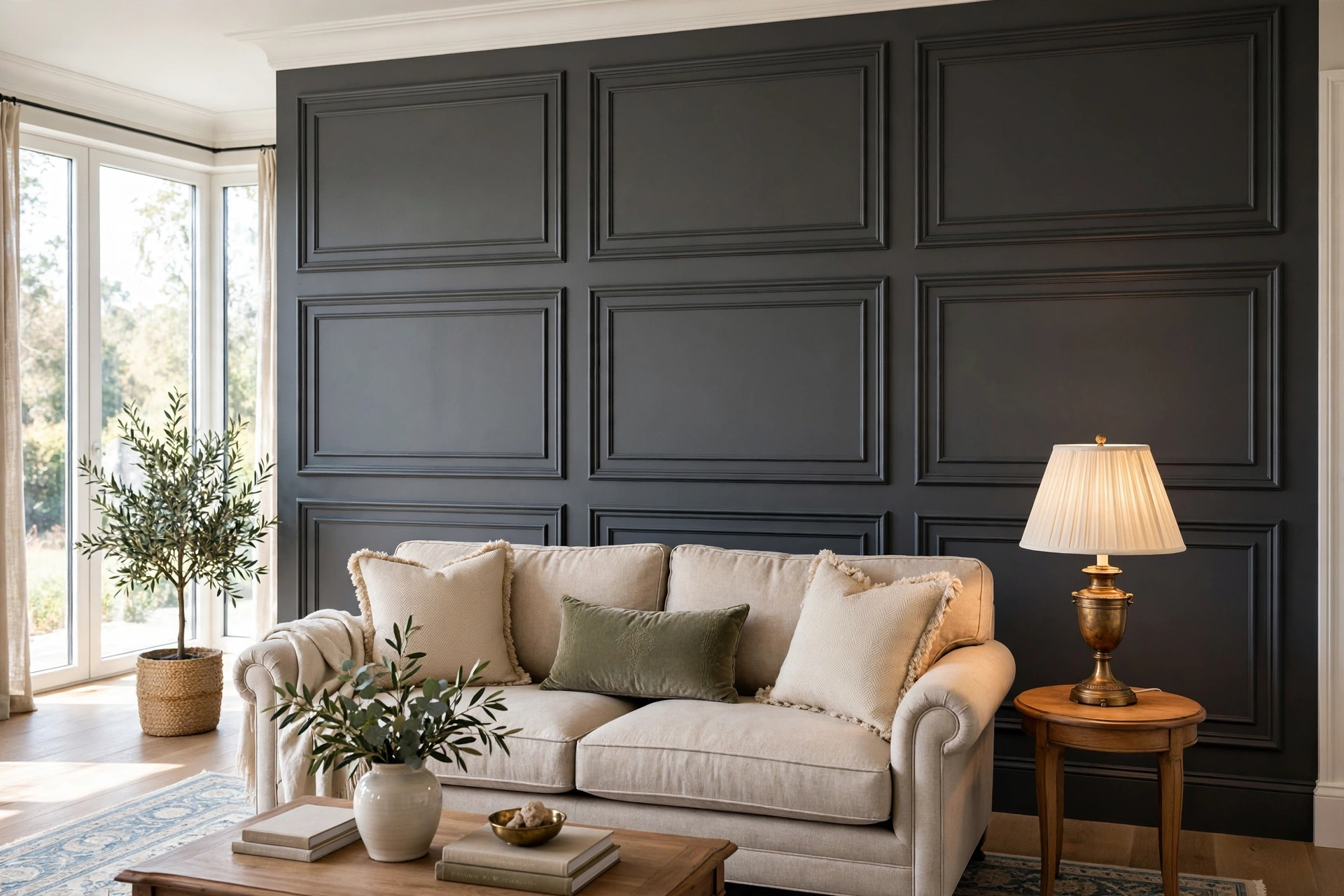
Applied molding — thin trim arranged in rectangles directly on the wall — is the cheapest way to make a builder-grade living room look historic. Paint the wall and the molding the same deep color (charcoal, forest green, or classic navy) for a dramatic library feel, or keep everything white for quiet elegance that photographs beautifully.
Plan your rectangle sizes on paper first, aiming for symmetrical panels centered on the wall, and use a laser level while you install. This is a weekend project that costs less than a hundred dollars in trim and pairs especially well with traditional sofas and vintage rugs.
8. Exposed Brick, Real or Faux
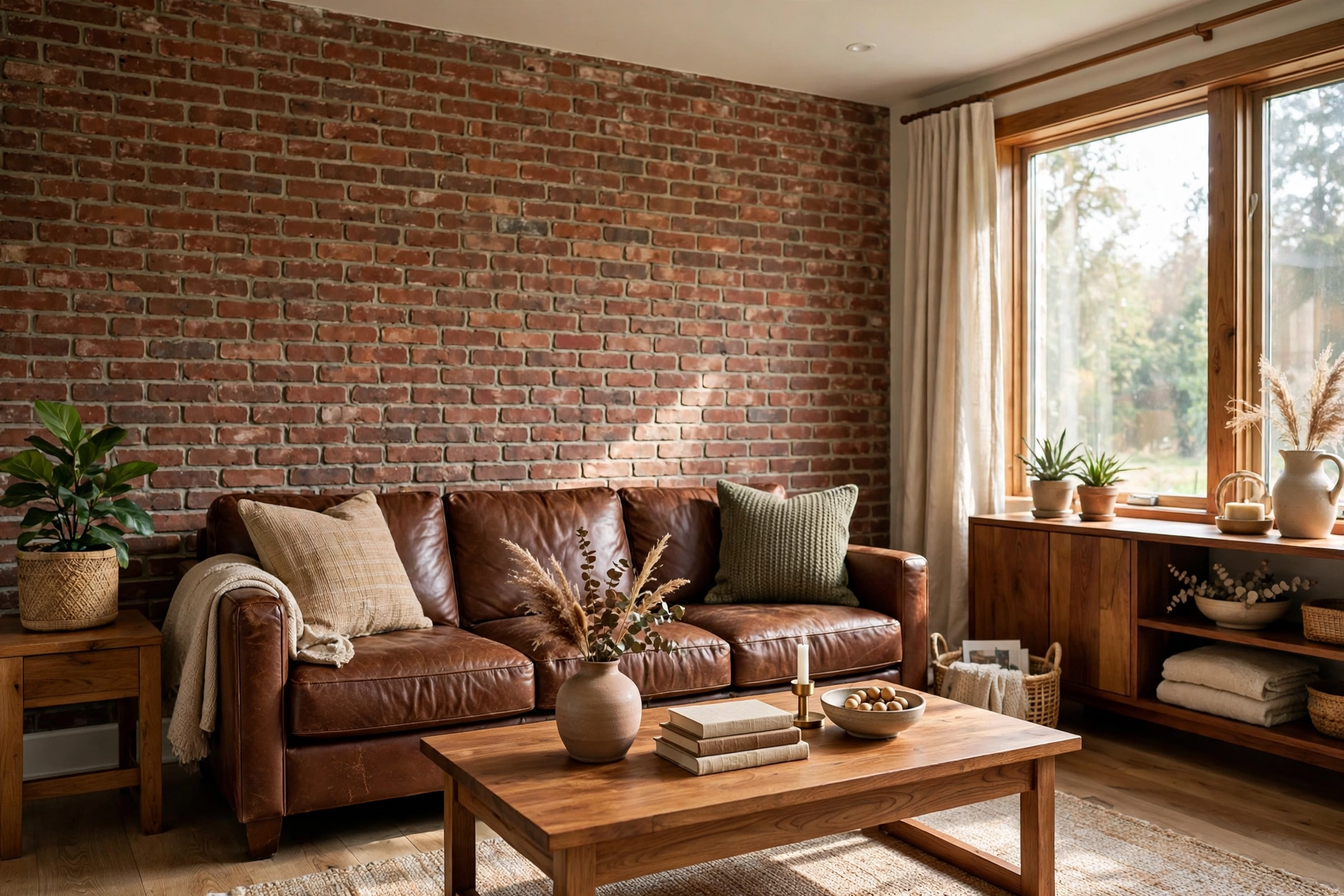
Nothing anchors a living room like brick. If you are lucky enough to have real brick under the drywall, expose it carefully and seal it with a matte brick sealer. If not, thin brick veneer tiles give you the same look at a fraction of the demolition cost.
Style brick walls with leather, wood, and warm metals rather than more red tones, which can make the room feel heavy. Whitewashed or German-schmear brick is a good compromise if full red brick feels too rustic. Keep the mortar lines slightly irregular; perfectly uniform veneer is what gives away the fake.
9. A Curated Gallery Wall
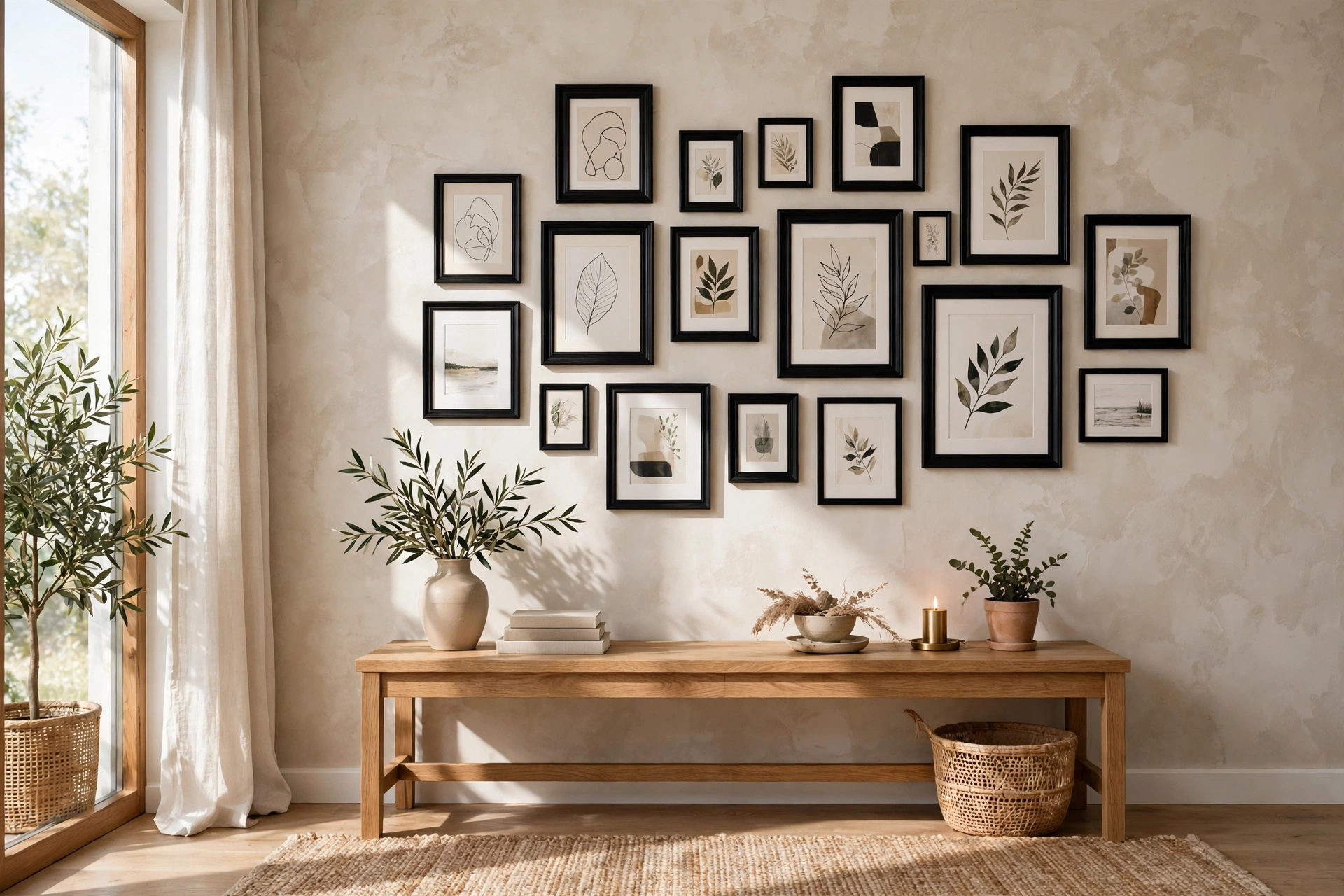
A gallery wall is the most personal accent wall of all, and the trick is planning before hammering. Lay your frames on the floor first, snap a photo, and adjust until the arrangement feels balanced — mix frame sizes and a few non-frame objects like a small mirror or woven basket for depth. Hang the center of the arrangement at about fifty-seven inches from the floor.
Gallery walls work beautifully above a low console or flanking a fireplace, and they are the easiest accent wall to evolve — swap one piece and the whole wall feels new.
10. Two-Tone Color Blocking
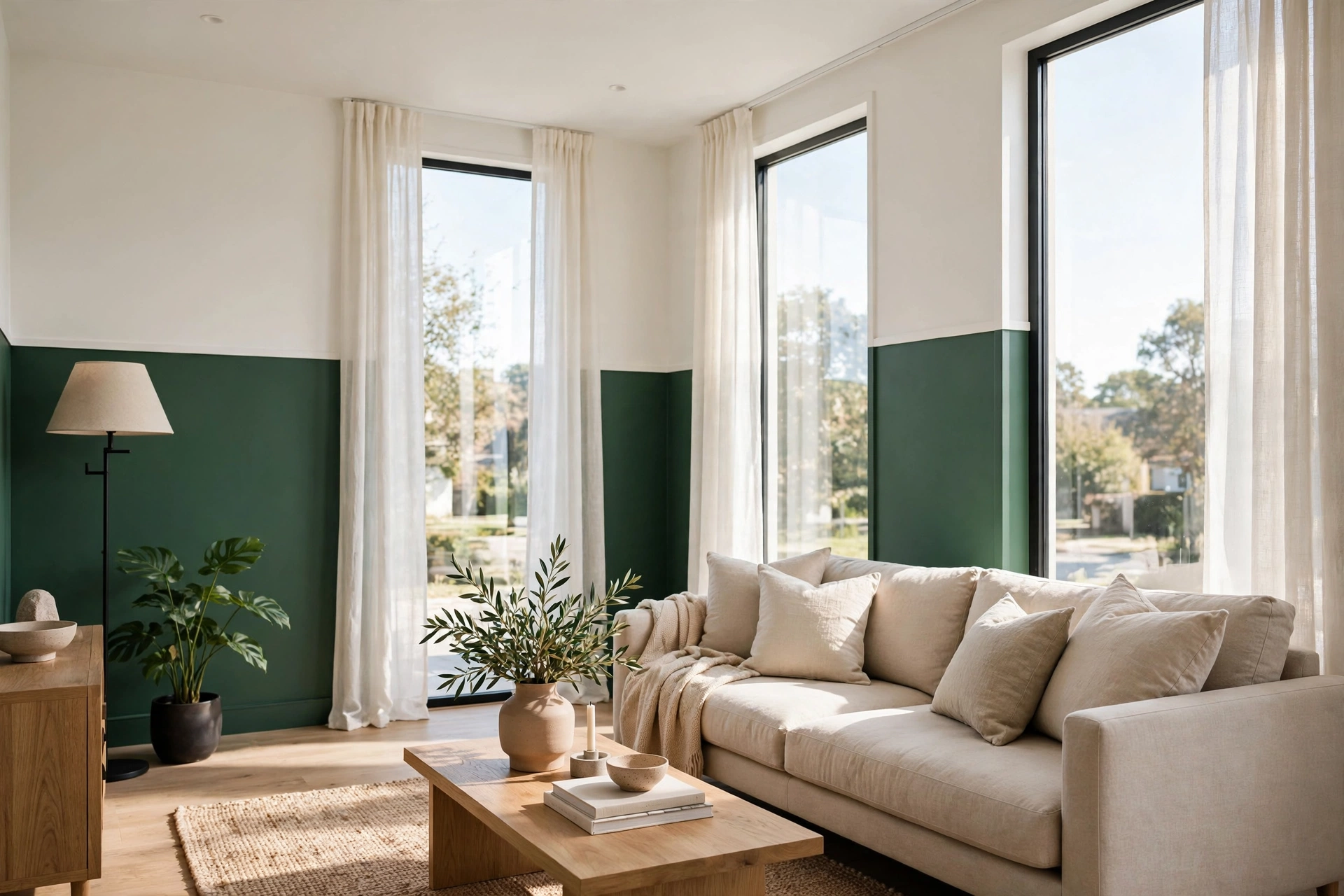
Paint the lower two-thirds of a wall one color and the upper third another, or split the wall vertically to frame a seating area. Color blocking is bold but cheap, and it lets you use a dramatic color without committing to a full dark wall. A crisp horizontal line at chair-rail height reads classic; an off-center vertical block feels modern and graphic.
Use painter’s tape and a level, and seal the tape edge with the base color first so the second color cannot bleed underneath.
11. Grasscloth for Natural Texture
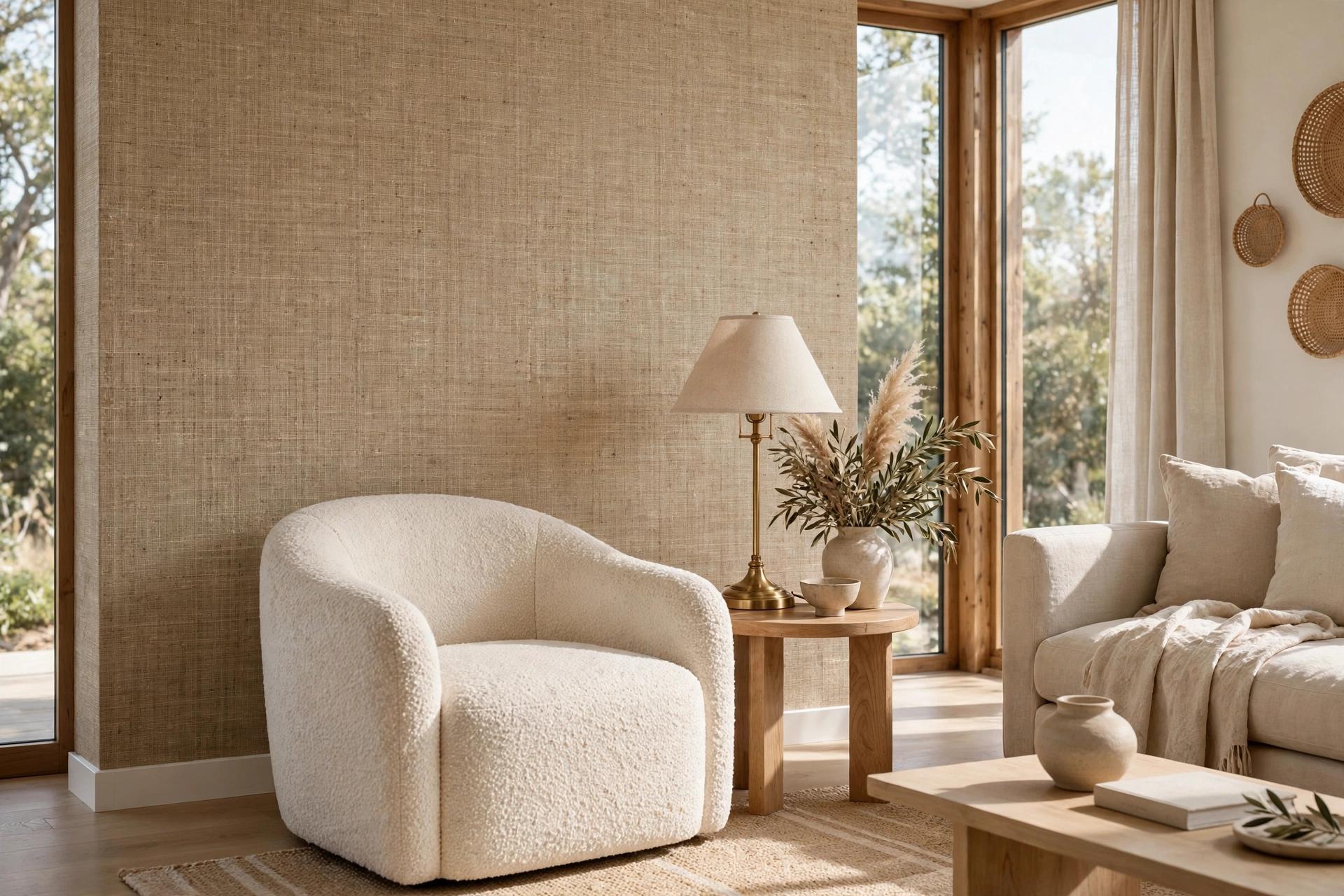
Grasscloth wallpaper adds a woven, organic texture that paint simply cannot match, and it works in every style from coastal to contemporary. Choose a natural or pale tone for subtlety, or a saturated color like teal or charcoal for drama. The seams are part of the look — embrace the panels rather than fighting them.
Grasscloth is not scrubbable, so keep it behind the sofa rather than in high-traffic spots. It also absorbs sound slightly, which makes a large, echoey living room feel calmer. Order all your rolls from the same dye lot, because natural fibers vary between batches.
12. A Painted Arch Behind the Sofa
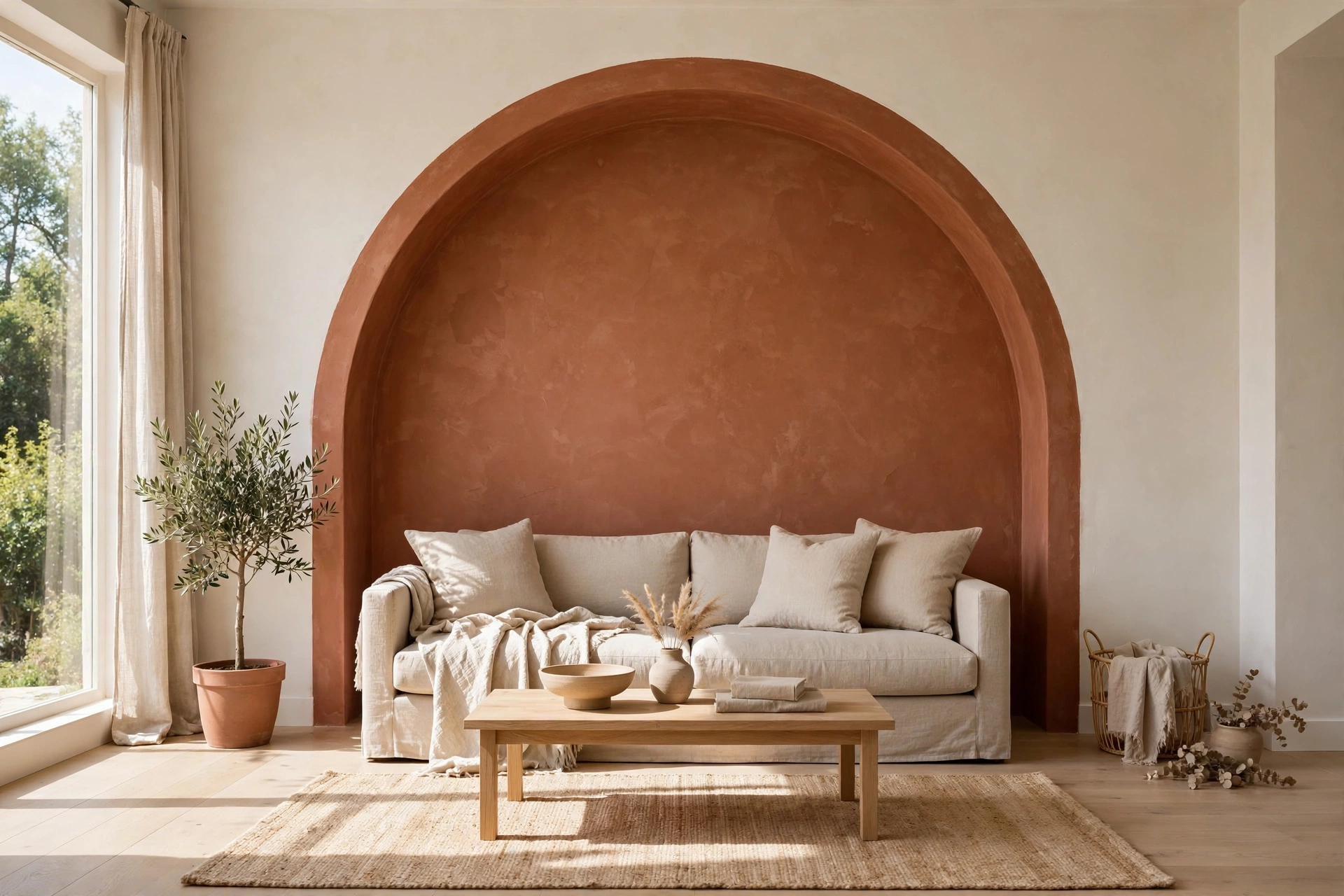
Painted arches are the friendliest way to try a bold accent wall. Paint a large arch shape in a warm terracotta, olive, or dusty rose on the wall behind your sofa, letting it frame the seating area like a doorway to nowhere. It adds architecture, color, and whimsy in about two hours with a quart of paint.
Draw the arch with a pencil tied to a string for a perfect curve, and step back frequently to check proportions — the arch should be roughly as wide as your sofa plus a foot on each side.
13. Tile Behind the Fireplace
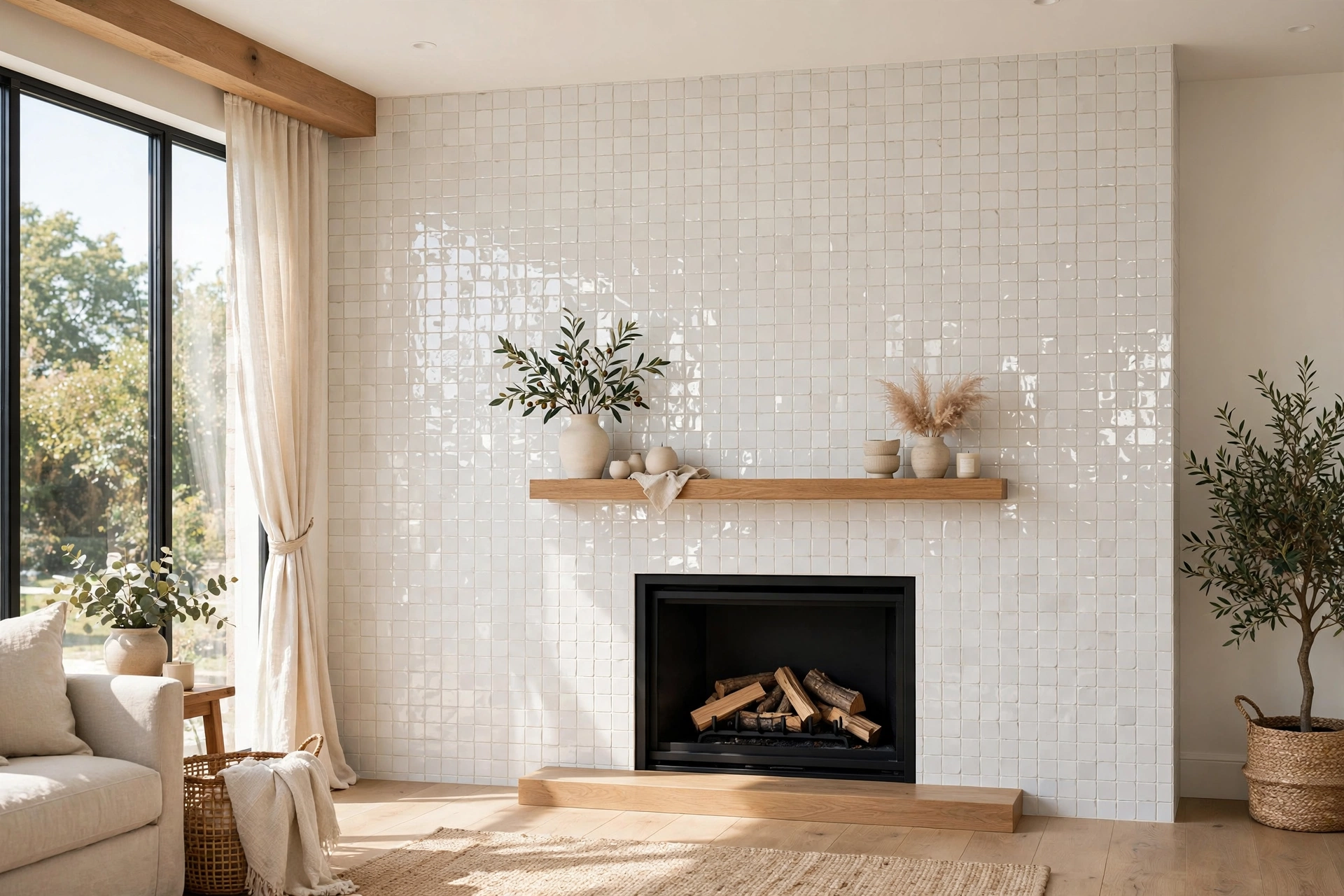
Take tile beyond the firebox and run it floor to ceiling for a fireplace accent wall with serious presence. Large-format handmade-look tiles in a soft white or pale green give a high-end feel, while zellige tiles add shimmer and variation that flat subway tile cannot. Extend the tile to the full width of the chimney breast for the most dramatic effect.
Use a grout color close to the tile color so the surface reads as one continuous plane rather than a grid. Pair it with simple mantel styling so the tile stays the star.
14. Upholstered Wall Panels
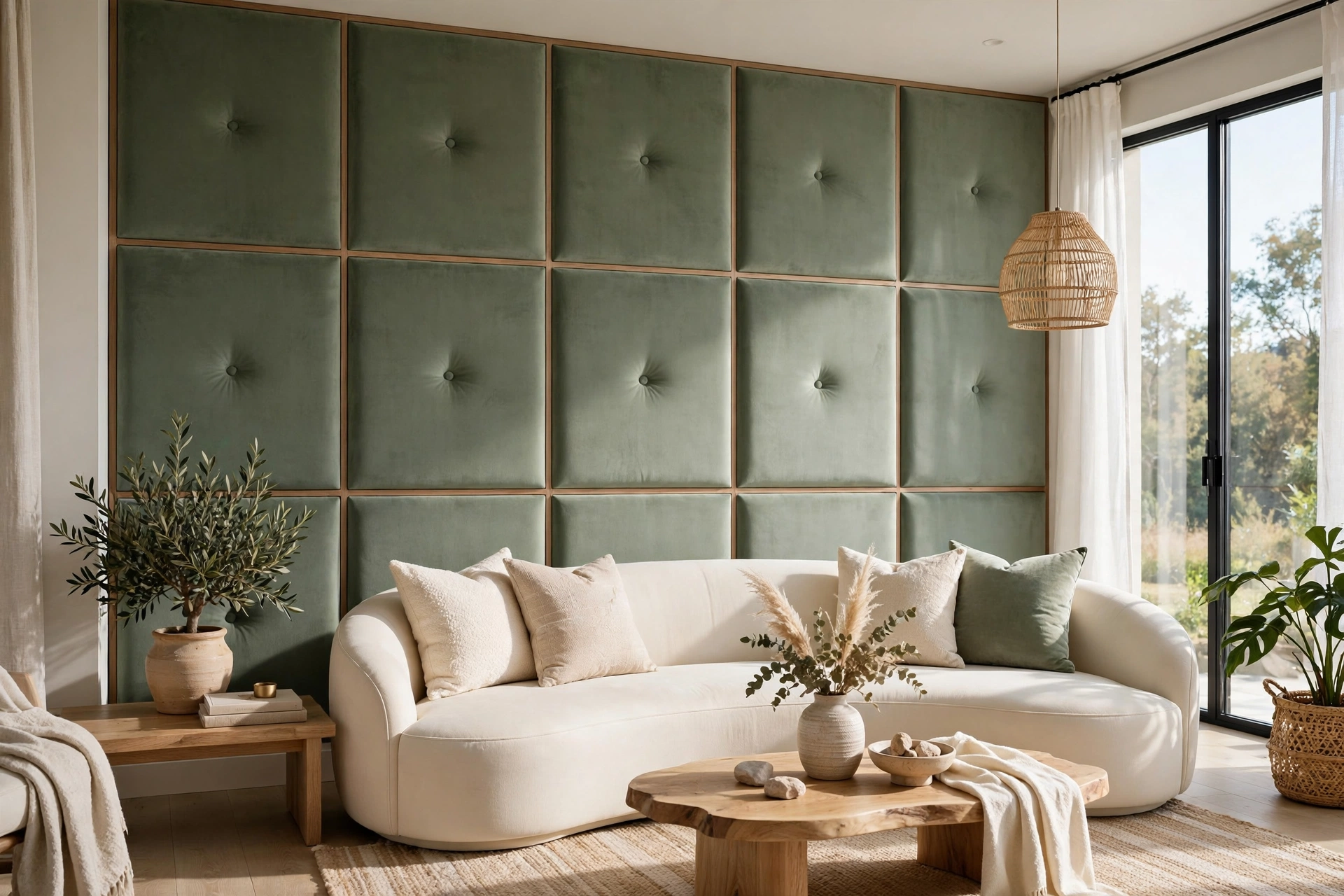
Fabric wall panels bring softness and serious sound-dampening to a living room, and they are easier to install than they look. Wrap high-density foam in a performance fabric, mount the panels on French cleats, and arrange them in a grid or a single statement column. Velvet reads luxurious; nubby bouclé reads modern and cozy.
Choose a stain-resistant, fade-resistant fabric since this wall will live in daylight. Panels are also a smart move in apartments with thin walls — the foam takes the edge off noise traveling between rooms.
15. A Hand-Painted Mural Moment
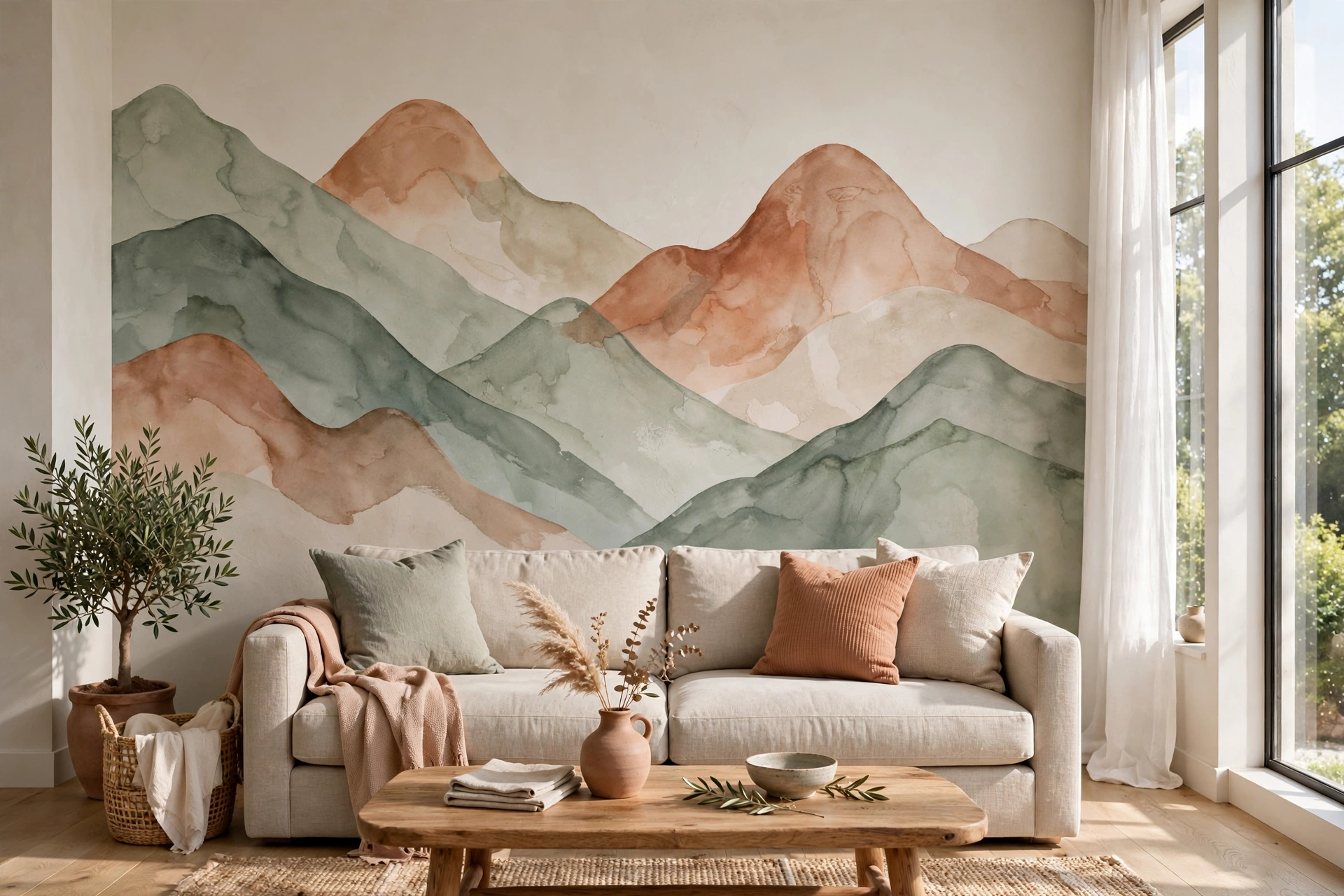
If you want a true one-of-a-kind accent wall, paint a simple mural. You do not need to be an artist — rolling hills, abstract color washes, or a horizon line of simple mountains are all beginner-friendly and look intentional in the right palette. Project the design with a cheap projector, trace it in pencil, and fill in the shapes like a giant coloring book.
Keep the palette to three or four colors pulled from your rug so the mural feels designed rather than random. Seal it with a clear matte topcoat if the wall gets touched often.
Frequently Asked Questions
Which wall should be the accent wall in a living room?
Choose the wall your eyes land on first when you enter — usually the one behind the sofa or the fireplace wall. Avoid walls broken up by lots of doors and windows, since interruptions chop up the effect. In open-plan spaces, use the accent wall to define the living zone.
What is the cheapest living room accent wall idea?
Paint is the cheapest by far — a gallon of quality paint and basic supplies usually costs under sixty dollars and transforms a wall in an afternoon. Peel-and-stick wallpaper is the next most affordable option and the best choice for renters. Applied molding is also very cheap in materials.
Are accent walls still in style?
Yes, but the execution has evolved. Flat single-color walls have given way to texture — limewash, wood slats, molding, and grasscloth are the current favorites. The modern approach treats the accent wall as a material or architectural feature rather than just a different paint color.
What color should I paint my living room accent wall?
Deep, grounded colors work best: navy, forest green, charcoal, and warm terracotta are the most versatile choices. They create contrast without clashing and pair well with both light and dark furniture. In rooms with little natural light, lean toward mid-tone versions to avoid a cave-like feel.
How do I choose an accent wall that won’t look dated in five years?
Stick to natural materials and classic architecture — wood, brick, limewash, and simple molding age far better than trendy patterns. Choose colors found in nature rather than neon or ultra-trendy hues, and keep the treatment simple enough that you could live with it daily.
Keep Exploring
An accent wall is the fastest way to give your living room a point of view, and most of these ideas cost less than a new sofa and take a single weekend. Once your wall is done, carry the look through the house with intention: repeat one color or material in the next room so the home feels connected rather than decorated in isolated bursts.





[…] of your travels, your family, and your taste, arranged so the whole room feels more deliberate. Pairing framed art with bolder treatments like living room accent wall ideas with big impact turns that empty stretch into the room’s true focal […]
[…] and large family rooms alike, so you can pick a rug that fits your space and your budget. Living room accent wall ideas with big impact alongside your rug […]
[…] A sculptural object gives your coffee table an artistic focal point and a guaranteed talking point when guests visit. Think of a carved wooden hand, an abstract ceramic form, a polished stone, or a piece of coral — something with an interesting silhouette and a tactile surface. One strong piece usually works better than several small ones. Place it where it catches the light and let the surrounding decor stay quiet. Such as the finish on your living room accent wall. […]
[…] demands commitment but rewards with a cocoon-like, designer look that photographs beautifully. Living room accent wall ideas with big impact. Start with a powder room if you are nervous — then go […]
[…] a bold design. If the pattern feels too loud after a month, you have only invested in one wall. These living room accent wall ideas with big impact pair beautifully with paper: think layered art, wall sconces, and a console styled against the […]
[…] frames around it: a brass clock with gilt frames, a black clock with black-and-white photography. Living room accent wall ideas with big impact show how a single functional piece can anchor an entire wall composition. The gallery’s […]
[…] The mantel is the living room’s natural stage, and a mirror above it is a classic for good reason: it reflects the room back on itself and gives the fireplace presence even in summer. A large rectangular or arched mirror works best here — round mirrors can fight with the mantel’s horizontal line. Hang it so the bottom edge clears your tallest mantel styling by a few inches, or lean it casually for a relaxed look. If your mantel holds a TV, skip the mirror there and use it on an adjacent wall instead; two screens competing is visual noise. For fireplace-adjacent styling, see our living room accent wall ideas with big impact. […]
[…] tapestry ideas will help you hang fabric art with confidence. If your walls need a full rethink, our living room accent wall ideas with big impact pair well with several looks […]
[…] it lift off completely for valve access. For styling inspiration on the surrounding wall, these living room accent wall ideas pair well with a built-in seat below the […]