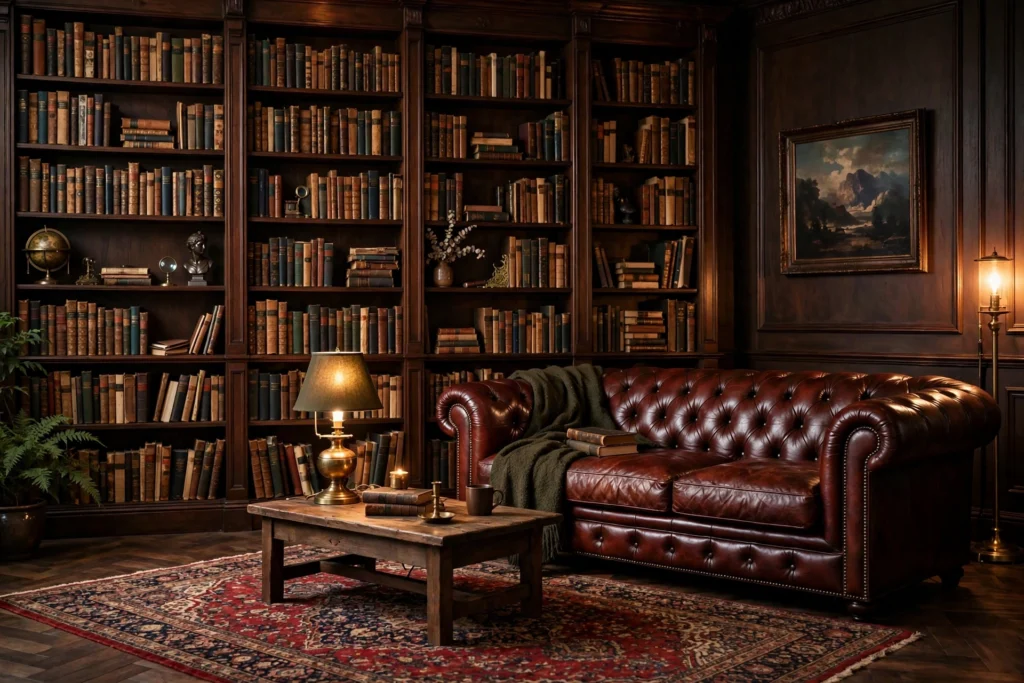

A dark academia living room feels like stepping into a beloved old library — rich with books, worn leather, warm candlelight, and the quiet romance of scholarship. This aesthetic borrows from gothic architecture, vintage academia, and classic literature to create rooms that are moody yet deeply inviting.
The beauty of dark academia is that it rewards collecting over time. You do not need to buy everything at once; thrifted books, inherited art, and aged wood all belong. Here are fifteen dark academia living room ideas to build your own scholarly retreat, one layered detail at a time.
1. Paint the Walls Deep and Moody
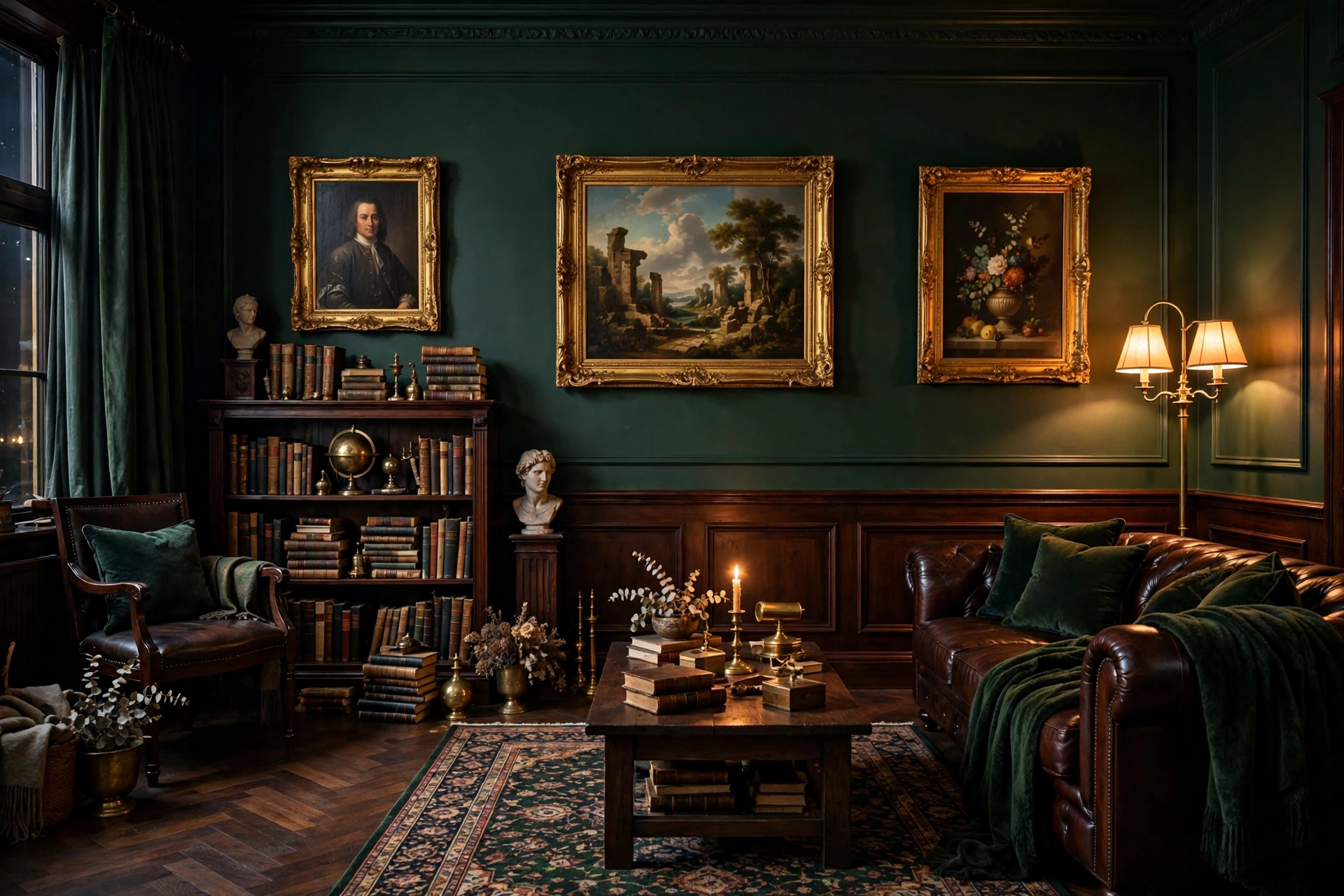
Dark academia starts with color. Paint your walls a deep forest green, oxblood, espresso brown, or charcoal — colors that feel like the inside of an old study. These shades make the room feel intimate and make everything hung on them look richer, from gilt frames to brass sconces.
Dark paint absorbs light, so balance it with warm lighting rather than fighting it. If you are nervous about going fully dark, The Spruce’s guide to paint colors for dark rooms explains how to keep moody rooms feeling cozy instead of cave-like. Paint the ceiling the same color for a fully enveloping effect.
2. Build a Floor-to-Ceiling Library Wall
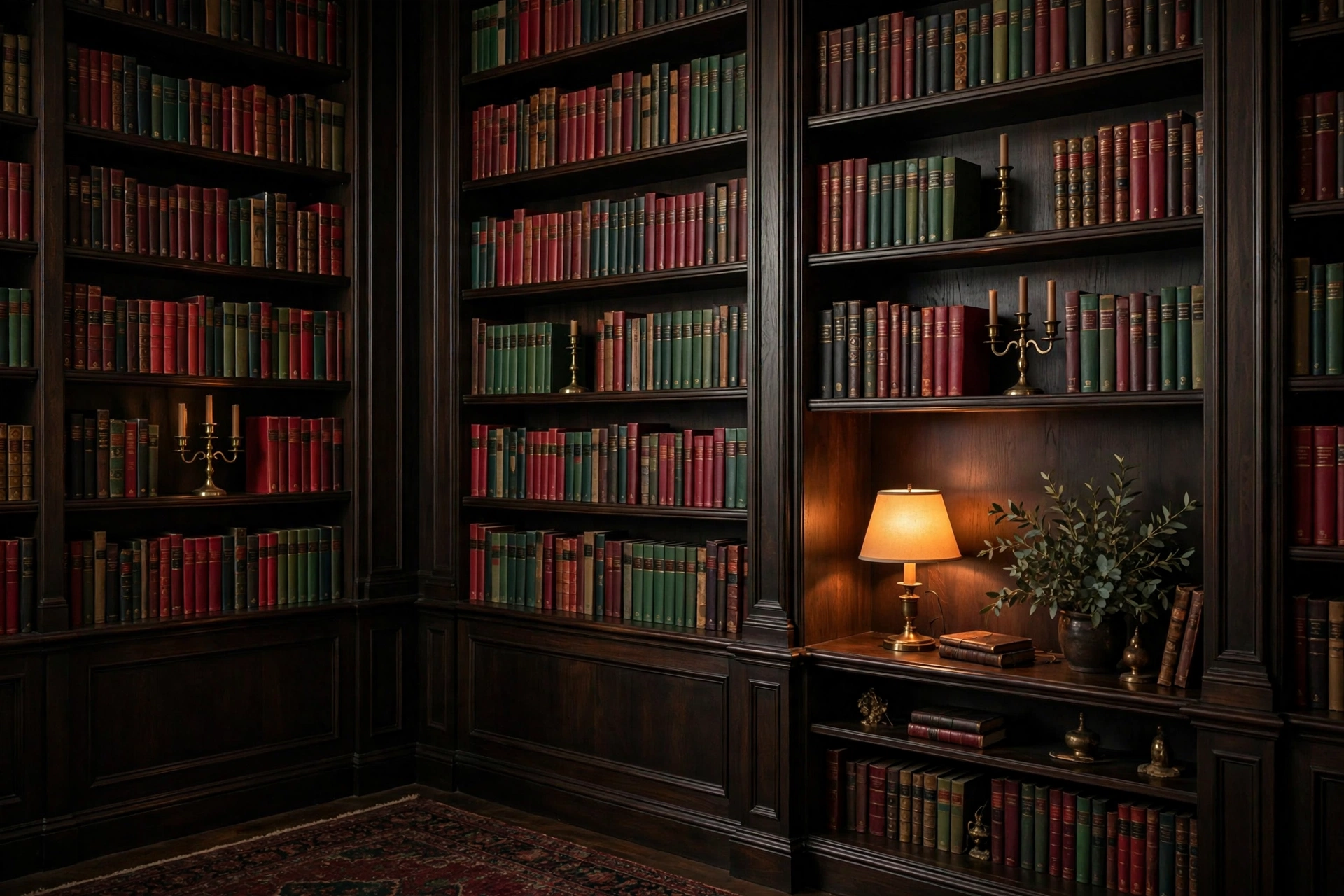
Nothing says dark academia like a wall of books. Install tall bookcases along one wall — real built-ins if you can, or a row of matching thrifted shelves for a collected look — and fill them with hardcovers in deep reds, greens, and browns. Arrange some vertically and stack others horizontally to keep the shelves from looking like a warehouse.
Leave breathing room for small objects: a brass candlestick here, a framed miniature there. For a scholarly take that extends to your workspace, see our 15 dark academia home office design ideas with scholarly style. A library ladder is pure fantasy, but even a simple wooden step stool sells the look.
3. Anchor with a Leather Chesterfield
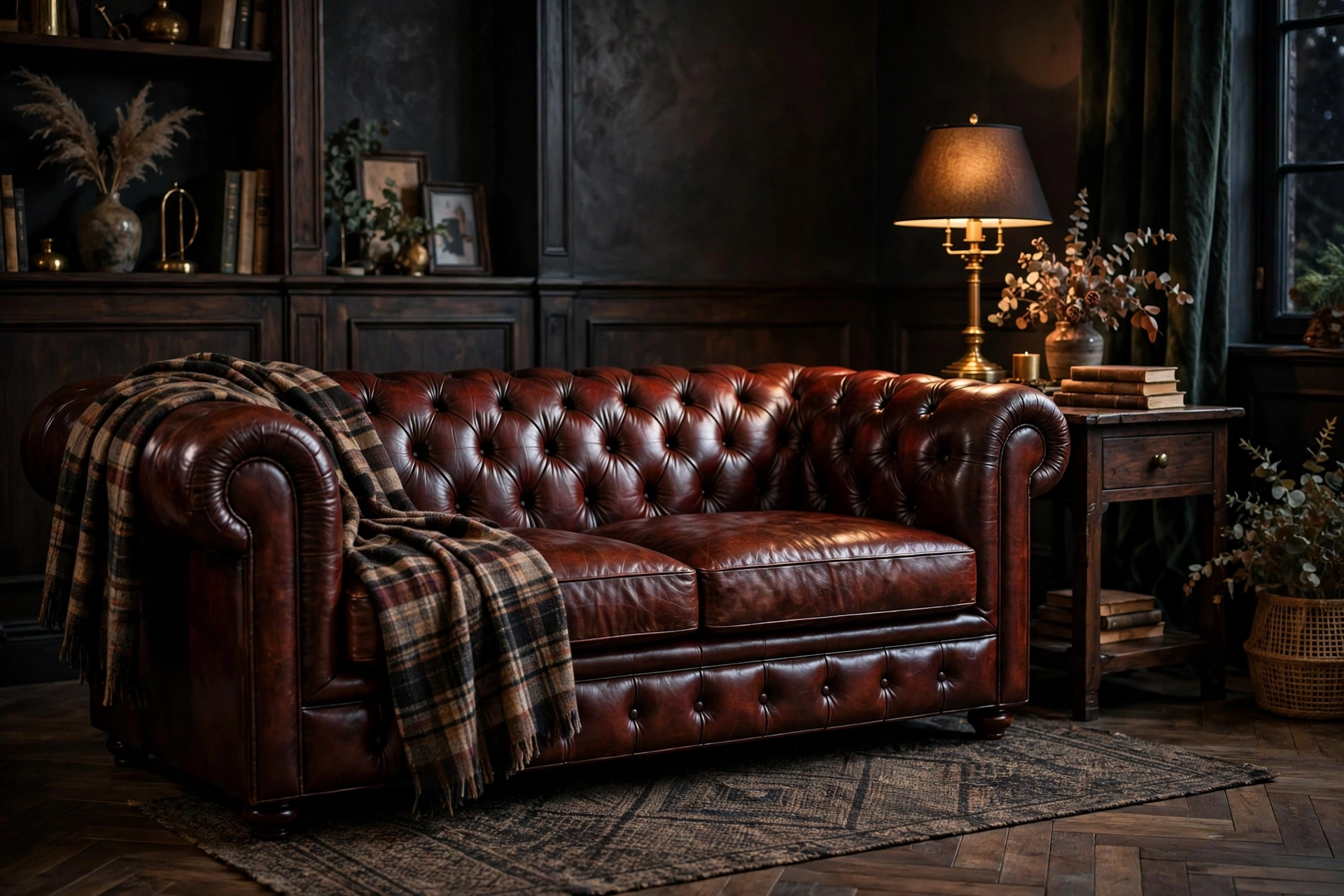
A worn leather chesterfield sofa is the dark academia seating icon. Deep button tufting, rolled arms, and nailhead trim read instantly scholarly, and the leather only gets better with age — scratches and patina are features, not flaws. Cognac and oxblood are the classic colors; black reads more gothic.
If a full chesterfield is out of budget, a single tufted leather armchair delivers the same energy at a fraction of the price. Drape a plaid wool throw over one arm and the chair becomes the room’s reading throne.
4. Hang Classical Art in Gilt Frames
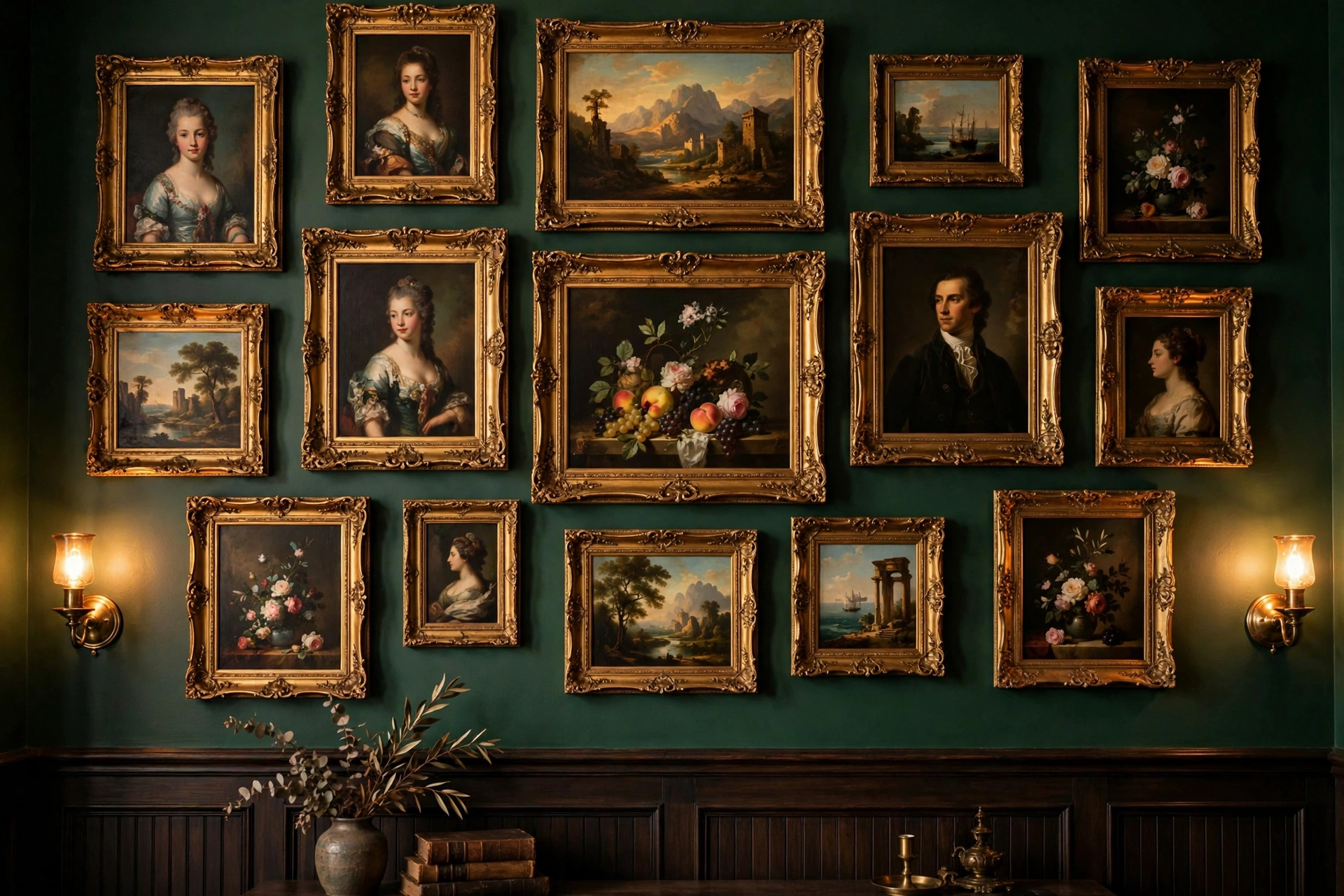
Dark academia walls want oil-painting energy: moody landscapes, classical portraits, and still lifes in heavy gilt or dark wood frames. You do not need originals — print shops and thrift stores are full of reproductions that look convincingly aged once framed well. Group them salon-style, edge to edge, for maximum old-gallery impact.
Vary the frame sizes but keep the finishes in the same family (all gold, or all dark wood) so the wall feels curated rather than chaotic. Hang one large piece low over the sofa as the anchor, then build outward with smaller works.
5. Light It Like Candlelight
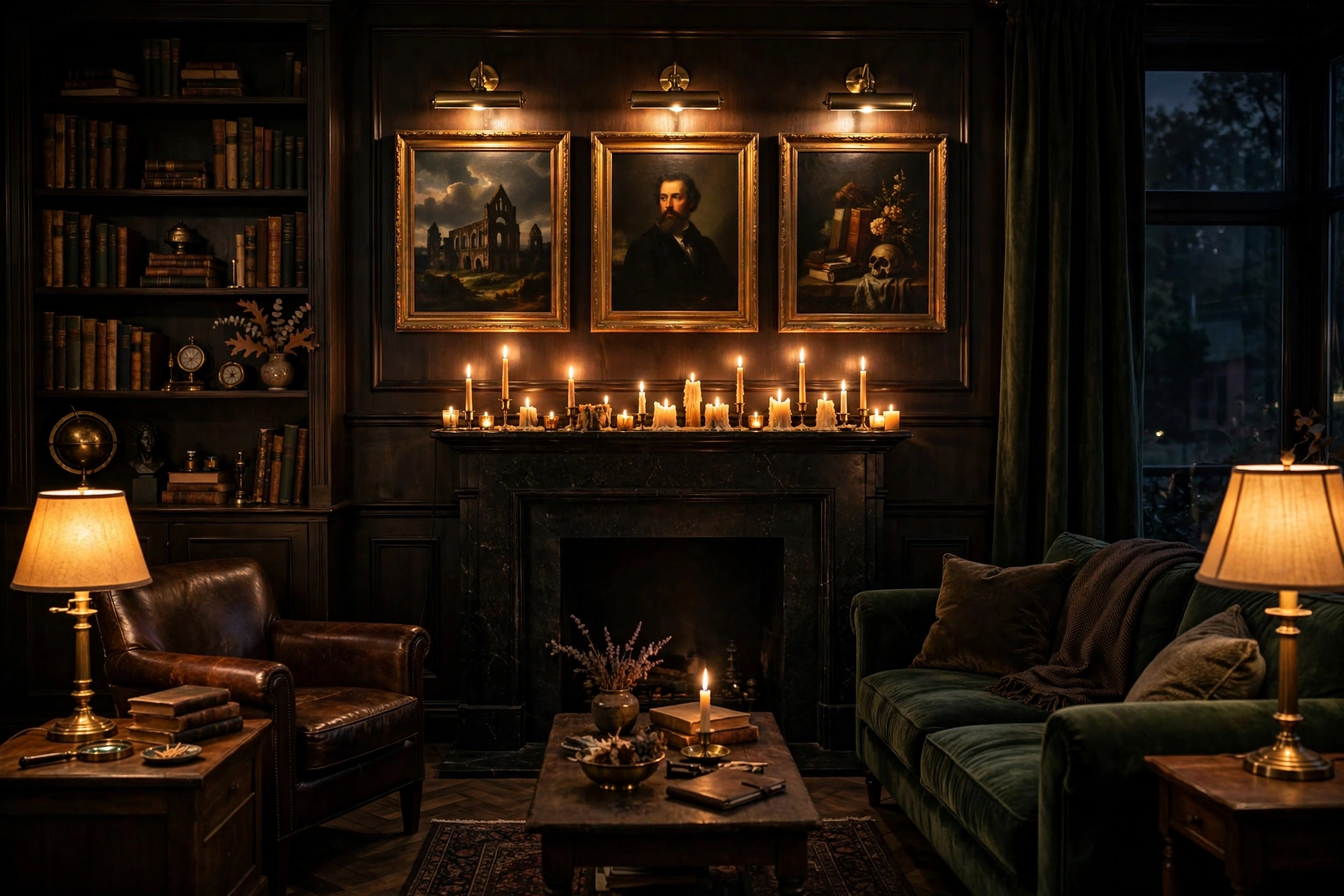
Overhead lighting kills the mood; dark academia glows from the sides. Layer table lamps with fabric shades, brass picture lights over your art, and plenty of real candles in brass or glass holders. Warm-toned bulbs (2700K or lower) are non-negotiable — cool white light will shatter the illusion instantly.
Apartment Therapy’s mood-lighting guide shows how side-table votives and wall lamps create the same intimate glow in any room. Put your lamps on dimmers so you can drop the light level as the evening deepens.
6. Choose Dark, Weighty Woods
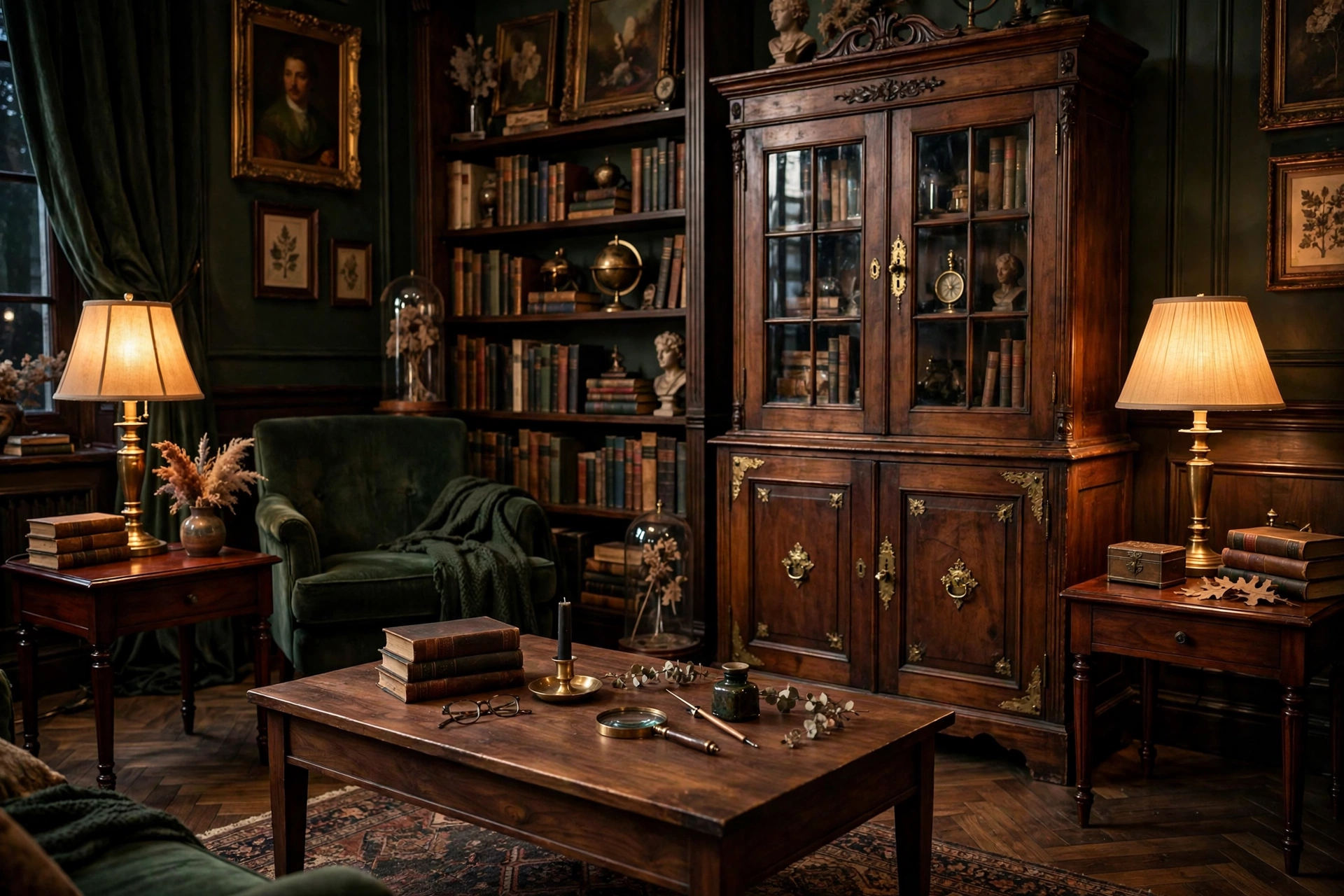
Furniture in dark academia should feel like it has a history. Walnut, mahogany, and ebonized finishes on coffee tables, side tables, and cabinets give the room its visual weight. Hunt estate sales and antique shops — a scarred Victorian side table has more character than anything flat-packed.
Mix wood tones rather than matching them; a room where every piece is the same cherry stain looks like a furniture showroom. Two or three dark woods layered together feel collected and authentic.
7. Lay Down a Vintage-Style Rug
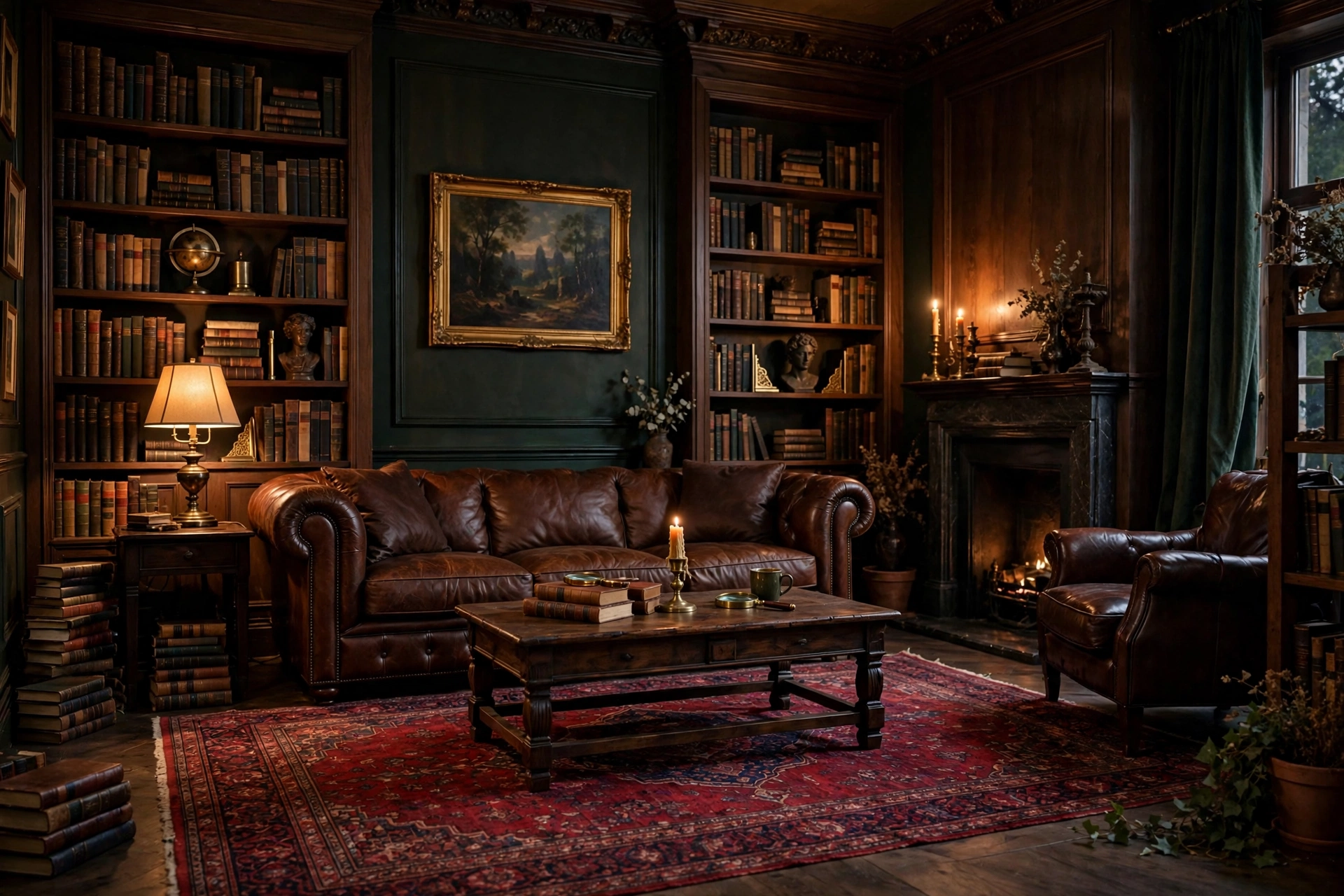
A Persian or Oriental rug in deep reds, navy, and ochre grounds a dark academia living room like nothing else. The pattern hides wear, the colors echo the walls, and the pile softens all that hard wood and leather. Vintage is ideal, but good reproductions exist at every price point.
Size matters more than authenticity: the front legs of your sofa and chairs should all sit on the rug. In a small room, layer a smaller vintage rug over a large neutral jute base to get the look without the big-rug price. For more vintage styling ideas, see our 15 vintage living room design ideas full of timeless character.
8. Hang Heavy Velvet Curtains
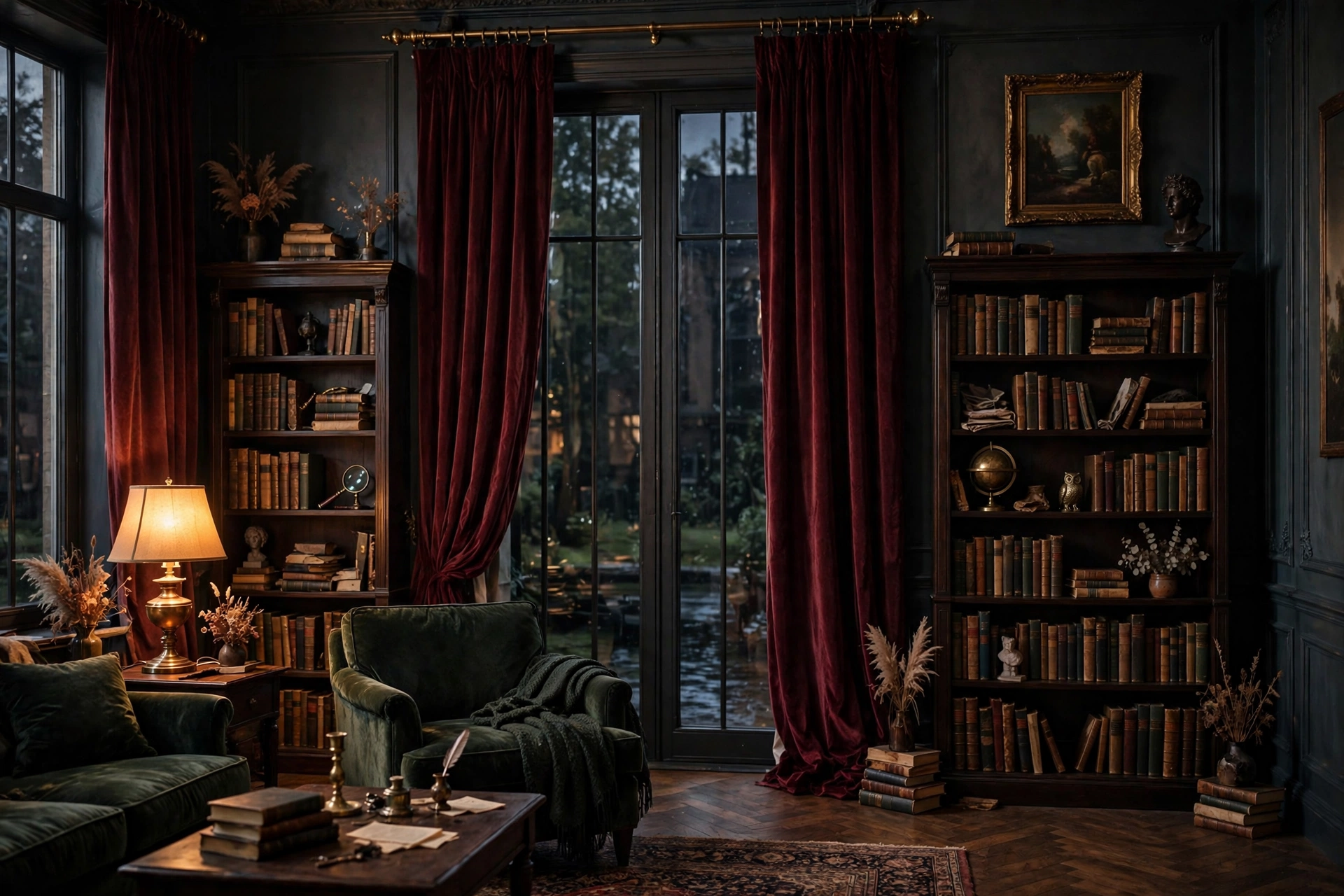
Dark academia windows wear velvet — or at least something with weight. Floor-length curtains in deep green, burgundy, or charcoal velvet frame the windows like theater drapes and add the acoustic softness these hard-surfaced rooms need. Hang the rod high and wide so the curtains stack off the glass and the windows feel grand.
Line them if you can; lined curtains hang better and block the harsh daylight that fights the moody palette. Tiebacks in brass or rope add a final scholarly flourish.
9. Create a Dedicated Reading Nook
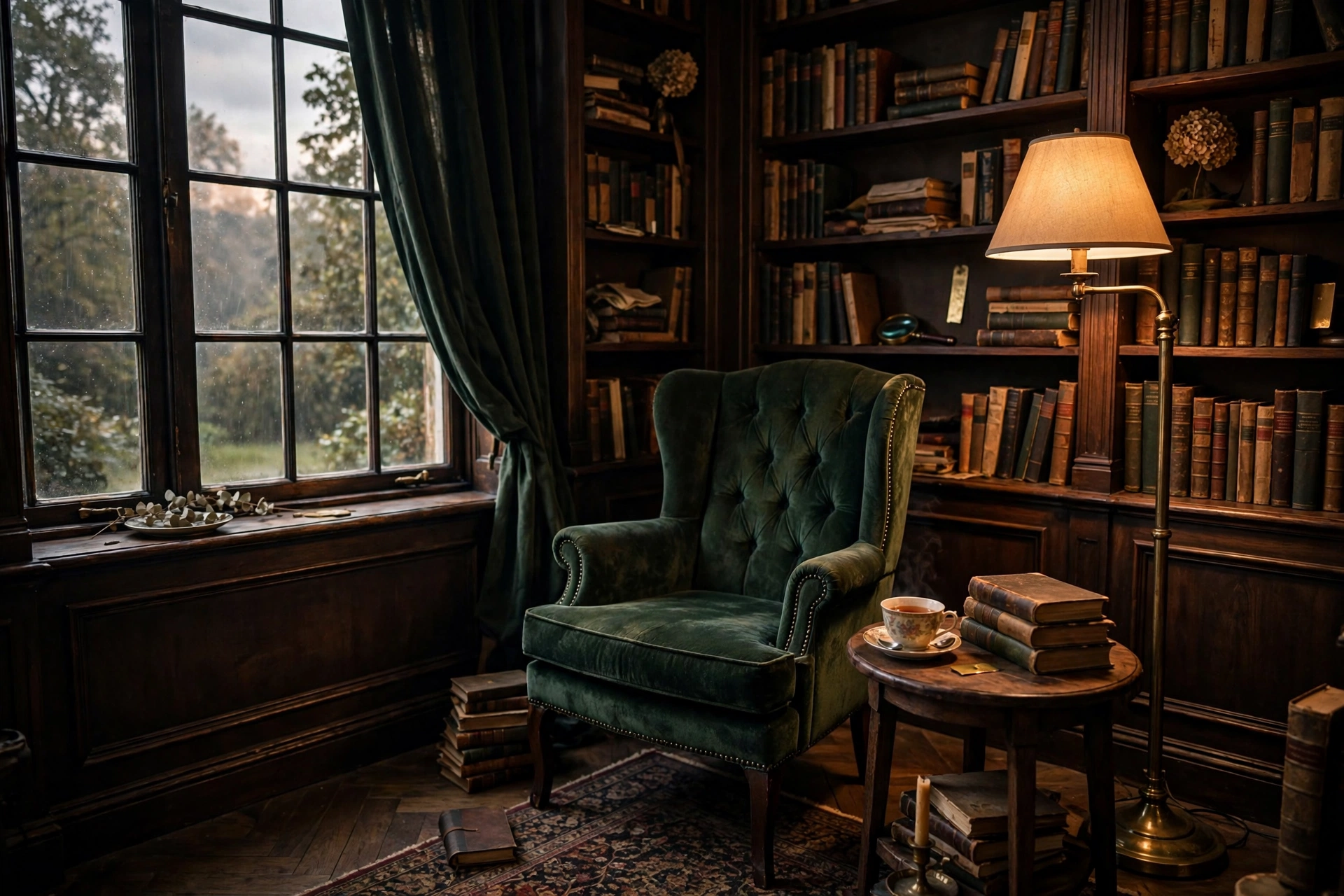
Every dark academia living room needs a corner built for reading. A wingback or club chair angled toward the light, a small side table for tea, a floor lamp with a warm shade, and a stack of books within arm’s reach — that is the whole formula. A sheepskin or wool throw over the chair makes it irresistible.
Position the nook near a window for daytime reading, but give it its own lamp so it works after dark too. This one corner will become the most-used seat in the house.
10. Display Scholarly Objects
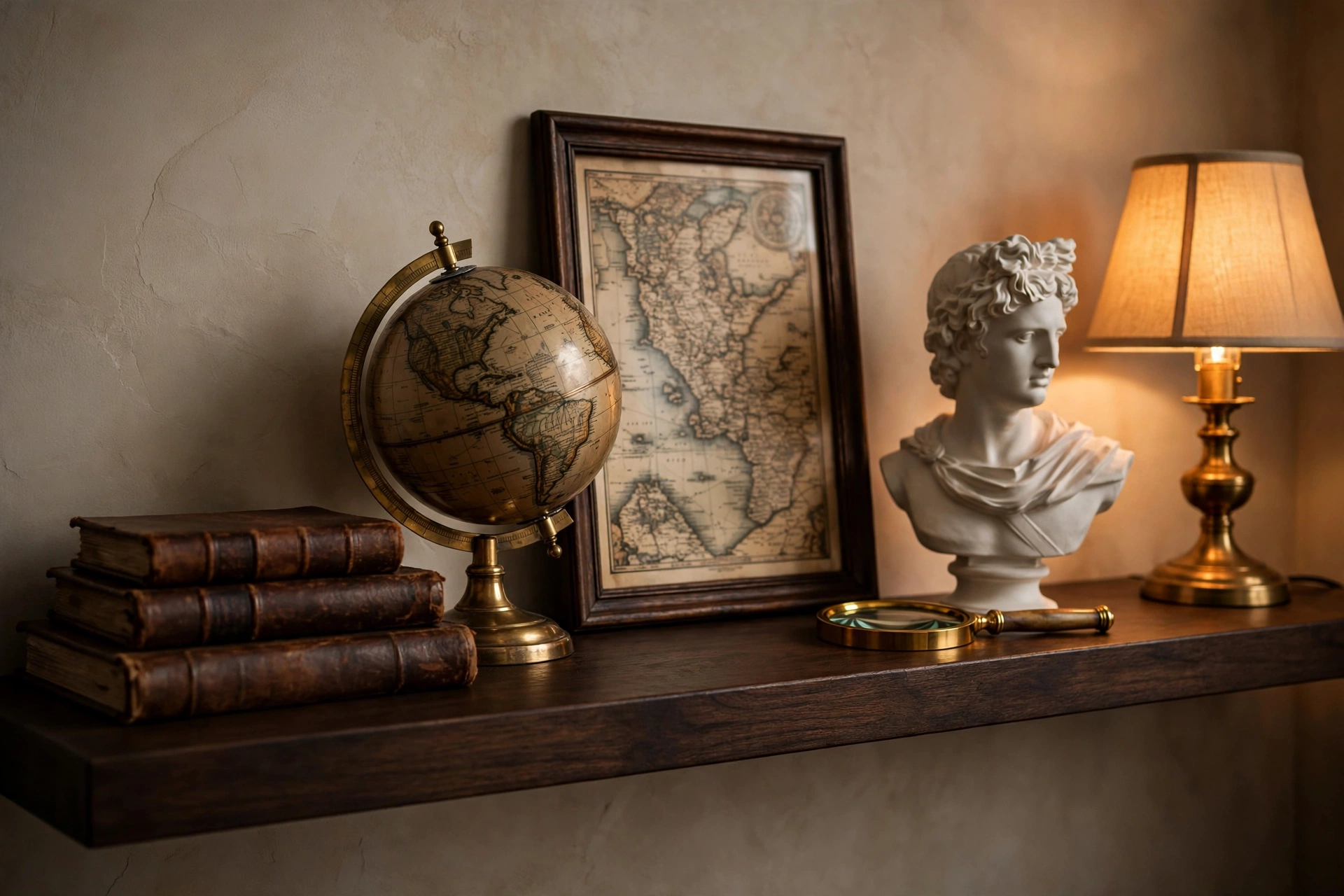
The details make dark academia: a brass globe, an antique map in a simple frame, a plaster bust, a magnifying glass, a stack of leather-bound journals. These are the objects that tell the room’s story. Scatter them on shelves, mantels, and side tables — but edit ruthlessly, because clutter reads as mess, not mystery.
Thrift stores and flea markets are the best hunting grounds; these objects should look found, not ordered. One striking piece, like a large vintage map, beats ten small trinkets.
11. Style a Moody Fireplace
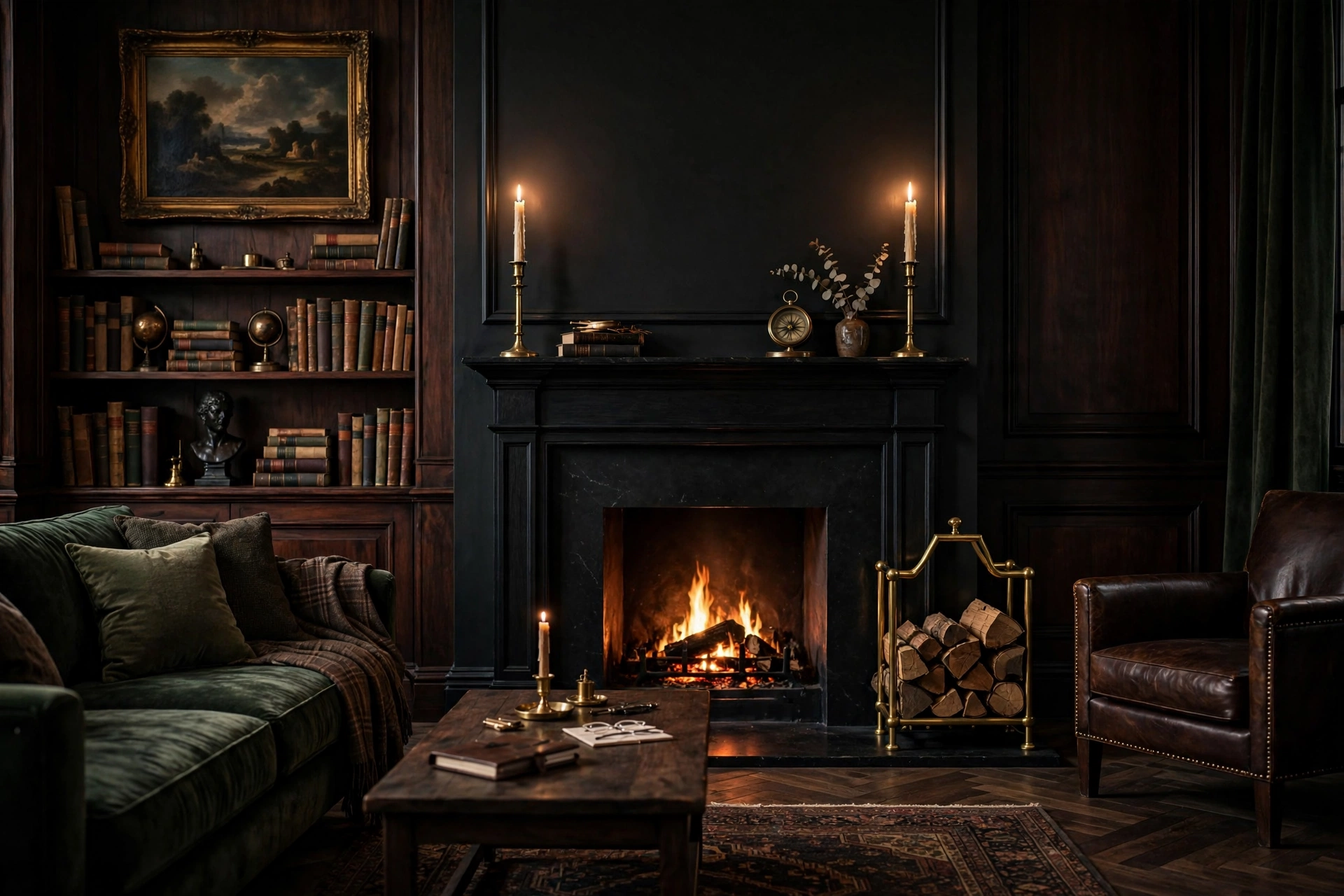
If you have a fireplace, make it the room’s dark heart. Paint the surround black or deep green, stack firewood in a brass log holder beside it, and style the mantel with candlesticks of varying heights, a leaning gilt mirror, and one piece of moody art. Even an unused fireplace looks dramatic filled with pillar candles.
No fireplace? A faux mantel shelf on the wall gives you the same styling surface. The key is asymmetry with intention — group objects in odd numbers and vary their heights.
12. Frame Botanical and Natural History Prints
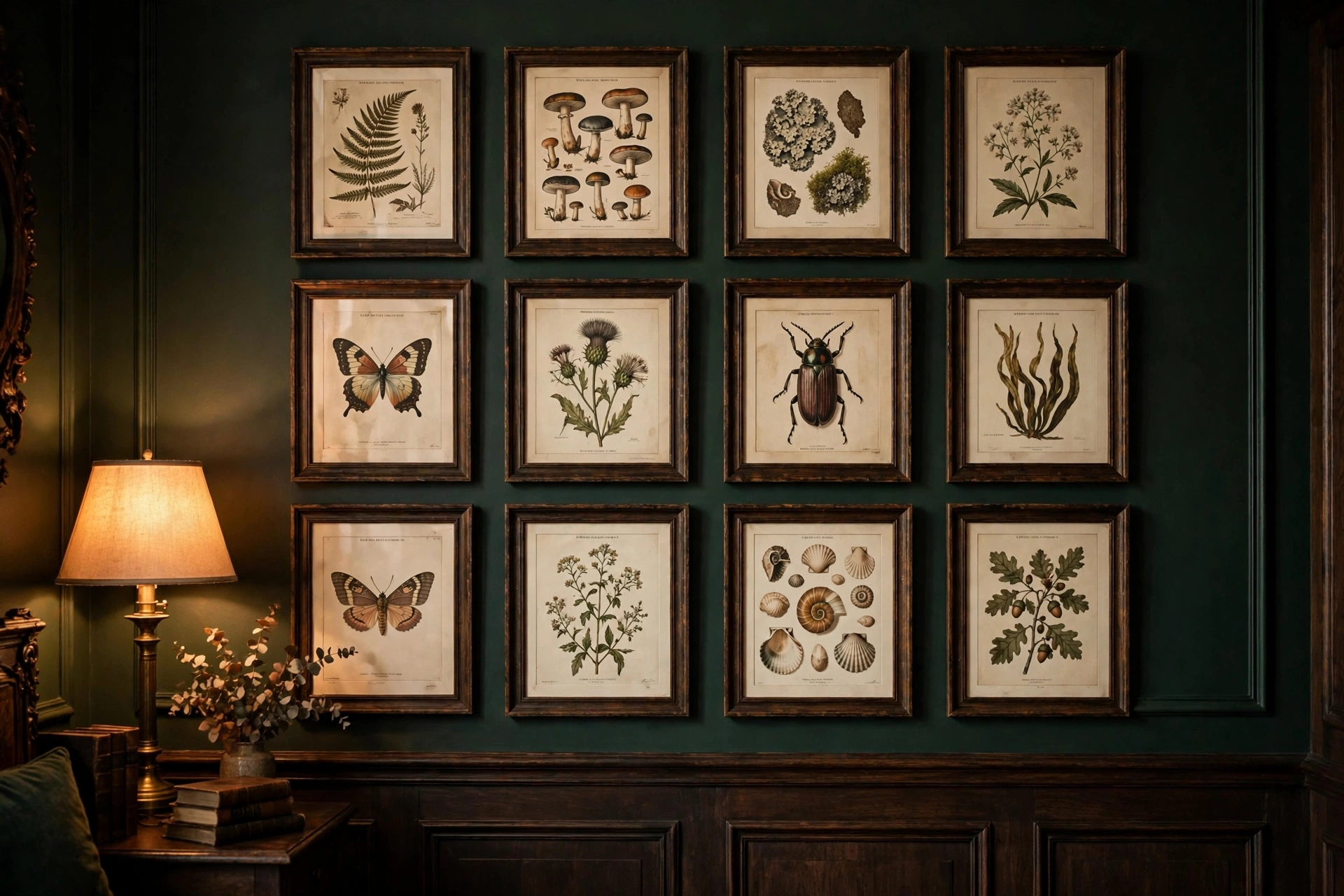
Antique botanical prints, natural history illustrations, and anatomical sketches are dark academia wall staples. Their faded inks and Latin captions bring a cabinet-of-curiosities feel that pairs beautifully with the style’s bookishness. Frame them simply in black or dark wood and hang them in a grid or a tight cluster.
Mix in a framed moth, beetle, or skeleton print for a touch of the gothic. Keep the palette muted — sepia, sage, and ink tones — so the wall reads as one cohesive collection.
13. Layer Plaid and Wool Textiles
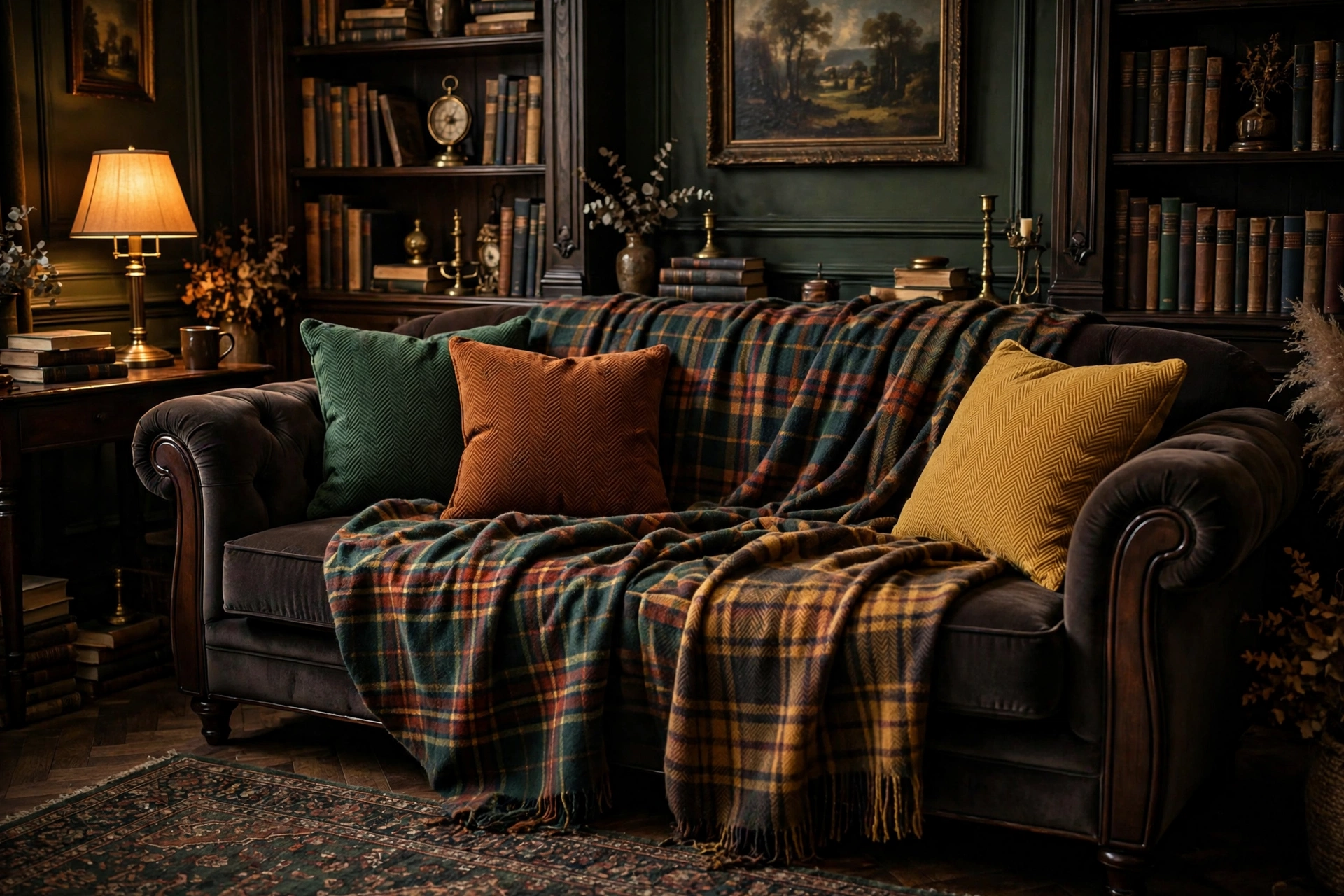
Dark academia is a cold-weather aesthetic at heart, so textiles should feel like autumn: plaid wool throws, herringbone cushions, a nubby wool blanket folded over the sofa arm. Stick to the palette — forest, rust, mustard, and charcoal plaids all belong.
Layer at least three textures on the sofa (smooth leather, woven wool, soft velvet) for the depth this style demands. These are also the easiest pieces to swap seasonally if you want to lighten the room in summer. For more on building a fully enveloping moody room, see our 15 moody living room design ideas full of dark drama.
14. Add an Ornate Mirror
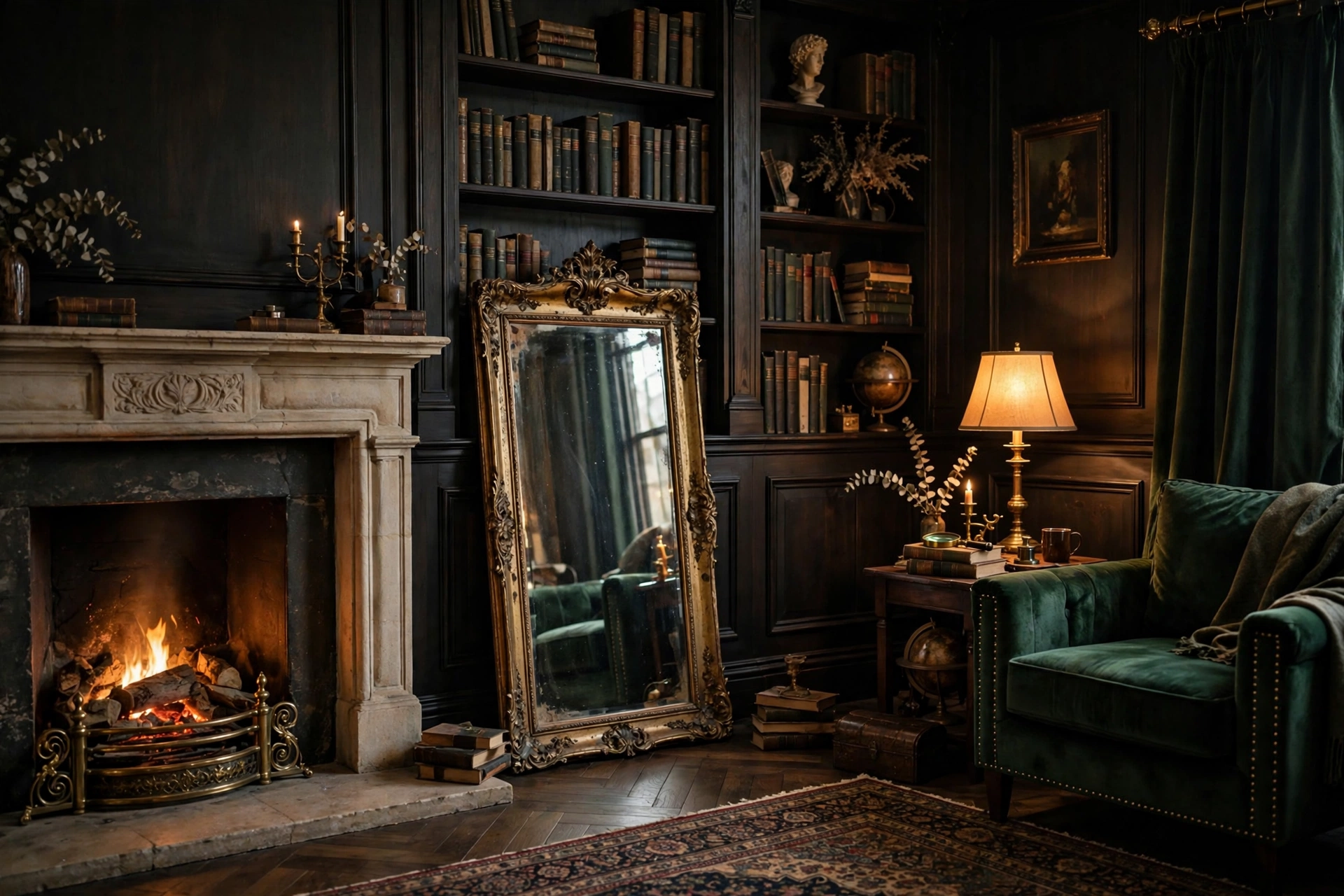
A large ornate mirror in an aged gold or black frame does double duty in a dark academia living room: it bounces precious light around a dark room, and it adds the baroque grandeur the style loves. Lean a full-length one against the wall beside the fireplace, or hang a round convex mirror above the mantel.
Aged or antiqued mirror glass suits the aesthetic better than perfect reflections. If the mirror is genuinely old, embrace the foxing and spots — they are part of the story.
15. Tuck In a Writing Desk Corner
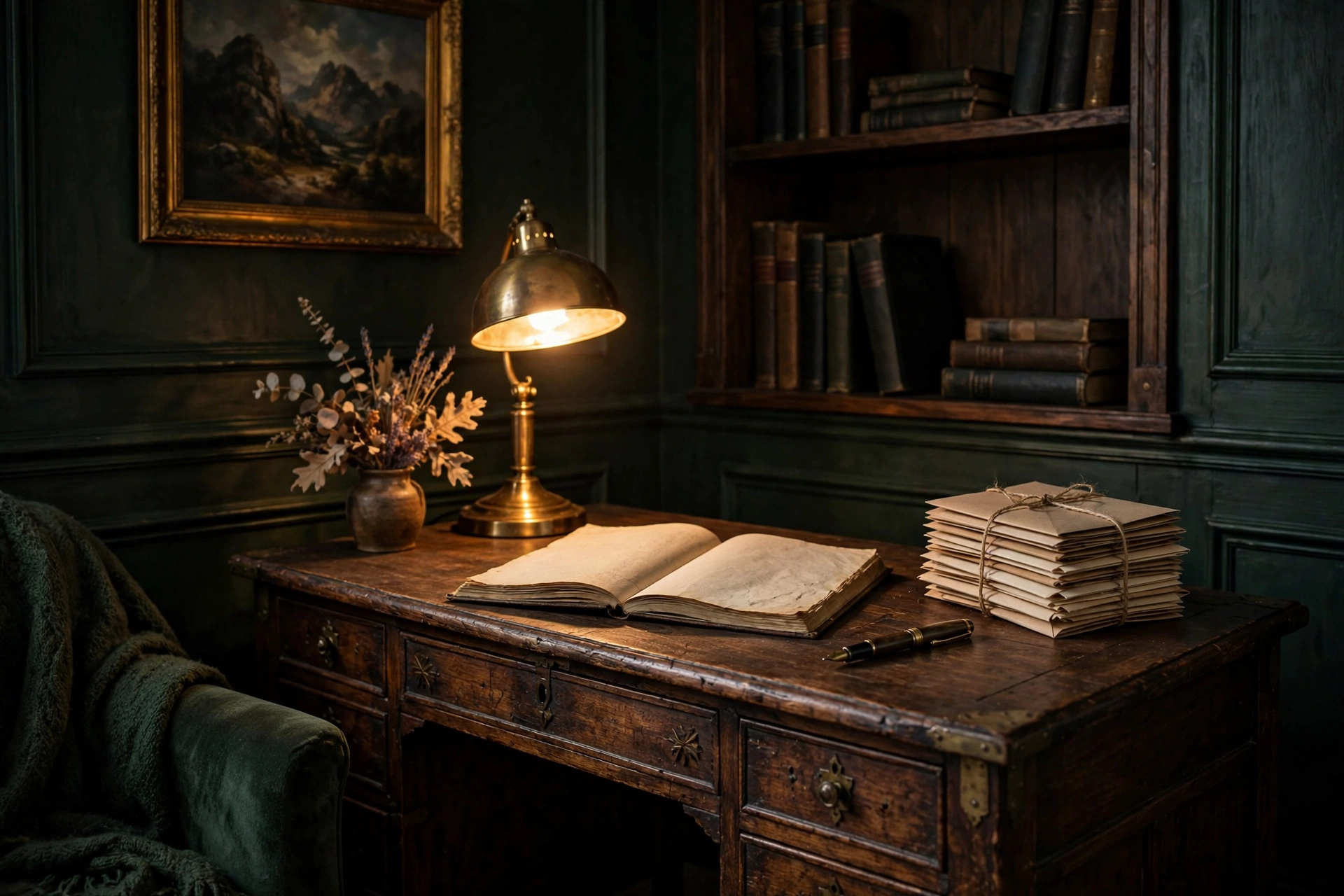
A small antique writing desk in the corner completes the scholarly fantasy. Style it as if someone just stepped away: an open journal, a fountain pen, a stack of letters tied with twine, a brass desk lamp casting a warm pool of light. It does not need to be your real workspace — it is set dressing with soul.
Choose a desk with drawers to hide the modern clutter (chargers, remotes) that would break the spell. A wooden chair with a leather seat keeps the corner fully in period.
Frequently Asked Questions
What colors define a dark academia living room?
Deep, scholarly colors: forest green, oxblood, espresso brown, charcoal, and navy, balanced with warm neutrals like cream and cognac. Metals should be warm — brass, bronze, and aged gold — never chrome. The palette should feel like an old library: rich, muted, and lit by candlelight.
How do I keep a dark academia living room from feeling too dark?
Layer warm light sources at multiple heights — table lamps, sconces, candles — and use mirrors to bounce light around. Keep the ceiling and trim slightly lighter than the walls if full darkness feels oppressive, and choose warm-toned bulbs everywhere. Dark rooms feel cozy, not gloomy, when the light is warm and layered.
Can dark academia work in a small living room?
Absolutely — dark colors can make small rooms feel intimate rather than cramped when done well. Focus on one statement wall of bookshelves or art, keep furniture scaled to the room, and use mirrors strategically. A small room done in full dark academia feels like a jewel box, which is exactly the point.
Where can I find affordable dark academia decor?
Thrift stores, estate sales, and flea markets are the holy trinity — look for dark wood furniture, brass candlesticks, old books, and gilt frames. Print shops sell affordable classical art reproductions. The aesthetic actually prefers aged and imperfect pieces, so secondhand shopping is an advantage, not a compromise.
How is dark academia different from gothic decor?
Dark academia is scholarly and romantic where gothic is dramatic and macabre. Both love dark colors and old things, but dark academia centers books, learning, and vintage academic life — think libraries and studies — while gothic leans into the mysterious and ornate. Dark academia feels lived-in and intellectual; gothic feels theatrical.
Keep Exploring
A dark academia living room is never really finished — it grows as you find the perfect brass lamp, the right worn leather chair, the stack of books that makes a shelf sing. Start with the walls and the light, then let the layers accumulate. That slow collecting is what gives the style its soul.
Let the room reflect what you actually love to read, study, and ponder. The most convincing dark academia spaces are not costumes; they are the rooms of people who genuinely adore old books, warm light, and quiet corners. Build yours around your own curiosities and it will never feel like a trend.