
A plant might be the cheapest productivity upgrade a home office can get. Greenery softens the hard edges of monitors and desks, cleans the visual air of a workday, and gives your eyes somewhere living to rest between tasks. These home office plant ideas match plants to real workspace conditions — low light, dry air, forgetful watering schedules — so your greenery thrives instead of just surviving.
The trick is choosing plants for the light you actually have, not the light you wish you had. A north-facing desk and a sunny window nook need completely different species. And if you want more ways to make the whole workspace work harder, these home office shelving ideas for a tidy inspired workspace pair storage with display space your plants will love.
1. Start With a Snake Plant
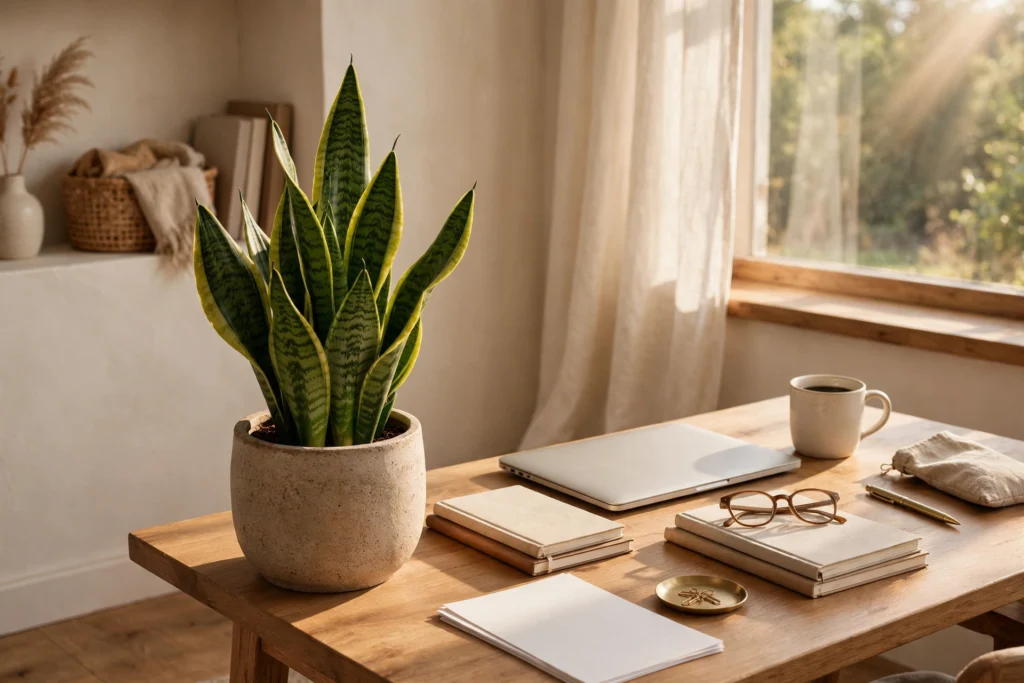
The snake plant is the undisputed champion of office greenery: sculptural, architectural, and nearly indestructible. It tolerates low light, irregular watering, and dry air-conditioned air — the exact conditions of most home offices. Its upright sword leaves add vertical structure beside a desk or filing cabinet without sprawling into your work zone. Water only when the soil is fully dry, roughly every two to three weeks, and it will quietly thrive for years. In a sleek pot, it suits modern and minimalist offices; in a woven basket, it warms up rustic and bohemian ones.
2. Trail a Pothos From a Shelf
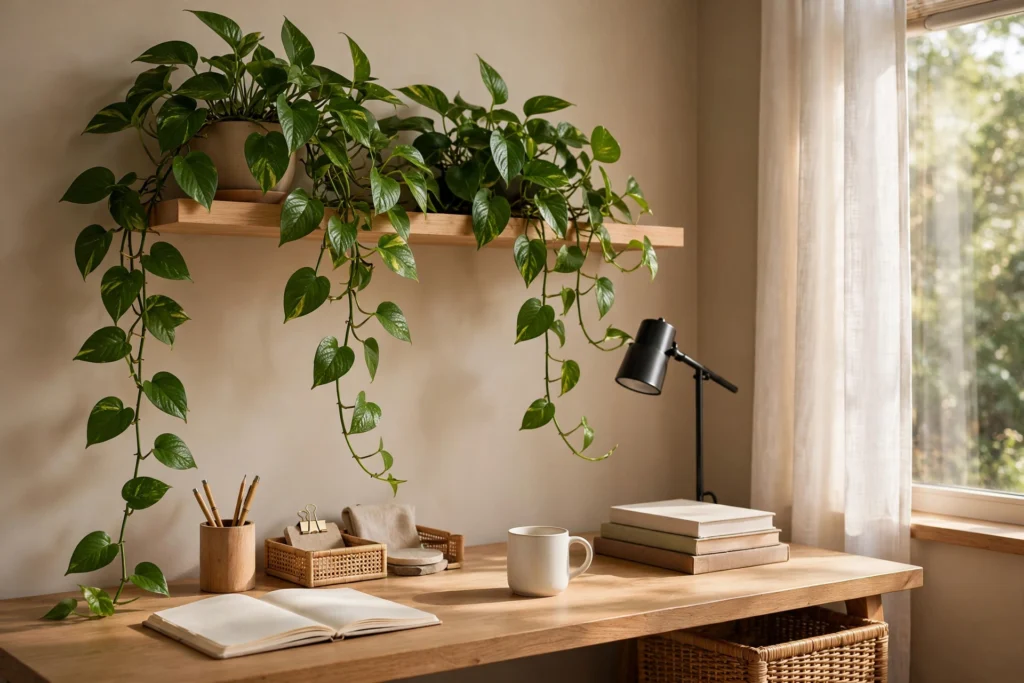
Pothos is the trailing plant that forgives everything: low light, missed waterings, and neglect all bounce right off it. Drape one from a wall shelf above your desk and the cascading vines soften the whole workstation, turning a plain wall into a living backdrop for video calls. Golden, marble queen, and neon varieties add color interest beyond plain green. Pothos roots easily in water, so one plant becomes many — snip a stem, pop it in a jar on the desk, and you have free plants for every shelf. Keep it trimmed so vines don’t tangle in your keyboard.
3. Add a ZZ Plant for Dark Corners
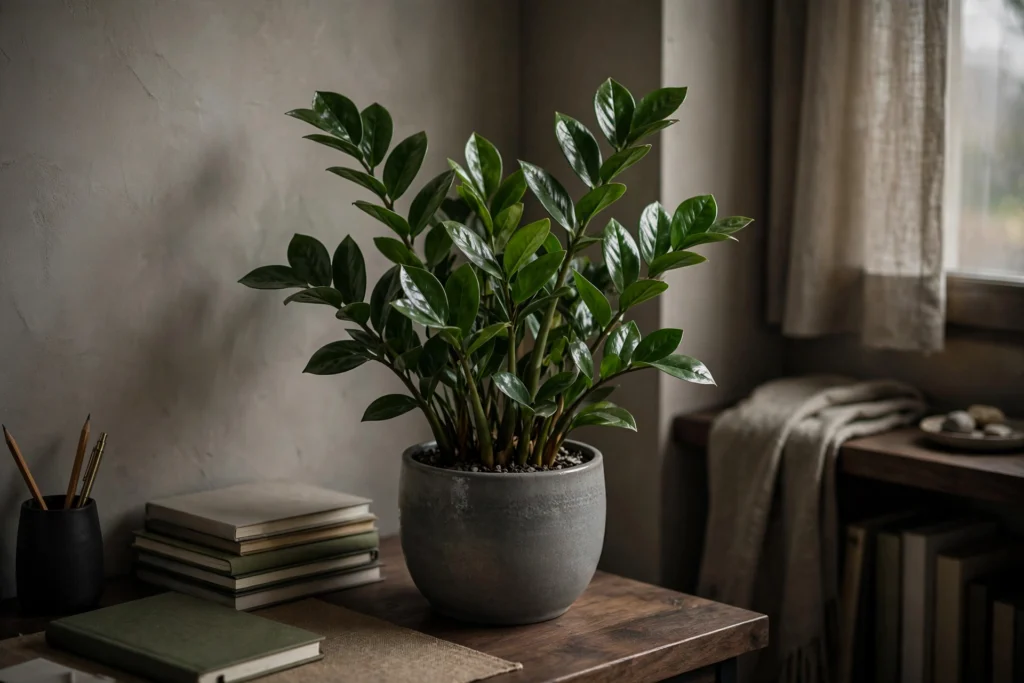
That dim corner where nothing seems to grow? That’s ZZ plant territory. Its glossy, deep-green leaflets tolerate almost complete shade and months of drought thanks to water-storing rhizomes underground. The ZZ’s upright, structured habit looks intentional and polished — never scraggly — which matters in a professional workspace. One caution: it’s toxic if ingested, so keep it away from curious pets and small children. For a dark hallway-facing office with no window at all, the ZZ is genuinely the best plant you can buy.
4. Make a Statement With a Fiddle-Leaf Fig
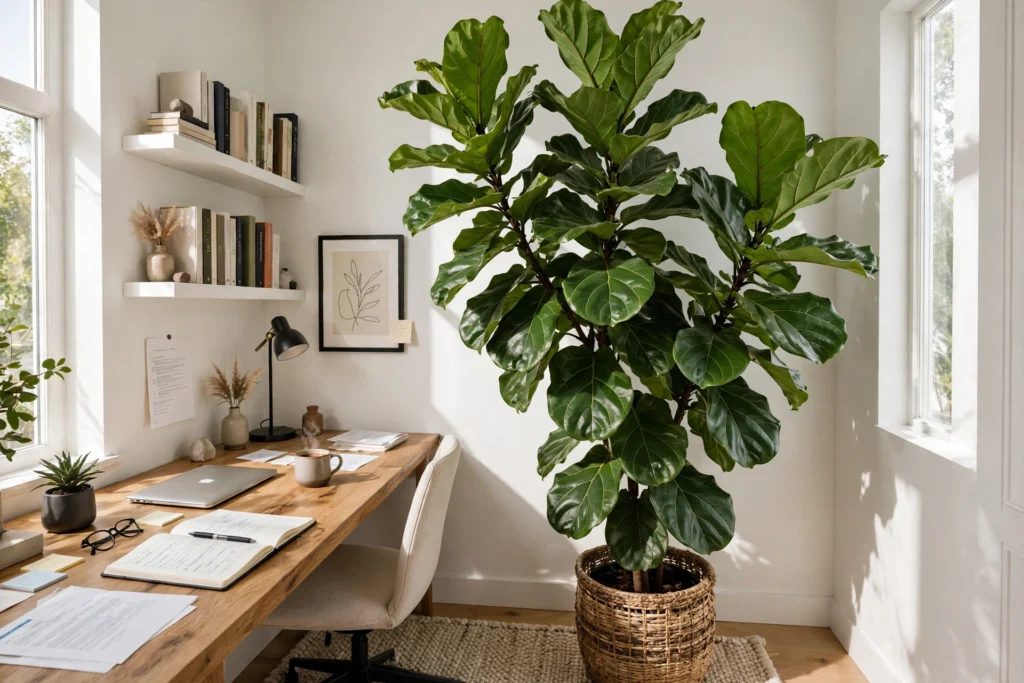
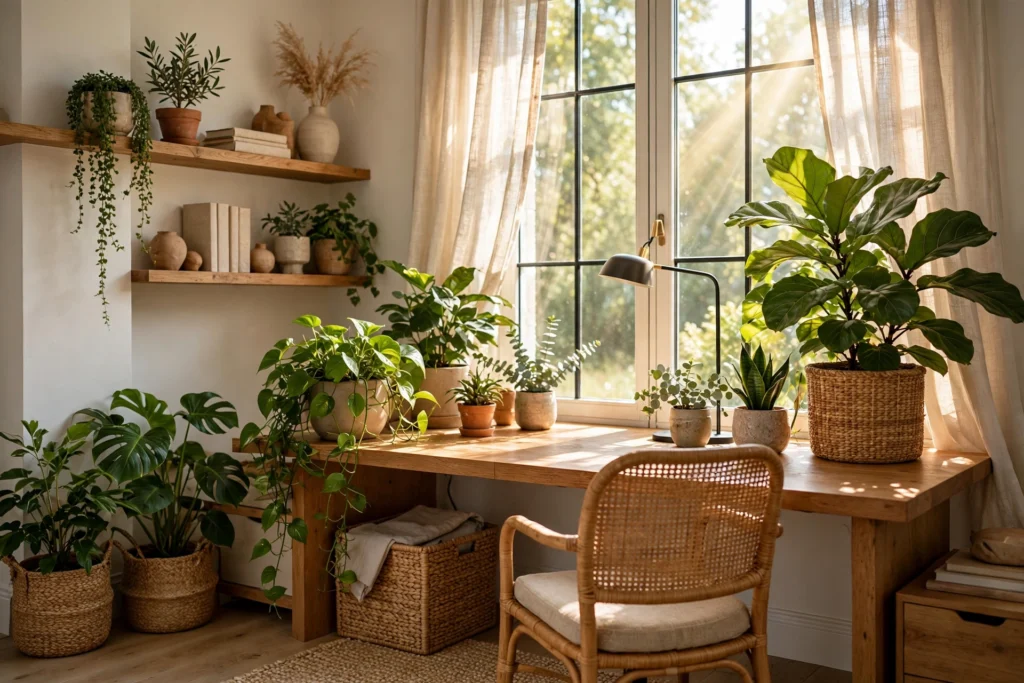
If your office has bright, indirect light and you want one dramatic plant, the fiddle-leaf fig delivers. Its huge violin-shaped leaves create an instant designer moment beside a desk or in an empty corner, and on video calls it reads as unmistakable style. The reputation for fussiness is overstated if you follow two rules: consistent bright light (no moving it around) and watering only when the top two inches of soil are dry. Rotate the pot quarterly so it grows evenly. Buy the size you can manage — a four-foot tree is easier to keep happy than a struggling sapling.
5. Keep a Succulent Trio on the Desk
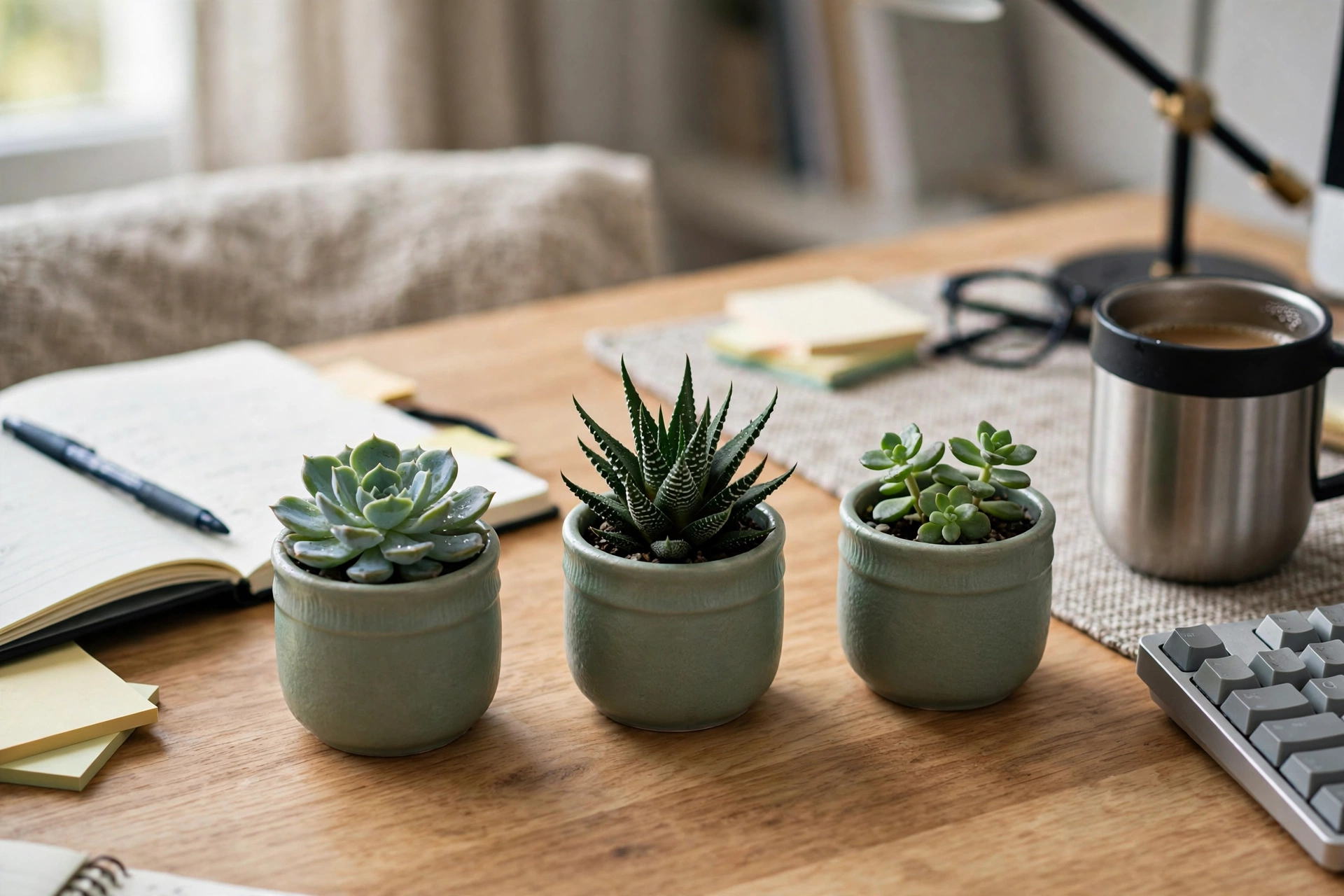
Small desks need small plants, and a trio of succulents in matching pots is the classic solution. Echeveria, haworthia, and jade plants stay compact, need water only every couple of weeks, and add sculptural interest right where you can see them while you work. The key requirement is light: succulents need the brightest spot you have, ideally a windowsill or directly under a desk lamp. A shallow tray or trio of tiny pots keeps the footprint minimal. They’re also the perfect starter plants if you’ve killed greenery before — just resist the urge to overwater.
6. Hang Plants to Save Desk Space
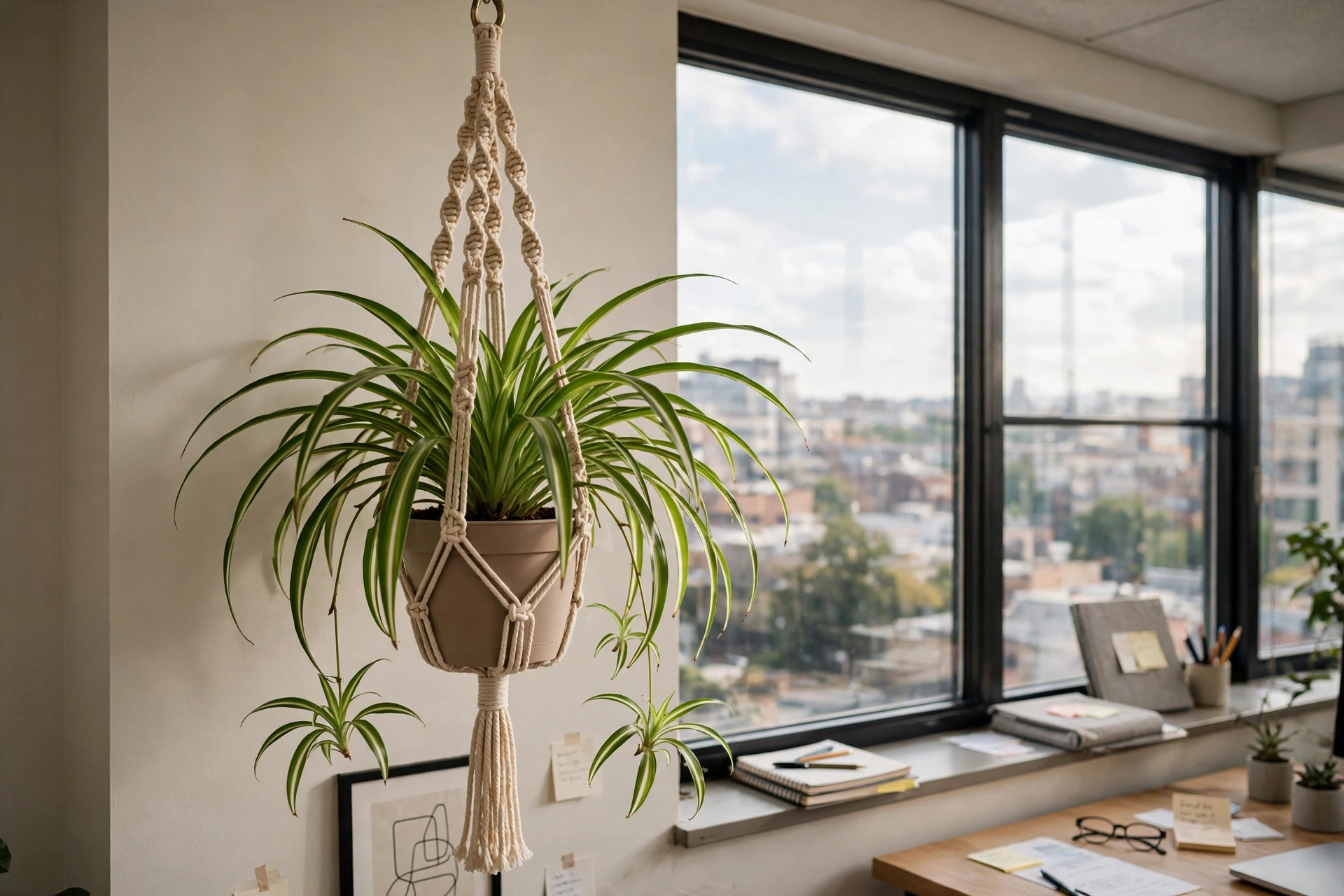
When the desk is fully claimed by monitors and notebooks, go vertical: hanging plants use zero surface area. A macramé hanger with a spider plant or philodendron beside the window, or a wall-mounted planter with trailing vines, adds greenery without sacrificing a single inch of work space. Hanging plants also improve the video-call background, filling the frame’s edges with life. Make sure hangers are anchored into studs or solid drywall anchors — a falling plant mid-meeting is memorable for the wrong reasons. Water over the sink to avoid drips on electronics below.
7. Try a Peace Lily for Low Light and Blooms
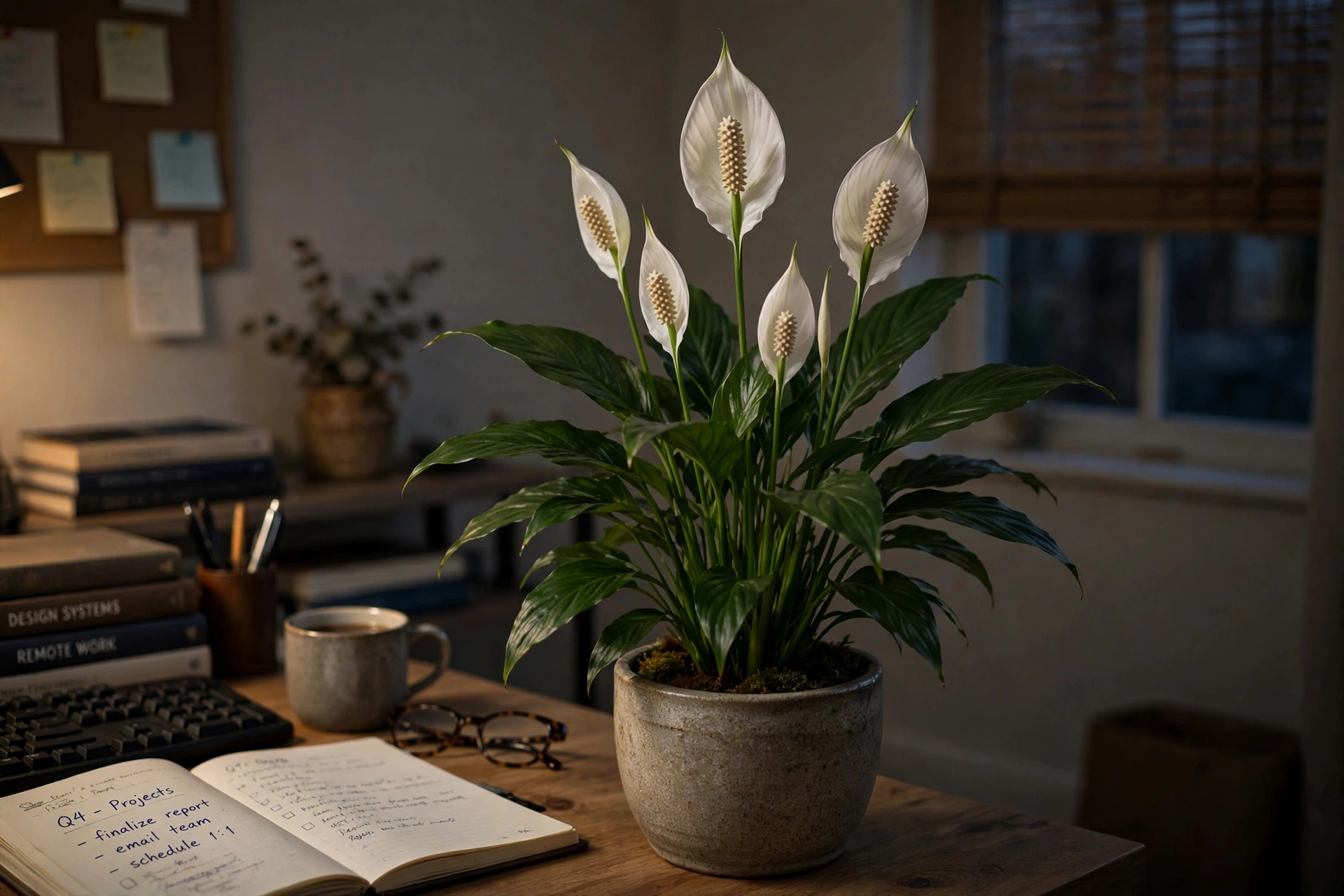
The peace lily is one of the few office plants that both tolerates low light and actually flowers, sending up elegant white spathes even away from windows. Its lush, arching leaves look soft and welcoming — a nice counterpoint to angular office furniture. It even tells you when it’s thirsty by dramatically drooping, then perks up within hours of watering, which makes it ideal for beginners. Keep soil lightly moist and wipe leaves occasionally to keep them glossy. Note it’s toxic to pets, so cat owners should choose another option.
8. Grow Herbs on a Sunny Sill
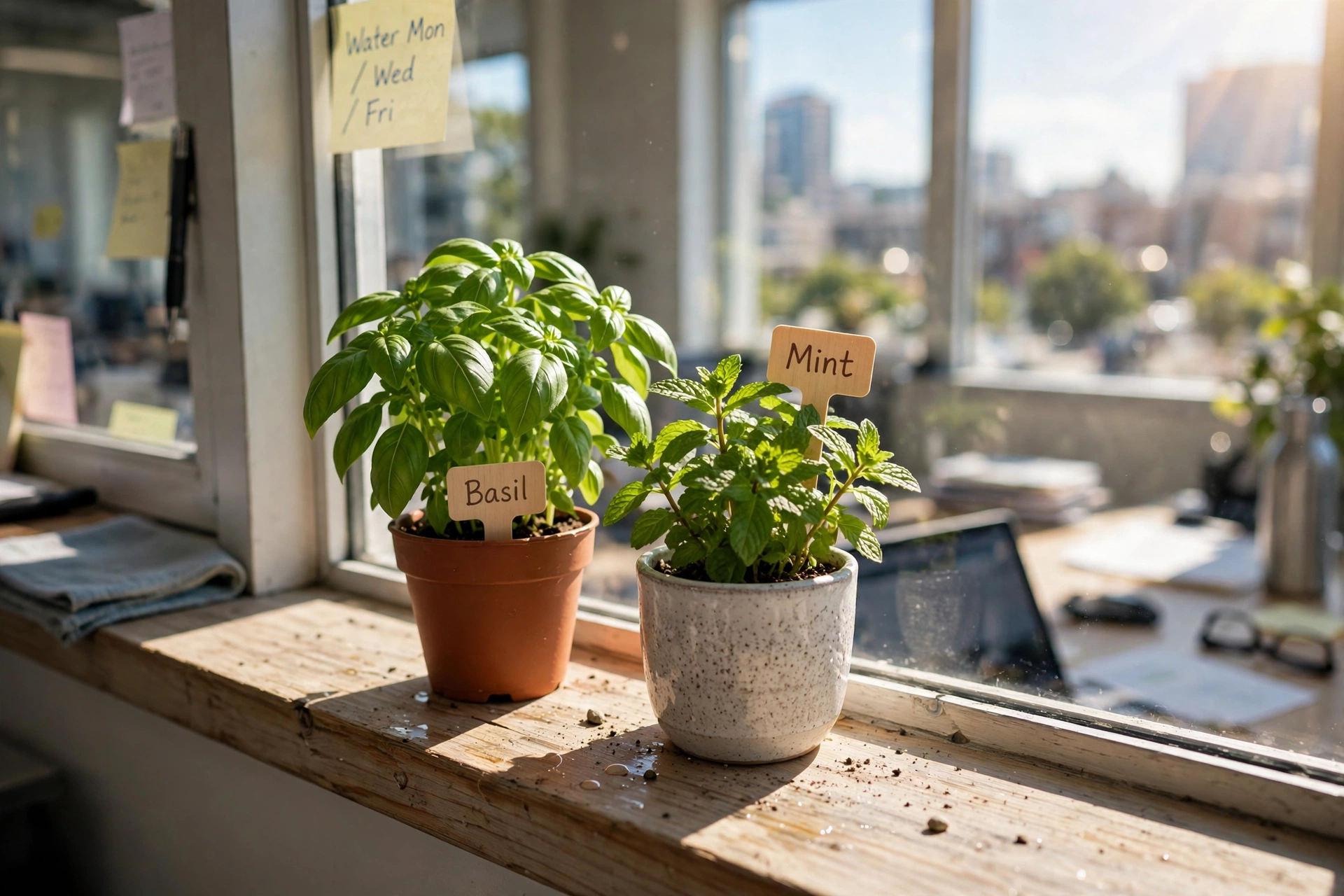
A sunny office windowsill can double as a tiny herb garden: basil, mint, chives, and rosemary all grow happily indoors with four to six hours of direct sun. Fresh herbs at arm’s reach upgrade both your cooking and your work breaks — snipping basil for lunch is a better reset than scrolling. Use pots with drainage and a sunny south or west sill; a small grow light fills in on dark winter days. Herbs need more water than succulents, so check soil every couple of days. The scent alone makes the office feel fresher and more alive.
9. Add a Tall Floor Plant for Corners
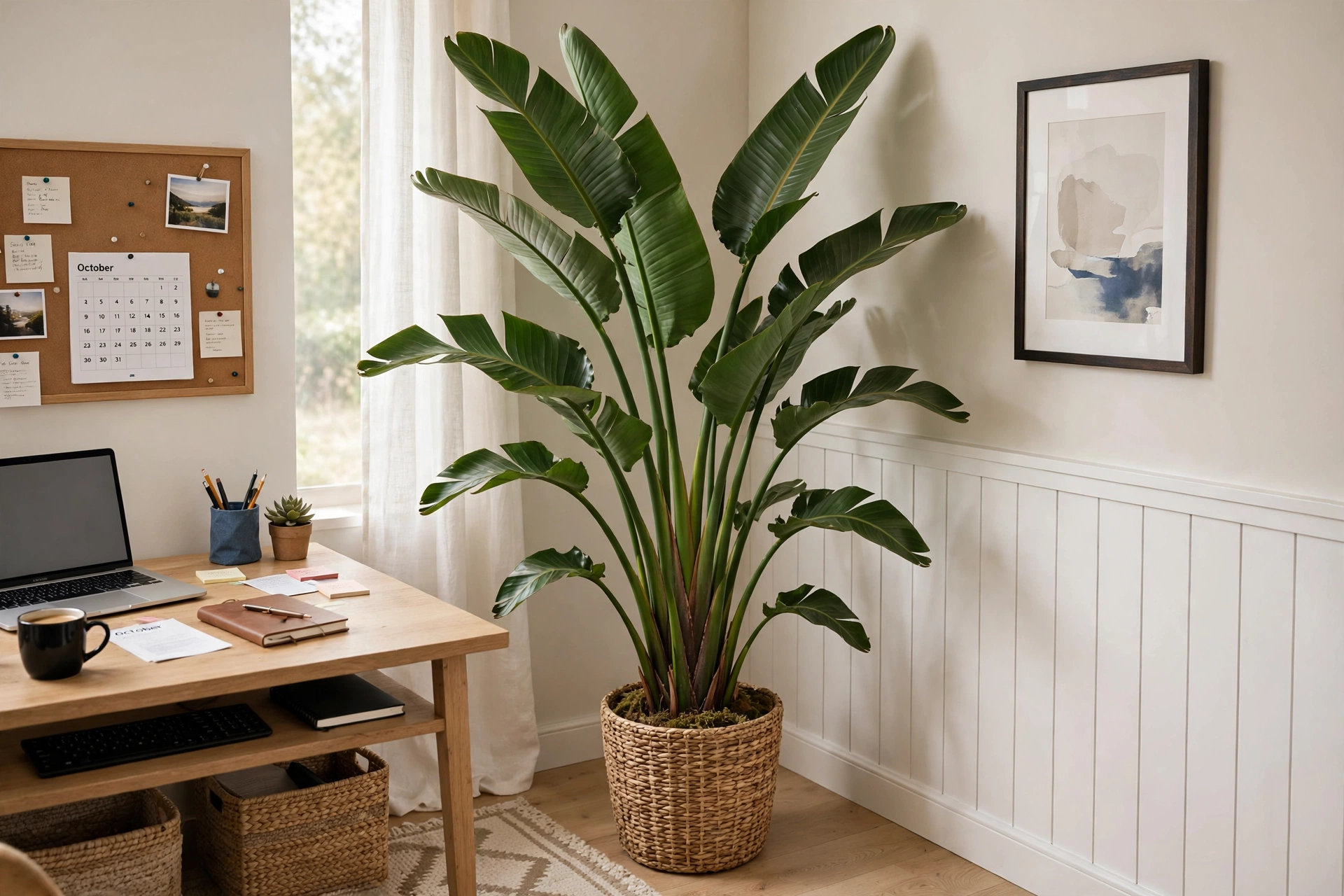
Empty office corners collect clutter; a tall floor plant collects compliments instead. A bird of paradise, dracaena, or parlor palm fills vertical dead space and makes the whole room feel finished and intentional. Floor plants also define zones in multi-use rooms — a big plant between the desk area and the rest of the room creates a soft boundary without furniture. Choose a pot with presence (at least 12 inches wide) so the plant reads as furniture-scale, and elevate it on a plant stand if you want extra height. One great floor plant beats five small ones for impact.
10. Use Air Plants Where Soil Can’t Go
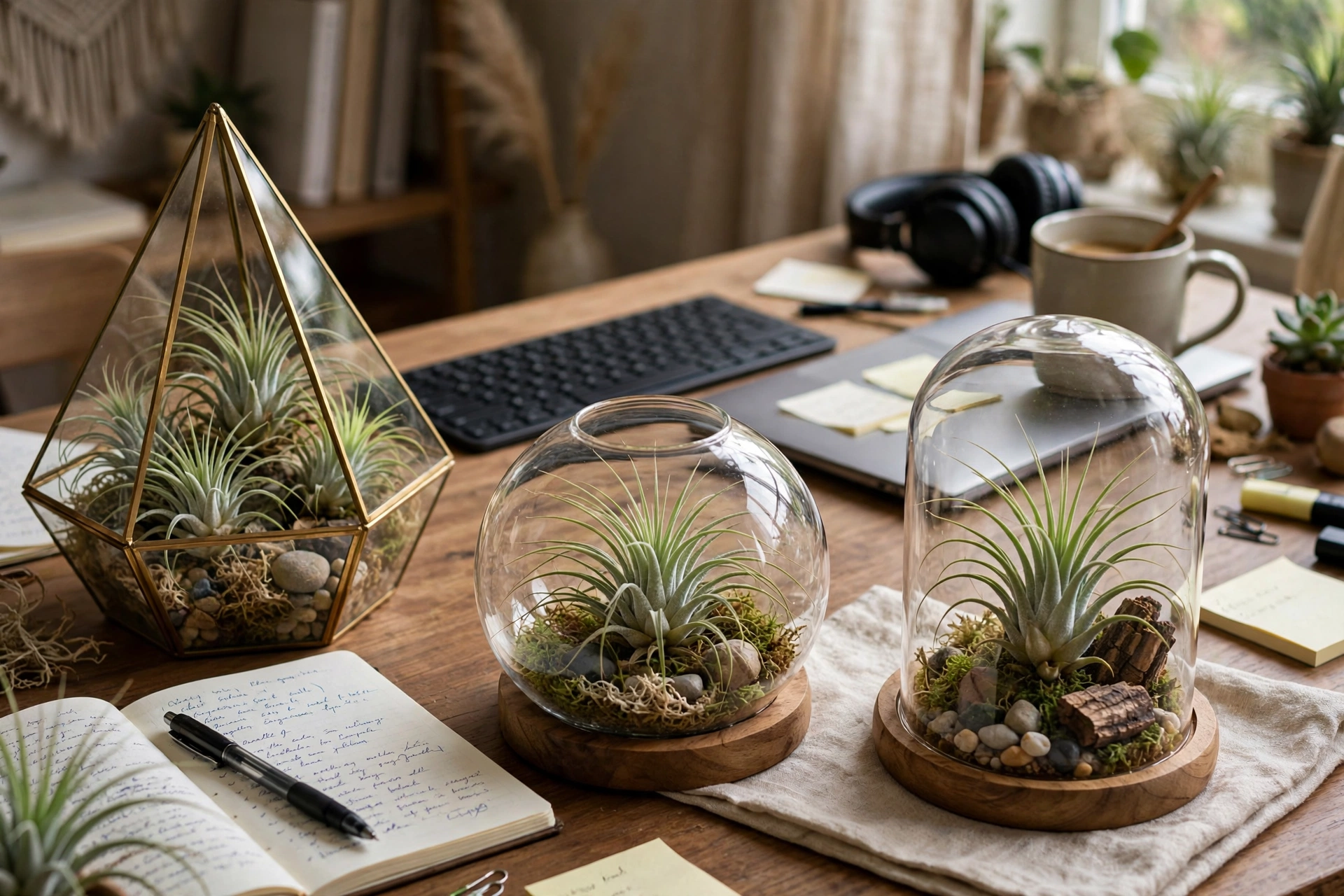
Air plants (tillandsia) need no soil at all — just bright indirect light and a weekly mist or soak — which makes them perfect for the odd spots of an office: tucked into a bookshelf, mounted on a cork board, displayed in a glass terrarium on the desk. Their sculptural, almost alien forms add modern-art interest in miniature. Because they’re soilless, there’s no mess near keyboards and papers. Group three to five in a shallow bowl or hang them in glass orbs near the window for a living installation that takes minutes to maintain.
11. Choose Pet-Safe Plants
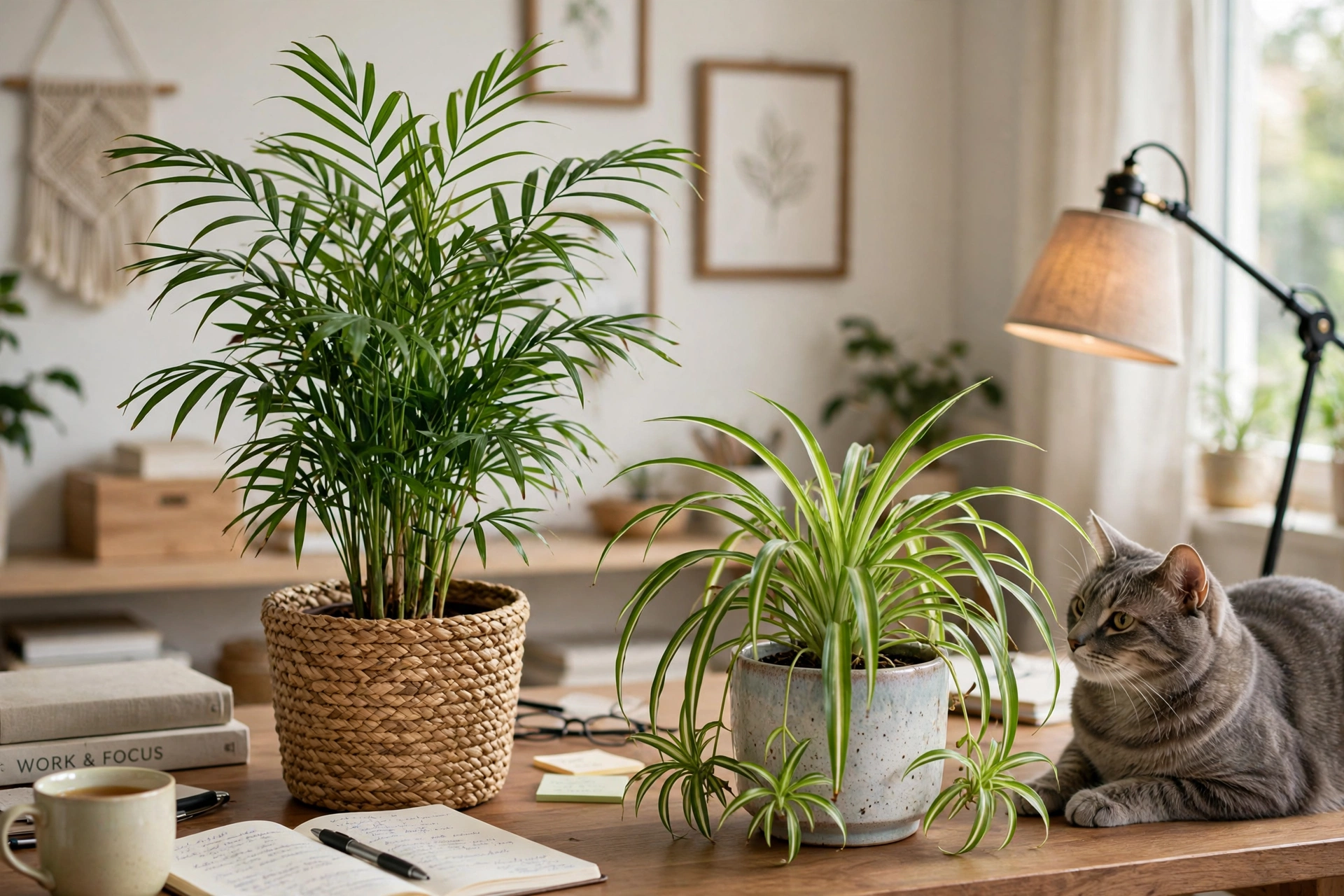
If your office has a four-legged coworker, plant choice matters: many popular office plants (pothos, ZZ, peace lily, snake plant) are toxic to cats and dogs. Build your greenery around pet-safe stars instead — parlor palm, spider plant, Boston fern, calathea, and peperomia are all non-toxic and office-tough. Hang trailing pet-safe plants out of batting range anyway, since even safe plants suffer from feline attention. A quick toxicity check before buying prevents vet visits and lets everyone in the office breathe easy.
12. Create a Plant Shelf Gallery
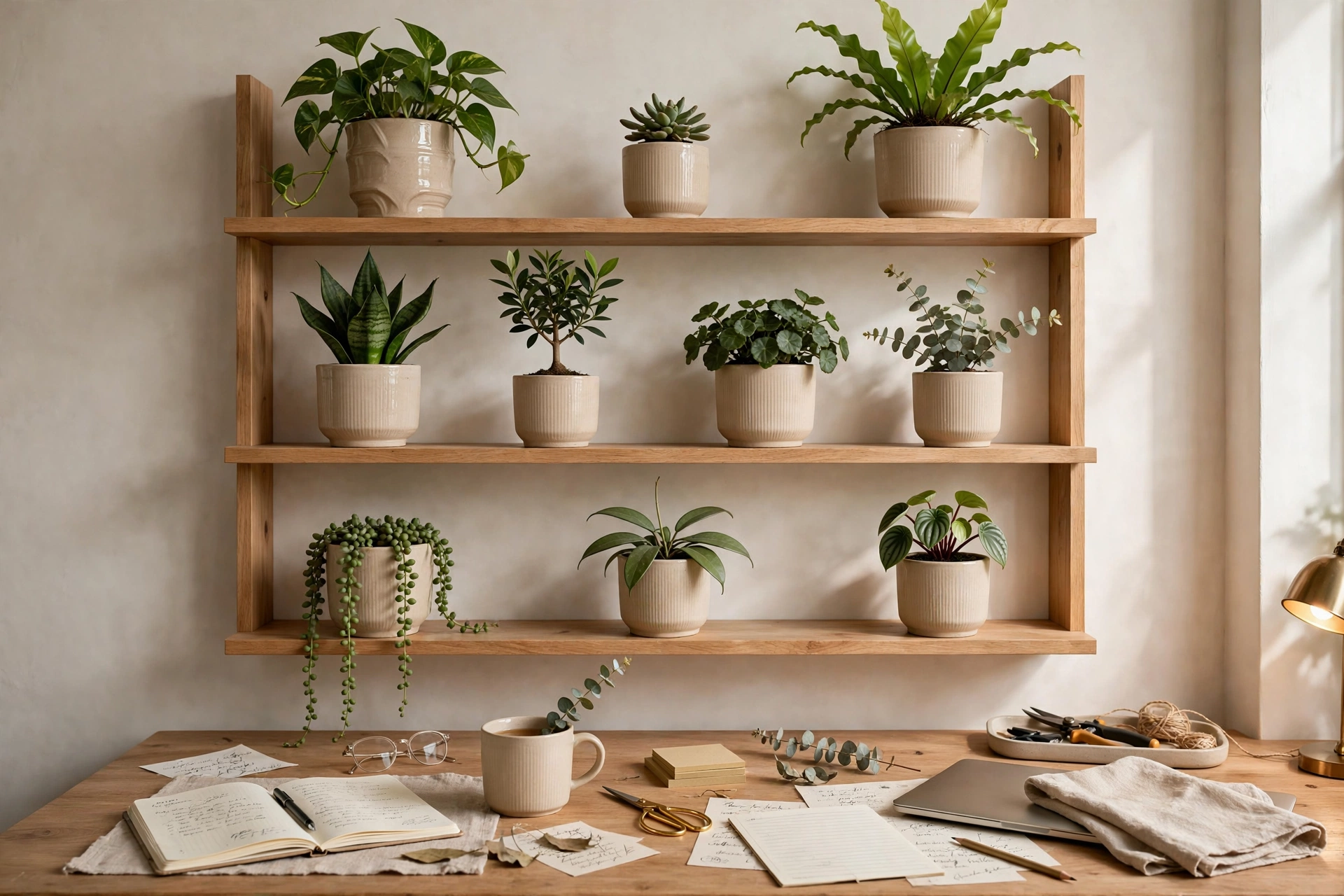
Dedicate one shelf — above the desk, beside the window, or on a bookcase — to a curated plant gallery: three to seven plants in coordinating pots at varied heights. Mix trailing, upright, and sculptural forms for a mini-jungle effect that reads as intentional design, not plant hoarding. Coordinating the pots (all terracotta, all white ceramic, all woven) is what makes a group look styled rather than random. This is also the ideal spot for propagation jars and cuttings-in-progress. For inspiration on dressing plant-filled rooms, these living room plant decor ideas for lush greenery scale the same principles to bigger spaces.
13. Add a Moss Pole for Climbing Plants
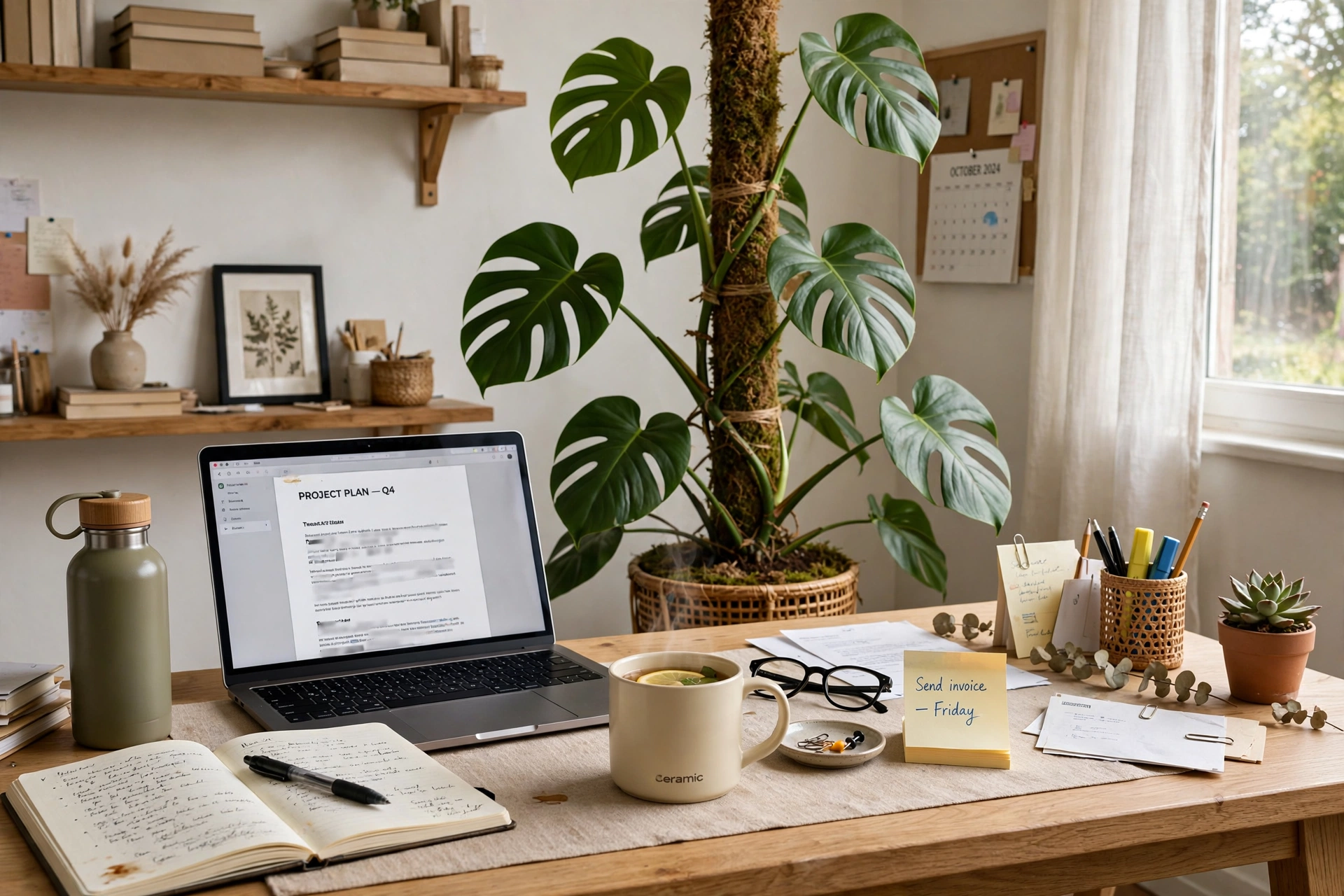
Give a monstera or philodendron a moss pole and watch it transform: climbing support encourages bigger, fenestrated leaves and a lush vertical habit instead of a sprawling mess. A moss pole takes up almost no floor space while adding serious height and drama — perfect for the corner behind a desk. Keep the pole lightly moist so aerial roots grip it, and tie new growth loosely with plant Velcro. The result looks like a professional conservatory specimen and becomes the office’s living sculpture. Even a small monstera on a two-foot pole makes a striking statement.
14. Keep It Alive With a Watering Routine
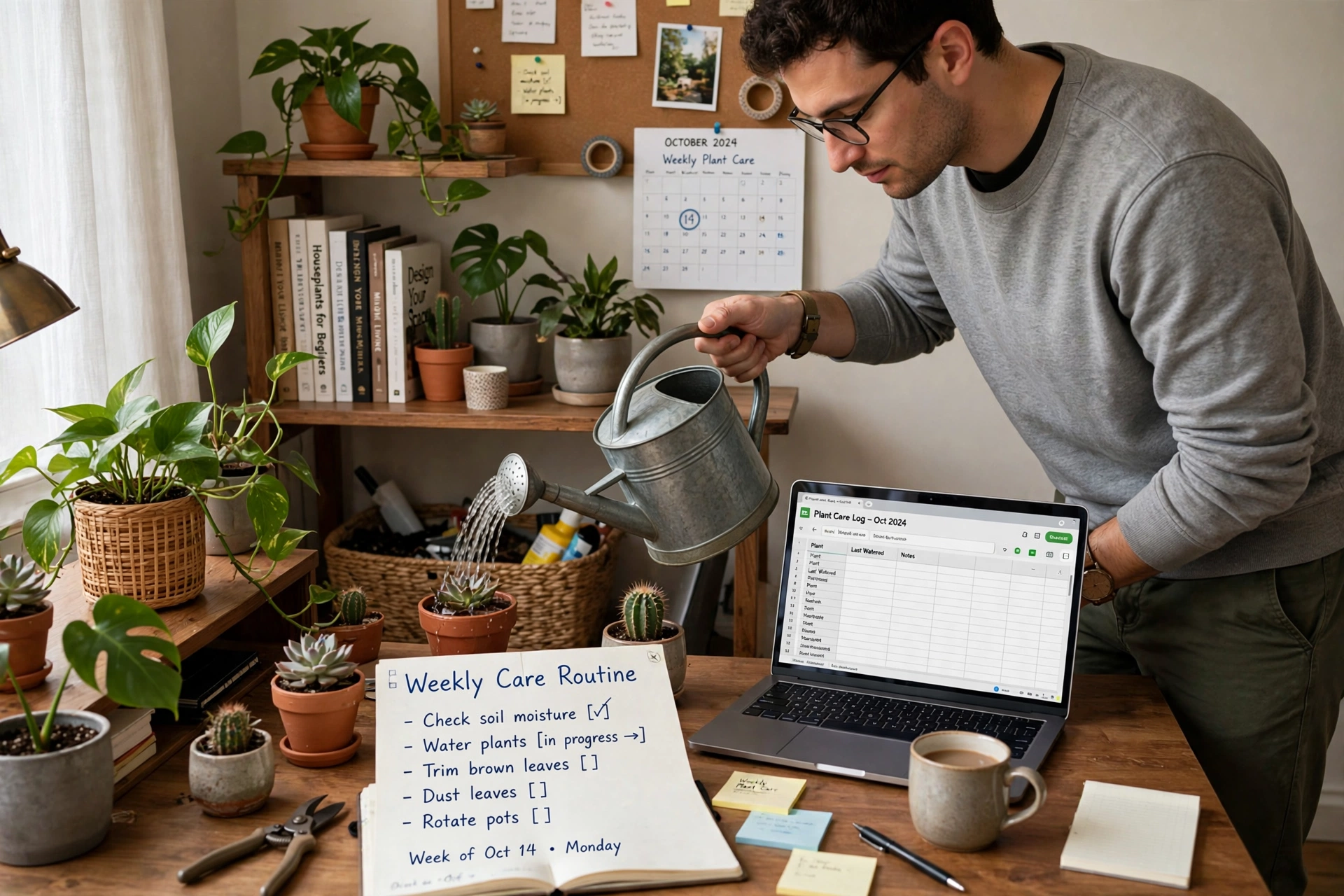
The best plant idea is a system: most office plants die from irregular care, not difficult needs. Pick one watering day per week, check each plant’s soil with a finger (water only if the top inch or two is dry), and empty saucers so roots never sit in water. Group plants with similar needs together so care is consistent. A simple moisture meter — a few dollars — removes all guesswork for beginners. Set a phone reminder until the habit sticks. Ten minutes a week keeps an entire office jungle thriving, and the routine itself becomes a pleasant screen break.
15. Fake It Smartly Where Real Plants Fail
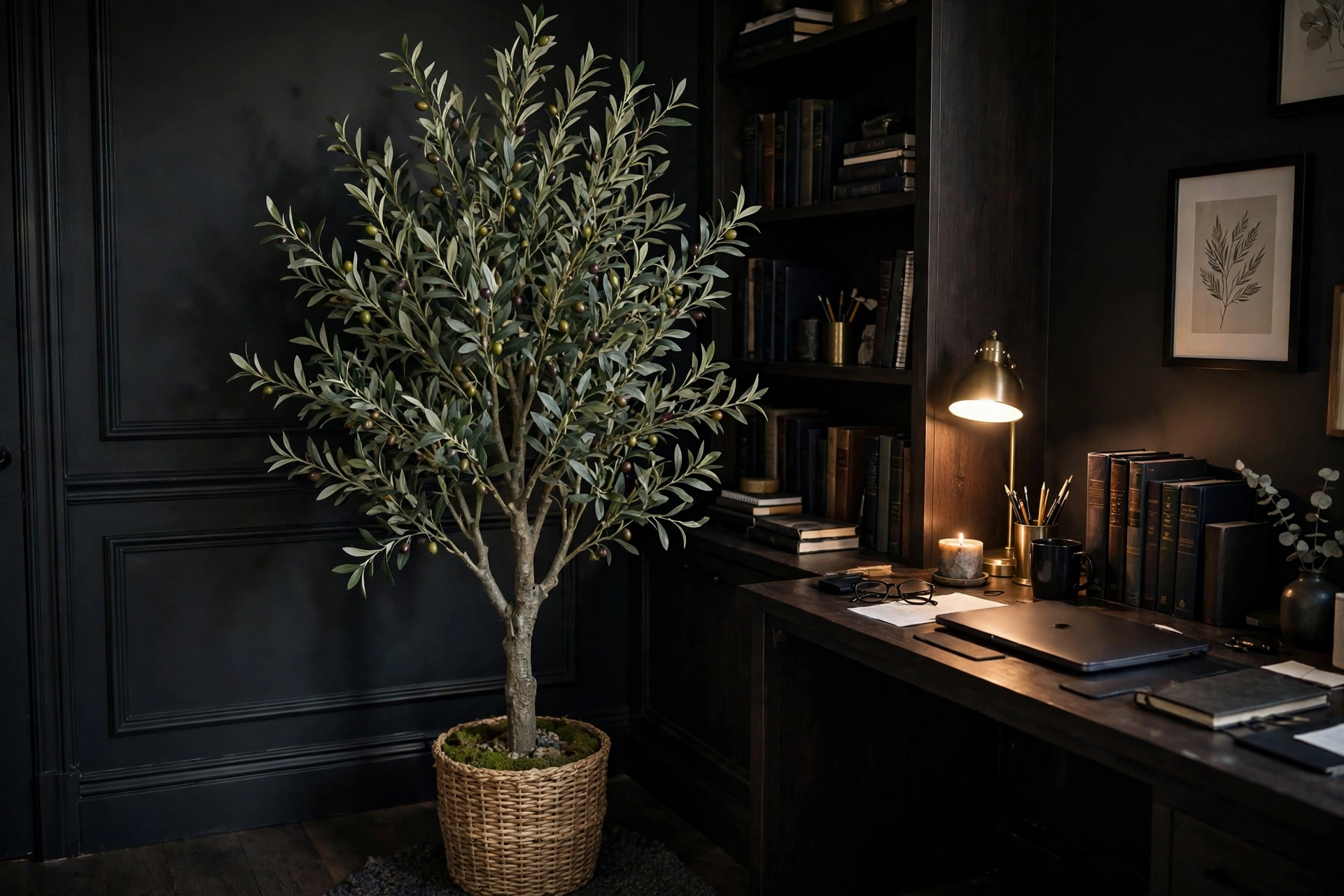
Some offices genuinely can’t support live plants — windowless interior rooms, weeks of travel, or a truly black thumb after honest effort. A high-quality faux plant beats a dead real one every time, and modern faux greenery is remarkably convincing. The rules for believability: choose simple forms (fiddle-leaf, olive, eucalyptus stems) rather than flowering fakes, keep them dusted, and place them where real plants could plausibly survive. Mix one or two fakes among real plants and no one will know. A beautiful faux olive tree in a dark corner looks infinitely better than a crispy real one — and the Spruce’s guide to nearly indestructible houseplants is worth a read before you give up on the real thing entirely.
FAQ
What are the best low-light plants for a home office?
Snake plant, ZZ plant, pothos, peace lily, and parlor palm all tolerate low light — the typical condition of a desk away from windows. The ZZ plant is the toughest of all, surviving near-darkness and months of drought. Even low-light plants do better with some indirect brightness, so place them as close to the light source as your layout allows, and rotate occasionally for even growth.
How many plants should I put in a home office?
Start with three to five and let the collection grow with your confidence: one statement floor or shelf plant, one or two desk plants, and one trailing plant. This gives you the fresher, calmer feeling without turning plant care into a second job. Small offices do better with fewer, larger plants than many tiny ones, which can read as clutter. You can always add more once the watering routine is second nature.
Do office plants really improve productivity?
Research consistently links indoor plants to reduced stress, better perceived air quality, and improved focus — and even the placebo of a greener, more cared-for space changes how a workday feels. Plants give eyes a natural resting point during screen breaks, which reduces fatigue, and caring for something living adds a small daily ritual of calm. The effect is real enough that many companies now design greenery into offices deliberately. For a deeper look at houseplant basics, the houseplant overview covers care fundamentals.
How do I keep plants alive in an air-conditioned office?
AC air is dry, so choose plants that tolerate low humidity (snake plant, ZZ, pothos) and group plants together to create a slightly more humid microclimate. Water a bit more often in summer when AC runs constantly, keep plants away from direct vent blasts, and mist humidity-lovers like ferns and calatheas occasionally. A small pebble tray with water under humidity-sensitive plants also helps without any equipment.
Which office plants are safe for cats and dogs?
Parlor palm, spider plant, Boston fern, calathea, peperomia, and African violets are all non-toxic to cats and dogs. Avoid pothos, snake plants, ZZ plants, peace lilies, and sago palms around pets — they’re popular office plants but toxic if chewed. When in doubt, check the ASPCA’s toxic plant database before buying, and hang even safe plants out of reach since curious pets will still damage the foliage.
Keep Exploring
Plants turn a workspace from a place you have to sit into a place you want to be. Start with one forgiving plant matched to your light, build the watering habit, and let the greenery grow with your work.
Once your plants are thriving, give the whole room the same care: our bathroom plant ideas for a fresh green retreat bring the same freshening power to the most humid room in the house.