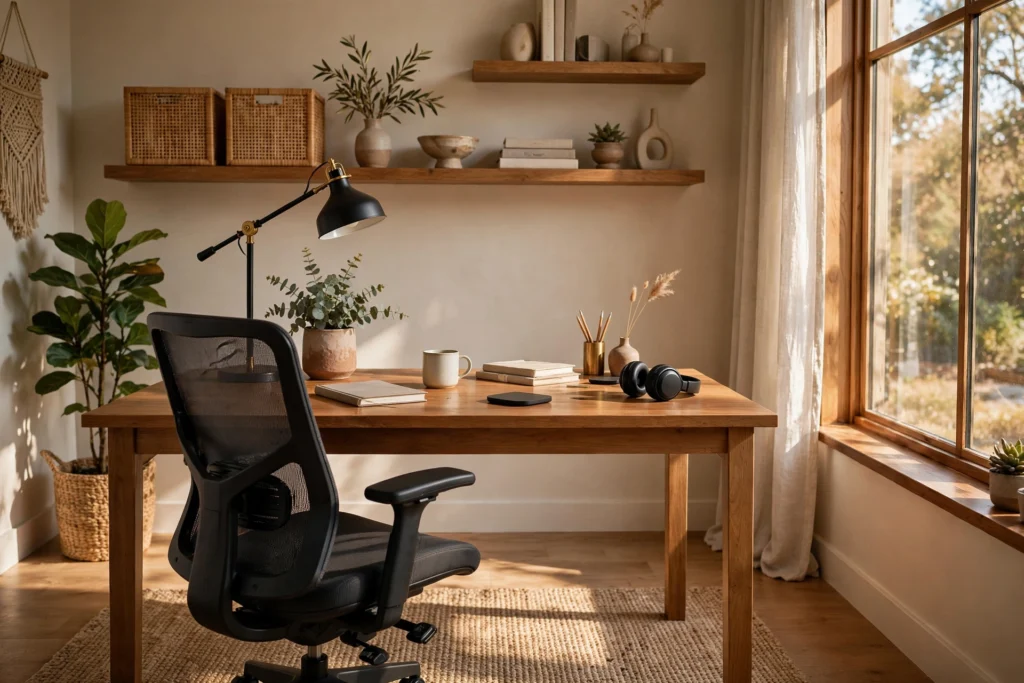

Your desk chair is the single most-used piece of furniture in your home office — it shapes your posture, your comfort, and honestly your willingness to sit down and work. These home office desk chair ideas focus strictly on the chair itself: ergonomic features that matter, upholstery and materials, and style pairings that make the chair look as good as it feels.
A quick note on scope: this guide is about chairs, not the whole desk setup. For the broader workstation picture — desk placement, monitor height, lighting — see our home office desk setup ideas for focus and comfort. Here, every idea below is about the seat you spend your day in.
1. Start With Ergonomic Non-Negotiables
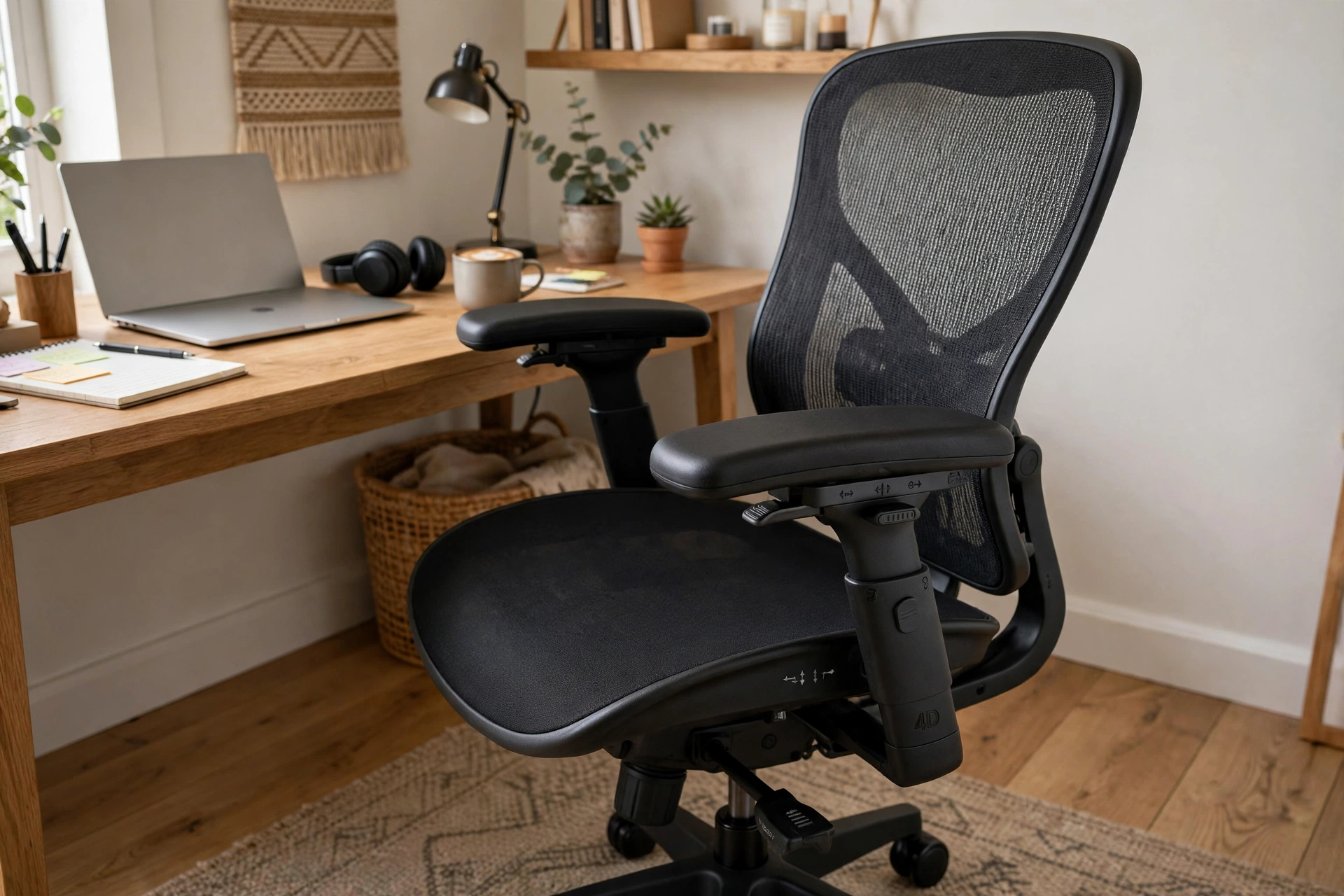
Before falling for a pretty chair, check the ergonomic fundamentals that protect your body through long workdays. A genuinely supportive desk chair offers adjustable seat height (so feet rest flat), adjustable lumbar support (to maintain the spine’s natural curve), seat-depth adjustment (two fingers of clearance behind the knees), and armrests that support without shrugging your shoulders. Tilt tension and a lockable recline let you shift postures through the day. If a chair lacks these adjustments, no amount of style compensates — you’ll pay for it in your lower back by Friday.
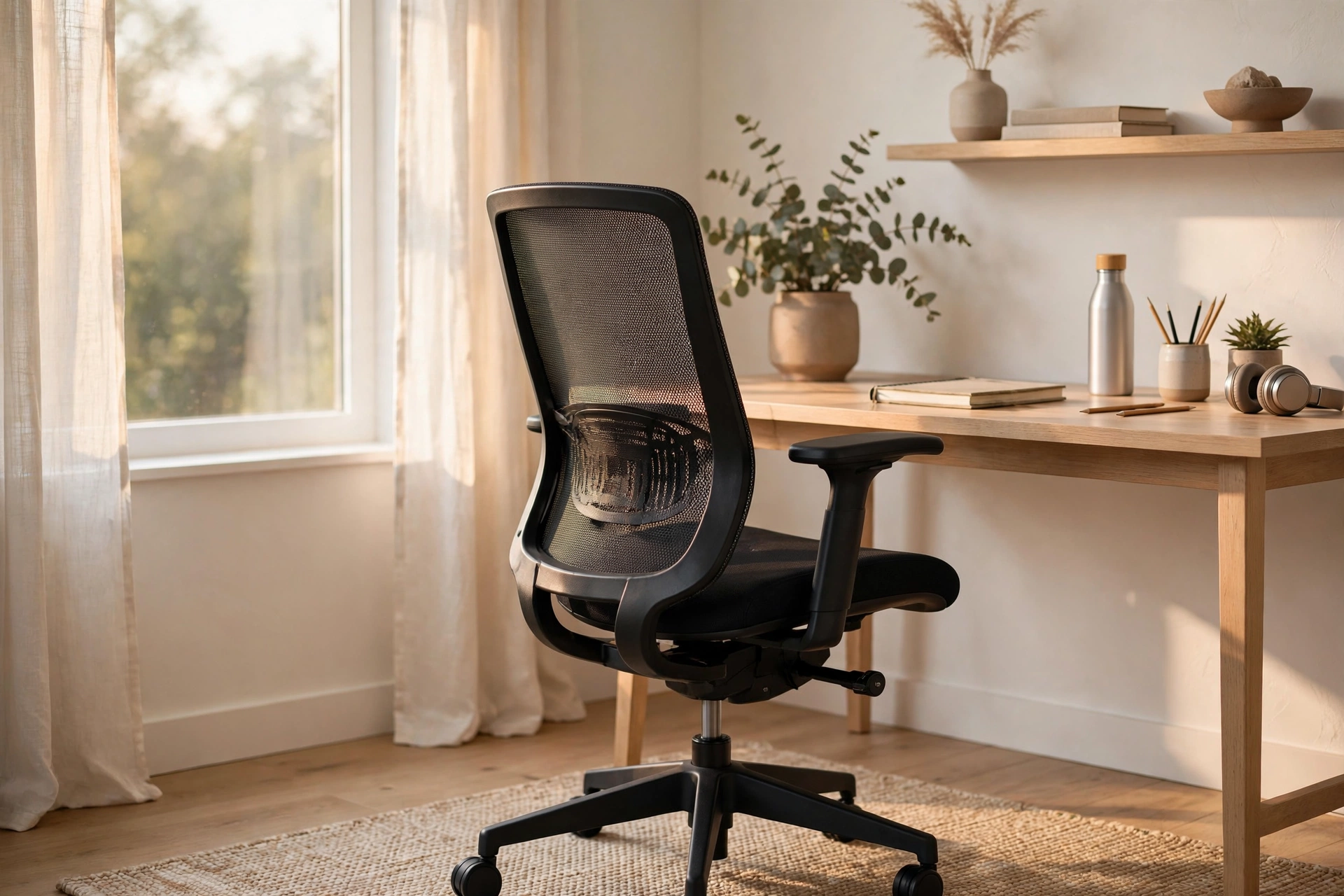
2. Choose Mesh for Breathability
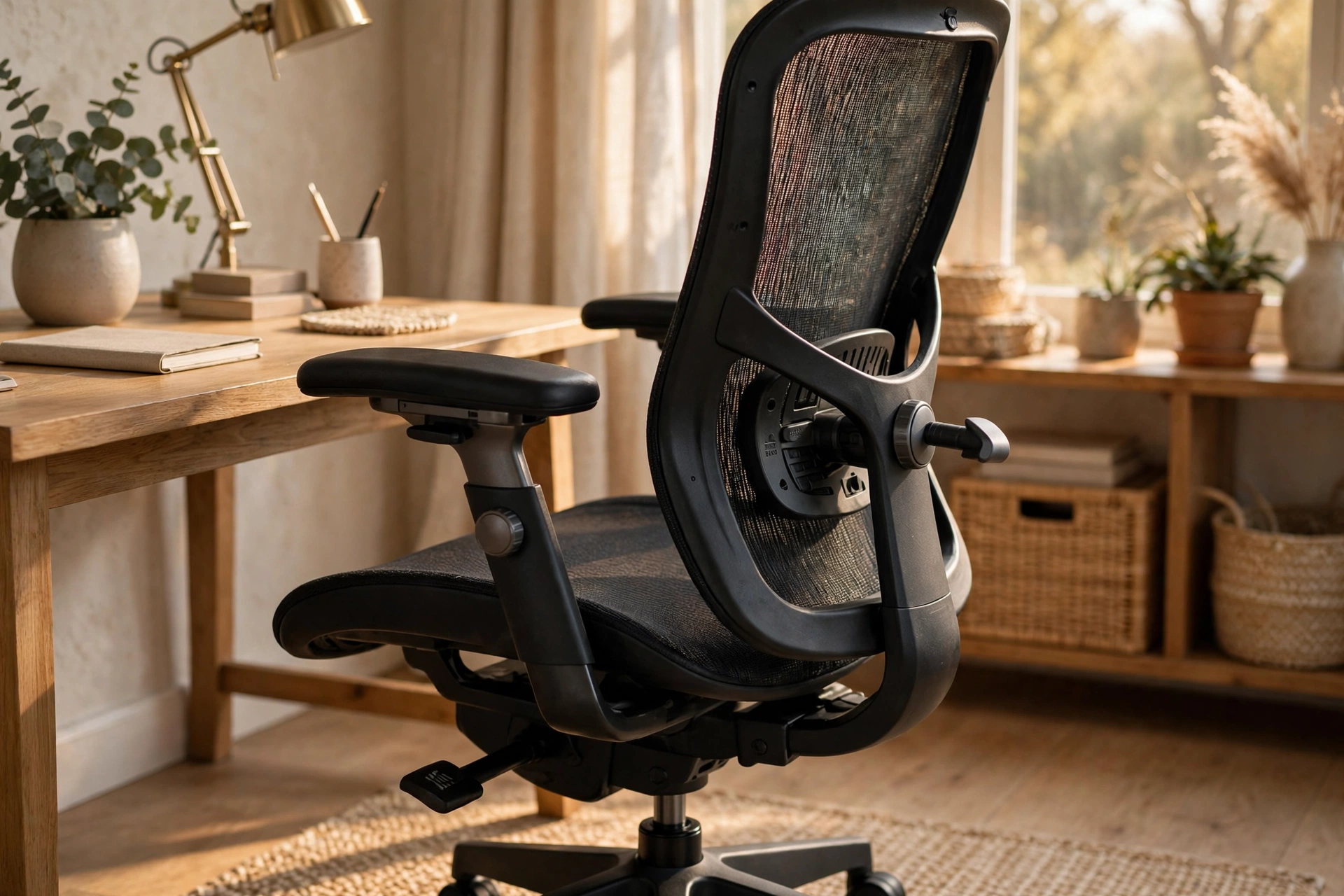
Mesh-back task chairs dominate home offices for good reason: the suspended mesh keeps air circulating, so you stay cool through long sessions and warm afternoons. Good mesh also flexes with your back, providing support that moves with you rather than a rigid panel you fight against. Look for high-tension, abrasion-resistant mesh with a strong frame — cheap mesh sags within a year. Mesh suits modern and minimalist offices beautifully, and its visual lightness makes small workspaces feel less crowded than a bulky upholstered chair would.
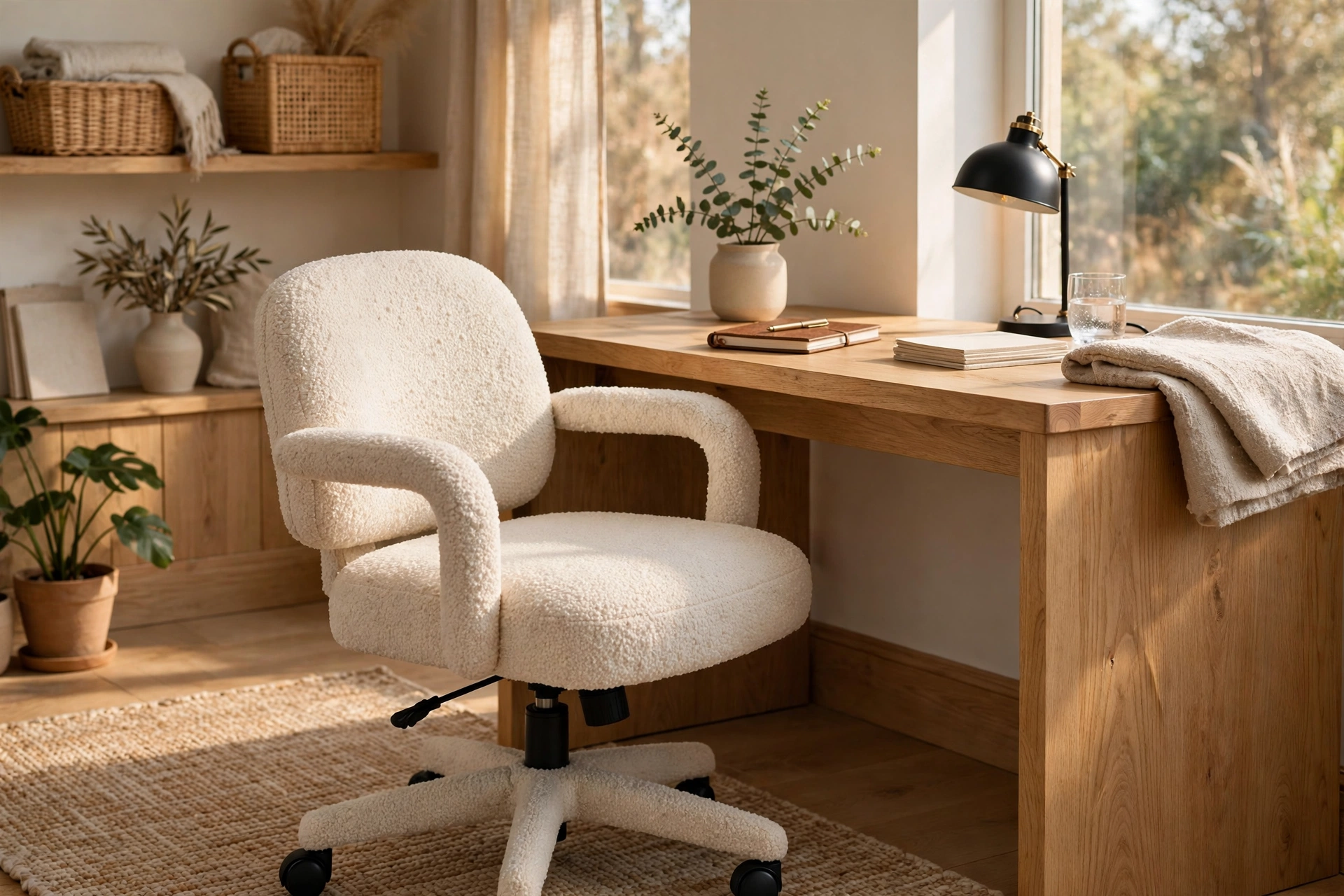
3. Try a Fully Upholstered Task Chair
If mesh feels too “corporate” for your home, fully upholstered task chairs bring residential warmth to the workstation. Fabric or leather upholstery over a molded foam seat reads like furniture, not office equipment — ideal when the office shares space with a living room or bedroom. Upholstered chairs in bouclé, velvet, or performance linen can be genuinely beautiful while still offering ergonomic adjustments underneath. The trade-off is warmth: upholstery runs hotter than mesh, so it’s best for climate-controlled rooms or shorter work sessions.
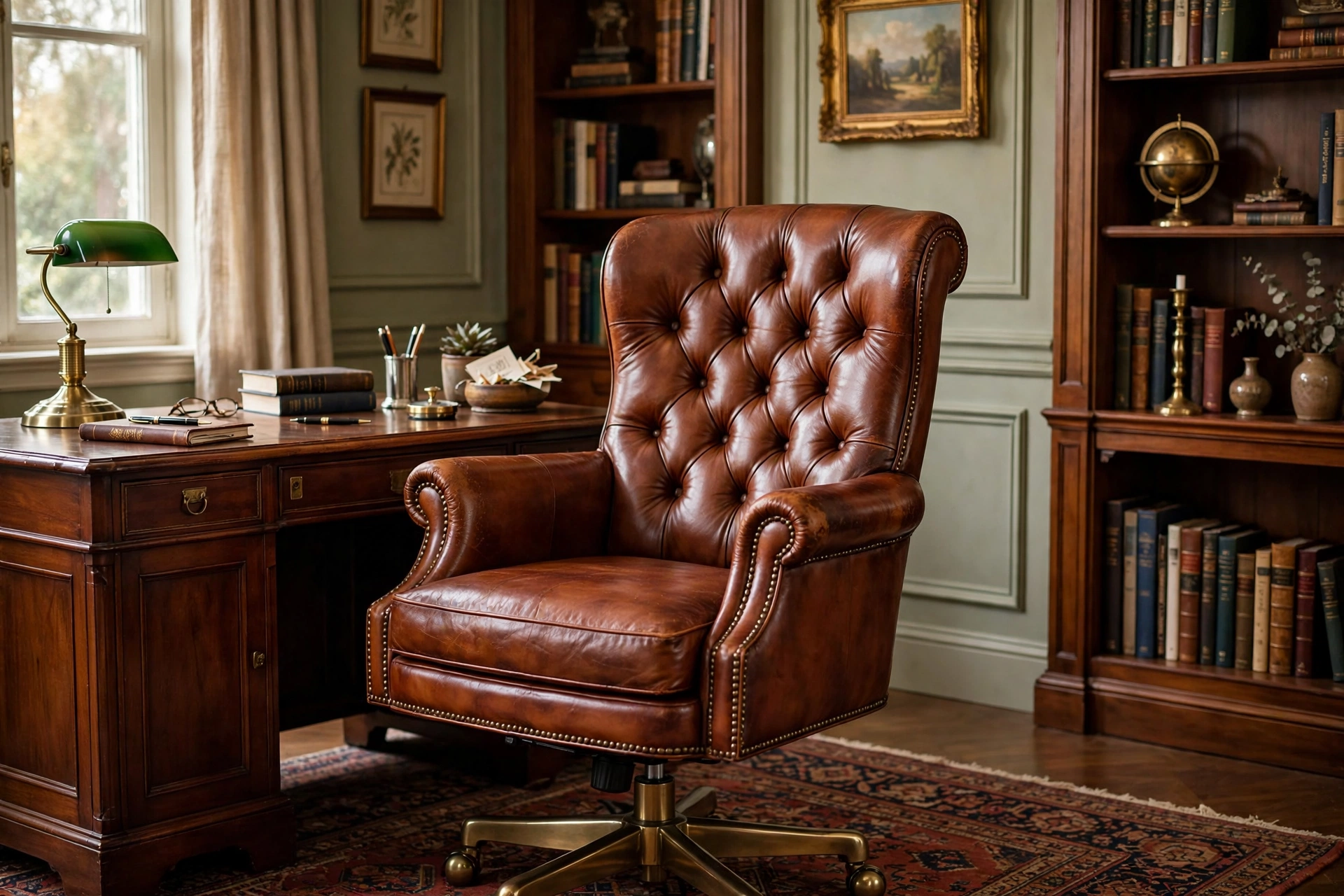
4. Consider Leather for a Timeless Look
A leather desk chair — genuine or high-quality faux — brings executive polish that ages beautifully. Leather develops character with use, wipes clean of coffee mishaps, and pairs with wood desks for a classic study or library-office feel. For all-day comfort, choose top-grain or bonded leather over stiff corrected-grain, and look for padded armrests since hard leather edges dig into forearms. Cognac and chestnut tones warm up traditional offices; black or espresso leather suits modern and masculine spaces. Condition the leather twice a year to prevent cracking.
5. Get the Seat Height Right
Chair height is the foundation of desk ergonomics, and it’s worth setting deliberately rather than accepting the default. Adjust so your feet rest flat on the floor (or a footrest), thighs are roughly parallel to the floor, and elbows bend at about 90 degrees when hands are on the keyboard. Most people sit too high, dangling feet or perching on the seat edge — both wreck posture. If you’re petite, a chair with a lower minimum height and a footrest beats a standard chair; if you’re tall, look for extended cylinder height and deeper seats. Revisit the setting whenever you change desks or add a keyboard tray.

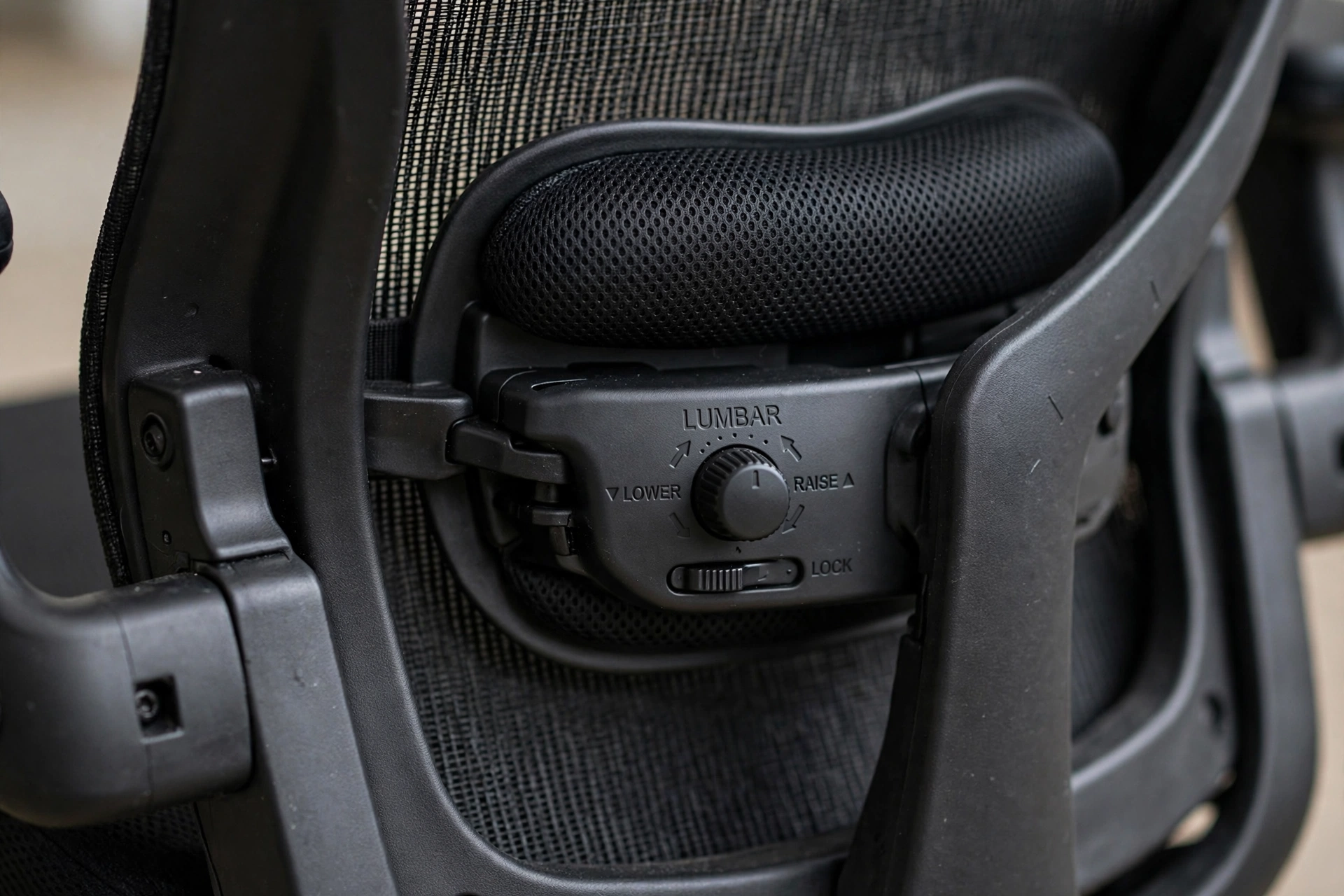
6. Prioritize Adjustable Lumbar Support
Lower-back support is the feature that separates chairs you tolerate from chairs you love. Your lumbar spine curves inward, and a flat chair back leaves that curve unsupported, causing the slouch-and-ache cycle. Look for chairs with height- and depth-adjustable lumbar — fixed lumbar pads hit the wrong spot for many body types. Dynamic lumbar that flexes as you move (found on premium ergonomic chairs) is the gold standard. When testing, sit fully back: you should feel gentle, even pressure in the small of your back, not a hard lump or nothing at all.
7. Pick Armrests That Actually Adjust
Armrests are the most underrated chair feature. Fixed armrests that are too high shrug your shoulders all day; too low and they’re decorative. The useful spec is adjustability in at least height and width (4D armrests add pivot and depth too). Set them so your shoulders relax and elbows rest at roughly 90 degrees. Better yet, choose flip-up or removable armrests if you push the chair fully under the desk or prefer arms-free typing. Soft polyurethane pads beat hard plastic for long sessions — your forearms will notice the difference by hour six.
8. Style a Mid-Century Accent Chair as Your Desk Chair
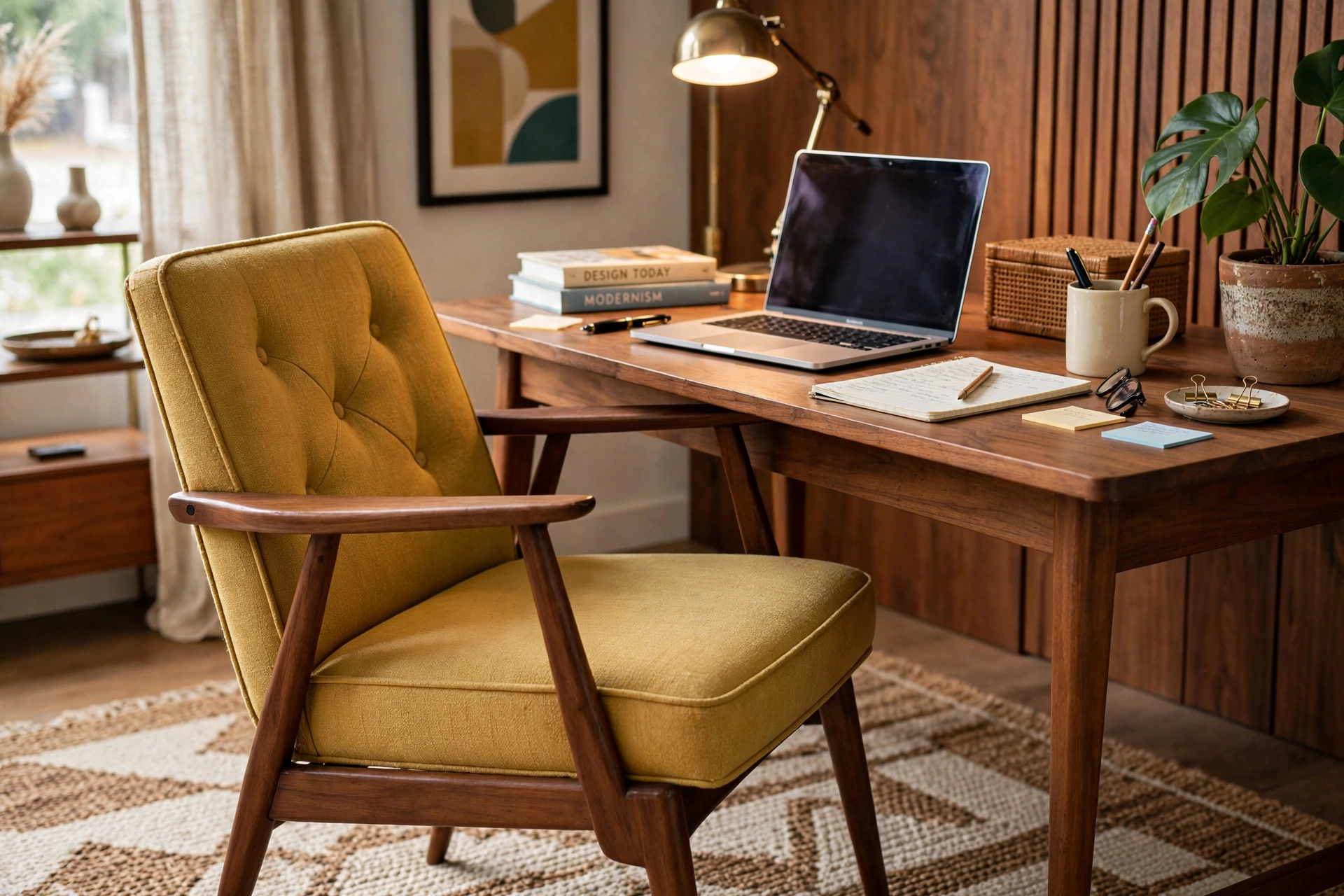
For home offices where aesthetics lead — styling nooks, creative studios, part-time workstations — a mid-century modern accent chair can absolutely serve as a desk chair. Look for dining-height or counter-height designs with supportive backs: molded plywood, upholstered slipper chairs, or wishbone-style seats paired with a cushion. They won’t match a premium task chair’s ergonomics, so reserve this approach for shorter workdays or pair it with a lumbar pillow and a footrest. The payoff is a workspace that looks like a designed room rather than a cubicle transplant.
9. Use a Drafting Chair for Standing Desks
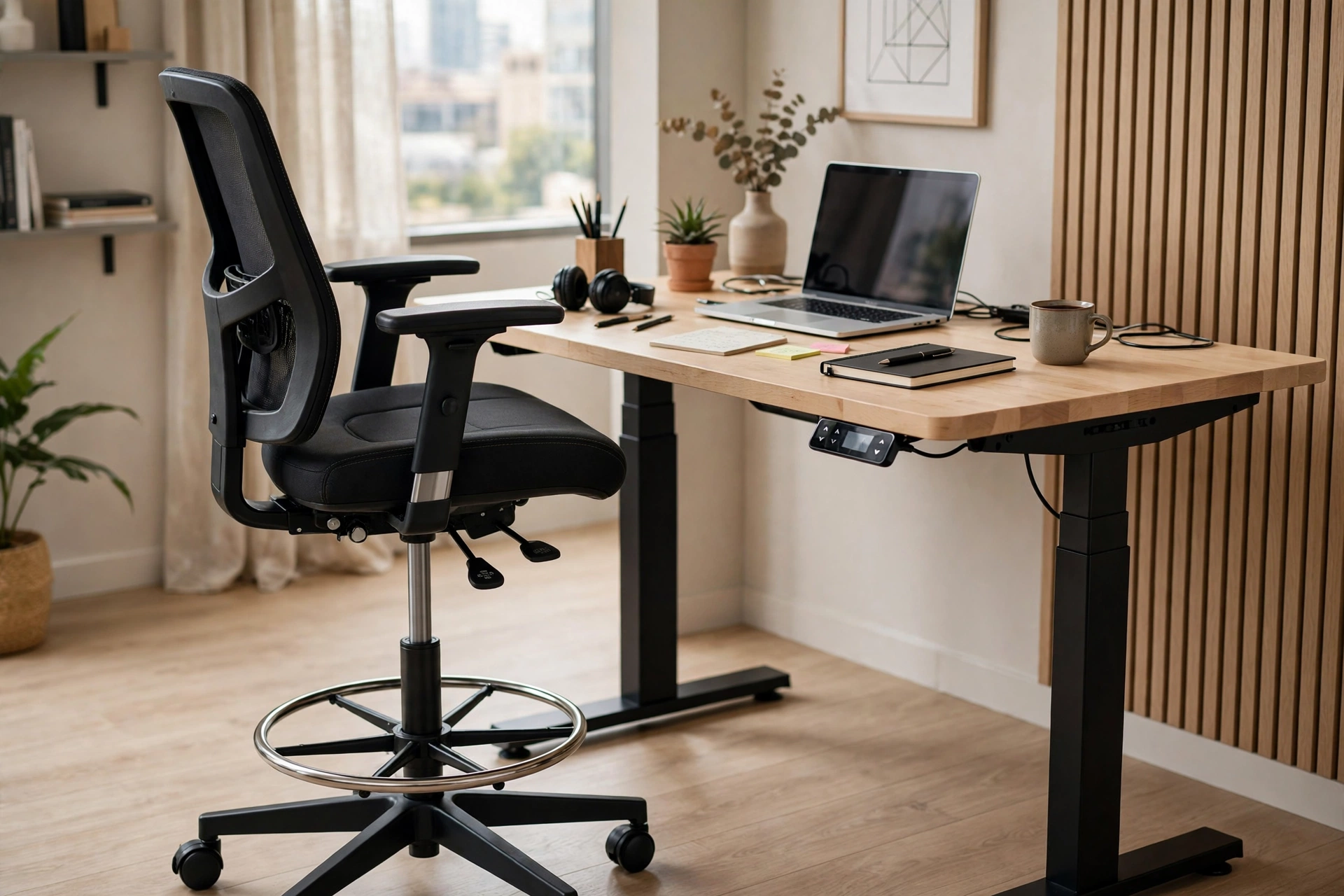
If you use a sit-stand desk, a standard task chair leaves you stranded at standing height. A drafting chair — with its taller cylinder and built-in footrest ring — bridges the gap, giving you a perch for the in-between heights where you spend most of a sit-stand day. Look for the same ergonomic adjustments as a task chair (lumbar, tilt, armrests) plus a sturdy foot ring you can actually rest weight on. Drafting chairs also suit tall desks, craft tables, and kitchen-island workstations. Measure your desk’s standing height before buying to get the cylinder range right.
10. Choose Fabric for Warmth and Personality
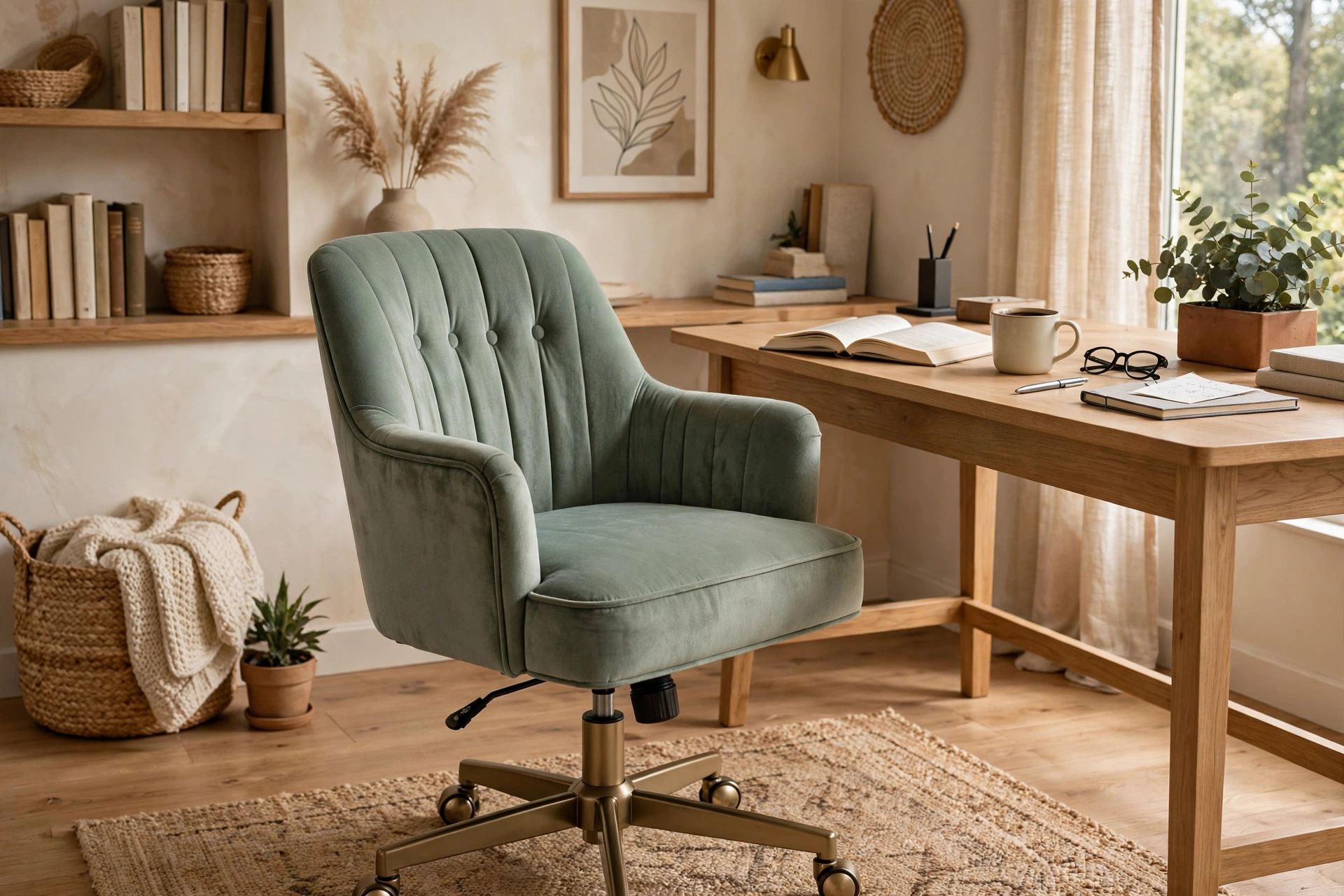
Fabric upholstery is where desk chairs get personal: performance weaves, bouclé, corduroy, and patterned textiles let the chair carry your office’s color story. A rust bouclé or sage velvet desk chair becomes the room’s accent piece, not just equipment. For practicality, choose stain-resistant performance fabrics (look for high double-rub ratings) in medium tones that hide wear. Removable, washable covers are a bonus for homes with pets. Fabric chairs pair beautifully with wood and rattan for bohemian, Scandinavian, and eclectic offices — and the office chair’s evolution from pure utility to design object explains why we now expect both comfort and style.
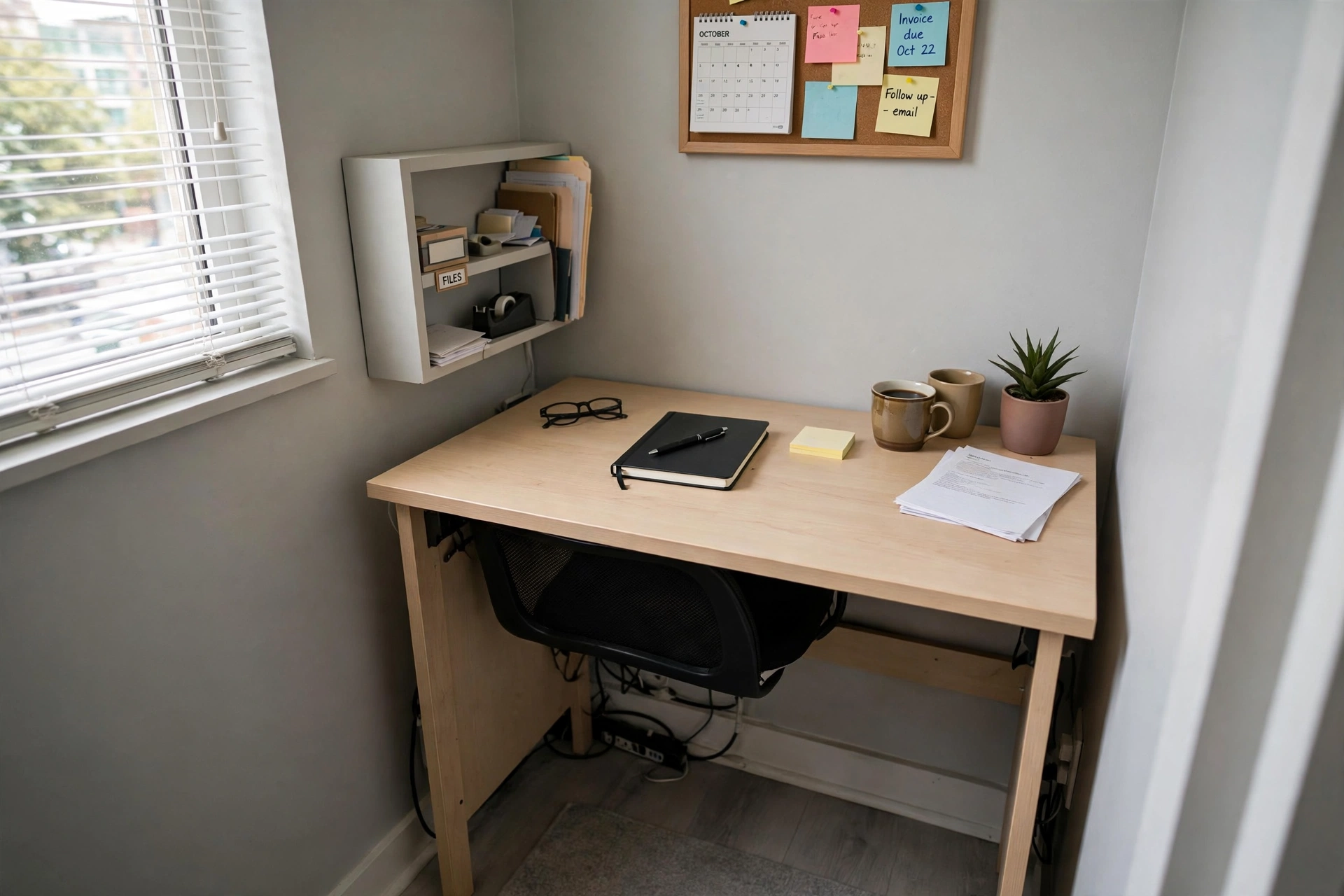
11. Go Armless for Small Spaces
In tight offices, armrests are often the first casualty — and armless task chairs are the answer. Without arms, the chair tucks fully under the desk, saving precious floor space and letting you pull close to the work surface. Armless designs also suit people who type with floating arms or use a keyboard tray. The compromise is real: no arm support means shoulders do more work, so armless chairs suit shorter sessions or pair well with an adjustable keyboard tray that brings work to you. For studio apartments and closet offices, the space savings usually win.
12. Add a Statement Chair as the Room’s Anchor
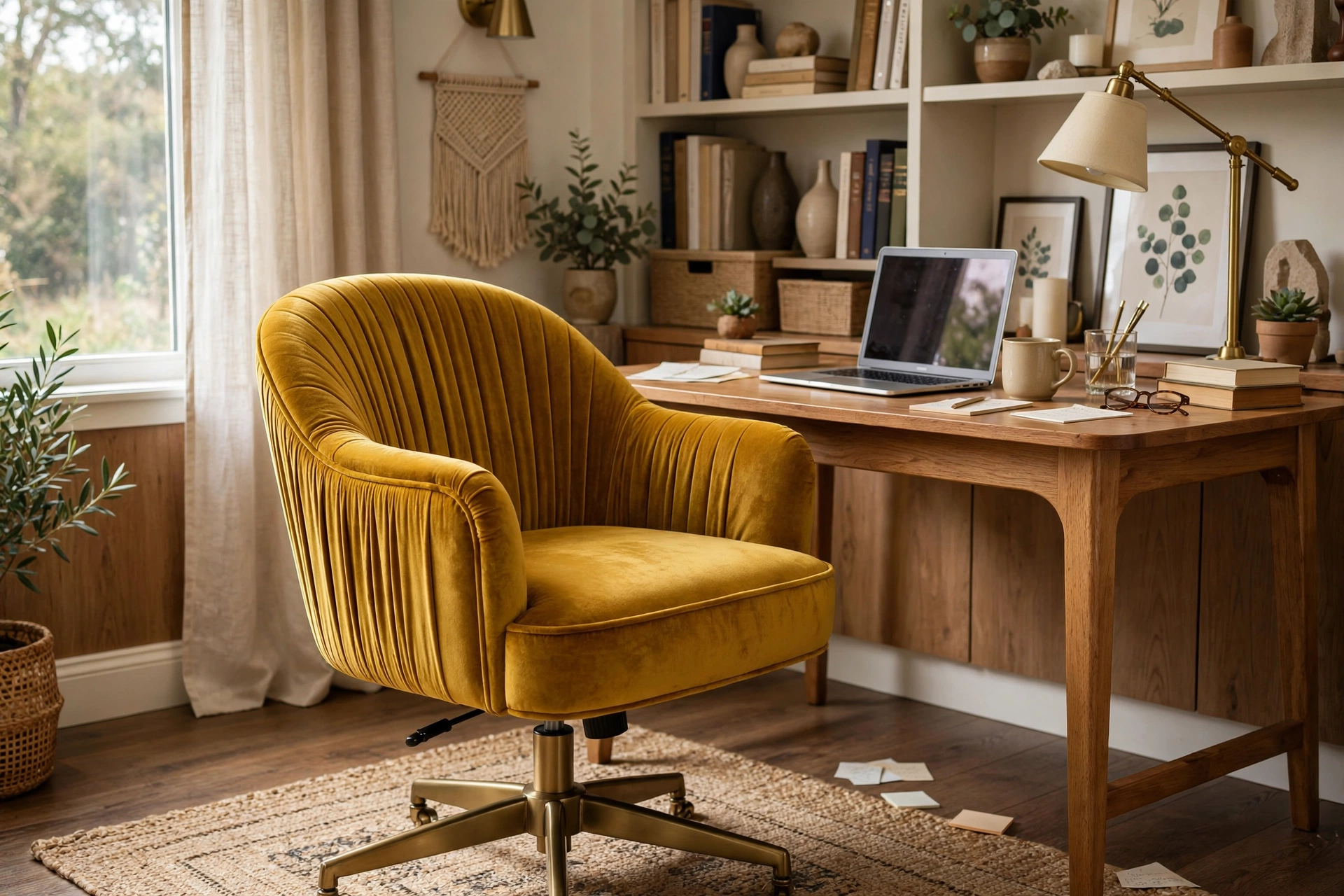
In larger home offices, the desk chair can be a genuine design statement — a sculptural form, a bold color, a vintage find reupholstered in something wonderful. A cognac leather executive chair, a mustard velvet swivel, or a beautifully restored mid-century piece anchors the room the way a great sofa anchors a living room. When the chair is the star, keep the desk quiet so they don’t compete. This approach works best when the office doubles as a showpiece — client-facing rooms, background-of-video-call spaces, or offices you’re simply proud of.
13. Test Before You Commit
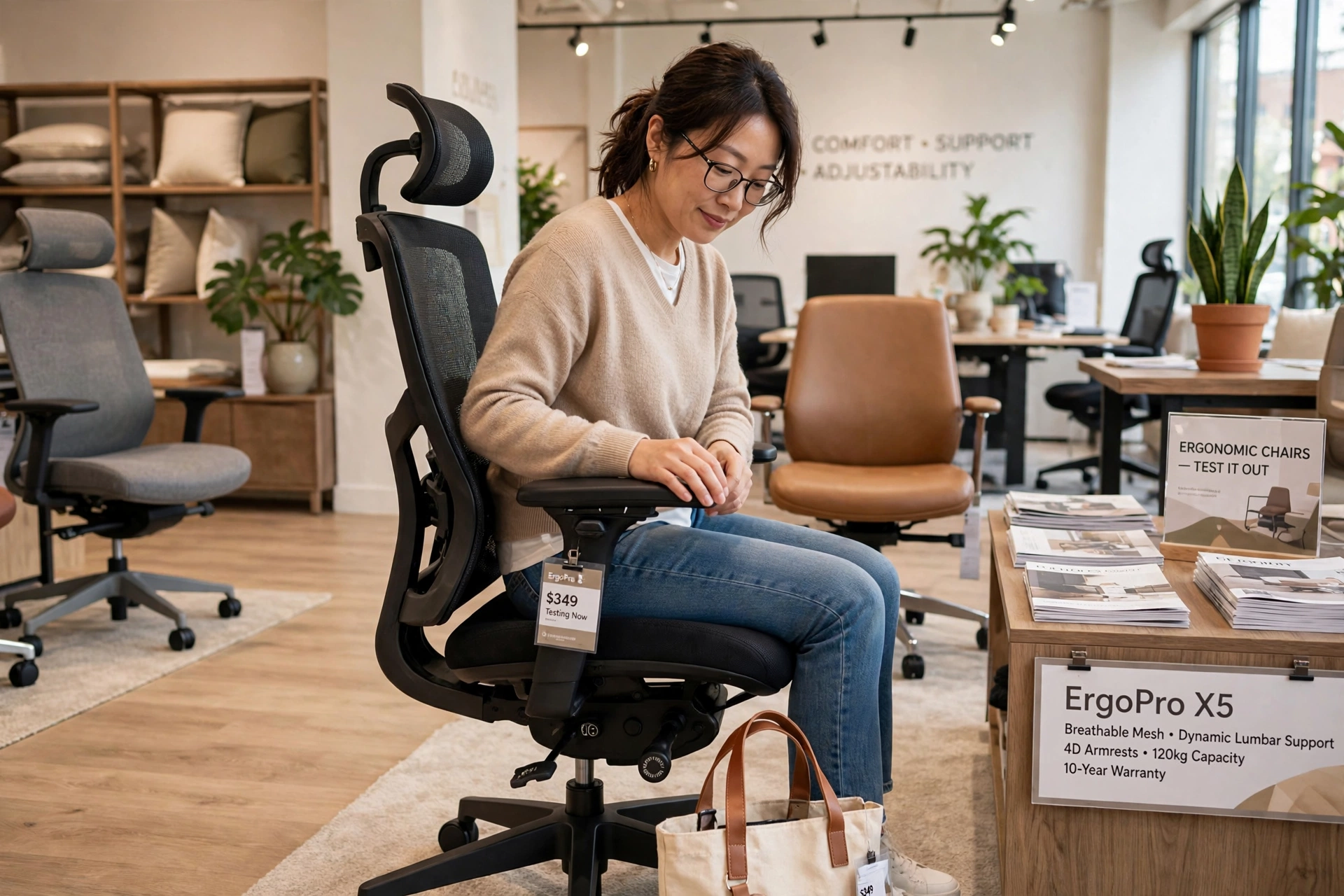
Chair comfort is deeply personal — what supports one body torments another. Whenever possible, test chairs in person: sit for at least fifteen minutes, adjust everything, and mimic your real work posture (not the showroom perky sit). Check return policies obsessively when buying online; the best ergonomic chair brands offer 30-day or longer home trials because they know fit can’t be judged from a spec sheet. Note pressure points, whether the seat edge cuts into your thighs, and whether the lumbar hits your actual lower back. A chair is a multi-year relationship — date before you marry.
14. Pair the Chair With the Right Rug
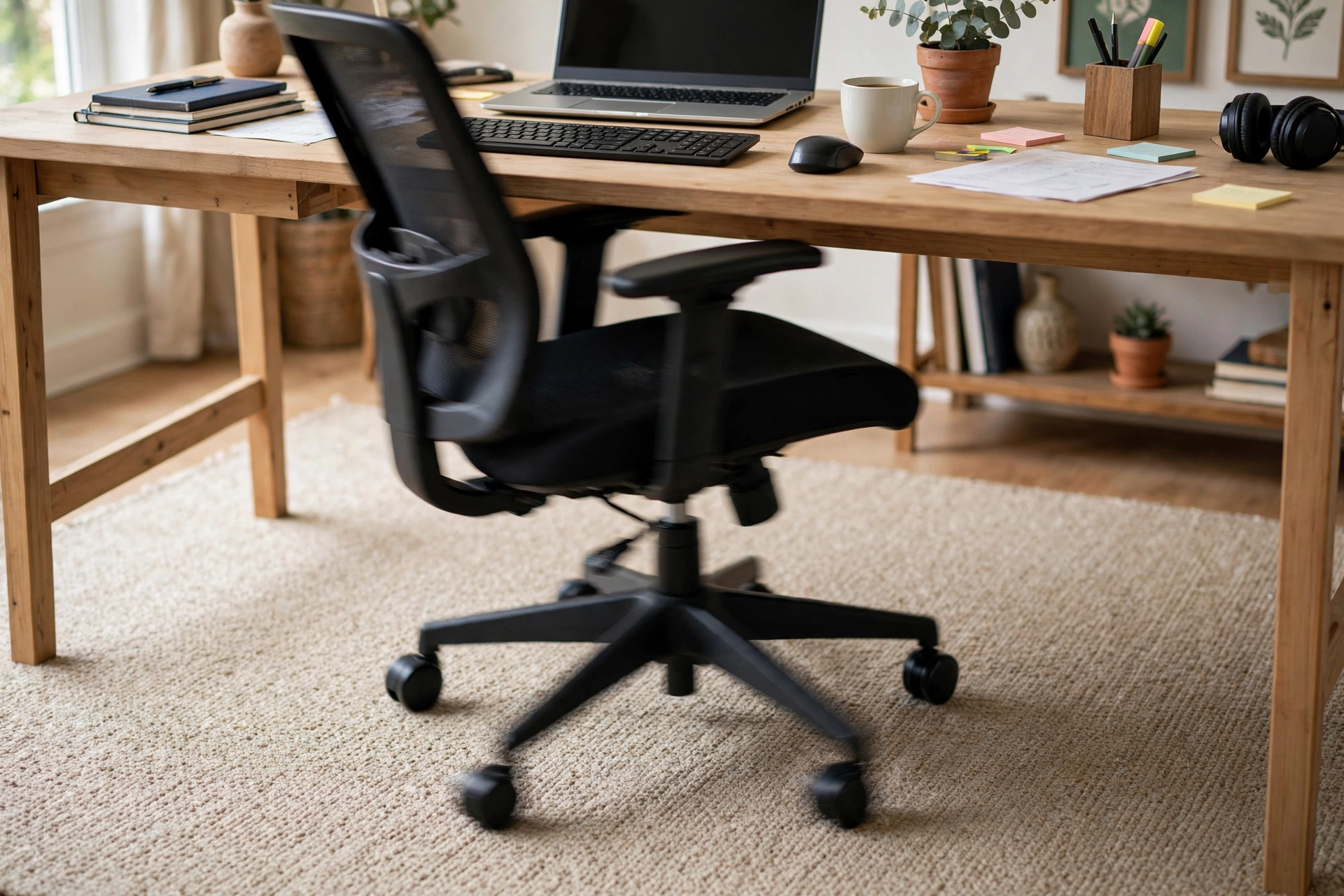
The chair doesn’t float in space — what rolls beneath it matters. A low-pile rug under the desk zone defines the workspace, protects floors from caster wear, and adds the softness hard office floors lack. But choose wrong and the chair fights you: deep pile grabs casters and makes rolling exhausting. Stick to low-pile, flatweave, or specially rated office rugs, and size it generously — the chair should stay on the rug through its full range of motion. Alternatively, a clear chair mat over carpet gives smooth rolling without hiding the floor. Our home office rug ideas for a grounded focused workspace cover sizing and materials in detail.
15. Maintain Your Chair Like the Tool It Is
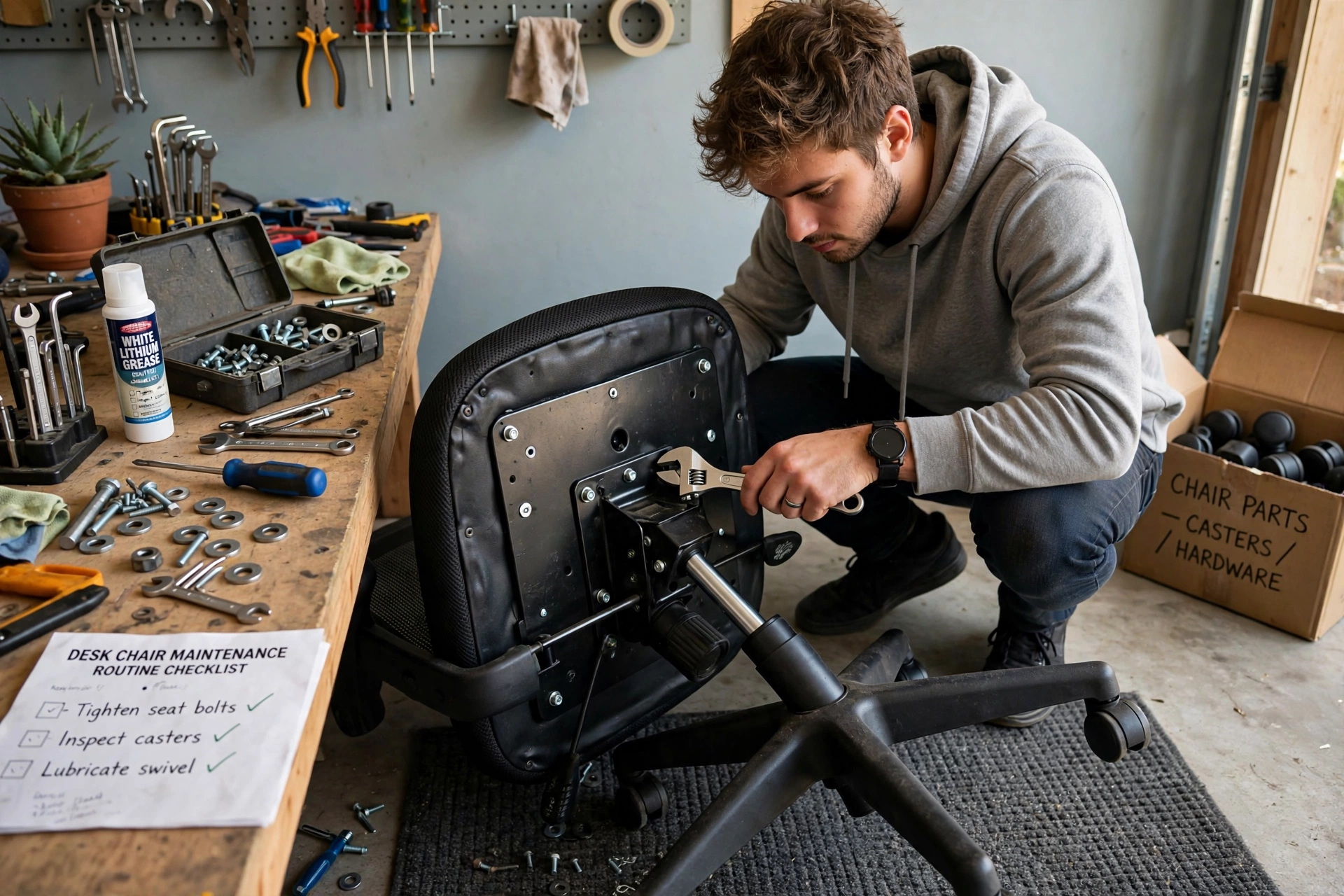
A great desk chair lasts a decade with basic care — and neglect kills even premium chairs early. Tighten bolts and check the gas cylinder yearly; a wobbly chair is a fixable chair. Vacuum fabric upholstery monthly and spot-clean promptly; condition leather twice a year. Keep mesh backs free of abrasion from rough clothing or bag straps. If the casters grind, replace them — quality rollerblade-style casters are cheap and transform both rolling and floor protection. A maintained chair keeps its ergonomic adjustments working as designed, which is the whole point of buying adjustability in the first place. For independent comfort testing across dozens of models, this hands-on roundup of tested office chairs is a solid second opinion before you buy.
FAQ
What is the most comfortable type of home office desk chair?
Comfort is personal, but chairs with full adjustability — seat height, seat depth, lumbar height and depth, armrest position, and tilt — consistently rate highest because they adapt to your body rather than forcing the reverse. Mesh backs suit warm rooms and long sessions; upholstered chairs suit style-led spaces. The “most comfortable” chair is the one adjusted to fit you, so prioritize adjustments over brand names.
How much should I spend on a home office desk chair?
Match the budget to your sitting hours: for 6+ hours daily, investing in a well-reviewed ergonomic chair pays for itself in comfort and durability — quality chairs last a decade. For 2–4 hours, a solid mid-range task chair with key adjustments suffices. For occasional use, a stylish accent chair with a lumbar cushion works fine. Whatever the budget, never buy a chair with zero adjustability for daily full-time work.
Are expensive ergonomic chairs worth it?
For full-time sitters, yes — premium chairs earn their price through precise adjustability, durable mechanisms, and warranties that often run a decade or more. Features like dynamic lumbar, weight-sensitive recline, and high-grade mesh genuinely reduce fatigue over long days. That said, a well-fitted mid-range chair beats a poorly adjusted premium one every time, so fit and setup matter more than the price tag alone.
What desk chair is best for back pain?
Look for chairs with adjustable lumbar support that meets your lower back’s curve, seat-depth adjustment to avoid thigh pressure, and a recline with tension control so you can shift postures. Sit fully back in the chair — perching on the edge defeats the lumbar support. Pair the chair with correct desk height (elbows at 90 degrees) and a monitor at eye level; back pain is usually a system problem, not just a chair problem. Persistent pain deserves a professional assessment, not just new furniture.
Can I use a dining chair as a home office desk chair?
For short sessions, yes — many people work happily from a supportive dining chair, and our dining room chair ideas for comfort style and gatherings show how much comfort good dining seating can offer. For full workdays, add a lumbar cushion and a seat pad, ensure the height works with your desk, and take standing breaks. Dining chairs lack the adjustability that makes task chairs sustainable for 8-hour days, so treat them as a part-time solution.
Keep Exploring
The right desk chair disappears beneath you — no aches, no fidgeting, no 3 p.m. slump blamed on the seat. Choose for your body first and your room second, and the workday gets noticeably easier.
Your chair is only half the comfort equation — pair it with correct desk height, good light, and regular movement, and the workday gets noticeably easier.