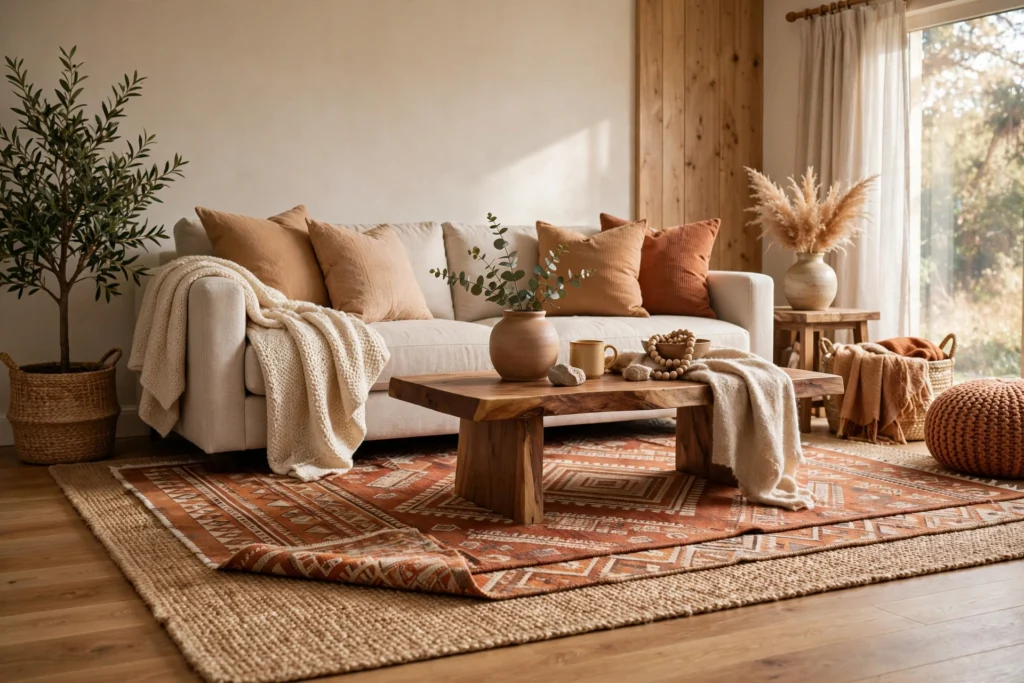

Few decor decisions change a living room as fast as the rug. The right one warms up cold floors, defines your seating zone, softens noise, and ties every color in the room together. These living room rug ideas cover sizing, placement, materials, and styling tricks that work in small apartments and large family rooms alike, so you can pick a rug that fits your space and your budget. Living room accent wall ideas with big impact alongside your rug choice.
1. Anchor Your Seating with the Front-Legs Rule
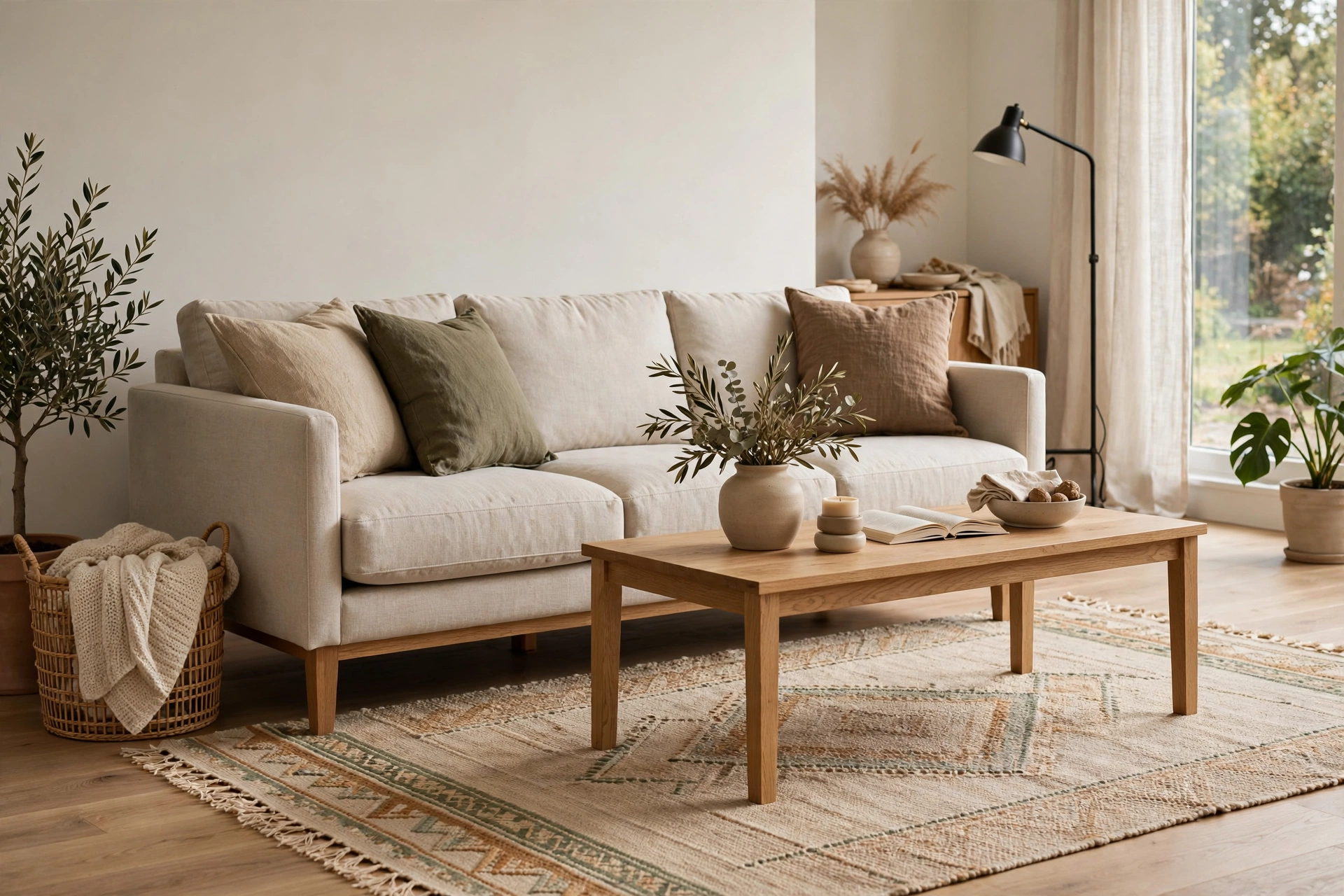
Place your rug so that at least the front legs of the sofa and armchairs sit on it, with the rug extending under the coffee table. This single rule makes a seating group feel connected instead of scattered, even in a small room. Pull the rug about 8 to 12 inches under the front of the sofa so nobody’s heels catch on an edge. For chairs that float away from the sofa, the front-legs placement pulls them visually into the conversation zone. It works with every rug style, from flat jute to plush shag, and it instantly makes the layout look intentional.
2. Size Up: Why Bigger Rugs Almost Always Work
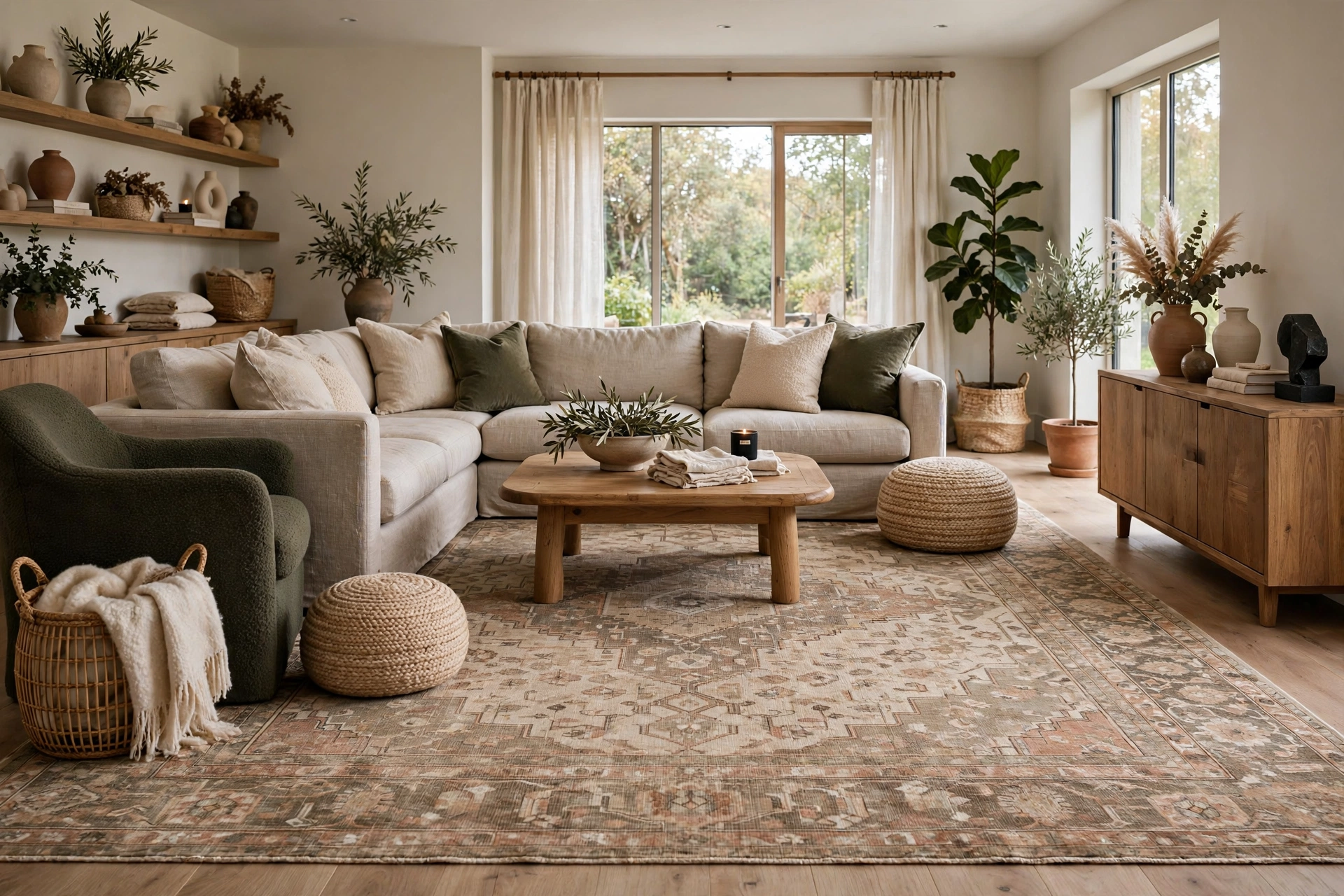
When in doubt, go one size bigger than you think you need. A rug that is too small is the most common decorating mistake, because it makes the furniture look disconnected and the room feel cramped. In most living rooms, an 8×10 rug suits a standard three-seat sofa, while a 9×12 is better for larger sectionals or rooms with two seating pieces. Leave 10 to 20 inches of bare floor between the rug edge and the wall for a balanced frame. Rug size guide walks through standard dimensions for every room configuration.
3. Layer a Flat-Weave Over Jute for Texture
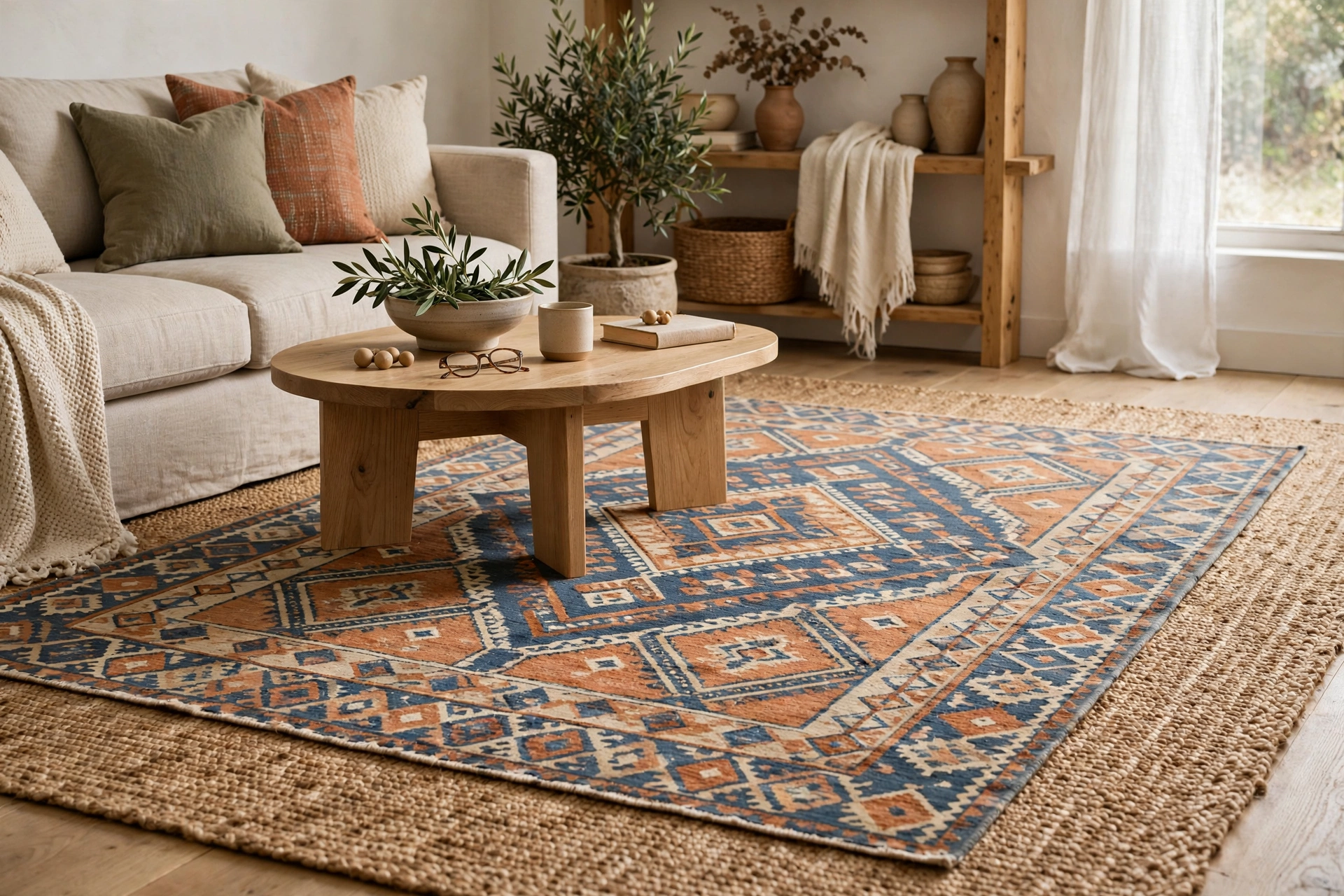
Layering is the fastest way to make a plain room feel styled. Start with a large, inexpensive natural-fiber rug like jute or sisal as the base, then place a smaller patterned rug, a vintage piece, or a soft wool flat-weave on top, angled slightly or offset by a few inches. The base rug fills the space affordably, the top rug adds color and softness underfoot, and the texture contrast looks designer-level. Keep the total thickness low so doors clear the pile, and use a non-slip pad between the layers so the top rug stays put.
4. Try a Round Rug for Small or Curved Layouts
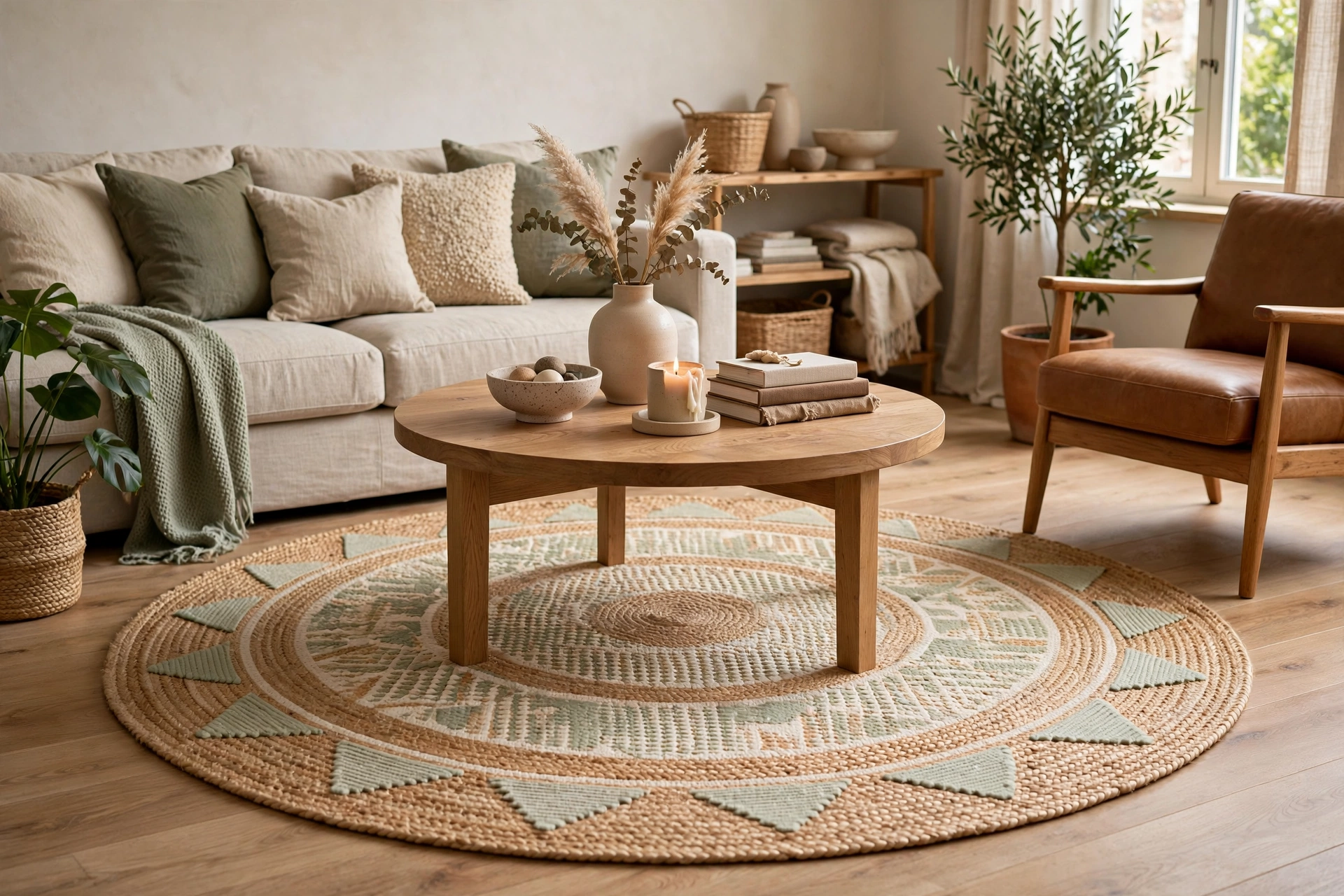
A round rug breaks up the boxy geometry of sofas, windows, and walls, which is exactly why it works so well in small living rooms. Center it under a round coffee table so the table echoes the shape, and let the front legs of one or two chairs rest on its edge. Round rugs also suit curved or arc sofas, reading corners, and rooms where a rectangle would feel cramped. Choose a diameter that reaches under your main furniture pieces, usually 6 to 8 feet, so the circle reads as deliberate rather than floating alone in the middle of the floor.
5. Warm Up Bare Floors with a Wool Rug
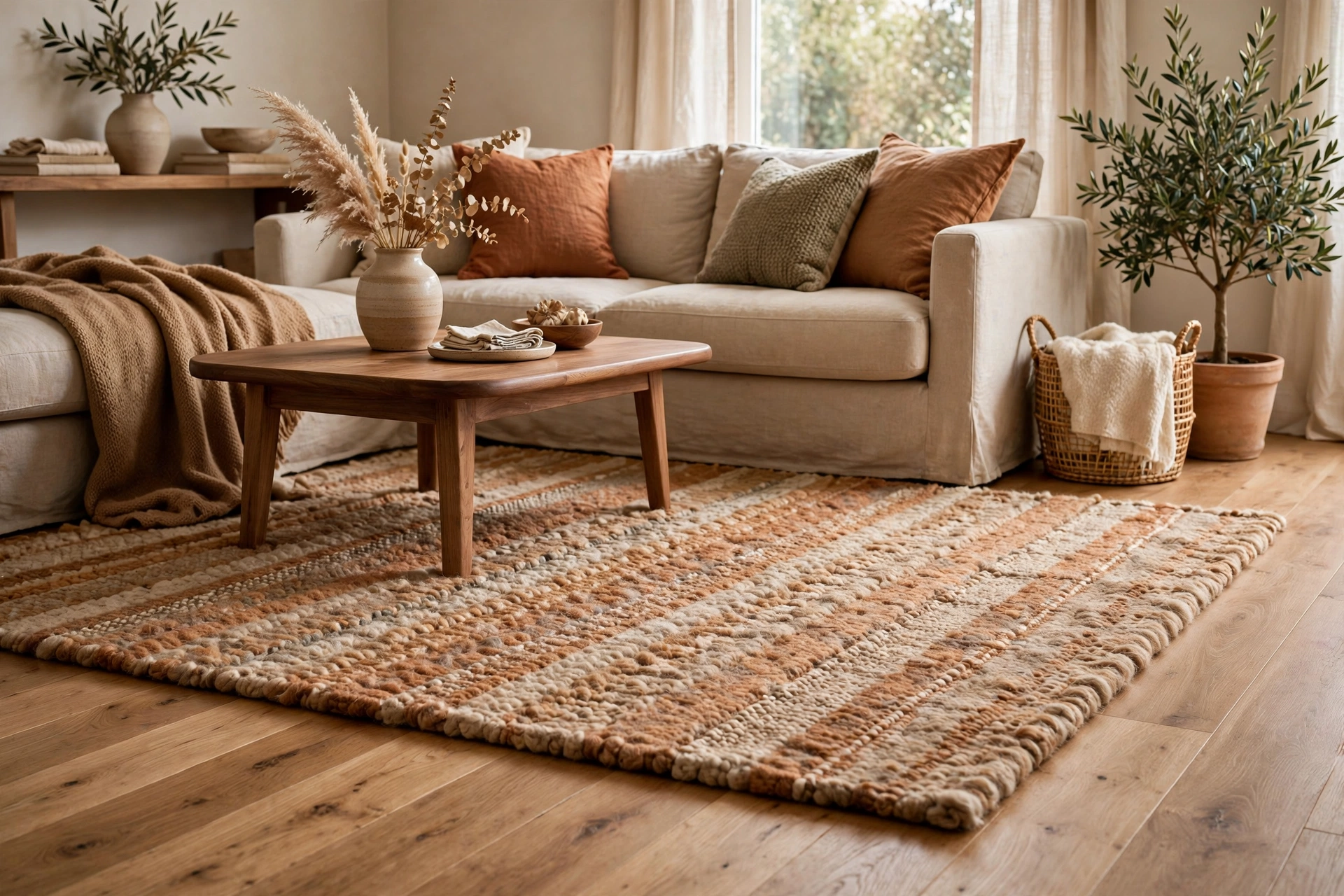
Wool is the gold standard for warmth underfoot. It is naturally insulating, springy, and resilient, so it keeps its shape under heavy furniture and bounces back from foot traffic. Wool rugs also resist stains better than many synthetics because the fibers naturally repel liquids, and they are quiet underfoot, which matters in apartments with hard floors. A hand-tufted wool rug in a neutral tone works for years across decor changes, while a colorful wool piece becomes the room’s centerpiece. Expect to pay more upfront, but a good wool rug often lasts decades.
6. Add a High-Pile Shag for Cozy Comfort
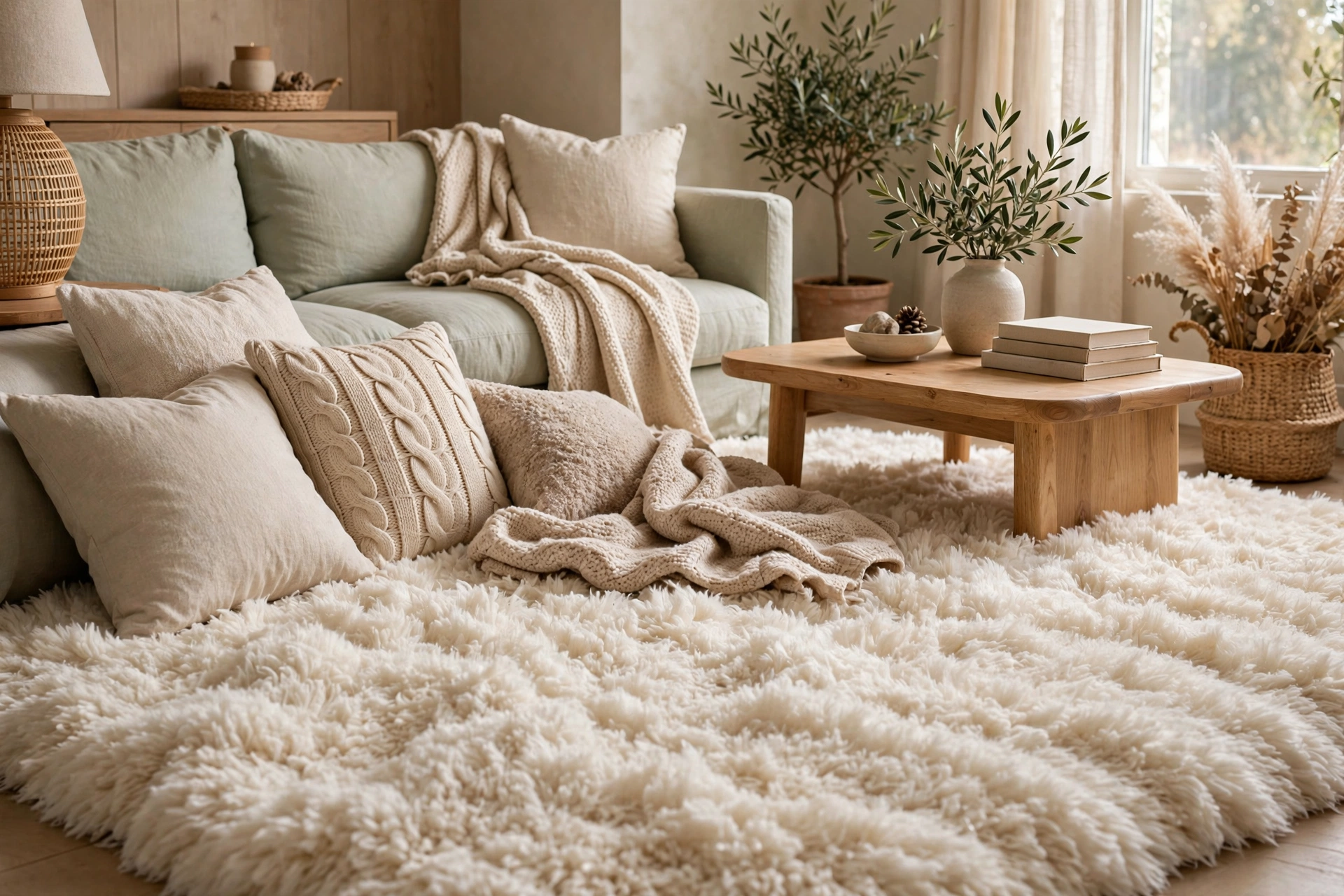
Nothing says cozy like sinking your toes into a thick shag rug. High-pile rugs soften hard floors, muffle sound, and make the whole room feel warmer, especially in winter or in spaces with tile and hardwood. Keep shag rugs in low-traffic zones, near the sofa or under the coffee table, because long fibers trap crumbs and pet hair. Vacuum with suction only, never a beater bar, and give the rug a good shake outdoors seasonally. A cream or greige shag adds comfort without dominating the room, while a bold color turns it into a statement.
7. Bring In a Vintage Rug for Instant Character
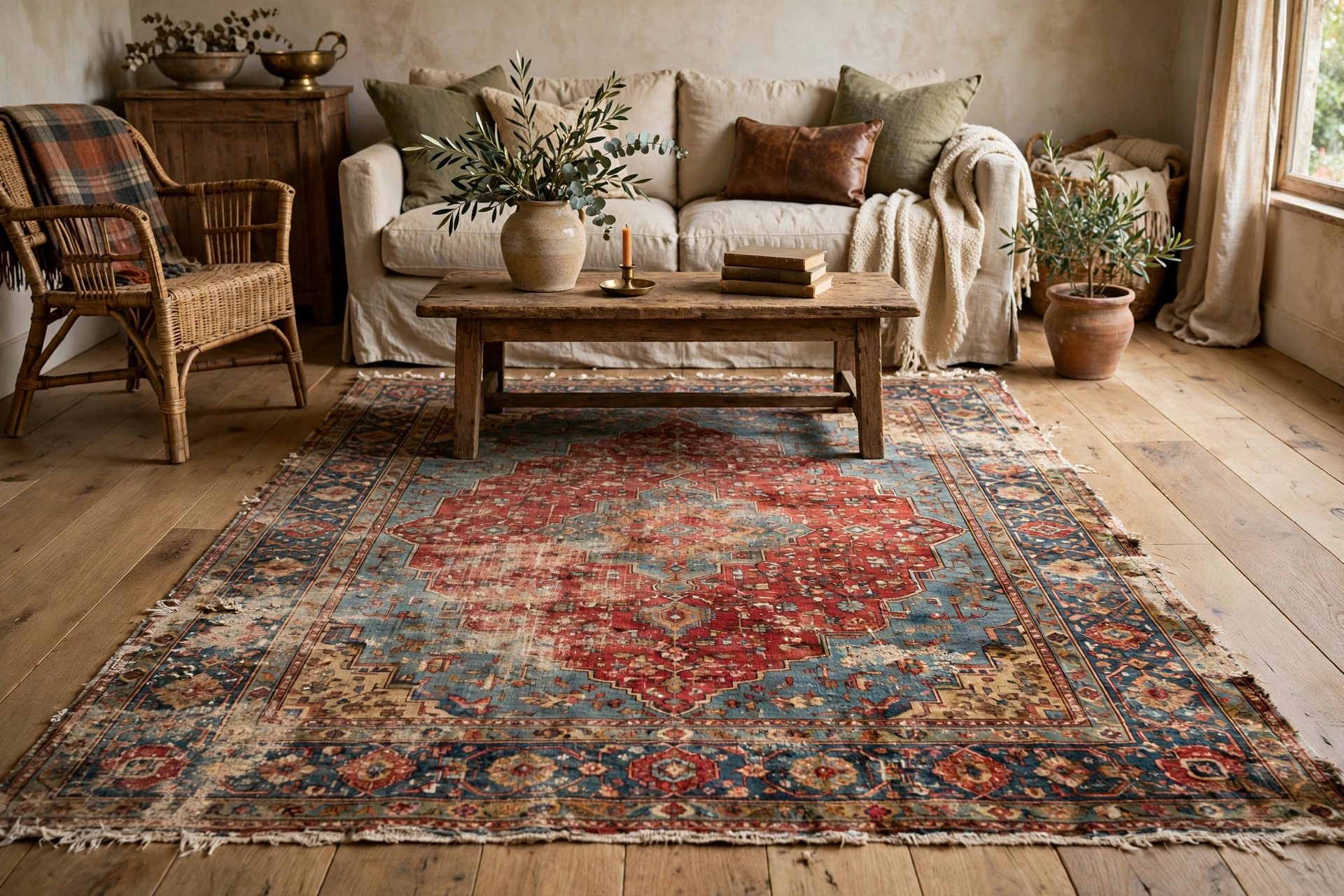
A vintage or vintage-look rug adds pattern, history, and depth that new rugs struggle to match. Distressed Persian and Turkish designs hide everyday wear beautifully, and their complex patterns mask spills and footprints, which is why they are a favorite in real family living rooms. Because vintage rugs usually have a low pile, they sit neatly under coffee tables and work over radiant-heated floors. Pair one with modern furniture for that collected-over-time look, or echo its colors in your cushions and throws to make the whole scheme feel coordinated and intentional.
8. Go Natural with Jute or Sisal Under Everything
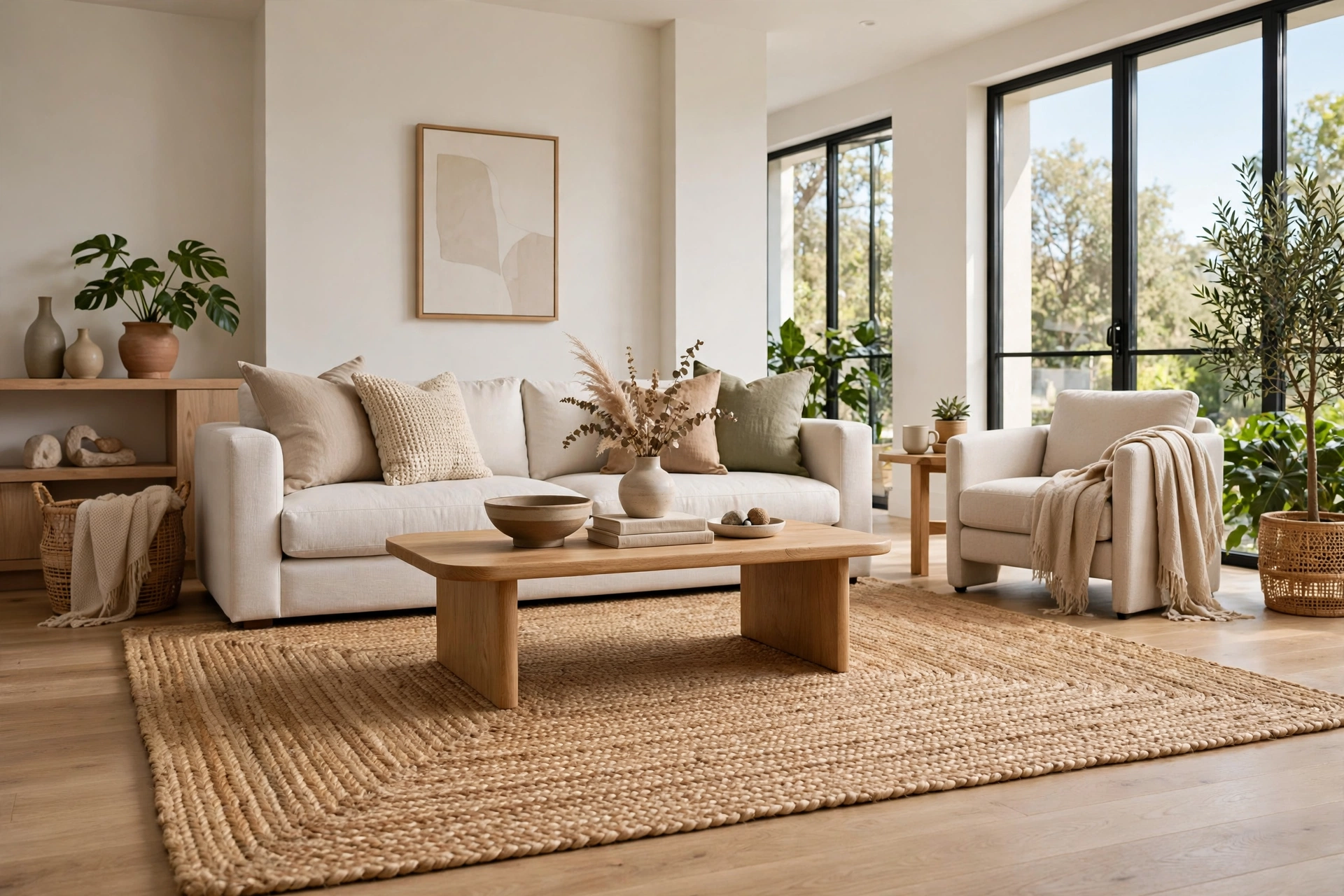
Natural fiber rugs made of jute, sisal, or seagrass bring warmth and texture without competing with your furniture. Their neutral, earthy tones ground bright upholstery and patterned curtains, and the chunky weave adds an organic, relaxed feel that works in coastal, farmhouse, and modern spaces. Jute is the softest of the three, so choose it if you walk barefoot, while sisal is tougher for high-traffic households. One note: natural fibers and liquids do not Living room design ideas with tv pair with textured neutrals.
9. Mix Patterns Without the Clash
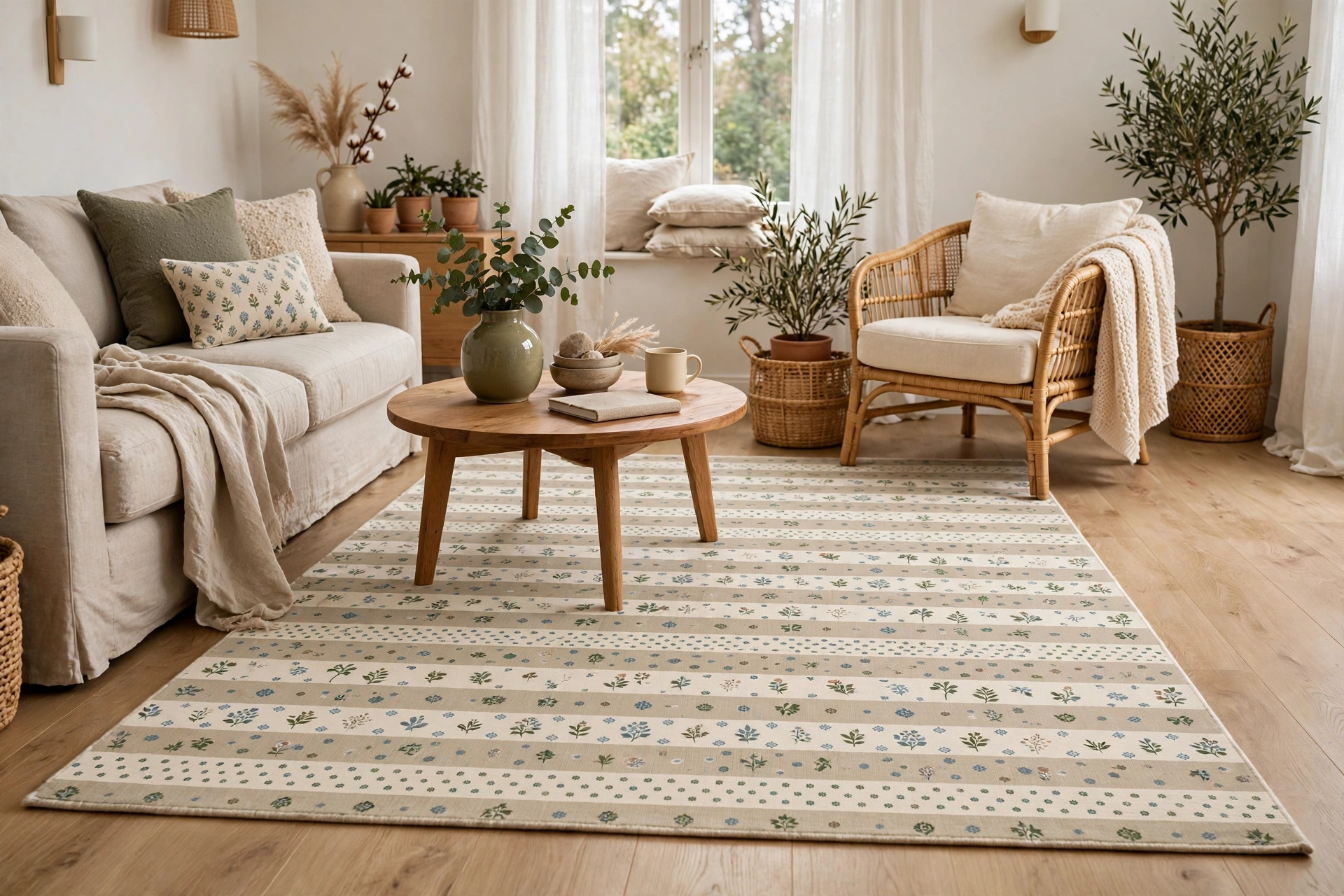
Patterned rugs let you mix designs confidently if you follow one rule: vary the scale. Pair a large-scale rug pattern, like an oversized trellis or bold stripes, with small-scale cushions, and the room stays balanced. Keep at least one shared color running through the rug and your upholstery so the mix feels connected. Geometric rugs suit modern and mid-century rooms, while floral or medallion patterns lean traditional and cozy. If your sofa is a solid color, a patterned rug is your best opportunity to introduce personality. If the sofa is patterned, flip it: choose a textured solid rug instead.
10. Follow the Coffee-Table Placement Rules
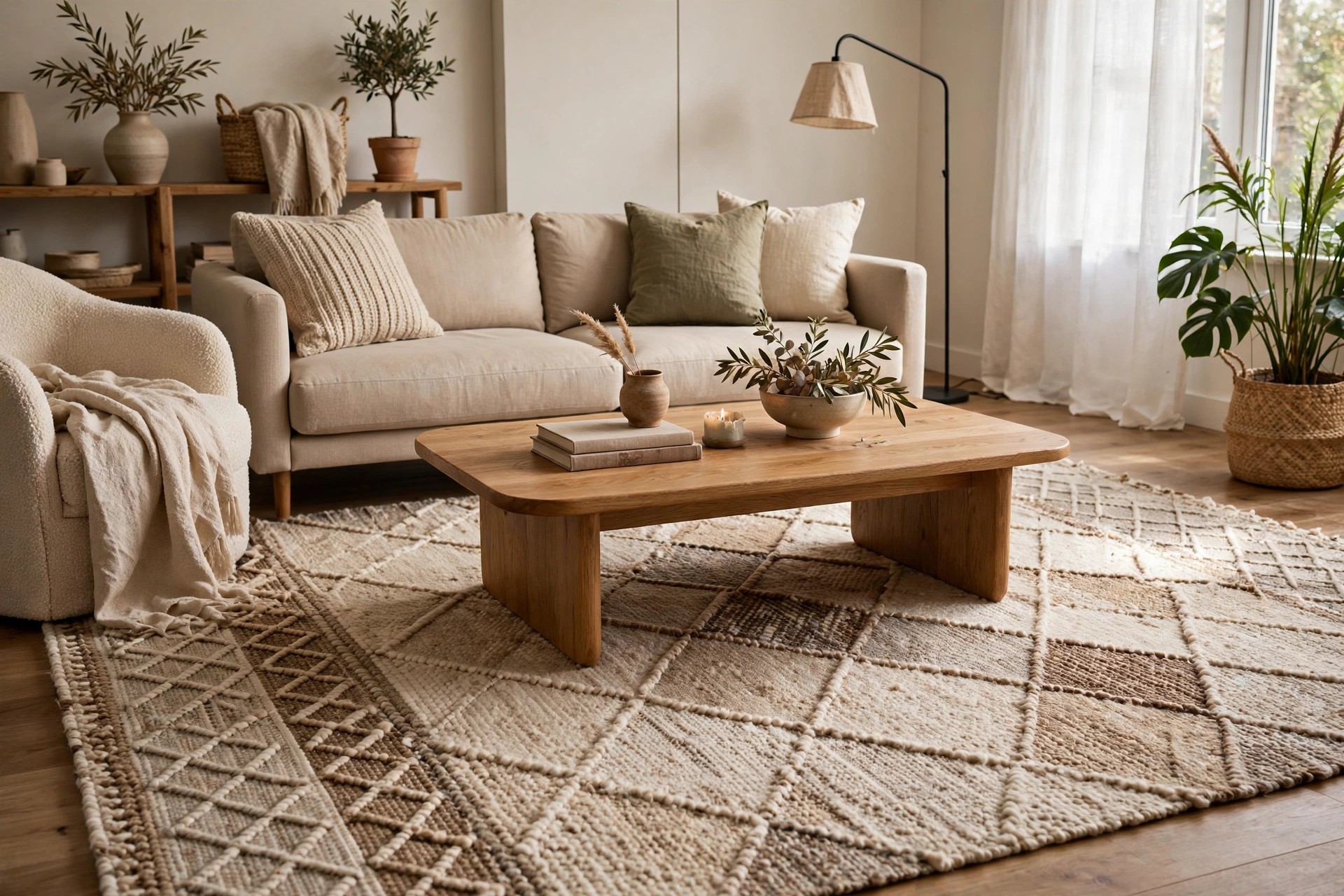
The coffee table is the visual center of the seating area, so its relationship with the rug matters. Ideally, the rug should extend at least 18 to 24 inches beyond each side of the coffee table, giving you a generous border of rug around it. The entire table, plus the front legs of surrounding seats, should sit fully on the rug, so nothing wobbles half on and half off. If your table has a glass top, a patterned rug underneath adds interest you can see through the glass. For storage ottomans used as tables, the same full-coverage rule applies.
11. Ground a Sectional with One Oversized Rug
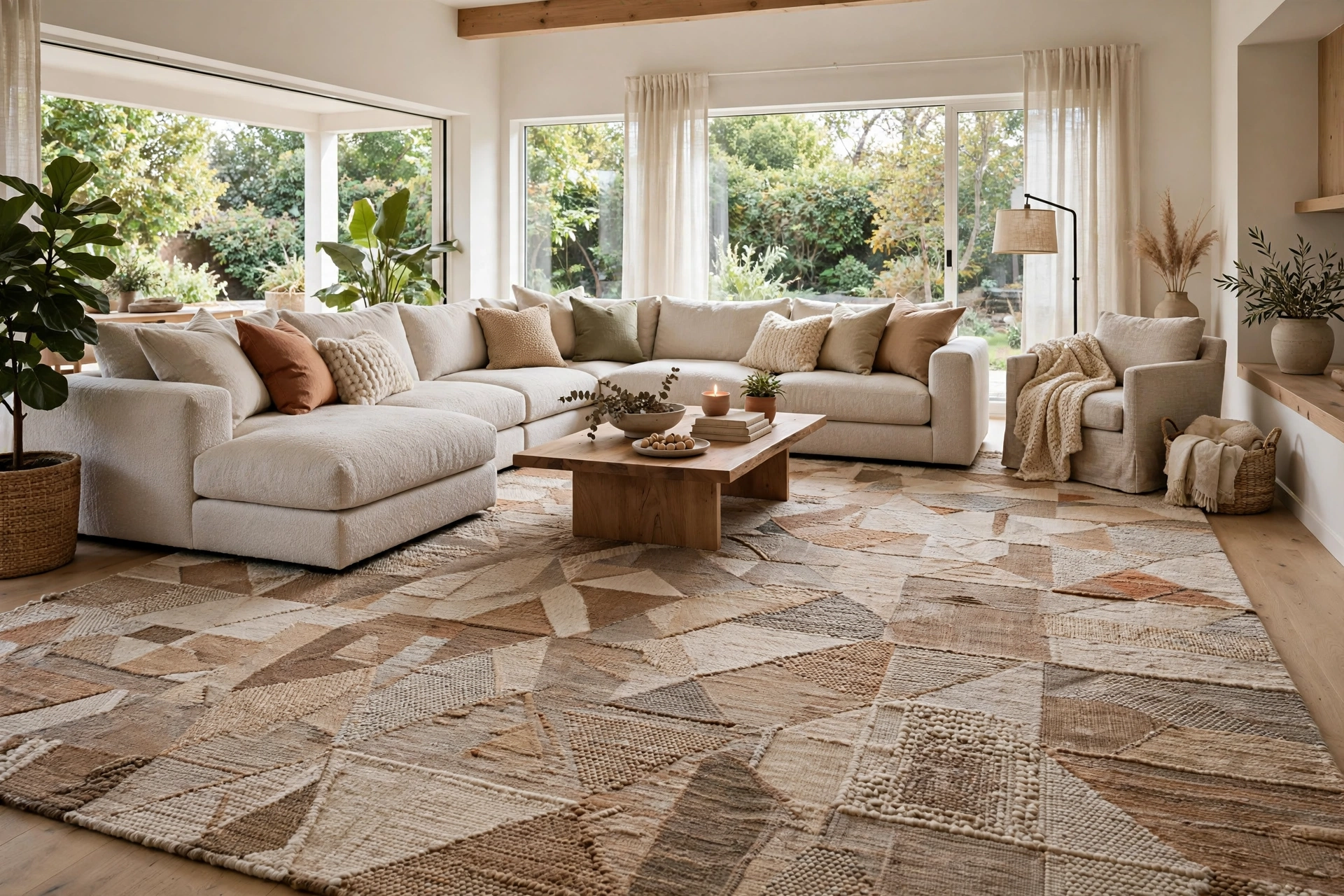
Sectionals eat small rugs alive. A rug that barely covers the footprint of an L-shaped sofa makes the whole arrangement look cramped, so go big: the rug should extend past the sectional’s edges on all visible sides, usually a 9×12 or even a 10×14 in large rooms. Let the entire sectional sit on the rug rather than just the front legs, since the heavy L-shape needs full visual grounding. A low-pile or flat-weave works best here because reclining sections and chaise mechanisms glide more easily over it. Keep the pattern simple so the rug supports the sectional instead of competing with it.
12. Define Zones with a Rug in an Open Plan
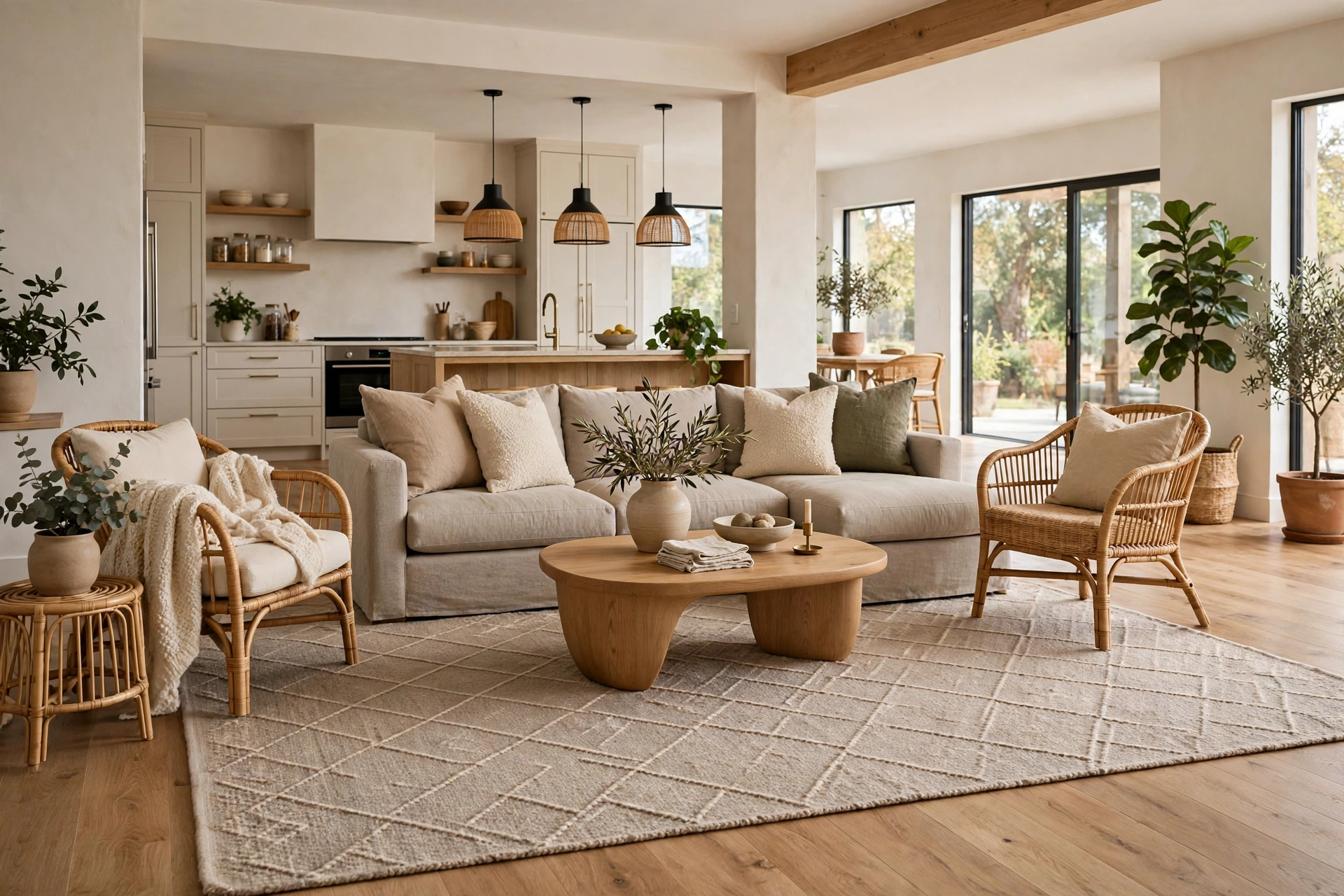
In an open-plan living space, a rug is the simplest way to say “the living room starts here.” Use one large rug under the main seating group and, if the space allows, a second smaller rug or a runner in an adjoining dining or reading area to mark it as its own zone. A runner behind the sofa is a clever trick: it bridges the gap between the seating area and a console table or walkway, making the transition feel designed rather than empty. Keep zone rugs in the same color family so the open space feels connected even as each area reads as distinct.
13. Embrace Dark, Moody Rugs for Extra Warmth
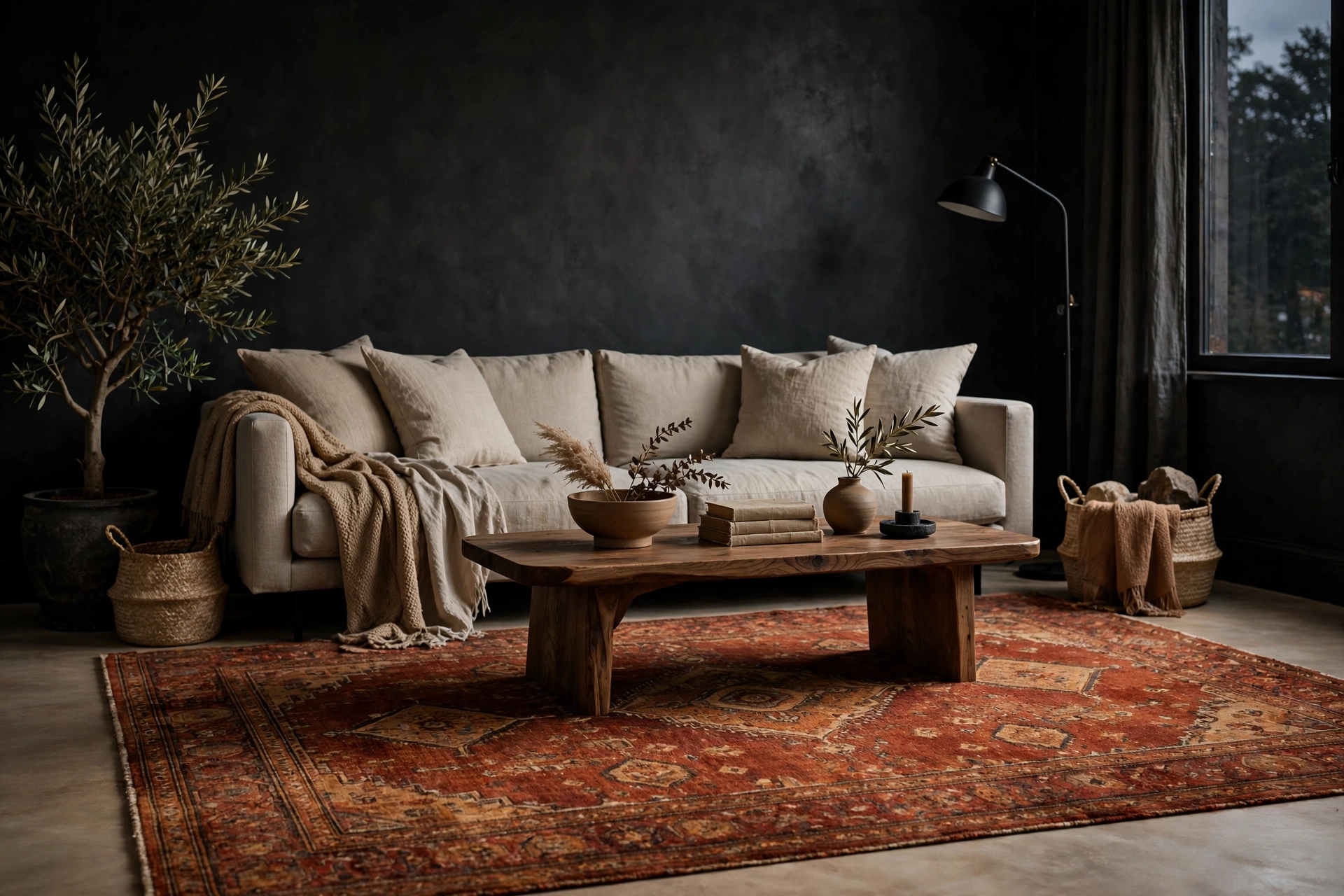
Dark rugs, deep charcoal, navy, forest green, oxblood, make a living room feel instantly warmer and more cocooning. They are also practical: dark tones hide pet hair, crumbs, and everyday foot traffic far better than cream rugs. The trick is balance. Pair a dark rug with light walls and lighter upholstery so the room does not close in, and add warm lighting, table lamps and floor lamps, to keep the mood inviting rather than heavy. A dark rug with a subtle pattern, like a faded vintage design or tone-on-tone texture, adds depth without feeling flat.
14. Choose Washable, Kid- and Pet-Friendly Rugs
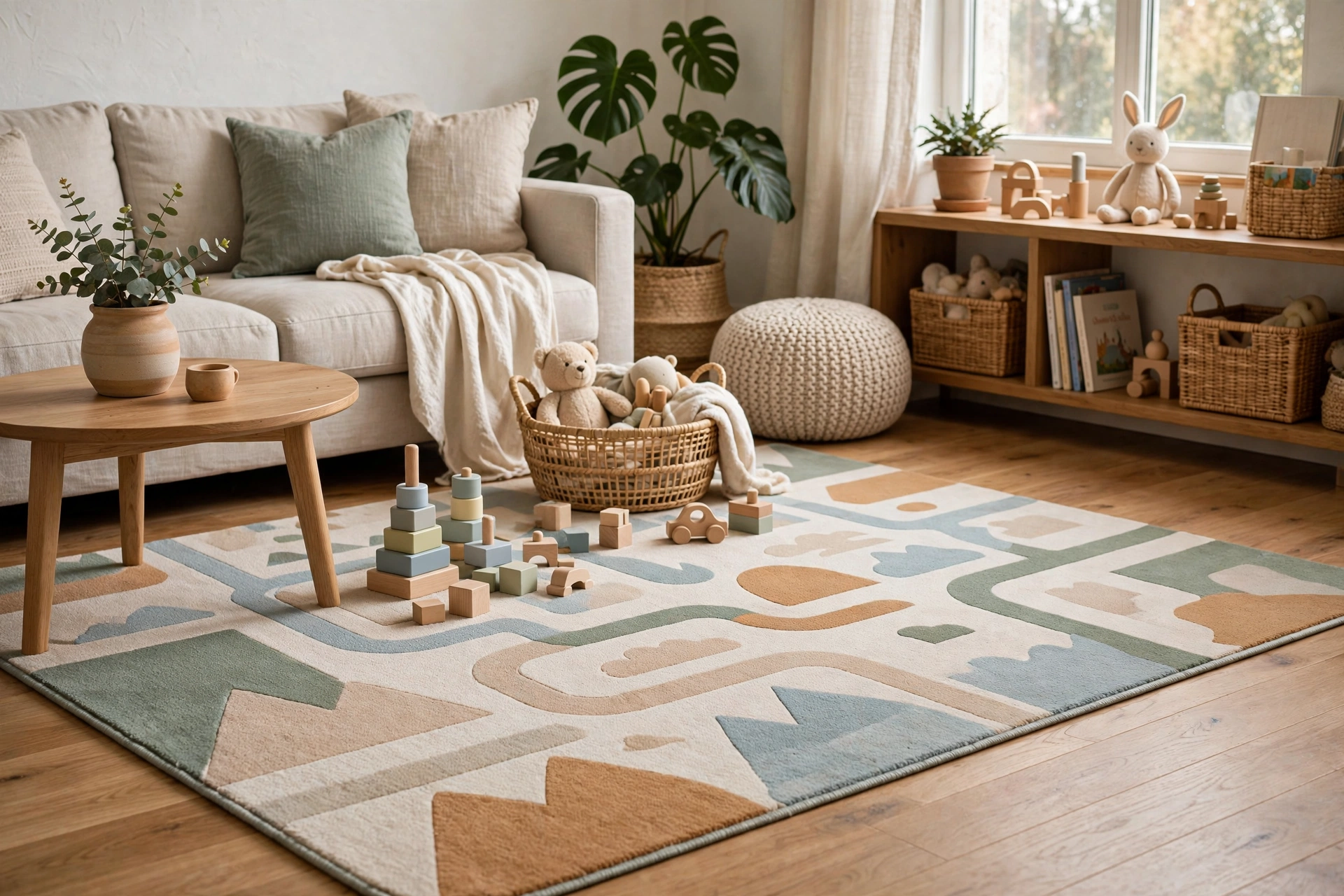
If your living room sees juice boxes, muddy paws, or both, a washable rug is a sanity saver. Modern machine-washable rugs look like real wool or vintage pieces but come with a separate lightweight cover you can toss in the wash. Look for low-pile, stain-resistant materials and a grippy backing or rug pad so the rug does not bunch under running feet. Medium-toned patterns, small geometrics or distressed prints, camouflage the smudges between washes. Keep a spare cover on hand so the room never sits rugless on laundry day, and spot-clean spills quickly to prevent staining.
15. Let a Bold-Colored Rug Be the Focal Point
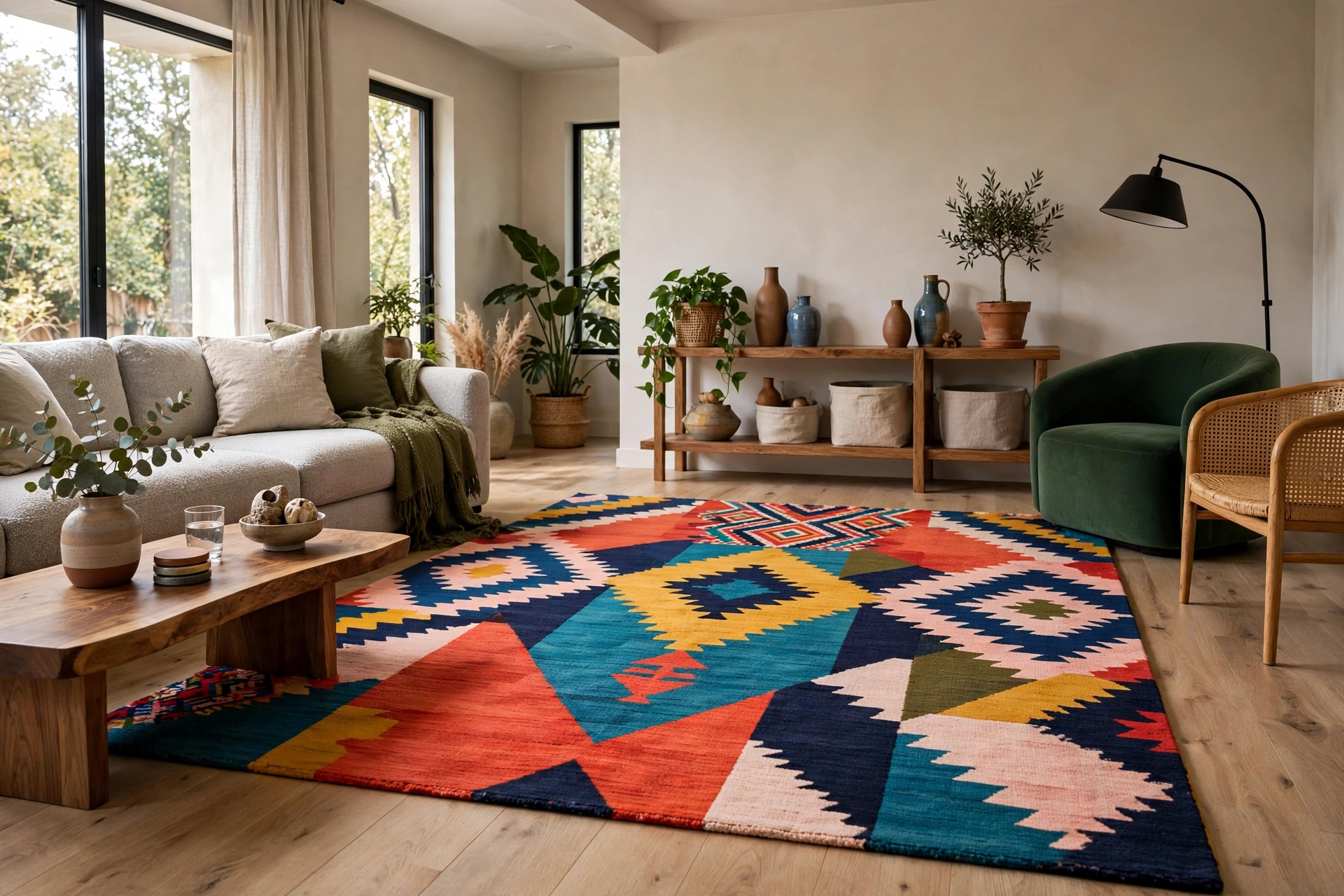
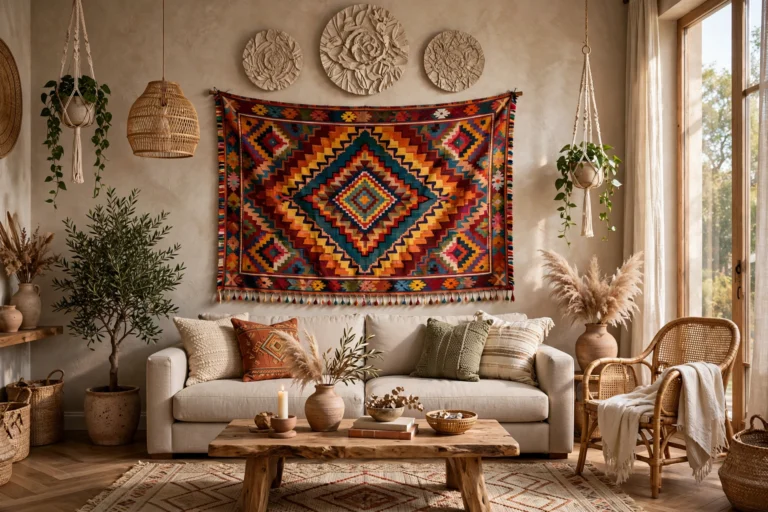
If your walls and sofa are neutral, a bold-colored rug is the easiest way to inject personality. Rich terracotta, deep teal, mustard, or a multicolor kilim instantly becomes the room’s focal point, and you can pull accent colors from it for cushions, art, and throws. To keep the look balanced, let the rug be the star: keep other patterns small and quiet, and repeat the rug’s main color at least twice elsewhere in the room. Bold rugs also photograph beautifully and make rental living rooms feel decorated without painting a single wall.
Frequently Asked Questions
What size rug is best for a standard living room?
For a standard three-seat sofa, an 8×10 foot rug is the sweet spot: it holds the sofa’s front legs, the coffee table, and side chairs in one connected zone. Larger rooms or sectionals usually need a 9×12. Always measure your seating footprint first and leave 10 to 20 inches of bare floor between the rug edge and the walls for a balanced look.
Should the coffee table sit fully on the rug?
Yes, ideally the entire coffee table should sit on the rug with 18 to 24 inches of rug extending past each side. This keeps the table stable and makes the seating group look anchored. Nothing should wobble with legs half on and half off the rug, so if your current rug is too small for this, sizing up will fix it.
Are washable rugs worth it for busy households?
Absolutely. Machine-washable rugs let you deep-clean spills, pet accidents, and ground-in dirt in a normal washing machine, which is nearly impossible with traditional rugs. They now come in convincing wool-look and vintage styles, so you do not sacrifice looks for practicality. Keep a spare cover so the room stays finished on laundry day.
Can I layer two rugs on top of each other?
Yes, layering works best with a large, flat natural-fiber base rug like jute, topped with a smaller patterned or softer rug offset by a few inches. The base fills the space affordably while the top rug adds color and comfort. Use a non-slip pad between the layers and keep the combined thickness low enough for doors to clear.
How do I stop my living room rug from sliding?
Use a quality non-slip rug pad cut slightly smaller than the rug; felt-and-rubber pads grip best on hard floors and add cushioning. For rugs on carpet, choose a pad designed for carpet-to-carpet use. As a quick fix, double-sided rug tape on the corners works, but a full pad is more comfortable and extends the rug’s life.
Keep Exploring
Your rug sets the foundation, but the layers around it complete the look. Once your rug is in place, revisit your wall color, curtains, and lighting to make sure they play well with the texture and tone underfoot. Small tweaks, like echoing the rug’s main color in a throw pillow or swapping cool bulbs for warm ones, can make the whole room feel pulled together. Blue couch living room design ideas to see how rug color and sofa color work as a pair.
Roundup of area rug dos and don'ts is a handy second opinion on sizing, furniture placement, and layering.





[…] This palette works with marble, wood, and matte black fixtures alike, and never goes out of style. Same layering principles behind cozy living room rug ideas translate to the bath at a smaller scale. Stick to washable fibers for easy […]
[…] warmly but lined to prevent harsh hot spots. Pair the lamp with a soft rug beneath the chair — our living room rug ideas for warmth and style show how a plush base anchors a reading nook […]
[…] open-plan rooms. Let the rug’s colors guide your pillows and throws for a cohesive palette. Living room rug ideas for warmth and style cover sizing rules for every layout. When the rug is right, everything else gets […]
[…] The area rug is the largest pattern in most living rooms, so let it lead your pillow choices. Pick out two or three colors from the rug — including one you might not notice at first glance — and repeat them in your pillows to create a cohesive color story from floor to sofa. This technique works beautifully with patterned and Persian-style rugs, where the pillow colors pull the rug’s palette upward into the seating area. If your rug is a solid neutral, reverse the logic: choose pillow colors first, then echo them in smaller accents like throws and art. Living room rug ideas for warmth and style. […]
[…] base and leave two inches for the cord. A slim lamp also layers well over a soft rug, which is why these living room rug ideas for warmth and style are worth reading together with your lighting plan — the rug defines the zone, the lamp lights […]
[…] rather than improvised. If you are building the whole lounge zone from the ground up, our living room rug ideas for warmth and style will help you pick the perfect foundation […]