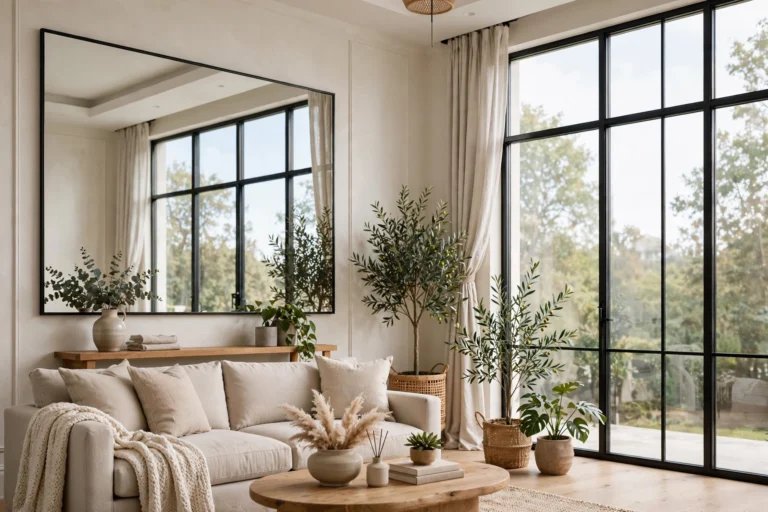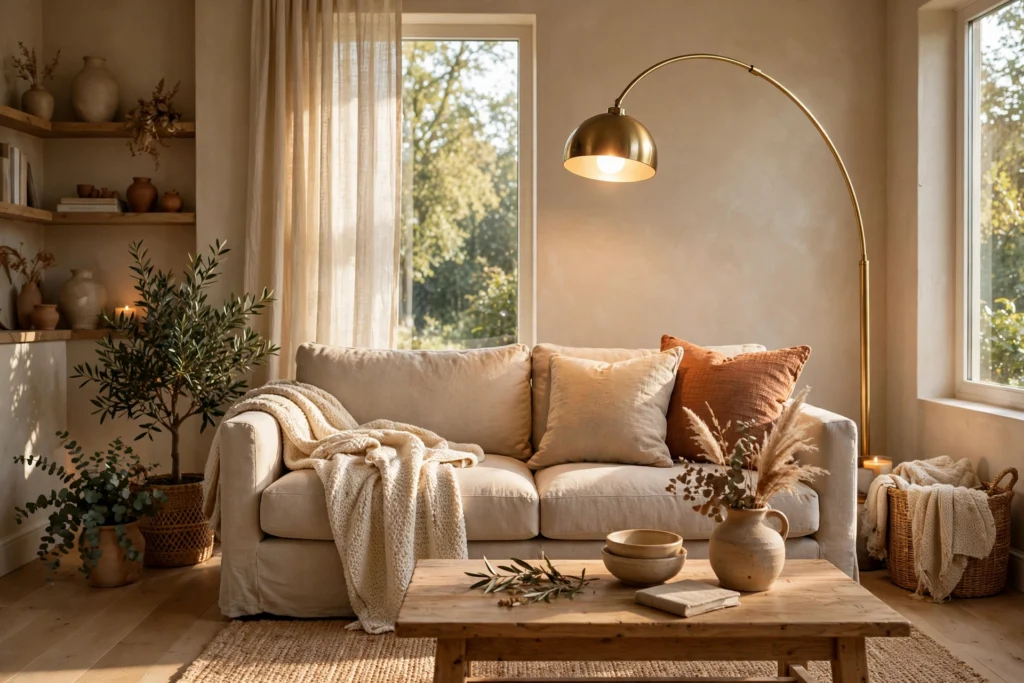

Overhead fixtures light the whole room, but they rarely make it feel inviting. That is where living room floor lamp ideas come in: floor lamps are the easiest, most movable layer of a well-planned lighting scheme, and they do triple duty as task light, warm ambient glow, and decor. Whether you need a focused reading pool beside your chair, a soft uplight to lift a dark corner, or a sculptural piece that anchors the seating area, there is a floor lamp style built for the job. Philips’ own guide to ambient, task and accent lighting makes the same point — one ceiling light cannot do all three jobs, but a few well-placed lamps can.
These fifteen living room floor lamp ideas cover every major style — arc lamps, torchieres, tripods, pharmacy lamps, and slim-profile picks — with placement rules, bulb temperatures, dimmer tricks, and budget advice. Nothing here needs rewiring or an electrician; just plug in and start layering.
1. Sweep an Arc Lamp Over the Sofa
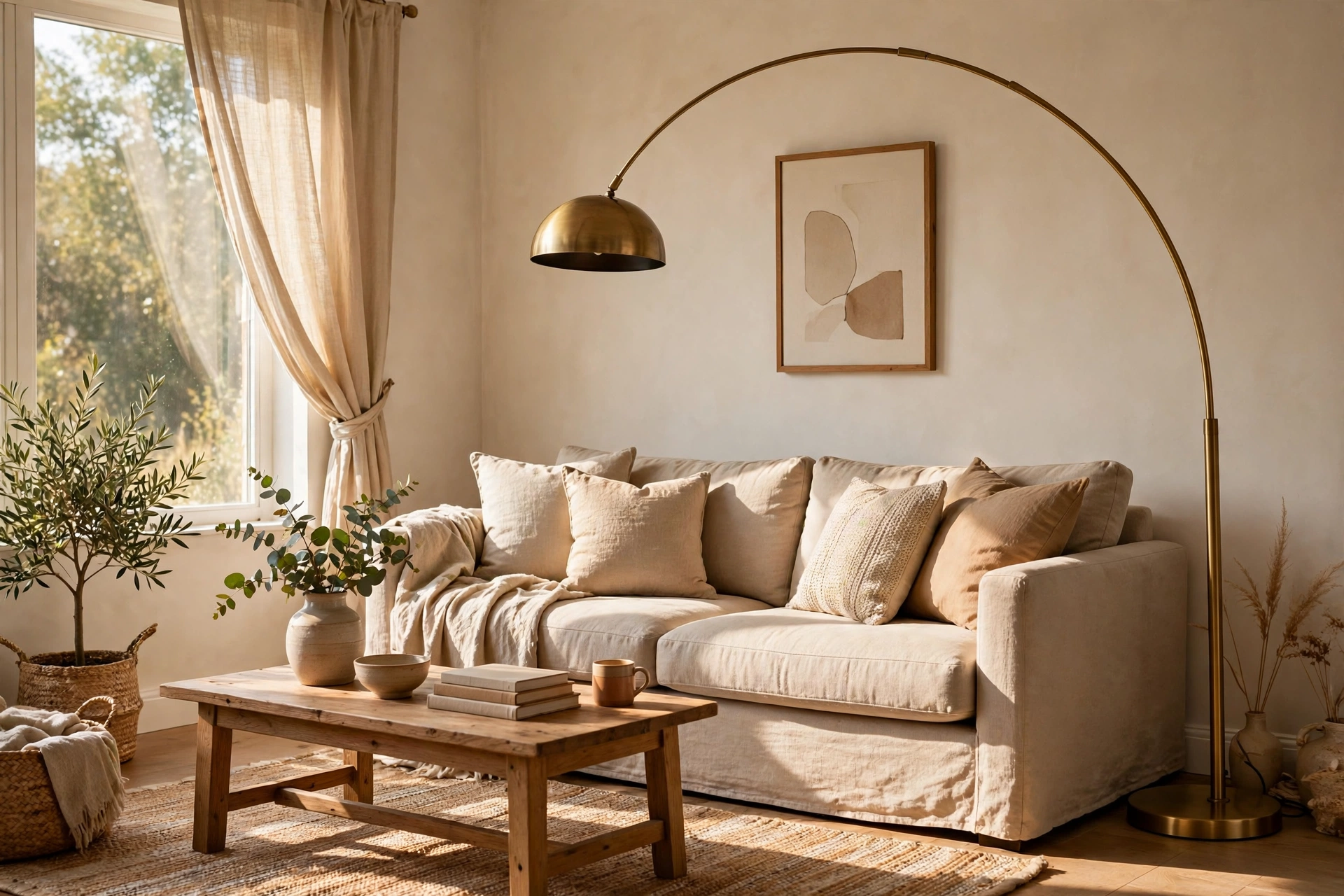
Nothing defines the arc-lamp look like a long, curving arm that carries light out over your seating instead of trapping it against a wall. An arc floor lamp gives you overhead-style light exactly where you want it — over a sofa, above a reading chair, or hovering beside a sectional — without a single ceiling hole. Park the heavy marble or metal base in a corner, then let the arm reach eight to ten feet so the shade hangs directly over your lap or the coffee table. The result feels like a pendant light you can move. Choose a dome or drum shade that points downward for reading and conversation, and check the base weight before buying: a slim arc with a lightweight base tips easily, which matters if you have kids or an enthusiastic dog. Brass and matte black arcs flatter almost any living room, and the curve itself becomes a sculptural line in the room even when the lamp is off.
2. Brighten Dead Corners With a Torchiere
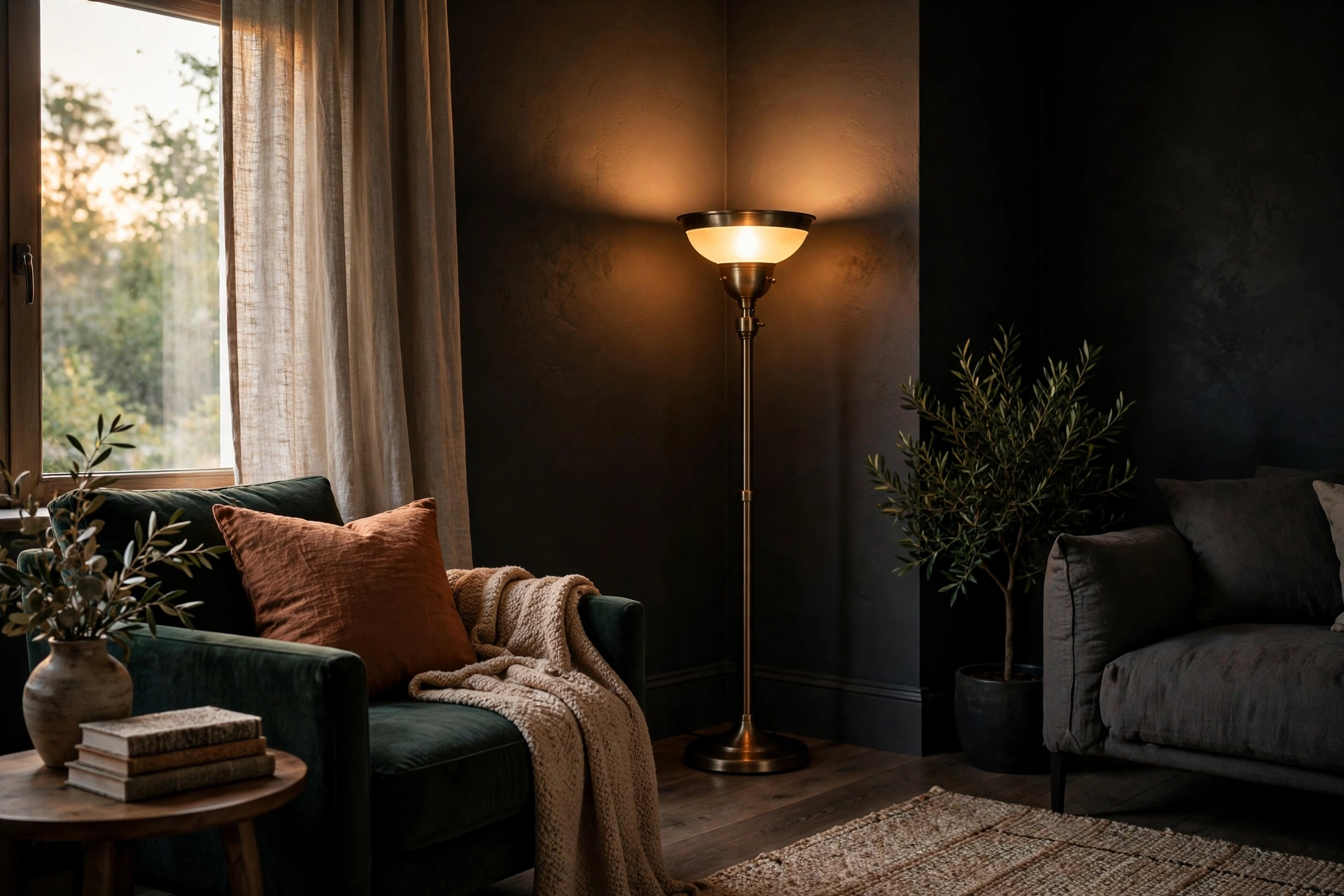
Every living room has one — the dim, awkward corner that swallows furniture and looks unfinished no matter what you try. A torchiere (the classic uplight floor lamp) was made for exactly this spot. Its upward-facing shade bounces light off the ceiling, which visually raises the room and floods the corner with soft, shadow-free brightness. This trick is especially powerful in rooms with only one ceiling fixture or none at all. Pick a torchiere with a glass or frosted bowl shade and a dimmable bulb so the corner can shift from bright and functional to low and moody. Pair the lamp with a plant, a small stool, or a floor cushion, and the dead corner turns into a vignette. For more ways to rescue neglected corners, these living room corner decor ideas that turn dead space cozy pair beautifully with the warm glow a torchiere adds.
3. Add a Pharmacy Lamp for Serious Reading
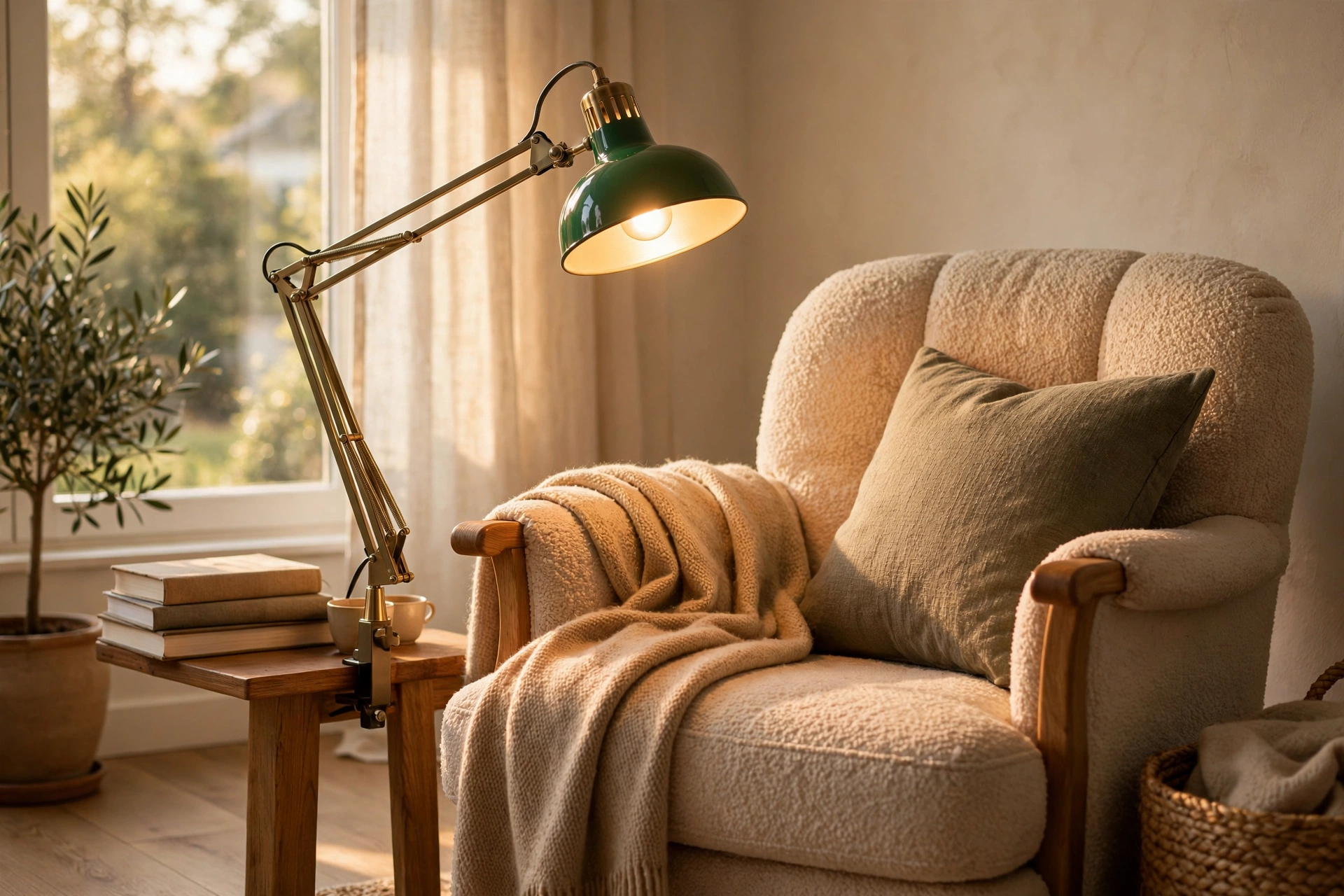
Reading lamps, often called pharmacy lamps for their apothecary-style silhouette, are the task-light specialists of the floor-lamp world. They are short, adjustable, and unapologetically functional: a metal dome shade on a pivoting arm, usually with a height adjustment, designed to throw a tight pool of light onto a book, magazine, or laptop. Place one directly behind or beside your favorite armchair, with the shade about forty to forty-five inches off the floor and angled over your shoulder, and you get glare-free reading light that leaves the rest of the room dim and relaxed. Because pharmacy lamps aim downward and shield the bulb from your sightline, they are kinder on tired eyes than a bare bright bulb. Look for models with a full-range dimmer on the cord and a brushed-nickel or matte-black finish that reads as intentional, not industrial.
4. Style a Statement Tripod Lamp
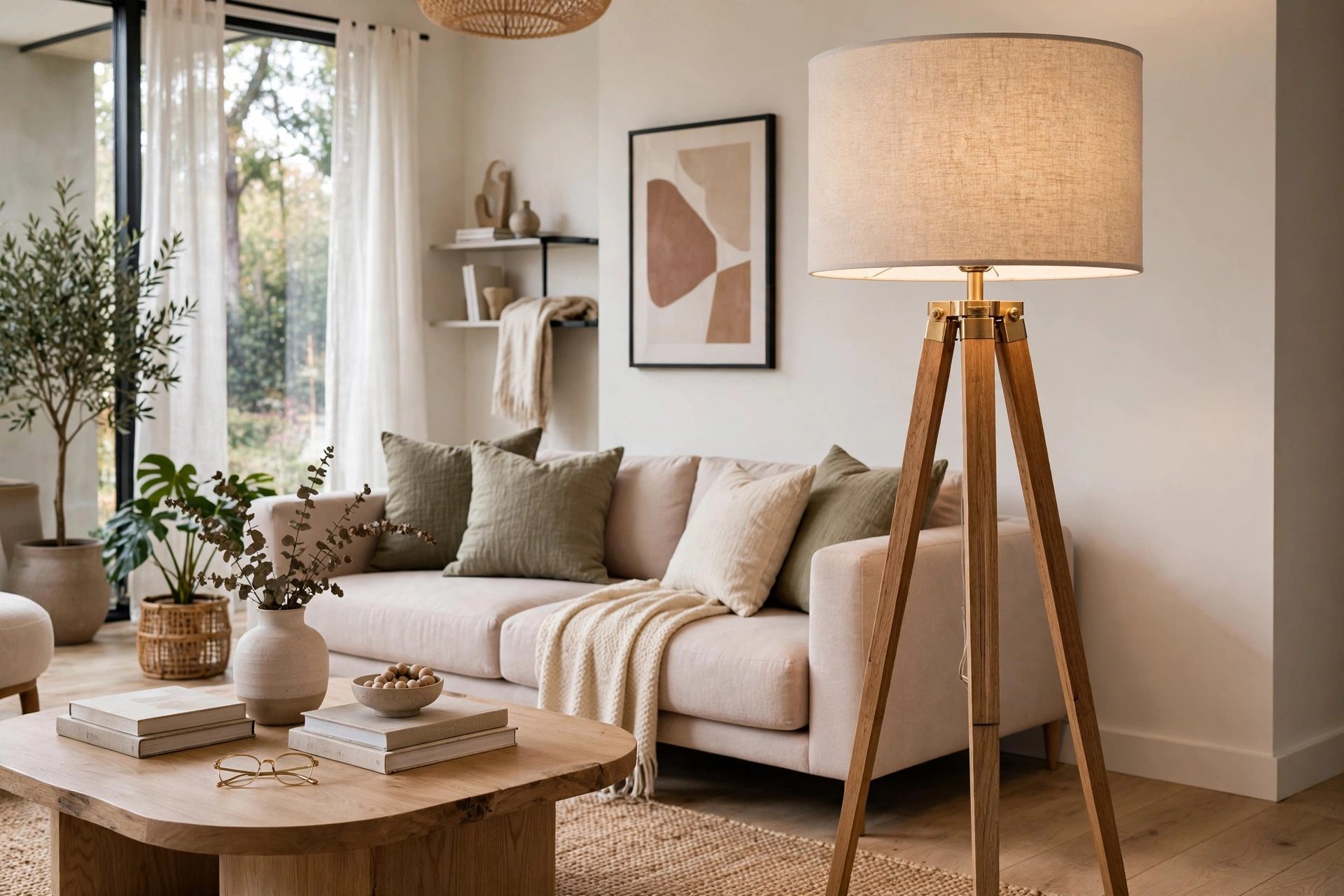
Some floor lamps are lighting; tripod lamps are furniture. Three angled legs make an instant style statement, and the open base keeps the lamp visually light even when the lamp itself is large — a useful trick beside a bulky sofa. Tripods work hardest in mid-century, Scandinavian, and modern-organic rooms, where their geometry echoes the design language of the space. For maximum impact, size the tripod boldly: the shade should sit between fifty-eight and sixty-eight inches high, and a wide drum shade balances the leggy stance. If your living room already has strong angles — boxy sofas, sharp shelving — soften the tripod with a round fabric shade in cream or natural linen. One tripod lamp can anchor an entire seating arrangement the way a floor sculpture does, so give it breathing room rather than cramming it behind a chair.
5. Multiply Glow With a Tree (Multi-Head) Lamp
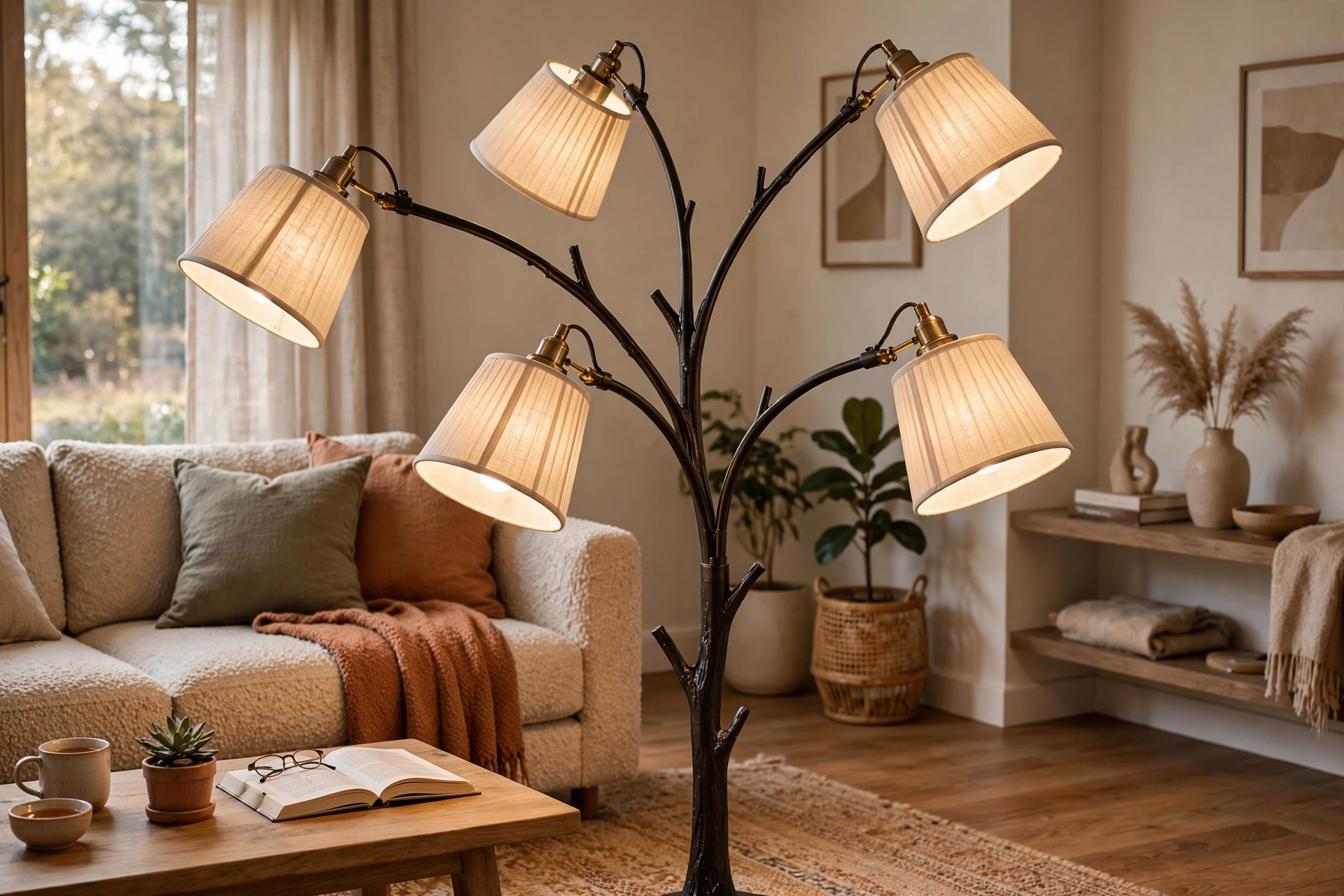
Tree lamps carry three to five adjustable heads on a single pole, and they are the layering multitasker: one head can wash the ceiling for ambient lift, another can aim down for reading, and a third can graze a wall to highlight art. If you only want to buy one floor lamp, make it a tree. The real power move is aiming each head at a different surface so the light bounces instead of blasting — a wall graze here, a ceiling bounce there — because reflected light feels softer and makes the room look bigger. Many tree lamps have a footswitch that cycles the heads (one, three, all five), giving you brightness presets without a dimmer. Match the shade style to your room: small drum shades feel contemporary, while cone or dome heads lean mid-century. Keep it a few feet from the wall so the heads have clearance to swivel.
6. Pick Drum Shades for Ambient Softness
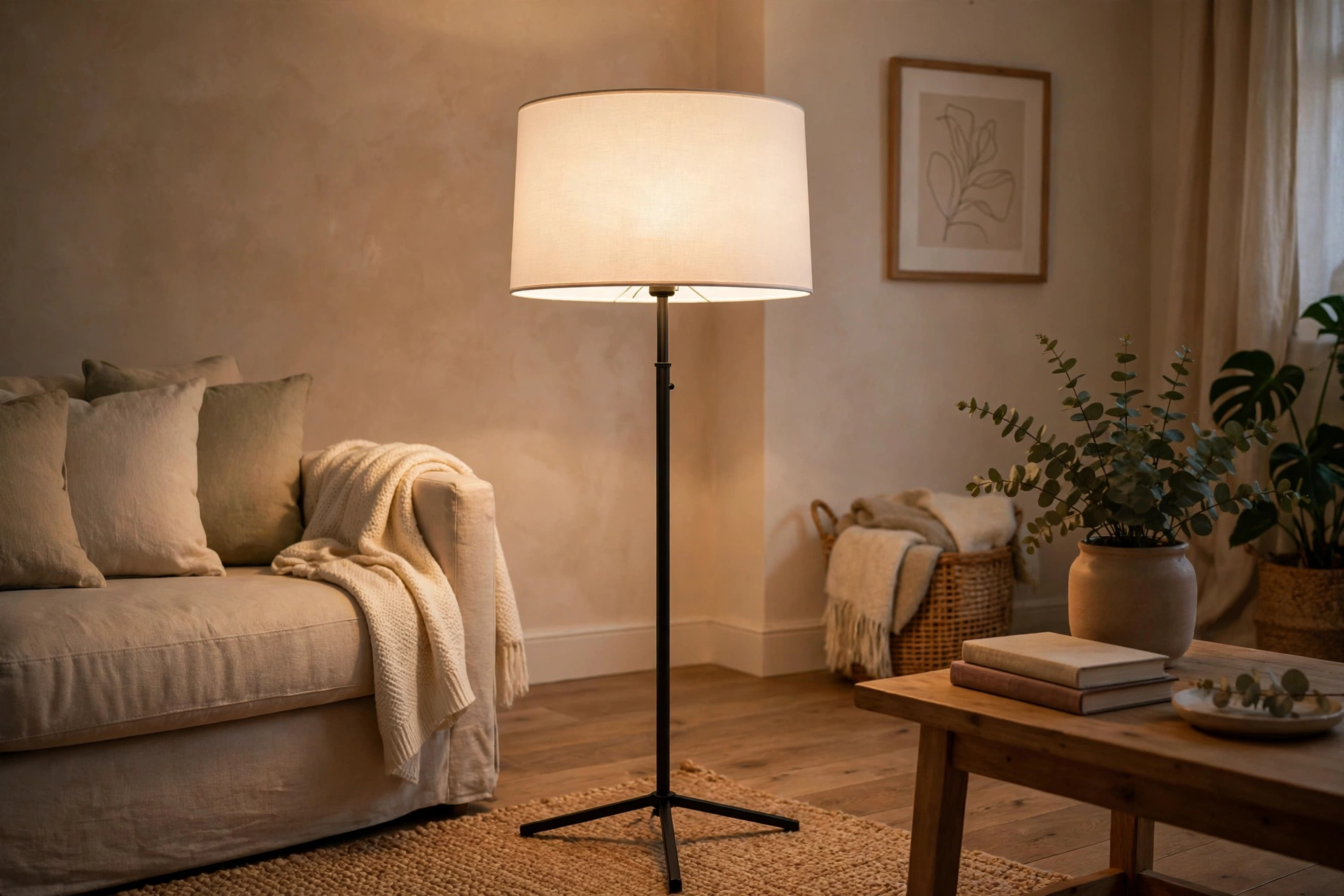
The drum shade is the workhorse shape for floor lamps that need to double as ambient lighting. Its wide, cylindrical form throws light evenly up, down, and all around, so a drum-shade floor lamp fills a seating zone with general warmth instead of a single harsh beam. Scale is everything: the shade should be roughly one-third to one-half the lamp’s total height, and it should clear the top of nearby furniture by at least a few inches so the glow spreads unblocked. A white or ivory drum reads clean and modern; a black or navy drum looks dramatic but drinks light, so pair dark shades with brighter bulbs or use them where you want mood rather than visibility. For a lamp that sits in the middle of a seating group, drum shades are the safest, most flattering choice you can make.
7. Choose Linen Shades for Warm Diffusion
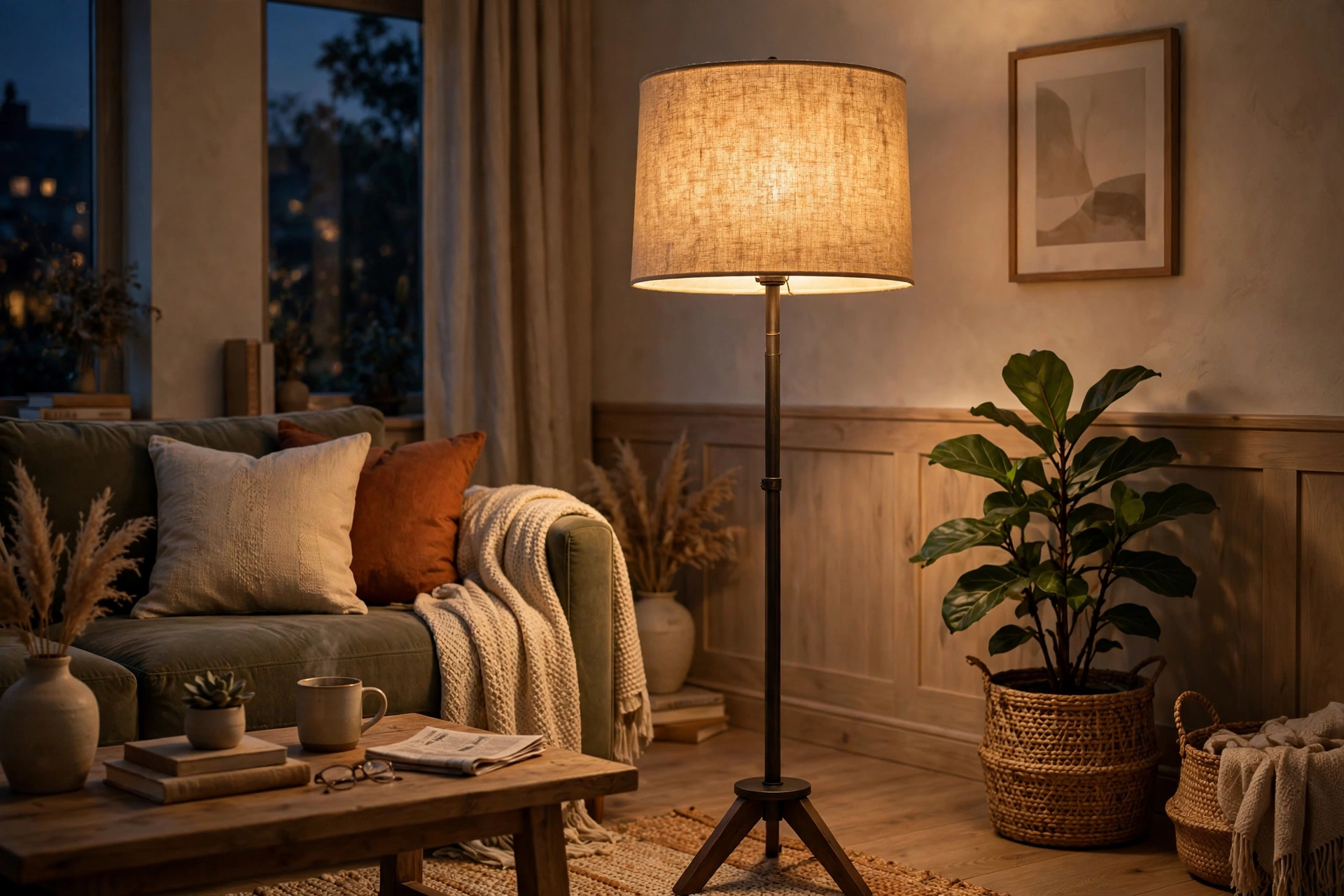
Fabric choice changes the light more than most people expect. A linen shade diffuses light softly, adding a gentle warm tint and a tactile texture that bare glass or metal cannot match. In the evening, a linen-shade floor lamp glows like a lantern — perfect for the ambient layer of a cozy living room — and the weave hides the bulb so you never get a bare hot spot. Compare that with opaque or dark shades, which block light and turn the lamp into a directional spotlight; linen gives you the best of both worlds, directional softness plus all-around glow. Keep linen shades dusted with a lint roller every month or two, since the texture catches dust, and avoid placing them where cooking grease or fireplace soot drifts. Natural, oatmeal, and flax tones are the most flattering; bright white linen can look clinical under warm bulbs.
8. Tuck a Slim Lamp Beside the Sofa
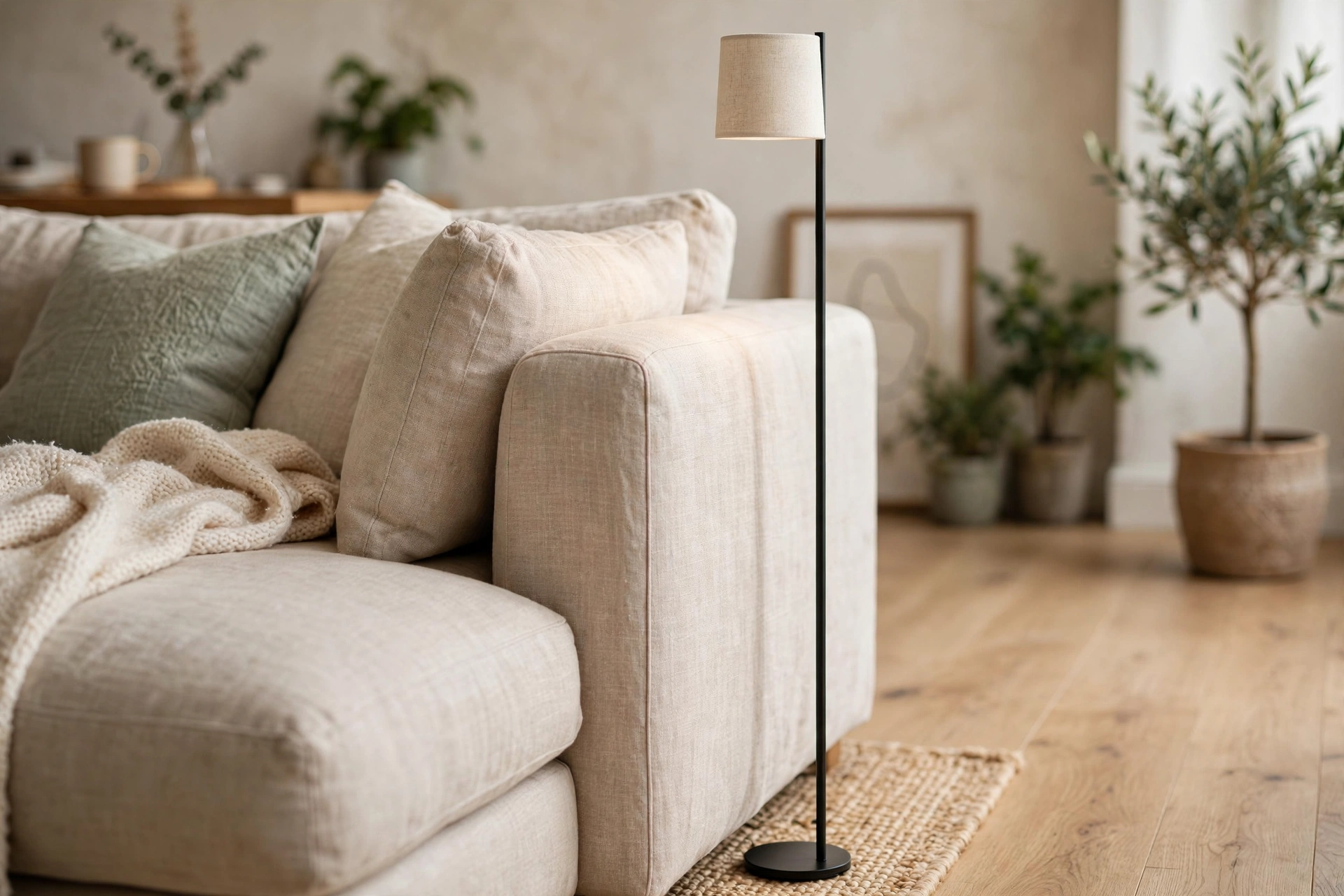
The most-used placement in any living room is the strip of floor between the sofa arm and the wall — and it is also the easiest to get wrong. The rule of thumb: the bottom of the shade should sit at or just above seated eye level, around forty to forty-eight inches for most adults, so the light lands on your lap without shining in your eyes. A stick or column-style lamp works beautifully here because its narrow footprint slides into tight gaps, and a swing arm lets you pull the light over the sofa for reading, then push it back when guests arrive. Keep the lamp base slightly behind the sofa’s front edge so feet and vacuum cleaners do not find it. If your sofa floats in the middle of the room, this is the one spot where a lamp genuinely benefits from a flat, low-profile cord cover running to the nearest outlet.
9. Place One Behind the Armchair
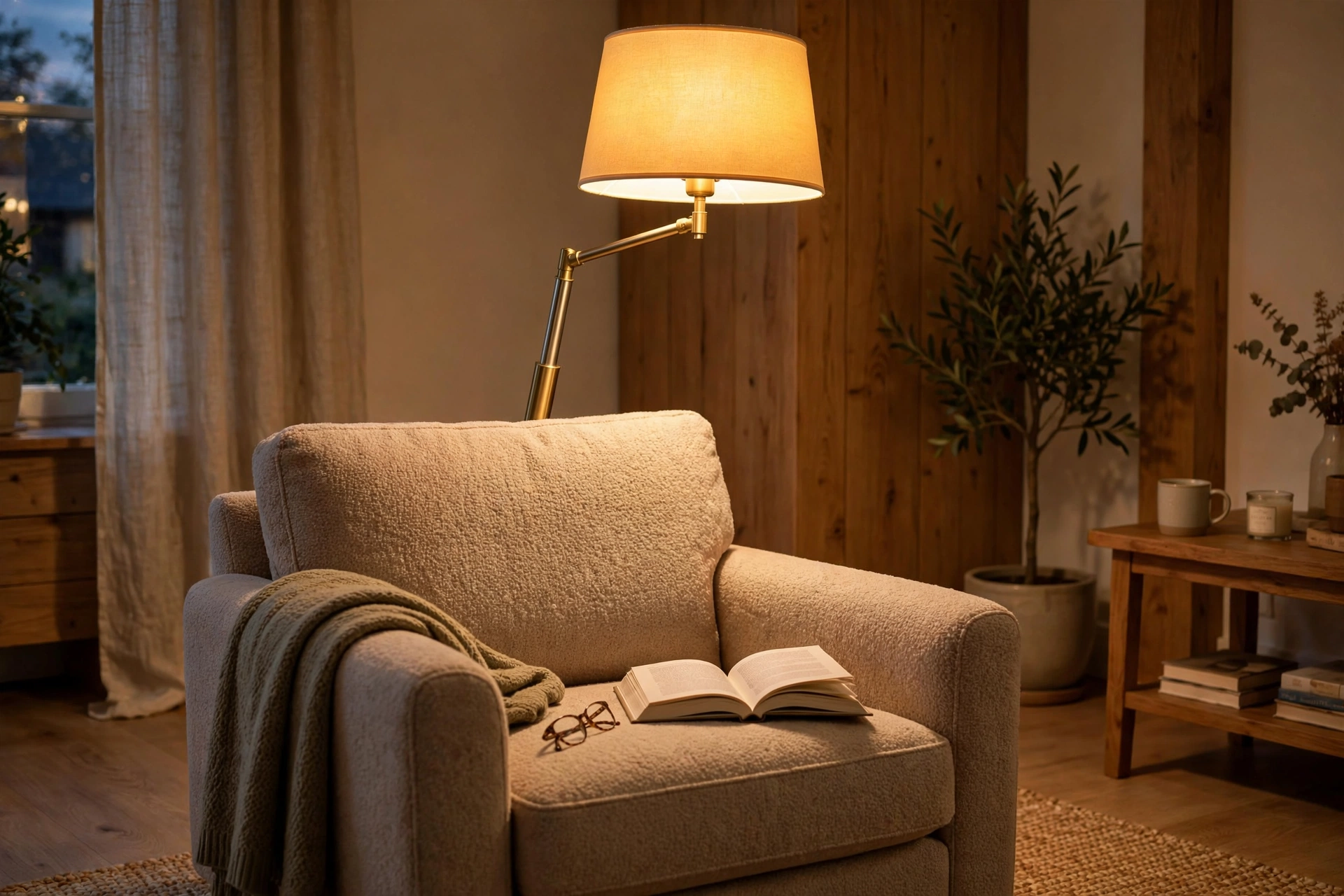
Behind the armchair is the placement that turns a chair into a destination. A floor lamp rising just over the chair back creates a halo of light that marks the spot as the room’s reading zone, and because the light comes from behind and above, it falls onto your book or tablet instead of into your eyes. Height matters here more than anywhere: the shade should peak about six to ten inches above the chair back, which usually means a lamp in the fifty-eight to sixty-six inch range. An arc lamp curving in from the side or a torchiere lifting light off the ceiling both work, but a simple stick lamp with a drum shade is the foolproof pick. Add a small side table for the tea and a throw on the chair arm, and this single lamp placement upgrades the chair from furniture to ritual.
10. Rescue Small Living Rooms With Slim Profiles

Floor lamps get skipped in small living rooms because people assume they eat floor space — but a slim-profile lamp with a narrow base can occupy less square footage than a side table. Look for column lamps with bases under ten inches wide, or torchiere-style uplights whose light does double duty as the room’s ambient layer so you can skip the table lamp entirely. Corner placement is your friend: a lamp tucked into the corner behind the sofa arm reads as part of the furniture arrangement rather than an extra piece. Wall clearance matters, so measure the base and leave two inches for the cord. A slim lamp also layers well over a soft rug, which is why these living room rug ideas for warmth and style are worth reading together with your lighting plan — the rug defines the zone, the lamp lights it, and the whole setup feels twice its size.
11. Stick to Warm 2700K Bulbs
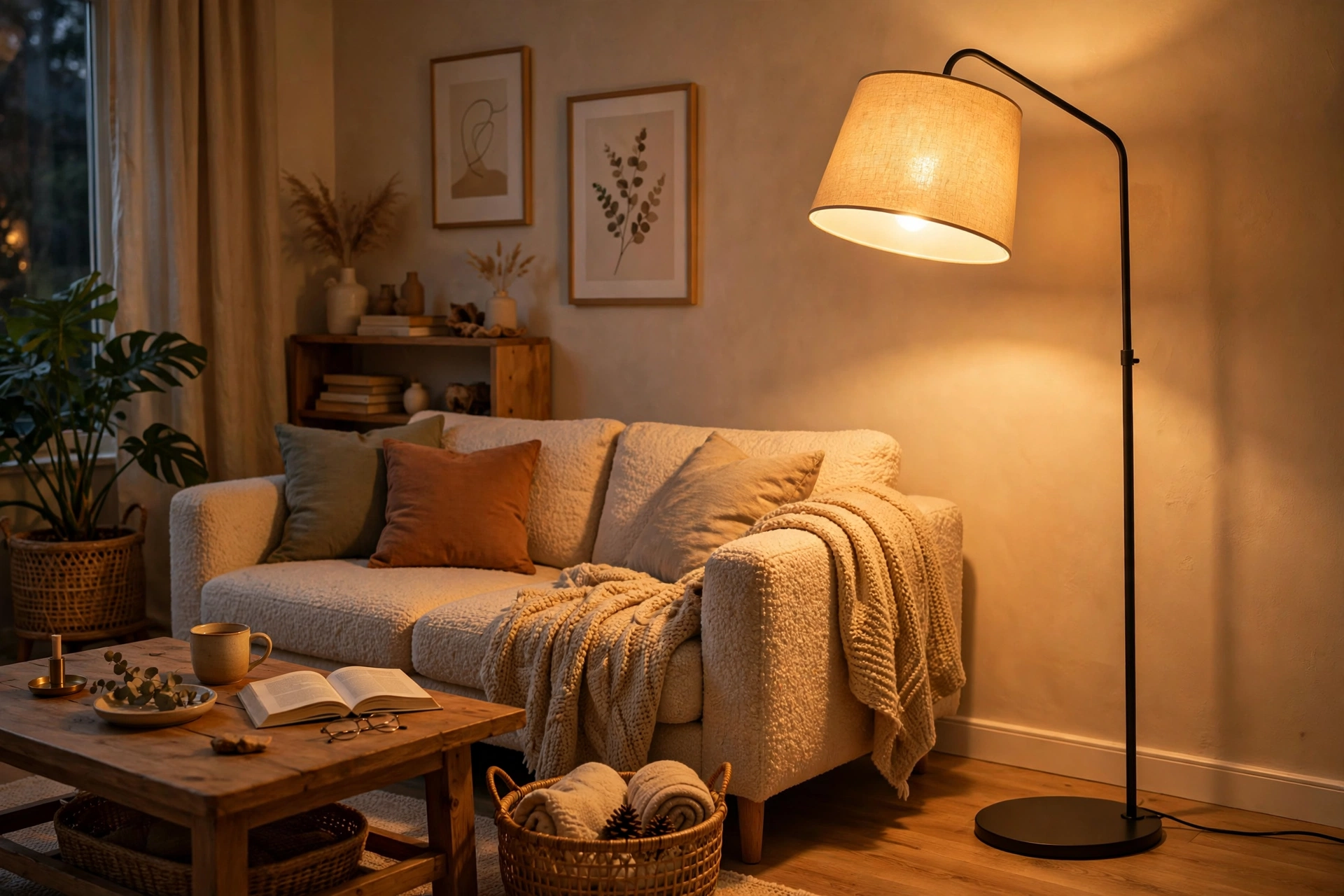
Color temperature is the single fastest way to make or break a living room’s mood, and for evening living spaces the magic number is 2700K — warm white, the closest LED equivalent to classic incandescent glow. Anything cooler (4000K and up reads daylight-blue) makes a sofa area feel like an office, no matter how pretty the lamp is. When you shop for bulbs, check the packaging for “2700K” or “warm white,” and look for a CRI of 90 or above so wood tones, fabrics, and skin look natural instead of washed out. If your floor lamp uses an integrated LED, confirm the color temperature before buying — some modern lamps default to a crisp 4000K that you cannot change. One more tip: keep every bulb in the living room at the same temperature. A 2700K floor lamp next to a 5000K overhead creates a visual clash that no amount of styling can fix.
12. Put Every Floor Lamp on a Dimmer
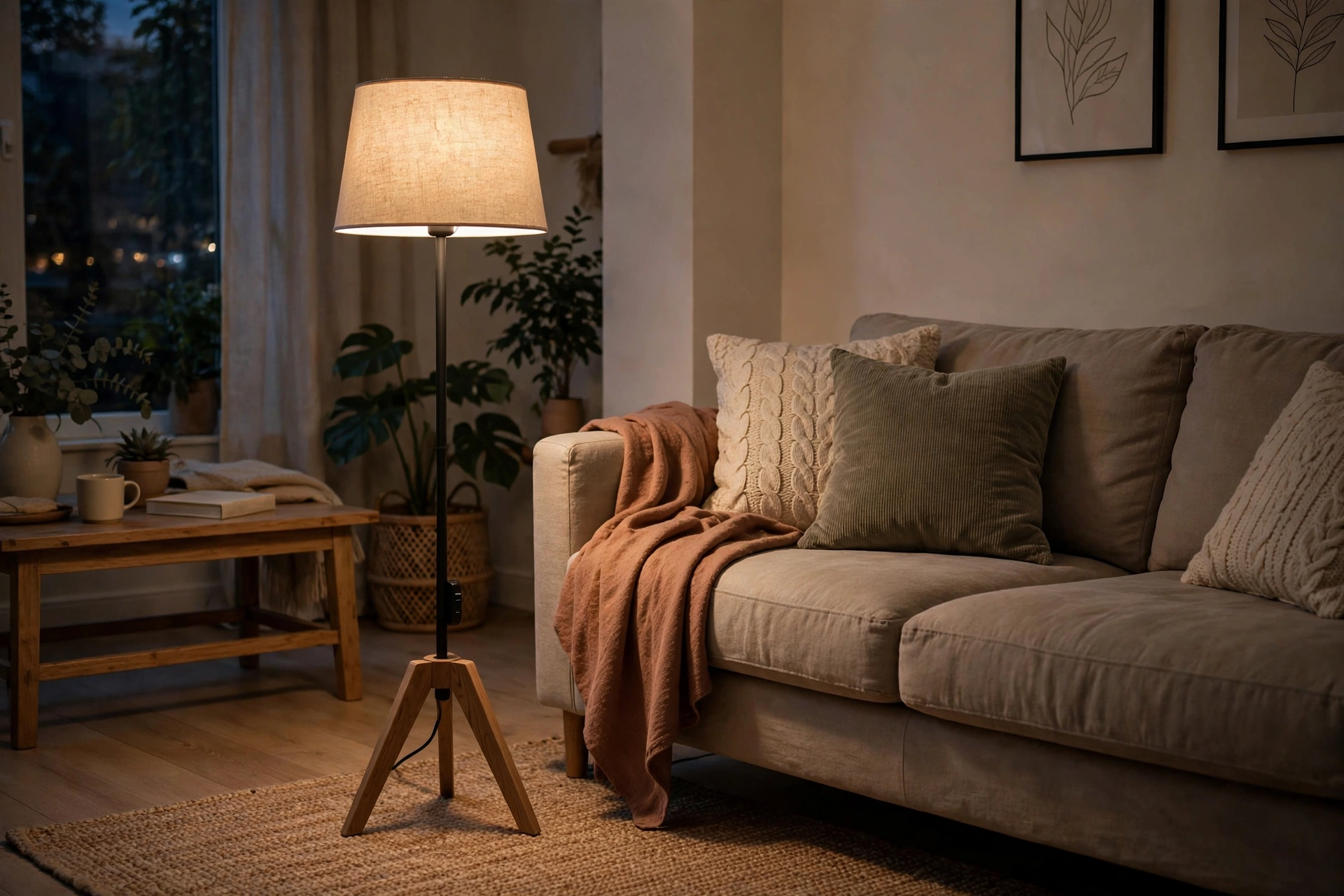
A floor lamp at full brightness all evening is a wasted opportunity. Dimmers let one lamp serve three moods — bright for reading and games, medium for conversation, low for movie night — and they extend bulb life while trimming energy use. If your lamp does not have a built-in dimmer, add a plug-in cord dimmer (they cost little and work with most dimmable LED bulbs) or use a smart bulb with app or voice control. The crucial detail is compatibility: not every LED bulb dims cleanly, so buy bulbs labeled “dimmable” and, if you get flicker or buzz, swap the dimmer type or the bulb rather than living with the annoyance. Foot-switch dimmers are especially handy for floor lamps, since you can nudge the light level without bending down to a cord switch. Make dimming part of your evening routine — bright when the sun sets, low by nine — and the whole living room will feel more considered.
13. Get the Scale and Proportion Right
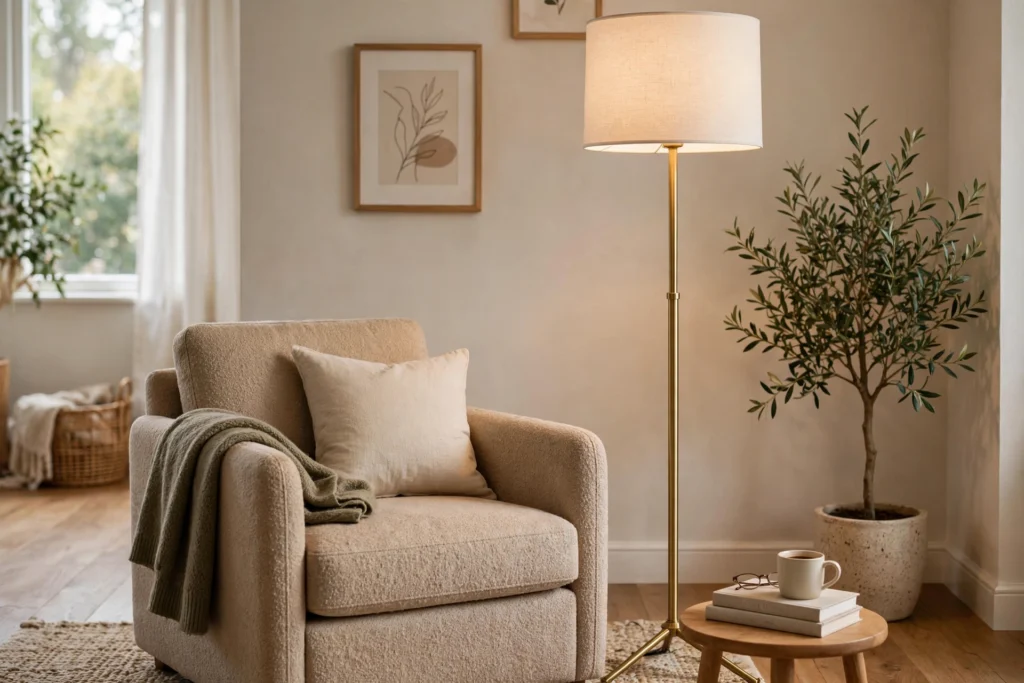
Floor lamps look wrong almost entirely because of scale, not style. The three rules to memorize: the lamp should be tall enough that the shade clears sightlines across the room (fifty-eight to seventy-two inches covers most living rooms); the shade width should balance the lamp’s height without dwarfing nearby furniture; and the lamp should feel visually proportional to the largest piece it serves — a petite stick lamp next to an oversized sectional reads lost, while a massive tripod looming over a loveseat reads bossy. Low ceilings call for shorter, wider lamps that spread light sideways rather than up; tall rooms welcome dramatic arcs and tall torchieres that fill vertical space. When in doubt, tape out the lamp’s footprint and height on the floor and wall with painter’s tape before ordering — thirty seconds of taping beats a return.
14. Layer Floor Lamps With Table Lamps and Overheads
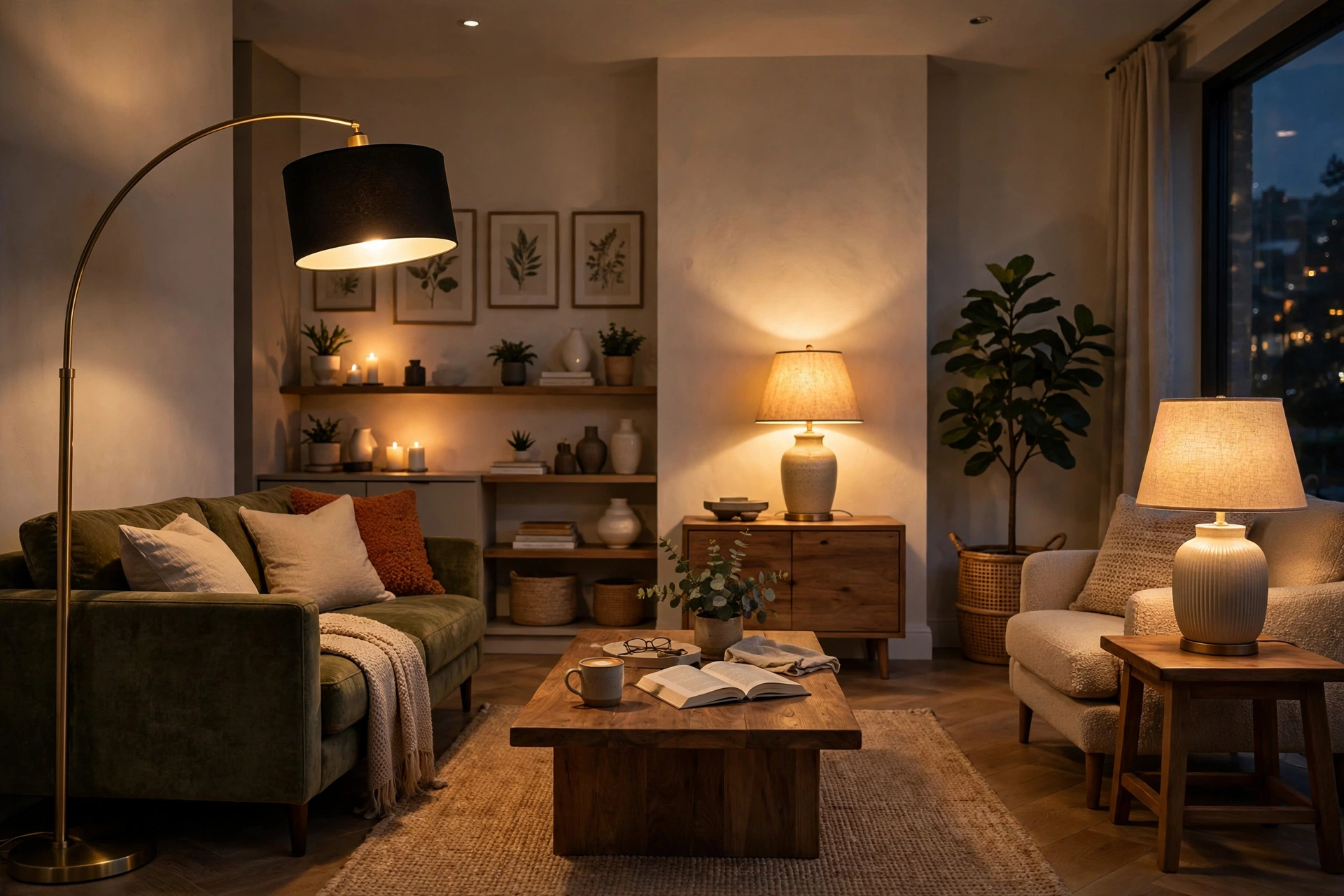
One floor lamp alone is a lamp; two or three light sources at different heights is a lighting plan. The classic layered recipe: keep your overhead or ceiling light low or off in the evening, let a floor lamp beside the sofa handle the ambient layer, and add a table lamp on the opposite side of the room so light approaches from two directions and kills harsh shadows. A torchiere aimed at the ceiling plus a reading floor lamp by the chair gives you ambient and task layers from floor lamps alone. For the full picture on how the layers work together — ambient, task, accent, and the decorative layer — this collection of living room lighting ideas from layered glow to statement fixtures walks through combinations that fit every layout. The goal is simple: at night, no corner should be pitch black and no single light should be doing all the work.
15. Shop Smart: Budget Picks That Look Expensive
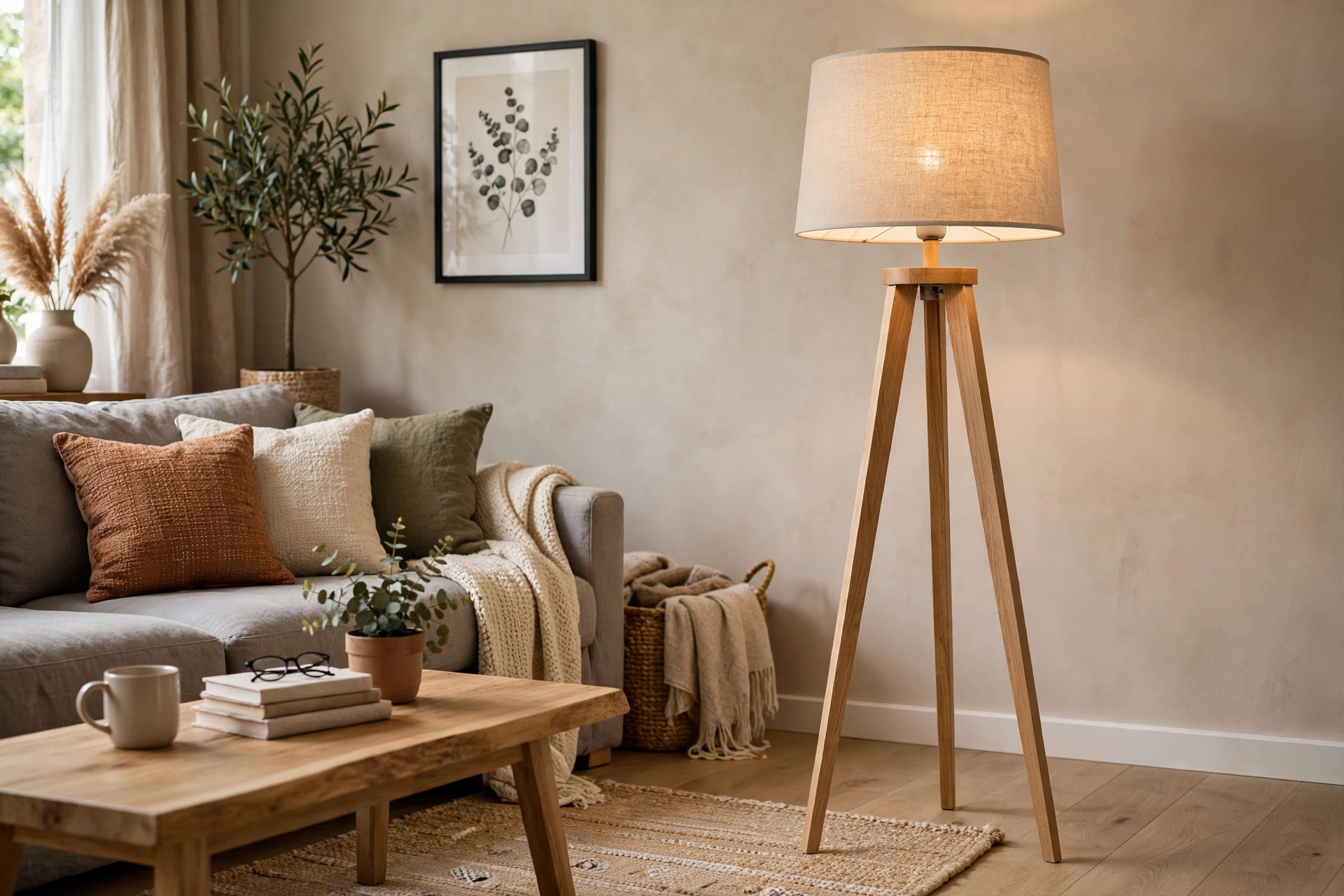
Great floor lamps do not require a designer budget — they require smart shopping. The best value plays are simple silhouettes in good finishes: a matte-black arc, a brass pharmacy lamp, or a linen-shade column lamp all read expensive because the shapes are timeless and the materials photograph well. Shop lighting clearance sections, warehouse stores, and secondhand marketplaces for tripods and arc lamps, which are built like furniture and age gracefully. What actually makes a cheap lamp look cheap is a wobbly base, a crooked shade, and a plastic cord — fixable by choosing heavy-based models, leveling the shade at setup, and running the cord along a baseboard with clips. Spend your money on the bulb and the dimmer instead: a warm 2700K dimmable bulb in a well-placed budget lamp outshines a premium lamp with a harsh bare bulb every single time.
Frequently Asked Questions
How tall should a living room floor lamp be?
Most living rooms work best with floor lamps between fifty-eight and seventy-two inches tall, including the shade. The key test is seated eye level: the bottom of the shade should sit at or just above eye level for someone sitting nearby (roughly forty to forty-eight inches off the floor), which keeps glare out of your eyes while lighting your lap. Reading and pharmacy lamps run shorter — forty-eight to fifty-four inches is typical — because they are meant to hover just over a chair. For the full placement logic, BenQ’s floor lamp placement guide covers distance from seating and corner positioning in detail.
Where should I put a floor lamp in the living room?
The three most useful spots are beside the sofa, behind an armchair, and in an empty corner — each serving a different layer. Beside the sofa gives reading and conversation light; behind the armchair creates a dedicated reading zone; a corner torchiere lifts the room’s overall ambience. Avoid placing lamps directly in front of the TV (glare on screen) or in main walkways (tip-over risk). In large rooms, use two or three floor lamps spread around so no corner sits dark.
What bulb temperature is best for a living room floor lamp?
2700K warm white is the sweet spot for living rooms — it mimics incandescent glow, flatters skin tones and wood finishes, and signals relaxation in the evening. Look for a CRI of 90+ for the most natural color rendering, and make sure every bulb in the room shares the same temperature to avoid a clashing mix of warm and cool light. Choose dimmable bulbs so one lamp can flex from bright reading light to low movie-night glow.
How do I hide floor lamp cords safely?
Run the cord directly to the nearest outlet along the baseboard, securing it with adhesive cord clips every twelve inches so it sits flat and out of the way. A flat cord cover painted to match your wall or trim makes the run nearly invisible across short distances. Never run cords under rugs (heat buildup and trip hazard), and keep cords away from high-traffic paths. If an outlet is far away, choose a battery or rechargeable floor lamp for the dead zone instead of stringing an extension cord across the room.
Are floor lamps safe with kids and pets?
They can be, with the right choices. Pick lamps with heavy, low, wide bases — arc lamps need substantial bases since their reach creates leverage — and position the base behind or beside furniture rather than in open walking paths. Avoid glass shades at toddler height, and consider cordless or rechargeable lamps to remove cords as a pull hazard. Teach the obvious rule (lamps are not toys), and for climbers, wall-anchor straps made for tall furniture add extra security.
Keep Exploring
A great floor lamp earns its place by doing three jobs at once — lighting the task at hand, warming the room’s mood, and finishing the decor. Start with one lamp in the spot you use most, add a second layer when you feel the gap, and let dimmers do the rest. Your living room will thank you every evening.