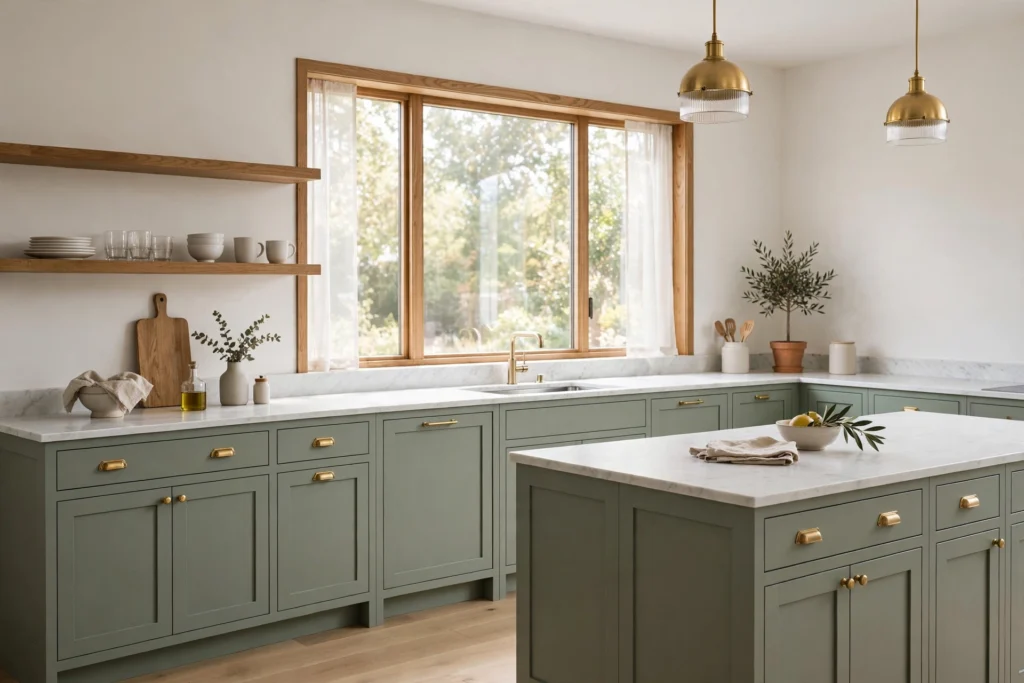

Sage green is the rare color that feels both fresh and settled — soft enough to live with every day, distinctive enough to make a kitchen memorable. Borrowed from the garden, it brings a calm, organic feeling indoors, and it plays beautifully with the materials kitchens are made of: warm wood, white marble, brass, and linen.
These sage green kitchen design ideas show how to use the color with confidence, whether you are painting every cabinet or just dipping a toe in with an island. Each idea is practical and specific, with notes on pairings and finishes so the green always looks intentional. Sage is not a trend color you will tire of — done right, it reads as timeless as white, only warmer.
1. Paint the Cabinets Sage Green
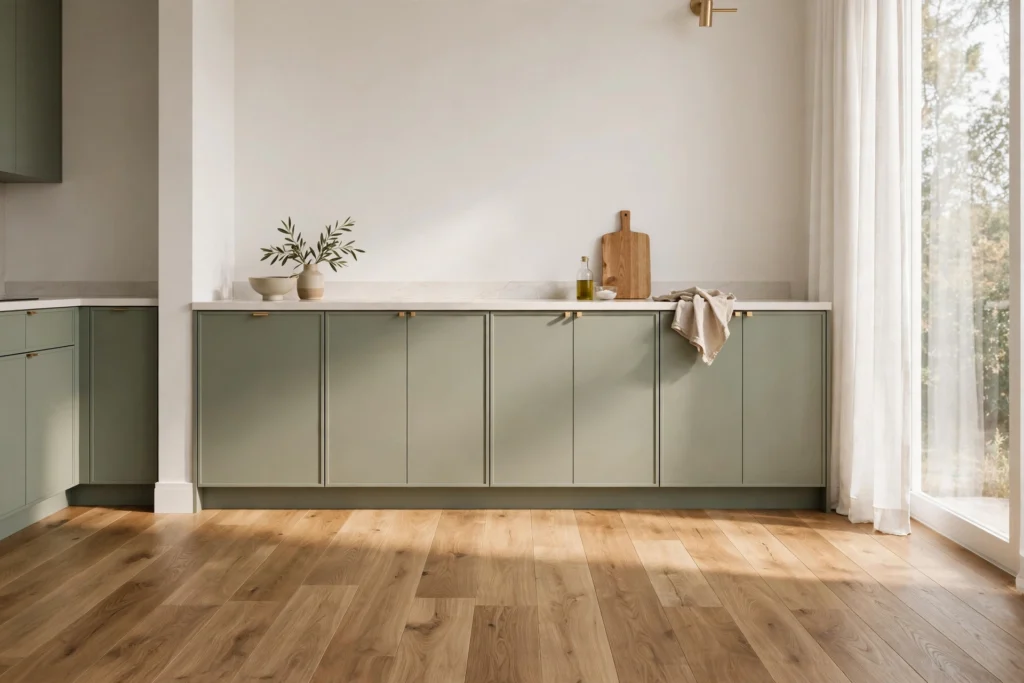
Full sage cabinetry is the boldest and most rewarding move. A soft, grayed sage on shaker cabinets gives the kitchen instant character while staying calm and livable — it is color without shouting. Choose a sage with warm gray undertones rather than a minty or yellow-leaning green; the gray keeps it sophisticated and pairs with both warm and cool accents.
For a lasting finish, use a factory-applied or professional sprayed conversion varnish — it levels beautifully and resists chips far better than brushed latex. Test large swatches on the actual cabinets and live with them for a few days, because sage shifts dramatically between morning and evening light. Paired with warm white walls and oak floors, sage cabinets feel like they have always belonged.
2. Add Warm Brass Hardware
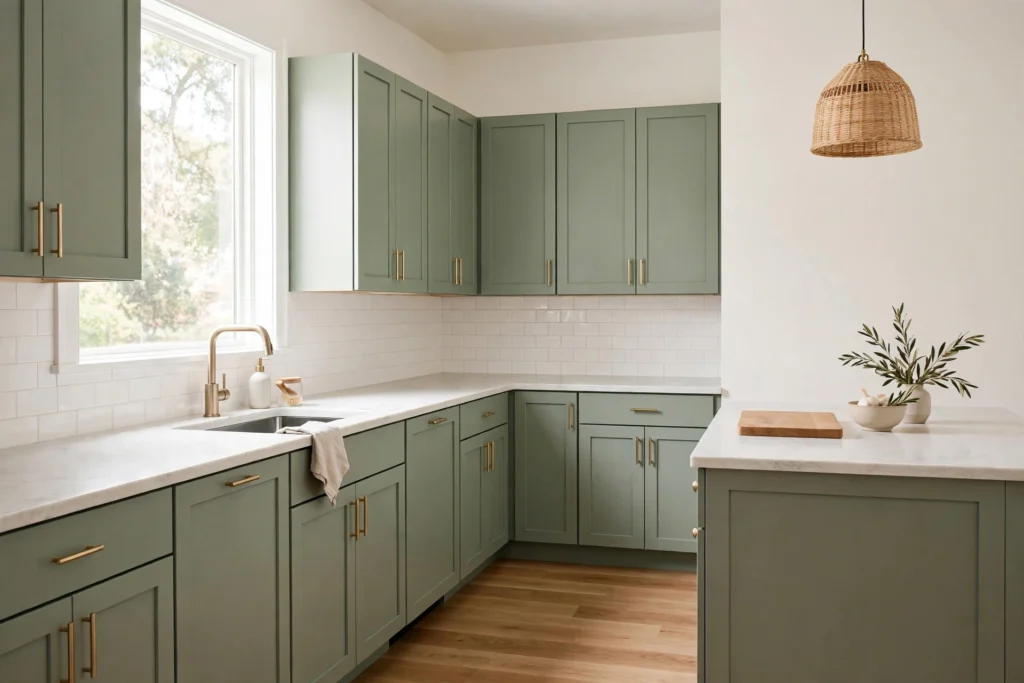
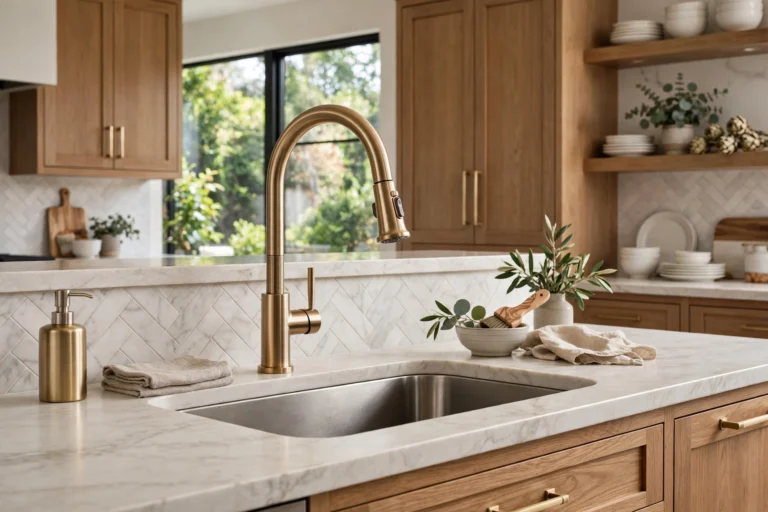
Brass is sage green’s perfect partner. The warm golden metal against the cool gray-green creates a contrast that feels rich and intentional — knobs, bin pulls, and cup pulls in unlacquered or brushed brass warm up every cabinet door. The combination reads classic and collected, never trendy.
Let the brass repeat: faucet, cabinet hardware, pendant details, even the range knobs if your appliance allows. Unlacquered brass develops a soft patina over time that deepens the lived-in feeling; brushed or satin brass stays consistent if you prefer low maintenance. Keep the shapes simple — a classic knob or slim bar pull — so the metal’s warmth, not its silhouette, does the talking.
3. Pair With White Marble Counters
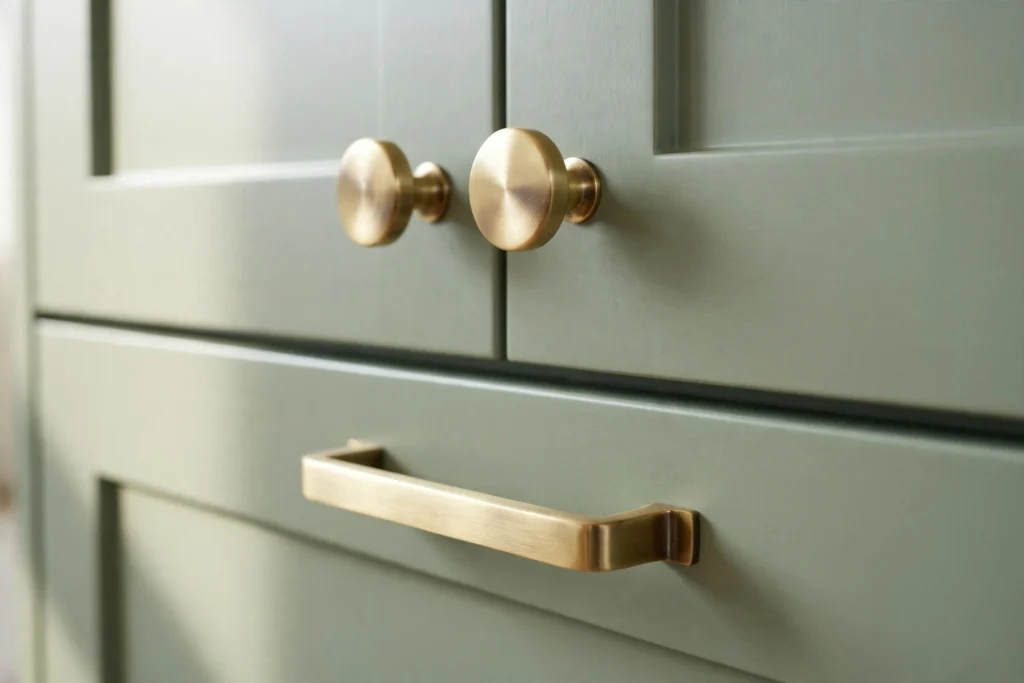
White marble with soft gray veining is the countertop that makes sage cabinets sing. The crisp white lifts the green, the gray veining echoes its undertones, and the natural stone adds the luxury that painted cabinets alone cannot. Carrara is the classic choice; Calacatta brings bolder veining for more drama.
Marble etches and stains — that is the honest trade. If that worries you, a honed finish hides etching better than polished, and quartz alternatives now mimic marble convincingly with zero maintenance. Either way, keep the backsplash simple so the stone stays the star: a handmade-look white subway tile or a full-height marble slab both let the sage-and-stone pairing breathe.
4. Ground It With Oak Floors
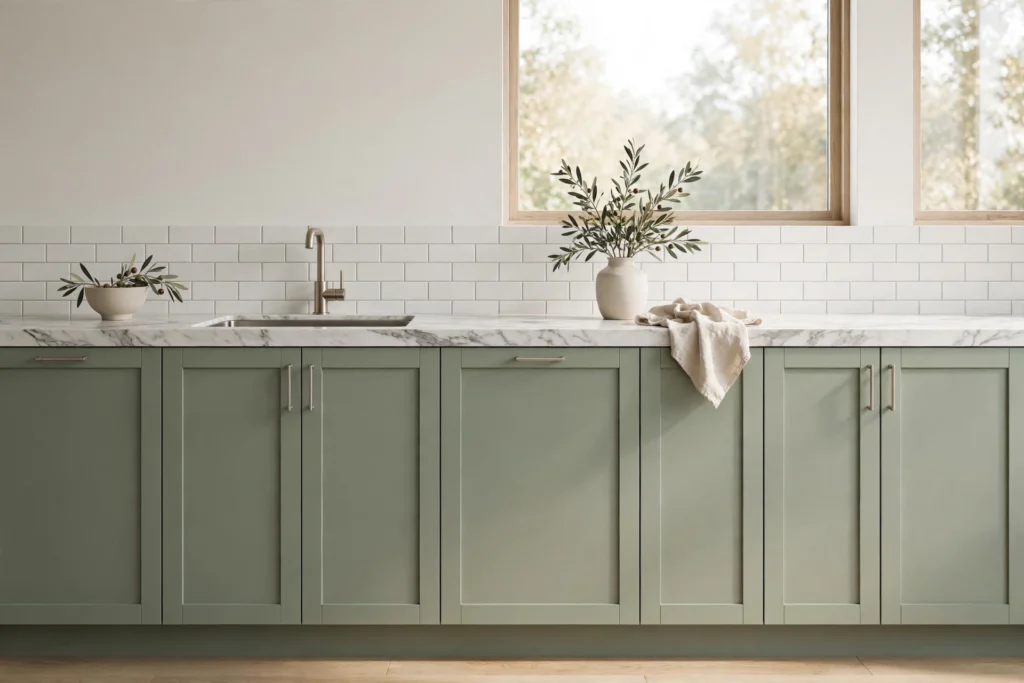
Warm oak floors are the foundation that keeps a sage kitchen from feeling cool or flat. The honey tones of white oak balance the green’s gray undertones, and the natural grain adds organic texture against painted cabinetry. Wide-plank engineered oak with a matte finish is the practical choice — stable, durable, and beautiful.
Run the floors in the same tone as any open shelving or island wood accents to tie the room together. If your existing floors are dark, a large natural-fiber runner in the work aisle softens the contrast. The sage-oak-white trio is one of the most forgiving palettes in kitchen design; it is almost impossible to get wrong, which is why it anchors so many sage green kitchen design ideas.
5. Style Open Oak Shelving
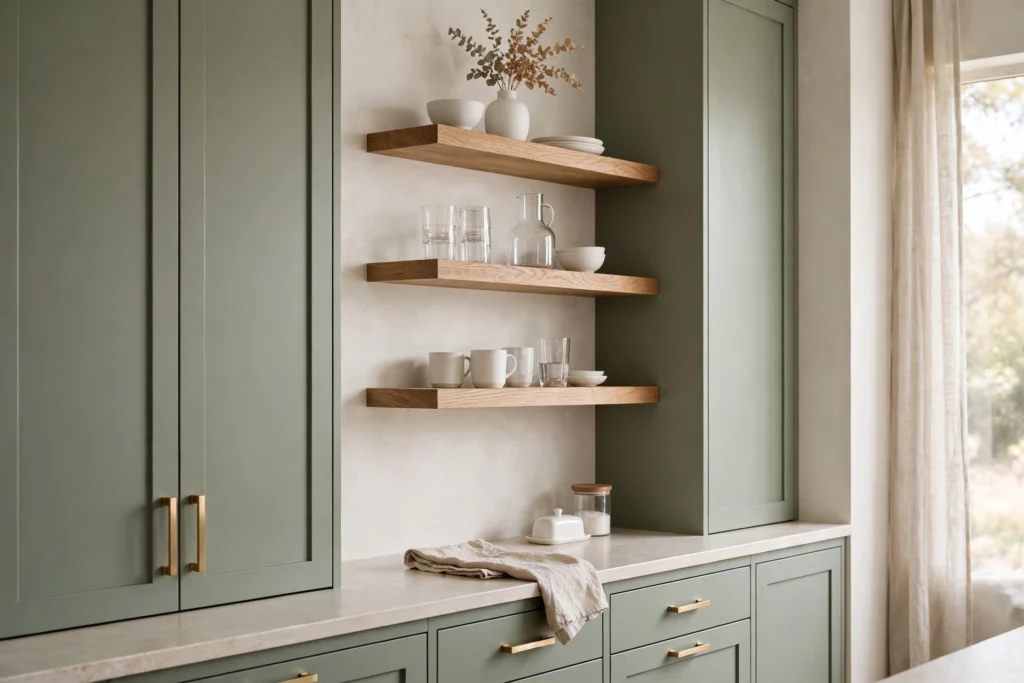
Open shelving in warm oak is the natural companion to sage cabinetry. One or two floating shelves beside the range or sink break up the painted surfaces and give you a place for white ceramics, clear glassware, and a small plant. The wood tone picks up the floors and warms the green.
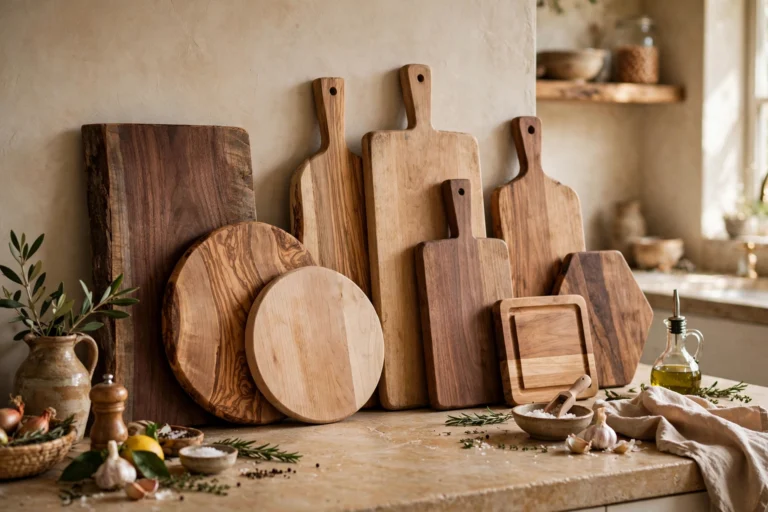
Style with restraint: stack white bowls, line up clear glasses, add a wooden cutting board or two, and leave genuine breathing room. Because sage is already doing the color work, keep the shelf styling neutral — white, wood, glass, and one green plant. Thick shelves (at least 1.5 inches) with hidden brackets look clean and contemporary against the traditional cabinetry.
6. Paint Just the Island Sage
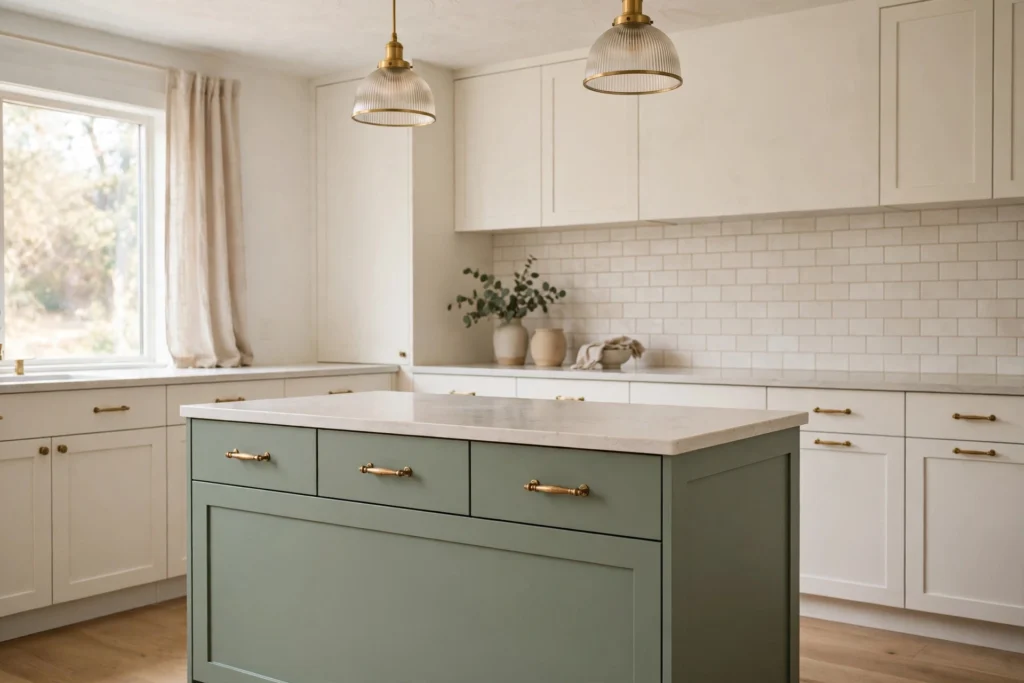
Not ready to commit the whole kitchen? Paint only the island sage green and keep the perimeter cabinets warm white. This two-tone approach delivers most of the color impact with half the commitment, and it makes the island read as a furniture piece — the classic farmhouse trick. The contrast draws the eye and gives the room a designed, layered feeling.
Choose a sage one or two shades deeper than you would for full cabinetry; as an accent it can handle more saturation. Carry the green to one more small element — the pantry door, a window seat base, or barstool cushions — so it feels intentional rather than isolated. Brass hardware on the island and black or nickel on the perimeter keeps the mix sophisticated.
7. Choose a Handmade-Look Backsplash
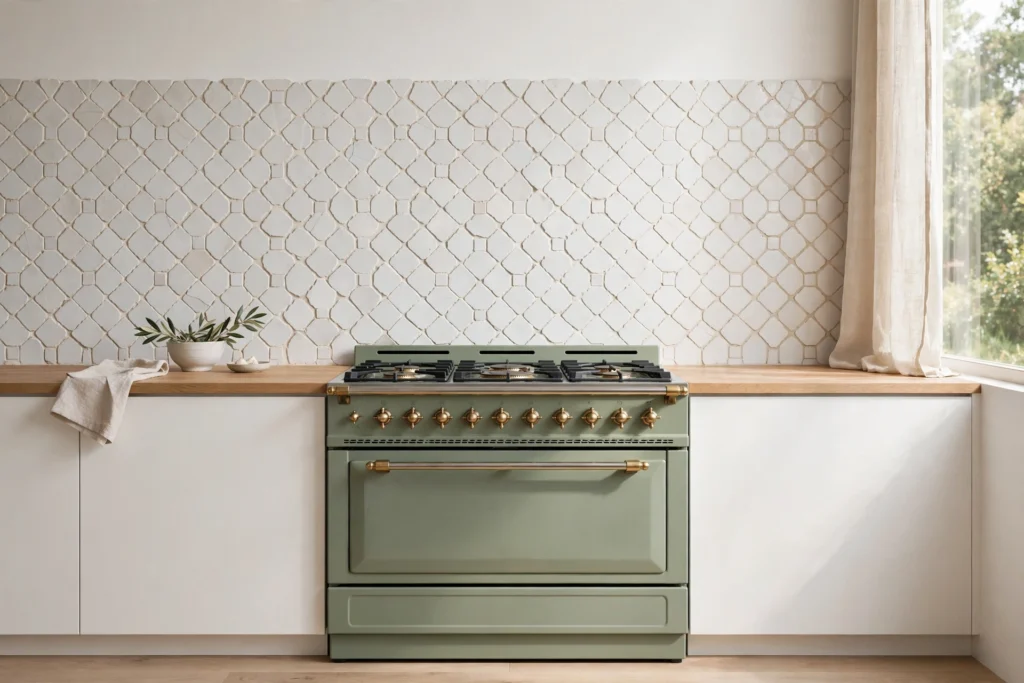
The backsplash is where texture elevates a sage kitchen. Handmade-look zellige tiles in soft white or pale green, with their uneven glaze and subtle color variation, catch light beautifully and add an artisanal layer that flat subway tile cannot. The slight irregularity feels human and warm against precise cabinetry.
Keep the grout color close to the tile to let the glaze variation show, and seal zellige well since it is porous. If zellige’s price stings, a standard subway tile in a handmade-look finish gives much of the effect. Run the tile to the ceiling behind open shelving or the range for maximum impact — the vertical line makes the kitchen feel taller.
8. Create a Sage Pantry Wall
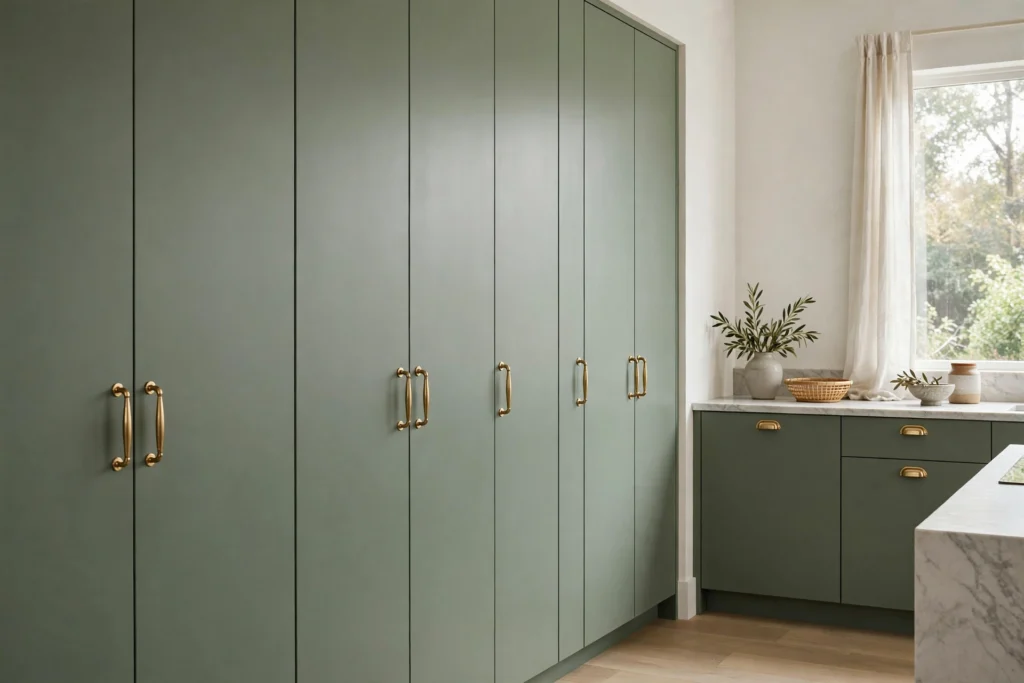
Turn a full wall of tall pantry cabinets into a sage green moment. Floor-to-ceiling cabinetry in sage — housing the fridge, ovens, and pantry storage — creates a dramatic color block that organizes the kitchen visually. The tall green plane reads almost like architecture, especially with simple shaker fronts and brass pulls.
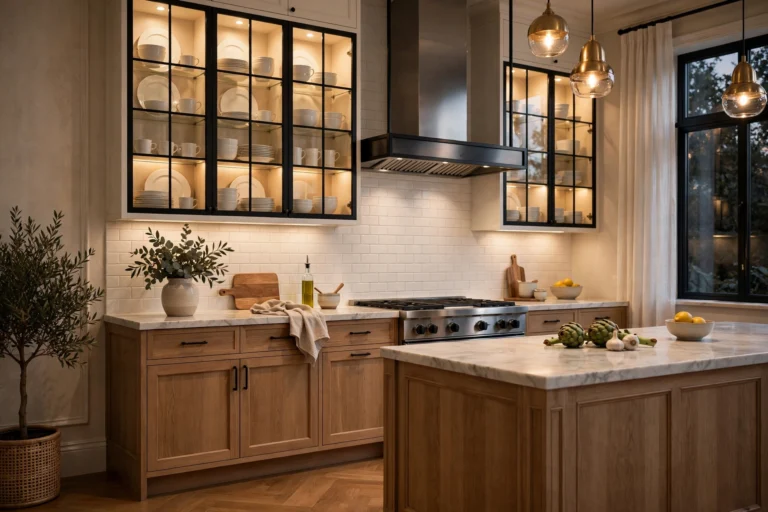
Break up the expanse with one open niche or a glass-front section for display, and keep the surrounding walls warm white so the green wall stays the hero. This works beautifully in galley and L-shaped kitchens where one wall can carry the color. Inside, fit the pantry with pull-outs and good lighting — the beautiful exterior should hide a hardworking interior.
9. Bring In Living Greenery
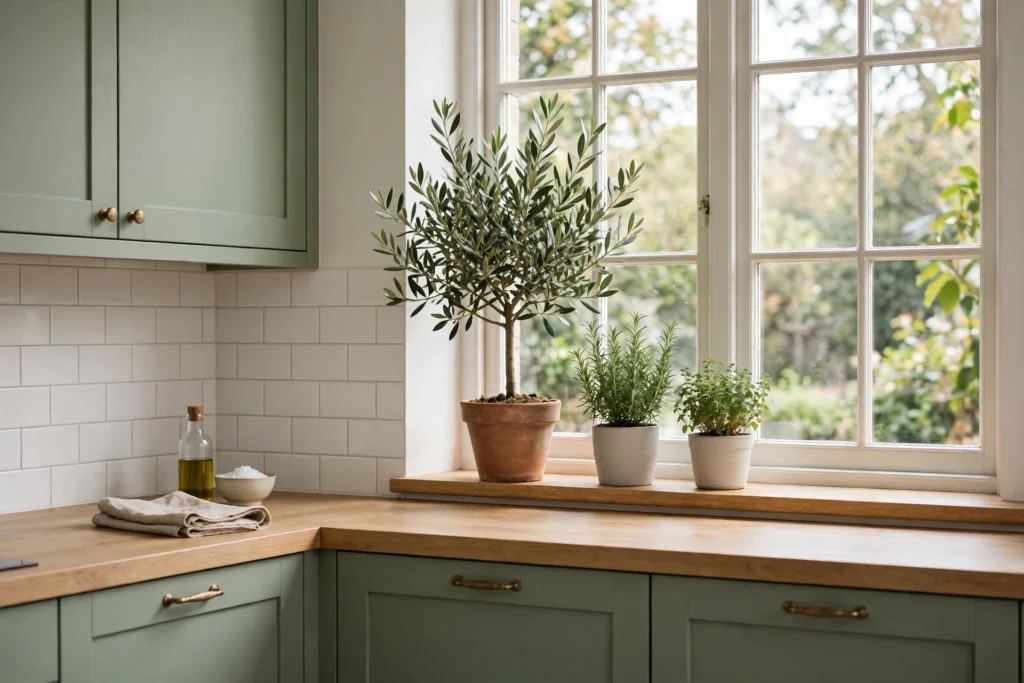
Real plants are the easiest way to make sage cabinetry feel intentional — the green-on-green harmony is instant. A potted olive tree in the corner, herbs on the windowsill, or a trailing pothos on the open shelf connects the painted color to something living. The variation in leaf greens keeps the flat cabinet color from feeling one-note.
Choose plants that tolerate kitchen conditions: herbs love the windowsill, pothos and philodendron handle lower light, and an olive tree wants the brightest spot you have. Pot them in terracotta, stoneware, or woven baskets — natural materials that echo the kitchen’s palette. Even
one generous plant changes the room’s energy; this is among the simplest sage green kitchen design ideas and one of the most effective.
10. Add Natural Stone Accents
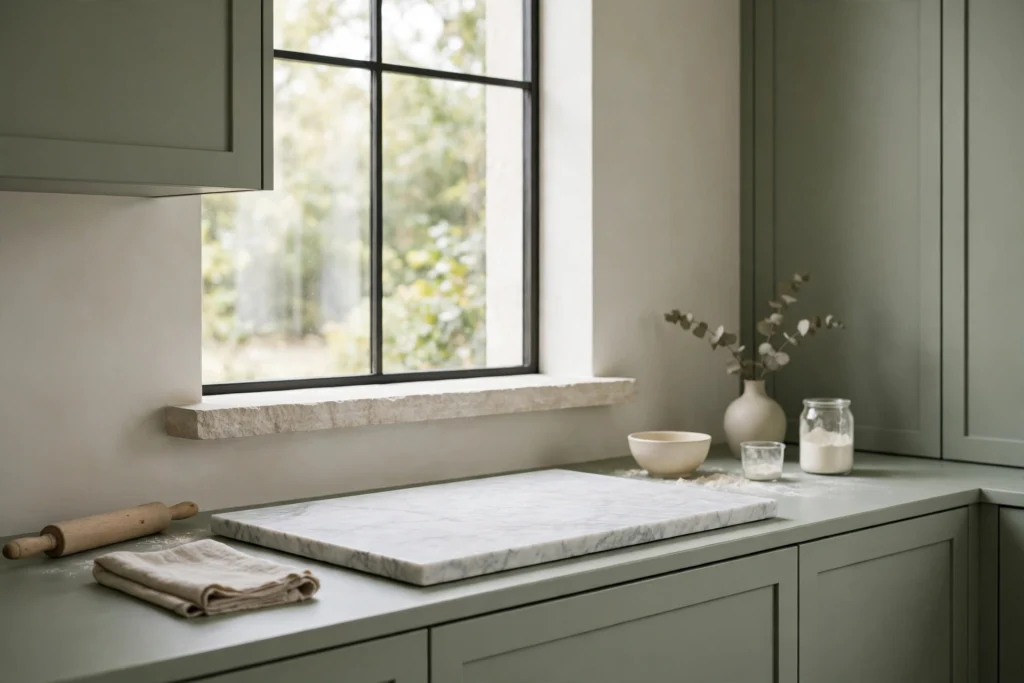
Stone brings an earthy weight that balances sage’s softness. A honed limestone or travertine windowsill, a marble pastry slab inset in the island, or a rough stone mortar and pestle on the counter — these small stone moments add texture and permanence. The pale, chalky tones of natural limestone sit beautifully next to gray-green paint.
A stone range alcove or a full-height stone backsplash behind the range is the bigger move: it creates a natural focal point and the stone’s variation keeps the sage from feeling flat. Keep stone finishes honed or matte rather than polished — the soft sheen suits sage’s quiet character far better than high gloss.
11. Try Two-Tone With Warm White Uppers
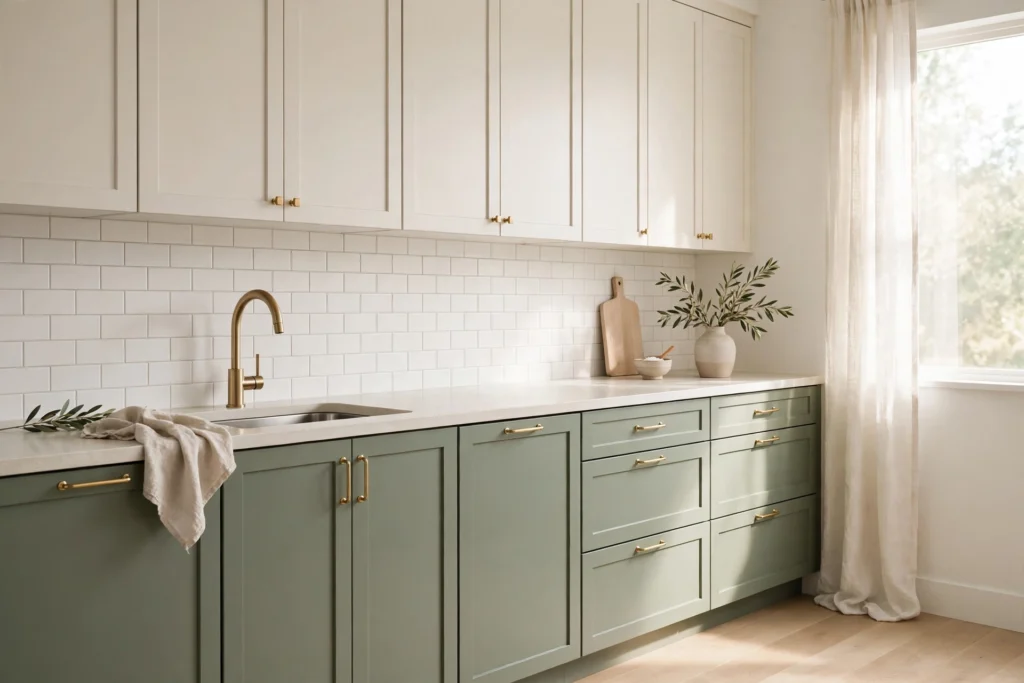
For a lighter take, paint only the lower cabinets sage and keep the uppers warm white. The white uppers keep the room bright and airy while the green base grounds it — a classic combination that feels fresh without overwhelming. This split also lets you introduce the color gradually if you are nervous about commitment.
Carry the scheme through with a warm white backsplash and brass hardware throughout to unify the two tones. The eye reads the room as light and open, with the sage as a rich foundation rather than a full-room statement. In small kitchens this two-tone approach is especially smart: color where it counts, brightness where you need it.
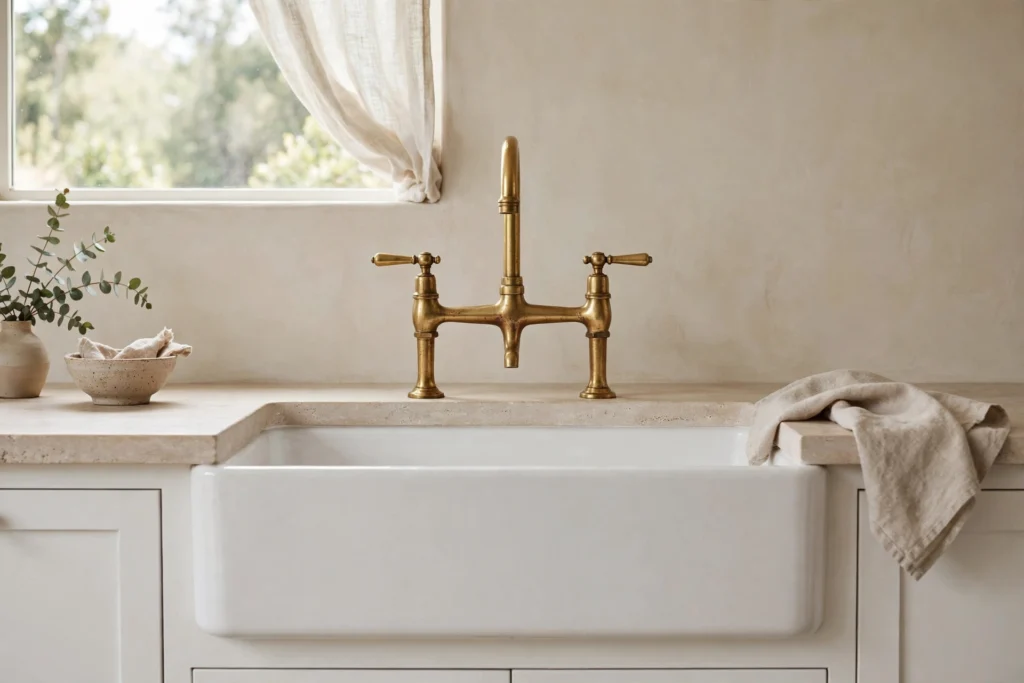
12. Install a Vintage-Style Brass Faucet
The faucet is the kitchen’s most-touched object, so make it beautiful. A vintage-style bridge faucet in unlacquered brass — with cross or lever handles — is the perfect jewelry for sage cabinetry. The warm metal glows against the green, and the traditional silhouette suits the timeless feeling sage creates.
Unlacquered brass will patina with use, developing darker tones in the crevices that look authentically aged; if you prefer consistency, choose a lacquered or brushed brass finish. Match the faucet to the cabinet hardware finish so the metals read as a set. A matching brass pot filler or soap dispenser completes the story without overdoing it.
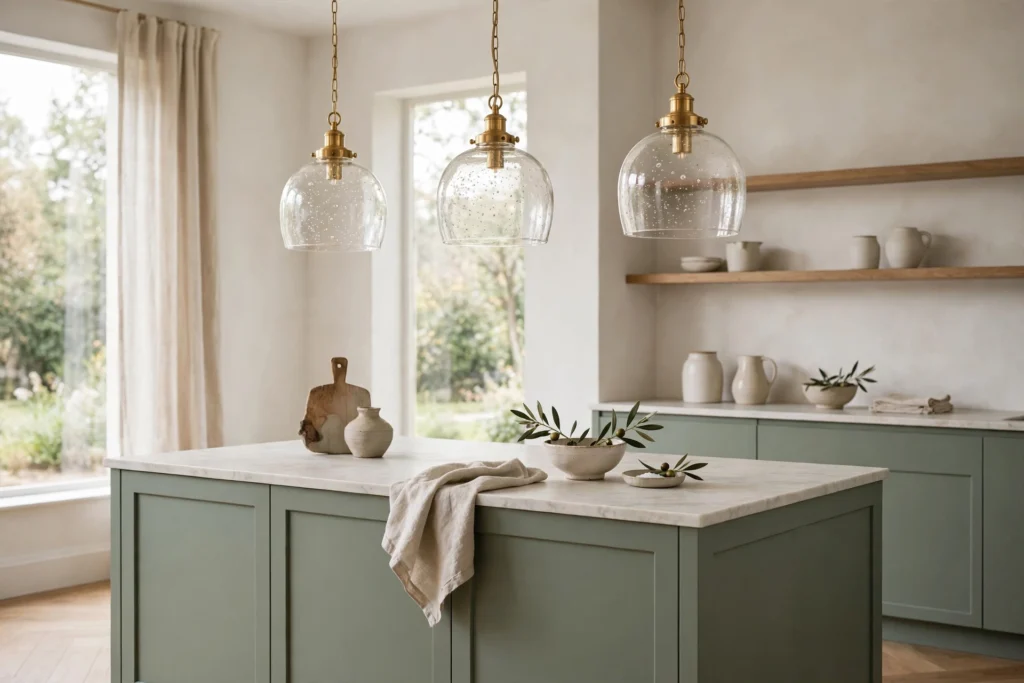
13. Hang Simple Glass Pendants
Lighting should stay quiet in a sage kitchen and let the color lead. Clear or seeded-glass pendants with brass fittings over the island provide sparkle without visual weight — they disappear into the room while casting beautiful light. The transparency keeps sightlines open, which matters in kitchens where the island is the social hub.
Hang two or three pendants 30 to 36 inches above the island, fitted with warm dimmable LEDs. The brass fittings tie to the hardware, and the glass keeps the look light and contemporary against traditional cabinetry. Avoid heavy or dark shades here; sage already gives the room its depth, and the lighting should float.
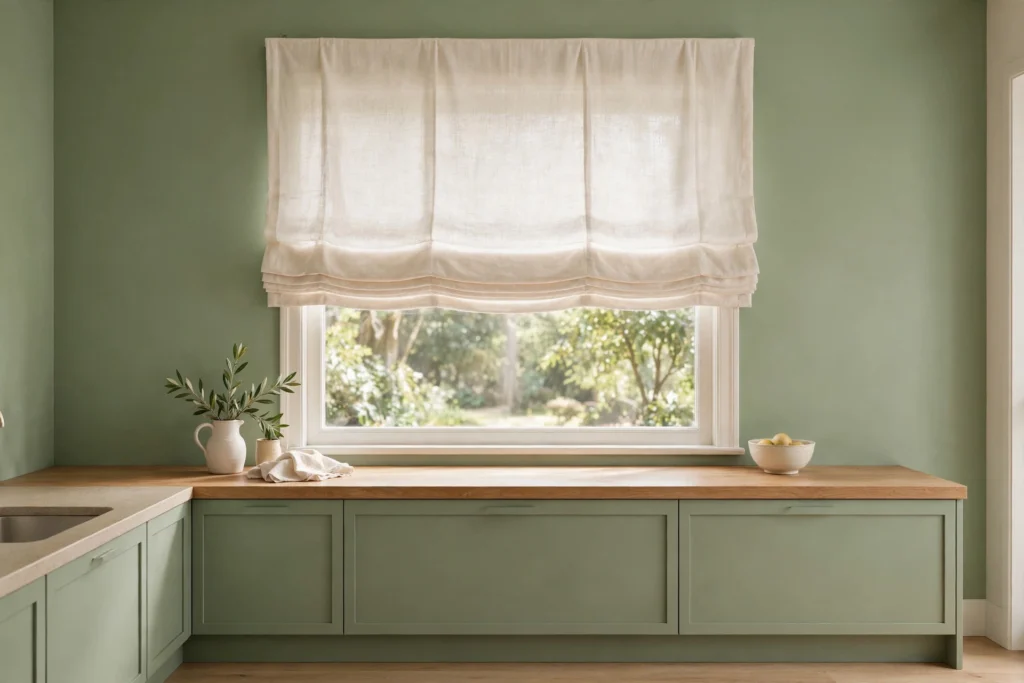
14. Soften Windows With Linen Shades
Window treatments in a sage kitchen should feel as natural as the palette. Unlined linen roman shades or simple linen cafe curtains in warm white or oatmeal filter light softly and add textile warmth against all the hard surfaces. The natural slub of linen echoes the organic feeling sage brings.
Mount shades inside the frame for a clean look, and choose a fabric with enough body to hold its shape. In a kitchen, a linen-poly blend resists wrinkles and washes better than pure linen. Keep the treatment simple — no valances or fussy tie-backs — so the window feels like a calm, bright pause in the cabinetry.
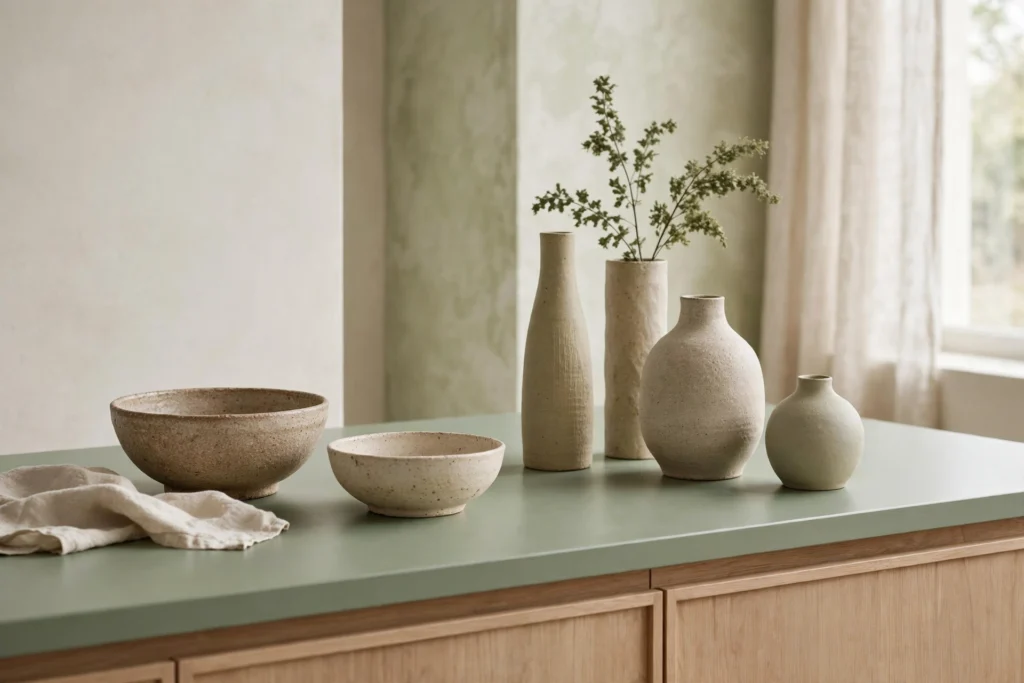
15. Style With Handmade Ceramics
The final layer is the styling, and handmade ceramics are sage’s soulmate. A collection of stoneware bowls, a handmade vase with branches, ceramic canisters on the counter — the slight irregularities and matte glazes harmonize with sage’s earthy character. Choose whites, creams, and warm grays with maybe one deeper green piece.
Group ceramics in odd numbers with varied heights: three canisters by the range, a bowl of fruit on the island, a tall vase on the open shelf. Shop small makers and craft fairs rather than mass-produced sets; the subtle variations are exactly what make handmade pieces work. This collected styling is what turns a sage kitchen from pretty to personal.
Frequently Asked Questions
What colors go well with sage green kitchen cabinets?
Warm whites, creamy ivories, natural oak, white marble with gray veining, and warm brass are the classic partners. For accents, try muted clay, soft putty, or warm greige. Avoid pairing sage with cool grays or stark whites, which can make it look muddy, and keep bright saturated colors away — sage’s charm is its quietness.
Is sage green a timeless kitchen color or just a trend?
Sage reads as timeless because it is a desaturated, nature-derived color — like white, wood, and stone, it does not shout. Kitchens painted sage ten years ago still look current, while bolder trend colors date quickly. Choose a grayed, muted sage rather than a bright or minty one, and it will age as gracefully as any neutral.
Should I paint all my cabinets sage or just the island?
Both work. Full sage cabinetry makes the strongest statement and suits larger kitchens with good natural light. Painting just the island (or just the lowers) is lower-commitment, keeps small kitchens bright, and still delivers the color’s character. If you are unsure, start with the island — you can always paint the rest later.
What hardware finish looks best with sage green?
Warm brass is the classic pairing — unlacquered for a living patina or brushed for consistency. Matte black also works beautifully for a more contemporary contrast, especially on the island. Avoid chrome and polished nickel, which can feel cold against sage; the goal is warmth.
Keep Exploring
Sage green rewards a slow hand — start with the element you are surest about, whether that is the island, the pantry wall, or just the styling, and live with it before going further. The color’s quiet confidence means even a small dose transforms the room. Done thoughtfully, a sage kitchen never feels decorated; it simply feels right, season after season.





[…] an all-cream kitchen feels too sweet for you, a sage green island brings balance. This muted, grayish green is the workhorse of English cottage design — it grounds […]
[…] ideas full of cozy charm, the modern farmhouse kitchen design ideas full of warm character, and the sage green kitchen design ideas that feel fresh and […]
[…] and the 15 cottage kitchen design ideas lean softer and more romantic. For a dose of green, the 15 sage green kitchen design ideas pair beautifully with rustic wood tones. Build it layer by layer, and it will only get better with […]
[…] Whether you’re collecting sage green bedroom ideas for a full sage-drenched retreat or just a whisper of green in the textiles, you’ll find practical guidance here: the best sage paint shades, what to pair them with, and how to layer the color so it feels sophisticated rather than flat. If you love this shade beyond the bedroom, see our sage green kitchen design ideas. […]
[…] uppers in a compact L-shape, adds all the personality of two-tone without any of the visual weight. Sage green kitchen ideas — sage is the small kitchen’s best […]