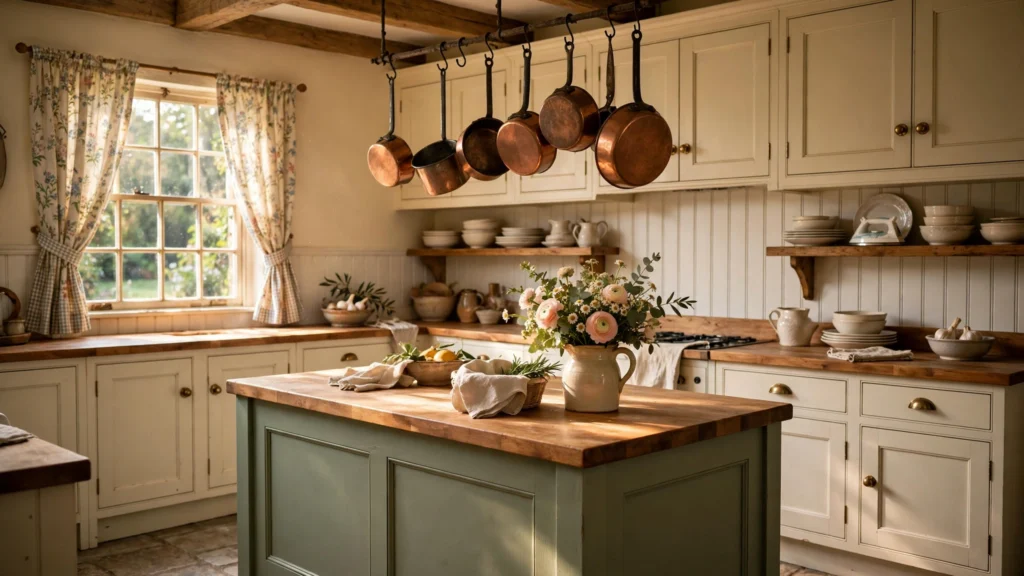

There is something about a cottage kitchen that feels like stepping into a storybook. Cream cabinets glow in the morning light, a kettle hums on the range, and every shelf holds a plate with a history. These rooms are small on square footage but enormous on warmth — and that is exactly the point.
You do not need an English country house to pull off this look. With soft paint colors, honest materials, and a few well-chosen vintage finds, any kitchen can take on cottage charm. Here are fifteen cottage kitchen design ideas to get you started.
1. Paint Your Cabinets a Soft Cream
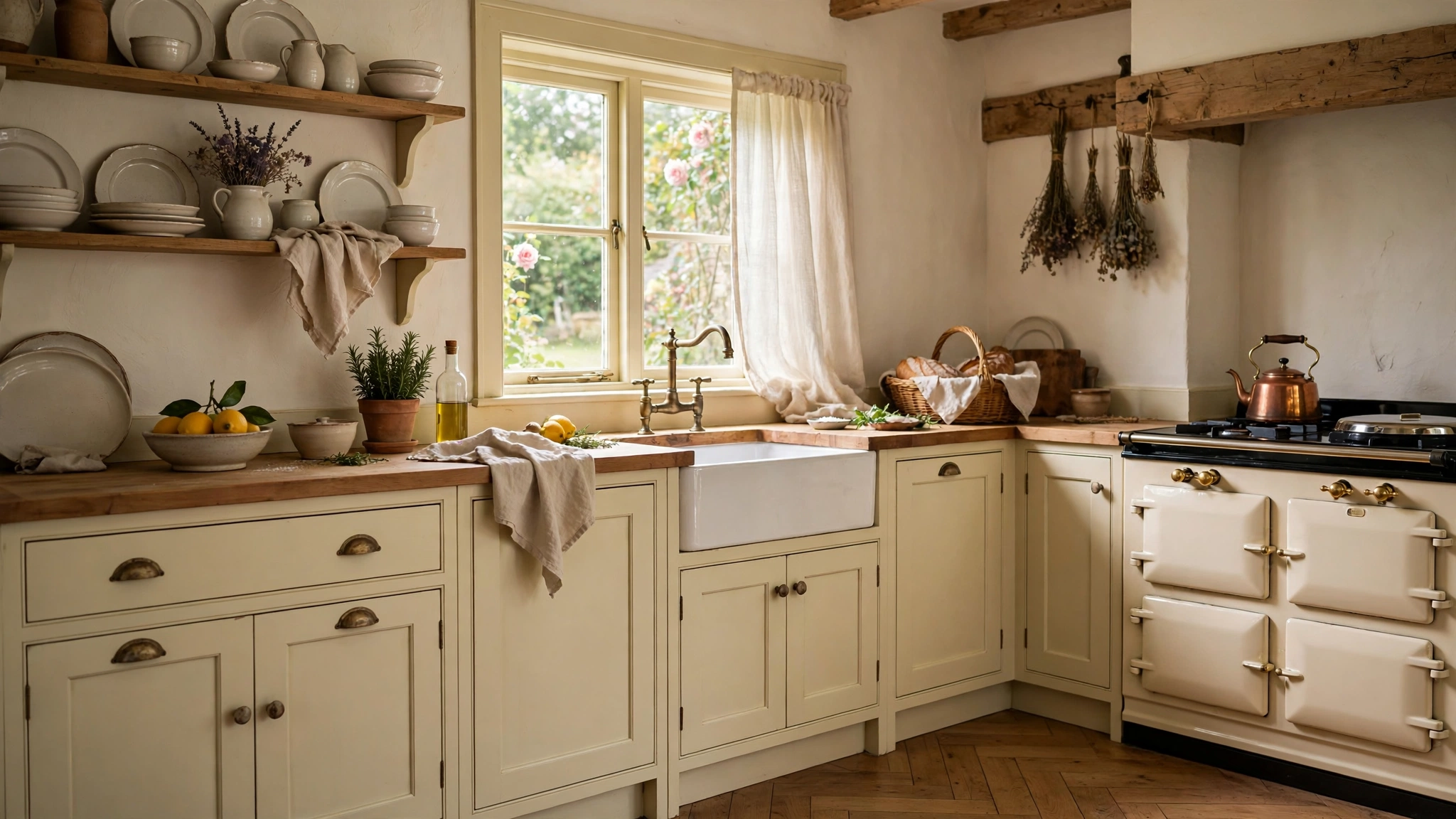
Nothing says cottage like cabinets in a warm, buttery cream. Unlike stark white, cream has a gentle depth that makes a kitchen feel sunlit even on a gray day. It pairs beautifully with wood floors and brass hardware, and it never feels cold or clinical.
Choose a paint with a soft sheen — satin or eggshell — so the cabinets are easy to wipe down but still catch the light. If your cabinets are dark or dated, two coats of a good bonding primer followed by cream cabinet paint will transform them in a weekend. Add aged-brass cup pulls and knobs to finish the look, and keep the upper cabinets the same tone for a seamless, storybook feel.
2. Add a Sage Green Island
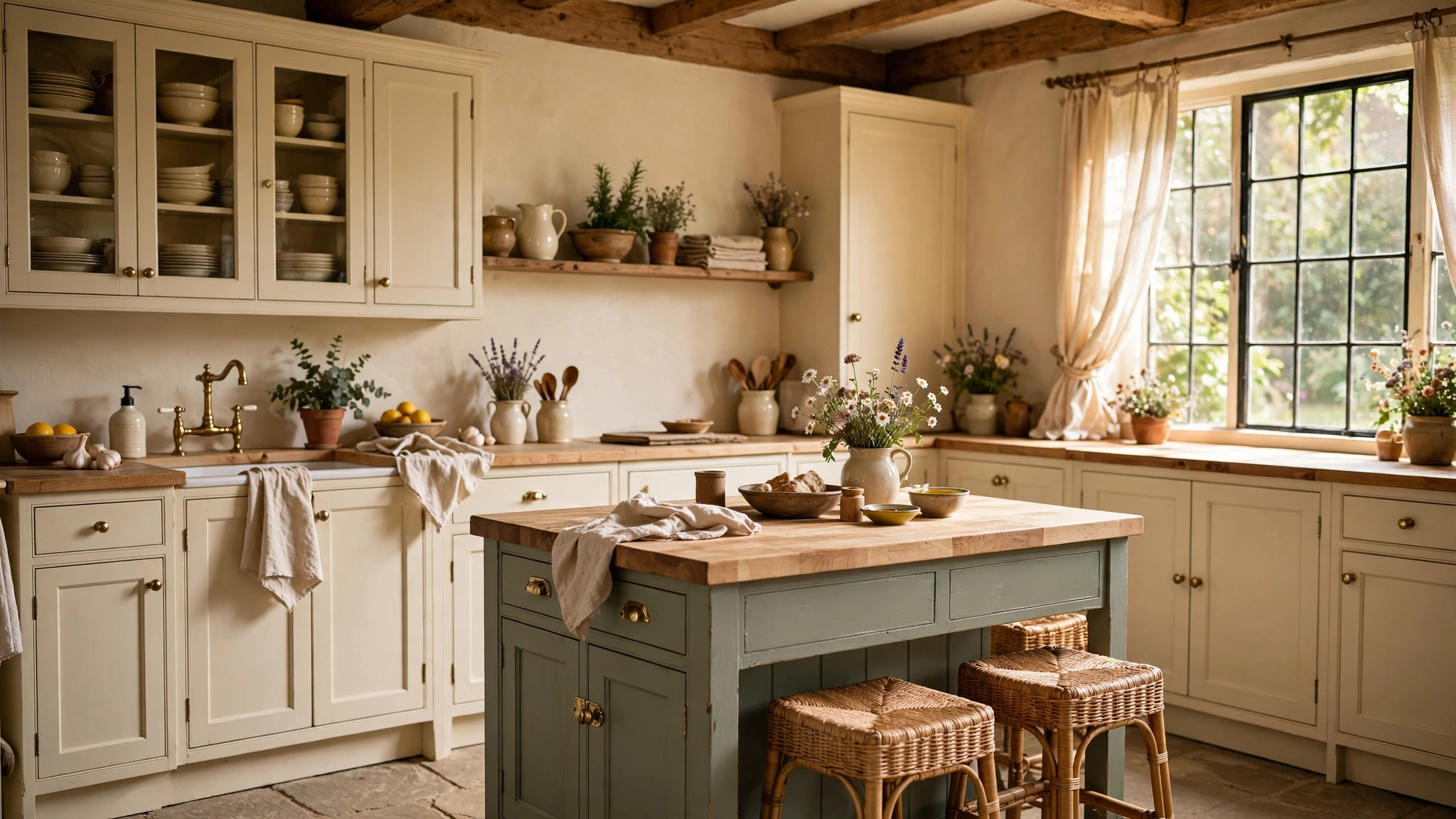
If an all-cream kitchen feels too sweet for you, a sage green island brings balance. This muted, grayish green is the workhorse of English cottage design — it grounds the room, hides everyday wear, and looks stunning against warm wood tones.
An island does not have to be enormous to work in a cottage kitchen. Even a small freestanding island or a repurposed farm table adds prep space and a natural gathering spot. Paint it sage, top it with butcher block, and leave the ends open for a couple of woven stools. The contrast with cream perimeter cabinets is subtle enough to stay cozy rather than dramatic.
3. Install a Beadboard Backsplash
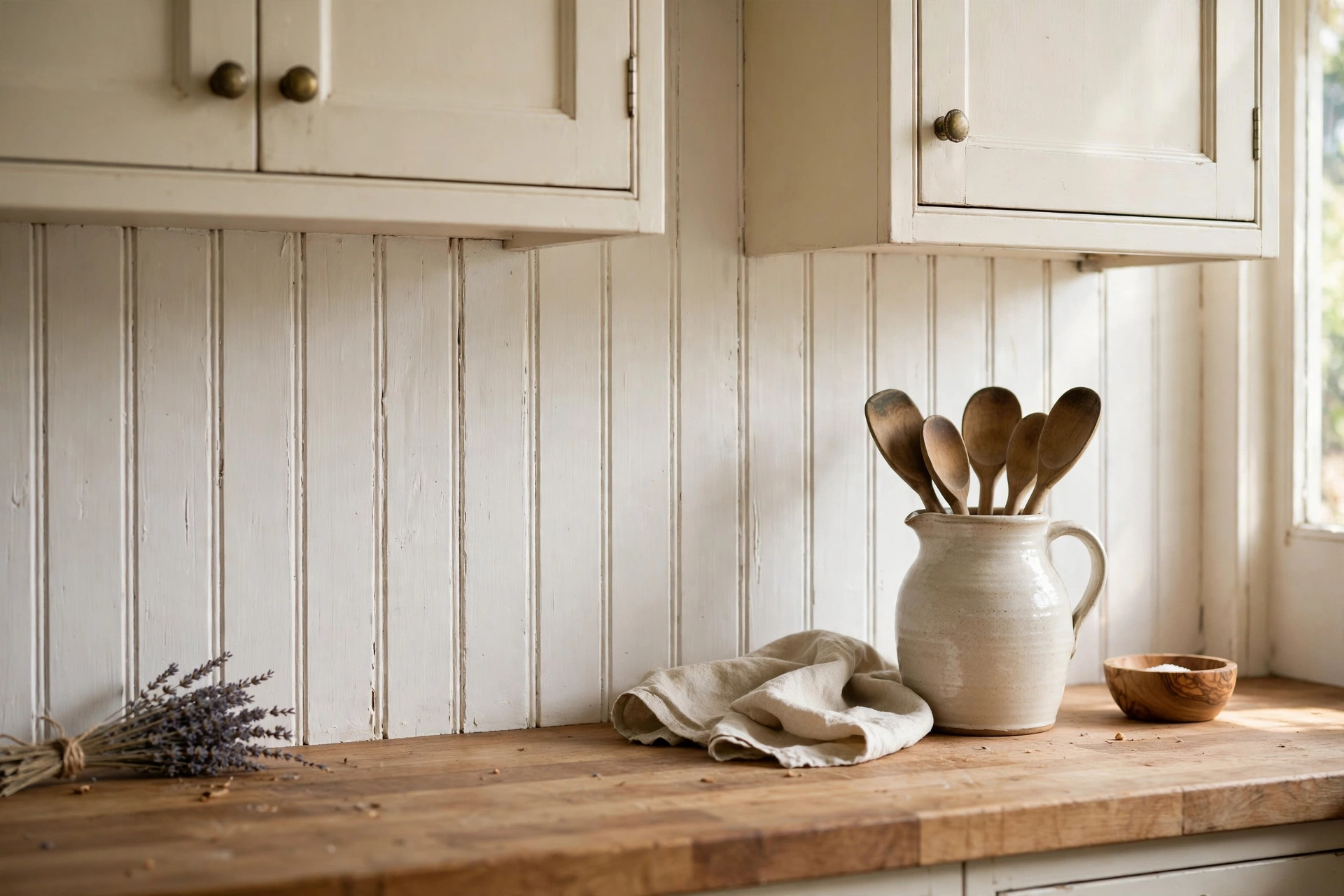
Beadboard is cottage shorthand. Those narrow vertical grooves add texture and rhythm to a kitchen without any visual noise, and they look just as good painted cream as they do left in a natural finish. A beadboard backsplash costs a fraction of tile and installs in an afternoon.
Run the beadboard all the way to the underside of your upper cabinets, and caulk the seams neatly so it wipes clean like any backsplash should. If you love the look but want something more durable behind the range, pair a beadboard field with a small tile insert behind the cooktop. Painted in a soft white or pale sage, it reads instantly as cottage.
4. Style Open Shelves with Ironstone
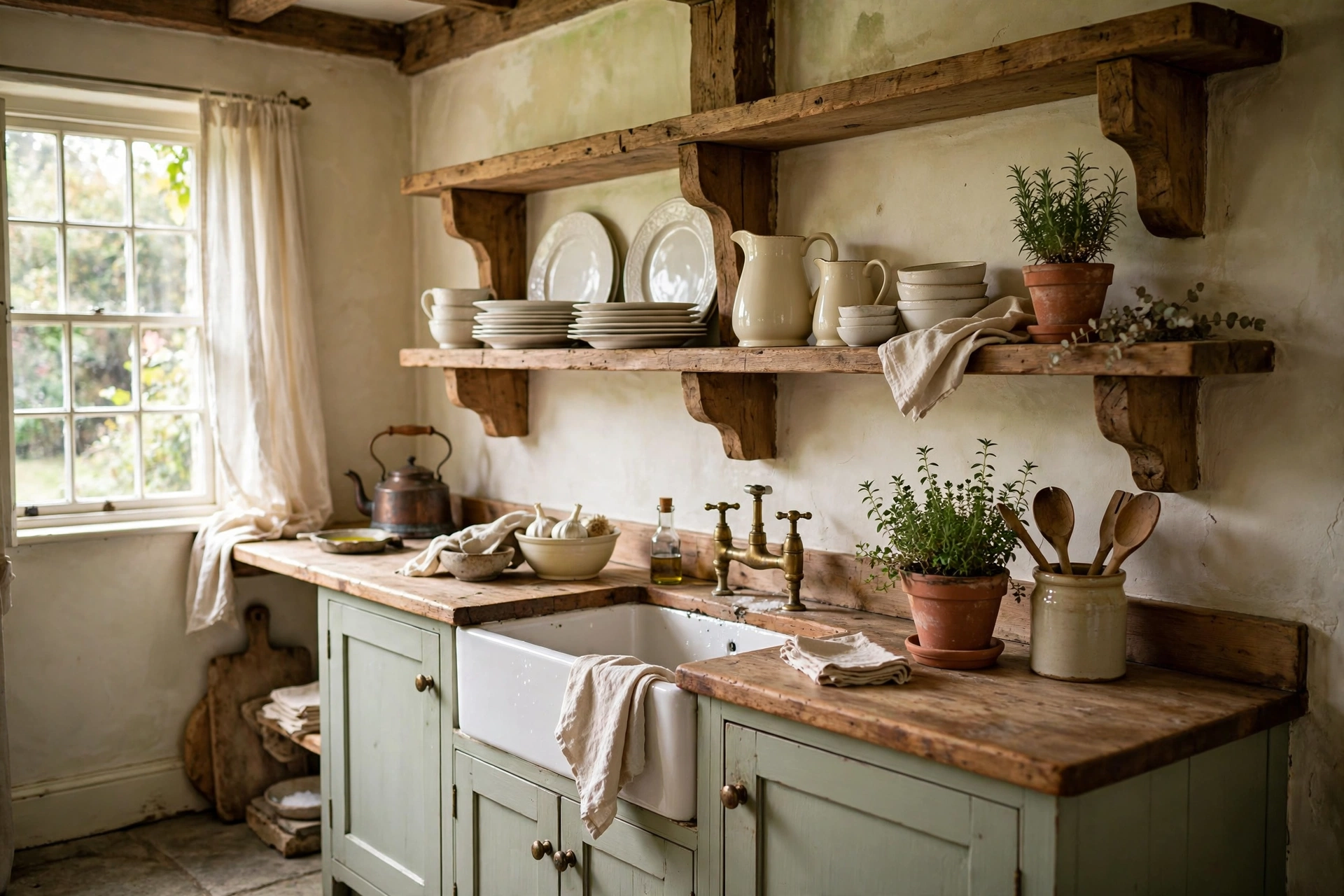
Open shelving turns your everyday dishes into decor, which is the whole spirit of cottage style. Swap one or two upper cabinets for chunky wood shelves and fill them with white ironstone, cream pitchers, and a stack of everyday bowls.
Keep the styling simple so the shelves stay functional: group items in odd numbers, vary heights, and leave a little breathing room between stacks. A sprig of eucalyptus or a small potted herb in a terra-cotta pot adds life without clutter. The trick is to display what you actually use — shelves that hold your daily plates never look staged, they look lived-in and loved.
5. Choose Warm Butcher-Block Counters
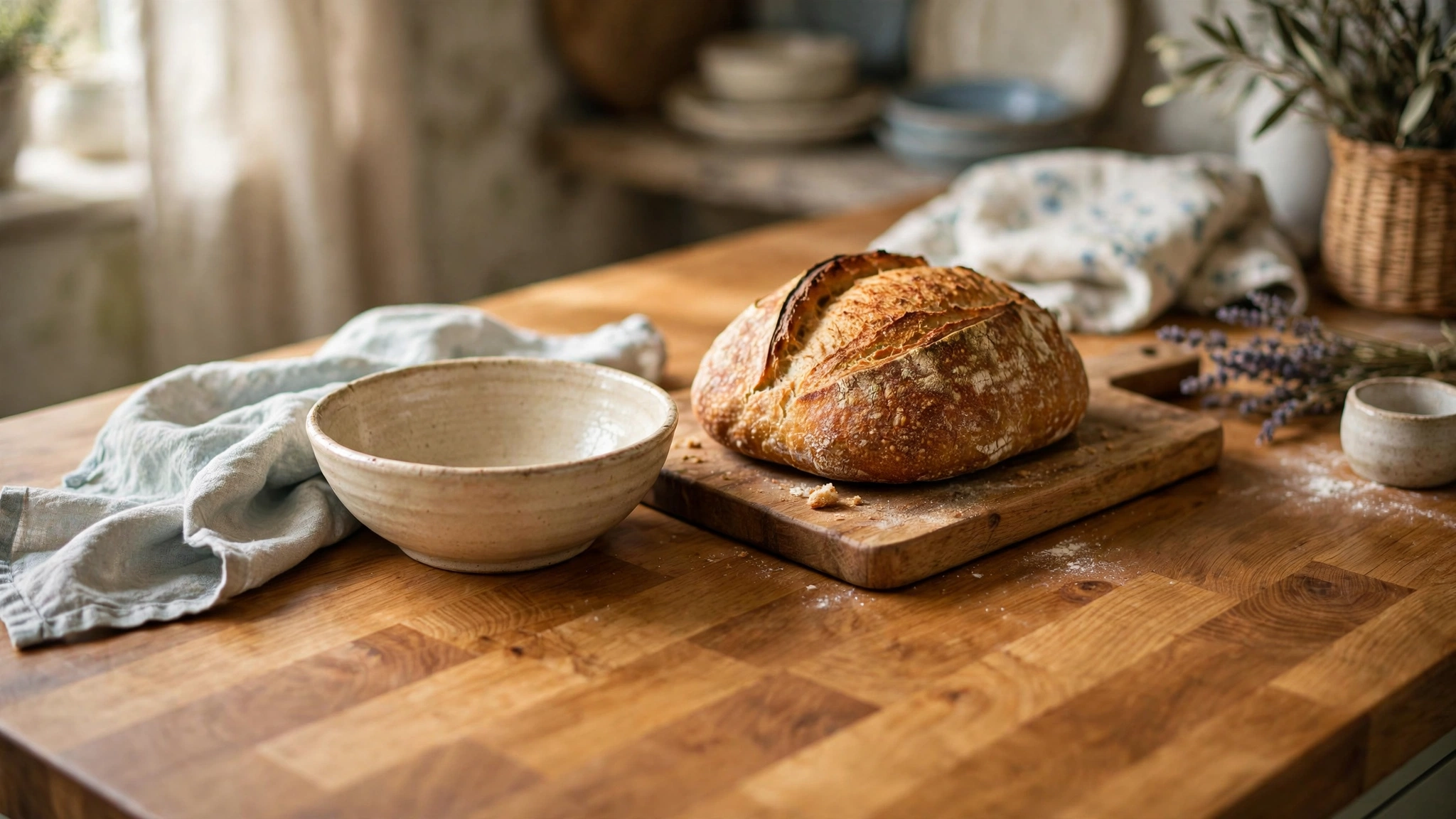
Butcher-block counters bring the warmth that stone sometimes lacks. Honey-toned wood under your hands makes a kitchen feel like a place where bread is baked and soup simmers — exactly the cottage mood. It is also one of the most affordable countertop materials you can buy.
Maintain the finish with food-safe mineral oil every few months, and embrace the gentle patina that develops with use; small knife marks only add to the character. If a full butcher-block kitchen feels like too much upkeep, use it on the island or a single prep zone and pair it with a honed stone or composite on the perimeter counters.
6. Make the Range the Heart of the Room
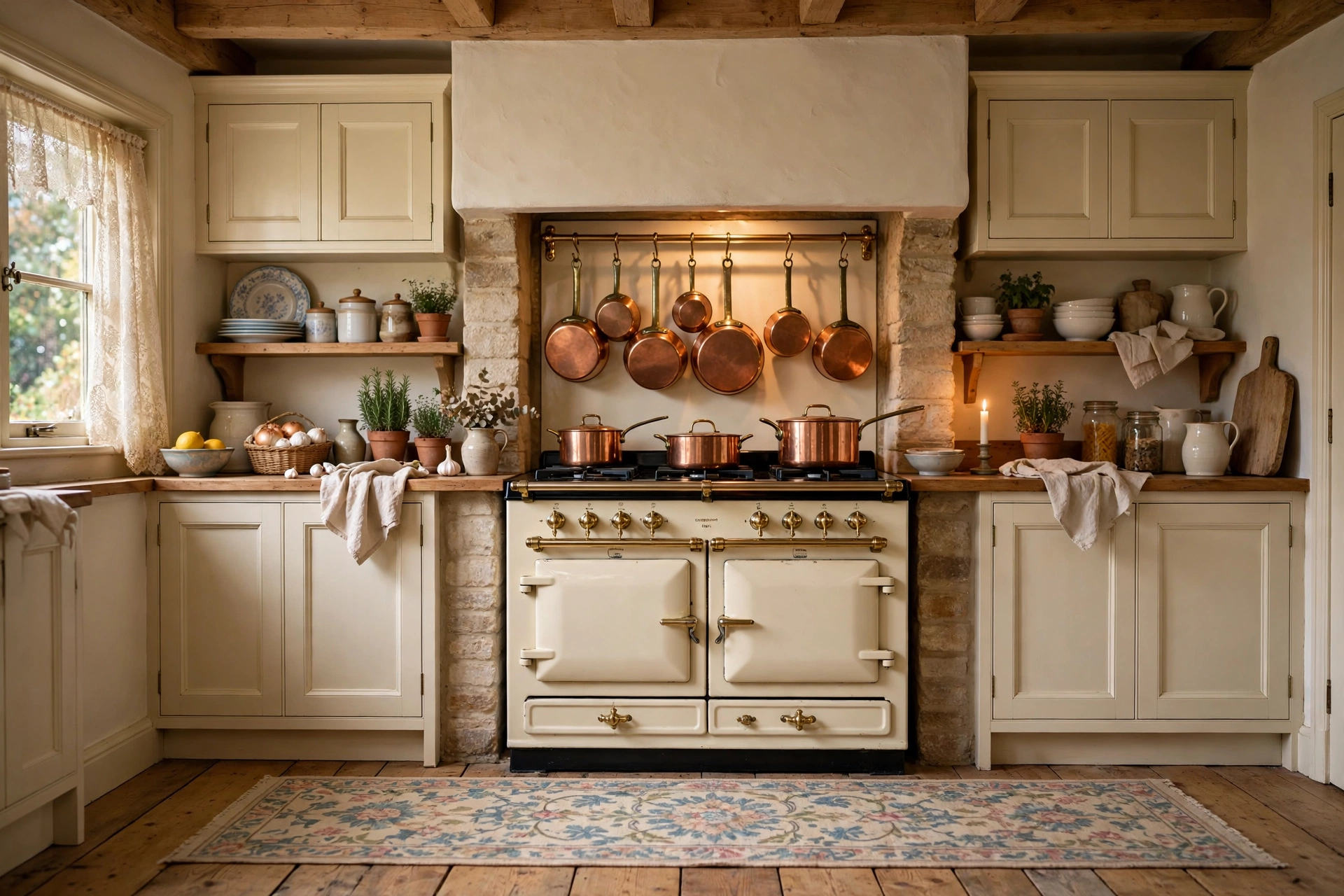
In a true cottage kitchen, the cooker is the centerpiece. A cream or sage enamel range — whether a classic AGA-style cooker or a modern slide-in with vintage styling — anchors the room and gives it that hearth-like pull.
You do not need to replace your appliances to capture the feeling. Dress a standard range with a brass rail for hanging copper pots, flank it with open shelving, and add a patterned runner on the floor in front. The goal is a cooking zone that feels intentional and inviting rather than purely functional — the kind of spot where someone always ends up leaning with a cup of tea.
7. Hang Cafe Curtains at the Window
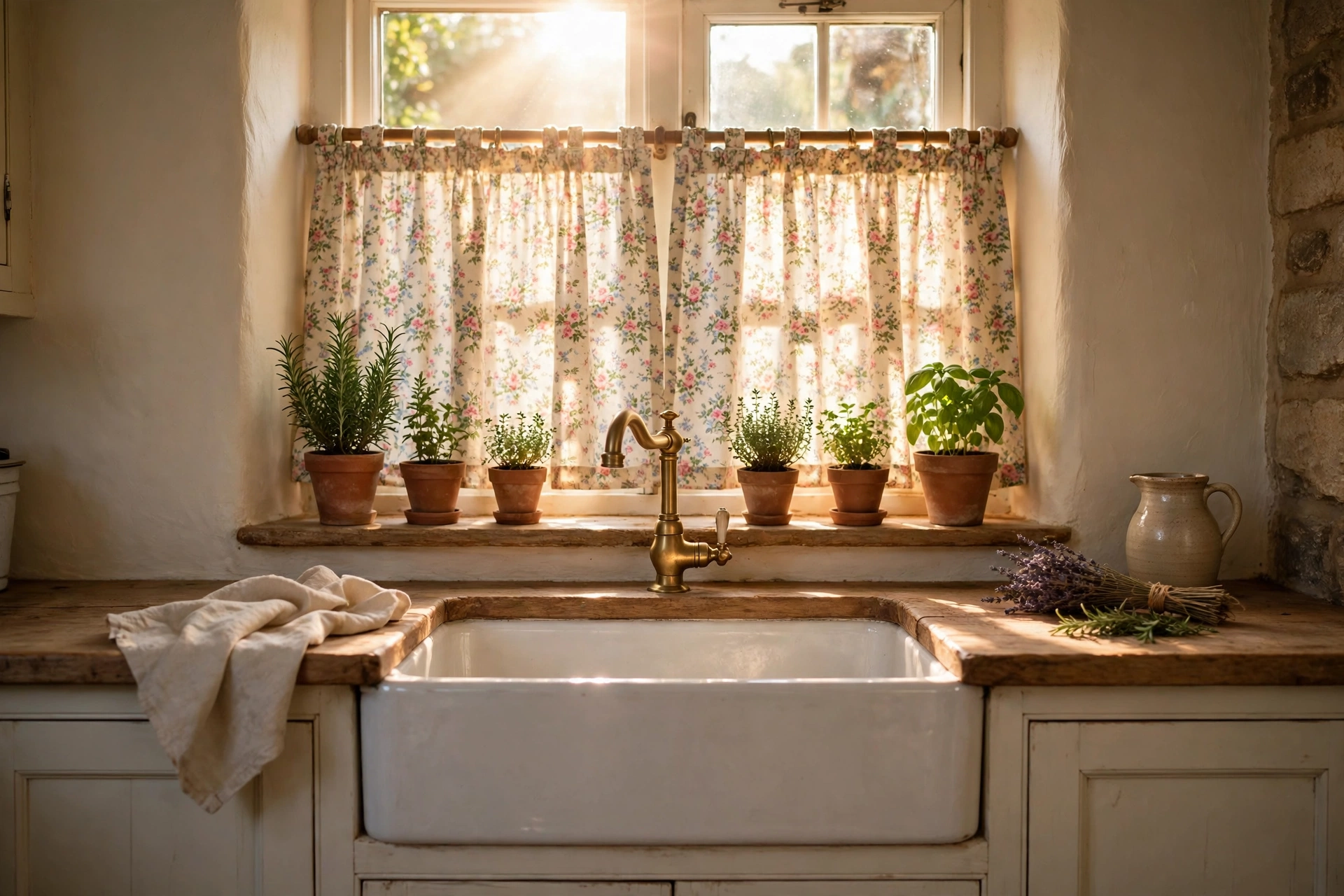
Cafe curtains are the cottage window treatment. Covering only the lower half of the window, they give you privacy where you need it while letting sunlight pour over the top — perfect above a kitchen sink. Choose a ditsy floral, gingham, or simple linen in a soft tone.
Mount them on a slim brass or black tension rod inside the window frame for a no-drill option, or use a narrow cafe rod with rings for a more tailored look. Keep the fabric light so it glows when the sun hits it. This one small change softens the whole room and is easily swapped seasonally if you like a change.
8. Mount a Wall-Mounted Plate Rack
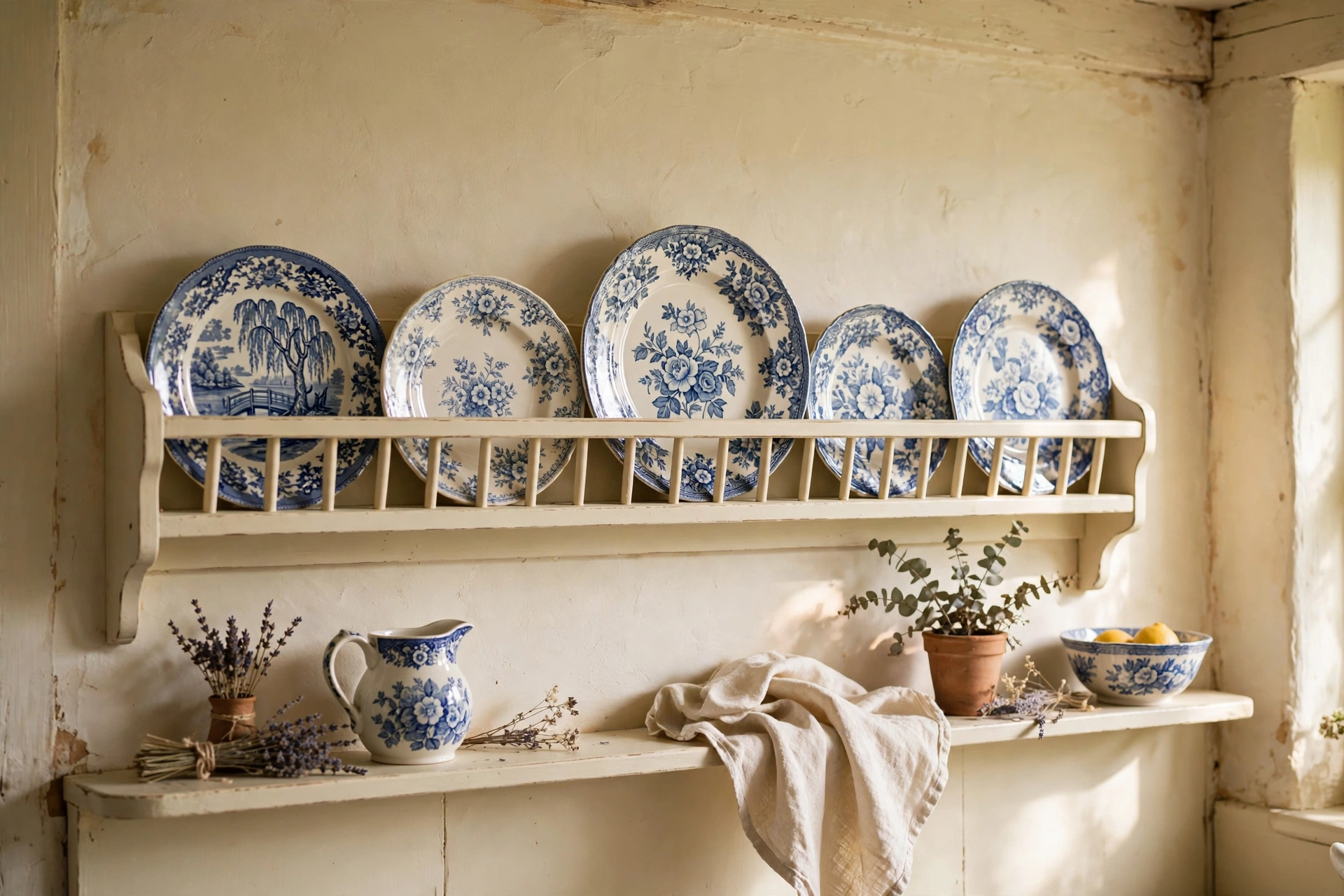
A wooden plate rack mounted on the wall is pure cottage. It displays your favorite patterned plates — blue-and-white, floral transferware, or simple stoneware — and frees up cabinet space at the same time. It is decoration you can eat off.
Hang the rack where it is easy to reach, and mix plate sizes and patterns within one color family so the display feels collected rather than chaotic. Plate grooves do the holding work, so there is no hardware to fuss with. If you find a vintage rack at a flea market, a coat of cream paint unifies it with the rest of the kitchen.
9. Fit an Apron-Front Sink
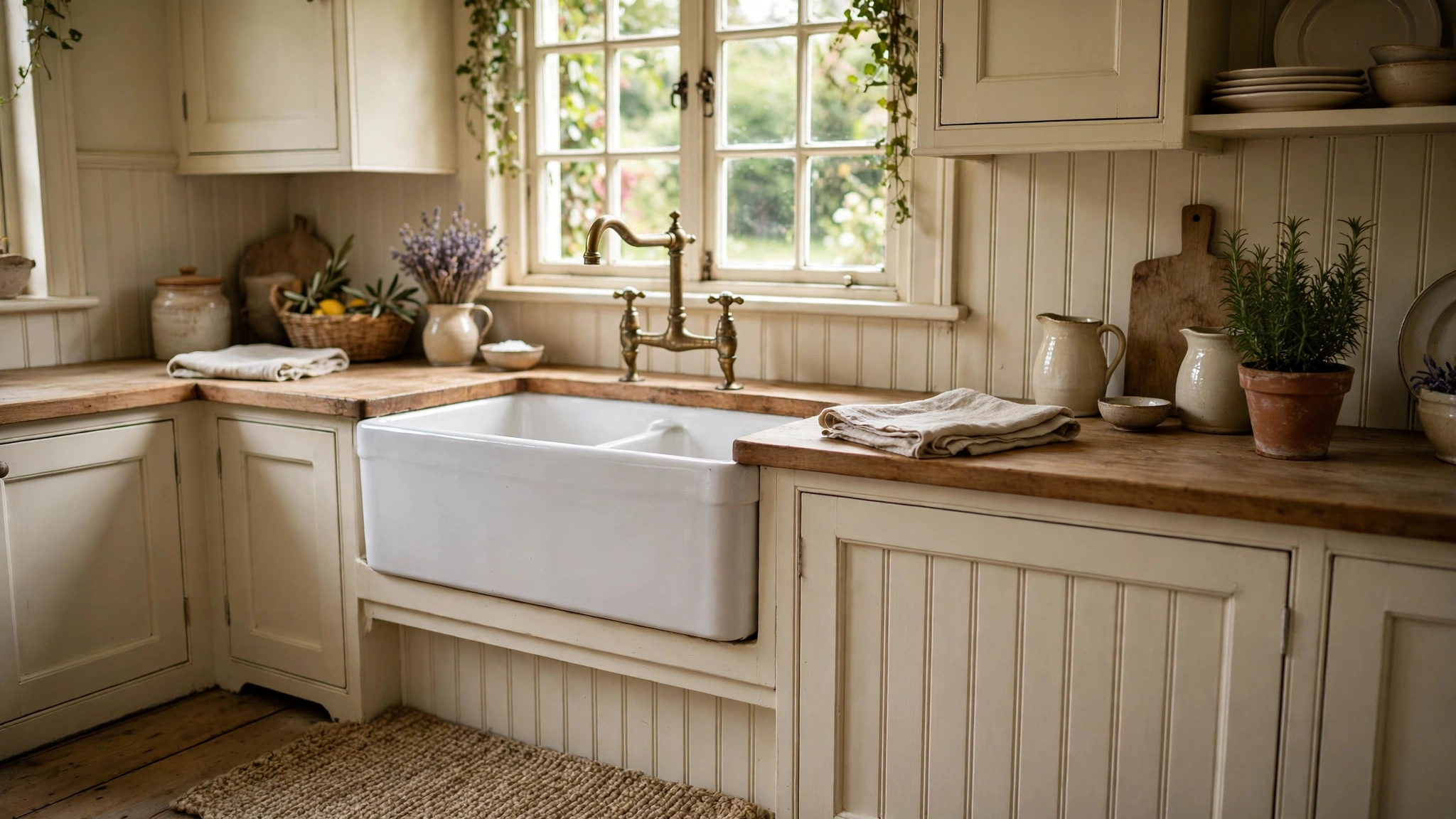
The apron-front sink — sometimes called a farmhouse sink, though cottages claimed it first — is both beautiful and deeply practical. Its deep basin swallows stockpots and roasting pans, and the exposed front panel becomes a design feature in its own right.
Fireclay and porcelain versions suit cottage kitchens best, with their softly rounded edges and gentle gloss. Pair the sink with a bridge faucet in aged brass or polished nickel for a vintage feel. Plan the cabinet below carefully: an apron-front sink needs a modified cabinet, so confirm measurements before you order, especially in a retrofit.
10. Add Glass-Front Cabinets with Mullions
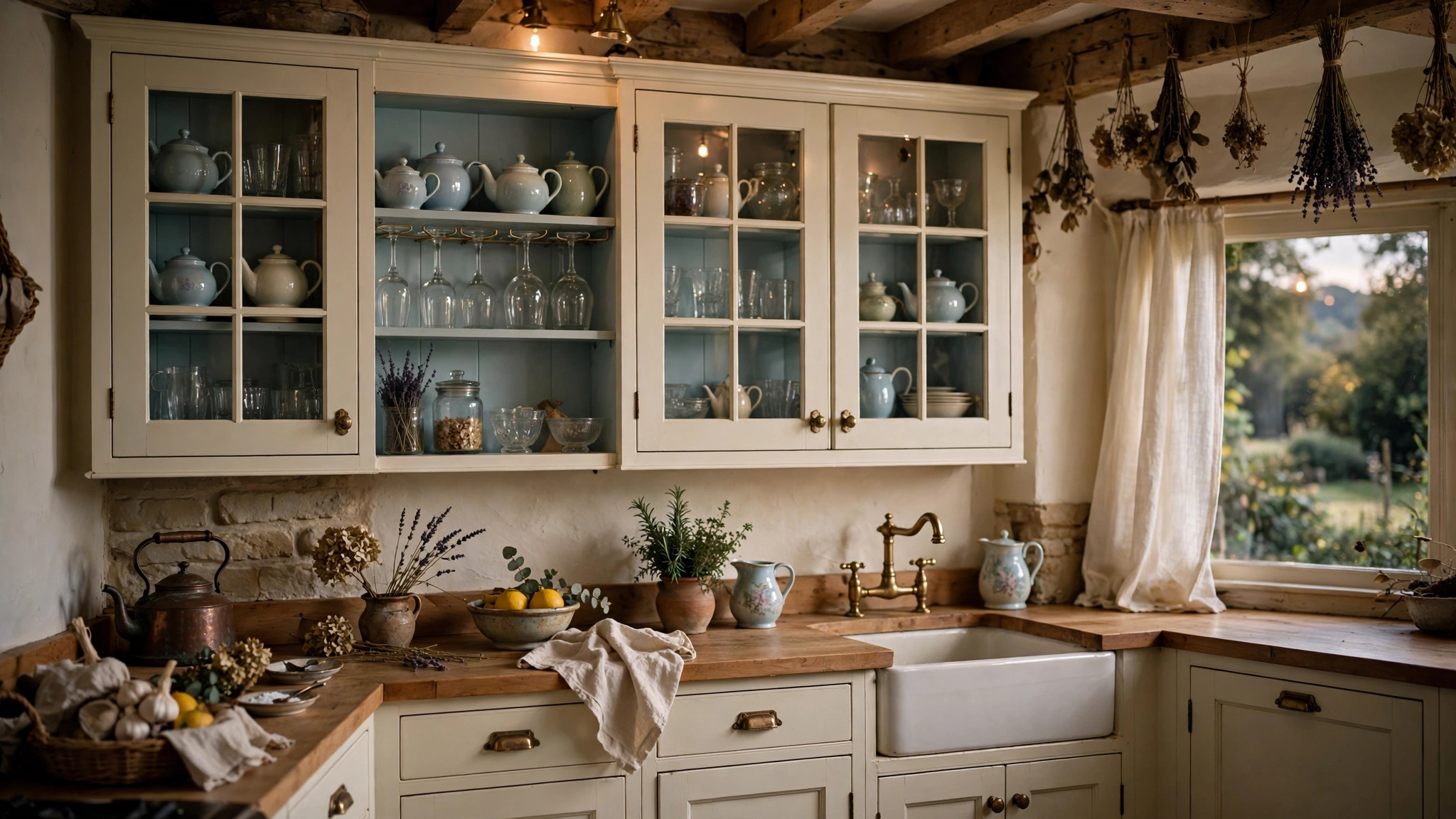
Glass-front uppers with small mullioned panes bring an old-house feeling to even a new kitchen. The divided lights break up big runs of cabinetry, let a little of your dishware show through, and catch the light in a way solid doors never do.
Convert a single existing cabinet by swapping the door for a glass-front version — you do not need to redo the whole kitchen. Line the interior with a soft cream or pale blue paint, and keep what is inside tidy: matching everyday glassware or a row of teapots looks charming, while a jumble of plastic containers does not. A small puck light inside makes the cabinet glow in the evening.
11. Hunt for Vintage Finds
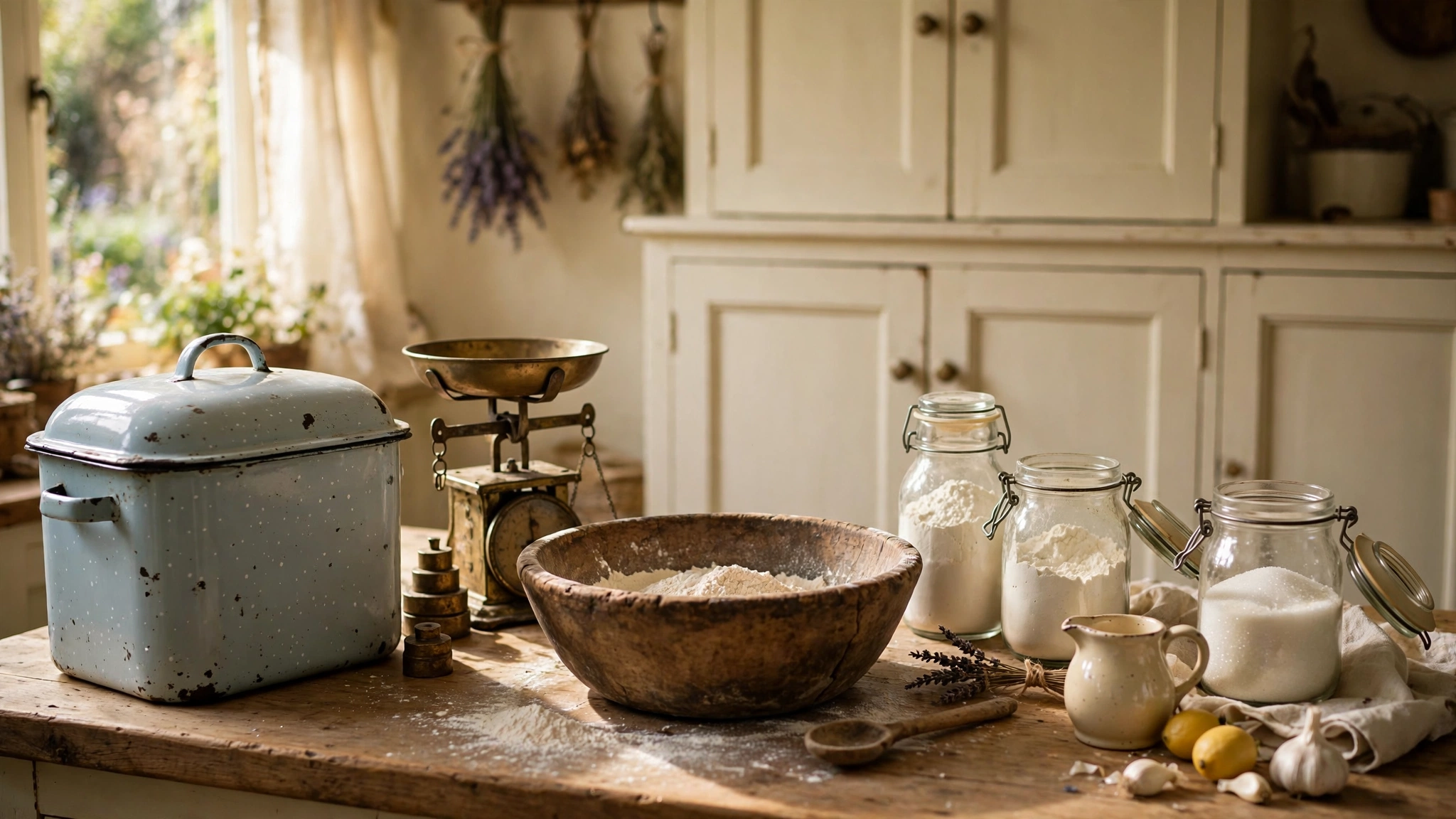
No cottage kitchen is complete without a few pieces that have lived a life before yours. An enamel bread bin, a set of brass scales, a worn wooden dough bowl, or a row of old jam jars — these are the details that make a kitchen feel collected rather than decorated.
Shop flea markets, estate sales, and charity shops with a short list in mind: useful things in warm materials. Display them where they earn their keep — the bread bin on the counter, the scales on a shelf, the jars holding flour and sugar. One or two honest vintage pieces beat a shelf of look-alike reproductions every time.
12. Warm It Up with Wood Accents
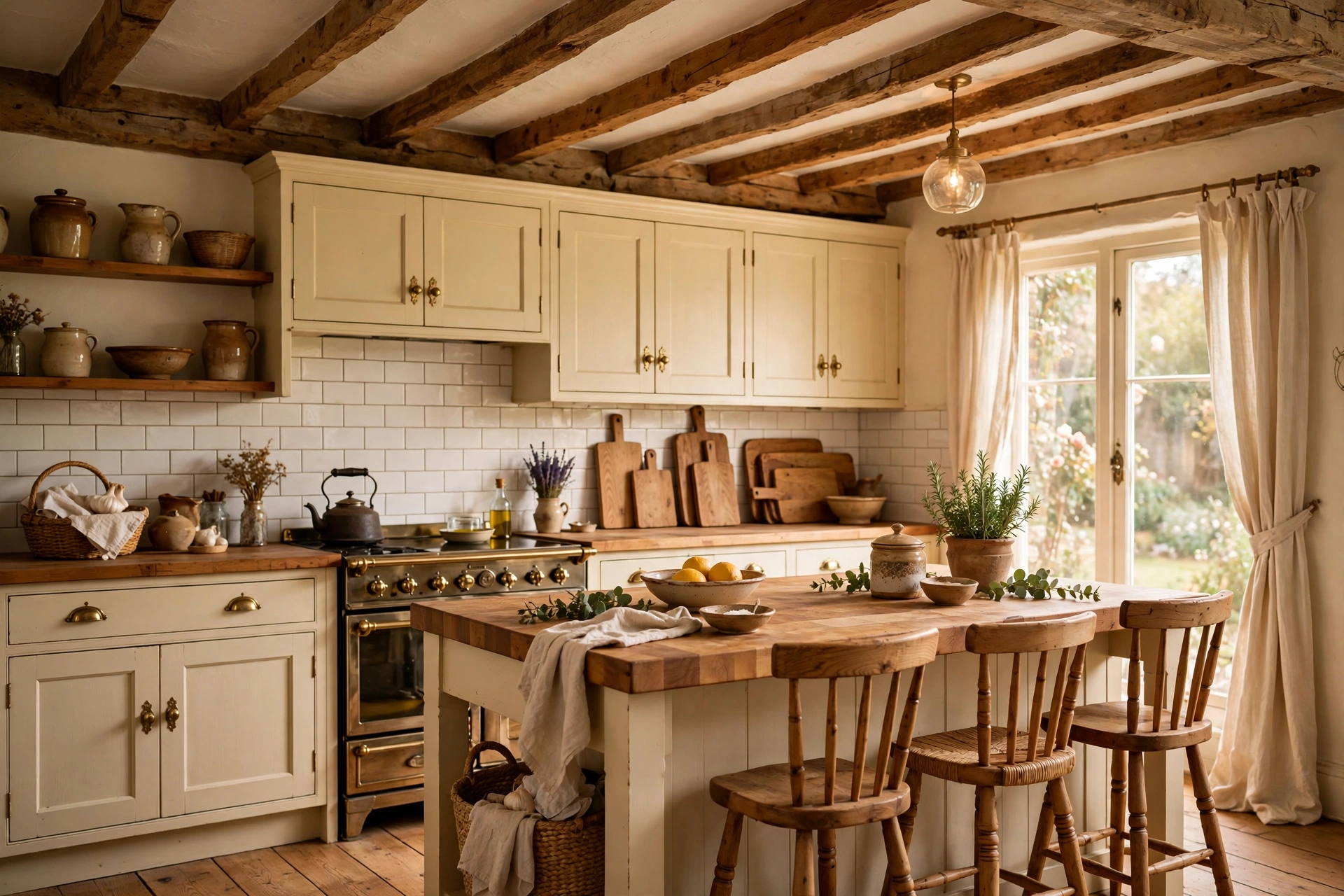
Cottage kitchens lean on wood to keep all that painted cabinetry from feeling flat. Exposed ceiling beams, a chunky wood mantel over the range, or even a simple oak cutting board leaning against the backsplash adds natural warmth and texture.
If structural beams are not an option, faux wood beams in a honey stain give the same effect for far less work and cost. Smaller moves count too: wooden stools at the island, a pine dresser-style pantry, or a walnut knife block. The key is variation in tone — mixing light oak, honey pine, and deeper walnut keeps the wood feeling collected, not matchy.
13. Build a Cozy Breakfast Nook
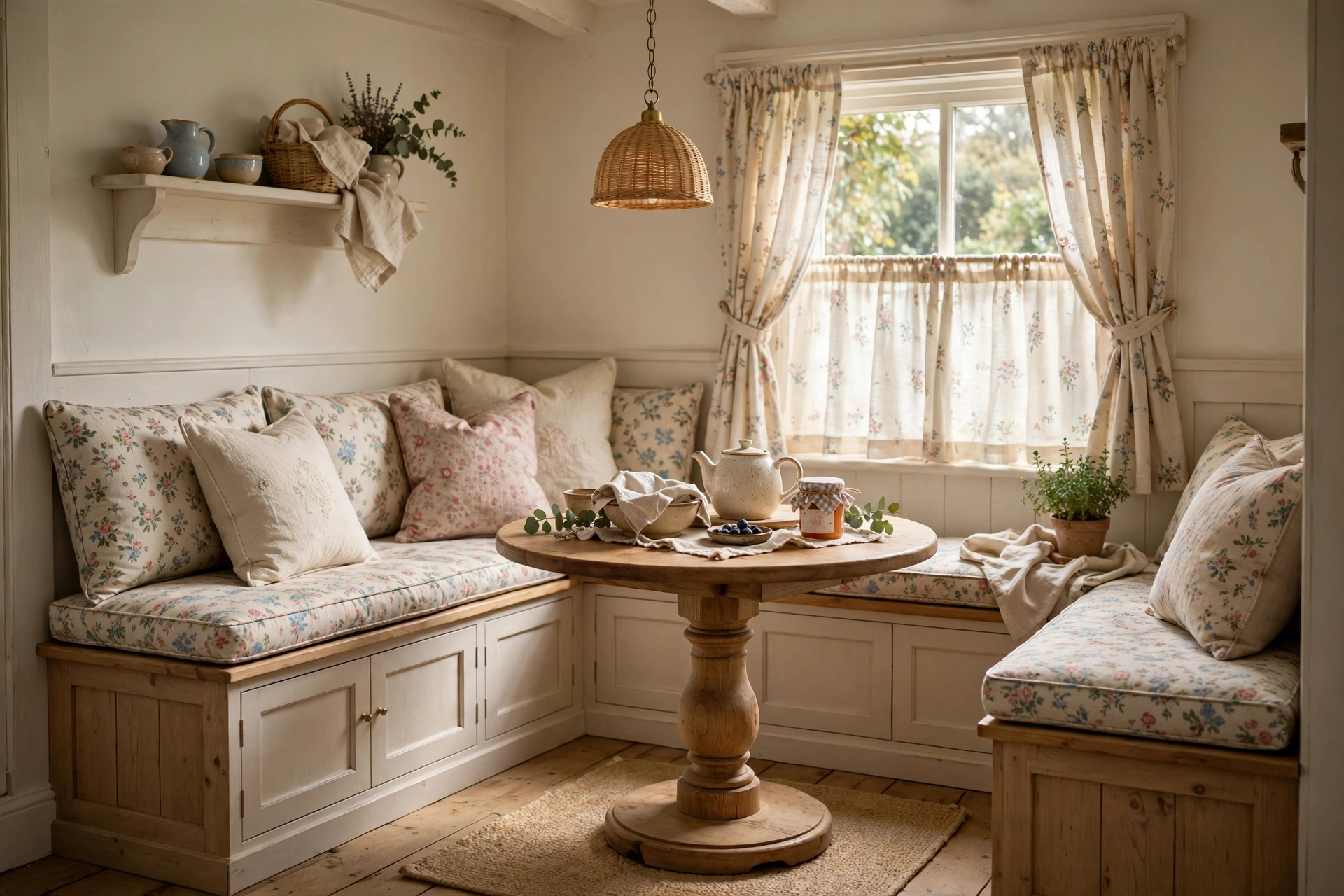
Tuck a small banquette or a round pedestal table into a corner and you have the cottage kitchen’s social heart. A nook invites slow weekend breakfasts and gives kids a homework spot within chatting distance of whoever is cooking.
A built-in L-shaped bench with storage underneath is the most space-efficient option, topped with a cushion in a floral or ticking stripe. A round table keeps traffic flowing in tight corners, and two or three simple wooden chairs are easier to move than a full bench. Hang a small pendant above the table and you have defined the coziest square meters in the house.
14. Weave in Floral Touches
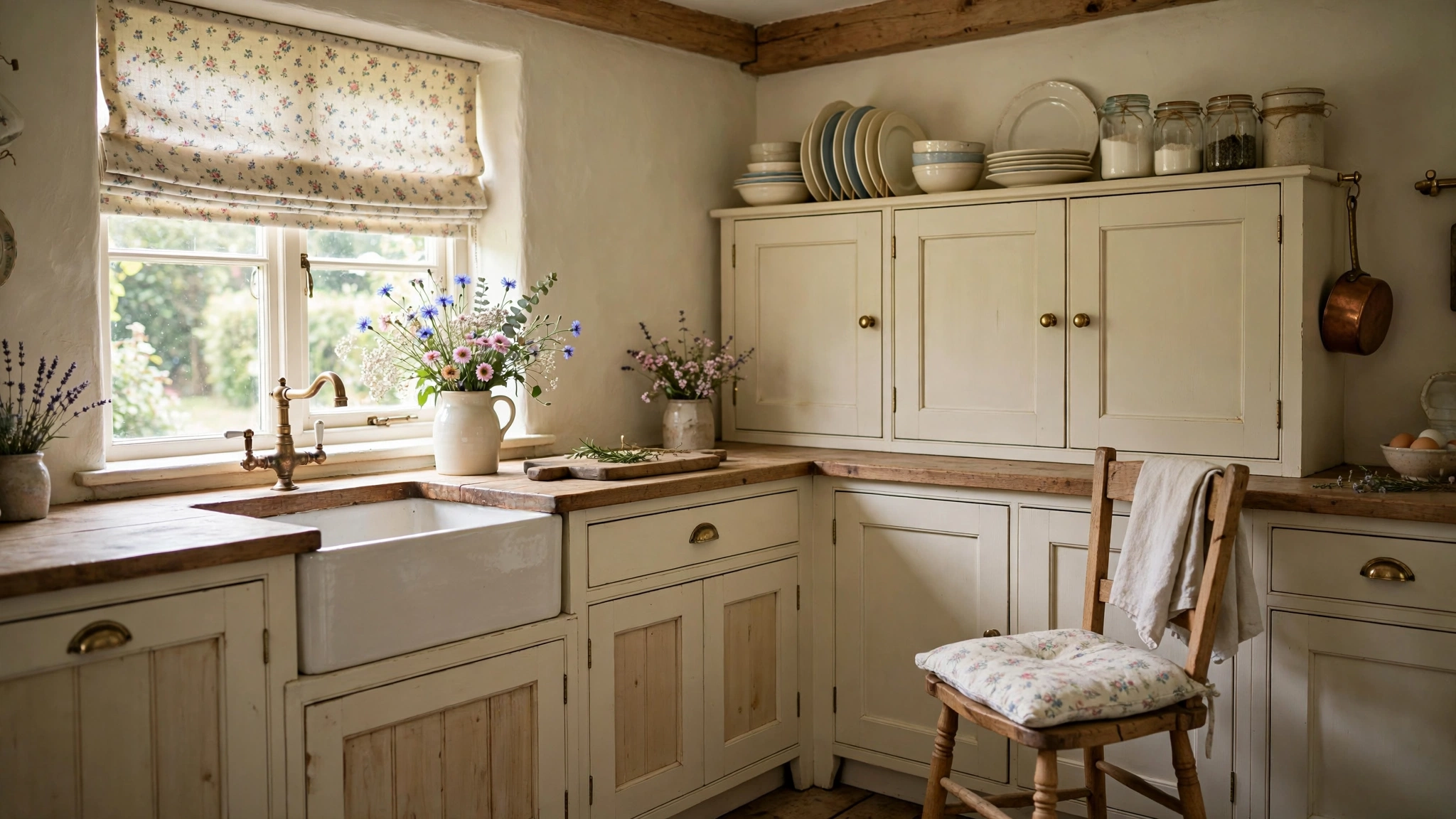
Florals are the cottage kitchen’s signature pattern — but restraint is what keeps them charming instead of overwhelming. Pick one or two spots: a ditsy floral blind, a wallpapered pantry door, or a row of floral cushions on the nook bench.
Keep the scale small and the palette soft — tiny sprigs in dusty rose, sage, and cream read cottage; big bold blooms read something else entirely. Balance the pattern with plenty of plain surfaces so the eye has somewhere to rest. Fresh flowers in a simple jug on the windowsill are the easiest floral of all, and they change with the seasons.
15. Layer Cozy, Warm Lighting
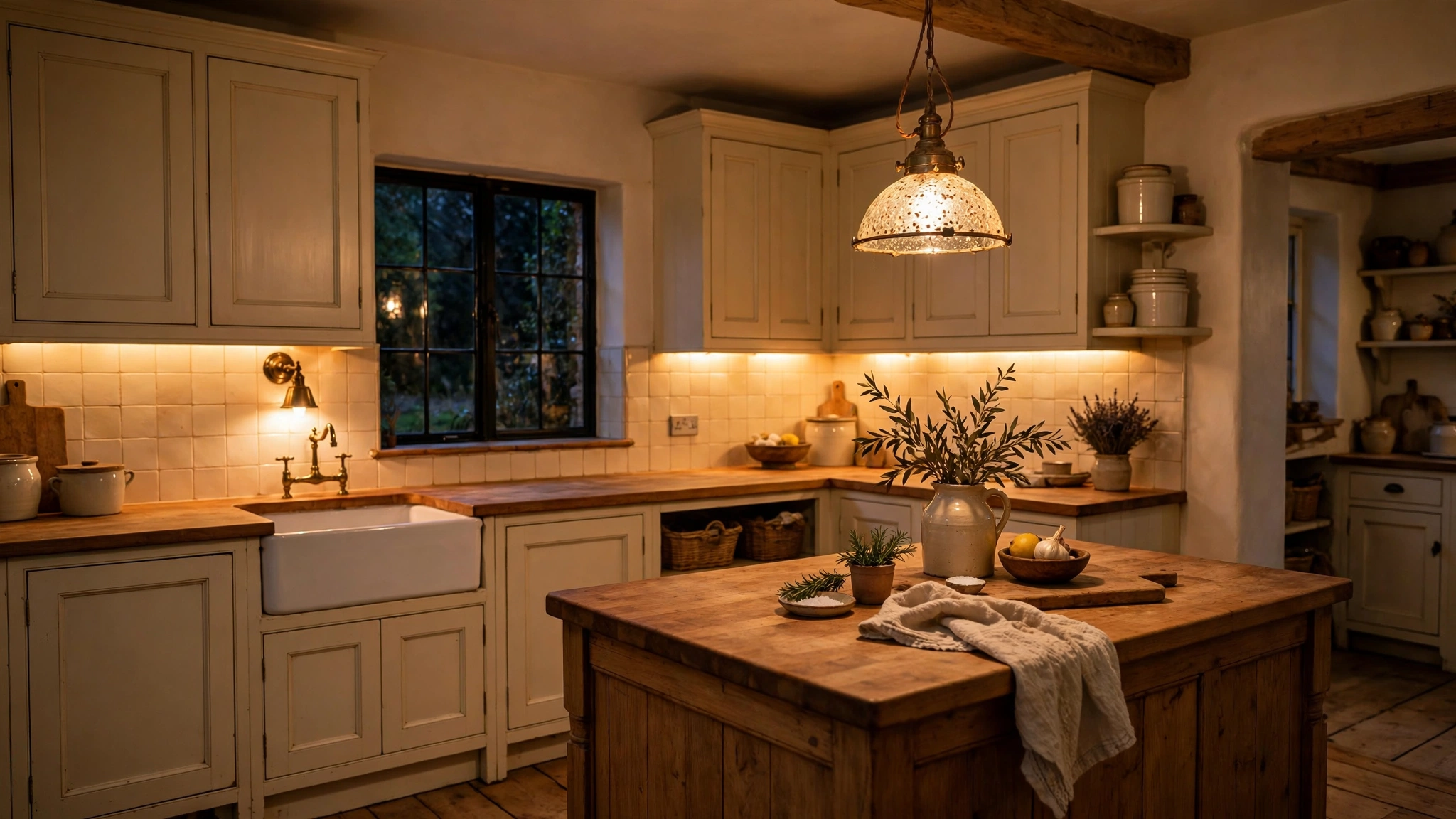
Harsh overhead lighting kills cottage charm faster than anything. Layer your light instead: a pretty pendant over the island, a small brass wall sconce by the sink, and under-cabinet strips so the counters glow warmly in the evening.
Choose bulbs around 2700K for that golden, candlelit warmth, and put the main lights on a dimmer so the kitchen can shift from bright prep mode to soft evening mode. Vintage-style pendants with milk-glass or seeded-glass shades suit the look perfectly. Good lighting is what makes a cottage kitchen feel like a hug at the end of the day.
Frequently Asked Questions
What colors work best in a cottage kitchen?
Soft, sunlit colors are the cottage palette: warm creams, buttery whites, sage green, pale blue, and dusty rose. These tones reflect light beautifully and create the gentle, storybook feeling cottage kitchens are known for. Keep the palette to two or three colors plus wood tones, and let vintage pieces and florals provide the accents.
How is a cottage kitchen different from a farmhouse kitchen?
Cottage style is softer, more romantic, and a little more refined than farmhouse. Where farmhouse leans rustic and barn-inspired — think reclaimed wood, black iron, and industrial touches — cottage leans storybook: painted cabinets in cream or sage, beadboard, ditsy florals, delicate vintage finds, and a lighter, airier feel. Both love wood and warmth, but cottage trades the barn door for a floral curtain.
Can I get the cottage look in a small kitchen?
Absolutely — cottage style actually suits small kitchens, since it grew out of modest country homes. Light paint colors, glass-front cabinets, and open shelving make a small space feel bigger, while a compact island or a fold-down table adds function without bulk. Focus on cozy details like cafe curtains and warm lighting rather than trying to fit in more cabinetry.
What is the cheapest way to make my kitchen look cottage?
Paint is the biggest bang for your budget: a weekend repainting cabinets in cream or sage transforms the room for the cost of a few tins of paint. After that, swap hardware for aged-brass cup pulls, hang cafe curtains, and add a beadboard backsplash — all low-cost, high-impact moves. Finish with a couple of flea-market finds and a jug of fresh flowers, and the cottage charm is complete.
Keep Exploring
A cottage kitchen is never really finished — it grows the way a garden does, one vintage find and one coat of paint at a time. Start with the ideas that speak to you, live with them for a while, and let the room collect its own stories. For more cozy inspiration, browse our kitchen decor ideas and bring a little storybook charm to every corner of your home.





[…] you love this sun-warmed, collected look, keep exploring: our cottage kitchen design ideas full of cozy charm, the modern farmhouse kitchen design ideas full of warm character, and the sage […]
[…] kitchen design ideas share the same love of wood and craft with a slightly tidier hand, and the 15 cottage kitchen design ideas lean softer and more romantic. For a dose of green, the 15 sage green kitchen design ideas pair […]
[…] and let the room collect its own history. For a softer take on old-house charm, browse our 15 cottage kitchen design ideas, and for old-world European warmth try the 15 Mediterranean kitchen design ideas. If you love the […]
[…] blue. A beadboard wall behind the bench adds instant farmhouse character for little money. Our cottage kitchen design ideas carry this cozy feeling through the whole […]
[…] color exactly where you want it, and can be swapped seasonally for a fresh look at minimal cost. Cottage kitchen ideas pair beautifully with the curtain styles below — softness on softness, done […]