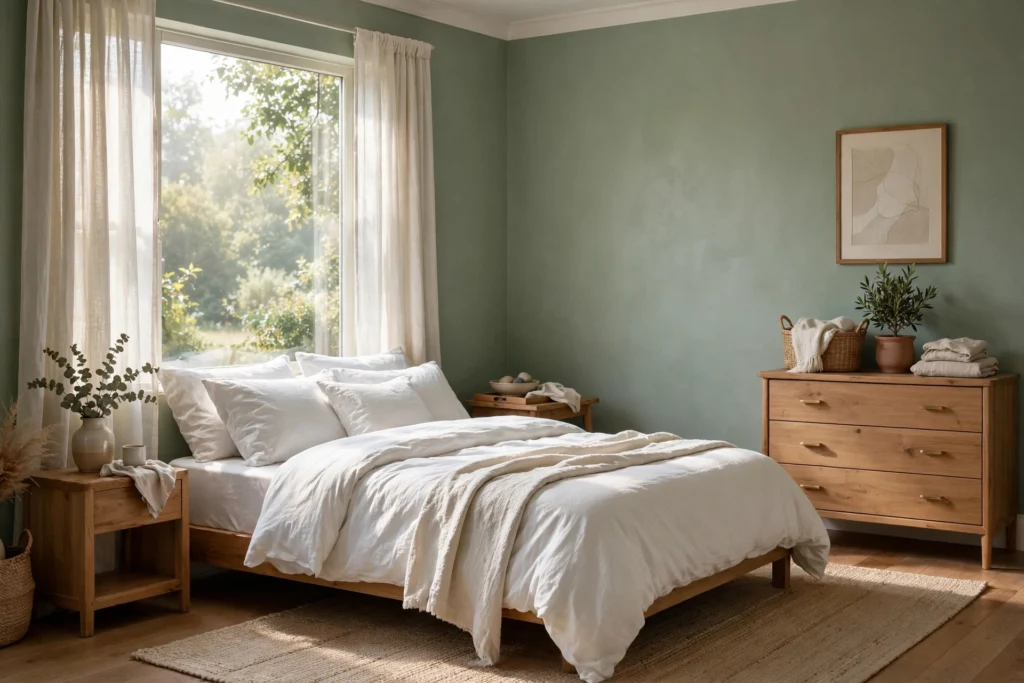

Few colors do what sage green does in a bedroom. It’s soft without being bland, natural without being rustic, and colorful without demanding attention — the rare shade that feels both fresh and timeless. These sage green bedroom ideas show how to use this beloved muted green on walls, bedding, furniture, and accents to create a bedroom that genuinely helps you unwind.
Whether you’re collecting sage green bedroom ideas for a full sage-drenched retreat or just a whisper of green in the textiles, you’ll find practical guidance here: the best sage paint shades, what to pair them with, and how to layer the color so it feels sophisticated rather than flat. If you love this shade beyond the bedroom, see our sage green kitchen design ideas.
1. Paint the Walls Soft Sage
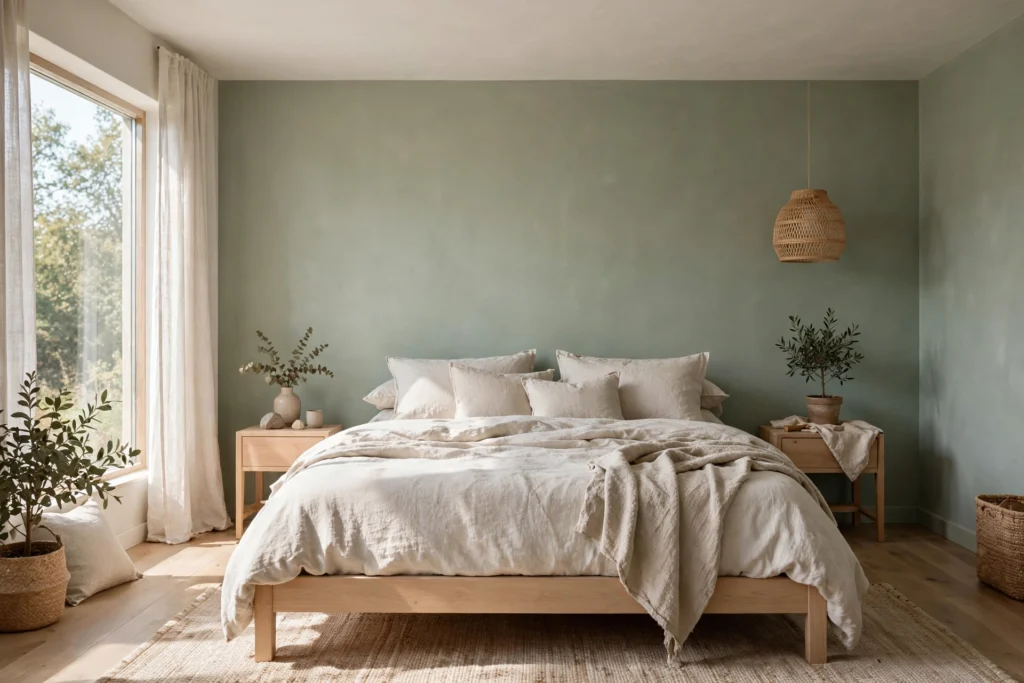
The most transformative move is also the simplest: sage green walls. Shades like Benjamin Moore’s Saybrook Sage, Farrow & Ball’s French Gray, or Sherwin-Williams’ Clary Sage deliver that perfect gray-green balance. Sage works in any light — it reads fresh and airy by day, cozy and cocooning at night. Paint all four walls for full immersion, or try the bed wall as an accent. In north-facing rooms, lean toward warmer sage shades with yellow undertones to counteract cool light; in sunny south-facing rooms, cooler gray-sages stay balanced. Always test a large swatch first; sage shifts noticeably between warm and cool light.
2. Try Sage Wainscoting or Paneling
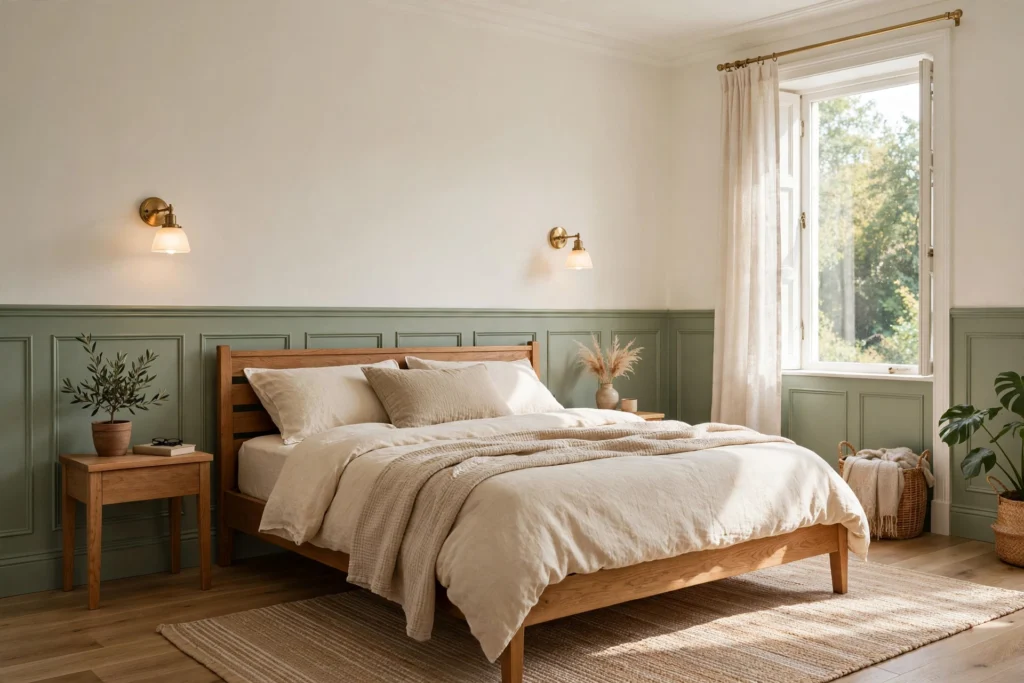
For architectural interest, paint wainscoting, board-and-batten, or picture-frame molding in sage green against warm white upper walls. This two-tone treatment adds classic character and makes the green feel intentional and tailored rather than just “a green room.” It’s especially beautiful in traditional and cottage-style bedrooms. The Spruce’s wainscoting ideas feature a sage green bedroom application that shows exactly how elegant this combination looks.
3. Layer Sage Bedding in Mixed Textures
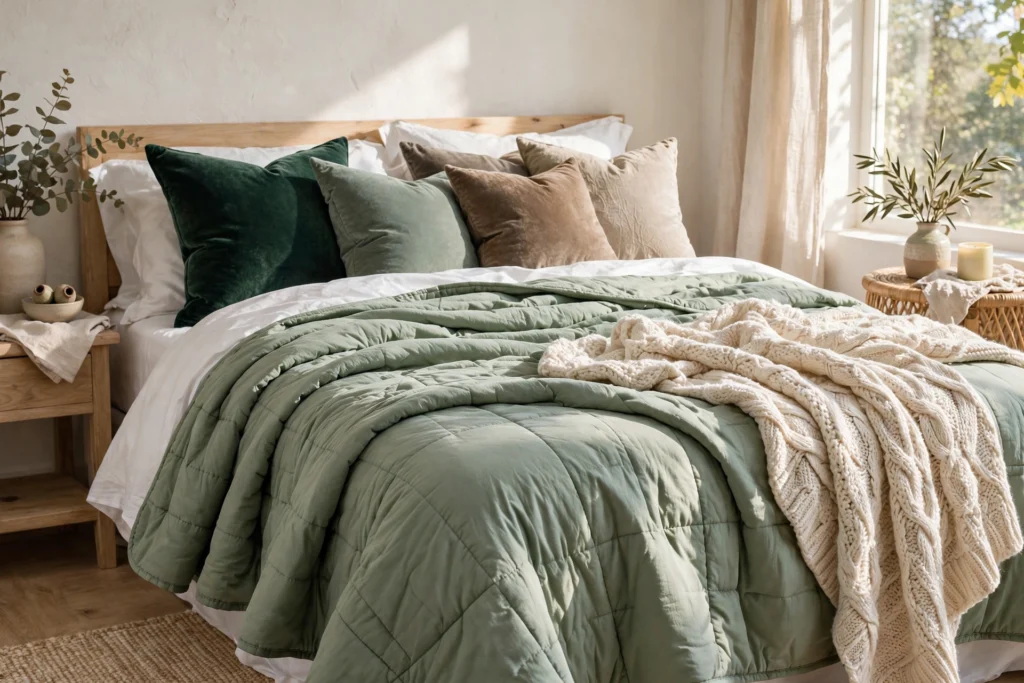
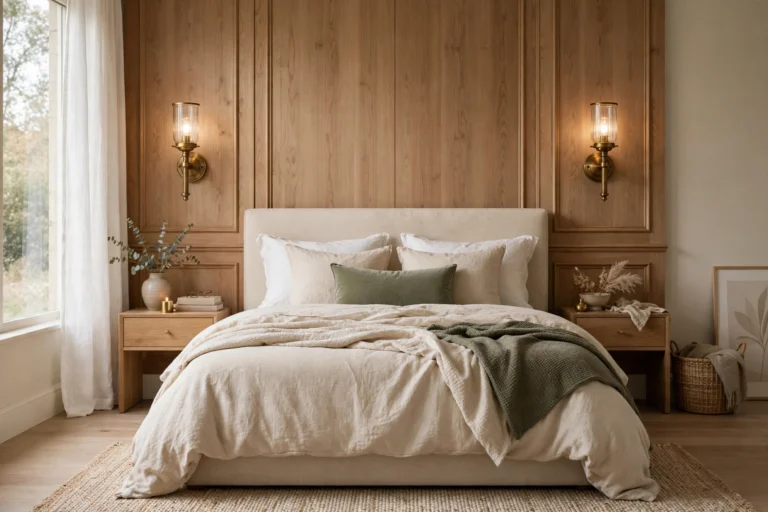
If painting feels like too much commitment, bring sage in through bedding. Layer a sage duvet or quilt with white or cream sheets, then add texture: a chunky knit throw, linen euro shams, and velvet accent cushions in deeper green. Mixing textures — smooth cotton, nubby wool, soft velvet — keeps a single-color scheme from looking flat. Don’t forget the often-missed details: sage pillow shams against white sleeping pillows create a tailored layered look, and a folded throw across the foot of the bed adds a final polished touch. Bedding is also the easiest place to test sage green bedroom ideas before committing to paint.
4. Pair Sage with Warm Whites and Creams
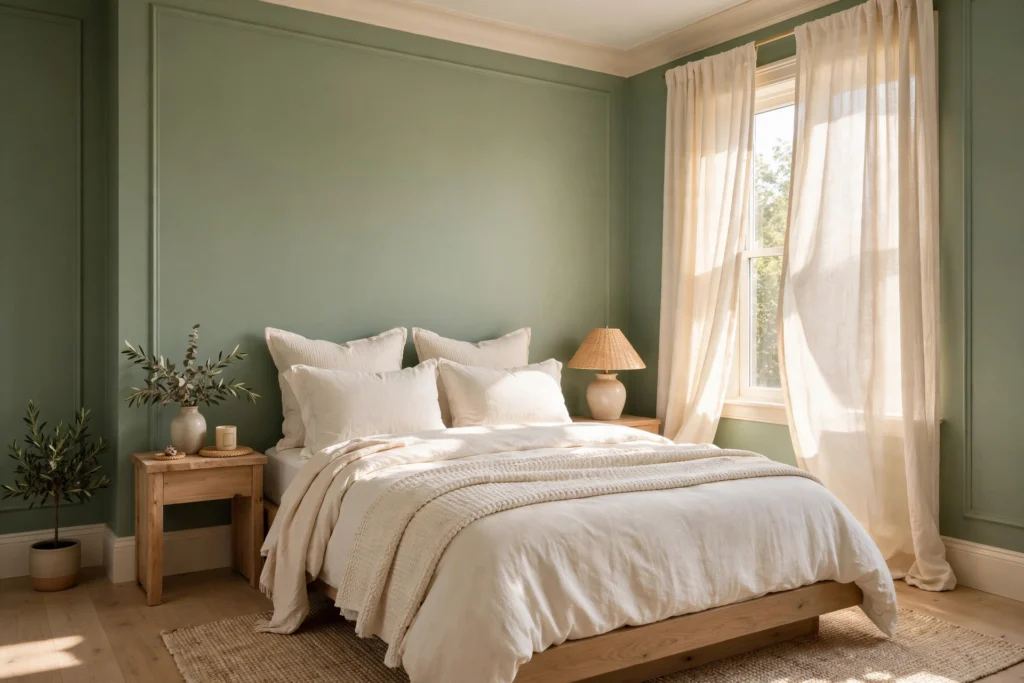
Sage green’s best friend is warm white. Crisp-but-soft whites — think Swiss Coffee, White Dove, or warm ivory — keep sage feeling fresh and prevent it from reading muddy. Use warm white on the ceiling, trim, and bedding, and let sage take the walls or larger furniture pieces. This pairing is the backbone of the calm, timeless sage bedroom: enough contrast to feel designed, enough softness to feel restful.
5. Add Natural Wood Tones
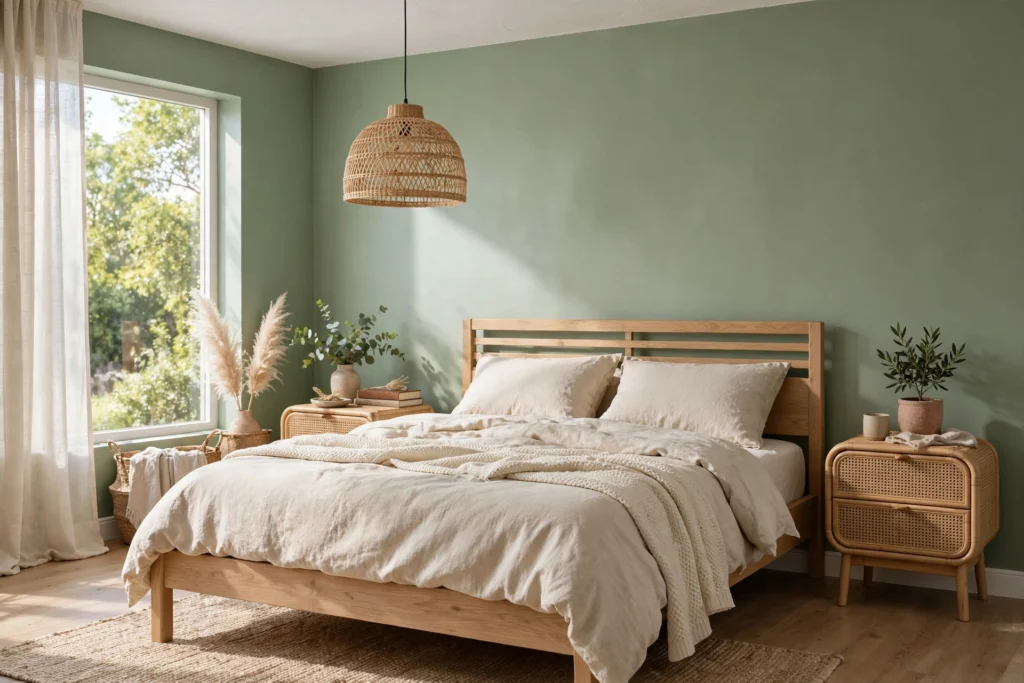
Wood and sage are a match made in nature. Light oak, warm pine, rattan, and cane bring organic warmth that stops sage from feeling cool or flat. A wooden bed frame, woven nightstands, or a rattan pendant light adds the earthy layer this palette craves. If your furniture is dark wood, sage walls make it glow; if it’s light wood, the combination feels Scandinavian-fresh. Either way, natural grain is essential.
6. Introduce Sage Through an Upholstered Headboard
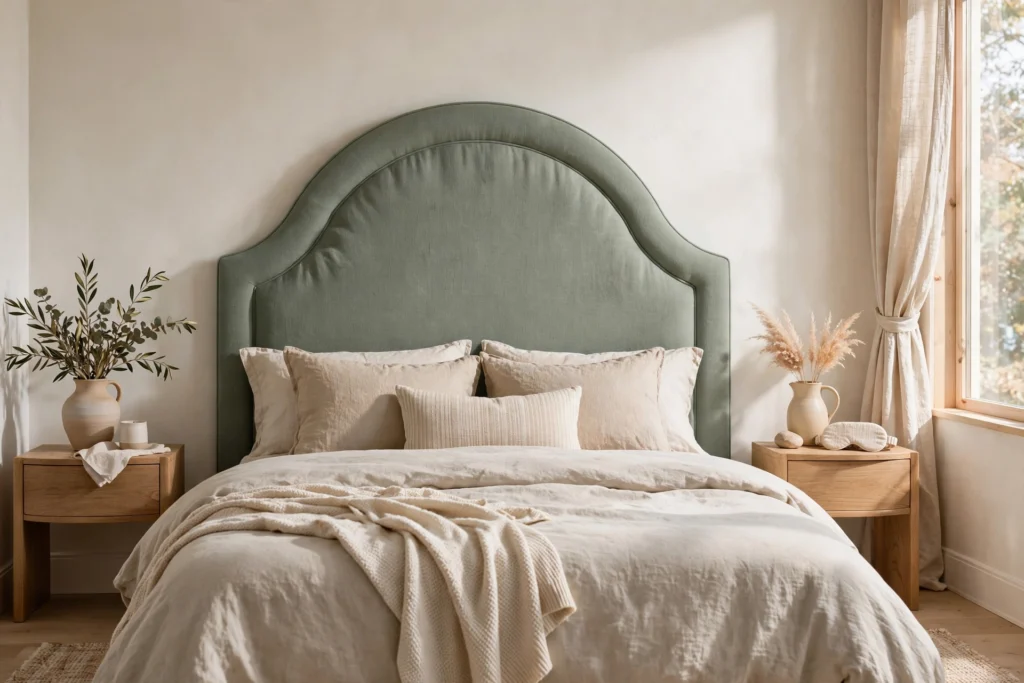
An upholstered headboard in sage green linen or velvet makes a soft, sophisticated focal point without painting a single wall. It adds comfort for bedtime reading and anchors the bed visually. Choose a simple profile — a rectangular panel, an arched shape, or classic button tufting — and keep the surrounding palette neutral so the headboard shines. This is a renter-friendly way to get the sage look with one furniture swap.
7. Use Sage Curtains for Soft Color
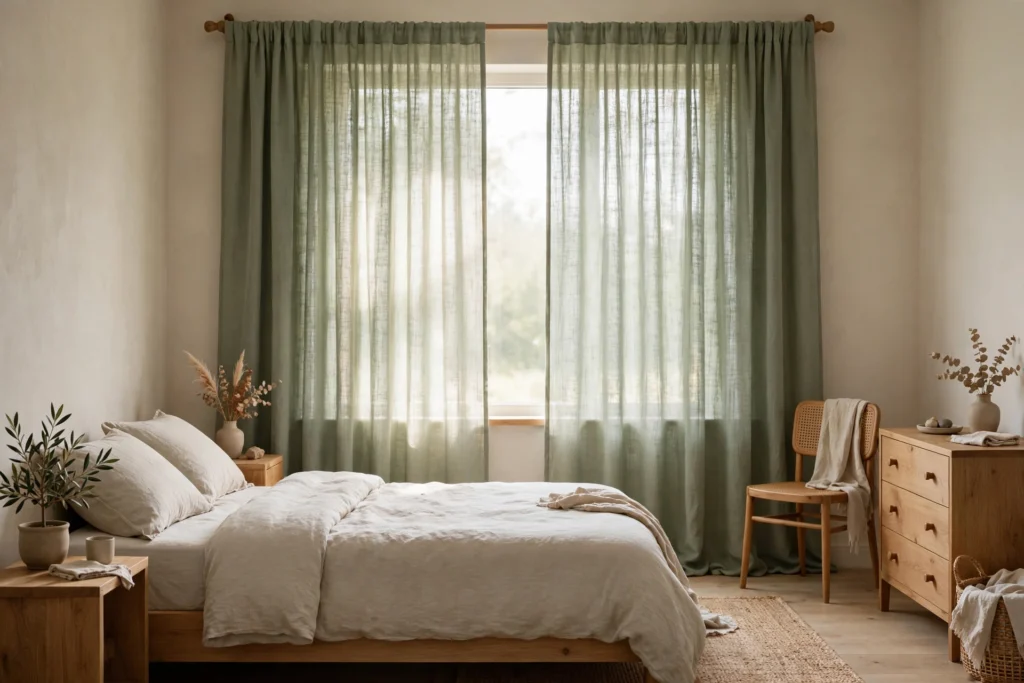
Floor-length curtains in sage linen or cotton voile filter light beautifully and wash the room in a soft green glow. They’re an ideal middle ground: more commitment than bedding, less than paint. Hang them high and wide to make windows feel grand, and choose a fabric with some texture — linen or a linen blend — for that relaxed, timeless feel. The Spruce’s bedroom color-pairing guide shows how sage plays with metallics like bronze for extra warmth.
8. Add a Sage Accent Chair or Bench
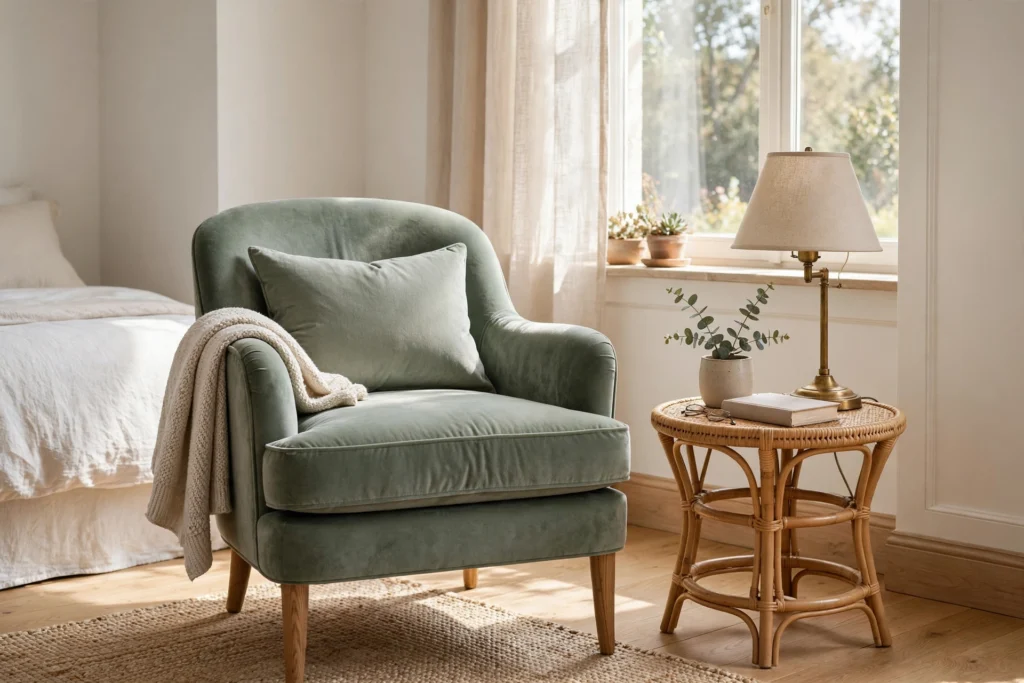
A single sage piece of furniture — an accent chair in the reading corner, an upholstered bench at the foot of the bed, or a small ottoman — distributes the color around the room so it doesn’t pool in one spot. Velvet reads luxurious; bouclé or linen reads relaxed. This is also a smart way to test the color in your space before going bigger. Echo the sage in a throw pillow or two on the bed to tie the pieces together.
9. Combine Sage with Earthy Neutrals
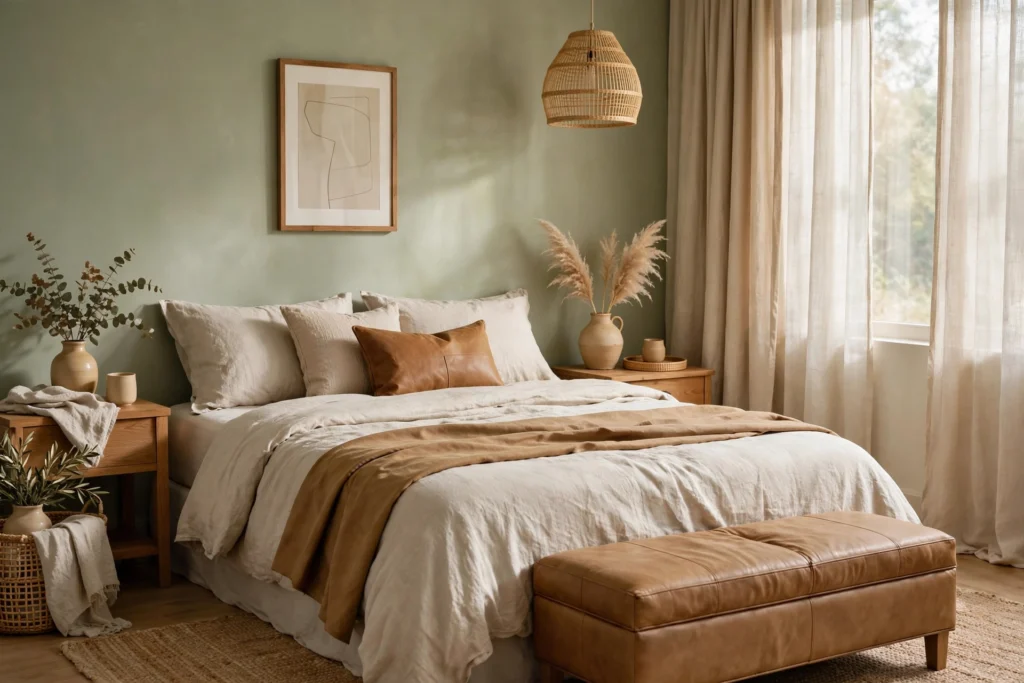
Beyond white, sage loves the full earthy neutral family: warm beige, greige, camel, taupe, and soft clay. These grounded tones keep the palette sophisticated and prevent the room from feeling too “matchy.” Try sage walls with camel leather accents, or sage bedding layered over natural linen in oatmeal tones. The result is a bedroom that feels collected and calm — very Japandi in spirit. For more of that serene minimalism, see our japandi bedroom design ideas.
10. Bring in Botanical Prints and Artwork
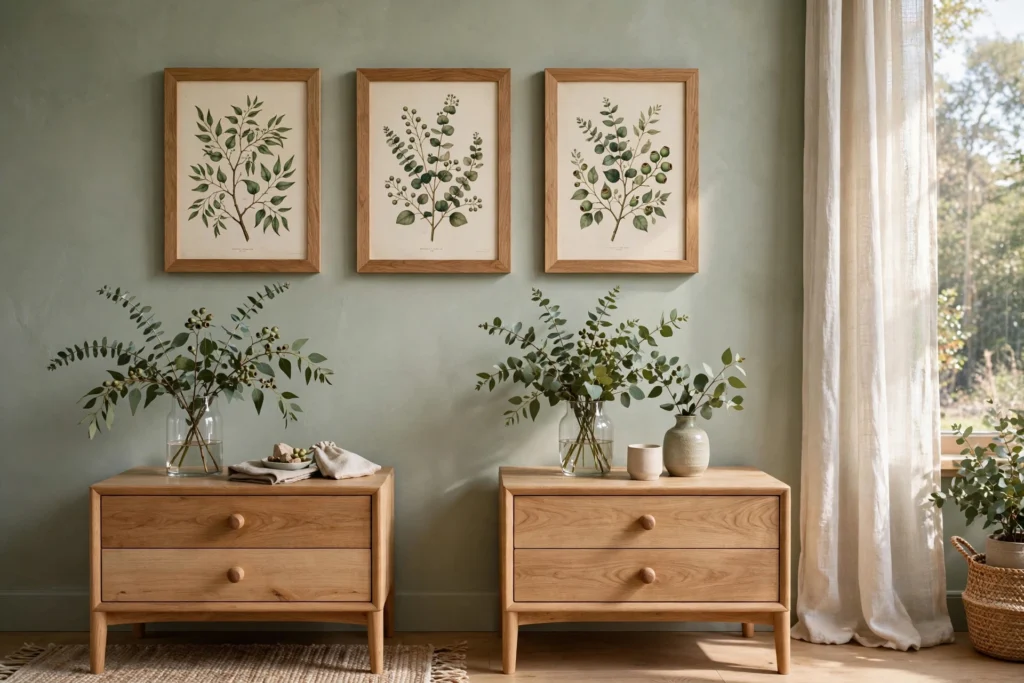
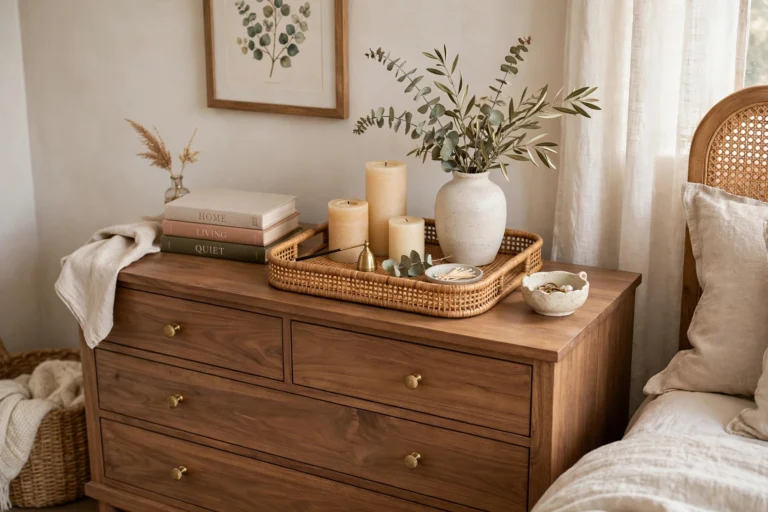
Sage green begs for botanical companions. Hang framed botanical prints, eucalyptus stem art, or landscape photography in natural wood or thin black frames. Real plants double the effect — a trailing pothos, an olive tree, or dried eucalyptus in a ceramic vase echo the wall color and add life. Art hung at eye level above nightstands or the dresser completes the nature-inspired story without adding visual noise.
11. Try a Sage Ceiling for Enveloping Calm
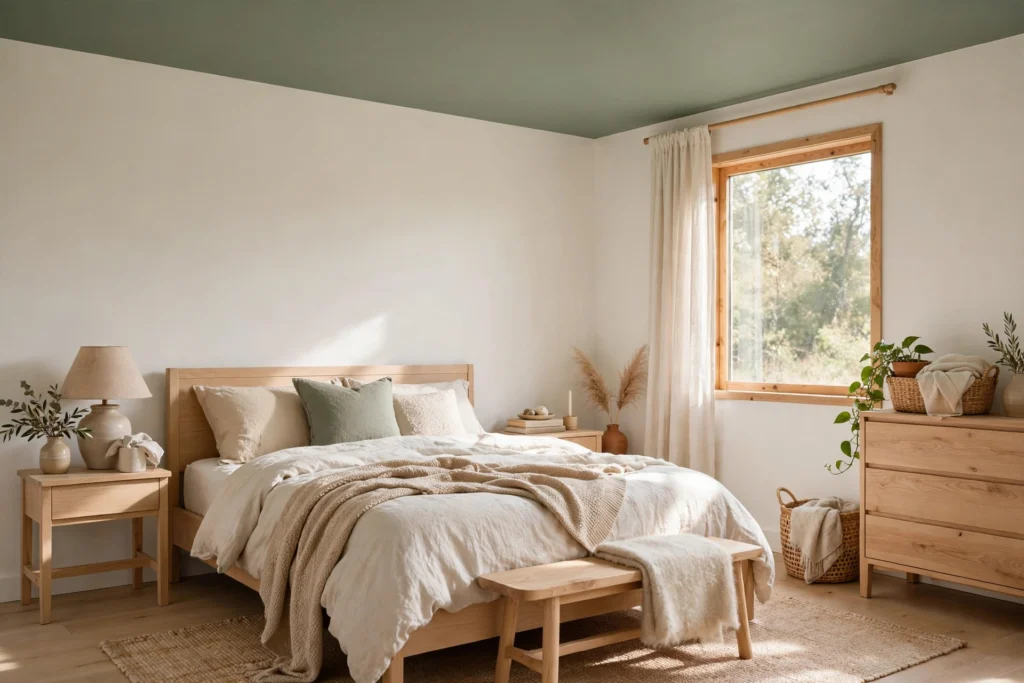
For the bold, paint the ceiling sage and keep walls warm white — or go full color-drench with sage on walls and ceiling alike. A sage ceiling lowers the visual height just enough to feel cocooning, which is exactly what a bedroom should do. This works beautifully in rooms with good natural light; in darker rooms, choose a lighter sage tint so it doesn’t close in. It’s an unexpected move that always gets compliments.
12. Mix Sage with Deeper Greens
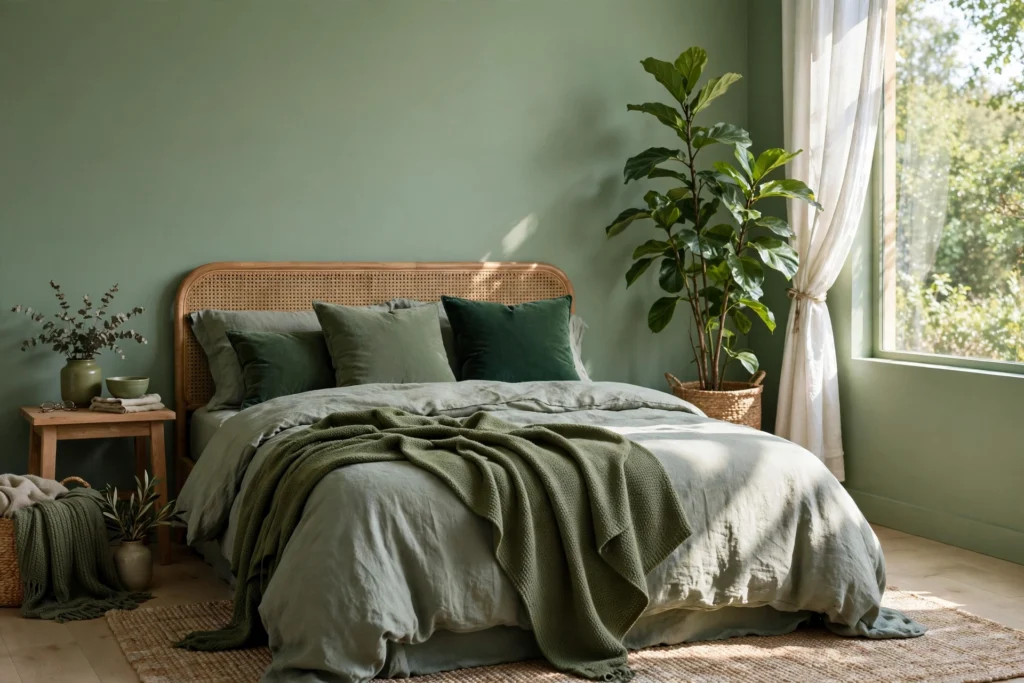
A tonal green scheme — sage paired with forest, olive, or emerald — adds depth while staying in the same calming family. Use sage as the dominant light tone (walls or bedding) and bring deeper greens in through cushions, throws, artwork, and plants. The key is clear value contrast: the greens should read as distinct steps, not muddy neighbors. Try a simple formula — sage walls, one forest-green velvet cushion, one olive throw, and a tall green plant — and you’ll see how the tones play off each other. This layered approach feels rich and intentional, like a garden in different lights.
13. Add Brass and Warm Metal Accents
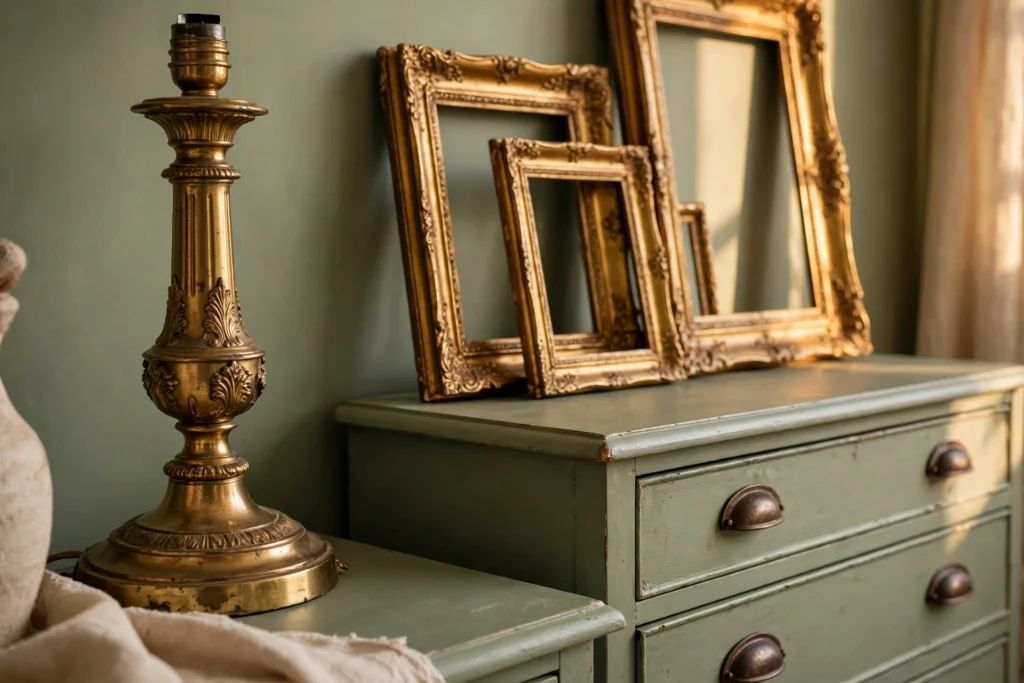
Sage green and warm metals are a classic pairing. Brass or antique-gold picture frames, lamp bases, curtain rods, and drawer pulls add a gentle glow that warms up the green. The combination feels timeless — think English country bedrooms and classic botanical studies. Keep metals to one warm family for cohesion, and let them appear in at least three places around the room so the pairing feels deliberate.
14. Keep Decor Minimal for Maximum Calm
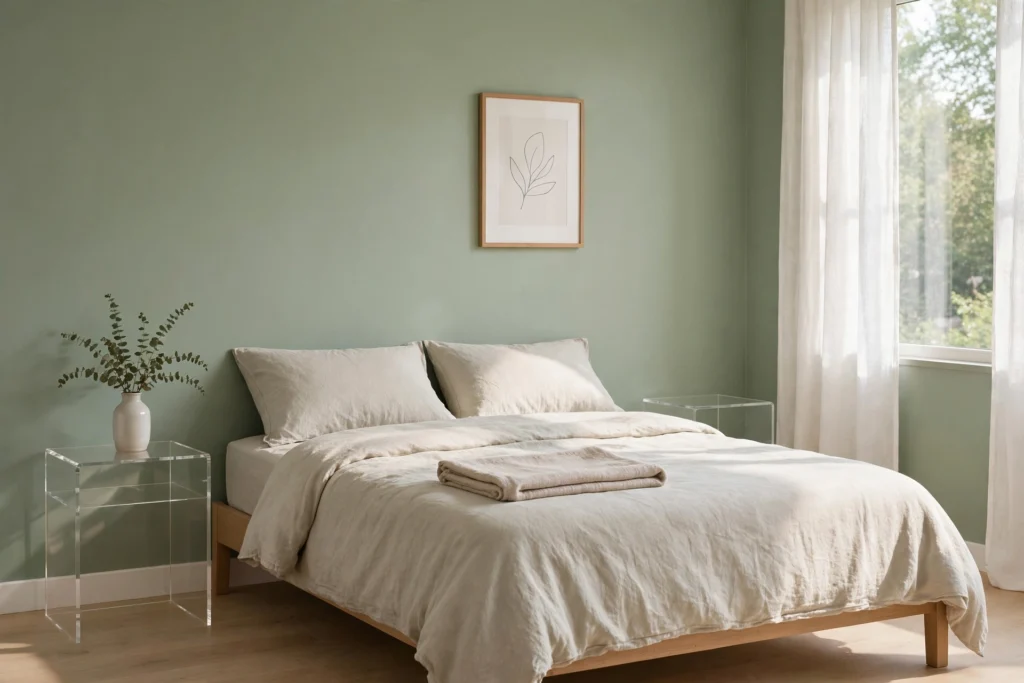
Sage does its best work in uncluttered rooms. Edit surfaces ruthlessly: a lamp and one object per nightstand, a clear dresser top with a single tray or vase, minimal wall art. This restraint lets the color itself be the decoration. If you’re drawn to sage, you likely want calm — honor that by giving everything a home and keeping visual noise low, the same way minimalist bedroom styling approaches a serene space. A quick weekly reset — fluffing pillows, clearing surfaces, and putting stray items back in their place — keeps the calm intact with minimal effort.
15. Extend Sage into the Ensuite or Dressing Area
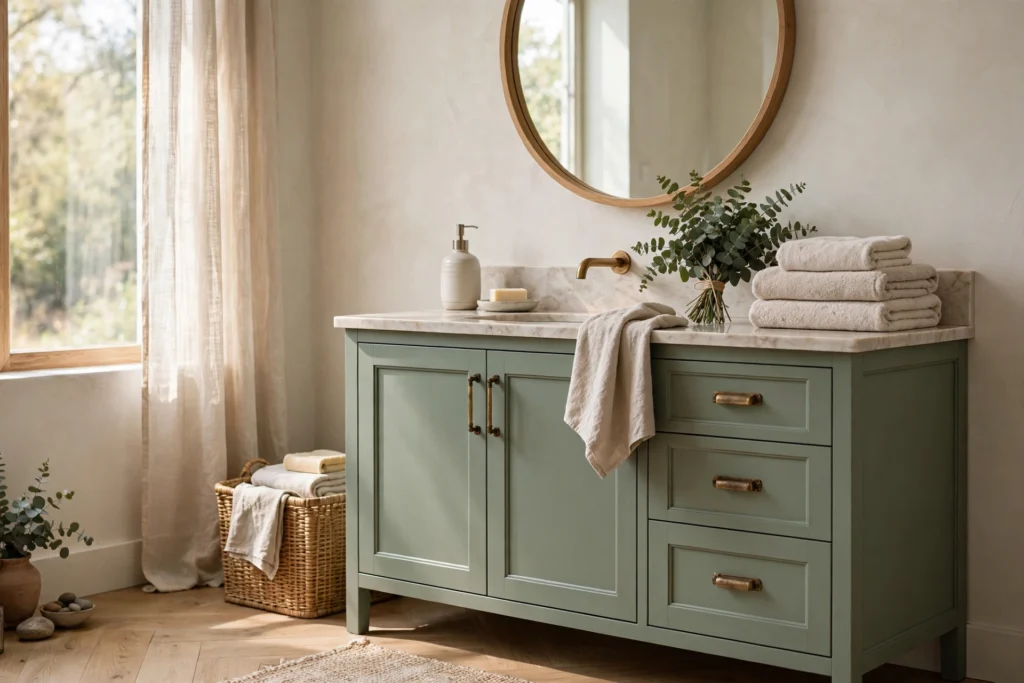
For a truly cohesive retreat, carry sage into the adjoining bathroom or dressing area — painted vanity cabinets, sage towels and bath mat, or even sage tile accents. Repeating the color across connected spaces makes the whole suite feel designed and doubles the calming effect, turning bedtime routines into a spa-like wind-down. Even small touches, like sage hand towels or a eucalyptus bundle in the shower, tie the spaces together beautifully.
Frequently Asked Questions
What colors go well with sage green in a bedroom?
Sage green pairs beautifully with warm whites and creams, natural wood tones, earthy neutrals (beige, greige, camel, taupe), deeper greens (forest, olive, emerald), and warm metals like brass and bronze. For contrast, soft clay, terracotta, or muted blush add warmth. Avoid pairing sage with cool grays or stark whites, which can make it look muddy — warm undertones throughout keep the scheme harmonious.
Is sage green a good color for a small bedroom?
Yes — sage is one of the best colors for small bedrooms. Its muted, gray-green quality recedes visually, making walls feel farther away, while its warmth keeps the room cozy rather than stark. In tiny rooms, use a lighter sage tint and pair it with warm white trim and mirrors to maximize light. Sage bedding and curtains can deliver the effect without painting if you want to keep walls light.
What paint finish should I use for sage bedroom walls?
Eggshell is the sweet spot for bedroom walls — it has a soft sheen that’s washable but not shiny, and it flatters sage’s subtle undertones. Use flat or matte on the ceiling, and satin or semi-gloss on trim and doors for contrast and durability. Avoid high-gloss on walls; it highlights imperfections and fights sage’s soft, calming character.
Does sage green go out of style?
Sage green has been used in interiors for centuries — from historic English country homes to mid-century kitchens — which is exactly why it reads as timeless rather than trendy. Its current popularity may ebb, but the color itself never looks dated because it’s drawn from nature. Choosing classic applications (painted walls, natural pairings, quality textiles) rather than gimmicky ones keeps it enduring.
How do I add sage green to my bedroom without painting?
Start with textiles: sage bedding, throw pillows, curtains, and a rug deliver plenty of color. Add a sage upholstered bench or accent chair, botanical artwork, and real greenery like eucalyptus or pothos. Painted furniture — a nightstand or dresser in sage — is a bigger but still non-wall commitment. These layers let you test the color and can be changed seasonally.
Keep Exploring
Sage green earns its reputation as the ultimate calm bedroom color — natural, versatile, and quietly sophisticated. Whether you go all-in with painted walls or layer it in through textiles and accents, the result is a bedroom that feels like a deep breath at the end of a long day. Start with the biggest surface you’re comfortable changing, then build the palette outward with warm whites, wood, and brass.
For more serene bedroom inspiration in the same spirit, our scandinavian bedroom design ideas continue the calm-and-timeless story with light woods and soft neutrals.






[…] flatters most skin tones in morning light and pairs beautifully with brass or black hardware. Sage green bedroom design ideas calm and timeless explore sage in every shade from whisper-soft to richly […]