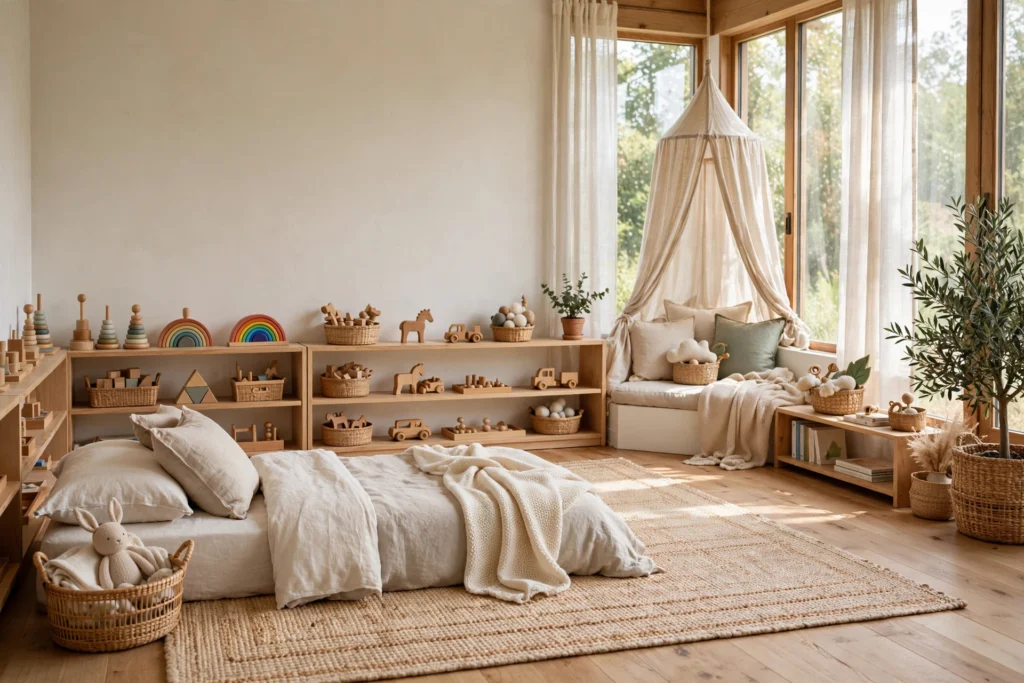

A Montessori bedroom is designed from your child’s point of view — literally. Every element sits at their height, serves their independence, and invites them to do things for themselves: climb into bed, choose their clothes, reach their books, and tidy their own space. These montessori bedroom ideas aren’t just cute; they build real confidence as little ones master their environment one small success at a time.
The 15 ideas below follow core Montessori principles: child-sized furniture, a floor bed, open low shelving, natural materials, and a calm, uncluttered atmosphere. You don’t need to buy everything at once — start with the bed and the shelves, then layer in the rest. For broader kids’ room inspiration, see our kids bedroom design ideas.
1. Start with a Floor Bed
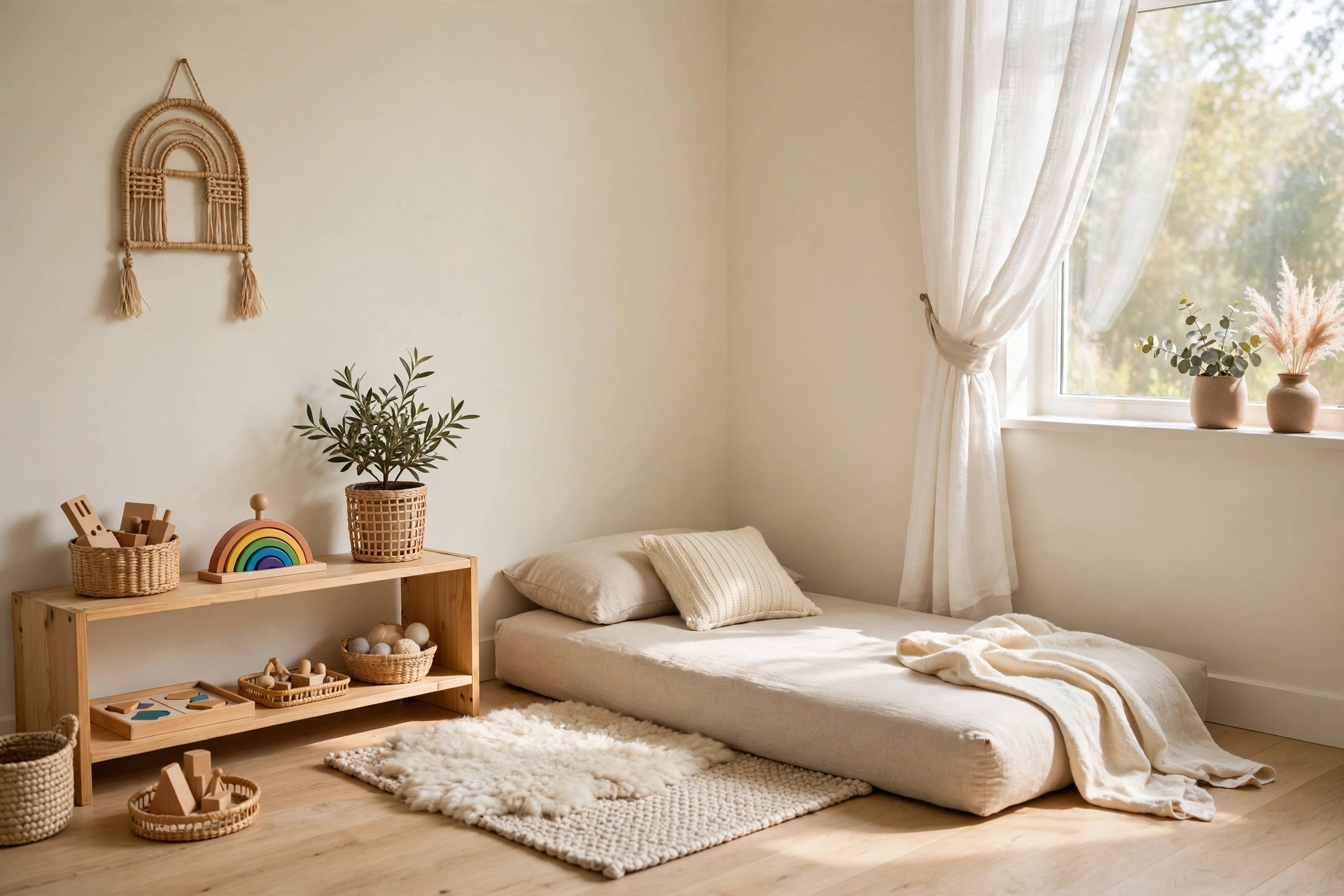
The floor bed is the signature Montessori move: a mattress placed directly on the floor or on a very low frame, so your child can climb in and out freely without help or the risk of falling from a height. Choose a firm, breathable mattress — a futon or low-profile mattress works well — and place it in a corner for natural boundaries. Add a soft rug beside it for morning landings. This single change gives toddlers genuine freedom over their sleep routine and often makes bedtime battles fade, since getting into bed becomes their choice rather than a transition imposed on them. The Spruce’s boys’ room ideas include a great floor-bed setup worth studying.
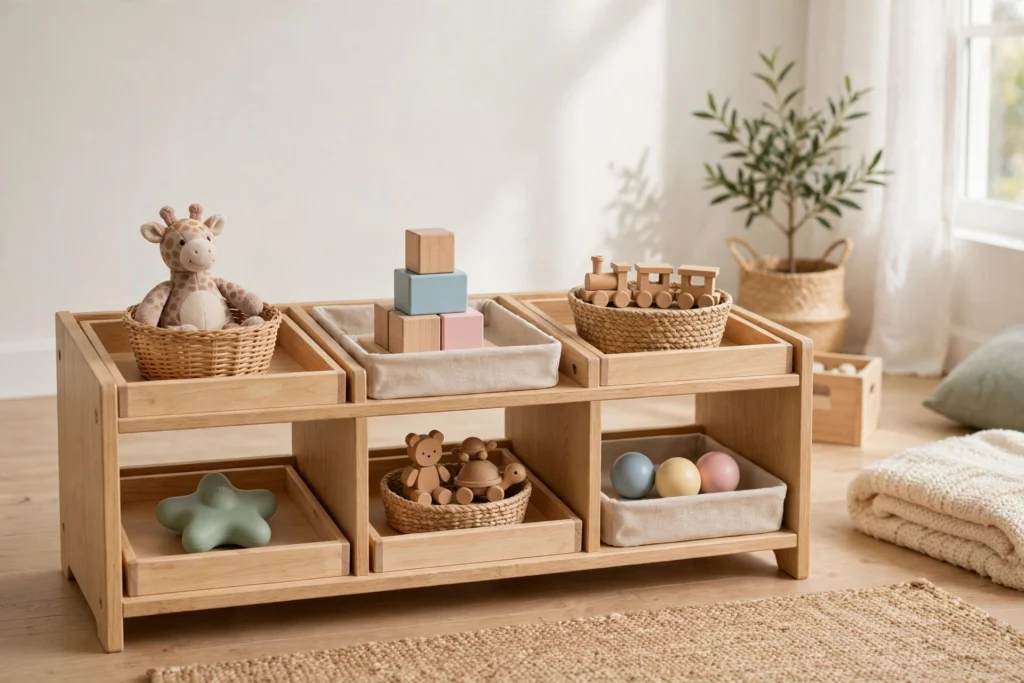
2. Use Low, Open Shelving for Toys
3. Create a Child-Sized Reading Nook
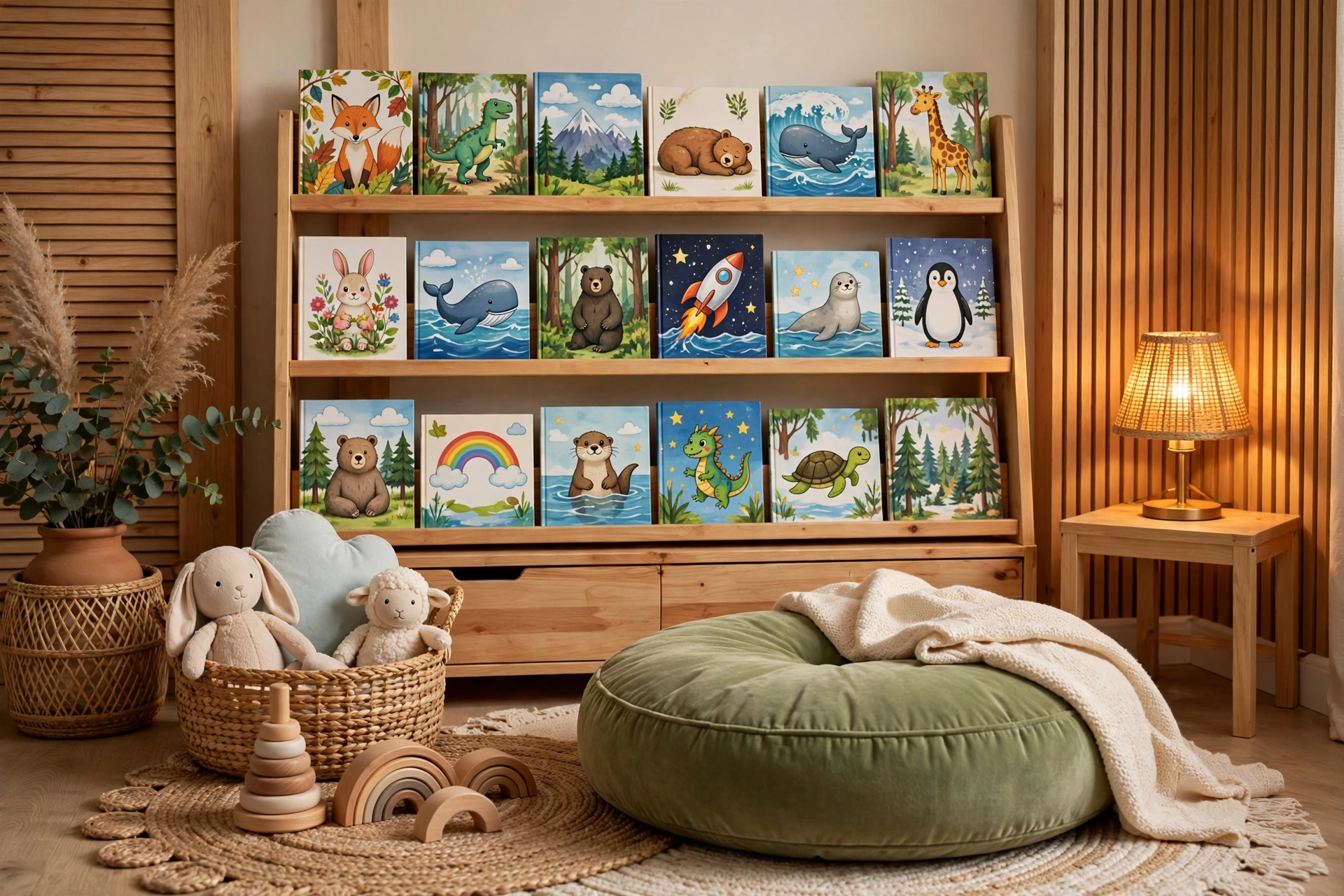
A cozy reading corner invites independent quiet time. Place a small bookshelf or forward-facing book display at floor level, add a soft floor cushion or child-sized armchair, and finish with a warm lamp your child can switch on themselves. Keep just a handful of books out and rotate them like the toys. Facing book covers outward (like a bookshop display) lets pre-readers choose by the pictures. The Spruce’s cozy bedroom guide shows a kid-friendly reading nook that nails this concept.
4. Set Up a Low Clothing Station
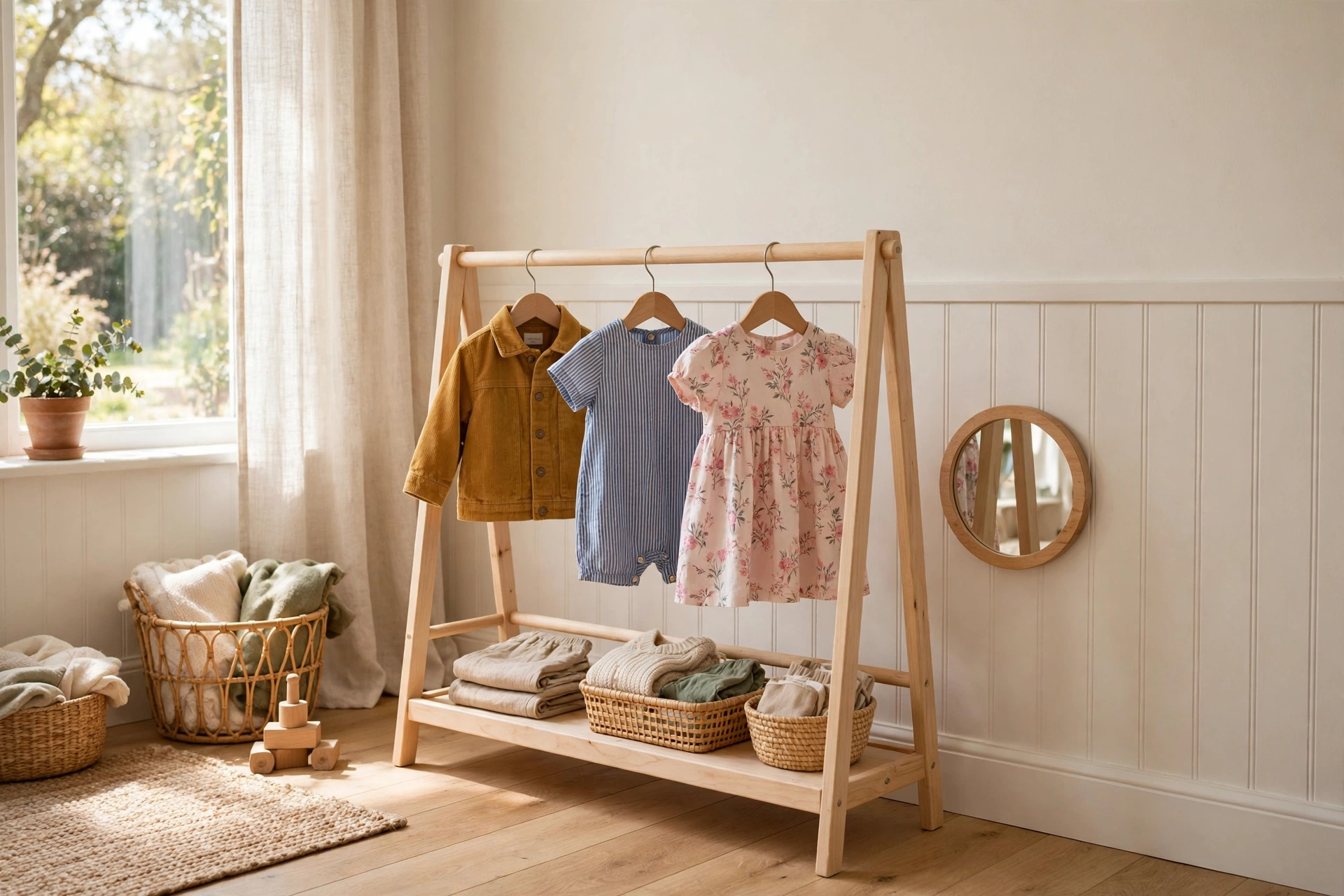
Help your child dress themselves with a low clothing rack or open cubbies holding just two or three outfit choices. A small dresser with labeled drawers (picture labels for pre-readers) works too. Limiting choices prevents morning overwhelm while still giving them real decision-making power. Add a low mirror nearby so they can check their own work — pride in a self-chosen outfit is a powerful confidence builder.
5. Add a Child-Sized Table and Chairs
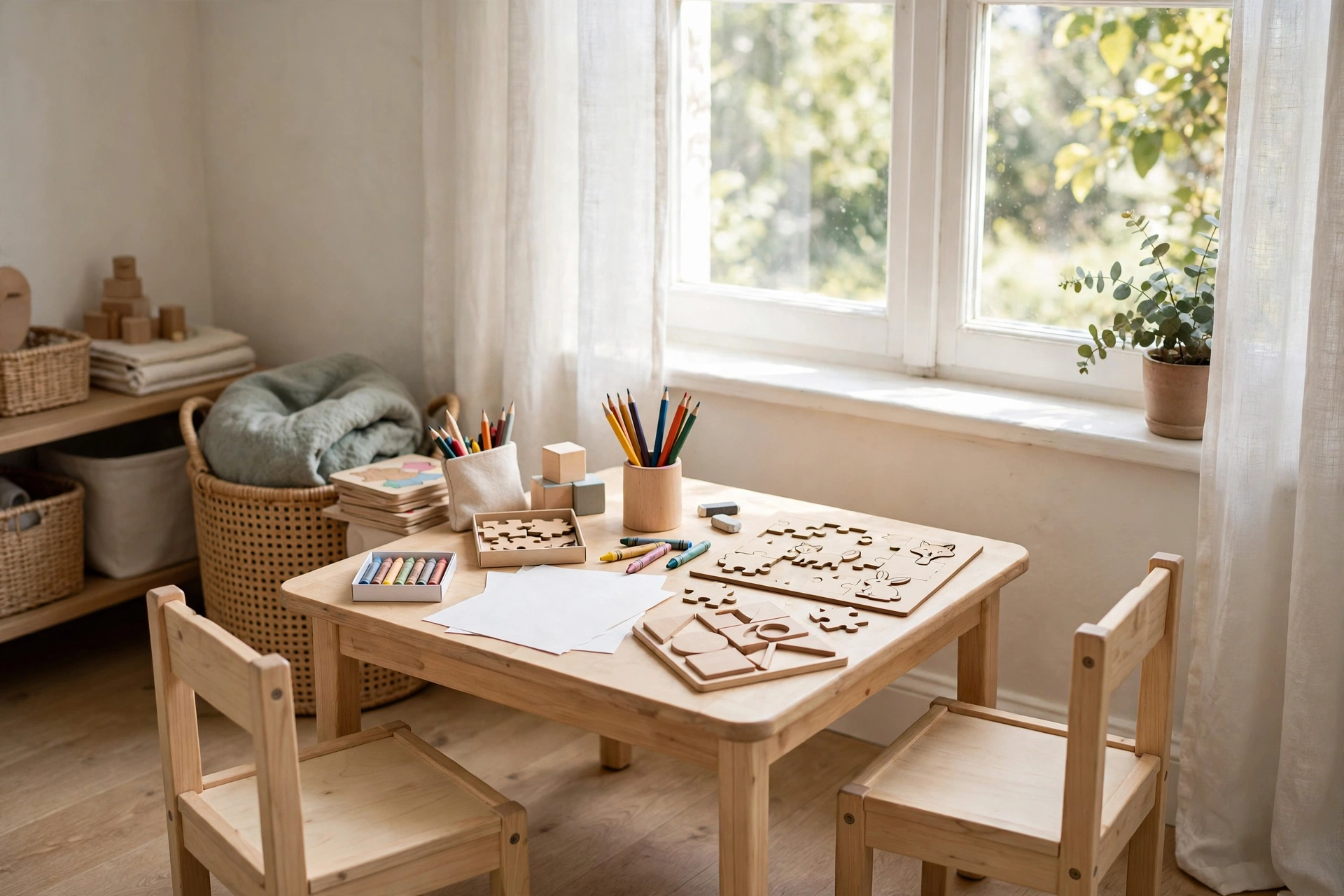
A small table and chair set gives your child a dedicated workspace for drawing, puzzles, playdough, and snacks — all at their scale. Choose sturdy wooden pieces that won’t tip, sized so their feet touch the floor when seated. Place it near natural light and keep a few activities in trays on or beside it. This little station becomes command central for independent play and eventually homework.
6. Hang Art at Their Eye Level
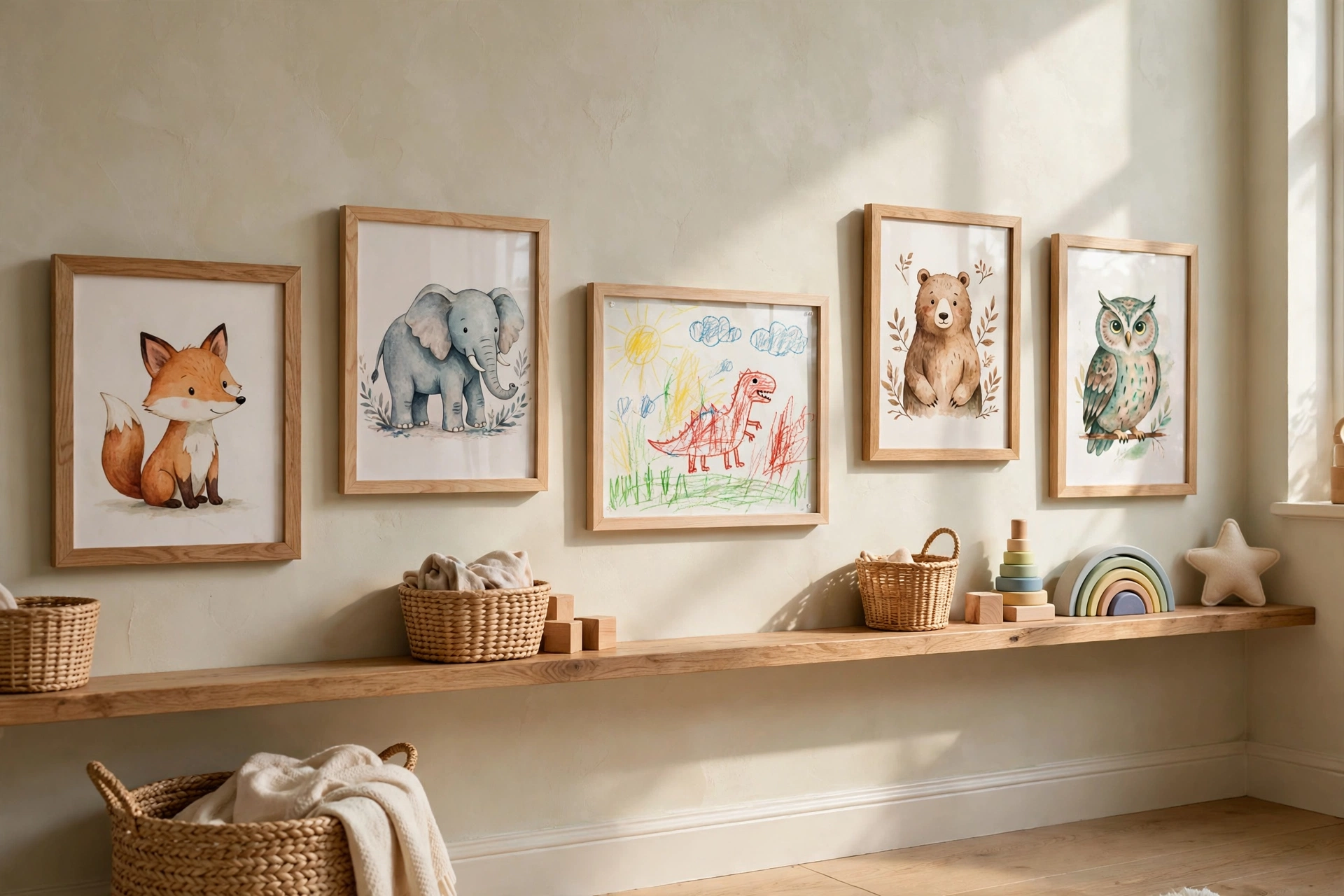
In most kids’ rooms, art hangs for the adults. Flip it: hang framed prints, family photos, and your child’s own artwork at your child’s eye level — roughly 90 to 110 cm (36 to 43 inches) from the floor for a toddler. Choose real art, not just cartoons: animal illustrations, nature prints, and simple maps are Montessori favorites. A low cork board or magnetic strip lets them curate and change their own gallery.
7. Keep the Palette Calm and Natural
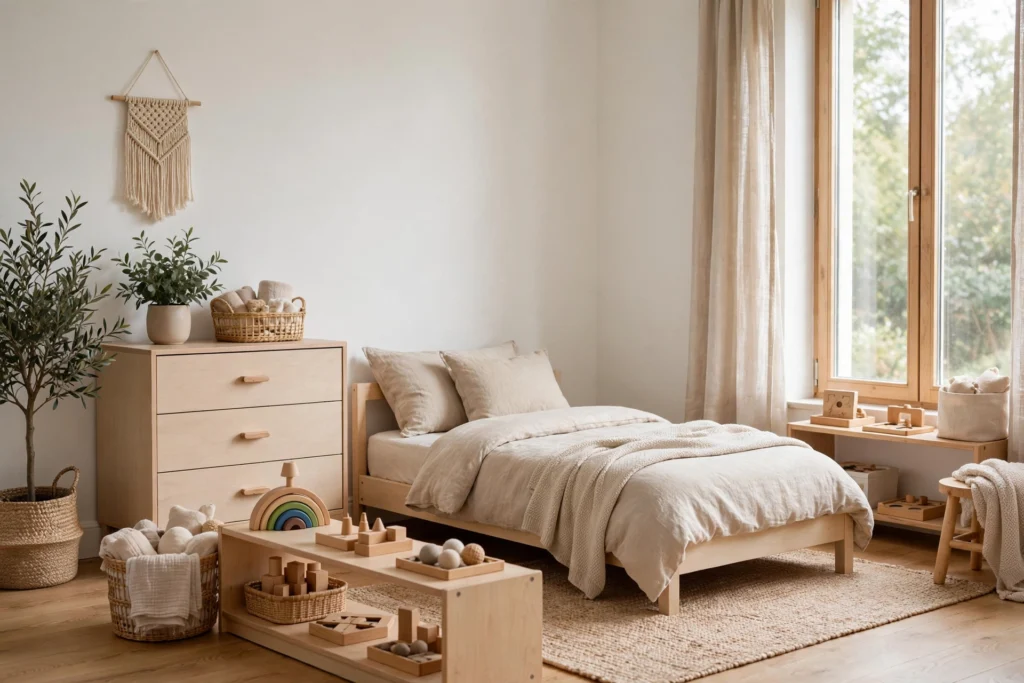
Montessori spaces favor calm over chaos: warm whites, soft beiges, pale wood tones, and gentle muted colors. A serene backdrop helps children focus and rest, and it lets the toys, books, and art provide the color. If you want an accent wall, choose a soft sage, warm terracotta, or pale sky blue rather than a high-energy primary. Natural light does the rest — keep window treatments simple so daylight floods in. If you’re repainting, involve your child by letting them choose between two pre-approved calm shades; ownership of the choice makes them prouder of the space.
8. Choose Natural Materials
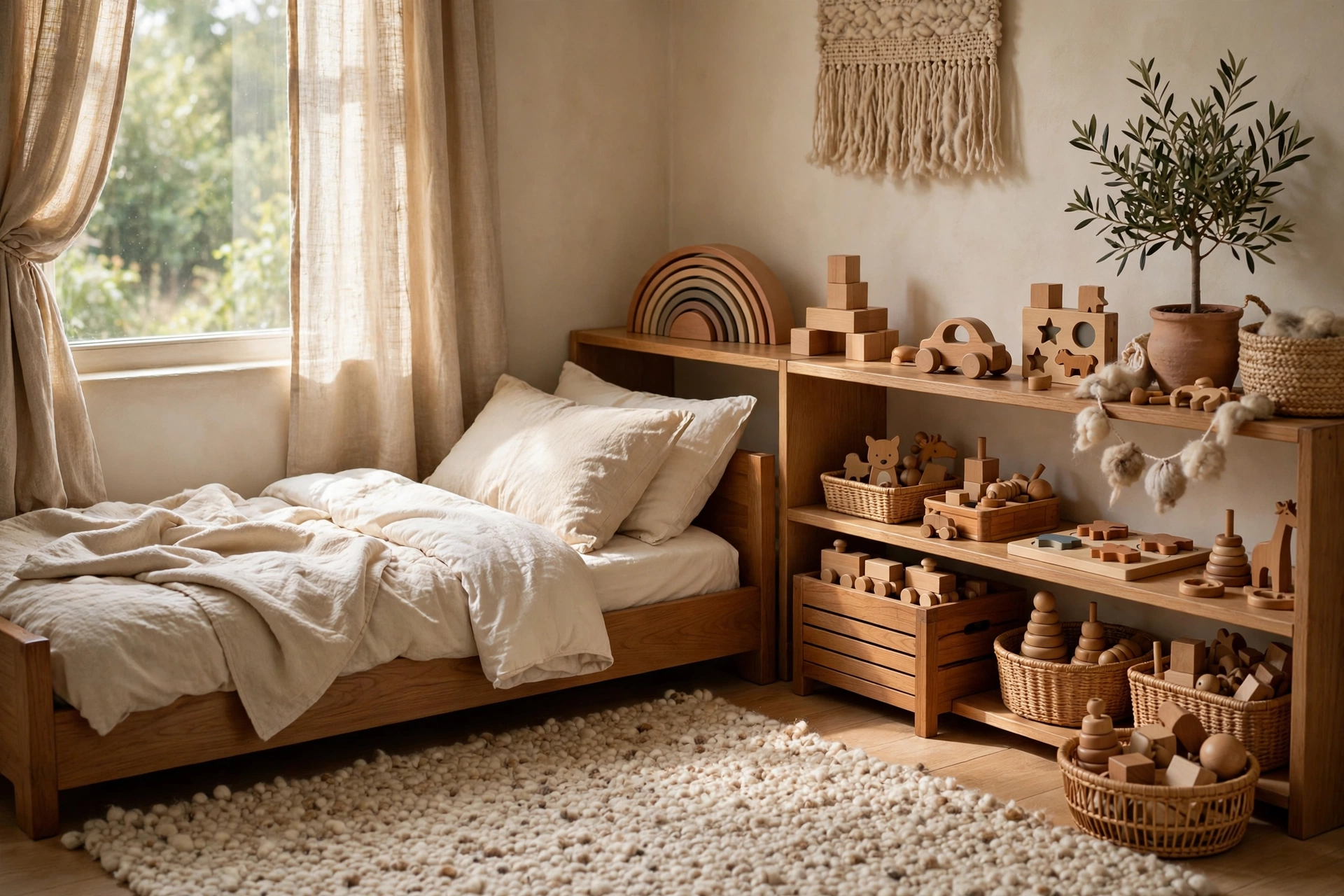
Wood, cotton, wool, and rattan beat plastic in a Montessori bedroom. Natural materials feel better, look calmer, and connect children to the real world. Choose solid-wood furniture, cotton or linen bedding, a wool or cotton rug, and wooden toys where possible. This doesn’t mean purging every plastic toy — just let the room’s big surfaces and most-reached-for items be natural. The sensory quality of real materials is part of the learning environment.
9. Make Lighting Child-Accessible
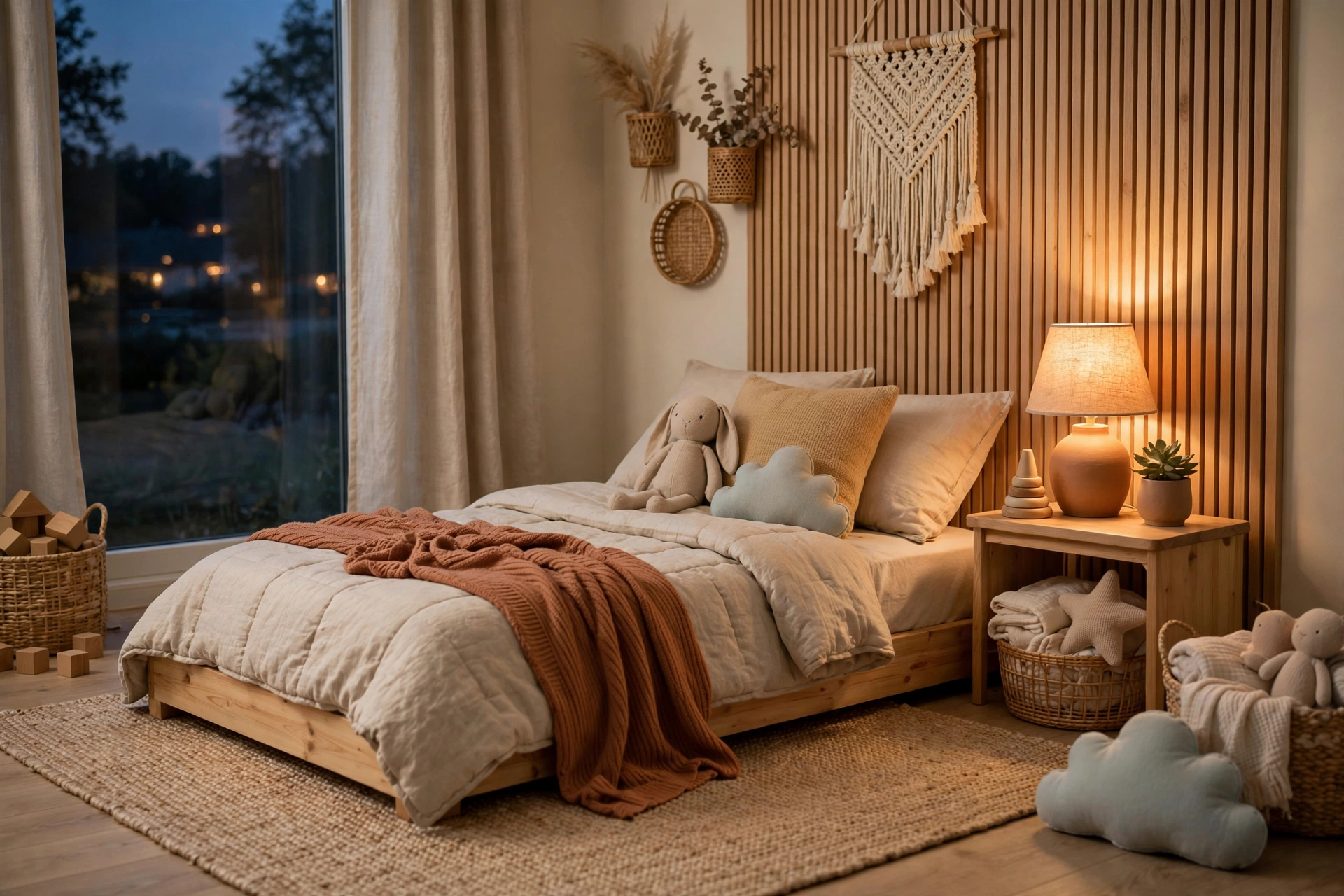
Independence includes controlling the environment. Use a lamp with an easy on-off switch your child can reach, or add a touch lamp that turns on with a tap. A dimmable nightlight or a salt lamp gives a comforting glow for bedtime without overhead brightness. Avoid lamps with small, hot bulbs at child height; LED bulbs stay cool. Being able to light their own room — and turn it off — is a small daily victory for a little one.
10. Add a Low Mirror for Self-Care
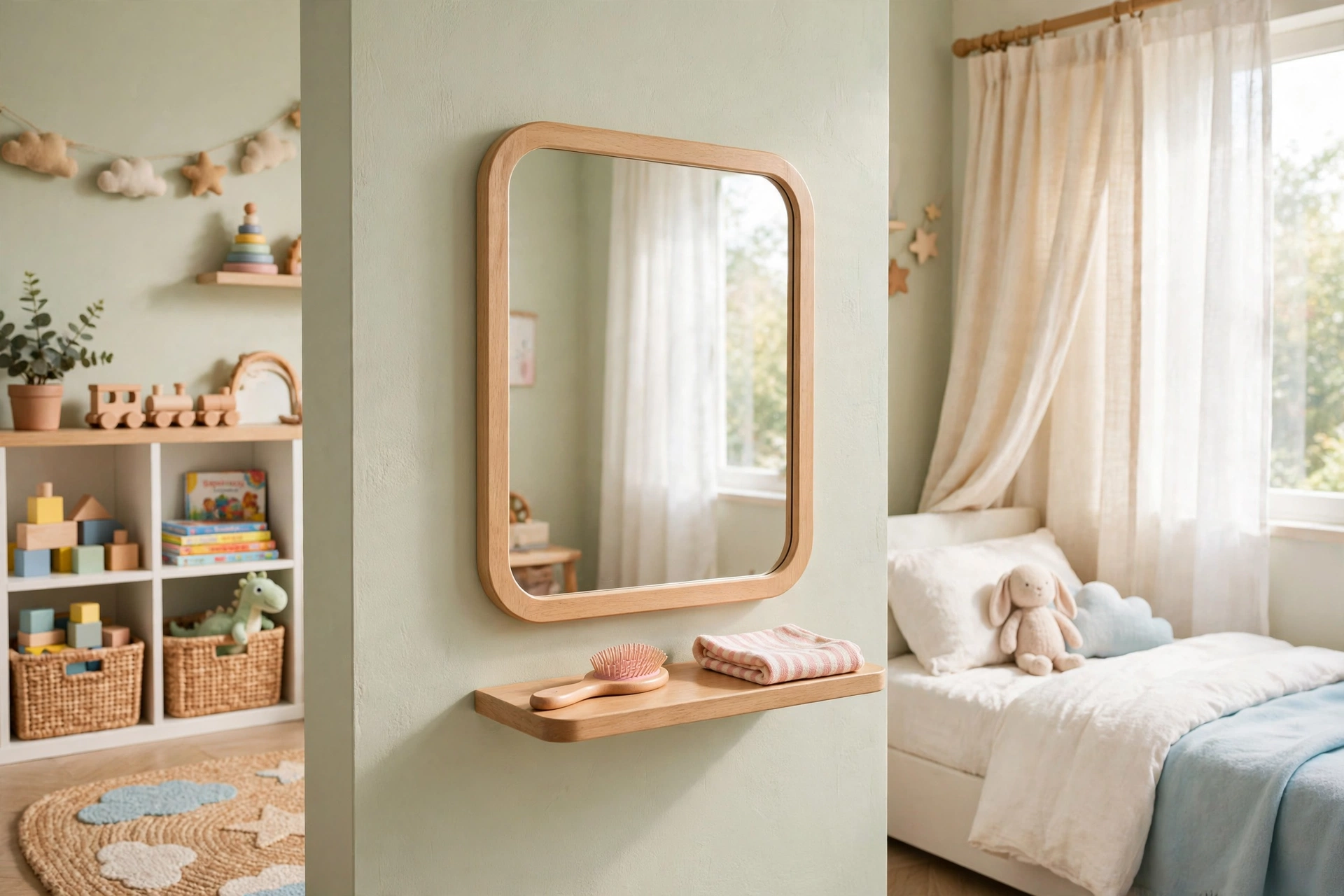
Mount a sturdy, shatterproof mirror at your child’s height near the clothing station. Montessori classrooms have used low mirrors for decades: children practice dressing, brushing hair, and washing faces while watching themselves. Pair it with a small shelf holding a hairbrush, a washcloth, and any toiletries they use. This “self-care station” turns grooming from a chore you do to them into a skill they own.
11. Create a Practical Life Corner
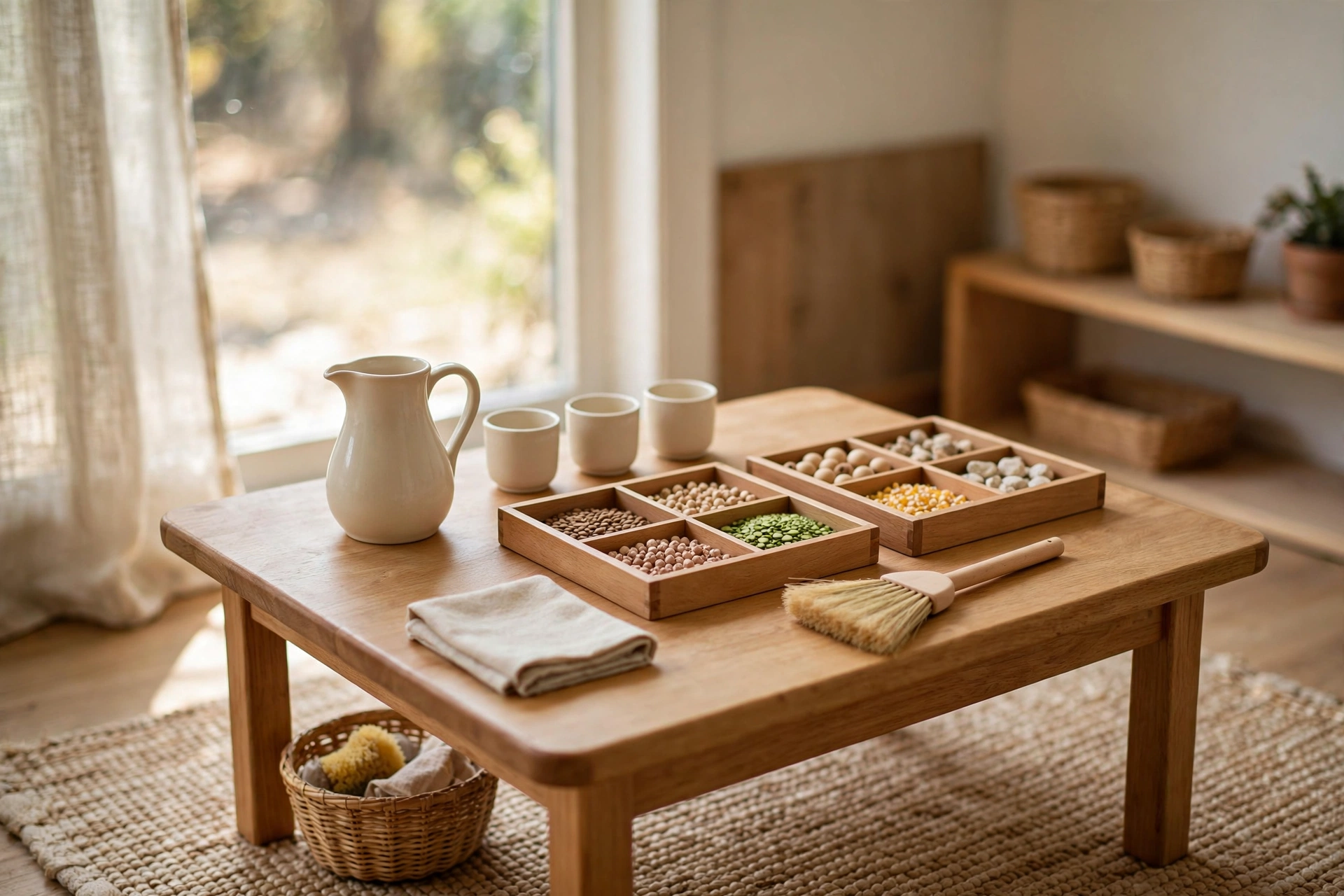
Practical life activities — pouring, sweeping, buttoning, sorting — are Montessori staples that fit beautifully in a bedroom corner. A small tray with a child-sized pitcher and cups for pouring practice, a tiny broom and dustpan for “cleaning,” or a dressing frame for buttons and zippers gives purposeful play options. These activities build fine motor skills and concentration while keeping little hands happily busy during independent playtime.
12. Baby-Proof the Whole Room
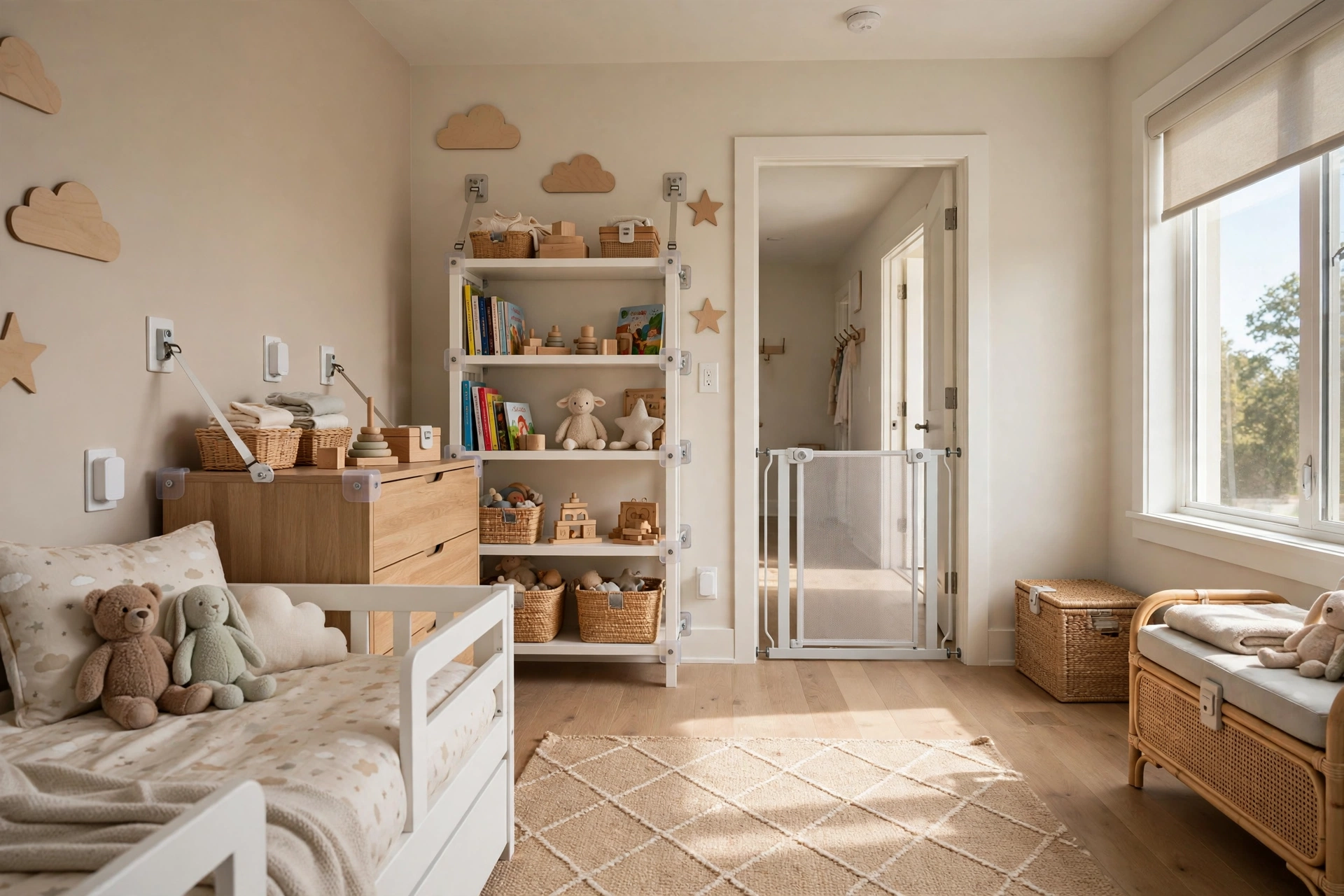
A Montessori bedroom only works if the entire room is safe for unsupervised exploration. Anchor all furniture to the wall, cover outlets, secure cords out of reach, remove small choking hazards, and gate the doorway or use a child-safe door handle cover instead of locking them in. Think of the room as a giant playpen: if your toddler wakes early and plays quietly for thirty minutes, everything they can reach should be safe to touch.
13. Display Toys and Books Sparingly
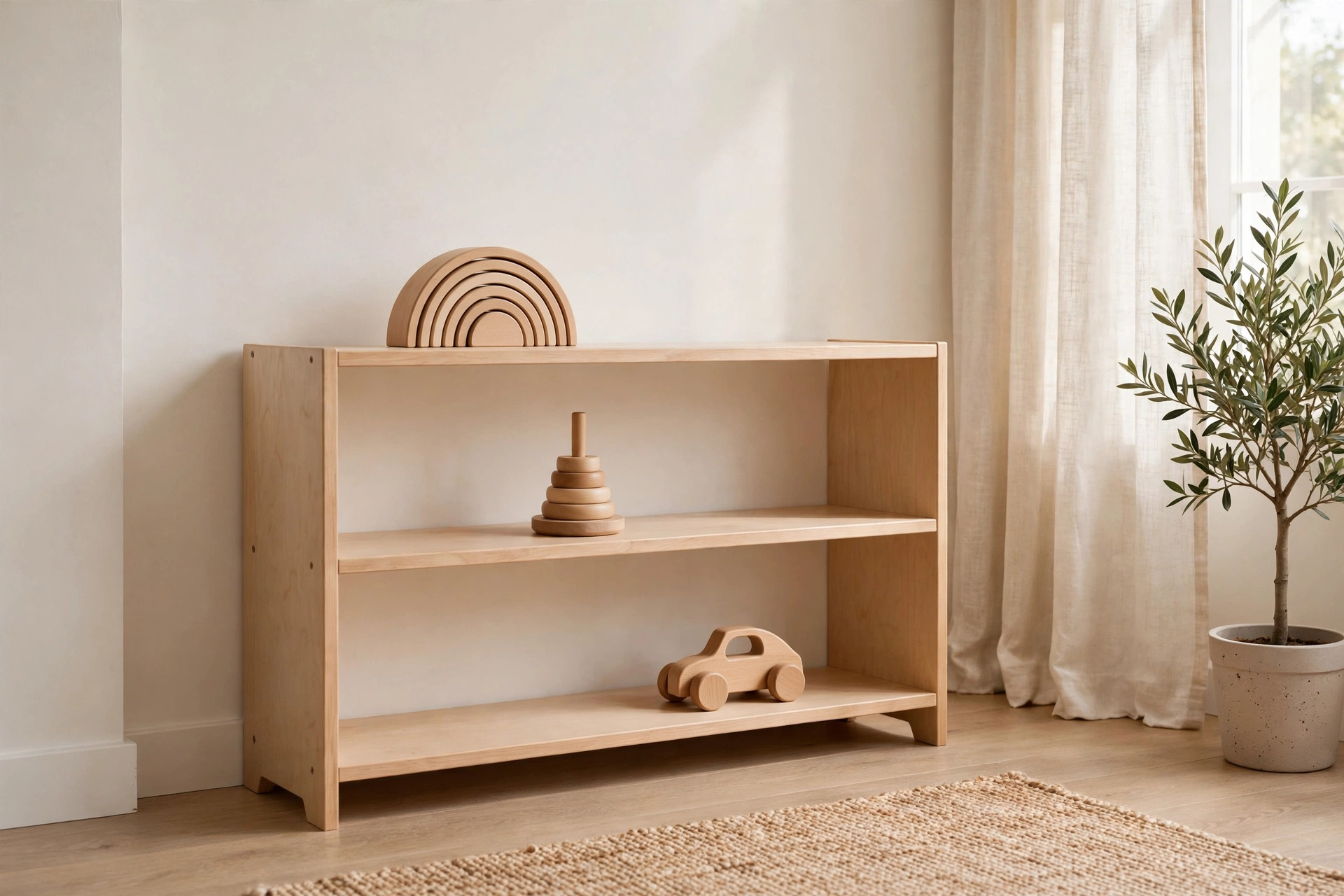
Less is genuinely more. A Montessori bedroom typically shows only a fraction of a child’s belongings — 6 to 8 toys, a handful of books — with the rest stored away for rotation. This curation reduces overwhelm, lengthens attention spans, and makes cleanup manageable for small hands. Walk the room monthly and remove what no longer interests them; you’ll be amazed how much calmer the space (and the child) feels. A good rule of thumb: if you haven’t seen them reach for it in a month, it goes into rotation storage or out the door.
14. Add Soft Textures for Comfort
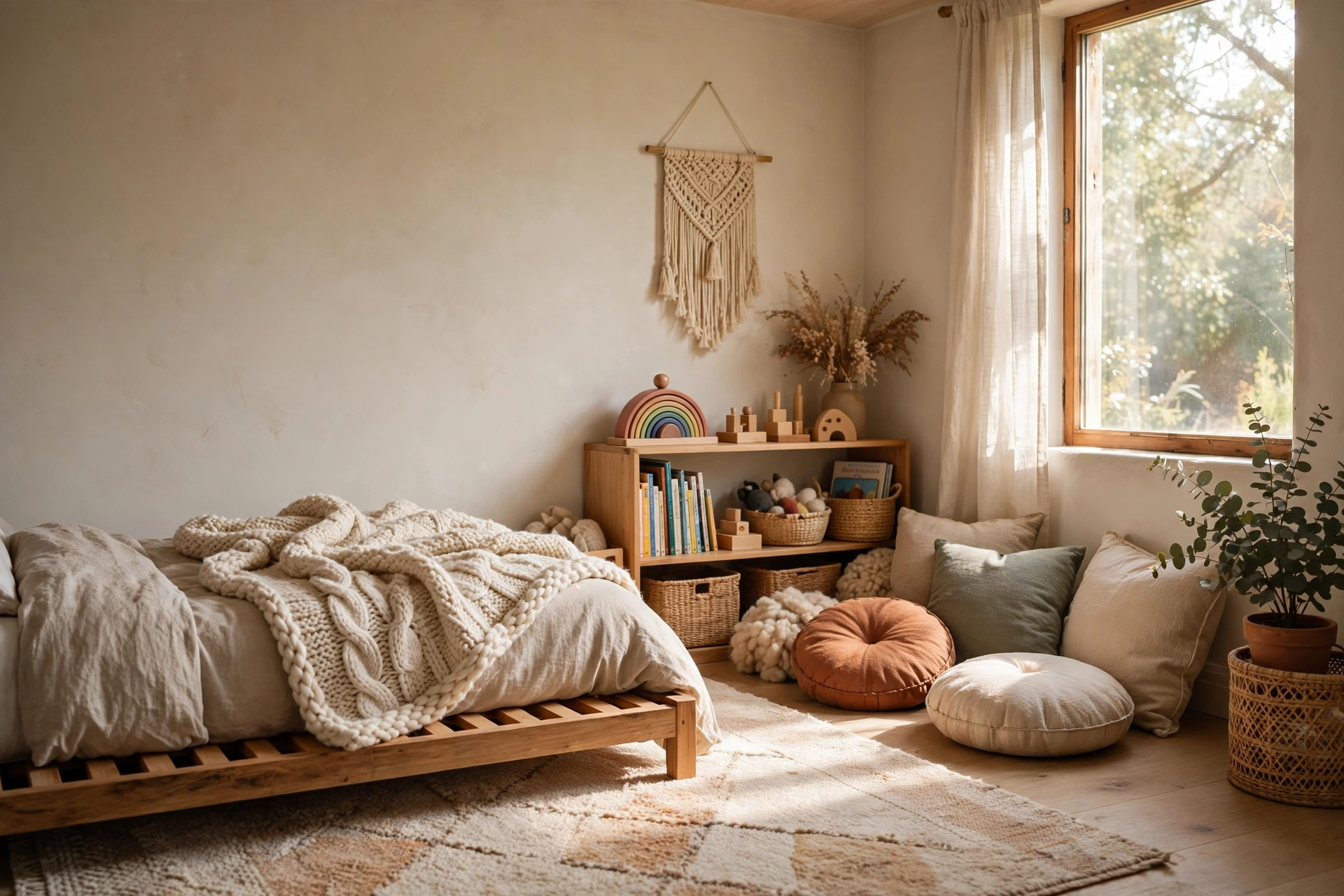
Independence doesn’t mean austerity — the room should still feel cozy and loved. A soft area rug for floor play, a favorite stuffed animal or two (not twenty), a knit blanket on the floor bed, and floor cushions in the reading nook add warmth. Keep textiles washable and simple. The goal is a space that feels like a hug but still lets the child move freely and see the floor — comfort without clutter.
15. Design It to Grow with Them
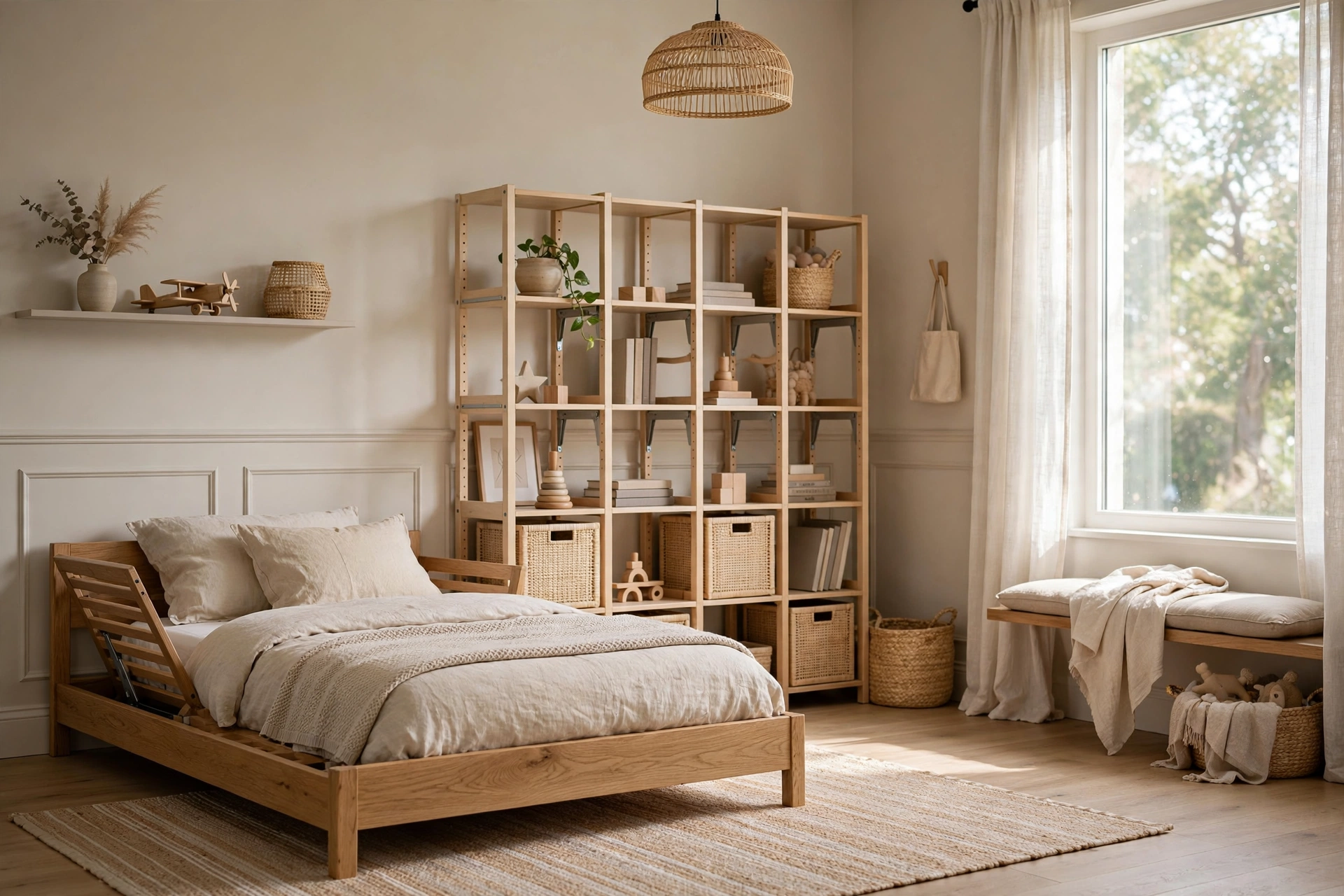
The smartest Montessori bedrooms evolve. Choose a convertible floor bed that can become a raised bed later, shelving that works for toys now and school supplies later, and a neutral palette that suits a toddler and a ten-year-old equally. Update the art, books, and activities as interests change rather than redecorating from scratch. For nursery-to-toddler transition ideas, see our nursery design ideas.
Frequently Asked Questions
What age is a Montessori bedroom suitable for?
Montessori bedroom principles work from infancy through the early school years, with adjustments by stage. Floor beds suit babies once they’re rolling (with full baby-proofing); low shelves and forward-facing books work from around 12-18 months; clothing stations and self-care areas shine for ages 2-5. The core ideas — child-sized, accessible, calm, and safe — adapt easily. Many families keep the low-shelf and reading-nook setup well into elementary school.
Is a floor bed safe for toddlers?
Yes, when the room is properly prepared. A floor bed eliminates the fall risk of a raised bed or crib-climbing, but the whole room must be baby-proofed since your child can roam freely: anchor furniture, cover outlets, secure cords, remove hazards, and gate the doorway. Use a firm, breathable mattress and keep the sleep area clear of pillows and heavy blankets for under-ones. Many parents add a video monitor for peace of mind.
How many toys should be in a Montessori bedroom?
Aim for 6 to 8 toys or activities on the low shelves at any time, plus a handful of books. This limited selection prevents overwhelm, encourages deeper play with each item, and makes independent cleanup realistic. Store the rest out of sight and rotate every one to two weeks. Watch which toys your child actually uses — if something sits untouched through two rotations, it’s time to pass it on.
Do I need to buy special Montessori furniture?
No — the principles matter more than the products. Any low, sturdy shelf works for toy display; any firm mattress on the floor works as a floor bed; any small table and chairs fit for the workspace. Focus on child height, accessibility, and natural materials rather than brand names. Simple wooden furniture from mainstream stores, secondhand finds, and DIY solutions all work beautifully.
How is a Montessori bedroom different from a regular kids’ room?
The key differences are accessibility and intention. In a Montessori bedroom, everything is at the child’s height and designed for independent use — the bed they can enter alone, shelves they can reach, clothes they can choose, art they can see. Regular kids’ rooms are typically arranged for adult convenience. Montessori rooms also show fewer items at once, favor natural materials, and keep the palette calm to support focus and rest.
Keep Exploring
Setting up a Montessori bedroom is one of the highest-impact projects you can do for a young child — and one of the simplest. A floor bed, low shelves, a reading nook, and a calm palette cover 80 percent of it. Start there, observe how your child uses the space, and adjust. The room should grow and change right alongside them, and small seasonal refreshes — new library books, a rotated toy set, a different art print — keep it feeling fresh without a full redo.
For toddler-specific room ideas that pair perfectly with Montessori principles, browse our toddler bedroom design ideas.