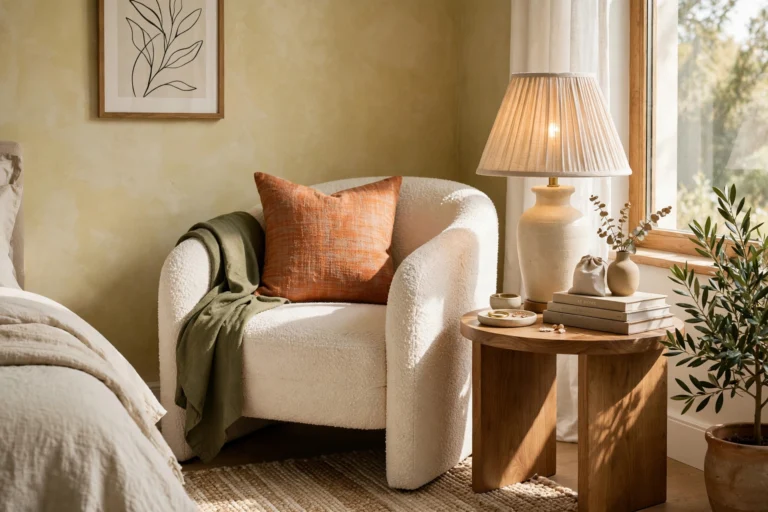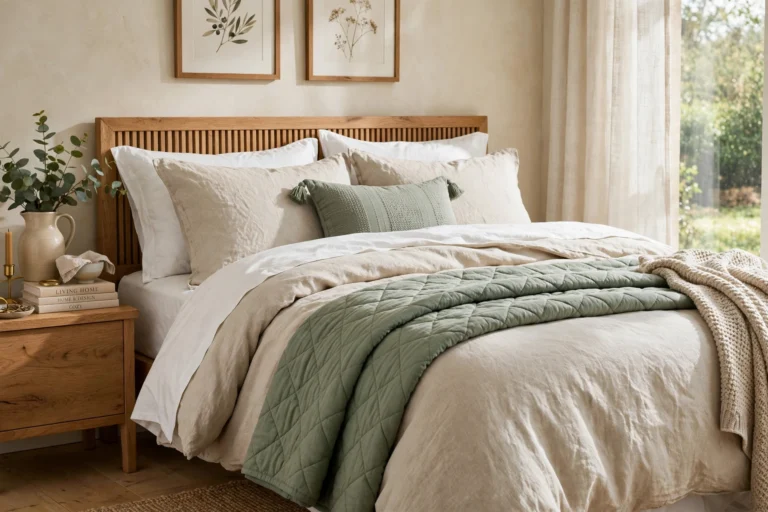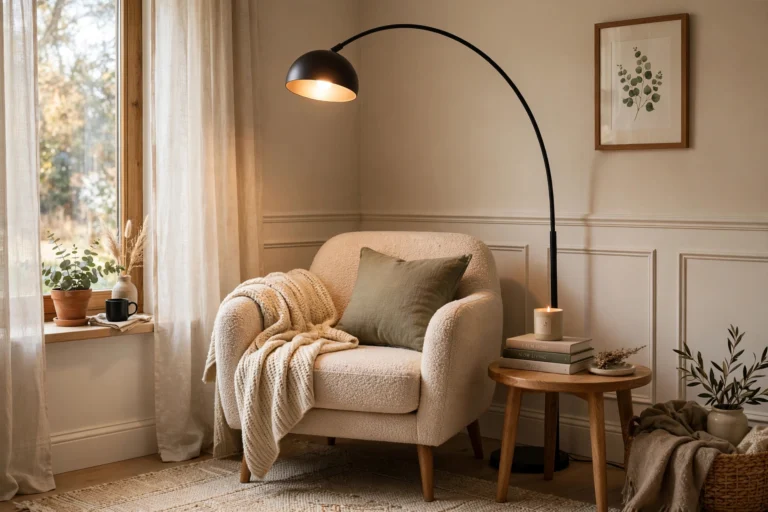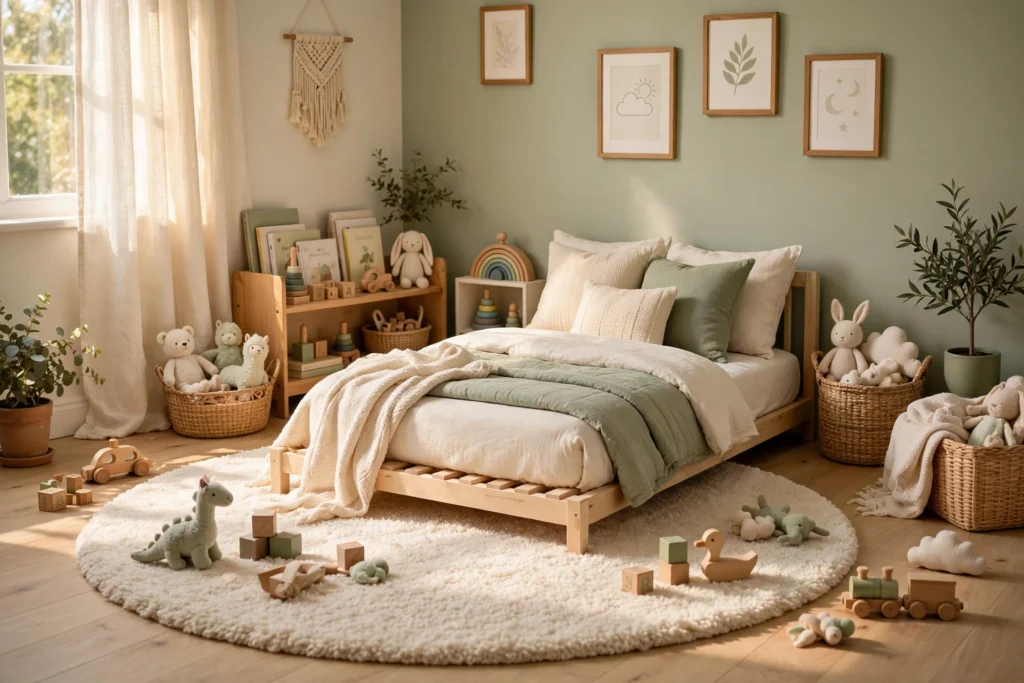

The leap from nursery to toddler bedroom is a big one — for them and for you. Suddenly the room needs to handle a tiny person with big opinions, endless energy, and brand-new climbing skills. The goal is a space that feels like a cozy upgrade, not a baby room they outgrew overnight.
These toddler bedroom design ideas put safety first without sacrificing sweetness: low beds they can climb into, storage they can actually use, colors that calm the chaos, and details that make the room feel like theirs. Here’s how to build a first big-kid room that’s as safe as it is sweet.
1. Switch to a Low Toddler Bed or Floor Bed
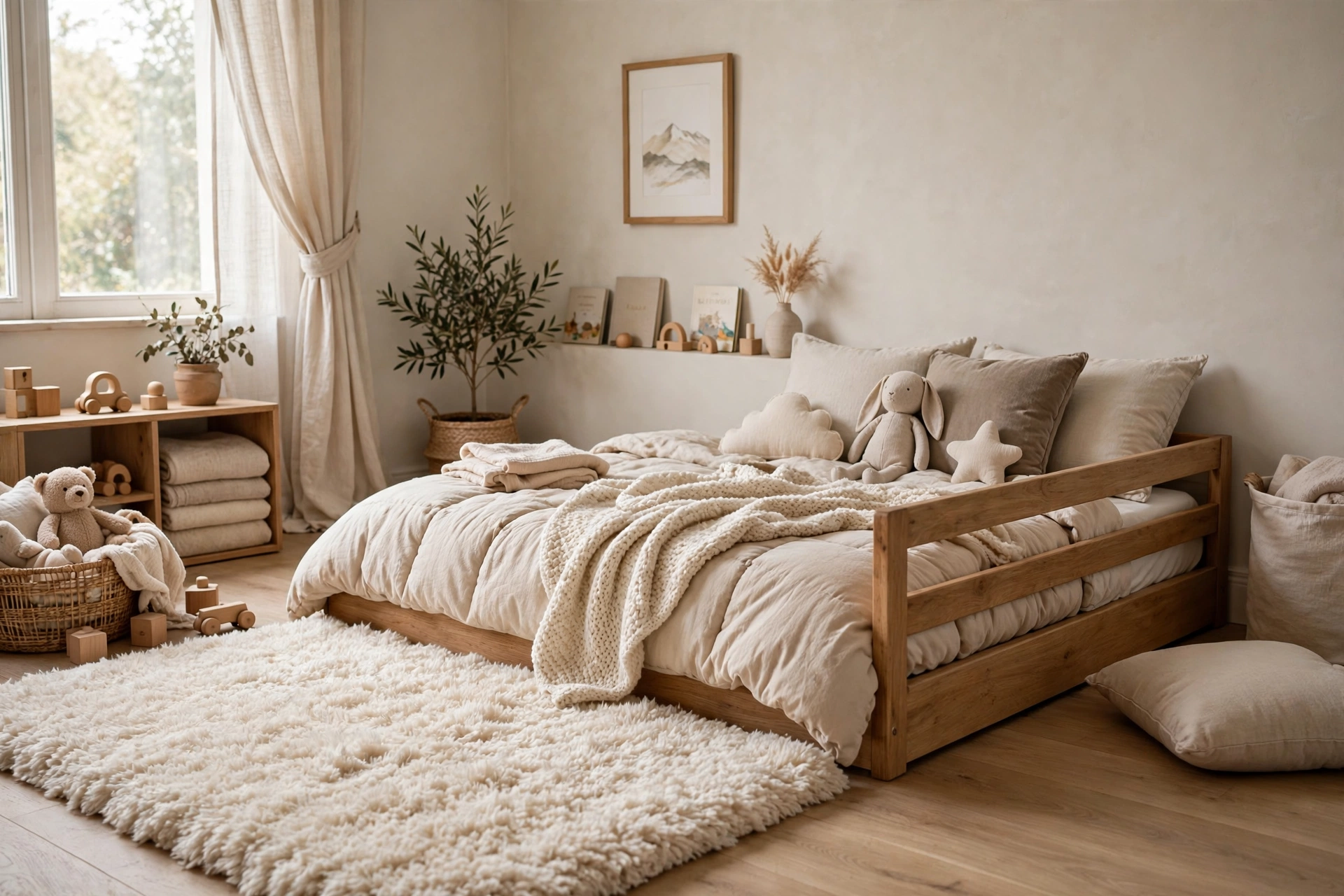
The centerpiece decision of any toddler bedroom is the bed, and low is the way. A toddler bed with guard rails, a convertible crib in toddler mode, or a simple floor bed (mattress on a low platform or directly on a rug) lets your little one climb in and out safely — no midnight thuds from crib-climbing escapes.
Floor beds deserve special mention: they’re the safest option, they empower independence, and they look beautifully intentional styled with layered bedding and cushions. Whichever route you choose, keep the landing zone soft with a rug beside the bed. Apartment Therapy’s roundup of baby nursery ideas covers the crib-to-bed transition beautifully — many of the same gentle principles apply as your baby becomes a toddler.
2. Anchor Everything to the Wall
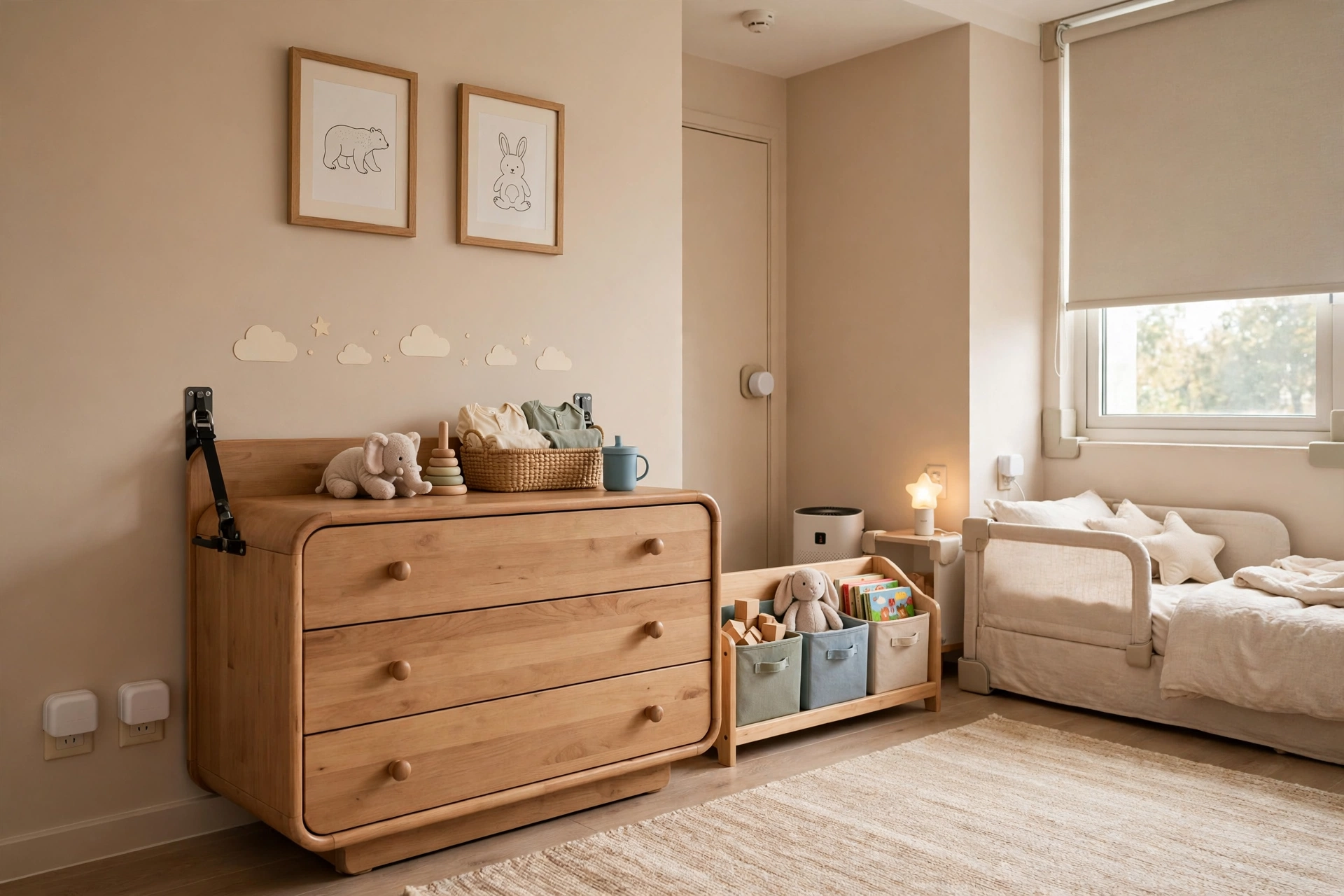
Toddlers climb. It’s not a question of if but when — the dresser becomes a ladder, the bookshelf a mountain. Every piece of freestanding furniture in a toddler bedroom must be anchored to wall studs with anti-tip straps: dressers, bookshelves, wardrobes, even the nightstand. This is the single most important safety step in the room.
Do a full-room audit at toddler eye level: cover outlets, secure cords (blinds, lamps, monitors) well out of reach, and remove anything heavy from high shelves. Choose furniture with rounded corners or add corner guards. A beautiful toddler room means nothing if it isn’t a safe one — anchor first, decorate second.
3. Choose Soft, Calming Colors
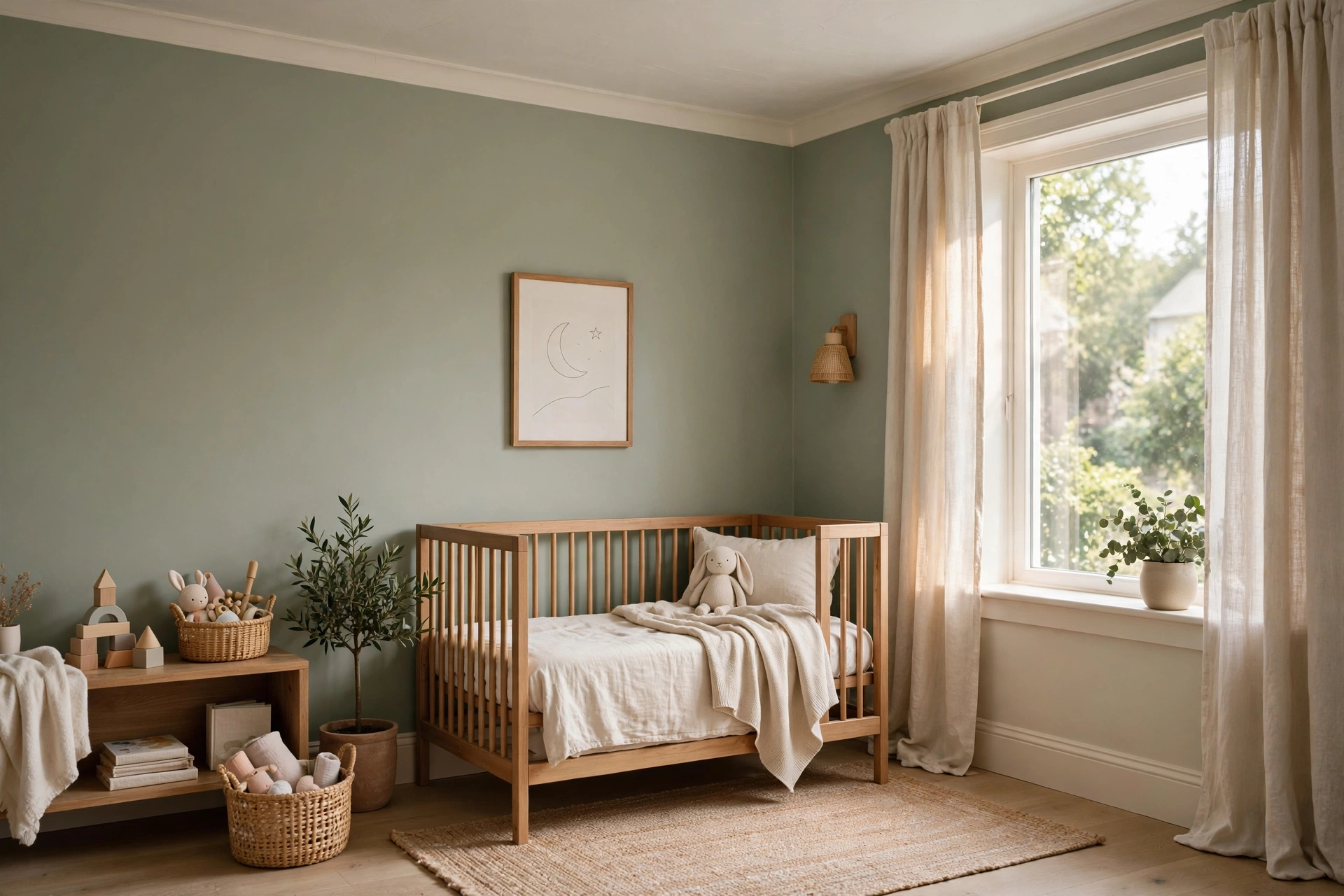
Toddlerhood is stimulation overload, so the bedroom should be the calm in the storm. Soft, muted colors — warm white, pale sage, dusty blue, gentle blush, soft butter — create a restful backdrop that helps with the hardest part of toddler life: sleep. Save the bright primaries for toys and books, which bring their own color.
If your toddler has opinions (they will), let them choose between two parent-approved palettes rather than the whole rainbow. An accent wall in their favorite soft color, or colorful bedding they picked themselves, gives ownership without chaos. The Spruce’s cozy bedroom ideas show how layered neutrals and soft textures make small bedrooms feel like a warm hug — exactly the feeling a toddler room needs.
4. Add a Nightlight for Brave Sleepers
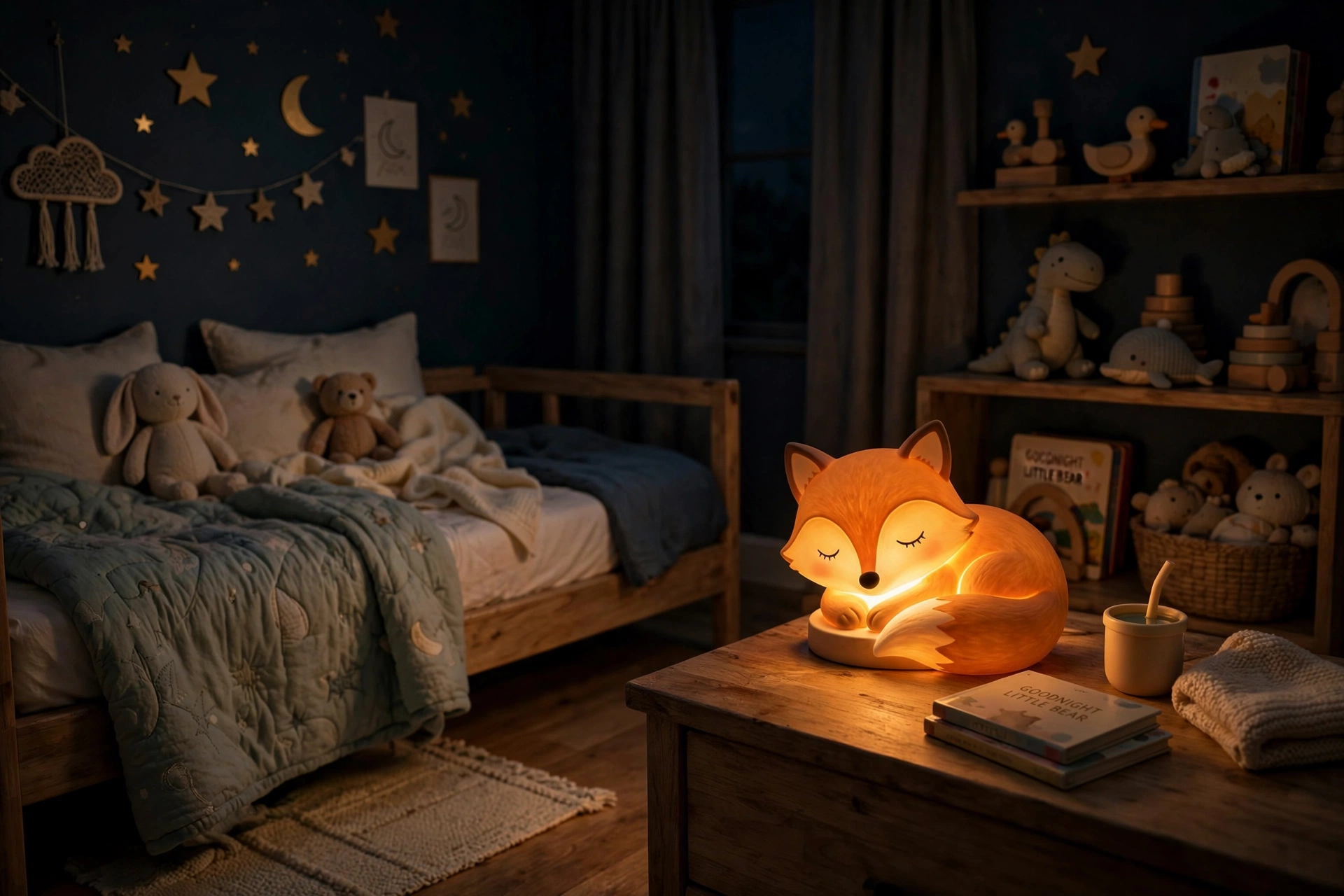
The dark gets bigger when you’re small. A warm, dim nightlight turns the toddler bedroom from scary to safe after lights-out — enough glow to see familiar shapes, dim enough not to disrupt sleep. Plug-in warm LEDs, cute animal-shaped rechargeable lights, or a projector that casts stars on the ceiling all do the job.
Place it low, near the floor or on a low shelf, not right by the pillow — you want ambient reassurance, not a spotlight. Avoid blue-white light, which suppresses melatonin; amber or warm white is the sleep-friendly choice. Many parents find the right nightlight is the difference between a toddler who calls out in fear and one who rolls over and resettles alone.
5. Keep Toys at Toddler Height
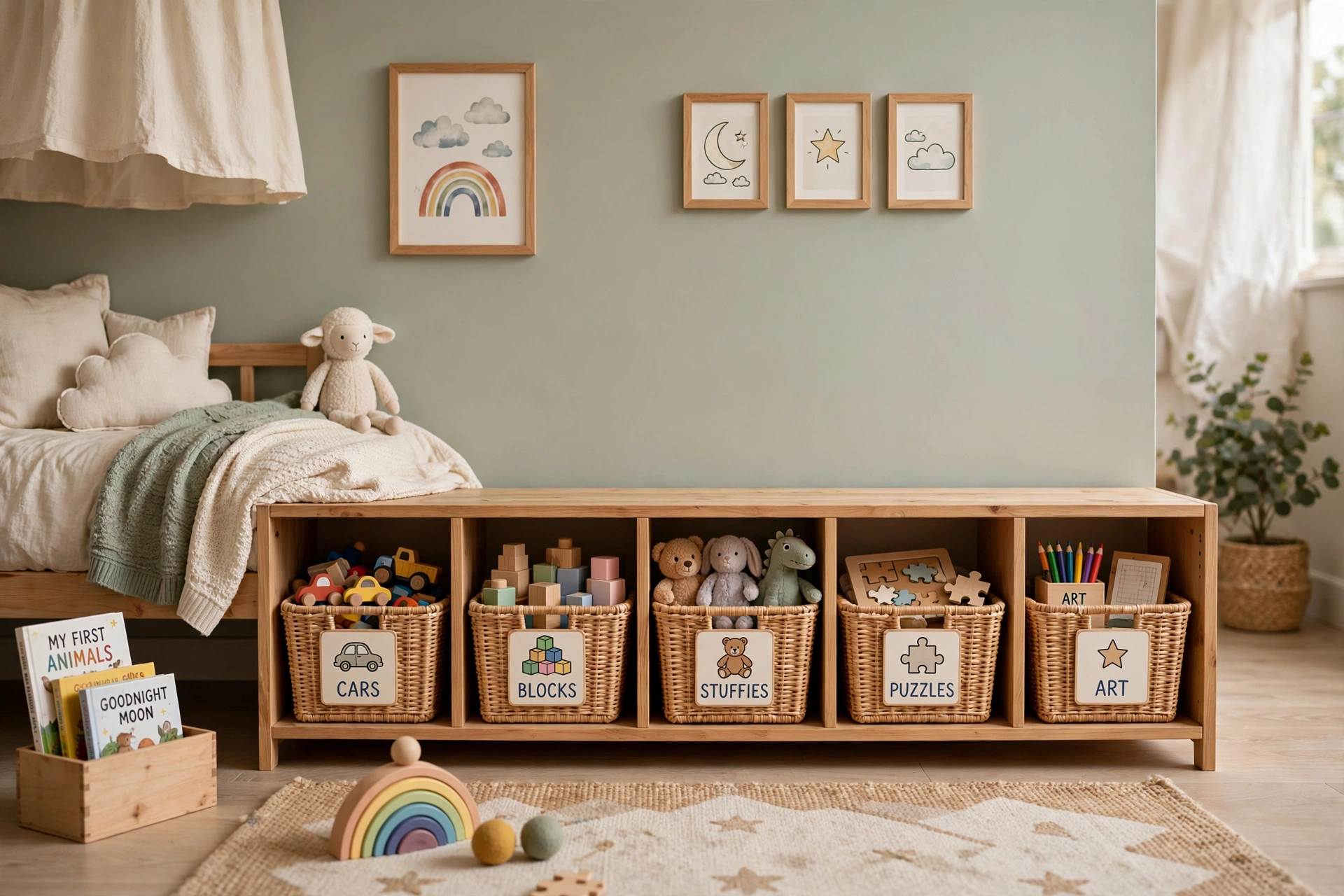
A toddler bedroom works when the toddler can actually use it independently. That means toy storage at their height: low open shelves, floor-level baskets, a small bookcase they can reach. When toys are accessible, toddlers play independently longer — and they’re far more likely to put things back.
Limit what’s out: a rotating selection of 8 to 10 toys beats an overwhelming wall of options. Use picture labels on bins so pre-readers can sort by image. Our nursery design ideas introduced the same reachable-storage principle for babies — it only matters more once they can walk, climb, and choose.
6. Add a Small Reading Corner
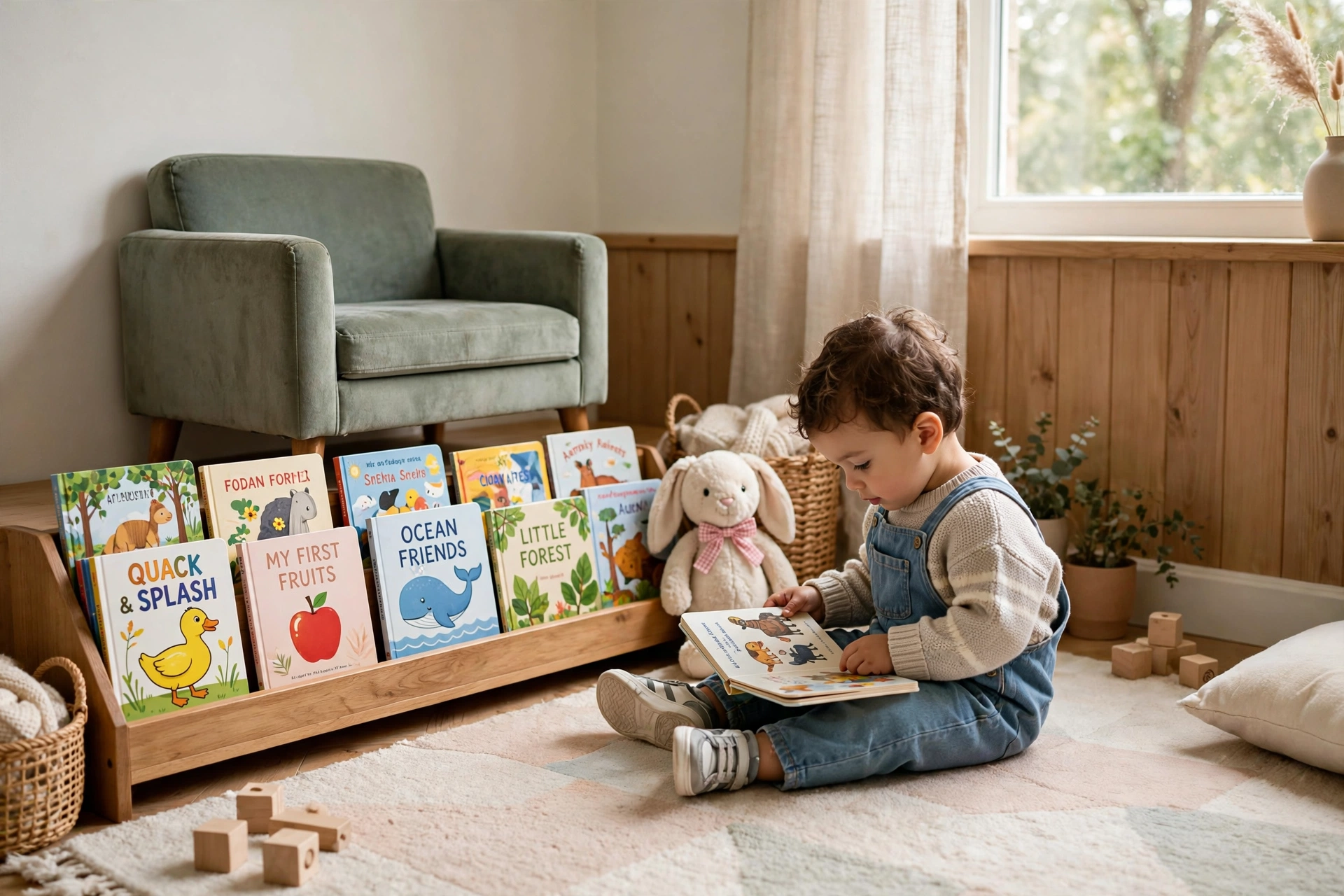
Toddlers may not read yet, but book love starts now. A small reading corner — a low bookshelf with books facing out, a floor cushion or tiny armchair, a stuffed reading buddy — makes books a daily habit rather than a bedtime chore. Cover-out display is key: toddlers choose books by their covers.
Keep a small basket of board books in the corner and rotate the selection weekly to keep it fresh. Add a soft rug to define the spot and a small lamp for evening stories. This corner costs almost nothing and pays off in language development, calm-down routines, and the sweetest photos you’ll ever take.
7. Use Washable Everything
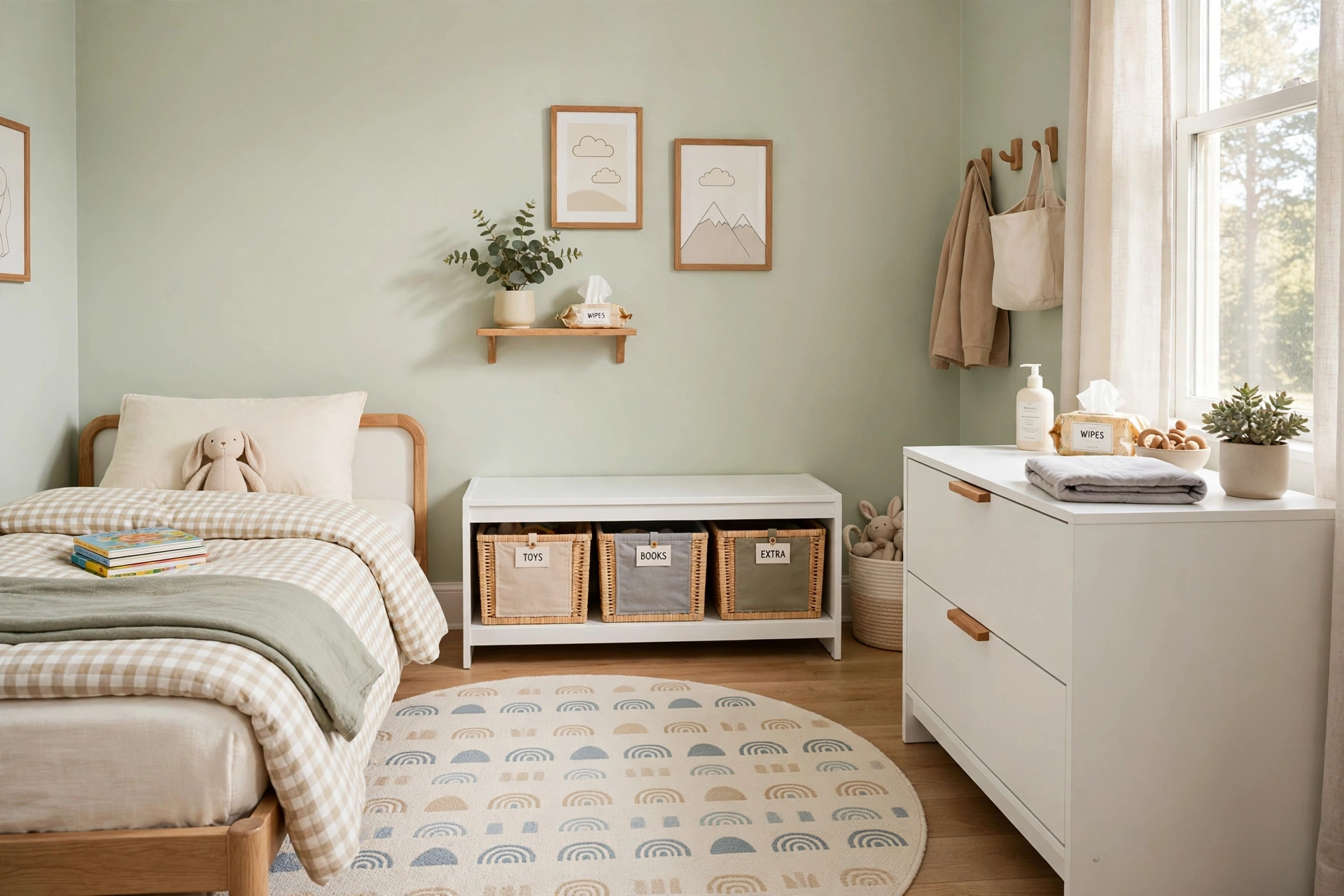
Toddlerhood is gloriously messy — that’s the job description. The toddler bedroom should be built for it: washable paint (satin or eggshell sheen) on walls, machine-washable rugs and bedding, wipeable mattress protector (non-negotiable), and washable cushion covers. If it can’t survive the washing machine, it doesn’t belong in this room.
This isn’t pessimism; it’s freedom. When the inevitable marker masterpiece or middle-of-the-night accident washes out, nobody cries — including you. Save the dry-clean-only textiles for the grown-up rooms. A toddler bedroom designed for real life stays beautiful longer because mess never becomes damage.
8. Add Blackout Curtains for Naps and Bedtime
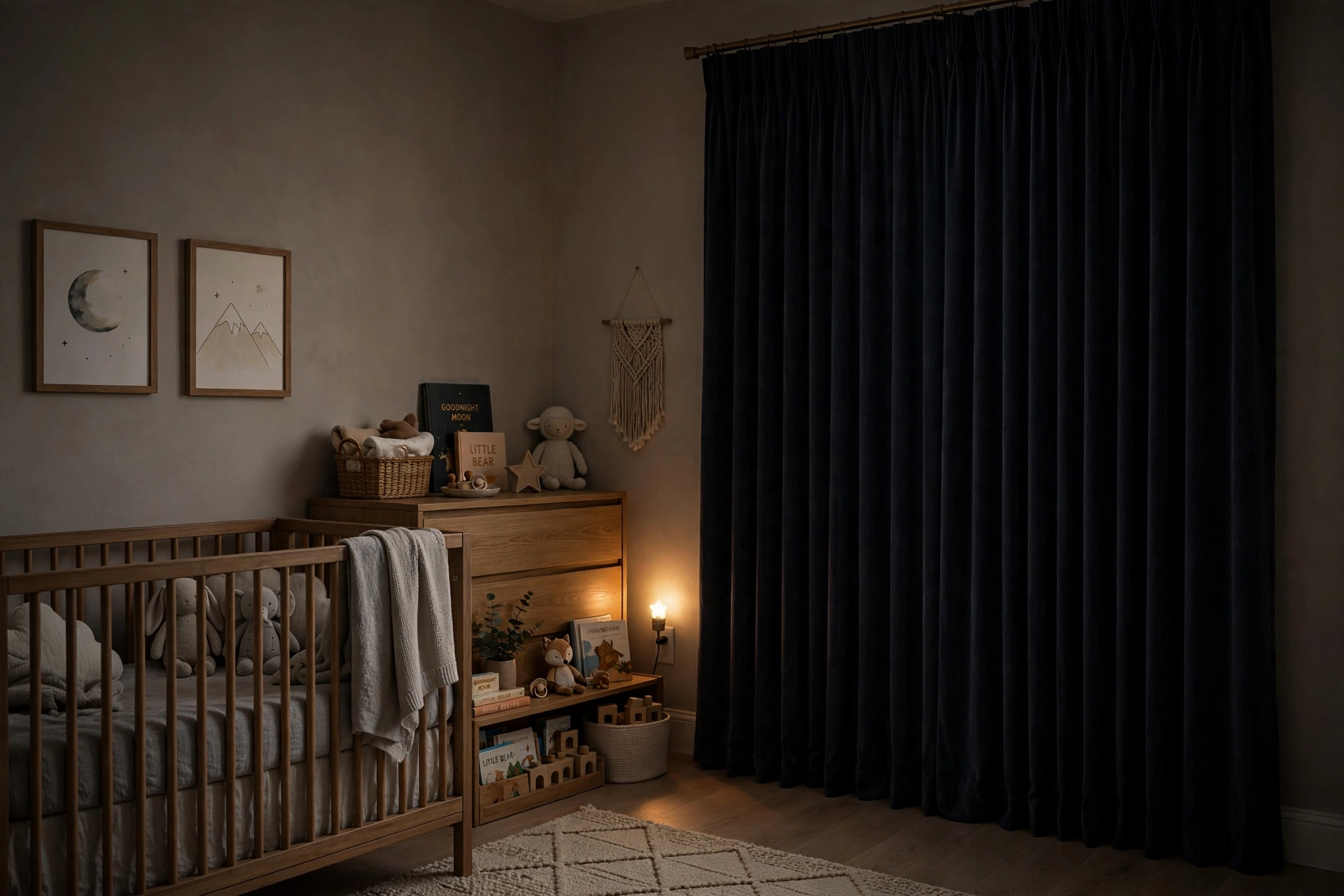
Sleep is sacred in toddlerhood — for them and for you — and light is sleep’s enemy. Quality blackout curtains or lined shades make naps possible in bright afternoons and keep summer’s 5 a.m. sunrise from starting the day absurdly early. Hang them wide and high so they look generous even when drawn.
Layer sheers underneath for daytime softness, so the room isn’t a cave during playtime. For the child who fights bedtime, the ritual of drawing the curtains becomes a sleep cue: curtains closed, room darkens, day is done. It’s one of the highest-impact toddler bedroom design ideas for the whole family’s wellbeing.
9. Create Cozy Bedding They Love
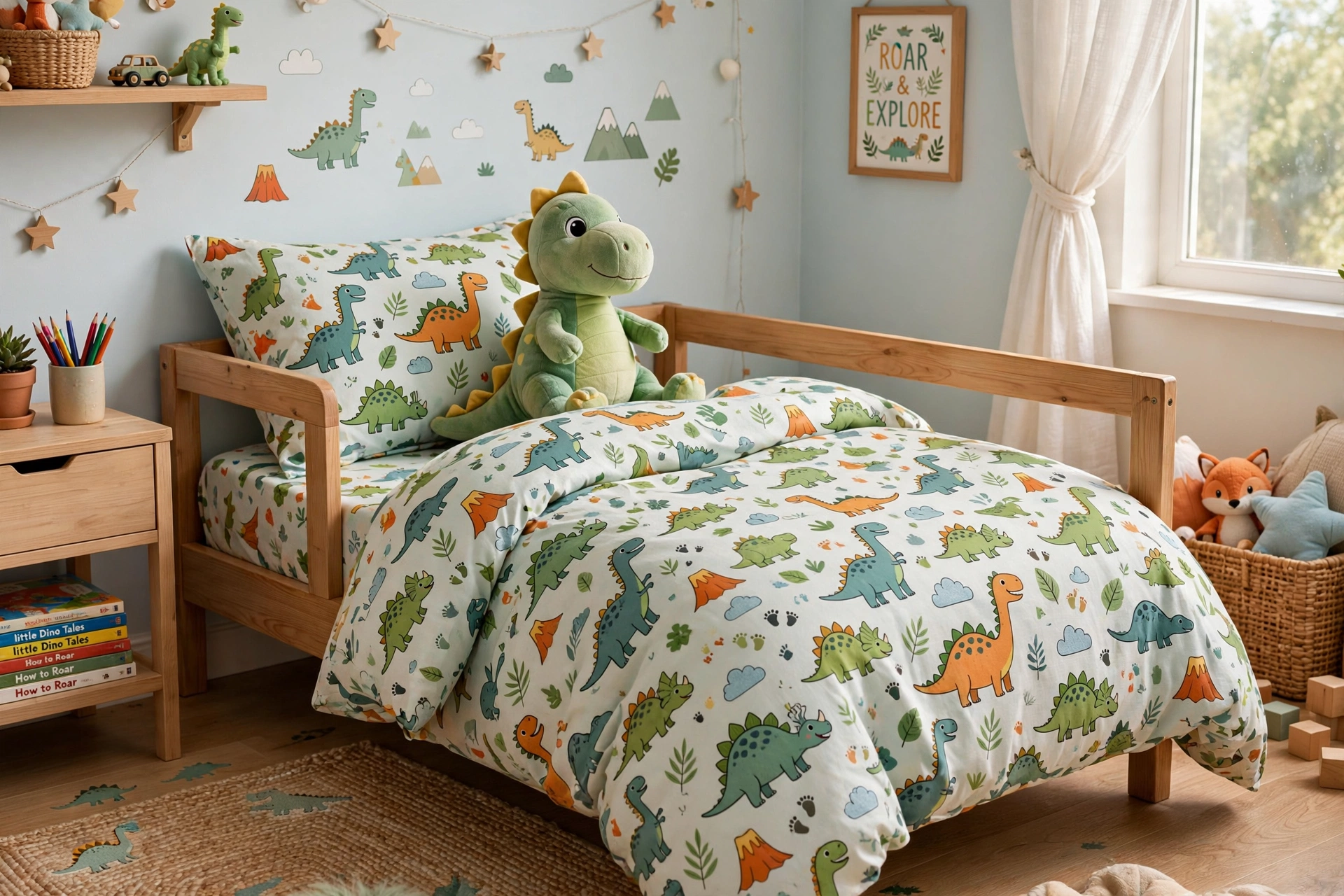
Bedding a toddler is excited about makes bedtime easier — that’s not marketing, it’s parenting physics. Let them choose between a few parent-approved options: dinosaurs, stars, soft animals, their favorite color. A toddler who loves their bed goes to it more willingly.
Keep it safe and simple: a fitted sheet, a light quilt or blanket (no heavy duvets for small toddlers), and one beloved stuffed companion. Skip the mountain of decorative pillows — they’re just obstacles at bedtime and projectiles at 6 a.m. Washable, soft, and chosen by the small human who sleeps in it: that’s the whole formula.
10. Add Soft Flooring for Tumbles
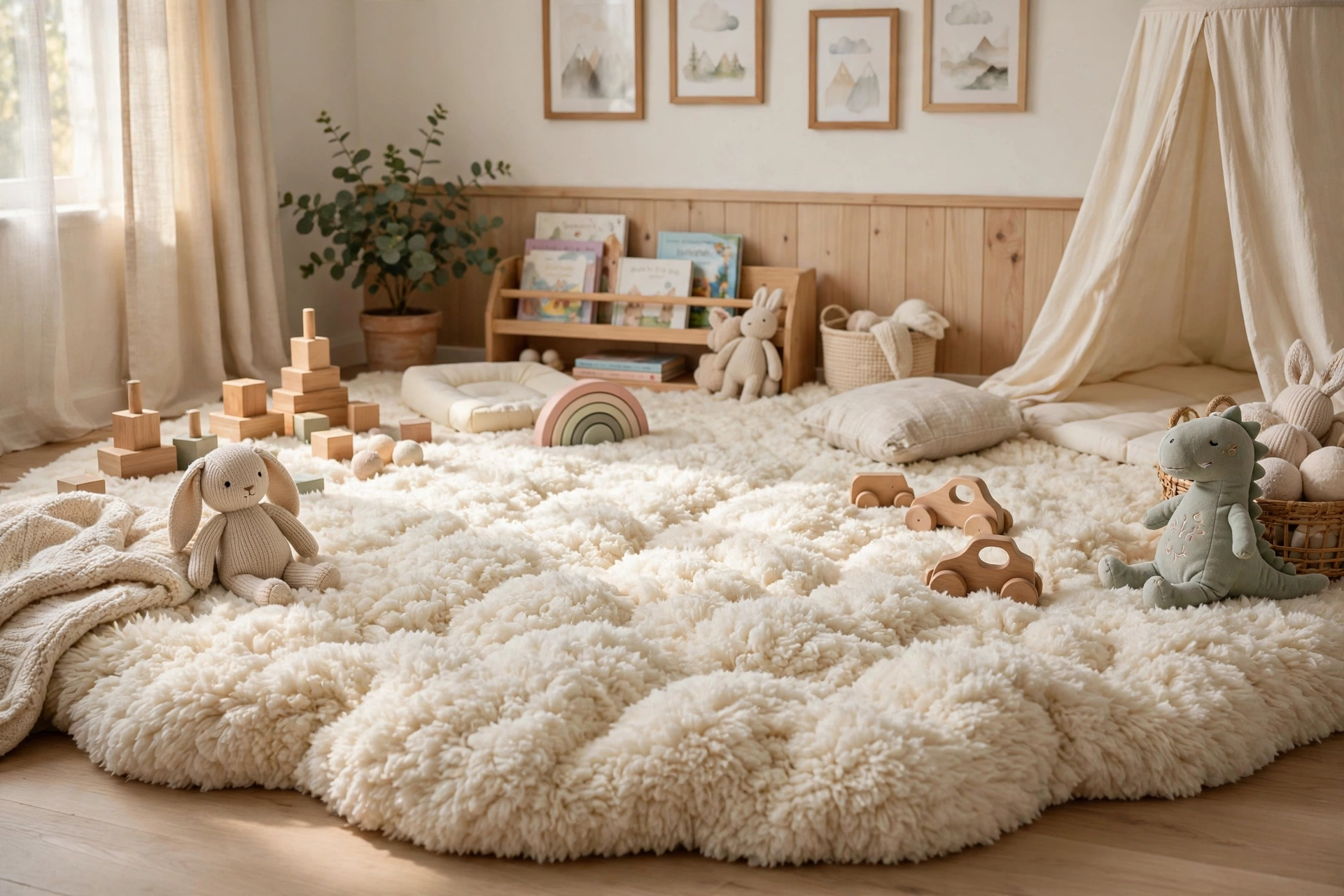
Toddlers fall. A lot. The bedroom floor should be ready: a large soft rug over hard flooring, foam play mats in the play zone, or wall-to-wall carpet if you’re renovating. The goal is that the inevitable tumbles end in giggles, not tears — and that 6 a.m. wake-up stampedes don’t echo through the house.
Choose low-pile or washable rugs that are easy to clean and don’t trip small feet. Anchor everything with non-slip pads — a sliding rug under a running toddler is worse than no rug at all. For the flooring-plus-play thinking in older kids’ spaces, our kids’ bedroom design ideas carry the same soft-landing logic into bigger-kid rooms.
11. Hang Art at Their Eye Level
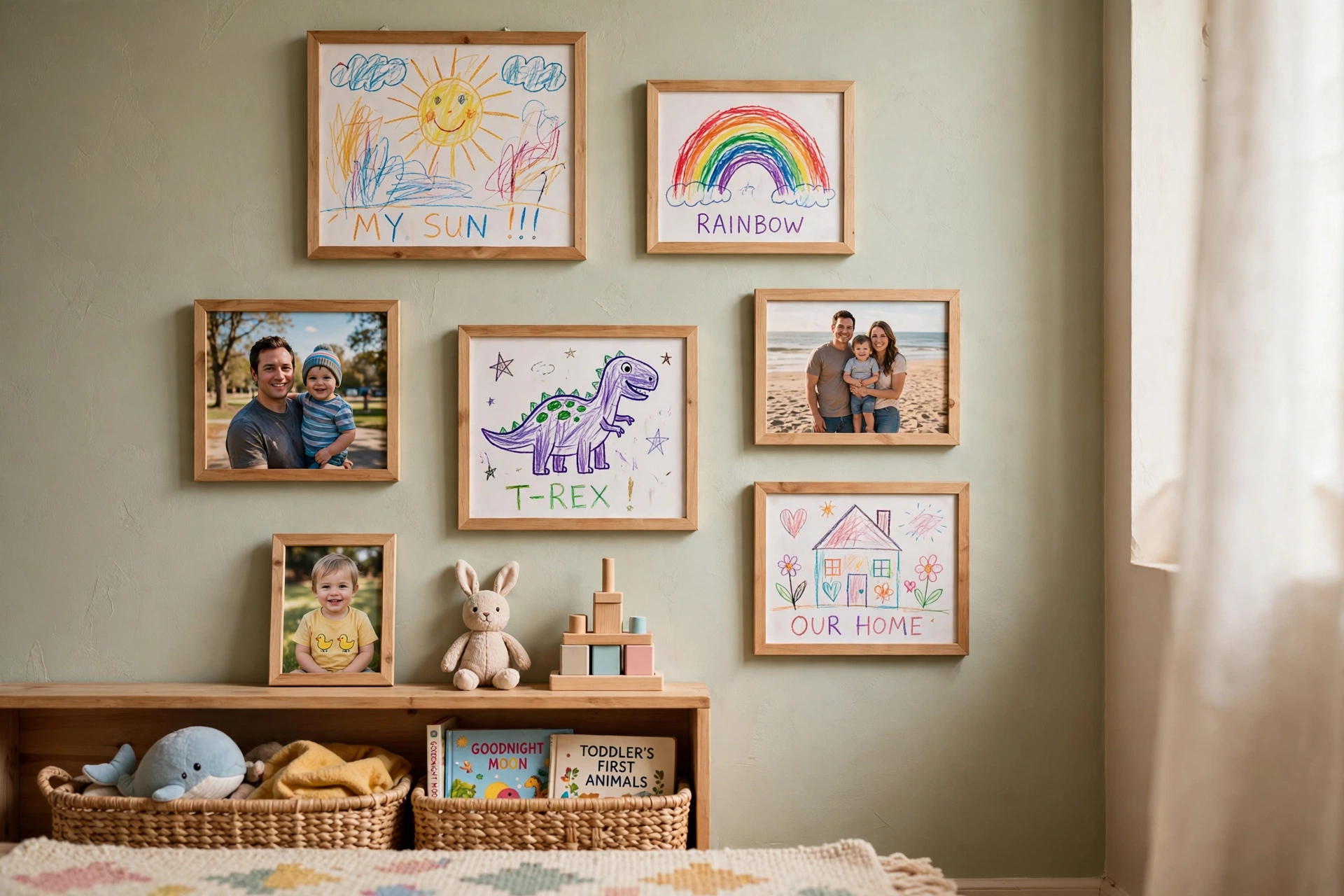
Adult-hung art is invisible to toddlers — literally above their sightline. Hang their art, photos, and prints at toddler eye level (around 36 to 40 inches from the floor) and the room suddenly belongs to them. Their own drawings in simple frames, family photos, a growth chart, an alphabet or animal print they love.
Use lightweight frames with shatterproof “glass” (acrylic) and secure hanging hardware — nothing heavy, nothing sharp, nothing within pulling-down reach that’s fragile. A gallery wall at their height is a daily confidence boost: their things, their people, their room, all visible and celebrated.
12. Add a Small Table and Chair Set
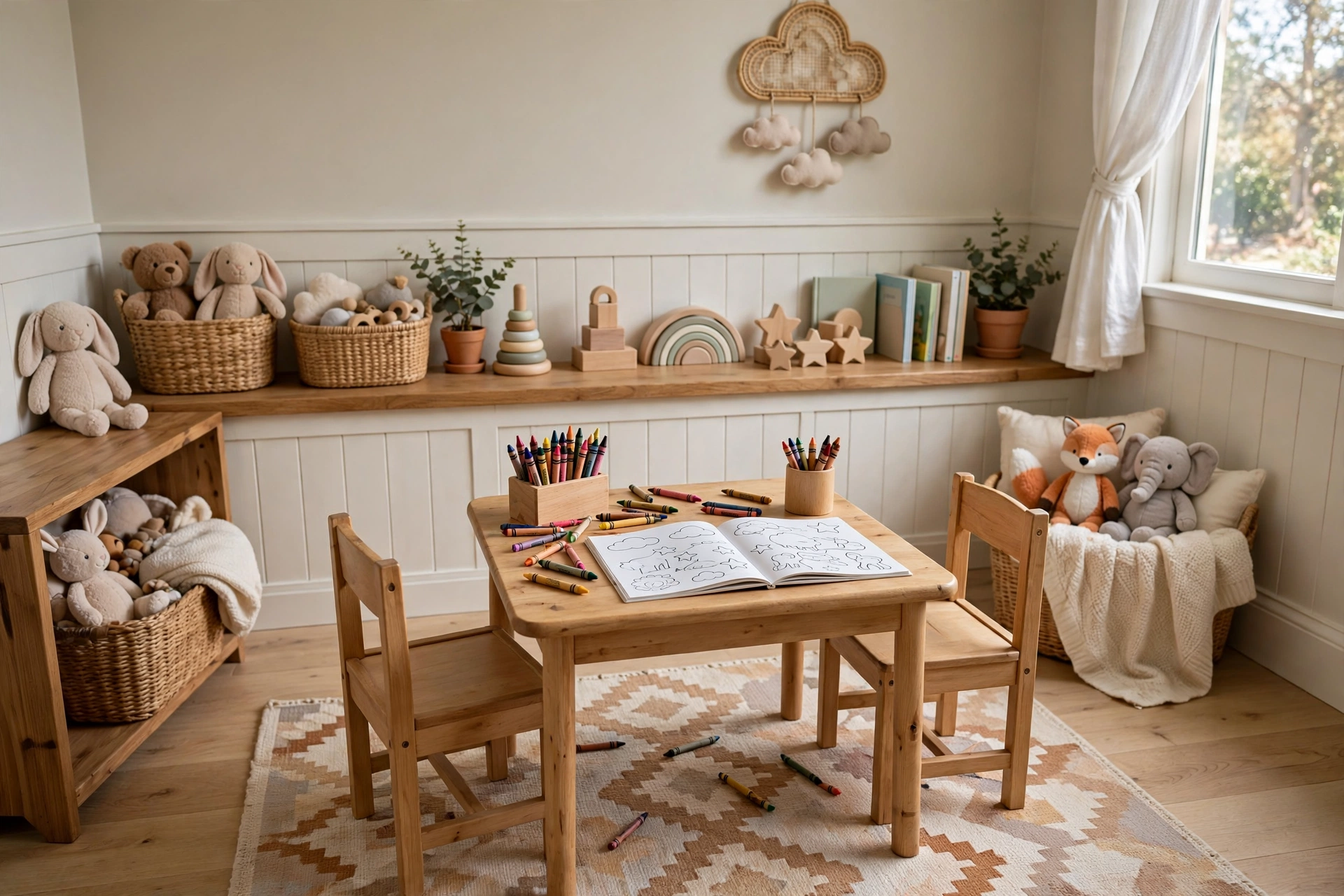
A toddler-sized table and chairs is mission control for coloring, puzzles, snacks, and tea parties with stuffed guests. Choose a sturdy set at the right height — feet flat on the floor when seated — with rounded corners and a wipeable top. It anchors a play zone within the bedroom and keeps creative mess contained.
Stock it simply: crayons, coloring books, a puzzle or two, playdough. The table also serves the room’s future — it becomes the homework desk in a few years with zero changes. Small furniture that fits the child (rather than the child adapting to adult furniture) is the quiet secret of rooms toddlers actually enjoy.
13. Use a Toddler-Height Closet Rod
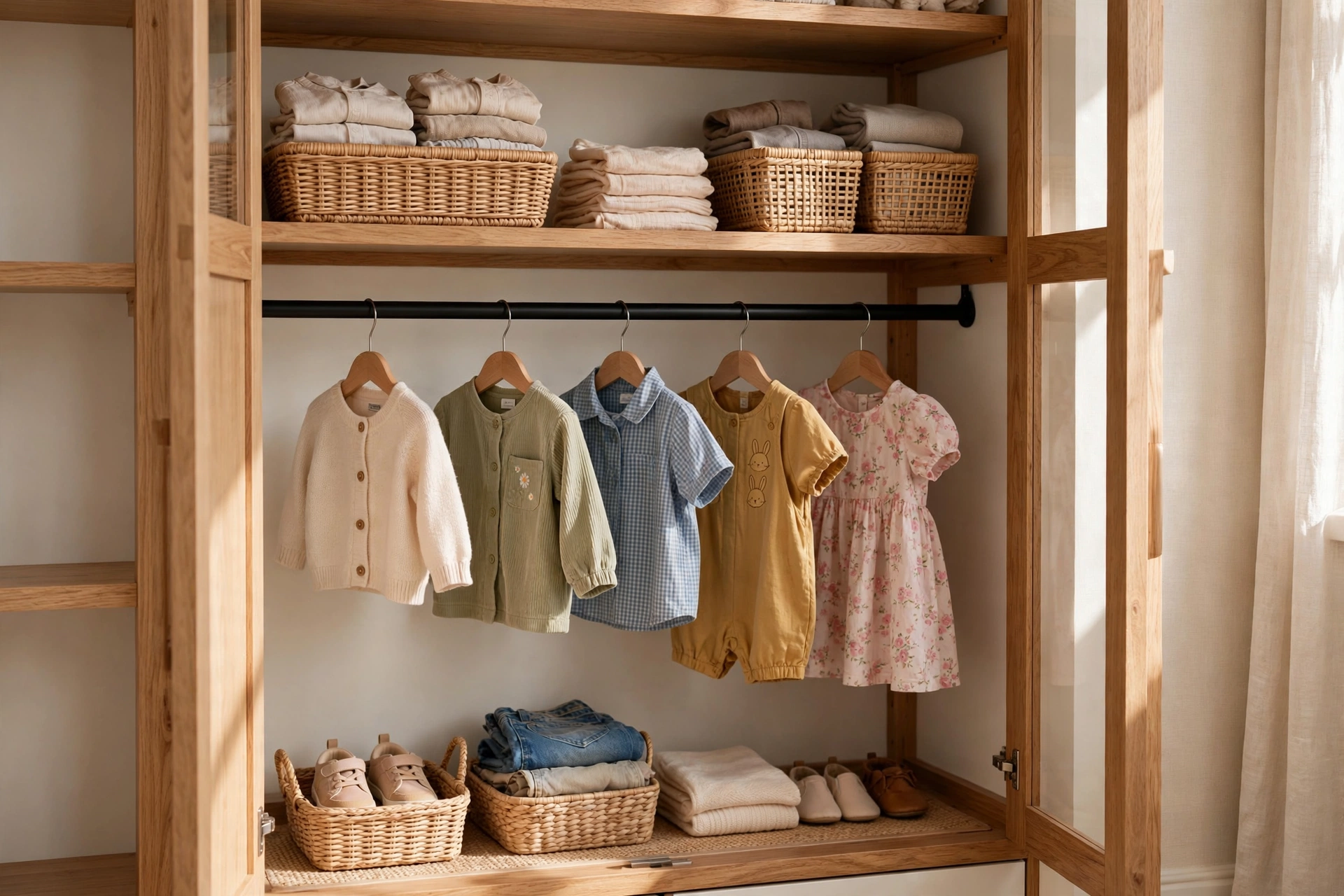
Independence blooms when toddlers can dress themselves, and a closet rod at their height makes it possible. Add a second, lower rod in the closet (tension rods work in rentals) with a small selection of outfits — two or three choices, not thirty. Getting dressed becomes a proud solo achievement instead of a morning battle.
Keep the rest of the clothes stored up high, out of the daily rotation. Add low hooks for tomorrow’s outfit and a small hamper they can reach — the whole getting-ready routine becomes theirs. It’s a tiny carpentry project with an outsized payoff in autonomy and smoother mornings.
14. Keep the Room Clutter-Free and Simple
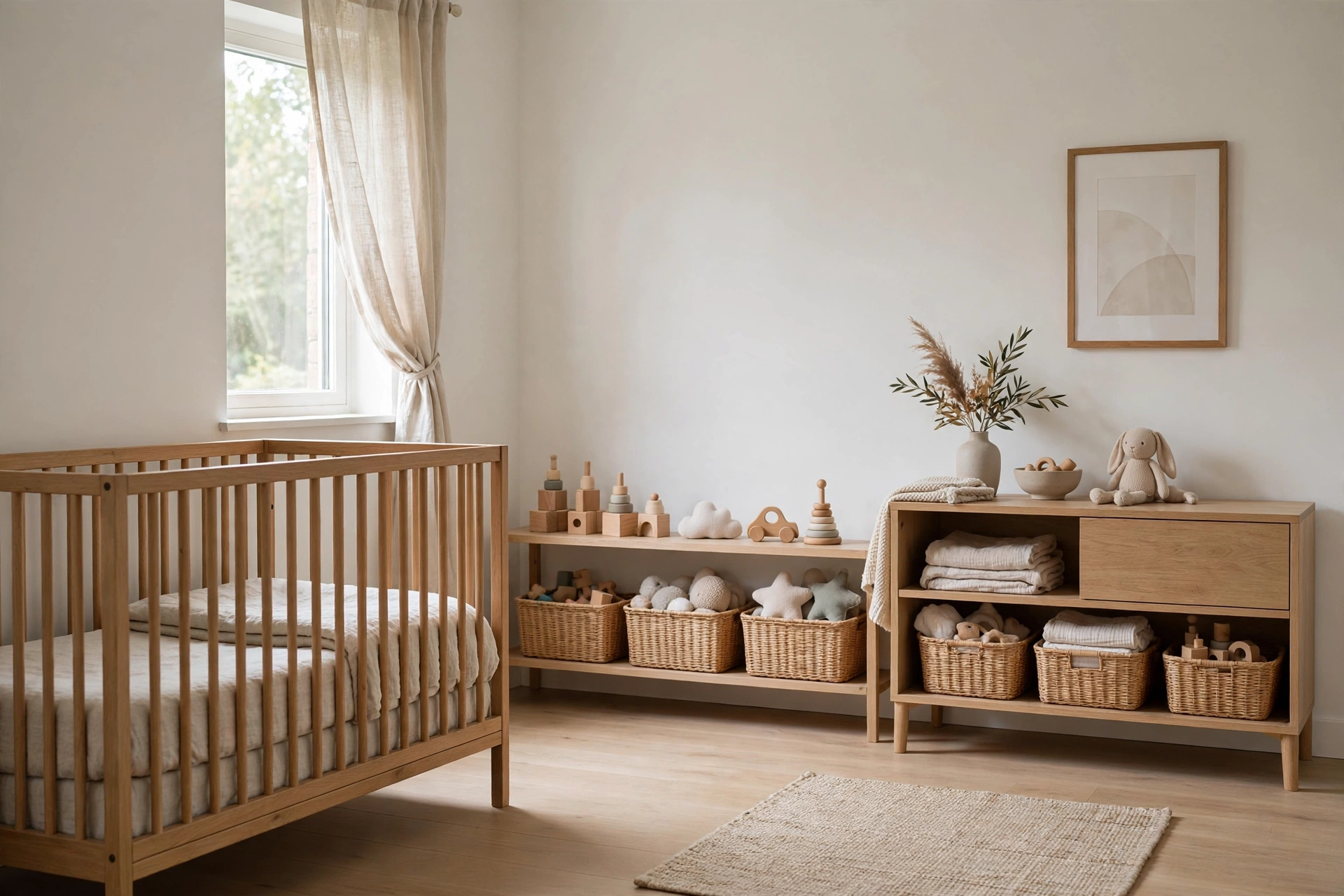
Toddler brains are busy enough without visual chaos. A calm, relatively minimal toddler bedroom — clear floor space, limited toys out, clean surfaces — actually promotes better play and easier sleep. Overstuffed rooms overstimulate; simple rooms invite focus.
The method: everything has a labeled home, toys rotate (half stored away, swapped monthly), and a quick nightly reset returns the room to calm. Fewer choices mean less overwhelm at bedtime and more creative play during the day. Our kids’ bathroom design ideas apply the same edited-simplicity thinking to family spaces — calm systems work everywhere.
15. Add Personal Touches That Grow with Them
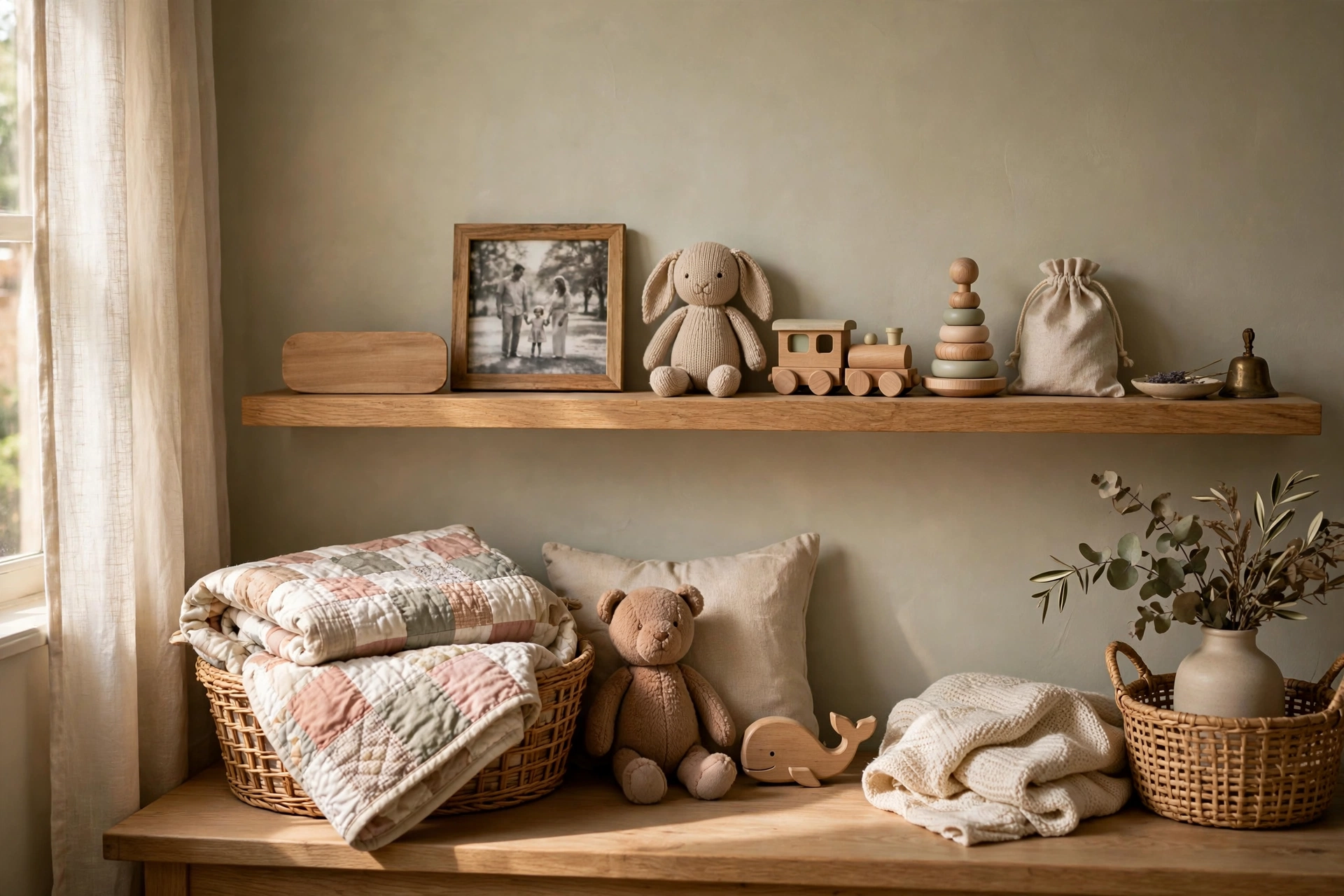
The sweetest toddler bedrooms have soul: their name on the wall, the quilt grandma made, photos of their people, the stuffed animal that’s been there since day one. These personal touches make the room feel like theirs in a way no catalog-perfect design can.
Choose personal pieces that age well — a wooden name sign works at 2 and at 12; baby-specific decor doesn’t. Leave room for the room to collect its story: the first day of school photo, the art that gets too good to recycle, the trophy from the thing they love. A toddler bedroom finished with love is never really finished — and that’s exactly right.
Frequently Asked Questions
When should I move my toddler from a crib to a bed?
Most toddlers transition between 18 months and 3 years — when they start climbing out, or when the crib feels too small. Signs of readiness matter more than age. Make the new bed exciting (special bedding, a “big kid” ceremony) and keep the rest of the routine identical.
What is the safest bed for a toddler?
A low bed: a floor bed, a toddler bed with guard rails, or a crib converted to toddler mode. Keep the mattress low to the ground, the landing zone soft with a rug, and the room fully childproofed since they’ll now roam freely.
How do I toddler-proof a bedroom?
Anchor all furniture to walls, cover outlets, secure cords out of reach, use cordless window coverings, gate the doorway or add a door monkey, and remove choking hazards and heavy objects from low shelves. Think like a tiny, determined explorer.
What colors are best for a toddler bedroom?
Soft, calming colors — warm whites, pale sage, dusty blue, gentle blush. Bright colors are fine in small doses (bedding, art, toys) but keep the walls and large surfaces soothing to support sleep.
How do I get my toddler to stay in their new bed?
Consistency: same bedtime routine, a comfort object, a nightlight, and a toddler clock that shows when it’s okay to get up. Expect testing for a week or two — stay boring at 3 a.m. and the novelty of night-wandering fades.
Keep Exploring
The toddler bedroom is a bridge — from the nursery they slept in to the big-kid room they’ll grow into. Build it safe first, sweet second, and flexible always: low furniture, calm colors, reachable everything, and room for their personality to fill in the blanks.
Start with the bed and the anchoring, add the cozy layers, and let the room evolve as fast as they do. Because they will — and the best toddler bedroom is one that’s ready for whatever comes next.