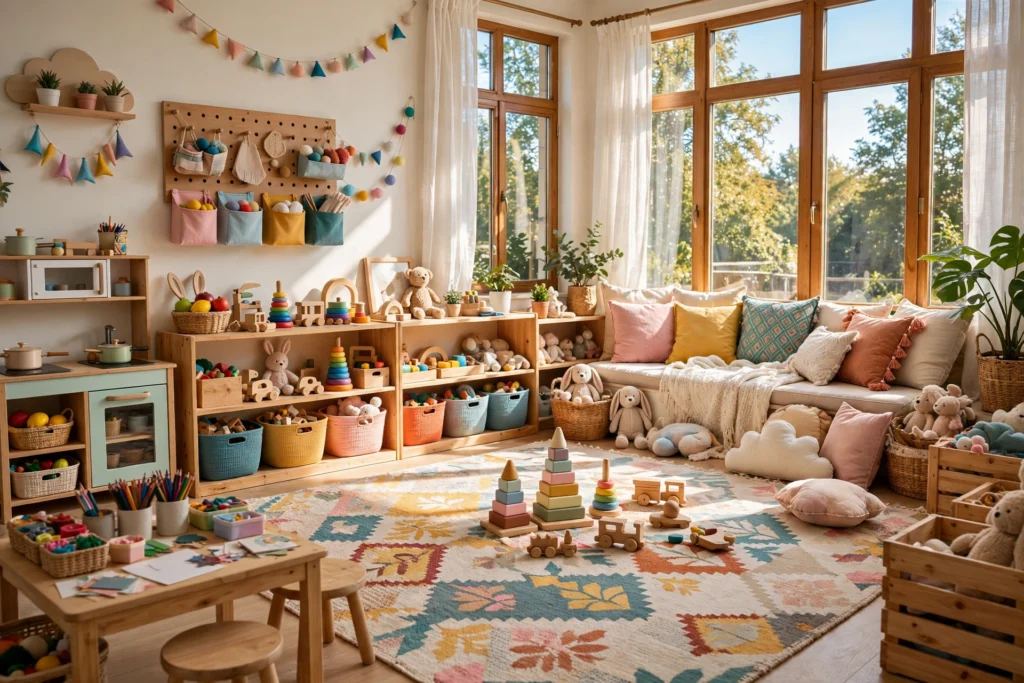

A great playroom isn’t a toy warehouse — it’s a launchpad. It’s where a cardboard box becomes a spaceship, where rainy afternoons turn into art studios, and where kids learn to create, imagine, and eventually clean up after themselves. The best playrooms invite play instead of just storing it.
These playroom design ideas balance fun with function: zones for different kinds of play, storage kids can actually use, surfaces that survive real childhood, and enough style that you don’t dread walking past the door. Here are fifteen ways to build a playroom your kids will love and you’ll love living with.
1. Create Zones for Different Kinds of Play
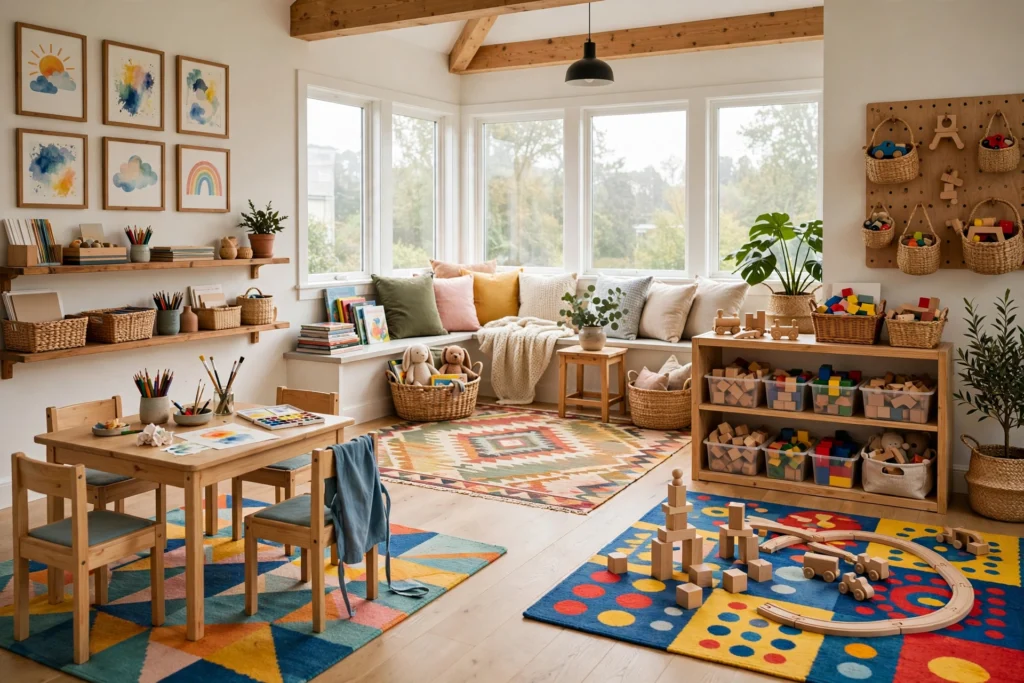
The single biggest upgrade you can make to a playroom is zoning — dividing the room into areas for different activities instead of one big toy sea. An art zone with a table and supplies, a reading corner with cushions, an active-play area with floor space, and a building zone with blocks or train tracks. Zones make the room feel bigger and make cleanup obvious: everything has a district.
Use rugs, shelving units, or even painter’s tape lines to define zones without walls. A low bookshelf turned perpendicular to the wall makes a perfect room divider that stores toys on both sides. Apartment Therapy’s family-room-turned-playroom transformation is a masterclass in zoning — distinct areas for active play, imaginative play, and learning, all in one family room.
2. Use Low Open Shelving Kids Can Reach
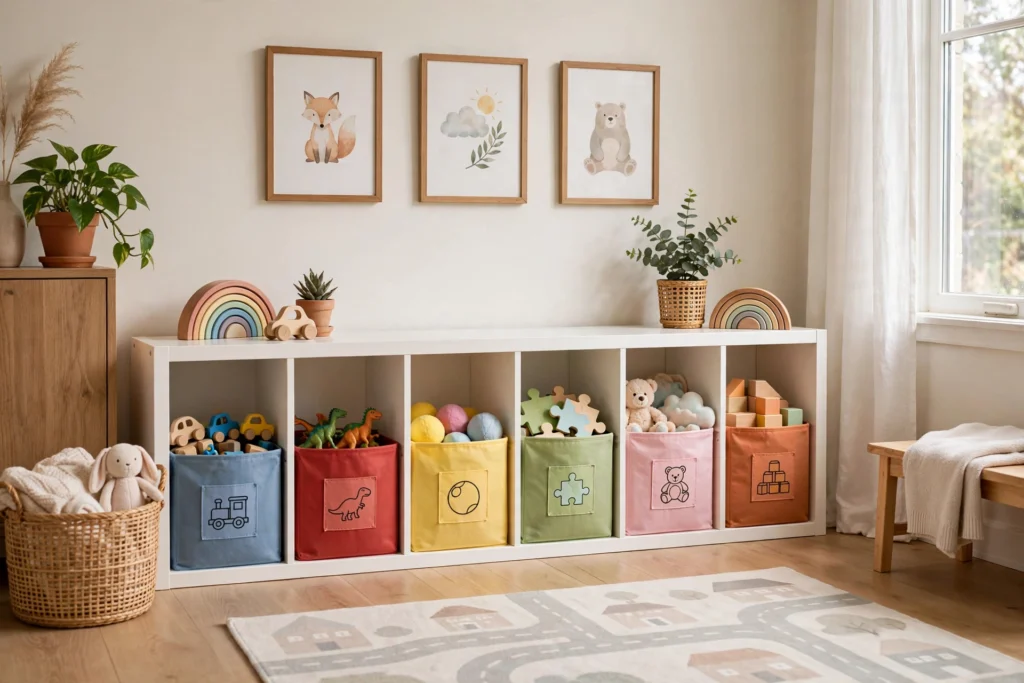
If kids can’t reach it, they won’t use it — and they definitely won’t put it back. Low open shelving at toddler-to-kid height is the foundation of a playroom that tidies itself. Cube shelves with bins, low bookcases with forward-facing book displays, and shallow trays for small toys all invite independent play.
Keep the styling simple: one category per cube, bins labeled with pictures for pre-readers and words for readers. Rotate toys seasonally — store half and swap every few months, and old toys feel brand new. The golden rule is that every shelf should be reachable and every bin liftable by the smallest regular user of the room.
3. Add a Reading Nook with Cushions
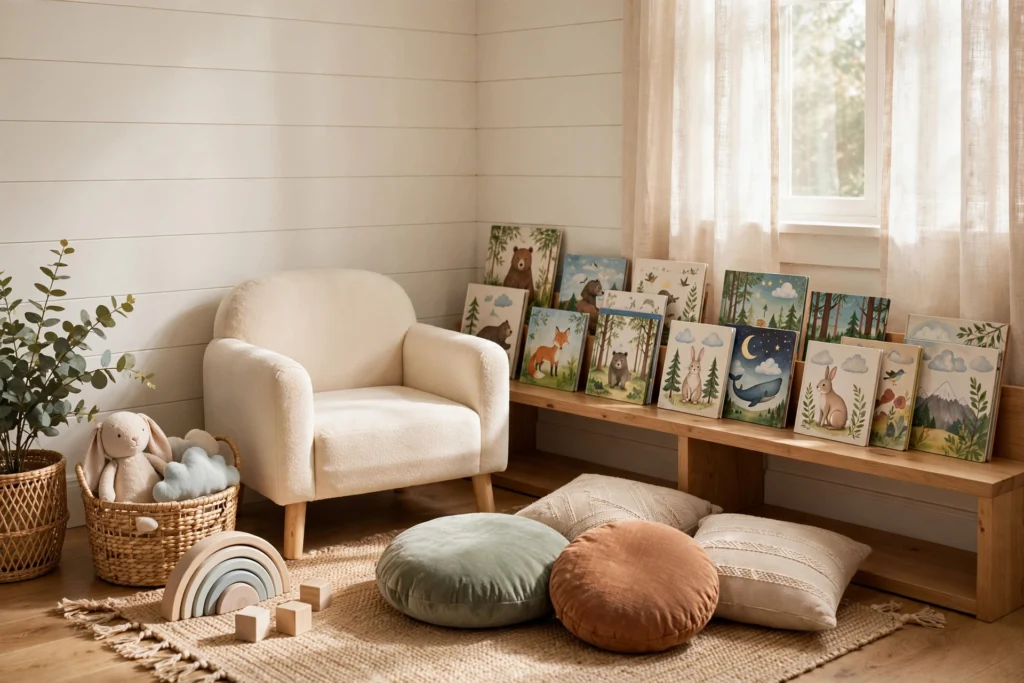
Every playroom needs a quiet counterweight to the chaos: a reading nook. It doesn’t take much — a corner, a pile of floor cushions or a small armchair, a basket of books, and good light. Kids who have a cozy reading spot use it, and it gives the room a calm anchor that balances the active zones.
Make it irresistible: a canopy draped over the corner, a soft rug, a stuffed animal or two, and books displayed cover-out so they invite grabbing. As kids grow, the nook evolves from picture-book pile to chapter-book retreat without changing a thing. It’s the corner of the playroom that you’ll photograph most.
4. Paint One Wall with Chalkboard or Magnetic Paint
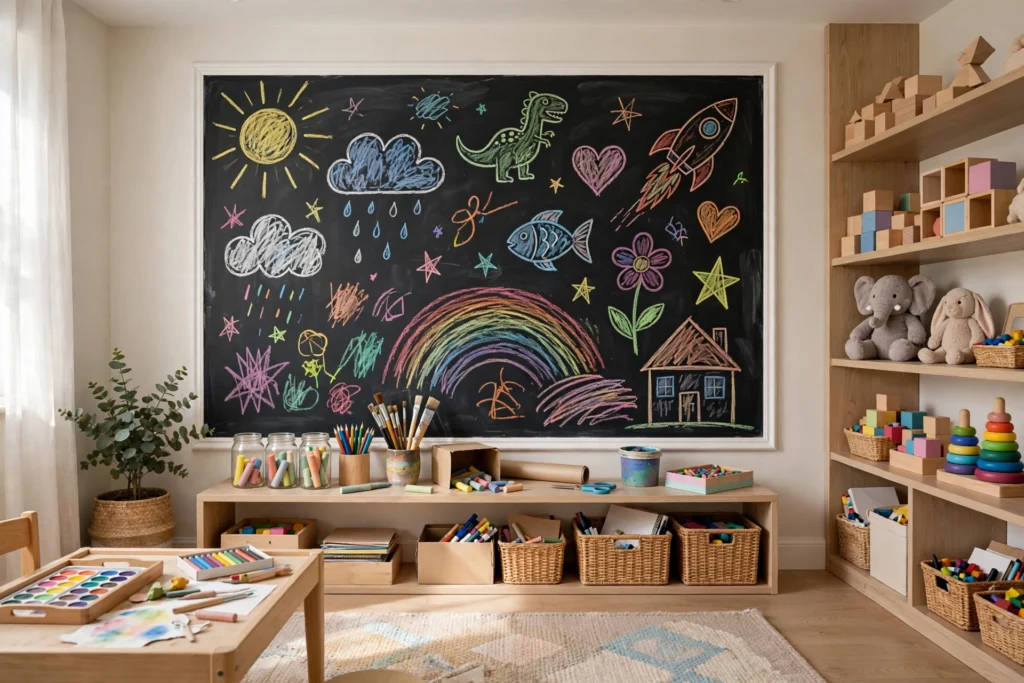
A chalkboard wall turns an entire wall into a canvas — and saves every other wall in the house. One accent wall in chalkboard paint (classic black or a fun color like navy or green) gives kids a giant drawing surface that wipes clean. Frame it with trim for a finished look rather than a random black rectangle.
Magnetic primer under regular paint is the subtler sibling: the wall looks normal but holds magnetic letters, art, and photos. Either way, dedicate the creative wall near the art zone and keep chalk, erasers, and magnets in a caddy hung nearby. When the chalkboard phase passes, it’s just one wall to repaint.
5. Choose a Big Washable Rug
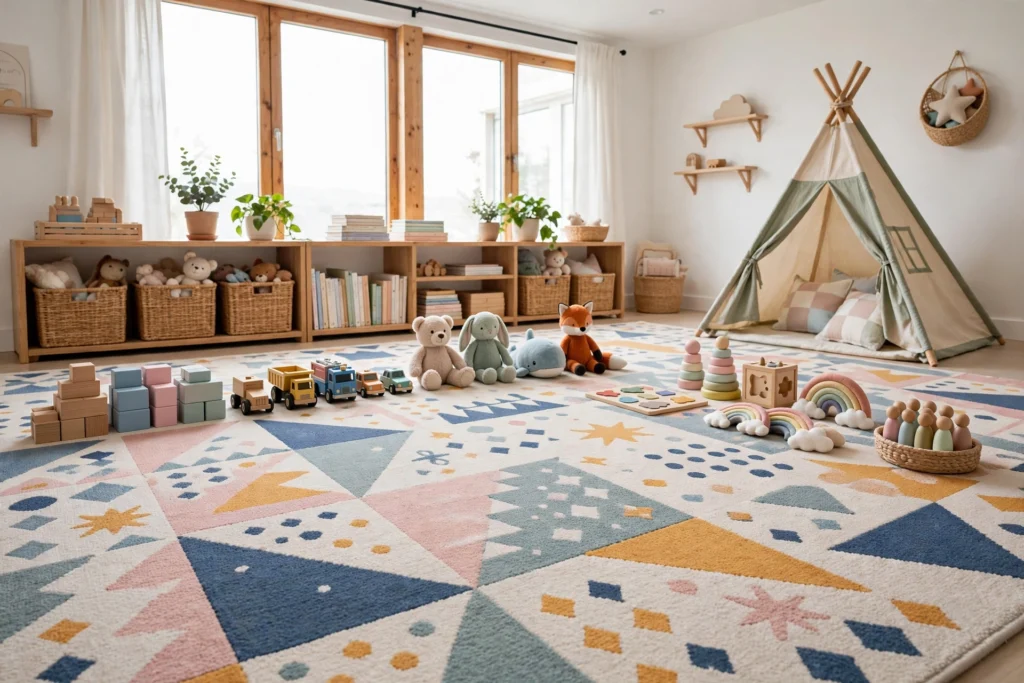
The playroom floor is where everything happens — building, sprawling, spilling — so the rug has to work hard. Go big: the largest rug the room can hold, in a low-pile weave that toys roll across easily and chairs don’t snag on. Pattern hides the inevitable stains and crumbs far better than solid color.
Washable rugs are the playroom miracle — the whole thing goes in the washing machine. Layer a smaller soft rug or play mat in the reading nook for texture contrast. And always use a non-slip pad underneath; an active playroom with a sliding rug is an injury waiting to happen. Our nursery design ideas use the same layered-rug thinking for soft landings in baby spaces.
6. Add a Small Table and Chairs for Crafts
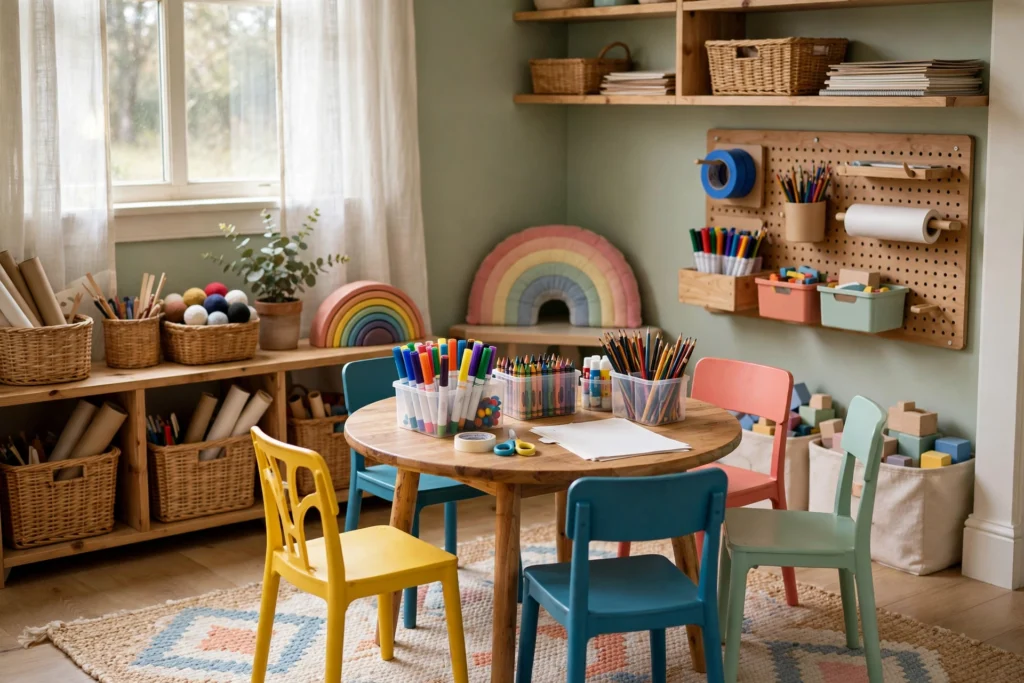
A kid-sized table and chairs is command central for crafts, puzzles, snacks, and homework later. Choose a sturdy set at the right height — kids’ feet should touch the floor when seated — with a wipeable top. Round tables avoid sharp corners and fit more kids in a small footprint.
Stock the table zone like a mini studio: washable markers, crayons, sticker books, coloring pages, and playdough in a caddy. A roll of kraft paper as a table runner means the table is always ready for a mural. When crafts are contained to the table zone, glitter stays (mostly) in one place — a victory worth celebrating.
7. Use Colorful Bins and Labels for Toy Storage
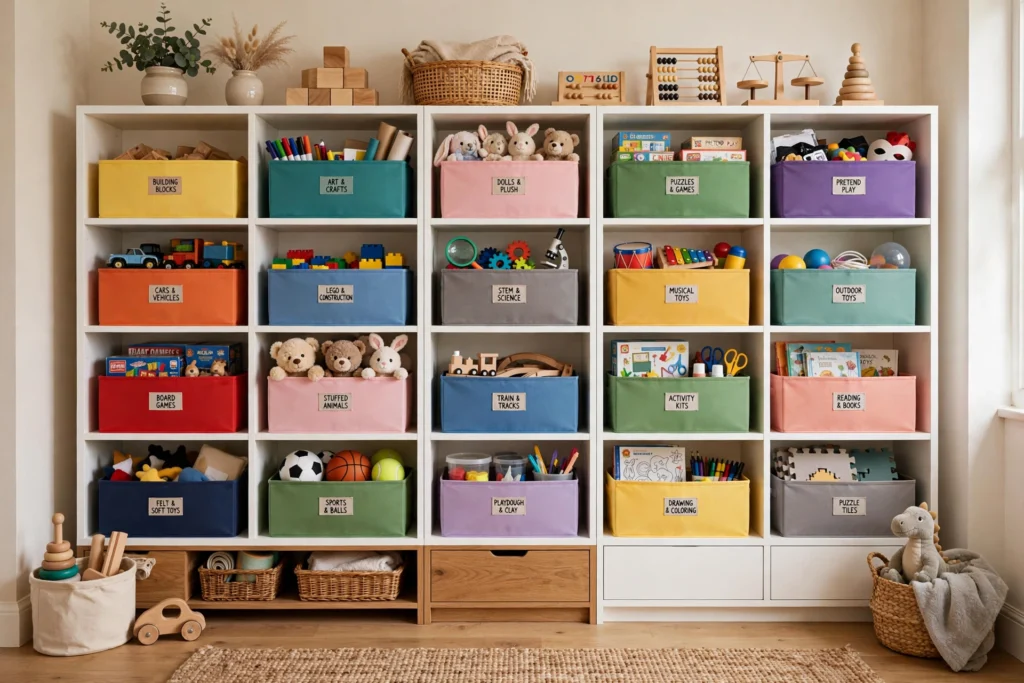
Toy storage only works if kids will actually use it, and kids use what they can understand. Colorful bins — one color per category — with picture labels for little ones and word labels for readers turn cleanup into a sorting game. Clear bins work too, so kids can see what’s inside without dumping everything out.
Keep the system ruthlessly simple: broad categories (blocks, dolls, cars, art) beat hyper-specific sorting that nobody maintains. Apartment Therapy’s playroom redo with IKEA hacks shows storage done beautifully — closed cabinets that hide the visual chaos, styled to look like furniture rather than a toy warehouse. The goal is a room that can go from play explosion to tidy in ten minutes.
8. Hang a Canopy or Play Tent
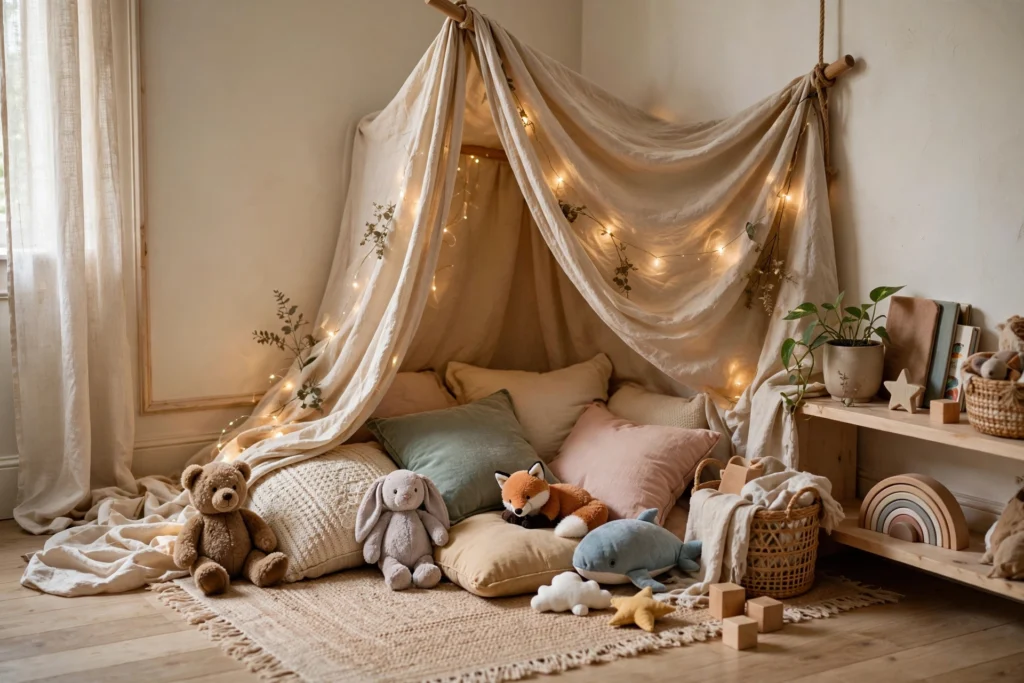
A canopy or play tent creates a room within the room — and kids are magnetically drawn to small enclosed spaces. A simple fabric canopy hung from the ceiling over floor cushions becomes a reading hideout, a puppet theater, or a secret base, changing identity daily. Pop-up tents work too and fold flat when the phase passes.
Position the tent in a corner to anchor it, and fill it with a soft rug, cushions, and a few books or stuffed animals. It’s the playroom’s imagination engine: the same square footage becomes ten different places in a child’s mind. And when you need the floor space back, most canopies gather up in seconds.
9. Add Active Play Options (Safely)
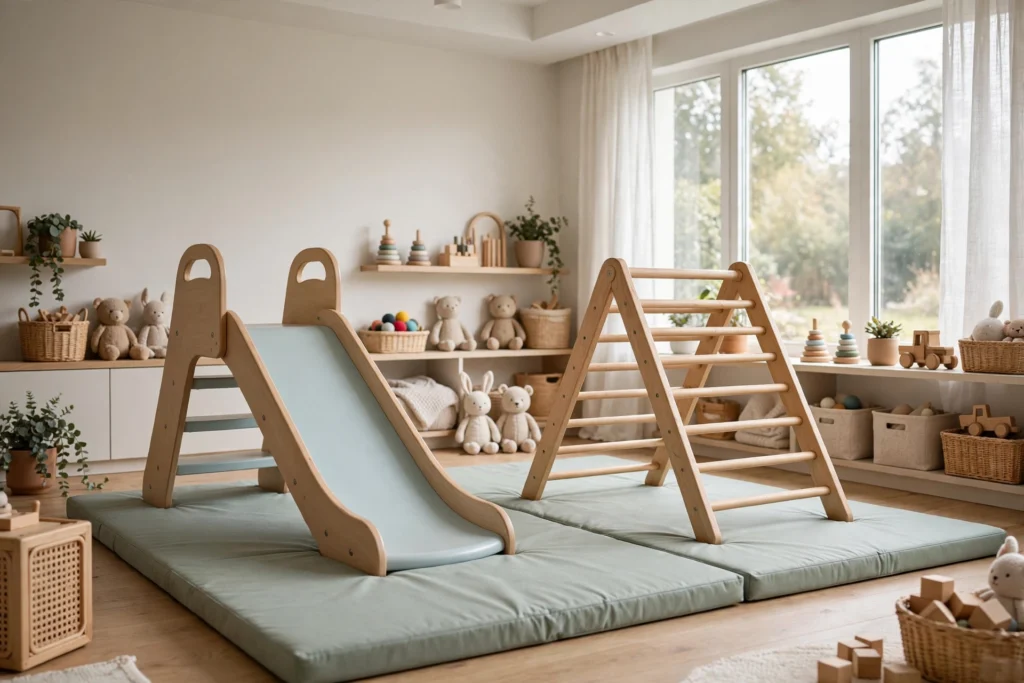
Kids need to move, and a playroom that only offers sit-down play will export the wrestling to your living room sofa. Age-appropriate active options — a small indoor slide, a climbing triangle, a mini trampoline with a handlebar, or a doorway swing — burn energy on rainy days and build coordination.
Safety is non-negotiable: anchor everything to studs, use thick mats underneath, follow weight limits, and keep active equipment away from hard furniture edges. A climbing wall needs a proper mat and supervision rules; a swing needs a rated mount. Done right, the active zone is the part of the playroom kids remember fondly — and the reason the rest of the house stays calmer.
10. Display Their Art on a Gallery Wall
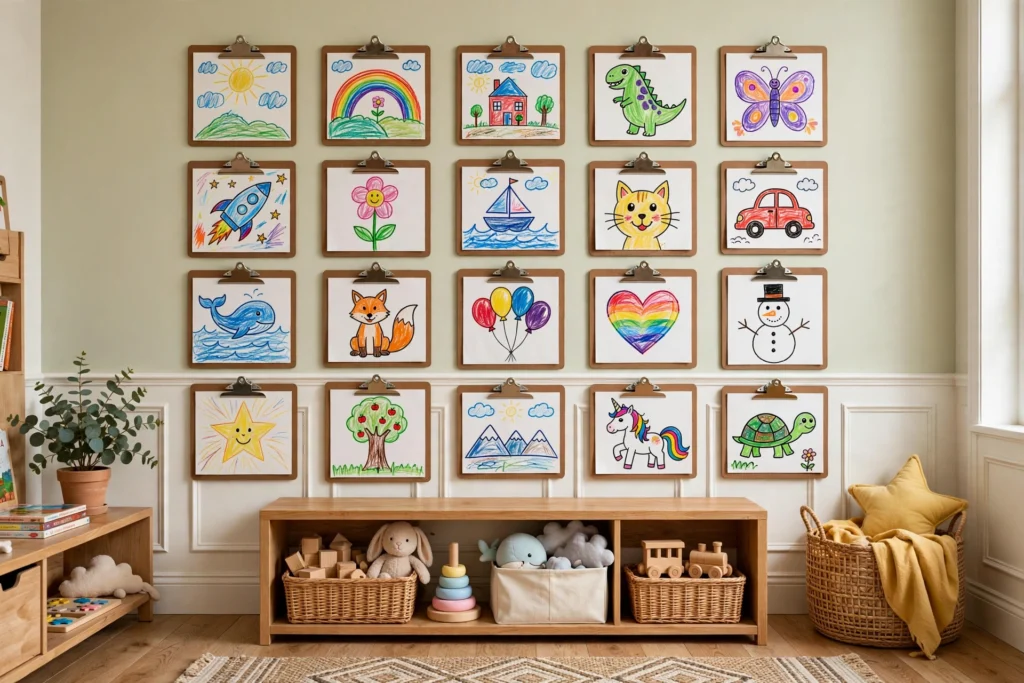
Kids produce art at an astonishing rate, and displaying it honors the effort while solving the storage problem. Dedicate one playroom wall as a rotating gallery: clipboards, wire with clothespins, or simple frames with easy-open backs. Rotate the show monthly and photograph the retirees before recycling.
Keep the display system simple enough that kids can hang their own work — that’s the point. A gallery wall of children’s art is also genuinely joyful decor: the color, the unselfconscious creativity, the proud little signatures. For more kid-space thinking that grows with them, our teen bedroom design ideas show how display space evolves into personal expression.
11. Keep a Dress-Up Corner with Costumes
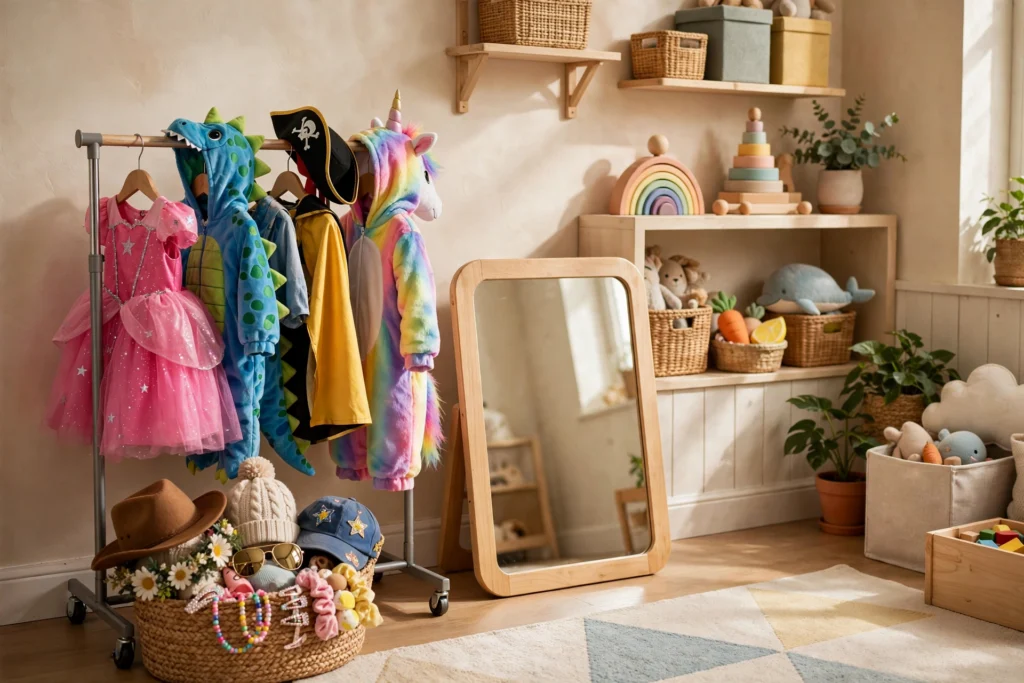
Dress-up is developmental gold — empathy, storytelling, confidence — and it needs almost no space. A small garment rack or wall hooks with costumes, a basket of accessories (hats, capes, crowns, doctor kits), and a shatterproof mirror turn a corner into a theater. Thrift stores are treasure chests for dress-up: oversized jackets, old bridesmaid dresses, retired Halloween costumes.
Keep the collection edited — ten great pieces beat forty tangled ones — and store accessories in labeled bins so the firefighter helmet is findable. A dress-up corner costs almost nothing and delivers hours of imaginative play, making it one of the highest-value playroom design ideas on this list.
12. Add Good Task Lighting for Crafts and Reading
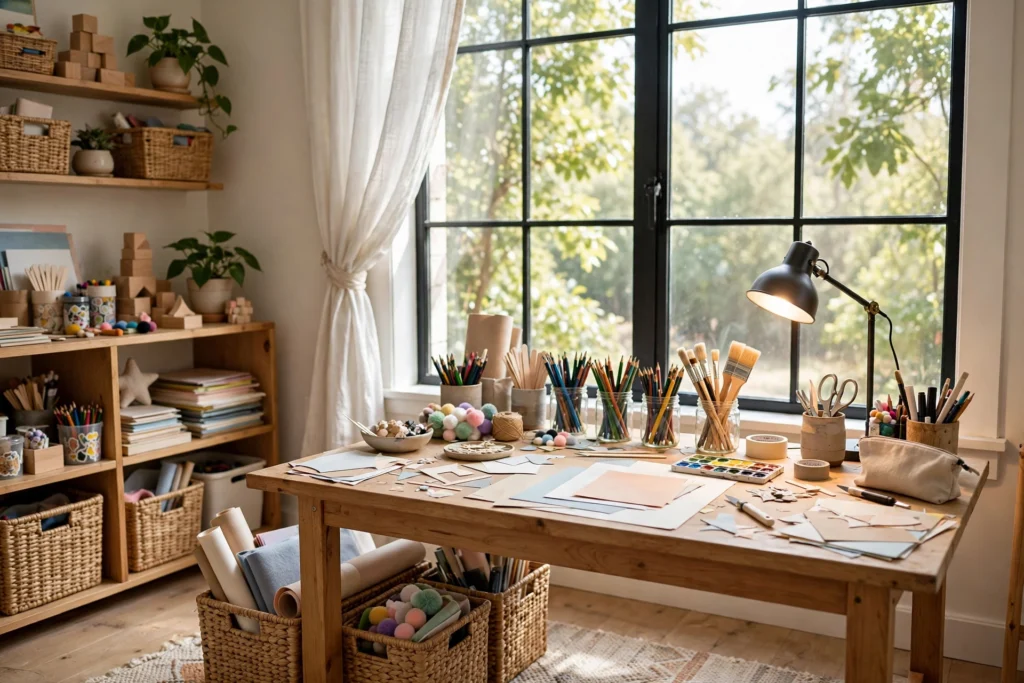
Playrooms need better light than most rooms get. Overhead lighting for general play, plus task lighting at the craft table and reading nook — a small desk lamp, a floor lamp with a shade, or even a clip light on the bookshelf. Kids doing detailed crafts or reading in dim light get frustrated and quit; good light keeps them engaged.
Use warm-white bulbs (3000K) and shatterproof shades, and keep cords managed and out of crawling-baby reach. Natural light is ideal for the art zone — position the craft table near the window if you can. A well-lit playroom gets used more, by kids and by the homework they’ll eventually bring home.
13. Choose Durable, Wipeable Surfaces
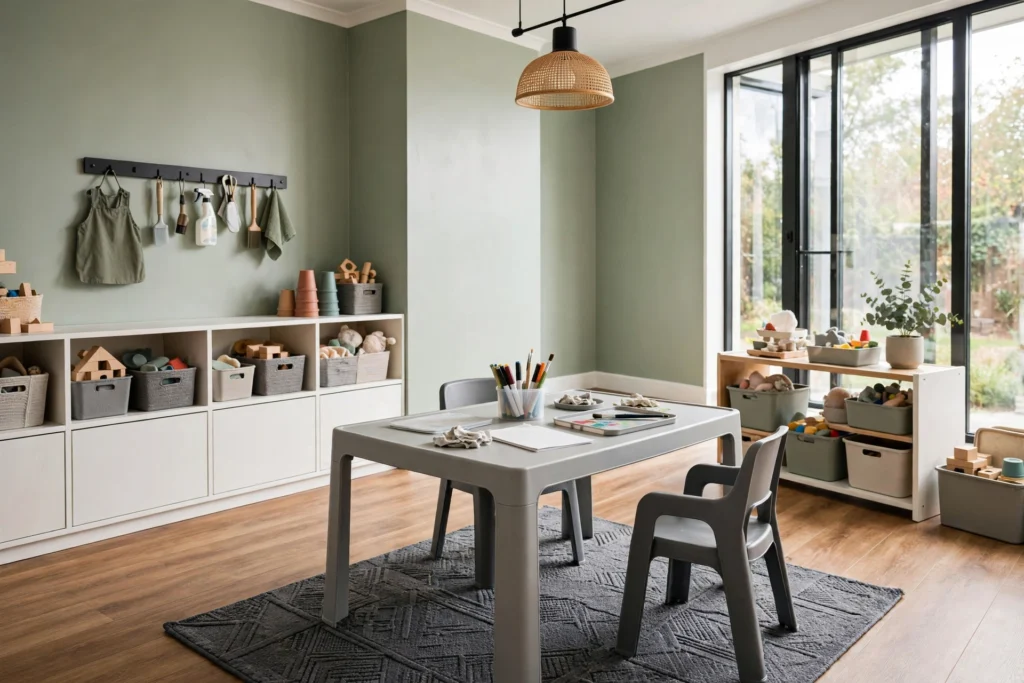
A playroom should be a place where mess is allowed, which means surfaces have to forgive. Washable paint (eggshell or satin sheen) on walls, wipeable table tops, machine-washable rugs and cushion covers, and floors that mop clean. If you’re choosing flooring, luxury vinyl plank handles playroom life better than almost anything.
This isn’t about expecting destruction — it’s about removing the anxiety. When the marker incident wipes off the wall and the juice spill comes out of the rug, everyone relaxes, and a relaxed playroom is a creative one. Save the precious finishes for the living room; the playroom gets the practical ones, styled well.
14. Make Room to Grow with Flexible Furniture
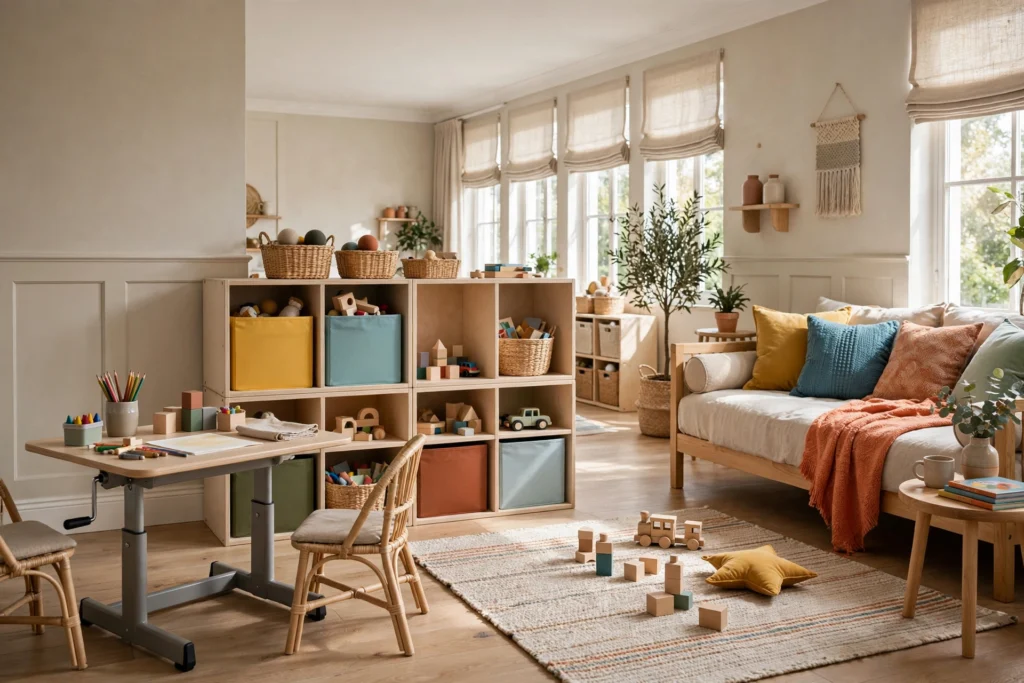
Kids’ needs change fast — the toddler train-table era gives way to the LEGO era gives way to the homework era. Flexible furniture rides those waves: a table with adjustable height, cube storage that reconfigures, a daybed that serves as reading lounge now and sleepover spot later, rolling carts that move between zones.
Buy the big pieces in neutral finishes and let the colorful, kid-specific stuff live in the replaceable layer: bedding, bins, art, rugs. When the room’s bones are timeless, each phase change costs a refresh, not a renovation. Our kids’ bedroom design ideas apply the same grow-with-them thinking to sleep spaces — the principle works everywhere kids live.
15. Add a Cozy Corner for Quiet Time
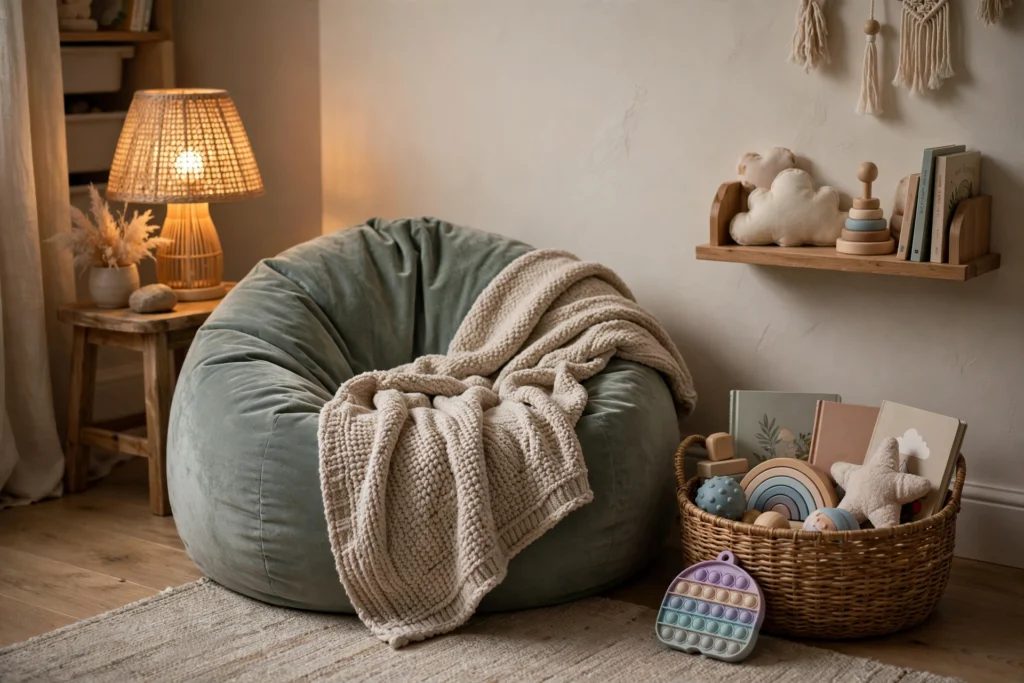
Even the most energetic kids need a soft place to land — for calming down, for solo play, for the overwhelmed moments every child has. A cozy corner with a beanbag or floor cushions, a weighted blanket, a few sensory toys, and dimmer light gives big feelings a safe place to go.
This isn’t a punishment spot; it’s a comfort spot, and framing matters. Stock it with things that soothe your particular child: books, drawing supplies, a stuffed friend, noise-reducing headphones. A playroom with a cozy corner teaches emotional regulation by design — arguably the most valuable thing any room in your house can do.
Frequently Asked Questions
What should every playroom have?
Zones for different play types, reachable storage with labeled bins, a craft table, a reading nook, a big washable rug, and good lighting. Everything else — tents, climbing equipment, dress-up — layers on top of those basics.
How do I keep a playroom organized?
Fewer toys out at once (rotate the rest), one labeled home per category, kid-reachable shelving, and a simple nightly reset routine. Closed storage for visual calm plus open bins for daily favorites is the winning combination.
What colors work best for a playroom?
A calm neutral base (warm white, soft gray, pale sage) with color in the replaceable layer — rugs, bins, art, bedding. The base keeps the room from feeling chaotic; the accents deliver the fun. Let kids choose the accent colors.
How do I make a small playroom work?
Zone vertically: wall storage, a loft or canopy for the reading nook, foldable furniture. One well-defined small playroom beats a large undefined toy sprawl — constraint actually helps kids play more creatively.
At what age do kids stop using a playroom?
The room evolves rather than expires: toddler playroom becomes craft and homework space, then teen hangout. Flexible furniture and a neutral base let the same room serve from ages 2 to 16 with simple refreshes along the way.
Keep Exploring
The best playroom isn’t the one with the most toys — it’s the one where play actually happens: zoned, reachable, lit well, and forgiving of mess. Start with the storage and the rug, add the zones, and let your kids’ interests fill in the rest.
And remember the room will change as they do. Build the flexible bones now, and the playroom grows from toddler chaos to creative kid headquarters without missing a beat. For more kid-space inspiration, explore our children’s room guides — because rooms that grow with kids are the smartest investment in the house.





[…] — markers, crayons, and stickers at their height. For more kid-space inspiration, see our 15 playroom design ideas for fun, creative kids’ […]