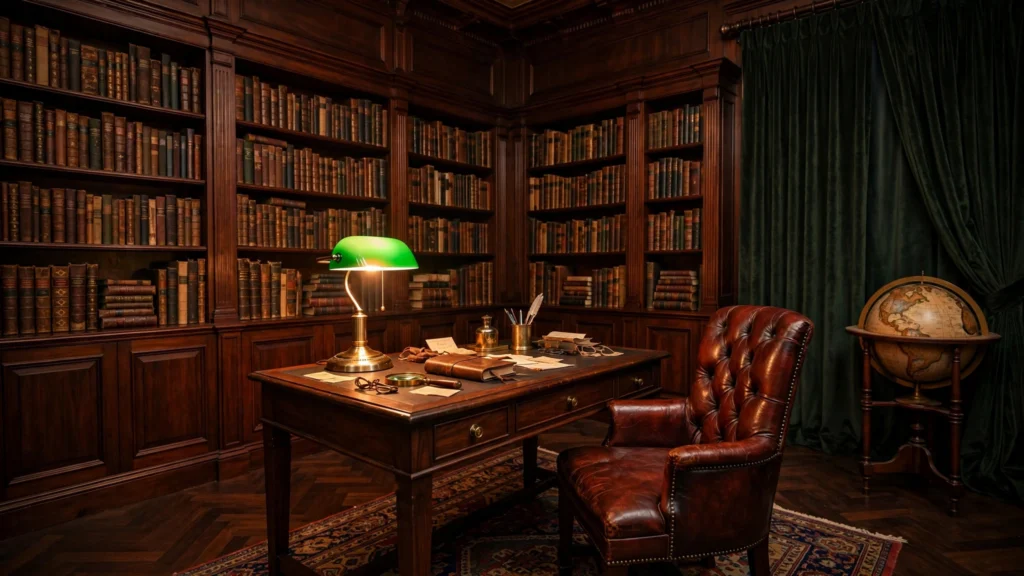

There is something about a room lined with old books, lit by a green-shaded lamp, that makes even answering emails feel like composing a manuscript. Dark academia takes its cues from Oxford libraries, centuries-old universities, and the quiet rituals of scholars — dark woods, worn leather, brass, and paper — and it translates beautifully to a home office. It is not about gloom; it is about gravitas, texture, and a room that makes you want to sit down and think.
The trick is keeping it literary rather than theatrical. Think rich espresso and forest green instead of stark black, candlelight warmth instead of horror-movie flicker, and objects that tell a story — a globe, a fountain pen, a stack of well-read books — rather than stage props. Below are fifteen practical dark academia home office design ideas you can mix and match, whether you are furnishing a whole study or just carving a scholarly corner out of a spare bedroom.
1. Anchor the Room With a Dark Wood Writing Desk
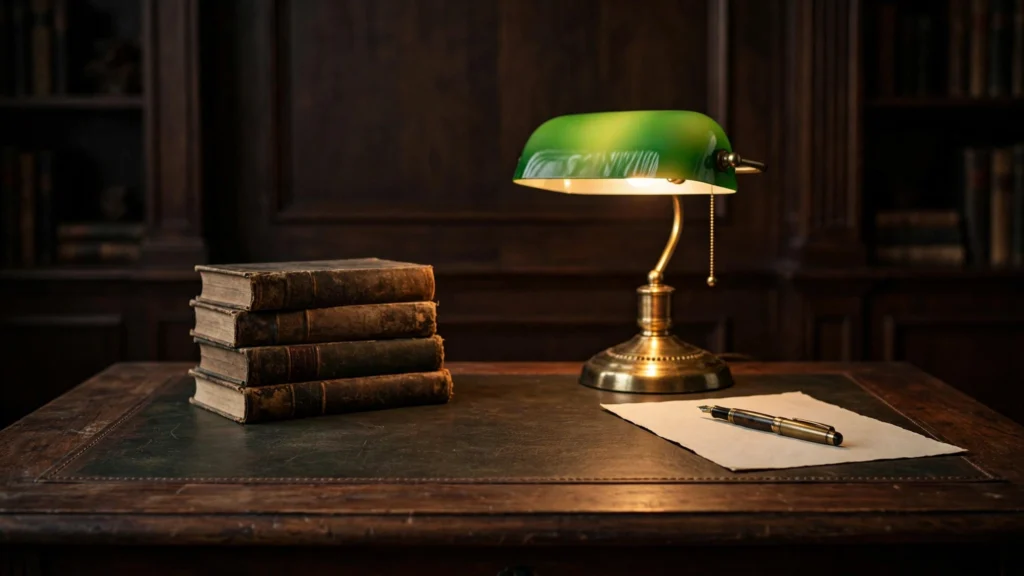
A dark academia office starts at the desk. Look for solid walnut, mahogany, or a deep espresso-stained piece — a partners desk, a campaign-style writing desk, or a vintage library table with drawers. A leather inlay top is the classic dark academia touch, and it doubles as a writing surface that hides scratches gracefully. Aim for a desk at least 48 inches wide so books, a lamp, and a laptop can coexist without crowding.
If buying new, you can fake the antique look: stain a solid-wood desk with dark walnut gel stain and swap modern knobs for brass cup pulls. Position the desk where you face into the room rather than a wall when possible — scholars faced their libraries, not drywall. Keep the surface disciplined: lamp, pen cup, one stack of books, and your work. The rest of the storytelling happens on the shelves.
2. Build a Floor-to-Ceiling Bookcase Wall
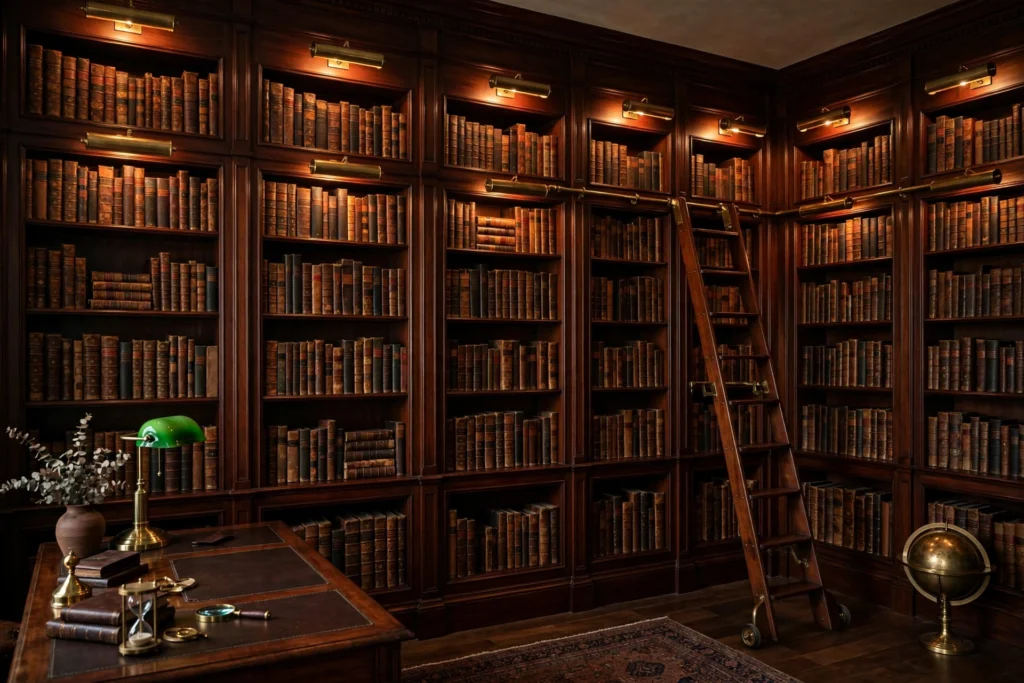
Nothing says scholarly like books that reach the ceiling. A full wall of dark wood shelving — real built-ins if the budget allows, or tall bookcases stained to match — instantly gives a home office its Oxford-library atmosphere. Fill shelves two-thirds full with books arranged spine-out in loose color groups, and leave breathing room for objects: a clock, a framed print, a small plant.
Hunt secondhand for the shelves themselves; old office bookcases and barrister cases cost a fraction of new built-ins and bring a patina you cannot buy. If you are renting, use tall freestanding cases anchored to the wall and add a simple picture rail or cornice at the top to fake the built-in look. A rolling library ladder is pure theater — lovely if you have the space, but a sturdy wooden step stool reaches the top shelf just as well.
3. Light the Desk With a Green Banker’s Lamp
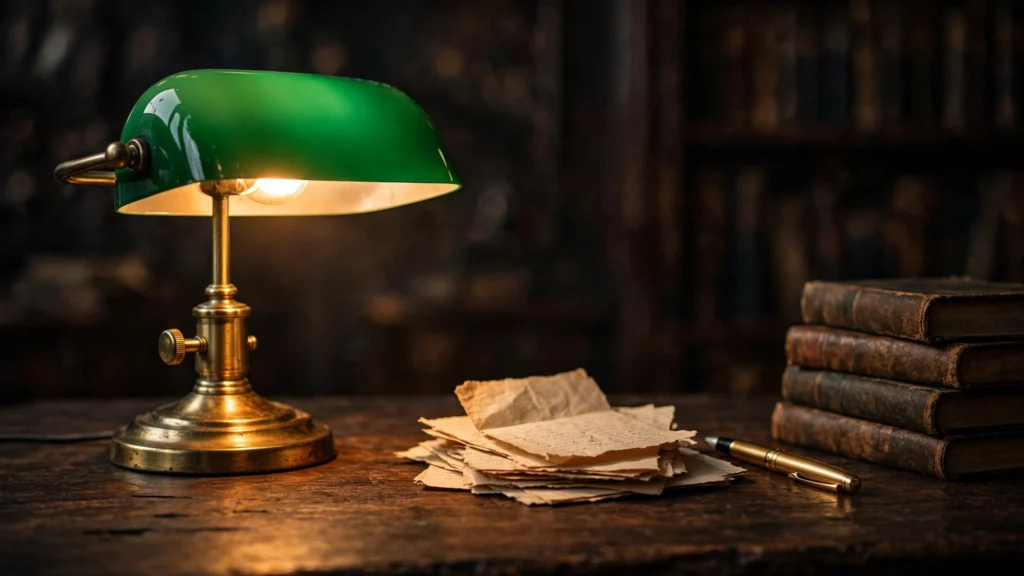
The emerald-shade banker’s lamp is the signature light of the dark academia study, and it is as practical as it is atmospheric. The green glass shade directs a warm pool of light exactly where you write while leaving the rest of the room in flattering shadow — ideal for evening work sessions. Choose a brass-based reproduction with a real glass shade rather than plastic; the color of the light is noticeably richer.
Pair it with a warm-white bulb (2700K) rather than daylight, which would shatter the mood. If desk space is tight, a brass pharmacy-style floor lamp with a green shade delivers the same effect beside the desk. Either way, keep overhead lights dim or off when the banker’s lamp is on — the contrast between the lit desk and the shadowed room is the whole point.
4. Sink Into a Leather Tufted Desk Chair
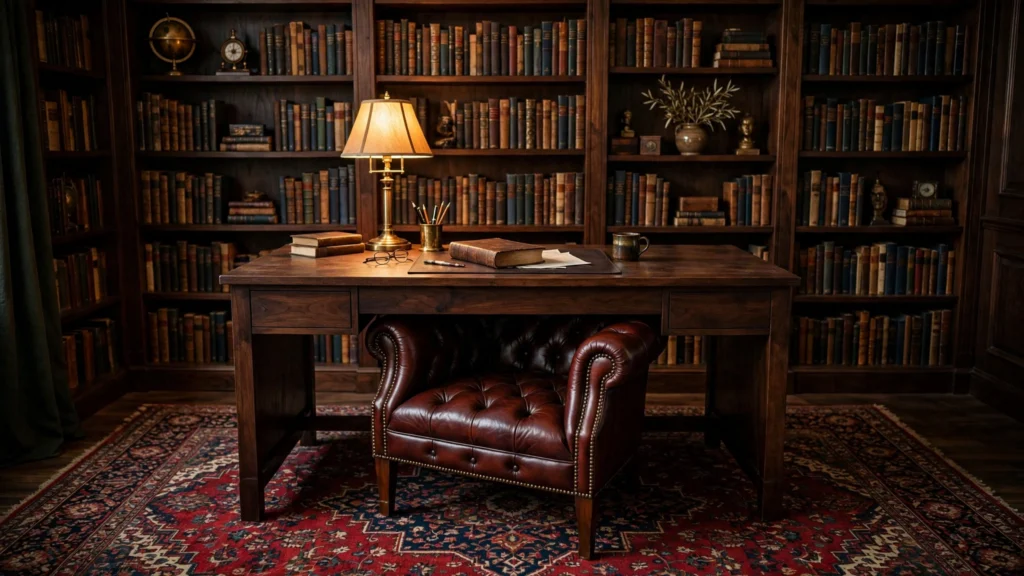
Your desk chair is where you will spend the hours, so make it feel like a club chair. A tufted leather desk chair — oxblood, cognac, or deep brown — reads instantly scholarly and ages beautifully, picking up creases and sheen with use. Look for solid construction and a comfortable seat height (around 18 inches) rather than a racing-style office chair dressed in dark upholstery.
Real leather is ideal but not required; good-quality faux leather or even dark velvet tufting works at a lower budget. Add a lumbar cushion in herringbone or tweed for long sessions. If the chair has casters, roll it on the rug rather than bare wood to protect the floors — or swap the plastic wheels for brass or rubber ones, which glide more quietly and look the part.
5. Paint the Walls a Deep, Scholarly Hue
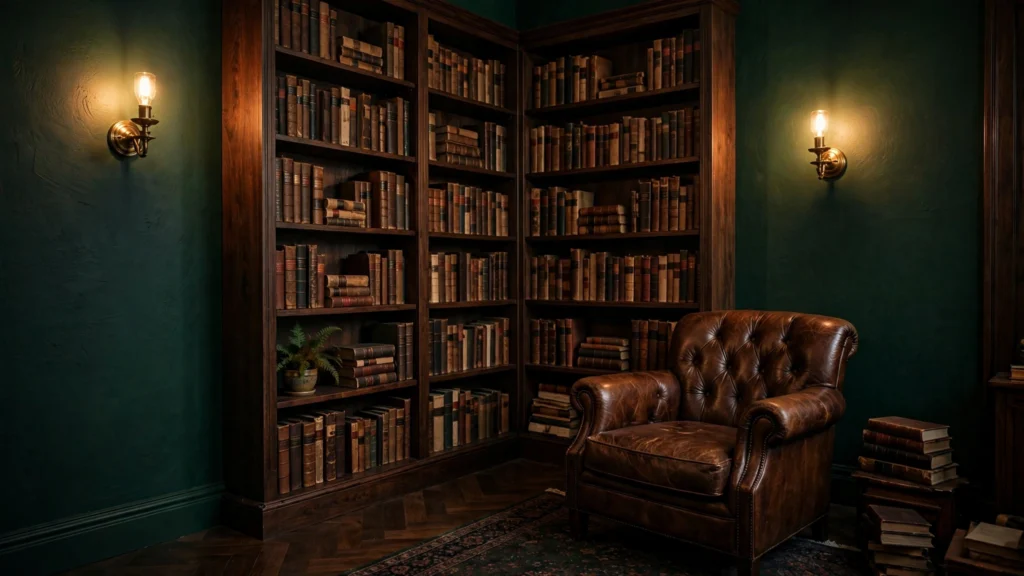
Dark academia walls should feel like the inside of a leather-bound book: deep green, oxblood, ink navy, or charcoal-brown. These colors make brass glow, wood look richer, and book spines pop. In a small office, painting all four walls a deep color can actually make the space feel intentional and cocooning rather than cramped — the trick is committing fully instead of stopping at one timid accent wall.
Sample first: dark greens can swing olive and navies can swing purple under artificial light, so test swatches at night under your actual lamps. A flat or eggshell finish keeps the look velvety; skip high gloss, which reads modern. If paint feels like too much commitment, start with a dark grasscloth or textured wallpaper on one wall — it adds depth of color plus a layer of texture that flat paint cannot match.
6. Layer a Persian Rug Over Dark Wood Floors
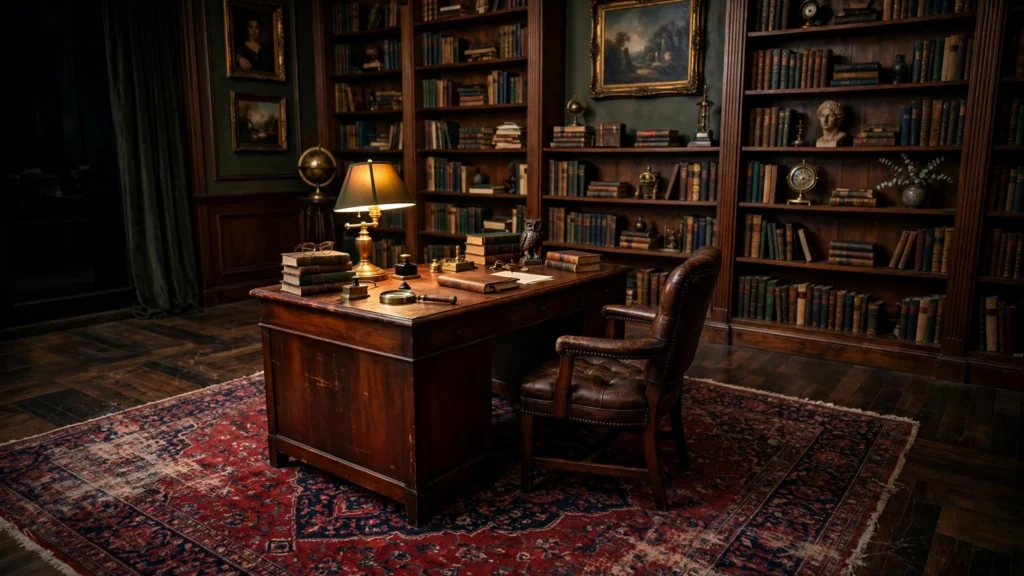
A worn Persian or oriental rug is the fastest way to warm up a dark academia office. The deep reds, indigos, and saffron of a traditional rug echo the palette of leather bindings and wood tones, and the pattern hides the everyday wear of a working office. Size matters: the rug should extend at least 24 inches beyond the desk on the sides so your chair stays on it when you roll back.
You do not need a genuine antique — good vintage-style reproductions are widely available and far more practical under a desk chair. Add a low-profile rug pad to keep it from creeping and to protect the floor. If the room is large, layer a second smaller rug at an angle in the reading corner to define that zone; overlapping rugs look collected rather than decorated, which is exactly the spirit.
7. Display a Vintage Globe and Antique Maps
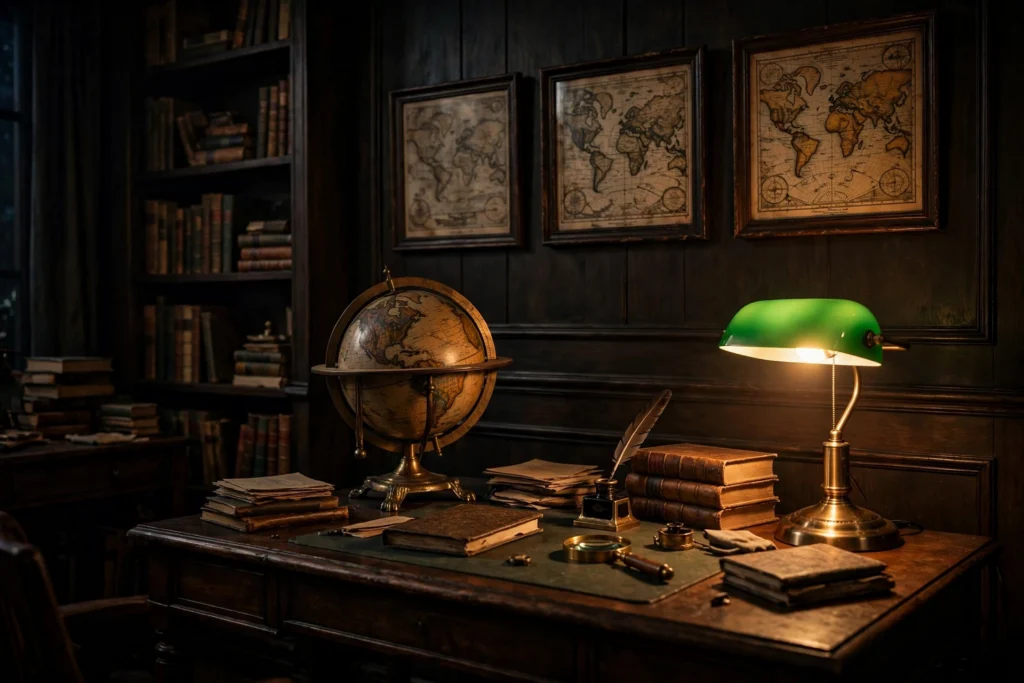
Few objects say “scholar” faster than a vintage globe. An old floor globe on a wooden stand, a small desk globe with a brass meridian, or even a celestial globe adds sculptural interest and a sense of the wider world beyond the desk. Pair it with framed antique maps — reproductions of old cartography are inexpensive and look convincingly aged behind glass.
Hang maps in simple dark wood or brass frames, grouped as a gallery or flanking the bookcase. On the desk, a brass compass or a magnifying glass on a stand continues the theme of curiosity. Keep the geography genuine rather than gimmicky: one well-chosen globe beats a shelf of novelty travel trinkets, and it gives visitors something to spin while you pour the tea.
8. Hang Brass Picture Lights Over Framed Prints
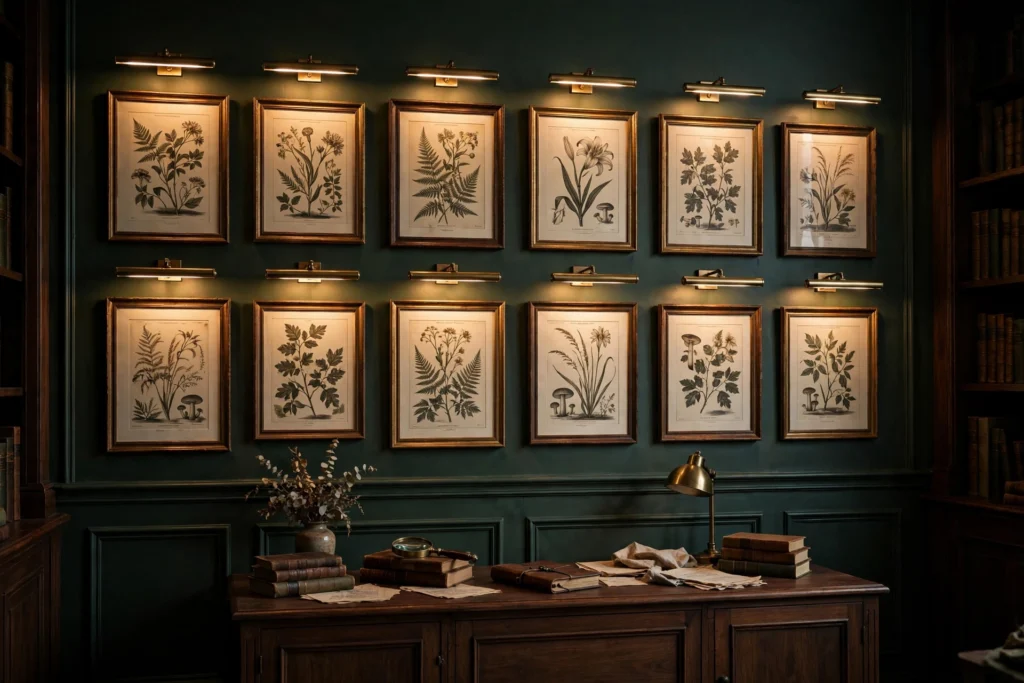
Gallery lighting is what separates a study from a storage room for books. Slim brass picture lights mounted above framed prints — botanical engravings, architectural etchings, portraits of long-dead authors, classical landscapes — cast a warm wash that makes the whole wall glow. Battery-operated versions now look convincing and spare you the electrician.
Choose art with an academic lineage: vintage book plates, natural-history illustrations, and sepia photographs all fit the brief. Frame everything simply and consistently — thin brass or dark wood frames unify a mixed collection. Hang prints in a loose grid or salon style above the desk or along the wall, and choose low-reflectivity glass so the picture lights read as warmth, not glare.
9. Style Shelves With Curated Literary Objects
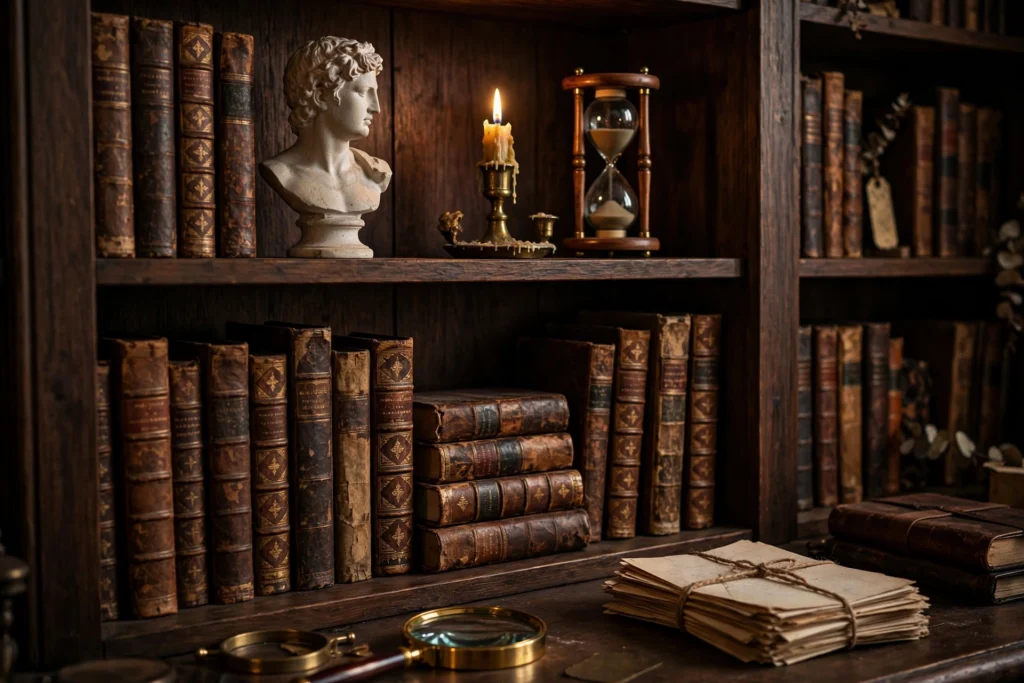
A dark academia shelf should look like it belongs to someone with interests, not a stylist with a checklist. Mix books with objects that suggest a life of the mind: a brass candlestick, a small plaster bust, a stack of letters tied with string, an hourglass, a vintage camera, a magnifying glass. Group items in odd numbers and vary heights — a tall bust next to a low stack of books keeps the eye moving.
The secret is restraint: leave a third of every shelf empty so the objects read as collected, not cluttered. Rotate pieces seasonally to keep the room feeling alive. And let the objects be real — use the candlesticks, wind the clock, actually read the books. Dark academia is a love letter to the examined life; the room should reward a closer look, not just a photograph.
10. Add Antique Brass and Gold Accents
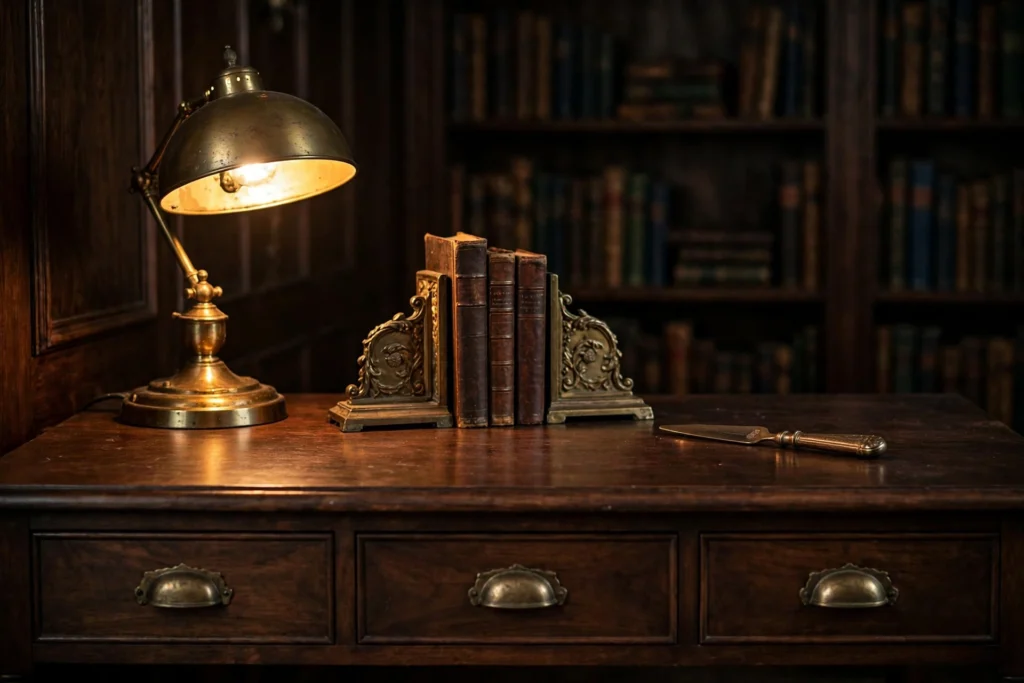
Brass is the jewelry of the dark academia office. It catches lamplight in a way chrome and matte black never will, and it ties together wood, leather, and paper. Work it in through desk accessories — a brass lamp base, bookends, a letter opener, drawer pulls — and through lighting: brass sconces, picture lights, and shade fitters all multiply the warm glow.
Unlacquered brass develops a patina that suits the aesthetic perfectly, so do not polish it to a mirror shine. Mix metals sparingly: brass plus the occasional antique gold frame is plenty; adding silver or nickel dilutes the warmth. Thrift stores are full of solid brass candlesticks, trays, and frames for a few dollars — heavier pieces are usually the real thing, so pick them up and feel the weight before you buy.
11. Dress the Windows in Heavy Drapery
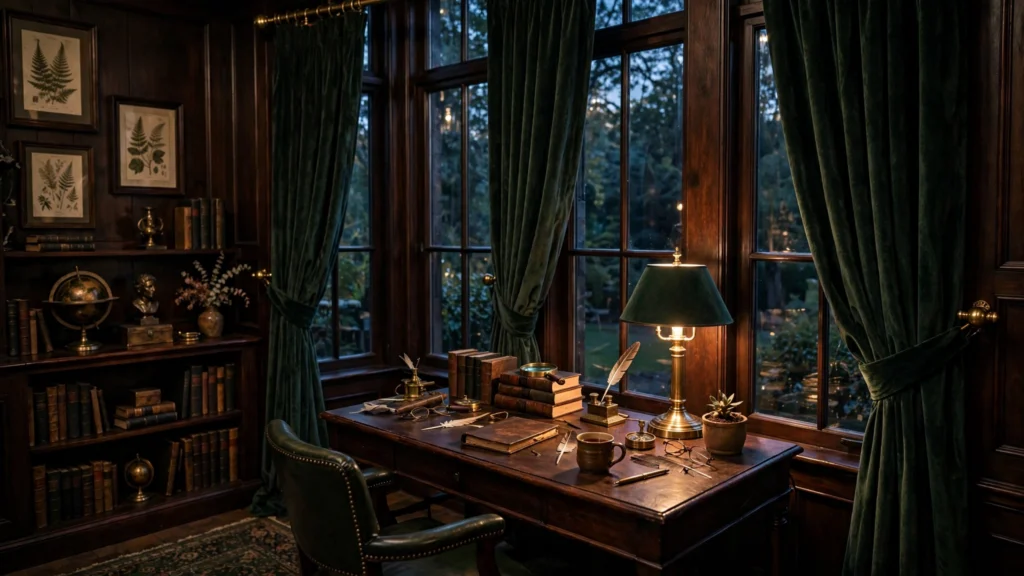
Dark academia calls for curtains with substance: velvet, heavy linen, or a thick cotton duck in deep green, oxblood, or chocolate. Hang them high and wide — rods mounted near the ceiling and extending well past the window frame — so the windows look grand even when the curtains are open, and the fabric pools just slightly on the floor for that old-library softness.
Line the curtains for better drape and light control; a study that doubles as a video-call background benefits from blocking harsh daylight. If the office is small, choose curtains in the same tonal family as the walls so the window treatment recedes rather than chops up the room. Brass or dark wood finials on the rod keep the hardware consistent with the rest of the room’s metal story.
12. Create a Reading Nook With an Armchair
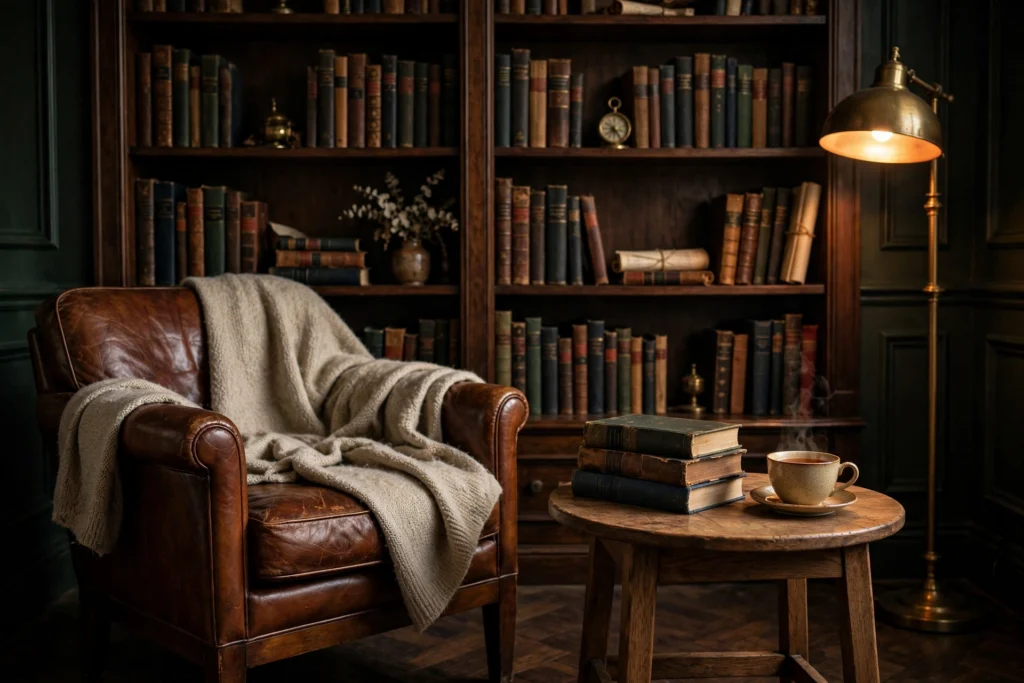
Every scholarly office needs a spot for reading that is not the desk. Tuck a leather or velvet armchair into a corner with a small side table, a brass floor lamp with a warm shade, and a throw in wool or cashmere. Even a four-by-four-foot corner works — the point is a deliberate change of posture and purpose, from working to thinking.
Keep a short stack of current reads on the side table along with a coaster; the nook should invite use, not just admiration. A small ottoman or footstool makes long chapters comfortable. If space is truly tight, a single beautiful chair pulled up to the bookcase wall with a wall-mounted reading light achieves the same effect without a separate footprint.
13. Keep Lighting Warm, Low, and Layered
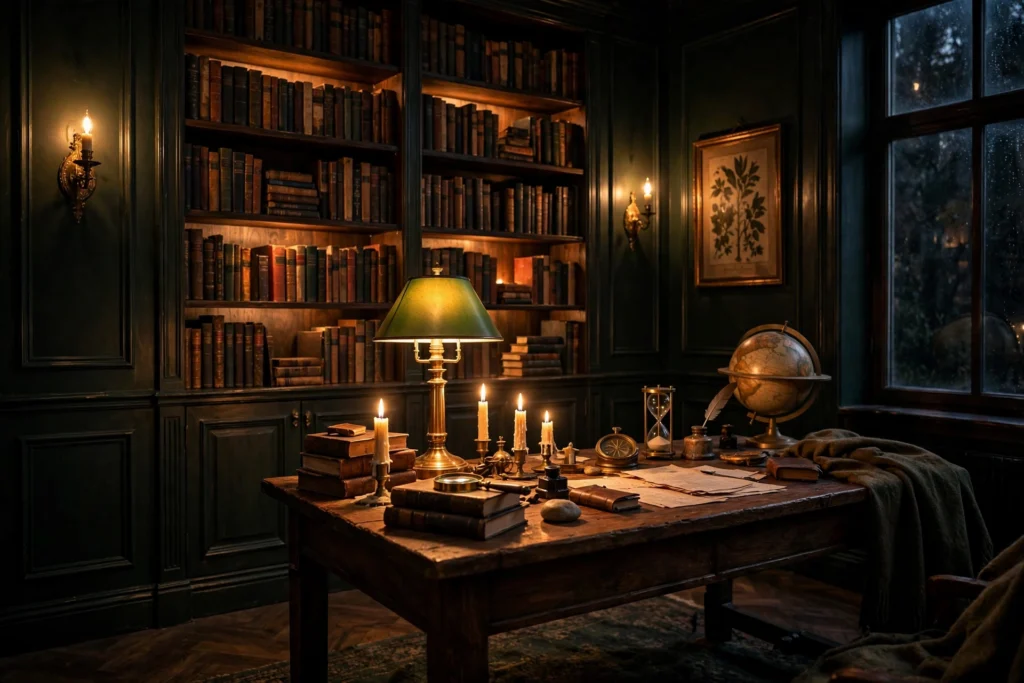
Dark academia lives or dies on its lighting. Aim for three layers: a task light at the desk (the banker’s lamp), ambient warmth from wall sconces or table lamps, and small points of glow — a candle-style lamp, a lit bookcase strip, fairy lights tucked behind shelves. Keep every bulb at 2700K or warmer, and put the main lamps on dimmers so the room can shift from working bright to evening mellow.
Avoid overhead fluorescents and cool daylight bulbs entirely; they flatten every rich color you have chosen. Real candles are atmospheric but risky around books — flameless candles in brass holders give the flicker without the fire hazard. And do not forget the bookcase: slim LED strips hidden along the top of shelves make the spines glow and turn the library wall into the room’s evening centerpiece.
14. Finish the Desk With Paper, Ink, and Stationery
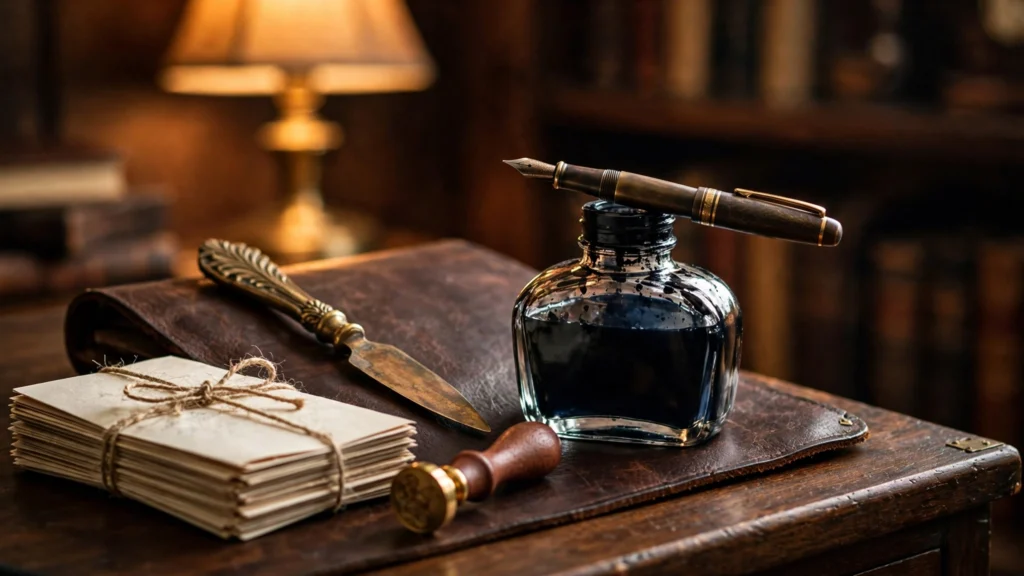
The details on the desk are what make a dark academia office feel inhabited rather than staged. A leather desk pad, a fountain pen resting on an ink bottle, a brass letter opener, a stack of correspondence tied with twine, a blotter, a wax seal stamp — these are the tools of the trade, and they cost little while adding enormous character. Choose a fountain pen you will actually use; the ritual of filling it beats any decoration.
Corral the small things on a brass or wooden tray so the desk stays workable: pens, seals, and paper clips each get a home. Keep a stack of good paper — cotton stationery, a leather-bound journal, index cards — within reach, because a scholarly desk invites writing by hand. The goal is a desk that looks ready for a letter to be written, not a desk that looks like no one has ever sat at it.
15. Add Living Touches: Plants and Worn Textiles
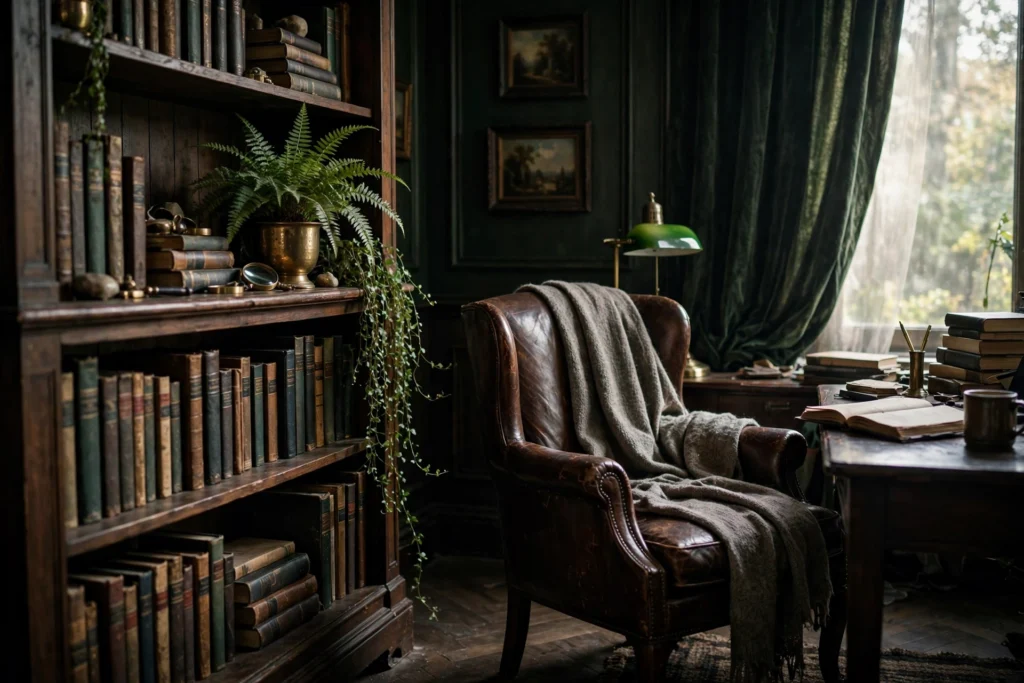
A room of wood, leather, and brass needs something alive to keep it from feeling like a museum. Plants that suit low light — a Boston fern on the bookcase, a trailing pothos, a snake plant in a brass pot — add movement and a note of green that echoes the banker’s lamp. Choose planters in terracotta, brass, or dark ceramic rather than bright plastic.
Worn textiles do the same softening work: a wool throw over the reading chair, a tweed cushion, a slightly faded kilim draped over the desk-side bench. These are the pieces that make the office feel used and loved rather than newly decorated. Patina is the point — let the leather crease, the brass dull, and the rug fade. A dark academia office should look better in five years than it does on day one.
Frequently Asked Questions
What colors work best for a dark academia home office?
Deep, saturated, bookish colors: forest and hunter green, oxblood and burgundy, ink navy, espresso brown, and charcoal. Balance them with warm neutrals — aged brass, cognac leather, cream paper tones, and natural wood — so the room feels rich rather than flat. Keep every light source warm (2700K or lower) so the colors read as candlelit, not gloomy.
Can I pull off dark academia in a small home office?
Absolutely. Go vertical with tall bookcases, choose one statement desk rather than several small pieces, and keep the palette to two or three deep colors so the room feels cocooned rather than chopped up. Warm, layered lighting lifts the shadows, and a disciplined desk surface matters more here than anywhere — in a small room, clutter reads as chaos fast. The style’s love of vertical shelving actually makes it one of the best looks for compact offices.
How do I avoid the gothic-horror look?
Keep it literary, not theatrical. Skip skulls, dripping candles, taxidermy, and anything that belongs in a haunted house; choose globes, maps, fountain pens, and books instead. Warm lighting is the other safeguard — horror reads cold and blue, while dark academia reads warm and amber. If any corner starts feeling spooky, add a plant, a warm lamp, or a textile; living things instantly pull a room back toward the scholarly.
Where can I find affordable dark academia furniture?
Secondhand first: thrift stores, estate sales, and Facebook Marketplace are full of solid-wood desks, bookcases, and leather chairs at a fraction of new prices — and the wear they carry is exactly the patina the style wants. For new pieces, look for solid wood with dark stains rather than veneer in trendy finishes, and swap the hardware for brass pulls. Even a basic bookshelf looks scholarly once it is filled with real books and lit warmly.
Keep Exploring
A dark academia home office is never really finished — it deepens the way a good library does, one found book, one brass candlestick, one well-worn chair at a time. Start with the desk and the light, let the shelves fill themselves, and give the room permission to look better with age. The most scholarly offices are not the most perfect ones; they are the ones that make you want to sit down, open a book, and stay a while.





[…] The non-negotiables are lumbar support, adjustable height, and armrests that clear the desk. Our dark academia home office ideas take the same leather-and-wood material story in a moodier, more scholarly direction — worth a […]
[…] here, a framed miniature there. For a scholarly take that extends to your workspace, see our 15 dark academia home office design ideas with scholarly style. A library ladder is pure fantasy, but even a simple wooden step stool sells the […]
[…] The final layer is textile: a tapestry or woven wall hanging behind the bed, a vintage kilim draped over the desk chair, or antique lace curtains layered under the velvet drapes. These soft, aged fabrics add the romantic, timeworn quality that defines the look. Hunt estate sales and vintage shops for one-of-a-kind pieces — a single vintage textile can become the room’s most distinctive feature. For a matching scholarly workspace, see our dark academia home office ideas. […]
[…] the reading life happens — tea, glasses, the current book. For more scholarly spaces, see our 15 dark academia home office design ideas with scholarly style and our 15 home office library design […]