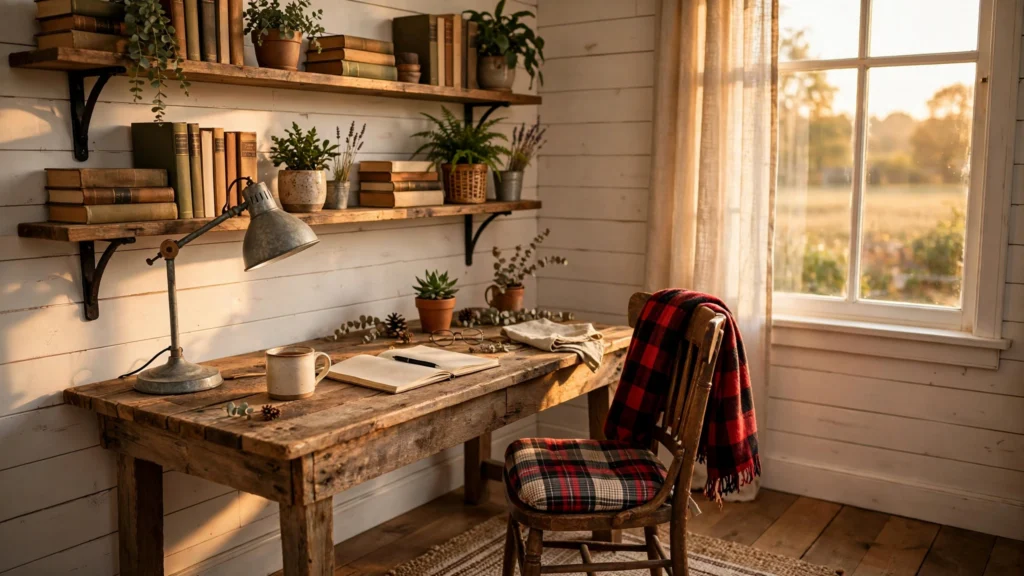

There is something about farmhouse style that makes a room feel instantly welcoming. Weathered wood, honest materials, and layers of cozy texture turn even the smallest spare room into a place you actually want to sit down and work. A farmhouse home office never feels like a corporate cubicle — it feels like a well-loved corner of a country home, where the desk has a story and the lamp looks like it came from a general store.
The best part is that you do not need a renovation budget to get there. Many of these farmhouse home office design ideas lean on thrifted finds, repurposed pieces, and simple weekend projects like paint and shiplap. Whether you work from home full time or just need a quiet spot for bills and planning, these fifteen ideas will help you build a workspace that is warm, practical, and full of character.
1. Make a Reclaimed Wood Desk the Centerpiece
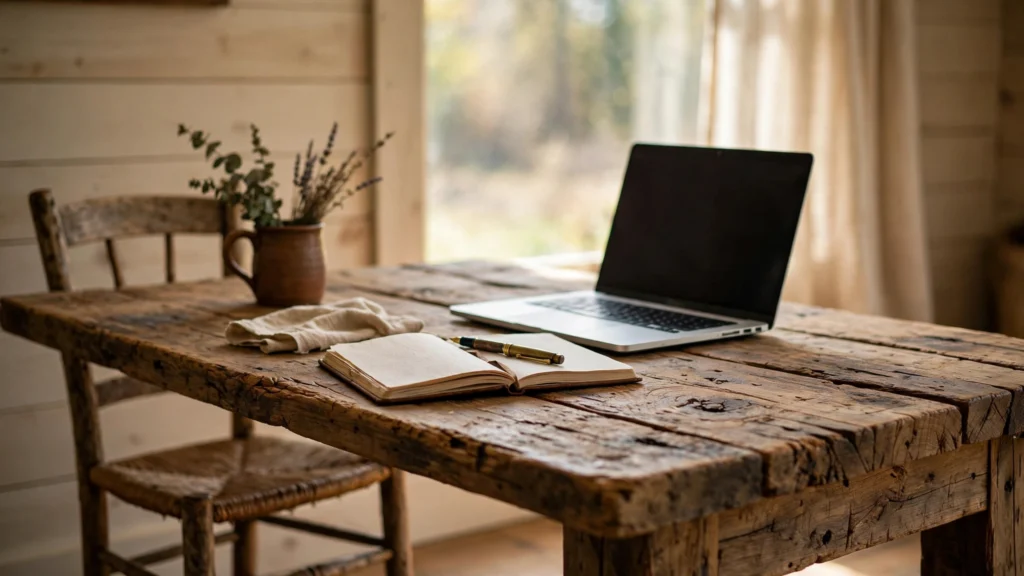
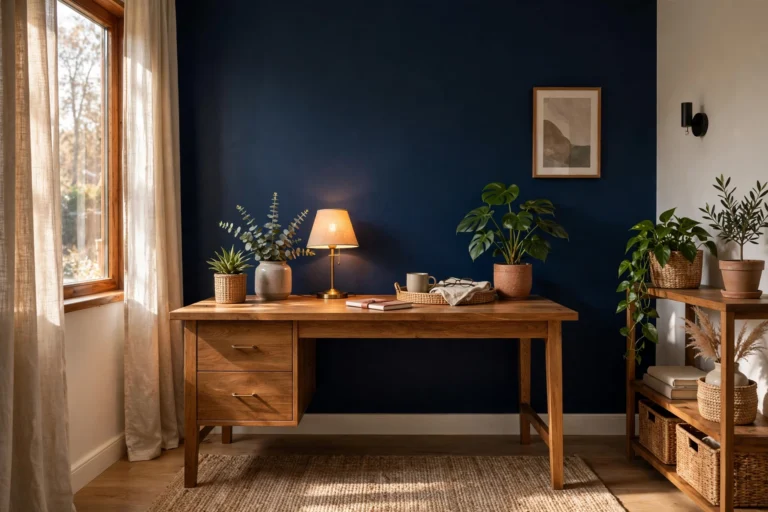
Every farmhouse office starts with the desk, and nothing anchors the room like reclaimed wood. Look for a farmhouse table, an old door mounted on trestle legs, or a plank-top desk with visible grain, knots, and saw marks. The imperfections are the point — they give your workspace a lived-in warmth that a flat-pack desk never will. If you cannot find a true antique, unfinished pine with a weathered-gray stain gives a convincing look for far less.
Aim for a depth of at least 60 centimeters so your monitor sits at a comfortable viewing distance, and a width of 120 centimeters or more to leave room for a notebook, a lamp, and your coffee. Sand the top smooth so papers slide easily, then seal it with matte polyurethane so ring marks wipe away. Tuck a small stool or storage crate underneath for extra seating when someone stops by.
2. Add a Shiplap Accent Wall Behind Your Desk
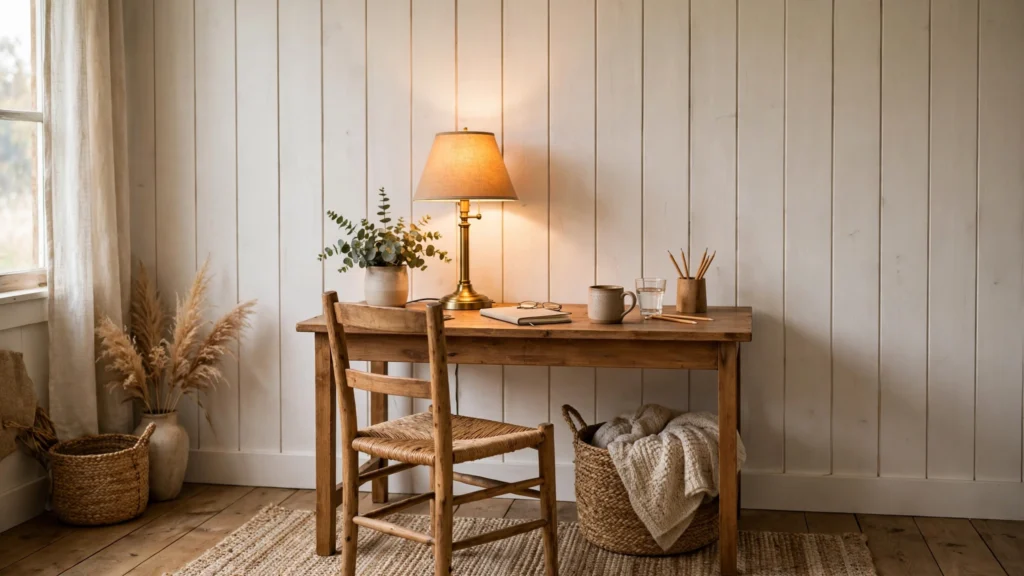
Shiplap is the farmhouse signature, and one accent wall behind your desk delivers all the character without overwhelming the room. Painted soft white or warm cream, it reflects light beautifully and gives your video-call background a clean, textured look. Vertical boards draw the eye upward and make low ceilings feel taller; horizontal boards make a narrow room feel wider.
Real tongue-and-groove boards are lovely, but peel-and-stick panels or painted plywood battens over drywall achieve the same look for far less. Keep the gaps consistent — about 3 millimeters — for that authentic board rhythm, and leave the remaining walls a warm neutral so the shiplap reads as a feature. A single coat of eggshell paint keeps the texture visible while making the wall easy to dust.
3. Hang a Sliding Barn Door for Privacy and Charm
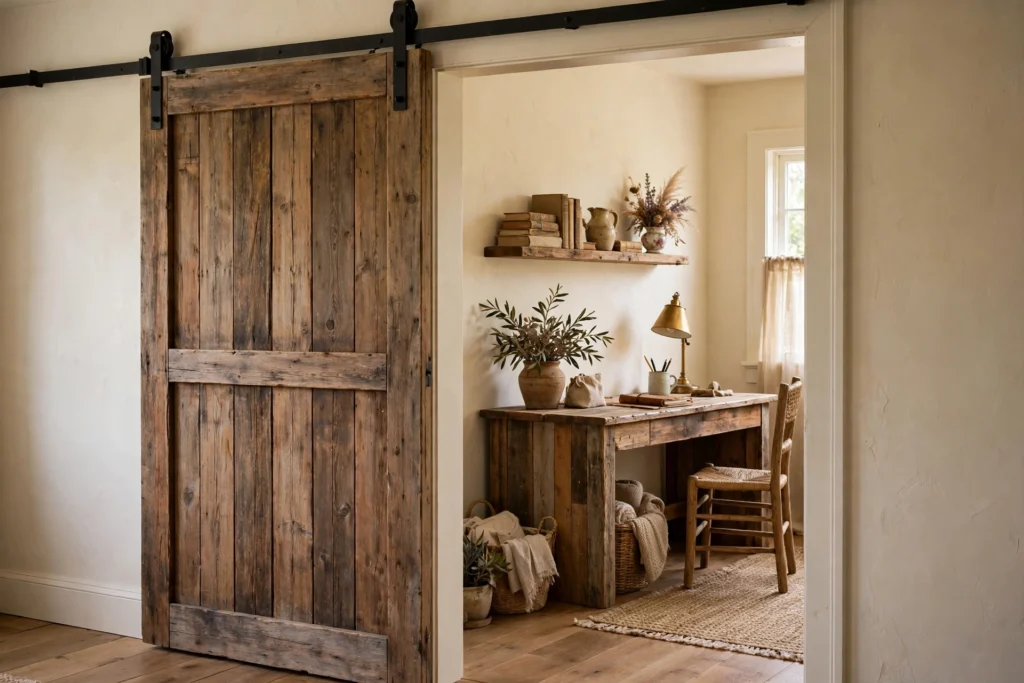
If your office doubles as a guest room or sits off a busy hallway, a sliding barn door is both practical and full of farmhouse soul. The exposed black iron track and chunky hardware become a design feature in their own right, and the door itself can be a simple plank construction you build in a weekend. Sliding also saves the swing space a hinged door needs, which matters in a compact office.
A single 90-centimeter door suits most home offices, while a wider opening can take a double door. Mount the track into wall studs, not just drywall, because solid wood doors are heavy, and add a soft-close mechanism if a slamming door would disturb the house. Open, the door frames the office like a picture; closed, it signals to the household that you are working.
4. Repurpose a Vintage Filing Cabinet
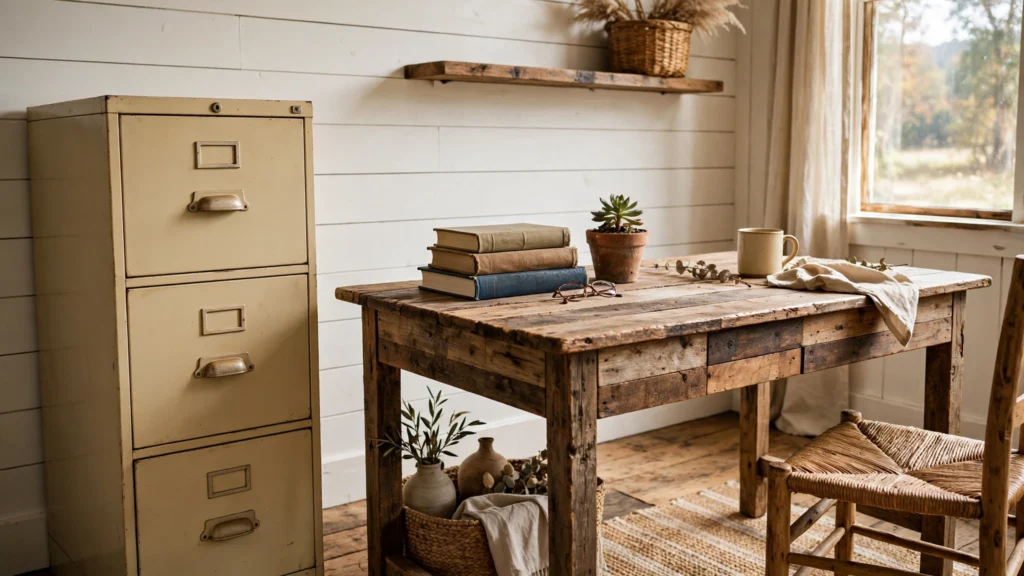
Metal filing cabinets from old offices and farmhouses are cheap, sturdy, and perfect for a farmhouse workspace. Strip the industrial gray with chalk paint in cream, sage, or soft black, then swap the pulls for cup-style bin pulls or small iron knobs. The result looks like a piece from a country general store and hides printer paper, folders, and supplies in deep drawers.
Before you buy, test every drawer and check for rust along the bottom edges — surface rust sands off easily, but a warped drawer never slides right. Line the drawers with kraft paper for a finished feel, and if the cabinet is too tall for under-desk use, let it stand beside the desk as a side table. A stack of books and a small plant on top turns it into a styled surface.
5. Organize with Mason Jar Desk Accessories
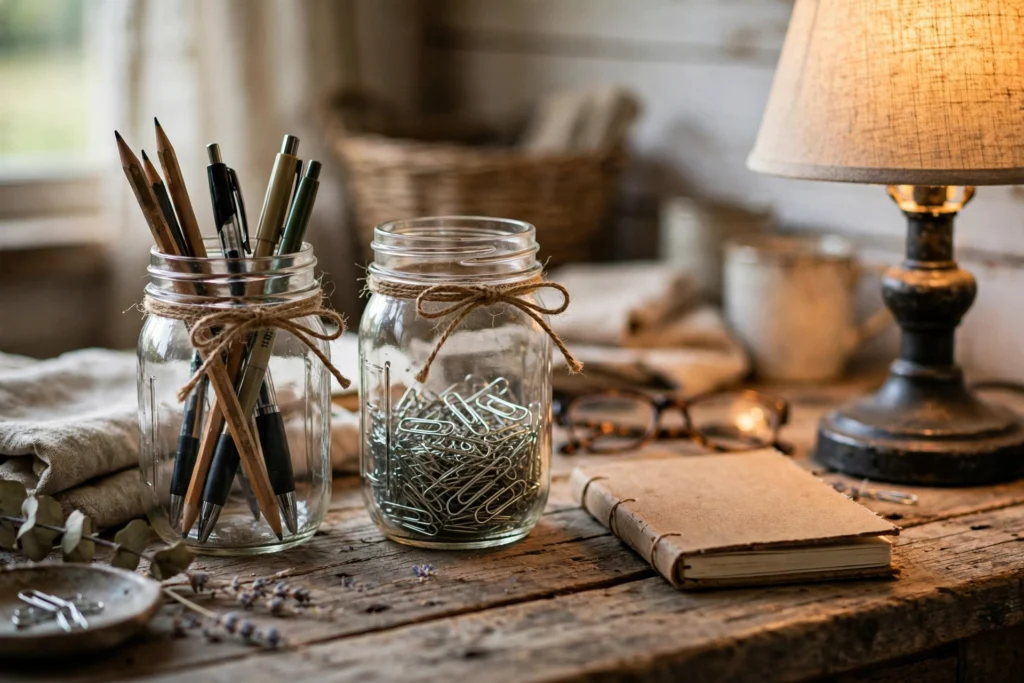
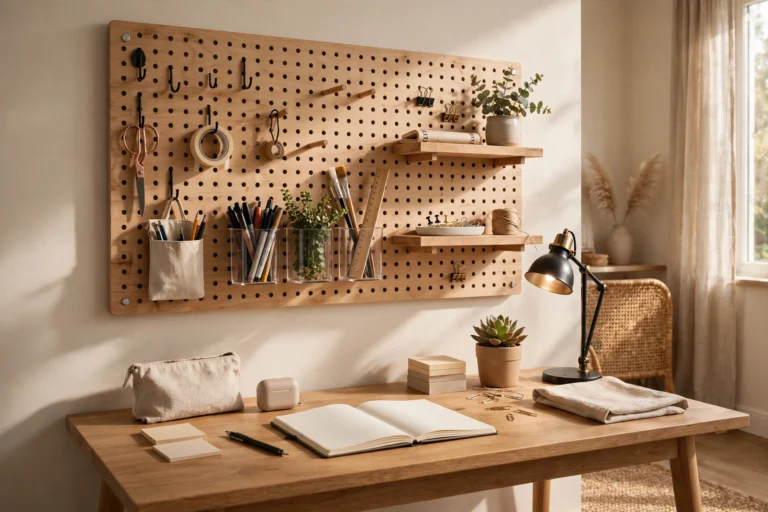
Mason jars are the farmhouse organizer that costs almost nothing and looks completely at home on a wooden desk. A pint jar holds pens and scissors, a half-pint corrals paper clips, and a quart jar makes a charming vase for fresh greenery. The glass keeps everything visible so you actually use what you store, and the familiar shape ties the desk back to farmhouse roots.
Dress the jars up simply: a wrap of jute twine around the neck, a chalkboard label, or a coat of milk paint in a muted tone. For wall-mounted storage, clamp a row of jars to a reclaimed board with hose clamps to free up desk space entirely. Keep to three or four jars on the desk itself — more than that and your workspace starts to feel like a canning pantry.
6. Light Your Desk with a Galvanized Metal Lamp
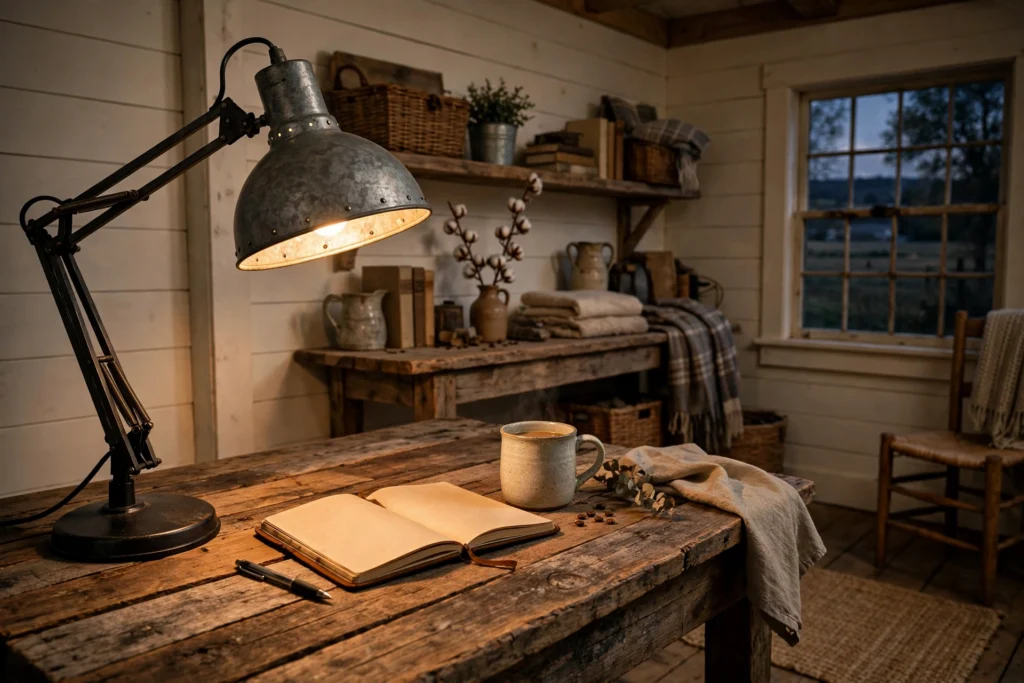
Overhead lighting alone makes any office feel flat, and a farmhouse desk begs for a lamp with industrial-country character. A galvanized metal shade — echoing old barn pendants and enamelware — throws a focused pool of warm light exactly where you work. Pair it with a warm-white bulb around 2700K so the light feels golden rather than clinical.
Position the lamp on the opposite side from your dominant hand to keep writing shadow-free, and choose an adjustable arm if you sketch or craft. A clamp-on style saves desk space on smaller surfaces, while a weighted base anchors a big reclaimed-wood top. Run the cord through a simple clip so it drops neatly behind the desk.
7. Layer Cozy Plaid Throws and Woven Textiles
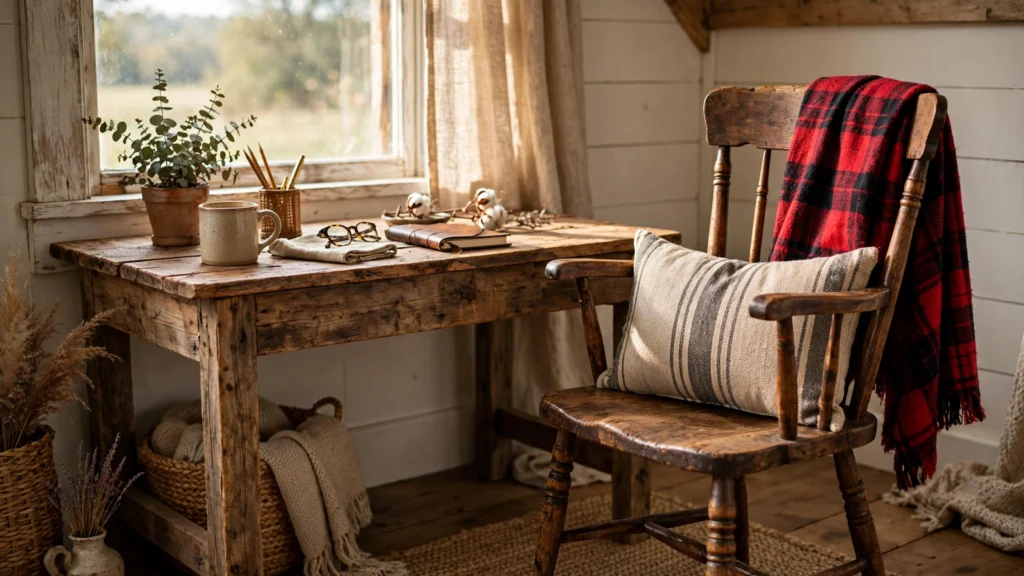
Farmhouse coziness lives in textiles, and a home office needs them as much as a living room. Drape a plaid or buffalo-check throw over the back of your chair, add a lumbar pillow in grain-sack stripe, and keep a chunky knit blanket within reach for chilly afternoons. These layers soften the hard edges of wood and metal and make long work sessions noticeably more comfortable.
Stick to a tight palette — creams, warm grays, faded reds, or classic black-and-cream checks — so the textiles feel curated rather than cluttered. Natural fibers like cotton, wool, and linen age better and photograph beautifully. Choose a washable throw, since office textiles collect dust and coffee drips, and rotate a lighter cotton in summer and heavier wool in winter.
8. Install Open Wooden Shelves with Iron Brackets
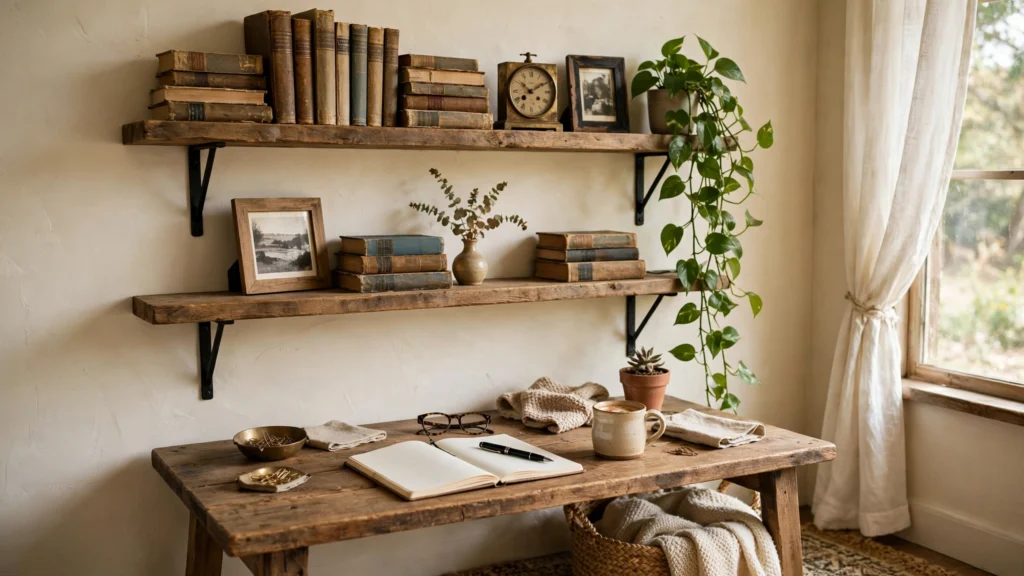
Open shelving keeps everyday supplies within reach while displaying the pretty side of farmhouse style. Two or three thick wooden shelves — reclaimed planks or new boards with a dark walnut stain — mounted on simple black iron brackets give you storage that doubles as decor. This is where you show off vintage books, a small clock, framed photos, and a trailing plant.
Mount the lowest shelf about 40 centimeters above the desk so you have clearance for a monitor and lamp underneath. Style with a mix of useful and beautiful: binders and boxes on one shelf, decorative objects on another, and never more than two-thirds full so the arrangement breathes. Corral small items in wire baskets or wooden crates so the shelves read as tidy.
9. Choose a Vintage Chair with a Cushion
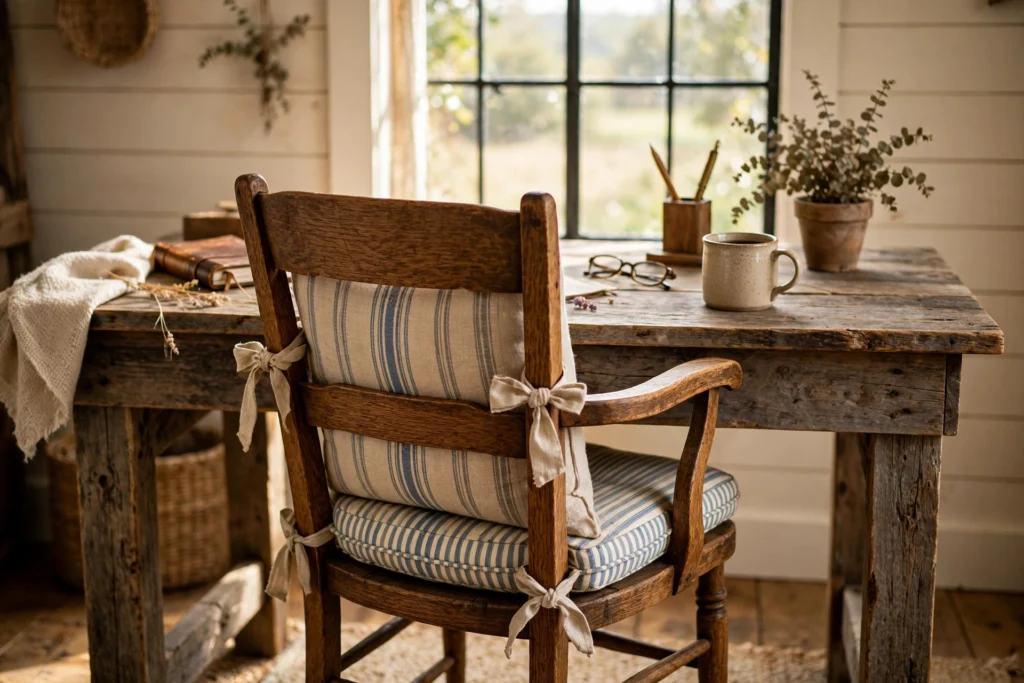
You will spend hours in your office chair, so comfort comes first — but a vintage wooden chair with a good cushion delivers both comfort and farmhouse character. Look for a sturdy oak desk chair, a Windsor, or a refinished dining chair with a solid frame. Add a thick seat cushion in ticking stripe or grain-sack fabric, tied on with simple bows, and you have seating with real personality.
Check ergonomics before committing: the seat height should let your feet rest flat with thighs roughly parallel to the floor, and the back should support your lower back — a small lumbar pillow fixes most vintage chairs’ upright backs. Re-glue any wobbly joints and tighten screws, because a creaky chair is charming for about a day. On hard floors, add felt-padded caster cups rather than drilling the legs for wheels.
10. Pin Notes to a Chicken Wire Bulletin Board
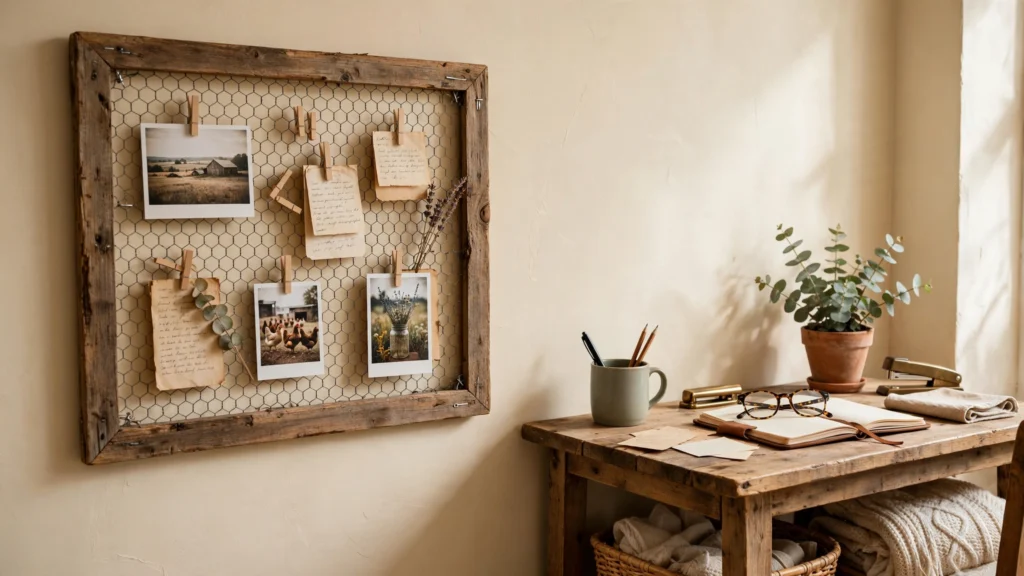
A chicken wire memo board is pure farmhouse function: clip notes, photos, paint swatches, and reminders to the wire with tiny wooden clothespins. It keeps your to-do list visible without the visual noise of sticky notes plastered across a monitor, and the wire texture adds another layer of rustic interest to the wall.
Build one by stapling chicken wire to the back of a simple wooden frame — an old window frame or cabinet door works beautifully — and hang it beside your desk at eye level, within arm’s reach. Use miniature clothespins or small metal clips rather than pushpins, which snag on the wire. Leave some empty space on the board; a completely covered memo board stops being useful.
11. Ground the Space with a Farmhouse Area Rug
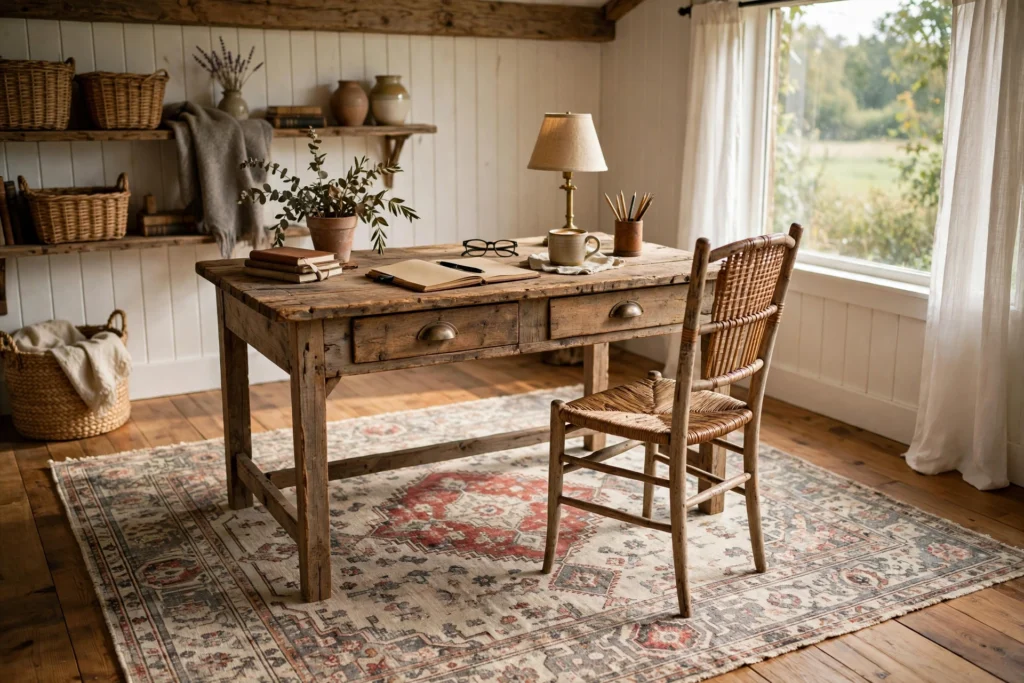
A rug defines the office zone, softens hard floors, and adds the pattern layer farmhouse rooms need. A flat-weave cotton rug in a vintage-inspired pattern — faded Persian motifs, stripes, or simple jute — sits easily under a desk and chair without catching on legs. Size it so the chair stays on the rug even when pushed back, usually at least 160 by 230 centimeters.
If your chair has wheels, choose a low-pile rug or add a clear chair mat on top to keep rolling smooth. Layer a smaller patterned rug over a large natural jute base for a designer look at a lower cost. Keep the tones in the room’s palette — creams, grays, faded blues or reds — so the rug ties the desk, chair, and textiles together.
12. Bring In Potted Greens and Dried Botanicals
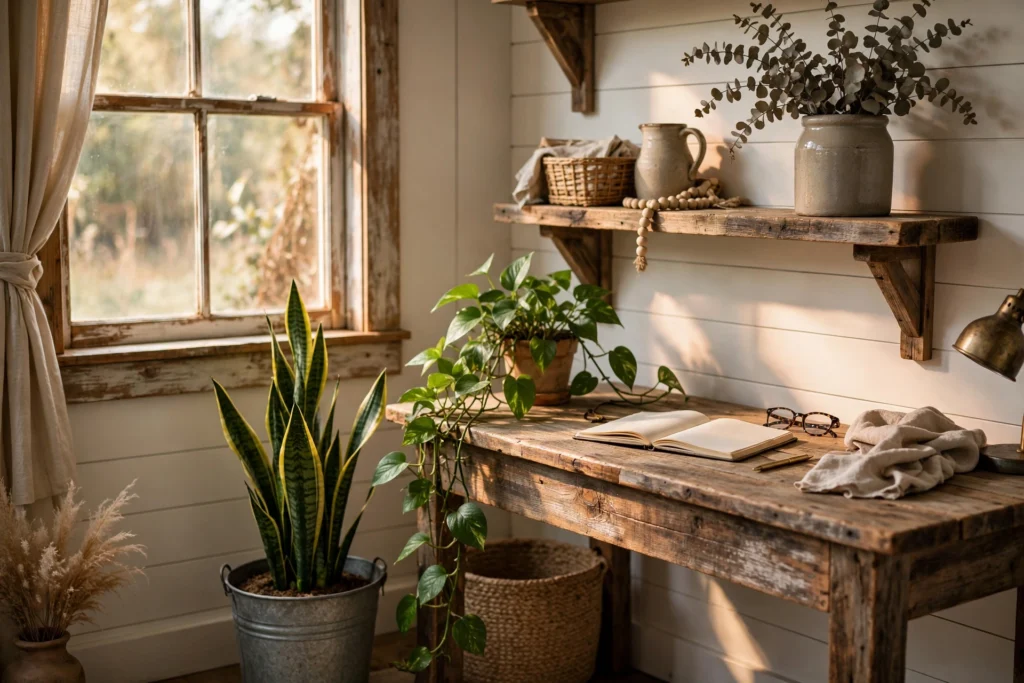
Plants are the finishing touch that makes a farmhouse office feel alive. A trailing pothos on the shelf, a snake plant in a galvanized bucket by the desk, or a small rosemary topiary on the windowsill adds color and softens all that wood and metal. Dried botanicals — wheat stalks, eucalyptus, or lavender in a stoneware crock — bring farmhouse texture with zero maintenance.
Pick plants that tolerate your office’s actual light. Snake plants, pothos, and ZZ plants survive low light and irregular watering, which describes most busy workweeks. Group plants in odd numbers and vary the heights for a natural look. If your office has no window, high-quality faux eucalyptus in a vintage pitcher still delivers the farmhouse feel without the guilt.
13. Hang a Black Iron Pendant or Chandelier
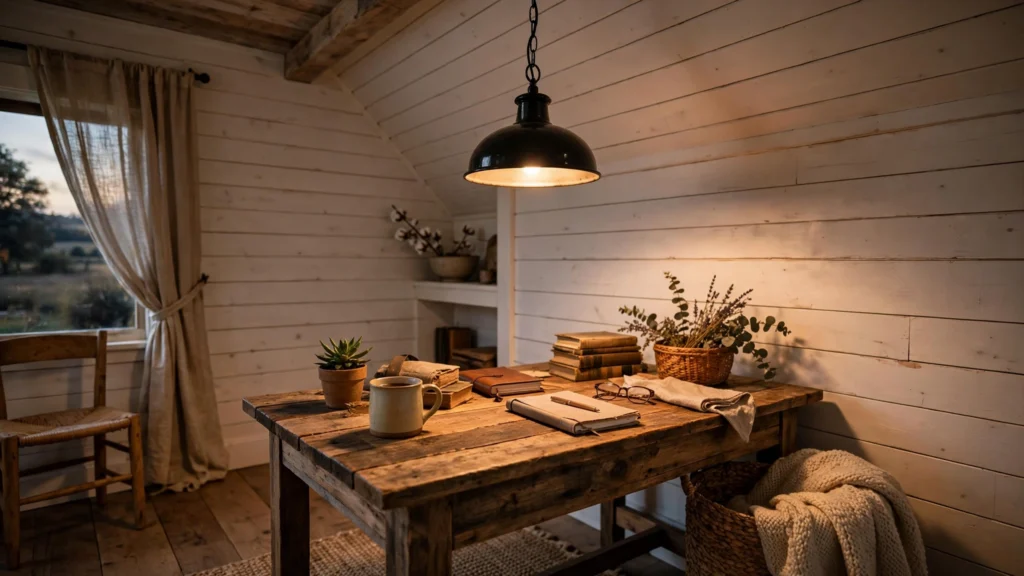
Overhead lighting sets the room’s mood after dark, and a black iron fixture is the farmhouse answer to a boring flush mount. A small wagon-wheel chandelier, a trio of enamel pendants, or a single oversized dome pendant over the desk casts warm, even light and gives the ceiling some presence. The dark metal contrasts beautifully with white shiplap and cream walls.
Hang the fixture so its bottom sits about 75 to 90 centimeters above the desk — high enough to stay out of your sightline, low enough to feel intentional. Use dimmable warm-white bulbs to shift from bright task lighting to a soft evening glow. If you rent or cannot hardwire, a plug-in pendant with a fabric cord swagged from a ceiling hook gives the same look with no electrician.
14. Repurpose an Old Ladder as Shelf and Blanket Storage

A vintage wooden ladder leaning against the wall is one of the most charming farmhouse storage tricks. The rungs hold folded throws and quilts, S-hooks hang baskets of supplies, and the top steps display small plants or framed art. It uses vertical space that would otherwise go to waste and adds instant rustic character for the price of a flea-market find.
Choose a ladder 150 to 180 centimeters tall so it feels substantial, and make sure it sits stable — add small felt pads where it meets the wall and floor. Sand any splintery spots before bringing it inside. Drape throws over alternating rungs rather than every rung so the piece looks styled, not stuffed. In a tight office, a narrow orchard ladder works in a corner that would otherwise sit empty.
15. Keep the Palette Warm White with Creamy Accents
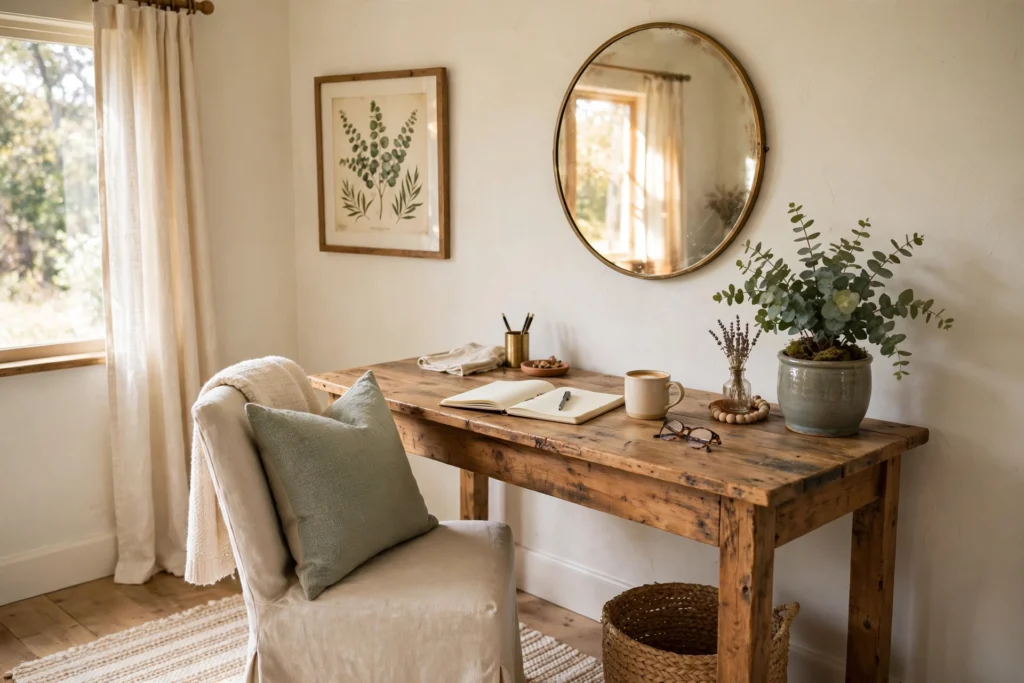
The final idea ties everything together: a warm, restrained palette. Farmhouse offices glow when the walls are warm white or soft cream, the wood tones stay honey and walnut rather than gray, and accents come in muted sage, faded denim blue, or a sparing touch of barn red. This palette keeps the room bright and calm — exactly what you want behind a long workday.
Test paint colors on the wall in morning and evening light before committing; warm whites can swing yellow under artificial light. Repeat each accent color at least twice — a sage pillow and a sage planter, for example — so the palette feels intentional. Let the wood be the star and keep wall art simple: a framed botanical print, a vintage sign, or a round mirror that bounces light around the room.
Frequently Asked Questions
What defines a farmhouse home office style?
A farmhouse home office blends rustic, vintage-inspired elements with practical workspace design: reclaimed or distressed wood furniture, shiplap or beadboard walls, black iron hardware, galvanized metal accents, and cozy natural textiles like plaid throws and woven rugs. The palette stays warm and neutral — creams, whites, warm grays, and natural wood tones — with muted accent colors. Unlike sleek modern offices, a farmhouse office celebrates imperfection: visible wood grain, aged finishes, and pieces with a history.
How can I create a farmhouse office on a small budget?
Start with thrift stores, flea markets, and online marketplaces, where solid wood desks, chairs, and ladders sell for a fraction of retail. Paint transforms almost anything — chalk paint on a filing cabinet or milk paint on mason jars costs very little. Peel-and-stick shiplap, a DIY chicken wire memo board, and jute-twine jar wraps are all weekend projects on a modest budget. Spend where comfort matters most: a good chair cushion and warm task lighting, and add decorative layers gradually.
What colors work best in a farmhouse home office?
Warm whites and soft creams on the walls keep the room bright and calm for long work hours. Natural wood tones in honey, walnut, and weathered gray provide warmth, while black iron and galvanized metal add contrast. For accents, muted sage green, faded denim blue, dusty rose, or a restrained barn red all read as farmhouse without overwhelming the space. Avoid stark cool grays and high-contrast black-and-white schemes — they push the room toward modern or industrial rather than cozy country.
How do I keep a farmhouse office from looking cluttered?
Farmhouse style walks a fine line between collected and cluttered, so give every decorative object a home — trays, baskets, and jars corral small items so surfaces stay clear. Follow the two-thirds rule on open shelves: leave at least a third of each shelf empty so arrangements breathe. Limit yourself to one statement piece per zone and repeat colors rather than introducing new ones. Finally, do a monthly five-minute edit: remove anything you have not used or loved in the past month.
Keep Exploring
A farmhouse home office is never really finished — it grows the way a farmhouse does, one found piece and one small project at a time. Start with the desk and the lighting, since those shape how the room works every day, then layer in the textiles, shelves, and vintage finds as you come across them. Before long you will have a workspace that feels less like an office and more like the coziest room in the house.





[…] of scholars — dark woods, worn leather, brass, and paper — and it translates beautifully to a home office. It is not about gloom; it is about gravitas, texture, and a room that makes you want to sit down […]