
The industrial home office doesn’t do precious. Born in converted warehouses and artist lofts, it is a workspace built from honest materials — reclaimed wood, blackened steel, exposed brick, concrete — that looks better with a few scars. It is the antidote to the bland beige home office: a room with the confidence to show its structure and the character to make work feel like craft.
These industrial home office design ideas prove that raw and refined are not opposites. With the right balance of rugged materials, warm wood, and thoughtful lighting, an industrial workspace feels focused, creative, and unmistakably yours. Here are fifteen ways to bring the urban edge home.
1. Anchor with a Reclaimed Wood Desk
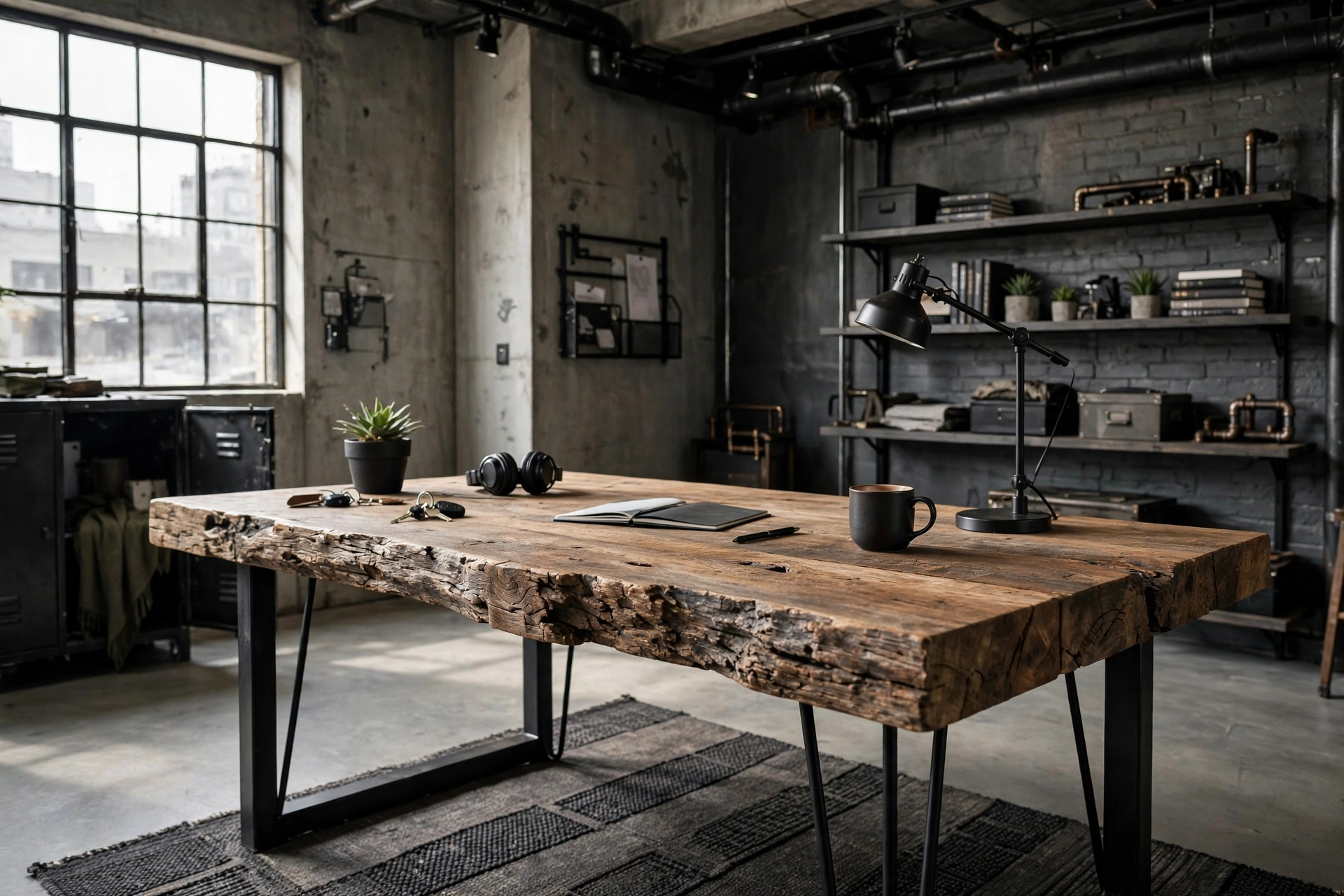
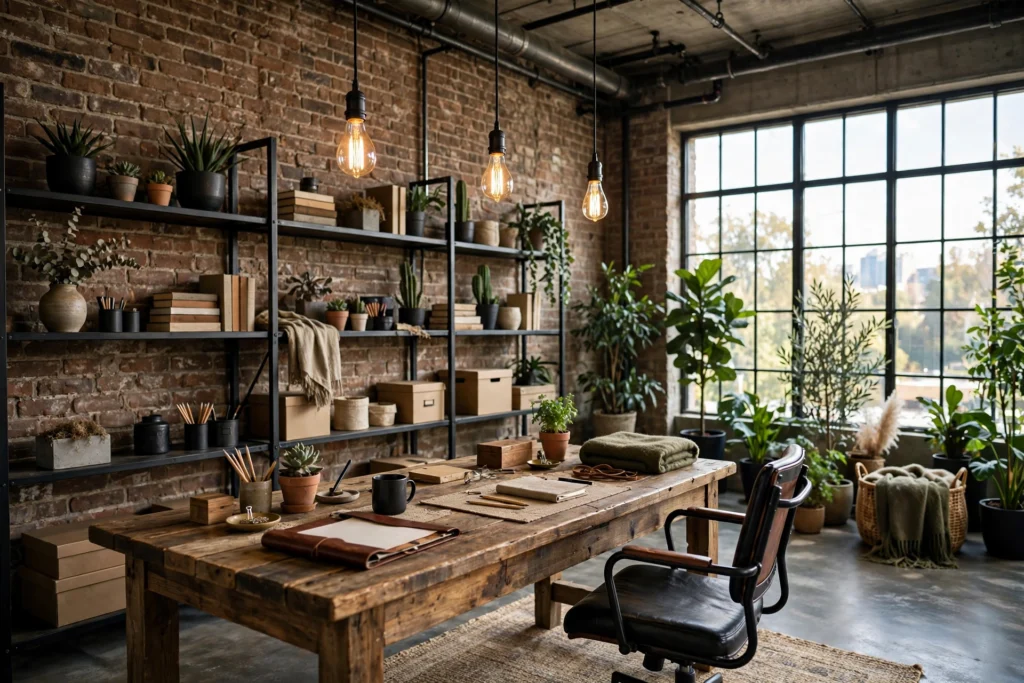
Every industrial office starts with the desk, and reclaimed wood is the material that defines the style. A thick slab of salvaged timber — with its saw marks, nail holes, and varied grain — on black steel legs gives you a work surface with history. No two are alike, which is exactly the point: your desk should look like it has a past.
Size it generously if you have the room; industrial style favors substantial, grounded furniture over delicate pieces. Pair the warm wood with matte black metal legs or a pipe-frame base to complete the factory vocabulary. Finish the top with matte polyurethane so it resists coffee rings while keeping its raw texture — you want the character visible, not the stains.
2. Expose Brick or Concrete Walls
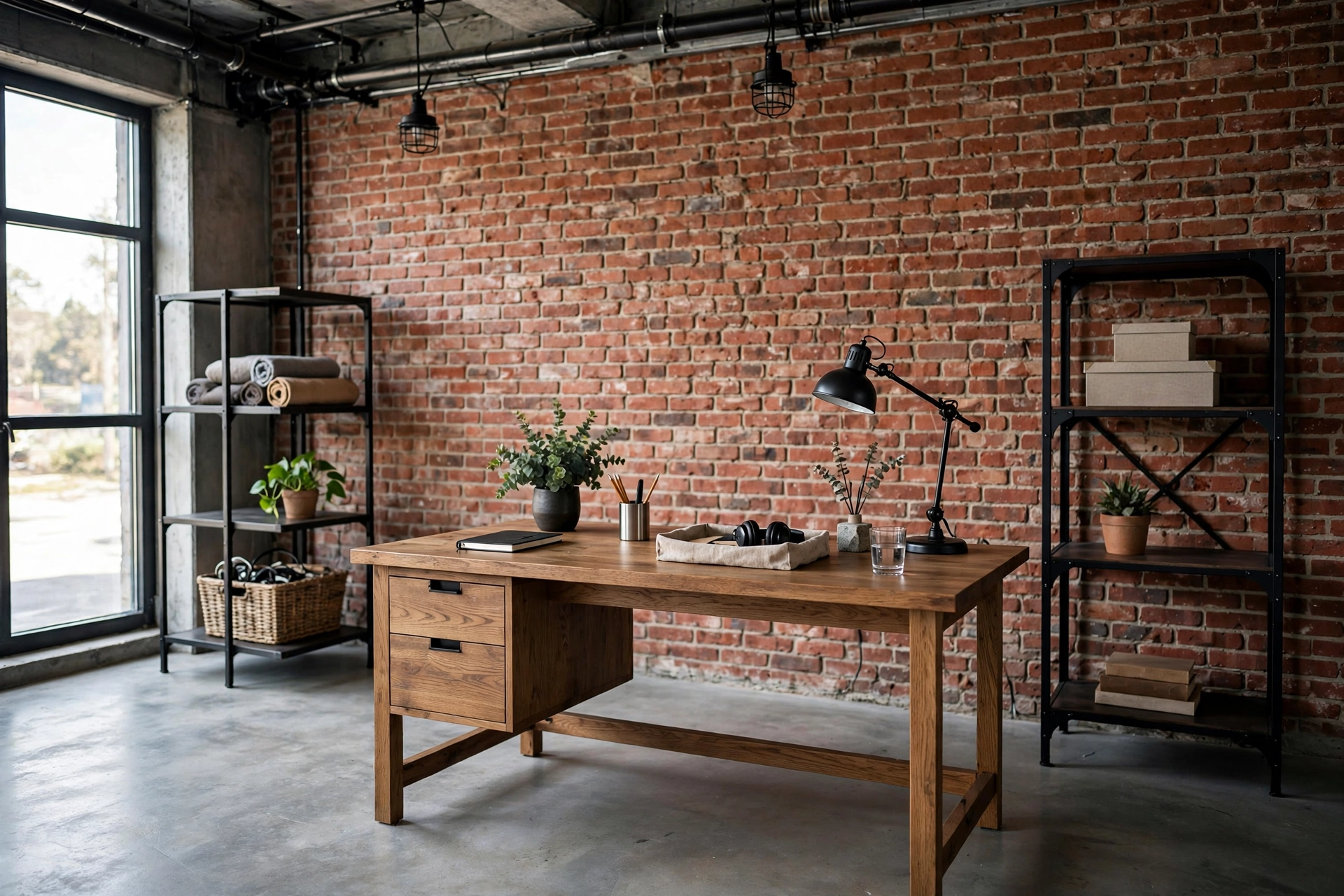
Nothing telegraphs industrial style faster than an honest wall. If you are lucky enough to have real brick behind the drywall, expose it — carefully, and seal it against dust. If not, brick veneer panels, concrete-look plaster, or even a well-chosen exposed-brick wallpaper deliver the texture without structural surgery.
One feature wall is usually enough; wrapping all four walls in brick can feel like a theme restaurant. Let the wall be the backdrop for open shelving, oversized art, or a simple clock — the texture does the decorating. Keep the remaining walls in a flat, neutral paint (warm white, soft gray) so the industrial wall reads as intentional contrast rather than unfinished construction. Apartment Therapy’s guide to industrial style puts textured surfaces like brick accent walls and concrete flooring at the heart of the look.
3. Add Black Metal Shelving
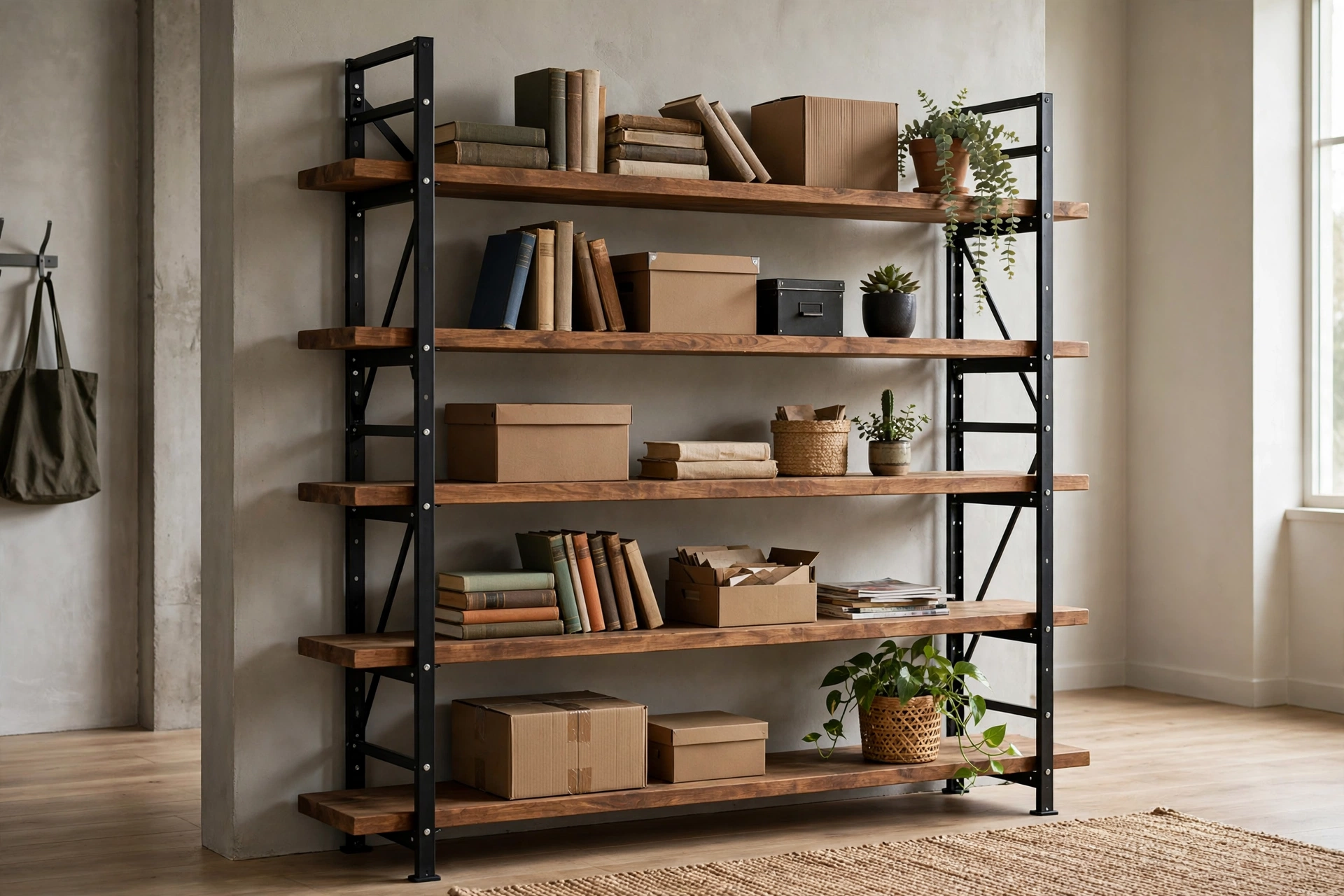
Industrial shelving is storage as sculpture: black metal uprights with thick wood shelves, pipe-flange brackets, or a full riveted-steel unit that looks borrowed from a factory floor. Open shelving suits the style’s honest ethos — everything visible, everything earning its place — and it keeps reference books, boxes, and beautiful objects within arm’s reach.
Style the shelves with intention, not clutter: books grouped by size, a few metal or concrete storage boxes, one or two plants to soften the steel. Leave breathing room between groupings; industrial is spare, not stuffed. If dust is a concern, mix open shelves with a couple of closed metal cabinets or vintage lockers for the supplies you would rather not display.
4. Choose an Ergonomic Leather Chair
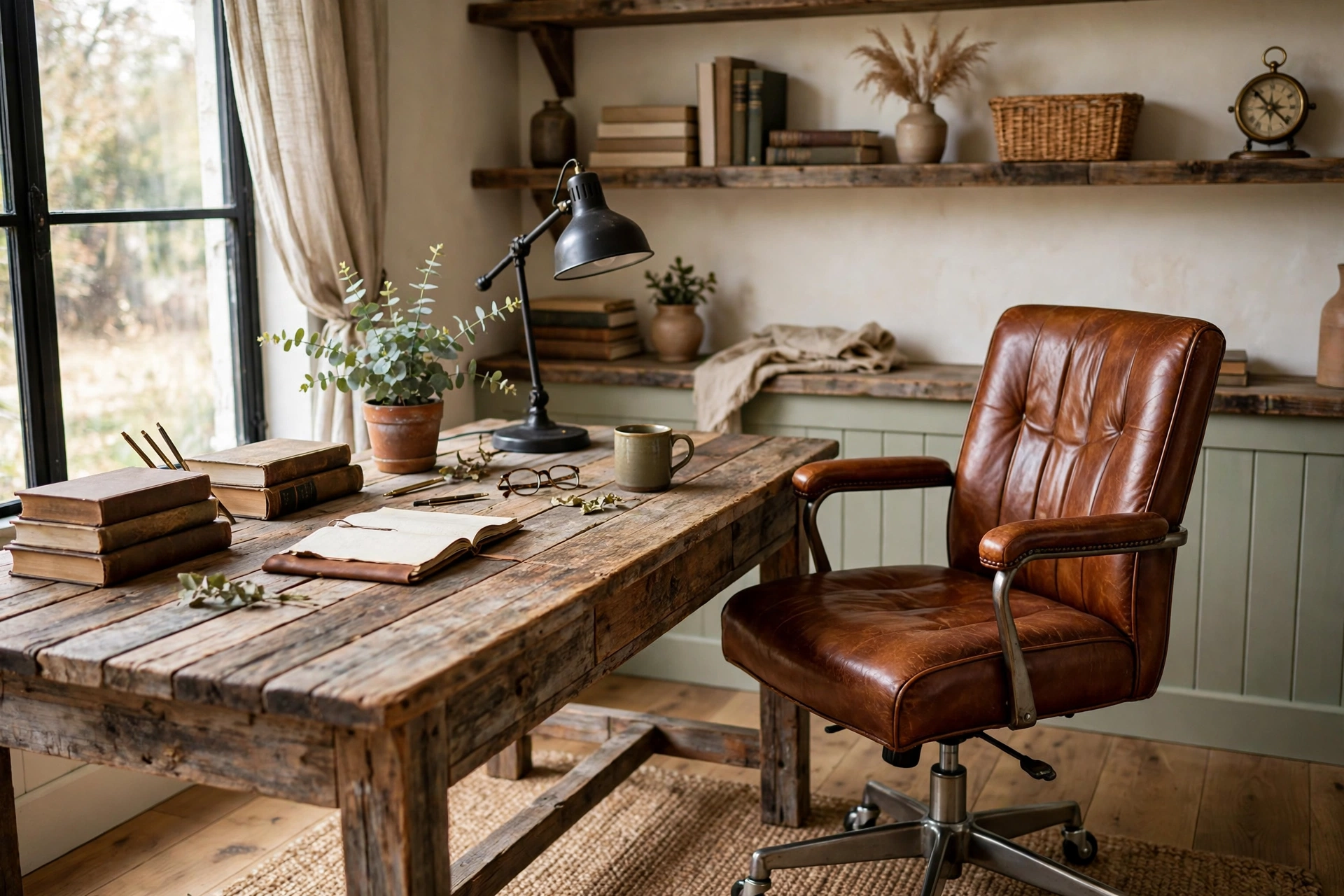
An industrial office still has to work for eight hours a day, so the chair matters more than almost anything else. A vintage-style leather office chair — think worn cognac or black leather with visible stitching and a sturdy metal base — delivers the industrial look without sacrificing the ergonomics your back demands. Real leather ages beautifully, developing the patina the style celebrates.
If a full leather executive chair feels too heavy, a well-designed task chair in black with metal accents keeps the palette while prioritizing adjustability. The non-negotiables are lumbar support, adjustable height, and armrests that clear the desk. Our dark academia home office ideas take the same leather-and-wood material story in a moodier, more scholarly direction — worth a look if you love the palette.
5. Hang Edison Bulb Lighting
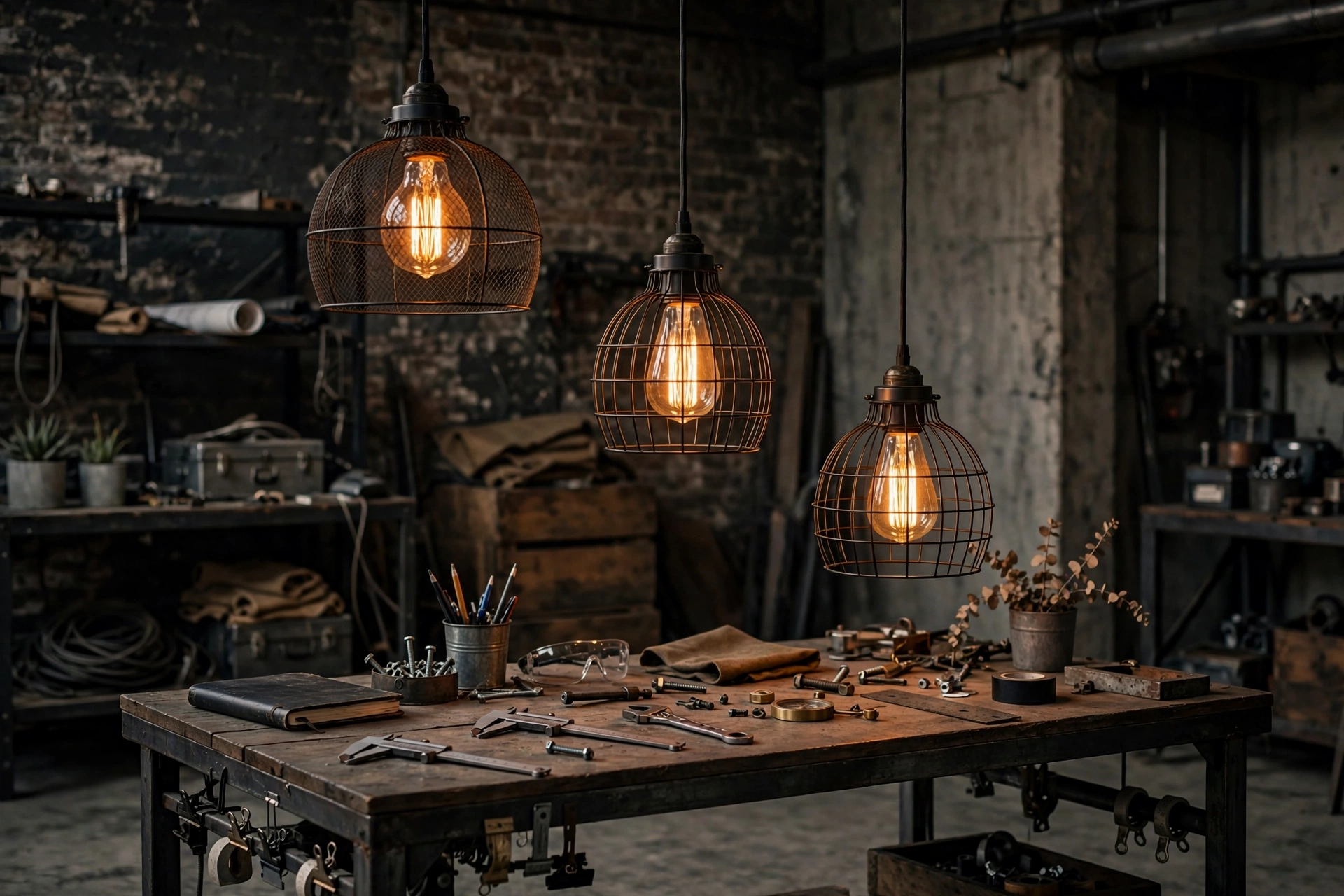
Lighting is where industrial style gets its romance. Exposed-filament Edison bulbs in cage pendants, bare-bulb drops on fabric cords, or a multi-arm chandelier in blackened steel — these fixtures are jewelry for the industrial office, casting the warm amber glow that makes raw materials look rich instead of cold.
Hang a statement pendant over the desk for ambient character, and pair it with a proper task lamp for actual work — Edison bulbs are atmospheric, not adequate, for detailed tasks. Keep bulbs at 2700K for warmth, and put the ambient fixtures on a dimmer so the room can shift from bright workday to moody evening. Cluster three small pendants at staggered heights over a long desk for a particularly striking effect.
6. Use a Pipe-Frame Desk
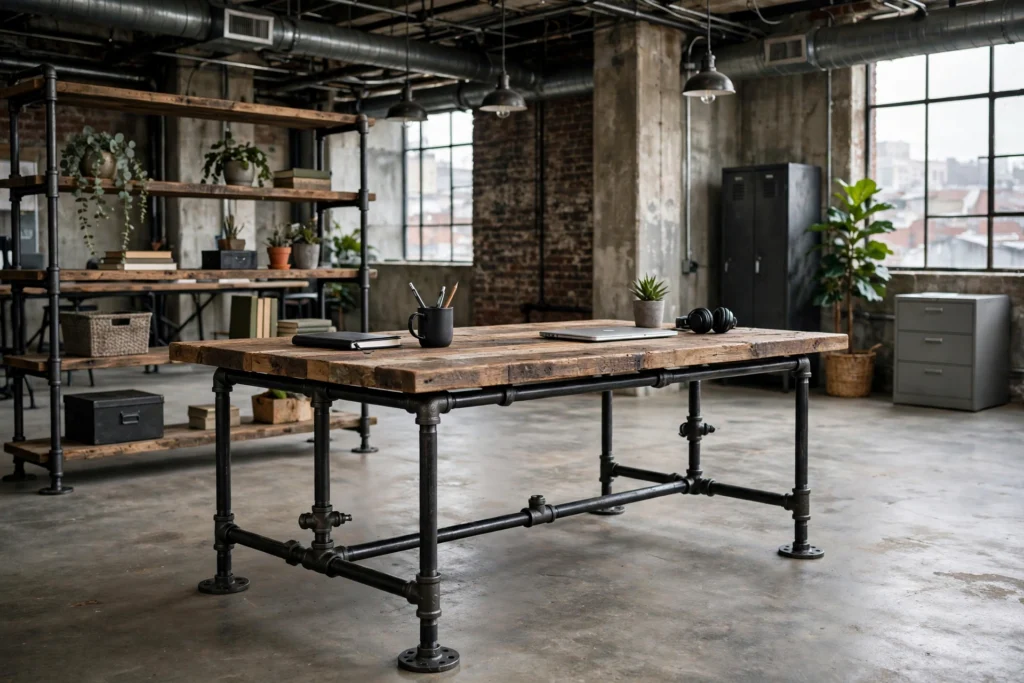
If reclaimed slab is the soul of the industrial desk, the pipe frame is its skeleton. Desks built from real iron pipe fittings — flanges, elbows, and straight runs in black or galvanized finish — with a wood, metal, or concrete top are the purest expression of factory-made furniture. They are also genuinely sturdy and often adjustable.
You can buy pipe-frame desks ready-made or build one from plumbing components for a true DIY industrial piece; just ensure the fittings are properly tightened and the frame is level. The open pipe base keeps the desk visually light despite its industrial weight, and the crossbars double as footrests. For the full workshop vocabulary, our industrial bathroom design ideas show how pipe fittings and blackened metal carry the same language into wet spaces.
7. Add a Large Industrial Rug
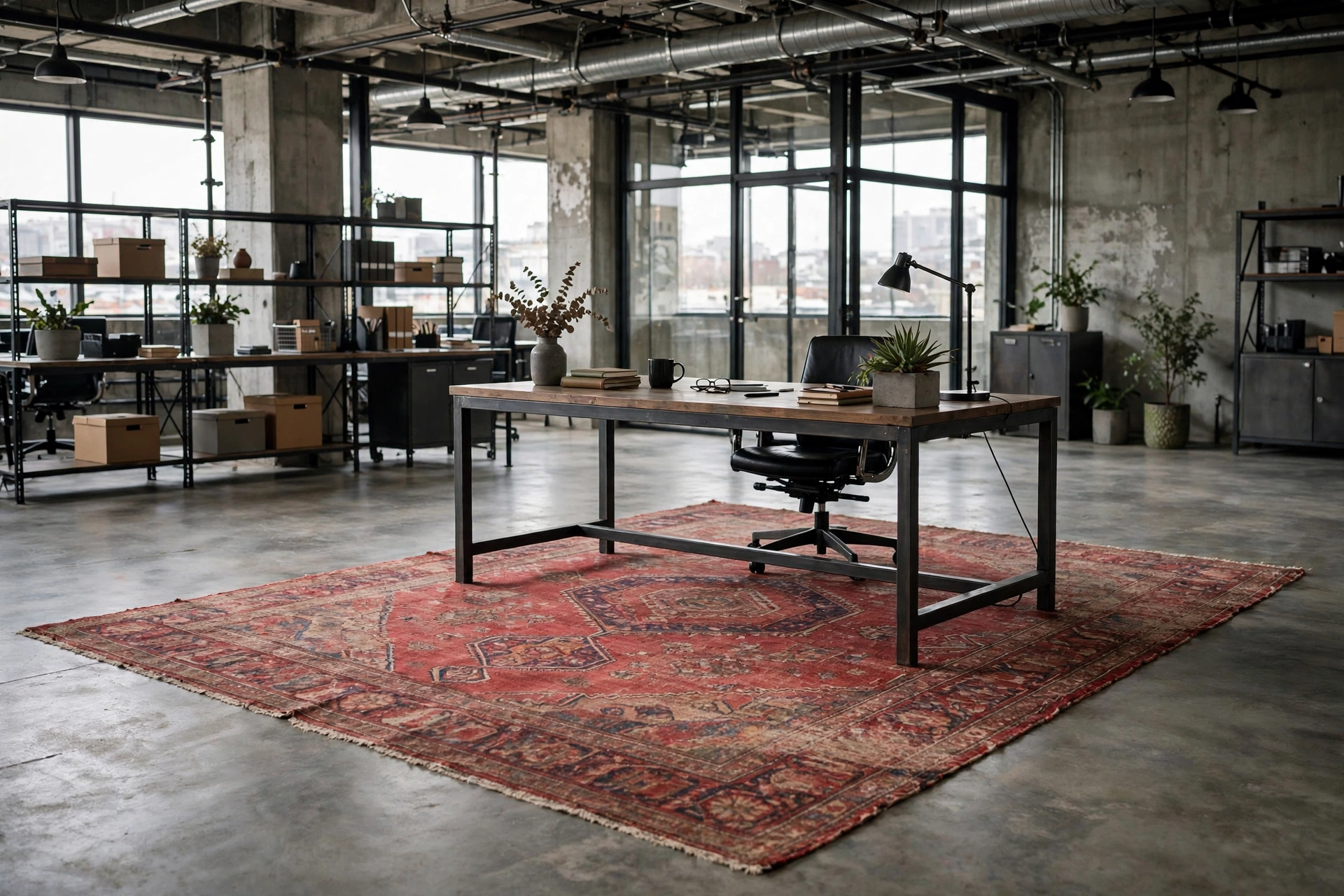
Concrete, wood, or bare floors are the industrial default — and a rug is what makes them livable. A large, low-pile rug in a flatweave, vintage Persian, or simple geometric pattern warms the floor, dampens the echo that hard surfaces create, and anchors the desk zone within an open room. In industrial spaces, the rug is often the single softest thing in the room, so choose well.
Vintage or vintage-look rugs in faded reds, indigos, and charcoals complement the black-metal-and-wood palette beautifully. Size it so the desk and chair both sit fully on the rug with room to roll back. If your office doubles as a workshop or craft space, choose a washable or indoor-outdoor rug that forgives the occasional mishap — industrial style is meant to be lived in hard.
8. Install a Pegboard or Grid Wall
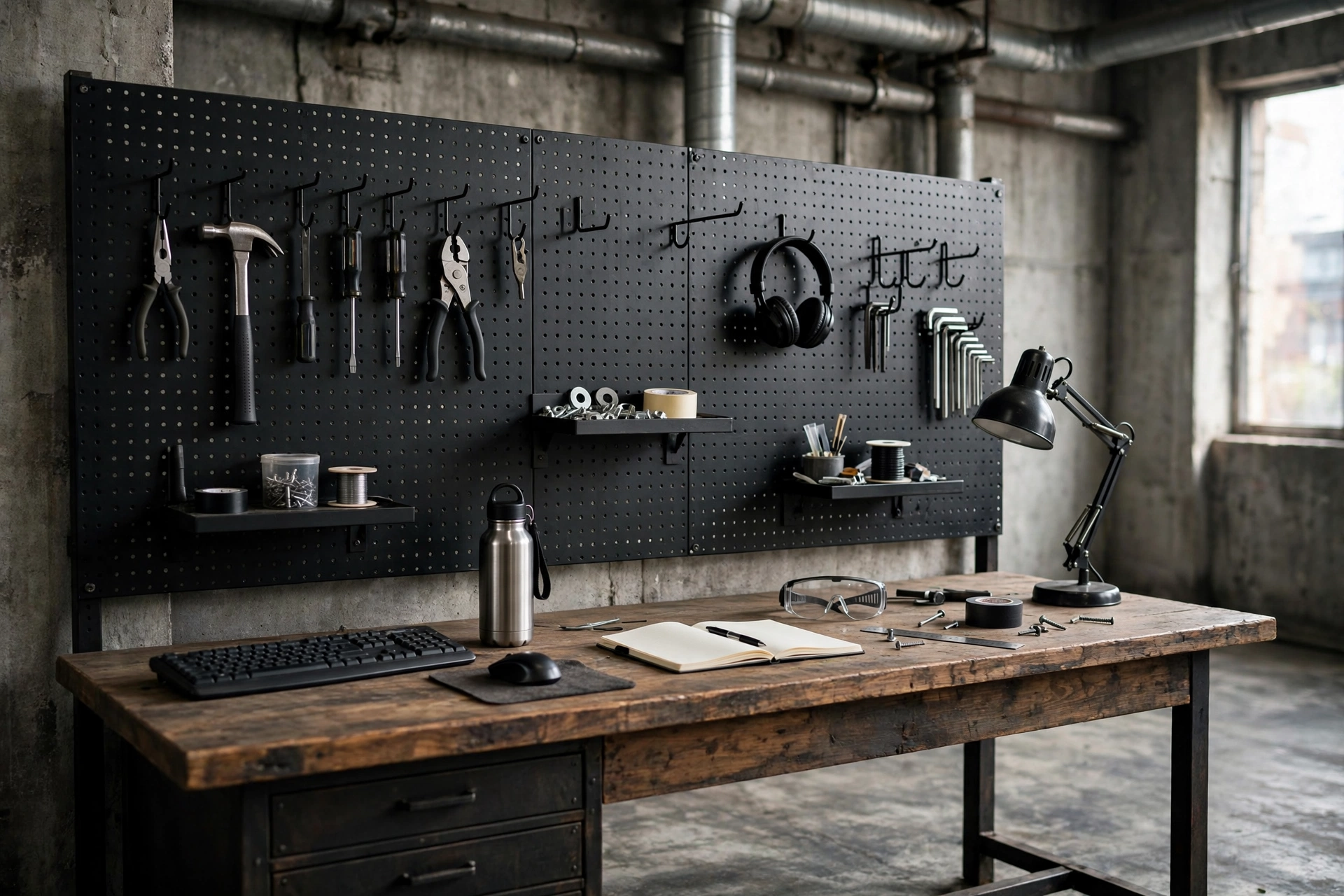
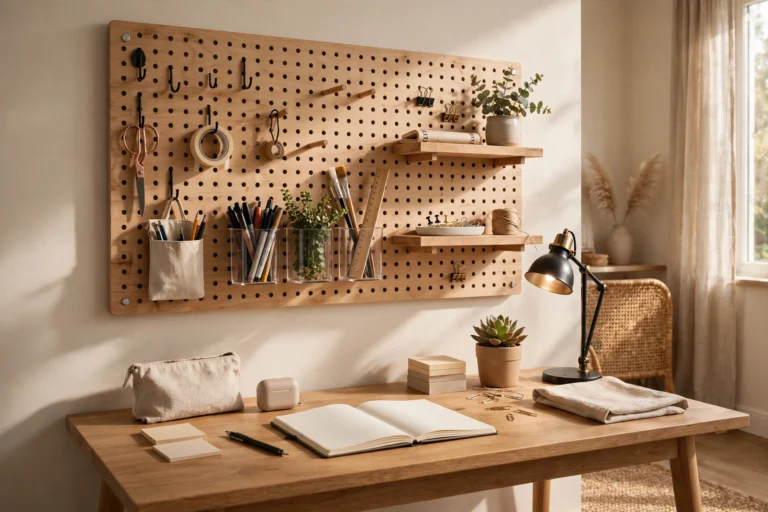
Industrial workspaces are working walls, not just pretty ones. A pegboard in stained wood or powder-coated black metal, or a wire grid panel, turns a blank wall into endlessly reconfigurable storage for tools, supplies, headphones, and inspiration. It is the factory pegboard elevated to design feature.
Mount it beside or behind the desk at arm’s reach, and accessorize with hooks, small shelves, and metal cups rather than plastic organizers — the accessories should match the room’s material story. Leave some pegs for the non-practical: a framed photo, a small plant, a favorite print. The beauty of pegboard is that it evolves with your work; rearrange it quarterly and the office never goes stale.
9. Bring In Vintage Locker Storage
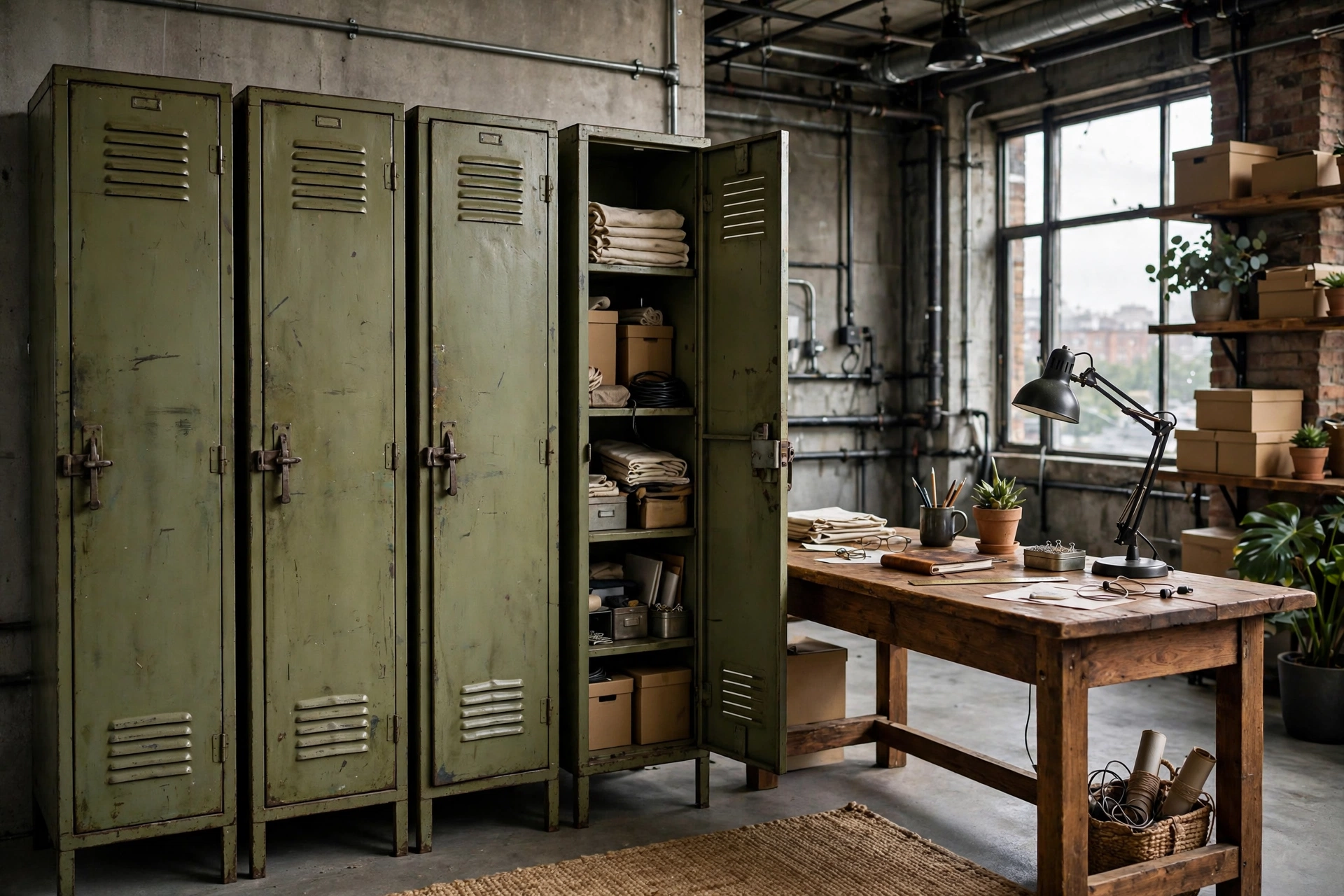
Few pieces say industrial like a bank of vintage metal lockers. Originally built for factories, schools, and gyms, old lockers bring authentic industrial provenance, serious storage, and a sculptural presence that new furniture can’t fake. A single tall locker beside the desk handles files and supplies; a low double-wide unit works as a credenza.
Hunt architectural salvage shops, school surplus sales, and online marketplaces — look for solid construction and working latches, and don’t fear surface rust or chipped paint (that’s patina). Clean thoroughly, seal any rust, and consider lining the interiors with fresh paint or contact paper. Numbered doors or original institutional labels are the details that make guests ask where you found it.
10. Add Architectural Task Lighting

Every industrial desk needs a proper task lamp, and this is the style’s chance to shine. An articulated architect’s lamp in black metal with a dome shade, a clamp-on industrial spot, or a pharmacy-style desk lamp with a brass or steel finish — these are the precision instruments of the industrial office, beautiful and brutally functional.
Position the lamp to the side of your dominant hand to avoid casting shadows across your work, and choose a model with a warm-white LED bulb (3000K is ideal for task work — crisp without the cold). A clamp or wall-mounted lamp frees desk surface, which matters in compact offices. The task lamp’s silhouette against the brick or concrete wall is one of the great industrial vignettes — make sure it is visible, not hidden.
11. Keep the Palette Dark and Moody
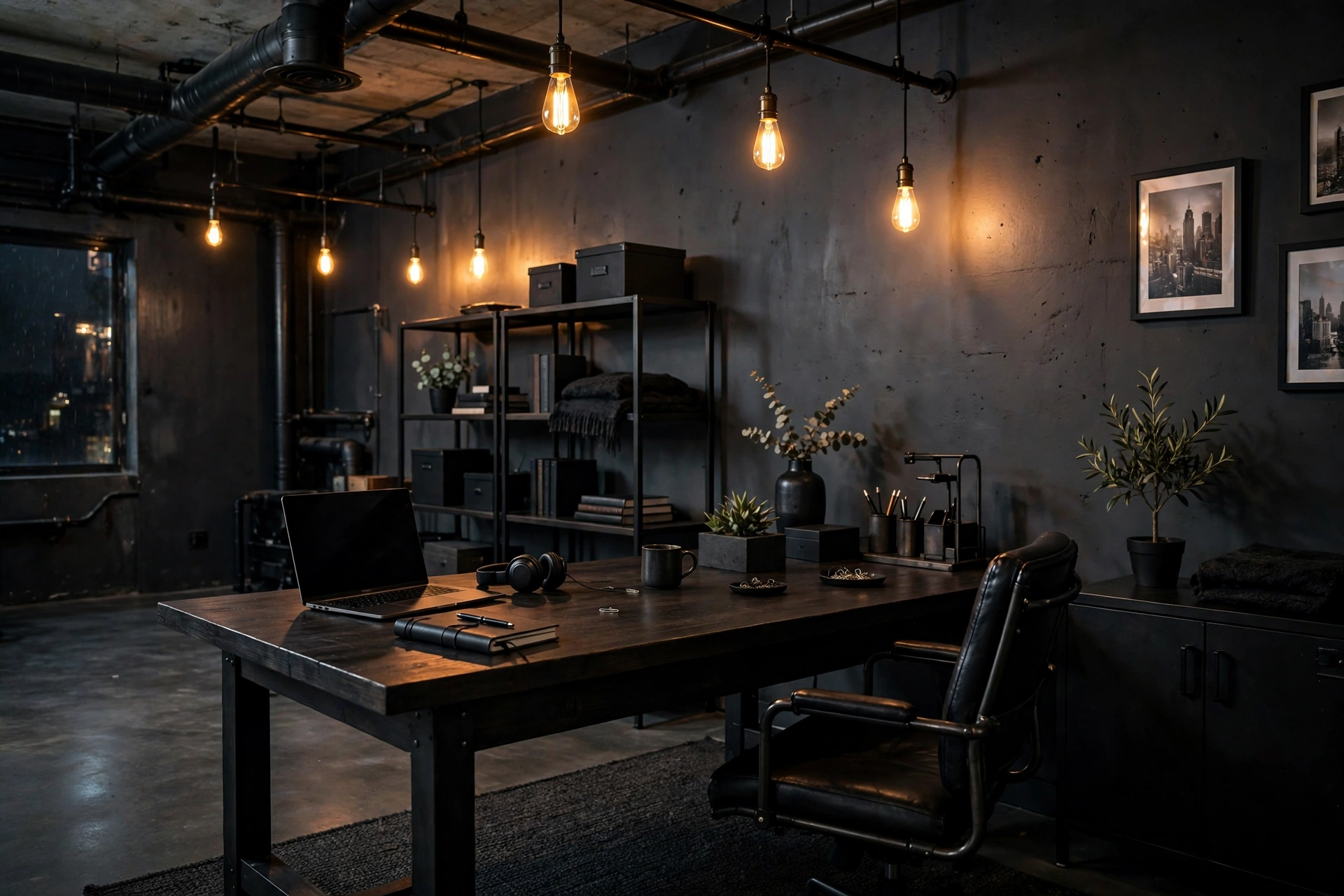
Industrial color is drawn from the factory floor: charcoal, black, warm grays, deep browns, with concrete gray and brick red as the natural accents. A dark, moody palette makes an office feel focused and cocooning — the visual equivalent of noise-canceling headphones. It also makes screens easier on the eyes by reducing contrast with the surroundings.
You don’t need to paint every wall black; one dark accent wall behind the desk, dark furniture against pale walls, or even just dark window frames can carry the mood. Balance the darkness with warm wood tones and amber lighting so the room feels intentional rather than gloomy. If the room is small or north-facing, keep the ceiling and one wall light to preserve a sense of airiness while the rest goes dark.
12. Display Oversized Art
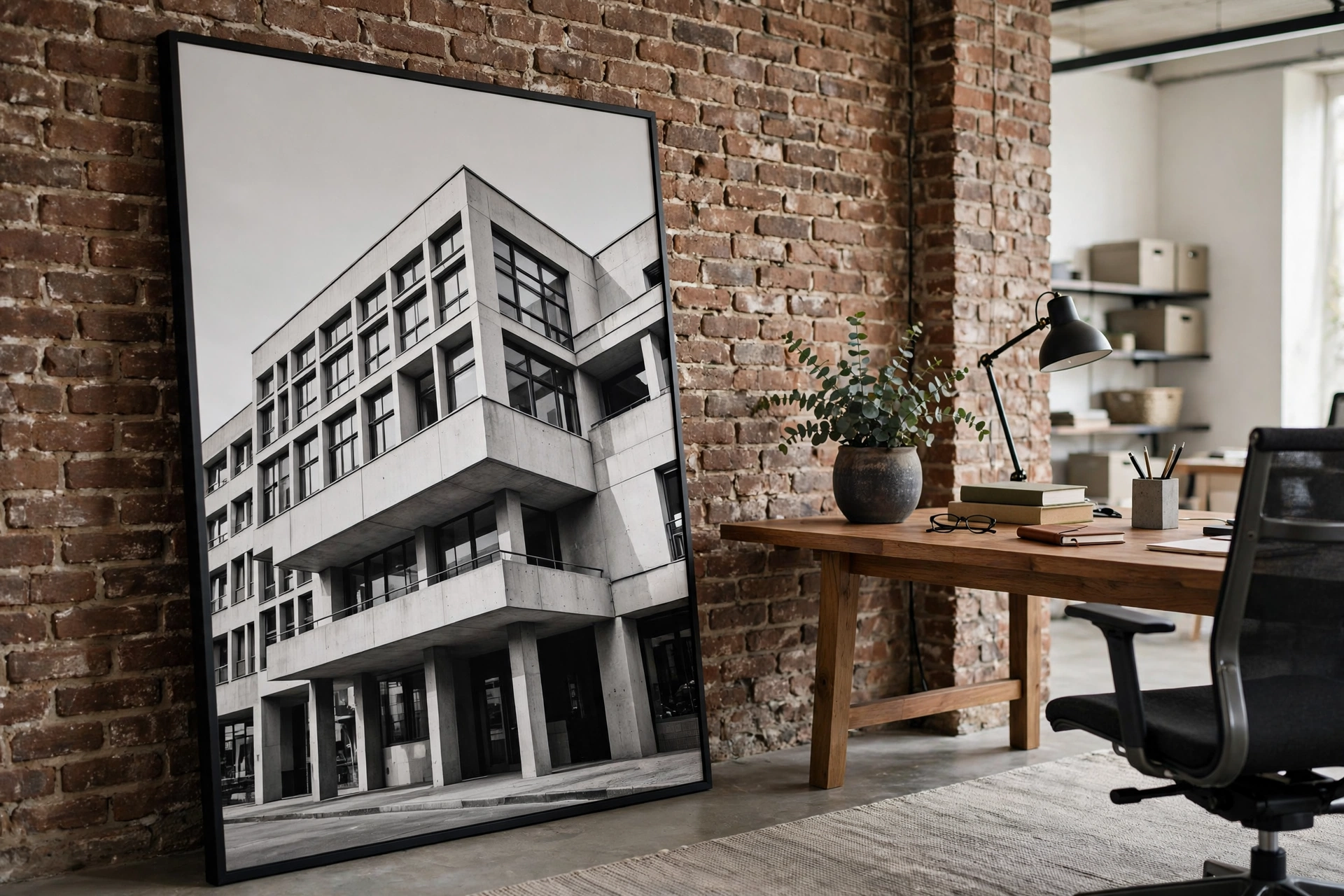
Industrial spaces have the scale for big statements — high ceilings, large walls, open floor — so think oversized. One large black-and-white photograph, an abstract canvas in the room’s palette, a vintage factory sign or salvaged architectural fragment: a single bold piece beats a fussy gallery wall in an industrial office.
Lean large pieces against the wall on the floor or a low shelf for the casual loft feel, or hang one commanding work centered behind the desk where video calls will see it. Keep frames simple — thin black metal, raw wood, or no frame at all for canvas. The art should feel collected and confident, like everything else in the room; this is not the place for timid décor.
13. Add Greenery to Soften the Edge
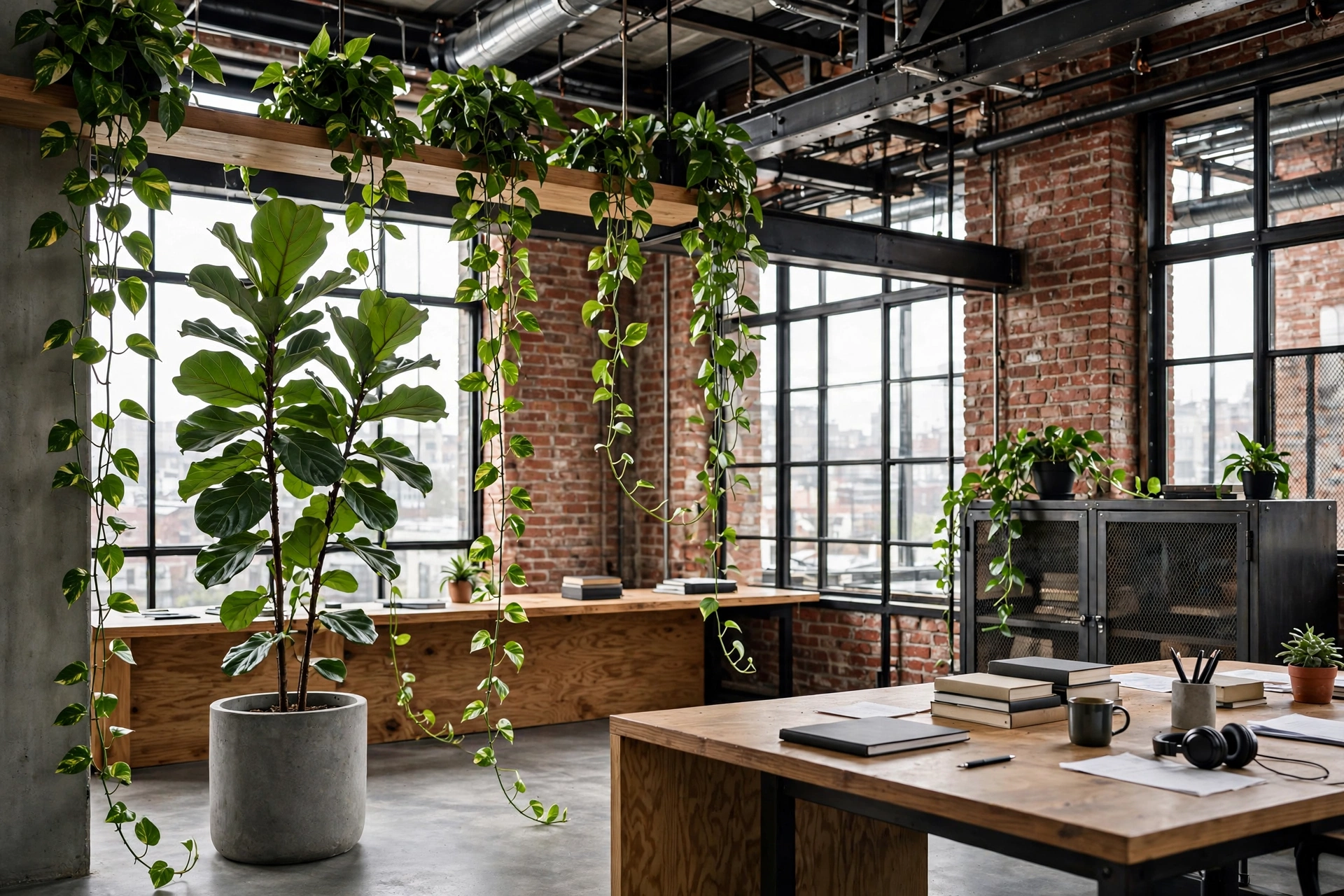
The secret ingredient that keeps industrial offices from feeling like actual factories is living green. Plants soften hard edges, warm up concrete and steel, and clean the air — a tall fiddle-leaf fig in a concrete planter, trailing pothos on the shelving, a cluster of succulents on the desk. The contrast of organic green against raw industrial materials is one of design’s happiest pairings.
Choose plants that tolerate office conditions: snake plants, ZZ plants, and pothos survive low light and irregular watering. Pot them in materials that match the room — concrete, black metal, raw terracotta — never fussy ceramics that fight the palette. Even one substantial plant changes the room’s feeling entirely; three makes it feel alive.
14. Use Concrete and Metal Accessories

In an industrial office, even the small objects should speak the material language. Concrete desk organizers, a black metal pen cup, an iron bookend set, a steel mesh document tray, a concrete or stone coaster set — these accessories reinforce the style at the scale of the desktop, where your eyes spend most of the day.
Hunt vintage and salvage for the best pieces: an old factory time clock, brass desk bell, cast-iron paperweight, or metal card catalog drawer unit repurposed for supplies. The Spruce’s loft decor ideas celebrate exactly this layering — industrial bones dressed with collected, characterful objects that keep raw spaces feeling human. Edit the desktop ruthlessly, though; industrial is spare, and every object should earn its square inches.
15. Create Zones with Lighting and Rugs
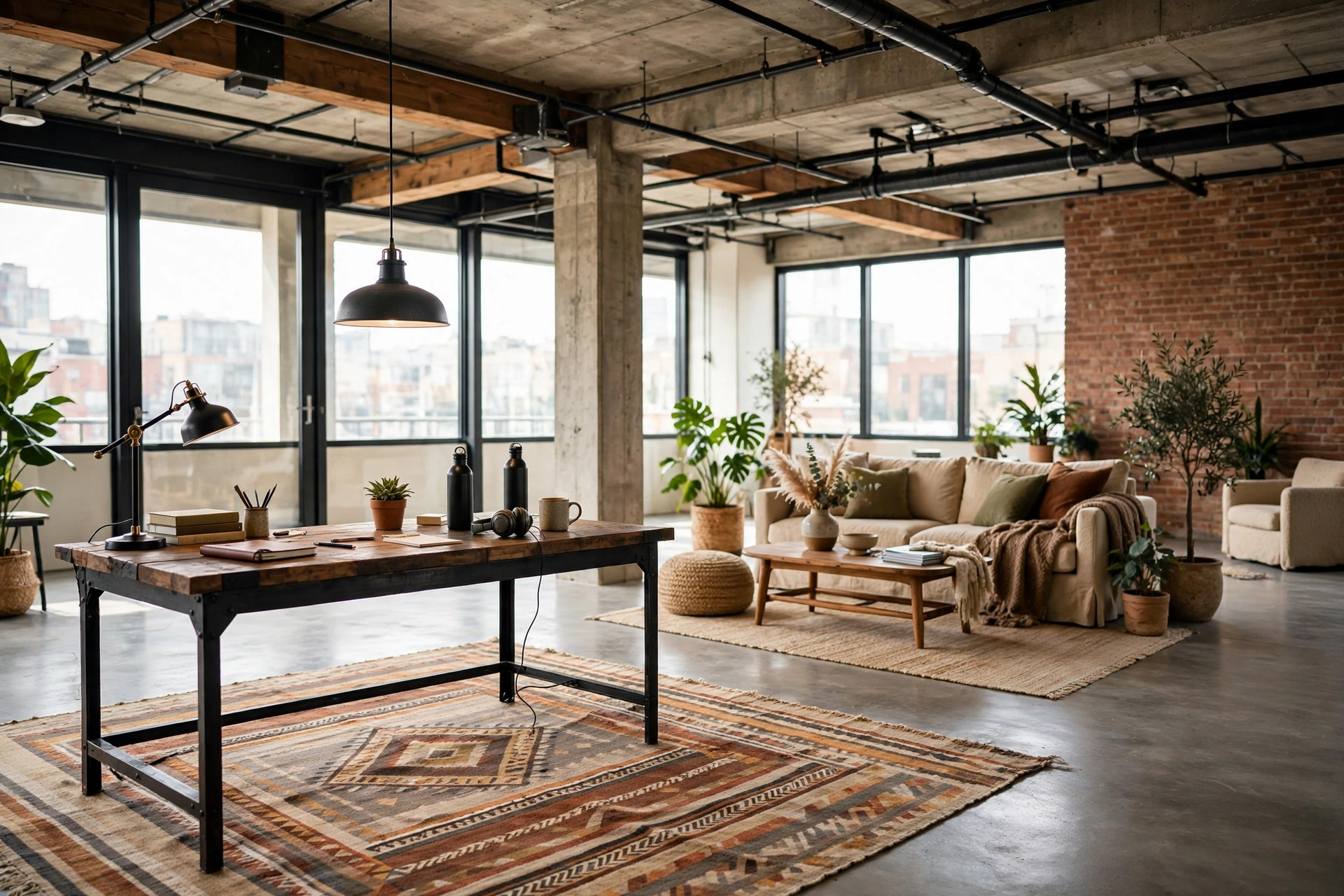
If your office shares space with a living area, bedroom corner, or loft open plan, use industrial elements to carve out the work zone without walls. A rug under the desk area, a pendant hung low over the workspace, a shelving unit placed perpendicular as a room divider — these moves define “office” psychologically, which matters for focus and for switching off.
Keep the zone’s lighting separate from the room’s: the desk pendant and task lamp on their own switch or smart plug, so ending the workday is as simple as killing the zone’s lights. A folding screen in black metal and mesh, or a curtain on an industrial pipe rod, can close the office visually when the day is done. Our mid-century modern home office ideas show a different but equally effective approach to zoning a workspace with style. Boundaries make the industrial office work harder — and rest easier.
Frequently Asked Questions
What defines industrial home office style?
Raw, honest materials drawn from factory and warehouse architecture: reclaimed wood, blackened steel and iron, exposed brick or concrete, leather, and utilitarian forms. The palette runs dark and neutral — charcoal, black, warm gray, brown — warmed by wood tones and amber lighting. Function always shows: visible structure, open storage, and sturdy, substantial furniture.
How do I keep an industrial office from feeling cold?
Warmth comes from three sources: wood (a reclaimed desk, wood shelving, wood floors or a rug over concrete), warm lighting (2700–3000K Edison-style bulbs, layered task and ambient light), and living things (plants, a leather chair that softens with use, textiles like a wool throw). The formula is raw materials plus warm light plus organic texture — get all three and the room feels creative, not chilly.
Can industrial style work in a small home office?
Absolutely — industrial might be the best style for small workspaces. Pipe-frame furniture is visually light, wall-mounted shelving and pegboards use vertical space, dark colors recede to make walls feel farther away, and the style’s spare ethos fights clutter naturally. Choose one statement piece (the desk, a locker) and keep everything else lean.
Is industrial home office decor expensive?
It can be the most budget-friendly office style, because its native materials are salvage, vintage, and DIY. Reclaimed wood, secondhand lockers, pipe fittings, and flea-market finds cost far less than new designer furniture. Spend on the chair (ergonomics) and the lighting (task quality); hunt, build, or salvage nearly everything else.
How is industrial different from rustic office style?
They share reclaimed wood and vintage finds, but industrial leans urban, dark, and metallic — blackened steel, concrete, exposed brick, factory forms — while rustic leans rural, warm, and wooden — barn wood, stone, cozy textiles, cabin forms. Think converted warehouse versus mountain lodge. Many offices happily borrow from both, but the metal-to-wood ratio tells you which family you’re in.
Keep Exploring
An industrial home office is a workspace with backbone — honest materials, serious function, and the kind of character that makes Monday morning slightly less Monday. Start with the desk and the wall, layer in the metal and the light, and let the room earn its patina.
For more workspace inspiration across every style, explore our home office decor ideas — and if the raw-materials palette has you hooked, our industrial bathroom guide shows how the same urban edge transforms the hardest-working room in the house.