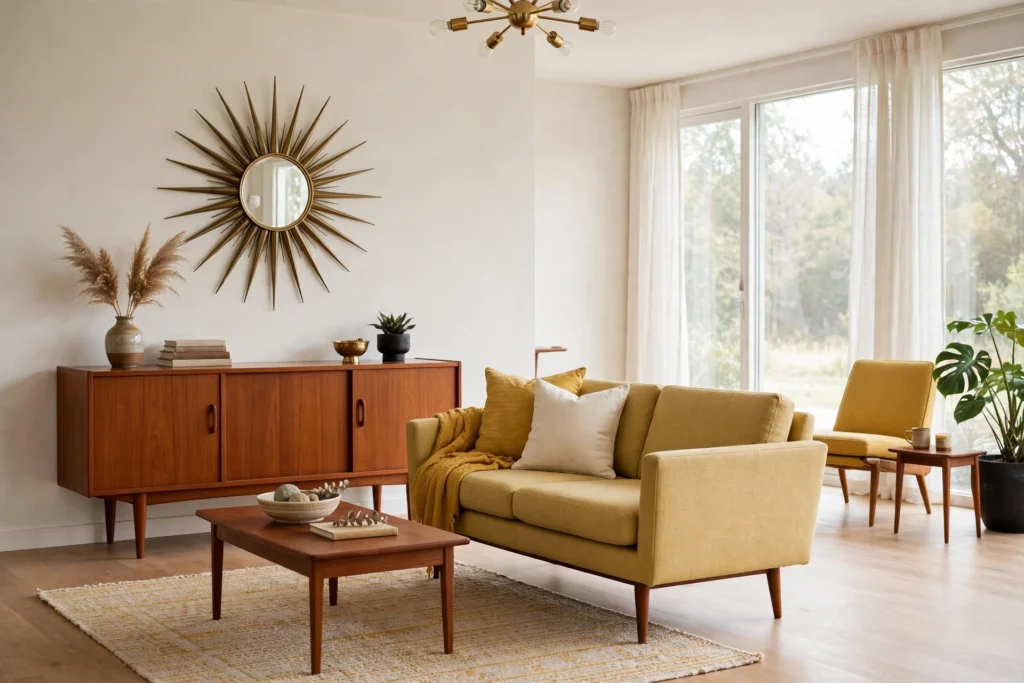

Mid-century modern never really left — it just waited for the rest of us to catch up. Born in the postwar optimism of the 1950s and 60s, the style pairs clean architectural lines with warm organic materials: teak and walnut, sculptural shapes, bold color used with confidence. It feels both retro and completely current, which is why it anchors so many well-designed living rooms today.
These mid-century modern living room design ideas are practical, not museum pieces. Each one is a specific move — the sofa silhouette, the wood tones, the lighting — that brings the era’s charm into a livable modern room. You do not need a full set of vintage finds; a few key pieces mixed with contemporary basics capture the spirit. Start with the ones that speak to you, and let the retro charm build.
1. Anchor With a Tapered-Leg Sofa
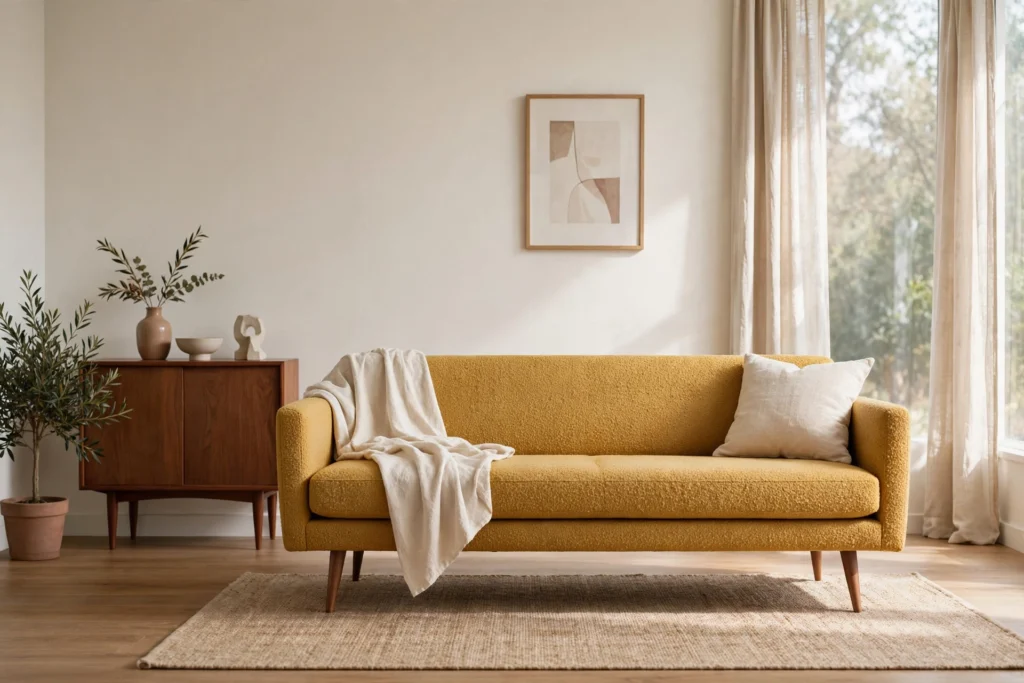
The low, tailored sofa on slim tapered wooden legs is the defining silhouette of mid-century modern. Look for clean lines, tight upholstery, and button-free cushions in a textured fabric — bouclé, woven wool, or a nubby linen in warm neutrals, mustard, or teal. The raised legs keep the floor visible, which makes the whole room feel lighter and larger.
Scale it honestly: a 72- to 84-inch sofa suits most living rooms, and the low back (around 30 inches) keeps sightlines open. Vintage originals can be found at estate sales and mid-century dealers, but good reproductions nail the proportions at friendlier prices. One great sofa sets the era’s tone more than any accessory — get this right and everything else follows.
2. Add a Teak Credenza
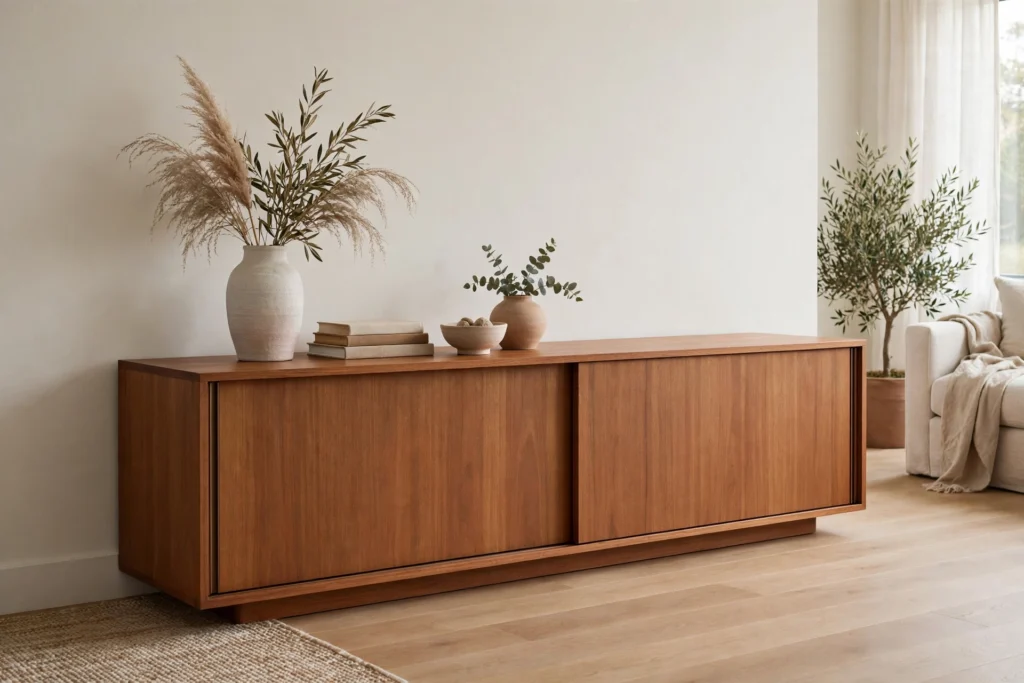
The long, low teak credenza is mid-century modern’s most versatile piece — media console, bar, storage, and sculpture in one. The rich honey-brown grain of teak warms up any room, and the typical sliding or tambour doors hide modern clutter behind that gorgeous 1960s face. Place it against the longest wall or under a window, styled with restraint.
Style the top simply: a sculptural vase, a stack of art books, one small plant — the credenza itself is the statement. Inside, it swallows remotes, chargers, and board games. Genuine vintage teak credenzas are widely available secondhand; check that drawers glide and veneer is intact. Oil the wood yearly with teak oil to keep the grain glowing.
3. Hang a Starburst Mirror
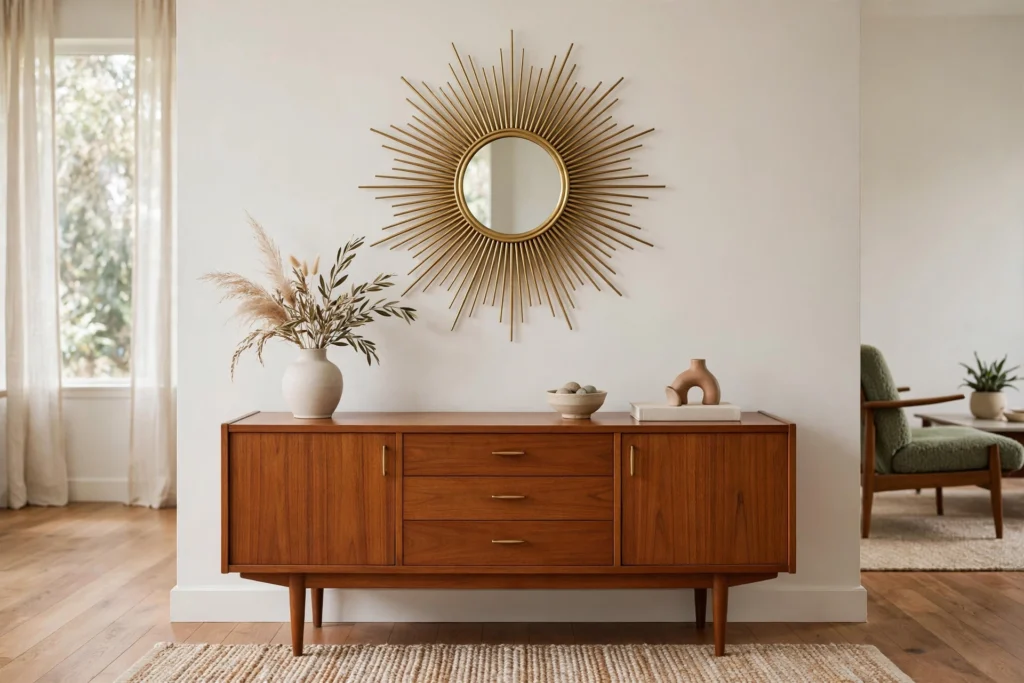
The starburst (or sunburst) mirror is pure mid-century optimism — brass or wood rays radiating from a round mirror, catching light from every angle. Hung above the credenza or fireplace, it becomes the room’s jewelry: graphic, golden, and unmistakably retro. The radiating lines draw the eye up, which flatters rooms with standard ceiling heights.
Scale it generously — 30 to 36 inches across reads intentional, while a tiny starburst looks lost. Brass rays warm up the wood tones in the room; wood rays blend more quietly. One is enough; the starburst is a strong motif and doubling it dilutes the effect. Pair it with simple surroundings so the mirror stays the focal point.
4. Go Bold With Abstract Art
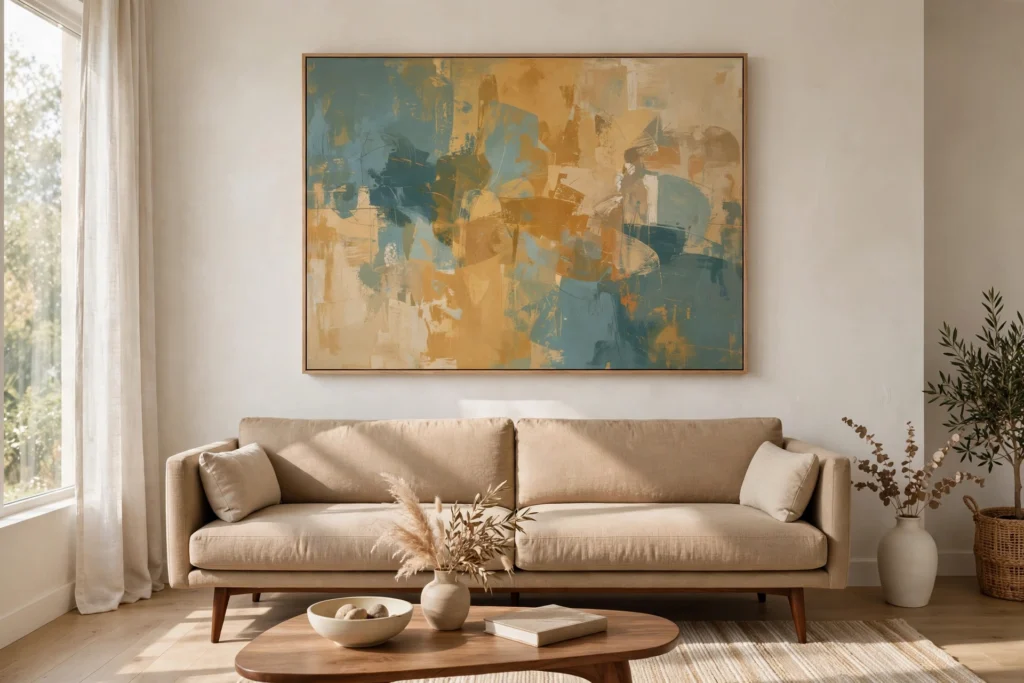
Mid-century modern rooms wear bold art well — large-scale abstracts in ochre, teal, rust, and black echo the era’s graphic confidence. One oversized piece above the sofa anchors the whole seating arrangement; the key is scale, with the art spanning roughly two-thirds the sofa’s width. Look for prints inspired by the period’s masters or original works at local art fairs.
Frame it simply in thin black or natural wood — the art should float, not fight its frame. If one big piece feels like too much, a tight trio of smaller abstracts in matching frames gives the same energy. The colors you choose here set the room’s accent palette, so pull one or two hues into cushions or a throw to tie it together.
5. Accent With Mustard and Teal
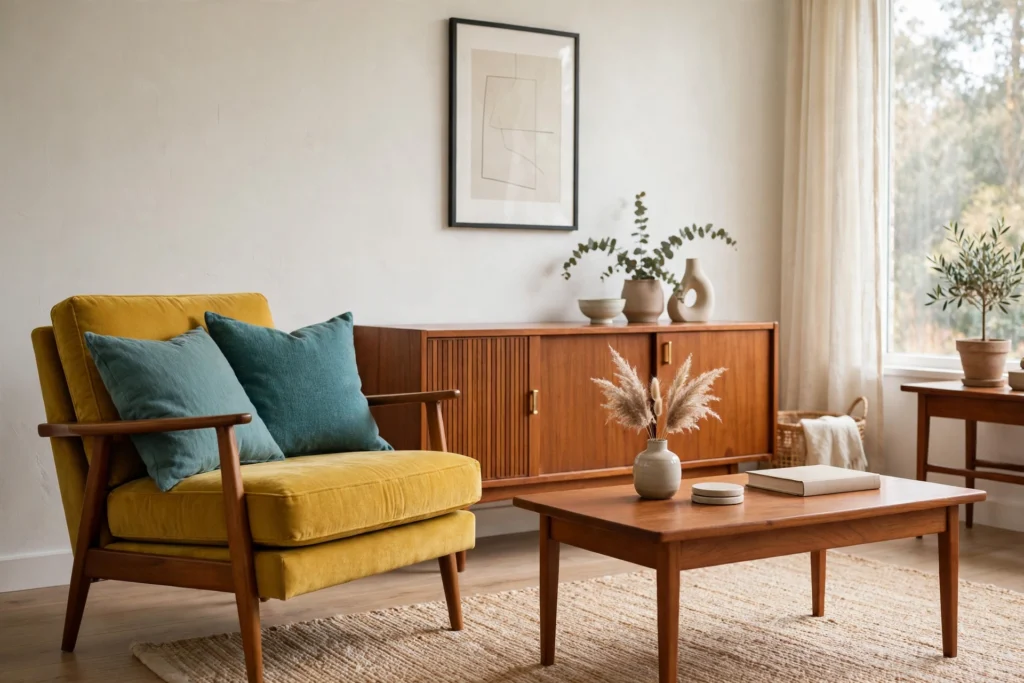
The mid-century palette is warm neutrals punctuated by confident color, and mustard yellow plus teal is the iconic pairing. Mustard brings sunny retro warmth; teal adds cool depth — together they sing against teak wood and white walls. Use them in the classic 60-30-10 rhythm: mostly neutrals, then one as the main accent and the other as the supporting note.
Deploy them in textiles and small pieces where they are easy to change: cushions, a throw, an armchair, a ceramic vase, art. A mustard armchair beside a teal-cushioned sofa is the textbook combination. Keep the doses deliberate — mid-century color is bold but never chaotic, and restraint is what separates retro charm from theme-park.
6. Light With a Sputnik Chandelier
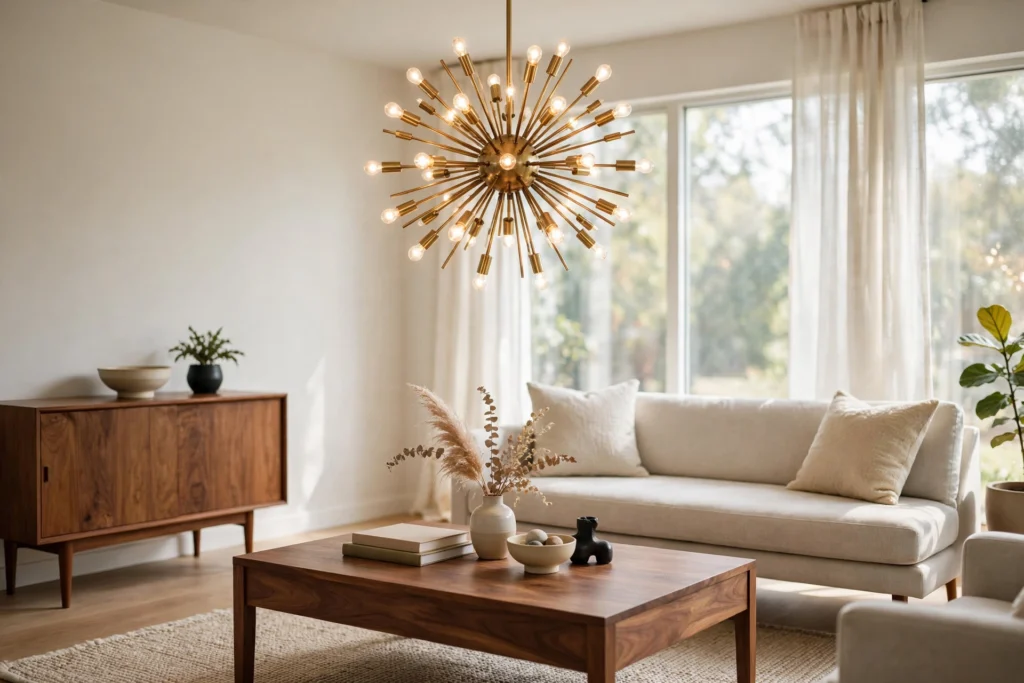
The sputnik chandelier — brass arms radiating with exposed bulbs — is mid-century lighting at its most sculptural. Hung over the coffee table or in the room’s center, it delivers the era’s space-age optimism in one fixture. The exposed bulbs cast warm, multi-directional light that flatters the whole room.
Size it to the space: 24 to 30 inches across suits most living rooms, hung 7 feet from the floor in walkways or lower over a table. Fit warm dimmable LED globes — the vintage Edison look without the heat or energy guilt — and put it on a dimmer. The sputnik’s graphic silhouette reads as art even when switched off, which is exactly what mid-century lighting should do.
7. Lounge in an Iconic Accent Chair
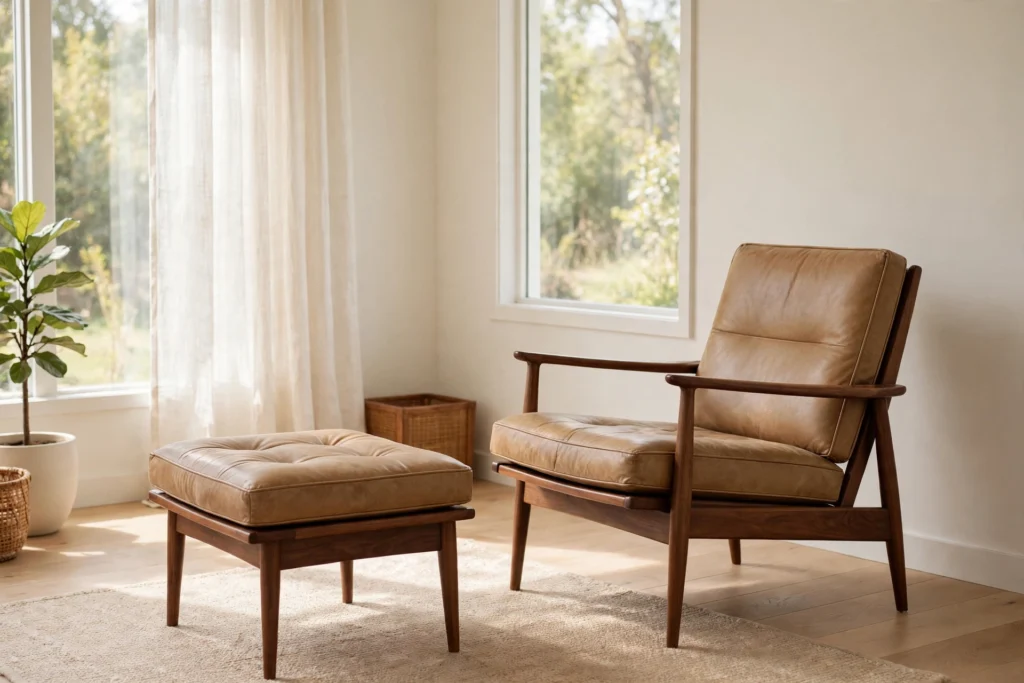
Every mid-century living room deserves one great lounge chair — the sculptural perch that invites long reads. The Eames-style lounge chair and ottoman in walnut and leather is the grail, but excellent interpretations exist at every price. Alternatively, a low-slung Danish modern armchair in teak and wool brings the same era with a lighter footprint.
Place it at an angle to the sofa with a small side table and a floor lamp to create a reading zone within the room. The chair’s organic curves contrast beautifully with the room’s straight lines — that tension is pure mid-century. Buy the best quality you can; a well-made lounge chair is a decades-long investment that anchors the room’s character.
8. Keep the Coffee Table Low and Sculptural
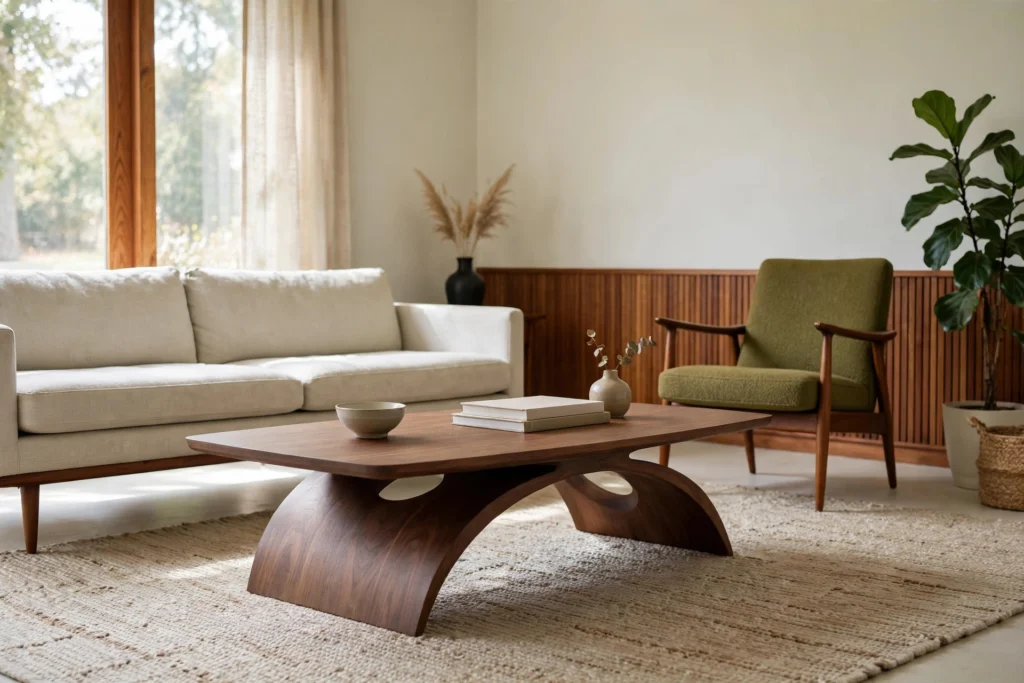
The mid-century coffee table sits low — 14 to 16 inches — reinforcing the era’s horizontal, grounded feeling. Look for organic shapes: a kidney or surfboard top in walnut, a round top on a sculptural base, or the classic Noguchi-style curved wood-and-glass design. The table should feel like sculpture that happens to hold coffee.
Keep the surface styling minimal: one art book, a small ceramic, maybe a low plant — the shape needs room to read. Glass tops keep small rooms feeling open; solid wood tops add warmth. Whatever you choose, the low profile is non-negotiable — it is what makes the seating arrangement feel authentically mid-century rather than just modern.
9. Warm a Wall With Wood Paneling
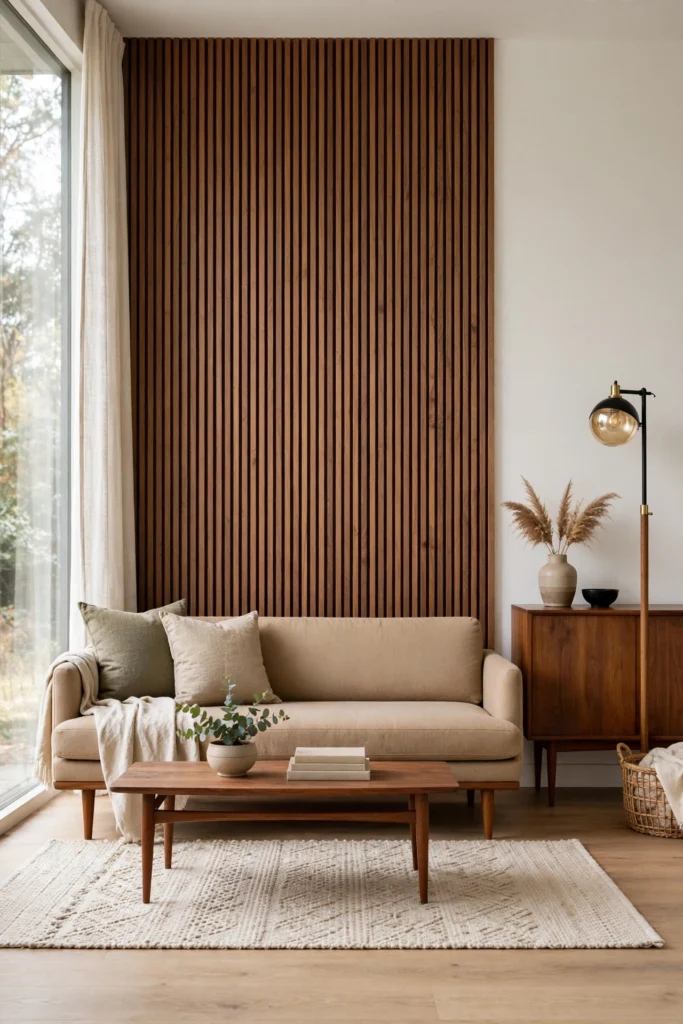
A walnut or teak accent wall brings mid-century warmth in one dramatic move. Vertical slat paneling — thin wood battens with narrow gaps — is the contemporary way to do it: it adds rhythm and texture without the heaviness of full 1970s paneling. Use it behind the sofa or the media wall as the room’s architectural anchor.
Keep it to one wall and balance it with plenty of white or light plaster elsewhere; the contrast is what makes the wood sing. Peel-and-stick wood slat panels have made this a genuine weekend project. The vertical lines draw the eye up, adding perceived height — a useful trick in rooms with standard 8-foot ceilings.
10. Ground It With a Geometric Rug
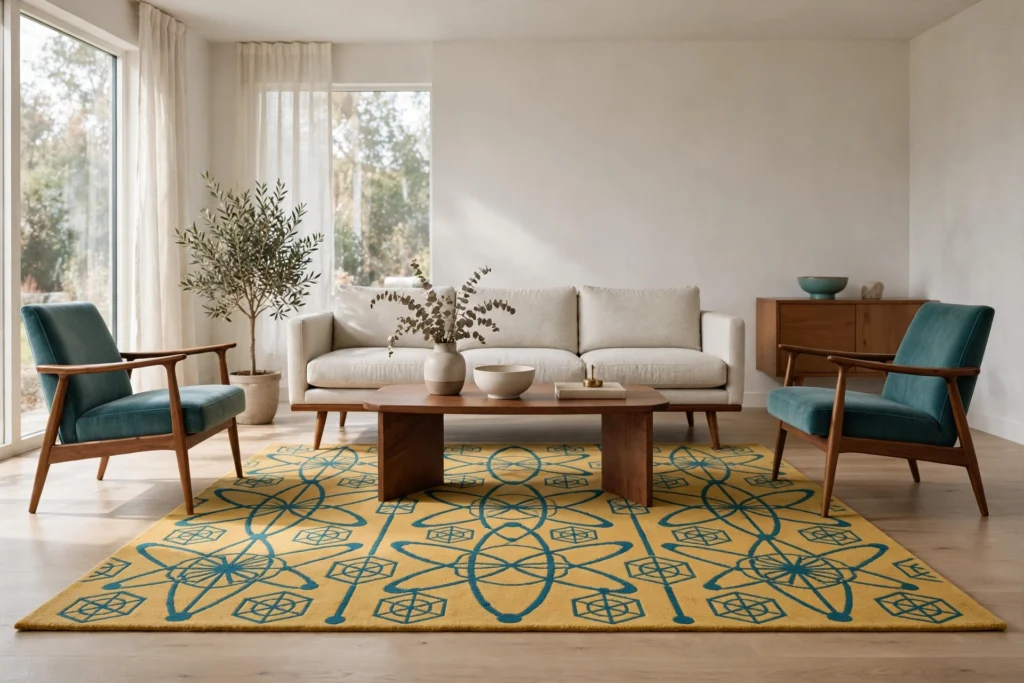
The rug is where mid-century pattern lives. A large flat-weave or low-pile rug in a bold geometric — atomic starbursts, overlapping circles, or simple striped bands — in mustard, teal, rust, and cream ties the whole palette together. Size it generously: front legs of all seating on the rug, at least 8 by 10 feet in most living rooms.
Keep the pattern’s scale proportional to the room — big motifs in big rooms, tighter patterns in smaller ones. The rug’s colors should echo the art and cushions, creating a loop that makes the room feel designed rather than assembled. A quality wool rug lasts decades; treat it as the foundation investment it is.
11. Let the Lines Stay Low and Airy
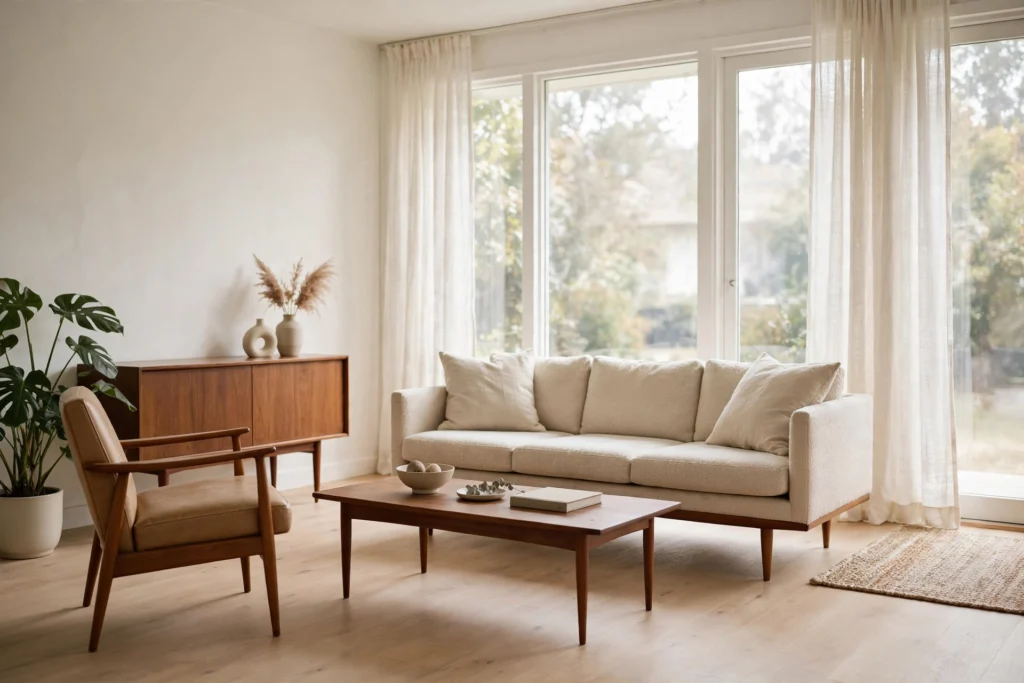
One of the subtlest mid-century modern living room design ideas is also the most transformative: keep everything low and let the air move. Low sofas, low credenzas, low tables — the horizontal emphasis makes ceilings feel higher and rooms feel calmer. Resist the urge to fill vertical space; mid-century rooms breathe.
This means editing ruthlessly: one art piece per wall, clear surfaces, nothing towering except a plant or a floor lamp. The negative space is part of the design — it is what lets each piece be appreciated. In small living rooms this principle is pure gold: low, leggy furniture shows more floor, and visible floor reads as spaciousness.
12. Roll In a Bar Cart
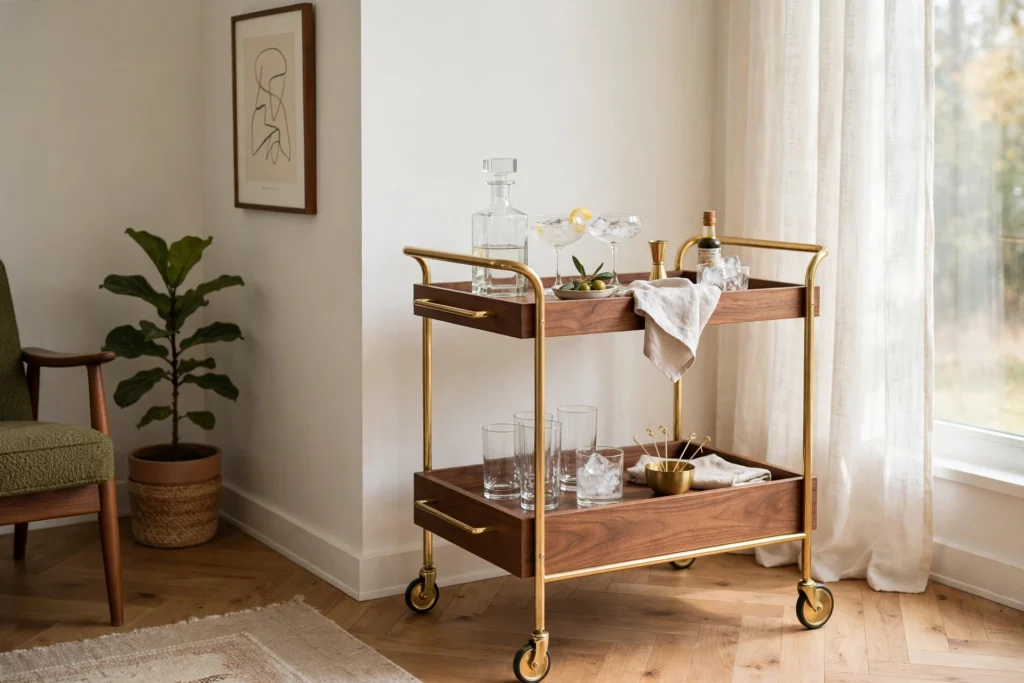
The brass-and-wood bar cart is mid-century entertaining distilled — part furniture, part party. A two-tier cart in brass with walnut handles, stocked with a few good bottles, proper glassware, and a small plant, adds retro glamour to any corner. It is functional decor: beautiful to look at, ready to serve.
Style it with intention: decant spirits into simple bottles, add a cocktail shaker and a couple of vintage glasses, keep it to one curated shelf plus the working top. Park it beside the credenza or in a dining-adjacent corner. Even non-drinkers can style one as a coffee or tea cart — the form is what matters, all gleaming brass and warm wood.
13. Sculpt Light With an Arc Floor Lamp
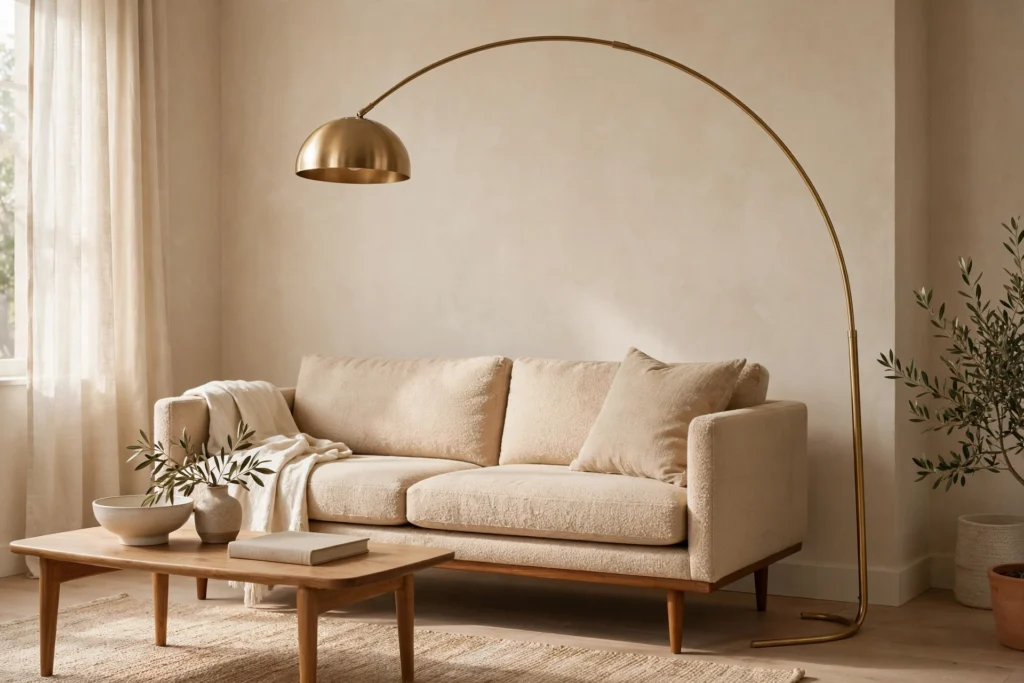
The arc floor lamp — a dramatic curve of stainless steel or brass ending in a dome shade over the seating area — is mid-century lighting’s showpiece. It delivers overhead light without ceiling wiring, arcing gracefully over the sofa or reading chair. The sculptural curve adds the era’s beloved organic line to a room of straight edges.
Give it room: the arc needs about 6 feet of reach, so it suits sectionals and larger arrangements. A marble base keeps it stable and adds material richness. Pair it with a dimmer for evening mood — the single warm pool of light over the seating area is incredibly flattering. It is a statement piece; let it be the room’s only dramatic curve.
14. Mix Textures: Bouclé, Leather, and Wood
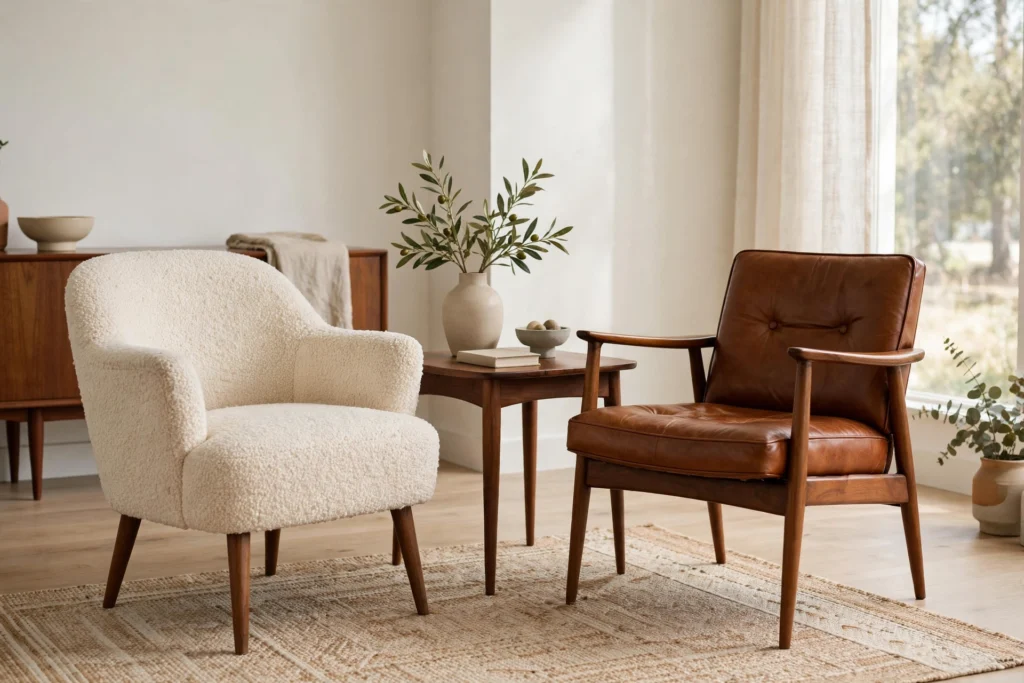
Mid-century rooms stay warm through texture, not clutter. The classic trio — nubby bouclé or wool upholstery, smooth cognac leather, and warm teak or walnut wood — gives every surface something to say. A bouclé armchair beside a leather lounge chair, both grounded by a walnut table: each material catches light differently, creating depth without pattern.
Keep the palette tight so the textures do the talking: creams, caramels, and warm browns with one accent color. Add one contrasting texture — a shaggy rug, a ceramic vase, a brass lamp — for punctuation. Run your hand test: in a well-layered mid-century room, nearly every surface invites touch, and nothing feels cold or slick.
15. Finish With a Sculptural Plant
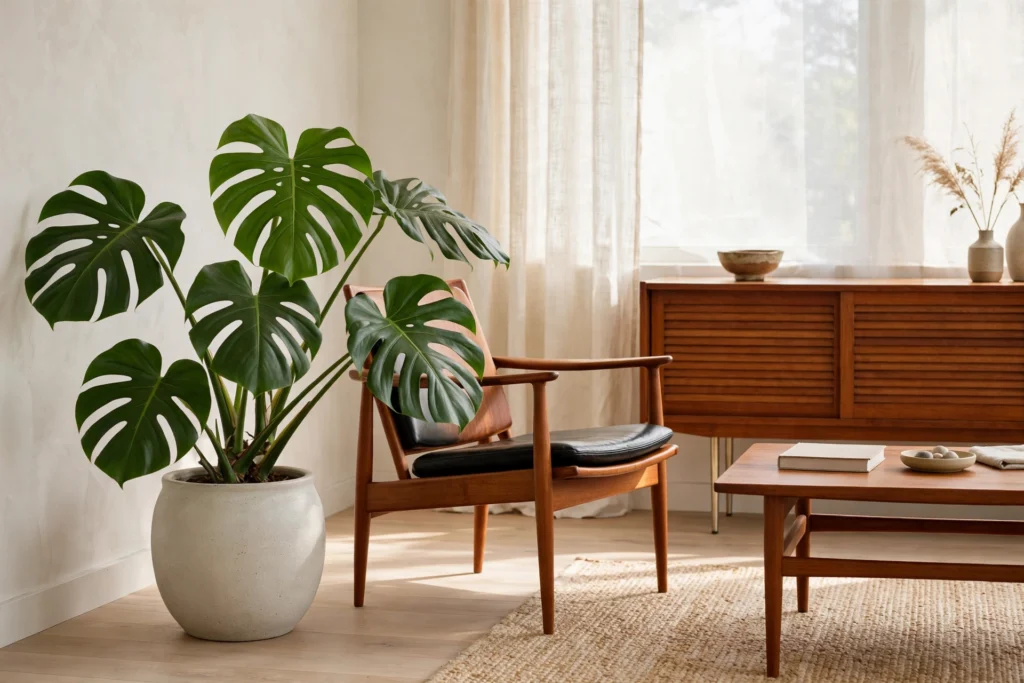
The final layer is living: one architectural plant that echoes the era’s love of organic form. A fiddle-leaf fig’s bold leaves, a monstera’s split sculptural fronds, or a tall snake plant’s graphic blades — each brings the indoor-outdoor connection mid-century design prized. Pot it simply in ceramic, concrete, or a woven basket; the plant is the art.
Place it where it gets the light it needs — near a window, in an empty corner that needs life — and give it scale: one generous plant beats a cluster of small ones. The deep green against teak wood and white walls is the classic mid-century color story’s final note. It is also the easiest idea on this list to start with today.
Frequently Asked Questions
What defines a mid-century modern living room?
Clean lines, organic shapes, and honest materials: teak and walnut woods, tapered legs, low profiles, sculptural lighting (sputnik, arc), bold geometric patterns, and a warm neutral palette with confident accents like mustard and teal. The feeling is retro-optimistic — designed, warm, and uncluttered.
How do I get the mid-century look without buying all vintage?
Mix a few key vintage or vintage-style pieces (credenza, lounge chair, starburst mirror) with contemporary basics in the right silhouettes. Focus on proportions — low, leggy, clean-lined — and the warm wood plus bold accent palette. Good reproductions of iconic pieces capture the look; nobody needs a museum.
What colors work best in a mid-century modern living room?
Warm neutrals as the base — white, cream, warm gray — with teak and walnut woods providing natural warmth. Accents in mustard yellow, teal, burnt orange, and olive green, used confidently but sparingly. Keep the palette warm; cool grays fight the retro coziness.
Can mid-century modern work in a small living room?
Beautifully — the style was designed for postwar homes that were not large. Low-profile, leggy furniture shows more floor, which reads as spaciousness. Choose a compact sofa, a round coffee table, one statement light, and keep surfaces clear. The style’s love of negative space is a small room’s best friend.
Keep Exploring
Mid-century modern is less a set of rules than an attitude — optimism, craftsmanship, and the belief that everyday objects should be beautiful. Start with the piece that excites you most, whether that is the credenza, the chair, or the chandelier, and build around it. Collected slowly and mixed with what you already love, the retro charm only deepens with time.





[…] instead of a rectangular one — each curve is a counterpoint to the room’s straight lines. Our mid-century modern living room design ideas share this love of sculptural silhouettes, if you want to see how curves work in a different retro […]
[…] side table and a floor lamp to create a reading nook that feels straight out of a design magazine. Our mid-century modern living room design ideas use the same statement-chair strategy to anchor larger gathering spaces — the principle works in […]