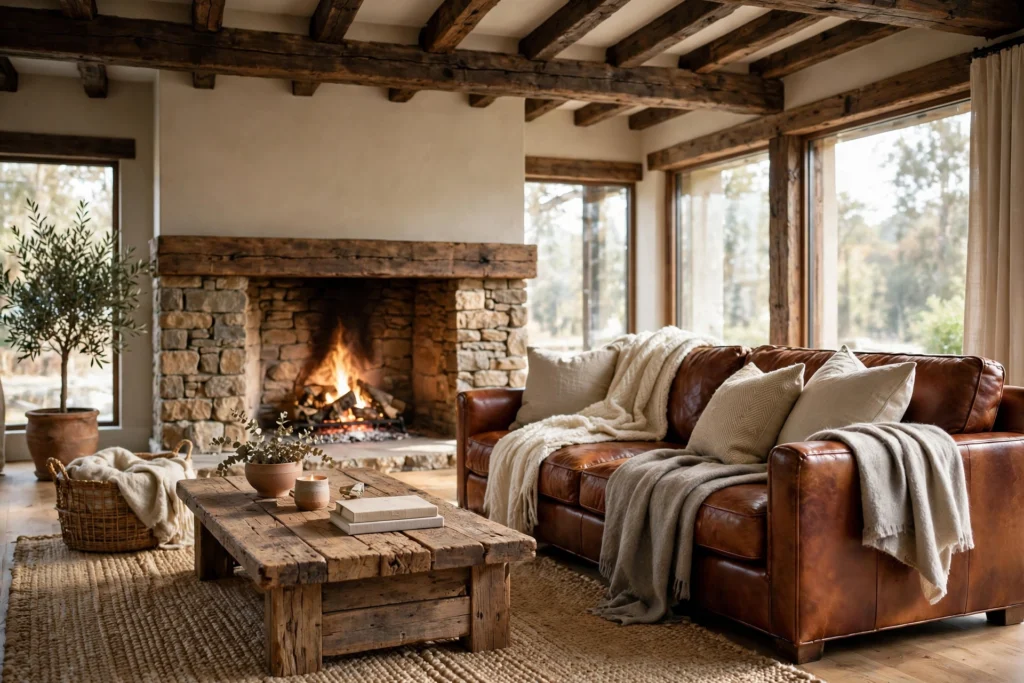

There is a particular comfort only a rustic living room delivers — thick wool underfoot, firelight flickering across a stone hearth, wood that shows its grain, knots, and history. These rustic living room design ideas are built around exactly that feeling: spaces that welcome you in and make you want to stay a while.
Modern rustic has moved past the log-cabin cliché. Today’s best rustic living rooms pair raw, honest materials with clean, edited design — one reclaimed-wood showpiece instead of a room full of antlers, warm layered lighting instead of a single harsh overhead. The result feels collected rather than decorated, and it works as well in a city apartment as in a countryside cottage. Pick the ideas below that suit your space and budget; even two or three will shift the whole mood toward warm and inviting.
1. Expose the Ceiling Beams
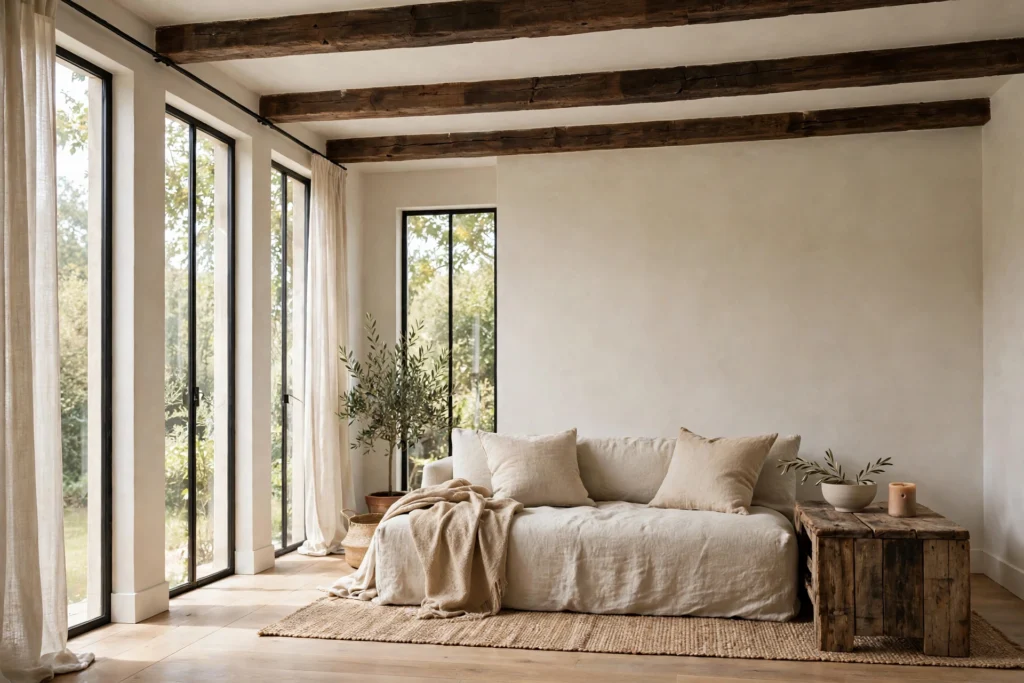
Nothing says rustic like wood overhead. If your home has structural beams hidden behind drywall, exposing them is the single most transformative change you can make. Have a contractor confirm they are structural and sound, then strip, sand, and seal them with a matte finish that lets the grain show.
No beams to expose? Faux wood beams are a convincing alternative. Modern hollow-box beams in real wood veneer look remarkably authentic, weigh very little, and can hide wiring for pendant lights. Run them along the room’s longest dimension to make the space feel larger, and keep the ceiling a warm white so the beams stand out.
2. Make a Stone Fireplace the Focal Point
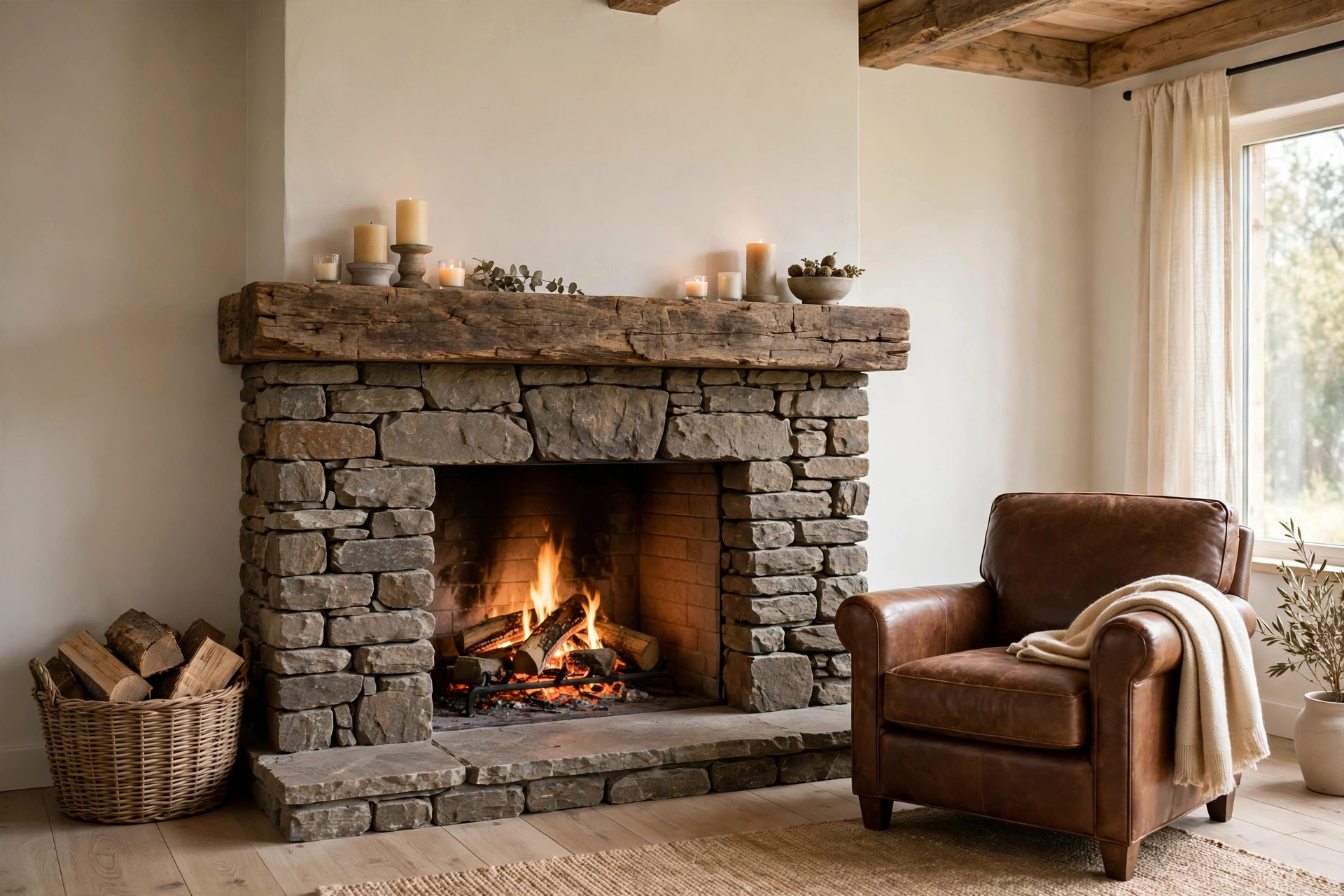
A natural stone fireplace is the beating heart of rustic living room design ideas everywhere — it anchors the room and gives everyone a place to gather. If you have a dated brick surround, refacing it with stacked stone veneer installs over the existing structure and instantly adds texture and weight.
Style the hearth simply: a chunky wood mantel, firewood in a wrought-iron holder or woven basket beside it, and a hand-forged-look fire screen. In warmer months, fill the firebox with pillar candles at varying heights or a bundle of birch logs for the same cozy weight without the heat.
3. Choose a Reclaimed Wood Coffee Table
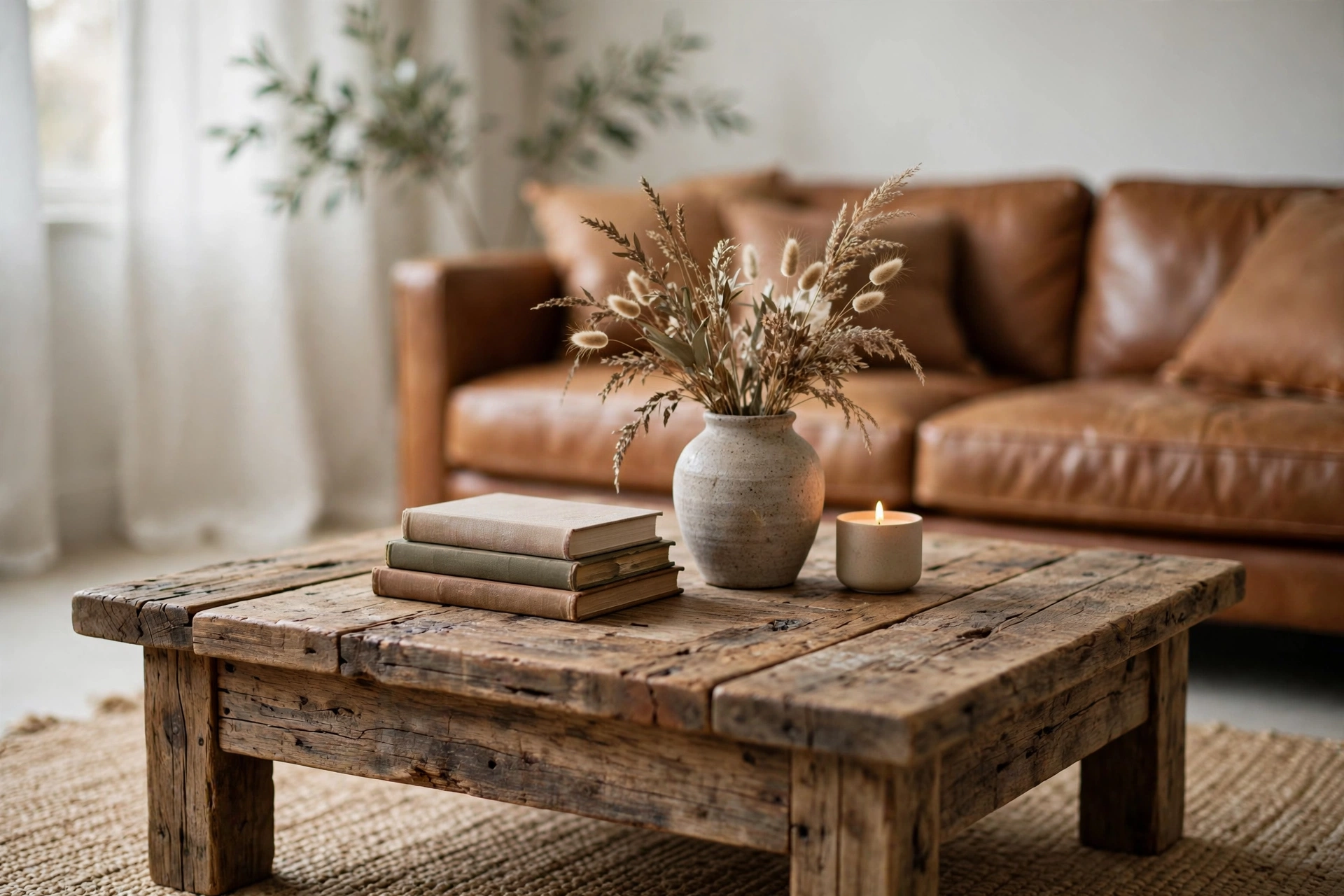
A reclaimed wood coffee table brings instant character — every scratch, nail hole, and saw mark tells a story a mass-produced table never could. Look for pieces made from old barn beams, factory flooring, or salvaged doors; the patina is the whole point.
Check that the table is sturdy and the top properly sealed — matte polyurethane or hardwax oil protects against rings while keeping the natural look. Size it to about two-thirds your sofa’s length. Style with restraint: two or three books, a small stoneware vase with dried grasses, and a candle is plenty.
4. Invest in a Worn Leather Sofa
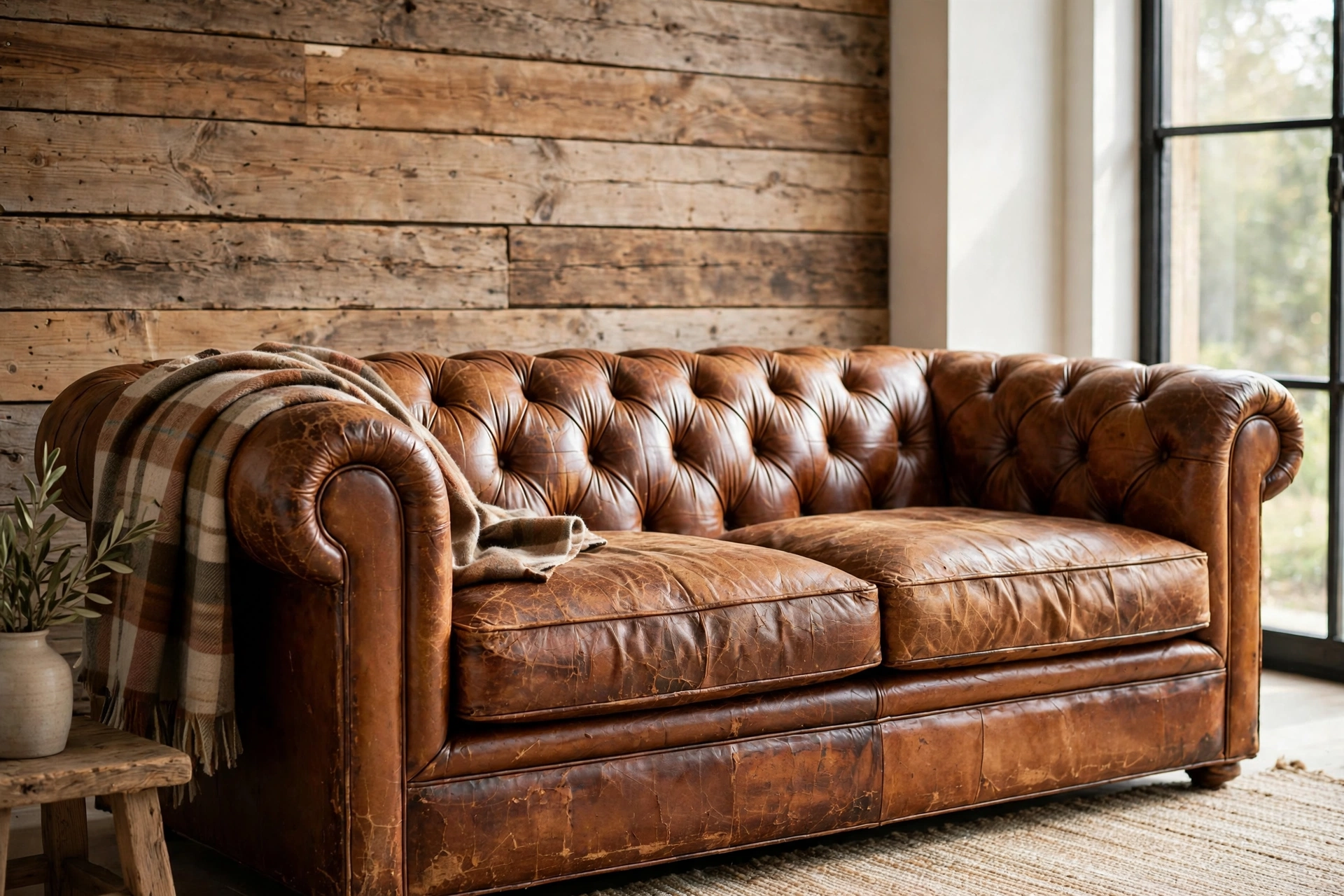
Few materials age as beautifully as leather, and a worn-in leather sofa is practically the mascot of the rustic living room. Cognac, saddle, and tobacco tones add instant warmth, and the creases that develop with use only make it more inviting. Leather also wipes clean easily — a real advantage in a room meant for real life.
If a full leather sofa stretches the budget, a pair of leather armchairs delivers the same effect, or hunt estate sales where broken-in leather sells for a fraction of new. Condition it once or twice a year with a quality balm, and drape a wool throw over one arm to soften the look.
5. Layer Natural Textiles Everywhere
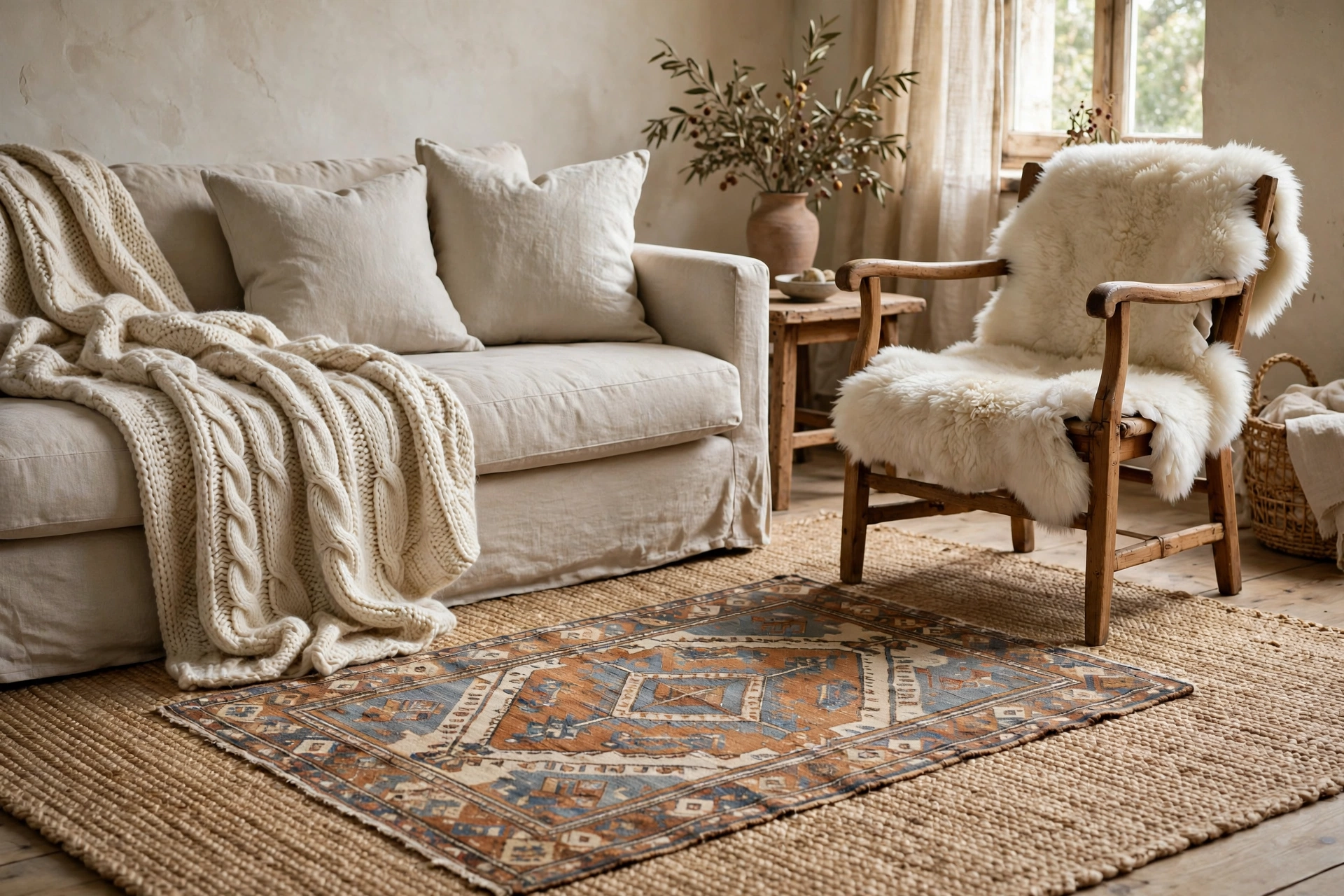
Rustic comfort is built in layers, and textiles do most of the heavy lifting. Start with a large jute or sisal rug to warm up hard floors, then layer a smaller, softer rug — vintage-style wool or sheepskin — on top for collected depth.
On seating, mix rather than match: chunky knit wool throws, washed linen cushions, a sheepskin over an armchair. Keep to creams, oatmeal, charcoal, and warm browns so the layers feel cohesive. If every seat invites a nap, you’ve done it right.
6. Warm Up the Lighting
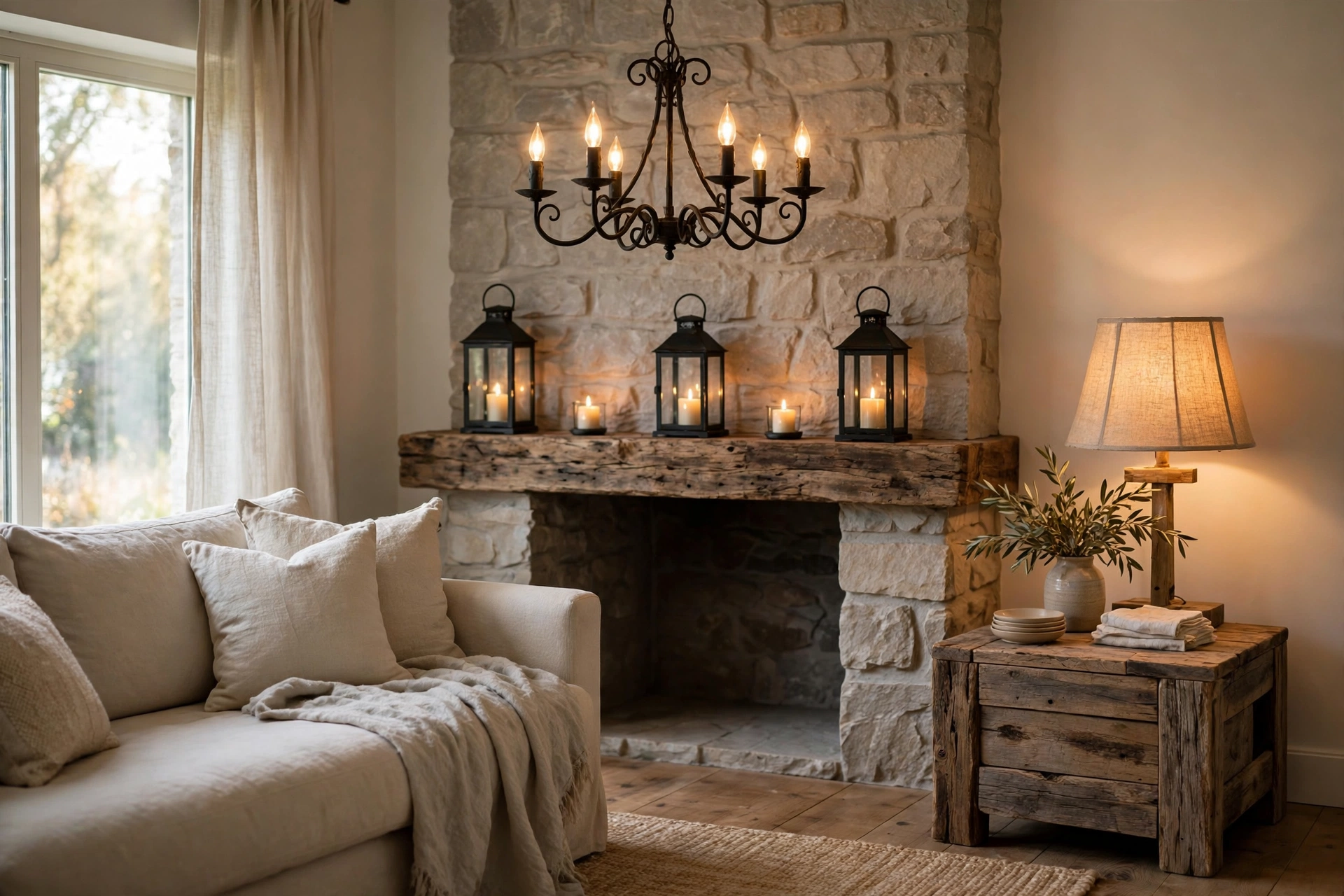
Overhead lighting kills coziness fast, so plan at least three warm sources: a statement fixture like a wrought-iron or wood-bead chandelier, table or floor lamps with linen shades for reading corners, and candles or lanterns for pure atmosphere.
Swap every bulb for warm white (2700K or lower) — cool daylight bulbs fight the whole aesthetic. Put main fixtures on dimmers so the room shifts from bright and practical by day to firelit and intimate by night. Black metal lanterns with LED pillar candles add flicker anywhere, safely.
7. Add a Rough-Sawn Wood Accent Wall
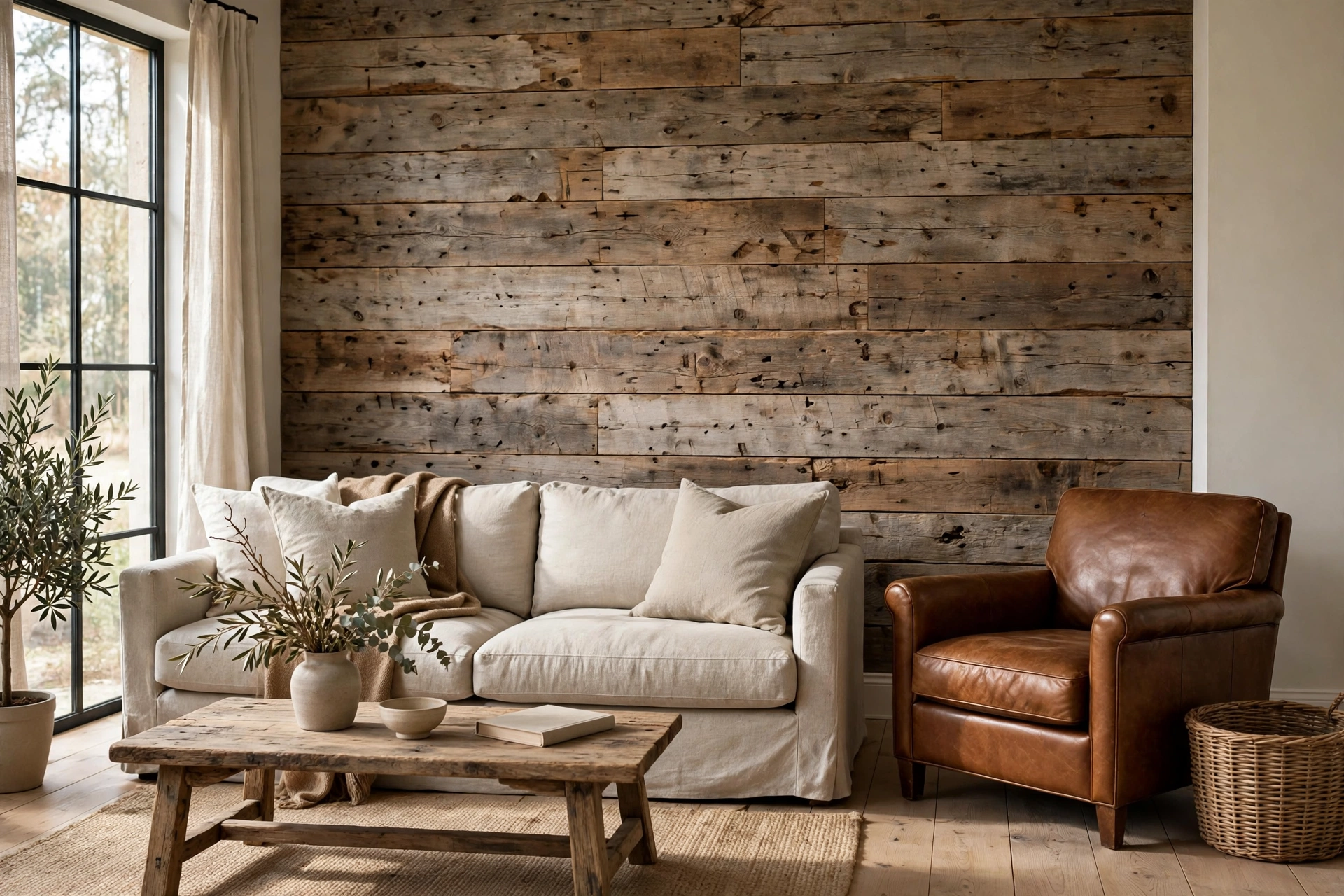
One wall of rough-sawn planks delivers more rustic impact per square meter than almost any other change. Install it behind the sofa or television, running boards horizontally to widen the room or vertically to add height. Peel-and-stick wood planks have made this a genuine weekend project.
Finish matters: clear matte sealer preserves the raw look; whitewash or limewash softens it toward Scandinavian-rustic. Keep other walls a calm warm white so it reads as an accent, not a cabin enclosure. For less commitment, clad just the fireplace surround or a section behind open shelving.
8. Style with Vintage and Antique Finds
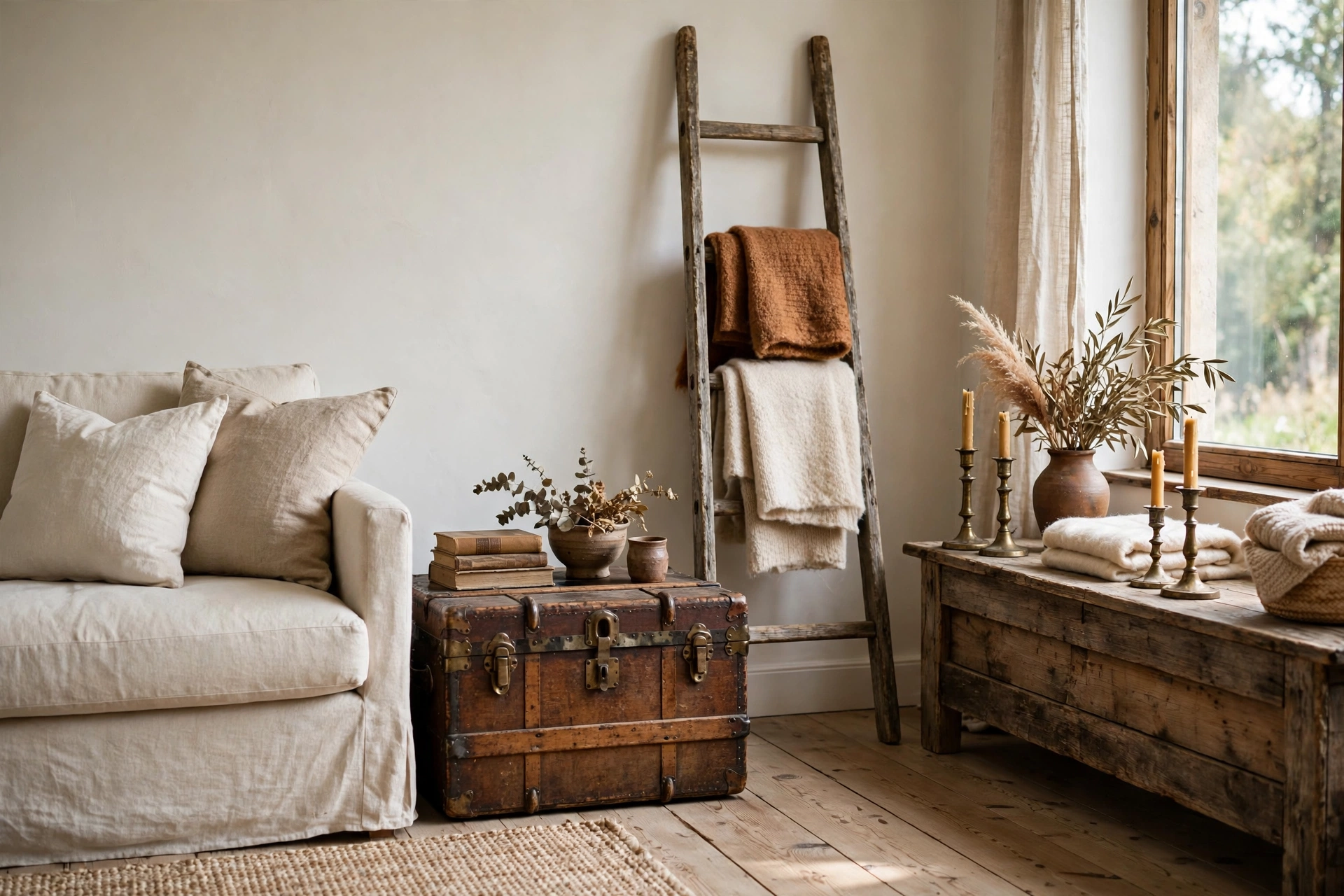
Rustic style should feel gathered over time, and genuine old pieces fake that better than anything. An antique trunk works as a side table with bonus storage; a weathered ladder draped with throws becomes a blanket rack; old brass candlesticks and ironstone pitchers add soul to shelves and mantels.
Hunt flea markets, salvage yards, and estate sales instead of buying “vintage-style” reproductions — the real thing costs less and carries authentic patina. Tie antiques to newer furniture by repeating materials: a trunk’s dark wood echoes a reclaimed coffee table; aged brass picks up leather’s warmth.
9. Bring in Plenty of Greenery
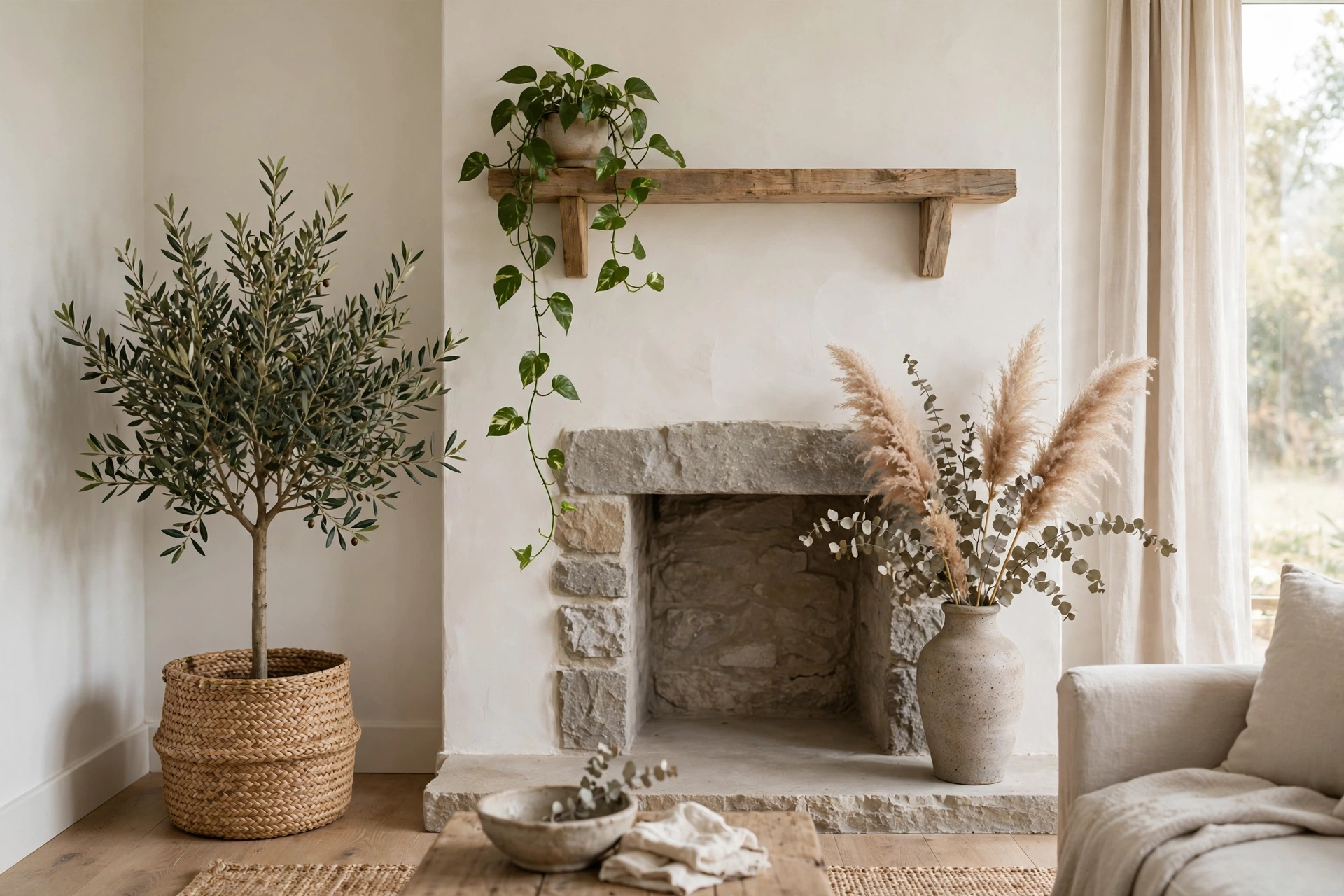
Every rustic living room needs something alive. Plants soften all the hard wood and stone and keep the room from feeling like a lumber display. A small olive tree in a woven seagrass basket anchors a corner; trailing pothos on a high shelf adds life at eye level.
No green thumb? Dried botanicals are a rustic staple: pampas grass or dried eucalyptus in a tall stoneware vase lasts months with zero care. Fresh-cut branches from the garden — bare in winter, leafy in spring — are free and always look intentional in a heavy vase.
10. Create a Cozy Reading Nook
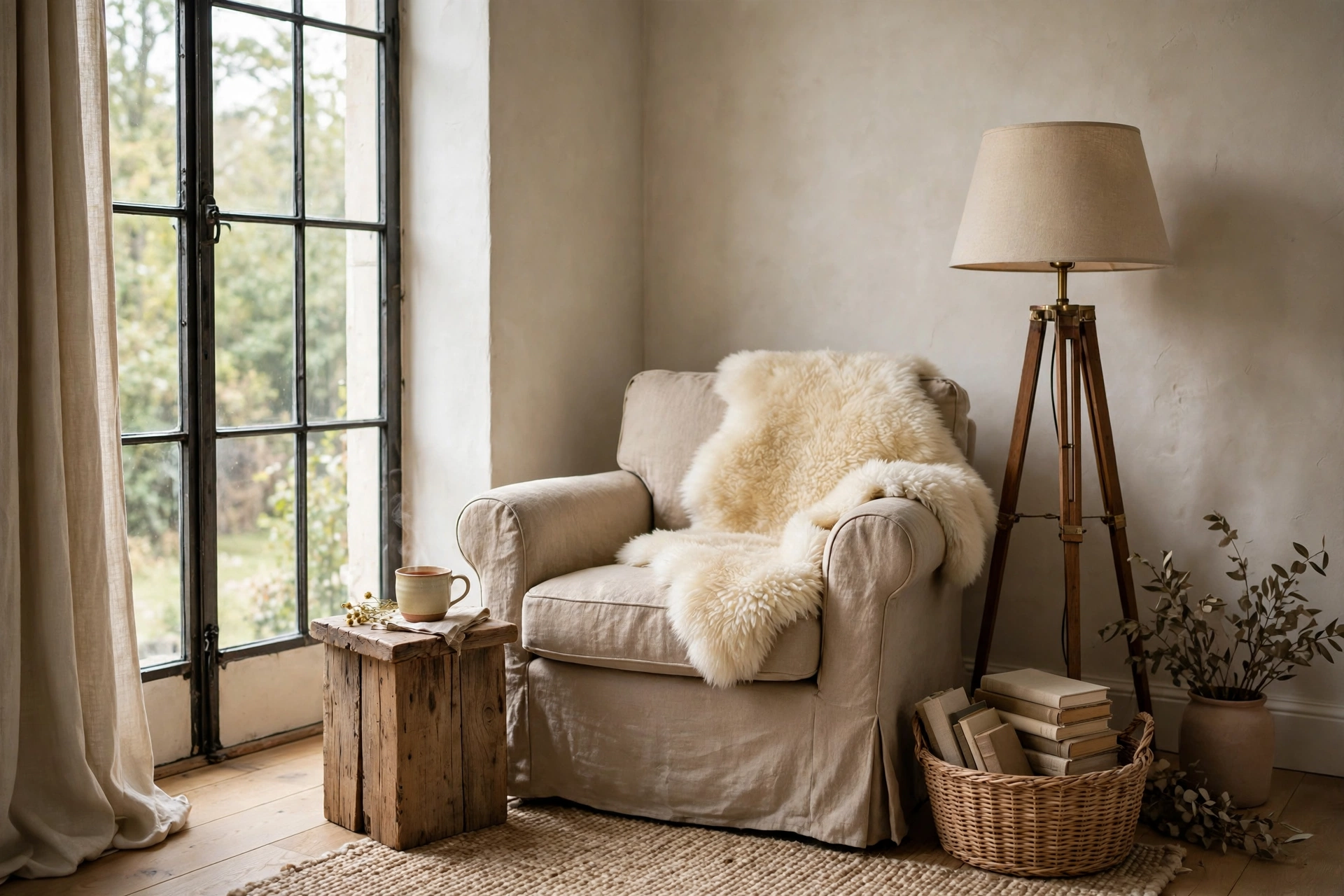
A rustic living room needs at least one spot designed for doing nothing. Tuck an armchair by the window with a warm floor lamp, a small side table for tea, and a basket of books within reach. A sheepskin over the chair and a thick knit blanket complete the invitation.
The nook needs little space — even a meter-wide corner works. What matters is feeling slightly separate, like a retreat within the retreat. Face the chair toward the room’s best feature: the fireplace, the garden view, or the warmest patch of afternoon sun.
11. Stick to an Earthy Color Palette
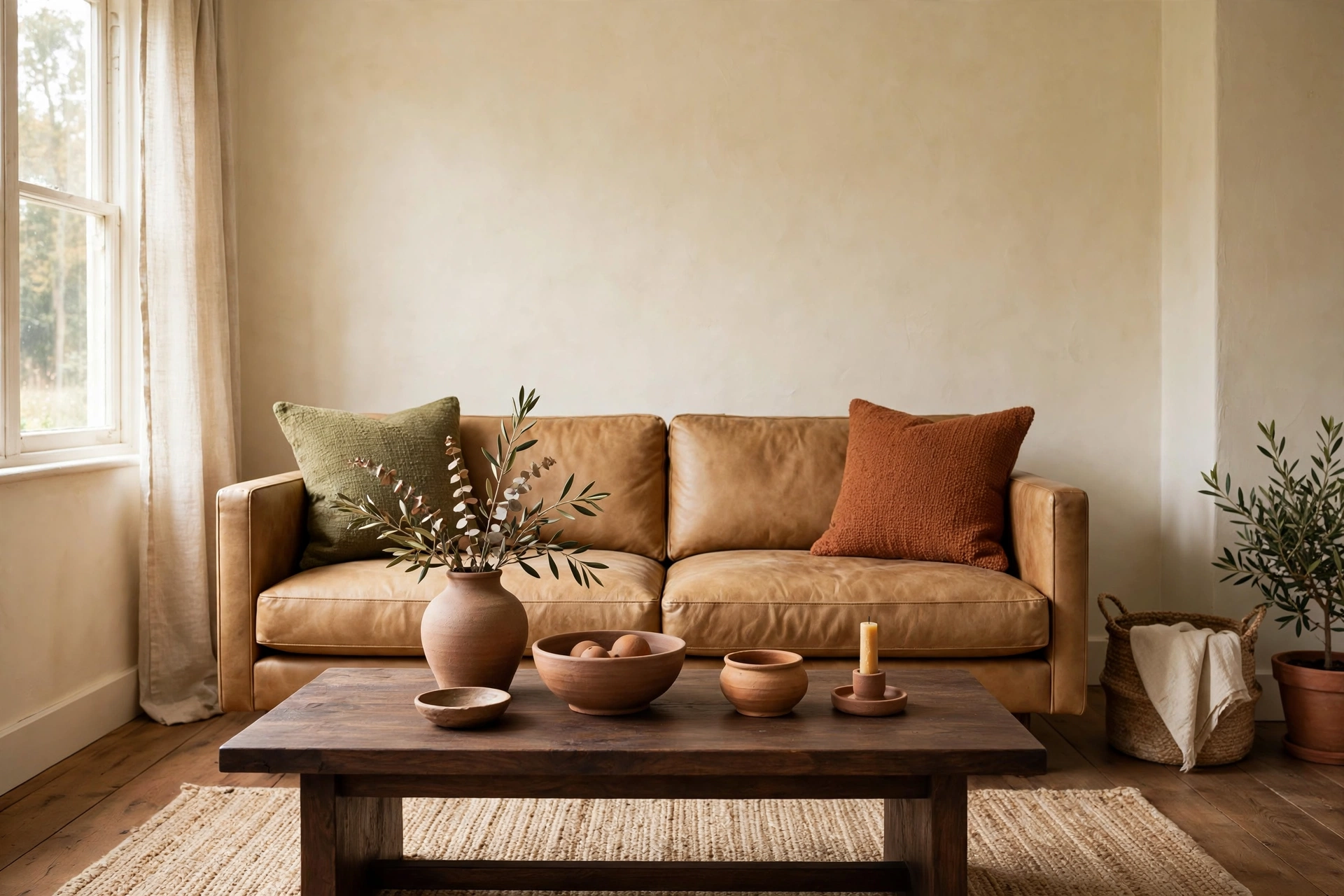
Color is what makes rustic feel warm rather than merely wooden. Build around nature’s neutrals: warm whites and creams for walls, camel and cognac for leather, charcoal and espresso for wood, with moss green, clay, and rust accents. The palette is forgiving — these colors already coexist outdoors.
Use a 60-30-10 split: 60 percent warm neutrals (walls, rug, sofa), 30 percent mid-tone woods and leathers, 10 percent deeper accents in cushions, art, and ceramics. Skip cool grays and stark whites — even whites should lean warm. If the room feels flat, add texture before adding color.
12. Display Handcrafted Details
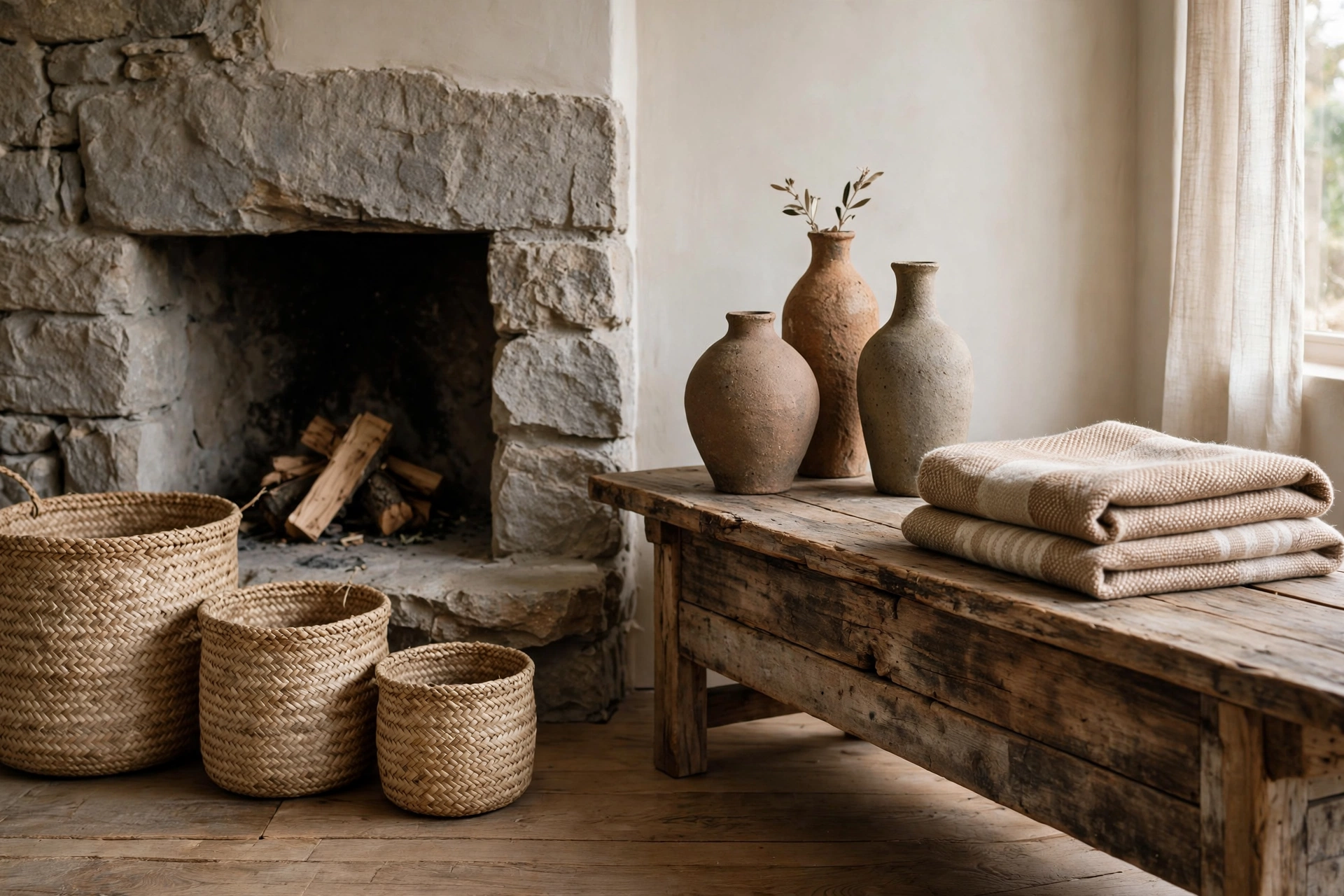
Handmade objects are the jewelry of rustic design — small, but they catch the eye. Woven baskets corral throws and firewood while adding texture; handmade stoneware brings organic, imperfect shapes to shelves; a hand-loomed throw or carved wooden bowl becomes a quiet focal point.
Shop artisans, craft fairs, and small-batch makers over big-box “rustic décor” aisles — slight irregularities are exactly what make handmade pieces work. Group them in odd numbers with varied heights: three pottery vases on a wood console, or graduated baskets beside the fireplace.
13. Go Deep with the Seating
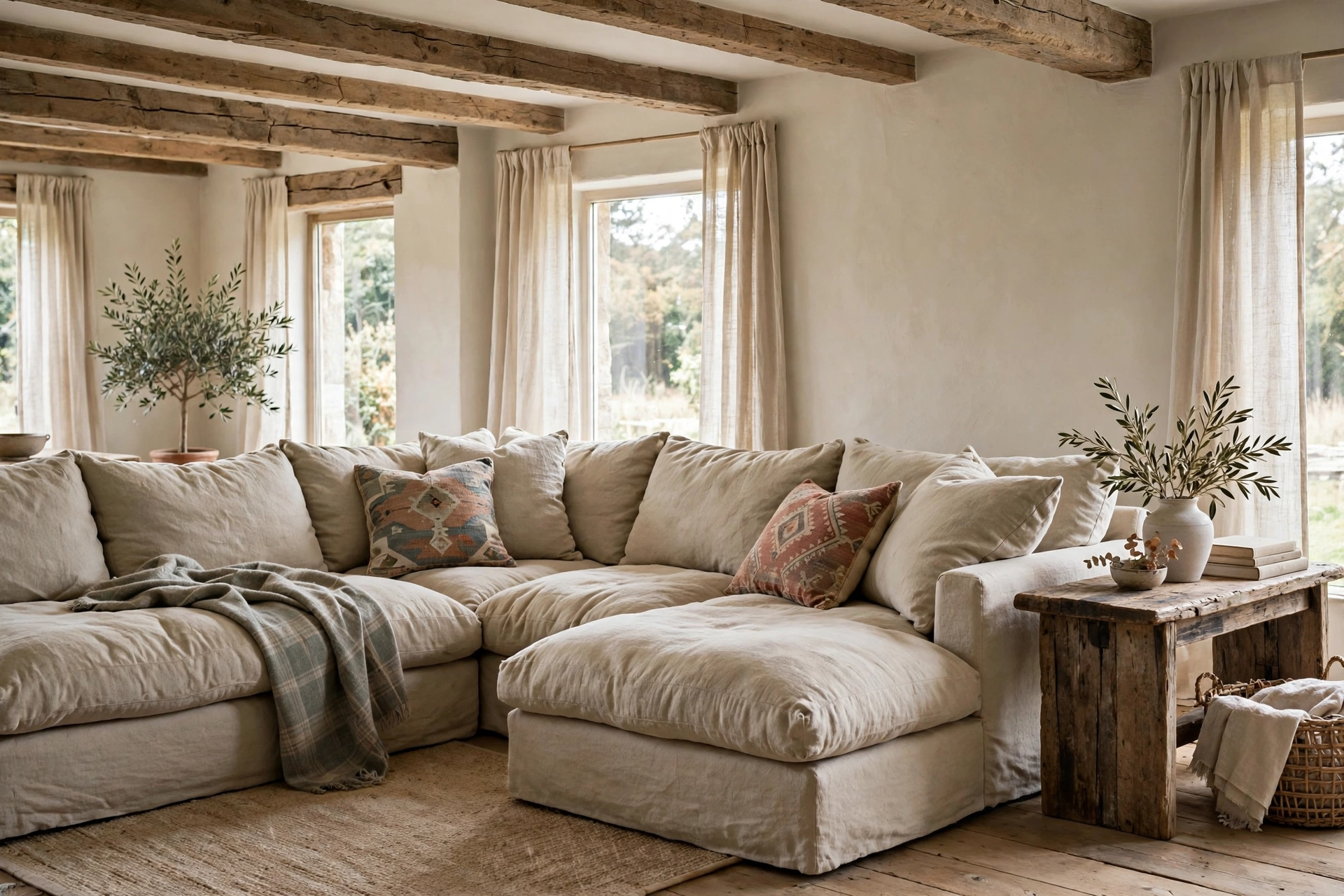
Rustic living is sprawling, feet-up living, so seating should be deep, soft, and generous. An oversized sectional in nubby performance fabric or washed linen gives everyone room to sink in, and feather-wrapped cushions develop that perfectly rumpled look foam never achieves. One big comfortable piece feels more rustic than several small stiff ones.
Break up the bulk with contrast: a tailored linen sectional beside a rough reclaimed-wood side table, plush cushions against a rigid leather armchair. Add one unexpected pattern — muted plaid or a faded kilim cushion — to keep the neutrals from turning to beige monotony.
14. Style the Mantel with Intention
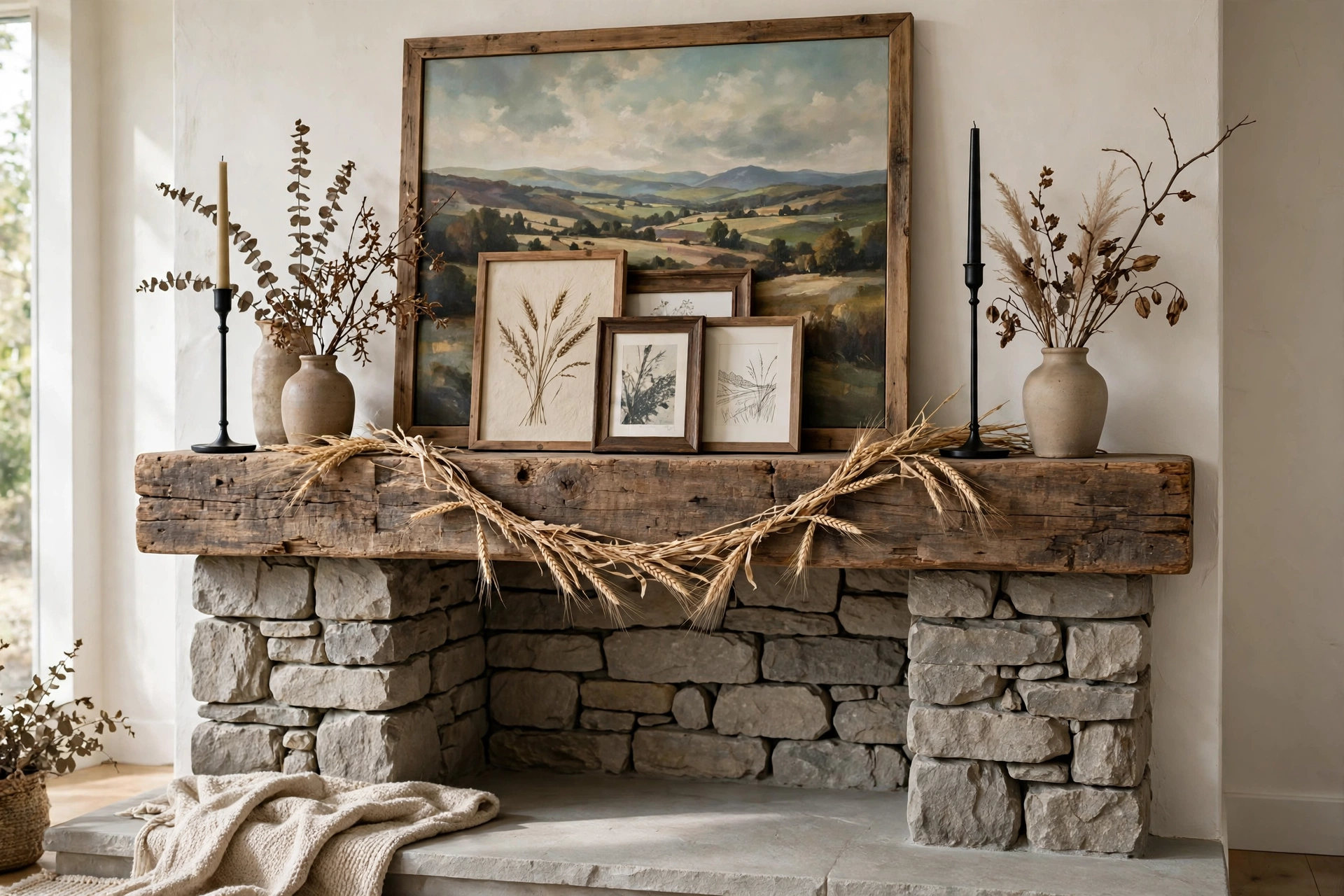
The mantel is the rustic living room’s gallery wall. Start with one anchor — a large landscape painting, an oversized round mirror, or a vintage window frame — leaned, not hung, for a relaxed feel. Layer smaller frames in front, then add height at the ends with tall candlesticks, branches in a vase, or stacked books.
Favor asymmetry: a cluster on one side balanced by a single tall object on the other feels collected; mirrored arrangements feel formal. Swap one or two elements seasonally — fresh greenery in spring, dried grasses in autumn, a simple garland in winter — and the whole room feels refreshed for almost nothing.
15. Mix Textures Instead of Matching Sets
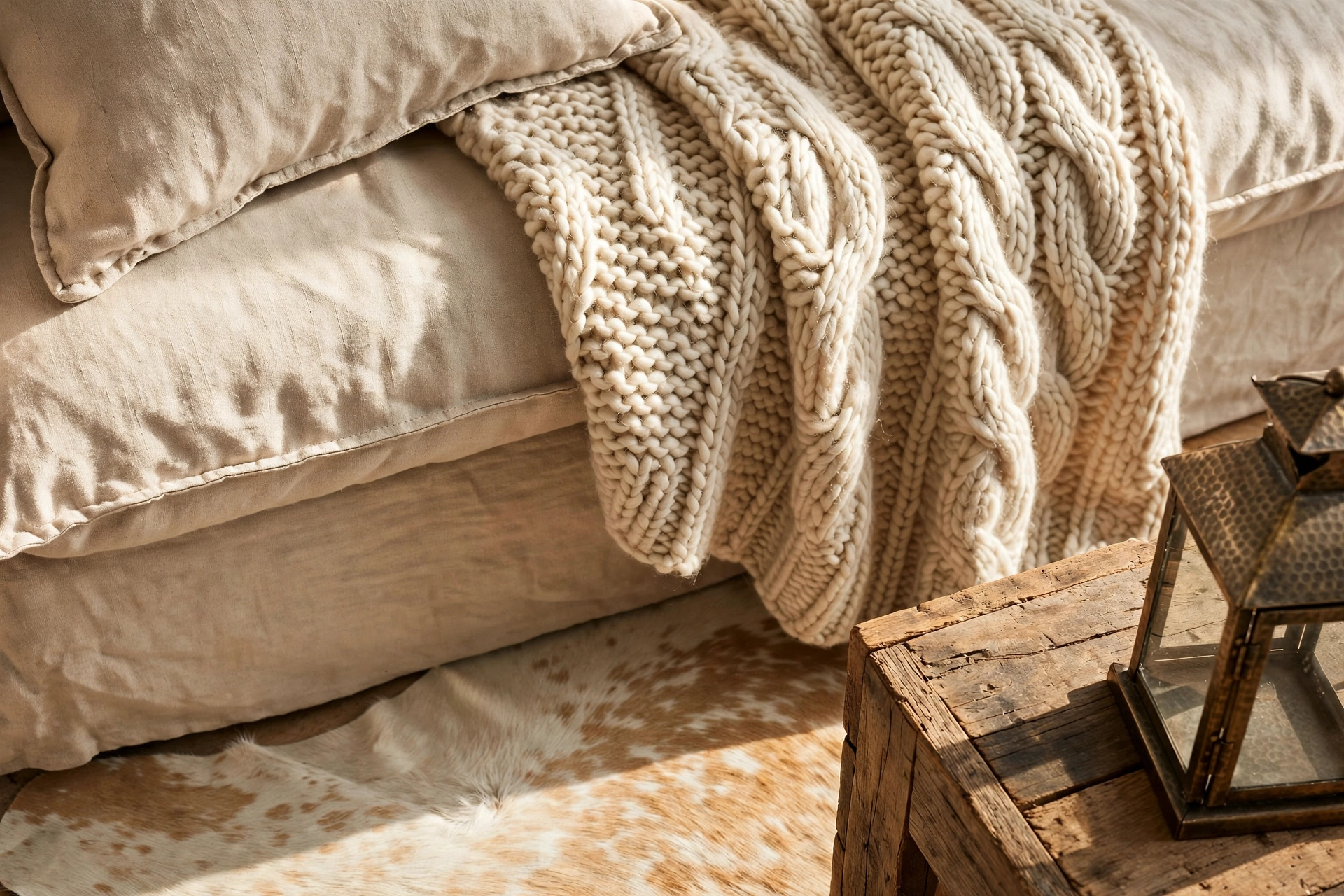
The final secret of rustic living room design ideas that truly work: texture does the decorating. Linen, wool, worn leather, rough wood, smooth stone, hammered metal, and woven fiber catch light differently — that’s what gives rustic rooms their famous warmth and depth, even in a restrained palette.
Audit your room material by material. All smooth? Add roughness: a jute rug, a knit throw, a basket. All rough wood? Add softness: linen cushions, a sheepskin, flowing curtains. Aim for balance where no single texture dominates and your hand wants to touch nearly every surface.
Frequently Asked Questions
What defines a rustic living room?
Natural materials, earthy colors, and a warm, lived-in feeling. Key elements include exposed wood (beams, floors, furniture), stone or brick features, worn leather, layered natural textiles like wool and linen, and handcrafted or vintage décor. The style celebrates imperfection — visible grain, patina, and texture — over sleek, polished surfaces.
How can I get a rustic look on a small budget?
Start with high-impact, low-cost changes: warm 2700K bulbs and dimmers, thrifted wool throws and baskets, and a jute rug. Hunt flea markets and salvage yards for a reclaimed-wood coffee table or vintage trunk — far cheaper than new “rustic-style” furniture. Peel-and-stick wood planks make an accent wall for the price of paint, and restyling what you own costs nothing.
What colors work best in rustic living room design?
Warm, earthy tones: creamy whites, oatmeal, camel, cognac, warm browns, moss green, clay, and rust. Keep large surfaces in warm neutrals, add depth through mid-tone woods and leathers, and use deeper accents sparingly in cushions, art, and ceramics. Avoid cool grays, stark whites, and brights that fight the cozy atmosphere.
Can rustic style work in a small living room?
Absolutely — rustic is about materials and warmth, not square footage. Choose a few key pieces (reclaimed-wood coffee table, layered textiles, warm lighting) rather than filling every corner. Keep walls light, use vertical elements like a tall plant or floor lamp to draw the eye up, and try faux beams or a single wood accent wall for architecture without eating floor space.
Keep Exploring
A rustic living room comes together one honest material at a time — you don’t need to do everything at once. Start with the layer that bothers you most, whether that’s cold lighting, bare walls, or a sofa nobody wants to sit on, and build from there. The most inviting rustic rooms are never finished in a single weekend; they grow slowly, gather stories, and get better every year.





[…] walnut or teak accent wall brings mid-century warmth in one dramatic move. Vertical slat paneling — thin wood battens with narrow gaps — is the […]
[…] textiles and art, and let every flea market add a chapter. If you love the warmth of old wood, our 15 rustic living room design ideas share the same soul with a cabin accent, the 15 cottage living room design ideas lean softer and […]
[…] beautiful basket is plenty. For inspiration on making small transitional spaces feel styled, our 15 Rustic Living Room Design Ideas That Feel Warm and Inviting shows how natural materials and simple styling warm up any hardworking […]
[…] and pine scents for the sideboard and mantel. For more on building atmosphere in gathering spaces, our rustic living room design ideas carry the same warm-materials thinking into the room next door. When the candles are lit and the […]
[…] books makes a statement without clutter. If your living room leans rustic rather than coastal, our rustic living room design ideas show how natural textures like driftwood fit a warm, woodsy summer look […]