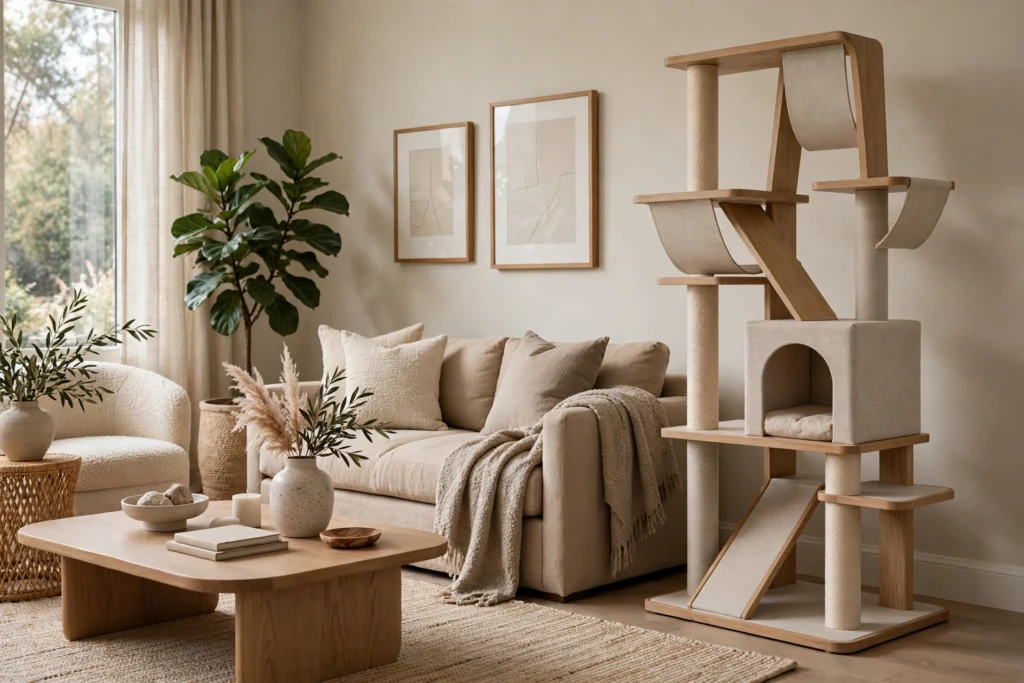

Living room cat tree ideas prove you never have to choose between your cat’s happiness and your decor. The new generation of cat trees looks like intentional furniture — sculptural towers, solid-wood posts, and boucle-upholstered perches that belong in a styled living room rather than exiled to a spare bedroom.
The trick is matching materials, scale, and placement to the room you already have. Choose a tree stable enough for an active climber, finish it in fabrics that echo your sofa, and put it where your cat already likes to be. Do that, and the tree gets used daily while looking like it was always part of the plan. Below are fifteen ideas, from minimalist to farmhouse.
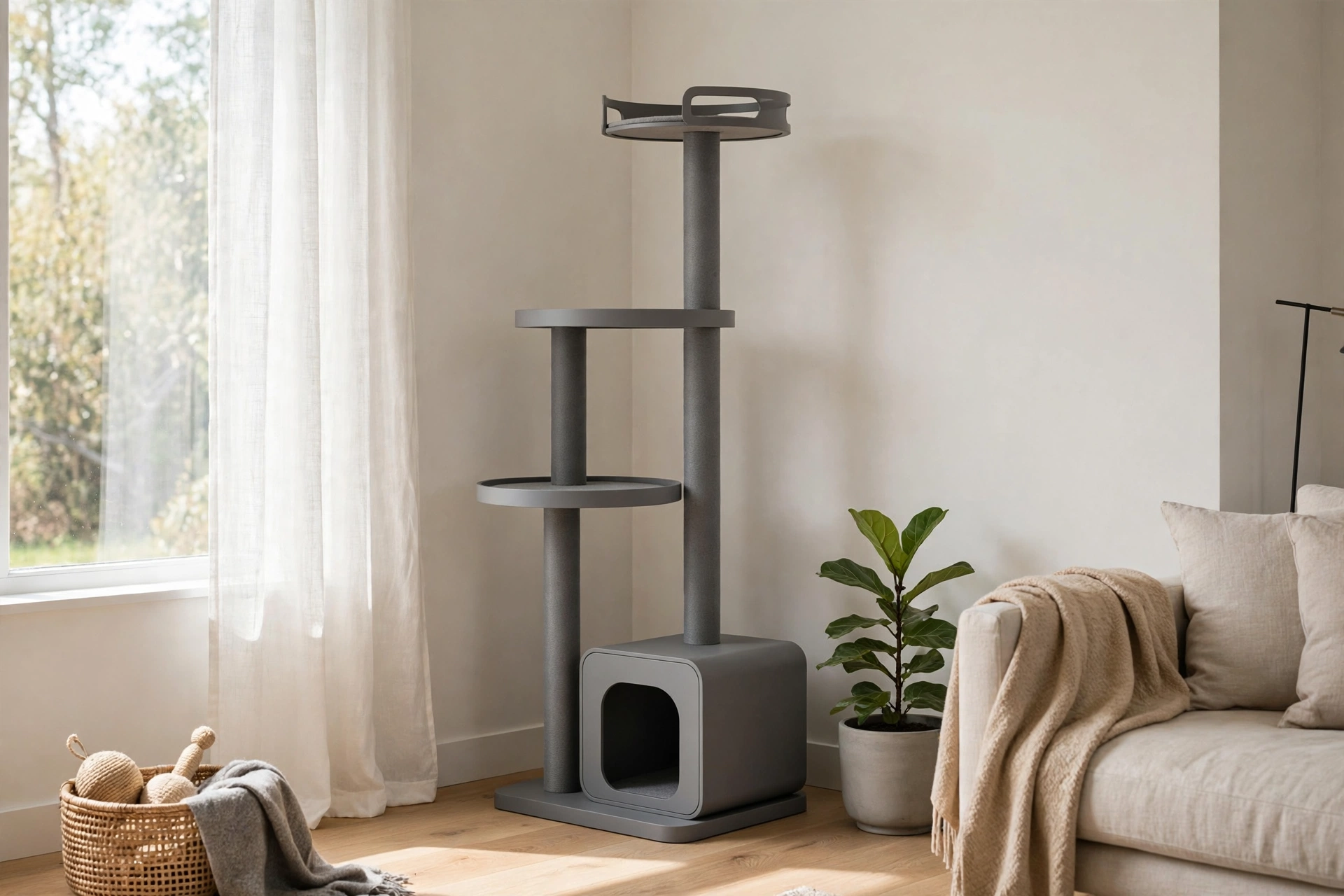
1. Sleek Minimalist Tower in Matte Neutral
A minimalist tower disappears into modern living rooms because it borrows the room’s own palette. Look for clean-lined platforms in matte gray, ivory, or charcoal — powder-coated MDF or smooth plywood — with low-pile carpet pads in a matching tone. Keep the footprint modest — about 24 by 24 inches at the base and five to six feet tall — so it reads as furniture rather than playground equipment.
Anchor the tower in a corner near a window, using the included anti-tip wall strap so an energetic climber cannot topple it. Then pair the setup with our living room corner decor ideas — a floor lamp, plant, or basket nearby makes the tower look intentional rather than forgotten.
2. Natural Solid-Wood Post Tree
Real wood posts age gracefully in a way carpeted tubes never do. Choose a tree built from solid pine, beech, or rubberwood, sealed or stained to match your coffee table or media console. The scratching columns should be wrapped tightly in natural sisal rope — the rough fibers satisfy a cat’s scratching instinct far better than carpet, and a sisal-wrapped post is the surface behaviorists recommend most (see Wikipedia’s overview of scratching posts for why texture matters).
These trees are naturally stable, but keep the tree on a level floor and check each platform’s mounting bolts monthly. One tall column of about 36 inches gives cats a full-body stretch — the single most important feature for scratching satisfaction.
3. Mid-Century Perch with Tapered Legs
For living rooms styled around walnut credenzas and tapered-leg armchairs, a mid-century cat tree completes the set. Look for a walnut-veneer or solid-acacia frame with splayed legs, round or kidney-shaped platforms, and cushions in mustard, olive, or burnt orange — a silhouette that reads as accent furniture.
Choose a model with at least two platform levels — cats want a choice between a lookout perch and a lower lounging spot. Cushions should have removable, washable covers; mid-century fabrics like wool-blend felt resist claw snags better than loose weaves. Position it near the sofa so your cat can supervise the room, keeping the total height under five feet to match your other case goods.

4. Wall-Mounted Modular Climbing System
When floor space is precious, take the cat tree vertical and onto the wall. Modular systems of floating shelves, steps, and hammock perches mount directly into wall studs — always hit studs, never drywall anchors alone, since a leaping cat can exert several times its body weight on landing. Space perches 12 to 16 inches apart and rate each shelf for at least 40 pounds.
The decor advantage is total control: stain the shelves to match your trim, line them with washable pads in your accent color, and run the route above the sofa or along an empty wall. This is the tidiest option for small apartments, and it keeps the floor completely clear for vacuuming.

5. Neutral-Toned Classic Carpeted Tree
The classic carpeted cat tree earns its place when the carpet matches the room. Skip the dated beige-and-brown combos and choose a tree upholstered in soft gray, ivory, or greige low-pile carpet that echoes your sofa or rug. The monochrome palette lets a large tree read as one calm mass.
Go tall — 60 inches or more — so active cats get a genuine climb, with at least one condo big enough for a full-grown cat to turn around in (about 14 inches square). Place it beside a window or the sofa arm where the cat already loiters — location determines whether a tree gets used. Vacuum monthly with an upholstery attachment to keep the neutral fabric fresh.

6. Floor-to-Ceiling Tension Pole Tree
A tension-mounted pole tree wedges between floor and ceiling with a spring-loaded mechanism, so it needs almost no floor footprint — ideal for tight living rooms. Adjustable poles fit ceilings from seven to nine feet; measure yours first, since vaulted or very low ceilings rule this option out. Two or three rope-wrapped platforms plus a top perch give cats a full vertical territory in about one square foot of floor.
Tuck the pole beside a tall houseplant or bookshelf, and cluster a few floor plants around the base — browse our living room plant decor ideas for arrangements that turn the corner into a deliberate green vignette. Check the tension monthly; poles loosen as houses settle.
7. Boho Rattan and Wicker Cat Tower
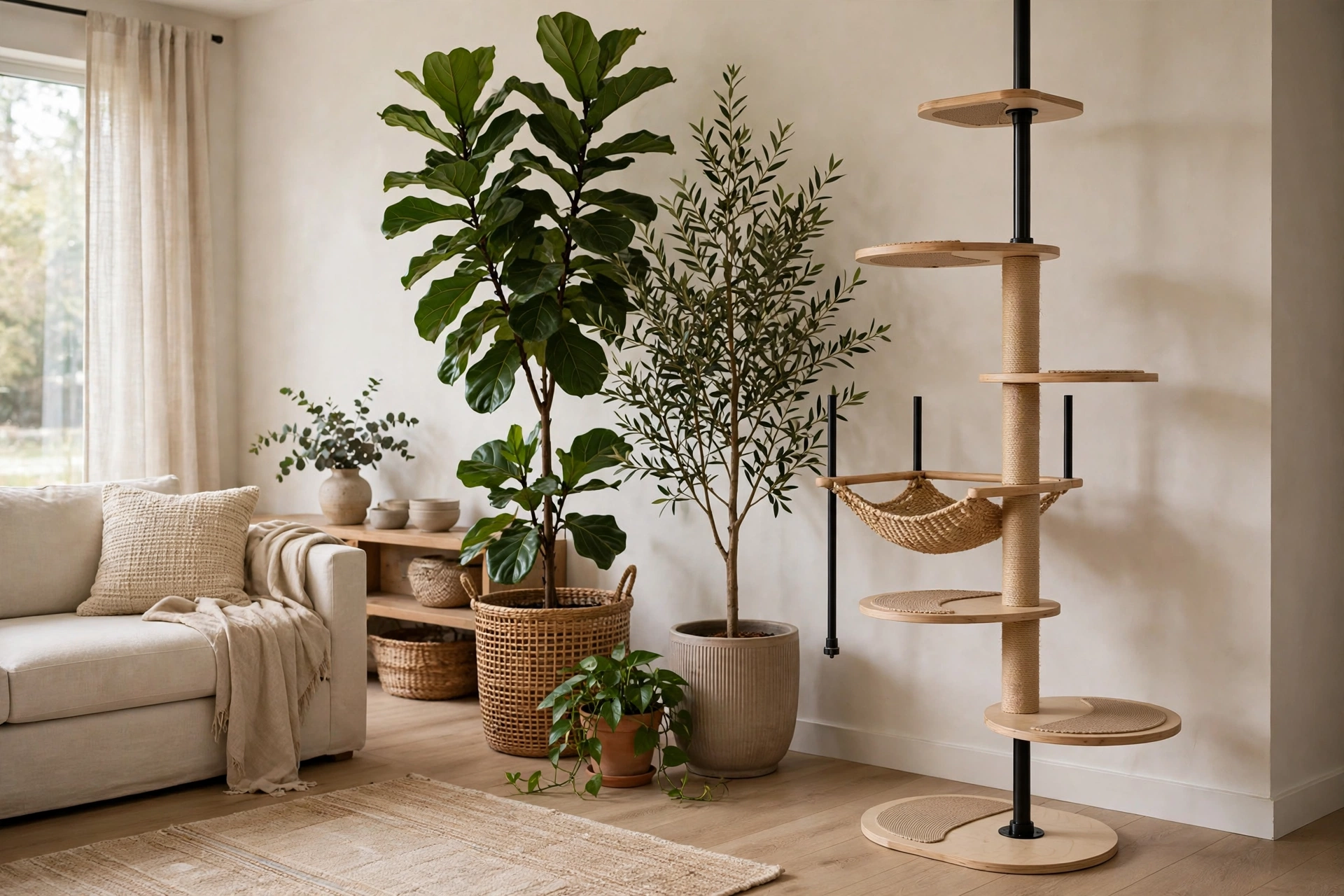
Rattan and wicker cat towers belong in boho, coastal, and eclectic living rooms, where their woven texture echoes baskets, pendant lights, and cane-back chairs. Look for a tower with one or two woven basket perches — cats love the cupped shape — plus a sisal scratching post at the base.
Wicker is lighter than wood, so stability matters more here: choose a tower with a wide, weighted base or a low center of gravity, and avoid tall narrow designs that a big cat could tip. A kilim-patterned cushion inside the basket ties the tower to your other textiles, and the honey tone of rattan warms white-walled rooms. Brush the weave monthly; fur collects in the crevices.
8. Industrial Pipe-Frame Cat Tree
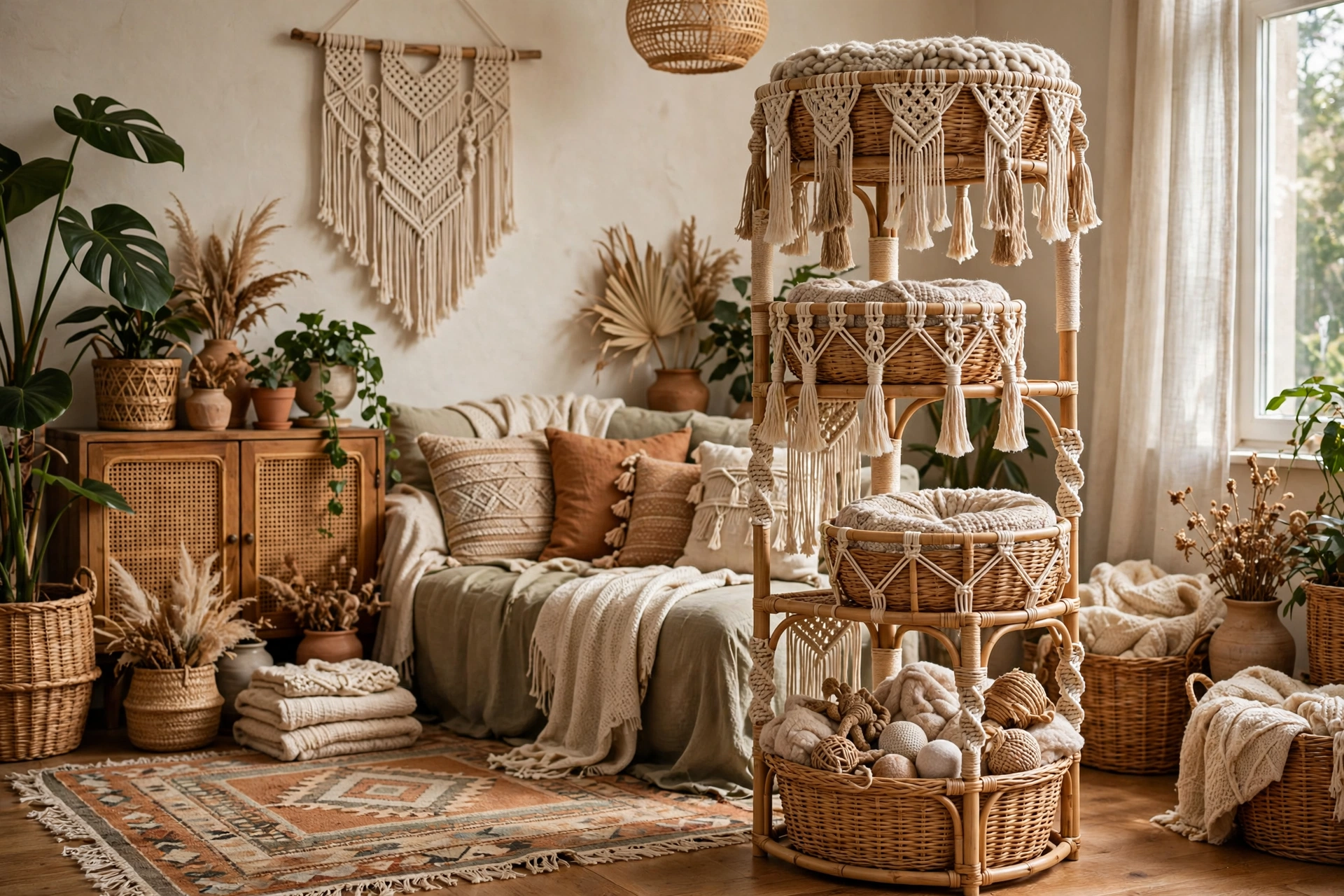
Loft and industrial living rooms call for black metal and raw wood. A pipe-frame cat tree — threaded iron or steel pipes fitted with solid wood platforms — looks like it was salvaged from a factory, which is precisely the aesthetic. The open frame keeps sightlines clear, so the tree feels lighter than a carpeted monolith.
Use thread-locking compound on the pipe joints so jumping does not slowly unscrew the frame. Platforms of butcher block or reclaimed-look pine, about 16 by 20 inches, give cats room to sprawl. Cats are hardwired to seek high vantage points — Wikipedia’s overview of cat behavior covers the climbing instinct — so include one top perch at least five feet up.
9. Sculptural Curved Designer Tree
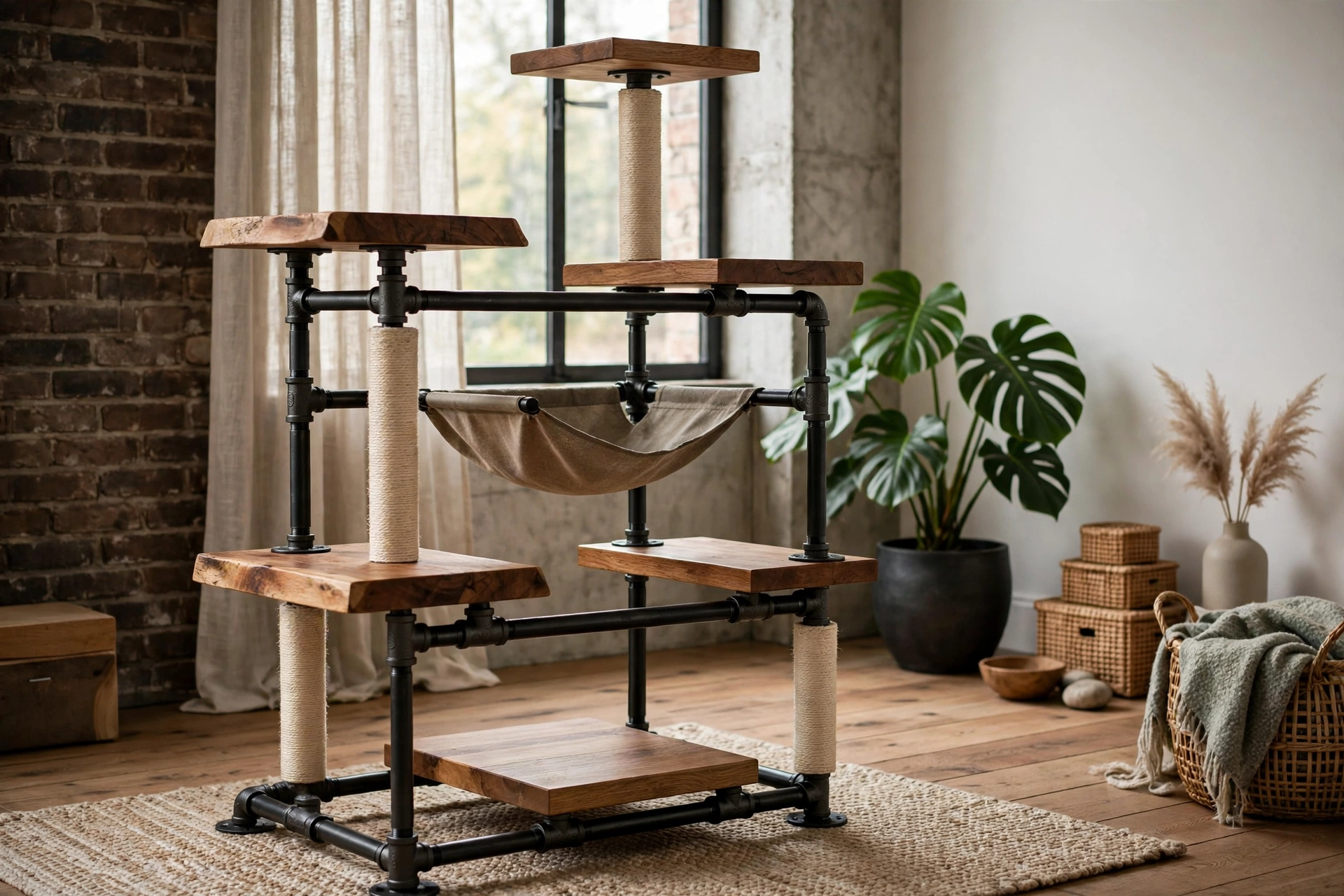
Some cat trees are art pieces that happen to have perches. Curved plywood designs — waves, spirals, and ribbon forms — turn the cat tree into a sculpture, and in a design-forward living room that is the whole point. These are premium pieces, often handmade, with smooth bent-plywood platforms and integrated scratching surfaces of sisal or carpet inlay.
Check the base width before buying: sculptural forms can be top-heavy, so look for a base at least 30 inches wide or a wall-bolted design. Place it where it can be seen — beside a reading chair or in an open stretch of floor — because a statement tree hidden in a corner wastes its looks. Give it the breathing room of a side table.
10. Cat Tree with Hidden Storage Base
A tree that hides a litter box or storage inside its base solves two living-room problems at once. Look for a cabinet base — roughly 20 by 24 inches — with a cat-sized entry, ventilation slots, and a removable top for cleaning. Used as a litter enclosure, it keeps the box out of sight in a living room where there is nowhere else to put it; used as storage, it swallows toys, blankets, and grooming tools.
Match the cabinet finish to your media console or sideboard so the base reads as ordinary furniture, topped with a scratching post and perch. If you enclose a litter box, scoop daily, keep the entry unobstructed, and line the interior with a washable mat.

11. Sisal-Column Tree with Cozy Cubby
A stout sisal-wrapped column with a single enclosed cubby is the workhorse of stylish cat trees: the column handles scratching, the cubby handles napping, and the compact footprint fits beside a sofa or armchair. Look for a column at least 30 inches tall and four inches in diameter, with a cubby opening of about eight inches.
Swap the generic cubby pad for a fabric matching your sofa’s throw pillows, and the tree suddenly looks coordinated. For textile pairings that pull a room together, see our living room throw pillow ideas and repeat one pillow fabric inside the cubby. Choose a heavy square base — single-column designs tip more easily than multi-post ones.
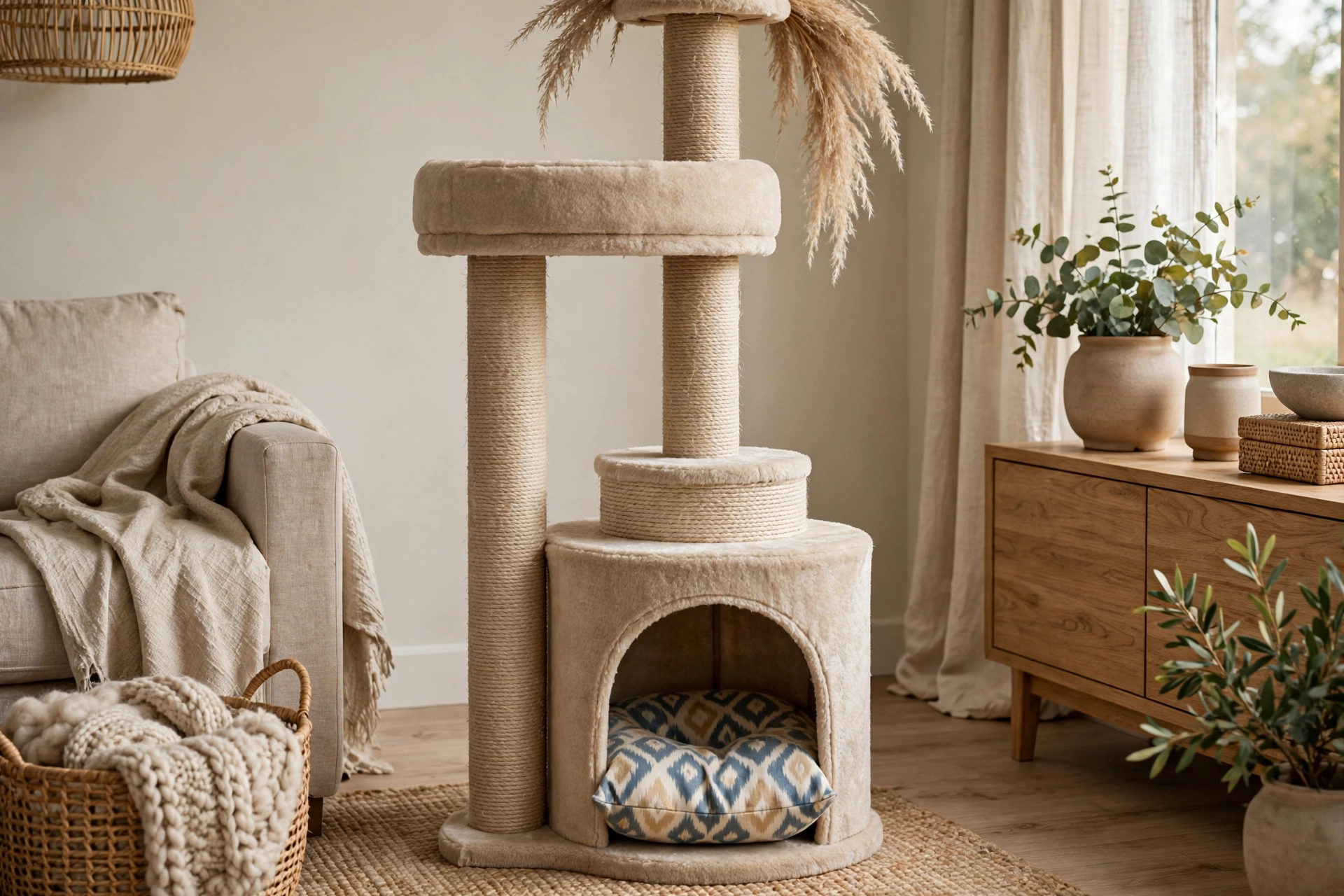
12. Scandinavian White and Light-Oak Tree
Scandi living rooms — pale walls, light oak, soft textiles — need a cat tree in the same whisper-quiet palette. Choose white powder-coated or painted MDF platforms paired with light-oak posts, with cushions in soft gray, oatmeal, or dusty rose. The light colors keep a tall tree from visually weighing down an airy room.
Rounded platform edges and recessed hardware give it a furniture-grade finish. A two-level design with a top perch and a lower hammock or bed suits most cats; hammocks should be made from tightly woven canvas that supports up to 15 pounds without sagging. Wipe white surfaces monthly — pale finishes show paw prints — and keep the tree near natural light.
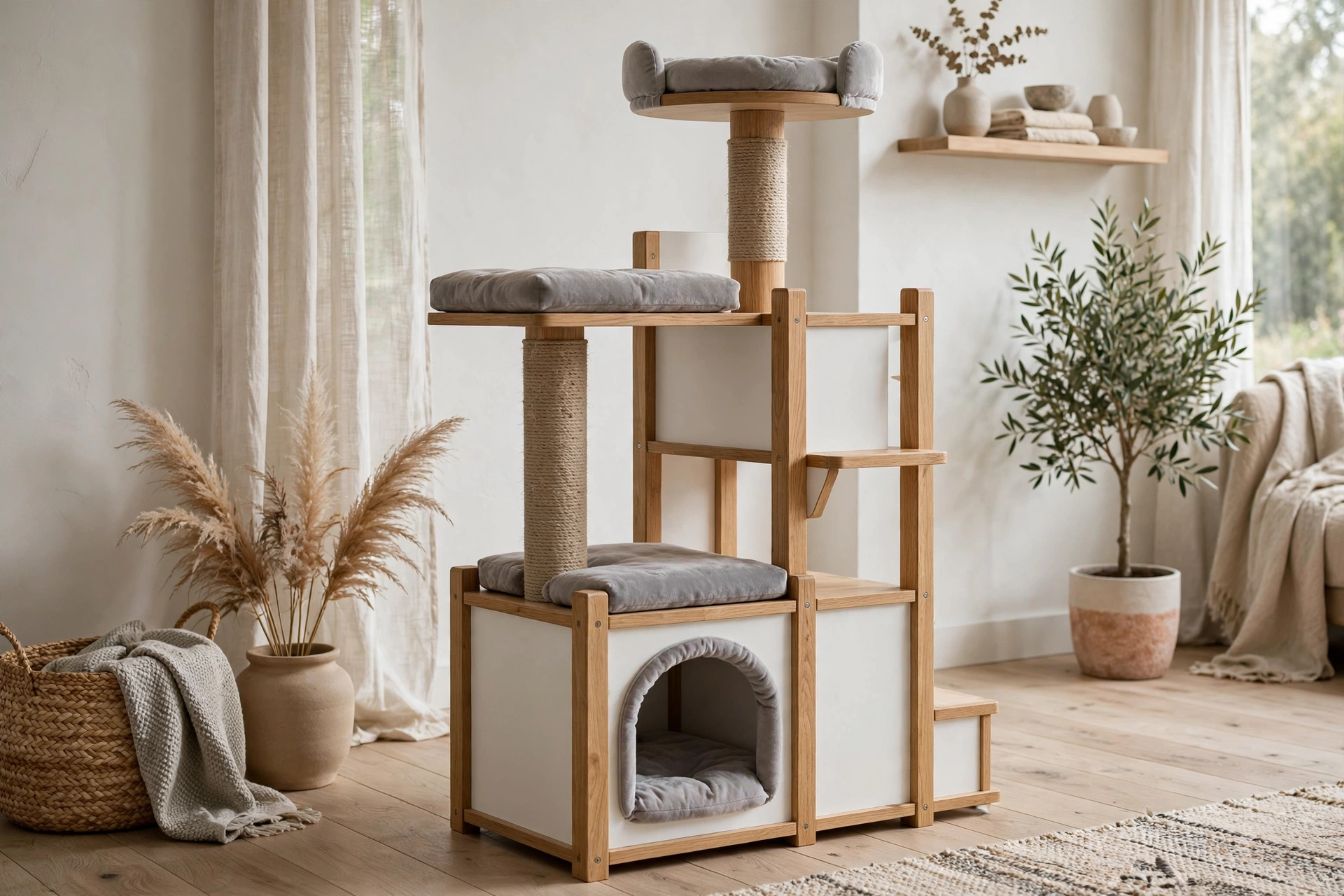
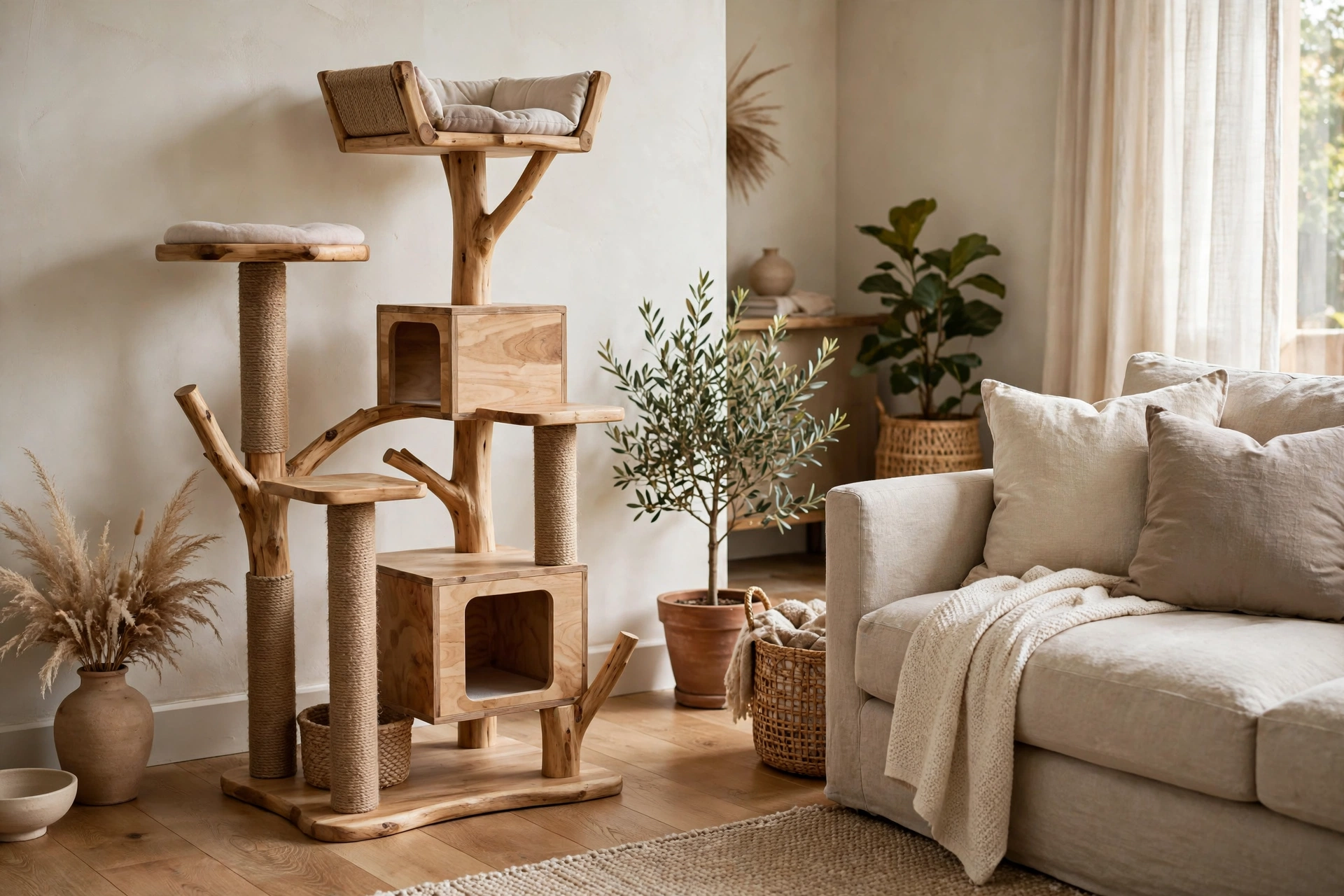
13. Rustic Farmhouse Branch-Look Tree
Farmhouse living rooms with shiplap, linen slipcovers, and vintage finds pair naturally with a branch-look cat tree. These trees use real or convincingly molded branches — sealed and sanded smooth so no splinters threaten paws — mounted on a distressed-wood base, with platforms wrapped in burlap-textured fabric or natural jute.
Check that every platform is level and every joint is through-bolted; organic shapes can hide weak connections. Keep the total height moderate — four to five feet — since branch trees are harder to anchor with wall straps. A woven basket of toys at the base makes the tree read as one more collected object in the room.

14. Boucle-Upholstered Luxe Cat Tree
Boucle and performance velvet have moved from sofas to cat furniture, and a luxe upholstered tree can sit beside a designer sofa without apology. Choose stain-resistant boucle or velvet with removable, machine-washable covers — non-removable upholstery is a dealbreaker. Piping along the platform edges gives the tailored, furniture-grade finish.
Match the upholstery to your sofa within one or two shades, or deliberately contrast it: an ivory boucle tree beside a cognac leather sofa looks intentional and high-end. Keep scratching to a dedicated sisal post and trim your cat’s nails regularly. These trees cost more than carpeted models, but they are the only ones guests consistently mistake for actual furniture.

15. Window-Hugging Perch Tree
Every cat behaviorist will tell you the window is the most valuable real estate in the house, so build the tree around it. Its main perch sits at sill height — typically 28 to 36 inches — as a wide padded platform (at least 18 inches across) for hours of bird-watching. Freestanding trees are safer than suction-cup window perches for large or enthusiastic cats; a suction cup can fail without warning.
Sit it flush against the wall beneath the window, adding a second, higher perch for surveyors. Choose sun-tolerant fabrics — solution-dyed acrylics resist fading far better than standard carpet. A window tree turns the cat’s favorite spot into a styled vignette rather than a scratched-up sill.

Frequently Asked Questions
How do I make a cat tree match my living room decor?
Match the tree’s two biggest surfaces to the room: choose platform fabrics within a shade or two of your sofa or rug, and pick wood or metal finishes that echo your furniture. Neutrals keep even a large tree reading as one calm shape.
Where is the best place to put a cat tree in the living room?
Place it where your cat already spends time: beside a sunny window, near the sofa, or in a corner with a view of the room — cats ignore trees in dead zones. Leave room around tall trees so leaps don’t topple lamps.
How tall should a cat tree be for an active cat?
Five to six feet is the sweet spot for an athletic cat — tall enough for a real climb and a high lookout. Include perches at multiple heights, and anchor anything over six feet — a leaping cat’s leverage can topple a heavy base.
How do I keep a tall cat tree from tipping over?
Screw the anti-tip wall strap into a wall stud, choose a base at least half as wide as the tree is tall, and keep heavy features low. Check bolts monthly; cats abandon wobbly trees.
What materials are best for a stylish cat tree?
Solid wood posts, tight natural sisal, and low-pile carpet or performance fabrics in neutral tones look best and last longest. Sisal beats carpet for scratching and wood beats particleboard for structure; washable cushions keep it fresh. Skip shaggy carpet — it dates fast and traps fur.
Keep Exploring
A cat tree earns its floor space when it works as hard visually as it does for your cat. Pick the style that speaks your room’s language — wood, boucle, rattan, or matte minimal — anchor it safely, and place it where the sun lands. Your cat gets a kingdom; you keep a living room you love. Keep exploring our living room guides for more pet-friendly styling ideas.