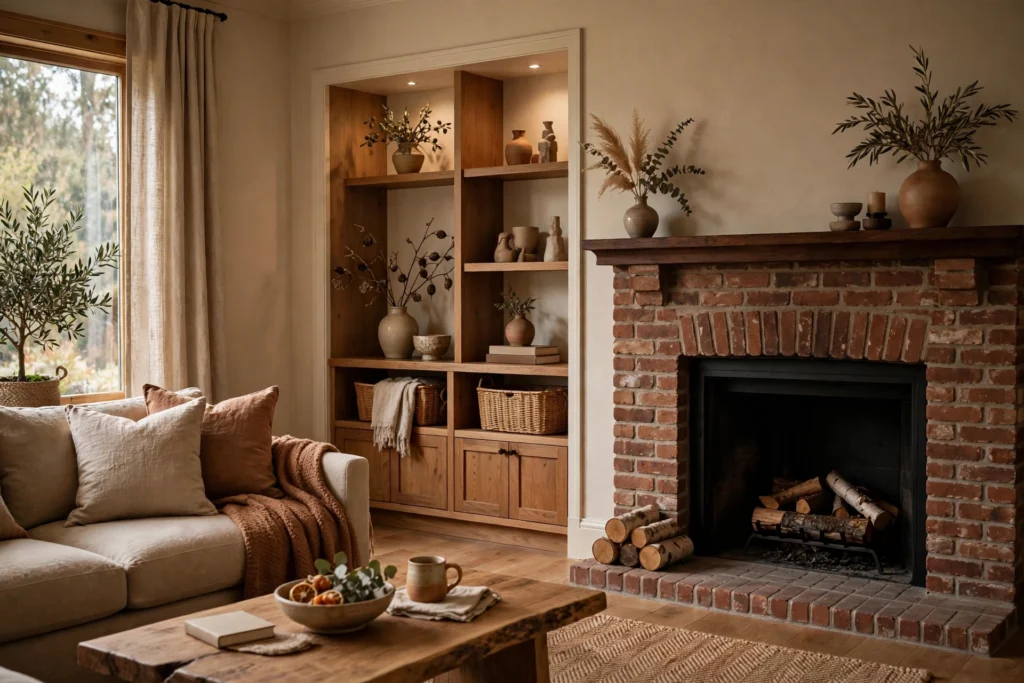

Living room alcove ideas turn the most overlooked corners of a home into its most charming features. An alcove is simply a recessed nook or niche in a wall — the shallow inset beside a chimney breast, the space flanking a fireplace, or the awkward gap under the stairs. Thoughtful styling converts these recesses into reading corners, display shelves, hidden storage, or a cozy seat.
Match the idea to the alcove’s depth: a twelve-inch recess suits bookshelves or art, while a deeper three-foot nook can hold a bench, desk, or armchair. The fifteen ideas below cover every scale, with practical notes on lighting, shelving, seating, and storage.
1. Floor-to-Ceiling Built-In Bookshelves
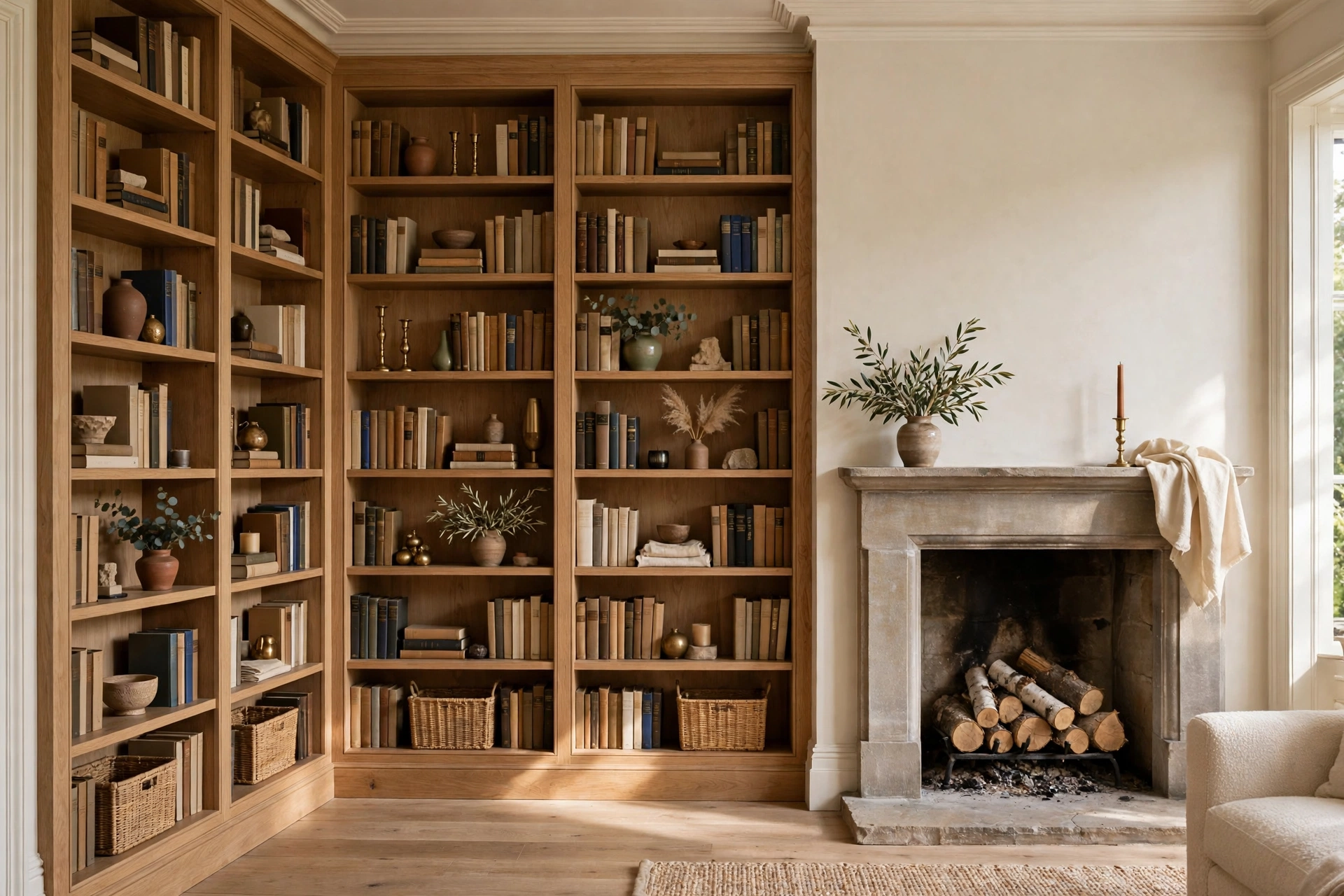
A floor-to-ceiling run of built-in shelving is the highest-impact use for a living room alcove, especially the shallow recesses flanking a chimney breast. Measure the opening first: most alcoves are eight to fourteen inches deep, suiting standard books but not oversized art volumes stored upright. Use adjustable shelves to mix tall vases with short stacks, and leave the bottom open for woven baskets hiding remotes, chargers, and spare throws.
Paint the shelving the wall color for a seamless look, or choose a deep contrasting tone to make the alcove a deliberate feature — see Wikipedia’s overview of the alcove for background.
2. A Cozy Reading Nook with Real Seating
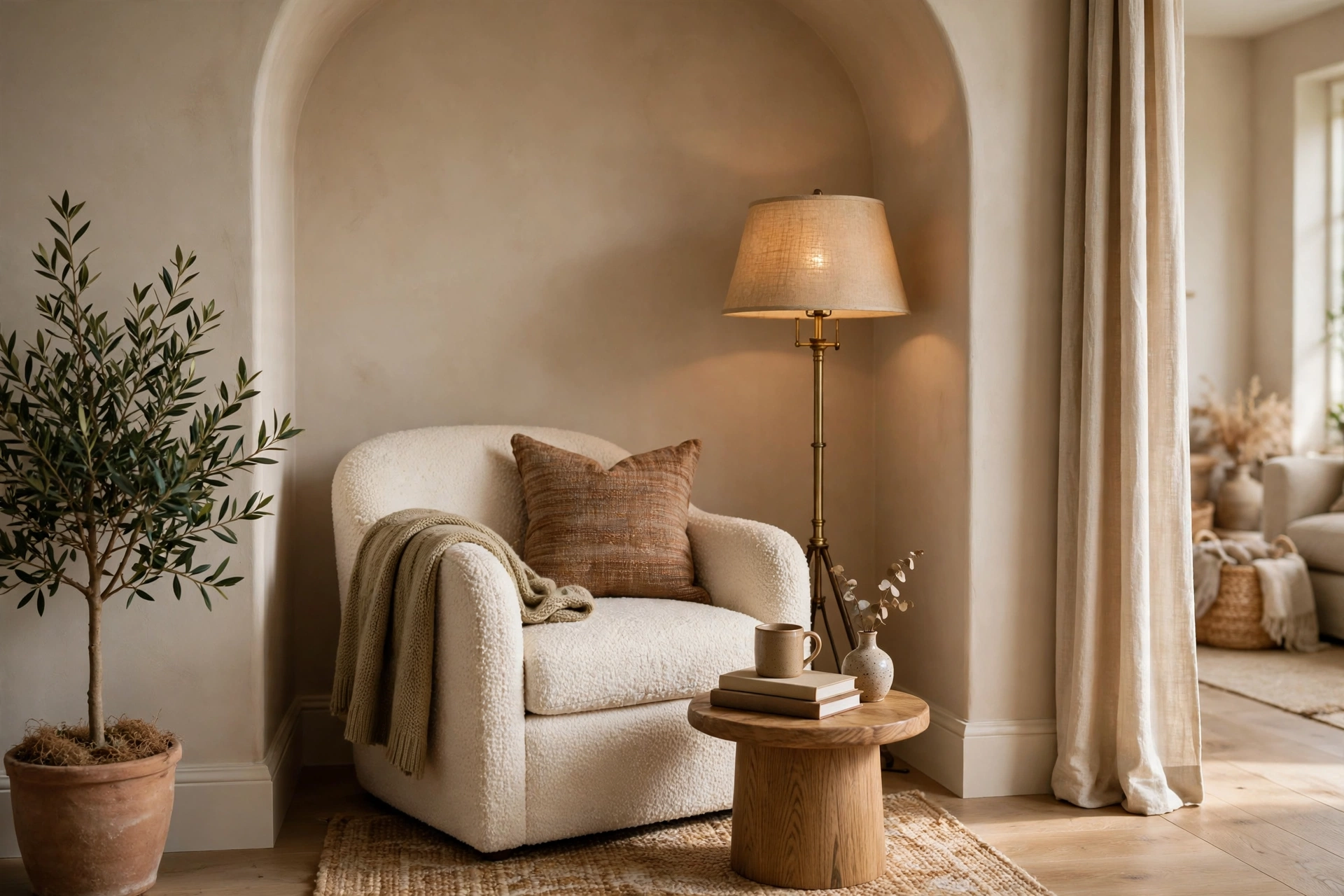
Turn a deep alcove into the reading corner you have always wanted. Start with seating that fits the recess: a compact armchair pulled fully inside feels like a private retreat, while a built-in bench with a thick cushion maximizes a wider opening. Mount a swing-arm sconce above shoulder height for glare-free light, and add a small floating ledge at arm’s reach for your book and tea.
Layer a soft throw and lumbar pillow, then frame the opening with contrasting paint or a curtain panel to signal a destination, not leftover space. Browse our living room accent chair ideas to find the perfect seat.
3. A Mini Home Bar or Coffee Station
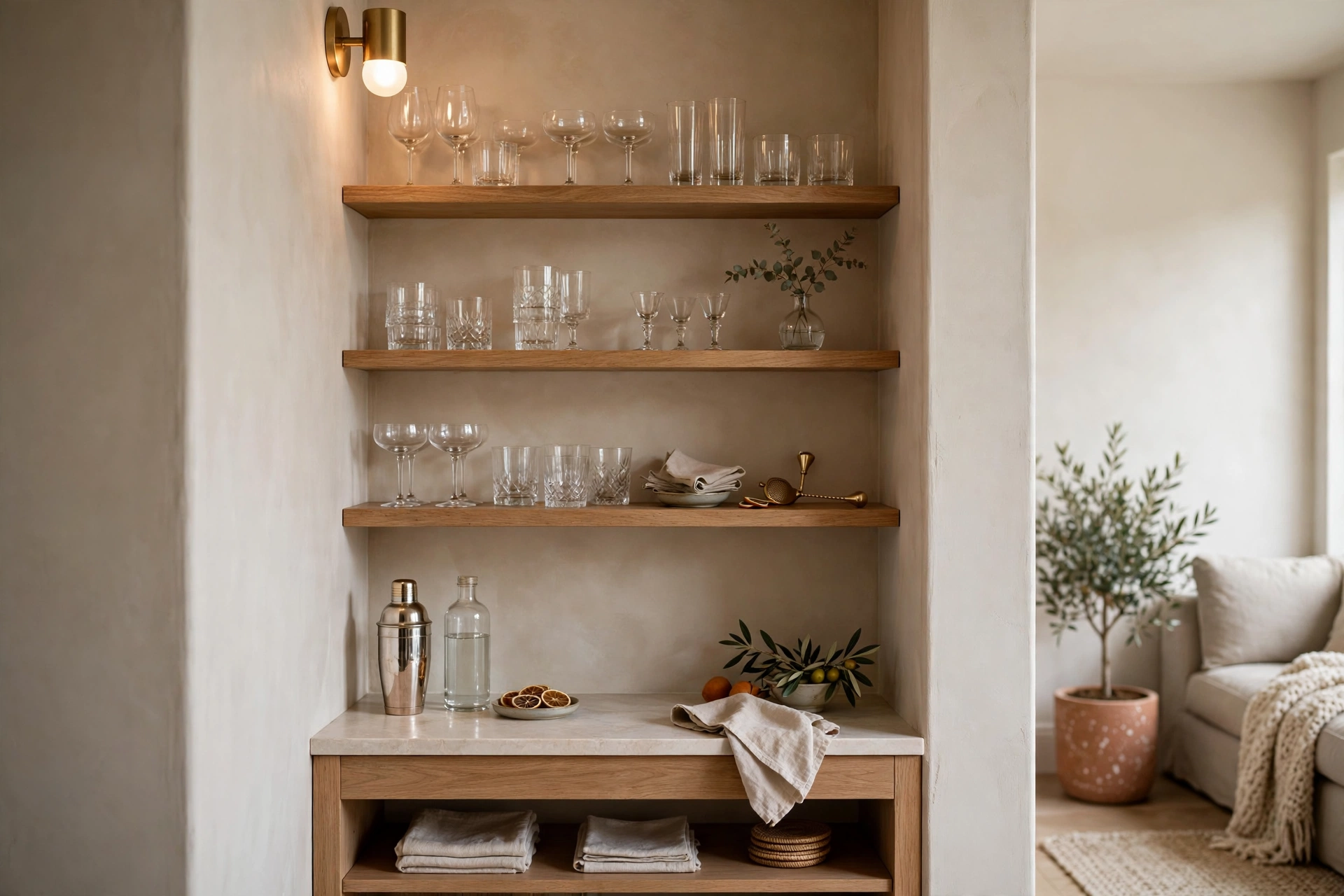
Shallow alcoves make excellent serving stations — the recess naturally frames bottles, glassware, and a tray. Install two floating shelves at staggered heights, anchored by a slim console or bar cart sized to the opening. A short LED strip under the top shelf makes glassware glow in the evening and doubles as mood lighting.
For a coffee station, confirm an outlet inside the recess first — if not, run a discreet flat extension cord behind a basket. Finish with a small mirror or metallic tray on the back wall to bounce light and add depth. Stock only what you use so the station stays handsome, not crowded.
4. A Gallery Wall Inside a Recessed Niche
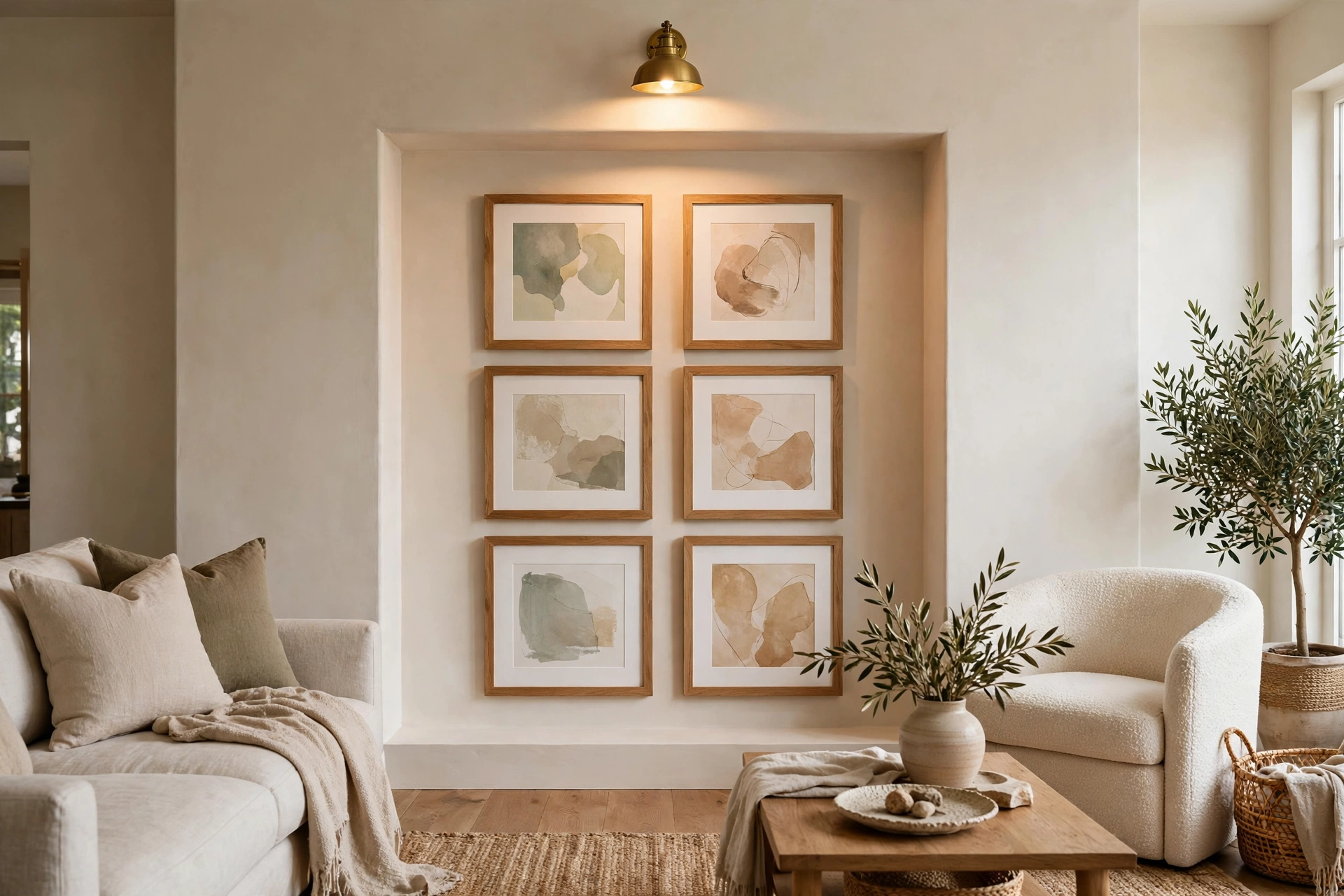
Art hung inside a recess reads more intentional than on a flat wall, because the niche itself acts as a frame. Keep it simple: one oversized canvas for drama, or a tight grid of four to six small frames at identical heights. Paint the niche interior one shade deeper than the wall so the artwork stands forward, with a slim picture light or two LED spots for a gallery feel after dark.
Leave breathing room between frames — too many pieces in a small recess looks busy, not curated. These shallow recesses have a long architectural history; read more on Wikipedia’s page on niches in architecture.
5. Fireplace Alcoves with Closed Storage Below
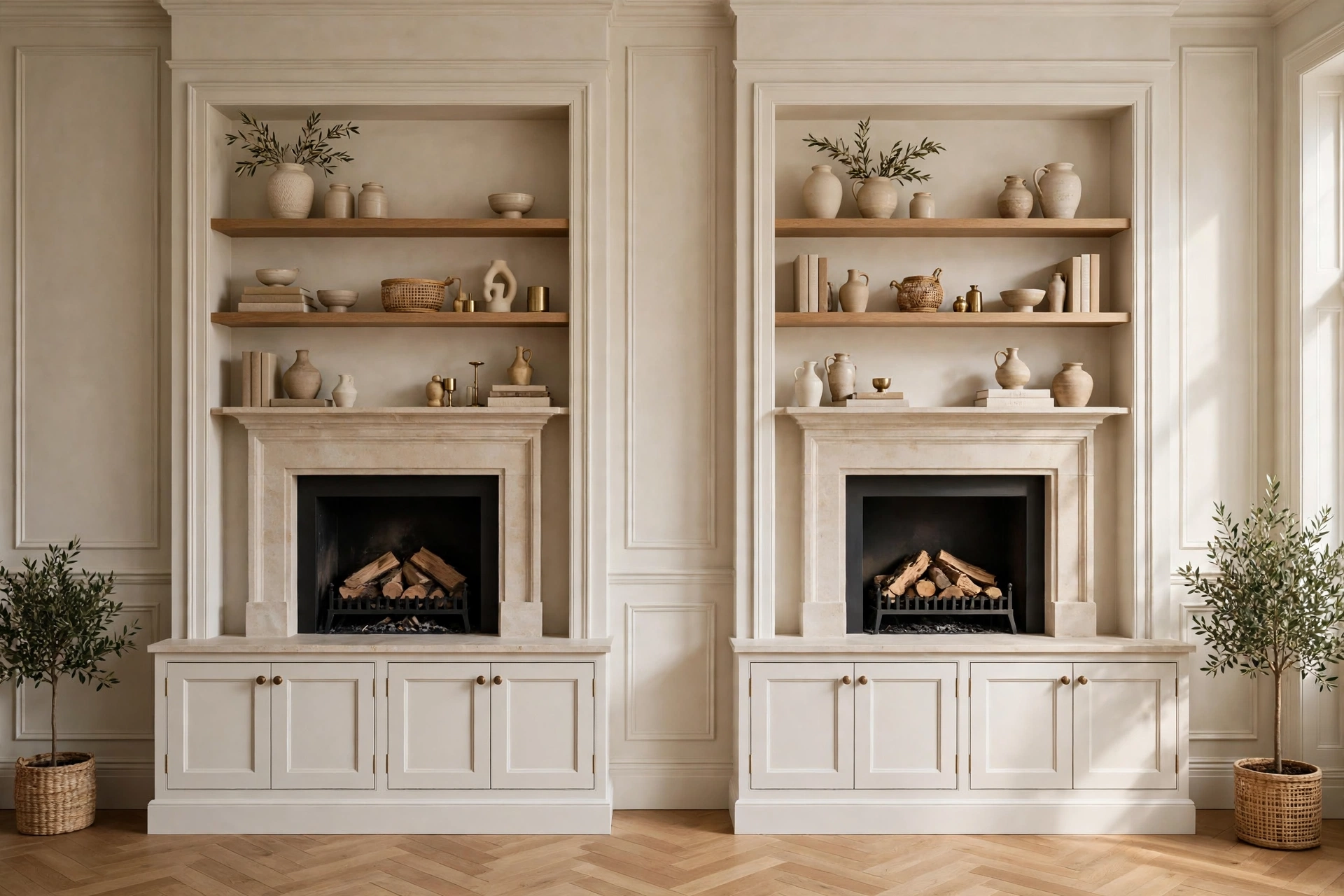
The paired recesses beside a chimney breast are the classic living room alcove, and the smartest treatment splits them into hidden and display zones. Fit the lower half with cupboard doors painted to match the wall, hiding board games, media clutter, and seasonal decor. Keep the upper half open with two or three shelves for books and a few decorative objects.
Mirror shelf heights, door styles, and styling on both sides so the fireplace remains the focal point; asymmetry here fights the architecture. If the alcoves house electronics, leave a two-inch ventilation gap behind the cupboard backs and drill discreet cable holes.
6. Under-Stair Alcove Seating
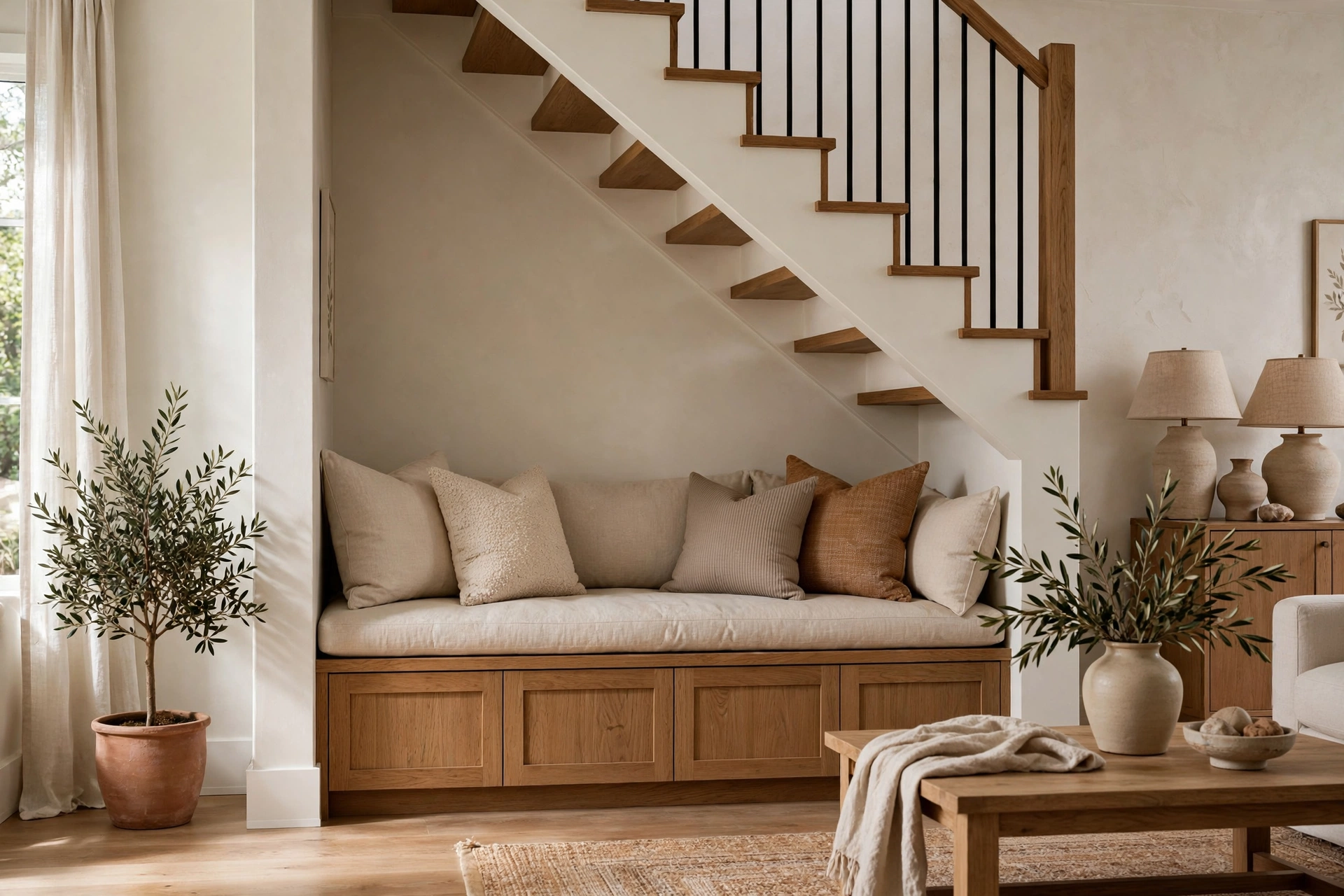
The triangular void beneath a staircase is an alcove waiting for a purpose, and a built-in bench turns it into the home’s favorite perch. Build the seat at standard bench height — about eighteen inches — with hinged lids or drawers underneath for shoes, toys, or throws. Check headroom at the bench’s inner edge first; under four feet feels cramped for adults but suits a children’s corner.
Add a firm cushion in washable fabric, throw pillows, and a wall-mounted reading light. Ground the space with one of our living room rug ideas so the nook feels like a defined zone, not leftover floor.
7. A Compact Work-From-Home Desk
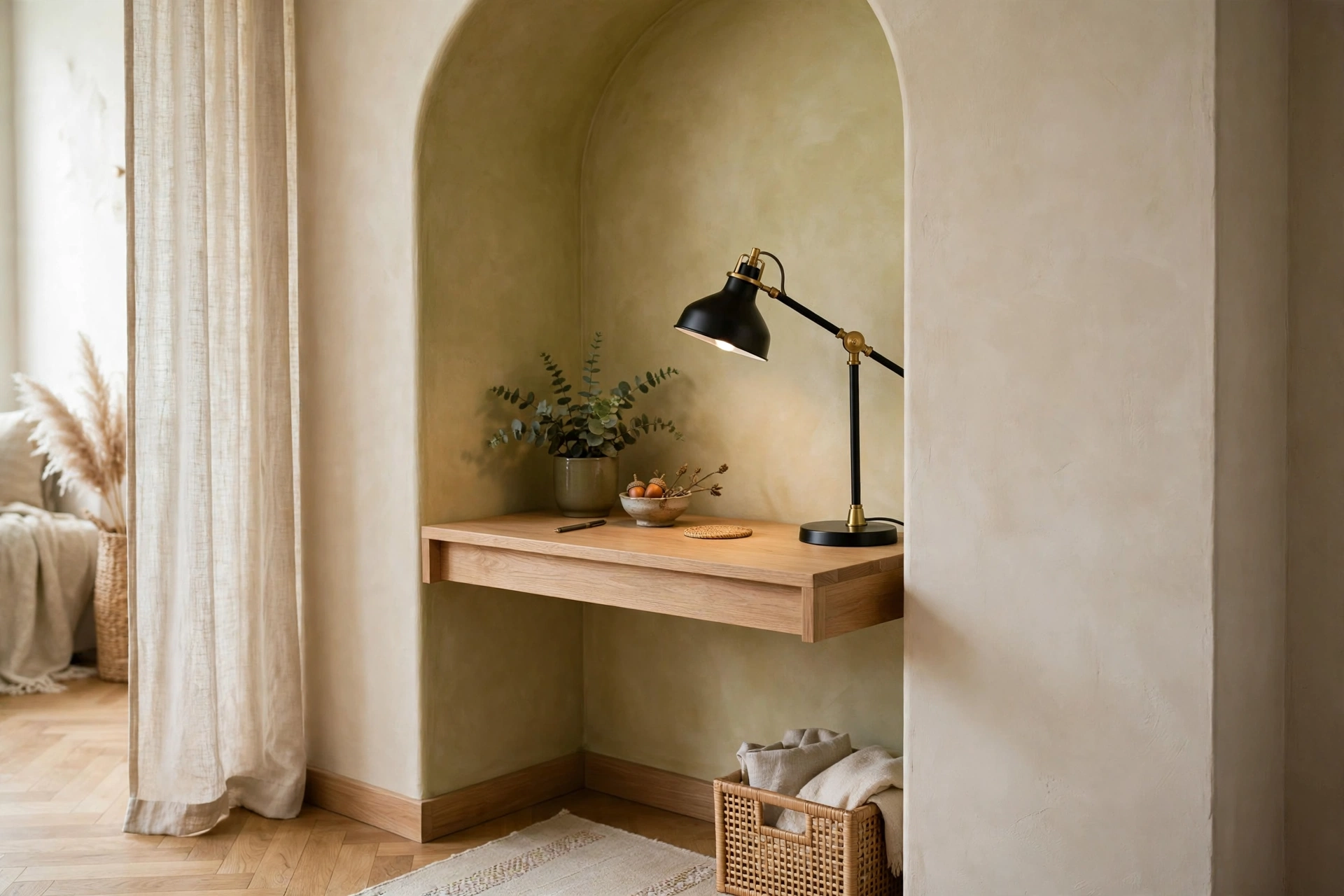
A two-foot-deep alcove is all the space a functional desk nook requires. Mount a wall-hung desk or sturdy floating shelf at twenty-nine inches high, deep enough for a laptop and notebook, and pair it with a chair that tucks fully underneath when the workday ends. Task lighting is non-negotiable: a clamp lamp or wall-mounted arm keeps the small surface glare-free without eating desk space.
Manage cables with an adhesive cord channel painted to match the wall, and add one shelf above for books and a plant. Close the “office” each evening with a curtain or folding screen across the opening — the boundary protects your downtime.
8. Floating Display Shelves with Accent Lighting
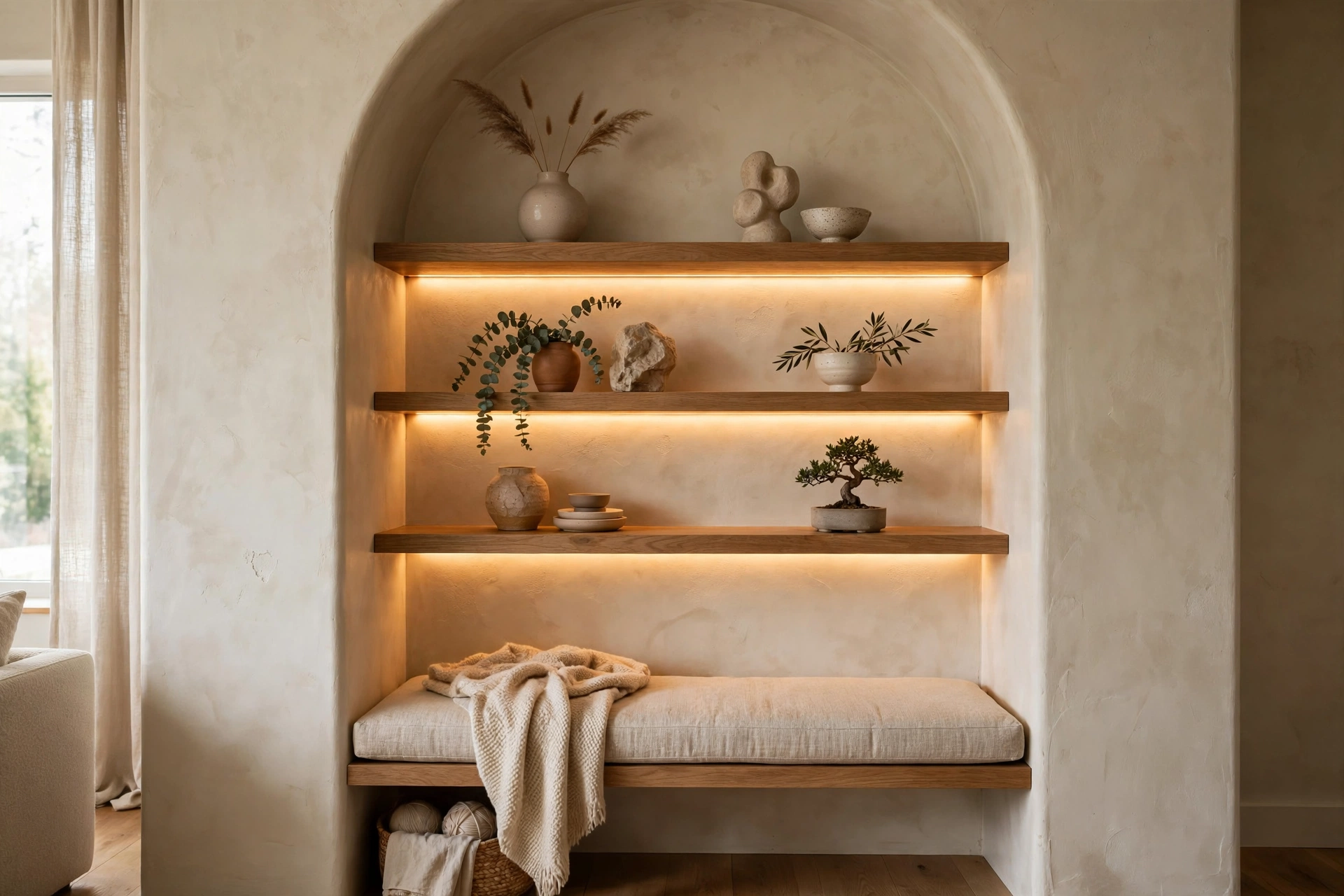
When an alcove is too shallow for furniture, two or three floating shelves styled with restraint beat a cluttered bookcase. Follow the rule of three: group objects in odd numbers, vary heights, and leave a third of each shelf empty so the display breathes. Mix materials — ceramic, wood, glass, a trailing plant — for a collected look.
The real magic is lighting: a warm-white LED strip tucked under each shelf washes the wall in a soft glow, turning the alcove into an evening focal point. Put the strips on a dimmer or smart plug to shift from bright display by day to gentle ambience by night.
9. A Kids’ Play and Book Nook
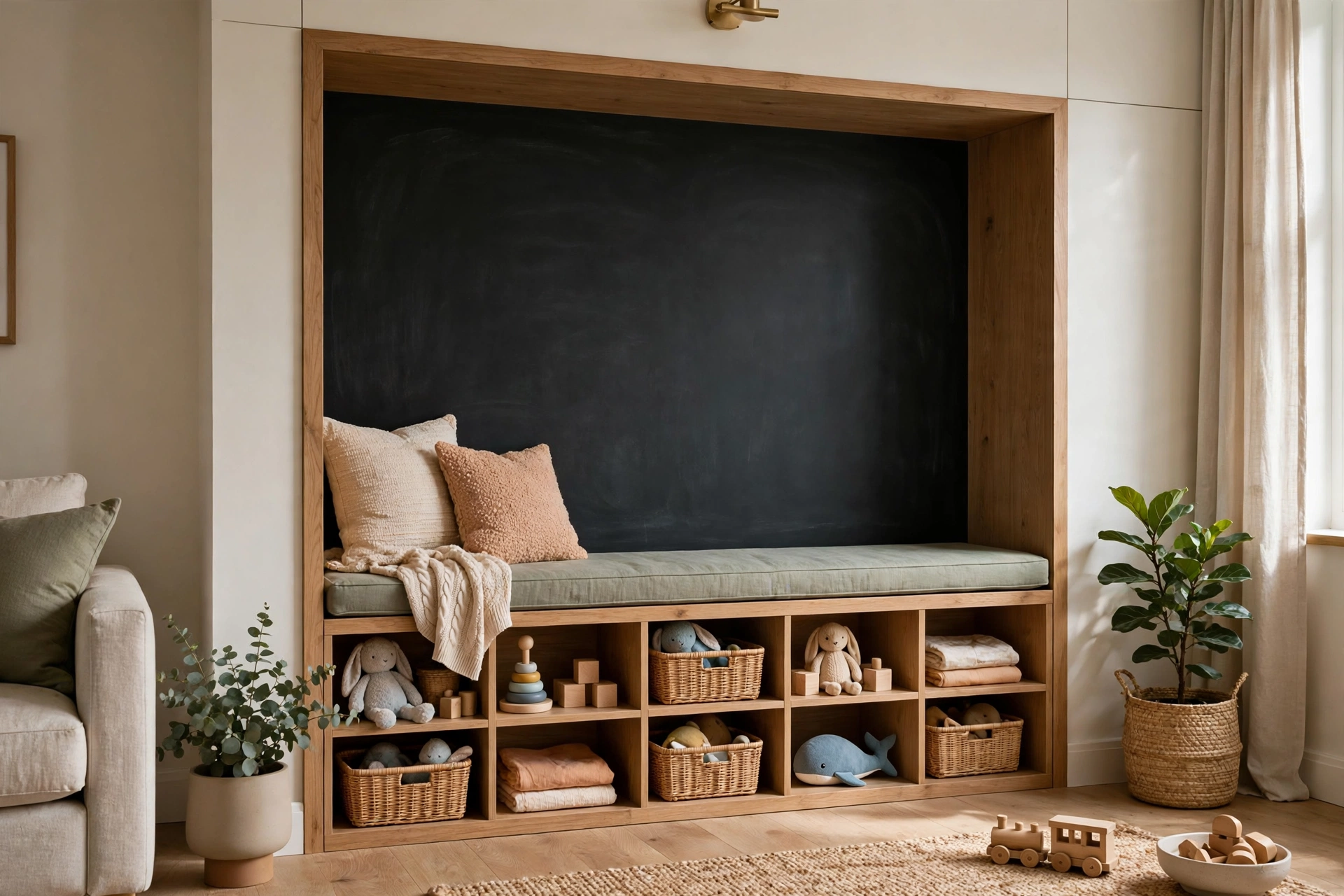
Give children their own alcove and the toys stay satisfyingly contained. Fit the recess with low open cubbies at floor level for books and bins, topped with a cushioned bench at kid-friendly height. Paint the back wall with chalkboard or magnetic paint for a wipe-clean creative surface, and add a small washable rug to define the zone.
Keep storage open rather than lidded — toddlers tidy up when they can see where things go. A battery lantern or wall night-light makes the nook inviting after dark, and with everything low, the rest of the living room stays (mostly) toy-free.
10. A Media Recess with Hidden Cables
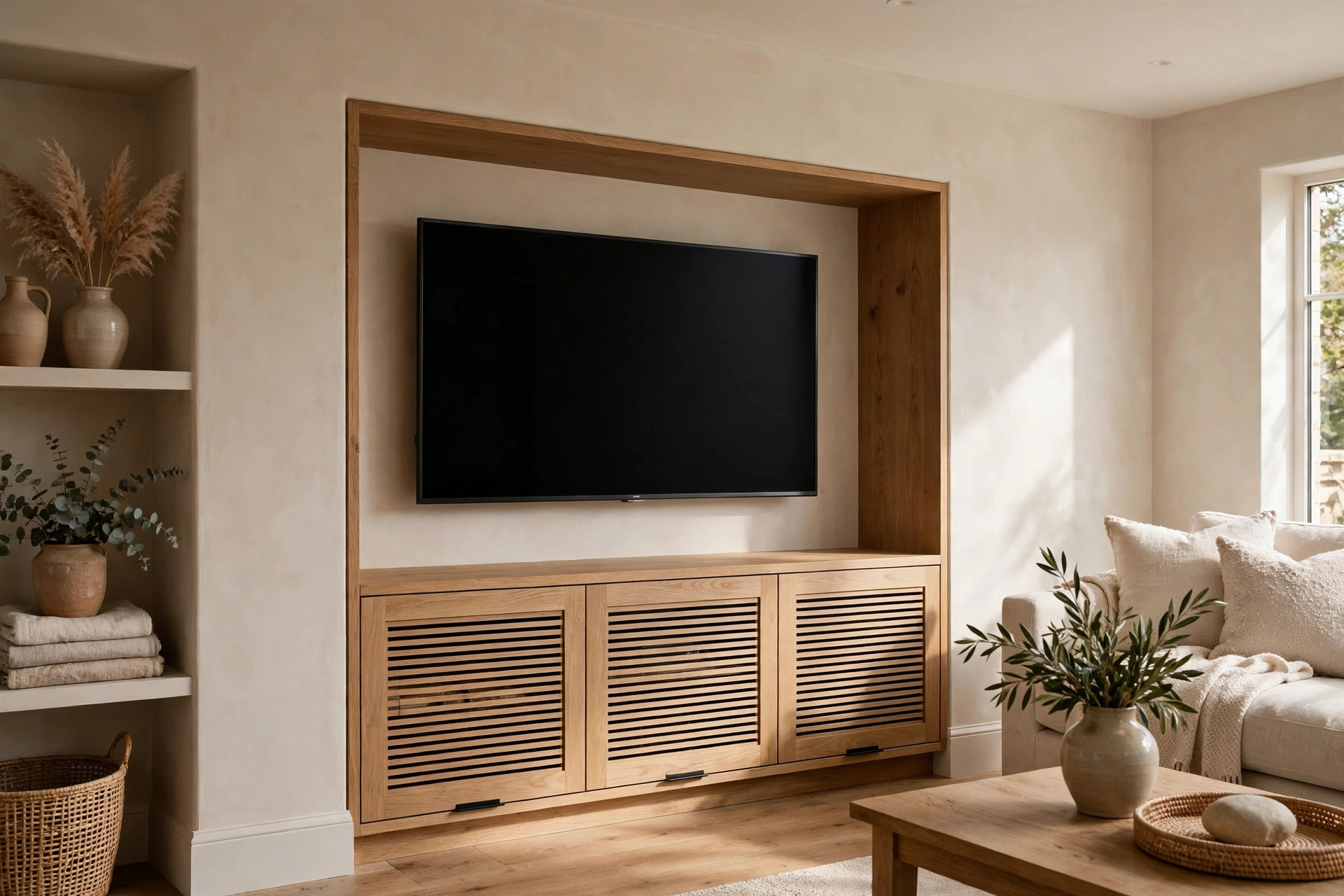
Setting the television inside a shallow recess stops it from dominating the room. Choose a full-motion bracket so the screen pulls forward and angles toward seating, then add a low ventilated cabinet beneath for consoles — heat kills electronics, so leave airflow gaps front and back.
Hide cables in paintable trunking run down the recess’s least visible edge, with a surge-protected power strip inside the cabinet. Flank the screen with a bookshelf on one side and art or a plant on the other, so the black rectangle reads as part of a composed wall rather than a floating void.
11. A Plant-Filled Greenery Nook
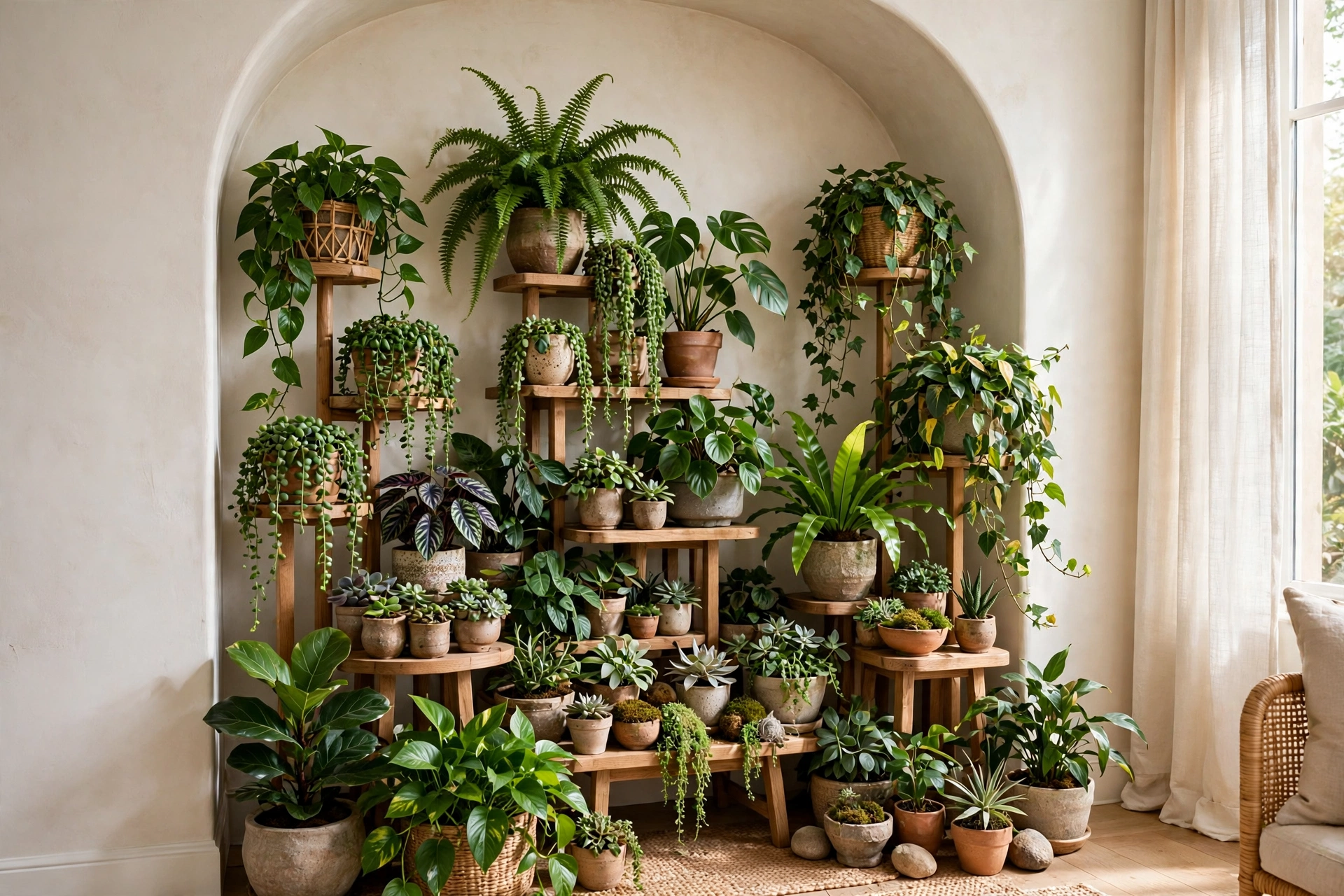
An alcove near a window is a ready-made home for plants, and grouping them turns a dead corner into the room’s liveliest feature. Use a tiered stand or two staggered shelves for height variation, mixing trailing pothos up top with upright snake plants and ferns below. Match pots in one material — terracotta, matte ceramic, or woven seagrass — so a dozen plants read as one deliberate collection.
If the alcove gets little bright indirect light, add a full-spectrum grow bulb on a timer; most houseplants forgive a dim corner when light is consistent. A pebble-and-water humidity tray underneath keeps tropicals happy through dry winters.
12. A Bold Accent Wall with Wallpaper or Paint
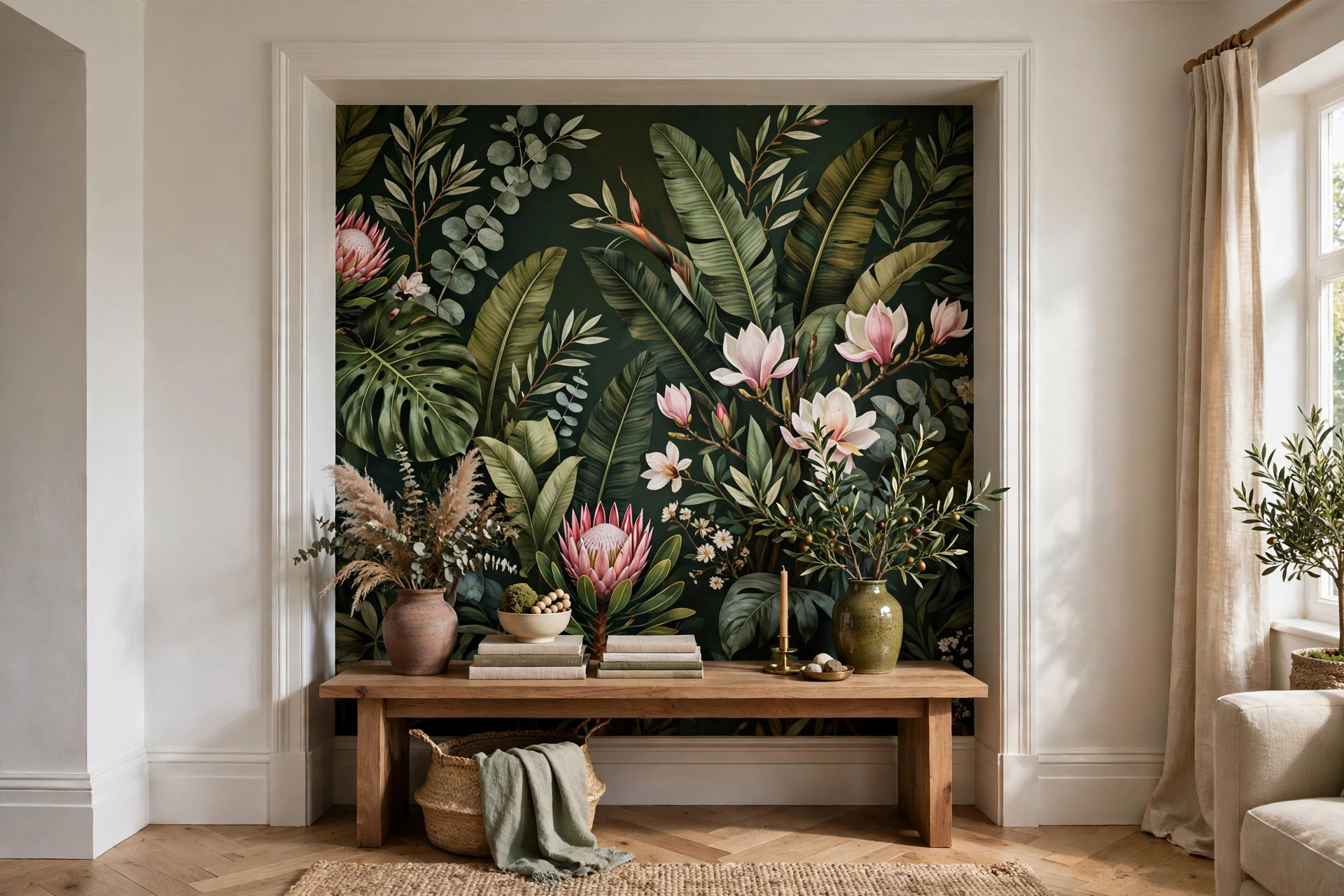
Sometimes the best alcove idea is the simplest: treat the recess interior as a canvas. A deep paint color — forest green, inky navy, warm terracotta — makes the alcove recede and turns whatever sits in front of it into a display. Peel-and-stick wallpaper is the renter-friendly alternative for testing a bold botanical or geometric print.
Carry the paper or paint across the back wall and both returns for a fully enveloped look, keeping the surrounding wall neutral so the contrast does the work. Even an empty alcove with a striking finish looks intentional — the fastest transformation on the list.
13. Curio and Collectibles Display
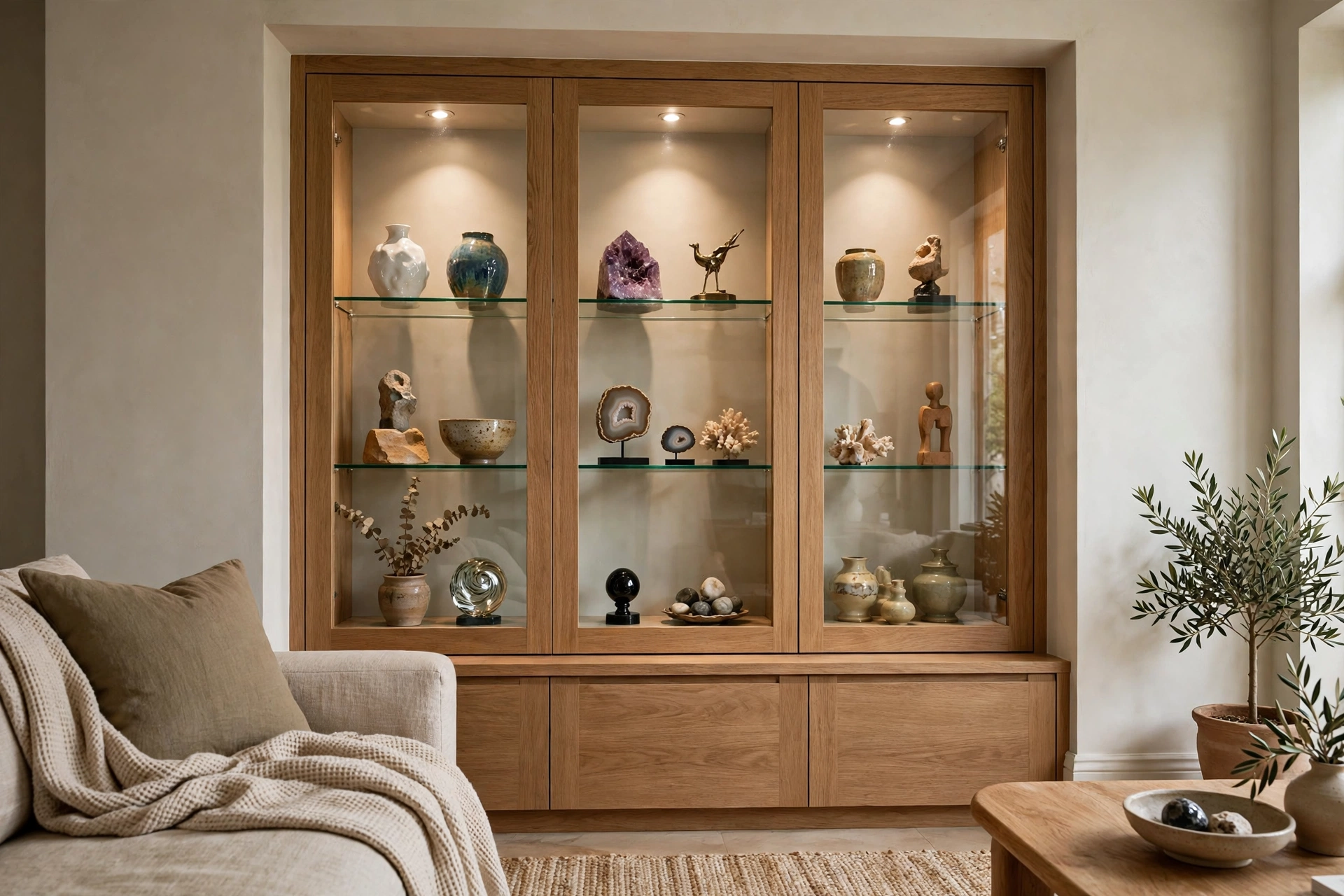
Collectors finally get their moment: a shallow alcove with glass-fronted shelves is a personal museum. Install adjustable glass or wood shelves with a mirrored back panel to double visual depth, lighting each shelf with a slim LED puck or strip. Secure wobbly treasures with museum putty — essential with kids or pets — and group items by color or material rather than scattering them.
Leave negative space between groupings: a crowded shelf reads as clutter, a curated one as a collection. Dust seasonally with a microfiber cloth; glass shows every speck, the price of the gallery look.
14. A Pet Corner Den
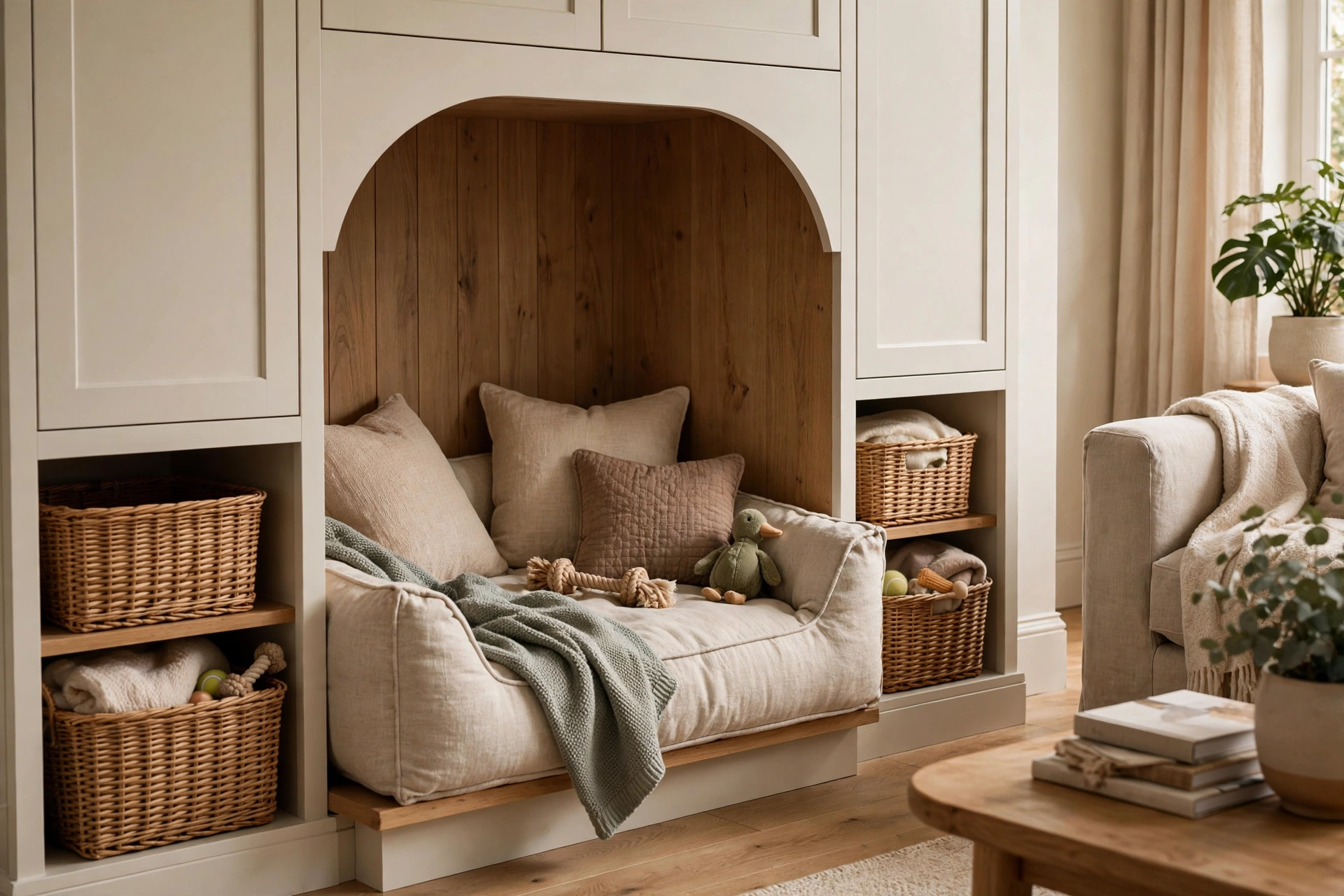
Tuck your pet’s bed into an alcove and the crate stops looking like an eyesore. A washable orthopedic bed sized to the recess, lidded baskets for toys and treats, and a wall hook for the leash create a tidy pet station that blends with the room. Choose a bed cover that coordinates with your upholstery so the corner reads styled, not improvised.
For cats, add a wall-mounted perch or compact scratching post at the alcove’s edge. Keep food and water bowls in the kitchen — spills and living room floors don’t mix — and the den stays clean and calm.
15. A Styled Console Vignette
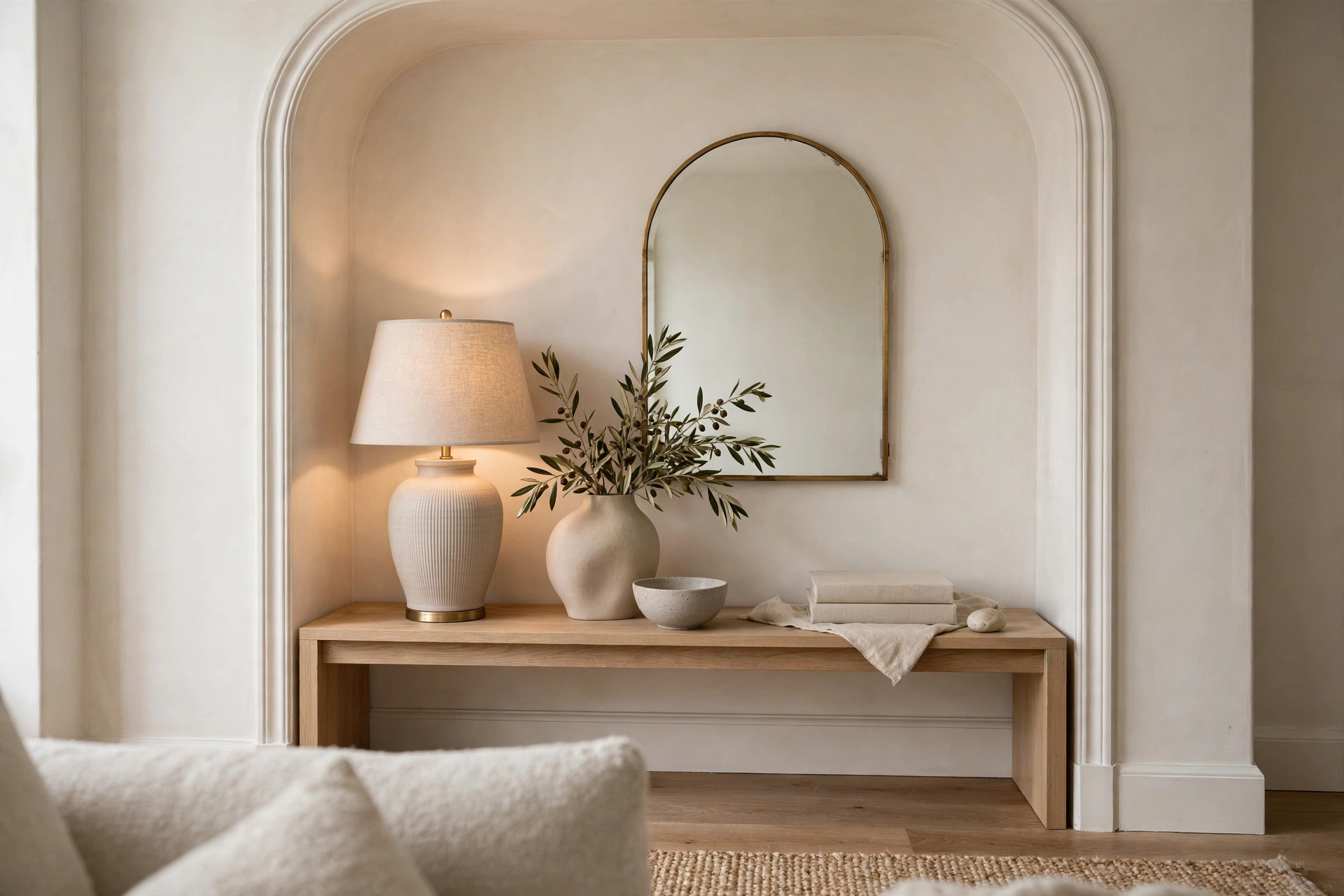
For the smallest, shallowest niches, a slim console table styled as a vignette is all you need. Anchor it with a large mirror or single artwork above to bounce light and add depth, then layer a table lamp, a vase with stems, and a small stack of books — odd numbers, varied heights, so the eye moves across the arrangement.
The lamp does double duty, washing the alcove in warm light each evening. If floor space is tight, swap the console for a wall-mounted shelf at the same height; it holds the same styling while leaving the floor clear. Find the perfect companion piece in our living room side table ideas.
Frequently Asked Questions
What is an alcove in a living room?
An alcove is a recessed nook or niche set into a wall — most commonly the insets flanking a chimney breast, the space under a staircase, or a boxed-in wall section. It opens directly onto the living space, making it ideal for built-in shelving, seating, or display that feels integrated rather than added on.
How do you decorate a shallow alcove?
Alcoves under eight inches deep suit surface treatments, not furniture: bold paint, wallpaper, a gallery wall, or one or two floating shelves. Keep styling minimal — a mirror, a small artwork, one sculptural object — because cramming a shallow recess makes it feel smaller, not fuller.
How do you light a dark living room alcove?
Layer two sources: a functional light — picture light, puck lights, or LED strip — plus ambient glow from a small lamp or sconce. Warm-white bulbs (2700K–3000K) flatter wood and fabric, and a dimmer or smart plug shifts the alcove from task-bright to evening-soft.
What color should I paint an alcove?
Match the walls for a seamless, space-expanding effect, or go one to two shades deeper for subtle definition. A bold contrast — deep green, navy, charcoal — turns the alcove into a deliberate feature and makes its contents pop. Test a swatch first; recesses read darker than flat walls.
Can you put a TV in a living room alcove?
Yes, if the recess fits the screen plus a tilting or full-motion bracket — allow four inches of clearance for cables and ventilation. Hide wires in trunking, ventilate the cabinet below for consoles, and balance the black screen with shelving or art on either side.
Keep Exploring
Alcoves reward the rooms that have them — a little measuring, a little lighting, and one good idea turn dead wall space into the most-used corner of the house. Start with the nook that bothers you most, style it simply, and live with it for a week before adding more. Small, deliberate changes beat a full overhaul. Your living room already has the architecture; now give every nook its job.