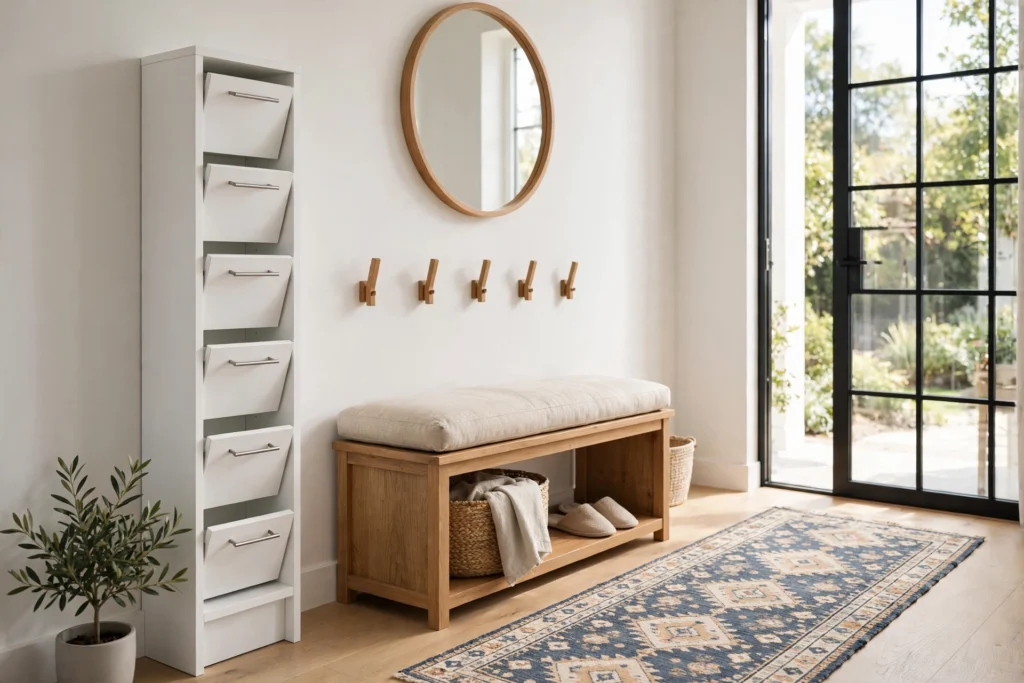

Shoes multiply by the front door — but they don’t have to take over. These entryway shoe storage ideas tame the clutter with slim cabinets, hidden benches, floating shelves, and smart drop zones that keep every pair in its place.
1. Install a Slim Tilt-Out Cabinet
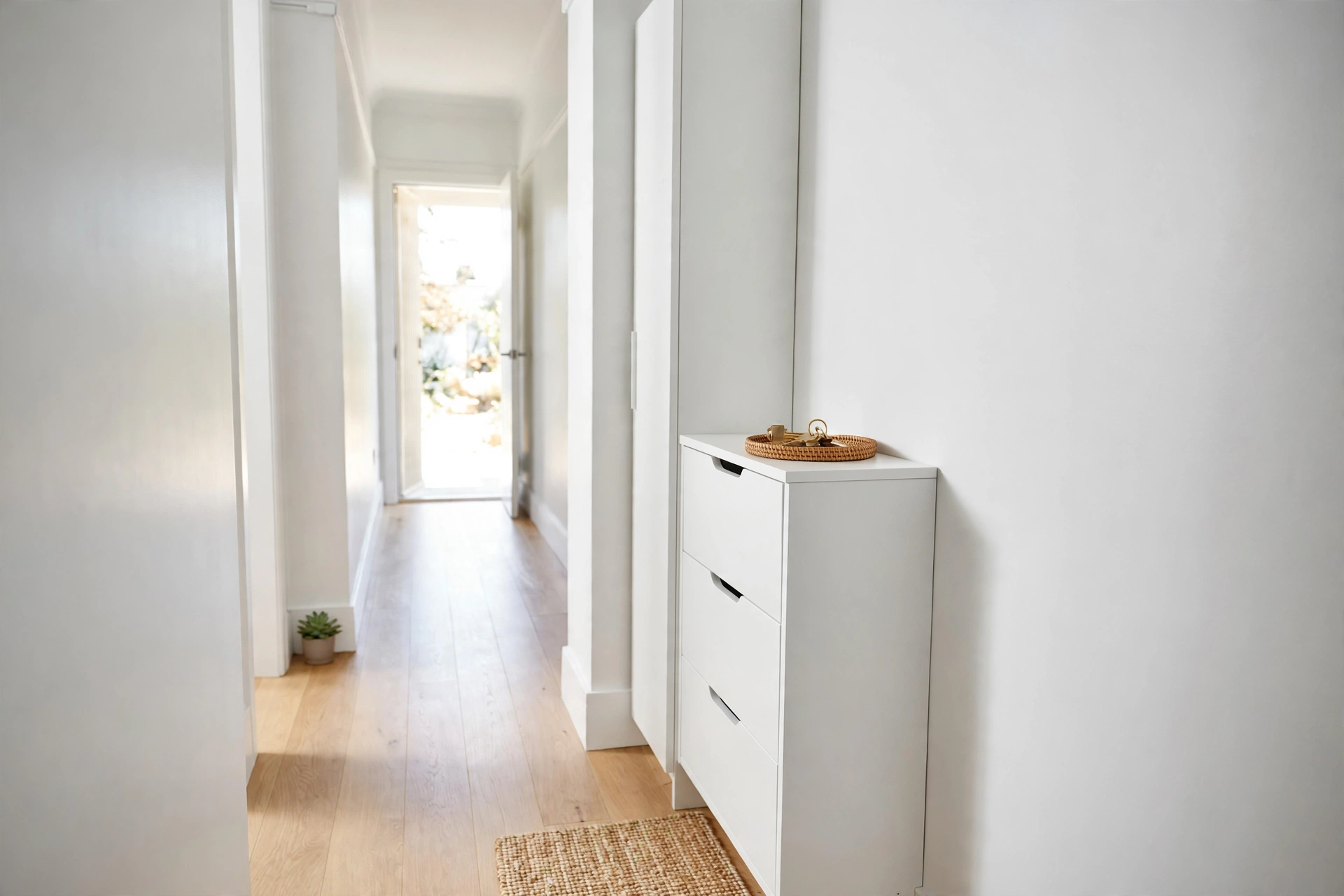
A slim tilt-out shoe cabinet is only about six inches deep but swallows a surprising number of pairs. The tilt-out compartments keep the footprint tiny and the fronts clean. Style the top like a console — mirror or art above, a tray for keys. Keep only everyday shoes inside and store off-season pairs elsewhere.
2. Choose a Storage Bench
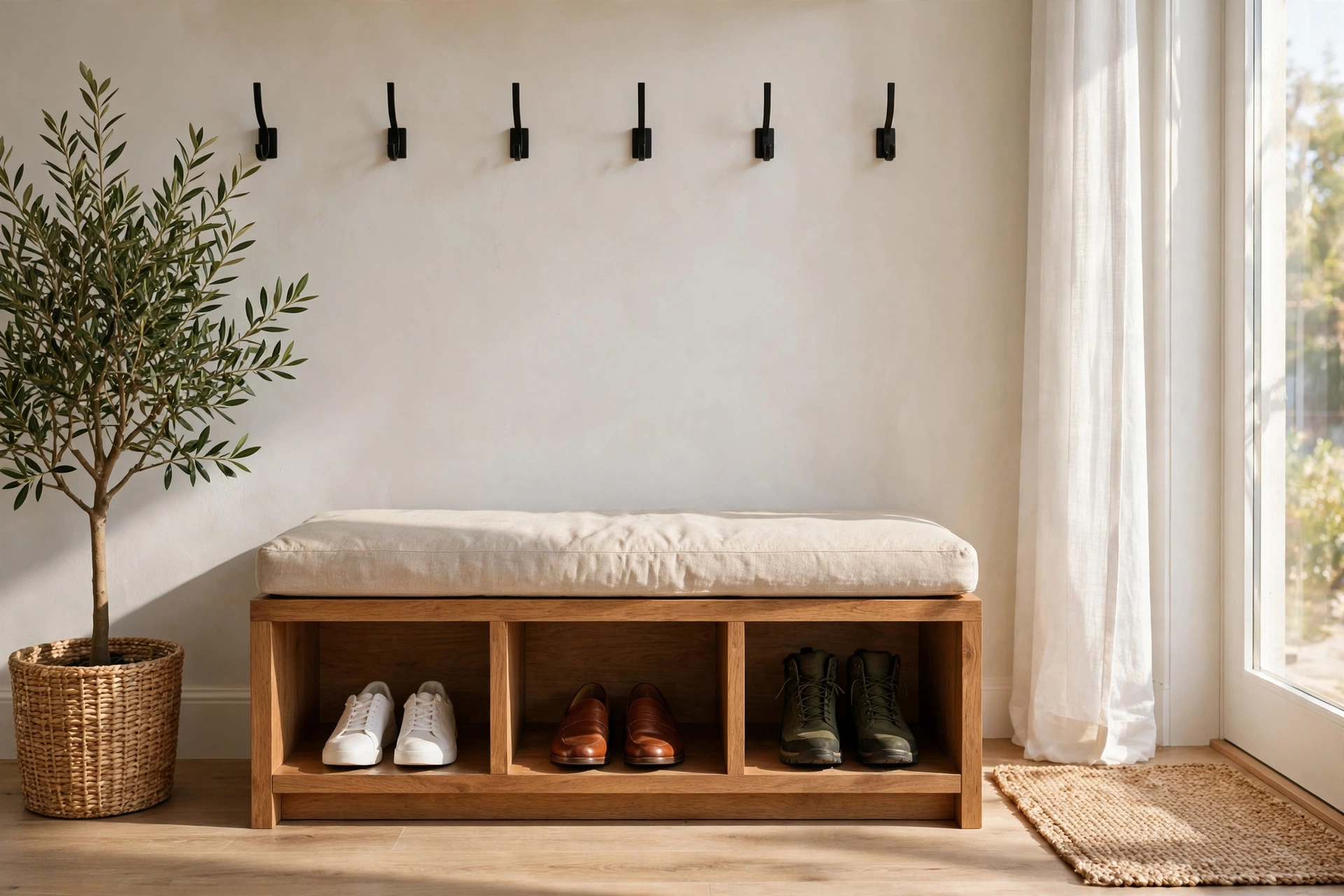
A bench with a lift-up seat and cubbies below solves the sit-down ritual and the shoe pileup in one purchase. Slide shoes into the cubbies, sit to put them on. One cushion on top and a folded throw beside it keep it looking styled. The Spruce’s small entryway ideas show benches that prove even tiny foyers can hold generous storage.
3. Float Low Shelves for Daily Shoes
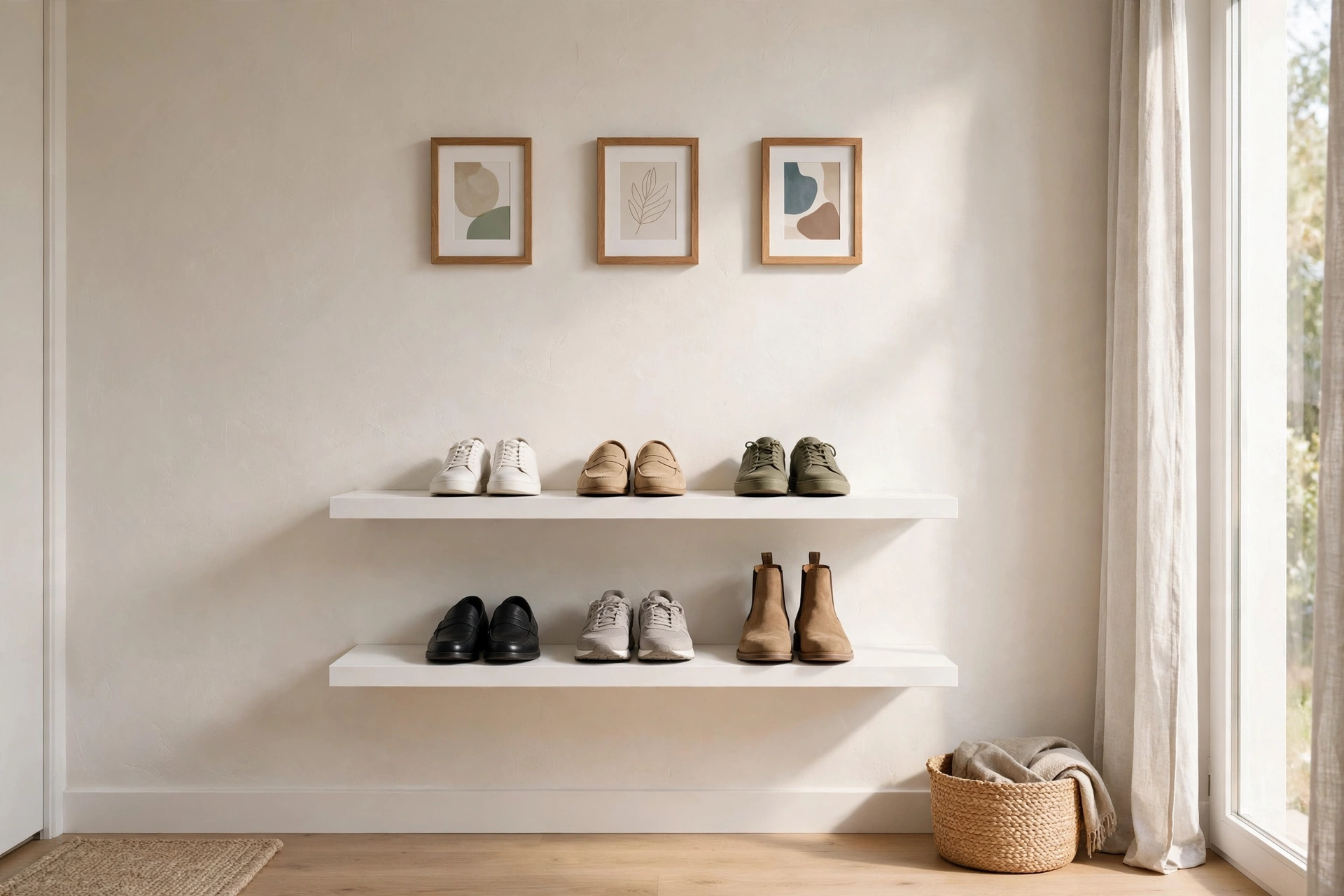
Low floating shelves display daily shoes neatly while keeping the floor clear. Mount two or three shelves at shoe height along the entryway wall. This open approach works best for households with a small rotation — each person gets one shelf. Keep them edited; overflowing shelves defeat the purpose.
4. Hang an Over-the-Door Organizer
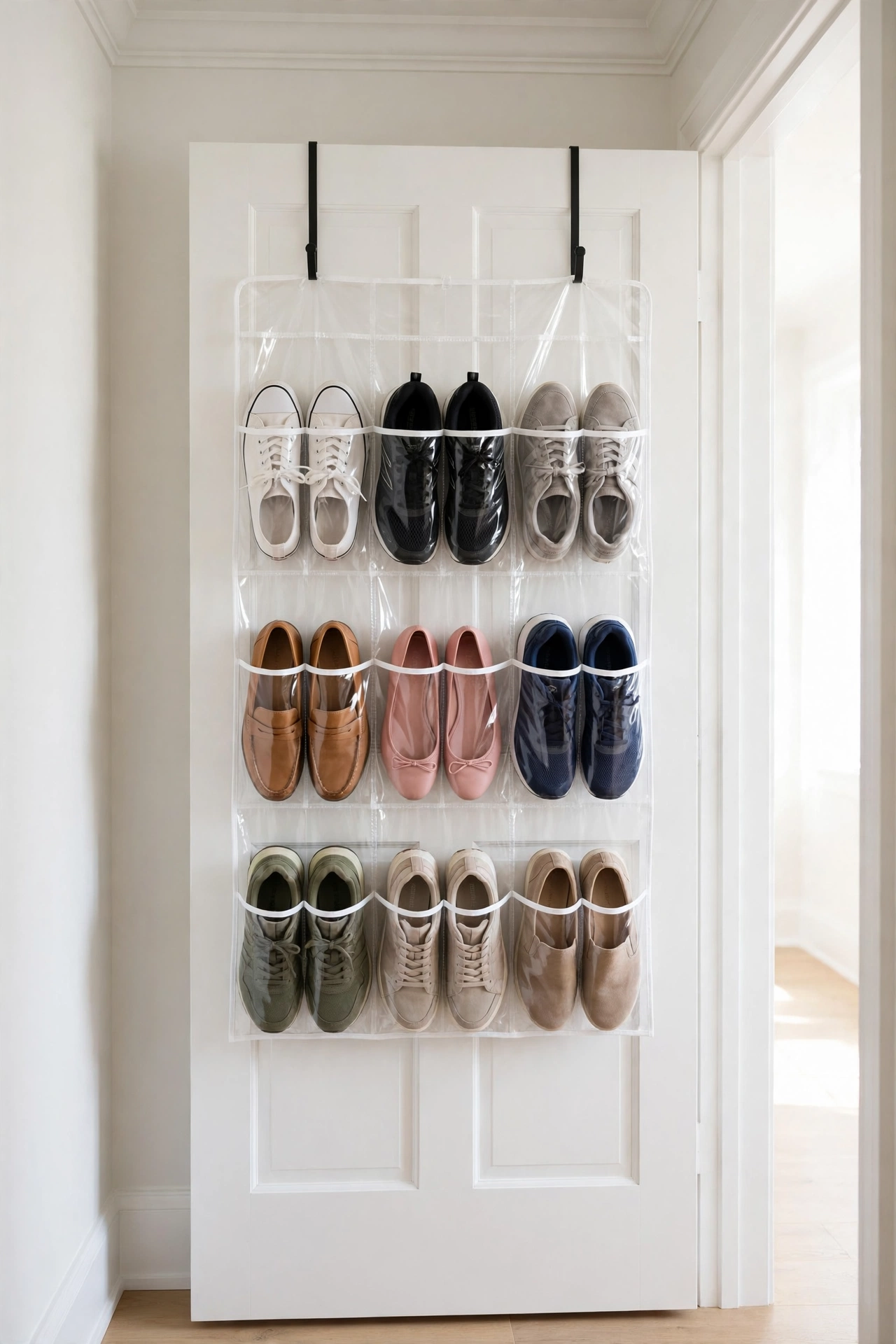
A clear over-the-door pocket organizer on a closet door turns wasted space into shoe storage. Each pocket holds a pair; the clear vinyl lets you see everything. This is the cheapest solution on the list and a renter favorite. For more entryway organization, see our 15 entryway decor ideas for a warm, welcoming entrance.
5. Build Pull-Out Drawers Under the Stairs
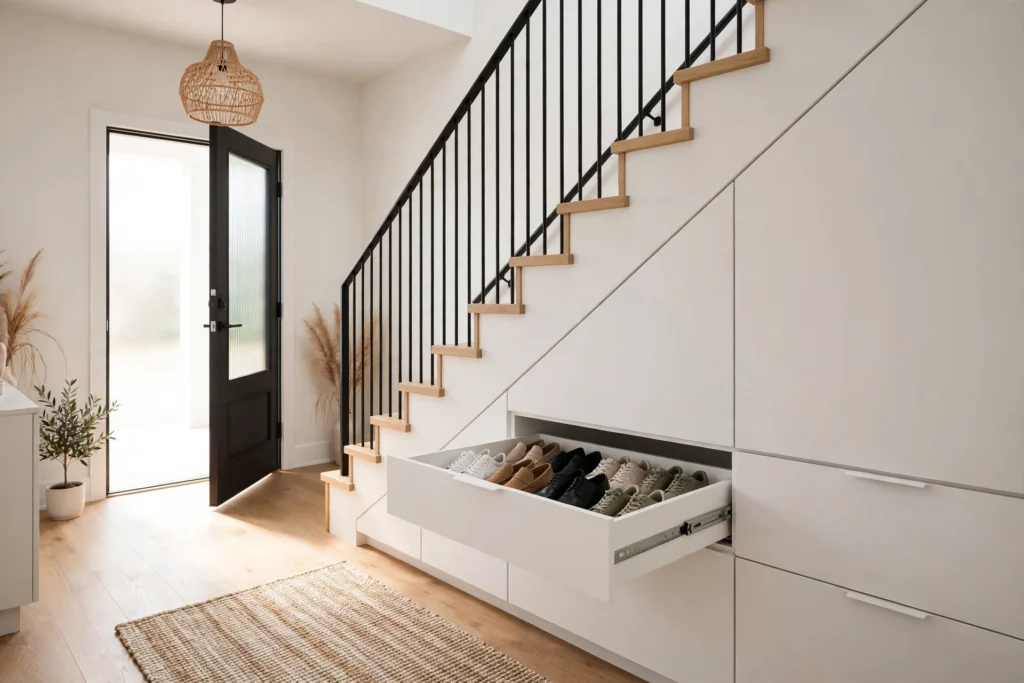
The dead space beneath a staircase fits shallow pull-out drawers perfectly. Each drawer holds a row of shoes on their sides. This custom-look solution uses space that would otherwise collect dust. Add soft-close glides so drawers shut quietly during busy mornings.
6. Contain Muddy Boots on a Tray
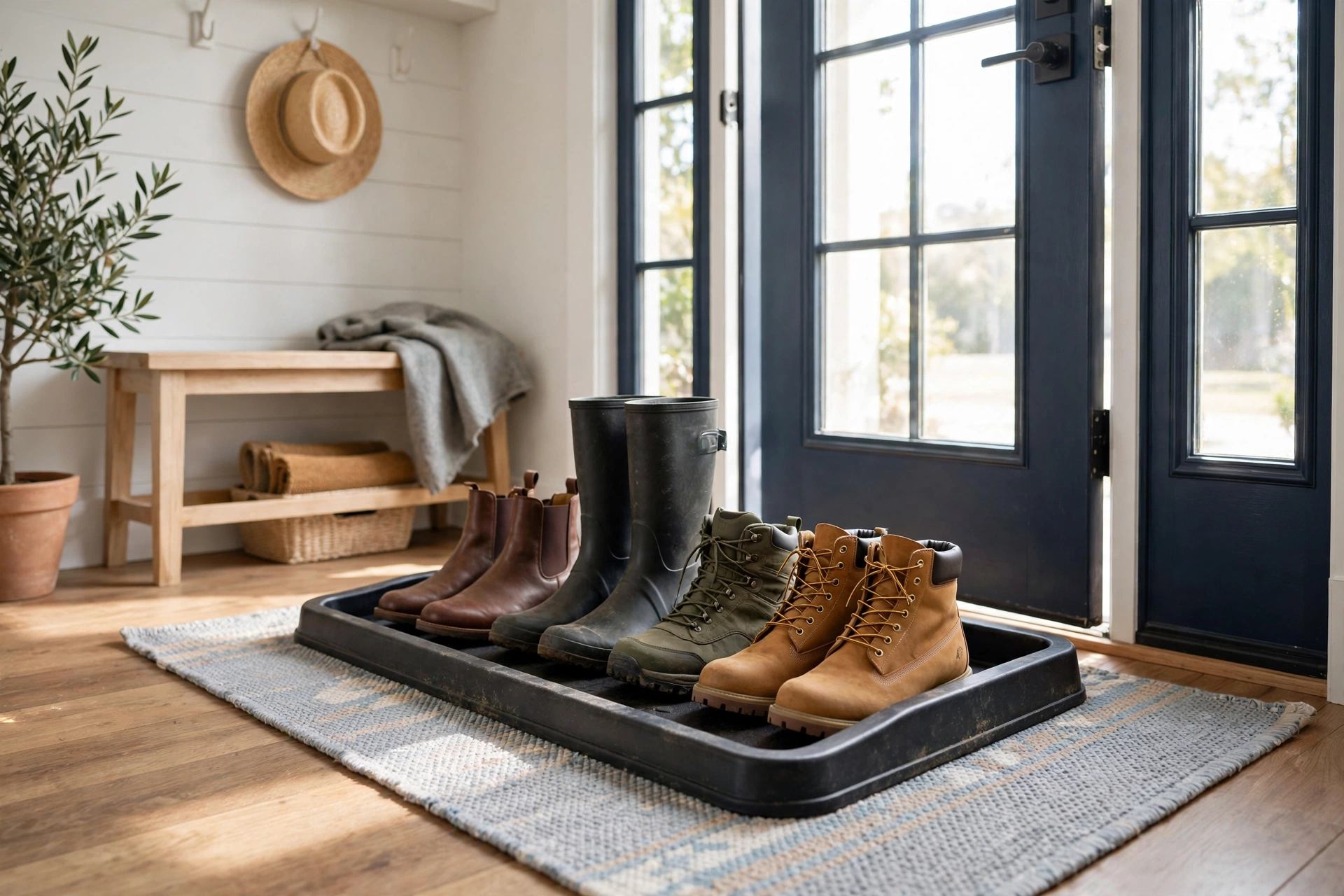
A raised-edge boot tray on a washable mat contains muddy boots and wet shoes. The tray catches drips; the mat protects the floor. Place it right inside the door so dirty shoes never travel further. Empty and wipe the tray weekly — standing water warps floors.
7. Build a Family Cubby Tower
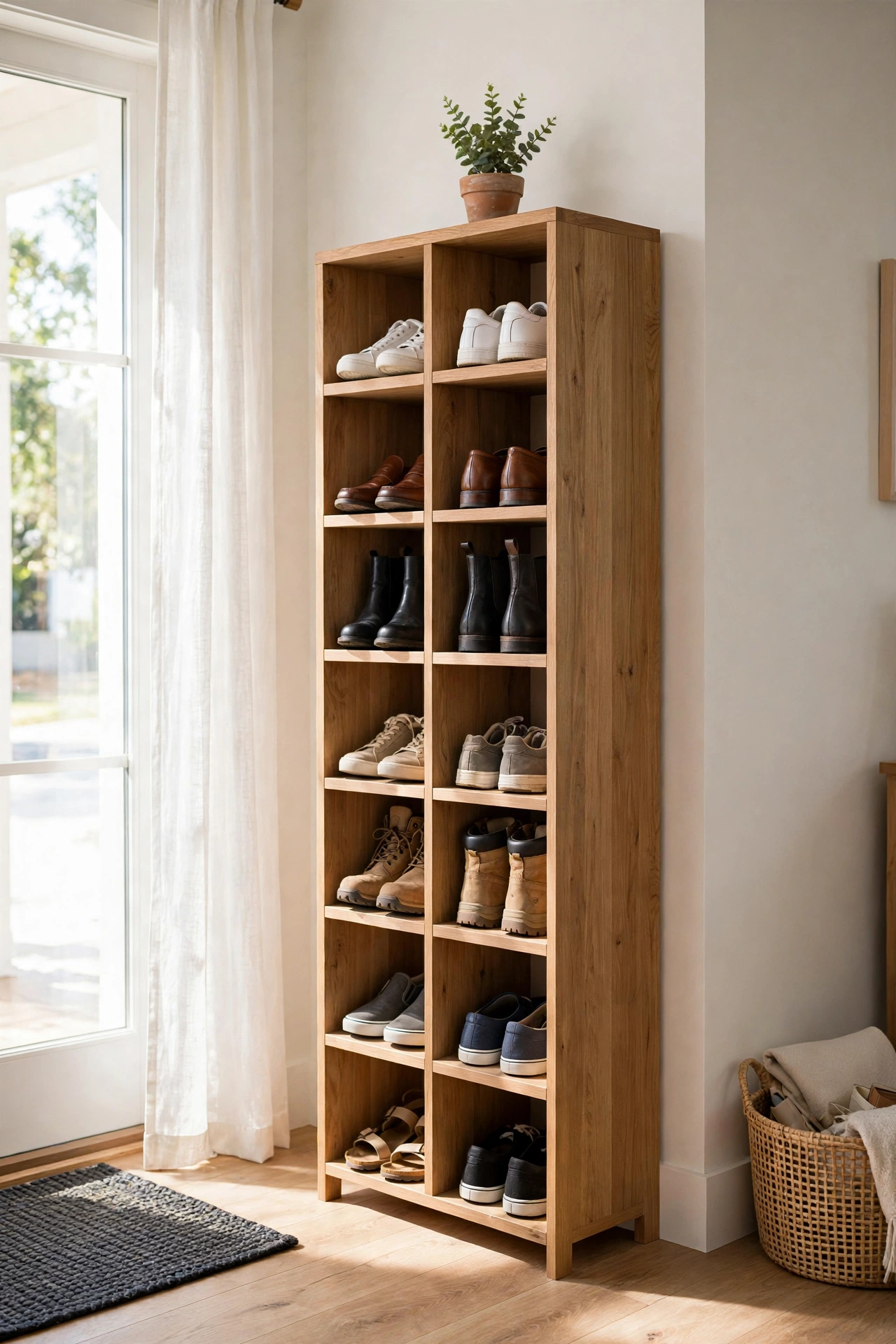
An open cubby tower with a labeled cubby per family member ends the morning shoe hunt. Each person owns one cubby; shoes live there or on feet. Keep the tower near the door at kid height so little ones can reach their own. A weekly reset keeps it from overflowing.
8. Lean a Shoe Ladder
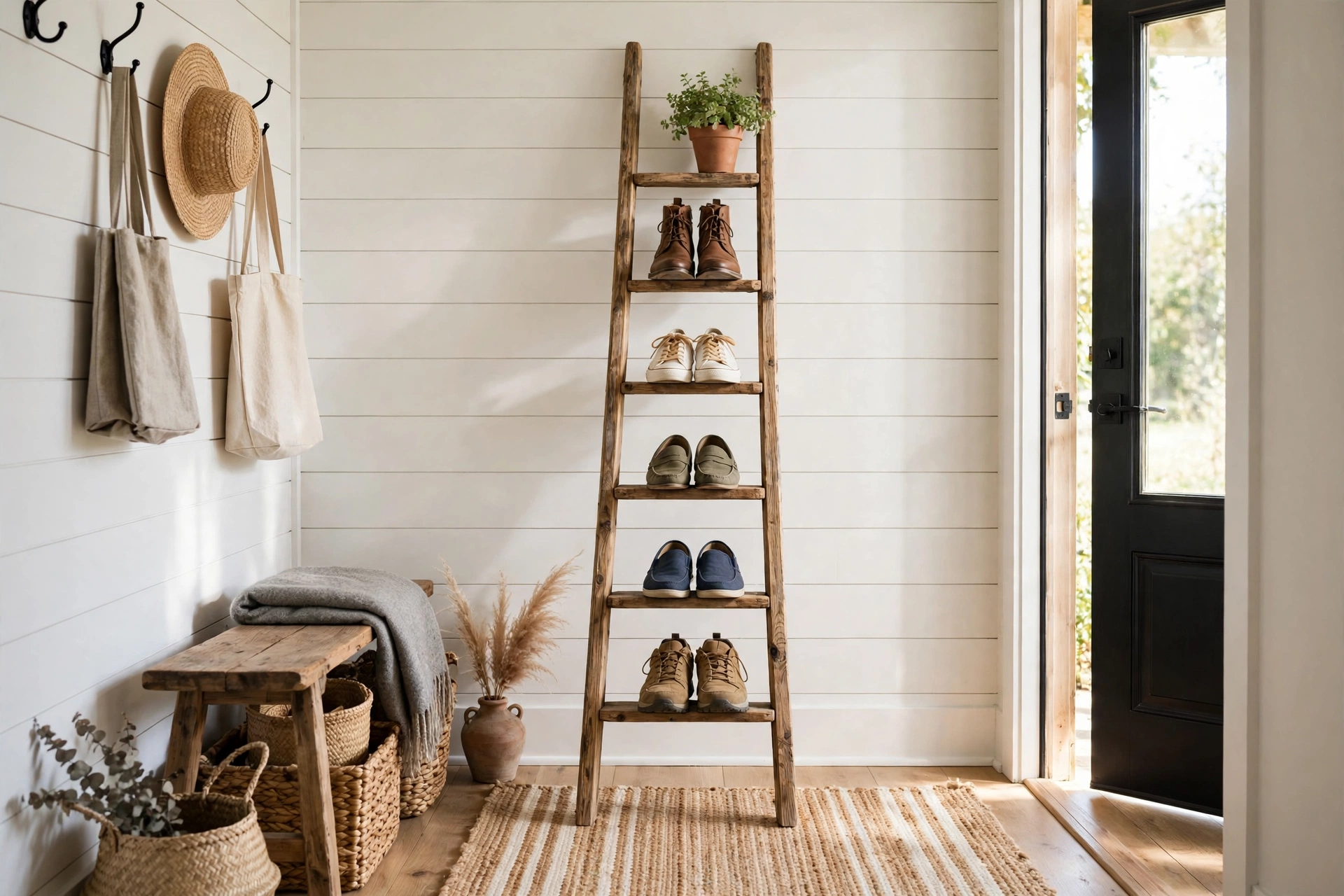
A wooden ladder leaned against the wall holds shoes on its rungs — rustic, cheap, and surprisingly effective. Each rung fits two to three pairs. Anchor the top to the wall for safety. This suits farmhouse and bohemian entries best.
9. Slide Rolling Bins Under a Bench
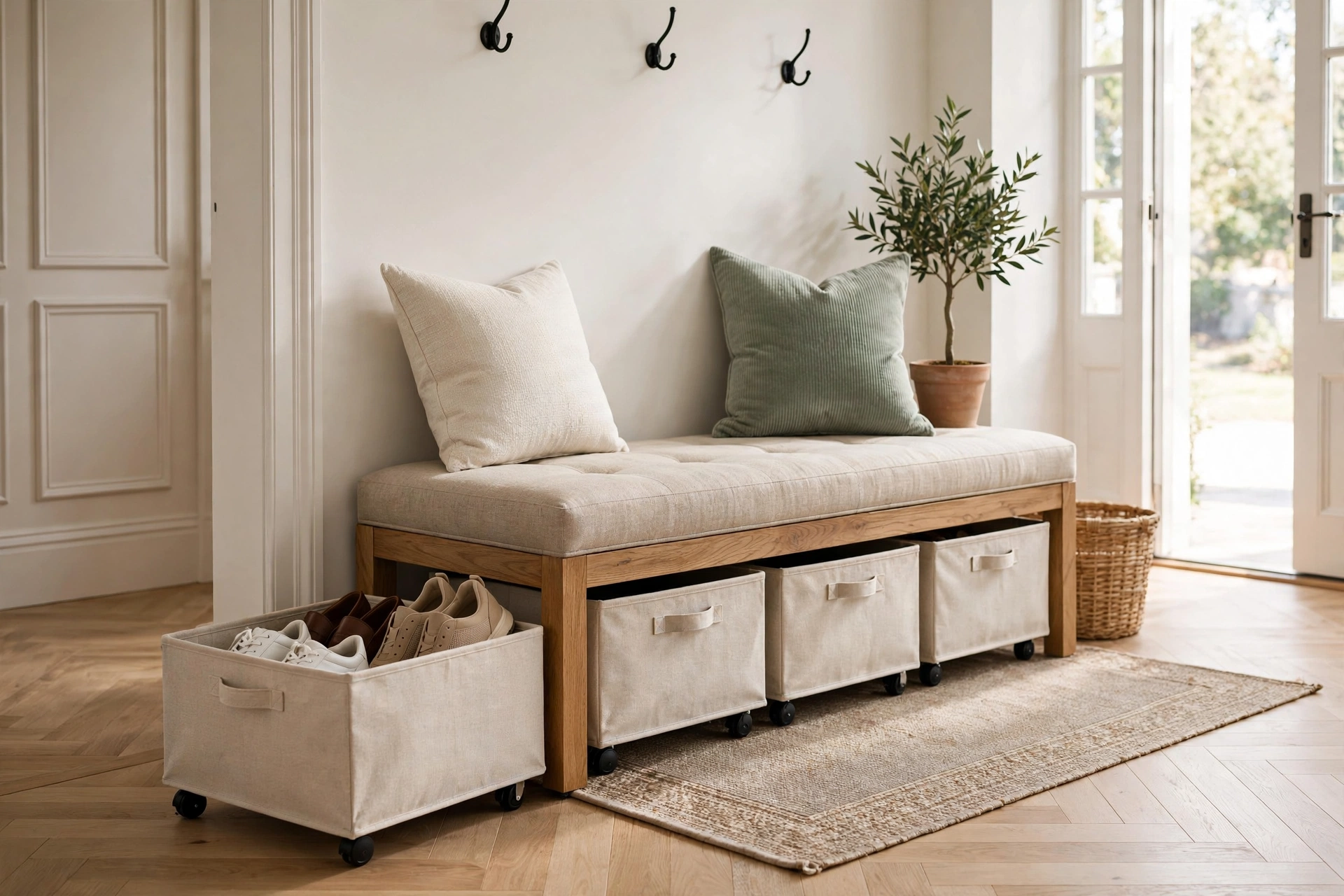
Low rolling bins slide under a bench for hidden shoe storage. Pull one out, grab your shoes, slide it back. The bins keep dust off and the entryway looking clean. Choose bins that fit the bench’s clearance with an inch to spare.
10. Mount Slim Racks Inside the Closet Door
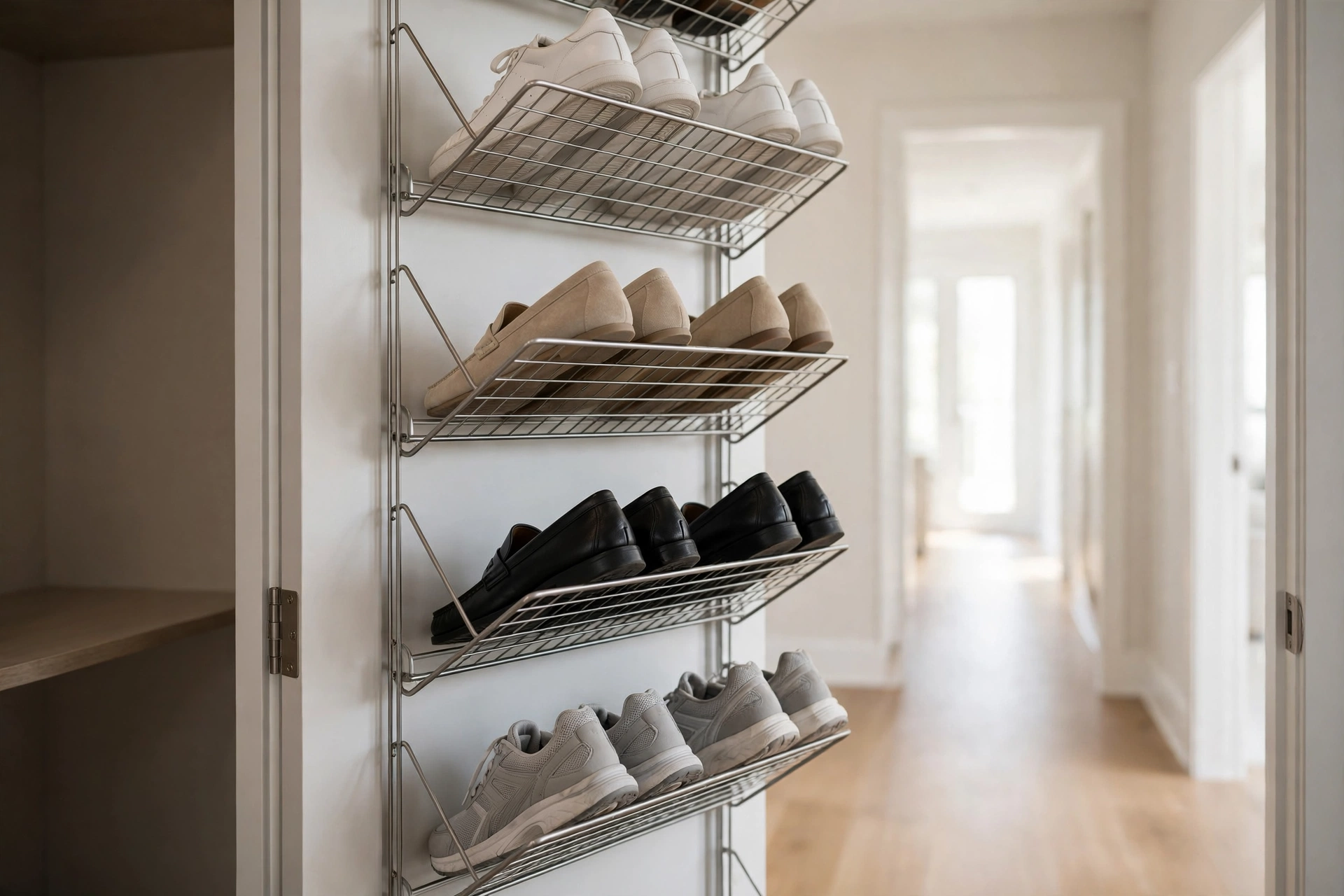
Slim tilted racks mounted on the inside of a closet door hold a dozen pairs invisibly. The door closes and the shoes disappear. This is ideal for minimalists who want zero visible shoe storage. Measure door clearance so racks don’t hit the frame.
11. Assign Lidded Baskets per Person
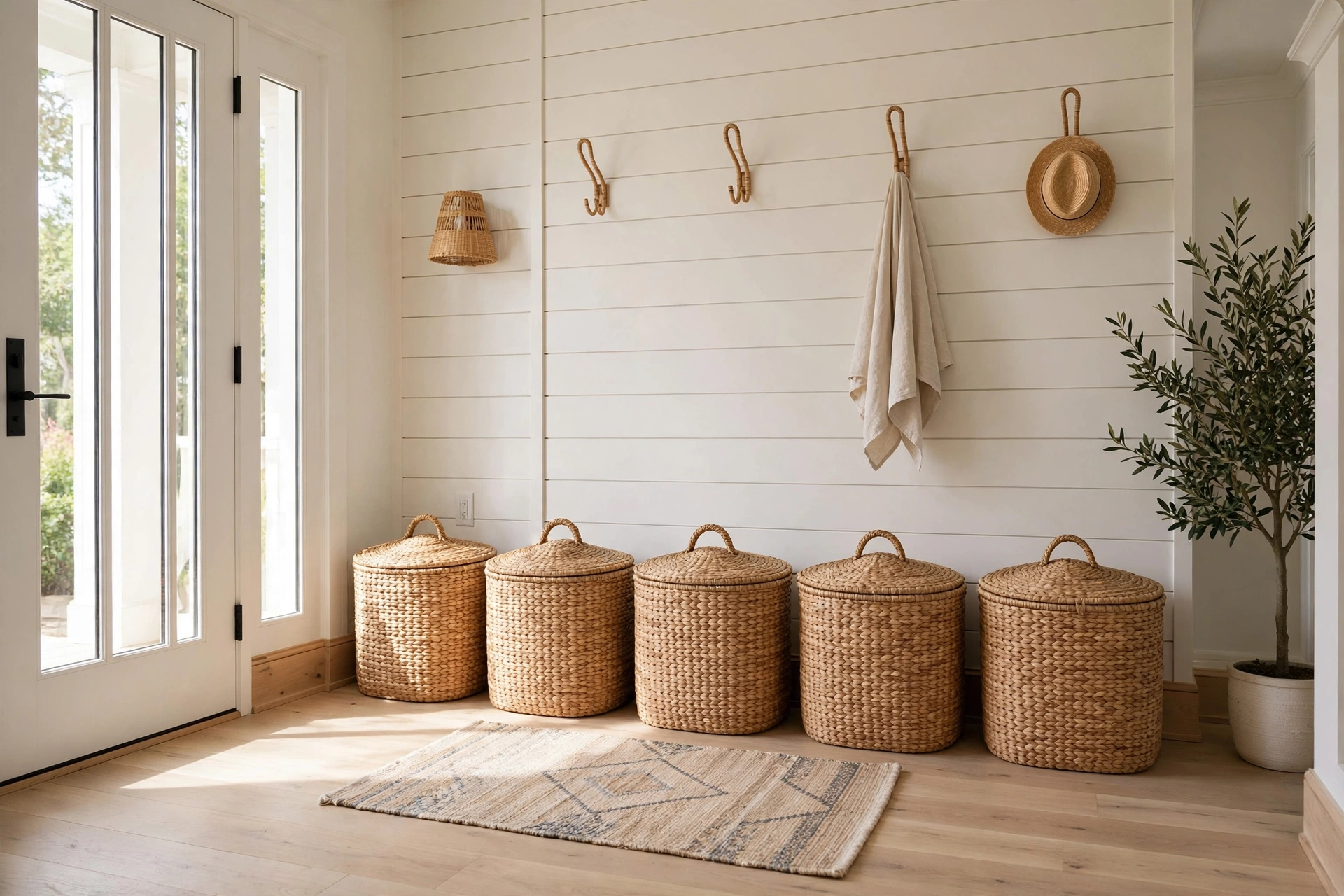
A row of lidded woven baskets — one per family member — corrals shoes in style. The lids hide the mess; the woven texture adds warmth. Apartment Therapy’s shoe storage ideas feature basket systems that look intentional rather than improvised.
12. Hang a Peg Rail with Shoe Bags
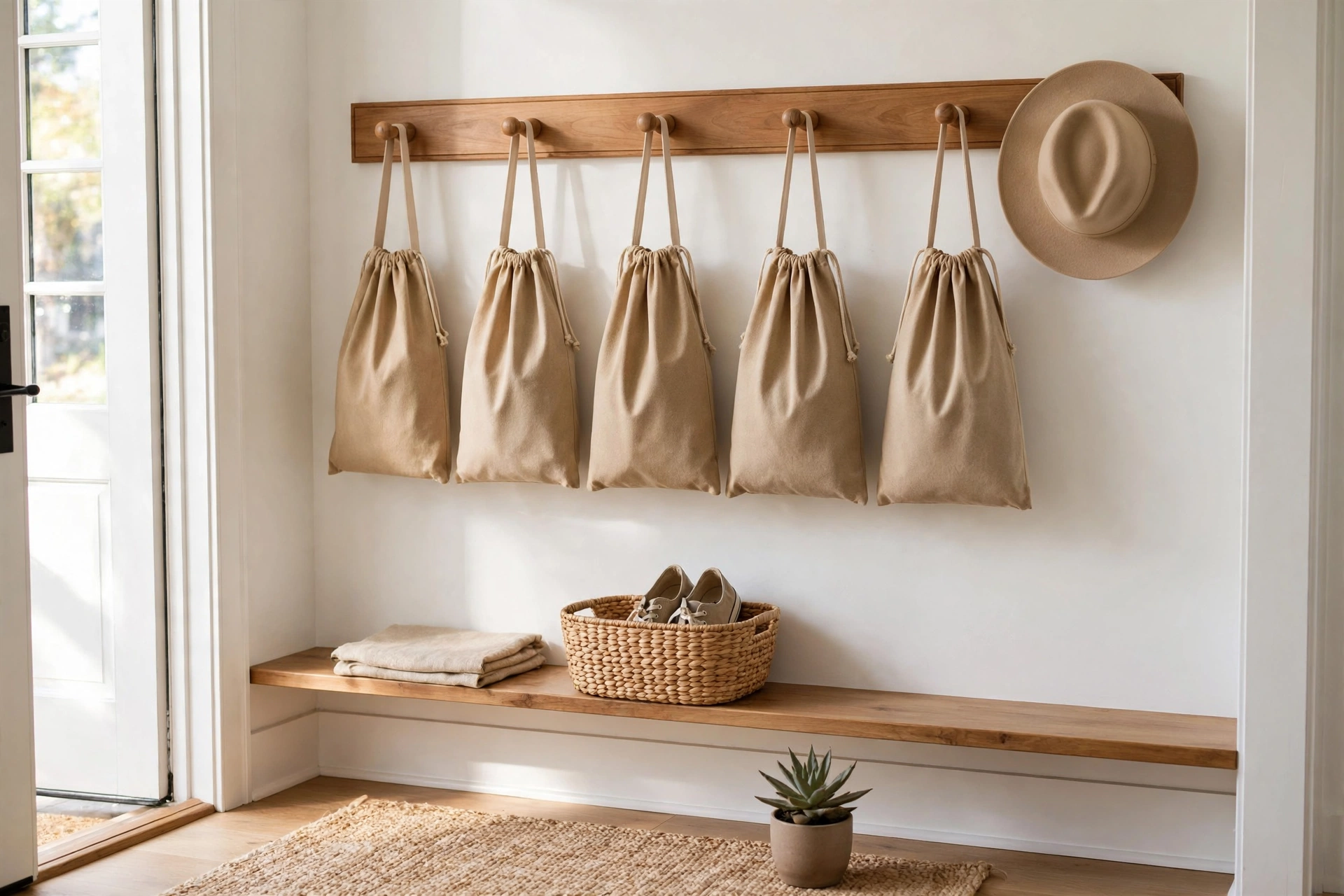
A peg rail with a canvas shoe bag per peg keeps pairs together and off the floor. Each bag holds one pair; hang them at staggered heights for kids and adults. This wall-mounted approach frees every inch of floor space.
13. Add a Toe-Kick Drawer
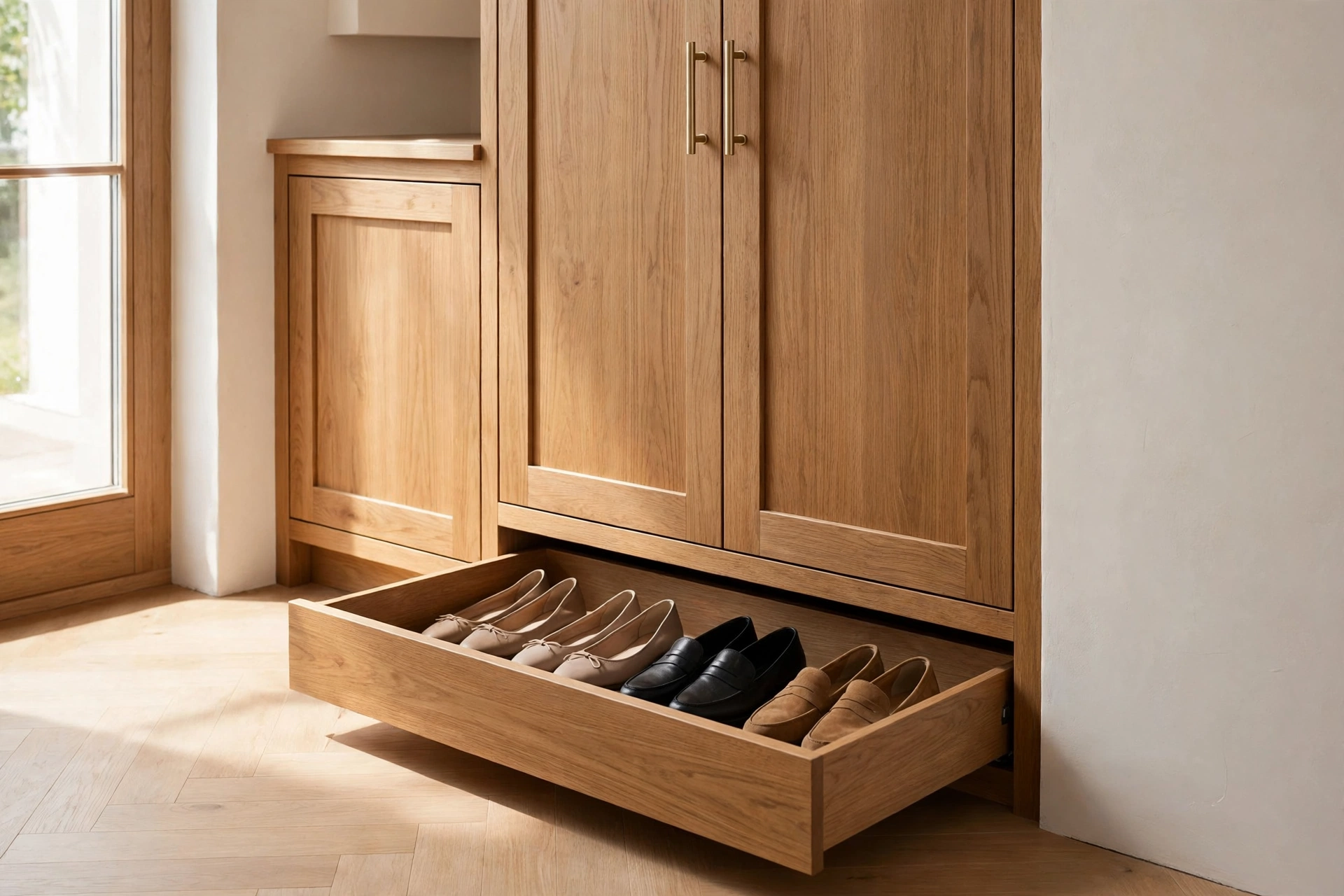
A toe-kick drawer beneath a built-in cabinet pulls open to reveal flat shoes stored horizontally. It uses the wasted 4-inch void under cabinets. This is a remodel-level move — plan it during the cabinet build. Perfect for flats and sandals.
14. Hide Shoes Behind Mirrored Doors
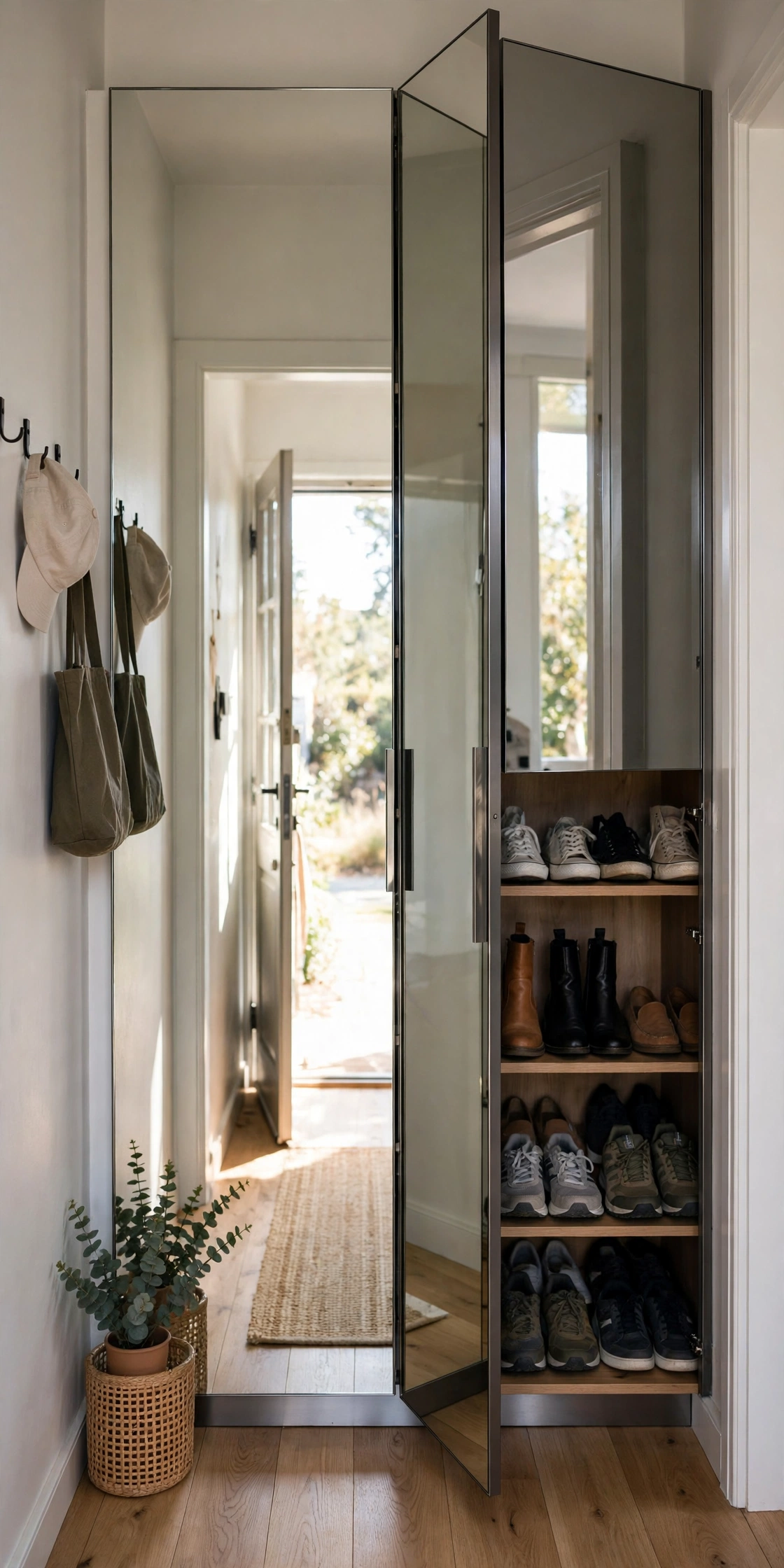
A cabinet with mirrored doors hides shelves of shoes while bouncing light around the entryway. The mirrors make a narrow hall feel wider. Keep the interior organized with adjustable shelves so tall boots and flats each fit.
15. Define a Drop Zone with a Runner
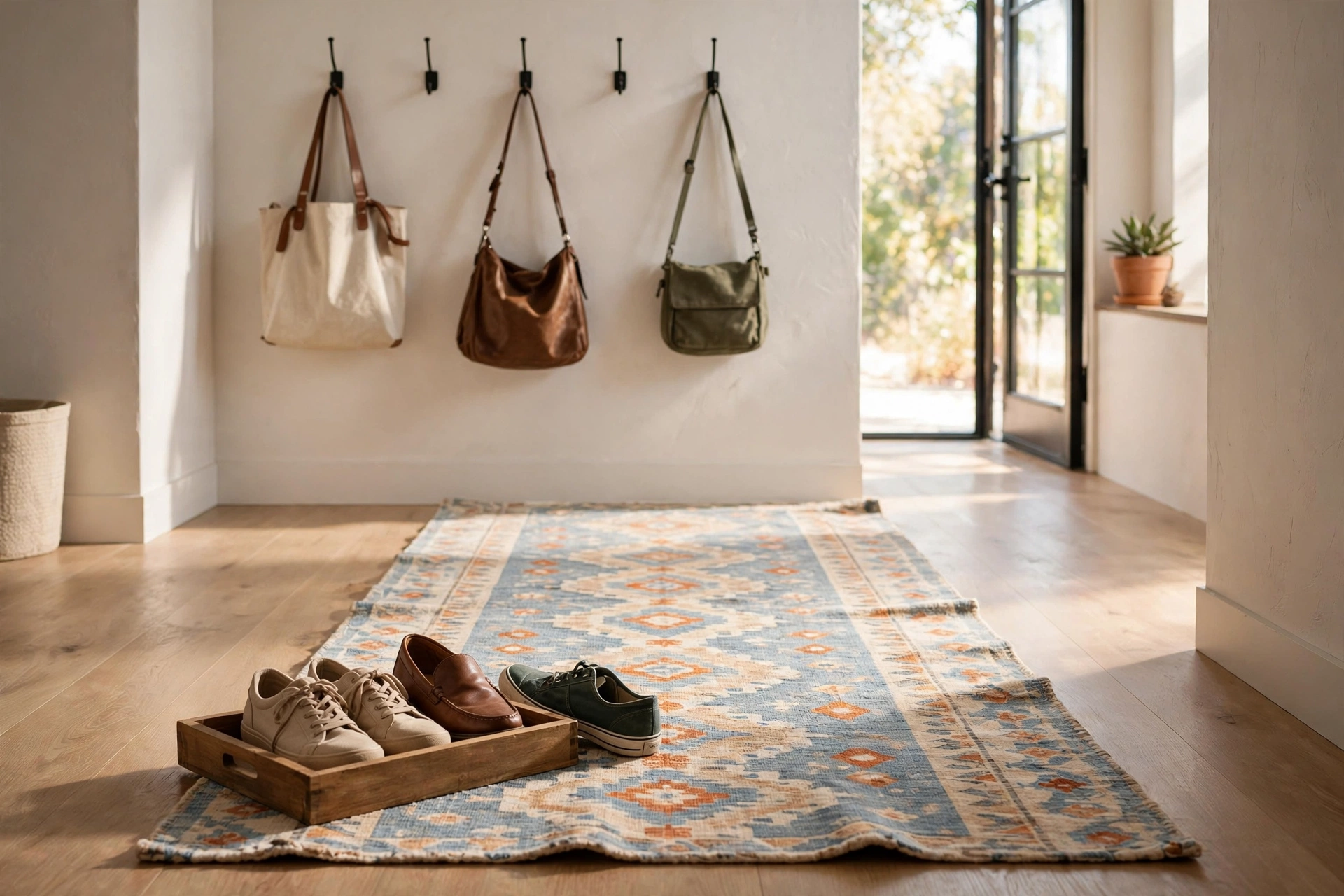
A washable runner rug, a low tray, and wall hooks define the shoe drop zone. The rug marks the boundary: shoes stay on the rug, not beyond it. This visual zone trains the whole household. For harder-working entries, see our 15 mudroom design ideas that make every entryway work harder, and our 15 entryway lighting ideas for a warm, welcoming glow.
Frequently Asked Questions
How do I store shoes in a small entryway?
Go vertical and hidden: a slim tilt-out cabinet, over-the-door racks, or wall-mounted shelves. Keep only daily pairs by the door and store the rest in a closet. A bench with storage underneath doubles as seating.
How many pairs of shoes should live by the front door?
One to two pairs per person — the daily rotation only. Off-season and occasion shoes belong in a closet. When the entryway storage fills up, it is time to relocate pairs, not buy bigger storage.
What is the best shoe storage for kids?
Low, open, and labeled: cubbies at kid height with one cubby per child, or rolling bins they can pull out themselves. Picture labels help pre-readers. Keep their daily pair by the door and the rest in their room.
How do I keep entryway shoe storage from smelling?
Ventilation first — open cubbies beat closed cabinets for airflow. Sprinkle baking soda in shoes overnight, use cedar inserts, and rotate pairs so none stay damp. A washable tray or mat underneath catches moisture.
Can I hide shoe storage completely?
Yes — tilt-out cabinets look like sideboards, mirrored-door cabinets look like decor, and inside-the-closet-door racks disappear entirely. Lidded baskets and rolling bins under benches also keep shoes out of sight.
Keep Exploring
The right entryway shoe storage makes leaving and coming home smoother every single day. Start with the daily pairs, give each person a spot, and let the system do the work.
For more entryway inspiration, keep exploring our entryway and mudroom collections.






[…] and accessorizing an entryway bench, from hidden-storage designs to seasonal styling tricks. It pairs naturally with smart organization planning like our entryway shoe storage ideas that tame t…, since the bench and what goes under it work as a team. Whether your entry is grand or a sliver of […]
[…] takes daily tugging — and a bench height around eighteen inches for comfortable shoe changes. Pairing works hand-in-hand with under-bench organization like our entryway shoe storage ideas that t…. One unit, three functions, zero wasted […]
[…] clip-on dividers install in seconds; for wood shelves, simple bookend-style dividers do the job. Entryway shoe storage ideas that tame the clutter pair well with this — once the top shelf is sorted, the floor is […]