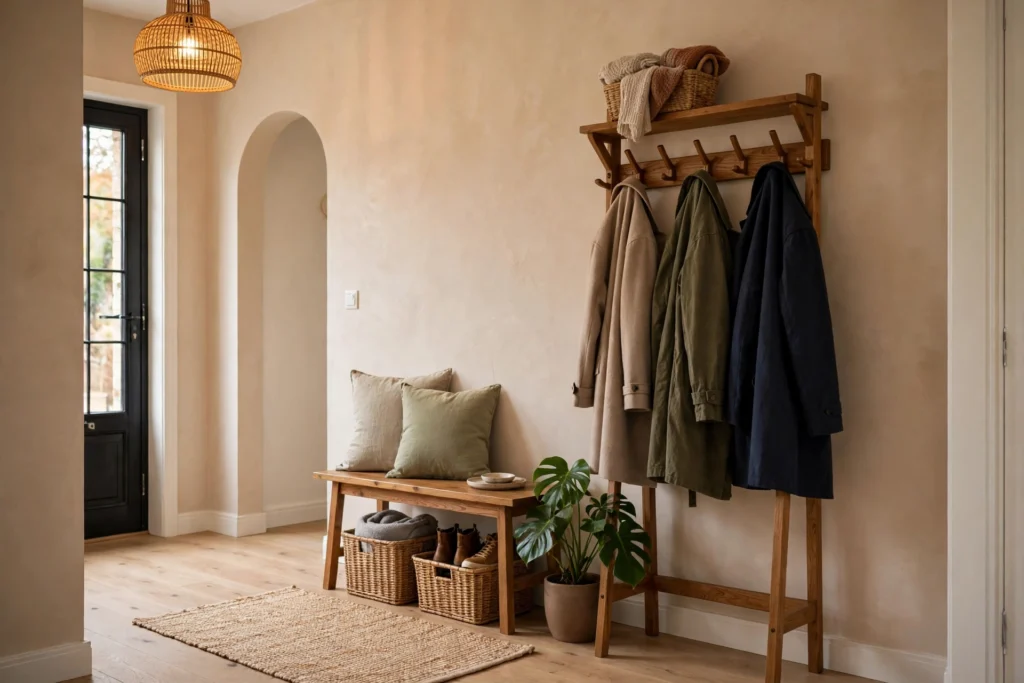

Coats are the number-one clutter culprit in any entryway — draped over chairs, piled on benches, avalanching out of closets. The right entryway coat rack ideas solve this with designated hanging spots that keep outerwear accessible, off the floor, and looking intentional. A good rack does not just store coats; it sets the organizational tone for the whole entry.
This guide covers 15 coat rack styles and layouts, from wall-mounted peg rails to full hall trees, with tips on placement, hook counts, and keeping it all tidy. Browse entryway decor ideas for a warm welcoming entrance, focusing on the hardworking hardware that keeps clutter in check. Find your fit, mount it well, and enjoy an entry that stays welcoming.
1. A Wall-Mounted Peg Rail
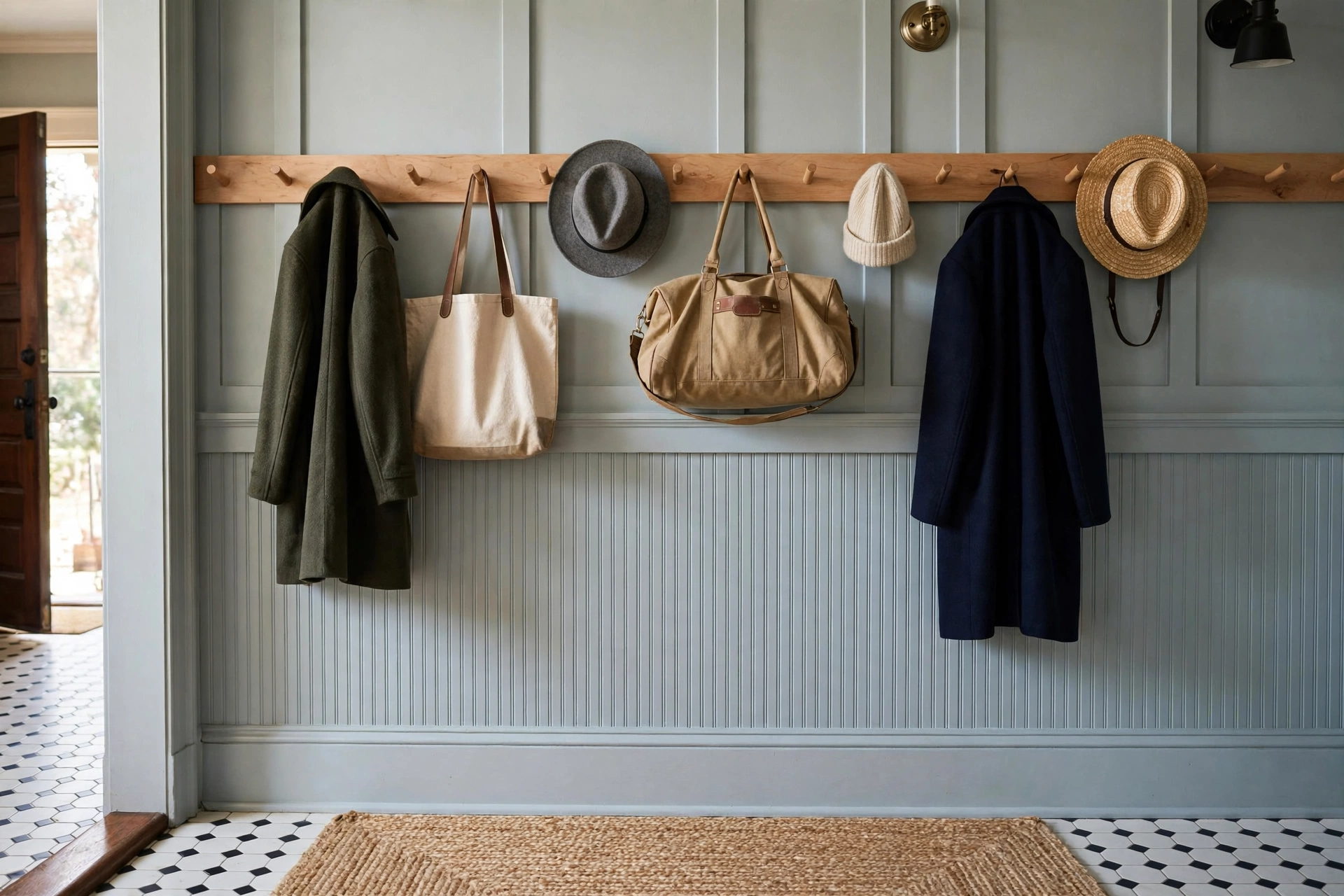
The Shaker-style peg rail is the timeless answer to coat chaos: a simple wood board with sturdy pegs that holds coats, bags, hats, and dog leashes in a neat row. Mount it at 60 to 66 inches high, spacing pegs eight to ten inches apart so bulky winter coats do not crowd each other. Paint the rail to match your trim for a built-in look, or stain it warm wood for contrast. Wall-mounted hooks are one of the smartest space-savers for tight entries and hallways — Designers recommend them as a zero-footprint alternative to bulky racks. Add a small shelf above the rail for baskets or decor, and you have a complete drop zone on a single board.
2. The Classic Hall Tree
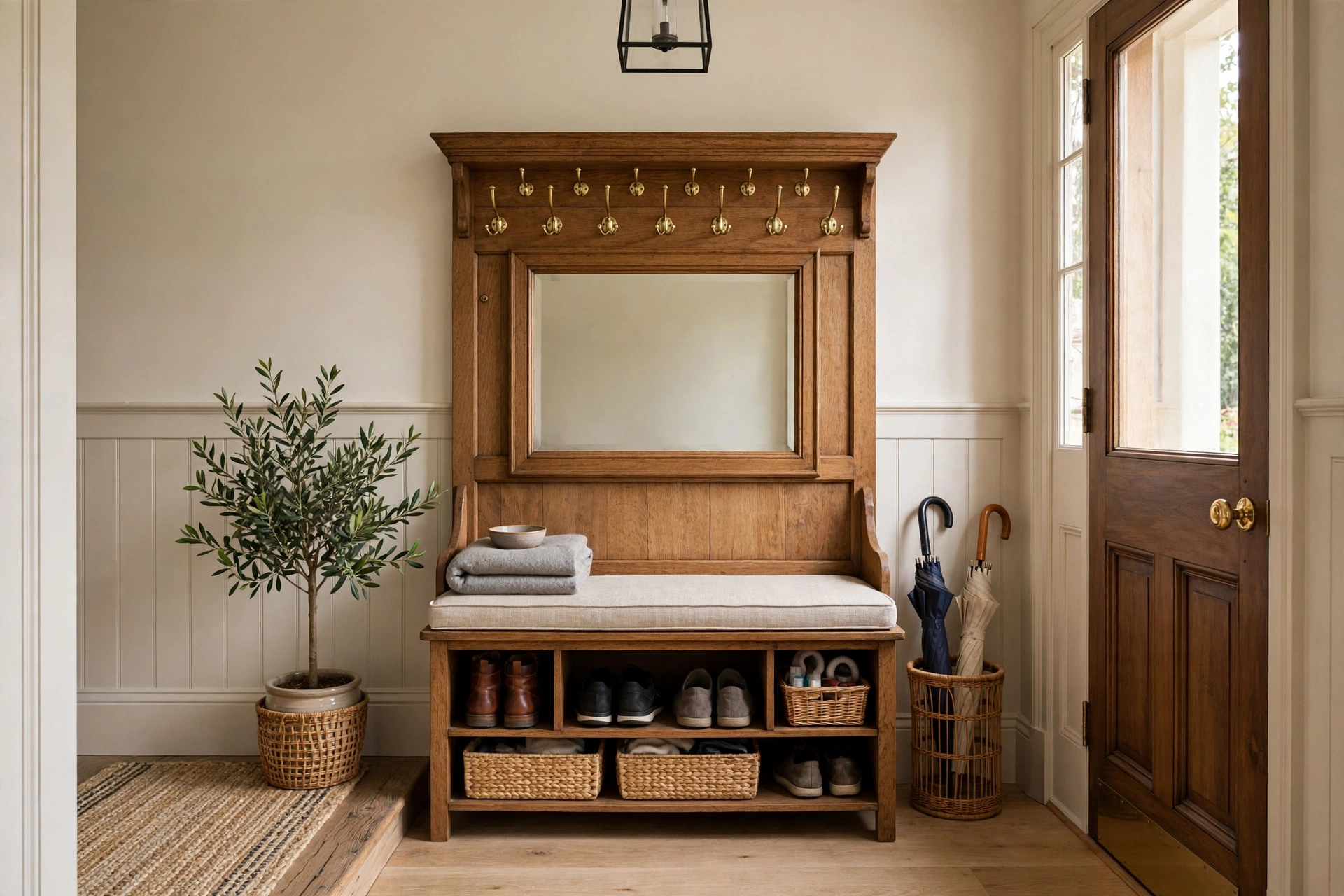
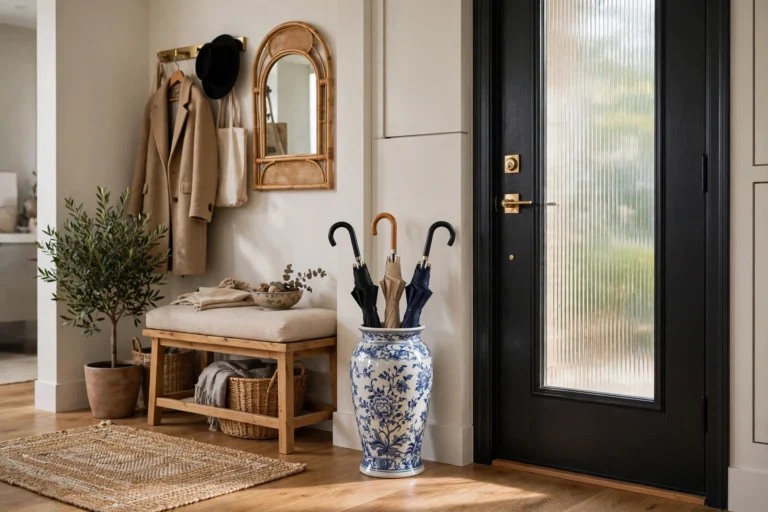
A hall tree combines coat hooks, a bench, and storage in one furniture piece — the all-in-one entry solution. Choose one with a bench for shoe-changing, cubbies or cabinets below for shoes, and double hooks above for coats and bags. Hall trees suit families and anyone with serious outerwear volume; they corral everything in a single footprint. Measure carefully — hall trees run tall and deep, so verify ceiling height and walkway clearance. Hallway storage ideas that make every inch count. Style the top shelf with a plant or basket so the hardworking piece still looks welcoming.
3. Staggered Individual Hooks
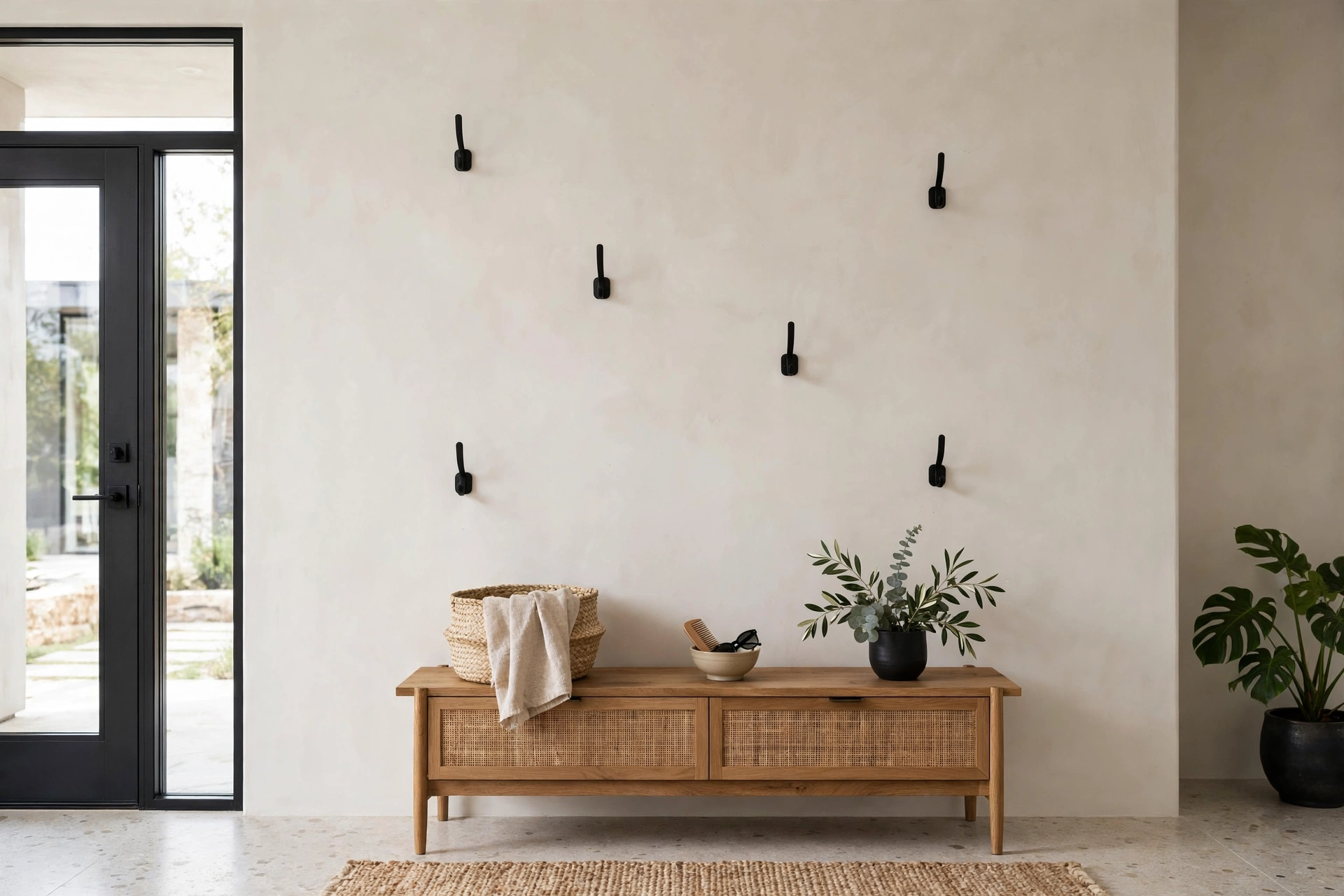
Instead of a straight row, mount individual hooks at staggered heights and positions for a custom, artistic look. This approach lets every family member have a hook at their reach — low for kids, high for adults — and the asymmetry reads as deliberate design. Choose hooks in a unifying finish (matte black, brass, or wood) so the variety of placement feels cohesive. Staggered hooks work brilliantly on narrow wall sections, around door frames, and in awkward corners where a rail would not fit. Leave breathing room between hooks; the goal is easy grabbing, not a game of coat Tetris. This flexible layout adapts as kids grow — just move a hook, not the furniture.
4. A Freestanding Coat Rack for Renters
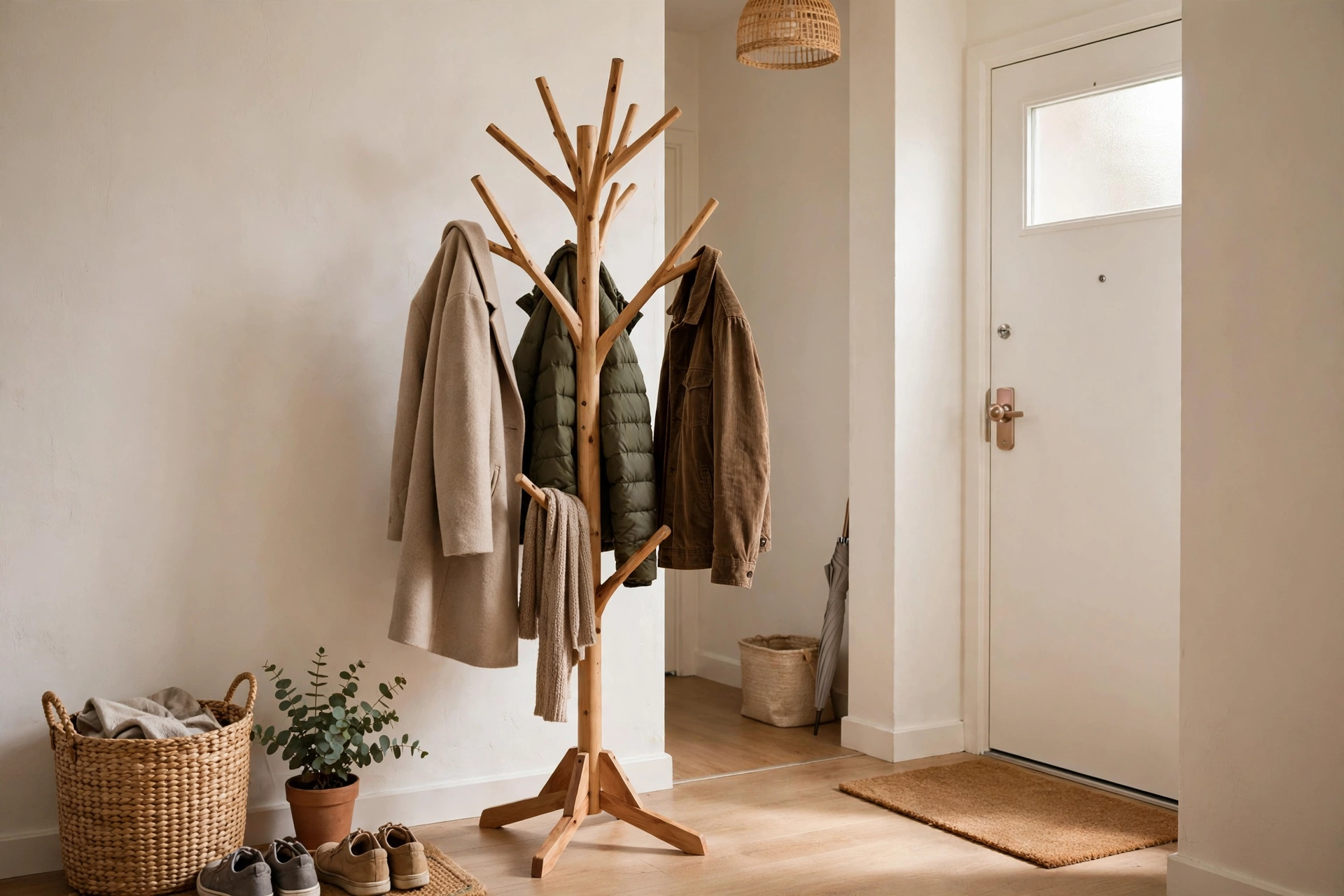
No drill, no damage, no problem: a freestanding coat rack stands in any corner and moves with you. Choose a sturdy design with a weighted or tripod base — top-heavy racks tip when loaded with winter coats, so stability matters more than style. Wood and metal tree-style racks suit traditional entries; sleek single-pole designs fit modern spaces. Place it near the door but out of the swing path, and keep it to daily coats only so it never becomes a leaning tower of outerwear. Freestanding racks also work as overflow during parties. When you move, it comes along — the ultimate renter-friendly coat solution.
5. The Over-the-Door Hook Solution
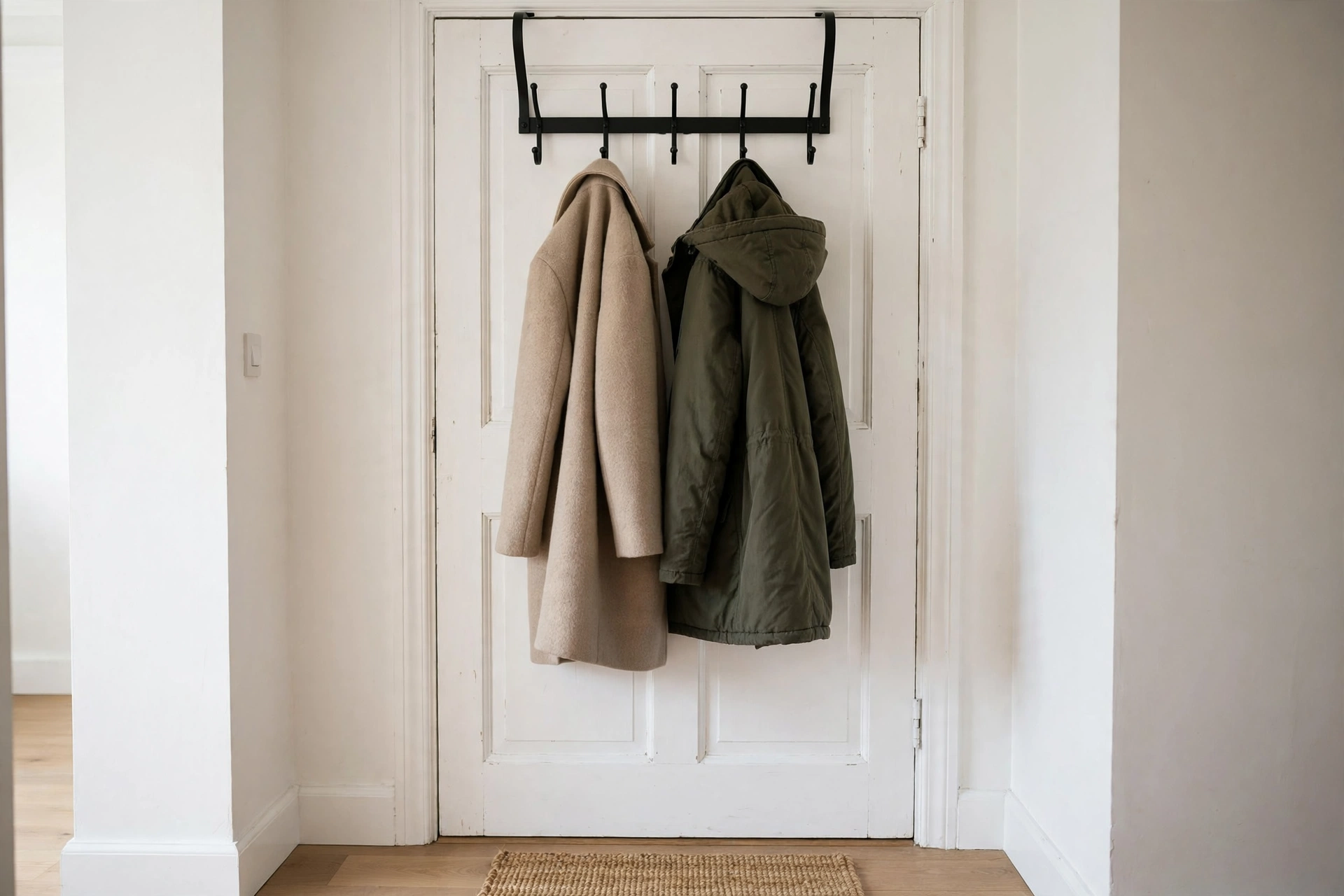
An over-the-door hook rack turns dead space into instant coat storage with zero installation. Choose a padded, no-slip design that will not scratch the door, with hooks deep enough for hangers and bulky coats. This is perfect for renters, dorm rooms, and entries where wall space is claimed by art or mirrors. Limit it to two or three everyday items — overloading strains hinges and looks messy. Pair it with a wall-mounted option for overflow, or use it inside a coat closet to double hanging capacity. It is the fastest, cheapest coat rack idea on this list, deployable in under a minute.
6. A Coat Rack With a Shelf on Top
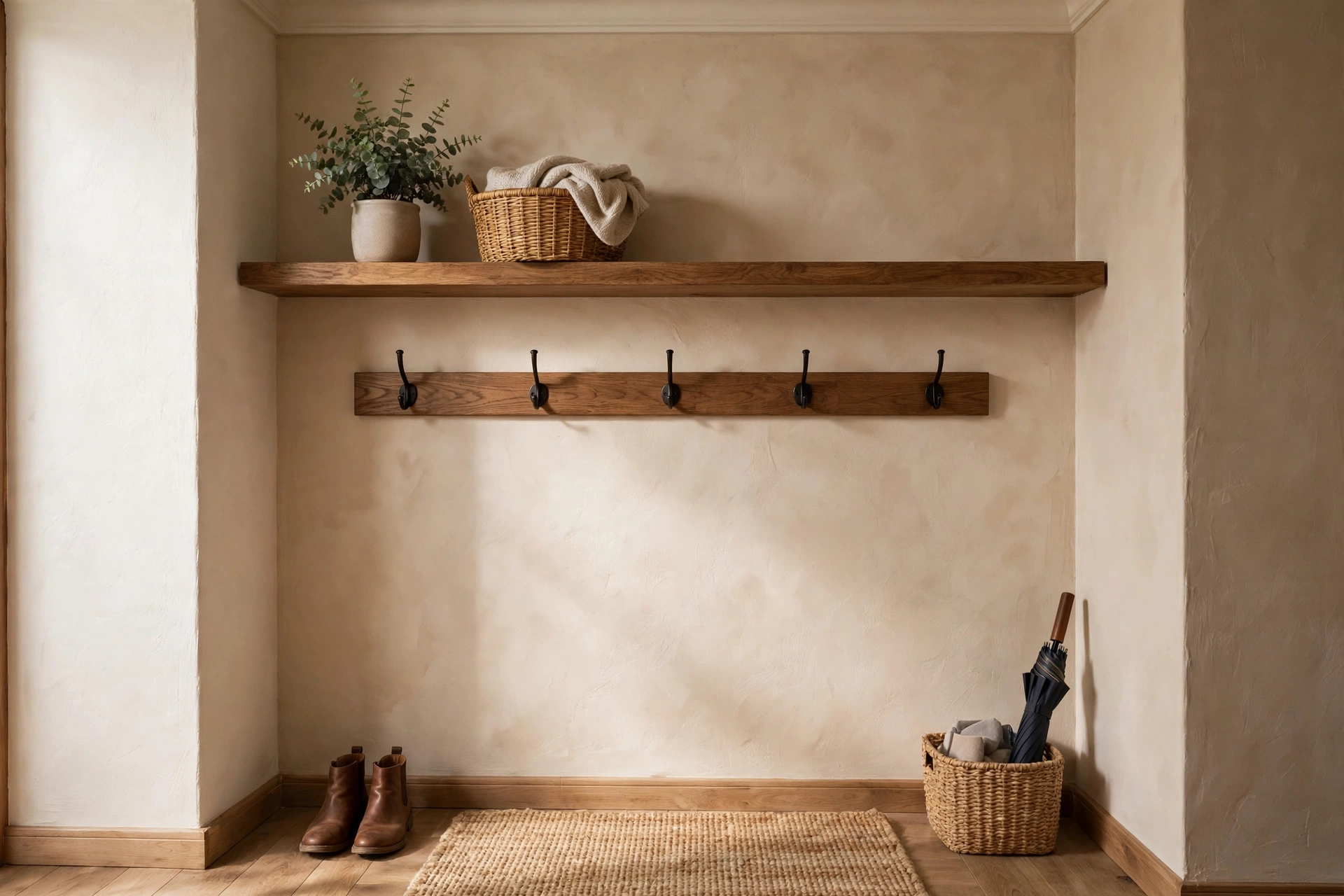
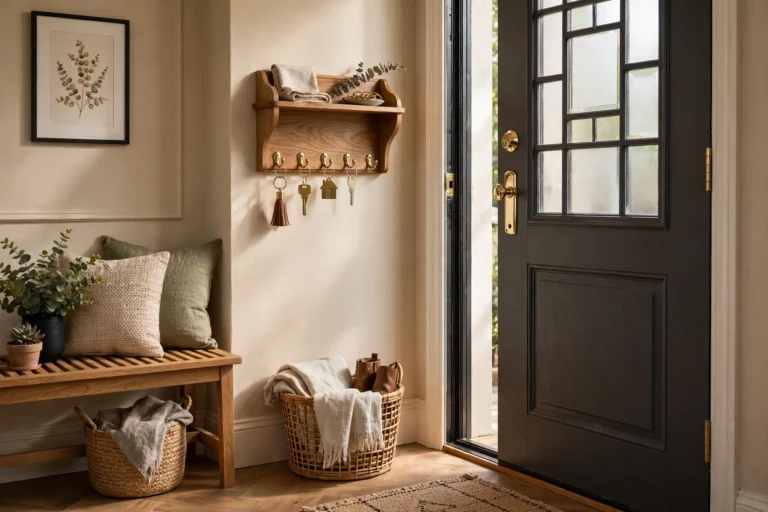
A hook rail topped with a shelf doubles your drop-zone function: coats below, keys, sunglasses, and small baskets above. The shelf also gives you a styling surface — a small plant, a framed photo, a candle — that makes the utilitarian rack feel like decor. Choose a shelf deep enough for a basket or two (six to eight inches) and mount the hooks six inches below it for comfortable hanging clearance. This combination is ideal above a bench, creating the classic vertical trio of shelf, hooks, and seat. Keep the shelf styled simply; it is prime real estate that clutters fast without a defined purpose for each item.
7. Industrial Pipe Rack for Urban Edge
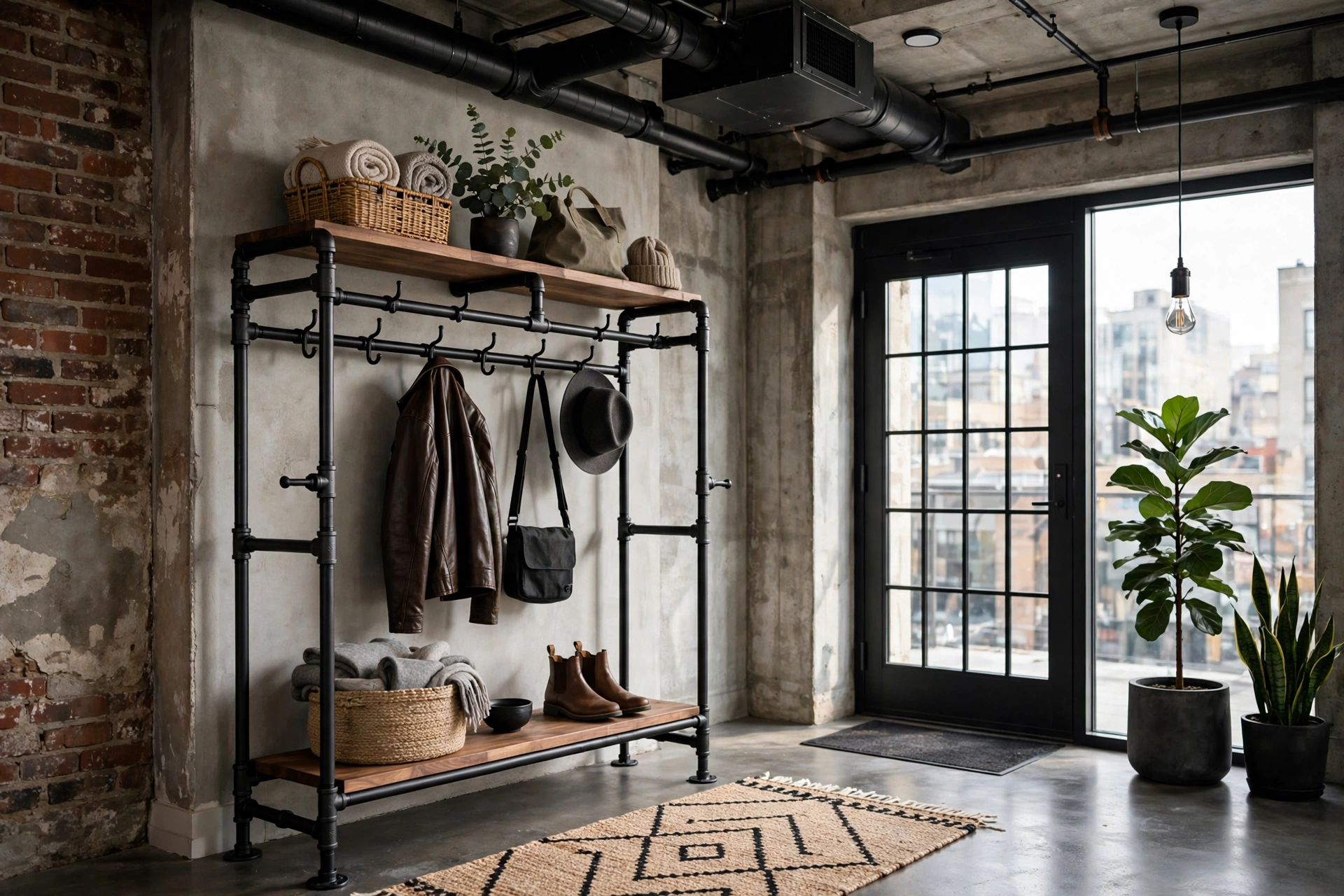
Black iron pipes and wood come together in an industrial coat rack with serious urban character. Wall-mounted pipe flanges with horizontal bars, or a freestanding pipe frame, suit lofts, modern farmhouses, and masculine entries. The raw materials are affordable at any hardware store, making this a satisfying weekend DIY — just ensure wall anchors hit studs for heavy loads. Pair the dark metal with warm wood and soft textiles so the look stays inviting rather than cold. Pipe racks hold hangers beautifully, keeping coats wrinkle-free, and the open design shows off a curated coat collection like a boutique display.
8. The Bench-and-Rack Combo Unit
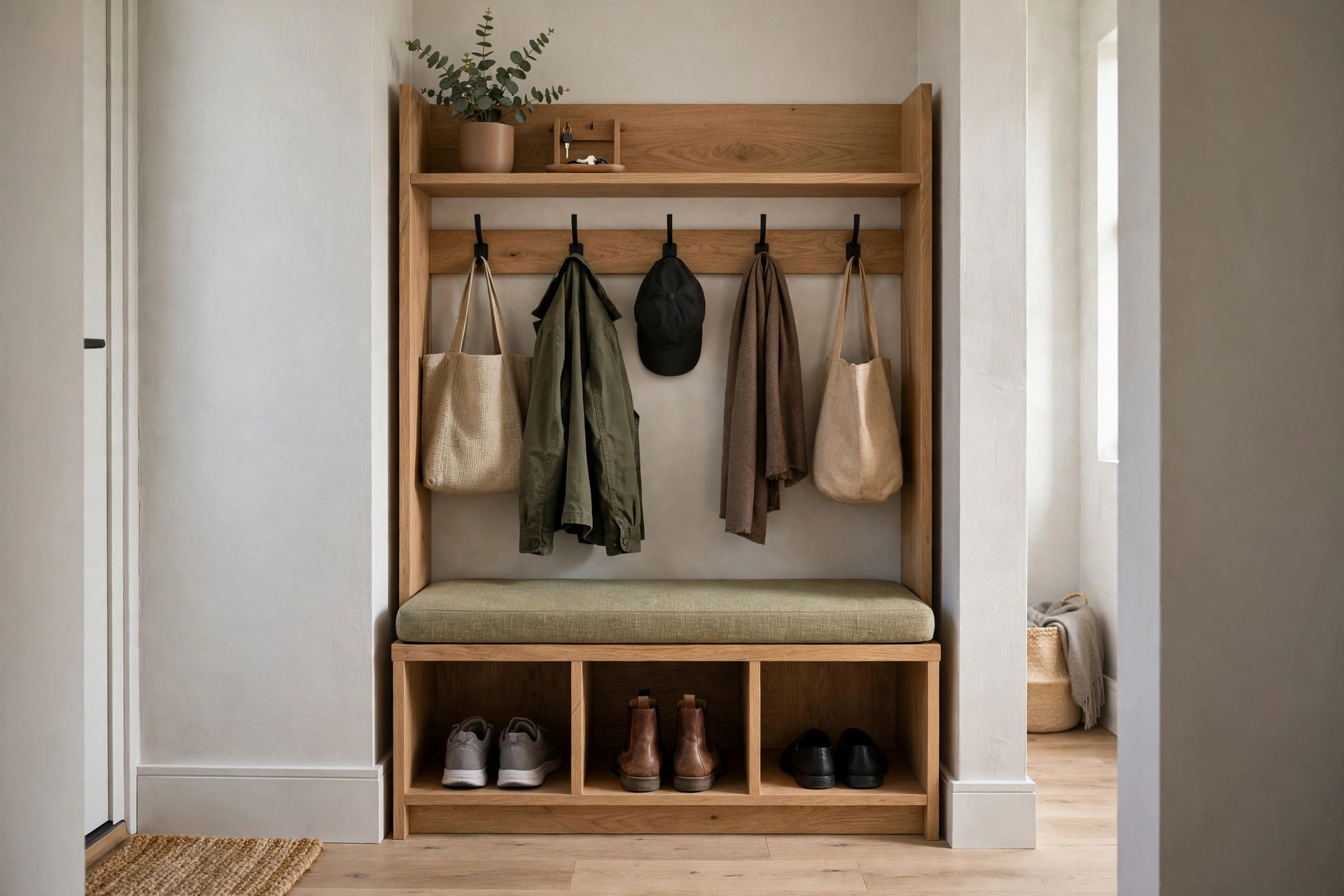
Combining a bench with an attached coat rack creates a compact mudroom station in one purchase. These units typically feature hooks or a peg rail rising from the bench back, with cubbies or a shelf below the seat for shoes. They are the space-efficient answer for entries that need seating and hanging but cannot fit separate pieces. Look for solid construction — the rack portion takes daily tugging — and a bench height around eighteen inches for comfortable shoe changes. Pairing works hand-in-hand with under-bench organization like our entryway shoe storage ideas that tame the clutter. One unit, three functions, zero wasted wall.
9. Kids’-Height Hooks for Little Ones
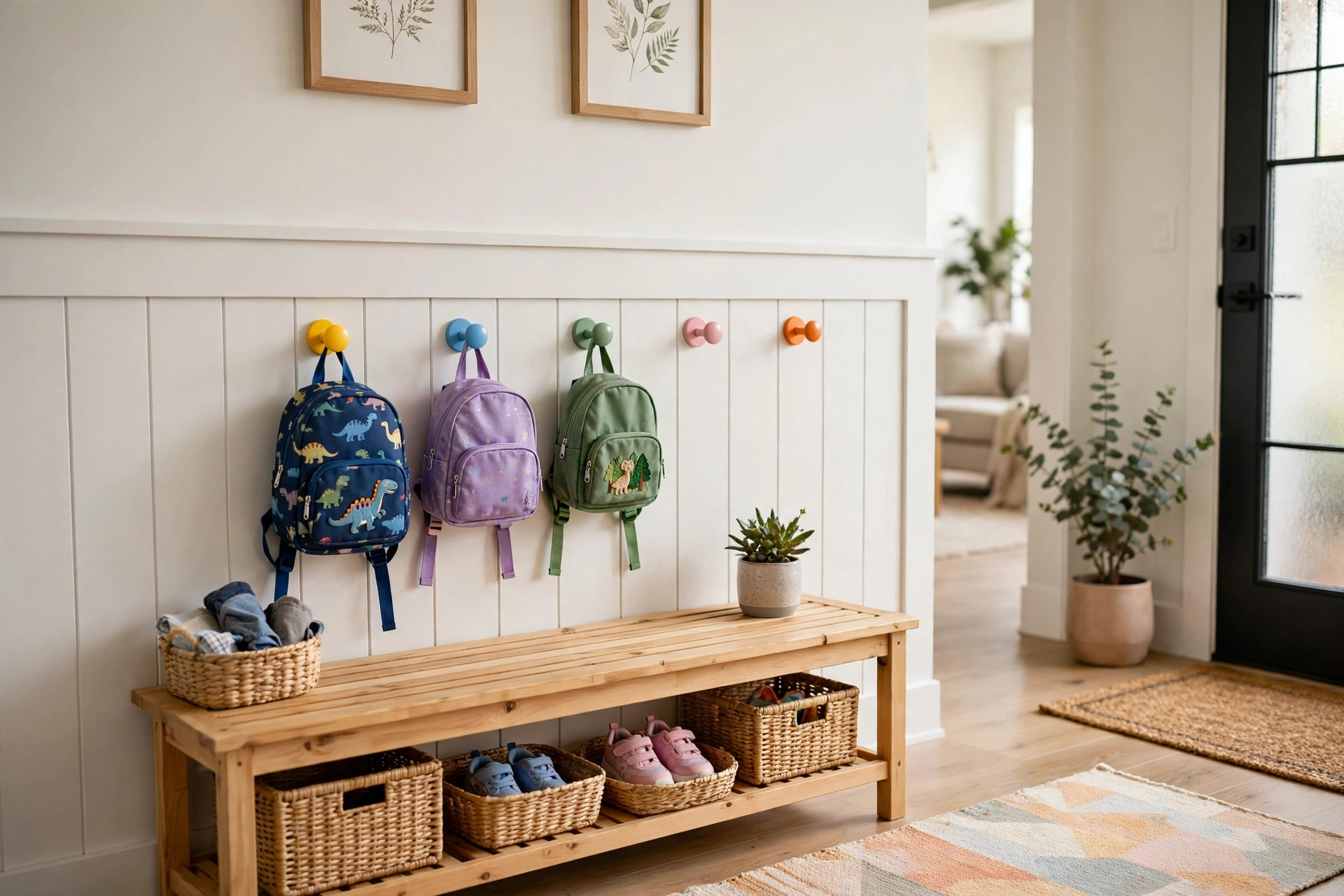
Kids actually hang up their coats when hooks are at their height — mount a dedicated low row at 36 to 40 inches and watch the floor piles disappear. Use chunky, rounded hooks that small hands can manage and that will not snag delicate fabrics. Label each hook with a name tag, animal, or color so ownership is clear and the routine sticks. A low bench or step nearby lets toddlers manage shoes too, building the full independent arrival routine. Keep the adult row above for your own gear. This small accommodation teaches lifelong tidiness habits and ends the daily battle over the coat pile by the door.
10. A Fold-Down Wall Rack for Tiny Entries
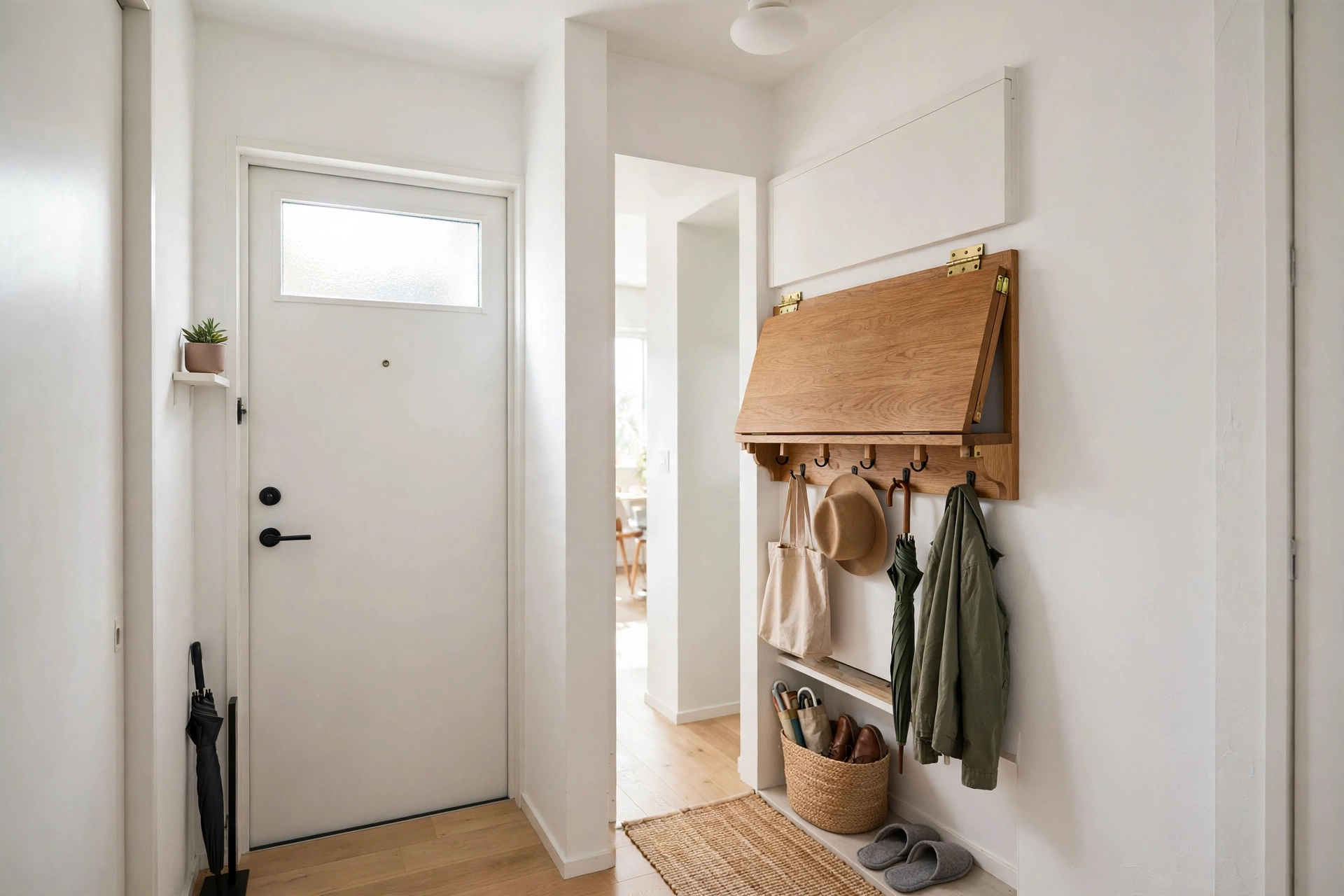
When wall space is truly minimal, a fold-down rack gives you hooks only when you need them. These clever designs mount flat against the wall and flip down into a multi-hook rack for guests or daily use, then fold away to free the space. They are perfect for studio apartments, narrow hallways, and entries that double as walkways. Choose a sturdy hardwood or metal mechanism rated for real coat weight — flimsy versions sag. Style the folded-flat position with a small art print so the wall looks intentional either way. It is the Murphy bed of coat storage: there when you need it, invisible when you do not.
11. The Vintage Ladder Rack
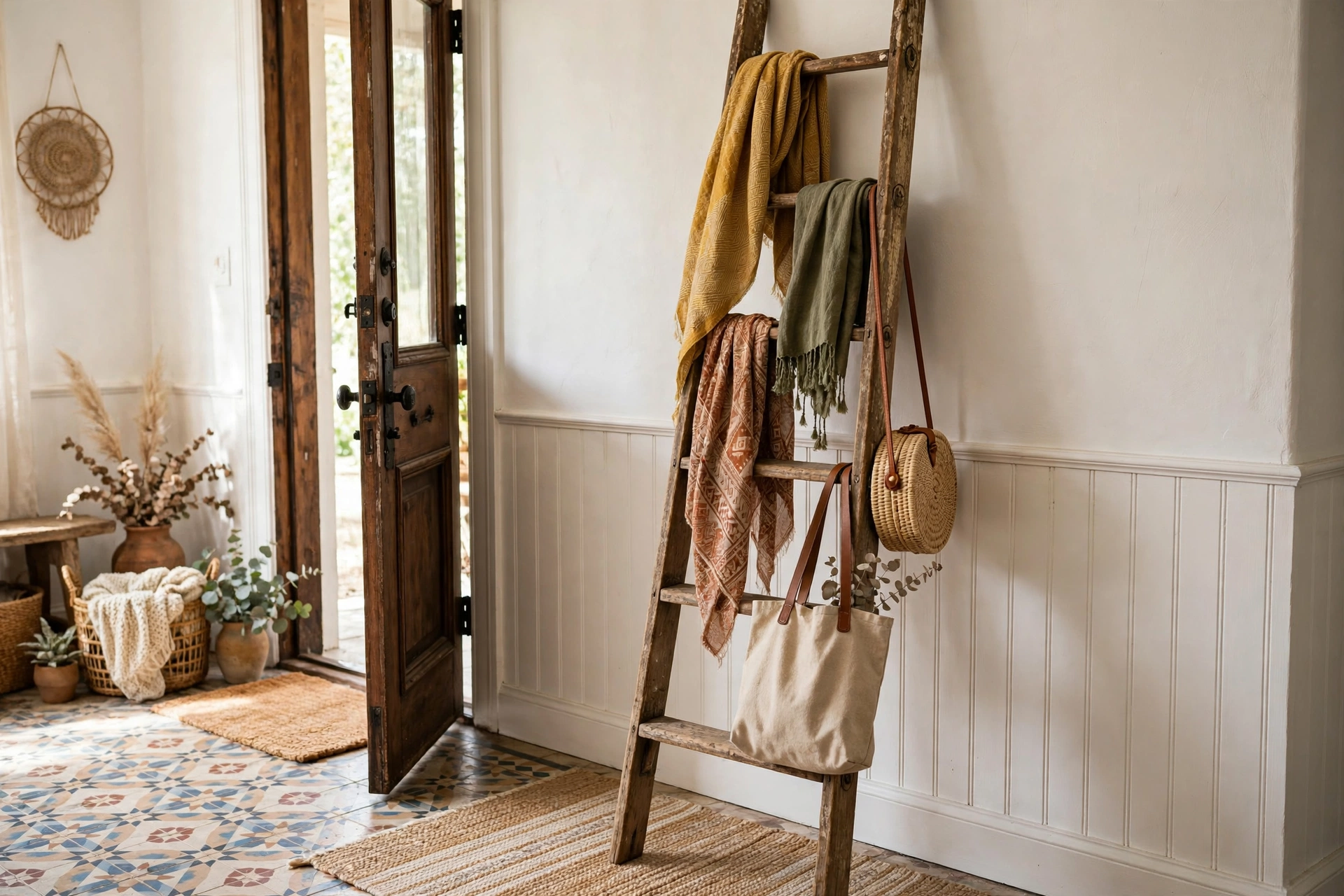
A vintage wooden ladder leaned against the wall makes a charming, characterful coat rack with instant farmhouse or boho appeal. Drape coats over the rungs, hang bags from S-hooks, and let scarves cascade naturally. Secure the top to the wall with a discreet bracket so it cannot slip — safety first with leaning furniture. Look for ladders with wide, flat rungs at flea markets and salvage shops; a fresh coat of paint unifies mismatched finds. The ladder’s vertical profile suits narrow walls, and its open design keeps the entry feeling airy. It is decor and function in one storied piece.
12. Brass Hooks for a Polished Look
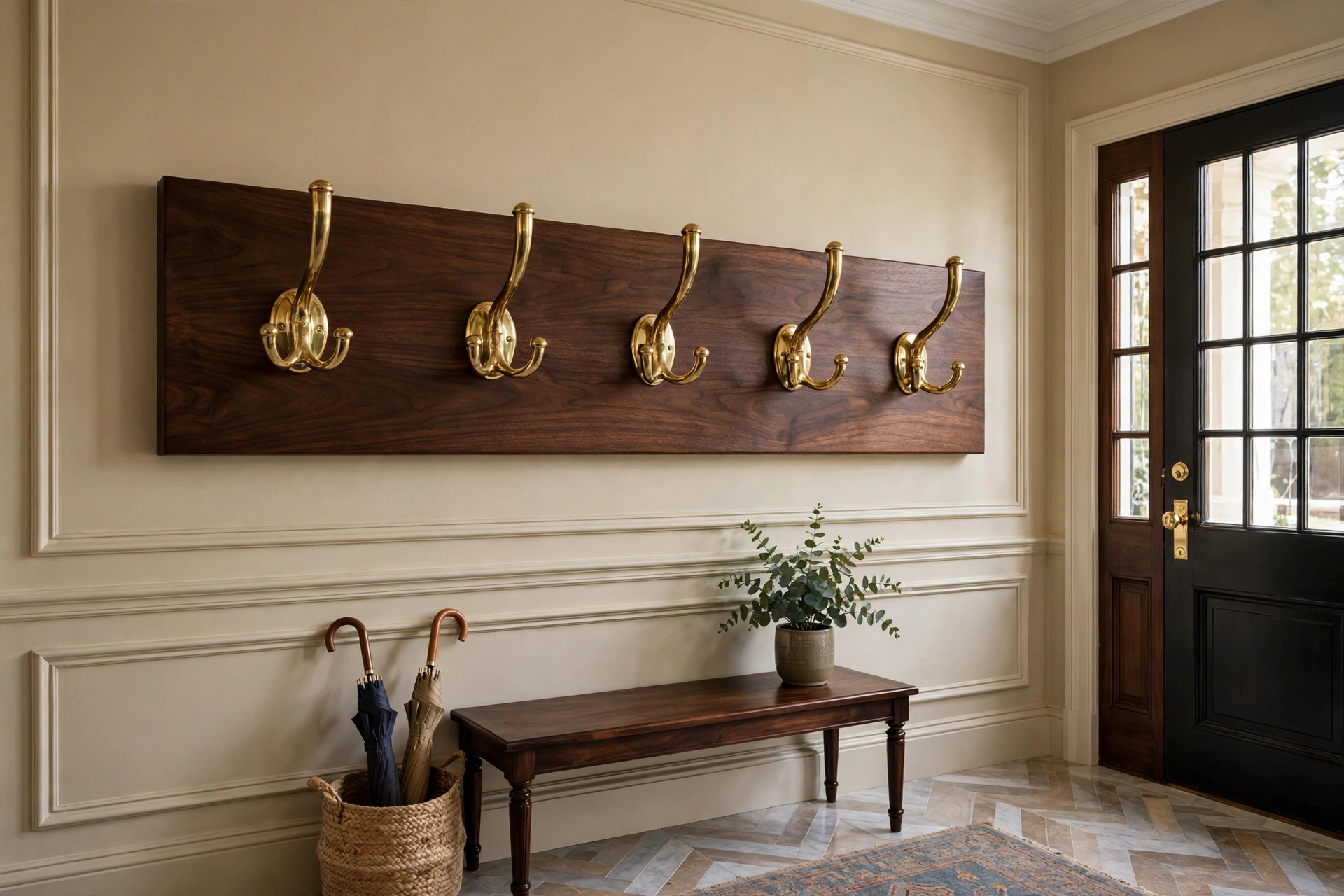
Brass hooks elevate a coat rack from utility to jewelry. A row of polished or brushed-brass hooks on a dark wood board, or individual brass hooks scattered artfully, adds warmth and refinement that suits traditional, transitional, and modern luxe entries. Brass develops a beautiful patina over time, or choose lacquered finishes to stay bright. Pair with marble, dark green walls, or rich wood tones for maximum effect. Beyond looks, brass hooks are typically solid and weighty — they hold heavy coats without flexing, and they age beautifully.
13. A Corner Coat Rack
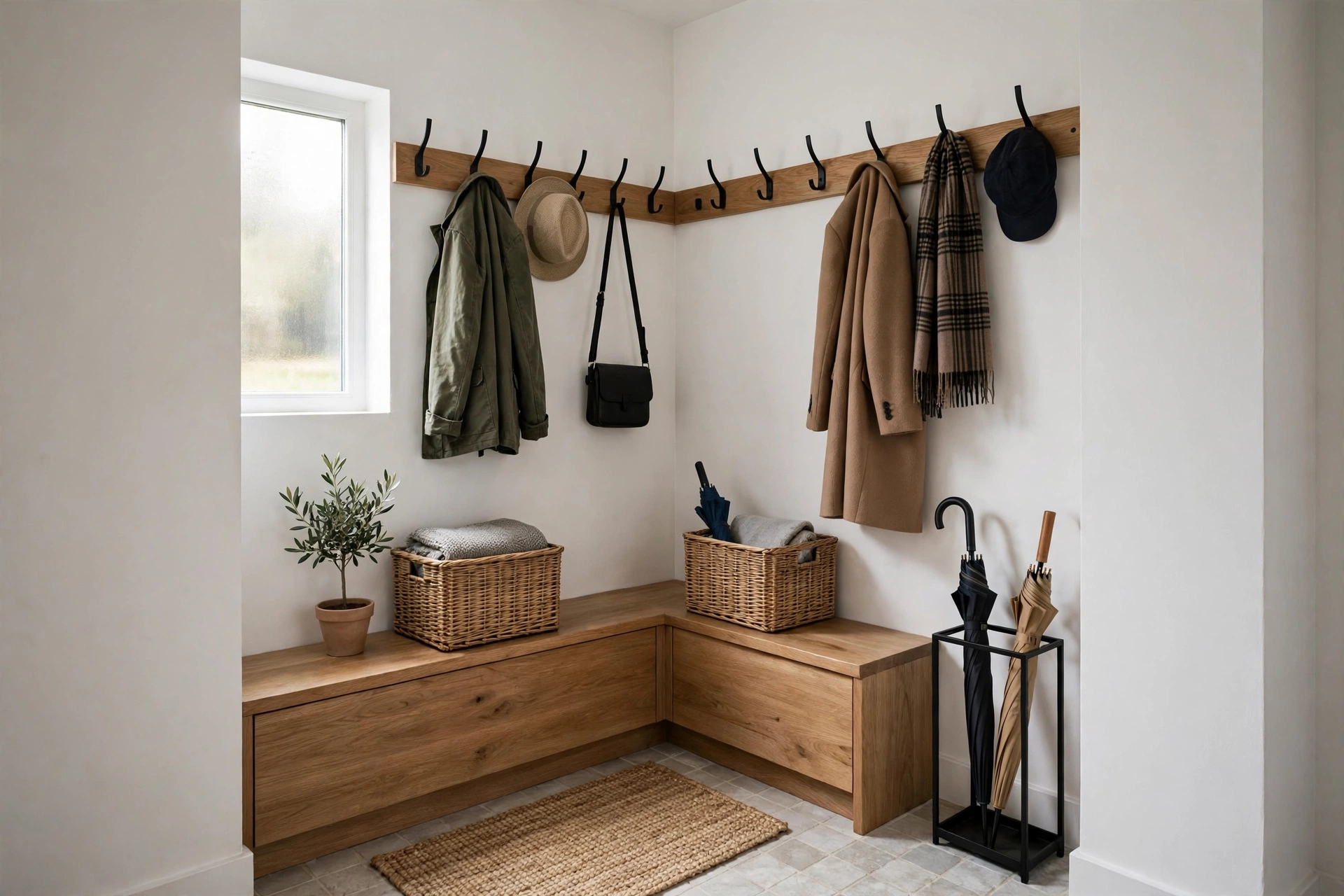
Corners are wasted space in most entries — a corner coat rack puts them to work. Corner-mounted hook boards wrap two walls, doubling hanging capacity in the footprint of one. Freestanding corner racks with a triangular base tuck neatly where two walls meet. This placement keeps coats out of the main traffic flow, which is gold in narrow entries. Style the adjacent wall with a mirror or art so the corner feels designed, not like an afterthought. Measure the corner depth carefully; coats need room to hang without brushing both walls. Done right, the forgotten corner becomes the hardest-working spot in the entry.
14. The Multi-Row Hook Board
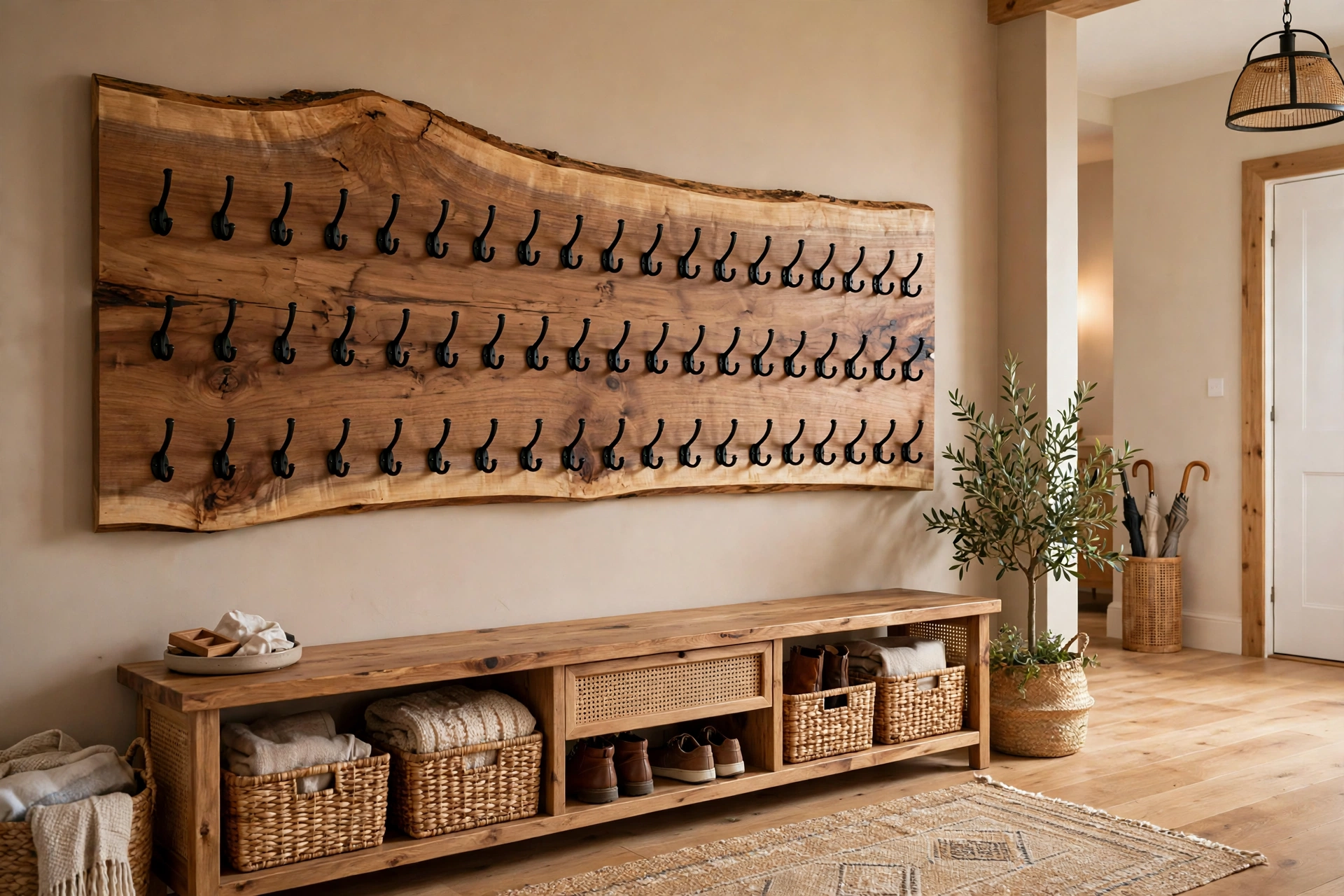
A wide board with two or three rows of hooks multiplies capacity on a single wall section. Use the top row for adult coats, the middle for bags and daily jackets, and the bottom row for kids or accessories. Stagger the hooks between rows so hanging items do not collide. This dense format suits large families and four-season climates where everyone owns multiple coats. Keep the board itself beautiful — a live-edge wood slab or a painted panel in an accent color — since it will be highly visible. Enforce a one-in, one-out rule for off-season coats stored elsewhere, or even the best board overflows.
15. A Coat Closet Turned Open Rack
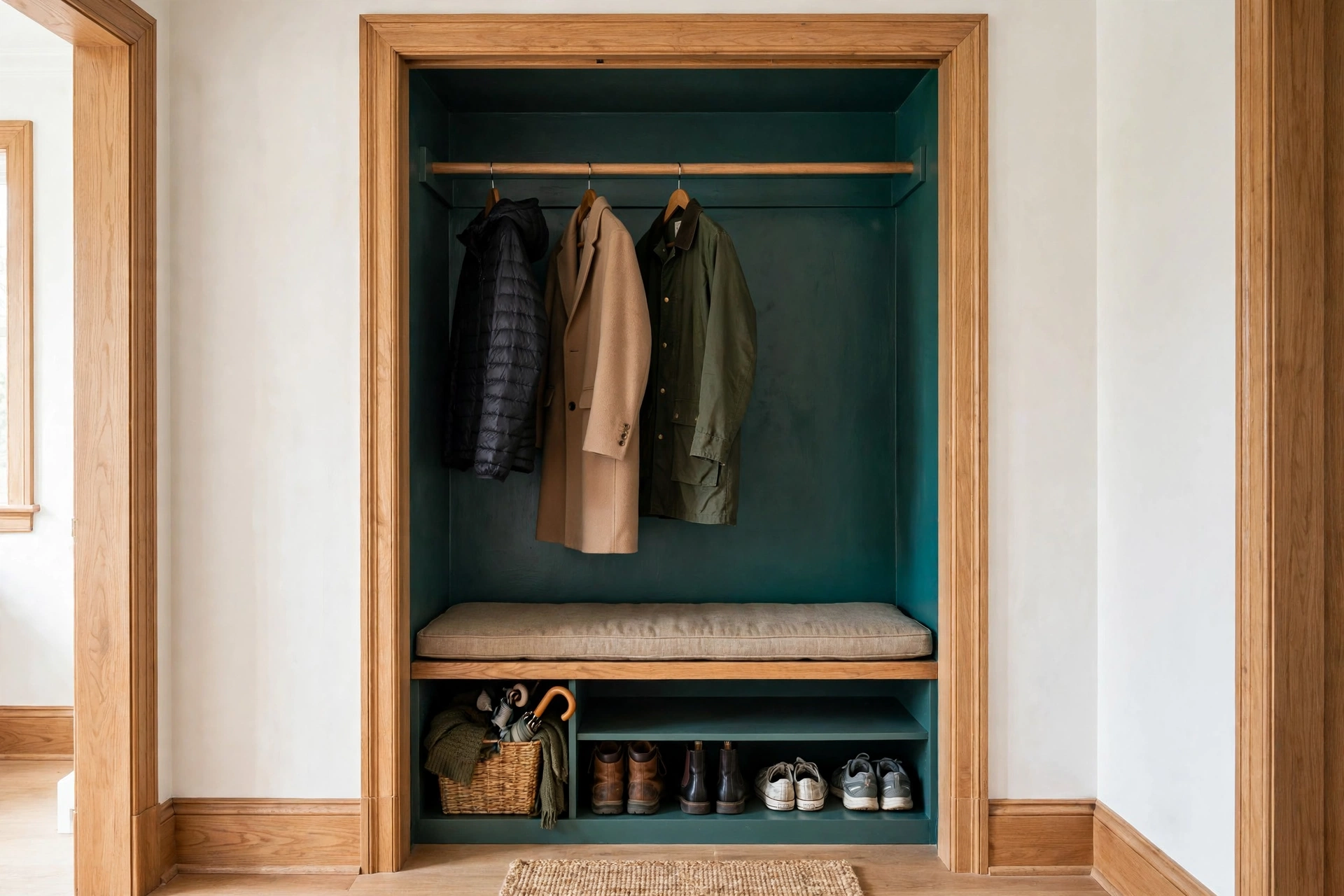
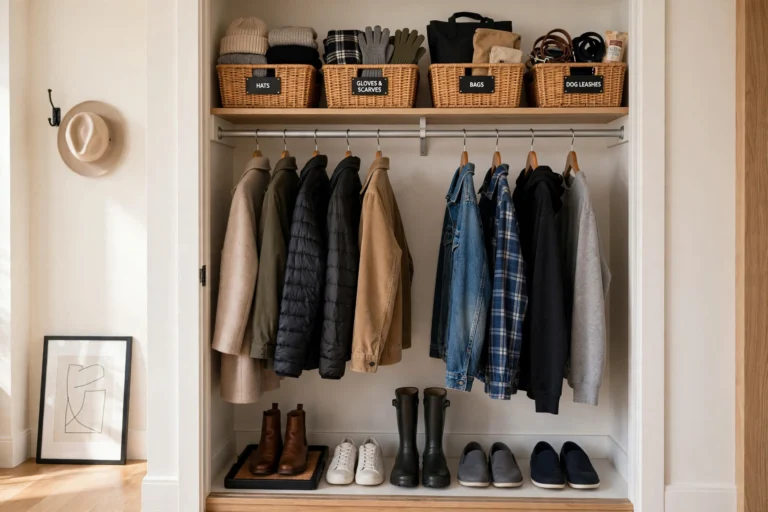
If your coat closet has become a black hole, remove the doors and convert it into an open rack nook. Install a sturdy closet rod or a row of hooks inside, add a bench or shoe shelf below, and paint the interior an accent color for a designed look. Open access means coats actually get hung up — no door to hide the mess becomes motivation to keep it tidy. Add baskets on an upper shelf for hats and gloves, and a motion-sensor light so the nook glows welcomingly. This conversion costs little but transforms the most underused square feet in the entry into its most functional.
Frequently Asked Questions
What is the best coat rack for a small entryway?
A wall-mounted peg rail or a row of individual hooks is best — zero floor footprint, maximum function. Mount hooks at staggered heights to fit more in less wall, and add a narrow shelf above for small items. If you need seating too, a slim bench-and-rack combo unit covers both in one footprint. Avoid freestanding racks in tight entries; they eat precious floor space and tip in high traffic. Whatever you choose, limit it to daily-use items and store off-season coats elsewhere.
How many hooks do I need in an entryway?
Plan two hooks per regular user — one for a coat, one for a bag — plus two or three spare for guests. A family of four needs roughly ten to twelve hooks, which sounds like a lot until winter layers arrive. It is better to have empty hooks than an overflowing rack; crowded hooks lead to floor piles. If wall space is limited, prioritize daily coats on hooks and move bags to a bench tray or basket. Count your actual daily items, then add the guest buffer.
How high should coat hooks be mounted?
Mount the main row 60 to 66 inches from the floor — comfortable for most adults to reach without stretching. Add a kids’ row at 36 to 40 inches so little ones can hang their own gear. If mounting above a bench, leave at least eighteen inches of clearance above the seat for comfortable sitting. For heavy winter coats, ensure hooks are anchored into studs or use rated drywall anchors; a loaded hook pulls with surprising force. When in doubt, slightly lower beats slightly higher for daily comfort.
Can a coat rack really replace a closet?
For daily use, absolutely — most families reach for the same few coats, and a well-planned rack keeps those accessible while the closet stores off-season overflow. The trick is curation: Clever low-mounted coat rack shoe hack demonstrates — creative hook use beats more storage. Enforce seasonal swaps twice a year, keep a donation bag nearby for outgrown coats, and the rack stays tidy. No closet? A hall tree plus hooks covers nearly every need.
How do I keep a coat rack from looking messy?
Limit it to current-season daily items — everything else lives in a closet. Give each person designated hooks so nothing migrates. Use matching hangers for a uniform look, and hang bags by their straps rather than draping them. Do a weekly thirty-second reset: rehang slipped coats, return stray items, wipe the shelf. Choose closed storage (baskets, bins) for the small stuff that creates visual noise. A tidy rack is less about the hardware and more about the habit of editing what hangs there.
Keep Exploring
A good coat rack is the difference between an entry that welcomes you and one that trips you — give every coat a designated home, and the clutter problem largely solves itself. Start by counting your real daily items, then choose the rack style that fits your space and household: peg rails for simplicity, hall trees for families, staggered hooks for awkward walls. Mount it solidly, keep it curated to the season, and enjoy the small daily pleasure of grabbing your coat and going.
With coats handled, the rest of the entry falls into place — shoes find their baskets, keys land in their tray, and the whole space breathes easier. Browse more Entryway Decor ideas for benches, mirrors, lighting, and storage that complete your clutter-free welcome, and keep refining until your front door works as beautifully as it looks, from busy school mornings to relaxed weekend comings and goings.





[…] without a console table in the entry. Make it a household rule: keys live in the tray, full stop. Entryway coat rack ideas that keep clutter in check offer alternatives if you prefer keys on open hooks […]