
A dining room without plants can feel a little too finished — all hard surfaces, sharp table edges, and straight chair backs with nothing soft to balance them. A touch of greenery changes everything: leaves catch the light, add movement, and make the room feel alive whether you are hosting a dinner party or eating cereal at midnight. These dining room plant decor ideas work in every size of dining space, from a sun-drenched eat-in kitchen to a moody formal dining room with one small window. If the table itself needs attention first, our dining room table decor ideas for everyday gatherings pair beautifully with every plant idea below.
Before you buy a single plant, check the light. Most dining rooms get their brightest light near windows and doorways, while corners and buffet walls sit in shade. A houseplant that loves bright indirect light will sulk in a dark corner, so match the plant to the spot rather than the other way around. Think about scale too: one generous plant makes a stronger statement than six tiny pots scattered around, and a plant that sheds leaves over your dinner table is a bad roommate. Start with easy, forgiving plants — pothos, snake plants, ZZ plants, and peace lilies — and build from there.
1. Anchor a Corner With a Tall Statement Tree
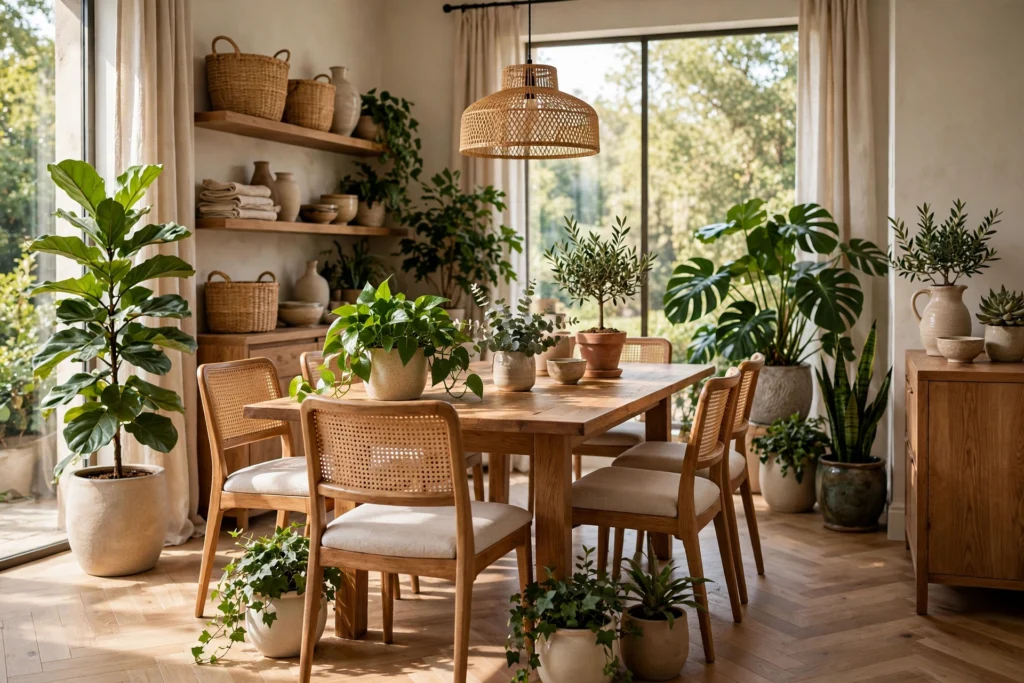
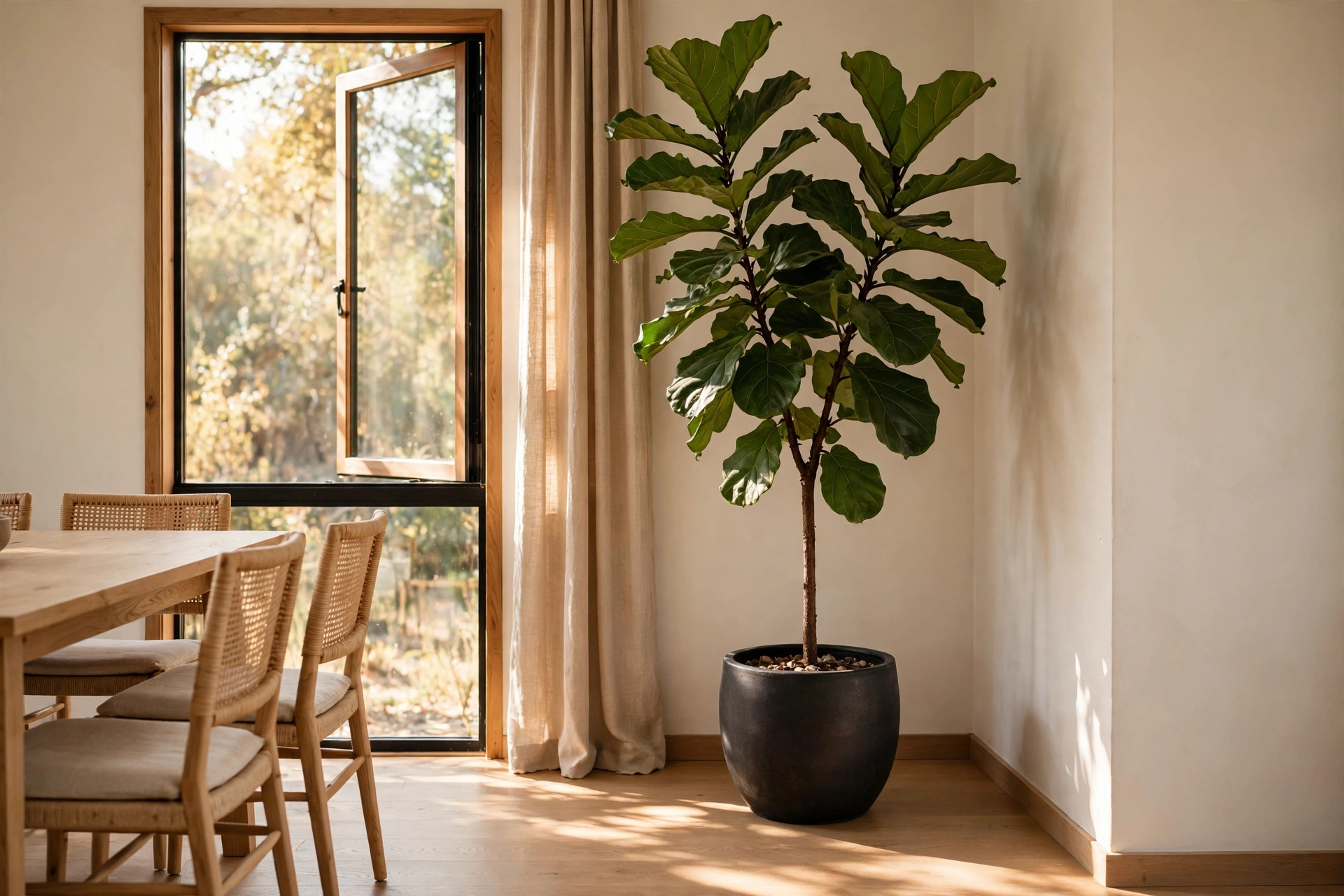
Empty dining room corners are begging for height, and a tall tree delivers it in one move. A fiddle-leaf fig, olive tree, or dracaena in a handsome ceramic pot turns dead space into the room’s focal point. Choose a tree that reaches at least five feet so it holds its own against the table and chairs, and pick a pot that echoes your dining style — matte black for modern, aged terracotta for rustic, glazed white for classic. Rotate the tree a quarter turn every month so it grows evenly, and keep it a foot or two from the wall so air circulates.
2. Build a Low Living Centerpiece
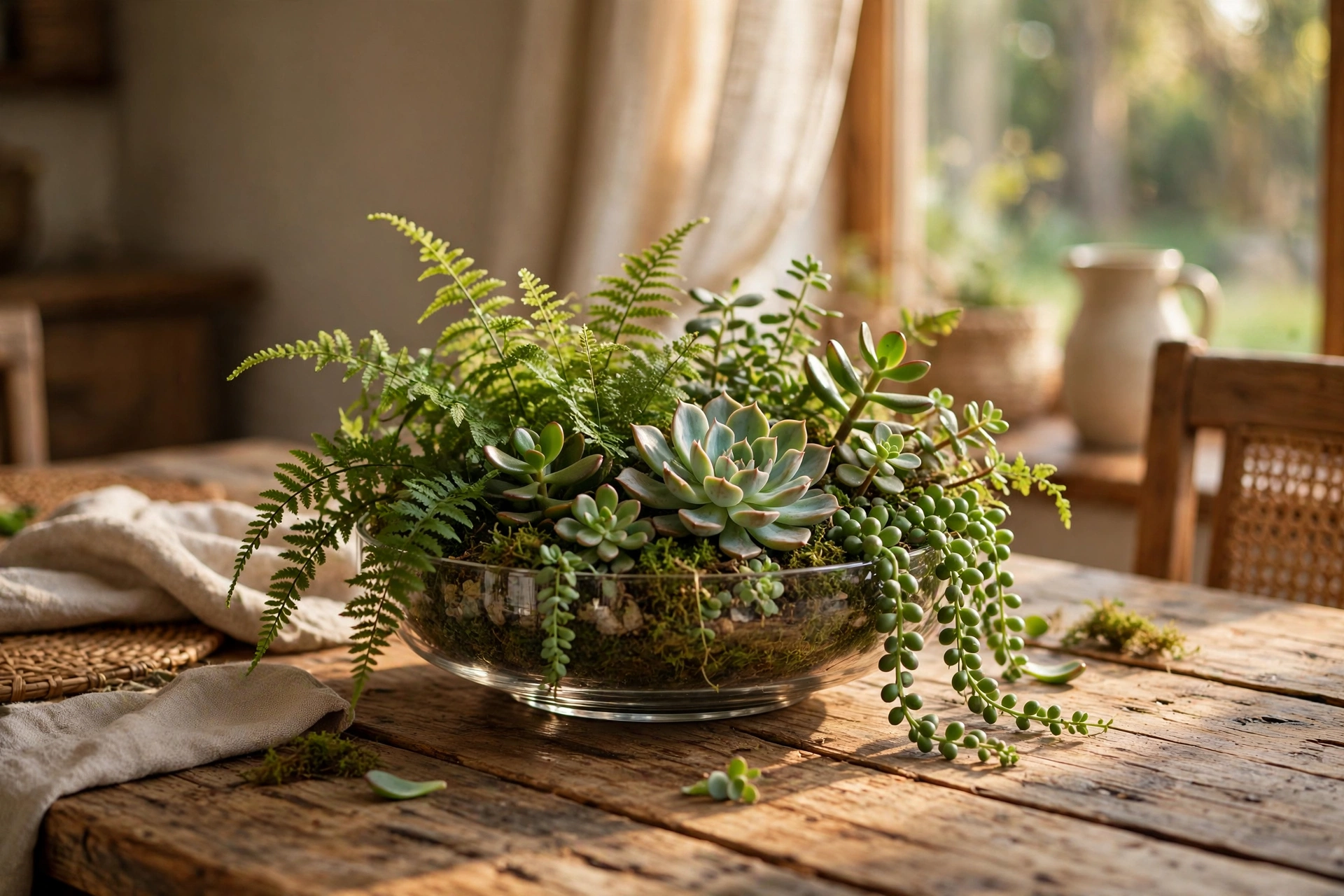
A centerpiece should never block conversation across the table, which makes a low, sprawling arrangement the perfect choice. Fill a wide shallow bowl with a mix of small plants — a fern, a trailing pothos, and a cluster of succulents — and set it on a tray to protect the table finish. The layered textures read as a miniature landscape and stay below eye level so guests can actually see each other. Water the bowl in the sink to avoid spilling, and let the soil dry between waterings since shallow containers hold moisture unevenly.
3. Line the Windowsill With Potted Herbs
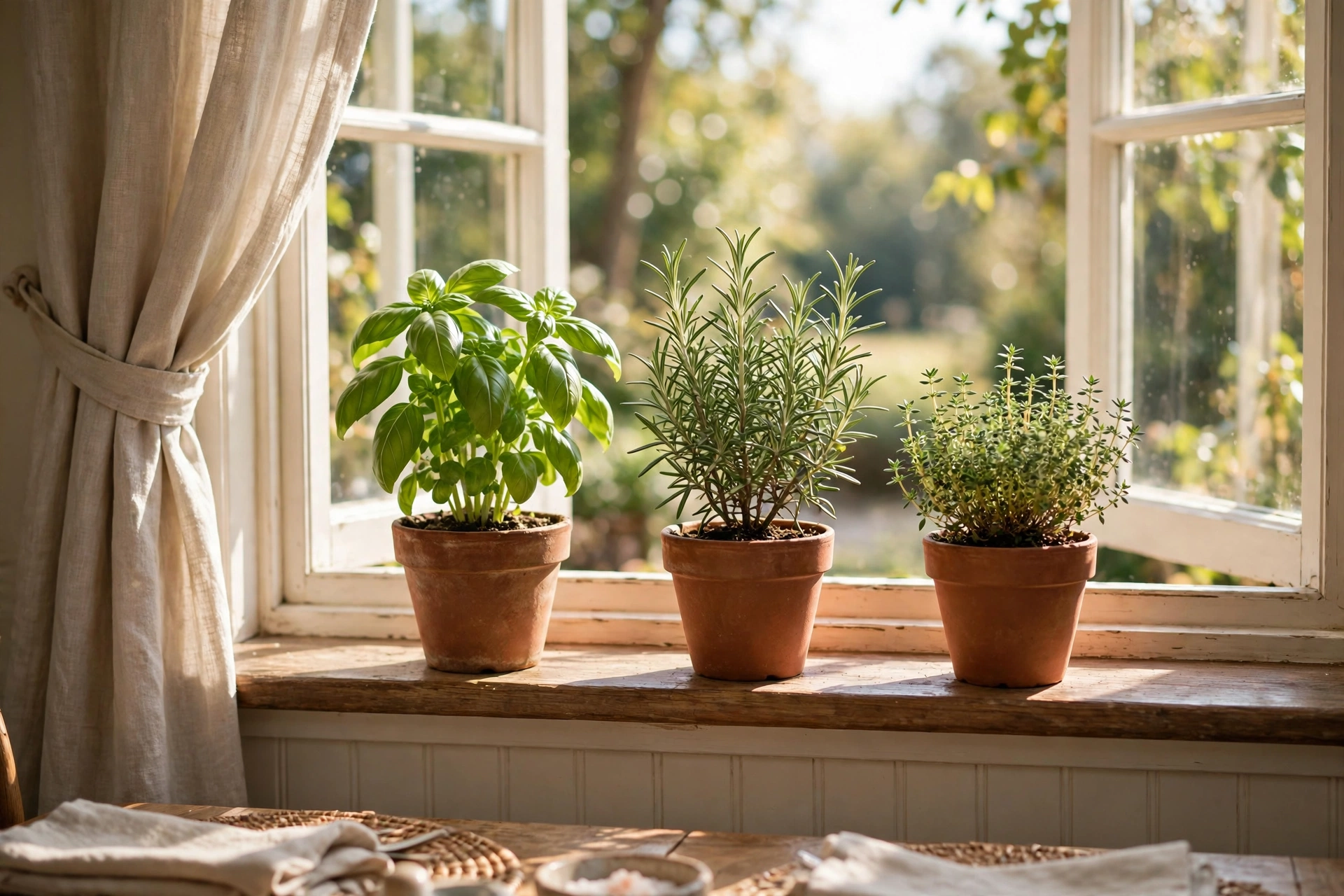
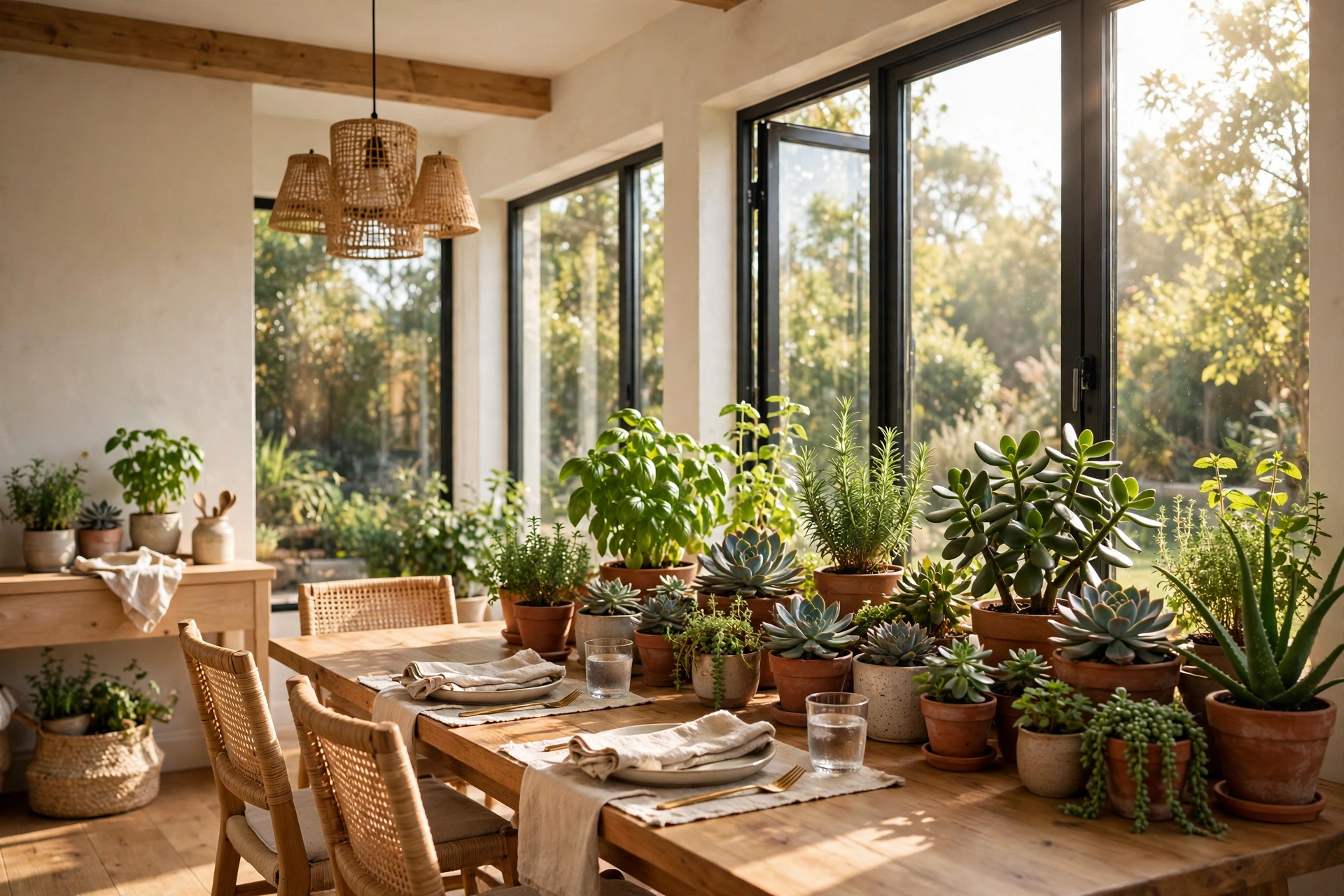
A sunny dining room windowsill is prime real estate for herbs, and they earn their place twice — once as decor, once as dinner. Line up small pots of basil, rosemary, thyme, and mint in matching containers for a tidy, fragrant row. Herbs want the brightest spot you have, ideally four or more hours of direct sun, and they need regular harvesting to stay bushy rather than leggy. Snip from the top and the plants reward you with fuller growth. Use the harvest in your cooking and the styling practically pays for itself.
4. Hang Trailing Plants Above the Sideboard
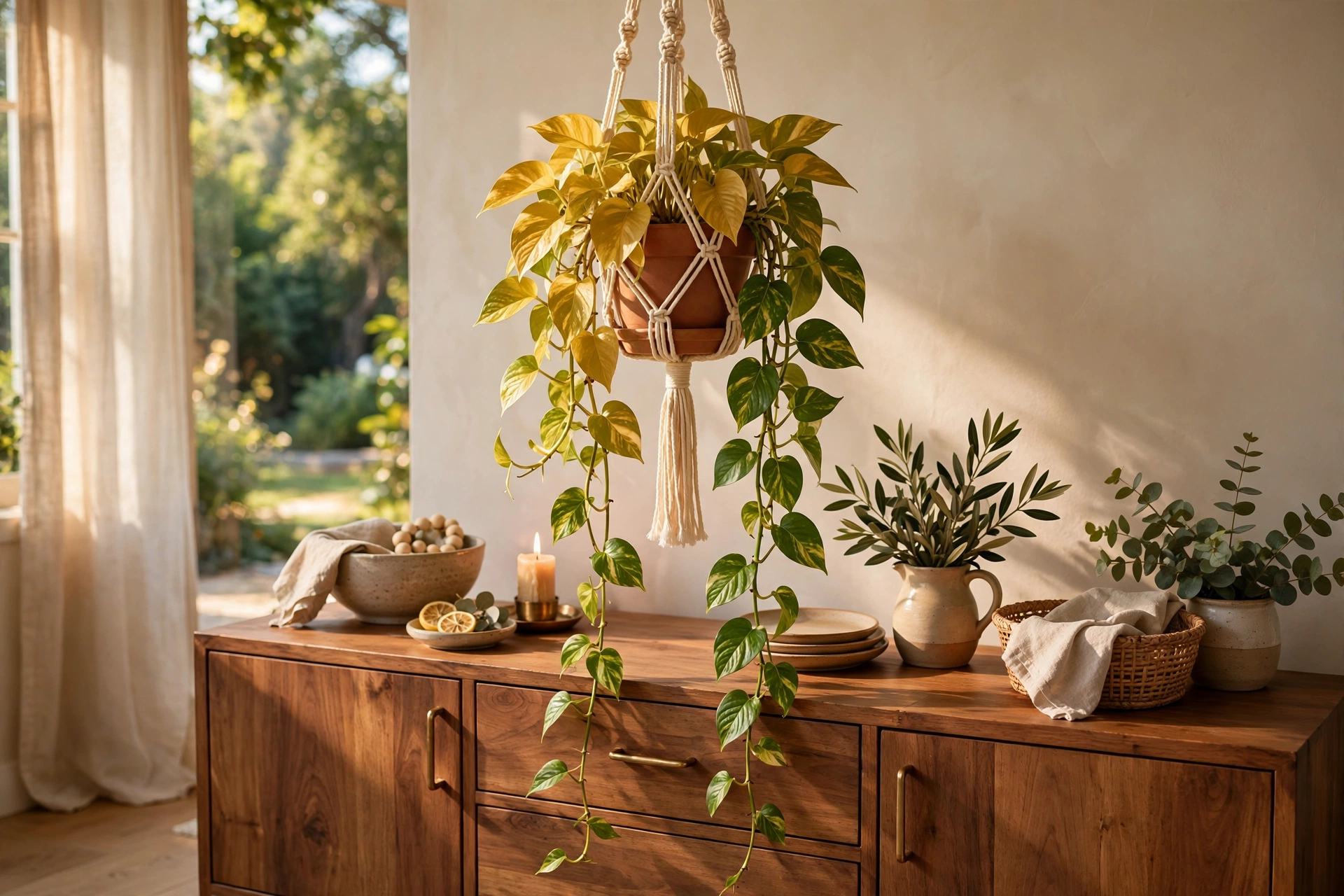
The wall above the sideboard is often decorated with art and then forgotten, but a hanging plant adds life at a height art cannot reach. Install a sturdy ceiling hook or a wall-mounted bracket and let a golden pothos, heartleaf philodendron, or string of pearls cascade down beside the buffet. Trailing plants soften the hard rectangle of the sideboard and draw the eye upward, making the ceiling feel higher. Make sure the hook is anchored into a joist or stud — a watered plant is heavier than it looks.
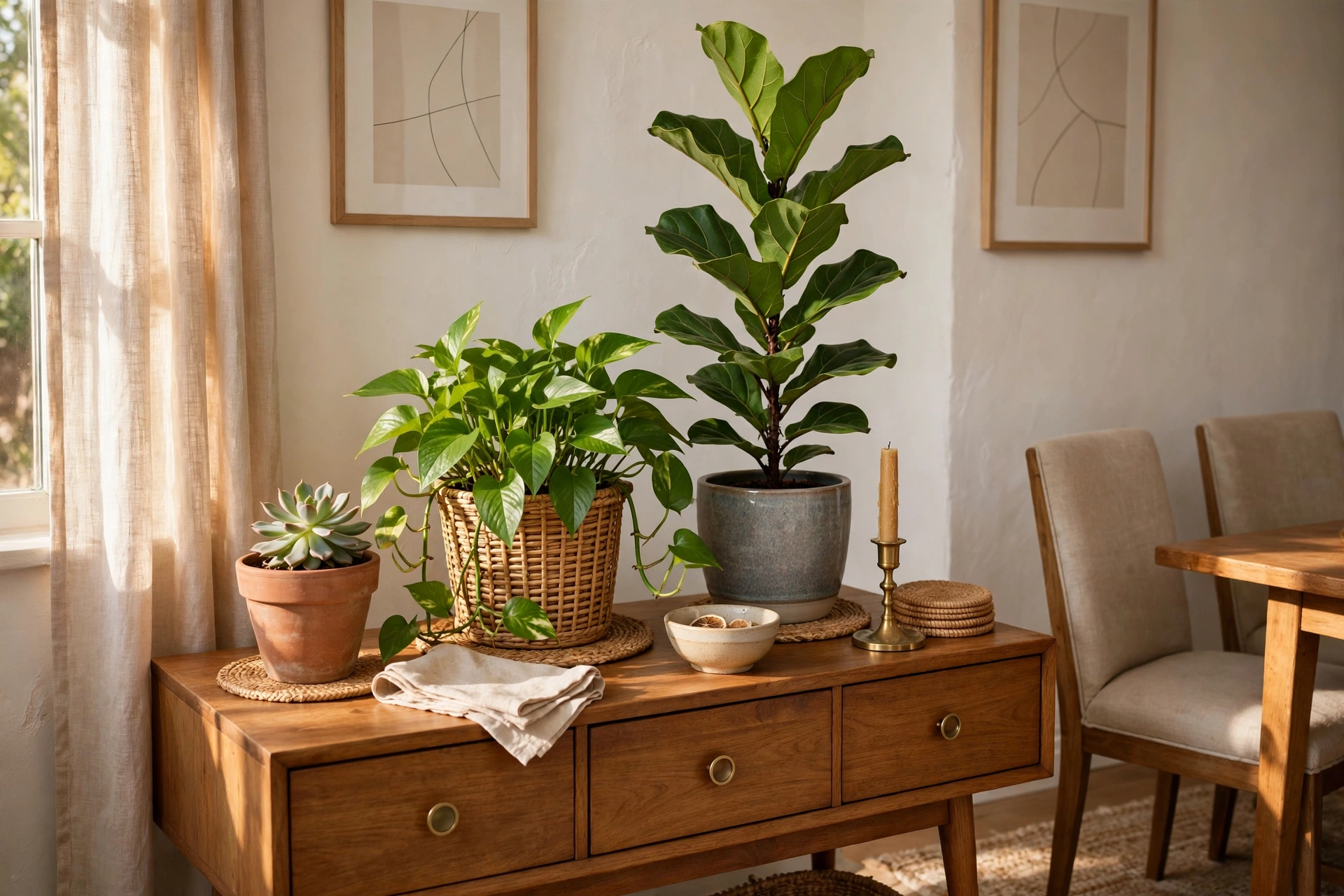
5. Style a Trio of Plants on the Buffet
The rule of three works as well for plants as it does for any styling: group three plants of different heights on your buffet or sideboard for an instant vignette. Try a tall snake plant in the back, a medium fern in the middle, and a small trailing plant spilling over the front edge. Vary the pot materials — ceramic, woven basket, and concrete — while keeping the color palette tight so the grouping feels curated. Leave breathing room between the plants and the wall art above so each element reads clearly.
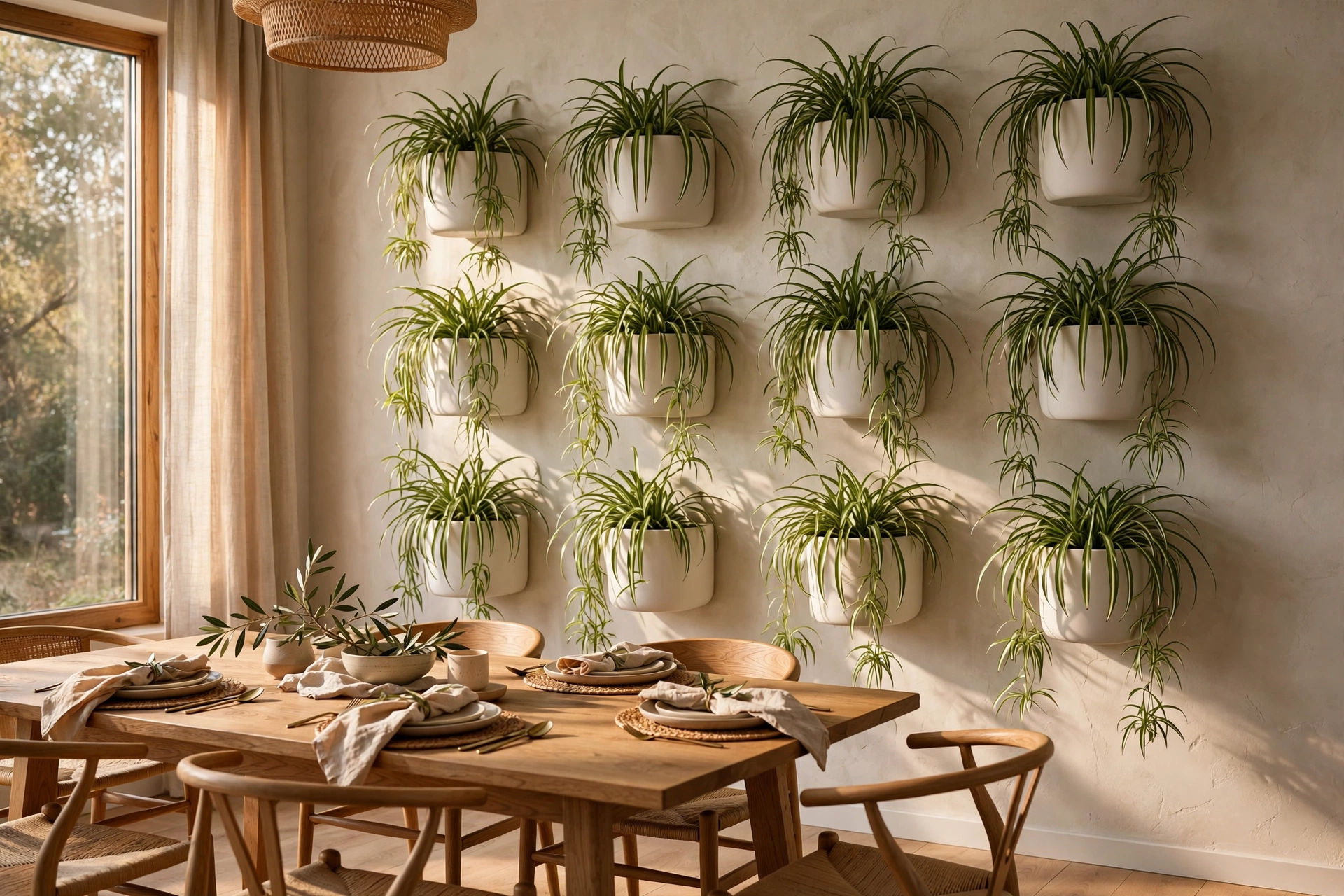
6. Add Wall-Mounted Planters as Living Art
When floor and table space are spoken for, take the plants vertical. Wall-mounted planters — ceramic half-rounds, metal pockets, or wooden slat systems — turn a blank stretch of dining room wall into living art. Plant them with easy trailers like pothos or spider plants that will drape downward and soften the arrangement over time. Hang them at eye level where they get the same light you would give a tabletop plant, and use planters with built-in water reservoirs or removable liners to protect the wall.
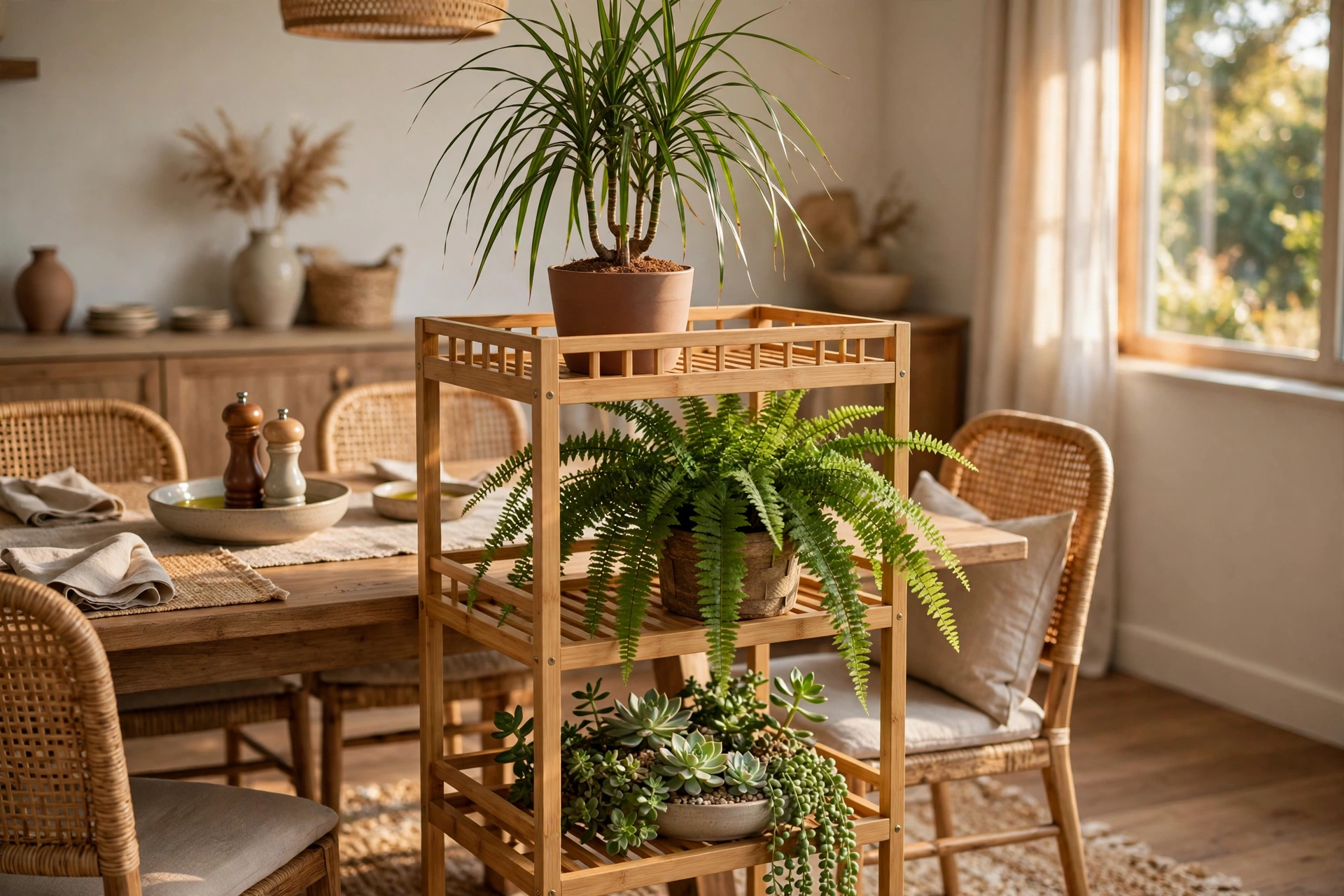
7. Use a Plant Stand to Layer Heights
A cluster of plants all sitting at the same level looks flat, but a tiered plant stand fixes that instantly. A two- or three-tier bamboo or metal stand lets you layer a tall dracaena on top, medium ferns in the middle, and low succulents at the base, creating a miniature indoor garden with real depth. Place the stand near the dining room’s light source since the lower tiers get shaded by the upper ones, and rotate the whole stand weekly so every plant gets its turn in the brightest spot. Plant stands also protect floors and rugs from water rings, which matters in a room where people eat.
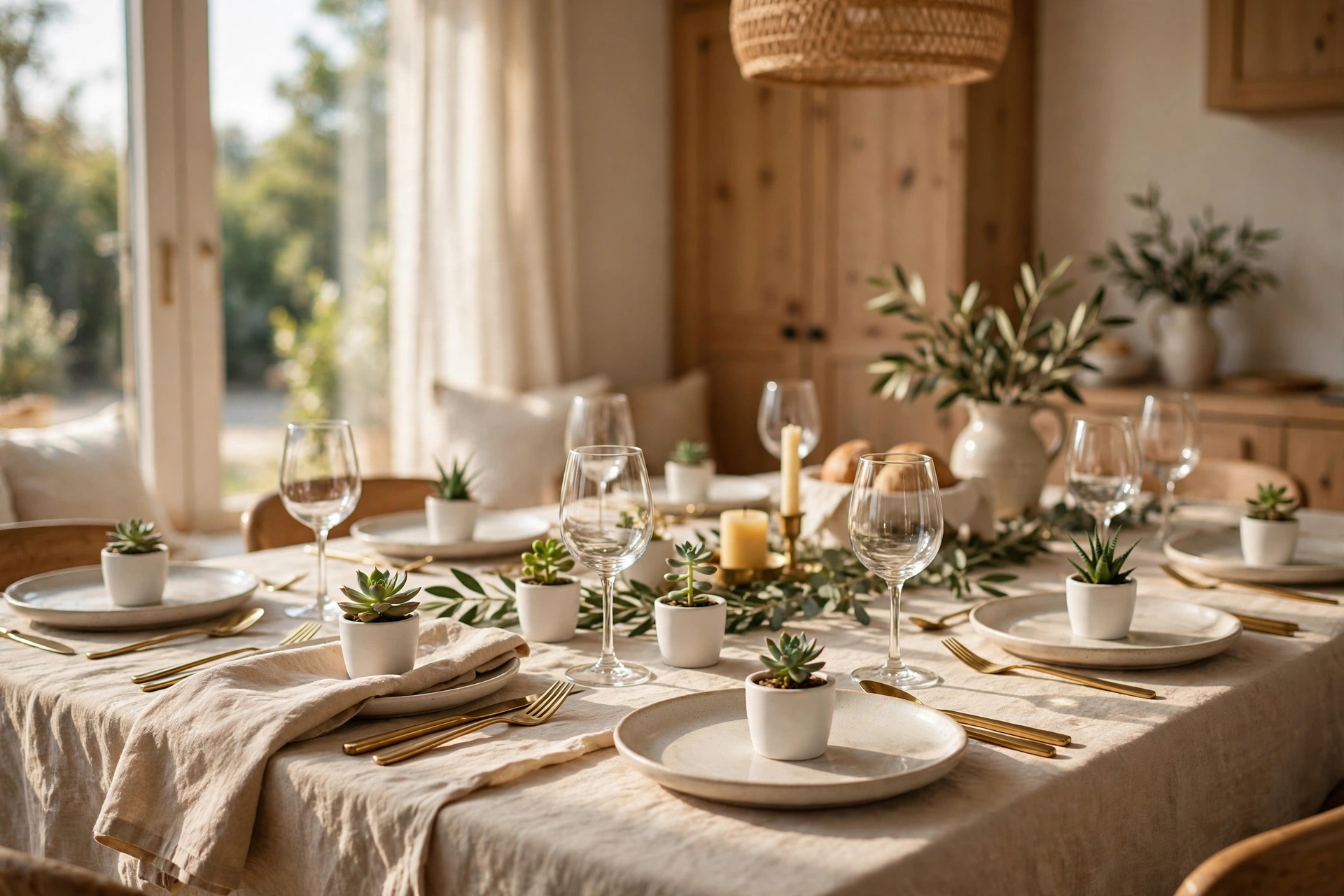
8. Dress the Table With Mini Succulent Place Settings
For dinner parties, skip the flowers and set a tiny succulent at each place instead. Small echeveria or haworthia in two-inch pots double as place cards when you tuck a name tag into the soil, and guests can take them home as favors. Succulents are ideal for the table because they are compact, sculptural, and completely spill-proof — no water rings, no falling petals in the soup. After the party, gather the pots into a tray and they become an everyday centerpiece. Keep a few extras on the windowsill so you always have a full set ready.
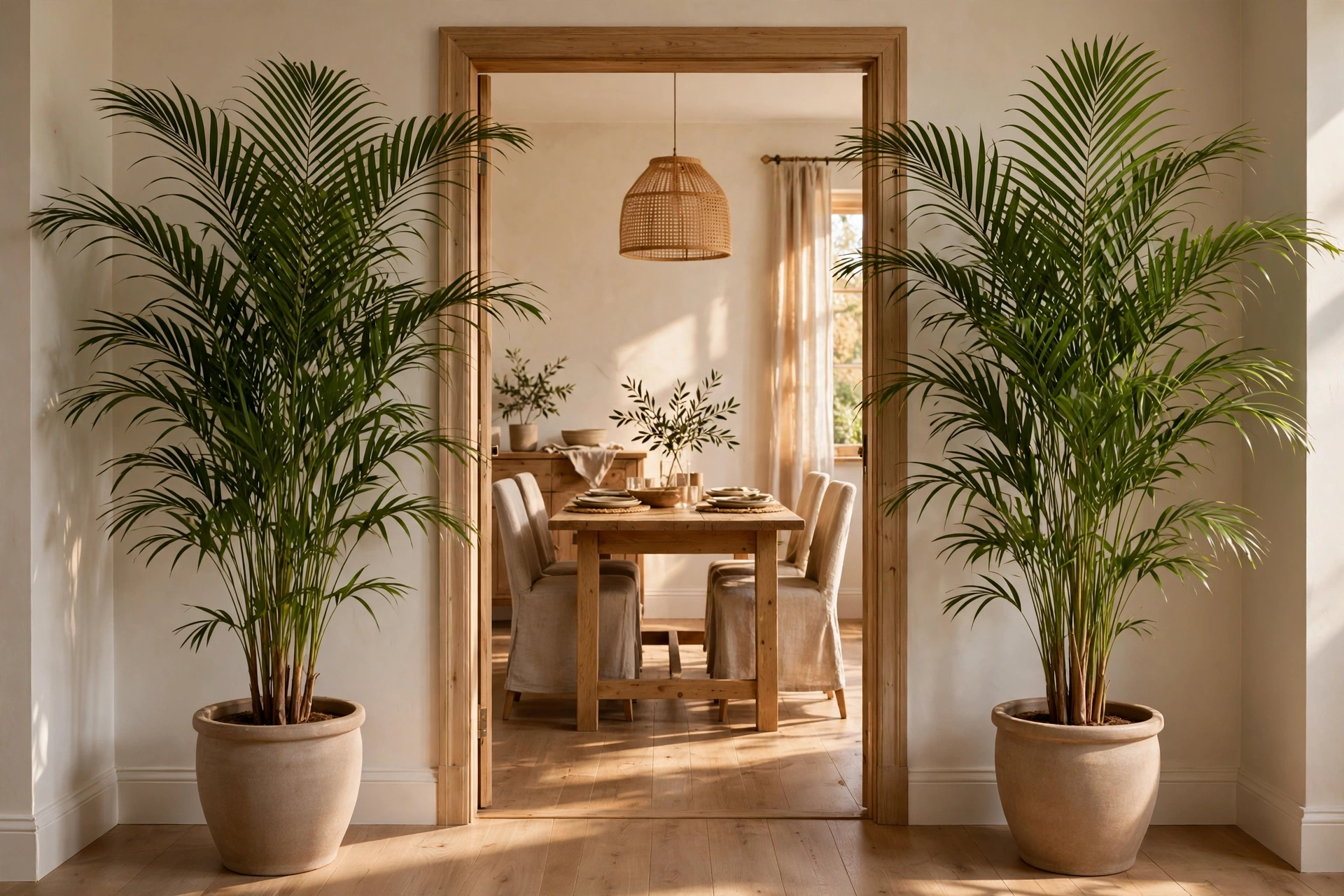
9. Frame the Doorway With a Matching Pair
Symmetry flanking a doorway or the entrance to the dining room creates an instant sense of occasion. Place two identical tall plants — kentia palms, fiddle-leaf figs, or simple topiary-style myrtles — one on each side of the cased opening. The matching pair acts like living columns, guiding guests into the room and making even an ordinary weeknight dinner feel a little more special. Use identical pots to sell the symmetry, and keep both plants on the same watering schedule so they grow at the same rate.
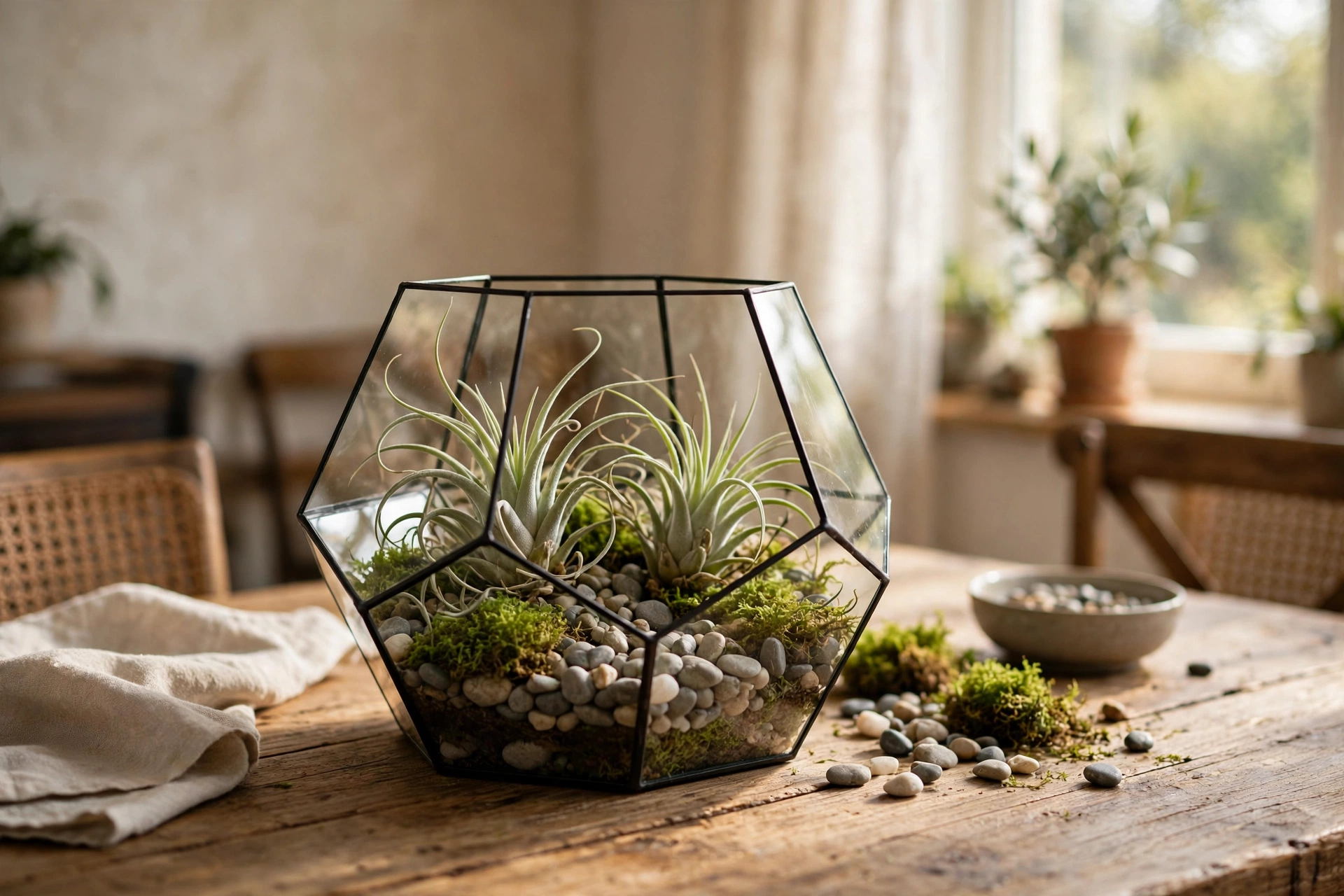
10. Add a Terrarium as a Table Accent
A glass terrarium is the jewelry of plant decor: small, sparkling, and full of detail. Fill an open glass vessel with layers of sand, pebbles, and soil, then plant air plants, tiny ferns, or succulents for a self-contained miniature world. Open terrariums suit succulents and air plants, while closed ones with lids work for moisture-loving ferns and mosses — just never seal succulents under glass or they will rot. Set the terrarium on the dining table as a permanent accent or on the buffet as part of a vignette.
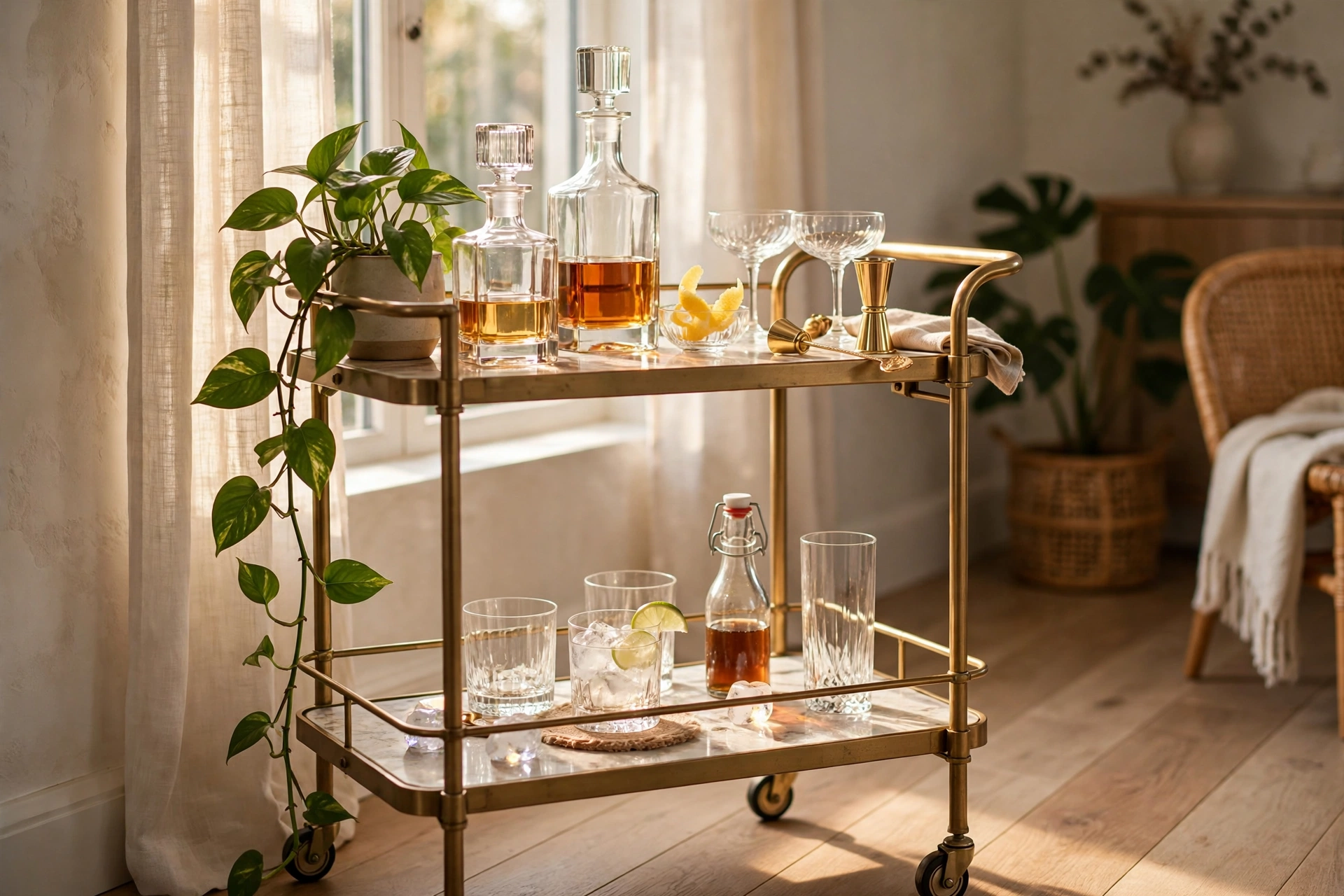
11. Style a Bar Cart With Greenery
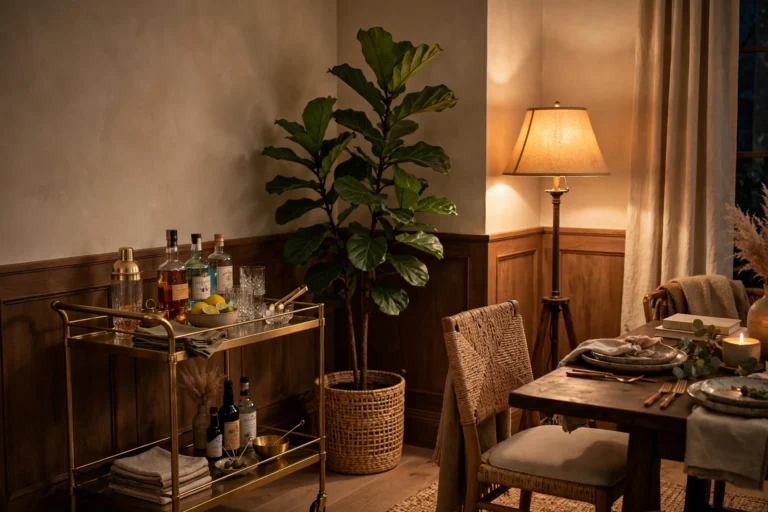
Bar carts are natural styling surfaces, and a plant keeps the bottles-and-glasses arrangement from feeling like a liquor store display. Tuck a small trailing pothos between the decanters, or set a petite fern on the lower shelf where it peeks out beneath the bottles. The organic shapes of leaves contrast beautifully with the hard lines of glassware. Choose plants that tolerate the occasional splash and the lower light of a cart tucked against a wall — pothos and snake plants are nearly indestructible here.
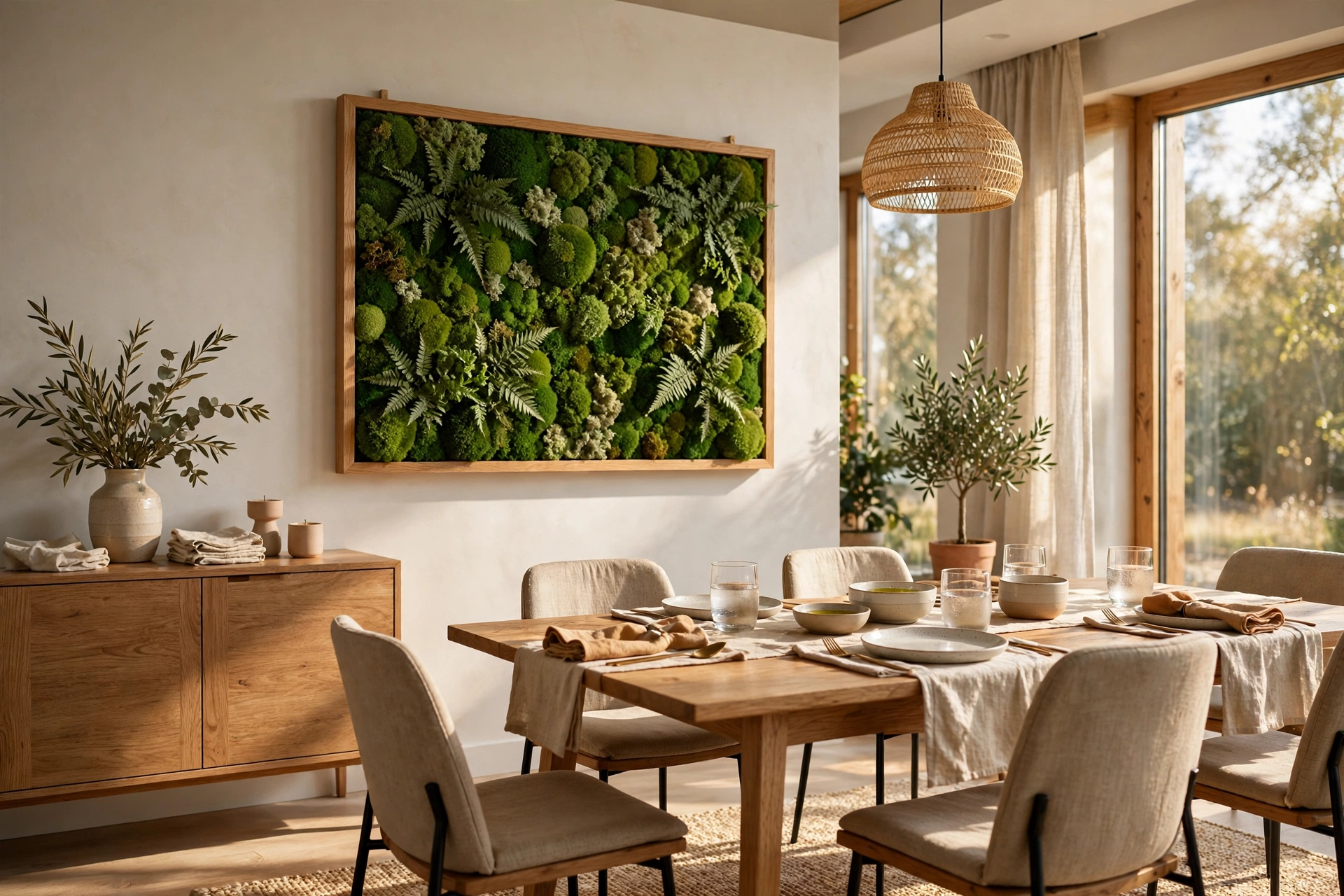
12. Try a Preserved Moss Wall Panel
If your dining room runs dark or your track record with plants is shaky, preserved moss is the answer. Moss wall panels — real moss that has been preserved with glycerin — need zero light, zero water, and zero care, yet they deliver the lush texture of a living wall. Hang a framed moss panel where a statement piece of art would go, and it adds color, softness, and acoustic dampening all at once. Keep preserved moss out of direct sun, which fades the color, and away from humidifiers, which can make it shed.
13. Add Dried Botanicals for Low-Maintenance Texture
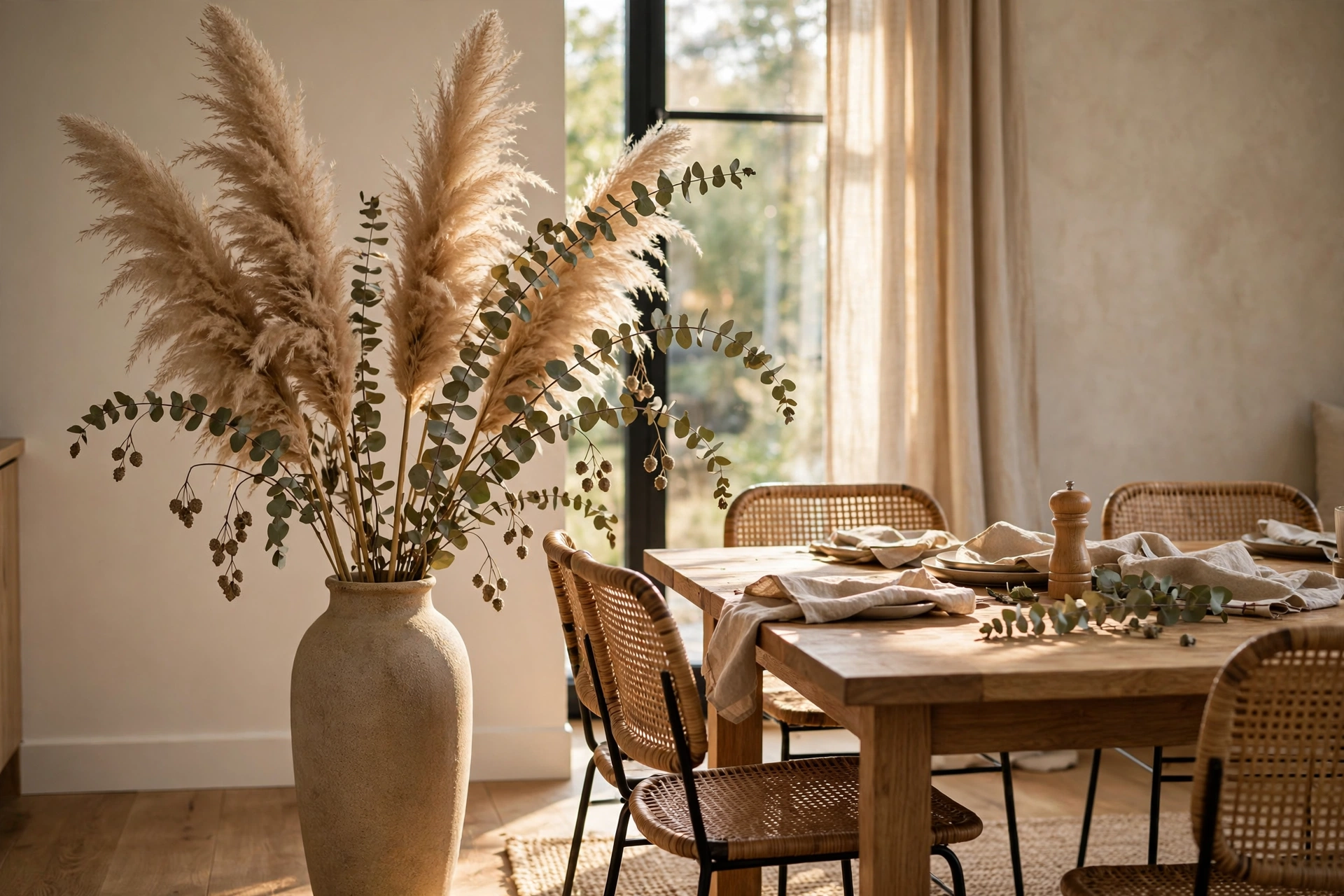
Dried flowers, grasses, and branches bring the organic warmth of plants with none of the watering schedule. A tall vase of pampas grass, dried eucalyptus, or curly willow branches makes a dramatic dining room accent that lasts for months. Dried botanicals suit the dining room especially well because they never drop petals onto the table or attract fruit flies near food. Keep them out of direct sun to prevent fading, and give them an occasional gentle shake outdoors to release dust.
14. Rotate Plants Seasonally for Fresh Energy
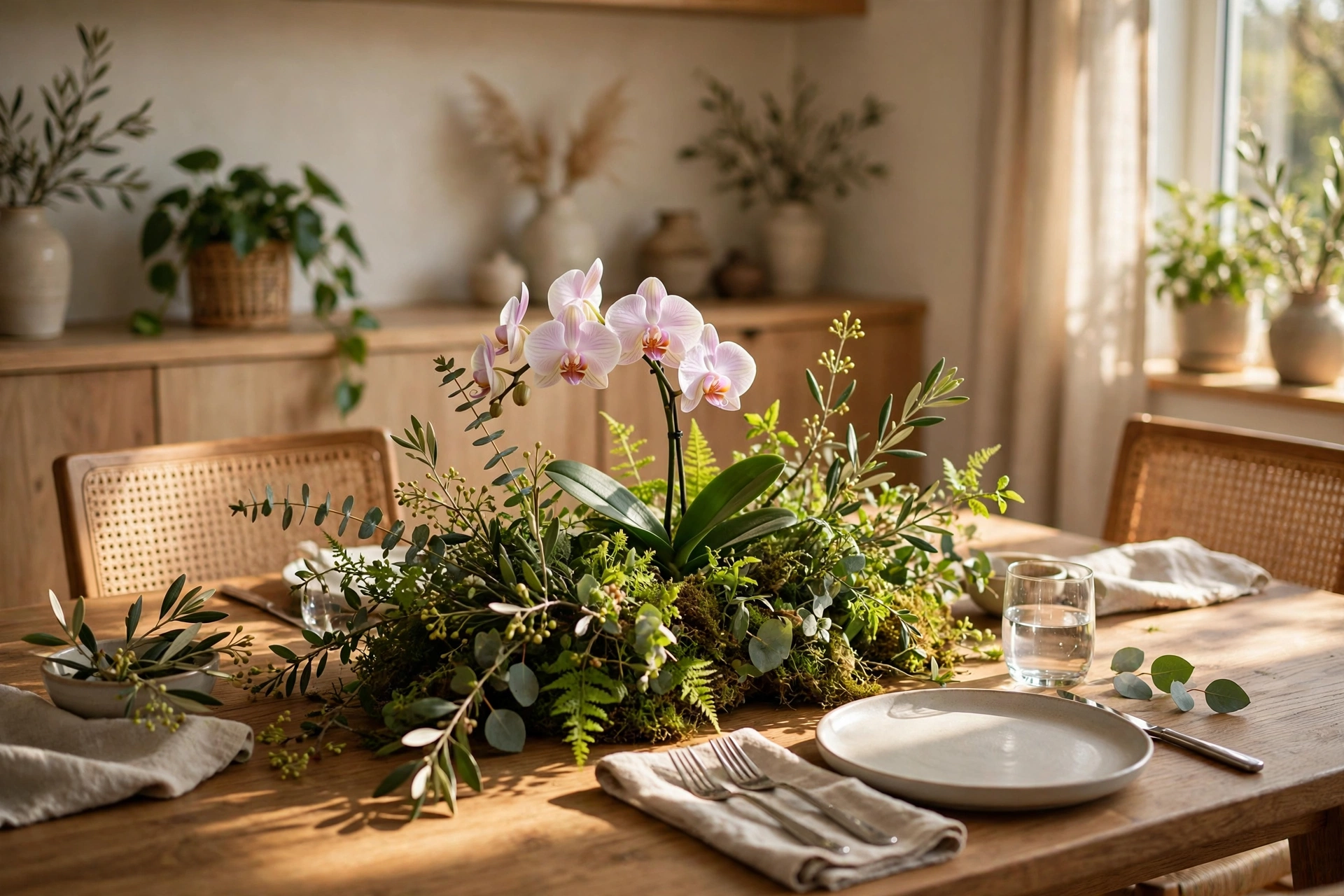
Treat your dining room greenery like a wardrobe and rotate it with the seasons. Bring flowering plants like orchids or African violets to the table in spring, move heat-loving succulents into the sunniest spots in summer, and add a small citrus tree or amaryllis for winter cheer. Rotating keeps the room feeling fresh and gives individual plants a rest in better conditions elsewhere in the house. The UGA Extension’s houseplant care guide is a solid reference for matching each plant to the right light and water routine as you shuffle them around. Keep a simple note on your phone of what lives where so nothing gets forgotten in a dark hallway.
15. Match Plants to Your Dining Room’s Light
The secret behind every thriving indoor jungle is boring but true: the right plant in the right light. Bright south-facing dining rooms can host sun-lovers like succulents, herbs, and citrus trees right by the window. East-facing rooms with gentle morning sun suit fiddle-leaf figs, monsteras, and palms. North-facing or windowless dining rooms need shade-tolerant heroes — snake plants, ZZ plants, pothos, and cast iron plants survive where little else will. If your dining room is truly dark, supplement with a full-spectrum grow bulb in an attractive pendant or picture light; your plants will not know the difference. For more room-by-room greenery inspiration, our living room plant decor ideas for lush greenery show how the same principles scale up to bigger spaces.
FAQ
What are the best low-light plants for a dining room?
Snake plants, ZZ plants, pothos, cast iron plants, and peace lilies all tolerate low light well. They will grow slowly in dim conditions but stay healthy, which is exactly what you want for a dark dining room corner or buffet wall.
How do I keep dining room plants alive with little natural light?
First, choose shade-tolerant species rather than fighting the room’s conditions. Second, rotate plants every few weeks, giving each one a brighter “vacation” elsewhere in the house. Third, consider a full-spectrum LED grow bulb in a regular lamp — modern grow lights look like ordinary bulbs and make a dramatic difference.
Are real or faux plants better for dining rooms?
Real plants win on texture, air quality, and the simple pleasure of tending something alive, and most dining rooms have enough light for easy species. Faux plants make sense in one case: a truly dark dining room where even a snake plant would struggle, or above cabinets where you will never water.
How do I protect my dining table from plant water damage?
Always use a waterproof saucer or tray under every plant, and choose pots with drainage holes so water does not pool at the roots. Water plants in the sink rather than at the table, let them drain fully, then return them. For centerpieces, set the arrangement on a cork-backed tray or a piece of felt.
What size plant works best in a dining room corner?
Go bigger than you think. A tree between five and seven feet tall fills a standard dining room corner without overwhelming it, and the height balances the table and chairs. Anything under three feet gets visually lost next to dining furniture.
Keep Exploring
Plants do their best work in dining rooms that already have good bones, so once the greenery is in place, look at the light itself. A large mirror opposite the window doubles the daylight your plants receive while making the whole room feel bigger — our dining room mirror ideas for light and space show exactly where to hang one for maximum glow. Start with one statement plant this weekend, learn its rhythms, and add more when you are ready. A dining room that grows with you is a dining room you will love for years.