
The entryway closet is the hardest-working storage in the house and usually the most chaotic — coats crammed on one rod, shoes avalanching on the floor, and a top shelf that hasn’t been seen since move-in day. Because it is the first storage guests encounter and the last thing you touch before leaving, a well-organized entry closet changes how the whole house feels. These entryway closet organization ideas work in real closets of real sizes, from generous walk-ins to the 24-inch-wide cupboards common in apartments.
Before buying a single bin, empty the closet completely and sort everything into keep, relocate, and donate piles. A closet can only hold what actually belongs in it — off-season coats, single gloves, and broken umbrellas are stealing space from the things you grab daily. Measure the interior width, depth, and rod height once it is empty; every idea below works better with real numbers than guesses.
1. Start With a Ruthless Declutter
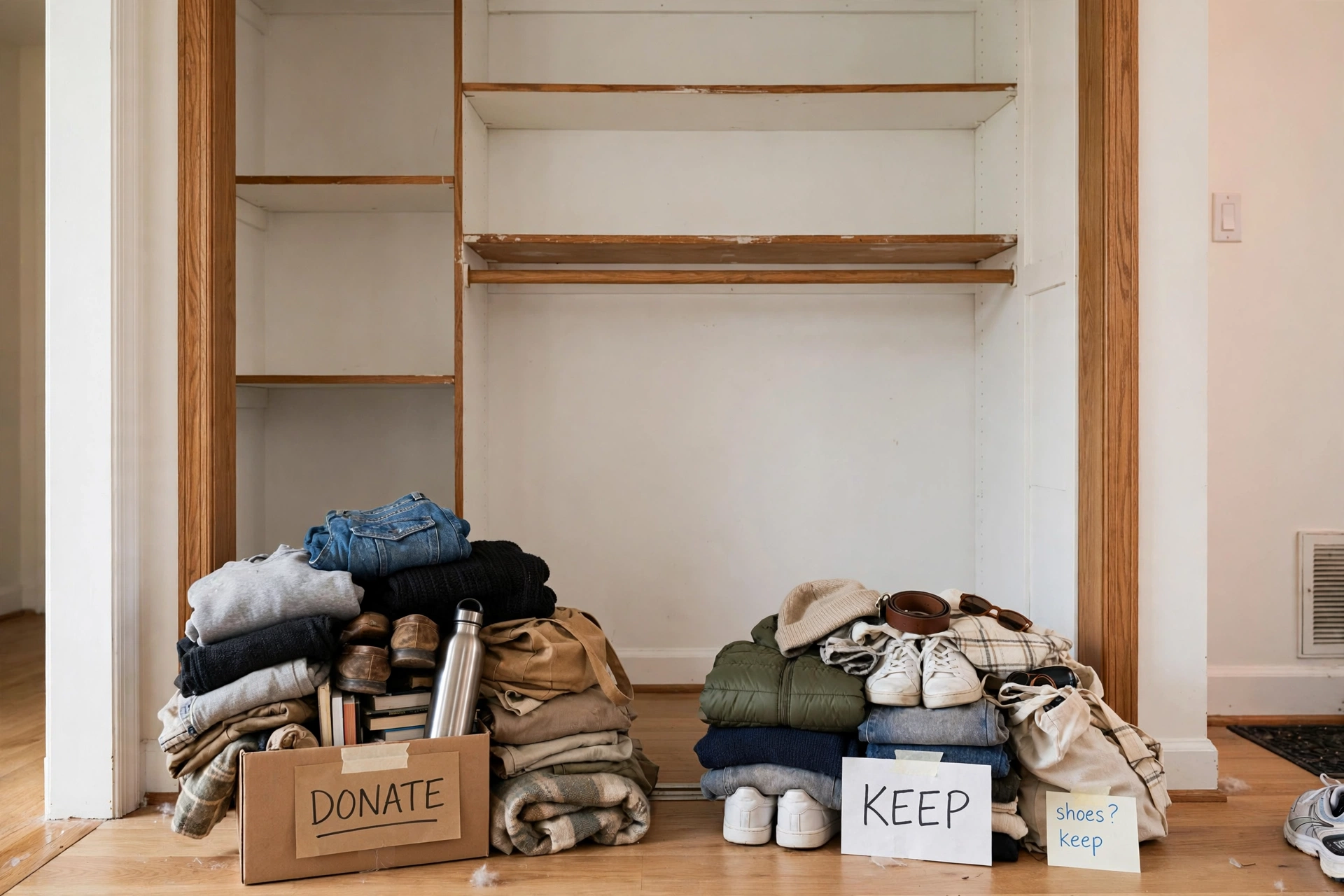
Organization systems fail when they are asked to store too much, so the declutter comes first and it has to be honest. Pull everything out and ask of each item: have I worn or used this in the last season? Coats that no longer fit, shoes that hurt, scarves from a phase you have outgrown — they go. Keep only current-season outerwear in the entry closet; everything else moves to bedroom closets or storage. The goal is breathing room: a closet at 70 percent capacity stays organized, while a closet at 110 percent defeats every system you install. This one afternoon of editing does more than any product ever will.
2. Install Double Hang Rods
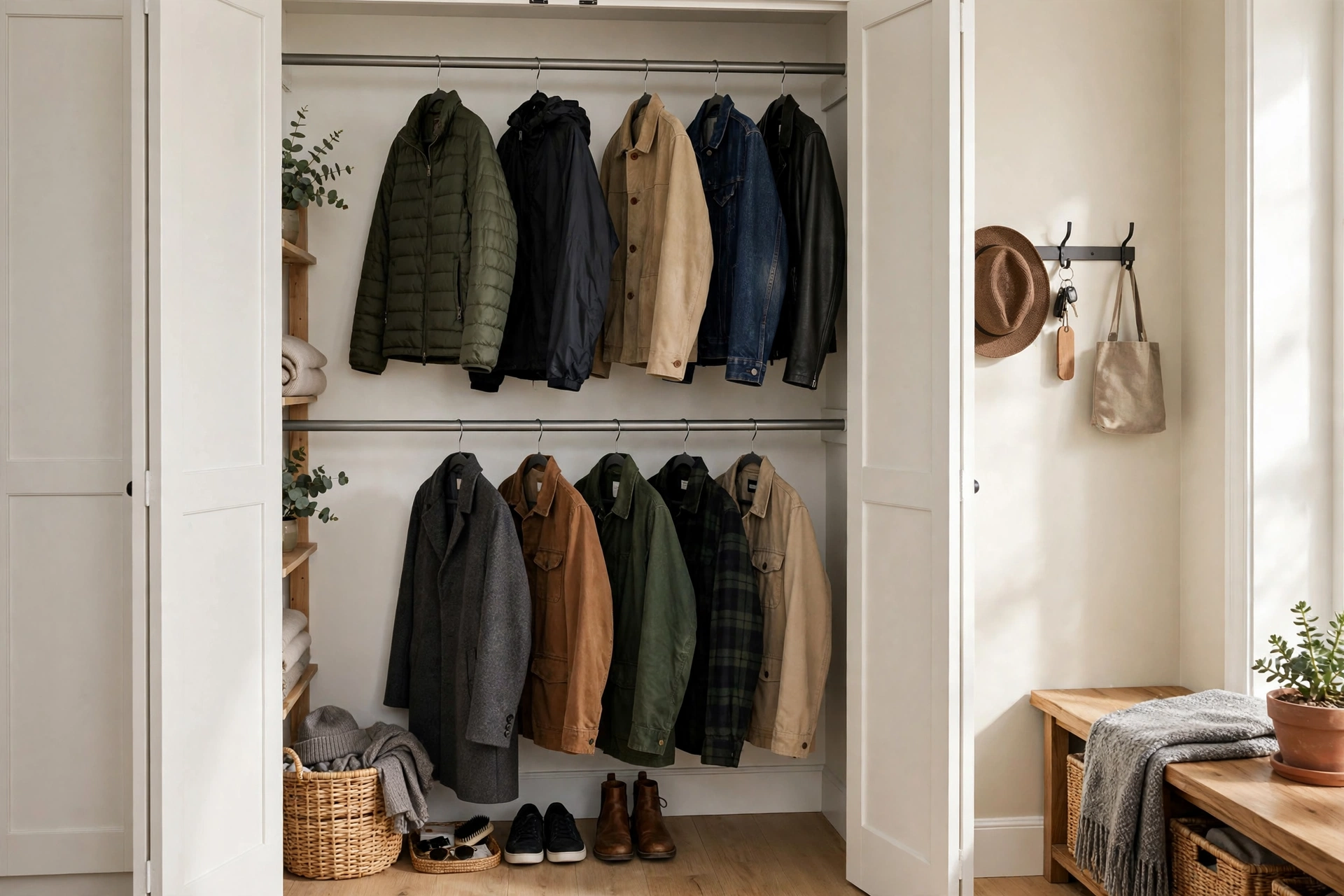
Most entry closets waste their vertical space with a single rod hung at 66 inches — fine for long coats, terrible for everything else. Adding a second rod at about 40 inches doubles hanging capacity instantly: jackets and shirts up top, kids’ coats or shorter jackets below. Tension rods work for light loads, but a properly mounted rod with brackets handles heavy winter coats without sagging. Keep one section single-height for long coats and dresses so nothing drags on the floor. This single change is the highest-impact upgrade for family entry closets, turning one crowded rod into two functional zones.
3. Add Shelf Dividers on the Top Shelf
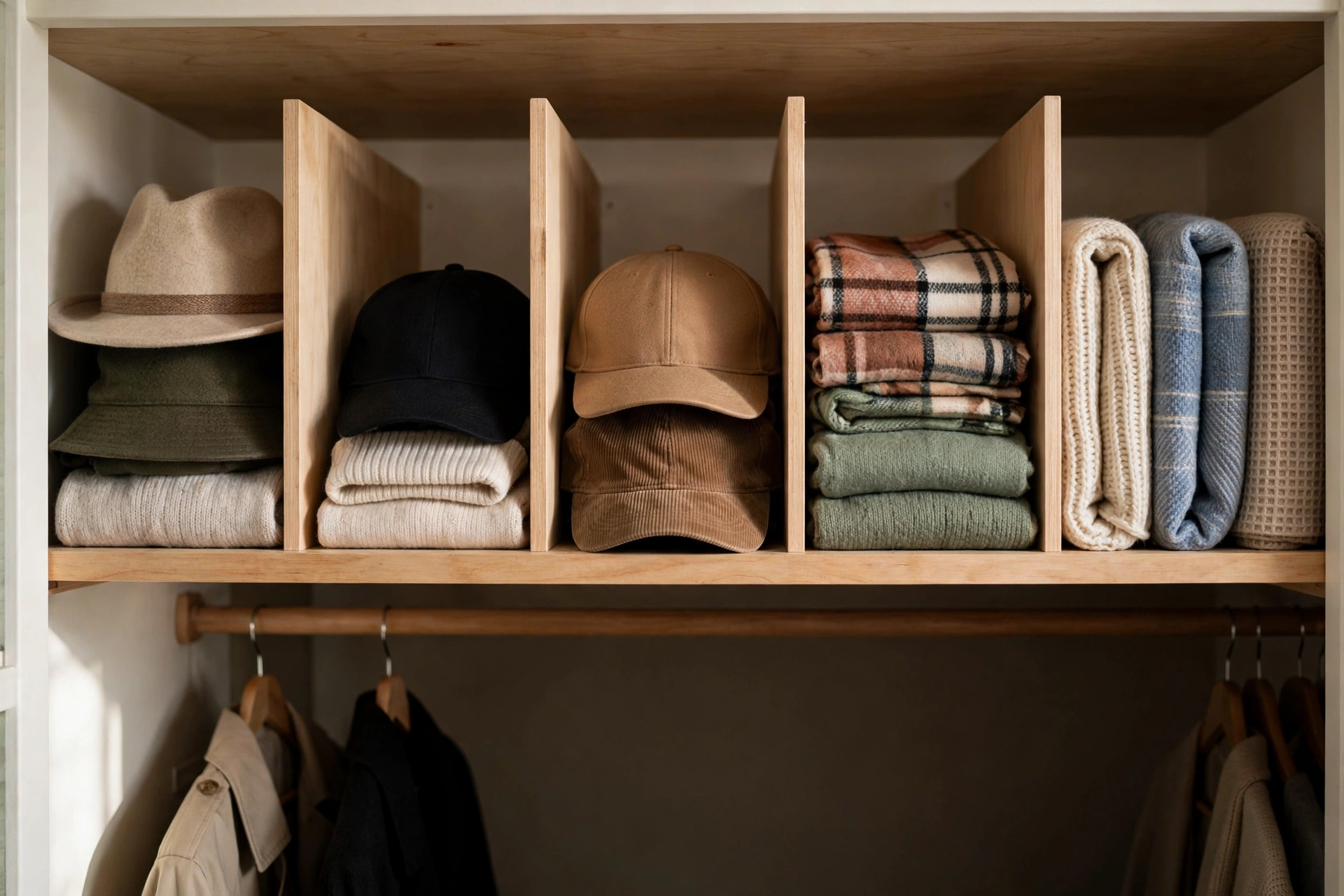
The top shelf of an entry closet is where folded things go to become piles — hats stack into towers, gloves migrate, scarves tangle. Shelf dividers, whether acrylic, wood, or wire, split that long shelf into cubbies that keep stacks vertical and separated. Assign each family member a section, or divide by category: hats, gloves, scarves, sunscreen. Dividers also make it obvious when a section is overflowing, which is the visual cue that triggers a purge. For wire shelving, clip-on dividers install in seconds; for wood shelves, simple bookend-style dividers do the job. Entryway shoe storage ideas that tame the clutter pair well with this — once the top shelf is sorted, the floor is next.
4. Use Slim Matching Hangers
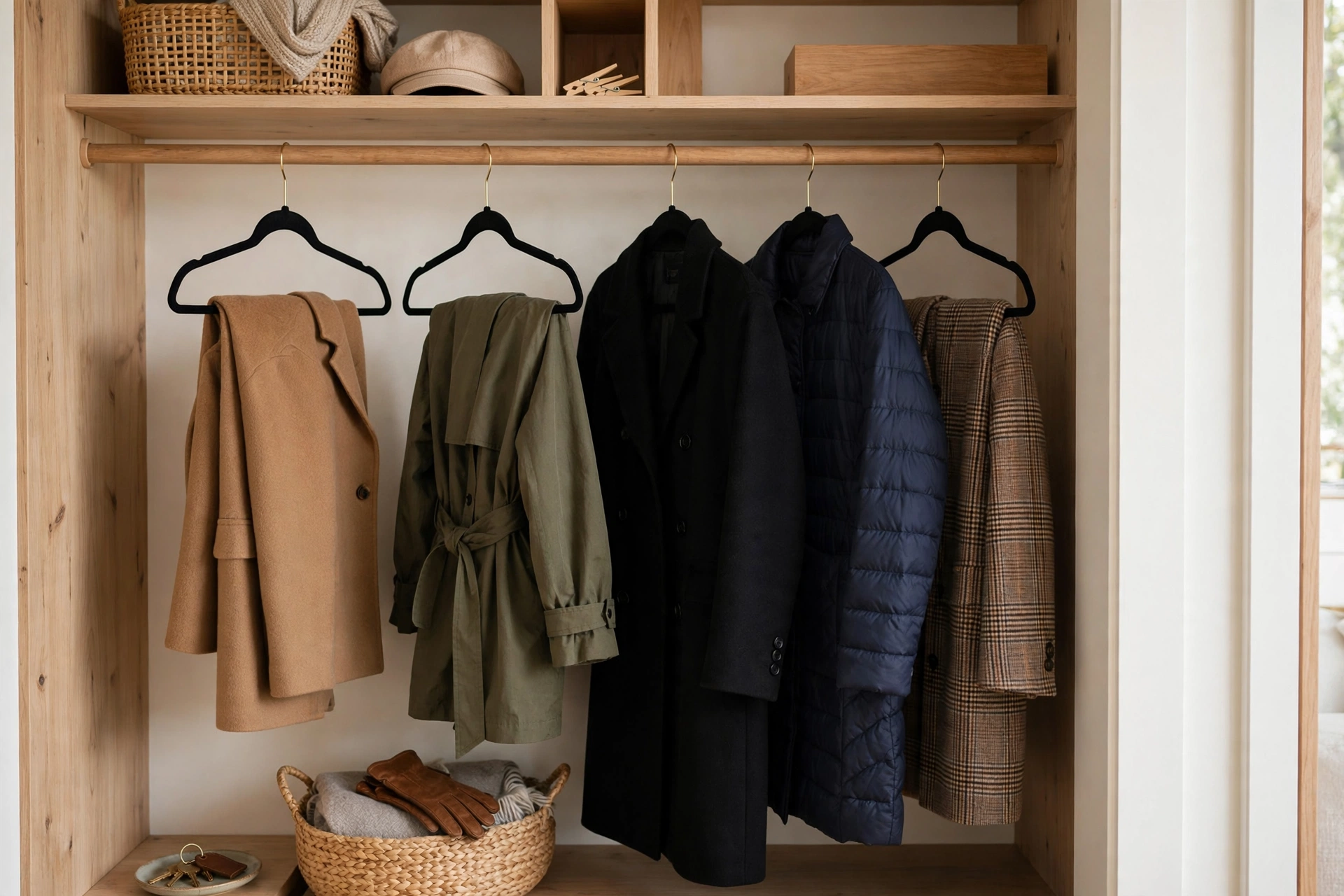
Bulky mismatched hangers eat inches and look chaotic even in a tidy closet. Switching to slim velvet or slim plastic hangers — all the same — instantly creates visual calm and reclaims surprising amounts of rod space, often 20 to 30 percent. Velvet hangers grip slippery jacket linings so coats stay put; just avoid hanging very heavy wet coats on the thinnest versions long-term. Standardize on one color and style for the whole closet. It sounds fussy, but uniform hangers are one of those small consistencies that make a closet feel designed rather than stuffed, and they make the “one in, one out” rule easier to see working.
5. Place Baskets for Gloves and Hats
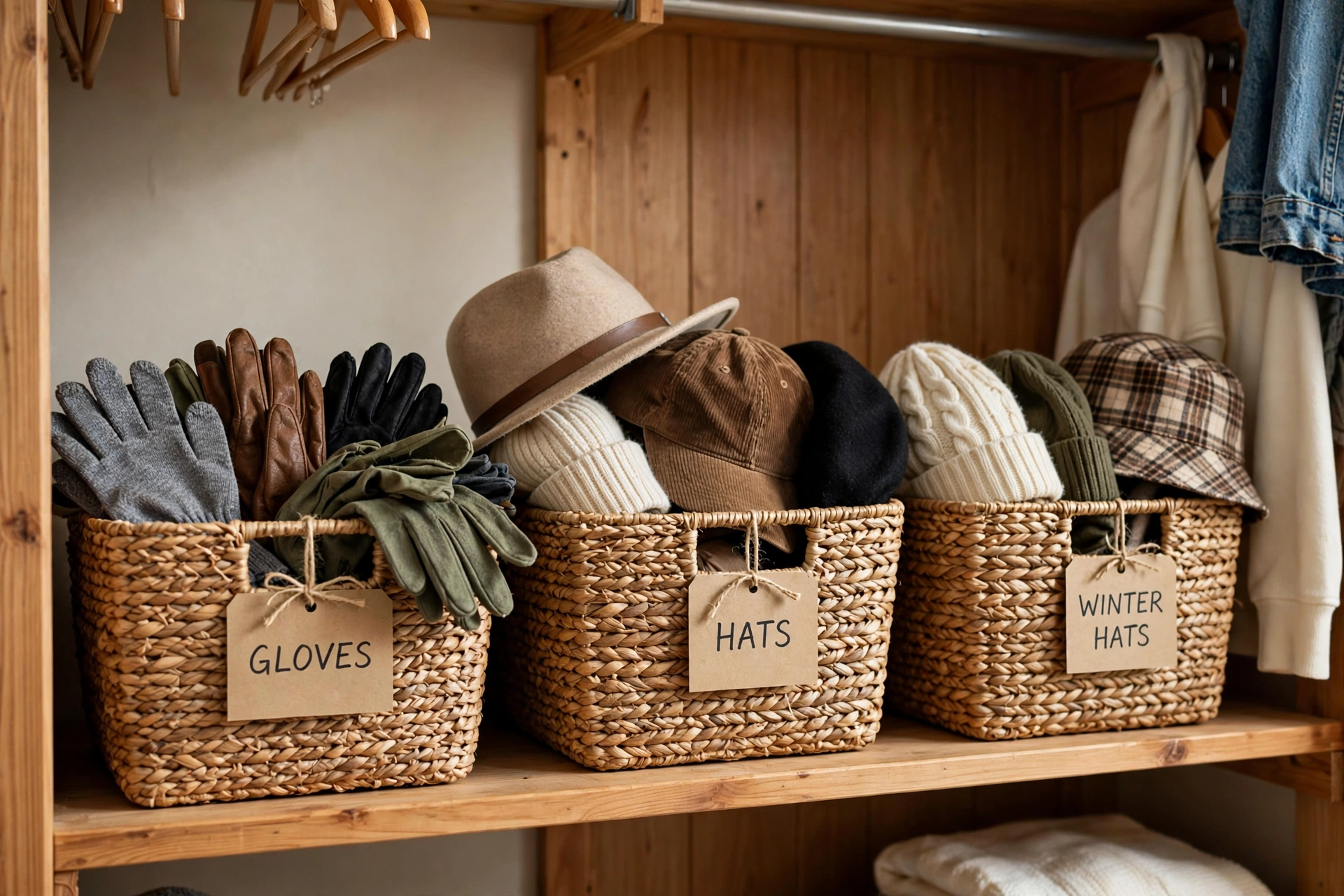
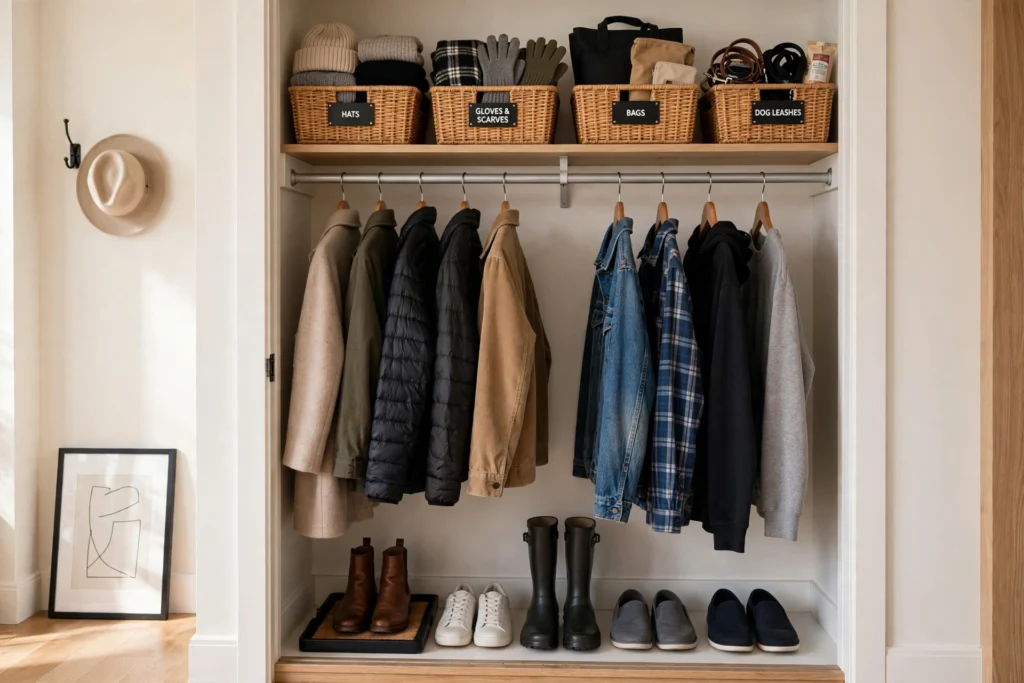
Small loose items — gloves, hats, scarves, dog leashes — are what turn an organized closet into a junk drawer with a door. A row of labeled baskets on the shelf corrals them by category or by person, and the basket format is forgiving: toss things in, and the closet still looks tidy. Choose baskets that fit your shelf depth exactly so no space is wasted, and pick styles with handles for easy pull-down. Woven baskets warm up the closet; clear or wire bins let you see contents. Label each basket — even just with a chalk tag — so everyone in the household knows the system and, more importantly, maintains it.
6. Add an Over-the-Door Organizer
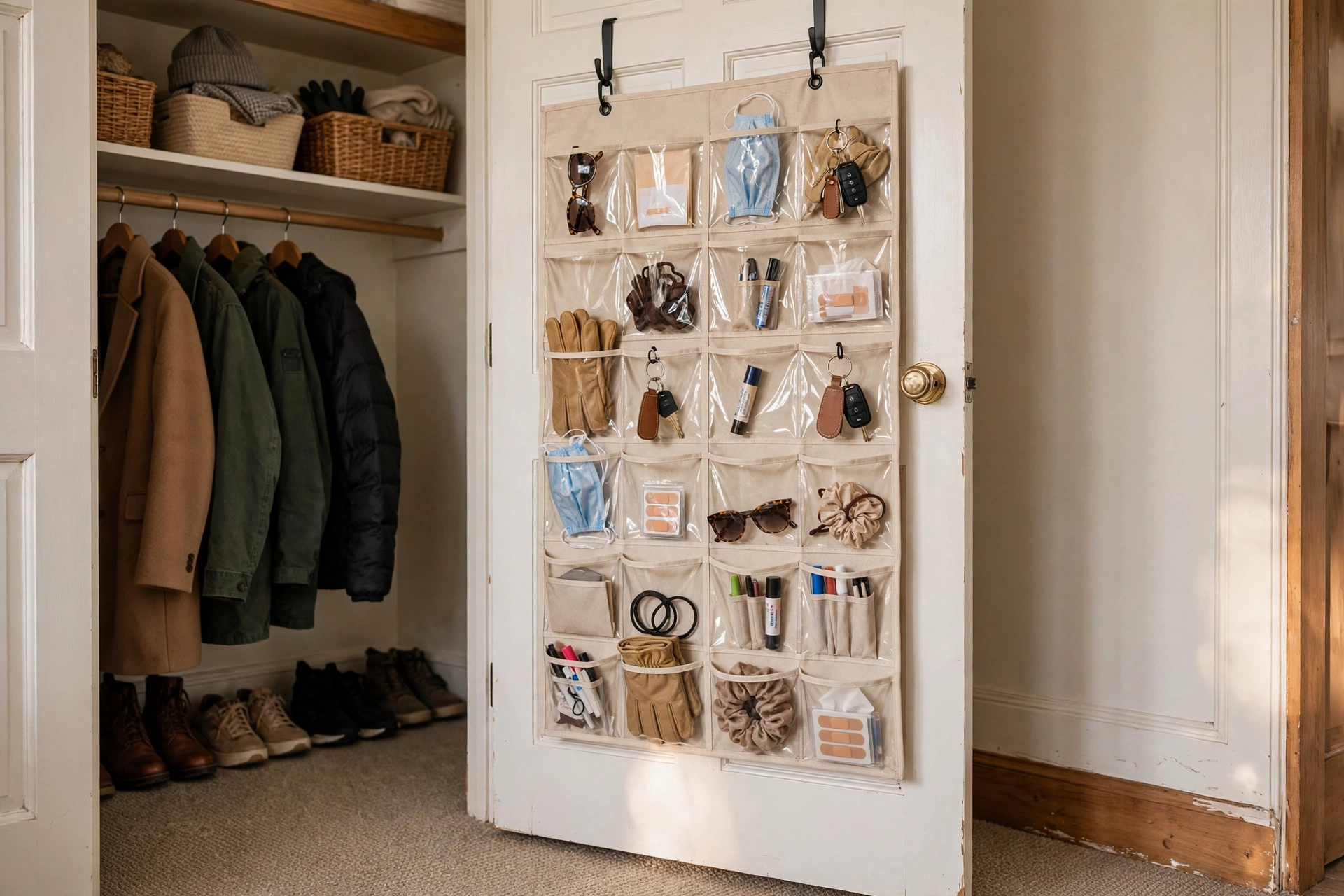
The back of the closet door is free real estate most people ignore. An over-the-door organizer with clear pockets or hooks adds a full column of storage without touching a single inch of shelf or rod space. Use it for the small things that otherwise scatter: sunglasses, sunscreen, reusable bags, pet waste bags, spare keys, shoe polish. Clear pockets beat fabric ones because you can see what is inside — the whole point is grab-and-go. Make sure the organizer clears the door frame when closed; measure the gap before buying. In narrow closets where every inch matters, this is the easiest capacity win available.
7. Create a Shoe Zone at the Bottom
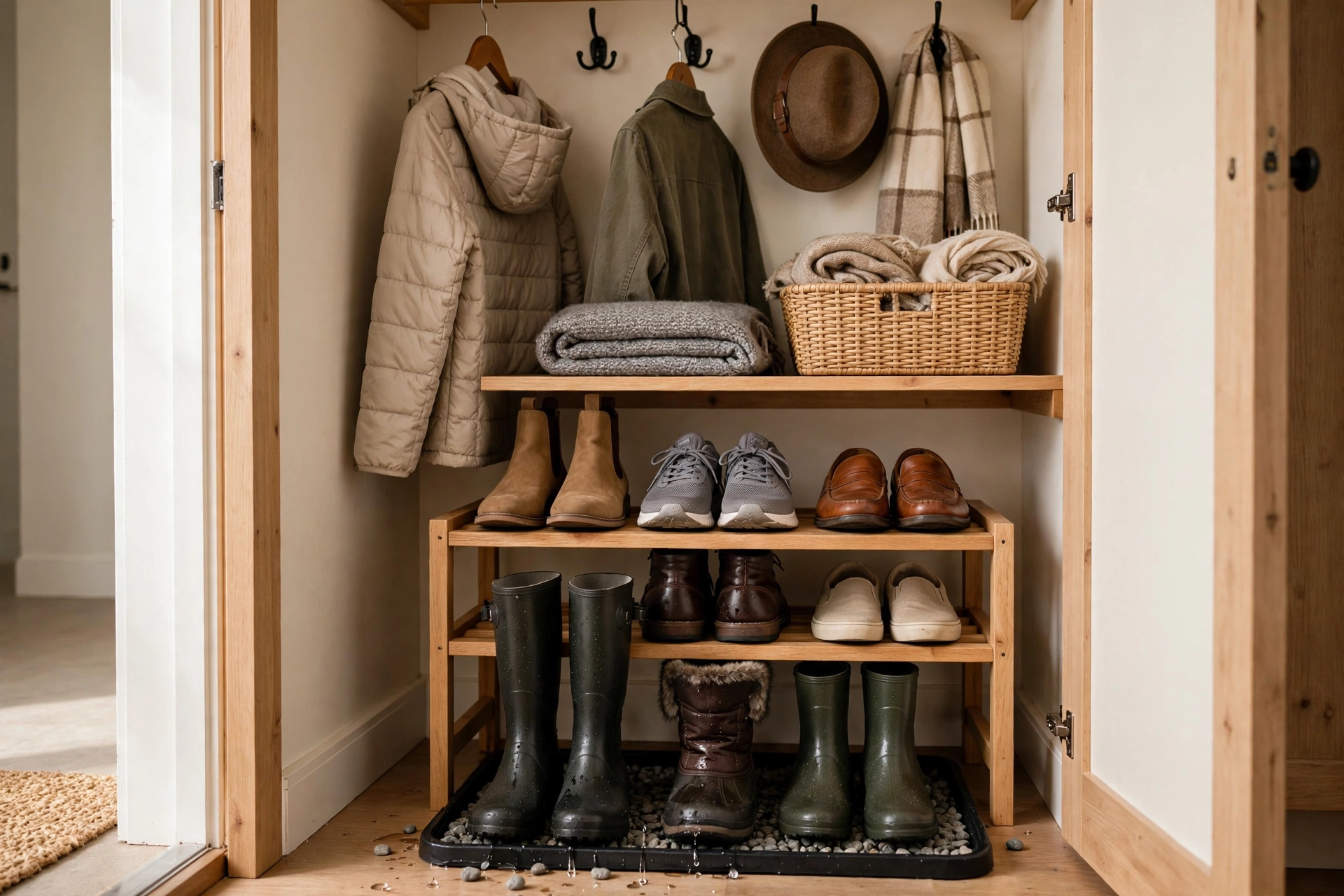
Shoes are the entry closet’s natural disaster — kicked off, piled up, mating pairs separated forever. Give them a defined zone: a low shoe rack, a boot tray, or a row of clear stackable boxes along the closet floor. Limit the closet’s shoe population to current-season, currently-worn pairs — two or three per person — and relocate the rest to bedroom closets. A boot tray with raised edges contains wet-weather mess and protects the floor. Tilted shelves or angled racks make pairs visible at a glance, which means shoes actually get put back. The rule is simple: if a pair lives here, it gets worn weekly.
8. Label Everything With Chalk Tags
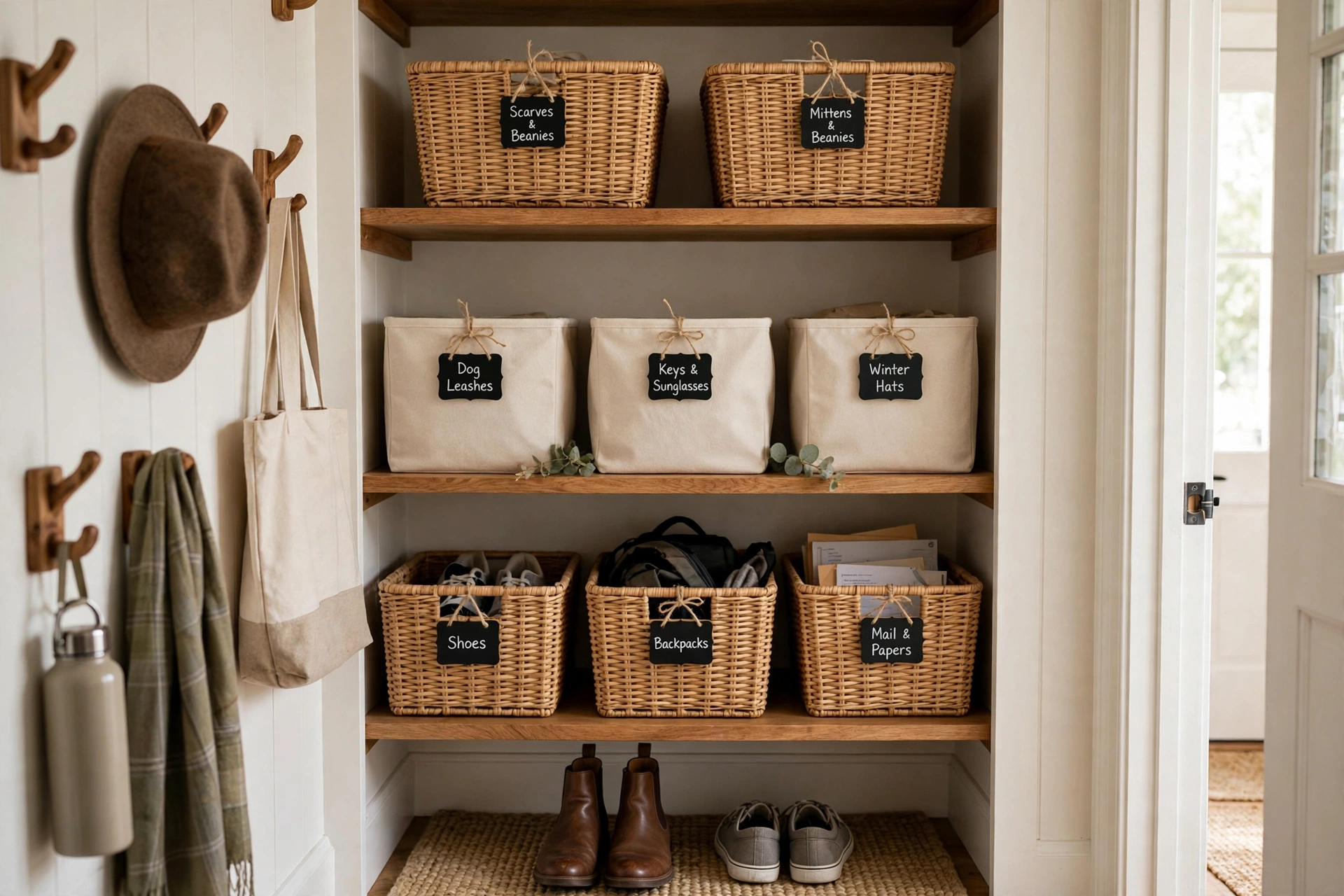
Labels are what turn a system into a habit the whole household follows. Chalkboard tags tied to baskets, small adhesive labels on bins, or a label maker on shelves — pick one style and use it everywhere. Labels remove the daily micro-decision of “where does this go” and, crucially, they give kids and guests permission to put things in the right spot. They also expose system failures: if the “scarves” basket keeps collecting gloves, the system needs adjusting, not the people. Re-label seasonally as contents change. A closet where everything is labeled looks intentional even on its messiest day.
9. Add Hooks Along the Side Walls
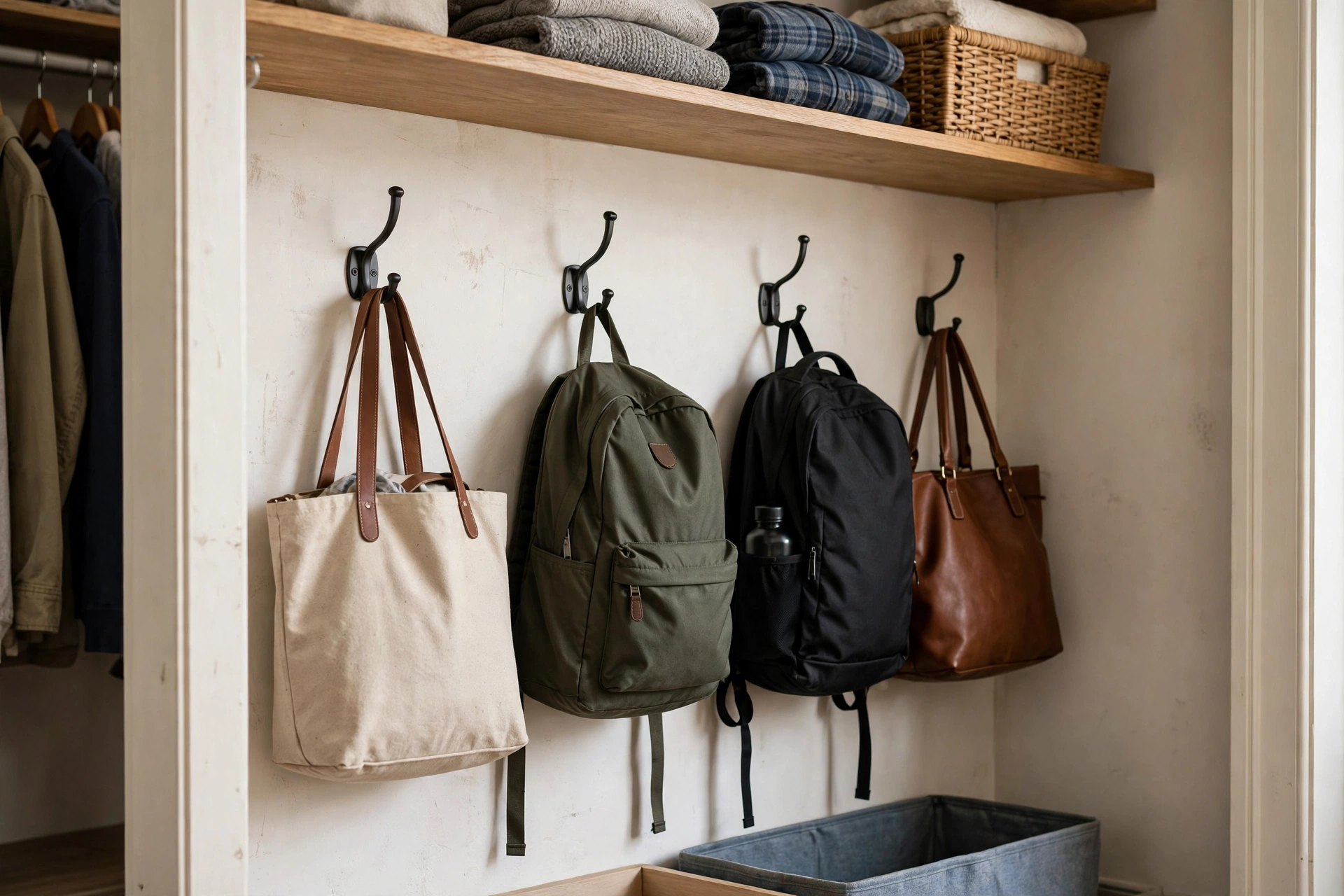
The side walls of an entry closet are usually bare drywall doing nothing — a row of sturdy hooks turns them into prime storage for bags, backpacks, umbrellas, and tomorrow’s outfit. Mount hooks at two heights: adult height on one side, kid height on the other, so children can hang their own things (the single best predictor of a tidy entry). Use hooks rated for real weight — backpacks and wet coats are heavy — and anchor into studs where possible. Keep the hooks near the door for grab-and-go items and reserve the rod for coats. Five minutes with a drill, and the closet gains a whole new dimension.
10. Use Clear Bins for Seasonal Gear
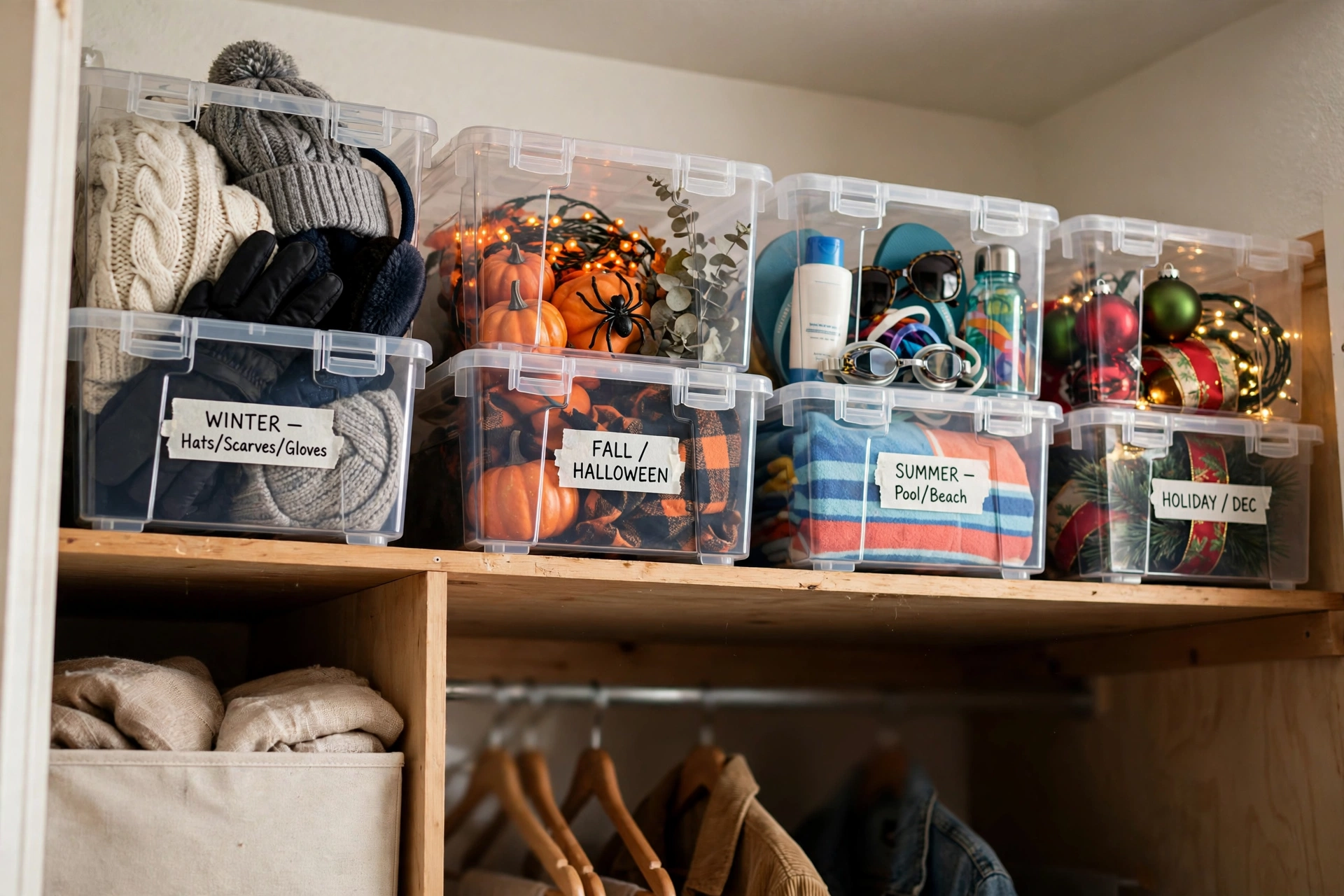
Off-season gear — winter gloves in July, sunscreen in January — still needs a home, just not a prominent one. Clear stackable bins on the highest shelf or the closet’s top keep seasonal items visible but out of the daily rotation. The transparency matters: opaque bins become mystery boxes that never get opened, while clear ones remind you what is inside when the season turns. Label each bin by season and do the swap twice a year — it takes twenty minutes and keeps the closet’s working inventory lean. Store the bins you are not using on the very top shelf, where daily items never need to reach.
11. Mount a Small Shelf for Keys and Mail
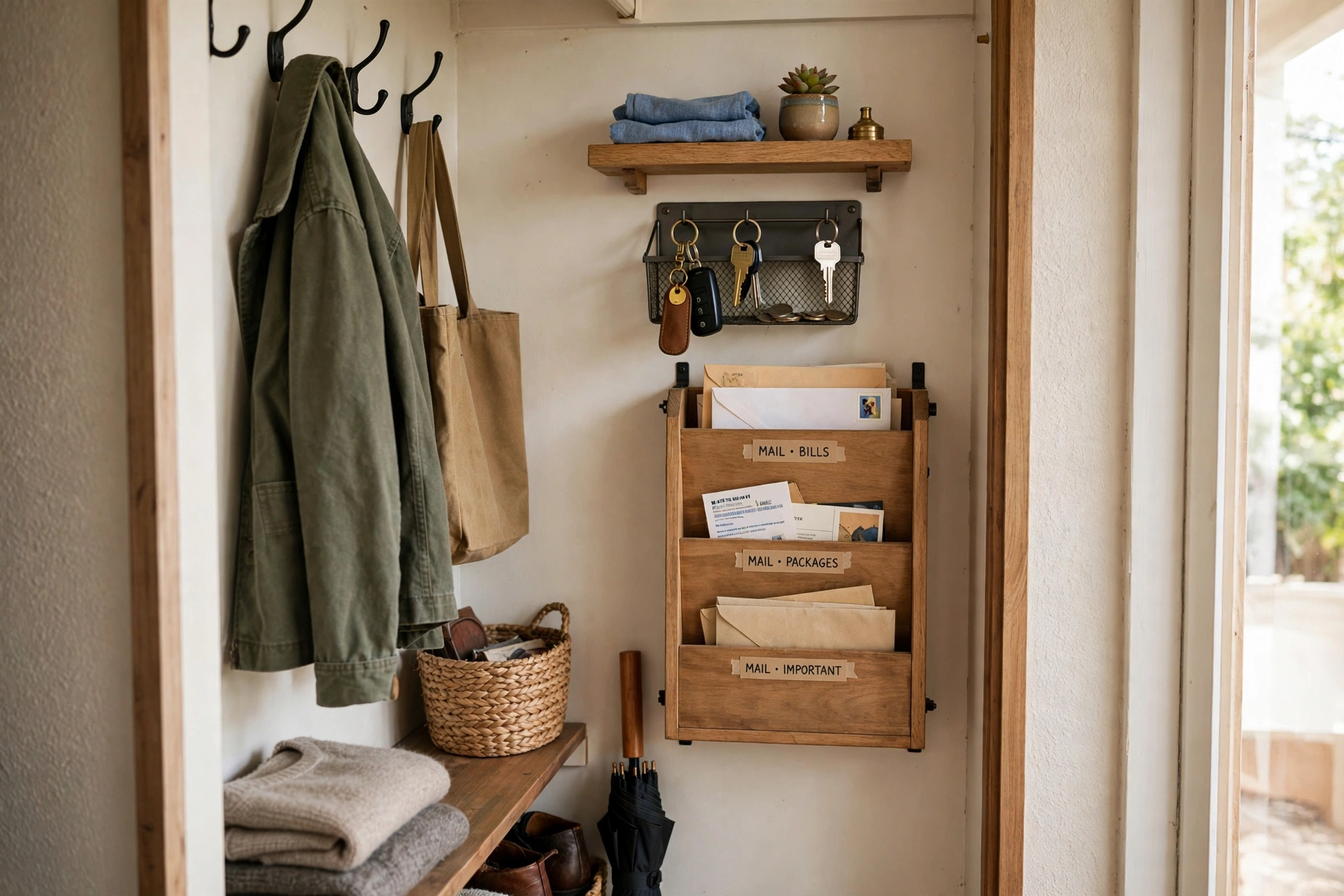
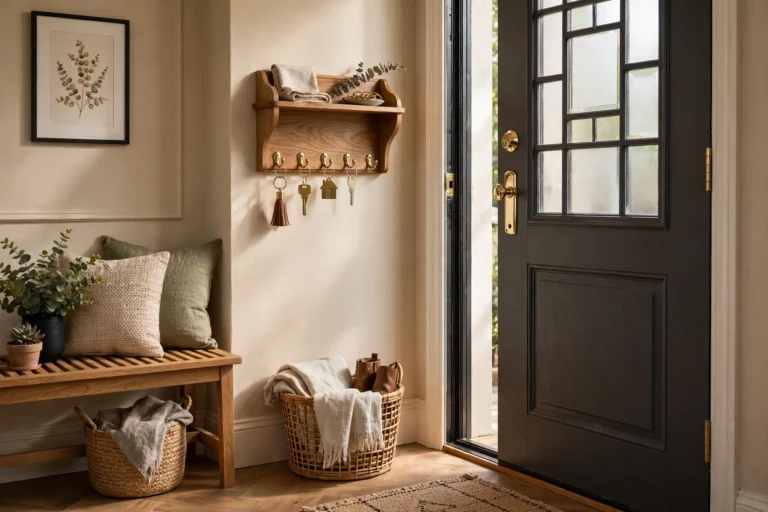
Keys and mail are the two things that cause morning panic, and the entry closet is a natural home for both — if they have a designated spot. Mount a small shelf or a wall organizer just inside the closet door at chest height: a tray or bowl for keys, a vertical sorter for mail. The closet-door location keeps them hidden from guests but exactly where you need them on the way out. This works especially well in homes without a console table in the entry. Make it a household rule: keys live in the tray, full stop. Entryway coat rack ideas that keep clutter in check offer alternatives if you prefer keys on open hooks instead.
12. Add a Slim Rolling Cart
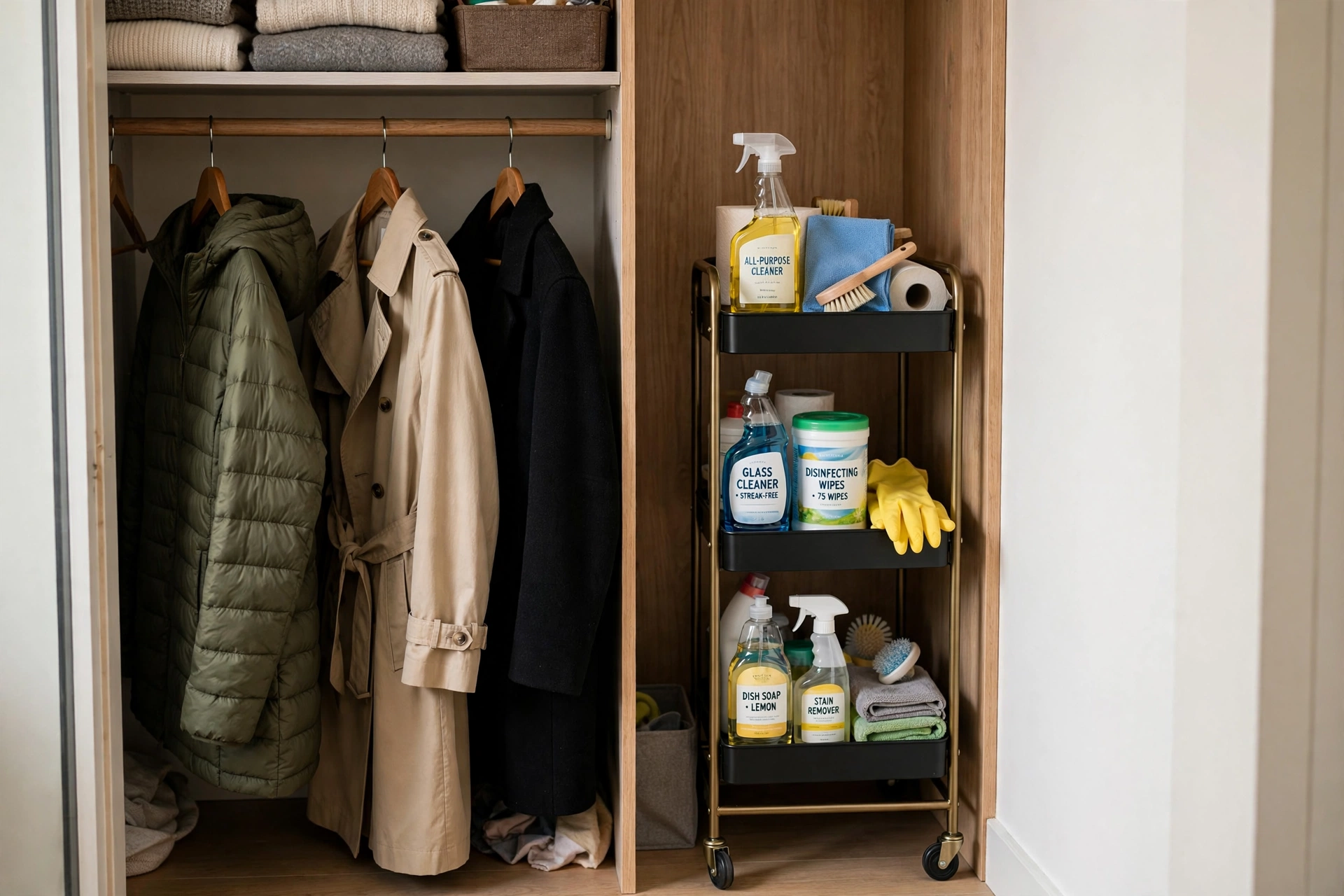
A narrow rolling cart — the kind sold for kitchen gaps — slides into the dead space beside the hanging coats and adds three or four tiers of storage where there was none. Use it for cleaning supplies, shoe care, pet gear, or the sunscreen-and-bug-spray station. The rolling format means it pulls out for full access and tucks away invisibly. Measure the gap first; carts come in widths from 6 inches up. This is a renter-friendly move too — no mounting, no holes, just roll it in. In deep closets, a cart at the back holds the rarely-needed overflow without blocking daily items.
13. Try a Tension Rod for Scarves and Spray Bottles
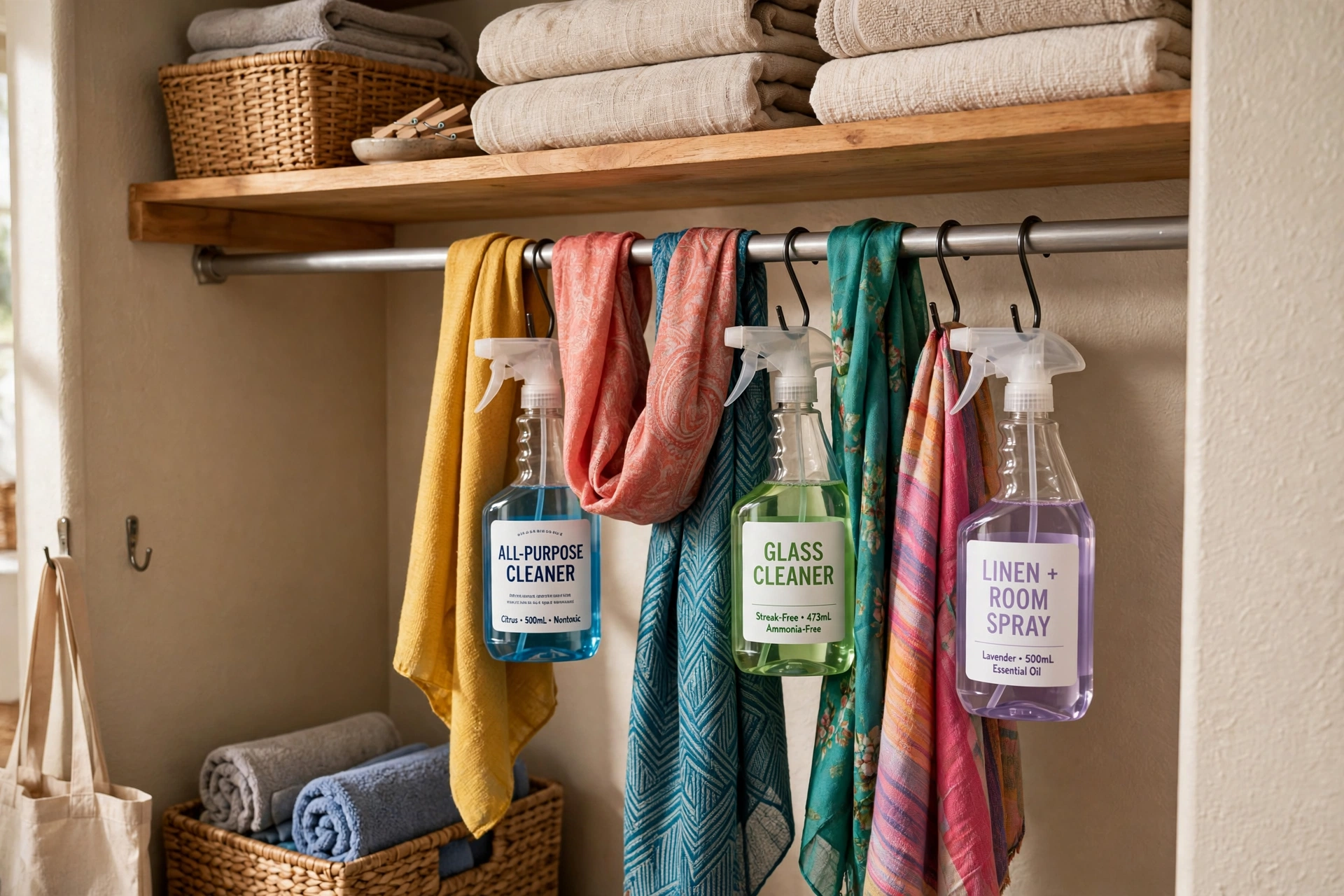
Tension rods are the closet organizer’s secret weapon for awkward gaps. Mount one horizontally across a narrow section to hang scarves, belts, and ties where they stay visible and untangled. Mount one vertically in a corner to create a tower for spray bottles — cleaning sprays, wrinkle releasers, shoe deodorizers — that otherwise clutter the floor. They install in seconds, cost almost nothing, and leave no holes, which makes them perfect for renters. The trick is buying the right length: measure the span and choose a rod that tensions firmly without bowing. Small fix, daily payoff.
14. Install a Motion-Sensor Light
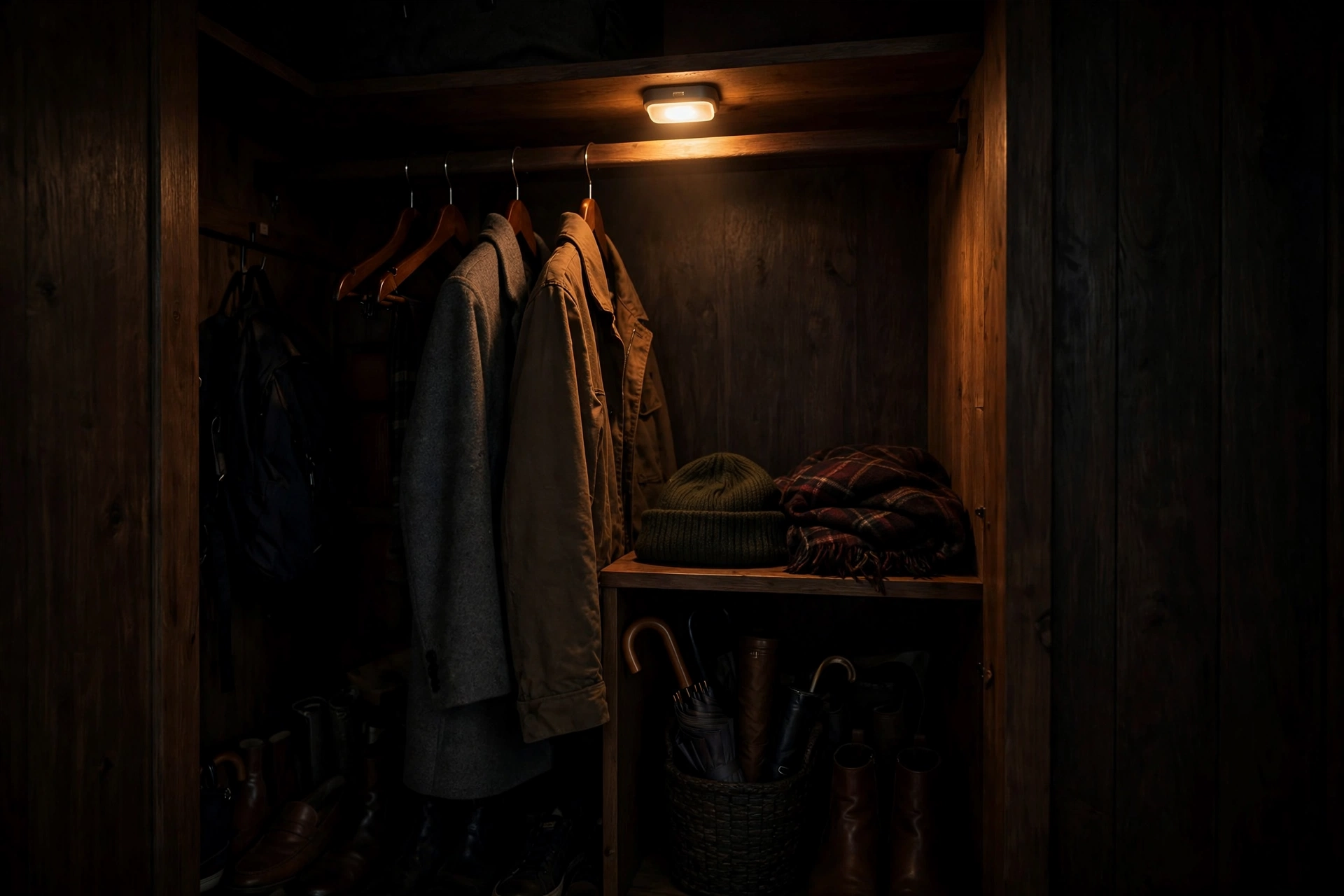
Entry closets are often dark caves, and you cannot organize what you cannot see. A battery-powered motion-sensor LED light — puck lights or a stick-on strip — turns on when the door opens and off when it closes, no wiring needed. Good light means you actually see the gloves in the back, notice the shoe that fell behind the rack, and spot the clutter before it compounds. Place one light high for the shelves and, in deep closets, a second low for the shoe zone. Rechargeable models beat disposable-battery ones over time. It is a ten-dollar upgrade that makes the whole system usable.
15. Keep a One-In-One-Out Rule
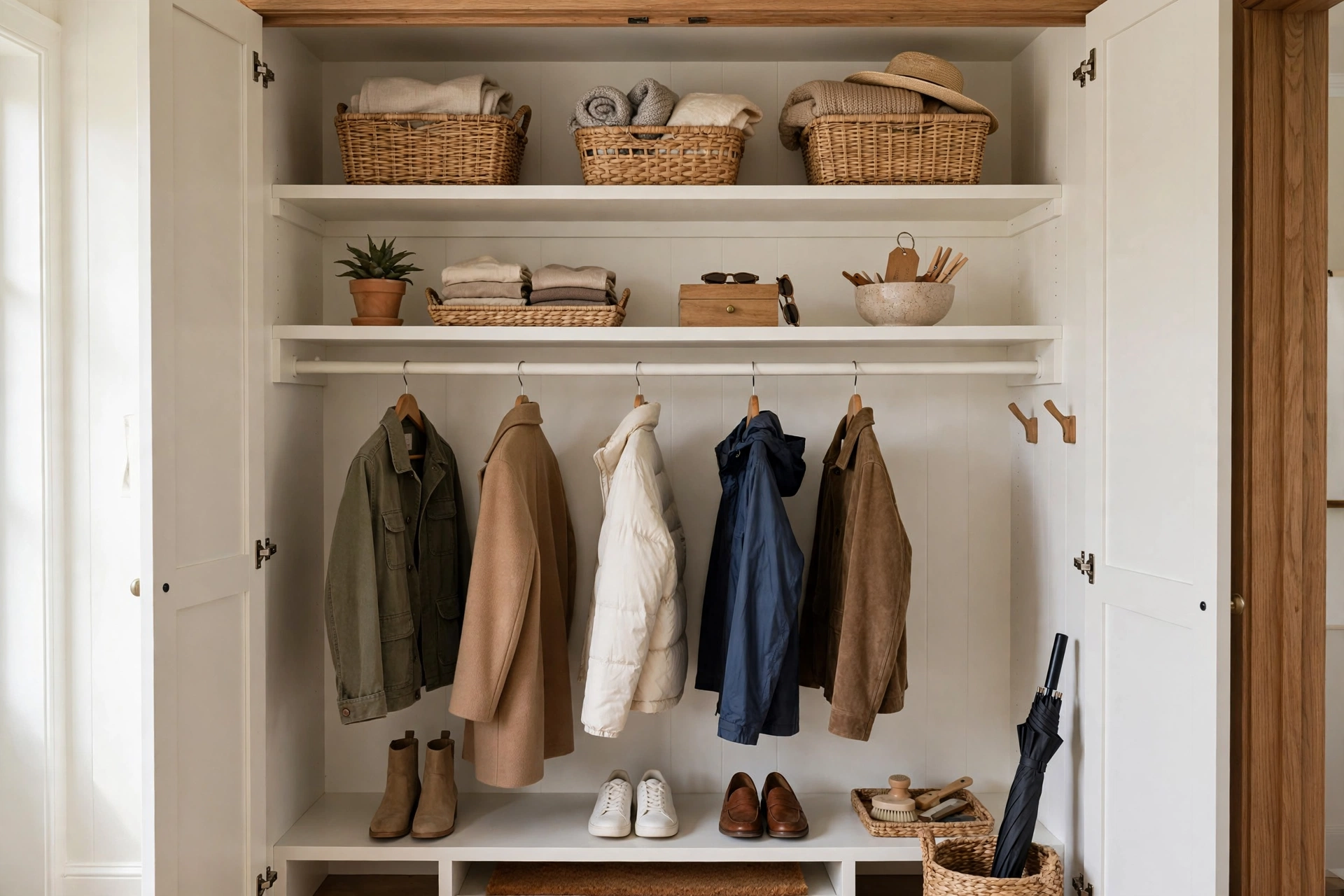
The best organization system in the world fails without a maintenance rule, and one-in-one-out is the simplest that works: every new coat, pair of shoes, or bag that enters the closet means one leaves — donated, relocated, or retired. Post the rule inside the door if you need to. Pair it with a seasonal ten-minute reset: first weekend of each season, pull everything out, wipe the shelves, and re-decide what earns its spot. Spruce’s under-stair storage ideas show how the same discipline applies to every awkward storage nook in the entry zone. A closet maintained this way never needs another full overhaul — it just stays working.
FAQ
How do you organize a very small entryway closet?
Prioritize ruthlessly: current-season coats only, two to three pairs of shoes per person, and small items in baskets. Use every surface — double rods, over-door organizer, side-wall hooks, top-shelf dividers. Slim hangers and clear bins maximize what little space exists. If it still overflows, the answer is fewer items, not more products.
What should you keep in an entryway closet?
Daily outerwear for the current season, shoes you wear weekly, and grab-and-go essentials: keys, sunglasses, reusable bags, pet leashes, sunscreen. Relocate off-season coats, rarely worn shoes, and anything that doesn’t serve the coming-and-going routine. The entry closet is a launch pad, not a warehouse.
How do you organize shoes in a small entry closet?
Limit to current-season pairs, give them a defined zone with a rack or boot tray, and use angled or tilted shelving so pairs stay visible. Clear stackable boxes work for less-worn pairs on upper shelves. One pair in, one pair out keeps the population stable.
Should entry closet doors be open or closed?
Closed, in most cases — it hides the inevitable daily mess and makes the entry look calm. If the closet is beautifully organized and you want the grab-and-go convenience, removing the door or using a curtain works, but be honest about your household’s tidiness level before committing to the open look.
How often should you declutter the entryway closet?
Do a quick ten-minute reset at each season change — swap seasonal gear, purge what wasn’t worn, wipe shelves. A full declutter once a year keeps the inventory honest. The seasonal rhythm prevents the slow creep that turns organized closets back into chaos.
Keep Exploring
An organized entry closet is really a system of small decisions — every item has a home, every home is labeled, and the inventory stays lean through the seasons. Extend the same thinking to the open areas of your entry with our mudroom design ideas that make every entryway work harder, where hooks, benches, and cubbies handle everything the closet can’t.