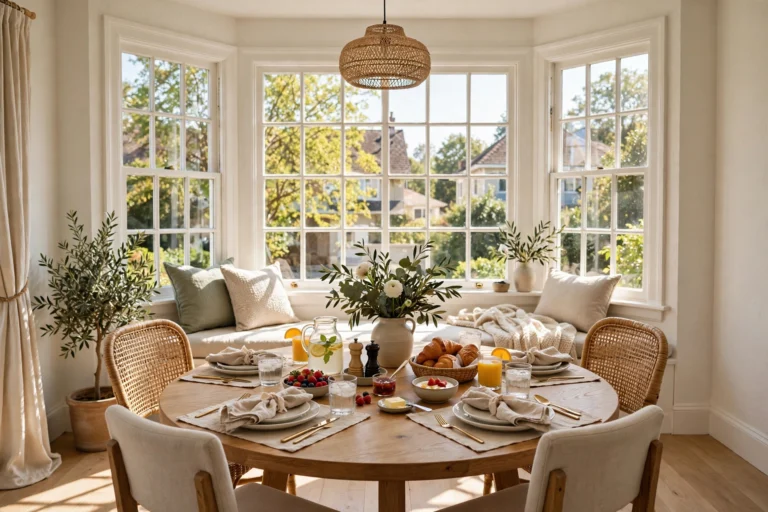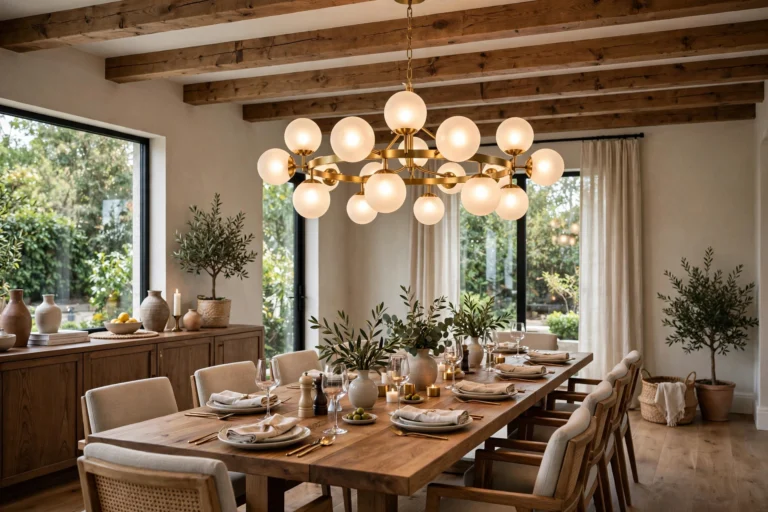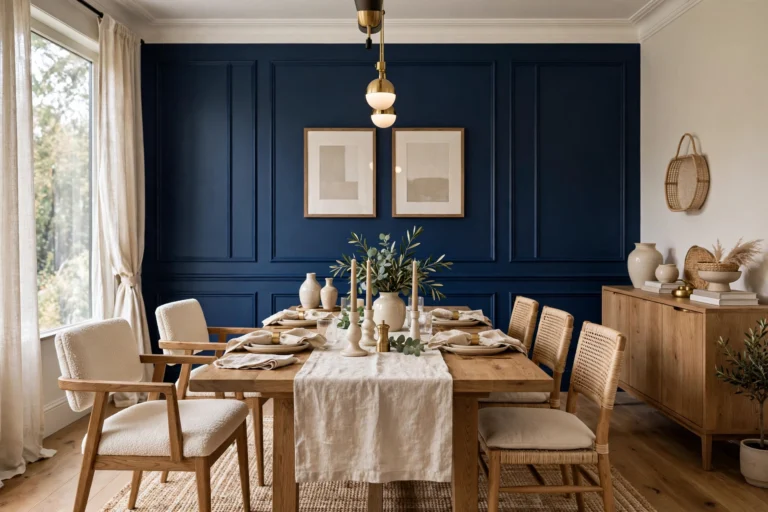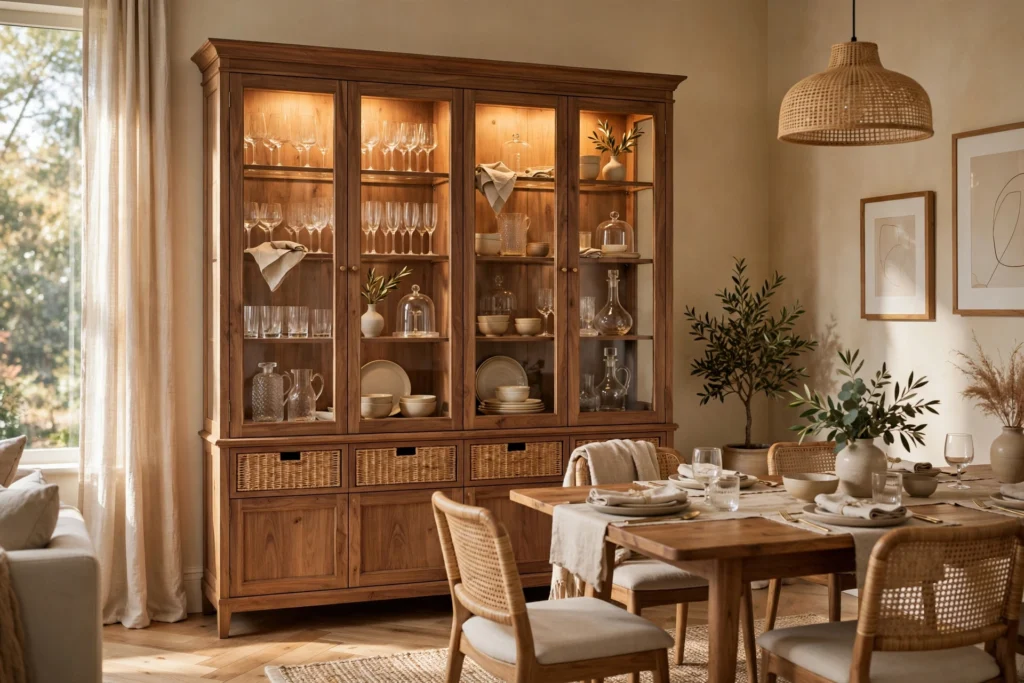

The china cabinet is having a well-deserved comeback. Once dismissed as grandmother’s furniture, the tall glass-front cabinet is now prized for exactly what modern dining rooms need: beautiful, dust-free display space that keeps everyday dishes and special pieces equally accessible. These dining room china cabinet ideas show how to choose, style, and even repurpose one for displays worth showing off.
A china cabinet differs from a buffet or sideboard in one key way — height and glass. Where a buffet is a low closed sideboard (see these dining room buffet decor ideas for elegant storage for its styling), the china cabinet rises tall with glass doors made for showing, not hiding. Style it like a curated shelf, not a stuffed closet, and it becomes the dining room’s jewelry box.
1. Curate by Color, Not by Set
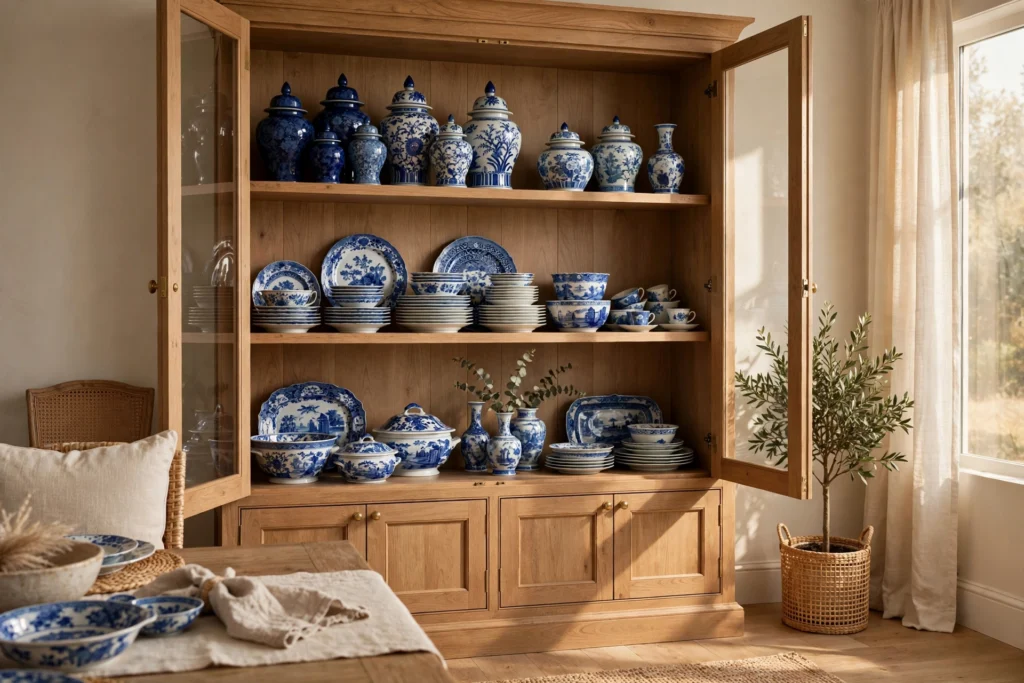
Forget displaying the entire 12-place setting in rigid rows — the modern china cabinet is curated, not inventoried. Group pieces by color family instead: all the blue-and-white porcelain together, the amber glassware in its own drift, cream ironstone in a calm band. Color-blocking makes even mismatched thrifted pieces look intentional and designer-chosen. Leave breathing room between groups; white space is what separates a display from storage. Pull one accent color from the cabinet into the room — a table runner, a cushion — and the whole dining room feels connected.
2. Mix Glassware With Books
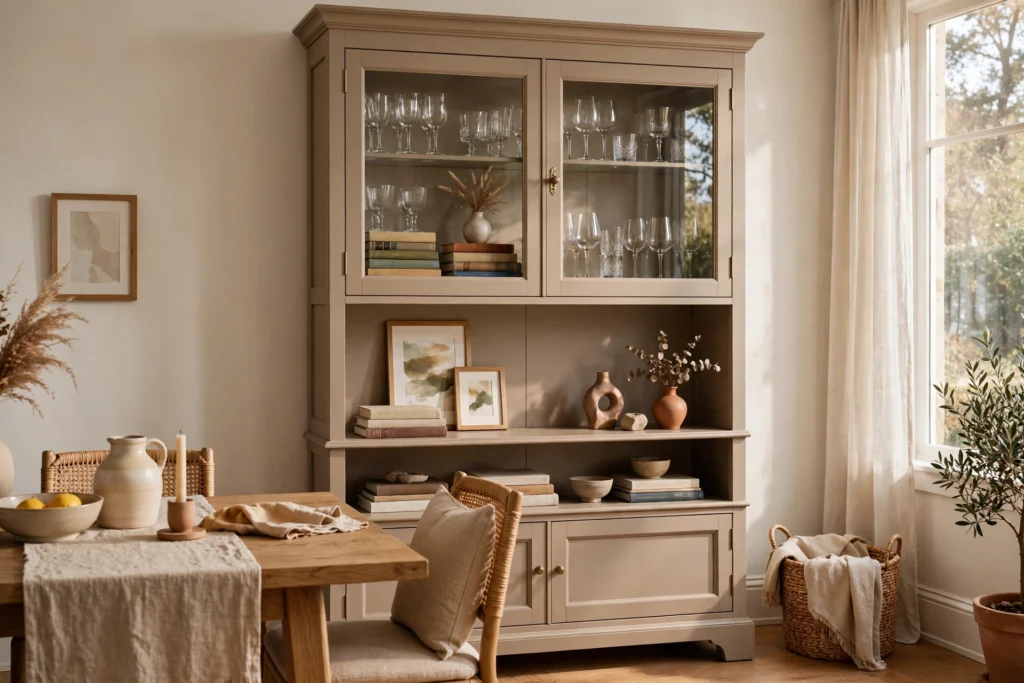
A cabinet of nothing but dishes can feel like a museum gift shop. Break up the porcelain with horizontal stacks of coffee-table books, small framed art leaned against the back, and a trailing plant or two. Books add warm, human scale; art adds personality; greenery adds life. The rule of thirds helps: roughly two-thirds dishware and glassware, one-third decorative objects. This mix is also forgiving — when the “good glasses” are in the dishwasher, the shelf still looks styled rather than ransacked.
3. Add Cabinet Lighting
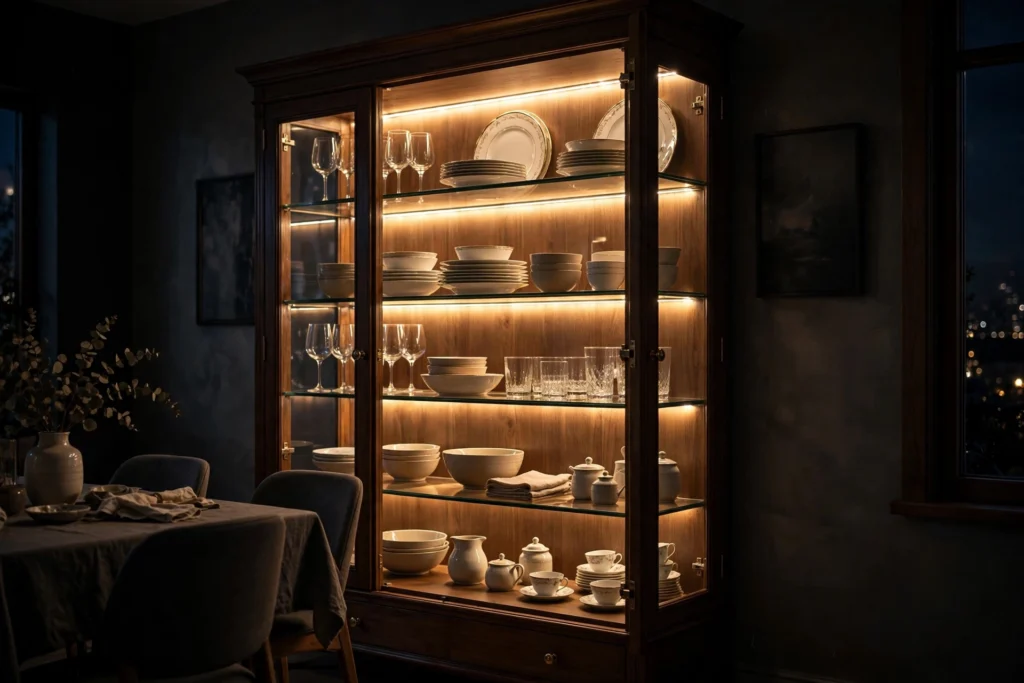
Most china cabinets were built before interior lighting was standard, but a battery puck light or slim LED strip transforms the display after dark. Light from within makes glassware glow and turns the cabinet into the room’s evening focal point — especially powerful in dining rooms used mainly at night. Choose warm-white (2700K) light to flatter wood and porcelain; cool white makes everything look clinical. Stick-on motion-sensor pucks are the renter-friendly option, while wired LED strips with a hidden switch are the polished permanent fix. Aim the light at the back panel so pieces are lit evenly rather than spotlit.
4. Convert It to a Bar Cabinet
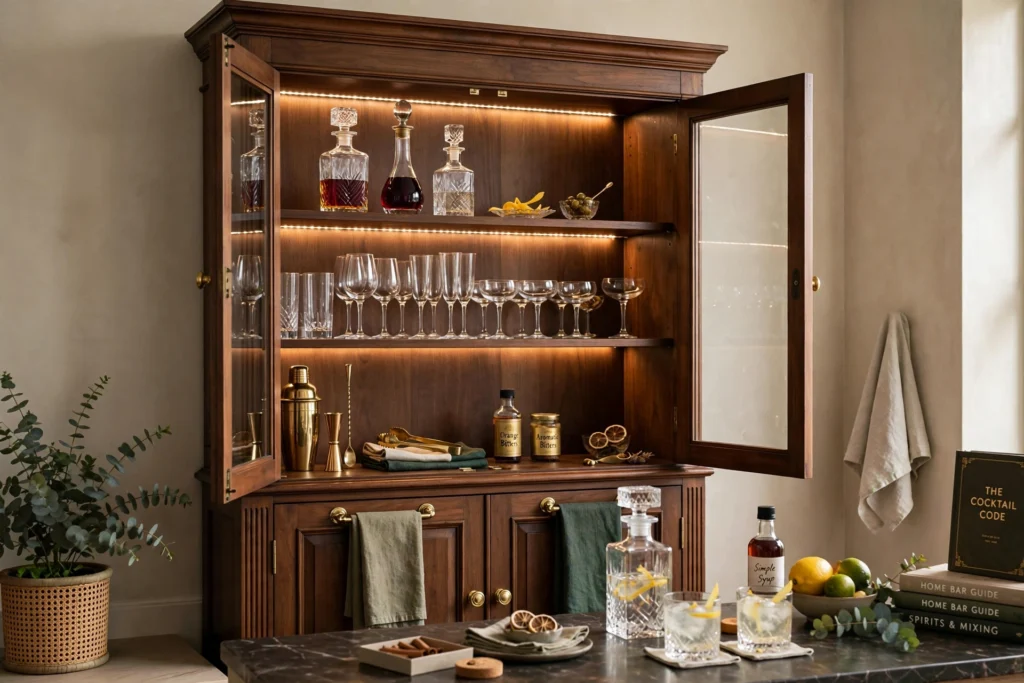
The most popular modern use for a china cabinet has nothing to do with china: turn it into a bar. Glass shelves are made for decanters, stemware, and beautiful bottles, and the cabinet doors keep dust off everything while showing it all off. Dedicate the top shelf to spirits and decanters, the middle to glassware, and use drawers or lower closed storage for bar tools, napkins, and coasters. Add a small tray for mixing, and style one shelf with a cocktail book and a tiny plant so it reads “entertaining,” not “liquor store.” Apartment Therapy’s guide to styling a china cabinet is full of designer tricks for exactly this kind of reimagining.
5. Paint It a Bold Color
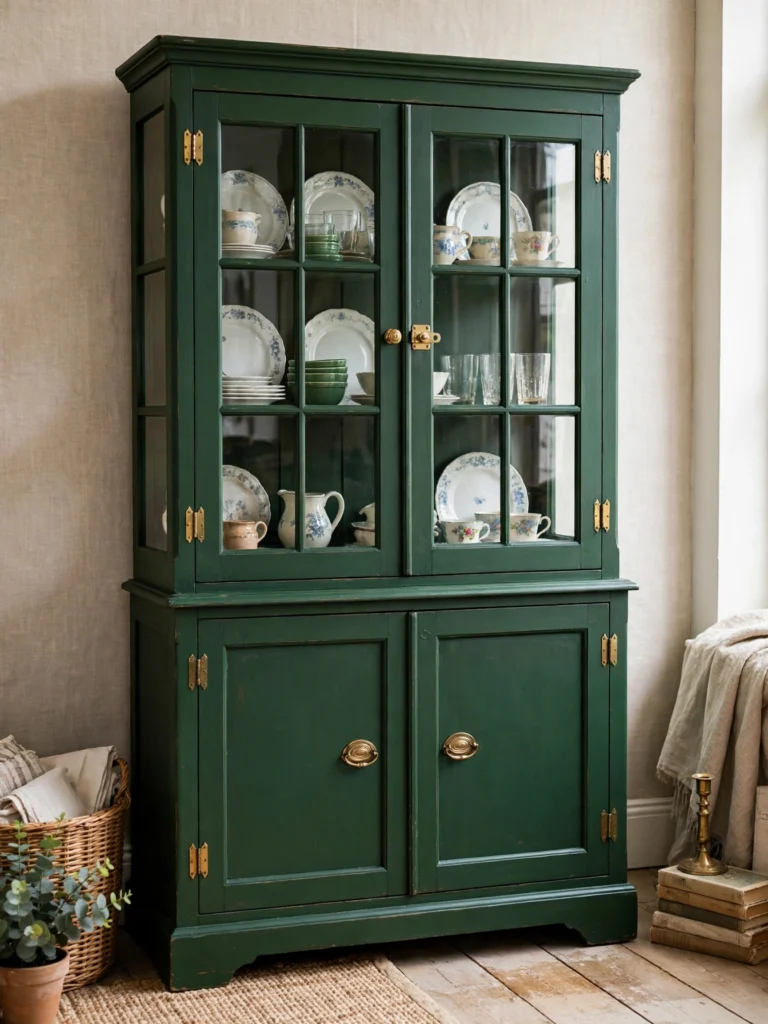
A dated oak or cherry cabinet becomes a statement piece with one weekend of paint. Deep green, inky navy, matte black, or even a rich terracotta can turn a thrift-store find into the dining room’s star — and painting the interior a contrasting color (soft cream, pale blush, dramatic charcoal) makes the displayed pieces pop. Use a bonding primer and a durable satin or semi-gloss enamel, since cabinet doors take handling. Replace the hardware at the same time; new brass or matte-black pulls complete the transformation. Painted cabinets suit farmhouse, modern, and eclectic rooms far better than stained wood ever could.
6. Style the Top Like a Mantel
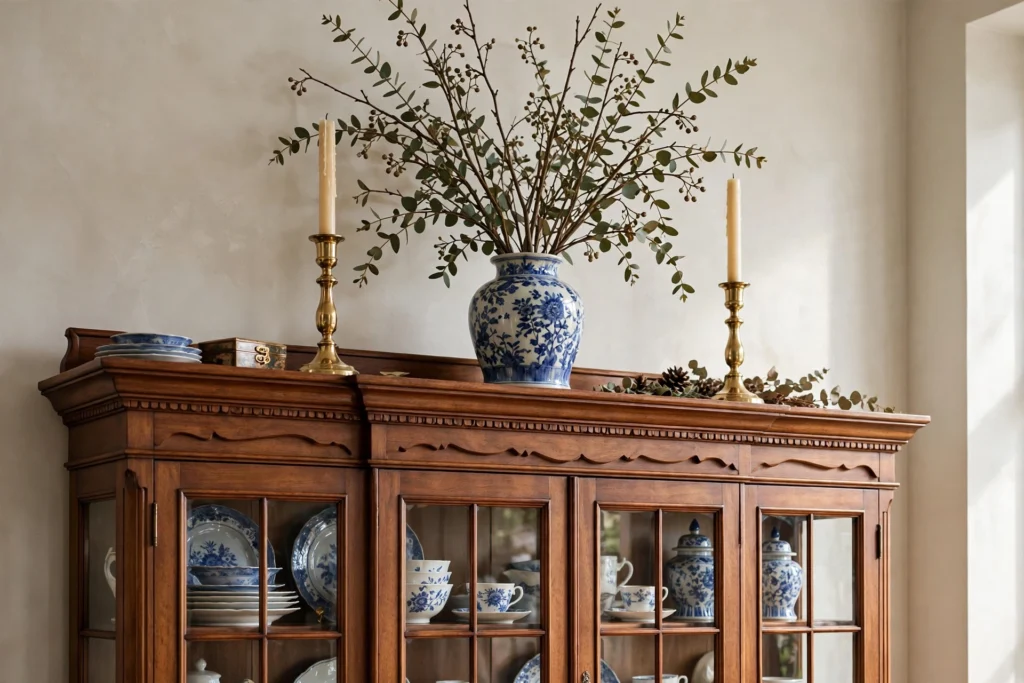
The flat top of a china cabinet is prime display real estate — treat it like a mantel. Anchor it with one tall piece (a large vase, a sculptural branch in a vessel, a leaning piece of art), then build outward with a descending rhythm of smaller objects: candlesticks, stacked books, a small bowl, a framed photo. Keep the arrangement asymmetrical for a collected look, and leave some empty surface so it breathes. Seasonal swaps are easy here: pumpkins in fall, greenery at the holidays, fresh branches in spring. Just keep tall items stable and away from the cabinet doors’ swing.
7. Display Everyday Dishes Beautifully
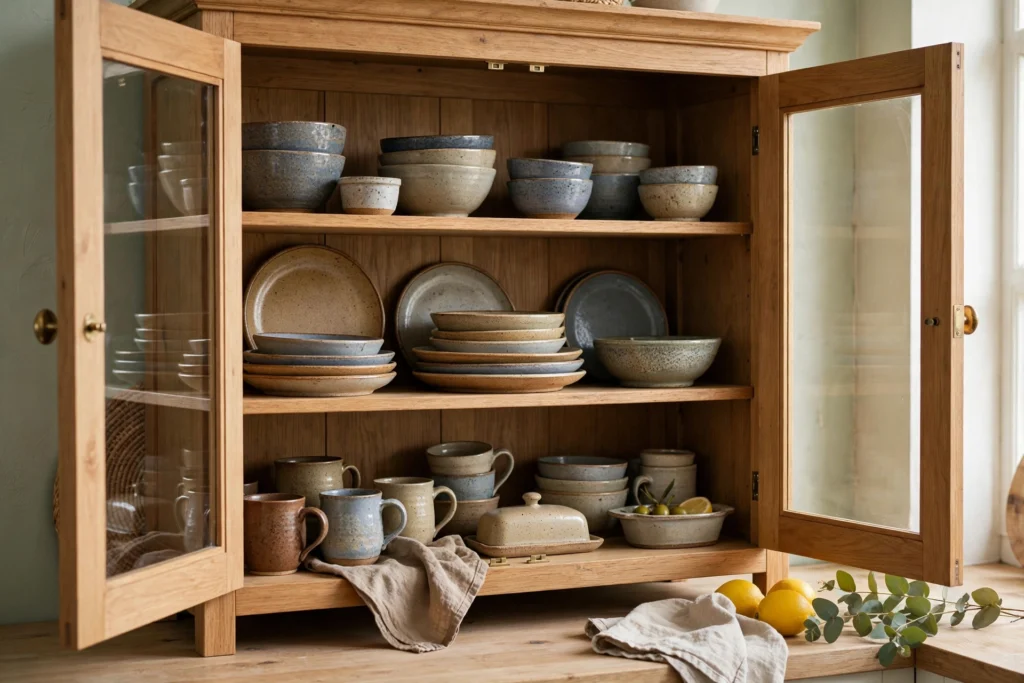
The prettiest china cabinet is one you actually use. Instead of reserving it for holiday china, display the dishes you reach for daily — your favorite stoneware, the mugs you love, the salad plates in constant rotation. Daily use keeps the cabinet feeling alive rather than frozen, and beautiful everyday pieces deserve the spotlight. Arrange by frequency: daily items at easy-reach middle shelves, occasional pieces up high, seasonal or rarely used items at the very top or bottom. A cabinet that works this hard earns its floor space.
8. Create a Collector’s Gallery
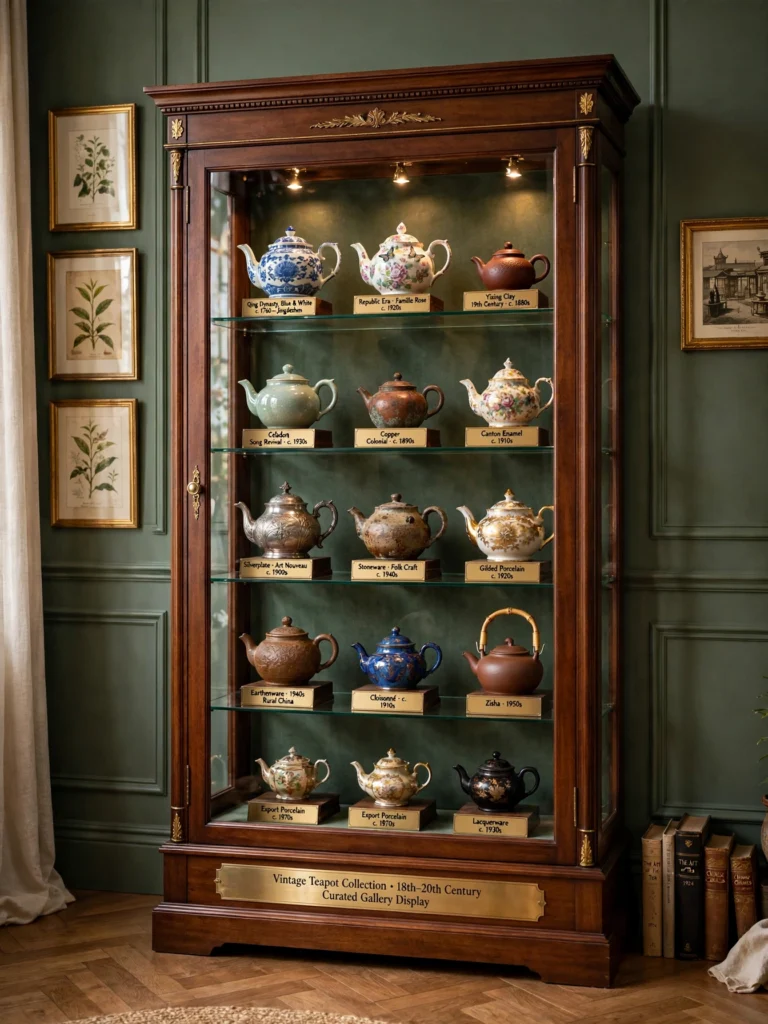
If you collect something — vintage teapots, blue glass, brass candlesticks, miniature vases — the china cabinet is its museum. Dedicate the cabinet (or one section of it) to a single collection displayed with gallery discipline: consistent spacing, pieces at varied heights, nothing crowded. A focused collection reads as sophisticated; a jumble reads as clutter. Label-free, the display tells its own story, and guests will gravitate to it. This is also the perfect justification for keeping the pieces you love but rarely use — they have a job now.
9. Mix Vintage and Modern Pieces
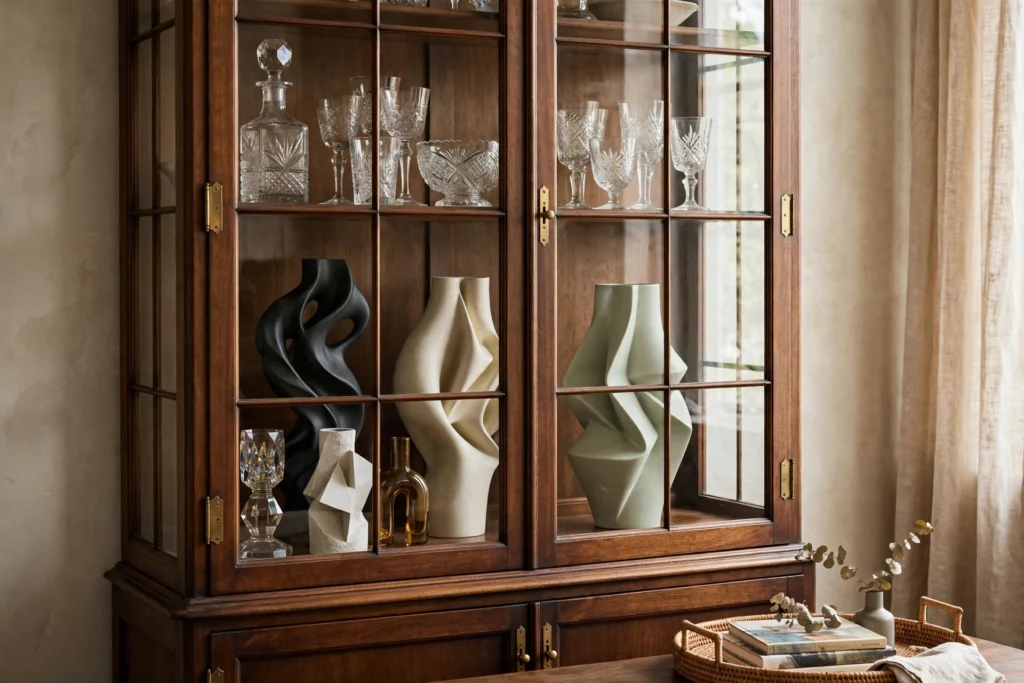
The most interesting cabinets refuse to be all one era. Pair grandmother’s crystal with a sculptural modern vase, or flank antique transferware with minimalist white stoneware. The contrast makes both styles look sharper — the vintage pieces feel curated rather than dusty, and the modern pieces gain warmth and history. Keep a consistent color thread running through the mix so the eras talk to each other instead of arguing. This approach also future-proofs the cabinet: as your taste evolves, you swap pieces rather than restyling from scratch.
10. Use the Drawers for Real Storage
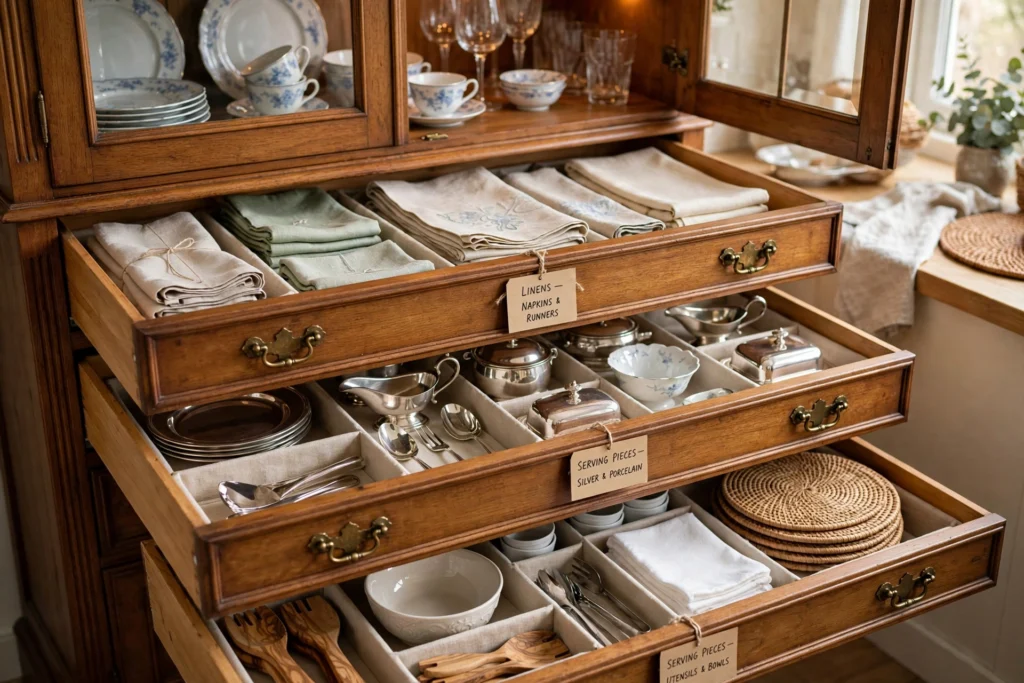
Don’t let beautiful glass doors distract you from the workhorse below: the drawers and closed base of a china cabinet are prime dining storage. Dedicate them to table linens, cloth napkins, placemats, candles, and serving pieces too plain for display. Line drawers with felt or cedar to protect silver, and use small organizers so flatware and serving utensils don’t migrate into chaos. A cabinet that displays beautifully up top and stores ruthlessly below is the hardest-working piece in the dining room. Formal dining rooms especially benefit — see these formal dining room ideas for elegant gatherings for more entertaining-ready storage thinking.
11. Try Open Shelving on Top
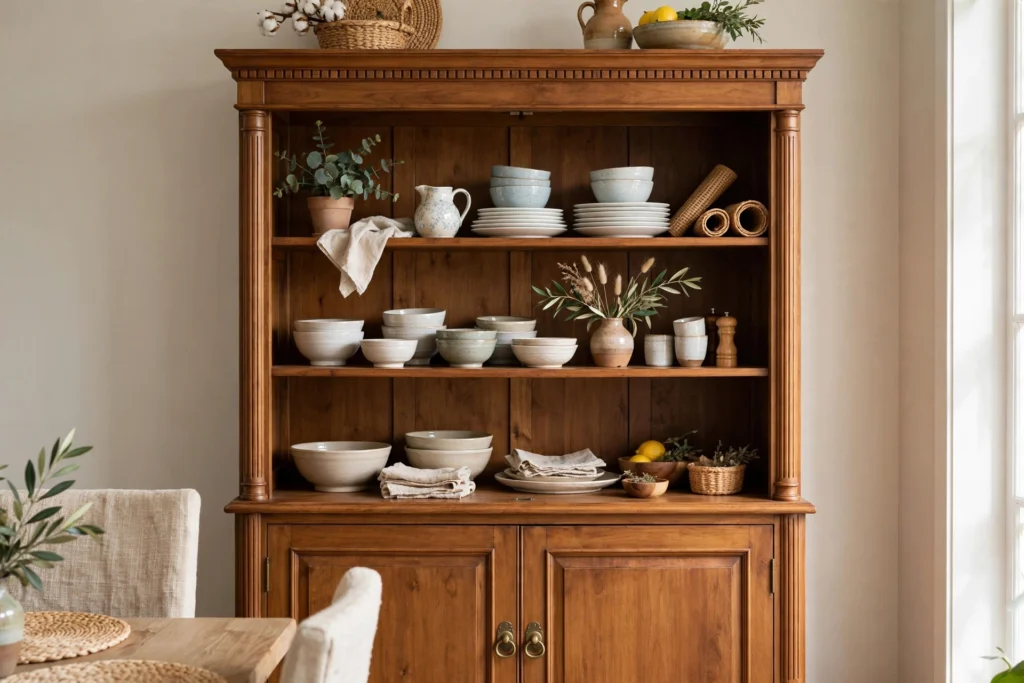
If your cabinet has a hutch top with removable doors — or if you’re comfortable removing glass doors from a thrifted piece — open upper shelving creates an airier, more modern look. Open shelves invite more casual, ever-changing styling: a leaning art print today, a stack of bowls tomorrow. The trade-off is dust, so reserve open styling for pieces you use and wash often, and keep the display minimal enough to wipe down easily. Removing doors also visually lightens a bulky dark cabinet, which can rescue an inherited piece that feels too heavy for the room.
12. Add Wallpaper or Paint Inside
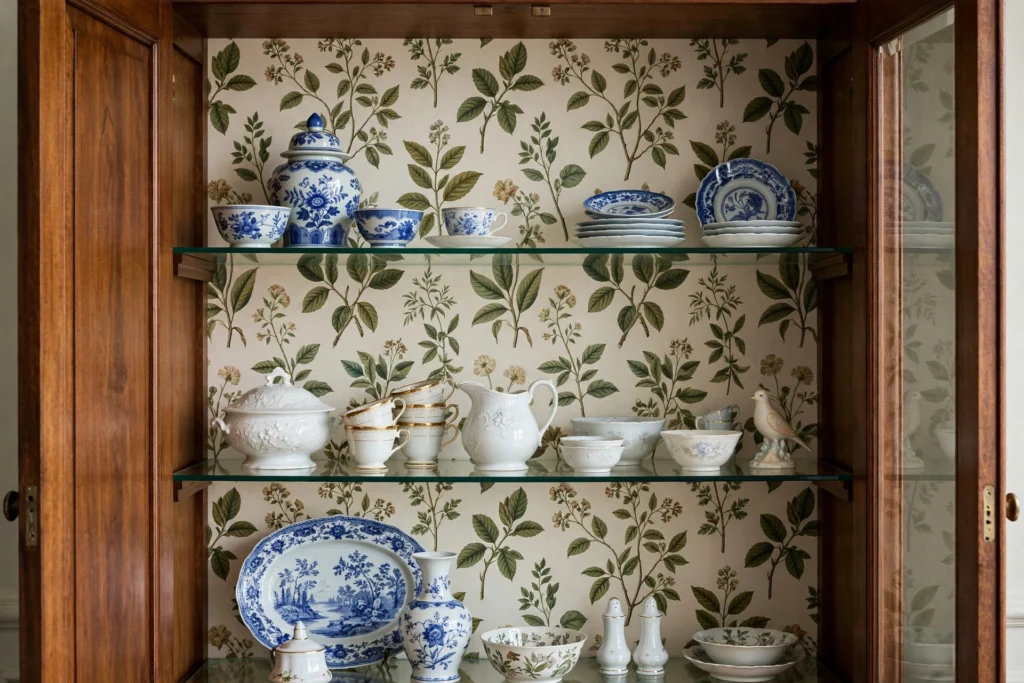
The inside back panel of a china cabinet is a hidden canvas. Line it with peel-and-stick wallpaper, paint it a bold accent color, or even mirror it, and every piece in front gains a backdrop that makes it pop. A chinoiserie or botanical wallpaper inside a neutral cabinet is pure jewelry-box drama; a deep charcoal back makes white porcelain glow. This is a low-commitment, high-impact project — one roll of peel-and-stick and an afternoon — and it’s completely reversible. The surprise of the patterned interior delights guests every time the doors open.
13. Stage Seasonal Vignettes
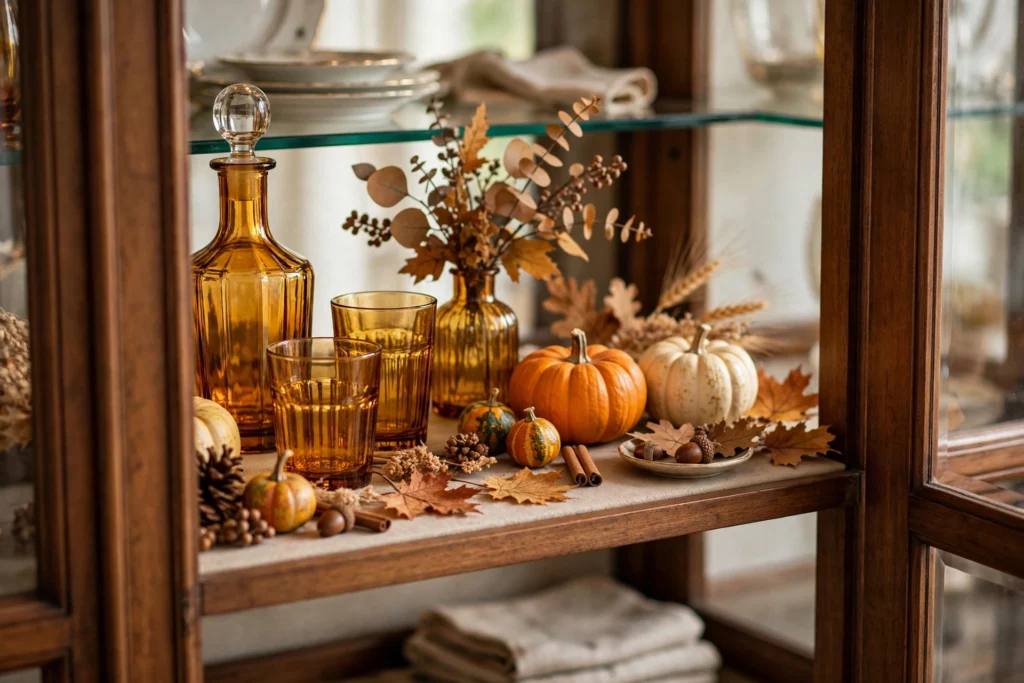
Treat one shelf or section as a rotating seasonal display and your cabinet stays fresh all year. Autumn: amber glass, small pumpkins, dried grasses. Winter: mercury glass, pinecones, candlelight. Spring: bud vases with single stems, pastel ceramics. Summer: clear glass, shells, citrus-bright accents. Keep a small box of seasonal swap pieces so the changeover takes minutes. The rest of the cabinet stays constant, so the seasonal shelf reads as a deliberate accent rather than chaos. This habit also gives you a reason to actually enjoy the pieces you own instead of storing them in the dark.
14. Anchor It With a Rug and Lighting
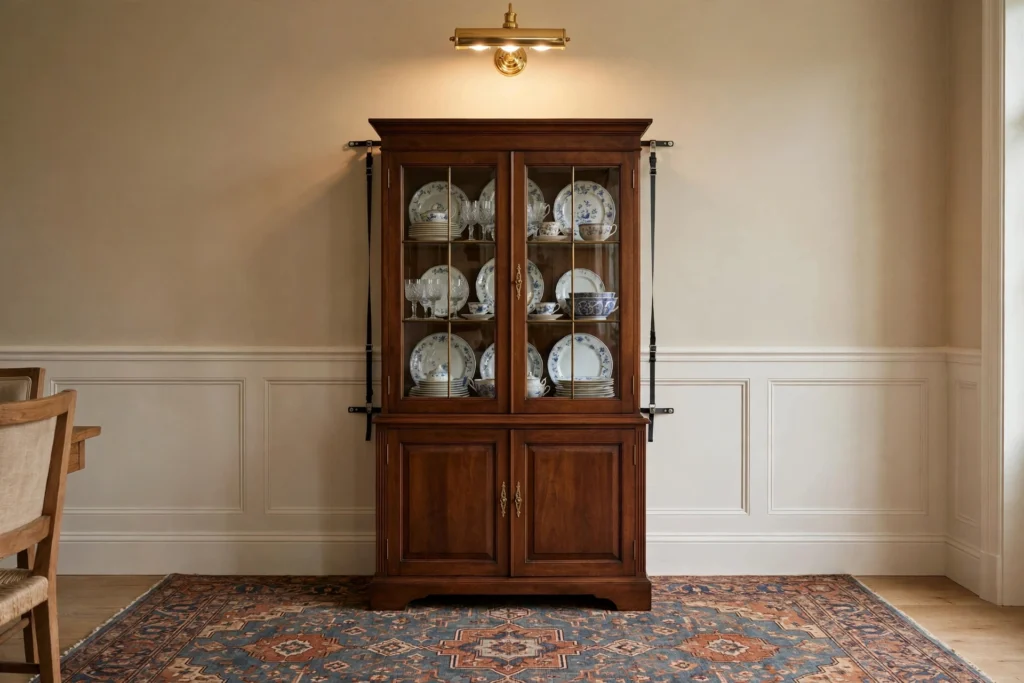
A china cabinet can look stranded if it floats alone on a bare wall. Ground it: position it on or near the dining room rug so it belongs to the room’s main composition, and make sure it gets light — either from the cabinet lighting you added or from a nearby sconce or picture light. The cabinet should read as part of a vignette, not a piece of furniture pushed against a wall. If the cabinet sits in a dark corner, even a small plug-in picture light above it changes everything. For the fundamentals of what a china cabinet is and how the form evolved, the china cabinet overview is a useful reference.
15. Know When to Let It Go Minimal
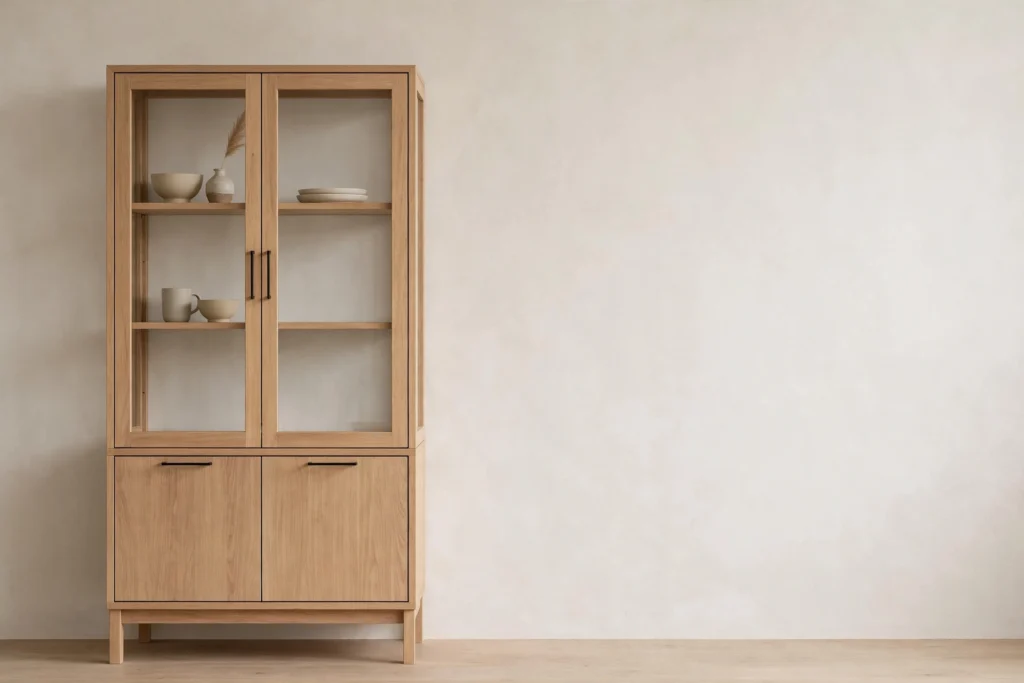
The final styling rule is restraint: a china cabinet with twenty percent empty space looks more expensive than one packed to the glass. Edit ruthlessly — if a piece doesn’t earn its place by beauty or use, store it elsewhere. Negative space lets the remaining pieces breathe and gives the eye somewhere to rest, which is exactly what makes high-end displays feel calm. Revisit the styling twice a year with fresh eyes; cabinets accumulate clutter silently. A minimal, intentional cabinet photographs beautifully, entertains gracefully, and — most importantly — makes you happy every time you walk past it.
FAQ
What is the difference between a china cabinet and a hutch?
The terms overlap, but generally a china cabinet is a tall, freestanding piece with glass doors designed for display, often in one unit. A hutch is typically two pieces — a lower buffet or dresser base with an upper open or glass-front shelf unit that sits on top. In practice, retailers use the words interchangeably, so shop by the features you need (glass doors, lighting, drawers) rather than the label.
How do I style a china cabinet without it looking cluttered?
Group items in odd numbers with breathing room between groups, vary heights so the eye travels, and leave at least twenty percent of each shelf empty. Stick to a limited color palette — three tones at most — and repeat materials (all warm metals, or all clear glass) for cohesion. Step back and photograph the cabinet; the camera reveals clutter your eyes have learned to ignore.
Should the inside of a china cabinet be painted?
Painting or wallpapering the interior back panel is one of the highest-impact upgrades you can make — it creates contrast that makes displayed pieces stand out. Light pieces glow against dark interiors; colorful pieces pop against neutral ones. Use peel-and-stick wallpaper for a reversible option, or paint for permanence. Either way, it’s an afternoon project with outsized payoff.
Can a china cabinet work in a small dining room?
Yes, if you choose wisely. A tall, narrow cabinet uses vertical space without eating floor area, and glass doors keep it visually light — unlike a solid armoire, you can see through it. Corner cabinets are made for tight rooms. Keep the styling minimal so the piece adds display without visual weight, and make sure doors can open fully without hitting the table or chairs.
What should I put on top of a china cabinet?
Treat the top like a mantel: one tall anchor piece (vase, branch, leaning art), a middle layer of medium objects (candlesticks, stacked books), and small accents to finish, arranged asymmetrically with breathing room. Avoid lining up many same-height objects, which reads as a shelf of clutter. Keep everything stable and clear of door swings, and refresh the arrangement seasonally for an easy update.
Keep Exploring
A well-styled china cabinet turns storage into the dining room’s prettiest feature — part gallery, part workhorse, entirely yours. Start with an edit, add light, and let the pieces you love finally be seen.
Pair your display with the walls around it: our dining room wall decor ideas for warm inviting gatherings show how to frame the whole room around your beautiful cabinet.