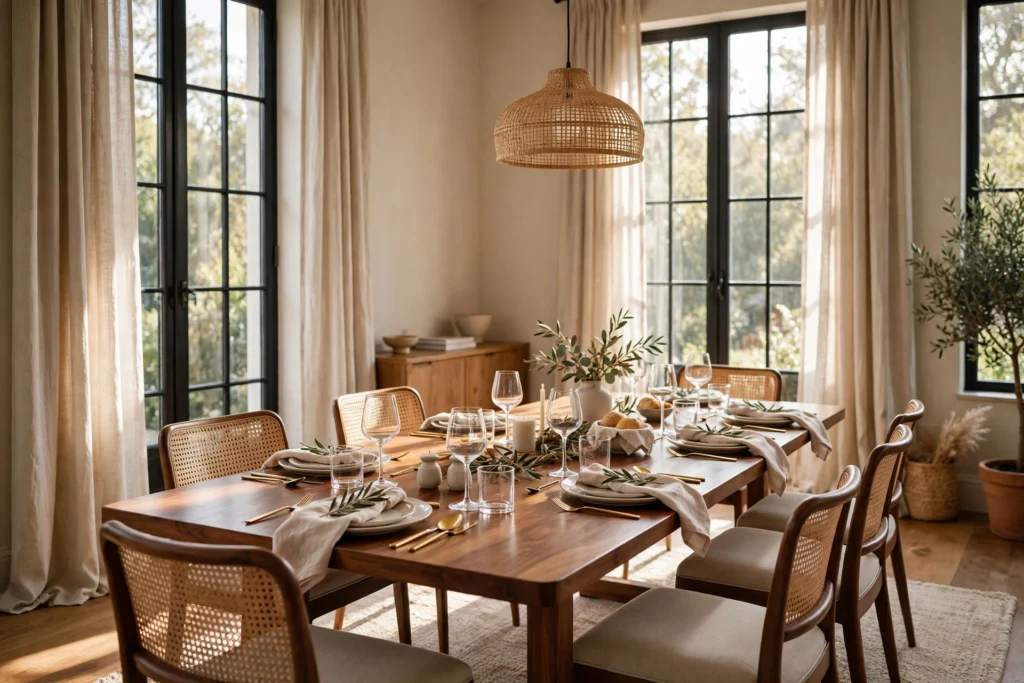

Curtains do more in a dining room than dress a window: they set the mood for every meal. The right panels soften daylight into something flattering, frame the view like art, and give an ordinary Tuesday dinner the polish of a special occasion. These dining room curtain ideas cover every style and budget, from breezy sheers to dramatic floor-pooling velvet.
The golden rule for dining rooms is elegance with practicality — fabric that looks beautiful but survives steam, splashes, and the occasional wandering chair. Choose machine-washable weaves for family dining, and save the precious silks for formal rooms used on holidays. If you are dressing the rest of the room too, these living room curtain ideas that frame your windows beautifully use the same professional hanging tricks.
1. Hang Panels High and Wide
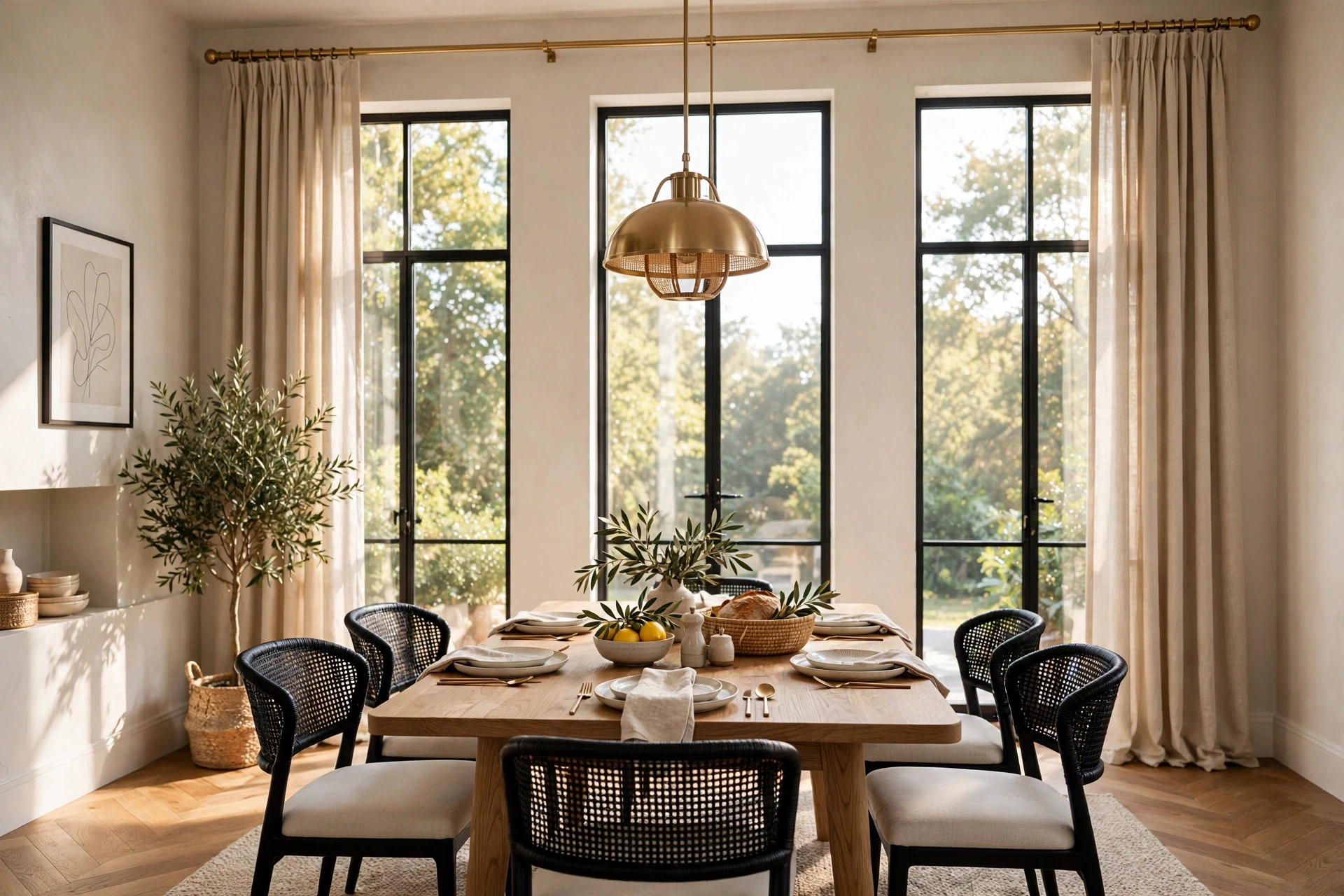
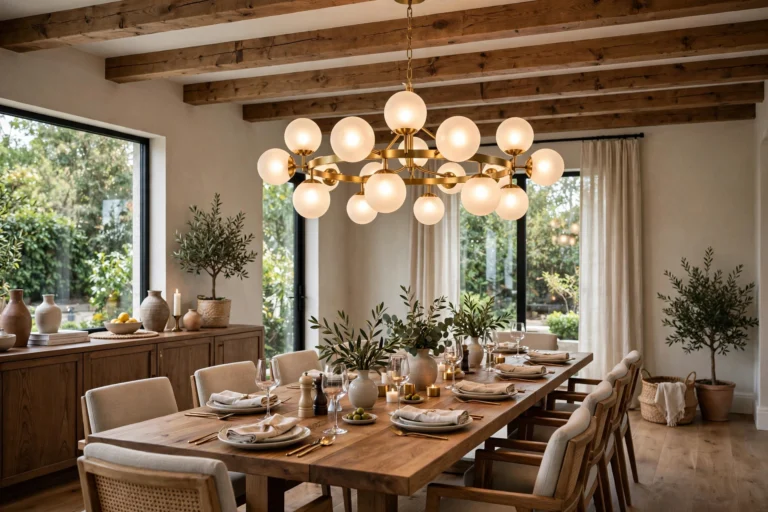
The single most transformative curtain trick costs nothing: mount the rod six to eight inches above the window frame and extend it eight to twelve inches past each side. Hanging high makes ceilings feel taller, and going wide means the open panels stack against the wall instead of covering the glass — so you keep the full view and all the daylight. This one adjustment makes standard windows look custom and expensive. It is the rule behind nearly every designer dining room you have admired, and it works in rooms of every size and style.
2. Choose Floor-Pooling Linen for Romance
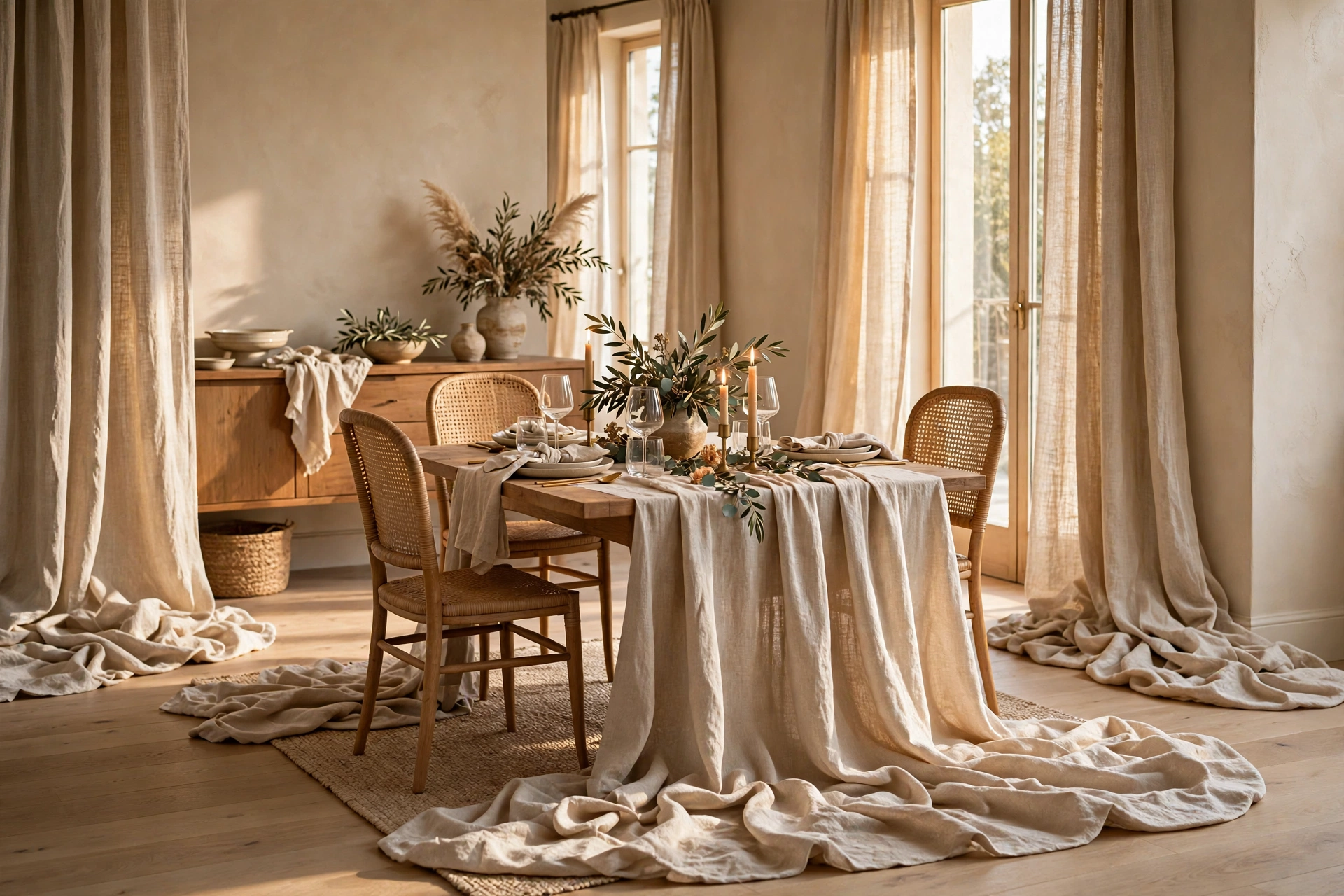
Let your dining room curtains kiss — or pool on — the floor for a soft, romantic look that suits candlelit dinners. Linen is the ideal fabric: its natural slubs and gentle wrinkles read as effortless luxury, and it filters light into a flattering glow. Hem panels so they break just at the floor or puddle two to three inches for maximum drama. Linen wrinkles, and that is the point; embrace it rather than pressing it away. For a formal dining room, choose a full-bodied linen in ivory, flax, or soft charcoal.
3. Layer Sheers Under Drapes
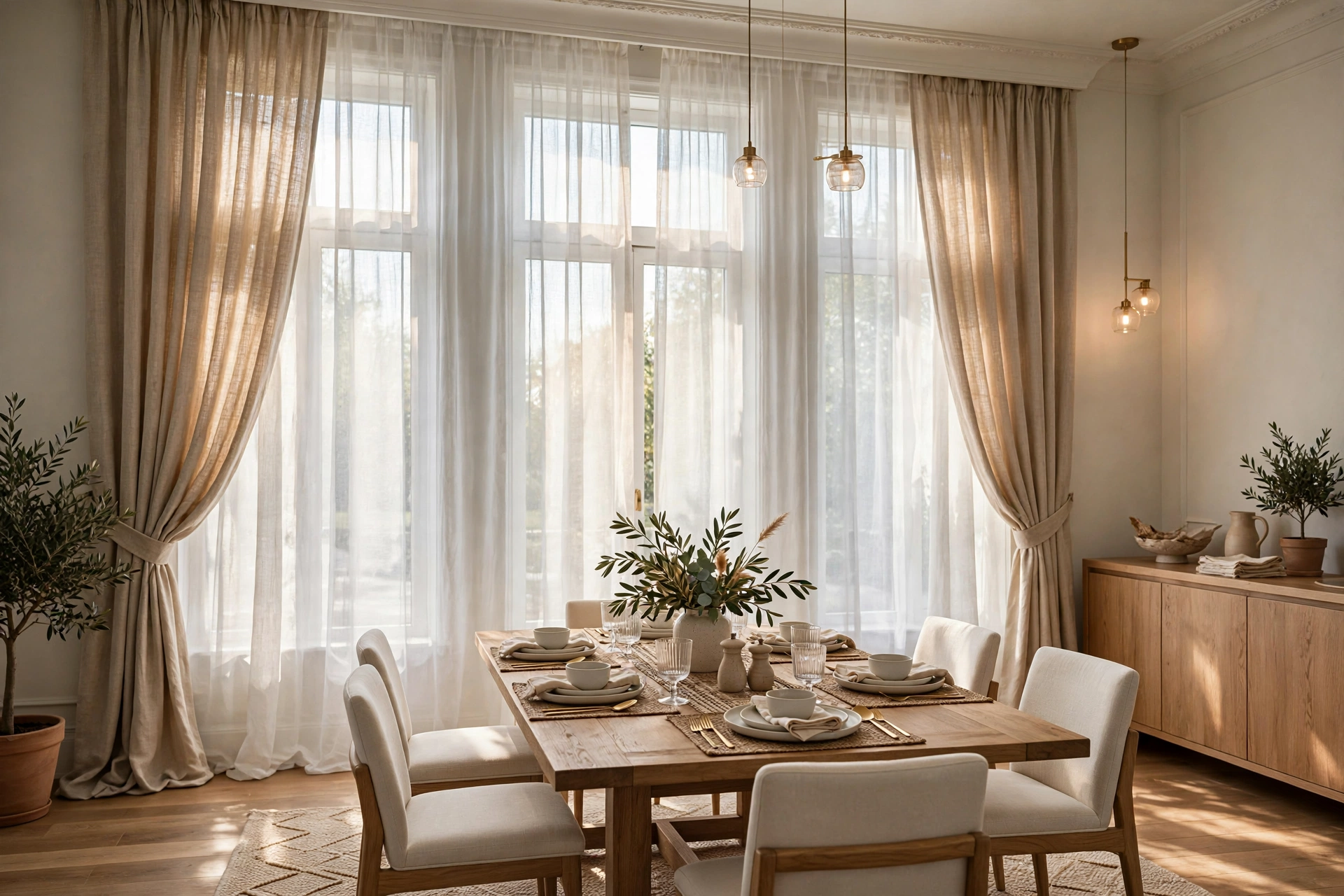
Sheers plus drapes give you two rooms in one: filtered daylight by day, full privacy and drama by night. Install a double rod or a track with two channels, hanging gauzy sheers closest to the glass and heavier panels in front. By day the sheers soften the sun and keep the room glowing; at dinner, draw the drapes for intimacy and better acoustics — layered fabric genuinely absorbs echo around a lively table. White or ivory sheers suit almost every style, while the outer panels carry your color and pattern story.
4. Try Tailored Roman Shades
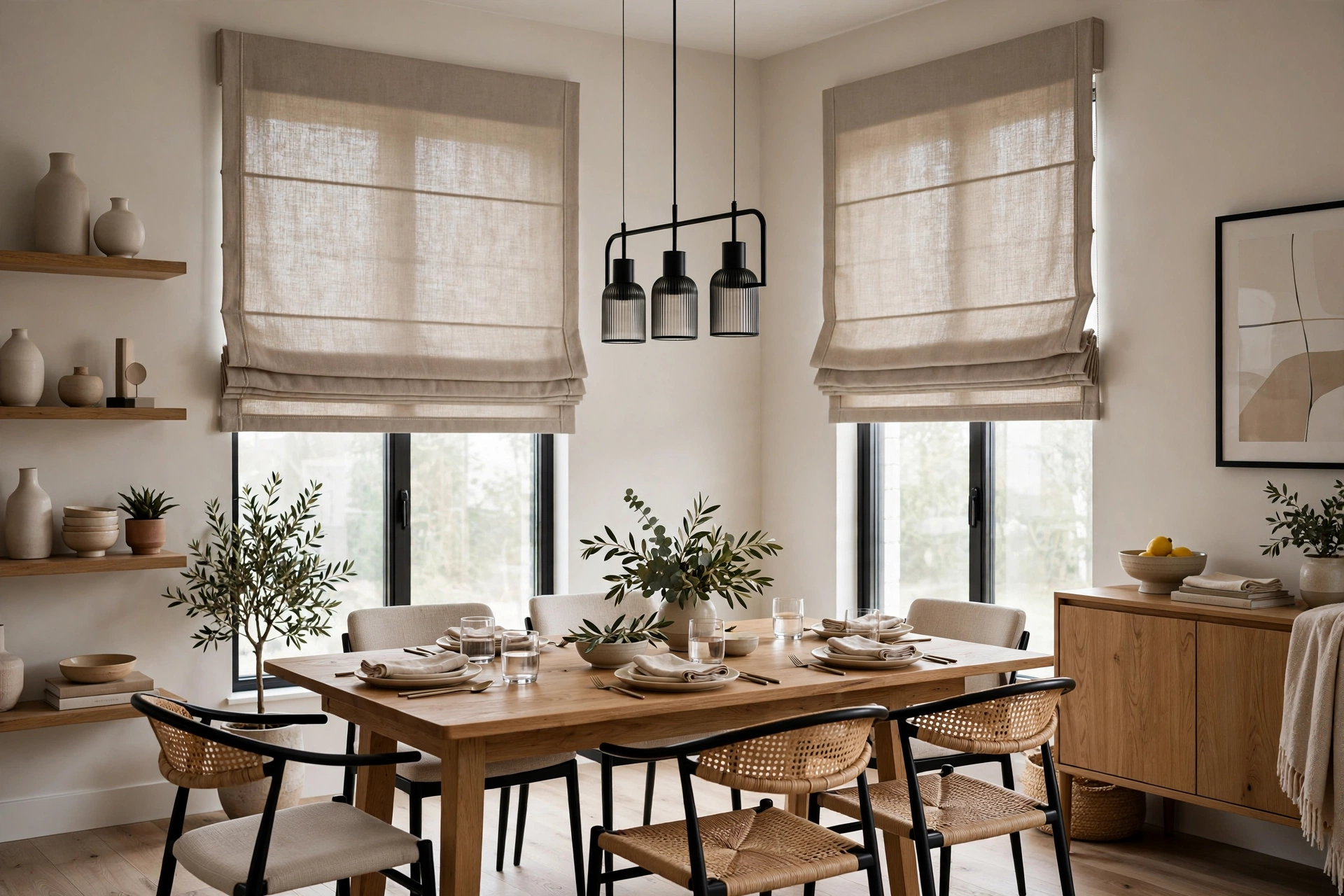
When a dining table sits close under the window, full-length curtains can feel fussy and collect crumbs. Roman shades are the tailored answer: flat-folding fabric that stacks neatly above the glass, available in everything from crisp linen to bold pattern. They keep the wall feeling clean and architectural while still softening the light. Choose a relaxed Roman for casual rooms or a flat-panel Roman for modern formality, and add a coordinating valance only if the window feels bare. Roman shades also pair beautifully with side panels for a dressed-but-not-done look.
5. Go Bold With Patterned Panels
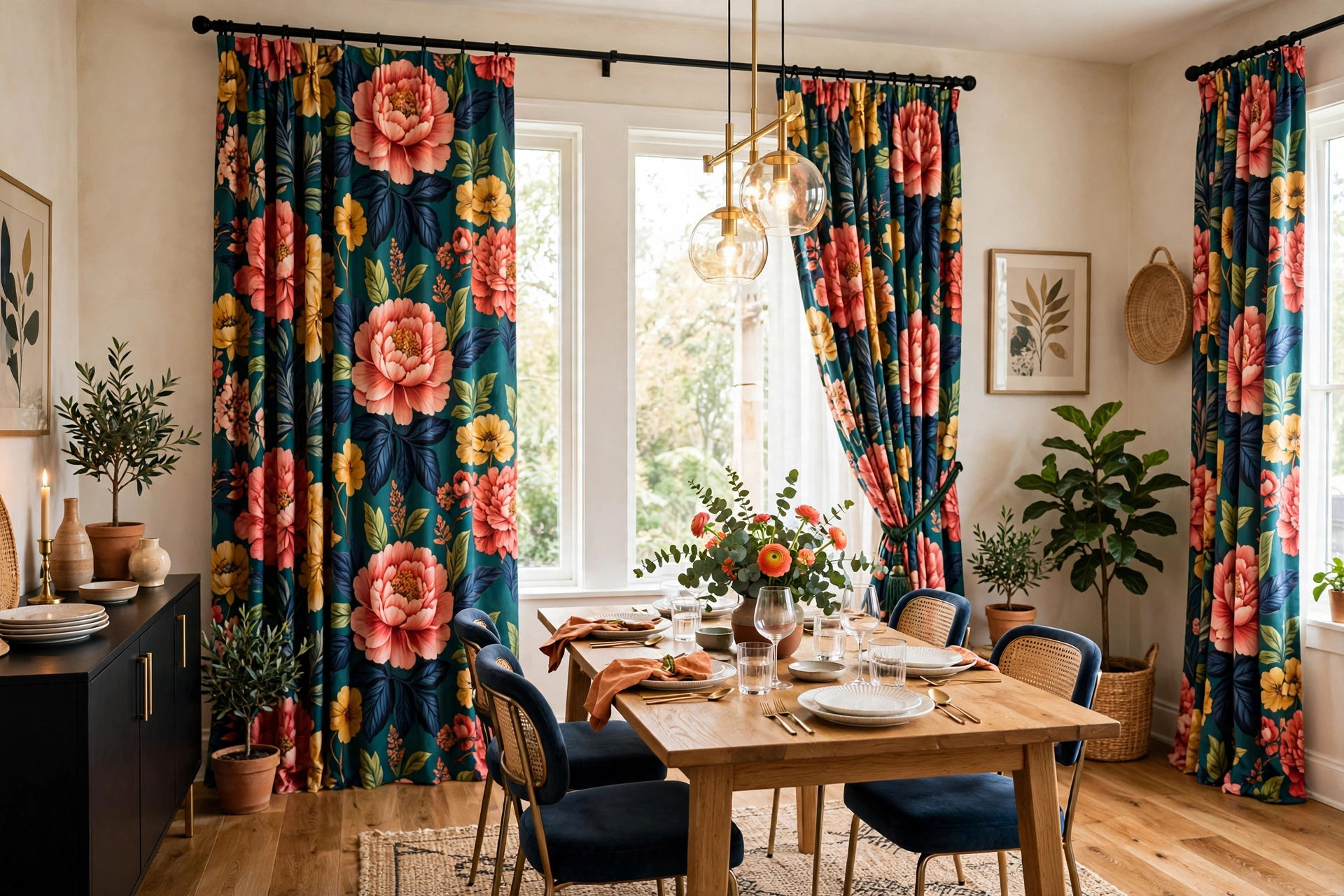
A dining room is the perfect place for curtains with personality, because you spend hours looking at them over the table. Large-scale florals, classic damasks, painterly stripes, or modern geometrics turn the window into the room’s artwork. To keep a bold pattern from overwhelming the space, echo one of its colors in the chairs, rug, or table linens, and keep the other walls calm. Patterned curtains also hide minor wrinkles and fading better than solids — a practical bonus in a sunny room.
6. Frame the View With Sheer Panels
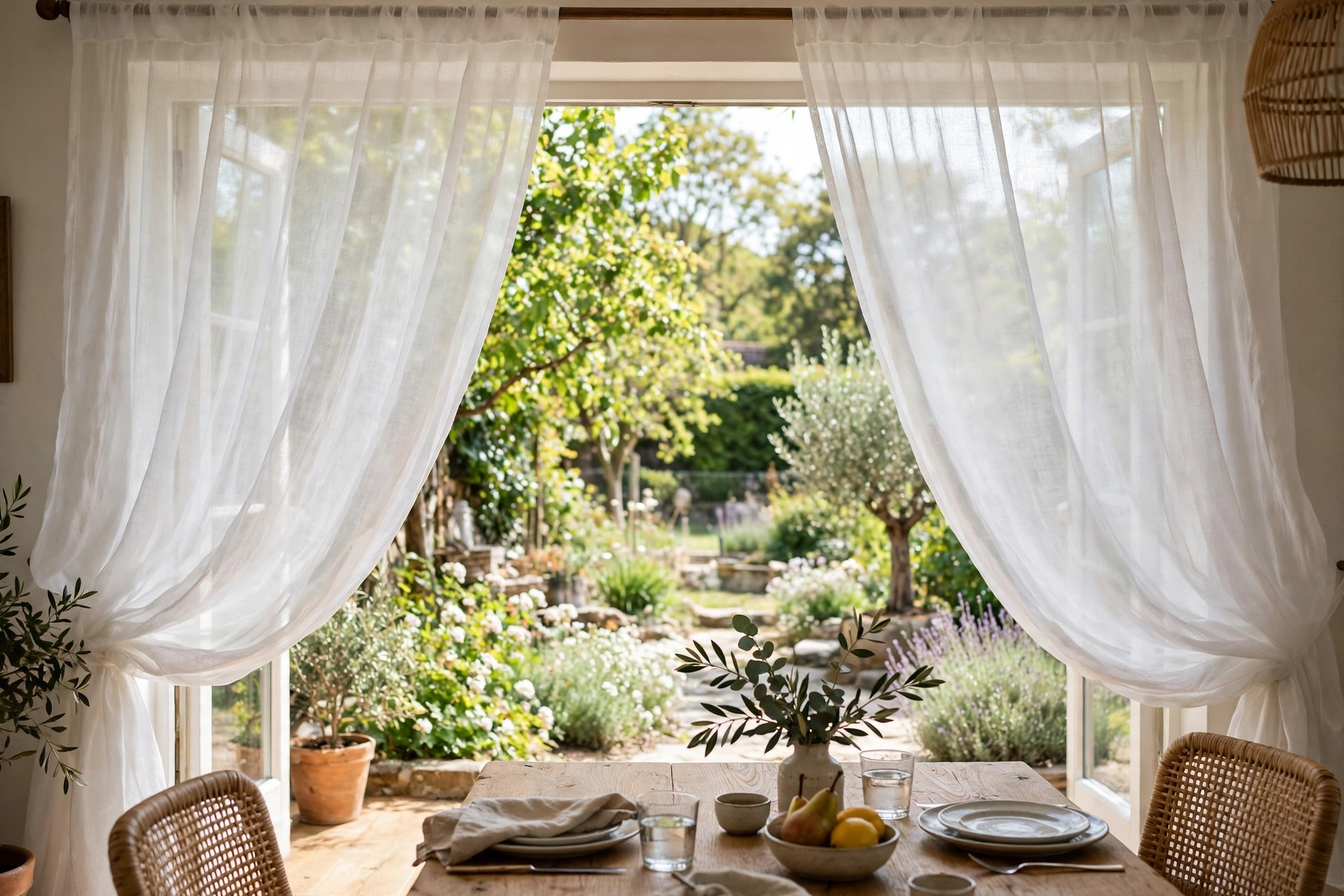
If your dining room looks onto a garden, skyline, or even just a pretty street, sheer curtains are the frame the view deserves. They soften harsh edges, blur an imperfect outlook just enough, and fill the room with diffused, flattering light that makes everyone at the table look their best. Hang sheers nearly to the floor in a continuous run for a curtain-wall effect, using a ceiling-mounted track for the most seamless look. Linen-look or voile sheers give privacy without darkness — the room stays bright but never exposed.
7. Add Velvet for Formal Drama
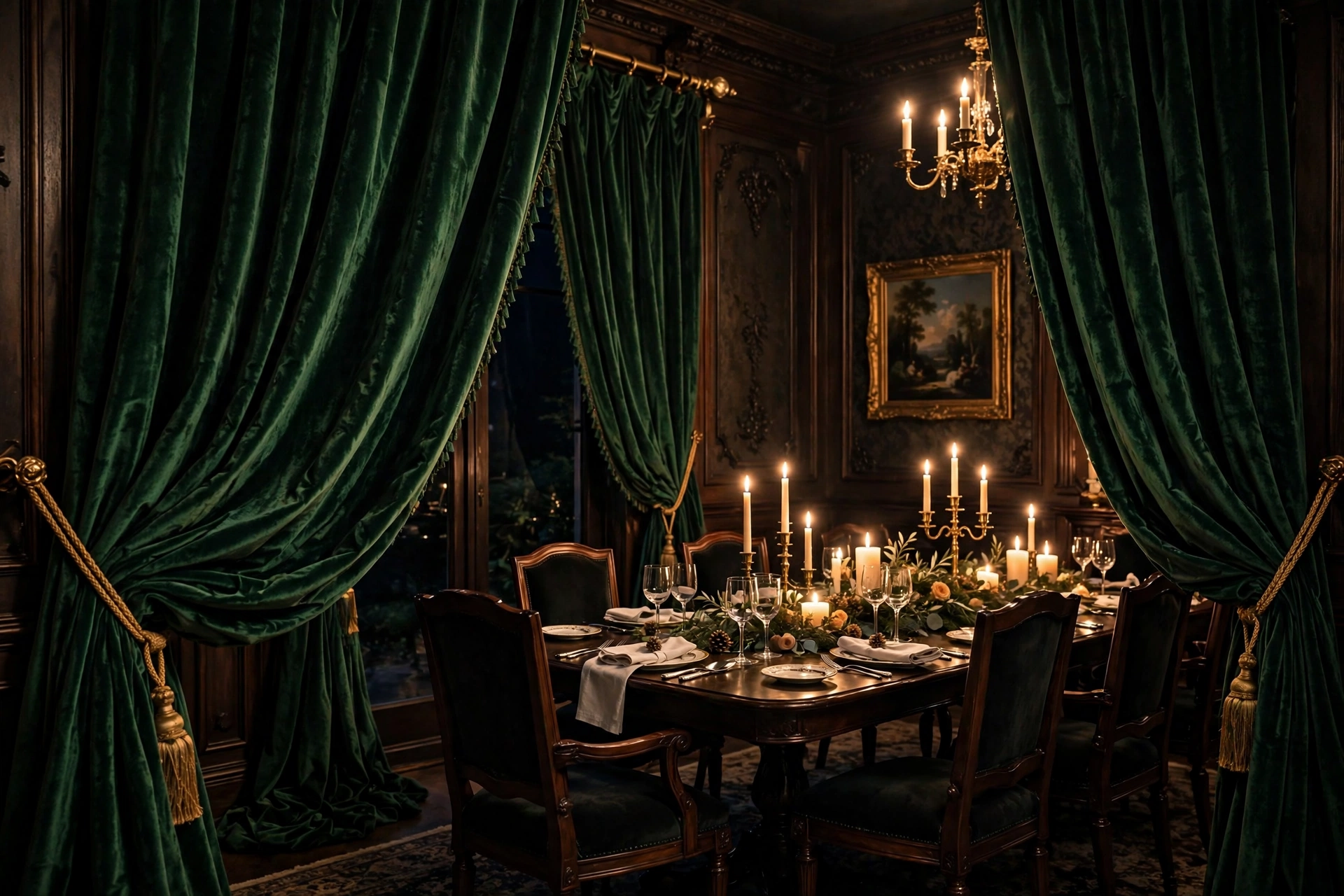
Nothing says formal dining like velvet curtains. The fabric’s deep pile absorbs and reflects light simultaneously, giving windows a rich, theatrical presence that suits holiday dinners and special occasions. Jewel tones — emerald, sapphire, aubergine — amplify the drama, while champagne or dove-gray velvet keeps it elegant and calm. Velvet panels should be full and generous: use at least double the window width in fabric so the folds look lush rather than flat. A word of caution for everyday dining rooms: velvet shows dust and needs occasional steaming, so reserve it for rooms that entertain more than they breakfast.
8. Use Café Curtains for Charm
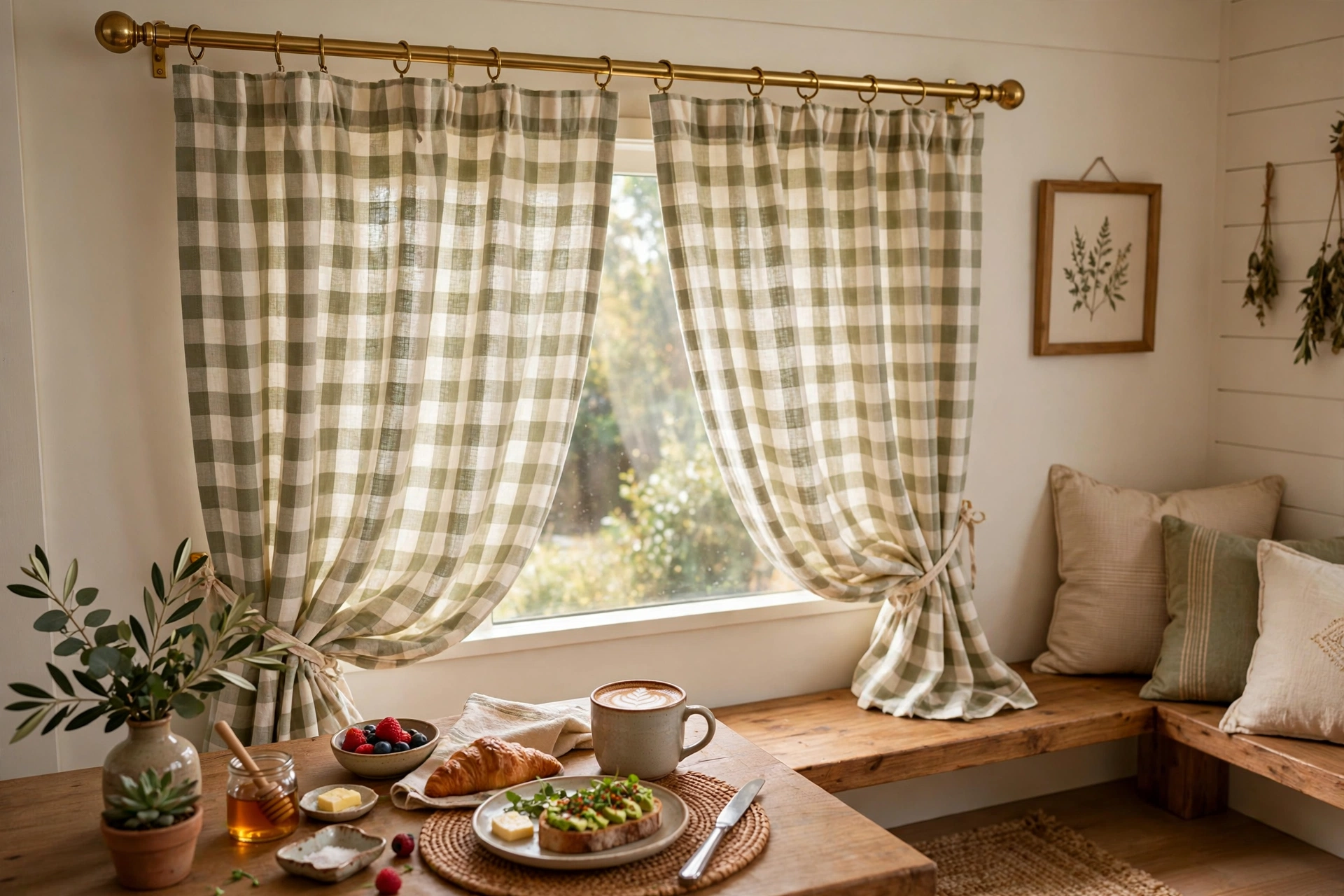
Café curtains — panels that cover only the lower half of the window — bring bistro charm and brilliant practicality to casual dining rooms and breakfast nooks. They shield the table from street-level views while leaving the upper glass open to the sky, so the room stays bright. A tailored linen or gingham café curtain on a slim brass rod reads fresh and European, especially paired with a wooden farmhouse table. Because they use half the fabric, they are also the budget-friendliest option on this list. For more privacy without losing the look, add a matching valance up top.
9. Mount a Statement Rod
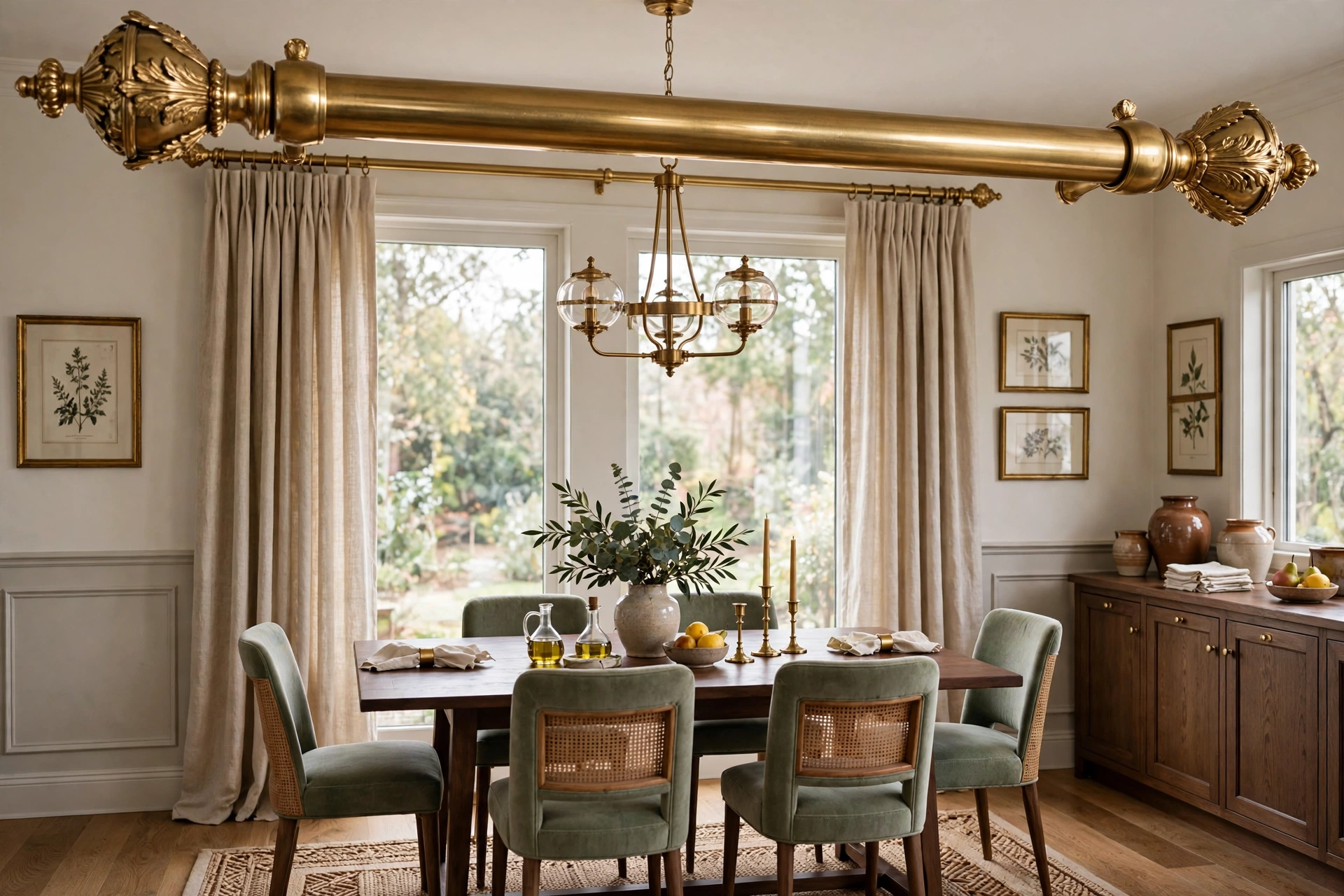
Do not overlook the hardware: a beautiful rod is jewelry for the window. Oversized brass finials, matte-black industrial rods, aged-wood poles, or slim acrylic mounts all set a tone before the fabric even appears. Match the metal to your dining room’s other finishes — chandelier, chair legs, cabinet hardware — for a pulled-together feel. If the rod is a star, keep the curtain panels simple so the two do not compete. And always use a rod sturdy enough for the fabric weight; sagging velvet on a flimsy rod ruins the whole effect.
10. Coordinate Curtains With Chair Upholstery
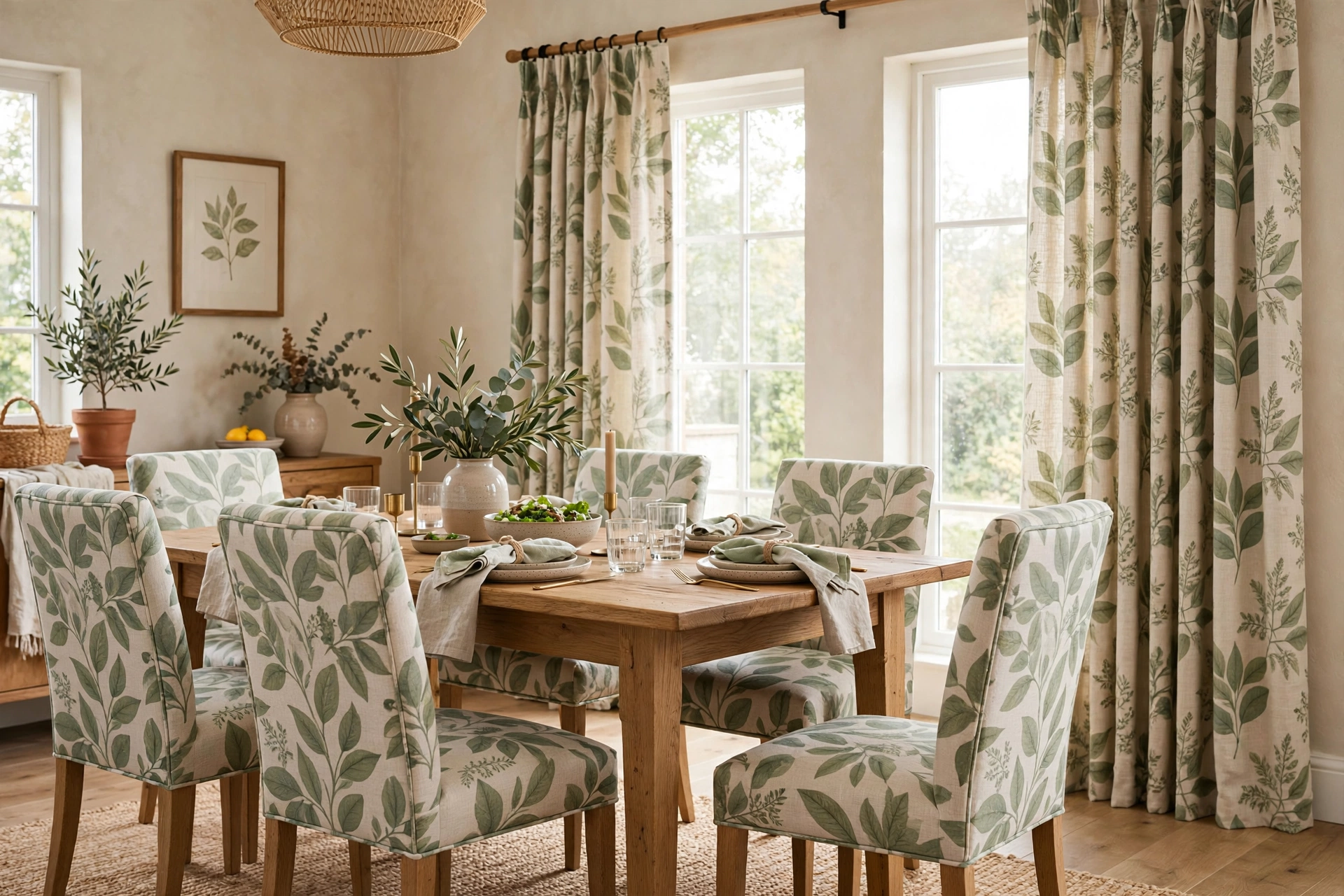
The most pulled-together dining rooms repeat fabrics on purpose. Carry your curtain fabric — or at least its color family — onto the dining chair seats or cushions, and the whole room clicks into place. This does not mean matchy-matchy: a solid curtain in the background tone of a patterned chair fabric, or chair cushions piped in the curtain’s accent color, is enough. The repetition creates a designer-level sense of intention. If reupholstering feels like a project, start small with seat pads or a table runner in the same textile.
11. Double Up With Woven Shades
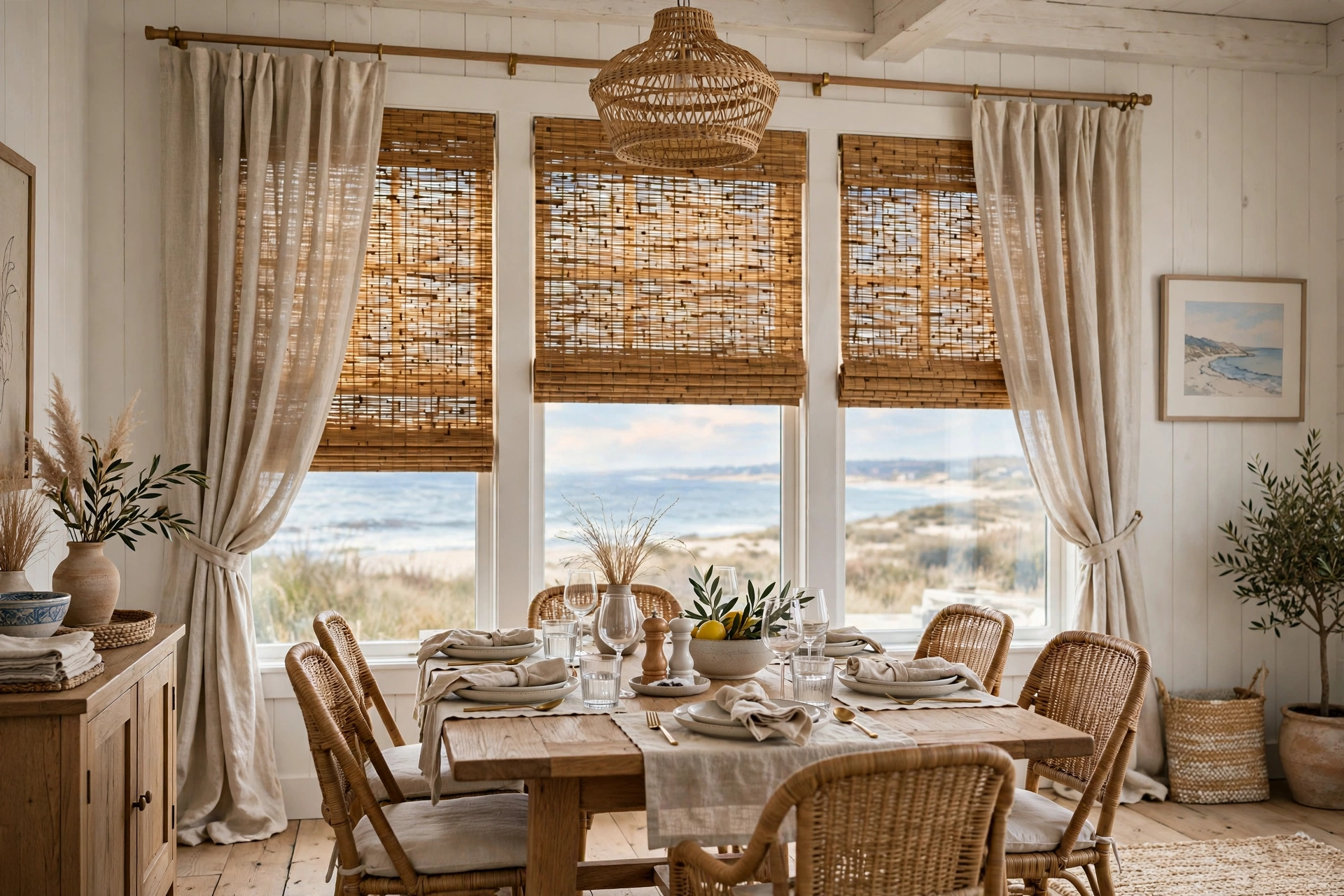
Pair soft curtains with natural woven shades — bamboo, jute, or matchstick — for a layered window with texture and function. The woven shade handles daytime privacy and sun control with the curtains open; at night, draw the curtains for full softness and warmth. This combination suits coastal, farmhouse, rustic, and bohemian dining rooms especially well, where the organic texture of the shade adds warmth the fabric alone cannot. Top-down/bottom-up woven shades are worth the upgrade in dining rooms, letting light in from above while screening the street below.
12. Choose Blackout Lining for Evening Glow
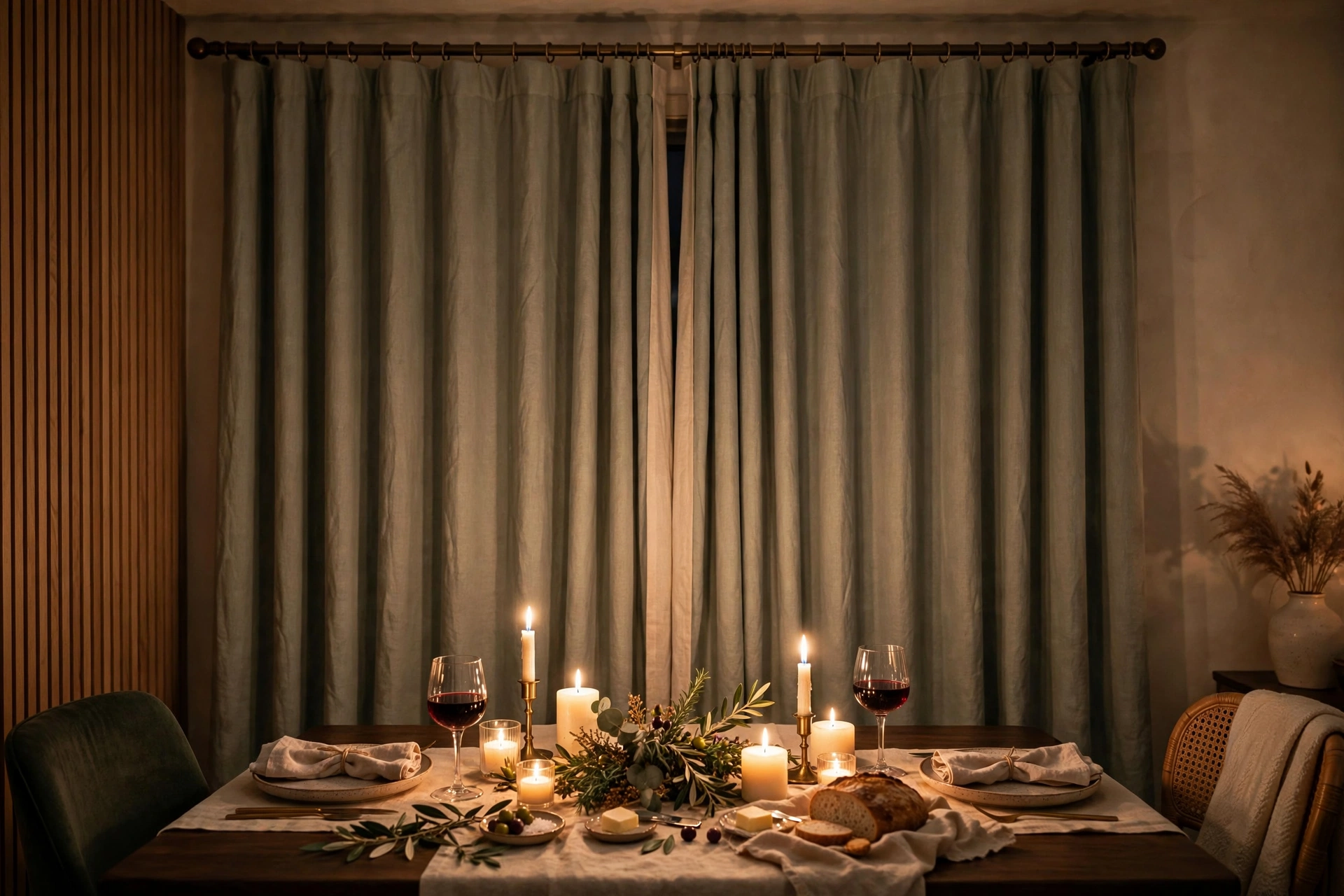
Dining rooms used for evening entertaining benefit enormously from blackout or thermal lining — not for sleeping, but for atmosphere. Lined curtains block the gray-blue spill of streetlights and neighbors’ windows, letting your candles and chandelier own the room’s mood. Thermal lining also insulates drafty old windows, a genuine comfort upgrade around a winter table. From the inside, lined panels hang with a fuller, more luxurious drape. The lining is invisible in daylight use, so there is no daytime downside — just choose white or ivory lining so it looks neat from the street.
13. Try a Valance for a Finished Top
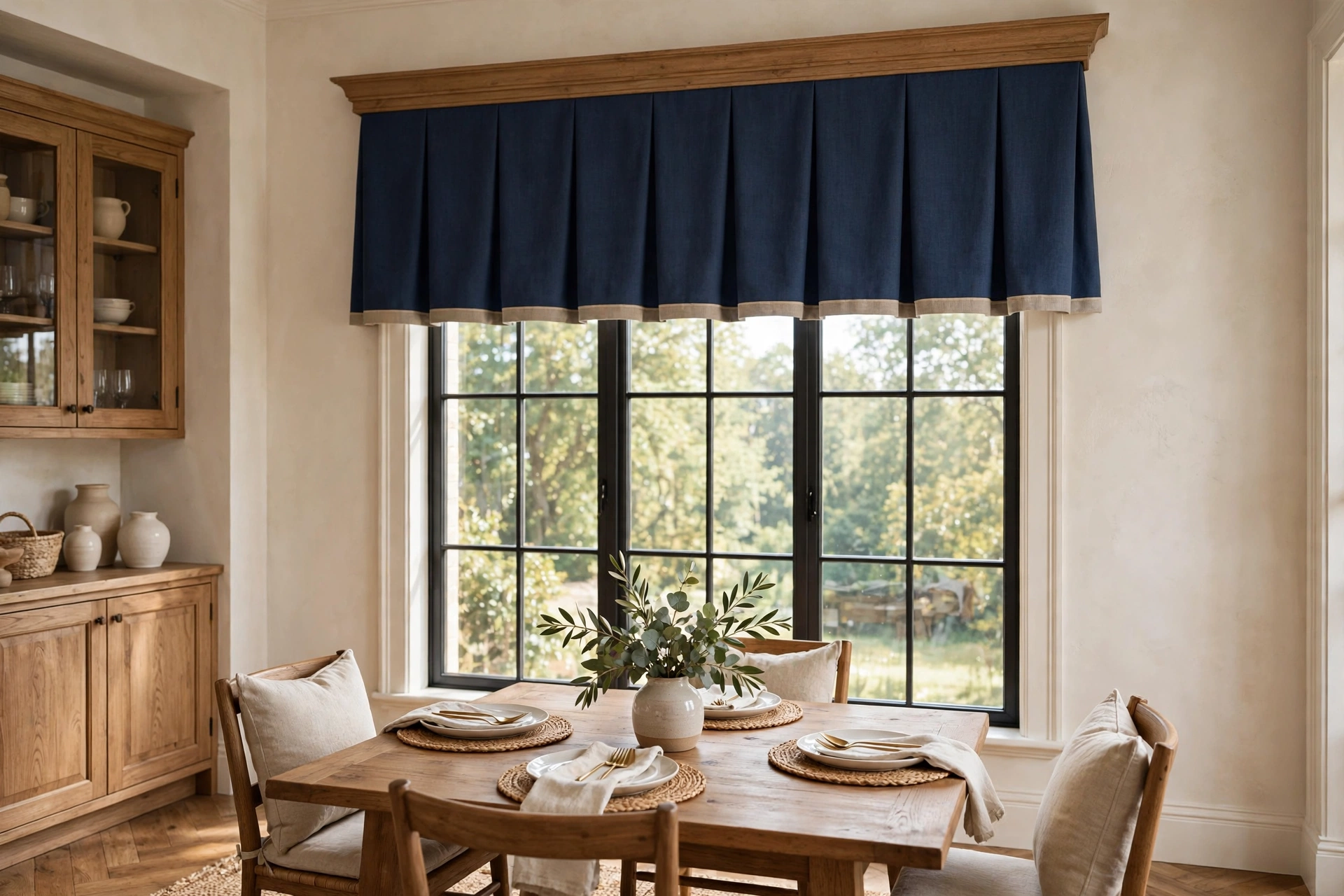
In dining rooms with beautiful trim or a statement chandelier, a tailored valance finishes the top of the window without the commitment of full panels. A flat valance on a board, a soft gathered valance, or a shaped cornice box can hide hardware, add pattern at eye level, and frame the window architecturally. Valances work best on windows that do not need privacy or light control — or paired with shades that do the work invisibly. Keep the valance depth proportional: twelve to sixteen inches for standard windows, deeper for tall ones.
14. Match Curtains to the Season

Dining rooms that entertain year-round can dress their windows seasonally with a second, inexpensive set of panels. Lightweight linen or cotton sheers for spring and summer keep the room airy; swap to heavier weaves or richer tones for fall and winter warmth. The swap takes an afternoon and transforms the room’s whole feeling — cool and breezy becomes cozy and enveloping. Store the off-season set clean and folded, and choose a neutral rod and hardware that works with both. Holiday hosts love this trick: deep-toned panels make December dinners feel instantly festive.
15. Keep It Simple With Unlined Cotton
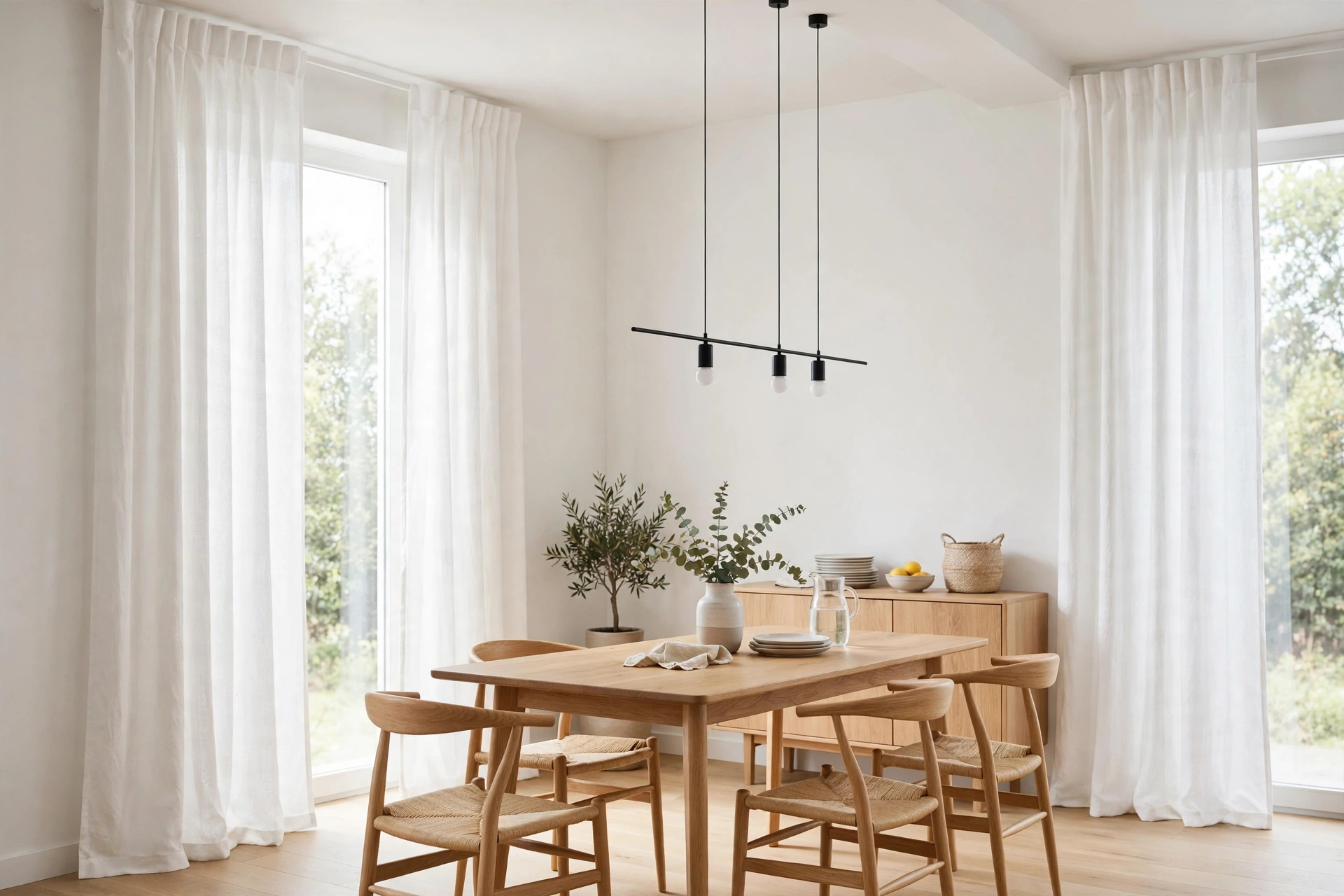
Sometimes the most elegant choice is the simplest: crisp unlined cotton or cotton-linen panels in white or natural. They read fresh and modern, let beautiful light pour through, wash easily after spaghetti night, and cost a fraction of lined silk or velvet. The secret to making simple curtains look expensive is all in the hang — high, wide, full, and kissing the floor — plus a steamer to erase packaging wrinkles. In a dining room with strong furniture or art, quiet curtains let the rest of the room shine. Bedroom curtain ideas for privacy light and style prove the same less-is-more principle works in sleeping spaces too, and the hanging math is identical.
FAQ
How long should dining room curtains be?
For an elegant look, curtains should just kiss the floor (breaking about half an inch above it) or puddle slightly for formality. Sill-length or apron-length curtains suit only casual breakfast nooks and windows above radiators or banquettes. Measure from your rod position — ideally six to eight inches above the frame — to the floor, and buy the next standard length up rather than one that falls short. Short curtains are the most common dining room mistake, and the cheapest to fix.
Should dining room curtains match the living room?
They do not need to match, but they should relate — especially in open-plan spaces where both windows are visible at once. Use the same rod finish and a shared color palette, or choose different fabrics in the same weight and formality level. The goal is a conversation between the rooms, not identical twins. If the dining room is enclosed, you have full freedom to give it its own moodier or more formal treatment. For background on the science of window coverings, see the overview of curtain types and functions.
What is the best fabric for dining room curtains?
Linen and linen-blends are the all-round winners: beautiful drape, flattering light filtration, and machine-washable practicality. Cotton works for casual rooms; velvet for formal drama; silk or faux silk for traditional elegance (keep silk out of direct sun, which rots it). Whatever you choose, add lining for rooms used in the evening — it improves the drape, protects the fabric, and gives you light control. Avoid dry-clean-only fabrics in dining rooms used daily with kids.
How wide should curtain panels be for a dining room window?
Plan for panels totaling one and a half to two times the window width for a full, gathered look when closed — two times for sheers and lightweight fabrics, which need extra fullness. When open, the stacked panels should just clear the glass, which is why the rod extends well past the frame. Skimpy panels that barely close are the fastest way to make curtains look cheap, so when in doubt, size up. Two panels per window look more balanced than one, except on very narrow windows.
Can I use curtains with blinds in a dining room?
Absolutely — layering curtains over blinds or shades is a designer staple. The blind or shade handles light and privacy precisely, while the curtains add softness, color, and formality. Mount the curtains high and wide so they frame rather than cover the blind, and choose a blind in a neutral tone that disappears when the curtains are drawn. This combination is ideal for dining rooms facing the street, where you want daytime privacy without living behind closed drapes. This Apartment Therapy guide to small dining rooms shows layered windows working hard in compact spaces.
Keep Exploring
Curtains are the dining room’s finishing touch — they soften the architecture, flatter the light, and signal that this is a room for lingering. Hang them high, choose fabric you can live with, and let the windows do half your decorating.
Once the windows are dressed, turn to the walls: our dining room wall decor ideas for warm inviting gatherings complete the backdrop for every memorable meal.

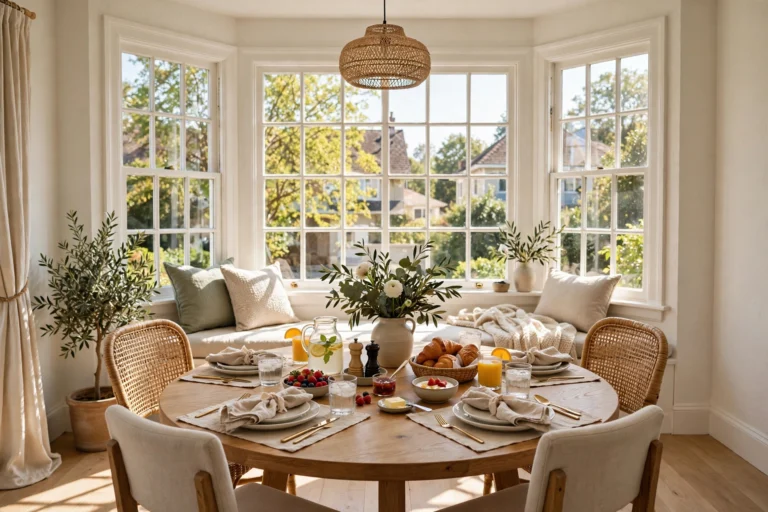




[…] see jam, coffee, and homework glue — and add a pedestal table that chairs can tuck fully under. Dining room curtain ideas for elegant gatherings show how to dress the glass behind a banquette so the nook feels finished, not just […]