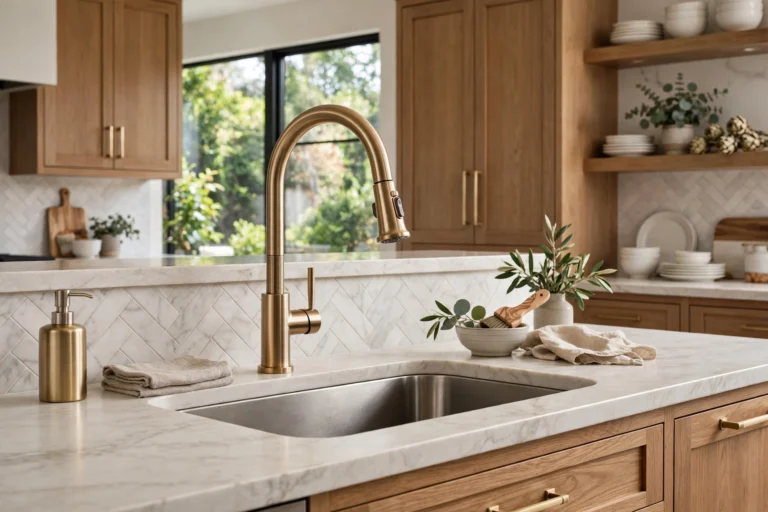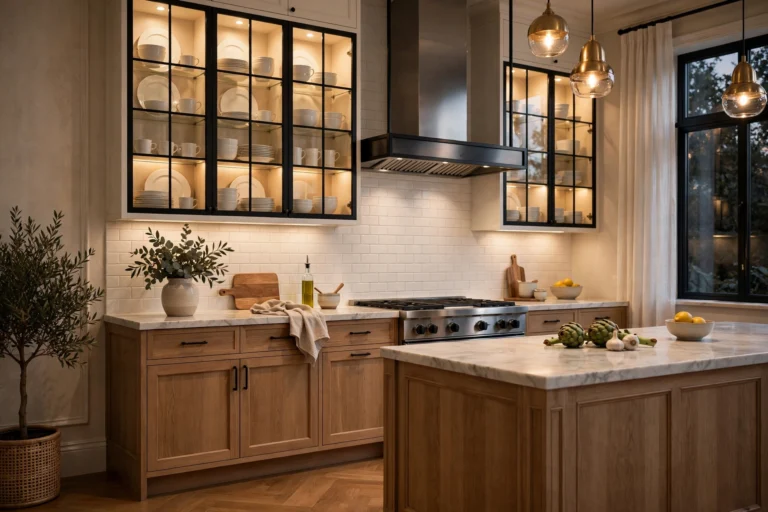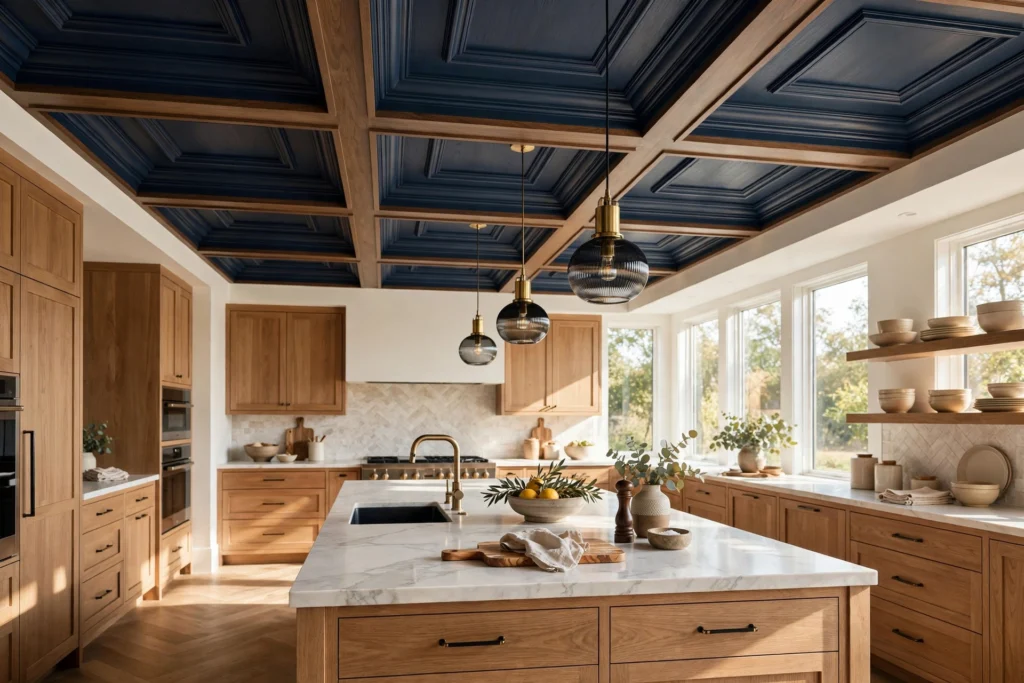

The ceiling is the most overlooked surface in the kitchen — and the one with the most untapped potential. While everyone debates cabinets and countertops, a bold ceiling quietly changes how the whole room feels: it can add warmth, height, texture, or pure drama in a single move. These kitchen ceiling ideas range from classic millwork to moody black paint, and every one of them works in a real, working kitchen where steam, grease, and daily splatters are facts of life.
Before you commit to a treatment, look up and take stock. Note your ceiling height, the placement of can lights and vents, and anything the ceiling must still do — like housing a statement range hoods that vents through it. With that mapped out, you can pick an idea that looks great and survives the realities of cooking.
1. Go Classic With Coffered Ceilings
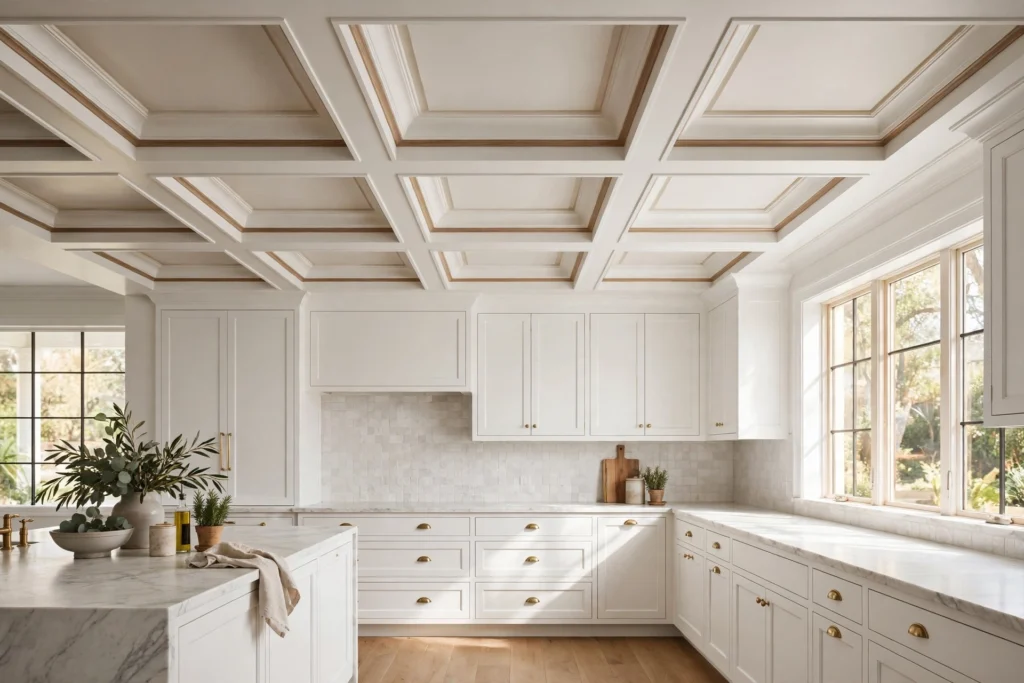
A coffered ceiling brings instant architecture to a kitchen: a grid of recessed panels framed by beams or molding that adds depth, rhythm, and a sense of intention to the room. If you’re curious about the history behind the technique, these coffered ceilings explained show how the pattern has been used for centuries. In the kitchen, paint the coffers the same color as the ceiling for a subtle, elegant lift, or contrast the inset panels with a slightly deeper tone for a custom, built-in feel. Keep the pattern scale proportional to the room — oversized grids can dwarf a small kitchen, while tight grids look busy in a large one. In kitchens with 9-foot ceilings or higher, coffers draw the eye upward without making the room feel shorter, and they pair beautifully with an island centered beneath the middle panel.
2. Add Cottage Charm With Beadboard Ceilings
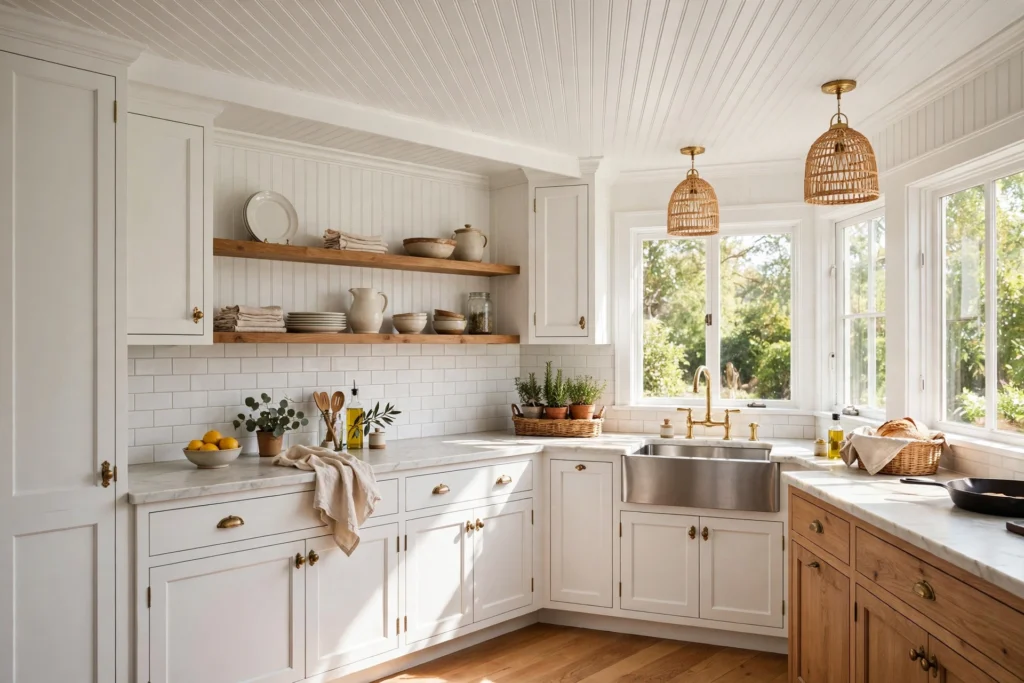
Beadboard is the friendly workhorse of ceiling treatments — thin, grooved boards that add texture and a relaxed, cottage-like warmth to any kitchen. Run the boards front to back to make a galley kitchen feel longer, or side to side to visually widen a narrow space. A satin white finish keeps things bright and classic, while a soft sage or pale blue brings farmhouse charm without going full country. For busy cooking zones, choose a paintable PVC or primed wood beadboard with a washable satin or semi-gloss finish so splatters wipe off easily. The grooves hide minor ceiling imperfections too, which makes beadboard a forgiving choice in older kitchens where the plaster isn’t perfectly smooth.
3. Bring In Rustic Exposed Beams
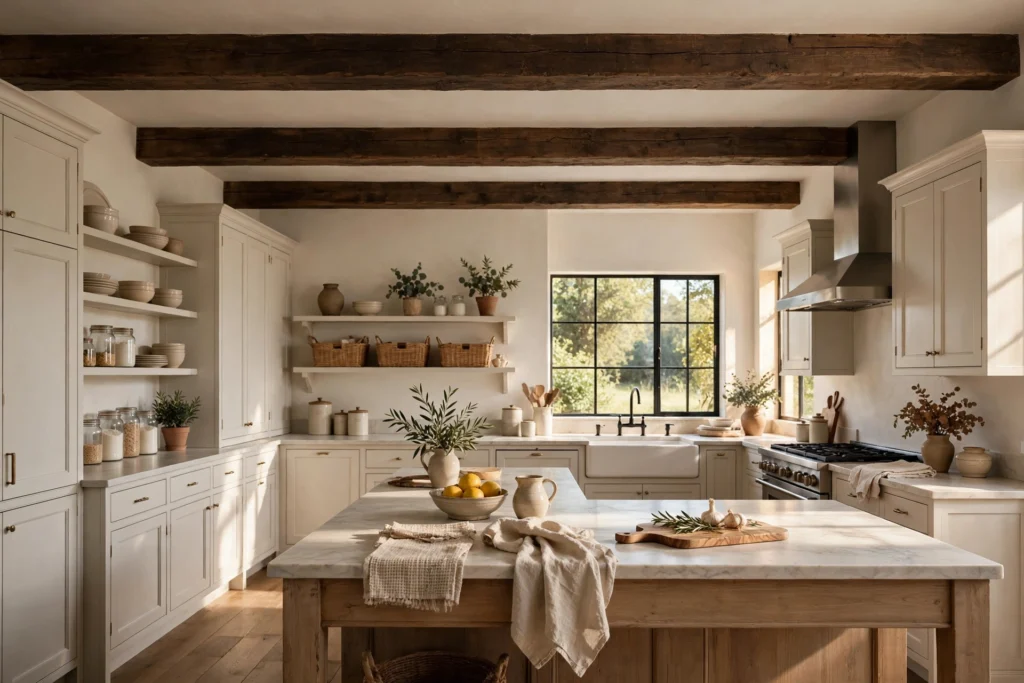
Few things give a kitchen character like exposed beams — whether they’re structural timbers you’ve stripped and stained, or lightweight faux beams added for looks. Dark walnut-stained beams against a white ceiling create a striking farmhouse contrast, while whitewashed or bleached beams keep a coastal or modern-rustic kitchen feeling light. Space them evenly for a formal rhythm or cluster them over the island and dining nook for a more relaxed, organic feel. In a kitchen, beam material matters: real rough-sawn wood needs to be sealed well since it sits above heat and humidity, and faux polyurethane beams are lighter, easier to install, and take paint or stain convincingly from below. Wiring pendant lights to hang from a beam makes the whole arrangement feel intentional.
4. Make a Statement With Bold Painted Ceilings
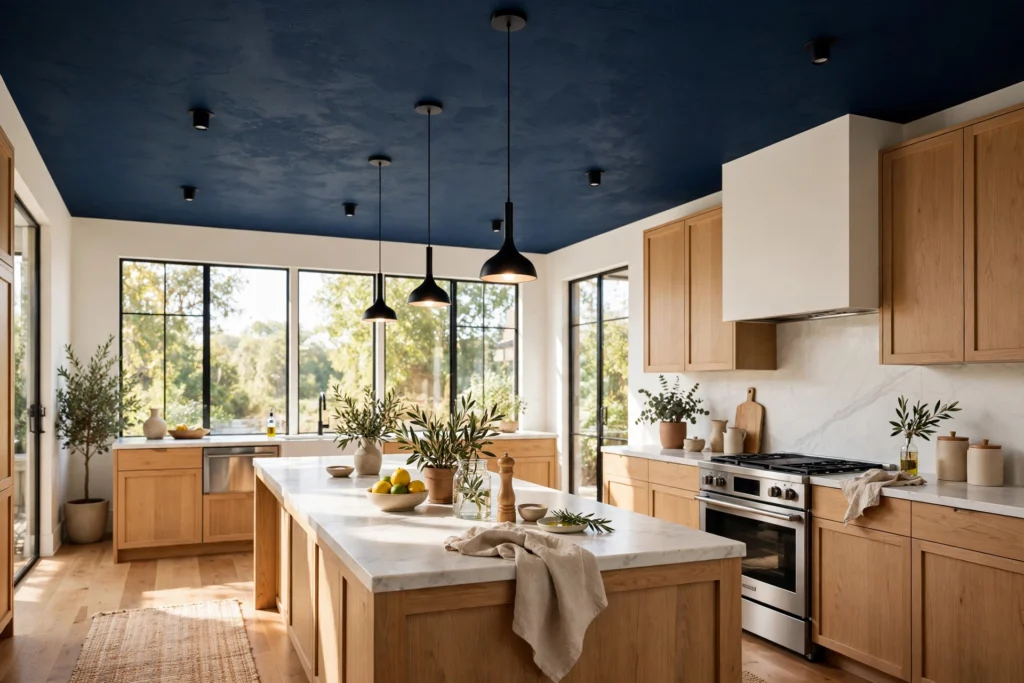
Sometimes the boldest move costs the least: a ceiling painted in an unexpected color. Deep navy, forest green, warm terracotta, or even a rich plum can turn the ceiling into the kitchen’s exclamation point. The trick is choosing the right sheen and coverage — a flat or matte finish looks sophisticated and hides imperfections, while a satin finish reflects a bit of light and stands up better to humidity. For cohesion, pull the ceiling color from an accent already in the room, like bar stools, a rug, or tile trim, so it feels connected rather than random. In kitchens with white cabinets and light counters, a bold ceiling adds the contrast the room was missing without changing a single fixture.
5. Try Tin and Pressed-Metal Tiles
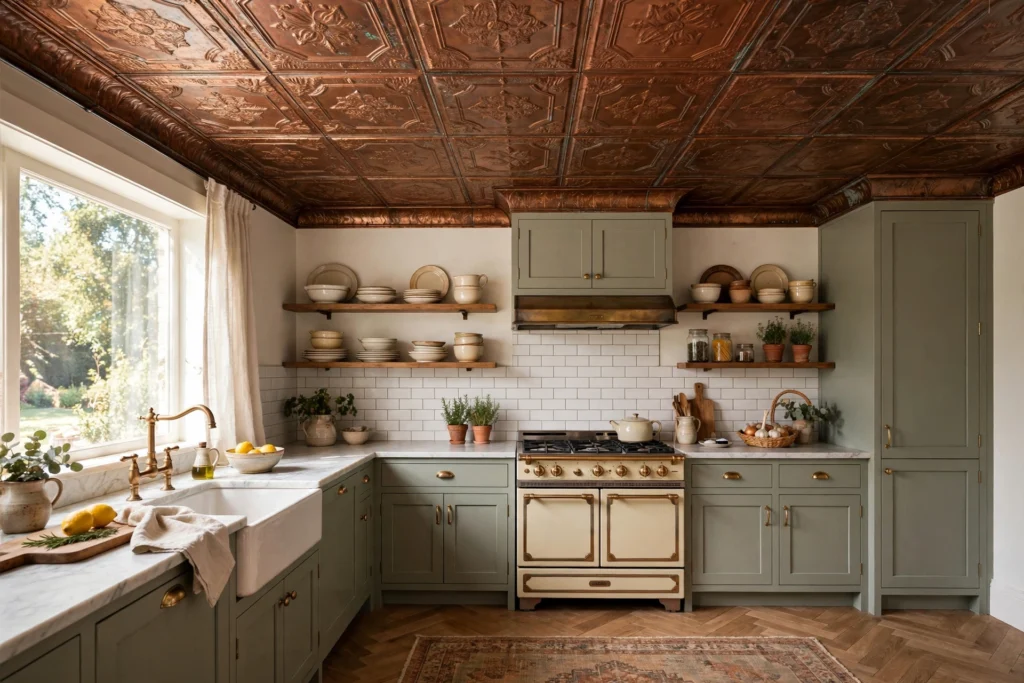
Pressed-metal ceiling tiles bring vintage soul to a kitchen — think of the ornate tin ceilings in old storefronts and Victorian homes. Today’s versions come in faithful reproductions and modern geometric patterns, in finishes from antique copper and brushed nickel to paintable white. In the kitchen, metal tiles are more than pretty: they’re naturally grease-resistant, wipeable, and unfazed by humidity when finished properly. Install them as a full ceiling for maximum drama, or as a feature section over the island or breakfast nook. Keep the cabinetry simple when the ceiling is this ornate — the texture up top becomes the room’s jewelry, and competing patterns below will fight it.
6. Warm Things Up With Wood Plank Ceilings
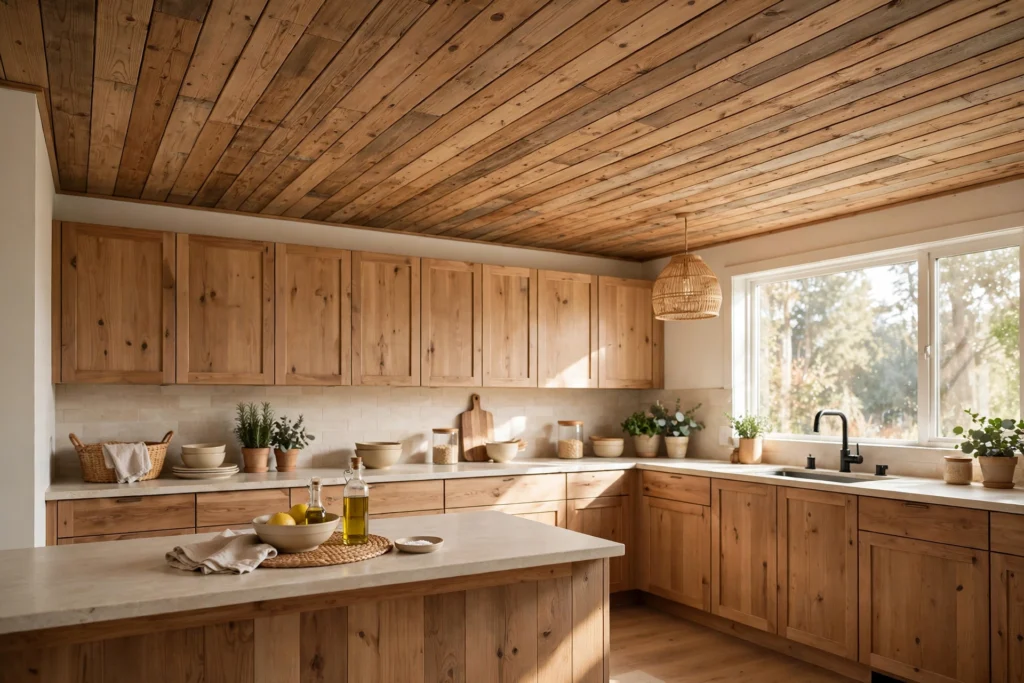
A wood plank ceiling wraps the kitchen in warmth the way no other material can. Tongue-and-groove boards — pine for a budget-friendly farmhouse look, cedar for richness, or reclaimed barn wood for real patina — run across the ceiling and instantly make the kitchen feel crafted and lived-in. A clear matte seal keeps the natural grain visible while protecting against kitchen moisture, and a whitewash or pickled finish lightens the look if full-tone wood feels too heavy. Planks work especially well in open-concept kitchens, where a wood ceiling visually defines the cooking zone and separates it from the adjacent living space. Run the boards toward the windows to pull daylight deeper into the room.
7. Look Up to Wallpapered Ceilings
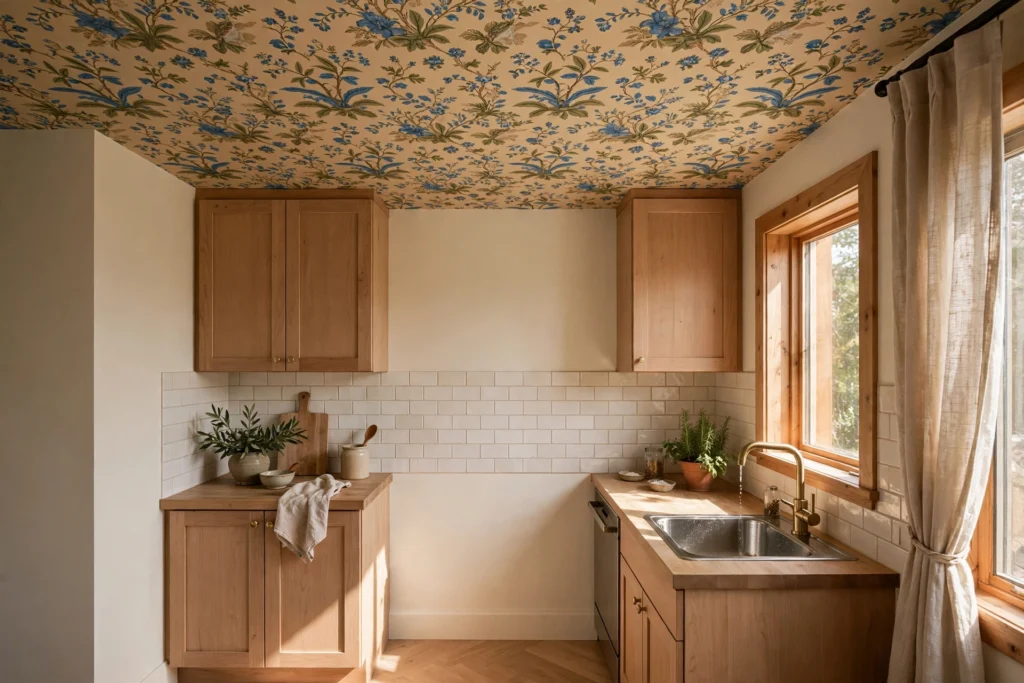
The fifth wall is having its wallpaper moment, and the kitchen ceiling is a perfect canvas. A bold print — oversized botanicals, art-deco fans, a painterly mural — turns an ordinary ceiling into a conversation piece, especially in smaller kitchens where one patterned surface won’t overwhelm. In a working kitchen, choose a washable, moisture-resistant paper (vinyl or coated options handle steam far better than standard paper) and consider having it installed professionally, since ceilings are unforgiving of crooked seams. Keep walls and cabinets relatively quiet so the ceiling carries the pattern alone. Wallpapered ceilings also photograph beautifully, which matters if your kitchen doubles as the backdrop for everything from family gatherings to recipe videos.
8. Open Up With Skylights
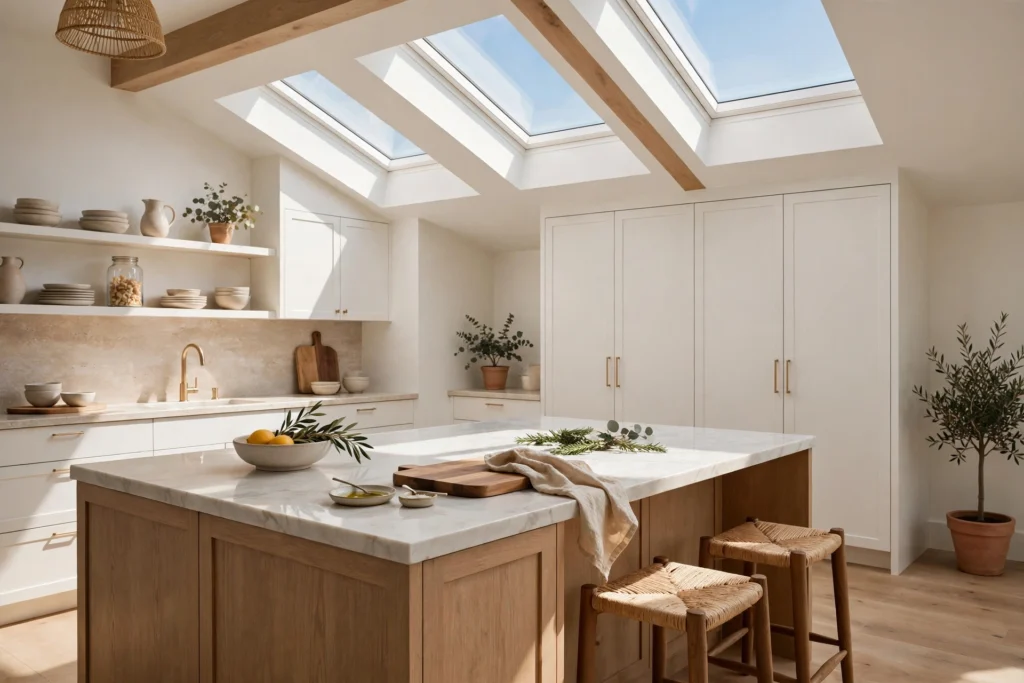
Nothing transforms a kitchen like genuine daylight pouring in from above. A skylight — or a pair of them — over the island, sink run, or breakfast table makes the room feel larger, brightens task areas without extra fixtures, and connects the kitchen to the sky in a way no ceiling treatment can. Modern skylights come with features made for kitchens: vented models that release cooking heat and humidity, and built-in blinds or solar shades for controlling glare on sunny afternoons. Placement matters more than size — one skylight centered over the work zone beats two squeezed at the edges. For deeper insight into structural considerations and best practices, check the renovation guidance from This Old House before cutting into your roof. Always budget for professional flashing and installation; a skylight is wonderful until it leaks.
9. Add Dimension With Tray Ceilings
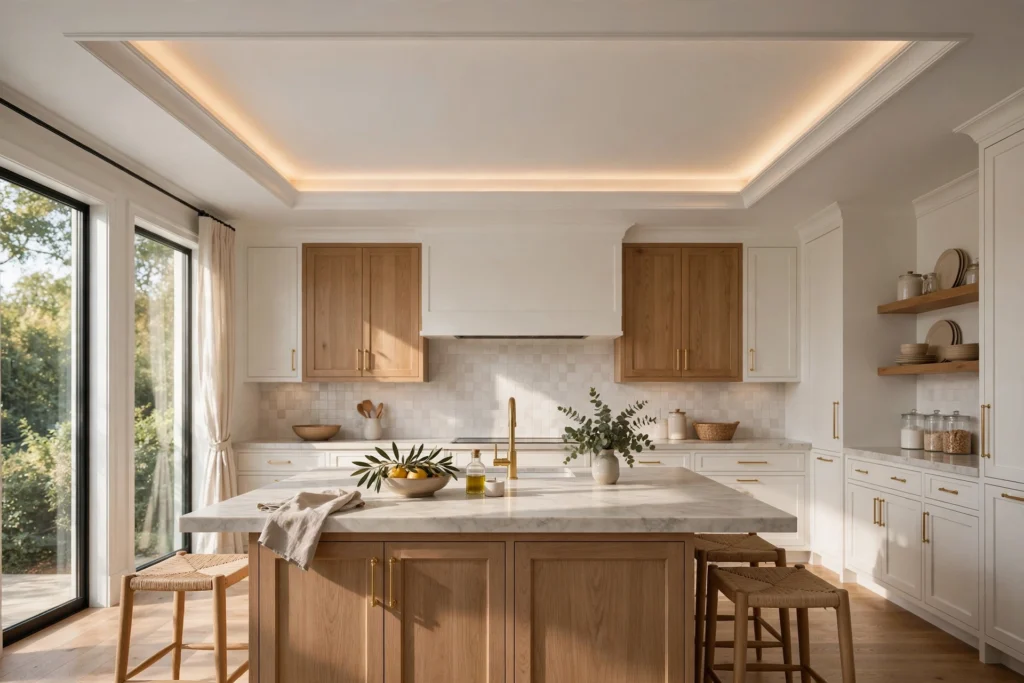
A tray ceiling — a recessed center section framed by a step or two of trim — adds architectural interest without the full commitment of a coffered grid. It’s an elegant fit for kitchens with 9-foot or higher ceilings, where the raised center makes the room feel taller and more custom. Paint the recessed field a slightly lighter or deeper shade than the surrounding ceiling to emphasize the depth, or run a strip of LED cove lighting along the inner step for a soft evening glow that flatters the whole room. A tray also creates a natural zone marker: center it over the island or dining table and the ceiling itself tells you where each activity happens. Keep the trim profile simple and in keeping with your cabinet style for a cohesive, designed look.
10. Treat the Ceiling Above the Kitchen Island
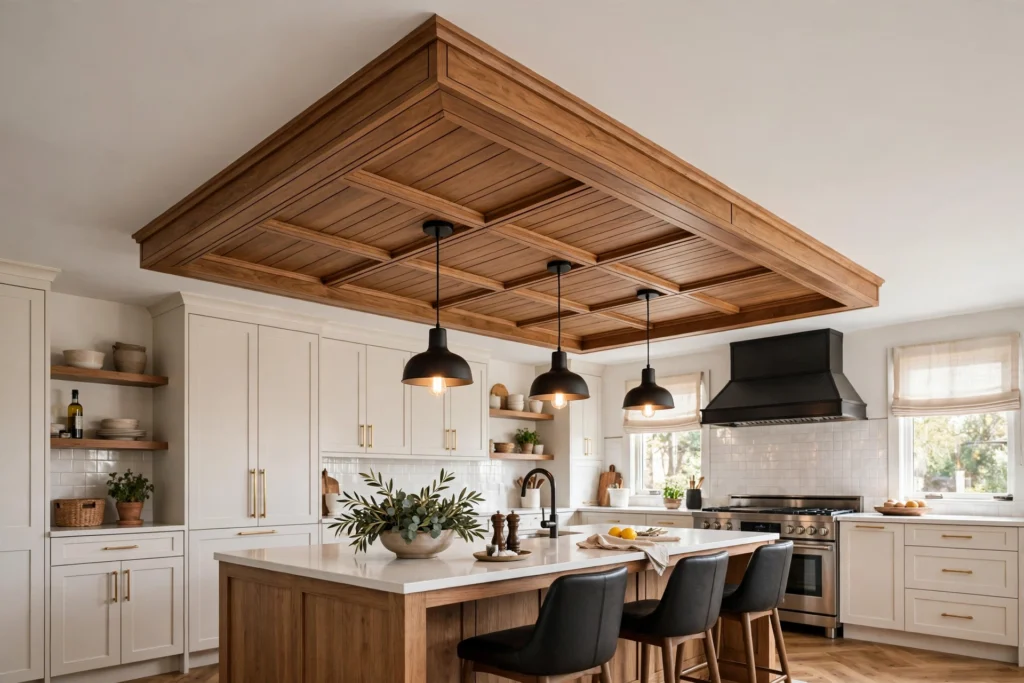
The island is the kitchen’s centerpiece, so the ceiling above it deserves its own moment. A framed wood panel, a section of beadboard or tin tile, a bold paint block, or even a shallow coffered inset can define the island zone and give your pendants a proper backdrop. Whatever treatment you choose, coordinate it with the island’s style — a shiplap section over a farmhouse island, a sleek dark panel over a modern waterfall island. This is also where lighting and ceiling design meet: pendant heights, canopy covers, and recessed cans all need to work with the new surface. Browse our favorite kitchen island designs for island styles worth showcasing, then design the ceiling treatment to frame them like art.
11. Play With Two-Tone Ceiling and Wall Color
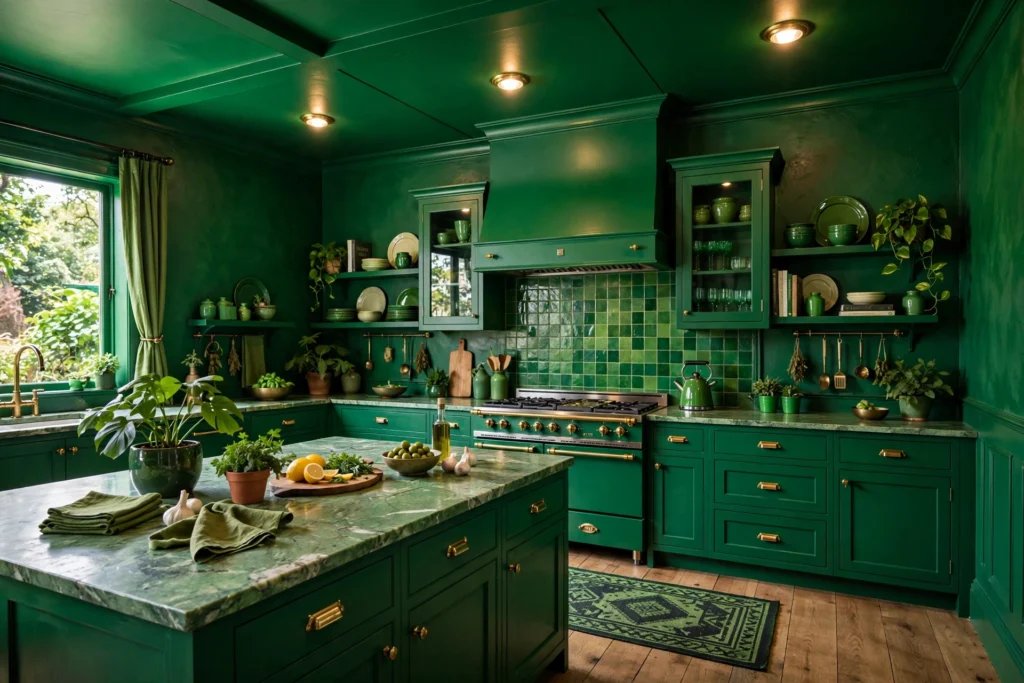
Extending wall color partway — or fully — onto the ceiling is one of the easiest ways to make a kitchen feel designed rather than decorated. Color-drenching, where walls and ceiling share one saturated hue, wraps a small kitchen in cozy, cohesive color and makes the room’s boundaries blur beautifully. For a subtler take, carry the wall color up just 12 to 18 inches past the wall-ceiling line, creating a painted border that softens the transition and adds a custom touch. In kitchens with crown molding, painting the molding and ceiling the same tone as the walls makes everything feel taller and more unified. This approach costs a gallon of paint and a weekend, but the result reads like a designer’s signature move.
12. Frame the Light With Ceiling Medallions
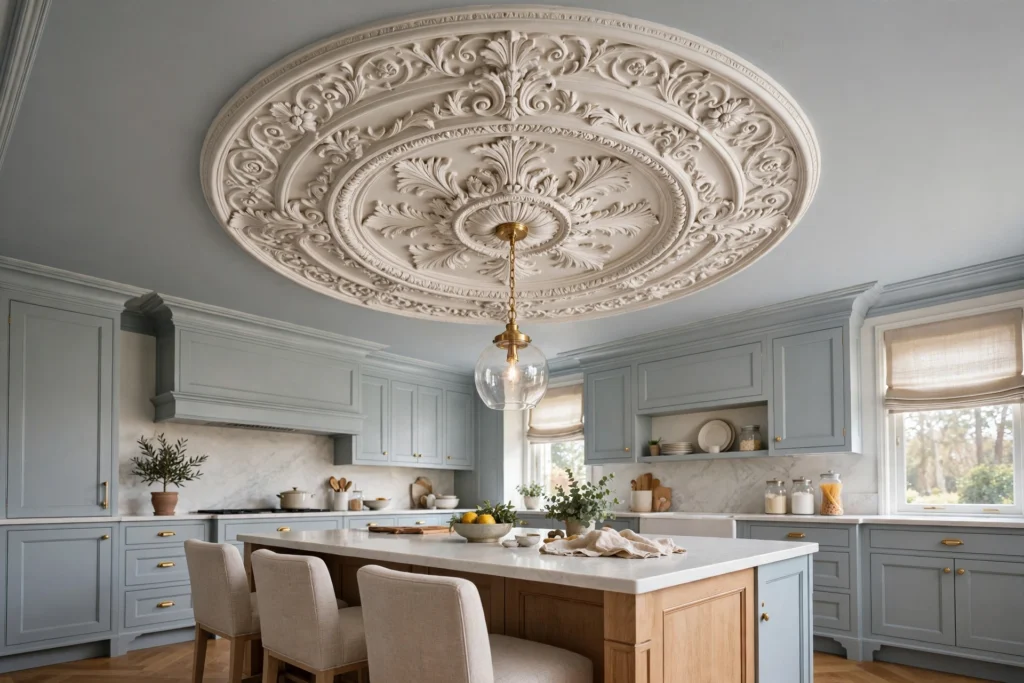
Ceiling medallions aren’t just for grand foyers — a well-chosen medallion gives a kitchen pendant or chandelier a finished, intentional look. In the kitchen, place medallions over the island where statement pendants hang, or above a breakfast table chandelier. Scale is everything: the medallion’s diameter should roughly match the fixture’s width, and in a kitchen, simpler profiles with clean rings or subtle molding usually work better than ornate floral carvings that collect grease. Lightweight polyurethane medallions install easily and take paint well, so you can match them to the ceiling or contrast them in the trim color. One medallion over the island instantly elevates the whole lighting story.
13. Embrace the Airiness of Vaulted Ceilings
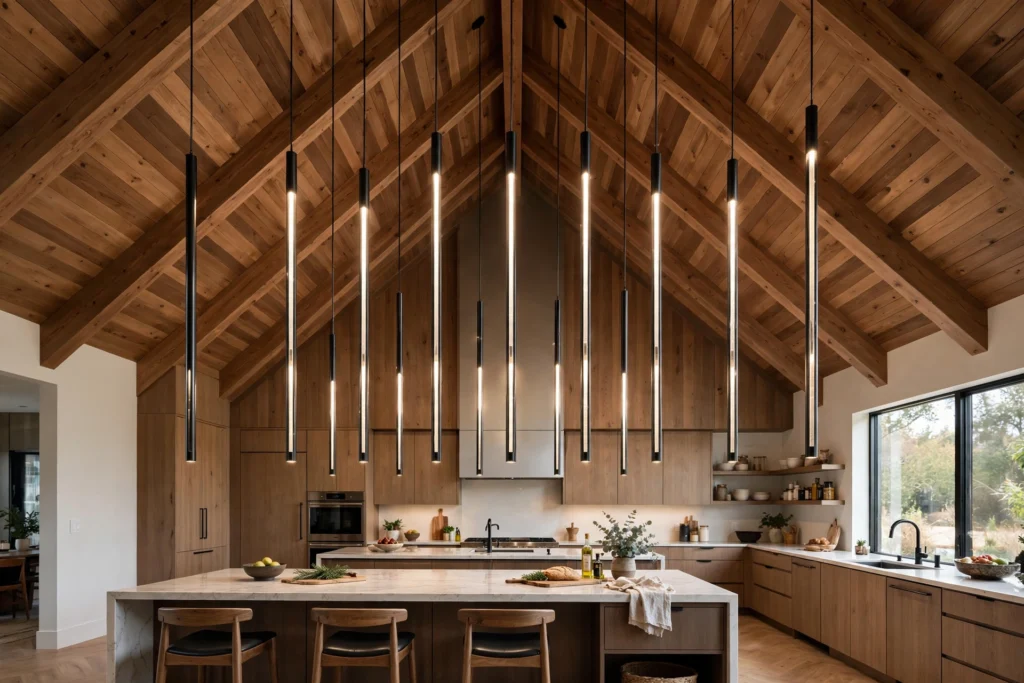
If your kitchen has a vaulted or cathedral ceiling, treat it as the asset it is rather than an awkward space to fill. The height begs for a statement: a dramatic chandelier or cluster of long pendants that fill the vertical volume, beams that follow the roofline, or a tongue-and-groove wood finish that turns the whole slope into a warm canopy. Paint color deserves thought here — a bright white keeps the volume feeling airy and bounces light deep into the room, while a deep tone on the vault creates a cozy, cocoon-like kitchen that feels intimate despite the height. Plan lighting in layers, since one central fixture rarely reaches every corner of a tall space; uplights on high beams or wall washers keep the upper reaches from going dark and cavernous at night.
14. Go Dramatic With Black Ceilings
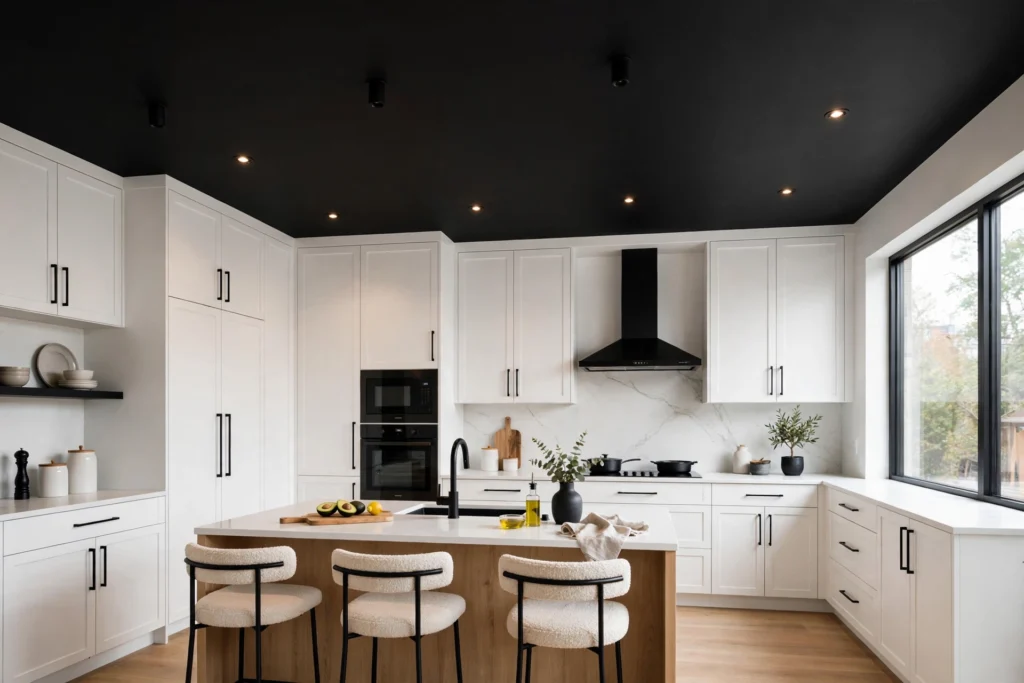
A black ceiling in the kitchen sounds daring, but done right it’s pure sophistication. Matte black above white cabinetry and light counters creates a crisp, high-contrast look that feels modern and gallery-like, while a softer charcoal or off-black keeps the drama without closing the room in. Black ceilings work best with strong lighting — the dark surface absorbs light, so layer recessed cans, under-cabinet lighting, and statement pendants to keep the room glowing. In open-concept spaces, carrying the black ceiling over just the kitchen zone defines the cooking area as its own world. Use a quality paint with a flat or matte finish to avoid the plasticky look, and make sure the surface is well-prepped, because dark paint shows every flaw.
15. Keep It Practical: Grease and Cleaning

Every beautiful ceiling in a working kitchen still has to survive grease, steam, and the occasional tomato-sauce incident — so build practicality into your choice from the start. Smooth, washable finishes beat heavily textured ones near the range: satin or semi-gloss paint wipes clean, sealed wood and metal tiles shrug off splatter, and washable wallpaper survives the steam zone far better than standard paper. Ventilation is your ceiling’s best friend — a properly sized range hood that vents outside dramatically reduces the grease film that settles on every overhead surface. Plan a twice-yearly ceiling wipe-down with a degreasing cleaner on an extendable mop, and choose treatments (like beadboard or planks) whose joints and grooves are easy to dust rather than intricate carvings that trap grime.
Frequently Asked Questions
What is the best ceiling for a kitchen?
The best kitchen ceiling balances looks with washability. Painted drywall with a satin finish is the practical default — smooth, affordable, and easy to wipe down. Beadboard, sealed wood planks, and metal tiles add character while staying grease-friendly. Whatever you choose, pair it with good ventilation, since even the prettiest ceiling suffers under a film of cooking grease without a properly vented range hood.
Can you put wallpaper on a kitchen ceiling?
Yes, as long as you pick the right paper and place it wisely. Choose a washable, moisture-resistant wallpaper — vinyl or coated papers handle kitchen steam far better than standard options — and consider professional installation, since ceilings punish crooked seams. Keep patterned ceilings away from the greasiest zones directly over the range, and make sure the room has decent ventilation to protect the paper long-term.
Are dark ceilings a bad idea in a small kitchen?
Not necessarily. A dark or black ceiling in a small kitchen can feel cozy and intentional rather than cramped, especially when the walls stay light and the lighting is generous. The key is layering light — recessed cans plus under-cabinet lighting plus a statement pendant — so the dark surface reads as drama, not gloom. If you’re nervous, test the idea first with a bold color on just the ceiling over the island.
How do I clean a textured kitchen ceiling?
Start with a thorough dusting using a soft brush attachment on a vacuum or an electrostatic duster on an extendable pole — this removes the loose layer before you add moisture. Then wipe with a damp microfiber mop and a mild degreasing solution, working in sections and wringing well so you don’t soak textured surfaces. For beadboard, planks, or tin tiles, a second pass with plain water prevents residue buildup, and always let the surface dry fully before judging the result.
Keep Exploring
Your kitchen ceiling is finally getting the attention it deserves — whether you chose the architecture of coffers, the warmth of wood, or the drama of black paint. The ideas above prove that looking up pays off: the ceiling can anchor the room’s style, define zones, and add the personality that cabinets and counters alone can’t deliver.
Once the ceiling is sorted, turn your attention to what hangs from it. Our guide to kitchen pendant lighting walks through styles from modern to farmhouse — the perfect next step for making the space above your island work as hard as the ceiling around it.