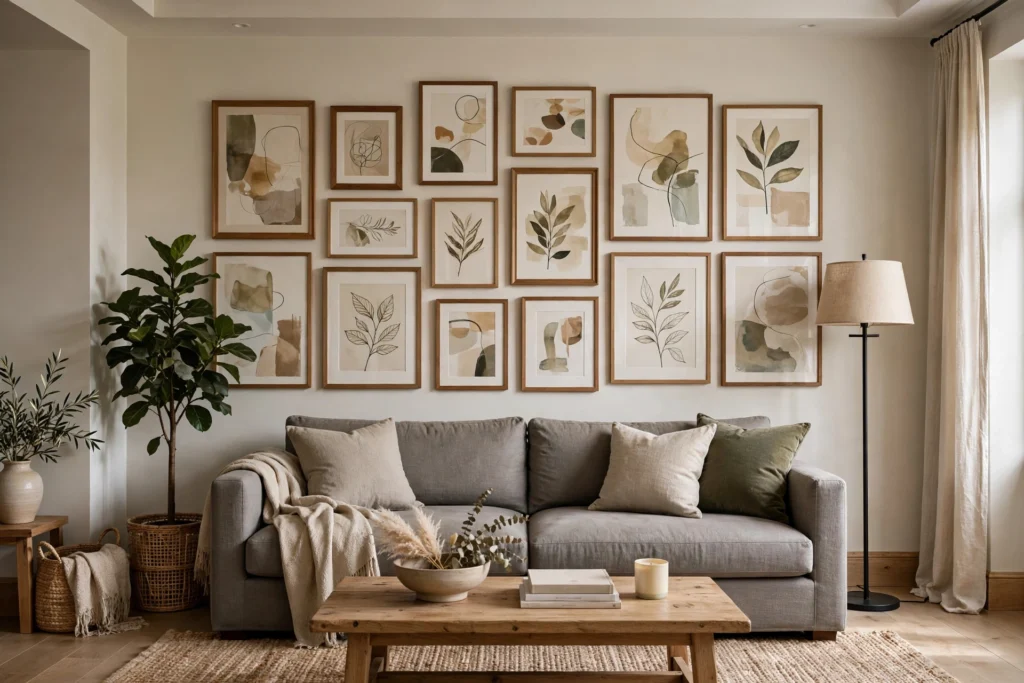

A bare living room wall is one of the biggest missed opportunities in a home, and the most rewarding fix is a display built from living room gallery wall ideas that genuinely reflect your life. The best gallery walls are curated snapshots of your travels, your family, and your taste, arranged so the whole room feels more deliberate. Pairing framed art with bolder treatments like living room accent wall ideas with big impact turns that empty stretch into the room’s true focal point.
The fifteen ideas below walk you through every decision: picking a layout, mixing frames, nailing the spacing, and adding personal touches that make the display unmistakably yours. Choose the approaches that spark something, lay out a paper template on the floor first, and turn blank drywall into the most talked-about corner of your home.
1. The Classic Grid with Matching Frames
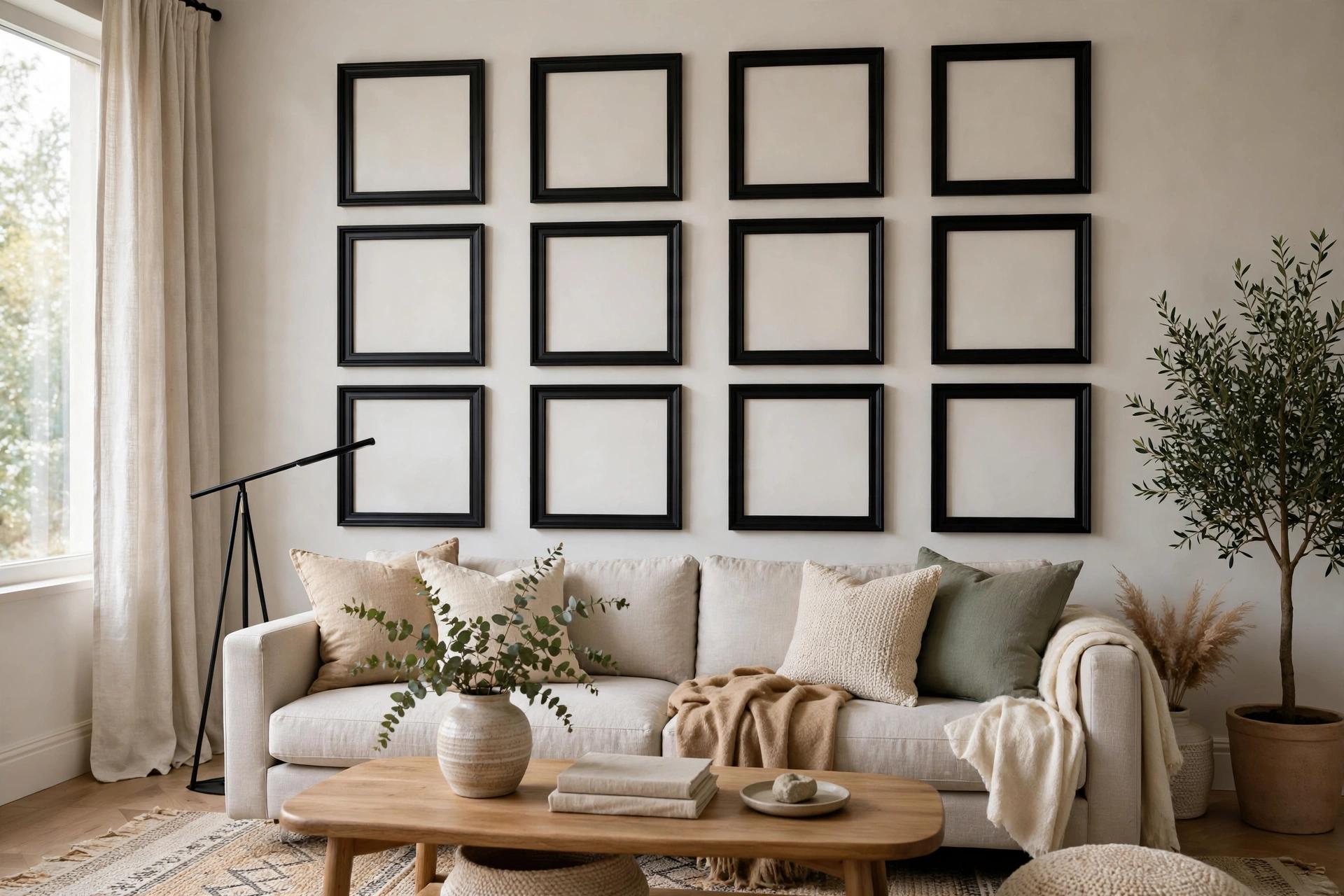
Choose identical frames — black, white, or natural wood — and hang them in straight rows and columns with two to three inches of space between each frame. This layout suits same-size prints or photos best, and it brings calm to busy living rooms by turning visual clutter into order. Center the grid so its middle sits 57 to 60 inches from the floor. It works beautifully above a console table or low bookshelf, and one tired print can be swapped without disturbing the grid.
2. Anchor the Wall Above the Sofa with One Oversized Piece
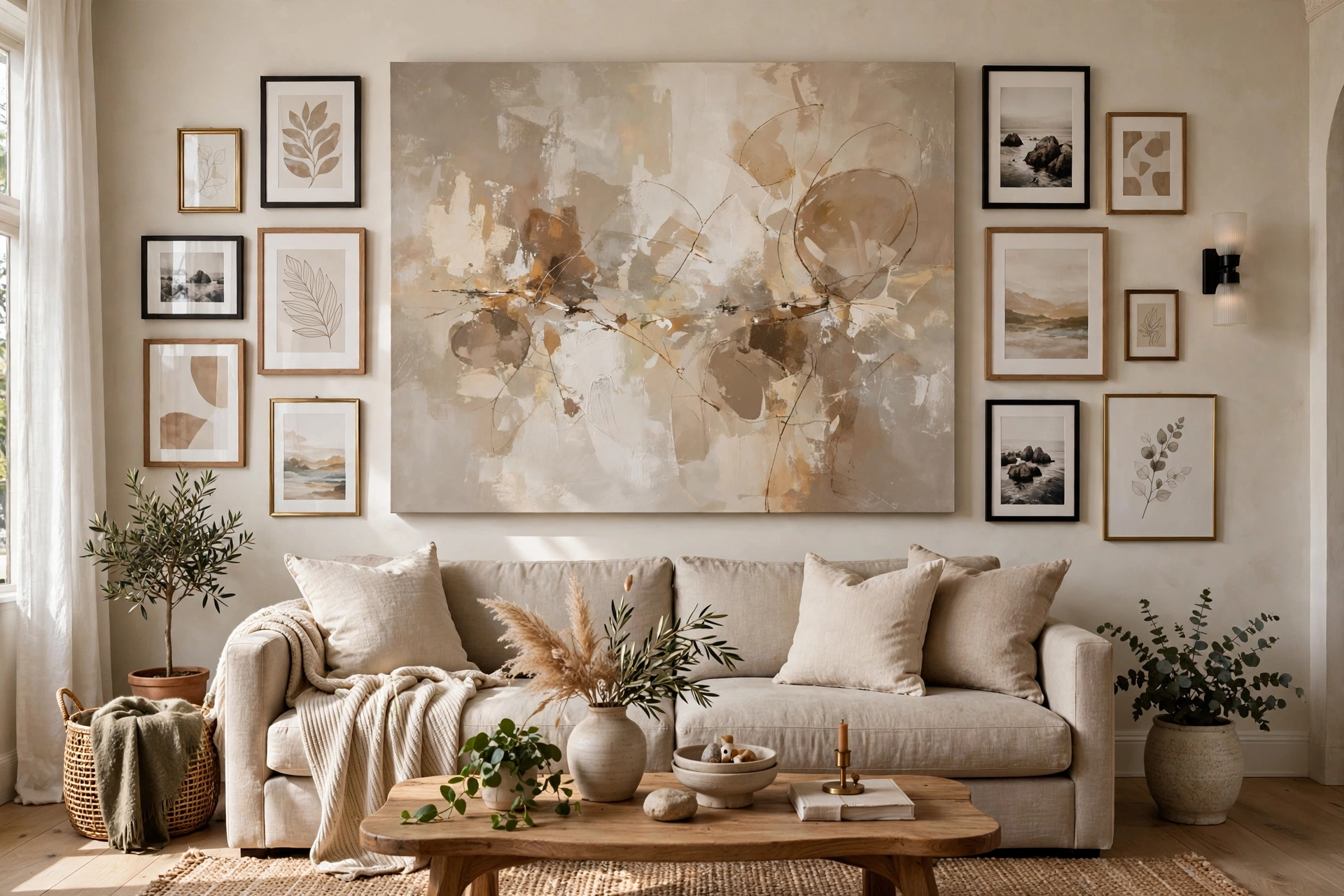
Start with a single large statement — an oversized canvas, a framed textile, or a dramatic photograph — and build the gallery around it. Hang the anchor first, positioning its bottom edge six to eight inches above the sofa back, and aim for art spanning roughly two-thirds of the sofa’s width. Layer smaller frames around and above it, keeping the overall outline roughly rectangular. The big piece gives the eye a landing place while supporting frames add story, and it hides minor spacing imperfections.
3. Picture Ledges for a Layered, Changeable Display
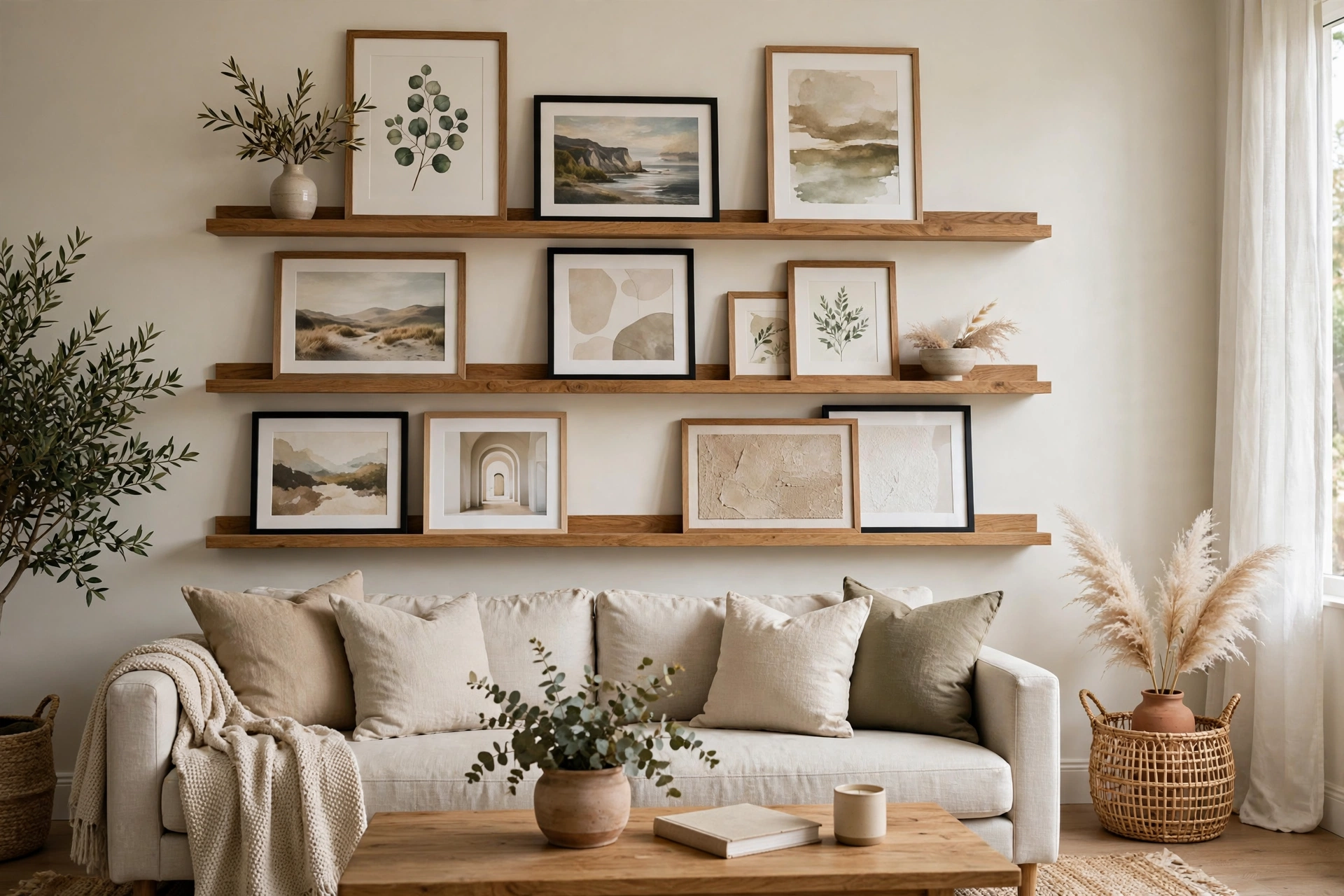
Floating picture ledges are the low-commitment answer to gallery walls. Mount two or three narrow shelves and lean framed art, small canvases, and even books against the surface, layering larger pieces at the back and smaller ones in front. Nothing gets nailed through, so you can rotate pieces with the seasons or whenever taste shifts. Overlap frames slightly for a collected, studio-shelf feel, and add a small plant or sculptural object to break up the rectangles — a renter-friendly route with far fewer wall holes.
4. Black-and-White Photography in Uniform Frames
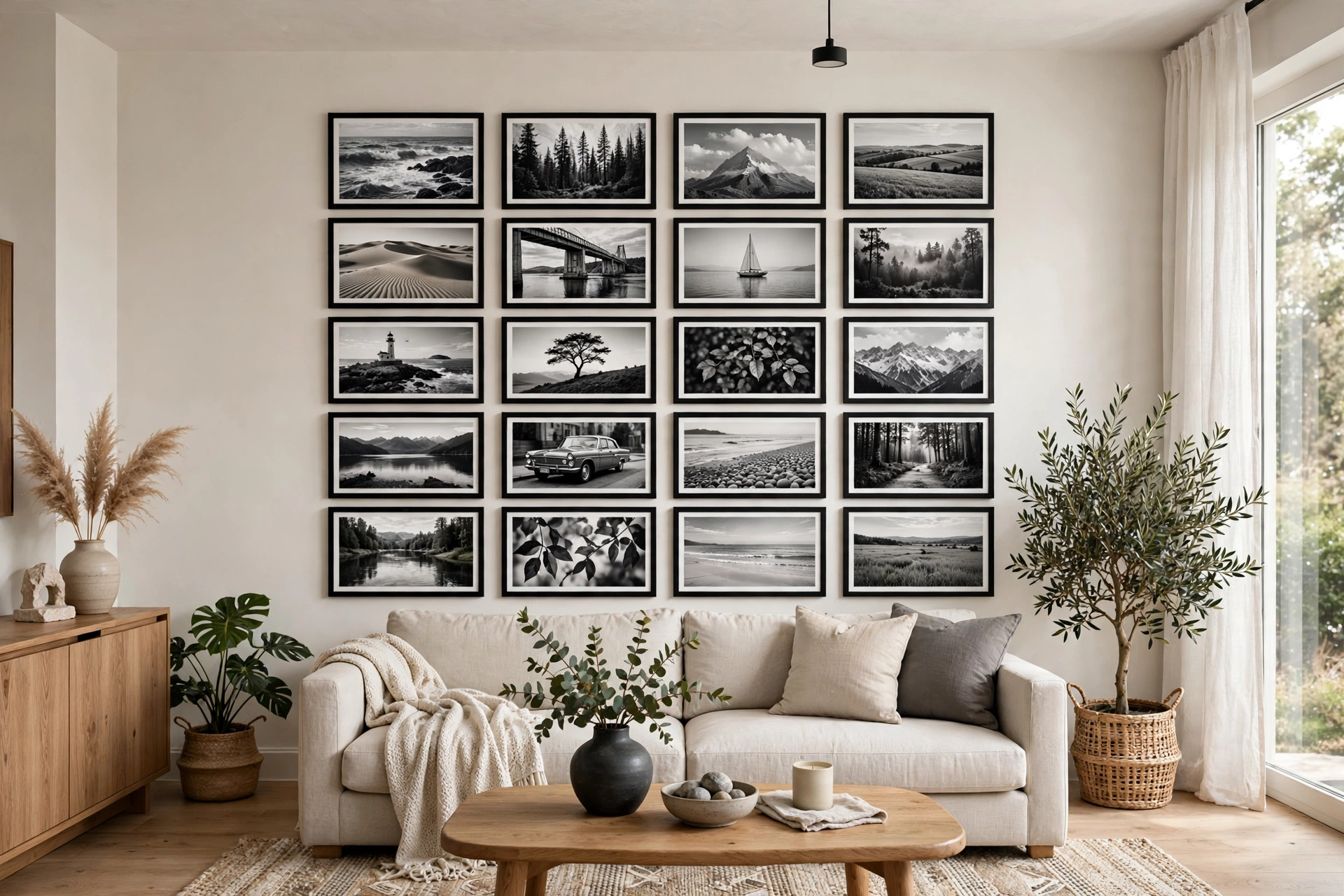
A monochrome photo collection looks effortlessly high-end. Print family portraits, travel shots, and architectural details in black and white, then frame them all in the same finish — thin black metal or simple white wood both work. Keep mats identical in color and width so the frames read as one cohesive unit even when photo sizes vary. This treatment flatters almost any living room palette, removing color competition so composition and emotion carry the wall — refresh it over time by swapping in new prints.
5. Mixed Frame Styles Tied Together by Color
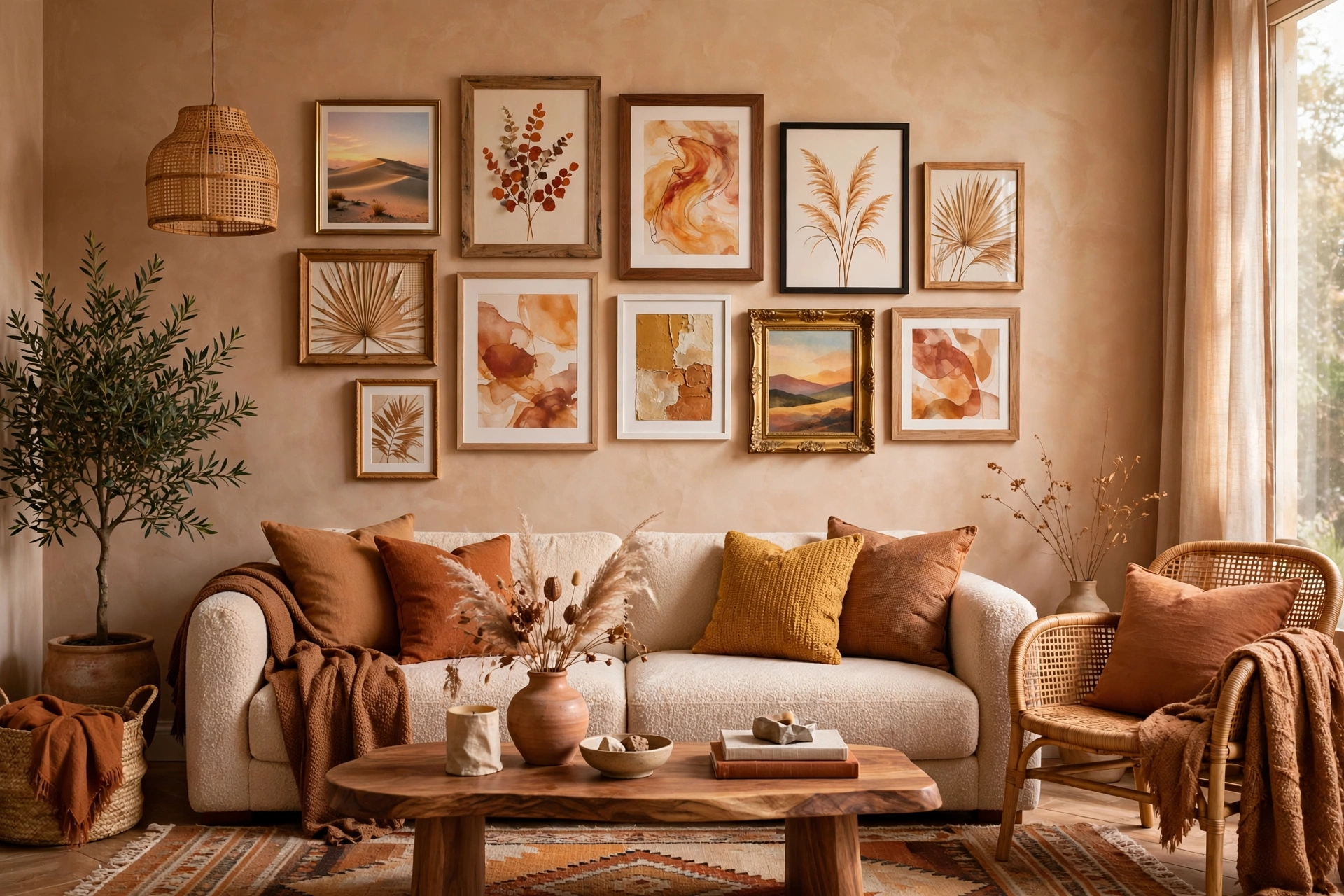
You do not need matching frames for a cohesive wall — you need a common thread. Combine black metal, natural oak, brass, and painted frames, but make sure the artwork shares a color palette, such as warm neutrals with one rust or sage accent. The variety keeps the display lively while repeated colors hold it together. Vary frame widths and profiles too, since chunky and slim molding adds depth — the ideal route for art collected over years, letting a flea-market find sit happily beside a modern print.
6. Eclectic Salon Style with Varied Shapes and Objects
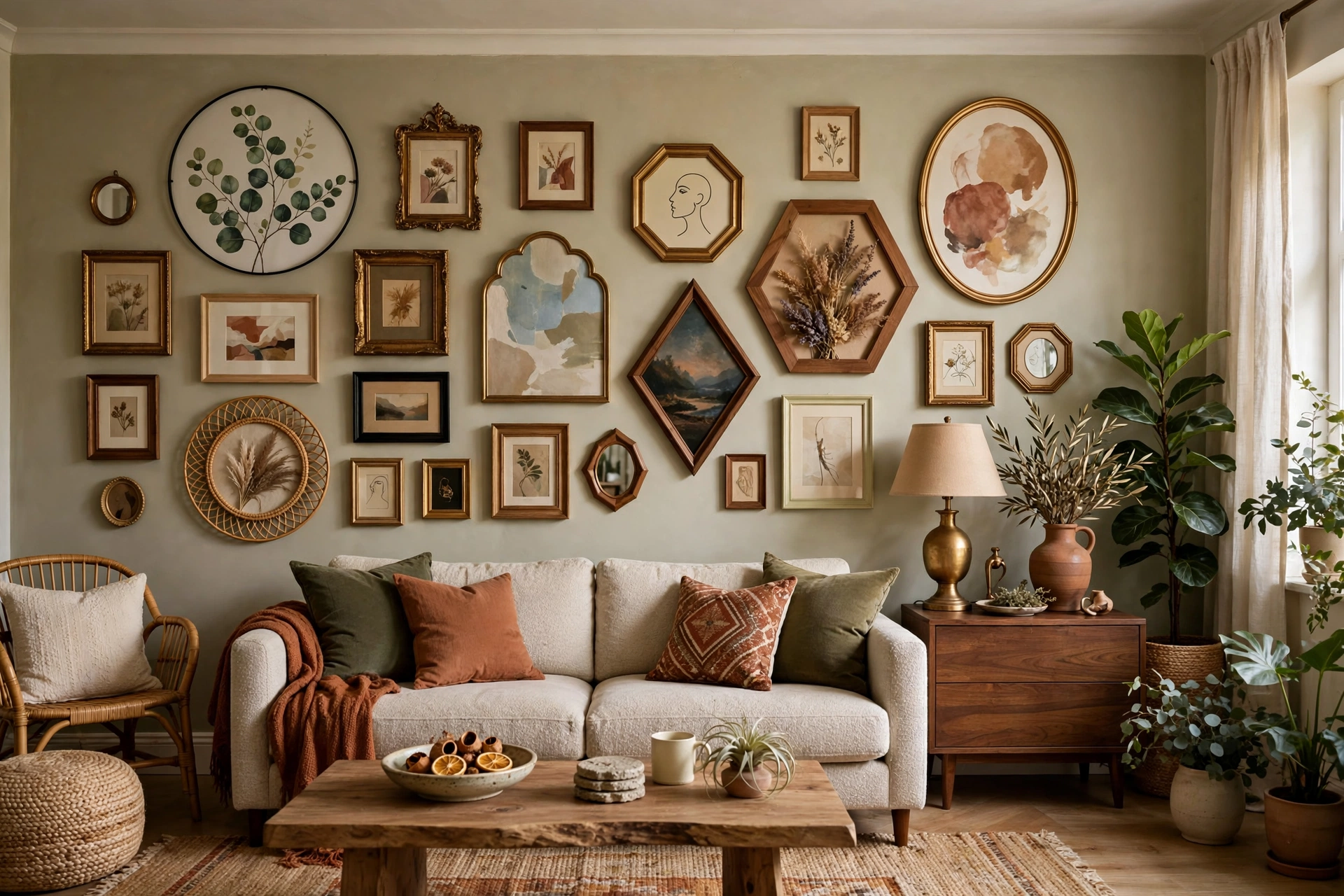
Salon style throws the grid out the window and arranges art organically, starting from the center and working outward. Mix rectangles, squares, ovals, and even round pieces, then tuck in non-art objects: a small woven basket, a brass wall plate, or a vintage clock. Keep two to three inches between pieces so the arrangement feels abundant but not chaotic, and step back often to check balance. Free-spirited approach pairs naturally with boho living room design ideas full of free-spirited charm and grows piece by piece.
7. Art Combined with Mirrors for Light and Depth
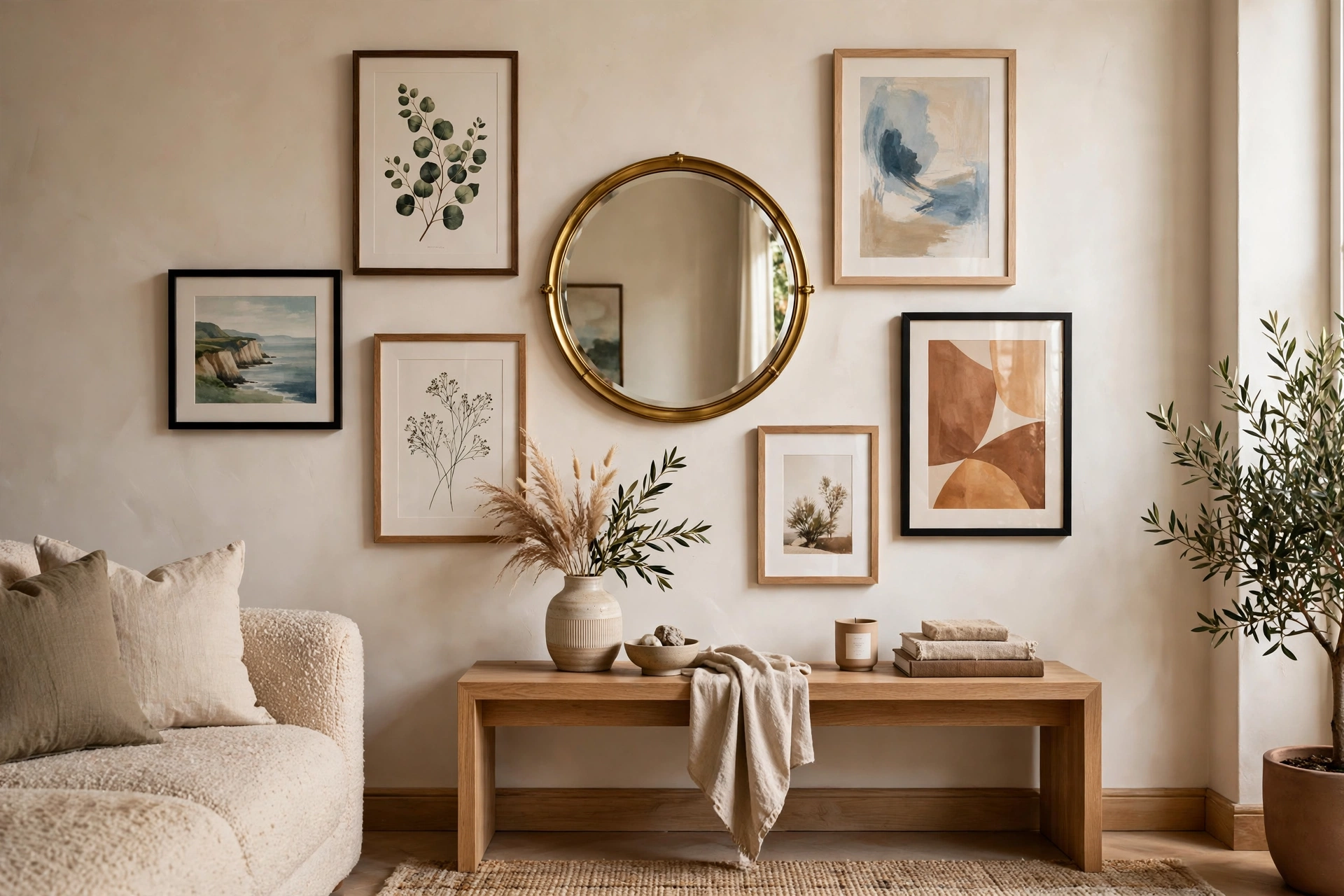
Mirrors are the secret weapon of gallery walls in smaller or darker living rooms. Slip one or two mirrors — a round brass mirror, a vintage arched piece, or a small sunburst — among the framed art to bounce light around and create the illusion of more space. Mirrors also give the eye a resting point between busy prints, keeping large arrangements from feeling overwhelming. Keep mirror frames in the same family as your other frames, and position one to catch a window’s reflection for instant brightness.
8. Gallery Wall Wrapped Around the Fireplace
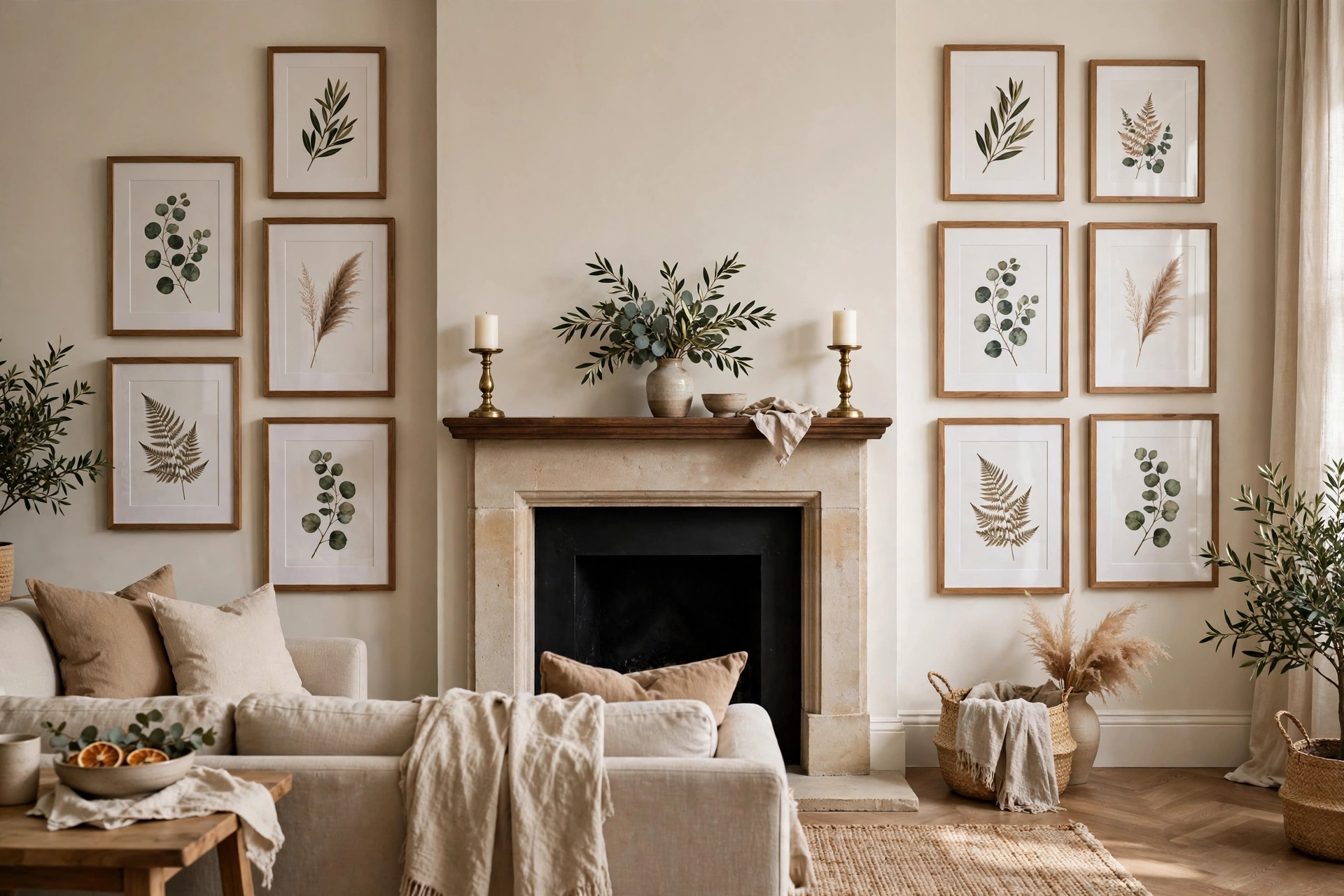
A fireplace is a natural focal point, so flanking it with art doubles the impact. Hang matching pairs of frames symmetrically on both sides of the mantel, or cascade a loose cluster from the mantel upward toward the ceiling. Keep paper and canvas a safe distance from real heat sources, and use the mantel itself as a shelf for leaning smaller pieces in front of the hung ones. The arrangement draws the eye across the entire wall, making the fireplace feel part of a larger composed scene.
9. Travel Collection with Maps, Tickets, and Souvenirs
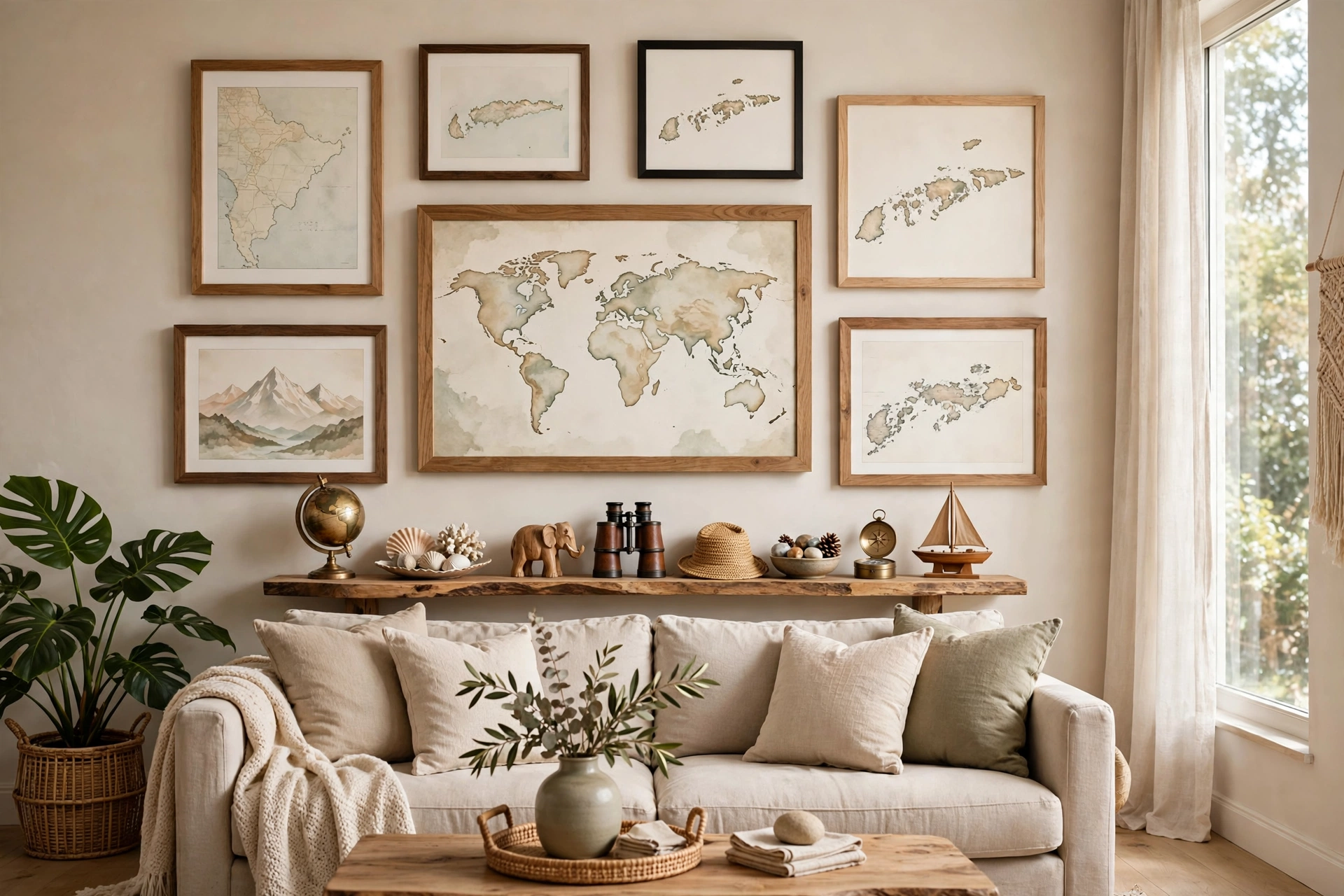
Turn your adventures into wall art. Frame vintage maps of places you have visited, mount boarding passes and ticket stubs in deep shadow-box frames, and add postcards, pressed flowers, or small woven textiles from markets abroad. Mix these mementos with one or two larger landscape photographs from the same trips to give the wall visual rhythm. A consistent mat color across the paper pieces keeps ticket stubs and fine-art prints feeling like they belong together — every piece carries a story you lived.
10. Symmetrical Pairs for a Polished, Formal Feel
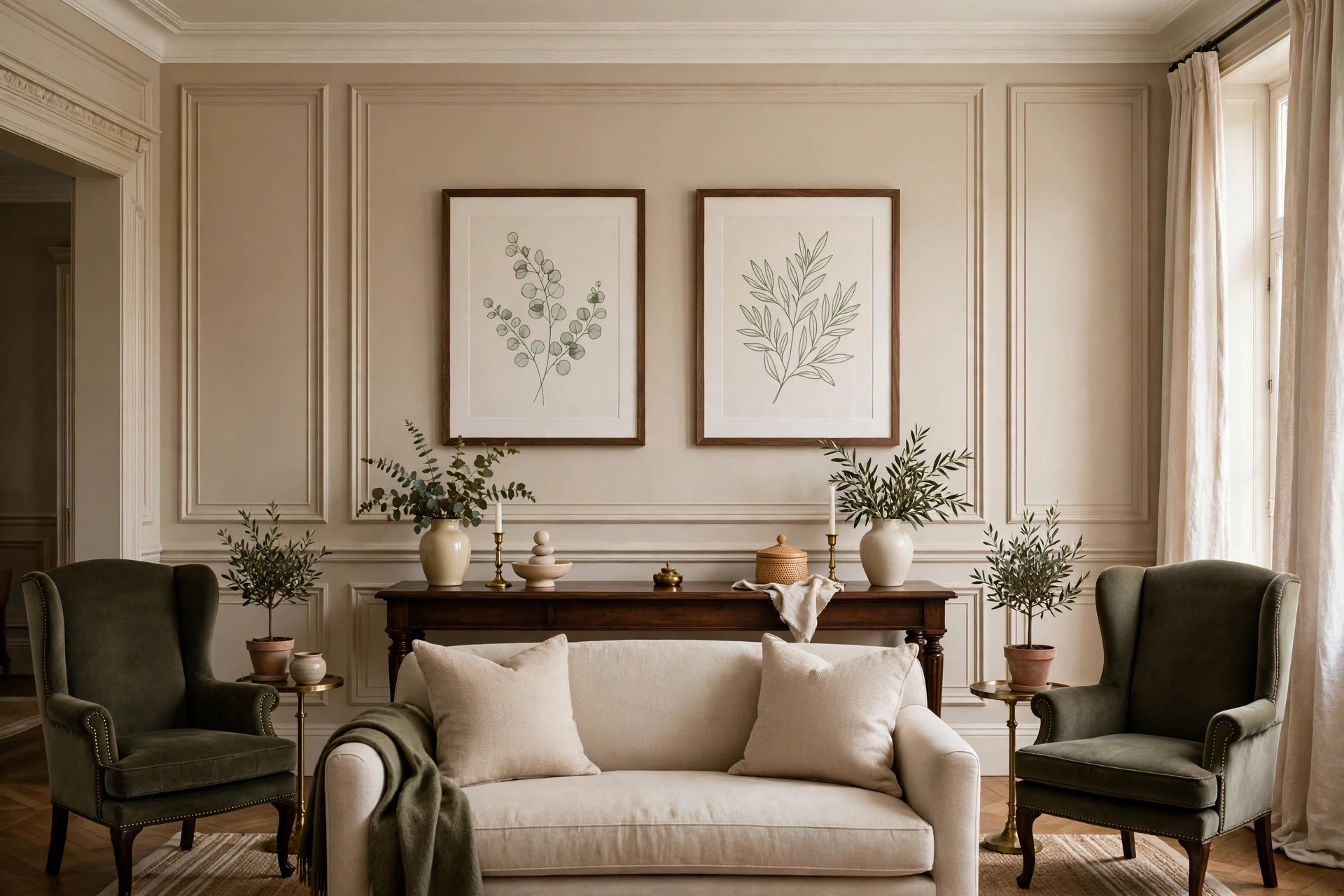
When you want calm and polish, symmetry delivers. Hang identical or mirrored pairs of frames on either side of a central point — a window, a doorway, or a single larger piece of art. Matching frames and equal spacing are non-negotiable here, since the whole effect depends on balance. This layout suits traditional and transitional living rooms, echoing the order of paired lamps and matching armchairs. Keep pairs at the same height with generous breathing room around the grouping — a simple formula that almost never looks wrong.
11. Kids’ Artwork Displayed in Grown-Up Frames
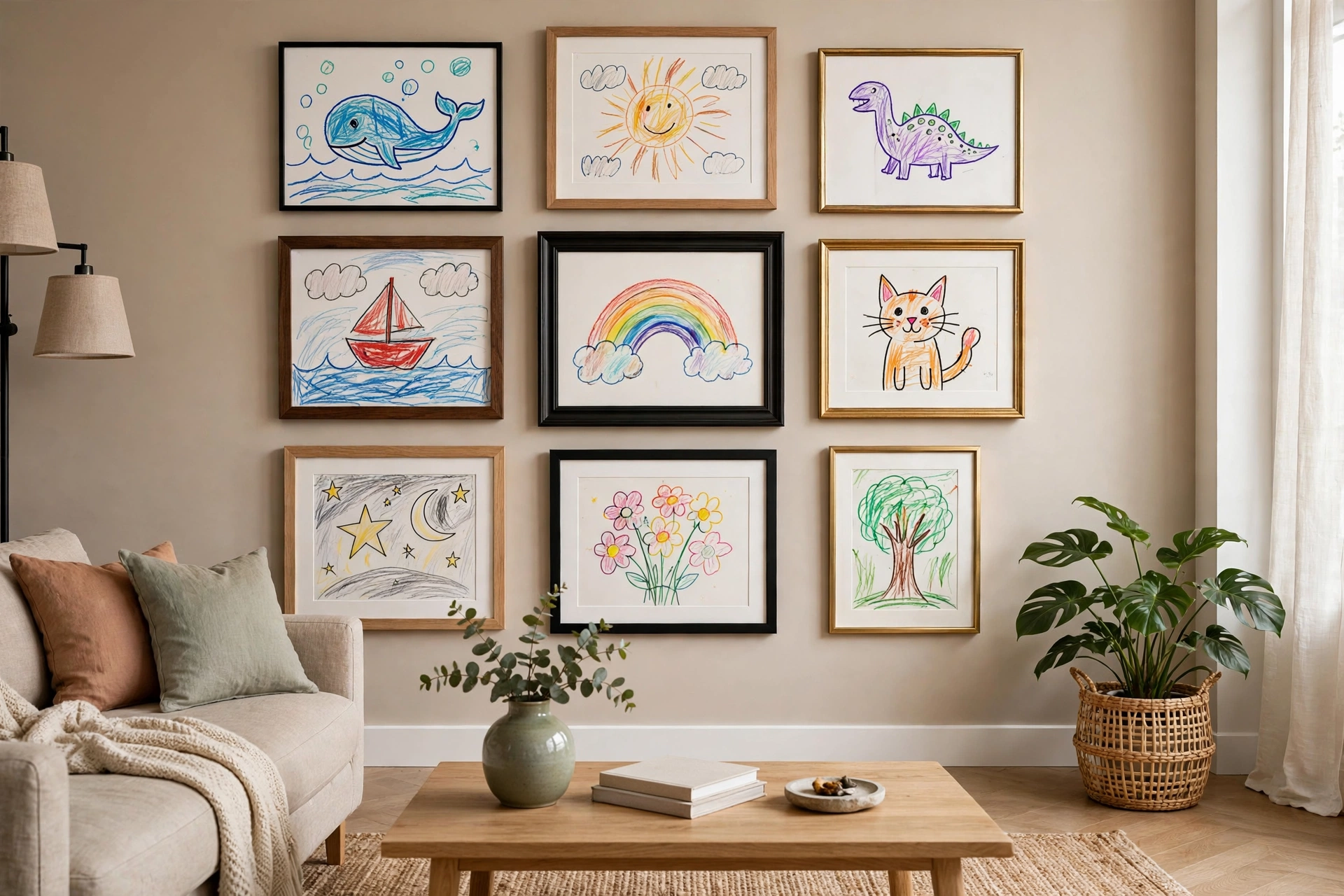
Children’s art deserves better than the refrigerator door. Frame your kids’ best drawings and paintings in real frames with clean white or neutral mats, and suddenly finger paint looks like abstract expressionism. Hang them as a dedicated cluster or mix one or two pieces into the family gallery wall for a playful surprise. Use easy-open frames or clip rails so you can rotate new masterpieces in every few months without a hardware-store trip — honoring their creativity while keeping the living room looking designed.
12. Floor-to-Ceiling Statement Wall
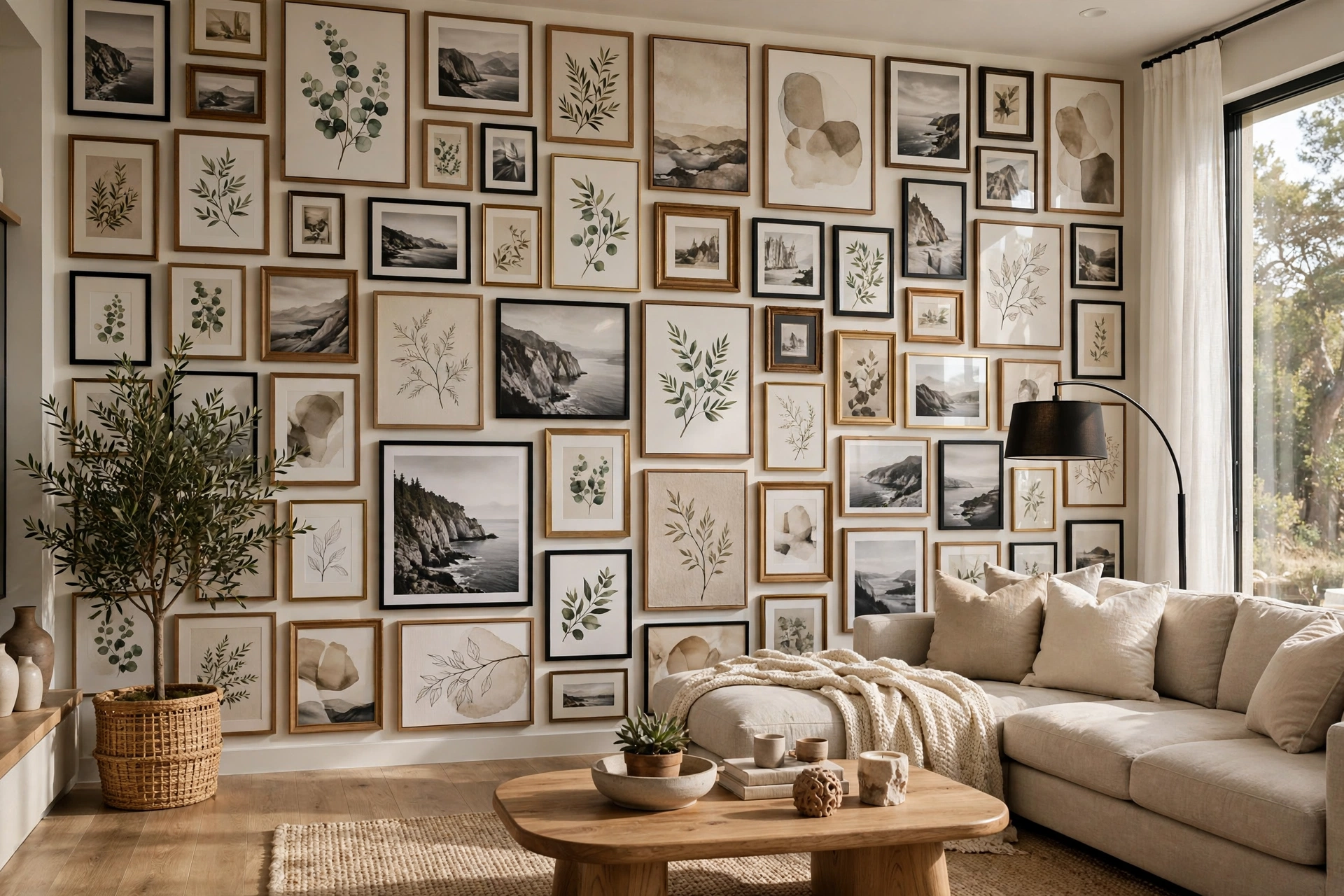
For a tall or wide blank wall, go bold and fill it nearly edge to edge. A floor-to-ceiling gallery wall turns the entire surface into art, making the room feel taller and more dramatic. Mix large, medium, and small pieces so the eye travels across the whole expanse, and leave a few inches of breathing room at the floor, ceiling, and corners so the display feels framed by the architecture. Start hanging from the center outward and slightly above eye level, since the visual center sits higher than in a standard arrangement.
13. Single-Theme Collection for Instant Cohesion
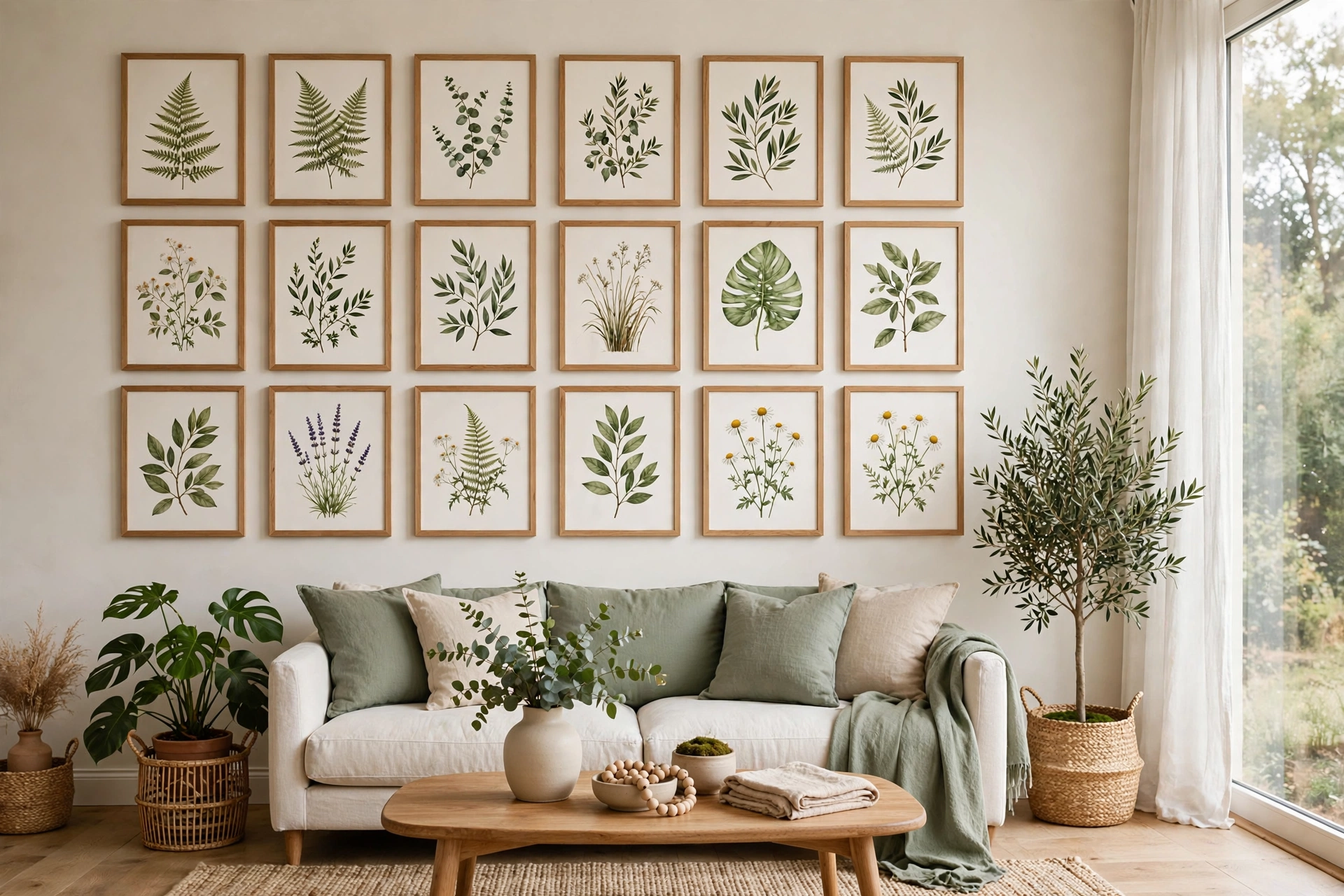
Pick one theme and let it unify everything. Vintage botanical prints, black-and-white architectural photography, abstract color studies, or coastal landscapes each give a gallery wall instant logic, even when pieces come from different artists and eras. A theme lets you shop slowly — add a piece whenever you find one that fits — because the subject matter does the coordinating work. Keep frames reasonably consistent so the subject stays the star, and the result feels like a private mini-exhibition.
14. Plan with Paper Templates and the 2–3 Inch Rule
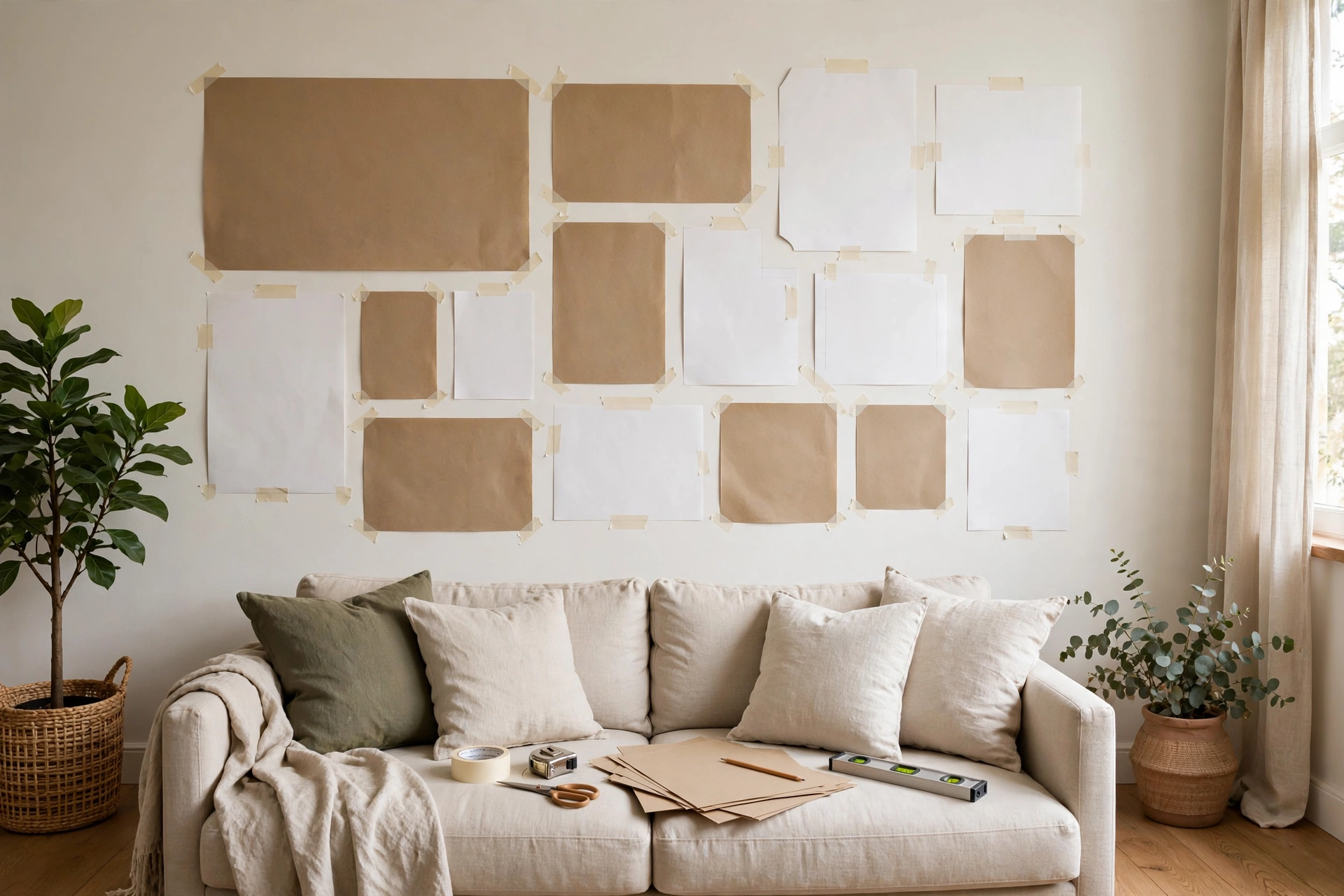
The difference between a gallery wall that looks designed and one that looks accidental is planning. Trace each frame onto kraft paper or newspaper, cut out the shapes, and tape them to the wall with painter’s tape until the arrangement feels right — this lets you experiment with zero nail holes. Keep two to three inches of space between frames, and center the composition around 57 inches from the floor. Gallery wall tips from Better Homes & Gardens cover leveling tricks and hardware choices that make the job far easier.
15. A Rotating Display You Refresh with the Seasons
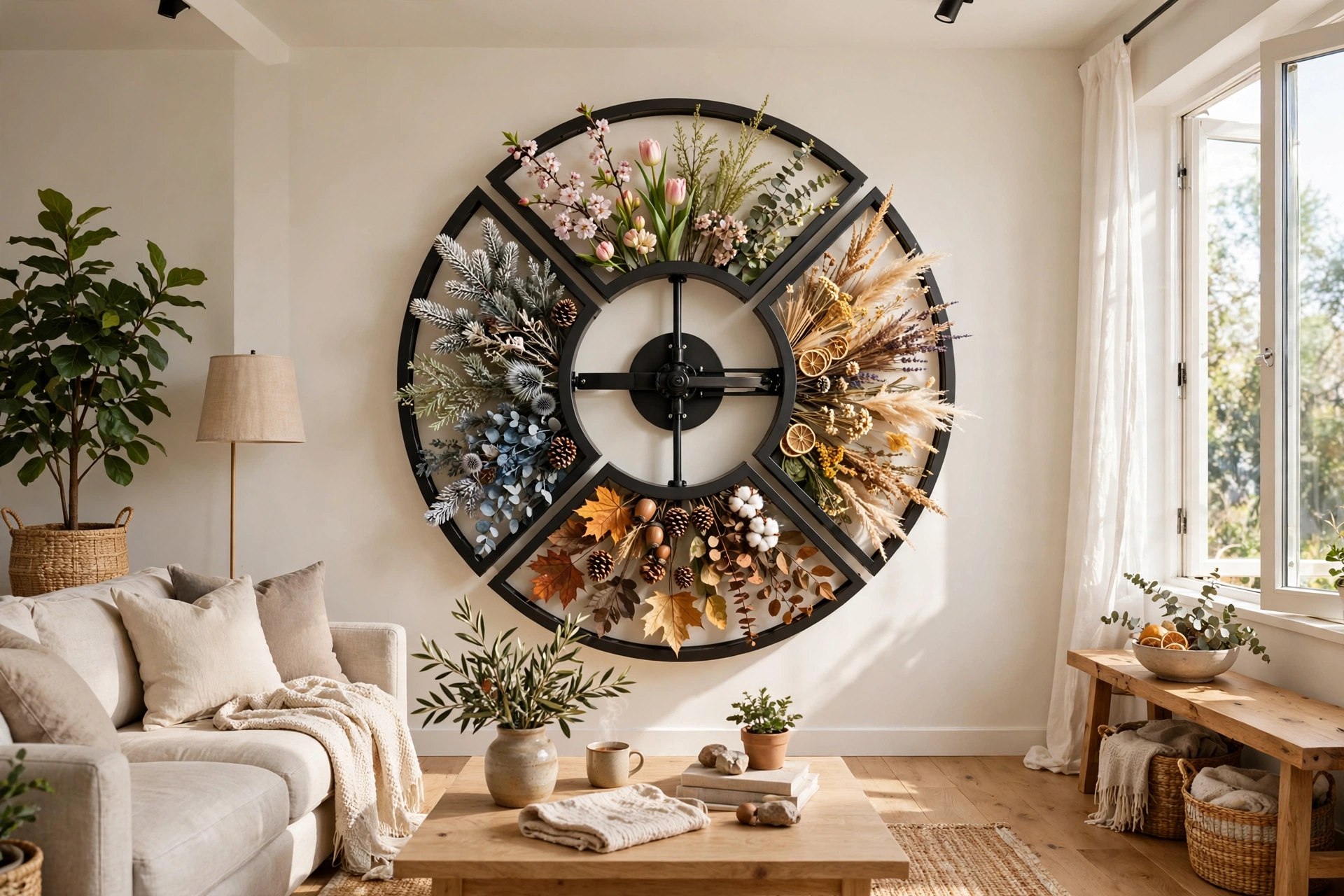
The most alive gallery walls are never finished. Build your arrangement with easy-swap systems — clip frames, picture rails with hooks, or simple binder clips on a wire — and rotate pieces four times a year. Swap in warm landscapes for autumn, bright abstracts for spring, and a few holiday prints in December while the frames stay permanently in place. This keeps the wall feeling current without rehanging anything, and guests notice the change every visit. Refreshing the wall becomes one of the small creative joys of homeownership.
Frequently Asked Questions
How far apart should I space frames on a gallery wall?
Aim for two to three inches between frames for a cohesive, gallery-like feel. Tighter spacing reads as one intentional composition, while gaps wider than four inches make pieces feel disconnected. Keep spacing consistent across the whole arrangement — even half-inch variations show once everything is hung. For very small frames, go slightly tighter; for oversized pieces, three to four inches gives each one room to breathe. Consistency matters more than the exact measurement.
What is the best height to hang a gallery wall in the living room?
Center the overall composition at 57 to 60 inches from the floor, the standard eye-level height used by museums. When hanging above a sofa, leave six to eight inches between the top of the sofa back and the bottom of the lowest frame; above a console table, eight to ten inches works well. With very tall ceilings you can nudge the center slightly higher, but resist hanging art too high — pieces above comfortable viewing height disconnect from the furniture and the room.
How do I plan a gallery wall layout before putting nails in the wall?
Trace every frame onto kraft paper or newspaper, cut out the shapes, and tape them to the wall with painter’s tape. Live with the paper arrangement for a day, adjusting spacing and swapping pieces until it feels balanced from every angle. Photograph the final layout before you start hanging so you have a reference. This no-commitment method prevents a wall of extra nail holes and lets you fine-tune the composition before anything becomes permanent.
Can I mix different frame styles and colors on one gallery wall?
Absolutely — mixed frames look collected and personal when they share a common thread. Tie the variety together with a consistent mat color, a repeated accent color in the artwork, or frames in the same finish family, such as all warm metals or natural woods. Limit yourself to three or four frame styles so the mix feels curated rather than chaotic. Just be careful pairing very ornate frames with ultra-minimal ones — add a transitional piece between them to help the eye make the leap.
How many pieces should a gallery wall include?
There is no magic number, but most living room gallery walls use between seven and fifteen pieces — enough to feel abundant without overwhelming the space. Smaller walls can shine with just five well-chosen frames, while a large statement wall might hold twenty or more. Let the wall size and furniture below guide you: the arrangement should span roughly two-thirds the width of the sofa or console beneath it. A wall that grows over time always looks more authentic.
Keep Exploring
Once your gallery wall is up, the rest of the room deserves the same attention. The frames you choose can echo your home’s broader style — Warm woods and vintage-style prints lean beautifully into french country living room design ideas with rustic elegance, while sleek black frames suit modern spaces. Picture lights or a well-placed floor lamp make art glow after dark and give the arrangement a gallery-like finish.
If you are ready to keep styling, explore more ways to make your walls work harder, from paint treatments to shelving. Tips for modernizing a gallery wall from Better Homes & Gardens offer smart ideas for refreshing arrangements without starting over. Your walls are the largest canvas in your home — keep experimenting until every corner feels like you.





[…] frames at or below eye level so they feel grounded, and let a frame overlap the books beside it. It pairs naturally with these living room gallery wall ideas with personality for one cohesive […]
[…] anchor the arrangement with one larger piece slightly off-center. Study these gallery wall ideas Living room gallery wall ideas for composition […]
[…] your room’s palette so the wall reads as part of the whole space, not a separate display. Layered look with inspiration from our living room gallery wall ideas with personality if you want to extend the art further along the […]
[…] sizes, styles, and placement so your clock looks like a design choice rather than an afterthought. Living room gallery wall ideas with personality pair beautifully with a statement […]
[…] gallery wall is especially lovely: it makes the porch feel like a true extension of the house. Living room gallery wall ideas with personality share layout tricks — odd numbers, mixed sizes — that translate perfectly […]
[…] to statement pieces that anchor the whole room. If your walls need more than reflection, our living room gallery wall ideas with personality pair beautifully with several looks […]
[…] well when your art collection feels flat or one-note; the fabric adds the missing dimension. Our living room gallery wall ideas with personality show how mixed-media walls come […]