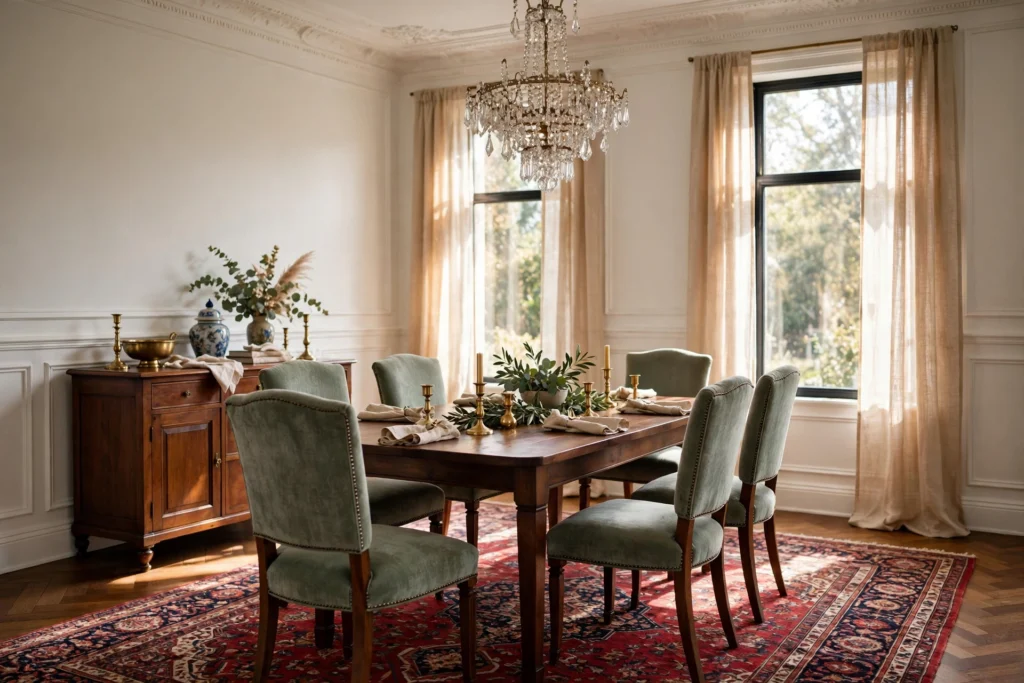

Classic style never shouts; it endures. If you’re looking for traditional dining room ideas that will still look right a decade from now, start with the bones of the room: a well-made table, architectural wall detail, layered lighting, and materials that age gracefully. These traditional dining room ideas are about warmth, ceremony, and quiet luxury — the kind of room where Sunday dinners and holiday gatherings feel properly special.
Below are 15 traditional dining room ideas to bring that timeless elegance home. Each one focuses on practical, specific moves you can make at any budget, from investing in one heirloom-quality piece to simple styling tweaks that transform the mood. Many of these ideas pair beautifully with a farmhouse sensibility, too — for more ideas, see our 15 farmhouse dining room design ideas.
1. Invest in a Solid Wood Dining Table
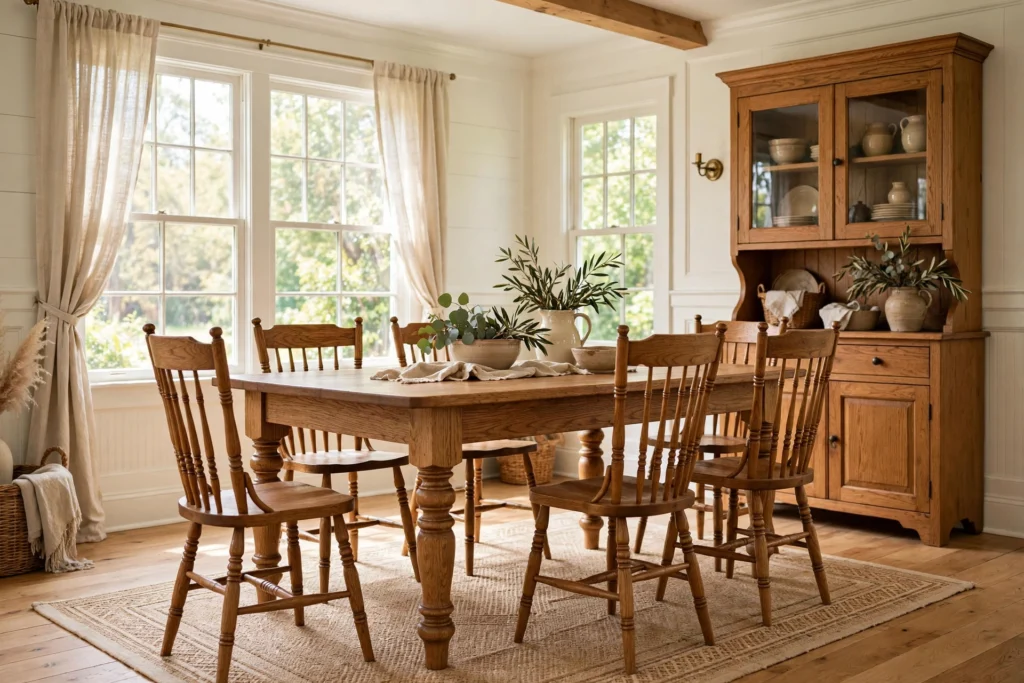
The table is the heart of every traditional dining room, so this is where your money should go first. Look for a solid hardwood table — oak, walnut, cherry, or mahogany — with turned or tapered legs and a hand-finished top. A well-made table can seat your family for decades and develop a patina that makes it more beautiful with age. Size it generously: allow roughly 60 cm (24 inches) of table width per diner, and make sure there’s at least 90 cm (36 inches) of clearance behind the chairs for easy movement.
2. Choose Upholstered Dining Chairs
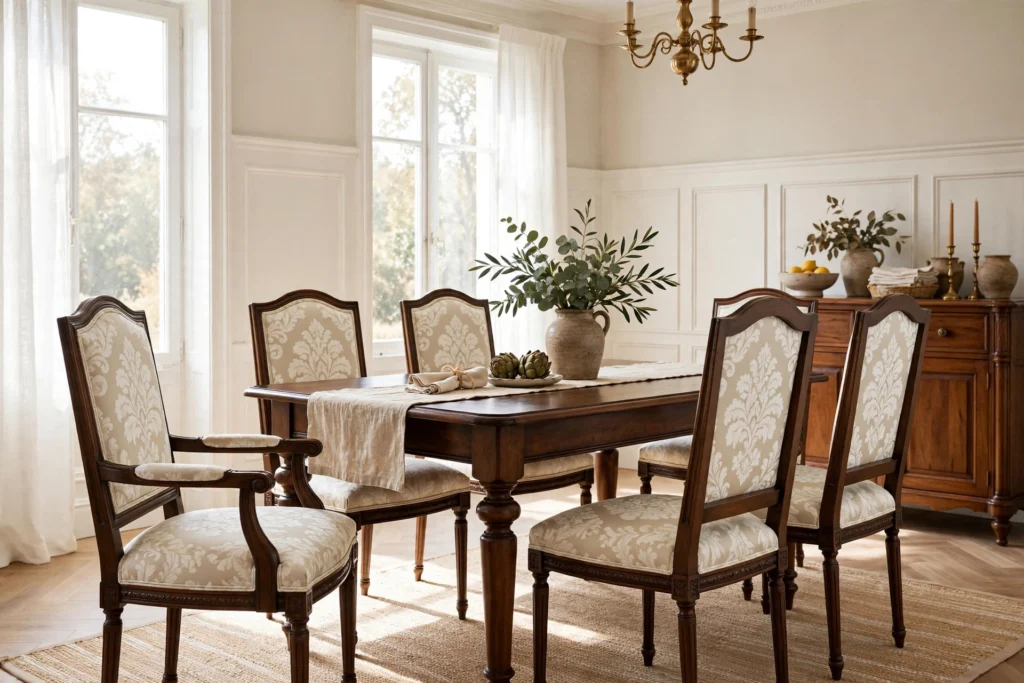
Nothing says traditional elegance like fully or partially upholstered dining chairs. Choose classic profiles — Queen Anne, Chippendale, or simple Parsons chairs in damask, linen, or velvet — for a look that softens the room and adds comfort. Solid-colored performance fabrics in warm neutrals or deep jewel tones are practical for family use and resist stains. If a full set feels costly, mix: upholstered host and hostess chairs at the heads of the table with wooden side chairs along the sides.
3. Add Wainscoting or Chair Rail Molding
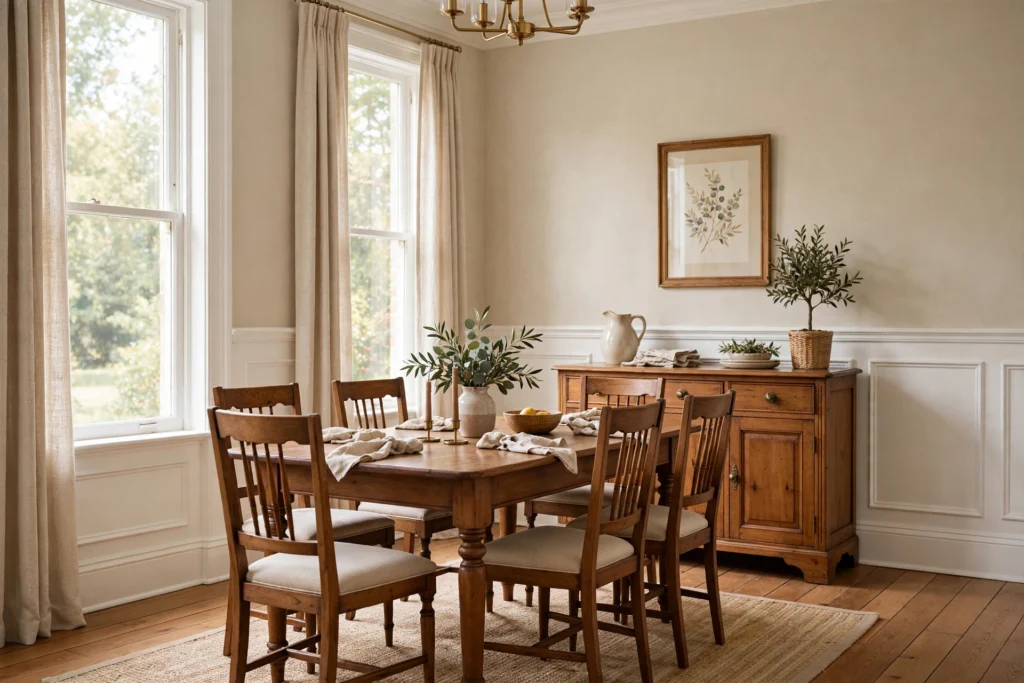
Architectural wall detail is the fastest way to make a dining room feel traditional and finished. Chair rail molding with wainscoting below, painted in crisp white or a warm cream, adds depth and a sense of craftsmanship that flat walls simply can’t match. It also protects walls from chair scuffs — a practical bonus. Keep the upper wall in a complementary paint color or subtle wallpaper for contrast. For step-by-step inspiration on the look, The Spruce’s guide is a great reference for timeless dining room styling.
4. Hang a Statement Chandelier
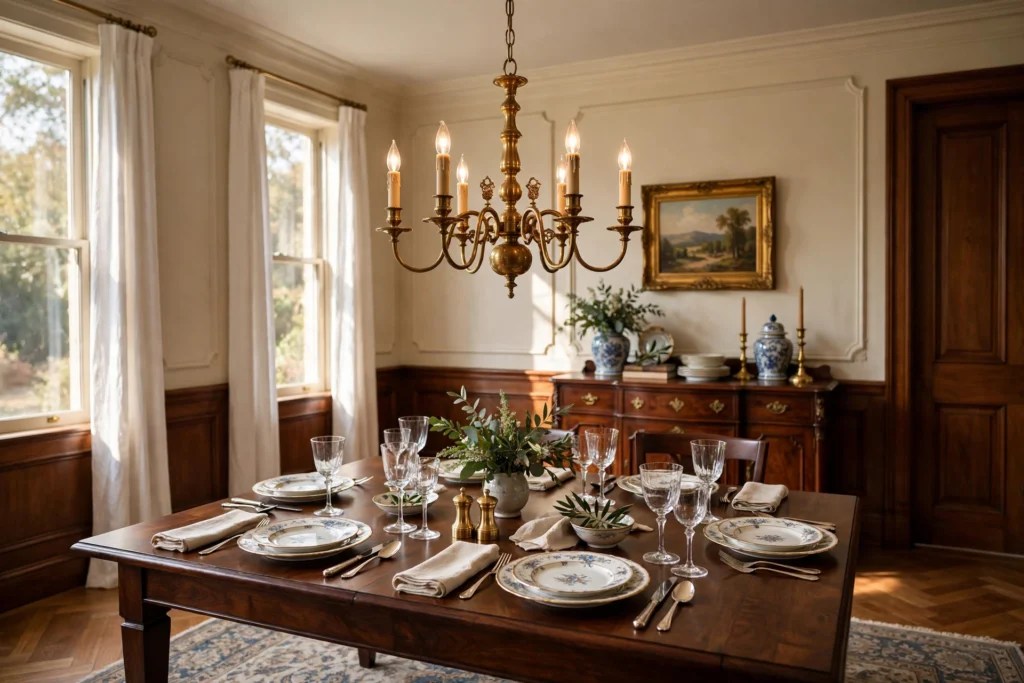
A chandelier is the signature lighting piece of a traditional dining room. Choose one sized to your table: the fixture’s diameter should be roughly one-half to two-thirds the table’s width, and it should hang about 75-85 cm (30-34 inches) above the tabletop. Crystal, brass, or bronze finishes with candle-style bulbs give the most authentic traditional glow. Add a dimmer switch so you can shift from bright family dinners to soft candlelit evenings at a touch.
5. Layer a Classic Persian or Oriental Rug
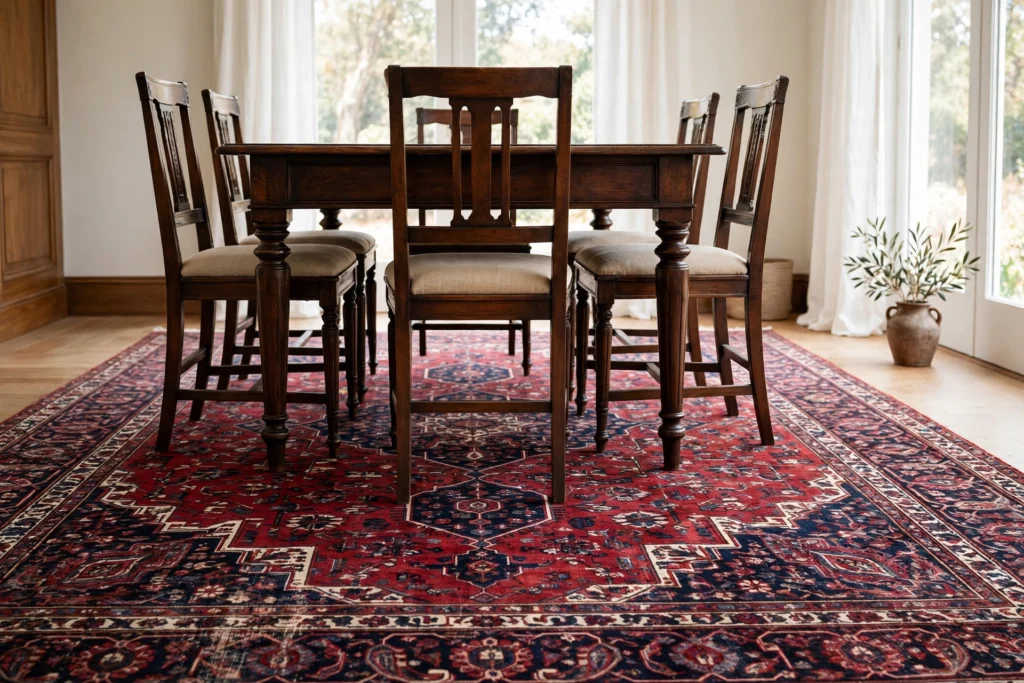
A quality area rug anchors the dining set and adds pattern, color, and warmth underfoot. Traditional Persian or Oriental-style rugs — hand-knotted if budget allows, or a good-quality machine-made version — bring the heritage patterns this style loves. Size matters: the rug should extend at least 60 cm (24 inches) beyond the table on all sides so chairs stay on the rug when pulled out. Low pile or flatweave works best for sliding chairs.
6. Display a China Cabinet or Hutch
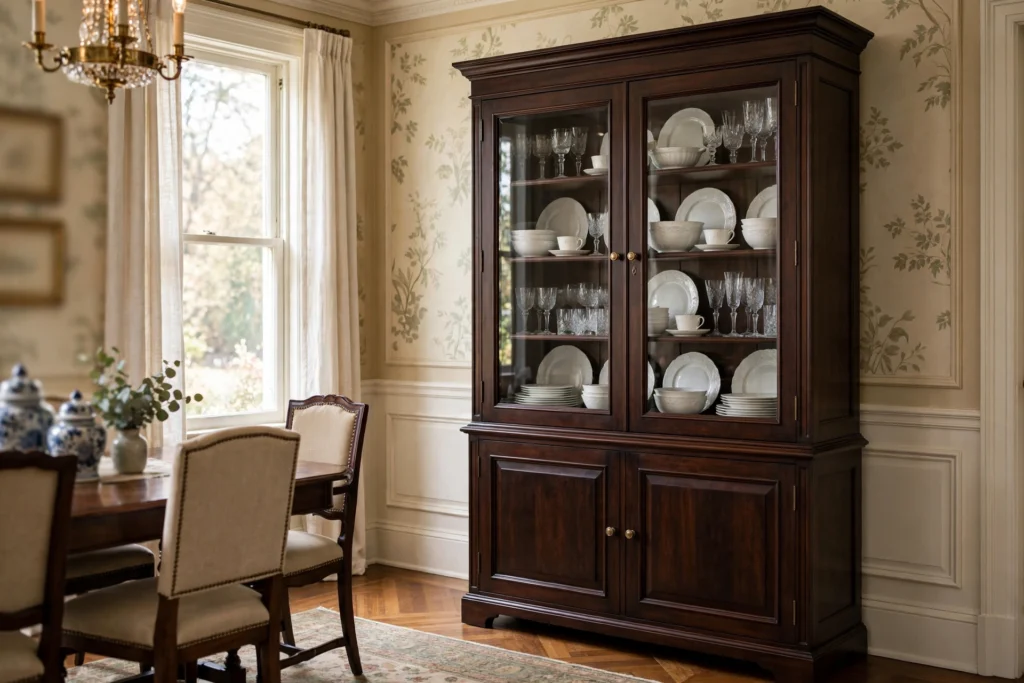
A china cabinet or hutch is both storage and showcase — pure traditional style. Use it to display fine china, crystal glassware, or silver pieces behind glass doors, arranged in neat, visible groupings rather than cluttered stacks. The wooden case itself should echo your table’s wood tone or finish. Style the top with a pair of lamps, framed art, or a small plant to finish the vignette. It instantly signals that dining here is an occasion.
7. Use Damask, Toile, or Floral Wallpaper
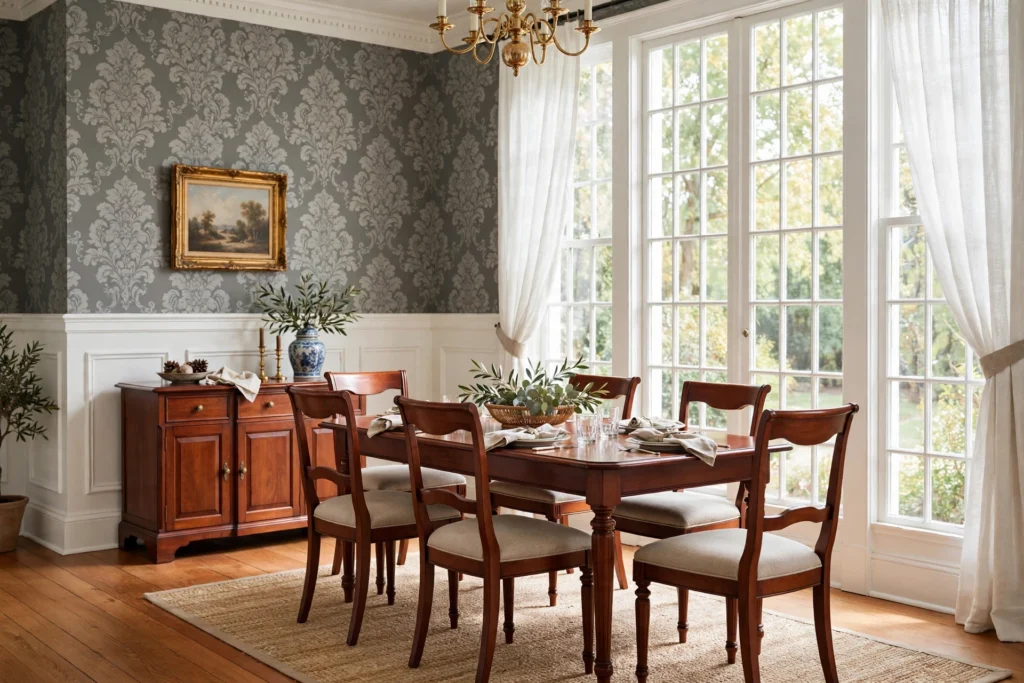
Wallpaper is a hallmark of traditional dining rooms, and classic patterns — damask, toile de Jouy, striped silk looks, or botanical florals — deliver instant period character. Use it on all four walls for full traditional impact, or as a single feature wall behind the buffet for a more restrained take. Stick to a limited palette of two or three colors so the pattern feels elegant rather than busy. Removable peel-and-stick versions make this a renter-friendly update, too.
8. Dress the Table with Classic Centerpieces
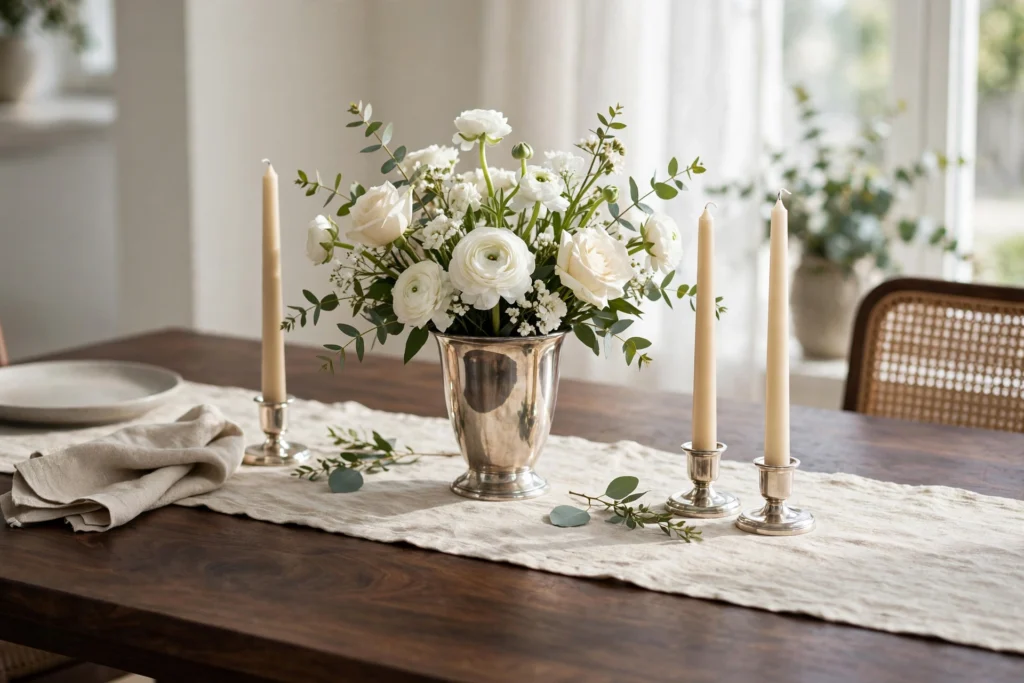
In a traditional dining room, the table is dressed even when dinner isn’t served. A runner in linen or brocade, a low arrangement of fresh or faux flowers, and a pair of candlesticks create a standing centerpiece that looks intentional year-round. Keep centerpieces low — under 30 cm (12 inches) — so conversation flows across the table. Change the arrangement seasonally: pine boughs in winter, peonies in spring. The Spruce’s centerpiece ideas offer dozens of tabletop arrangements that suit a classic setting.
9. Hang Curtains with Weight and Structure
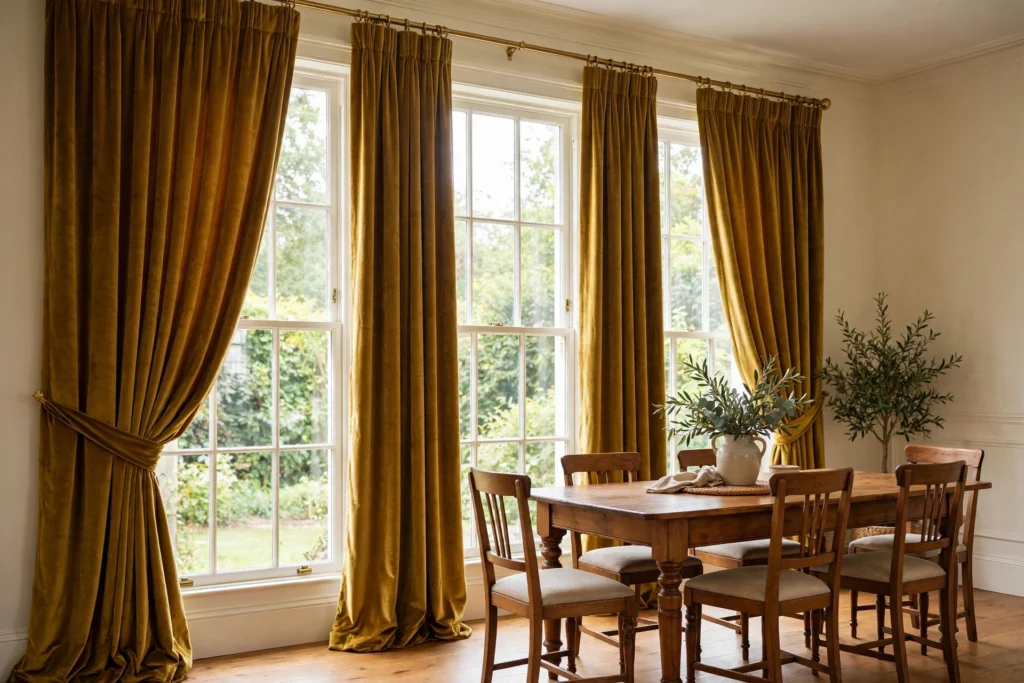
Window treatments in a traditional dining room should feel substantial. Floor-length drapes in silk, velvet, linen, or a heavy damask, hung from a decorative rod with finials, frame the windows and add softness to a room full of hard surfaces. Mount the rod 10-15 cm (4-6 inches) above the window frame and extend it beyond the sides so the windows look larger. A classic pinch-pleat or goblet-pleat heading keeps the look formal and tailored rather than casual.
10. Hunt for Antique and Vintage Finds
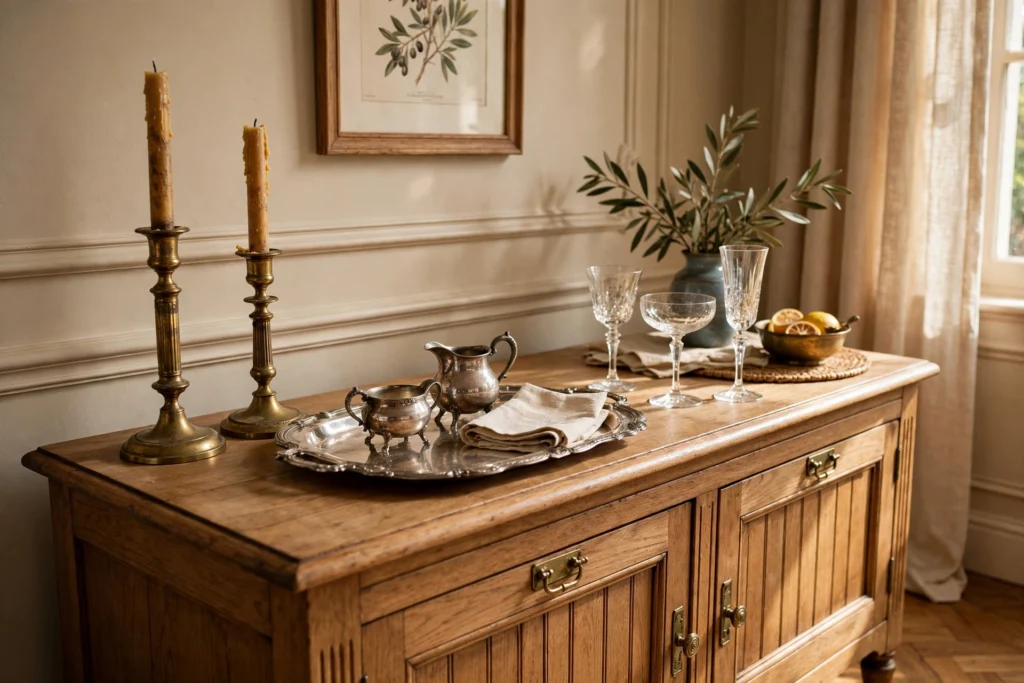
Traditional style thrives on pieces with history. Scour antique shops, estate sales, and vintage marketplaces for one-of-a-kind finds: a silver-plated serving tray, brass candlesticks, an oil painting in a gilded frame, or a set of vintage stemware. One genuine antique lends authenticity that new reproductions can’t quite fake. Mix one or two antique pieces with your newer furniture rather than furnishing the whole room in antiques — the contrast keeps the space feeling collected, not staged.
11. Build a Buffet Serving Station
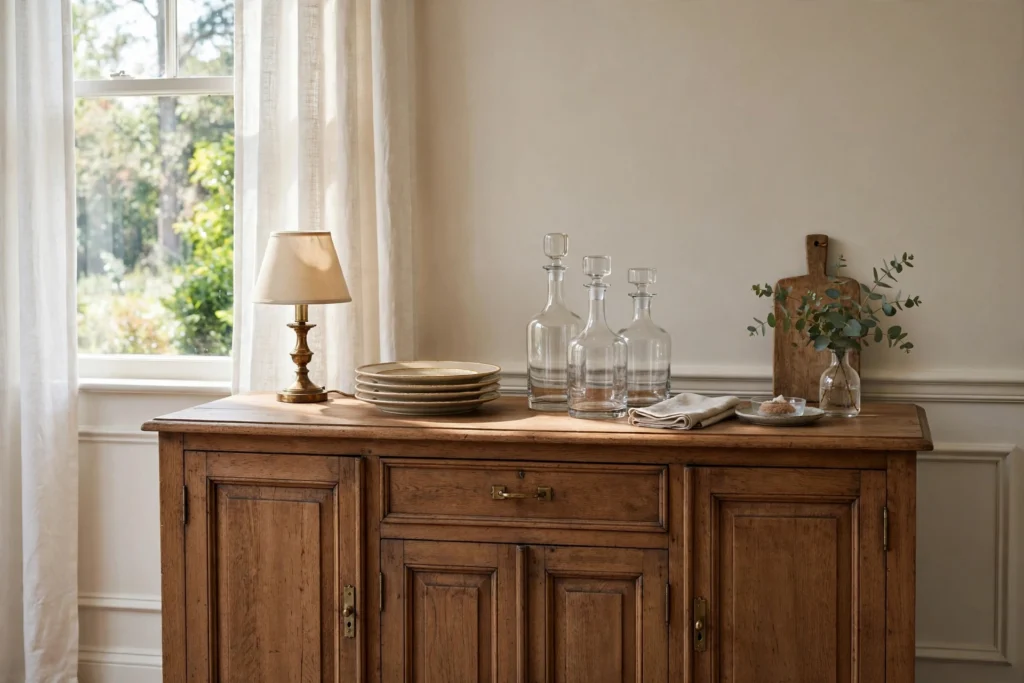
A sideboard or buffet gives the dining room its workhorse: extra storage for linens, serving pieces, and barware, plus a surface for serving at gatherings. Style it like a permanent station — a tray with decanters or a coffee service, a stack of chargers, and a small lamp or candle grouping. During parties, it becomes the drinks or dessert bar. Choose a piece with closed storage to hide the clutter and open or glass-fronted sections to display the pretty things.
12. Use Warm Heritage Paint Colors
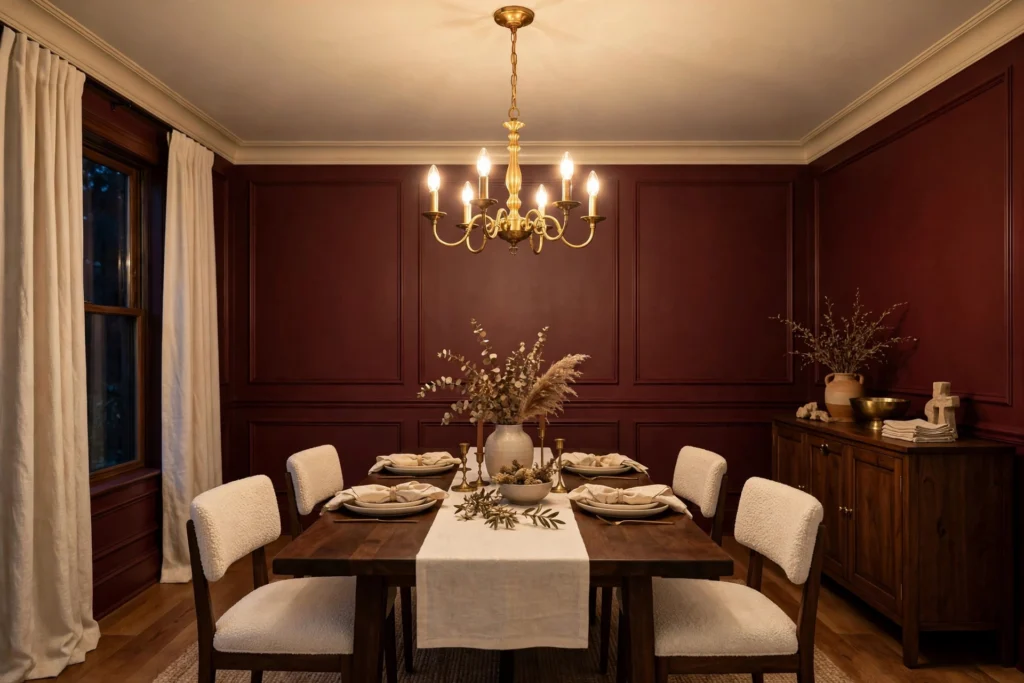
These traditional dining room ideas favor rich, enveloping wall colors: deep burgundy, forest green, navy, warm taupe, or classic cream. These heritage shades create intimacy and make wood tones glow. If a dark color feels bold, try it as an accent wall behind the buffet, or go full-drama on all four walls with the ceiling in warm white to keep it balanced. Always test large swatches in the room’s actual light before committing — traditional colors shift dramatically between daylight and chandelier glow.
13. Hang Traditional Artwork and Portraits
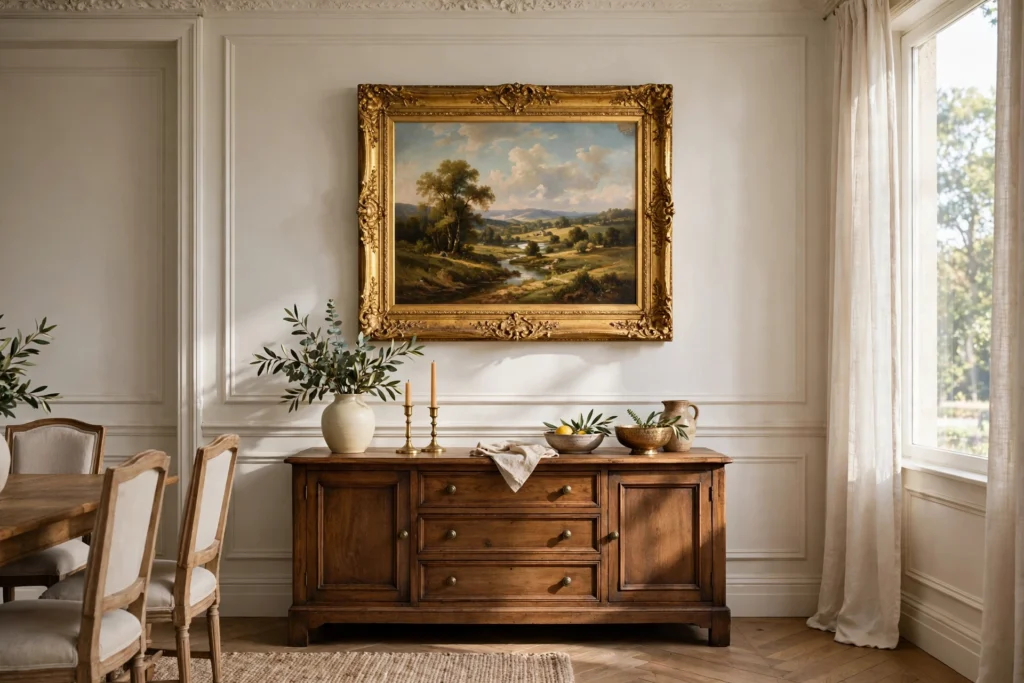
Walls dressed with framed art complete the traditional look. Classic choices include oil landscapes, botanical prints, portrait-style photography, or still-life paintings in ornate or gilt frames. Hang pieces at eye level — the center of the artwork about 145 cm (57 inches) from the floor — and keep groupings tight so they read as one composition. A large mirror in a decorative frame is another traditional favorite; hung opposite a window, it doubles the light and makes the room feel grander.
14. Add a Fireplace or Faux Mantel
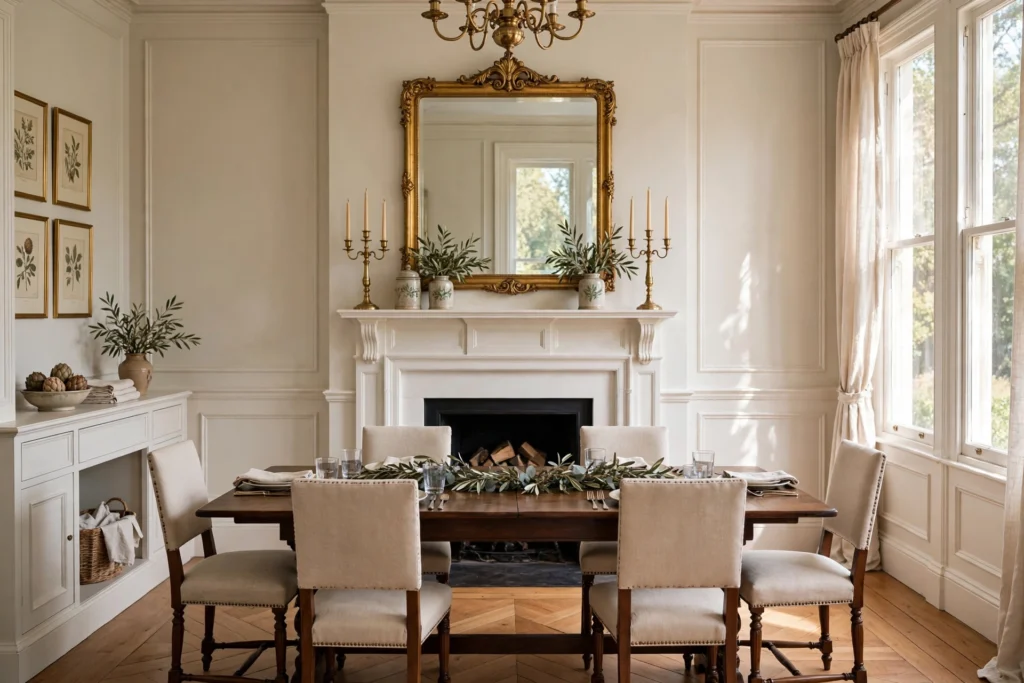
Few things make a dining room feel more traditional than a fireplace. If you don’t have one, a faux mantel — a simple surround with an electric insert or even just candles inside — creates the same focal point and architectural presence. Style the mantel with symmetry, which is key to traditional design: matching candlesticks or urns on each end, a large piece of art or mirror centered above. The hearth becomes the room’s natural gathering point long after dinner ends.
15. Finish with Polished Metals and Glass
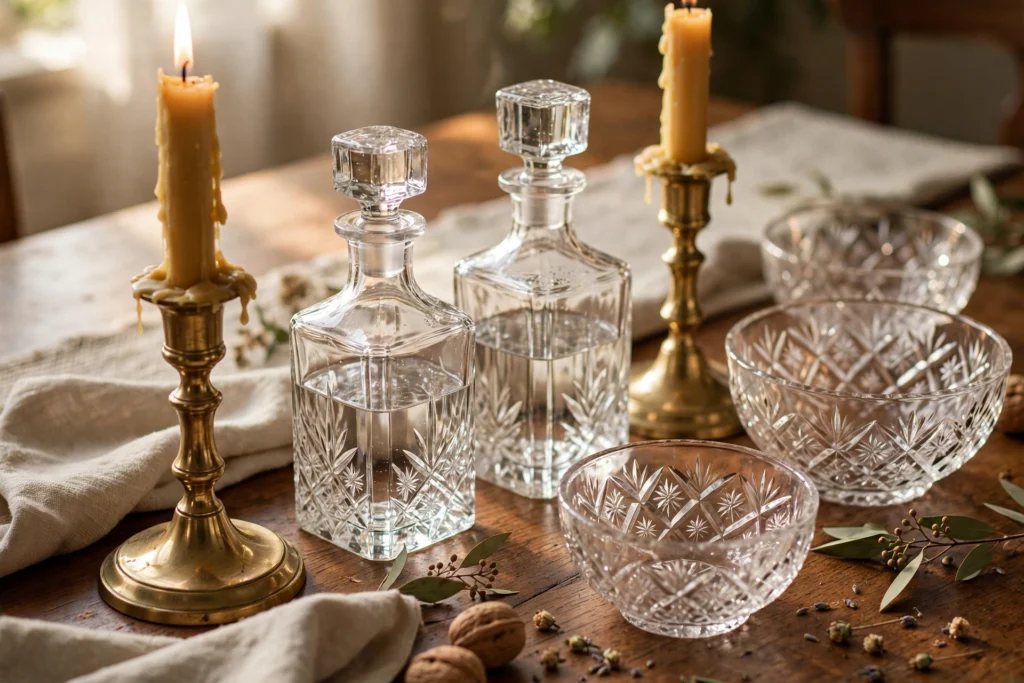
Traditional rooms love the gleam of polished finishes. Mix warm metals — brass, bronze, and antique gold — across the chandelier, curtain rods, picture frames, and cabinet hardware for a cohesive glow. Add cut-glass or crystal accents: a decanter set, a glass compote bowl, or crystal drawer pulls. These reflective surfaces bounce chandelier light around the room and add the layered richness that defines timeless elegance. If you love this classic look in the kitchen too, see our 15 traditional kitchen design ideas.
Frequently Asked Questions
What defines a traditional dining room style?
Traditional dining room ideas are defined by classic furniture silhouettes, rich materials like solid wood and upholstery, symmetrical arrangements, and heritage details such as wainscoting, chandeliers, and patterned rugs. The palette favors warm neutrals, deep jewel tones, and polished metal finishes. Unlike trend-driven styles, traditional design prioritizes craftsmanship and proportions that have looked right for generations — making it one of the most enduring dining room choices.
How do I make a small dining room feel traditional?
Focus on scaled-down versions of classic elements: a round pedestal table saves space while looking traditional, a single statement chandelier adds drama without bulk, and wainscoting or a chair rail gives architectural interest without eating floor space. Choose a rug that fits the table plus chair clearance, use a mirror to amplify light, and keep the palette light — creams and soft golds — so the room feels elegant rather than cramped. These traditional dining room ideas scale down beautifully to any size space.
What colors work best in a traditional dining room?
Heritage colors are the backbone of these traditional dining room ideas: deep burgundy, forest or hunter green, navy blue, warm taupe, chocolate brown, and classic cream or ivory. Metallics like brass and bronze add warmth. For a lighter, more current take on tradition, pair cream walls with dark wood furniture and one deep accent color in the rug and drapes. Consistent undertones — warm with warm — keep the scheme harmonious.
Can I mix traditional and modern elements in my dining room?
Yes — blending traditional bones with a few modern pieces keeps the room from feeling like a museum. Keep the big traditional anchors (wood table, chandelier, wainscoting) and introduce modern touches sparingly: a contemporary art print in a classic frame, a sculptural pendant instead of crystal, or clean-lined upholstered chairs. The rule of thumb is about 70 percent traditional to 30 percent modern, so these traditional dining room ideas stay clearly dominant.
How do I style a traditional dining table every day?
Dress the table in layers that look good between meals: a linen or brocade runner, a low floral or greenery arrangement, and a pair of candlesticks or a decorative bowl as a standing centerpiece. Keep everything below eye level so the table still feels open. For everyday practicality, use placemats instead of a full tablecloth, and keep a decorative tray nearby to corral the centerpiece when you need the full table for homework or projects. It’s one of the simplest traditional dining room ideas for everyday elegance.
Keep Exploring
These traditional dining room ideas are really about choosing well once and enjoying it for years. Start with the pieces that matter most — the table, the lighting, the rug — and layer in the details over time as you find antiques and artwork you love. A room built this way only gets better with age, gathering the patina and memories that make a house feel like home.
If you loved these traditional dining room ideas and want to carry this timeless look through the rest of the house, our 15 traditional living room design ideas continue the same classic language into your main gathering space.





[…] from considered layers: beautiful light, fine materials, and details that reward a second look. Traditional dining room design ideas with timeless elegance pair perfectly with these ideas. Here are 15 formal dining room ideas for gatherings your guests […]