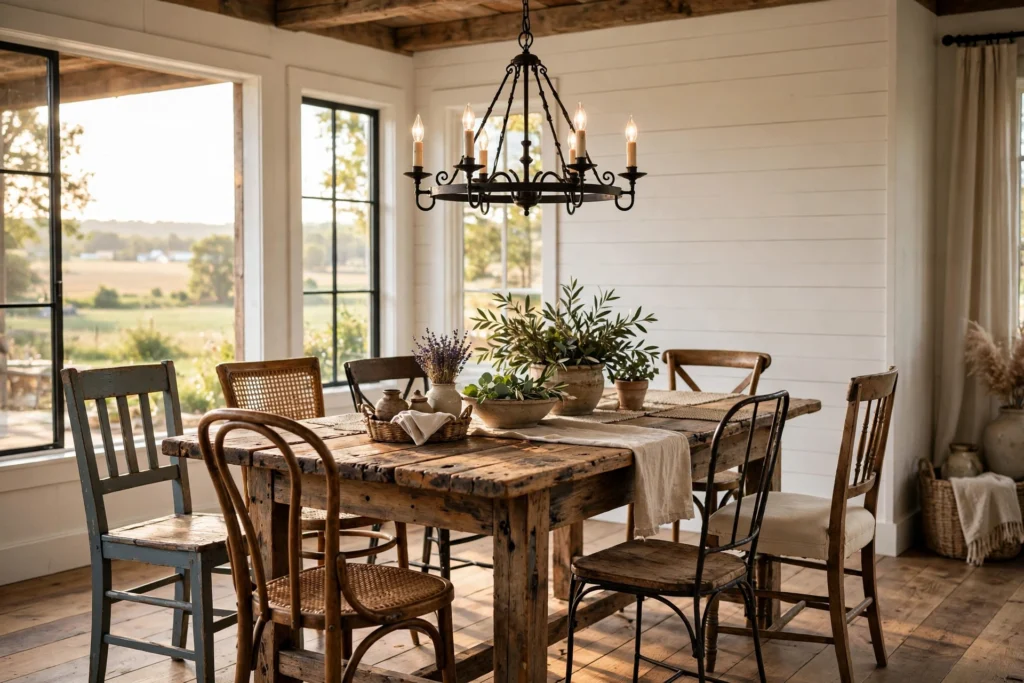

The farmhouse dining room is where the house exhales. It’s the room built for long Sunday dinners, homework spread across the table, and guests who stay past dessert because the chairs are comfortable and nobody’s in a hurry. The style works because it’s honest: real wood, forgiving textures, and furniture that looks better with a few scratches than it ever did new.
Farmhouse style in the dining room is about warmth without fuss — a big welcoming table, chairs that invite you to sit, and layers of natural material that make every meal feel a little more special. These fifteen farmhouse dining room design ideas will help you build a gathering place with genuine rustic charm.
1. Anchor the Room With a Reclaimed Wood Table
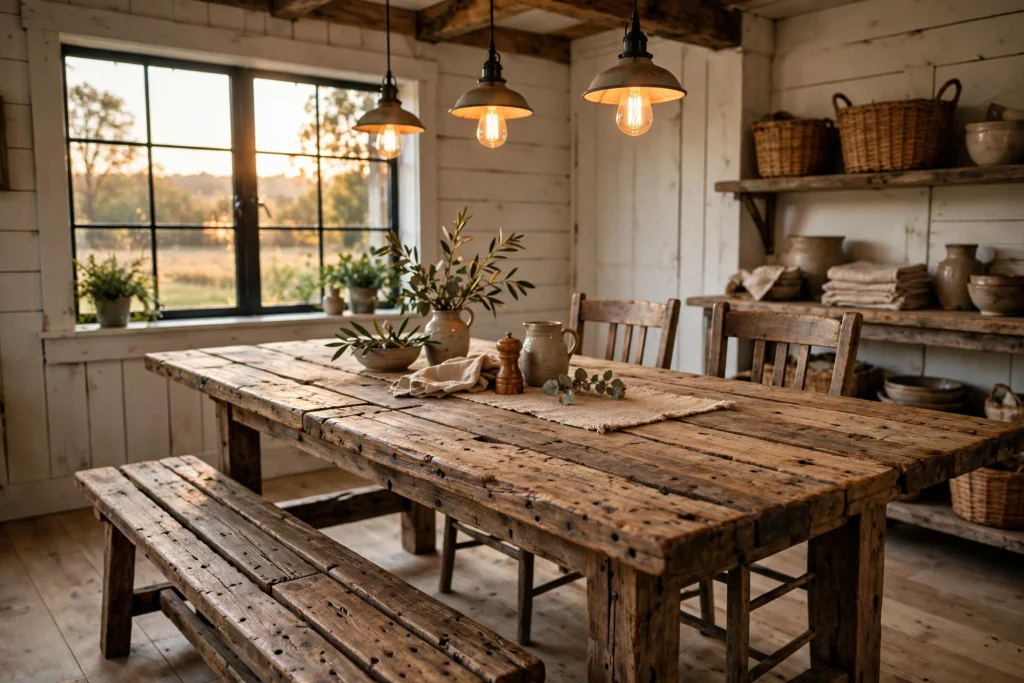
Everything in a farmhouse dining room orbits the table, so make it a piece with soul. A reclaimed wood table — thick planks, visible grain, maybe a few nail holes telling its story — sets the tone for the entire room. Look for solid construction over perfect finish; the scratches and patina are the point, and they mean you’ll never stress about a water ring again.
Size it for real life: allow 24 inches of table width per person and at least 36 inches of clearance around the sides for chairs to pull out. An extendable farmhouse table with leaves handles both Tuesday dinners and Thanksgiving. This is the one piece worth investing in — it will outlast trends and host a decade of memories.
2. Mix and Match the Dining Chairs
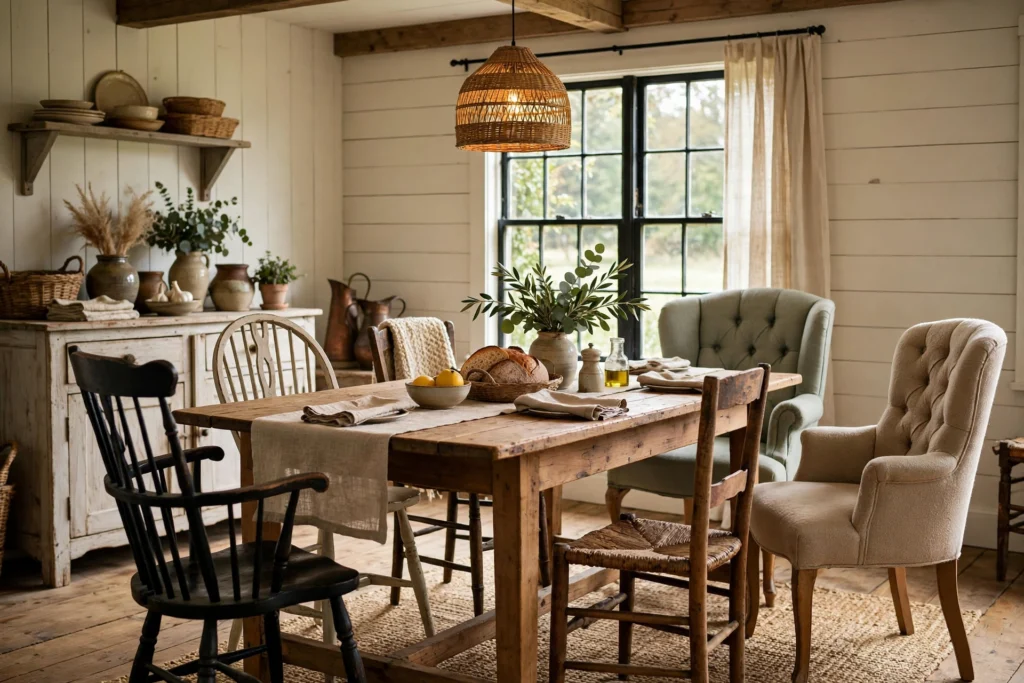
Nothing says farmhouse faster than chairs that don’t match. A set of Windsor chairs on one side, a couple of vintage finds on the other, maybe an upholstered pair at the heads of the table — the collected look feels effortless and welcoming. The trick is a unifying thread: same wood tone, same black finish, or same cushion fabric keeps the mix intentional.
Hunt secondhand first — farmhouse style was born at flea markets and estate sales. A quick coat of paint unifies mismatched silhouettes beautifully; matte black or warm white are the classic choices. And don’t forget comfort: a chair nobody wants to sit in for an hour defeats the whole purpose of a gathering room.
3. Add a Shiplap Accent Wall
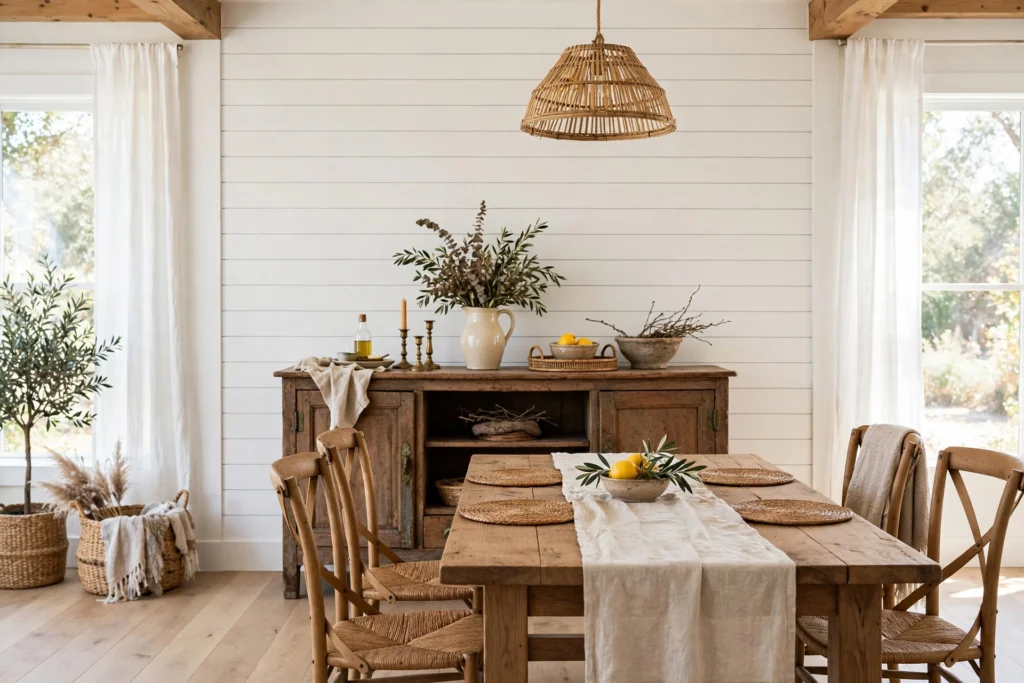
Shiplap is the farmhouse signature, and a dining room accent wall is its perfect canvas. Horizontal planks in warm white open up the room and add texture that flat drywall can’t match; a wall of reclaimed barn wood in natural tones brings instant history. HGTV’s gallery of farmhouse dining room ideas shows how versatile shiplap is — from full walls to wainscot-height treatments.
Keep it to one wall (usually behind the sideboard or the table) so the texture reads as an accent rather than a theme park. Paint-grade shiplap is a very doable weekend DIY with pre-primed boards. In a small dining room, vertical shiplap draws the eye up and makes the ceiling feel taller.
4. Hang a Statement Chandelier
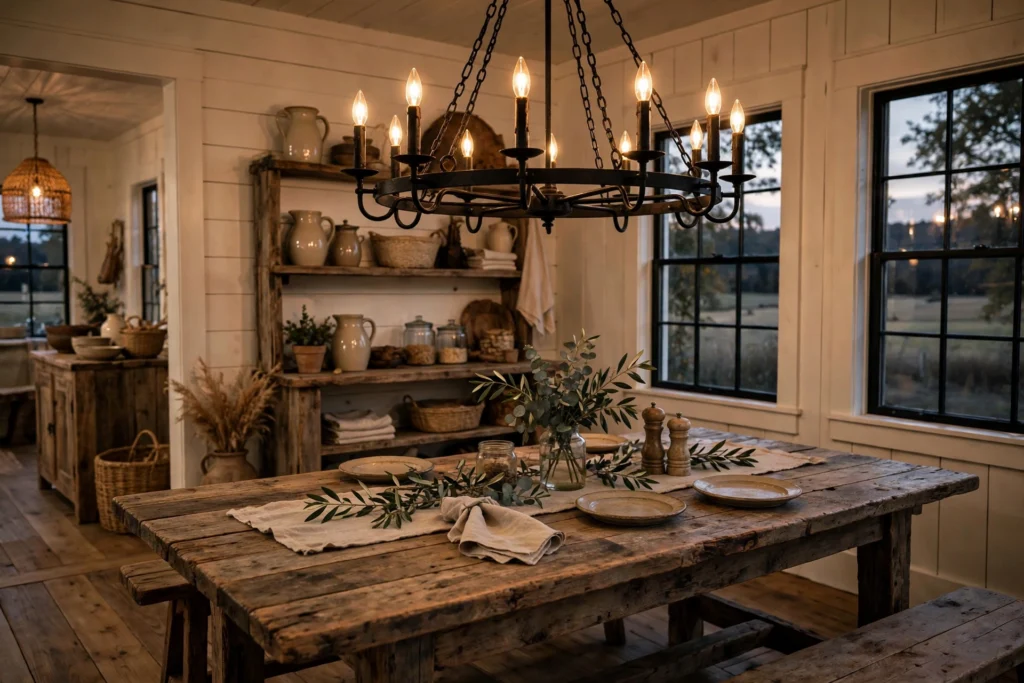
Overhead lighting is the jewelry of the dining room, and farmhouse style gives you wonderful options: a black iron chandelier with candle-style bulbs, a wood-beaded fixture, a galvanized metal pendant, or a pair of lantern pendants over a long table. Scale generously — the fixture should be about one-half to two-thirds the width of the table.
Hang it 30 to 36 inches above the tabletop so it lights faces without blocking sightlines. A dimmer is essential; farmhouse dining rooms live in warm, low light. Keep bulbs at 2700K for that candlelit glow that makes everyone look good and every meal feel like an occasion.
5. Style a Vintage Sideboard or Buffet
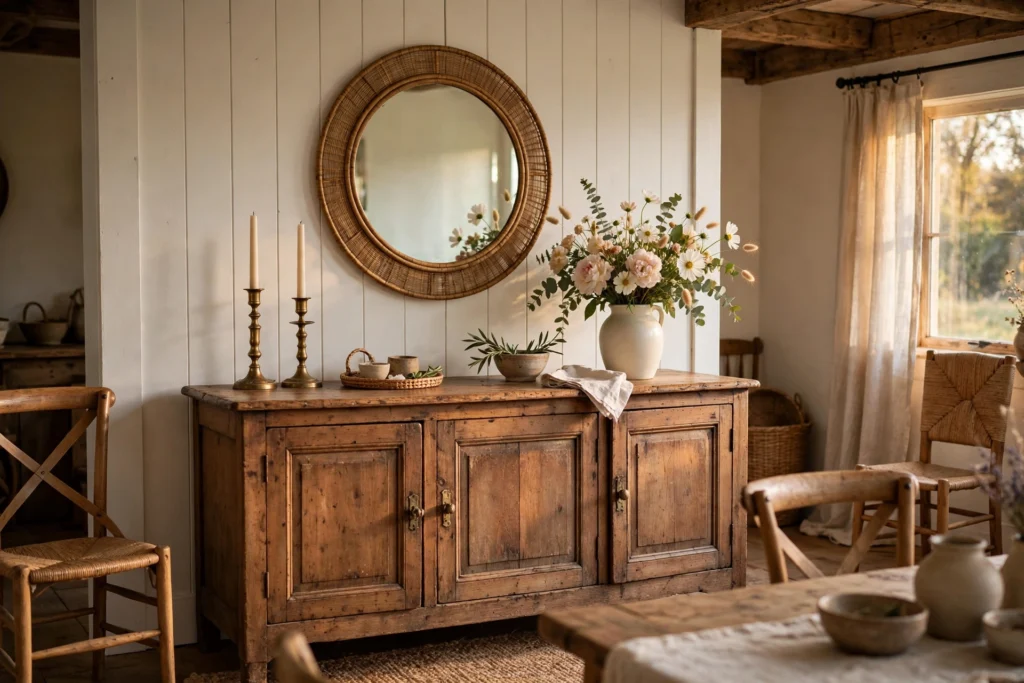
A vintage sideboard gives the farmhouse dining room its storage and its soul. Use it for the good dishes, the table linens, and the serving pieces — and style the top like a vignette: a mirror or art above, a lamp or candles, a bowl of fruit or fresh flowers. The worn wood and original hardware add character no new piece can fake.
Check drawers glide and the piece is level before you buy; surface wear is fine, structural wobble is not. A sideboard also makes a perfect serving station for buffet-style meals — clear the styling, line up the dishes, and let guests help themselves. Function and beauty in one hardworking piece.
6. Layer a Cozy Area Rug
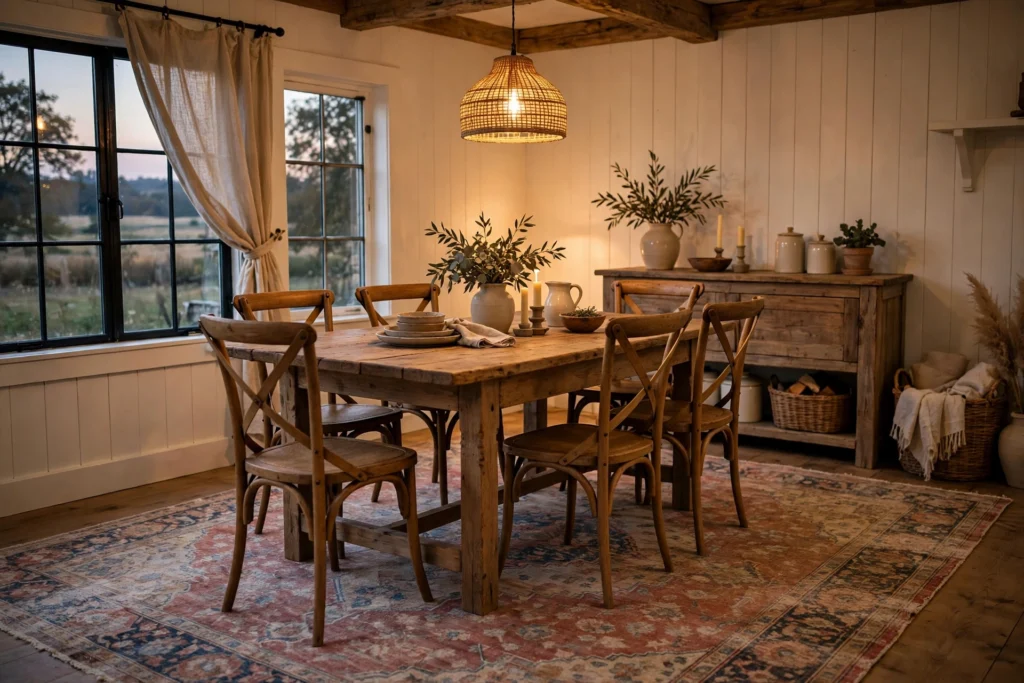
A rug under the dining table softens the room acoustically and visually — hard floors plus a big table can feel echoey and cold. Choose a flatweave or low-pile rug that chairs slide over easily, in a pattern that hides crumbs: vintage-style Persian patterns, natural jute, or a simple stripe all work beautifully.
Size it generously: the rug should extend at least 24 inches beyond the table on all sides so chairs stay on the rug when pushed back. In a farmhouse dining room, a slightly faded or vintage-look rug adds to the collected charm. And choose something washable or easy to spot-clean — dining rooms earn their stains honestly.
7. Create a Warm Table Centerpiece
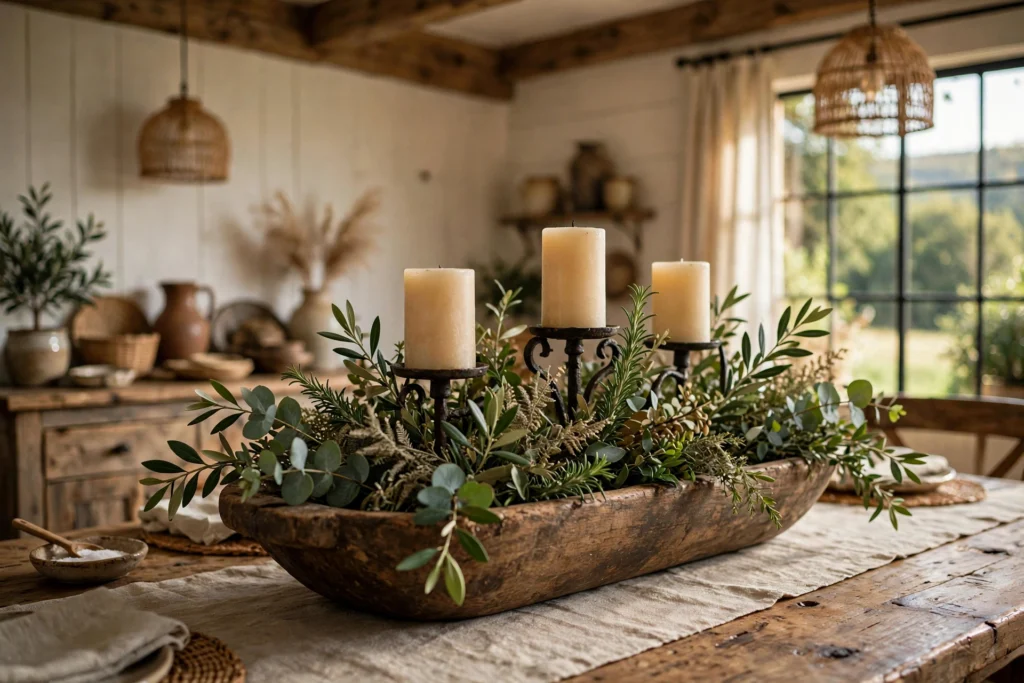
The centerpiece is the dining room’s ever-changing art. Keep it simple and seasonal: a wooden dough bowl filled with greenery, a row of pillar candles in iron holders, a low arrangement of wildflowers in mason jars, or a tray of pumpkins in October. The Spruce’s collection of dining table centerpiece ideas is full of inspiration that works beautifully on a long farmhouse table.
The rule is low and loose — nothing that blocks conversation across the table, and nothing so precious it can’t be swept aside when the food arrives. A good centerpiece should take under five minutes to clear. Change it with the seasons and the table always feels fresh without any real effort.
8. Add a Bench for Casual Seating
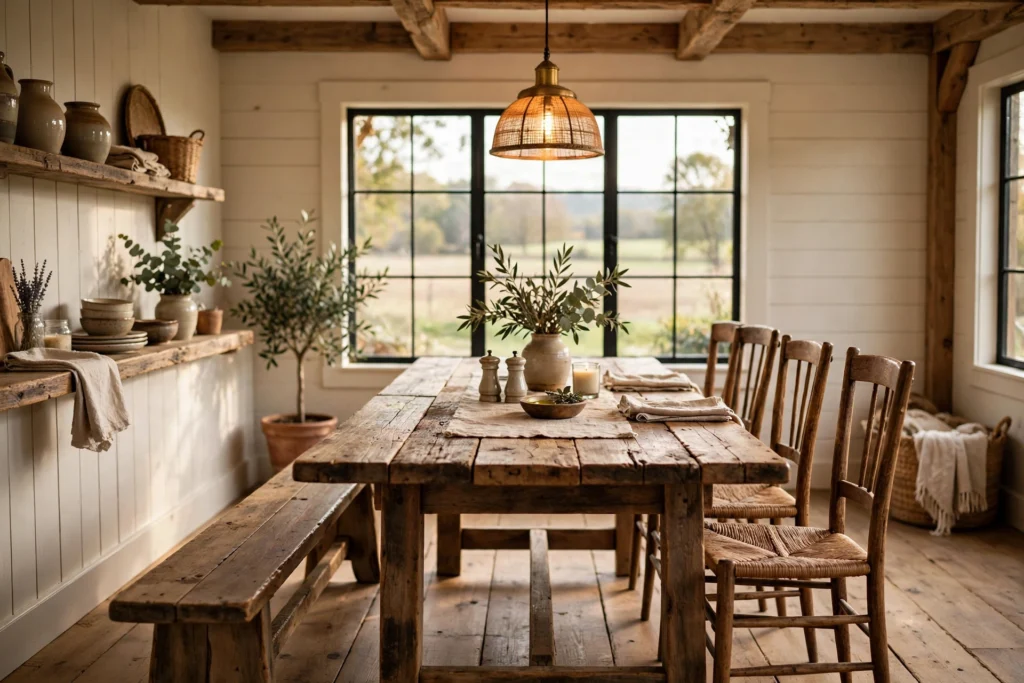
A bench on one side of the table is pure farmhouse: it seats more people than chairs, slides neatly under the table when not in use, and kids love it. A simple wood bench that matches the table keeps the look cohesive; an upholstered bench adds comfort and a touch of softness.
For everyday use, add a cushion or a folded throw for comfort — a bare wood bench gets old by the second helping. Benches are also brilliant in small dining rooms, since they visually disappear under the table and free up floor space. It’s the most practical seating choice in the farmhouse playbook.
9. Work in Black Accents
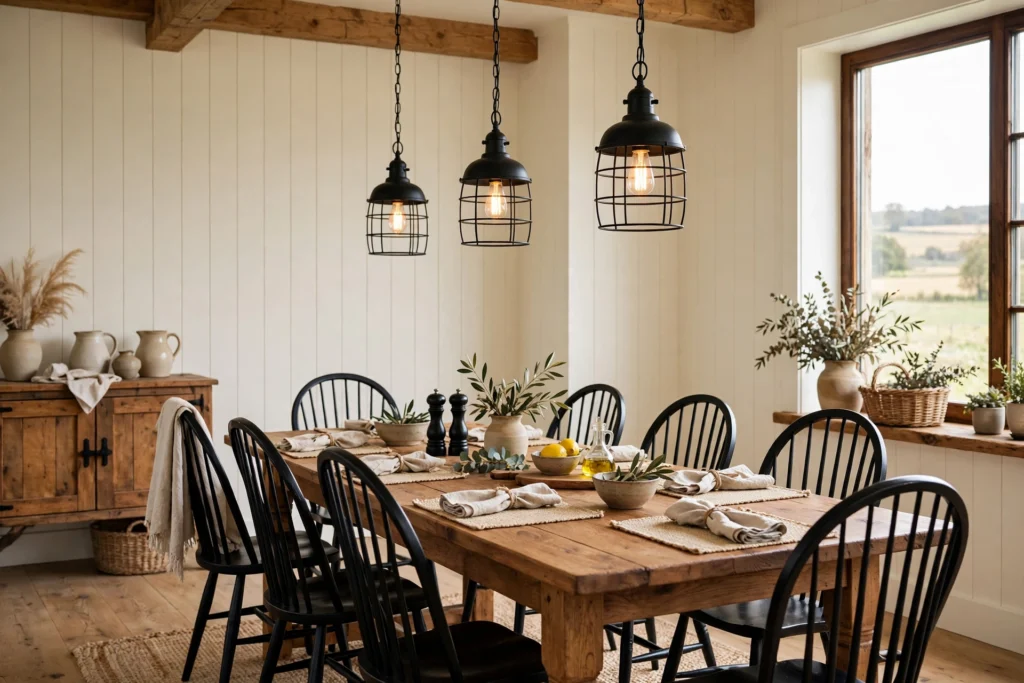
Black is farmhouse style’s secret weapon — it gives all that warm wood and creamy white the contrast it needs to look crisp rather than washed out. Black Windsor chairs, a black iron chandelier, black window frames, matte black hardware on the sideboard: each hit of black sharpens the room.
The formula is simple: mostly warm neutrals, with black appearing in three to five places around the room. Too little and the room feels bland; too much and it stops feeling like a farmhouse. A black-painted interior door or a chalkboard wall counts as one of your black moments and adds function too.
10. Carry Warm Wood Tones Throughout
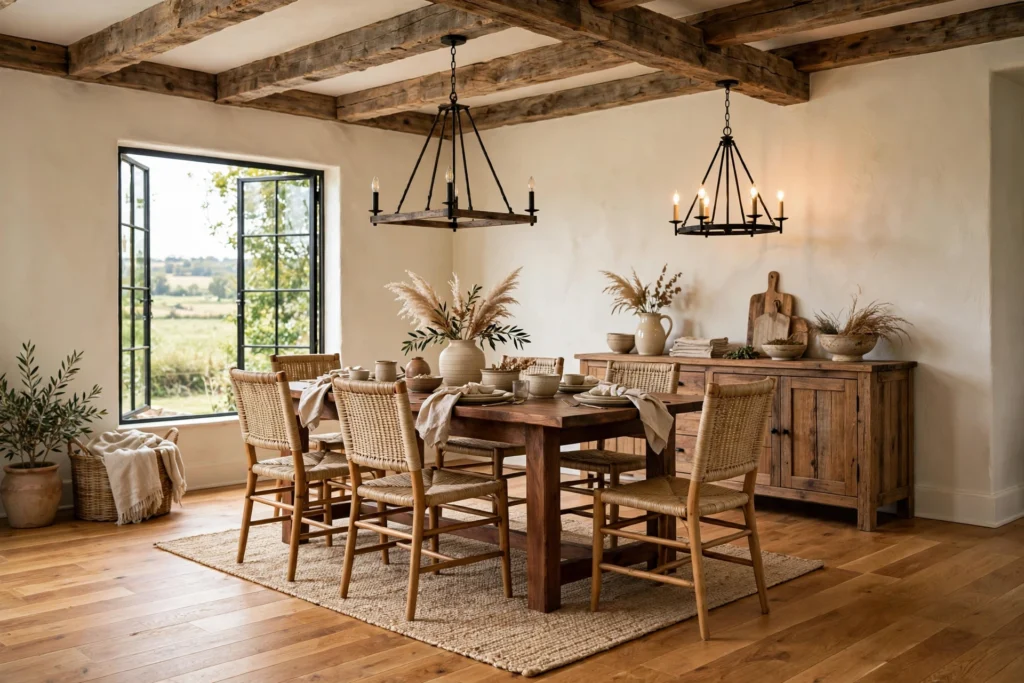
Farmhouse rooms run warm, and wood is the fuel. Honey-toned oak floors, a walnut-stained table, reclaimed beams, a pine hutch — layering warm woods creates the enveloping glow that defines the style. If your floors are cool-toned, warm up with furniture and beams instead. The same honest-materials thinking runs through our modern farmhouse kitchen ideas, which pair beautifully with this dining room.
Mix wood tones confidently — they don’t need to match, they need to harmonize. Keep them all on the warm side of the spectrum (avoid gray-washed woods next to honey oak) and the room will feel collected rather than chaotic. Wood is the one material you truly cannot overdo in a farmhouse dining room.
11. Add Open Shelving for Display
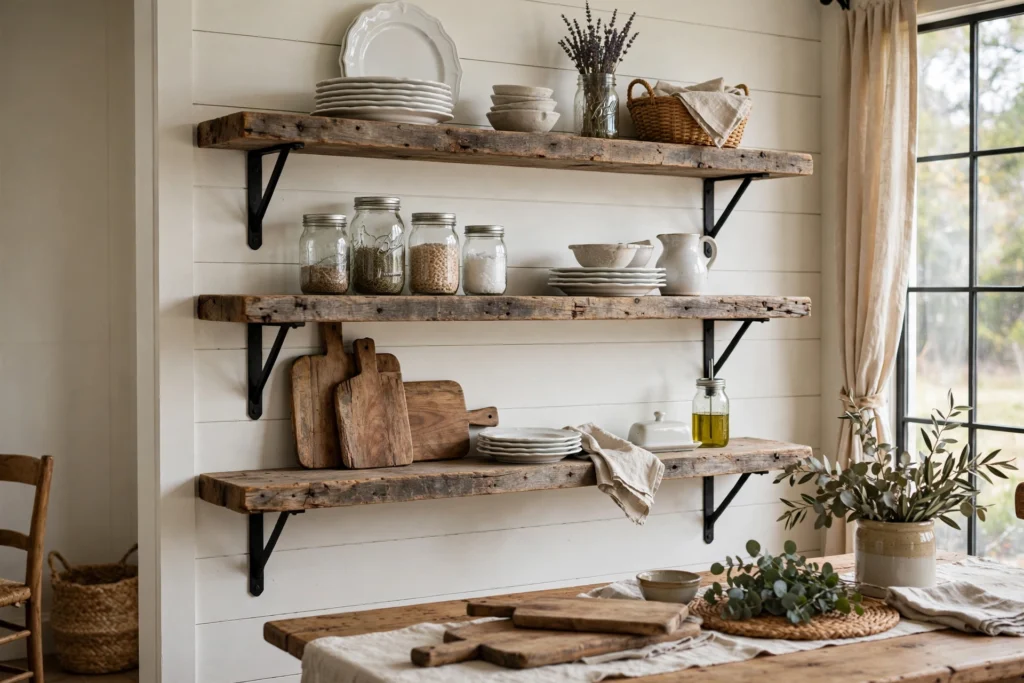
A set of open shelves on one wall turns everyday dishes into decor. Stack white ironstone plates, line up mason jars, display a collection of cutting boards or copper pots — the things you actually use, shown off. Reclaimed wood shelves on black iron brackets are the classic farmhouse pairing.
Keep it edited: this is display, not storage overflow. Group by material (all white ceramics, all wood boards) for a calm look, and leave breathing room between groupings. Dust is the tax on open shelving, so only display what you use often enough to stay clean — the everyday dishes earn their spot; the wedding china stays in the sideboard.
12. Bring In Vintage and Found Pieces
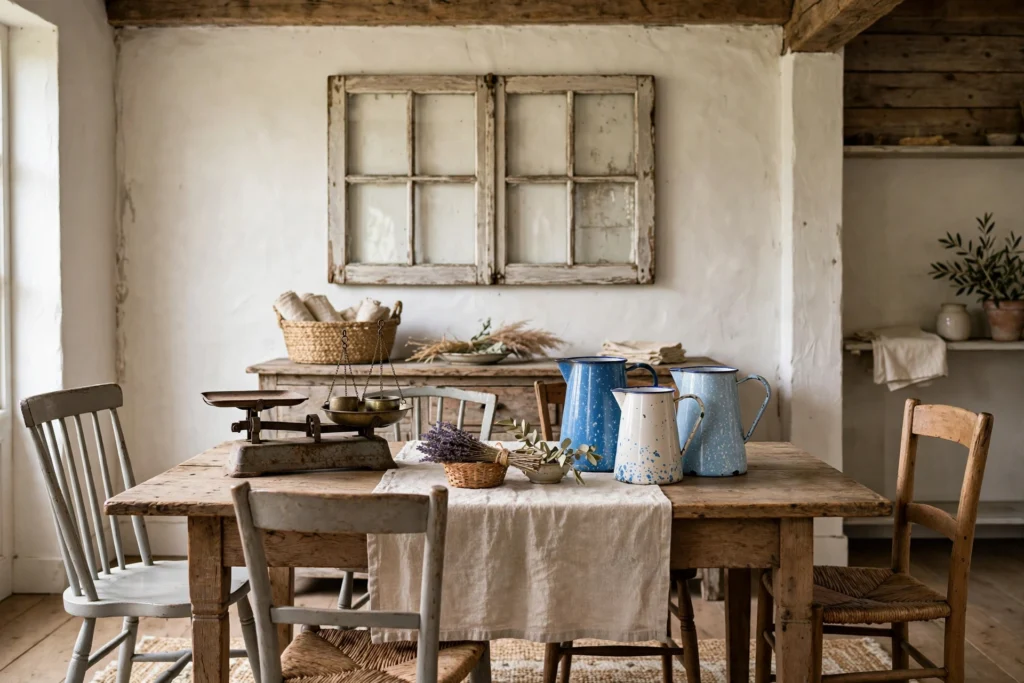
Farmhouse style is built on the hunt. A vintage scale on the sideboard, an old toolbox as a centerpiece, enamelware pitchers, a salvaged window frame as wall art, grain sacks as table runners — these found pieces give the room its story. Buy what genuinely appeals to you rather than what looks “farmhouse”; real affection always reads better than trend-chasing.
One caution from small-space thinking: curate, don’t accumulate. Our small dining room design ideas make the same point — every object should earn its footprint. A few well-chosen vintage pieces beat a room full of flea-market filler.
13. Keep the Palette Warm and Neutral
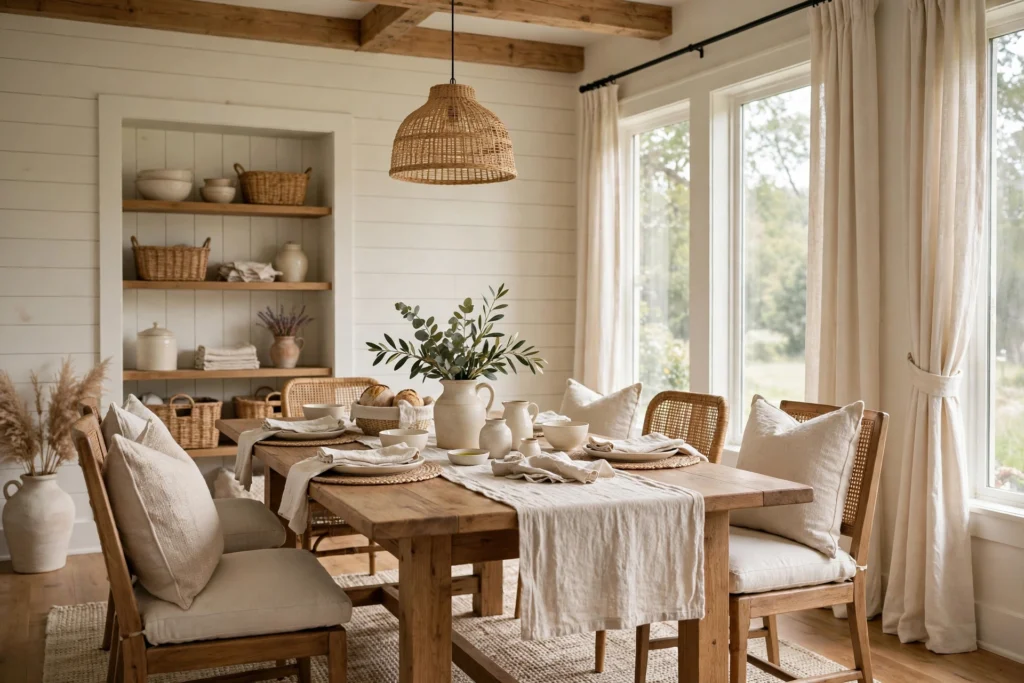
The farmhouse palette is nature’s neutrals: warm white, cream, oatmeal, sage, soft gray, with wood tones doing the heavy lifting. Walls in warm white keep the room bright; one deeper accent — a sage hutch, a navy rug, black chairs — adds depth without breaking the calm.
Avoid cool grays and stark whites, which fight the warmth that makes farmhouse work. When in doubt, warm it up: swap the gray throw for rust, the chrome for iron, the white shade for natural linen. A restrained palette also lets you change the room’s mood seasonally with just textiles — plaid in fall, linen in summer.
14. Make It Work in a Small Space
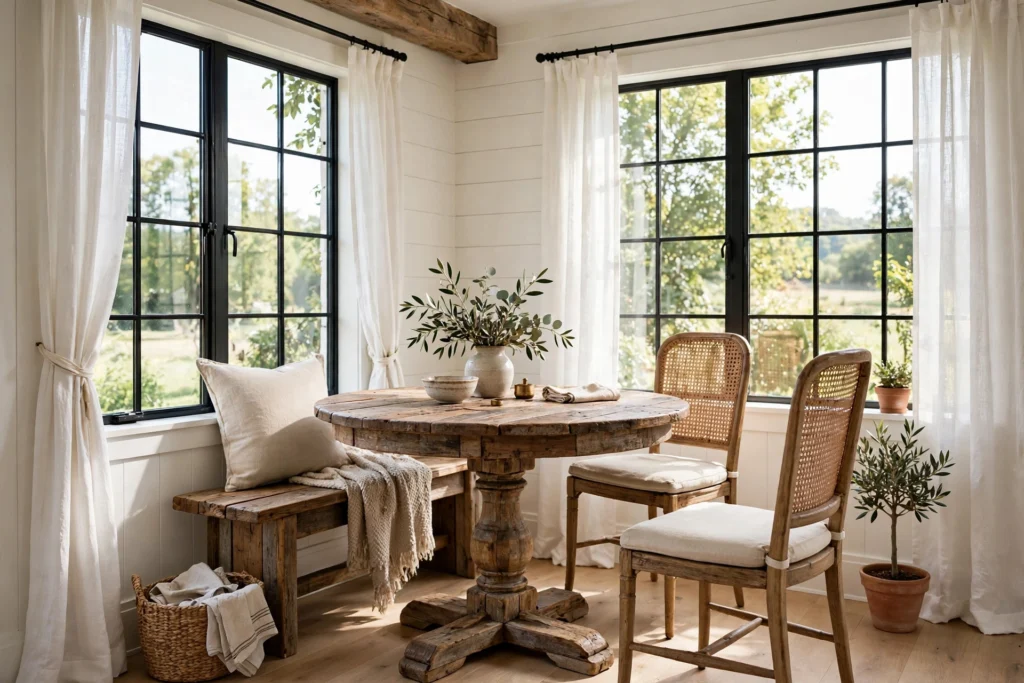
Farmhouse charm scales down beautifully. A round pedestal table in reclaimed wood seats four in a corner; a drop-leaf table against the wall opens up for guests; a bench plus two chairs fits a nook that a full set never could. Keep the palette light and the furniture leggy so the small room breathes.
Mirrors borrow light, and a rug defines the dining zone in an open plan. For more small-footprint strategies, our small dining room ideas cover space-stretching layouts in detail. Small farmhouse dining rooms often feel cozier than big ones — lean into the intimacy.
15. Finish With Seasonal Farmhouse Touches
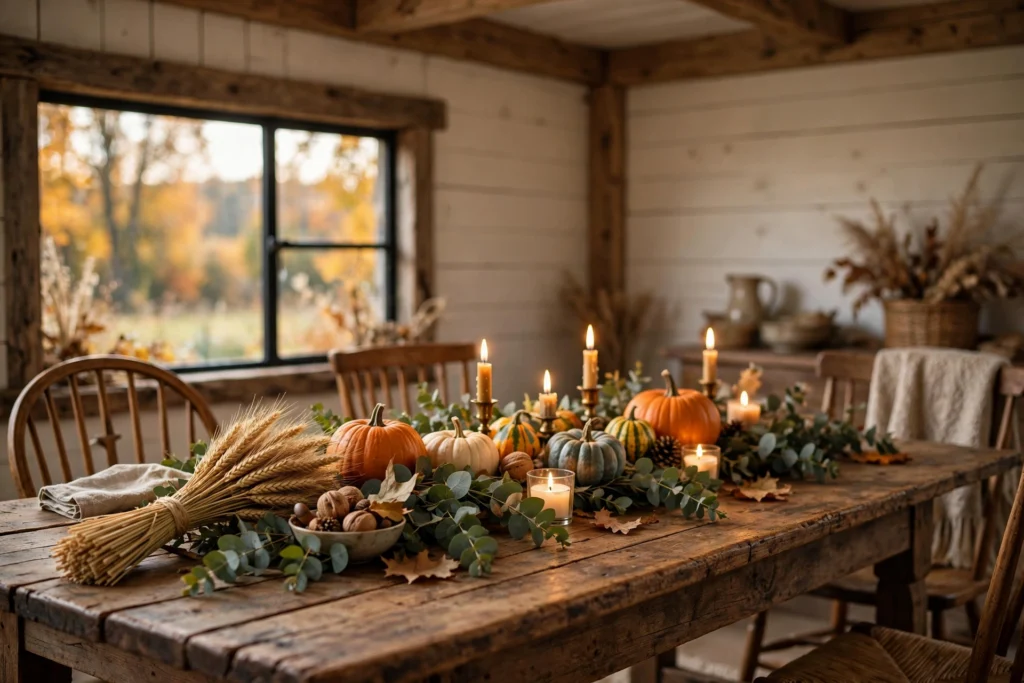
The farmhouse dining room shines in its seasonal rotations: a eucalyptus garland down the table in spring, wildflowers in mason jars in summer, pumpkins and wheat in fall, pinecones and candles in winter. These small swaps keep the room feeling alive and cared for all year.
Keep a single storage bin of dining-room seasonal decor so the changeover takes minutes. Change two or three elements — centerpiece, throw on the bench, wreath on the wall — not the whole room. A stable farmhouse foundation plus rotating accents is the formula for a dining room that never looks tired.
Frequently Asked Questions
What makes a dining room farmhouse style?
A reclaimed or rustic wood table, mixed or vintage seating, natural materials (wood, iron, linen, jute), a warm neutral palette with black accents, and unfussy decor with vintage character. The overall feeling should be welcoming and lived-in, never precious. For contrast with a sleeker take on dining spaces, see our modern dining room design ideas.
What color walls go with a farmhouse dining room?
Warm whites and creams are the classic choice — they keep the room bright and let the wood tones shine. Soft sage, warm greige, and pale blue-gray also work beautifully. If you want drama, one deep accent wall (forest green, navy, or charcoal) makes the wood furniture glow.
Can you mix modern and farmhouse in a dining room?
Absolutely — modern farmhouse is one of the most popular styles going. Keep the farmhouse foundation (wood table, natural textures) and add modern through lighting, art, and cleaner-lined chairs. The contrast between rustic warmth and modern simplicity is what makes the blend sing.
How do I make a farmhouse dining room cozy on a budget?
Start with textiles: a rug, curtains, and a table runner transform the room for little money. Thrift the chairs and sideboard, paint them to match, and add a DIY shiplap wall or board-and-batten. Warm lighting (2700K bulbs, candles) is the cheapest coziness of all.
What kind of lighting is best for a farmhouse dining room?
A statement chandelier or pair of pendants over the table — iron, wood-beaded, or galvanized metal — on a dimmer, with warm 2700K bulbs. Add a lamp or candles on the sideboard for layered glow. The goal is warm pools of light, not bright overhead glare.
Keep Exploring
A farmhouse dining room is never really finished — it deepens with every meal, every guest, every found object that earns a place. Start with the table, layer the warmth, and let the room collect its stories.
If you love the rustic side of things, our farmhouse family continues through the whole house — and for more dining inspiration across every style, explore our dining room decor ideas. Because the best dining rooms aren’t the prettiest ones; they’re the ones where everyone stays for one more cup of coffee.





[…] Below are 15 traditional dining room ideas to bring that timeless elegance home. Each one focuses on practical, specific moves you can make at any budget, from investing in one heirloom-quality piece to simple styling tweaks that transform the mood. Many of these ideas pair beautifully with a farmhouse sensibility, too — for more ideas, see our 15 farmhouse dining room design ideas. […]