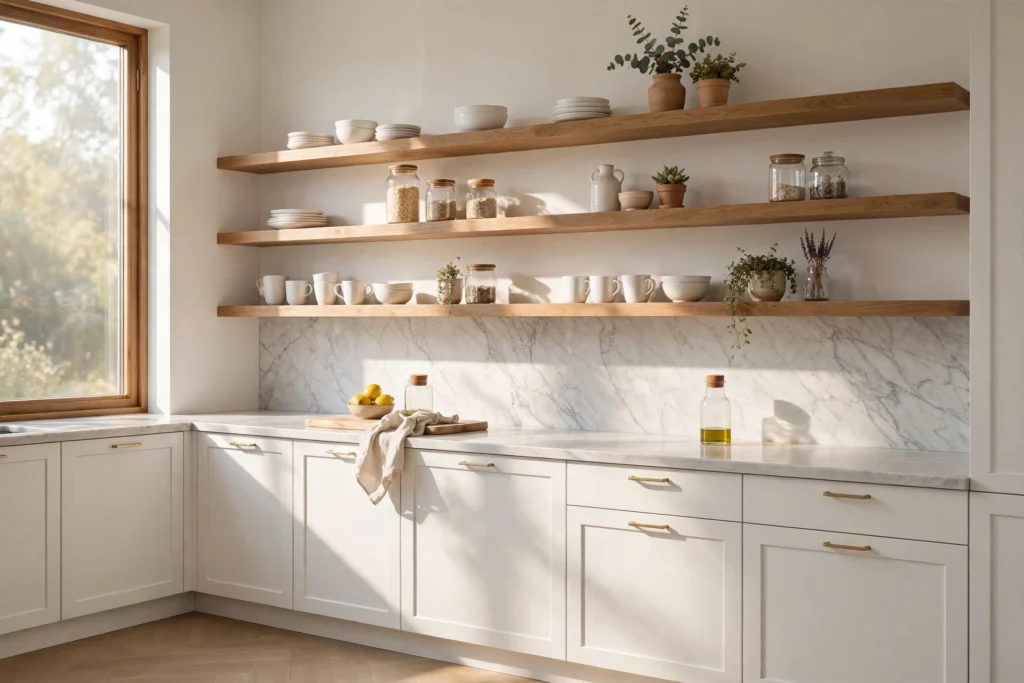

Open shelving divides opinion like few other kitchen trends. Done well, it makes a kitchen feel airy, personal, and effortlessly stylish. Done badly, it’s a dusty shelf of mismatched mugs. The difference is the planning and styling behind the shelves. These open kitchen shelving ideas that look styled, not cluttered show how to get the magazine look in a real, working kitchen.
The secret is treating open shelves as display with discipline: curated objects, consistent color stories, and honest rules about what earns a spot. Every idea below covers both the installation side (brackets, depth, lighting) and the styling side, so your shelves stay beautiful long after the novelty wears off.
1. Floating Shelves Flanking the Range
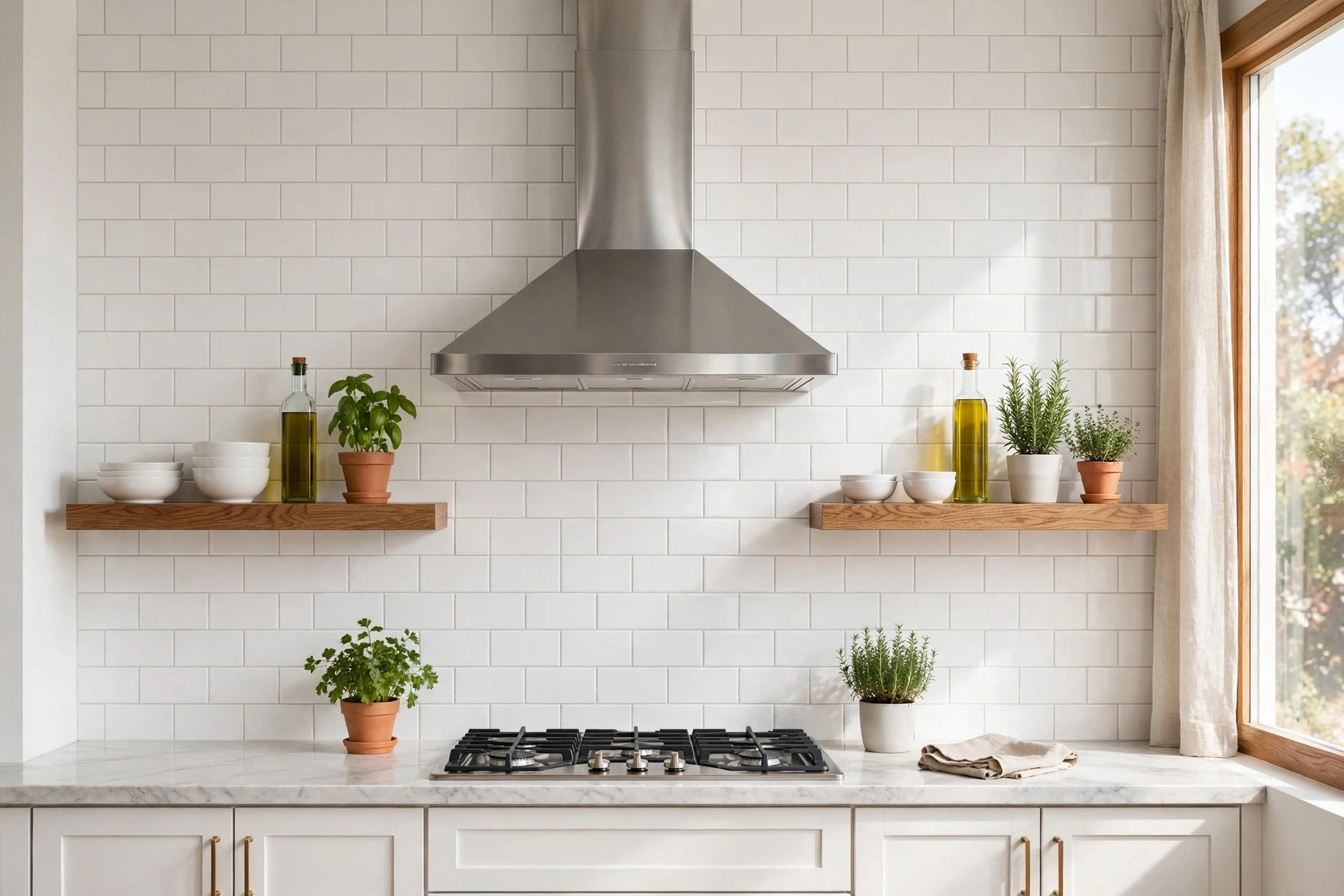
Two floating shelves flanking the range hood is the most photogenic open-shelf arrangement — and it’s practical too. The symmetrical setup frames the cooktop as the kitchen’s focal point while keeping everyday oils, salts, and wooden spoons within arm’s reach. Keep the styling minimal here: this zone sees heat and grease, so display only items you use and wash often.
Choose shelves 10 to 12 inches deep so plates and bowls sit securely, and mount them into studs — a loaded shelf needs real support. Match the shelf material to another wood tone in the room for cohesion. Leave generous negative space: two or three groupings per shelf with breathing room between them reads as styled; a packed shelf reads as cluttered.
2. One Long Shelf Over the Counter
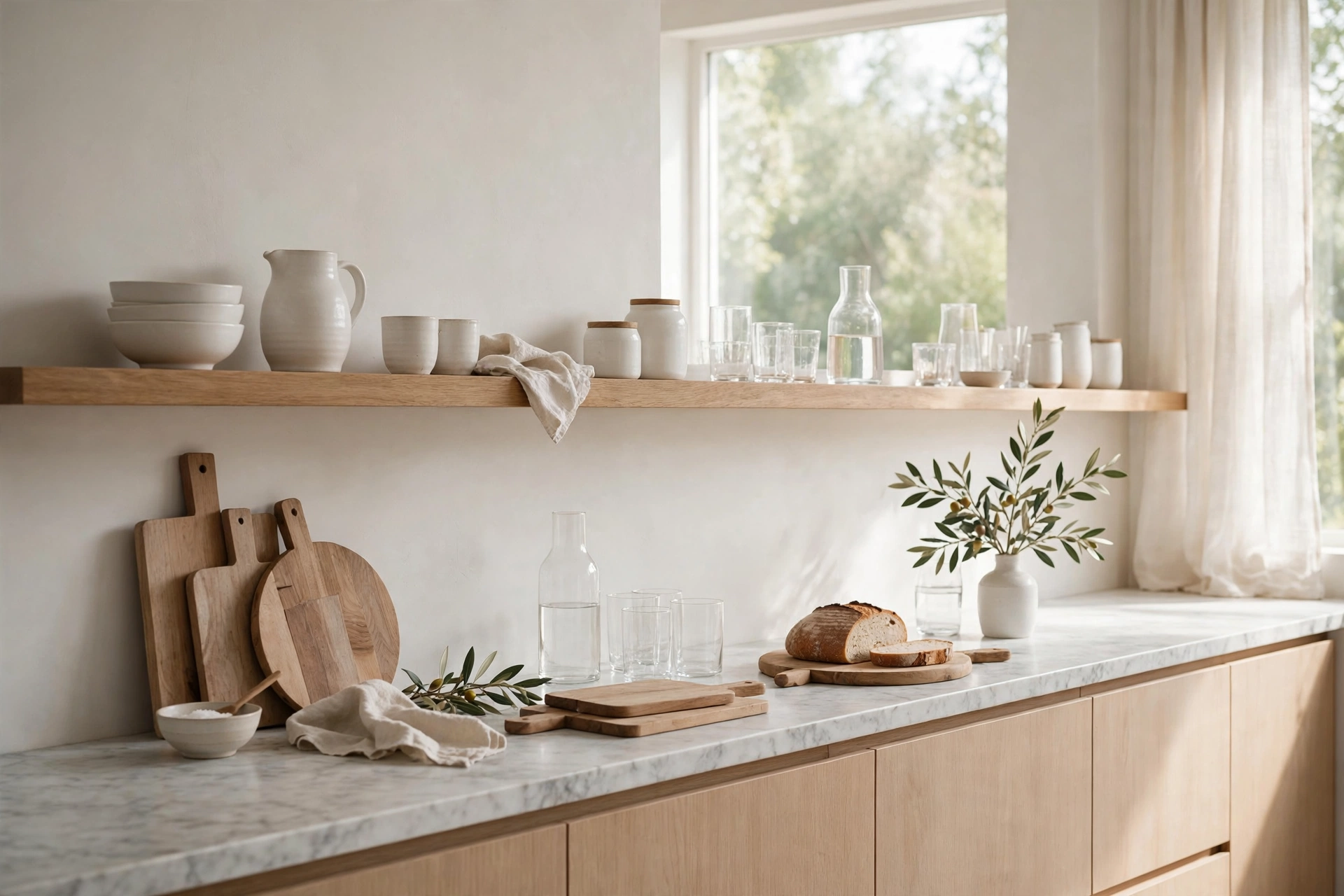
Instead of multiple short shelves, run a single long shelf the full length of a counter run. The unbroken horizontal line feels calm and architectural, and it’s easier to style than several small shelves competing for attention. This works beautifully in modern kitchens where you want openness without visual noise.
Style it in a loose rhythm: group items in odd numbers, vary heights, and repeat one material (all white ceramics, all wood, all glass) for cohesion. Leave at least 18 inches between the countertop and the shelf so you can use the counter comfortably. Apartment Therapy’s roundup of kitchen shelf ideas shows how a single linear shelf can carry both function and style.
3. Replacing Upper Cabinets Entirely
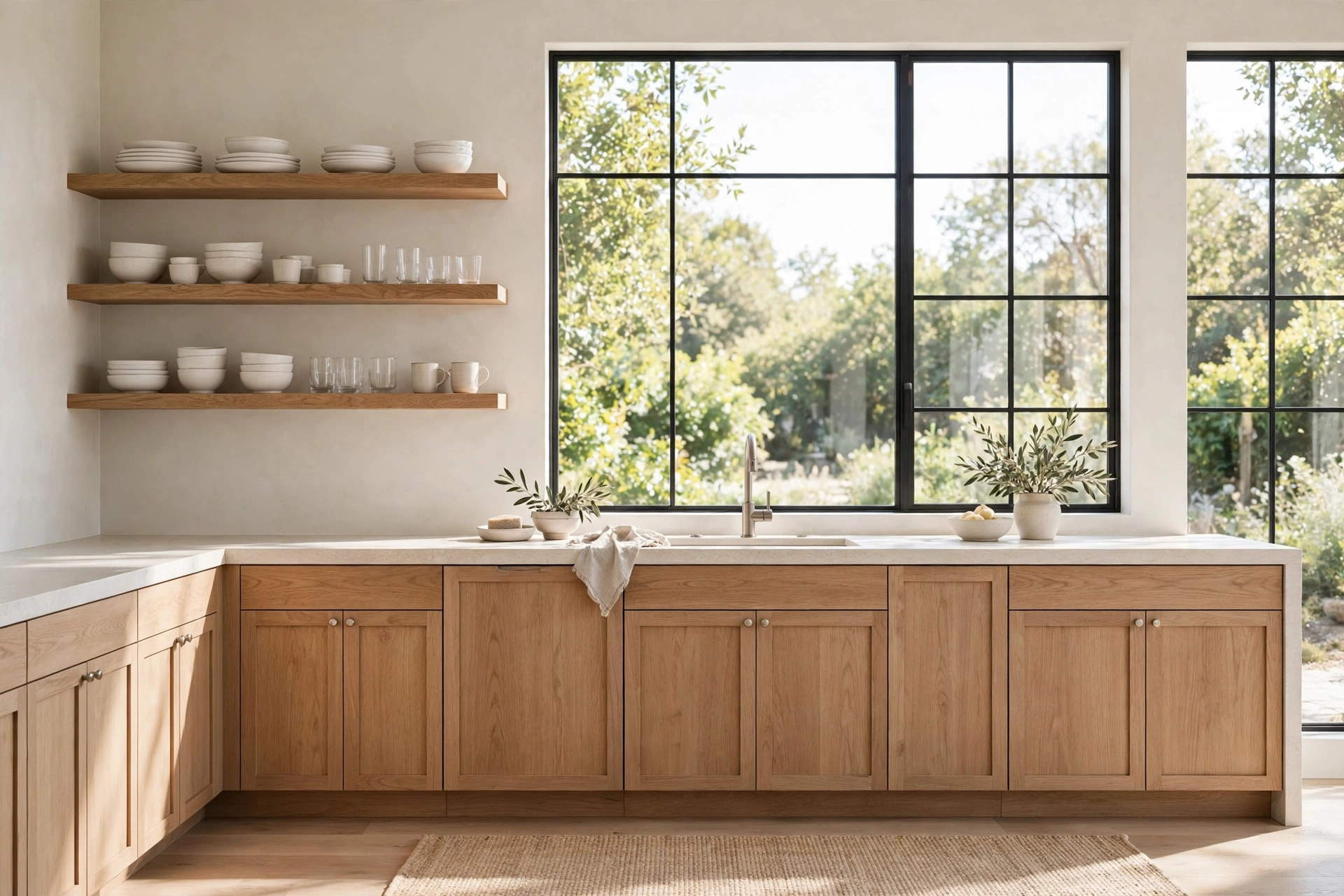
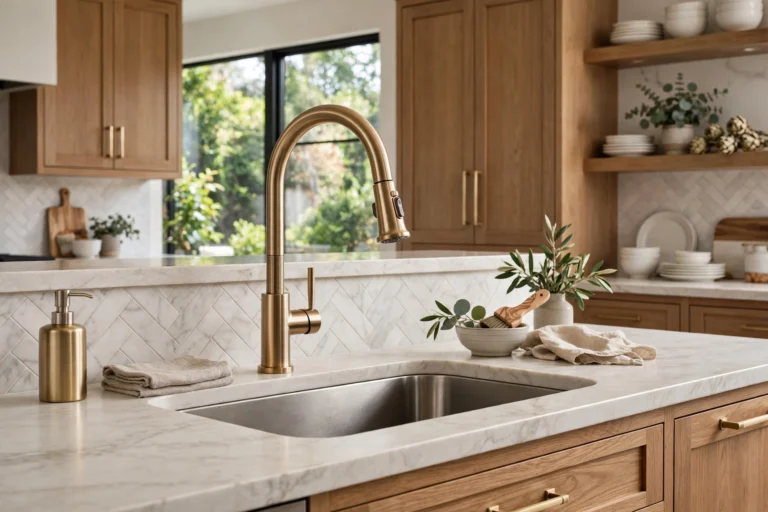
The boldest move is removing upper cabinets altogether and replacing them with two or three open shelves. The kitchen instantly feels larger and brighter, and everything you own becomes visible — which forces a welcome edit of your dishware. This works best in kitchens with enough base-cabinet and pantry storage to absorb the closed storage you lose.
Be honest about your habits: open shelves need regular dusting and suit people who use their dishes daily. Store only your prettiest, most-used items up top. To keep the rest of the kitchen serene, our minimalist kitchen design ideas pair perfectly with this airy approach.
4. Corner Open Shelving
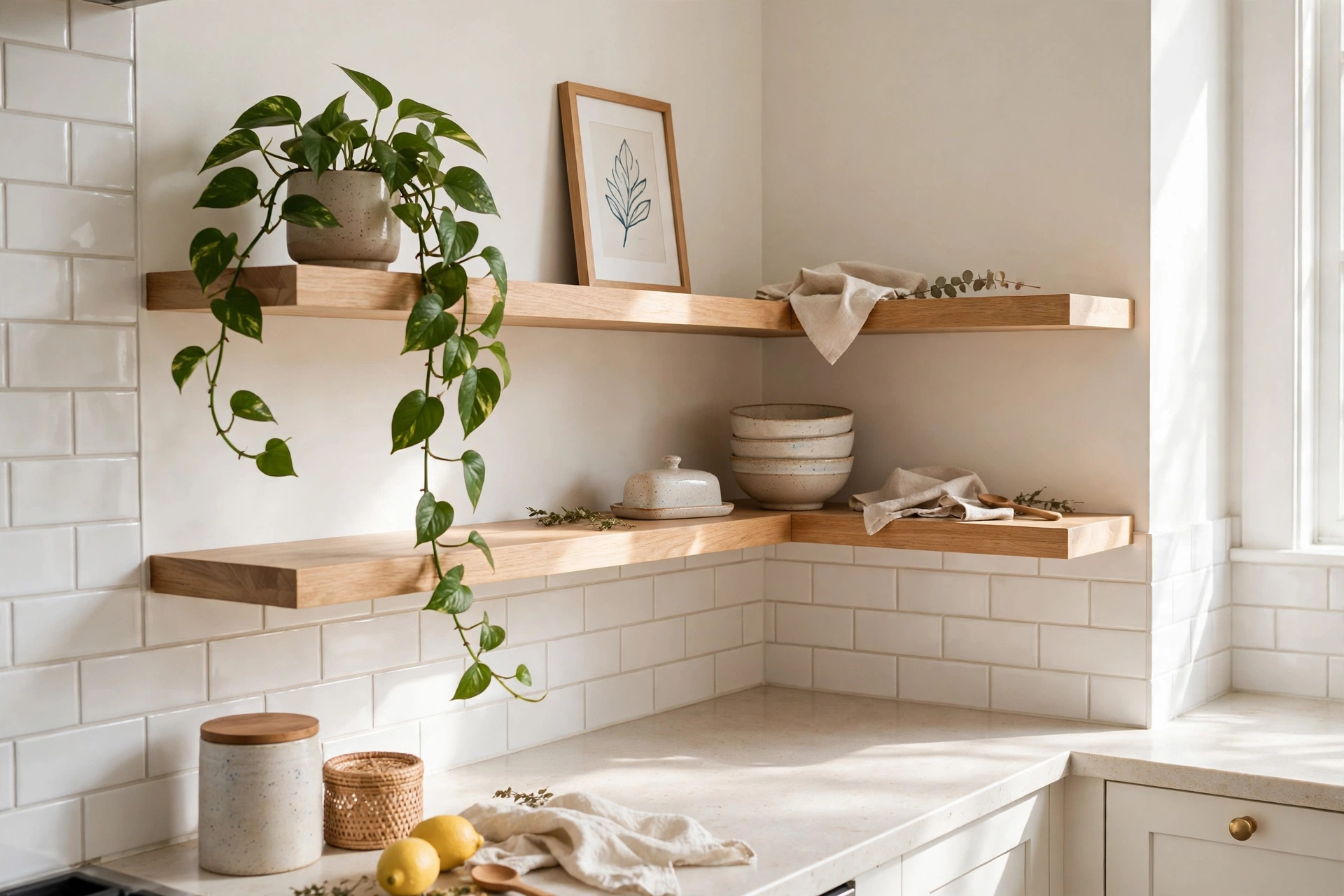
Awkward kitchen corners are prime real estate for open shelves. A pair of short shelves wrapping a corner turns dead space into a charming display for plants, cookbooks, or a small collection. Because corner shelves are naturally compact, they’re self-limiting — you physically can’t overcrowd them.
Style corners with lighter items: trailing plants, small art, a stack of bowls. Keep heavy pots and stacks of plates on straighter, sturdier runs. If the corner is deep, add a small LED puck light underneath to prevent it from becoming a dark hole. This is a great first experiment with open shelving since it’s low-commitment and easy to restyle.
5. Everyday Dishware as Decor
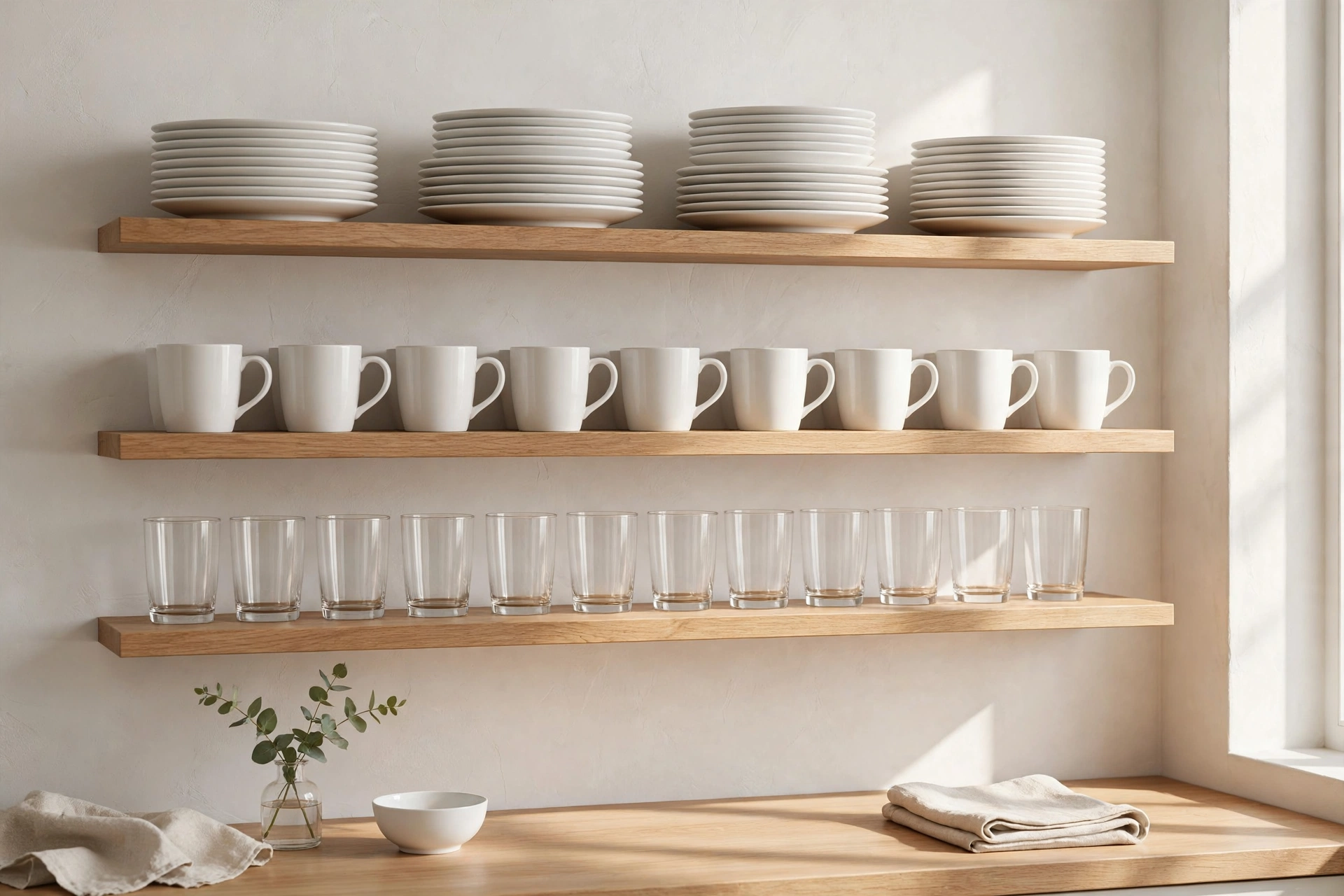
The most functional open shelves display the dishes you actually eat from every day. Matching or coordinated everyday dishware — all white, all stoneware, all in one color family — looks intentional and stays clean because it’s constantly in rotation. This is the anti-clutter secret: if it doesn’t get used weekly, it doesn’t live on the shelf.
Stack bowls and plates in neat piles of four to six, line up mugs by handle direction, and group glasses in rows. The uniformity does the styling work for you. Keep a small step stool nearby if shelves are high — you’ll reach for these daily. When your everyday dishes look this good, you don’t need decorative objects competing for space.
6. Glass-Front Cabinets as a Compromise
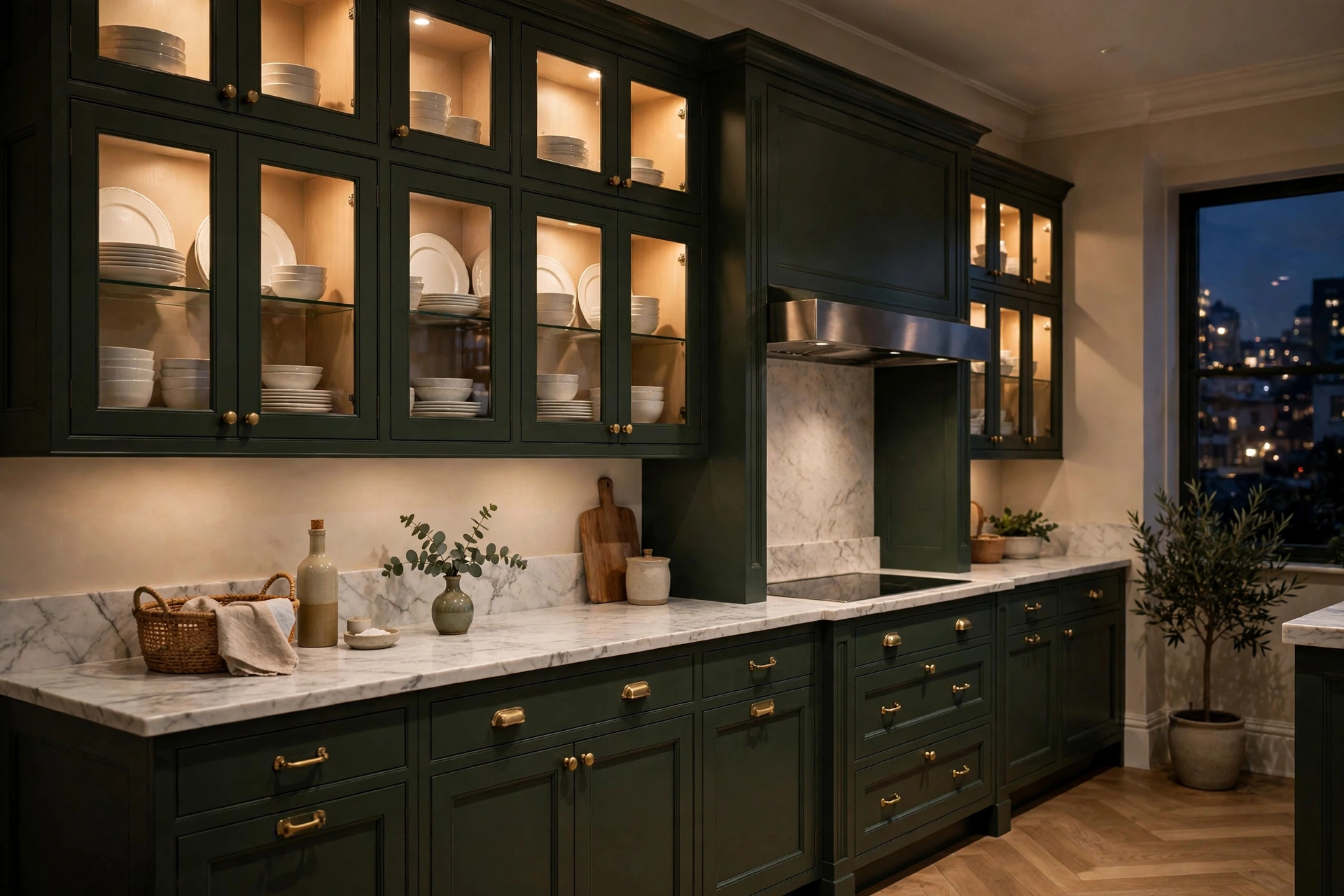
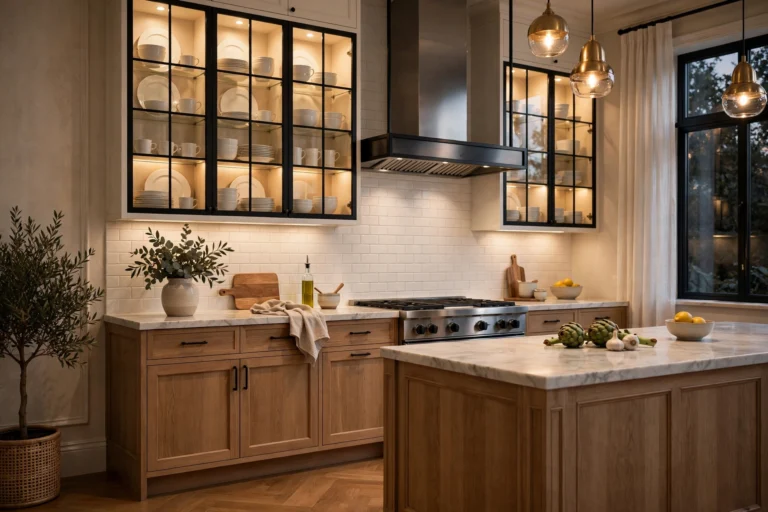
If full open shelving feels too exposed, glass-front cabinets are the perfect middle ground. You get the airy, display-like quality of open shelves with a layer of protection from dust and grease. Frosted or reeded glass softens the view further while still feeling lighter than solid doors.
Style glass-front cabinets like open shelves — coordinated dishware, breathing room, odd-numbered groupings — since contents stay visible. Add interior lighting for a gorgeous evening glow. This suits cooks who love the open-shelf look but live in dusty areas.
7. Brass Gallery Rails
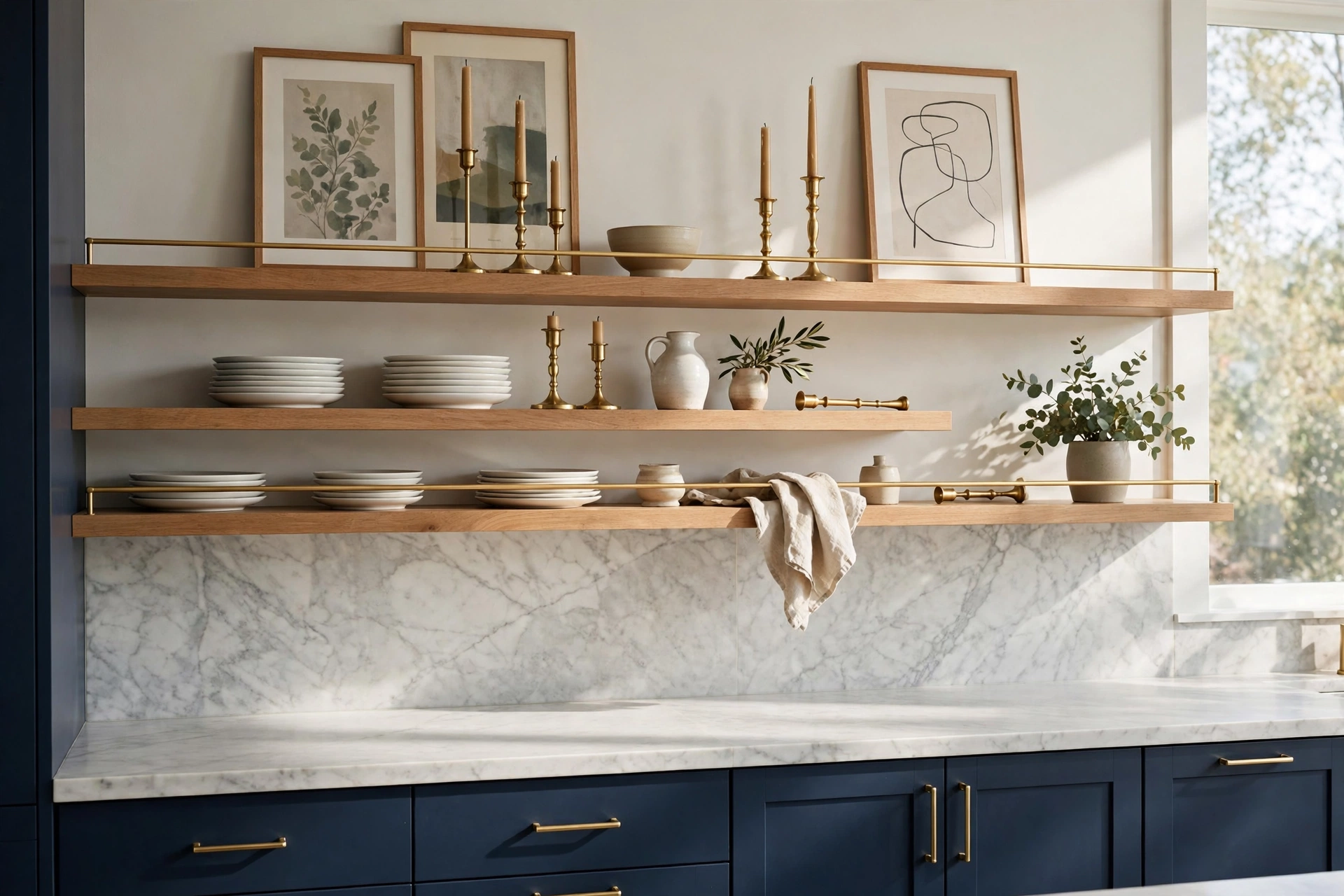
A brass gallery rail — a slim metal rod running along the front edge of the shelf — is the detail that makes open shelves look custom and high-end. Beyond the looks, rails are practical: they stop items from sliding off and let you lean art and cutting boards against the wall securely. It’s a small addition with outsized impact.
Match the rail finish to your cabinet hardware, faucet, or light fixtures for a coordinated look. Installation is straightforward: rails typically mount with small brackets screwed into the shelf front. Apartment Therapy’s piece on brass gallery rails shows how designers use them to tie open shelving into the whole kitchen’s metal story.
8. Under-Shelf Lighting
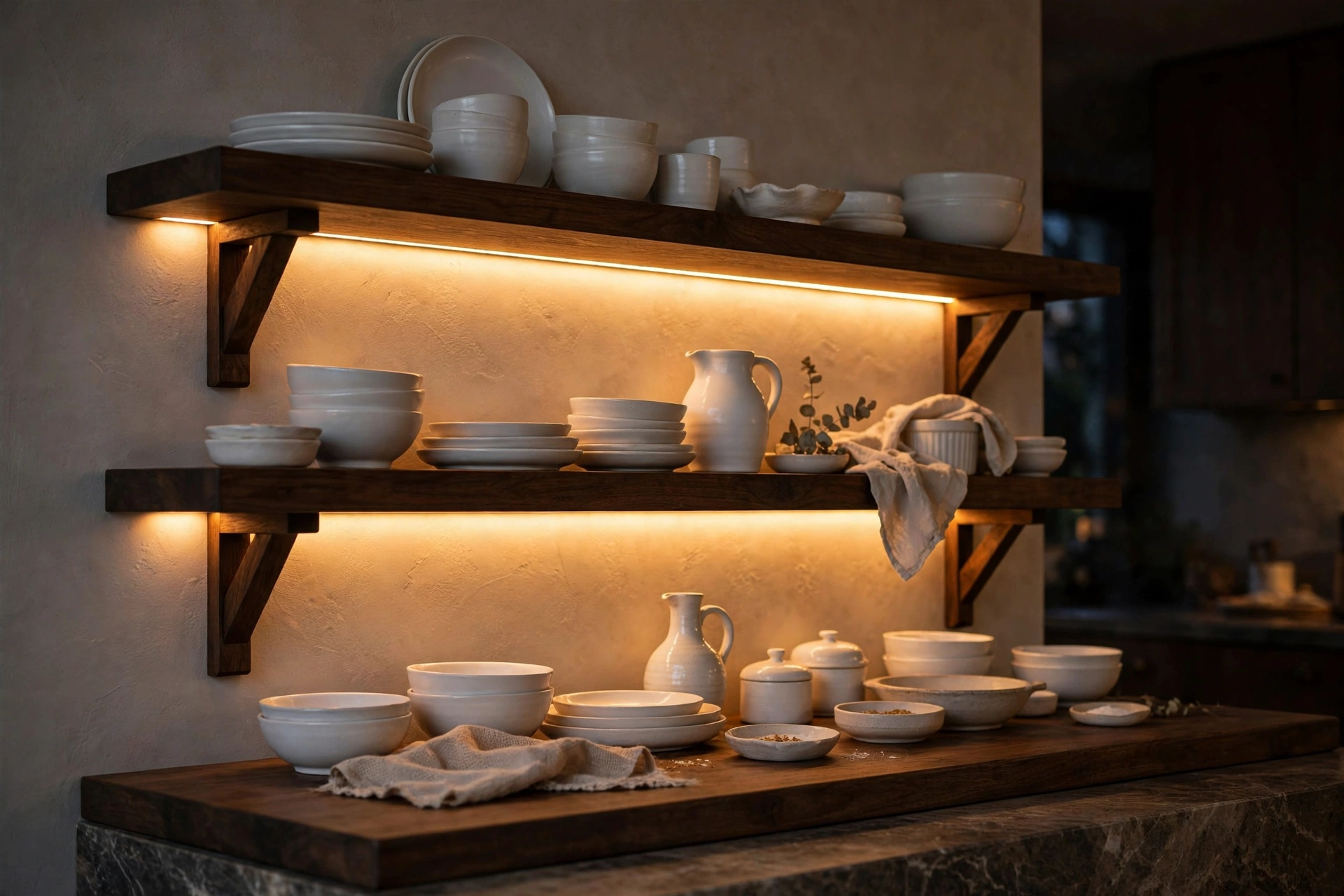
Lighting transforms open shelves from daytime storage to evening display. Slim LED strips or puck lights mounted under each shelf wash the wall and objects below in warm light, making even simple white dishes look sculptural. It’s the single biggest upgrade for making shelves feel styled rather than merely functional.
Choose warm-white LEDs (2700K to 3000K) for a cozy glow, and hide the strip in a shallow channel so you see light, not hardware. Battery-operated puck lights work where wiring is difficult, though hardwired strips on a dimmer are worth the effort in a renovation. Light also makes the shelf contents easier to find — a genuine functional win.
9. Rustic Wood Beam Shelves
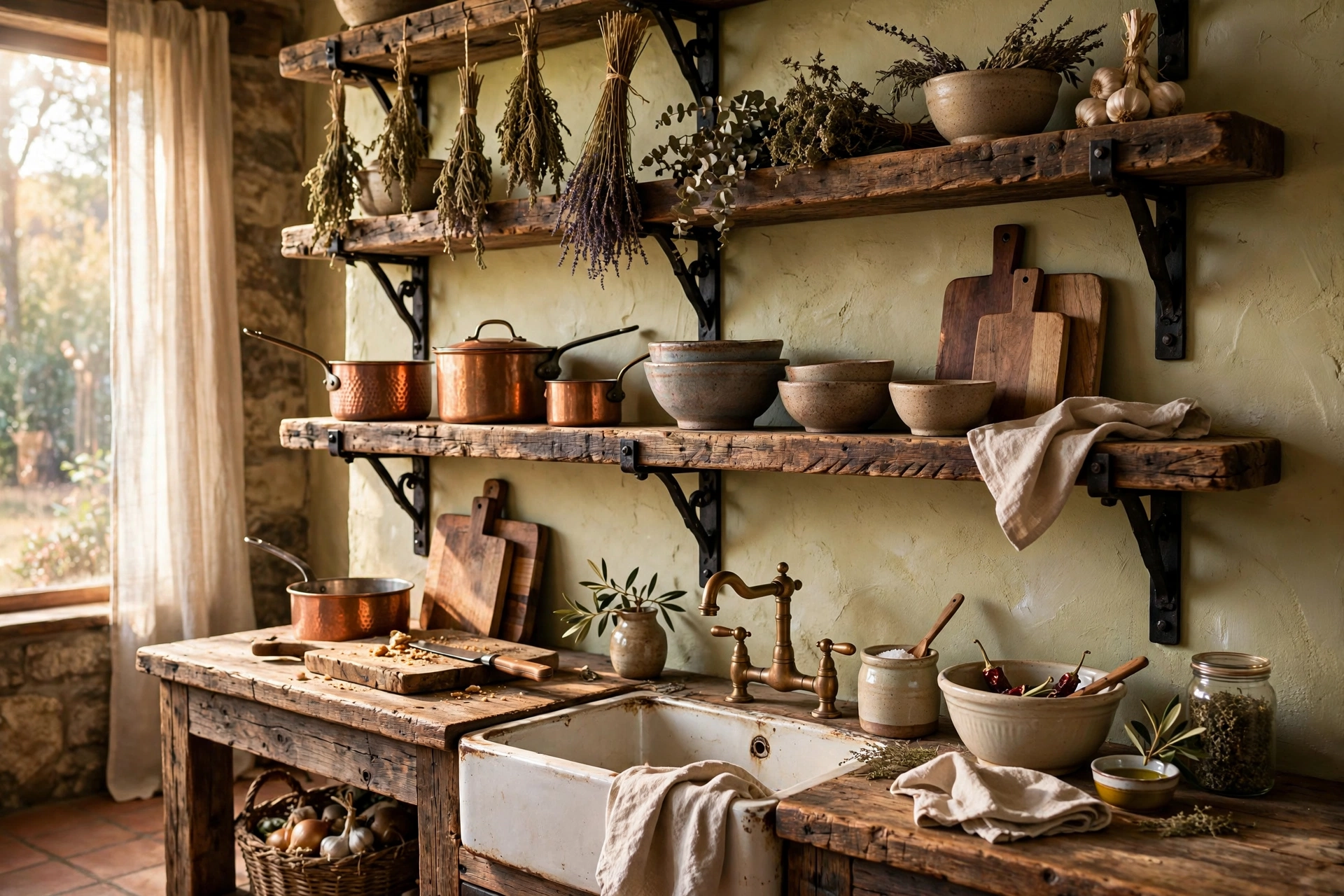
Thick, chunky wood shelves — think reclaimed beams or rough-sawn oak — bring warmth and character that thin floating shelves can’t match. The substantial profile suits farmhouse, rustic, and traditional kitchens, and the natural texture hides wear beautifully. Pair them with black iron brackets for an industrial-farmhouse edge.
Seal the wood with a food-safe finish since kitchen shelves see steam and splatters. Style rustic shelves with stoneware, wooden boards, copper pots, and dried herbs — materials that echo the shelf’s organic feel. Our rustic kitchen design ideas show how to build a whole warm kitchen around this kind of honest material.
10. Matching Jar Pantry Display
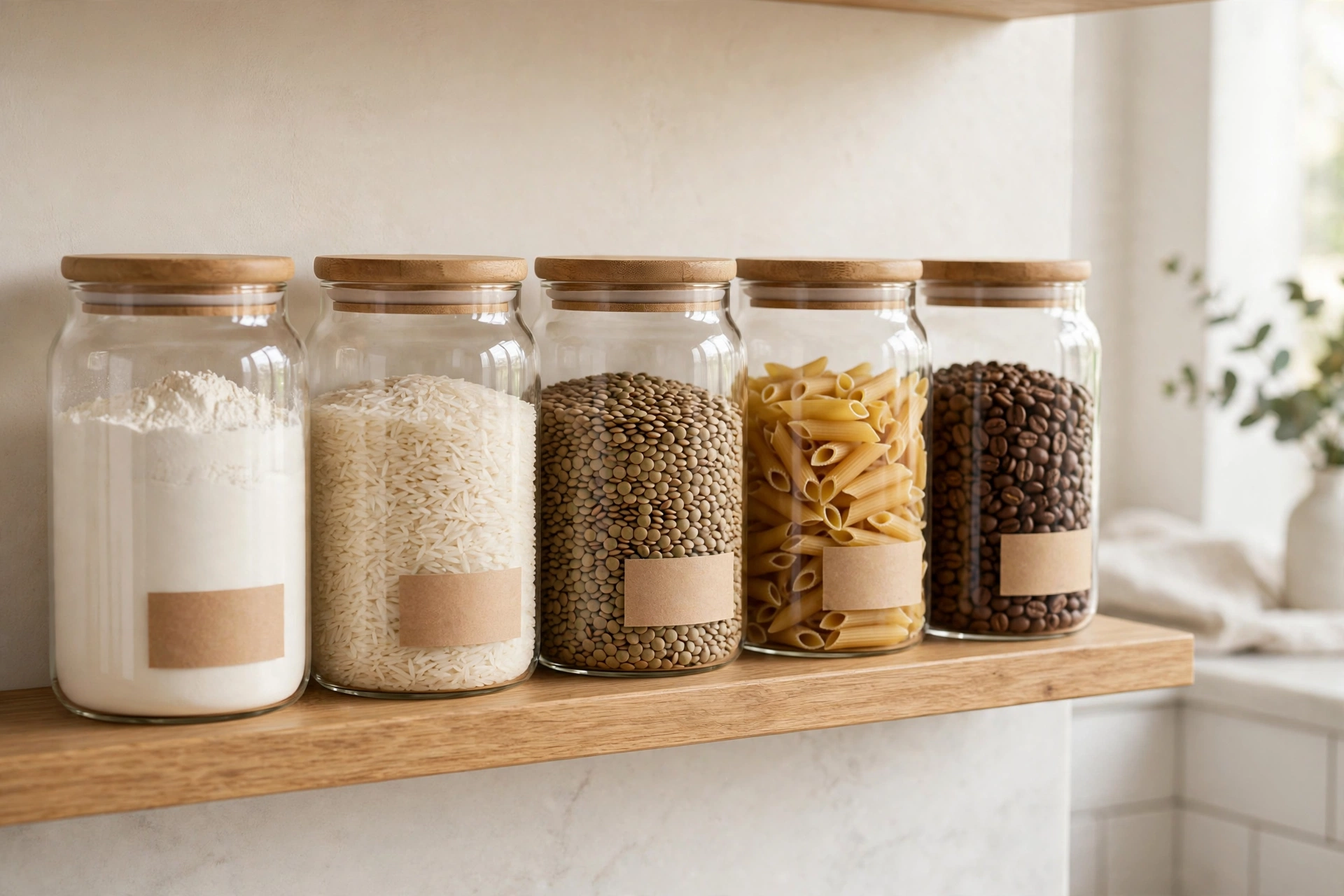
Few things look as satisfying as a shelf of matching glass jars filled with pantry staples — flour, rice, lentils, pasta, coffee. The uniformity creates instant visual calm, and decanting staples keeps them fresher and easier to find. It’s open shelving that earns its keep through pure function.
Invest in jars with airtight seals (not just pretty ones), label everything clearly, and keep the jars you reach for most at the front. Refill from bulk bags stored in a closed pantry to keep the display tidy. For more small-space pantry strategies, our small pantry design ideas cover how to make every inch work harder.
11. Built-In Plate Racks
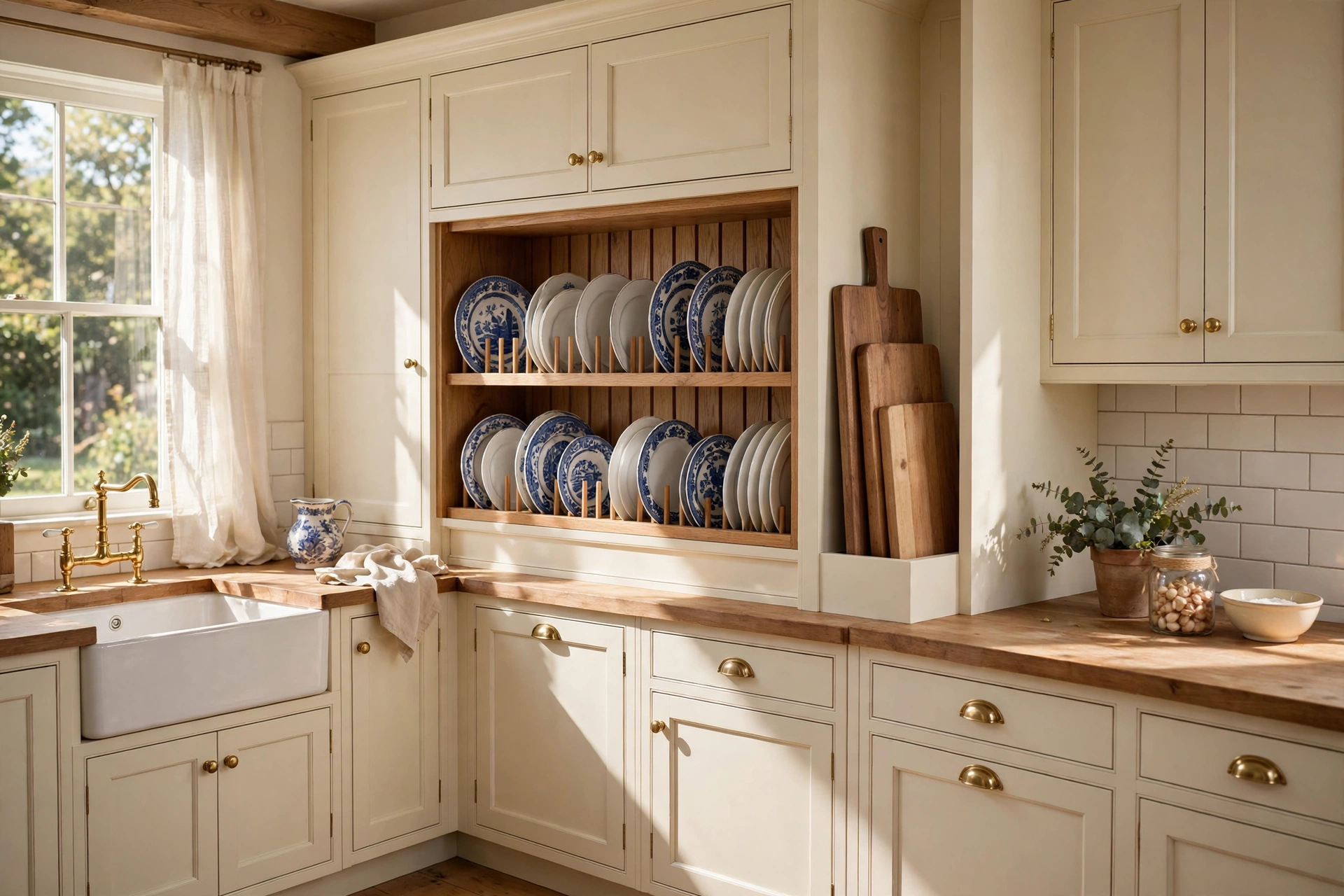
A plate rack — vertical slots that display plates on edge — turns dish storage into decor. Whether built into the end of a cabinet run or mounted as a standalone shelf feature, plate racks show off pretty dishware while keeping it accessible and dust-free-ish. They’re a classic in English and farmhouse kitchens for good reason.
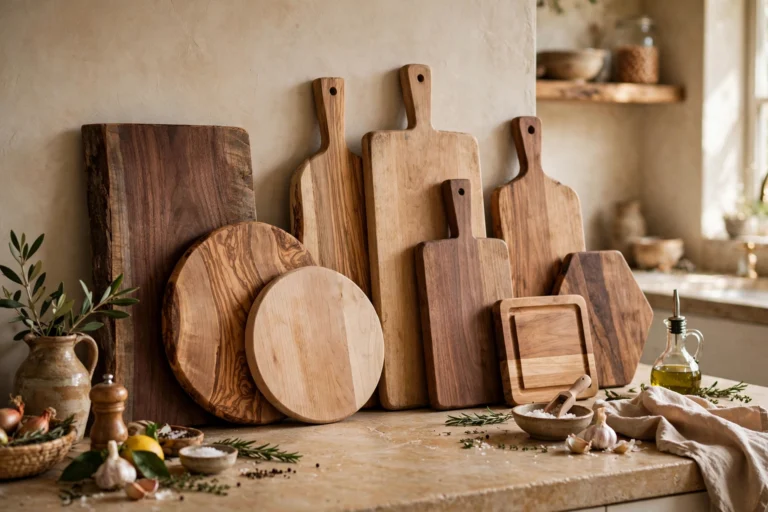
Size the slots to your largest plates with a little wiggle room, and angle the base slightly so plates lean securely. Mix plate sizes and patterns for a collected look, or keep one pattern for calm uniformity. Plate racks also work brilliantly for cutting boards and serving trays, which are awkward to store any other way.
12. Open Shelving in a Small Kitchen
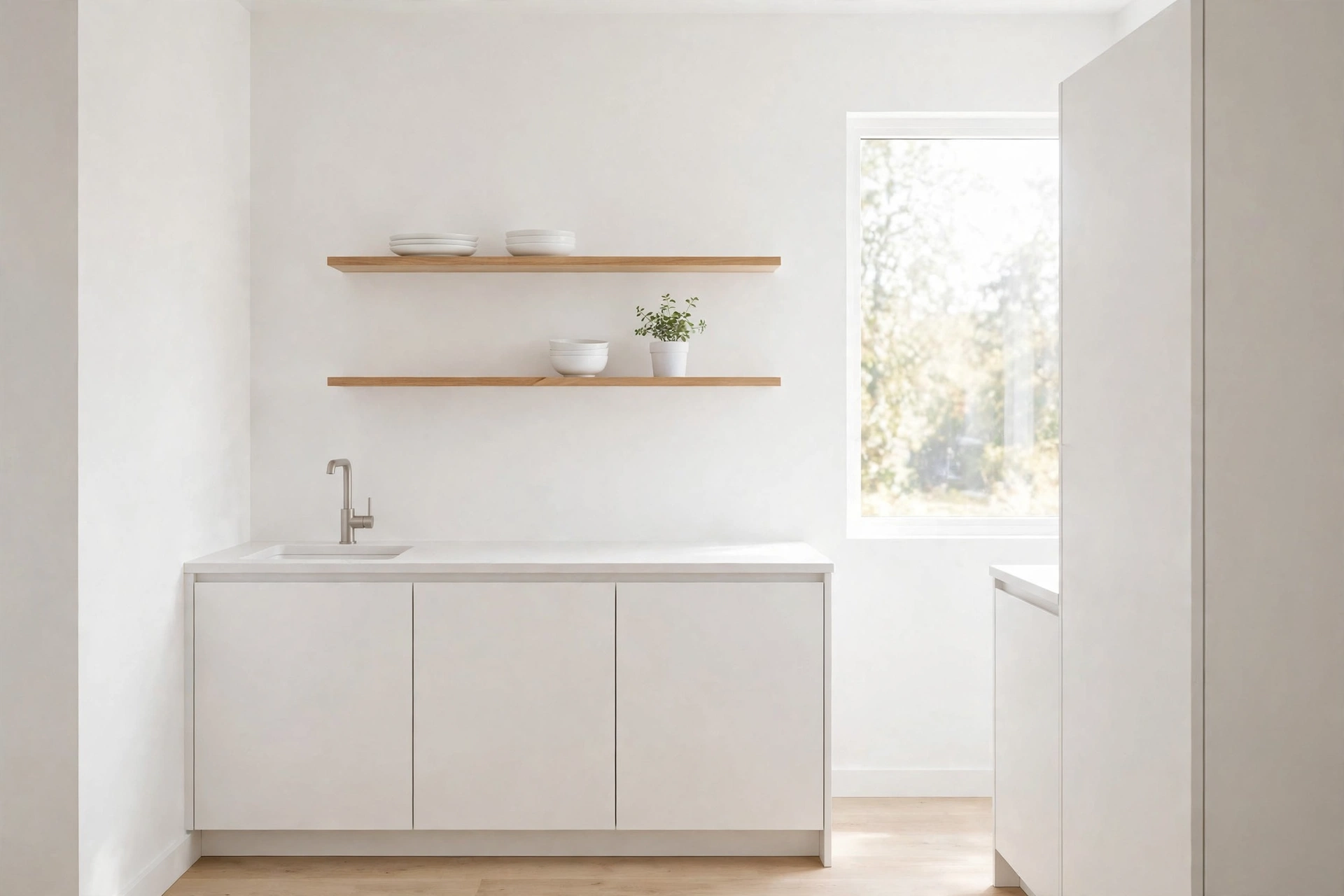
Small kitchens benefit most from open shelving — replacing bulky uppers with slim shelves makes the room feel dramatically larger. The key is restraint: one or two shelves with your most-used, best-looking items, and everything else in closed base storage. In a tiny kitchen, every visible object must earn its place.
Choose shelves no deeper than 10 inches to preserve headroom, and keep the styling light: white dishes, clear glass, one small plant. A single shelf above the coffee station or beside the window can be more impactful than a wall of shelves. Measure carefully — in small kitchens, shelves that jut too far become a head-bumping hazard.
13. Mixing Open and Closed Storage
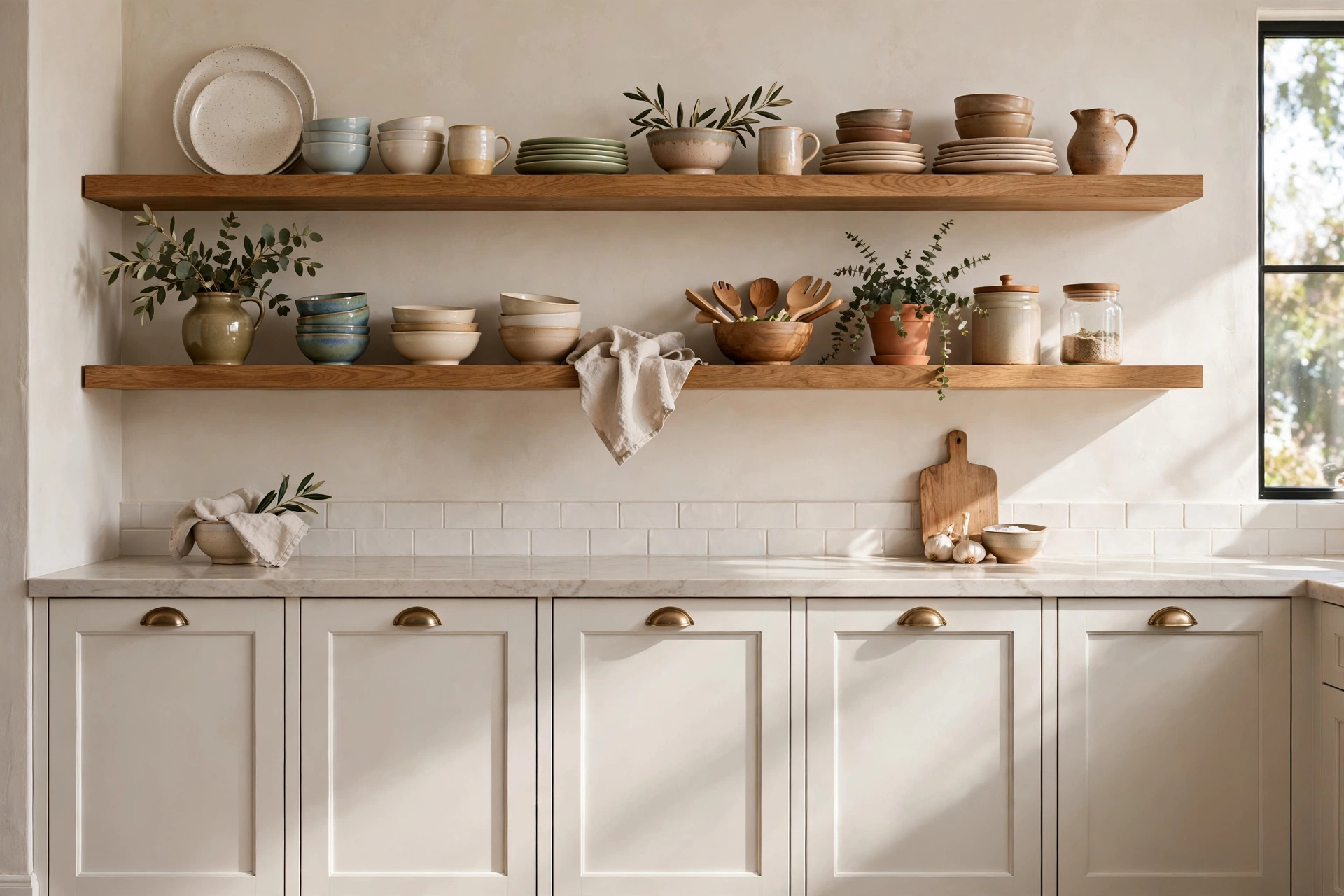
You don’t have to choose between all-open and all-closed. The most livable kitchens mix both: open shelves for beautiful daily items, closed cabinets for the mismatched, the ugly, and the rarely used. A common formula is open shelves on one wall, closed uppers on the others — you get the airy look without sacrificing practical storage.
Plan the mix around your real inventory: display the good dishes, hide the plastic containers and small appliances. This hybrid approach photographs well and ages gracefully. It’s the pragmatic choice for busy households that want the open-shelf aesthetic.
14. Minimalist Single-Object Styling
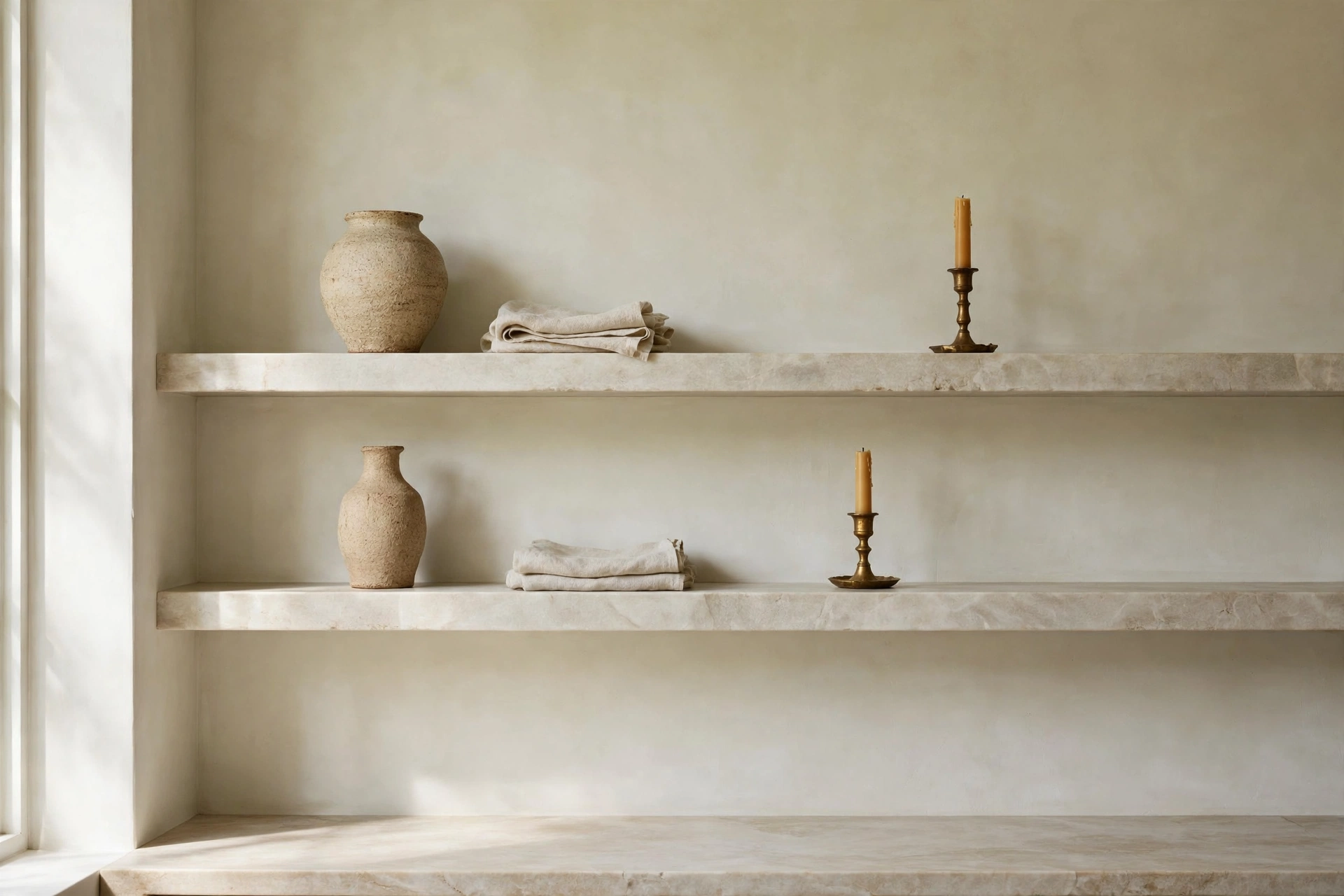
For a gallery-like look, style each shelf with just a few sculptural objects: a handmade vase, a stack of linen napkins, a beautiful mortar and pestle. This museum approach works when the shelf itself is beautiful — thick oak, honed marble, or blackened steel — and when the kitchen around it is calm enough to let the vignettes breathe.
The rule is simple: fewer objects, more space between them, and everything beautiful or useful (ideally both). Rotate pieces seasonally to keep it fresh without buying anything new. This styling suits minimalists and anyone whose kitchen doubles as an entertaining space where looks matter as much as function.
15. Seasonal Shelf Rotation
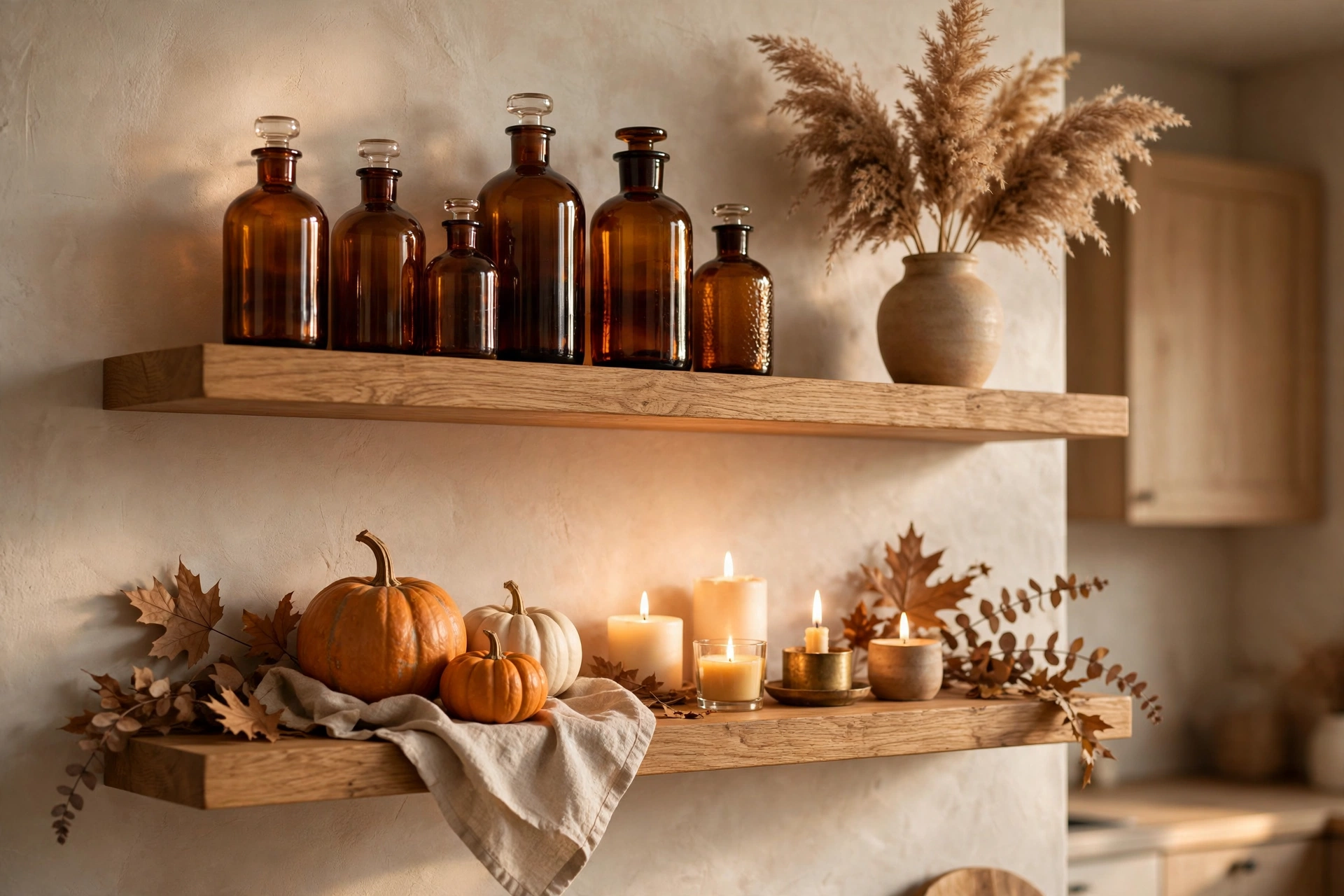
Treat your open shelves as a rotating gallery and swap a few pieces with the seasons: bud vases and pastel ceramics in spring, sun-bleached wood and clear glass in summer, amber glass and dried grasses in fall, evergreen sprigs and candles in winter. The shelf structure stays the same; only the accents change.
Keep a small bin of seasonal shelf decor so the swap takes ten minutes. This habit keeps your kitchen feeling fresh year-round and stops shelves from going stale. It’s also the most sustainable way to redecorate — you’re restyling, not buying, and rediscovering pieces you already own.
Frequently Asked Questions
How deep should open kitchen shelves be?
Ten to twelve inches is the sweet spot for most kitchen shelves — deep enough for dinner plates and cereal bowls, shallow enough to keep everything visible and reachable. In small kitchens, stick to 8 to 10 inches to preserve headroom. Anything deeper becomes a dark cave where items get lost.
How do you keep open shelves from looking cluttered?
Limit each shelf to one color family, leave 20 to 30 percent of the shelf empty, and store only items you use regularly. Group in odd numbers, vary heights, and repeat materials. The fastest clutter fix is an honest edit: if it’s chipped, mismatched, or unused, it moves to closed storage.
Are open kitchen shelves hard to keep clean?
They need more maintenance than closed cabinets — expect a quick dusting every week or two, more often near the range where grease settles. The trick is displaying only items you use and wash regularly; daily-use dishes essentially clean themselves through rotation. A microfiber cloth and five minutes keeps shelves looking sharp.
What should you not put on open kitchen shelves?
Avoid rarely used items (they just collect dust), anything you’re embarrassed to display, and delicate pieces in earthquake-prone or kid-heavy zones. Keep paper goods, plastic containers, and small appliances behind closed doors. Near the range, skip anything that can’t handle occasional grease — no open cookbooks or fabric.
Can you add open shelving to a rental kitchen?
Yes — with landlord-friendly methods. Freestanding shelf units, leaning ladder shelves, and shelves mounted with heavy-duty removable adhesive strips all work without drilling. Keep the styling light since you can’t anchor into studs, and choose narrower shelves that freestanding units support safely. Everything moves with you when you leave.
Keep Exploring
Open shelving rewards the disciplined and punishes the casual — but the discipline is simpler than it looks. Start with one shelf, style it with your best everyday pieces, live with it for a month, and expand only if you love the routine.
The styled-not-cluttered look isn’t about perfection; it’s about intention. Every object visible, every gap deliberate, every shelf earning its place in your daily cooking life. Get that right, and your shelves will look good on day one and day one thousand.





[…] and art. Vary the rhythm — horizontal stacks beside vertical rows — to keep the eye moving. Same thinking behind open shelving styling ideas works here: group by color, leave negative space, and edit often. Step back every few months and […]
[…] Use chalk markers for crisp, smudge-resistant lettering, and keep a damp cloth handy for rewrites. Open kitchen shelving ideas that look styled not cluttered pair perfectly with labeled […]
[…] what you have by color and dedicate the glass cabinets to the prettiest, most cohesive set. Our open kitchen shelving ideas that look styled not cluttered use the same color-discipline principles, since glass fronts and open shelves share the same […]