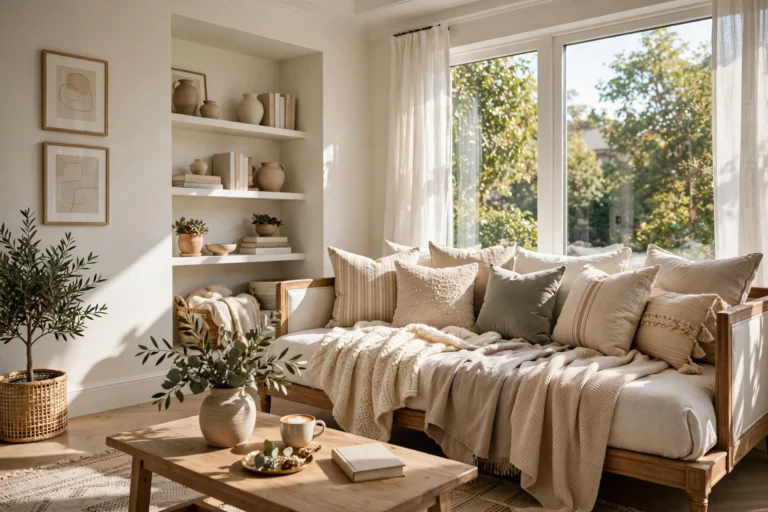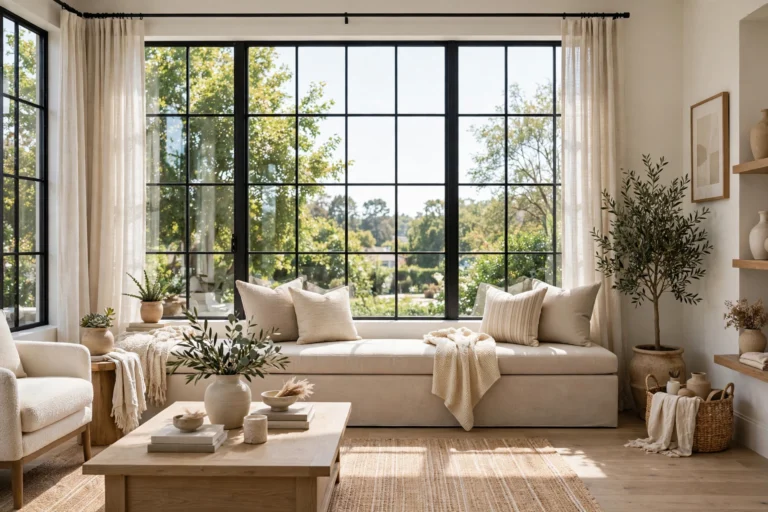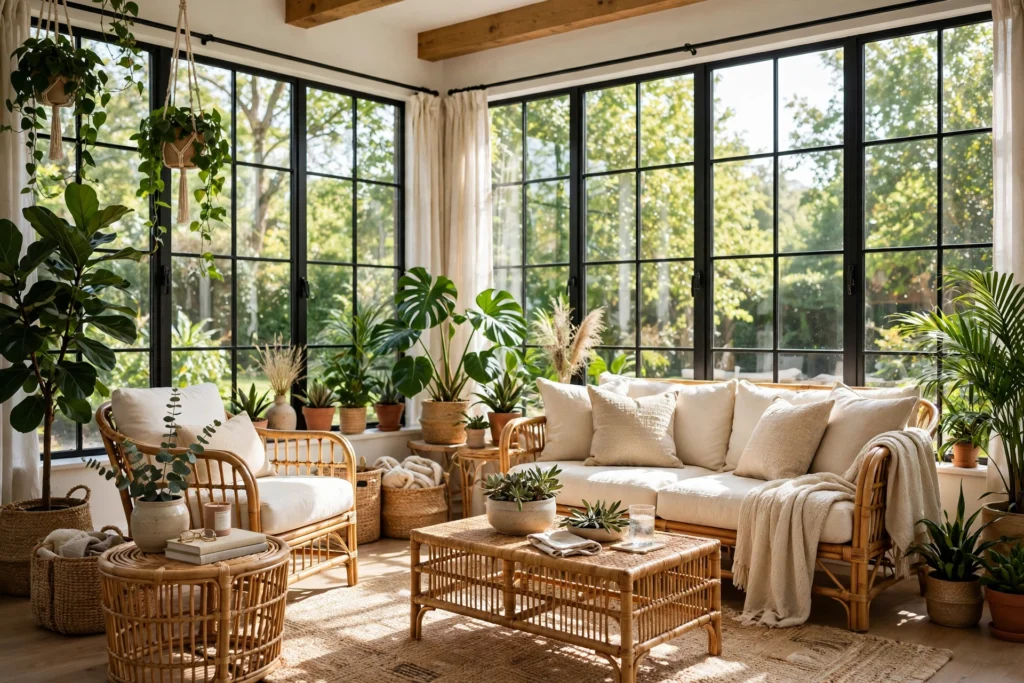

A sunroom is the happiest room in any house. It’s where the light lives, where the plants thrive, and where mornings stretch out a little longer than anywhere else. Neither fully indoors nor fully out, it has a magic that no other room can quite match.
The best sunroom design ideas lean into that in-between quality: natural materials, comfortable seating made for lingering, greenery at every height, and light treated as the main event. Here are fifteen ideas to turn your sunroom into the bright, relaxing retreat it was meant to be.
1. Start With Light, Layered Window Treatments
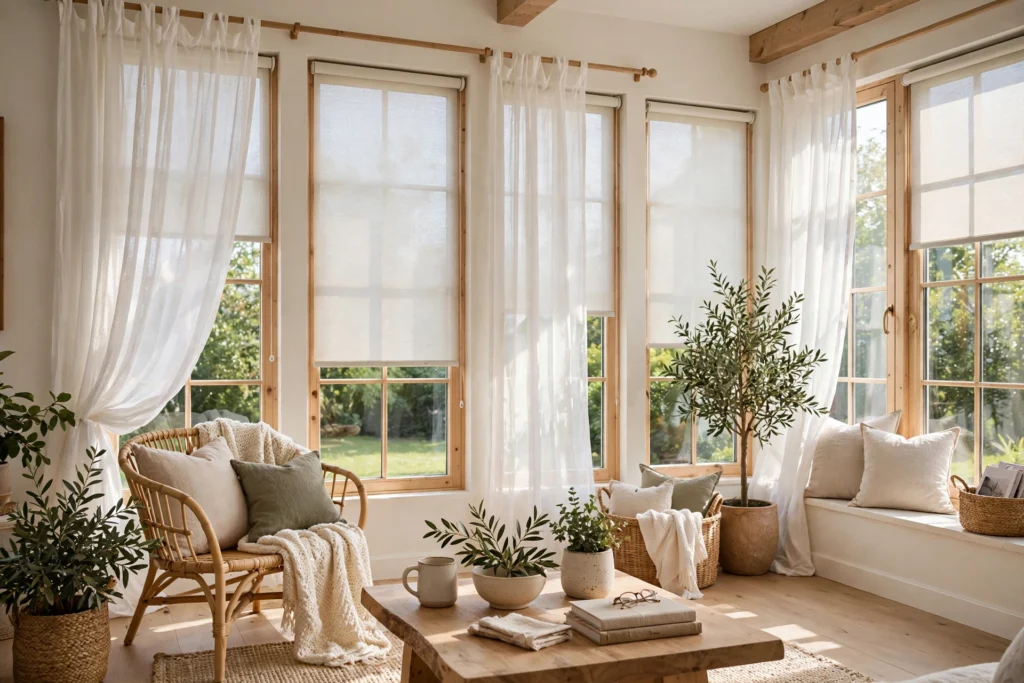
A sunroom’s whole point is light, so treat the windows as the design feature they are. Layer sheer curtains for daytime softness over light-filtering shades you can pull down when the afternoon sun turns fierce. The layering gives you control without ever blocking the brightness that makes the room special.
Keep the palette pale — white, cream, natural linen — so treatments disappear into the light rather than competing with it. HGTV’s collection of 37 beautiful sunroom ideas shows this principle in dozens of real rooms: the sunrooms that glow are the ones where window treatments serve the light, not the other way around. Add simple tiebacks so you can open everything wide on perfect mornings.
2. Build Around Comfortable, Deep Seating
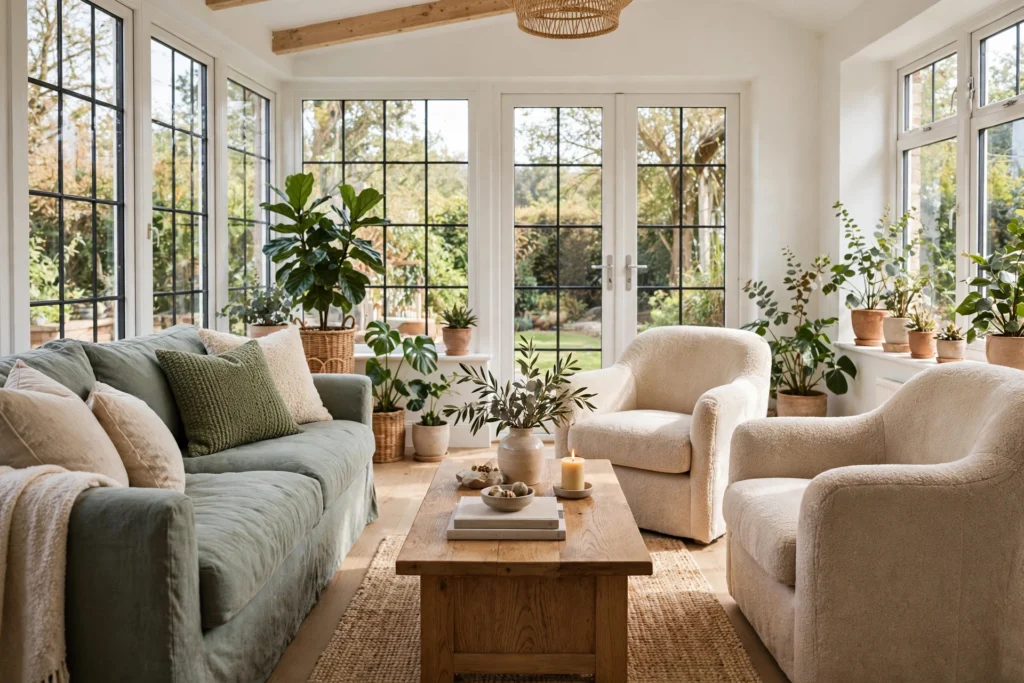
A sunroom you don’t sit in is a sunroom wasted. Anchor the room with seating made for lingering: a deep sofa or a pair of generous armchairs with plump cushions, plus an ottoman or two for kicked-up feet. This is the room for the most comfortable seat in the house, full stop.
Choose performance fabrics or outdoor-rated upholstery — sunroom light is brutal on delicate textiles, and you’ll want cushions you can toss in the wash. Arrange seating to face the best view, not the TV; the garden, the sky, and the light are the entertainment here. A sunroom built around real comfort becomes the default gathering spot from March through November.
3. Fill It With Plants at Every Height
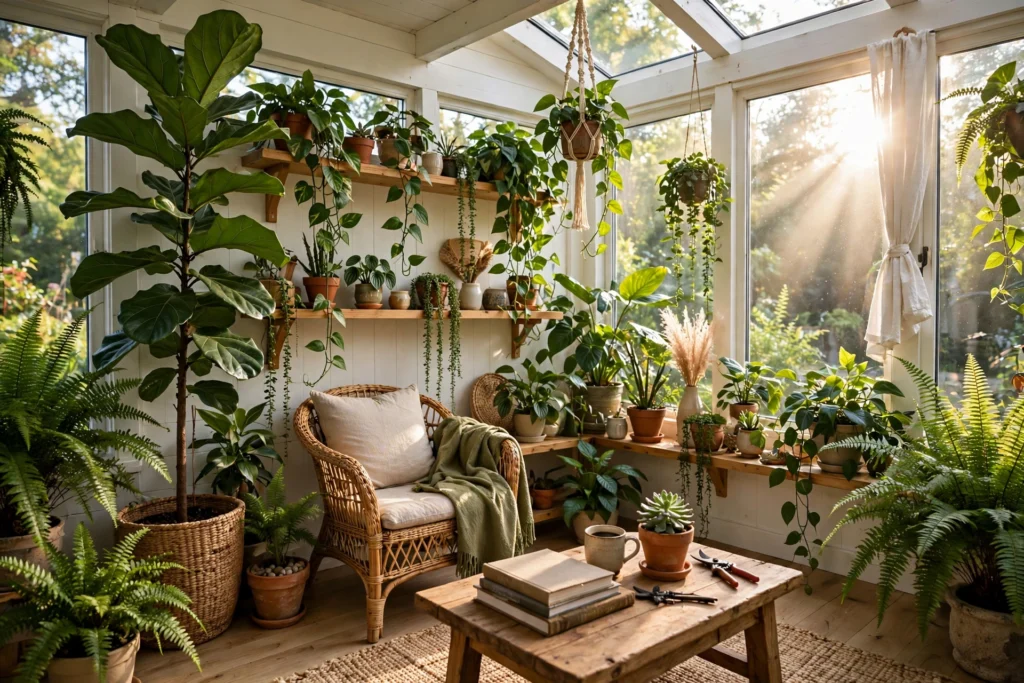
Plants are the soul of a sunroom — this is the one room where they can have everything they want. Go lush: a tall fiddle-leaf fig or bird of paradise for drama, trailing pothos on high shelves, ferns in the corners, and small pots clustered on tables and the floor. Vary the heights and the room starts to feel like a conservatory.
Group plants in odd numbers and mix leaf shapes for a natural look. Choose sun-lovers — most houseplants are happiest here — and remember that even sunrooms have microclimates: the brightest corner suits succulents, the shadier one ferns. Watering day becomes a ritual rather than a chore when the collection is this good.
4. Choose Natural, Sun-Friendly Materials
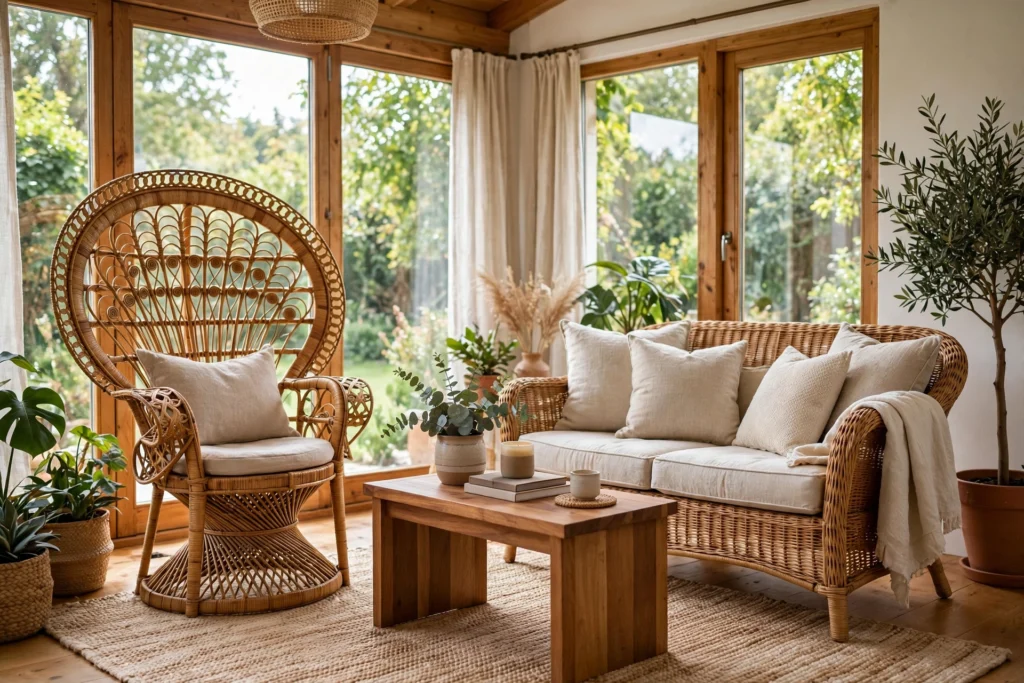
Sunrooms ask for materials that love light and age gracefully in it: rattan, wicker, teak, bamboo, jute, and natural linen. These textures blur the line between inside and outside, which is exactly what the room is for. A rattan peacock chair or a wicker loveseat instantly reads “sunroom” in the best way.
Avoid anything that hates UV — cheap plastics yellow, dark leathers crack, delicate silks fade. Natural materials develop patina instead of damage, and they’re easy to refresh: a new cushion cover or a coat of outdoor-rated sealant on wood keeps everything looking intentional for years.
5. Add a Hanging Chair or Swing
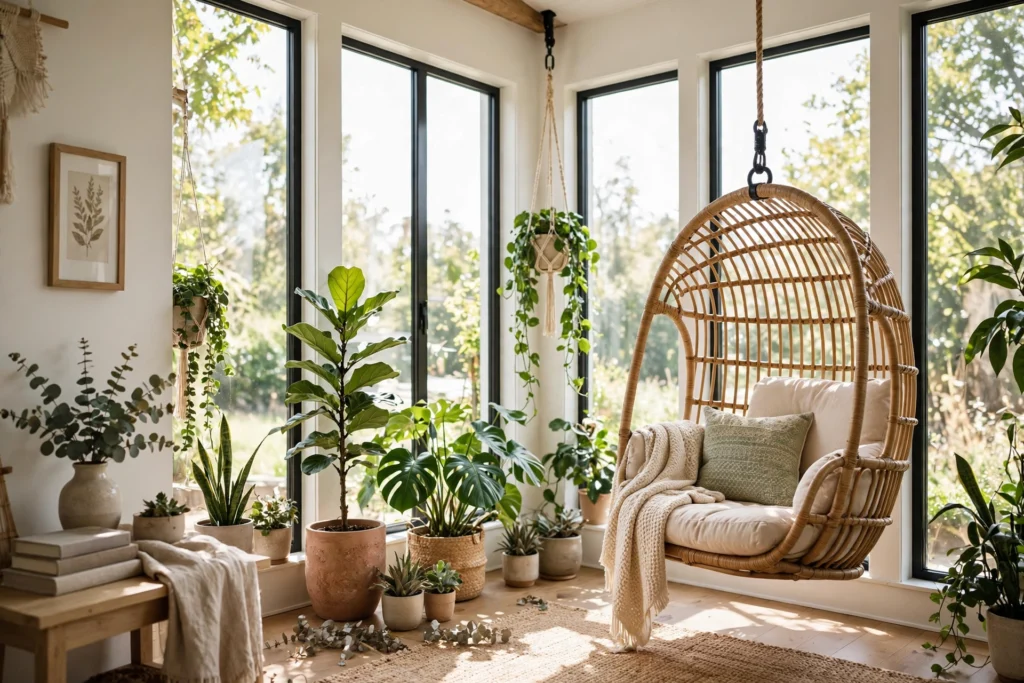
Nothing says relaxation like gentle motion. A hanging rattan chair, a macramé swing, or a porch-style daybed suspended from the ceiling turns the sunroom into the house’s favorite seat. It uses vertical space, keeps the floor open, and photographs beautifully.
Check your ceiling structure before hanging — a swing needs a joist or a proper beam, not just drywall. Hang it where it catches the breeze from an open window and faces the view. Apartment Therapy’s 10 small sunroom ideas proves even compact sunrooms can hold a hanging chair, and it’s the detail guests remember most.
6. Layer Rugs for Warmth and Definition
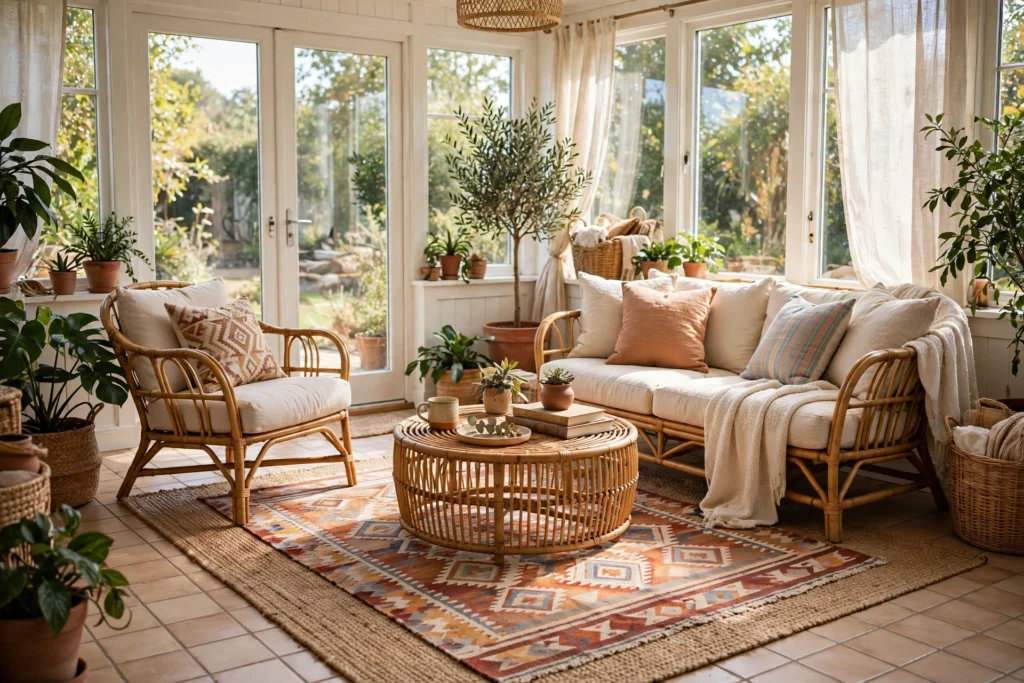
Sunroom floors — often tile, concrete, or wood — can feel hard and cold underfoot. Layer rugs to warm them up: a large natural-fiber base rug in jute or sisal, with a smaller patterned rug on top for color. The layering adds the coziness the architecture doesn’t.
Choose indoor-outdoor rugs or washable weaves, because sunroom floors see dirty feet, plant water, and pet paws. A rug also defines the seating zone in an open sunroom, anchoring the furniture arrangement. In a long narrow sunroom, a runner does the same job while guiding the eye toward the view.
7. Create a Reading Nook in the Brightest Corner
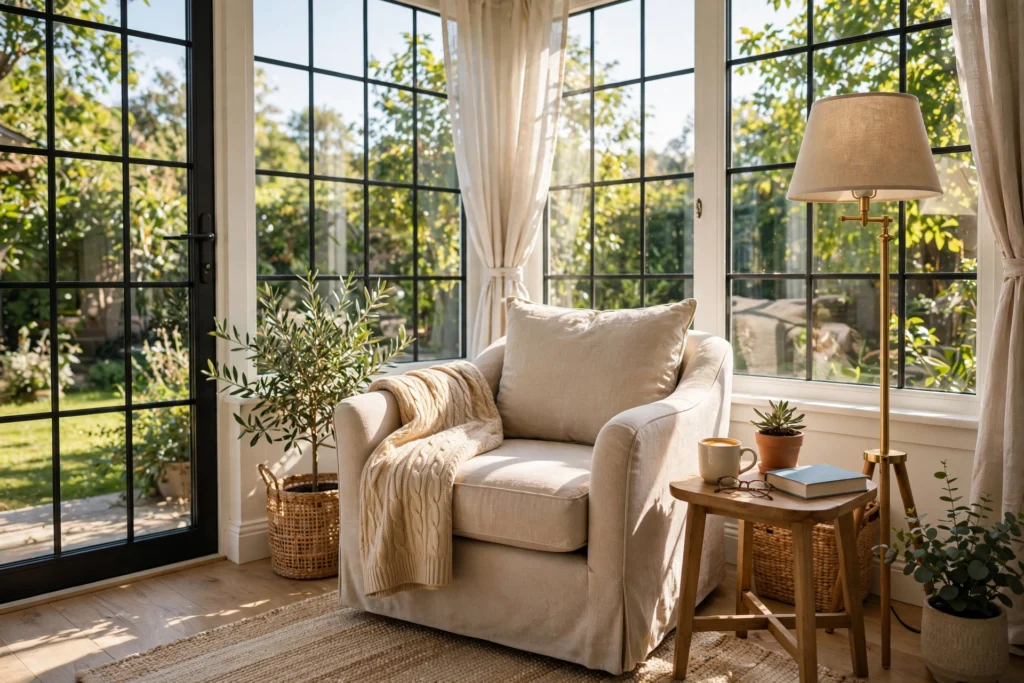
The brightest corner of the sunroom is begging to become a reading nook: one perfect chair, a small side table for tea, a floor lamp for evening, and a throw within reach. It’s the smallest possible room-within-a-room, and it will get used every single day.
Face the chair toward the windows so reading happens in natural light, and keep a small basket of books and magazines beside it. Our 15 Cozy Reading Nook Design Ideas for the Perfect Escape applies the same formula to nooks anywhere in the house — but the sunroom version, with real sky overhead, is hard to beat.
8. Bring in a Small Dining or Bistro Set
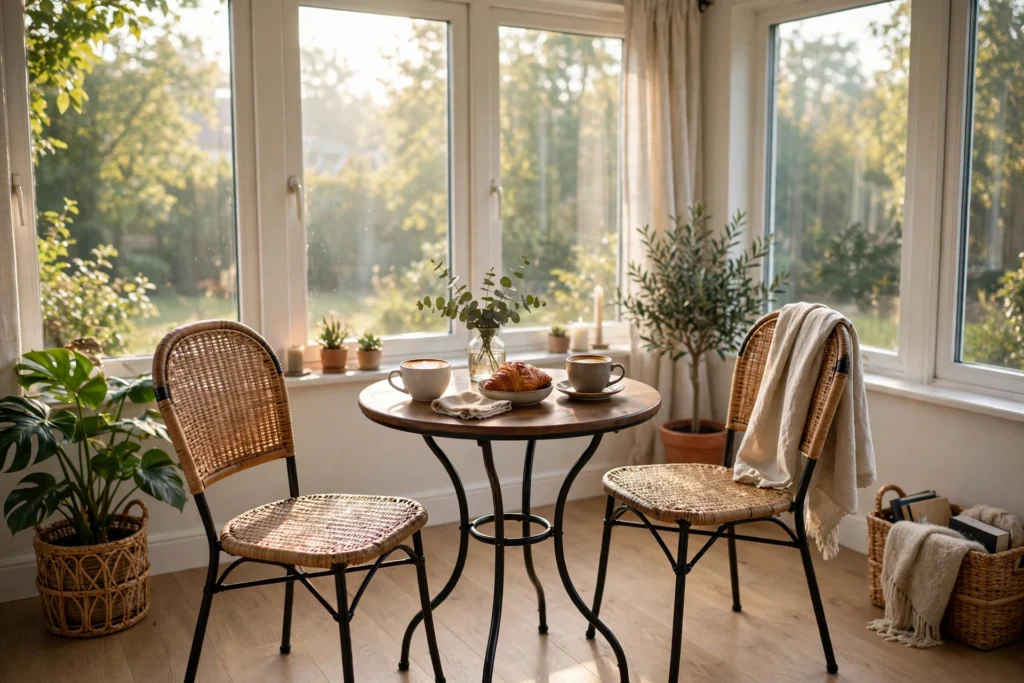
Morning coffee tastes better in a sunroom. A small bistro table with two chairs, or a round dining table if you have the space, turns the room into the house’s sunniest breakfast spot. It’s also the perfect homework station, puzzle table, or evening wine corner.
Keep the table light and movable — a pedestal base or a folding bistro set — so the room can flex between dining and lounging. A washable tablecloth or a simple runner protects the surface and adds color. When the sunroom feeds you, it earns its square footage twice over.
9. Manage Heat With Smart Shading
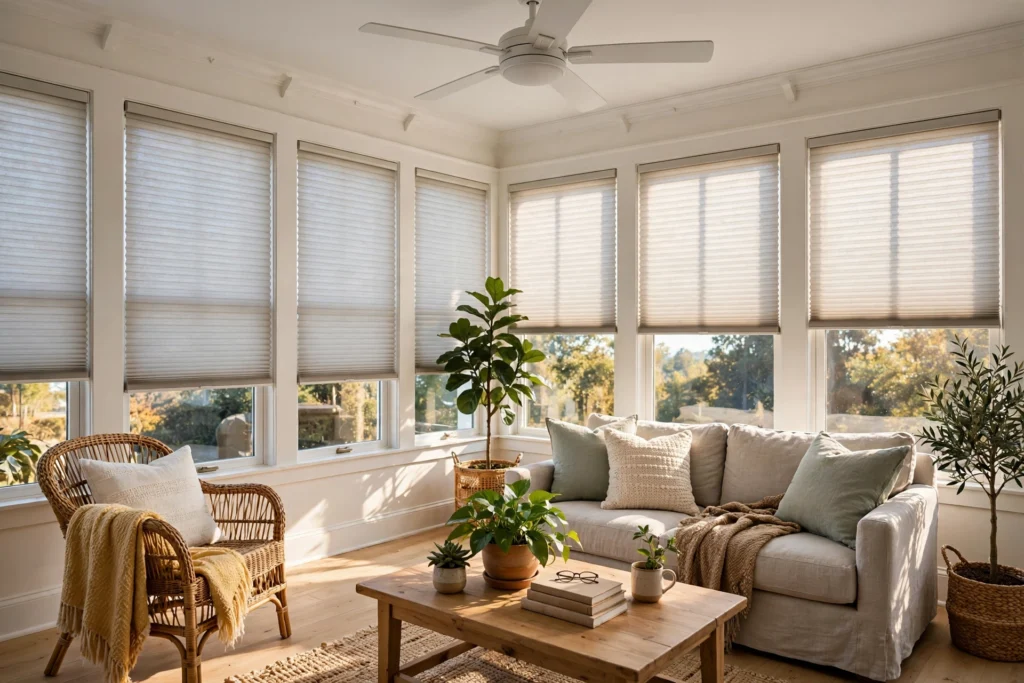
Sunrooms can turn into greenhouses by mid-afternoon, so plan for heat. Cellular shades insulate against both heat and cold, exterior awnings or shade sails cut the sun before it hits the glass, and a ceiling fan keeps air moving on still days. The goal is a room that’s comfortable in July, not just in April.
Light-colored roofing and UV-filtering window film are bigger investments that pay off in comfort and in protecting furniture from fading. Even simple moves help: open opposing windows for cross-breeze, and choose pale upholstery that doesn’t absorb heat. A sunroom you can actually use all summer is a sunroom that justifies itself.
10. Add Ambient Lighting for Evenings
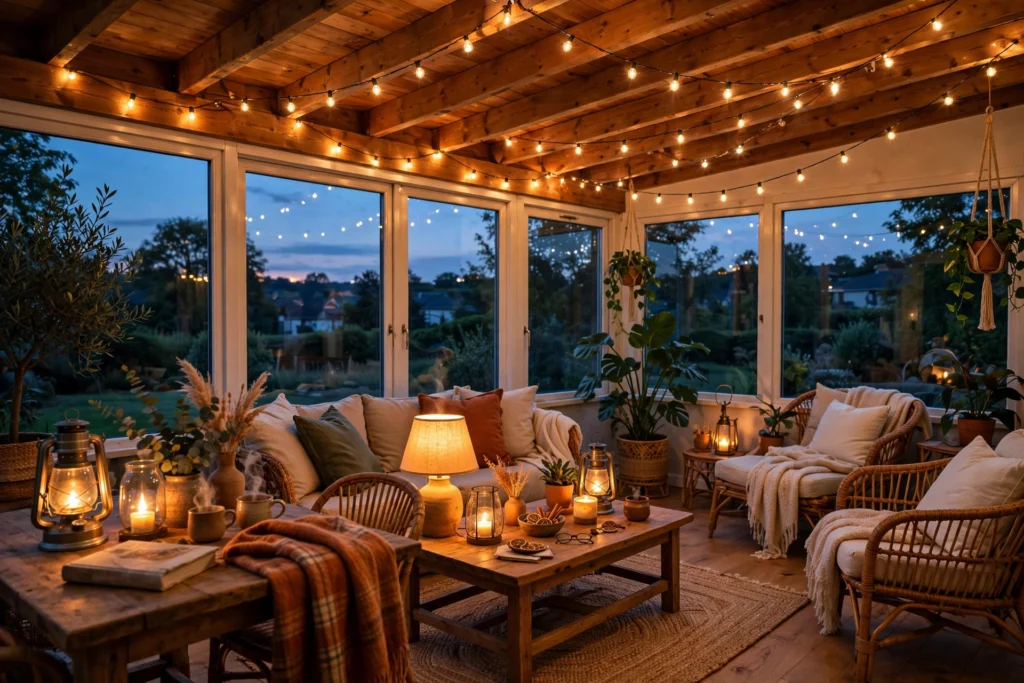
A sunroom shouldn’t go dark at sunset. String lights along the ceiling beams, lanterns on the tables, a floor lamp in the reading corner, and candles in hurricane holders turn the glass box into a glowing evening retreat. The room that sparkles after dark gets used twice as much.
Keep all of it warm-toned — 2700K — for that golden-hour feeling. Solar string lights work beautifully in sunrooms since the room charges them all day. And put the lights on a timer or smart plug so the sunroom glows to life on its own every evening, inviting you in.
11. Style With Coastal and Breezy Accents
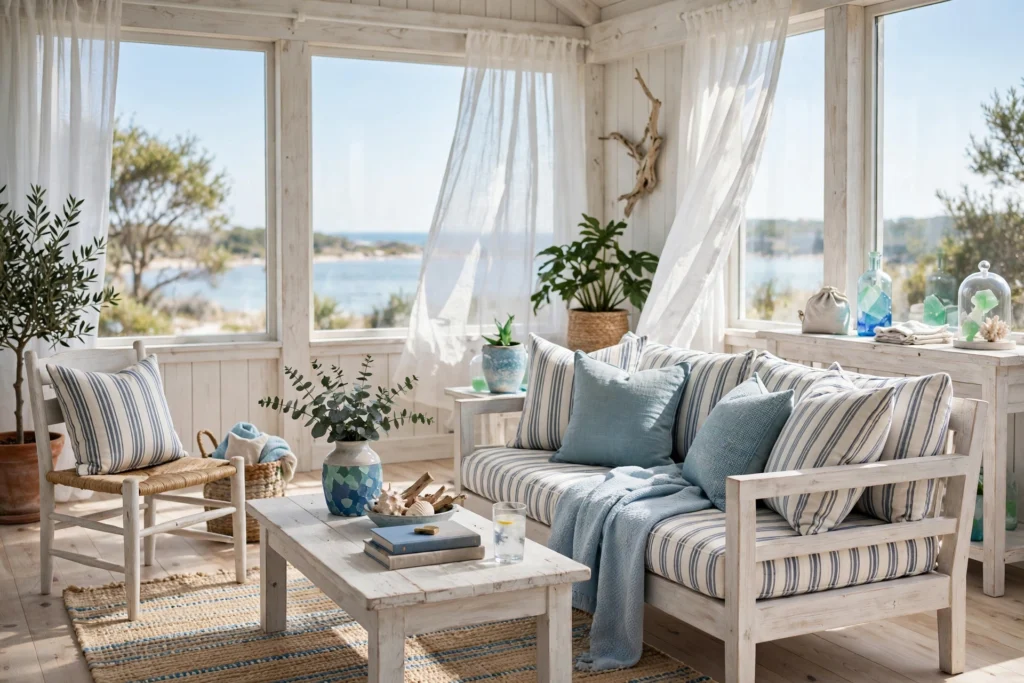
Sunrooms and coastal style are natural partners: both are about light, air, and ease. Weave in breezy accents — striped linen cushions, a jute pouf, driftwood or whitewashed wood pieces, sea-glass blues and sandy neutrals. You don’t need an ocean view for the feeling.
Keep the coastal touches light rather than theme-park: a few well-chosen pieces against a calm neutral base. Our beach house living room ideas show how the same breezy palette works in a full living room — the sunroom is where it feels most at home.
12. Make Room for a Small Workspace
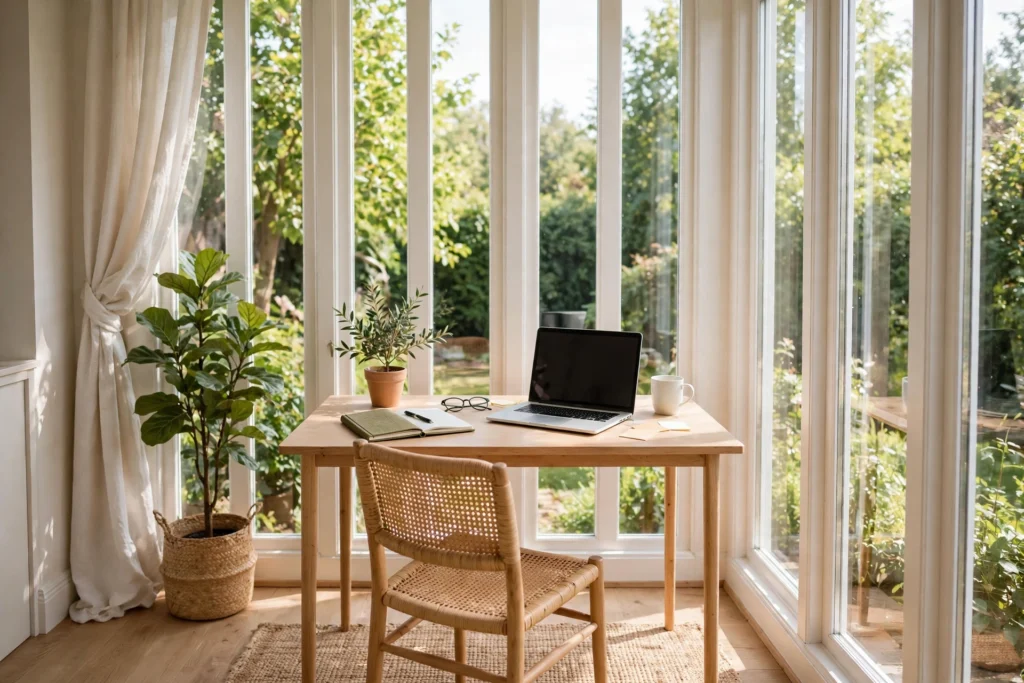
Natural light is the best office lighting there is, so give the sunroom a small workspace: a slim desk or a console table facing the windows, a comfortable chair, and a basket for supplies. Morning emails feel entirely different with a garden view.
Keep the setup minimal and beautiful — this is still a retreat, not an office. A laptop, a notebook, and a small plant are enough. When work is done, close the laptop and the desk becomes a console again. The sunroom office is the best argument for flexible rooms: it works hard without ever looking like it.
13. Add a Water Feature or Fountain
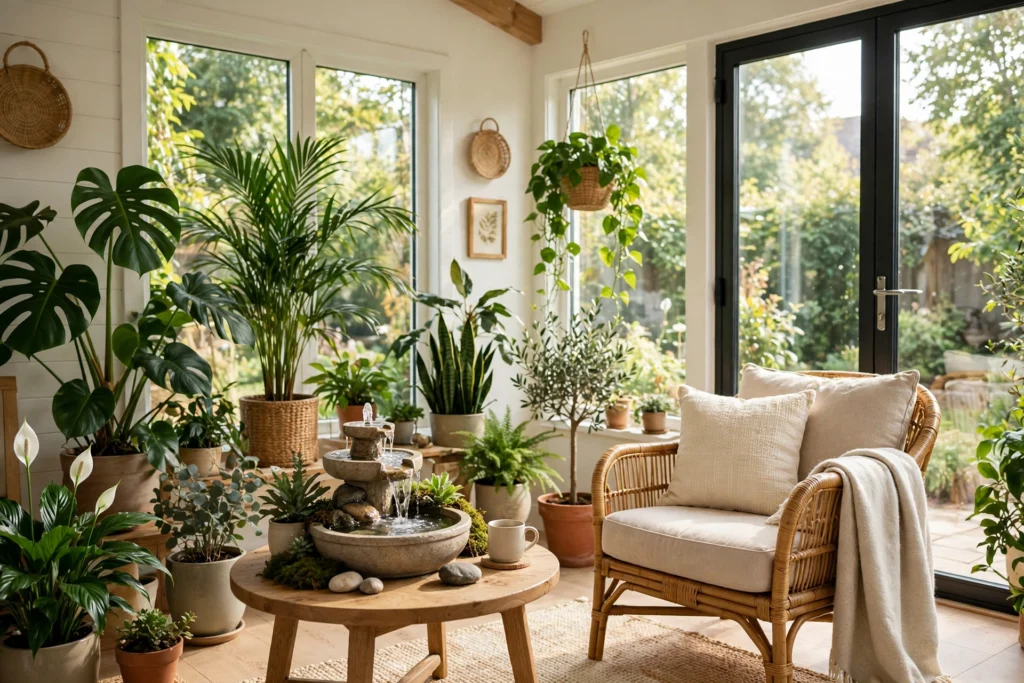
The sound of water turns a sunroom into a sanctuary. A small tabletop fountain, a wall-mounted water feature, or even a simple bowl with a bubbler adds the gentle sound that makes the room feel like a spa. Moving water also adds humidity that plants love.
Keep it scaled to the room — a burbling tabletop fountain is plenty for most sunrooms. Place it where you can hear it from the main seating, and choose a quiet pump; the goal is a murmur, not a waterfall. Combined with the plants and the light, it’s the final sensory layer that makes the room feel complete.
14. Keep Decor Light and Seasonal
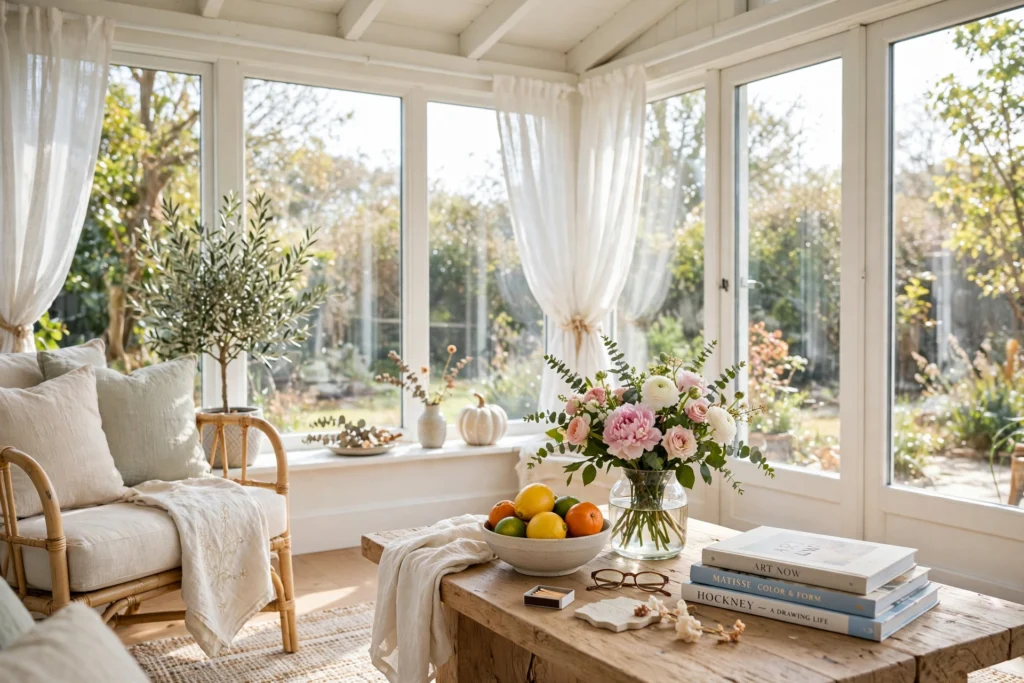
A sunroom decorated heavily fights its own airiness. Keep decor light: a few beautiful objects, fresh flowers, a bowl of citrus, a stack of art books. Then rotate with the seasons — pumpkins and warm throws in fall, fresh herbs and bright cushions in spring, airy linens in summer.
The seasonal swap is the sunroom’s superpower: it’s the room where a few small changes feel dramatic because the light does half the work. Store a small box of sunroom-only seasonal decor so the refresh takes ten minutes. Our 15 Japandi Living Room Design Ideas for a Calm Welcoming Space shares the same less-but-better philosophy — calm rooms stay calm when decor is edited, not accumulated.
15. Connect It to the Outdoors
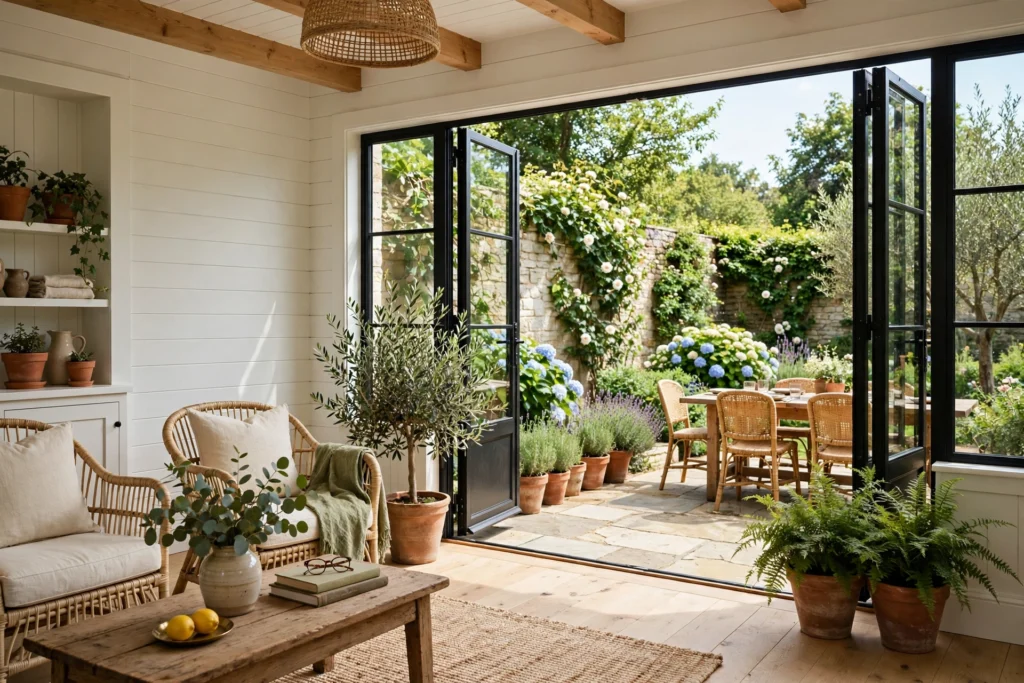
The best sunrooms dissolve the boundary with the garden. French doors or sliders that open wide, the same flooring running from sunroom to patio, potted plants clustered on both sides of the threshold — every move that blurs inside and outside makes both spaces feel bigger.
Furnish the transition zone deliberately: an outdoor rug just beyond the doors, a bench that works in both spaces, lighting that carries from one to the other. When the doors are open on a perfect evening, the sunroom and the garden become one room — and that’s the whole dream of the space, realized.
Frequently Asked Questions
What is the best furniture for a sunroom?
Natural, sun-tolerant pieces: rattan, wicker, teak, and bamboo with performance or outdoor-rated cushions. Deep comfortable seating for lounging, a small table for drinks or dining, and a hanging chair if the ceiling allows. Avoid delicate fabrics and dark leathers that fade or crack in strong light.
How do I keep my sunroom cool in summer?
Layer your defenses: light-filtering shades or cellular blinds, exterior shading like awnings, a ceiling fan for air movement, and cross-ventilation from opposing windows. UV-filtering window film and pale upholstery help too. The goal is managing heat before it builds, not fighting it after.
What plants do best in a sunroom?
Sun-lovers thrive: fiddle-leaf figs, bird of paradise, citrus trees, succulents, and most flowering houseplants. Match plants to the room’s microclimates — brightest corners for succulents, slightly shadier spots for ferns and calatheas. The humidity from a small fountain keeps tropicals happy.
Can a sunroom be used year-round?
Yes, with the right setup: insulated glazing or cellular shades for winter, shading and ventilation for summer, and a small space heater or heated floor for the coldest months. A four-season sunroom costs more to build but gets used every day instead of six months a year.
How do I decorate a small sunroom?
Keep furniture scaled down and multifunctional: a loveseat instead of a sofa, a bistro set instead of a dining table, a hanging chair instead of an armchair. Go vertical with plants on shelves, use light colors to maximize brightness, and let the windows — the room’s best feature — stay the star.
Keep Exploring
A sunroom done well becomes the room everyone gravitates to — the light does half the decorating, and your job is just to give people a comfortable place to enjoy it. Start with the seating and the plants, layer in the light control, and let the seasons do the rest.
For more bright, calm spaces, explore our living room decor ideas — because every home deserves at least one room that runs on sunshine.