

If your living room has been whispering for a calmer, more intentional look, these Japandi living room design ideas are exactly what you need. Japandi — the beautiful marriage of Japanese minimalism and Scandinavian warmth — strips away the visual noise and leaves behind only what matters: natural materials, honest craftsmanship, and breathing room. Think of it as the best of both worlds: Japan’s serene simplicity and wabi-sabi philosophy blended with Scandinavia’s cozy hygge, light woods, and functional comfort.
What makes Japandi so irresistible right now is how livable it feels. Unlike stark minimalism, it invites touch — nubby linen, warm oak, handmade ceramics — and unlike rustic styles, it never tips into clutter. Every piece earns its place, and every corner gets room to breathe. Whether you’re refreshing a small apartment or restyling a spacious lounge, these 15 ideas will help you build a living room that feels calm the moment you walk in.
1. Low-Profile Linen Sofa
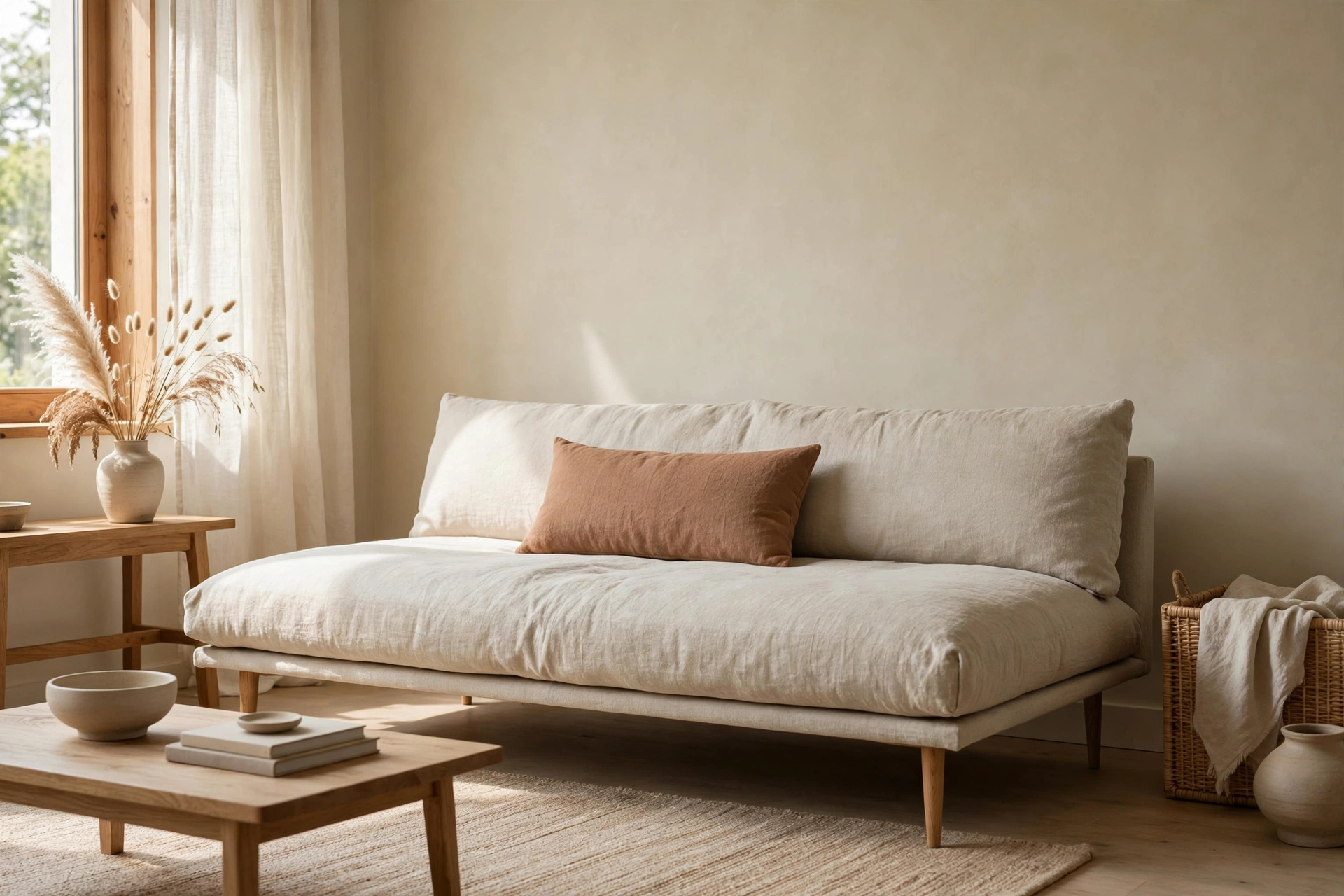
Start with the anchor: a low-profile sofa in oatmeal or natural linen. Japandi seating sits close to the ground, echoing the Japanese respect for low living and creating an instant sense of calm. Look for a streamlined silhouette with slim, slightly tapered wooden legs — oak or ash works beautifully — and cushions in a washable linen slipcover. The nubby texture adds warmth without pattern, keeping the palette serene. Place it floating a few feet off the wall rather than pushed against it; the negative space behind signals the uncluttered philosophy at the heart of this style. A single lumbar cushion in muted clay or sage is all the adornment it needs.
2. Natural Wood Coffee Table
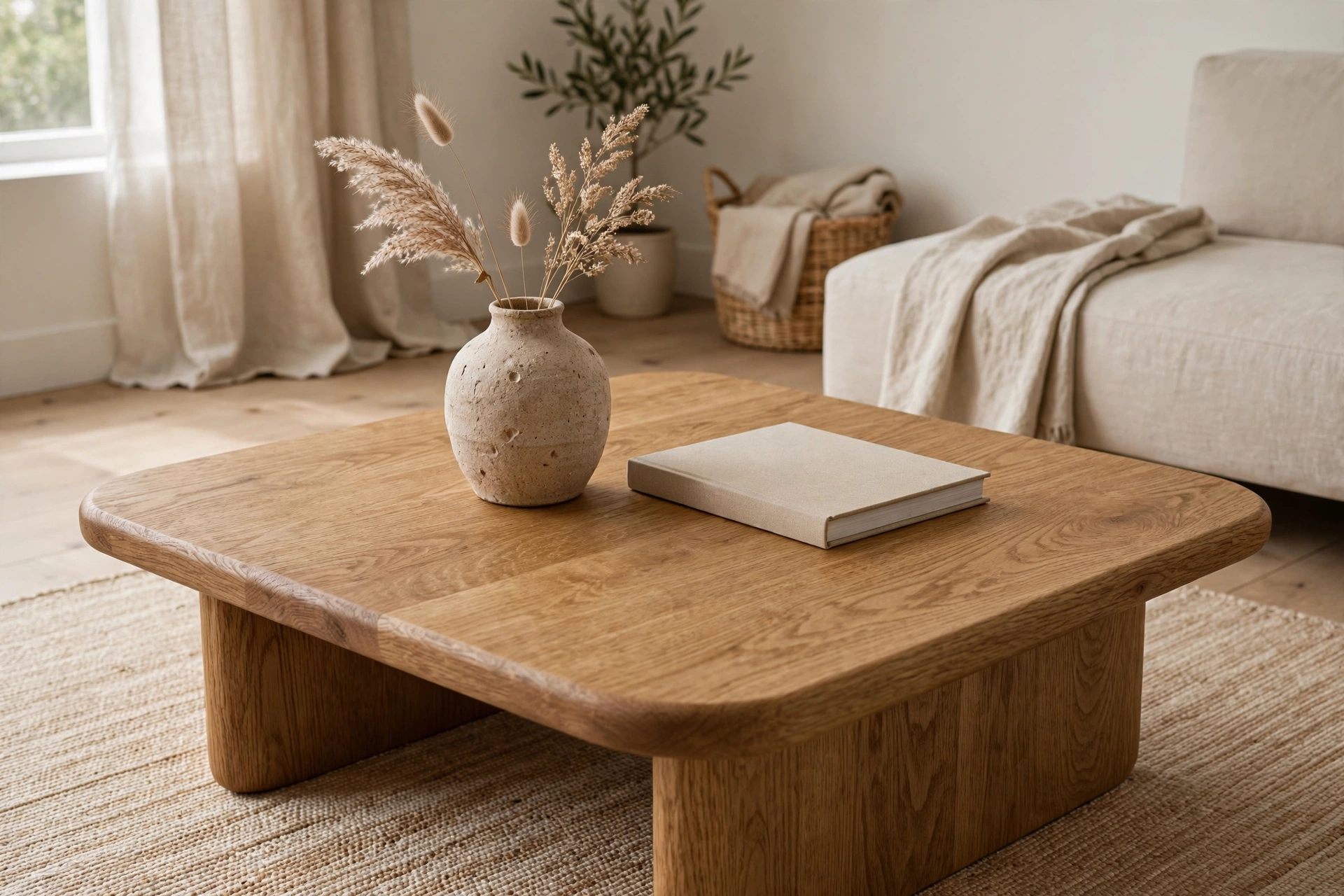
Choose a solid oak coffee table with a low, chunky profile and softly rounded edges — no sharp corners, nothing fussy. A slab or trestle-style top shows off the wood’s natural grain, which is the whole point: these Japandi living room design ideas celebrate honest materials. Keep the surface styled to a minimum: a handmade ceramic vase, one design book, and perhaps a small stone object. The table should sit roughly 40–45 cm high, close to the sofa’s seat height, so the sightlines stay low and restful. If you need storage, pick a design with a single open shelf rather than drawers; visible simplicity keeps the room feeling open.
3. Jute Area Rug
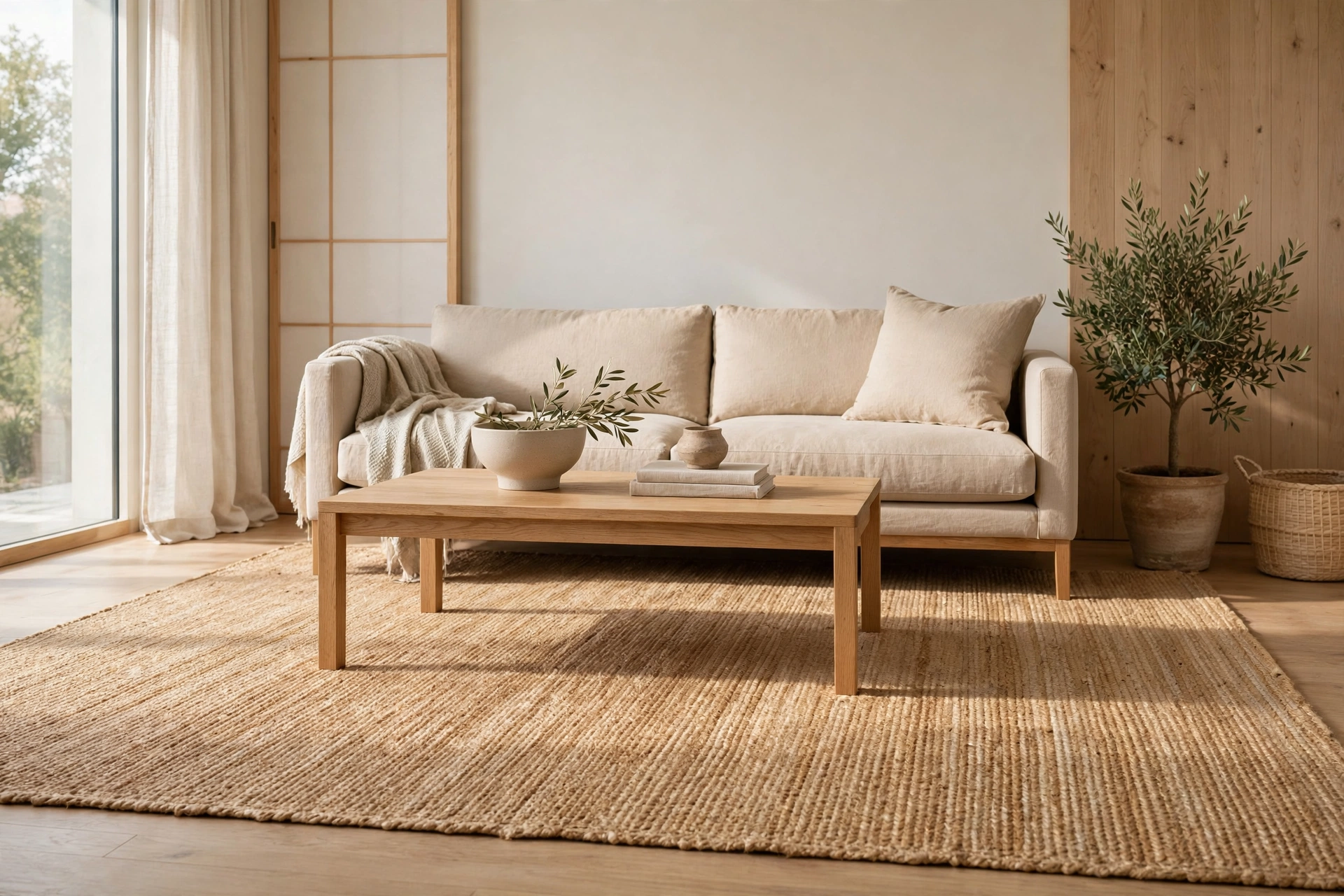
A large natural jute rug grounds the seating area and adds the earthy texture Japandi loves. Size matters enormously — the rug should extend at least 20 cm beyond the sofa on each side and tuck under the front legs of all seating, pulling the arrangement into one calm zone. Jute’s golden-tan fibers pair perfectly with pale wood floors and cream walls, and its subtle weave reads as texture rather than pattern. Choose a hand-loomed rug with a tight weave for durability, and layer a smaller, softer wool rug on top in winter if you want extra warmth underfoot.
4. Paper Floor Lamp
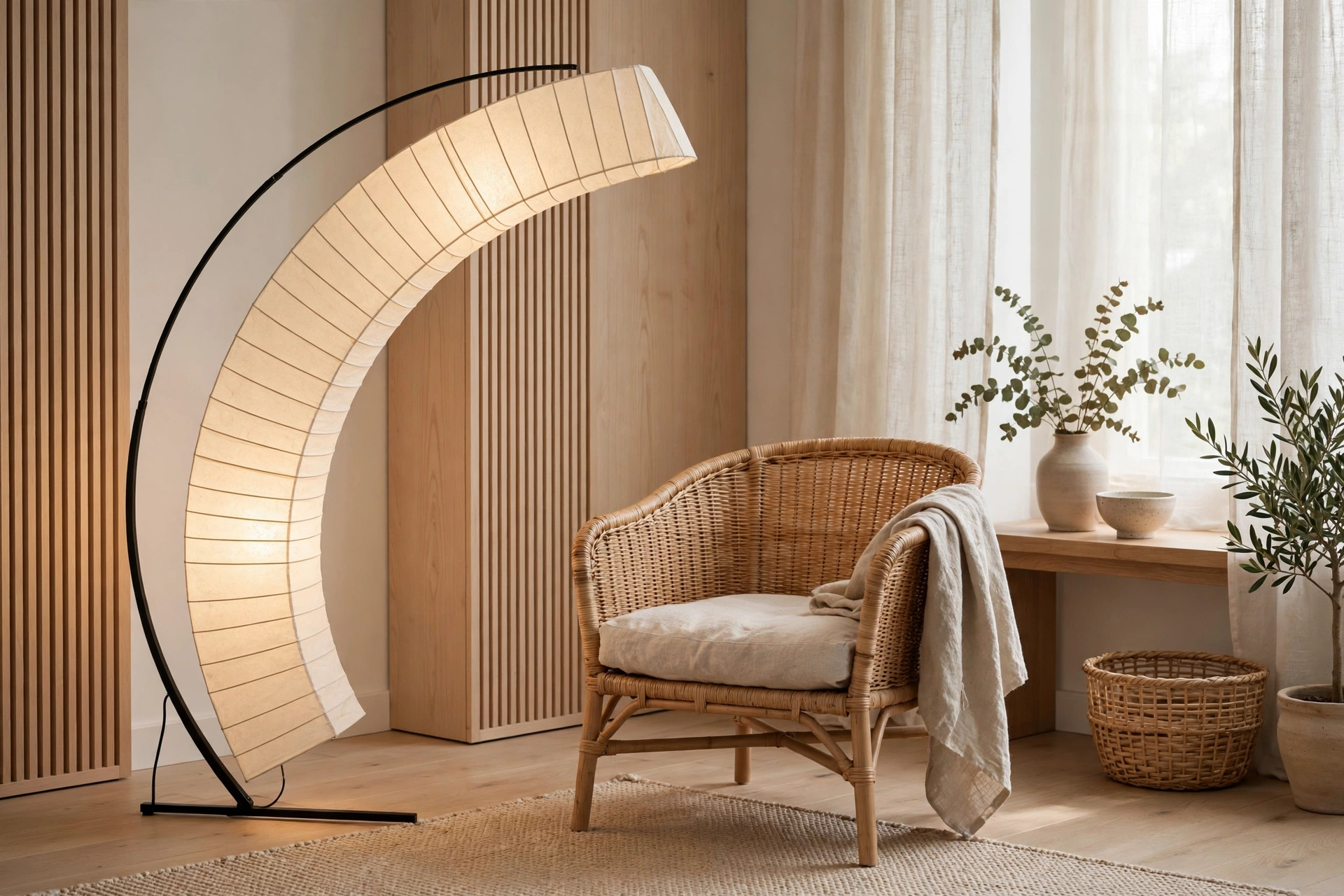
Lighting is where Japandi truly glows — literally. A washi paper floor lamp, whether an arc that curves over the reading corner or a simple tripod, diffuses light into a soft, moonlit wash that flatters everything it touches. The paper shade brings a distinctly Japanese craft sensibility, while the minimal frame keeps it Scandinavian-clean. Place it beside an accent chair or at the sofa’s end, and fit it with a warm 2700K bulb. At night, switch off the overheads and let this single paper lamp carry the room — layered light is one of the most transformative Japandi living room design ideas, and the shadows it casts are pure calm.
5. Floating Wooden Shelves
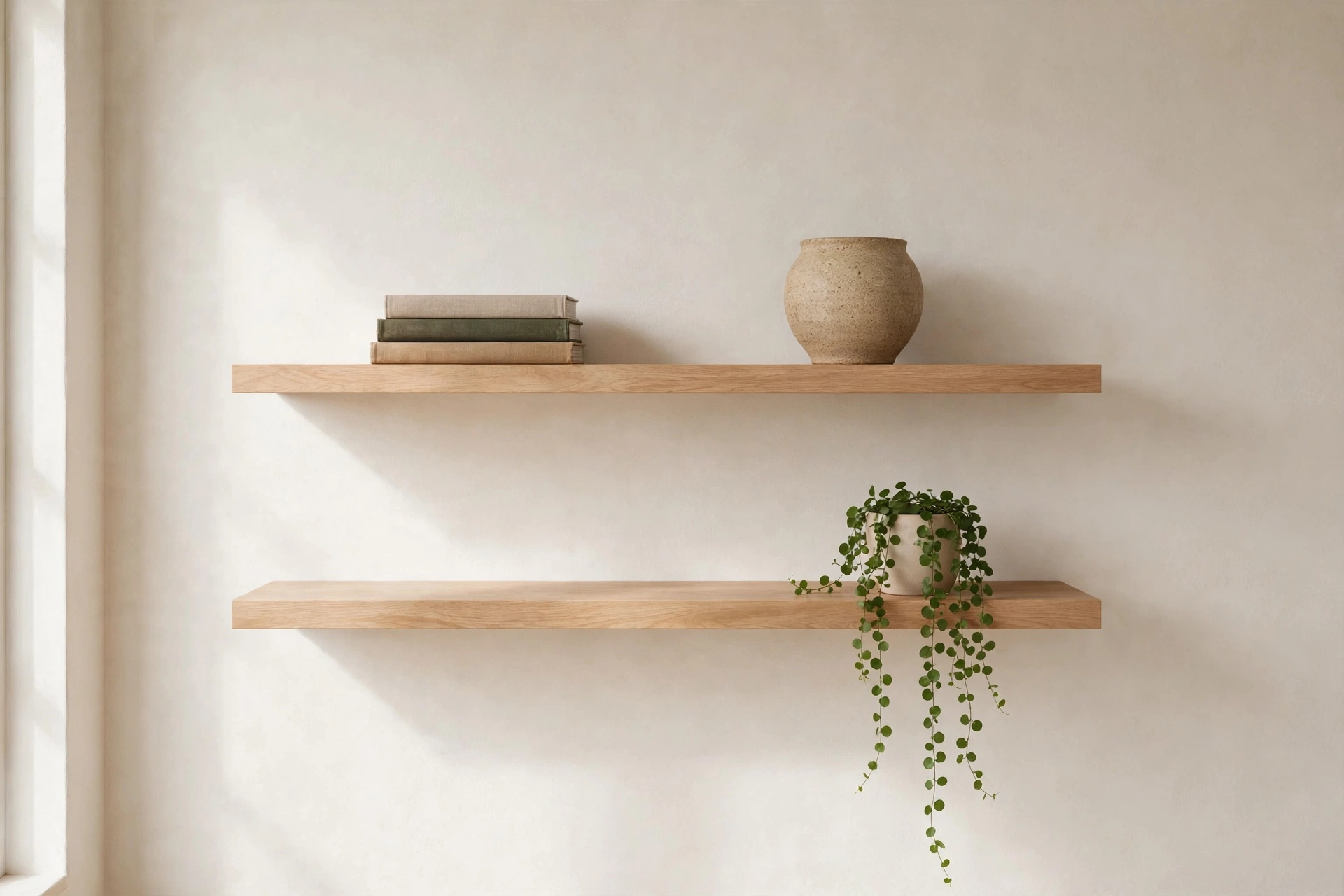
Skip the bulky bookcase in favor of two or three floating shelves in light oak, mounted with a generous gap between them. The key is restraint: style each shelf with just two or three curated objects — a stack of art books, one ceramic vessel, a small trailing plant. Leave plenty of empty wood visible; the emptiness is the design. Mount the lowest shelf at about eye level when seated, roughly 120 cm from the floor, and keep the arrangement asymmetrical for that effortless, collected feel. Dust regularly — minimalism only works when surfaces stay clean.
6. Sculptural Indoor Plant
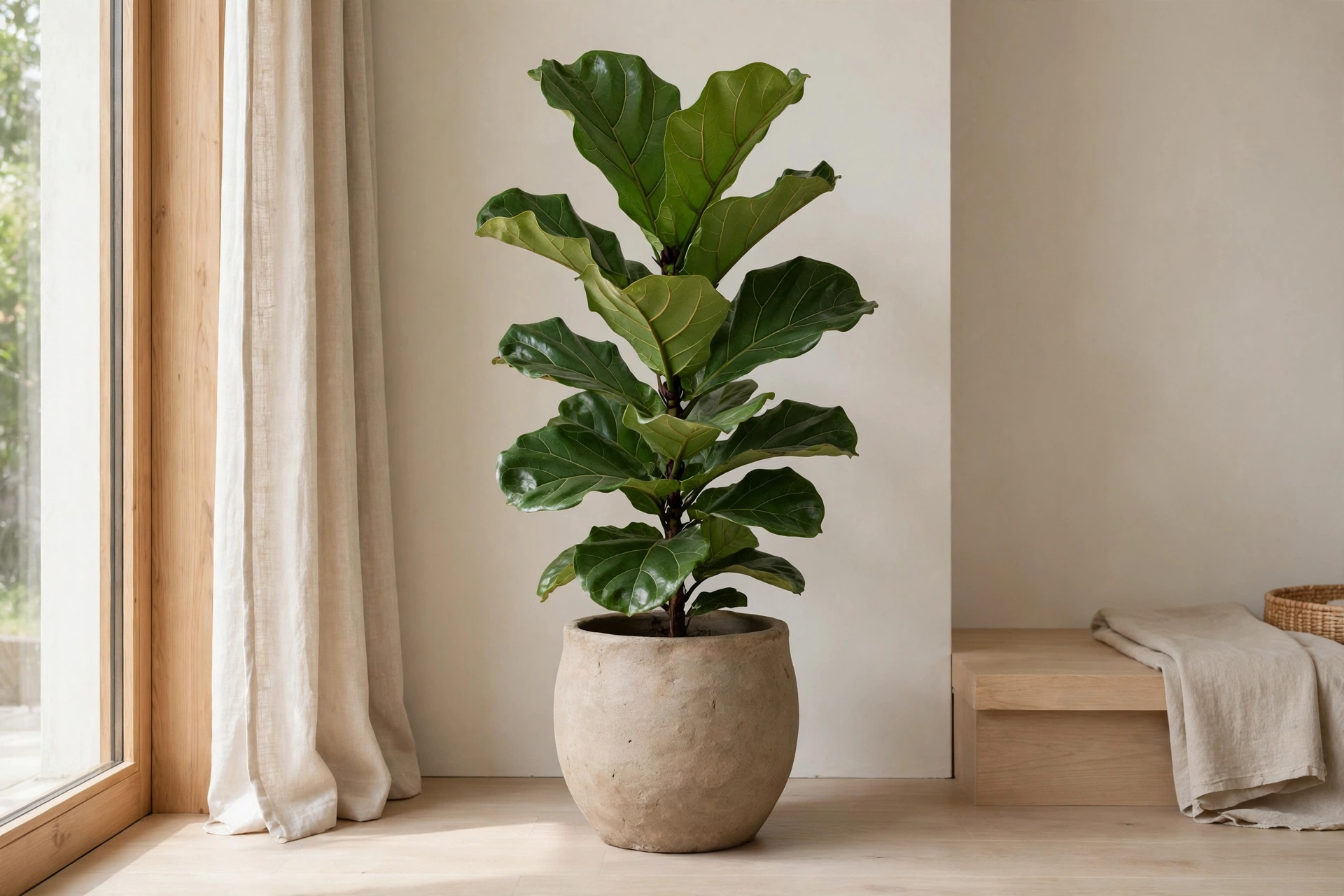
One sculptural plant beats a jungle every time in a Japandi living room. A fiddle leaf fig in a handmade clay or stoneware pot is the classic choice: its broad, architectural leaves add life and a single bold organic shape against all the clean lines. Place it in a bright corner where it gets indirect light, and let it be the room’s only large green moment. Keep the pot simple — matte, earthy, unglazed — so the plant is the star. A single stem of eucalyptus in a tall vase on the shelf can echo the greenery without adding clutter.
7. Wabi-Sabi Ceramic Vases
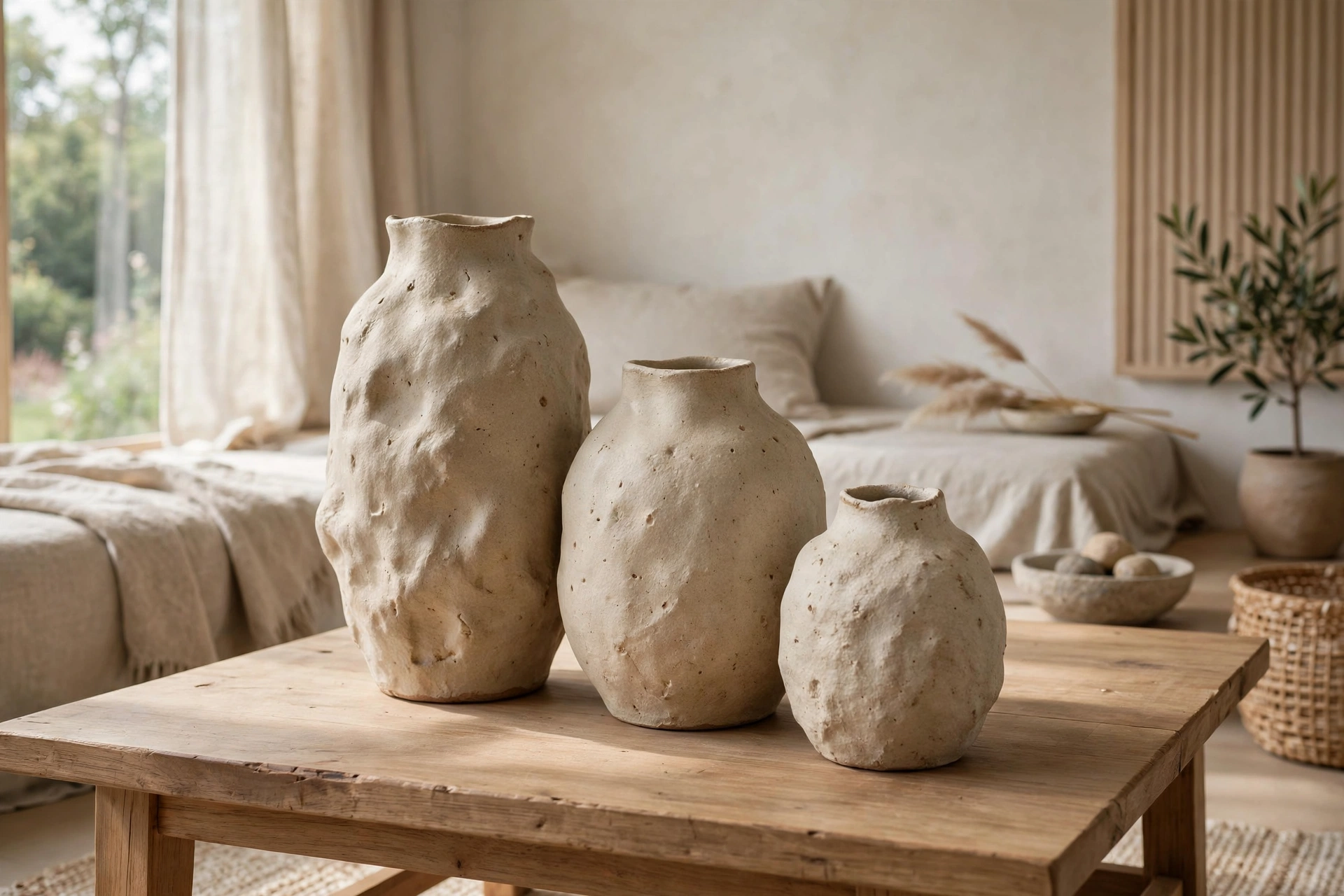
Wabi-sabi — the Japanese appreciation of imperfection — comes alive in handmade ceramics. Choose two or three vases in slightly irregular shapes, matte glazes, and earthy tones: oatmeal, sand, charcoal. Group them in odd numbers on the coffee table or shelf, varying the heights, and leave most of them empty — the forms themselves are the decoration. If you add stems, keep them sparse: a single branch or dried grass stem. These pieces bring a quiet, human touch that keeps minimalism from feeling cold, and each one tells a small story of the maker’s hand.
8. Sheer Linen Curtains
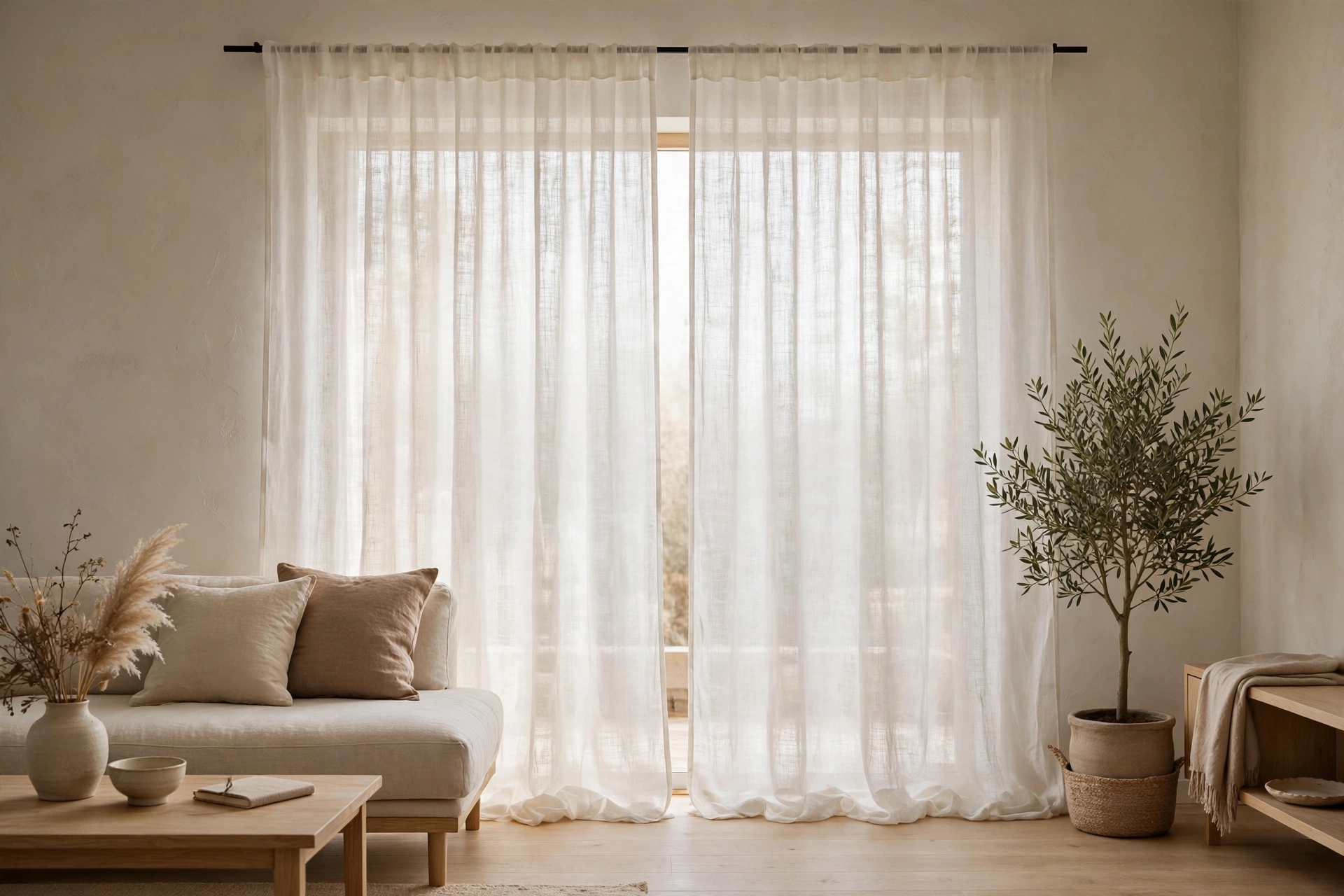
Heavy drapes have no place here. Hang sheer linen curtains in a warm white or natural flax tone, mounted high and wide so they frame the window generously even when drawn. The translucent weave filters daylight into a soft, diffused glow that shifts beautifully through the day — bright and airy at noon, golden and hushed by evening. Choose a simple ripple-fold or tab-top heading and let the panels fall straight to just kiss the floor. Few Japandi living room design ideas change a room’s mood as cheaply as this: the gentle movement of linen in a breeze adds a living, breathing quality that stiff fabrics never can.
9. Wooden Slat Accent Wall
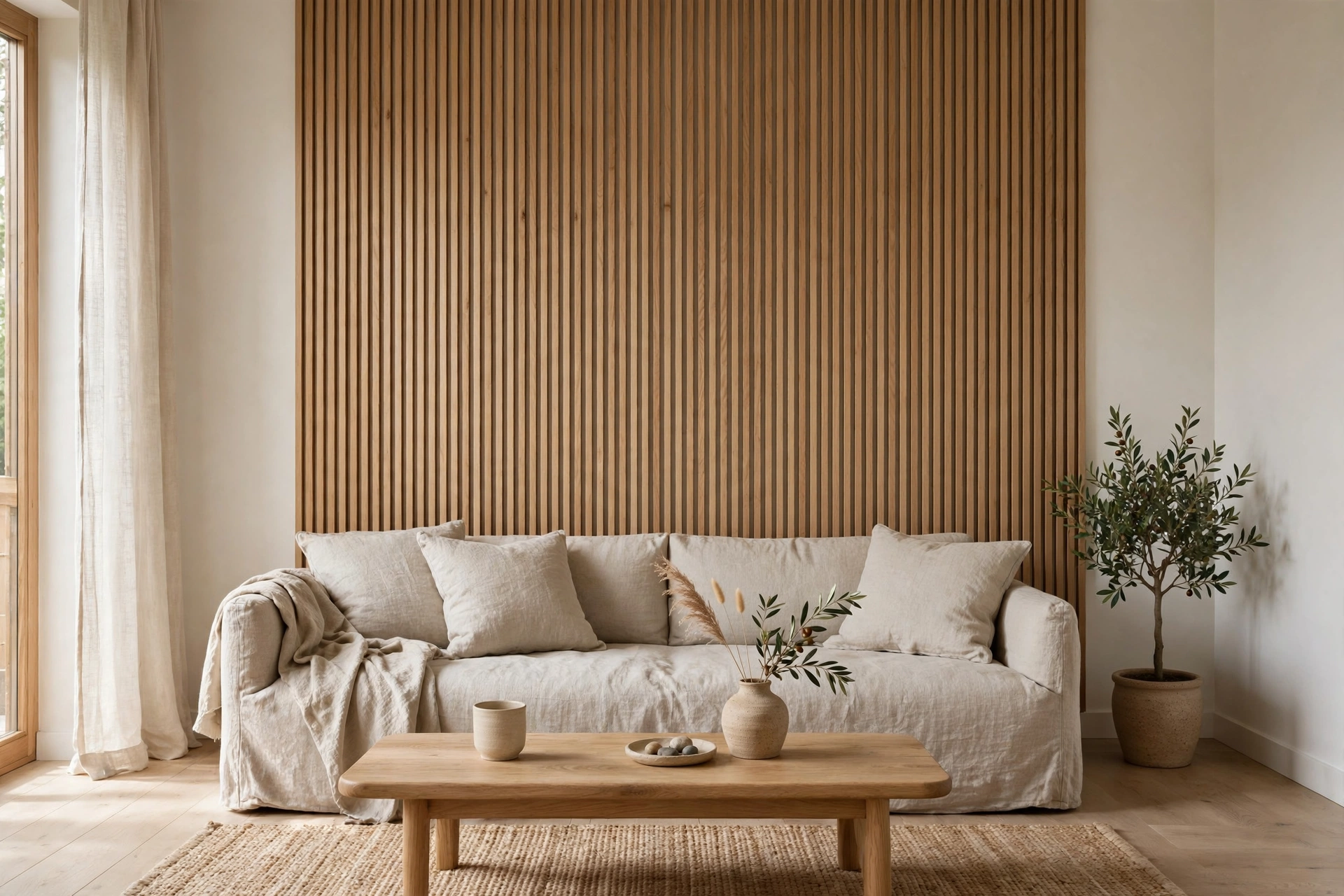
For architectural depth without visual weight, clad one wall — ideally behind the sofa — in vertical oak slat panels. The rhythmic lines draw the eye upward, making ceilings feel taller, while the warm wood tone wraps the seating area in quiet warmth. Keep the slats slim (around 3–4 cm wide) with narrow gaps, and finish them in a natural matte oil rather than glossy varnish. Let this be the room’s single statement wall; keep the other walls plain plaster in warm white so the slats have room to breathe and the contrast stays serene.
10. Floor Cushions and Pouf
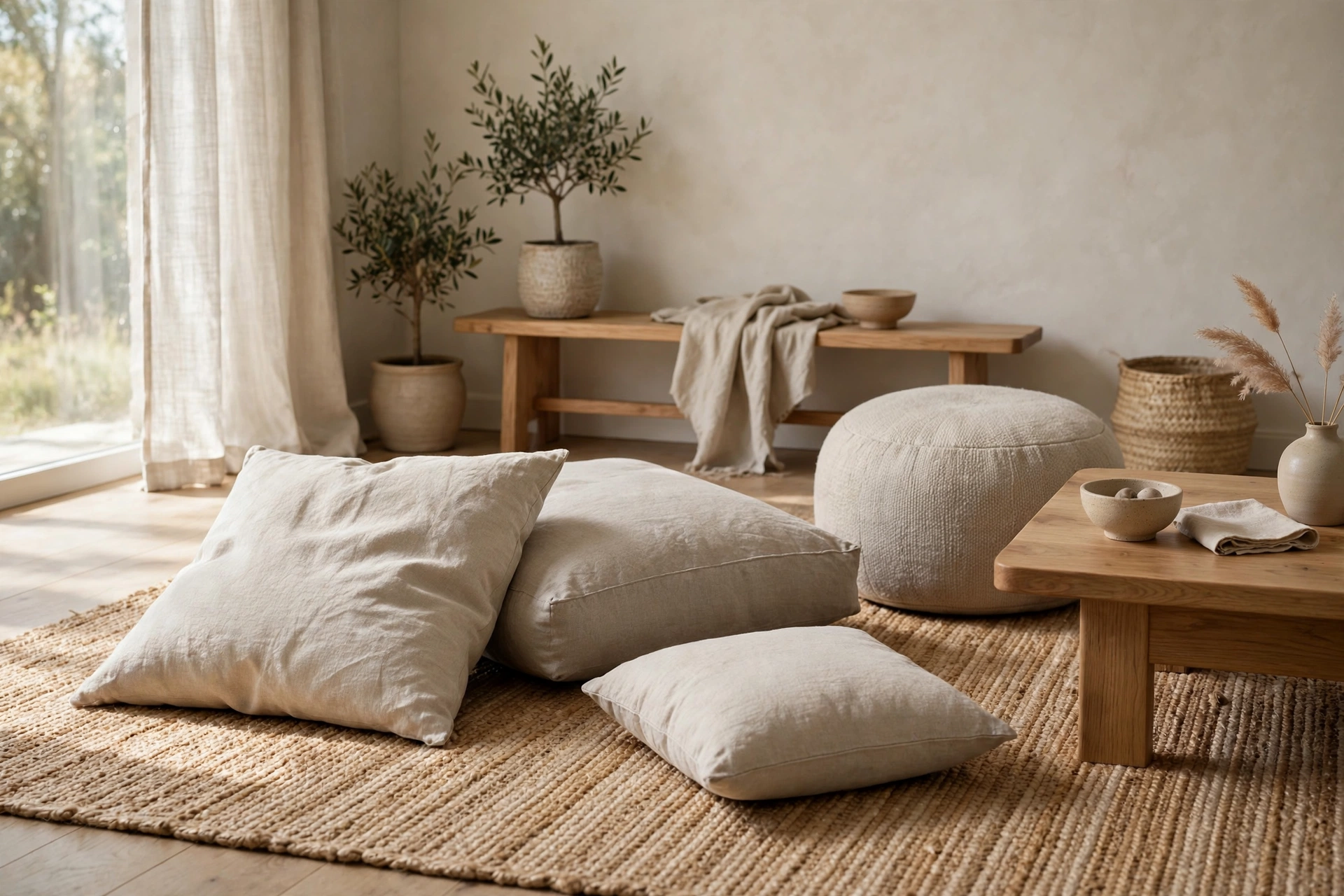
Low living is central to the Japanese half of Japandi, so add a pair of generous linen floor cushions and one round pouf for flexible extra seating. Choose covers in the same oatmeal, greige, or soft charcoal palette as the sofa so they read as part of the family, not an afterthought. A flat-weave cotton or linen fill keeps them structured enough to actually sit on. Tuck them beside the coffee table or stack them in a corner when not in use — they double as sculptural shapes. Guests will gravitate to them; there’s something irresistibly inviting about sitting close to the ground.
11. One Large Minimal Artwork
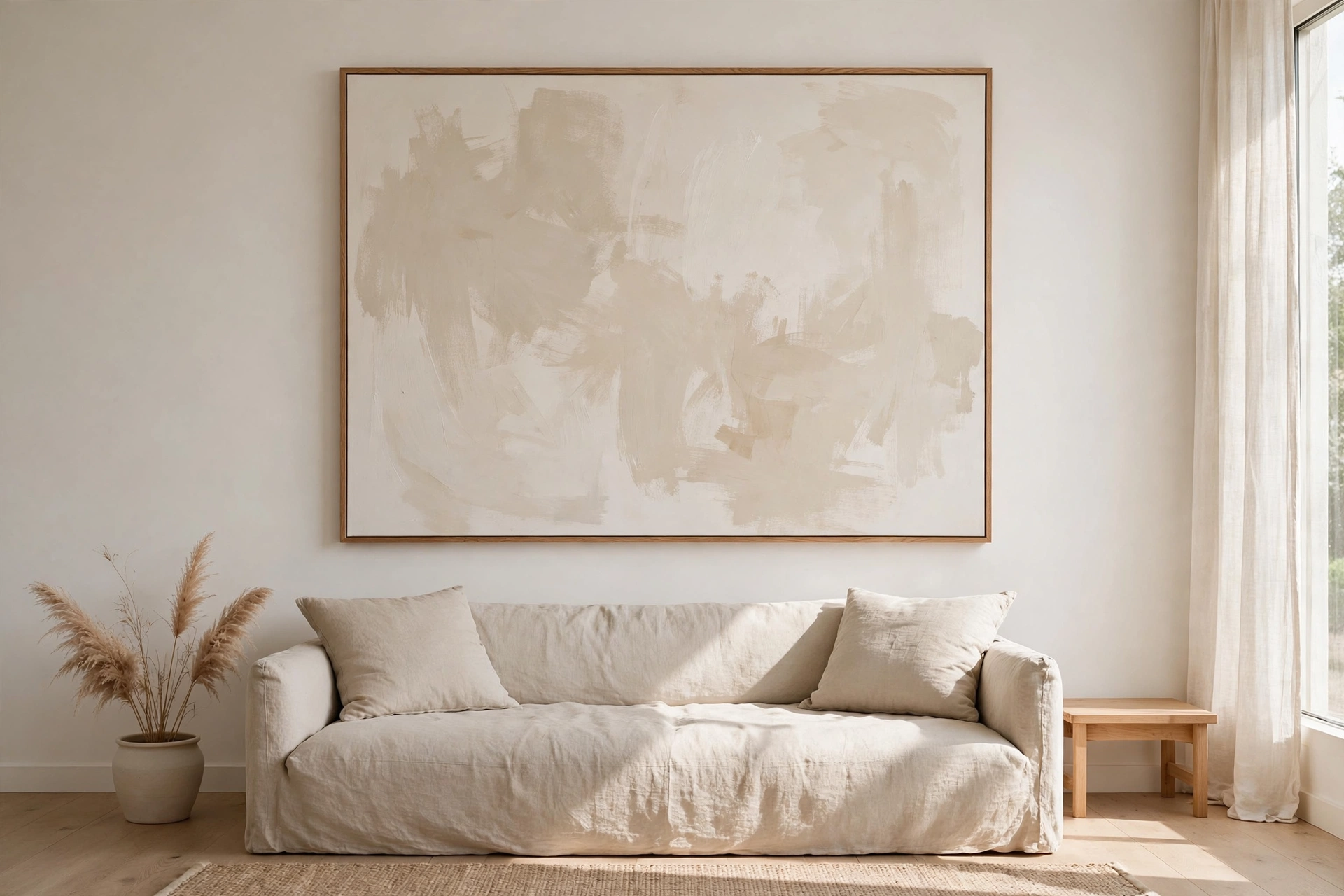
Resist the gallery wall. Instead, hang one oversized abstract canvas — think soft beige brushstrokes, a single ink-like curve, or a misty neutral landscape — above the sofa or on the slat wall. Scale is everything: the art should span roughly two-thirds the sofa’s width to feel intentional rather than lost. A thin natural-wood or black frame keeps it crisp. Of all the Japandi living room design ideas here, this one delivers the most impact per square foot: one large piece creates a calm focal point and lets the eye rest. Everything else on the walls stays empty, and the room instantly feels more curated and serene.
12. Rattan Accent Chair
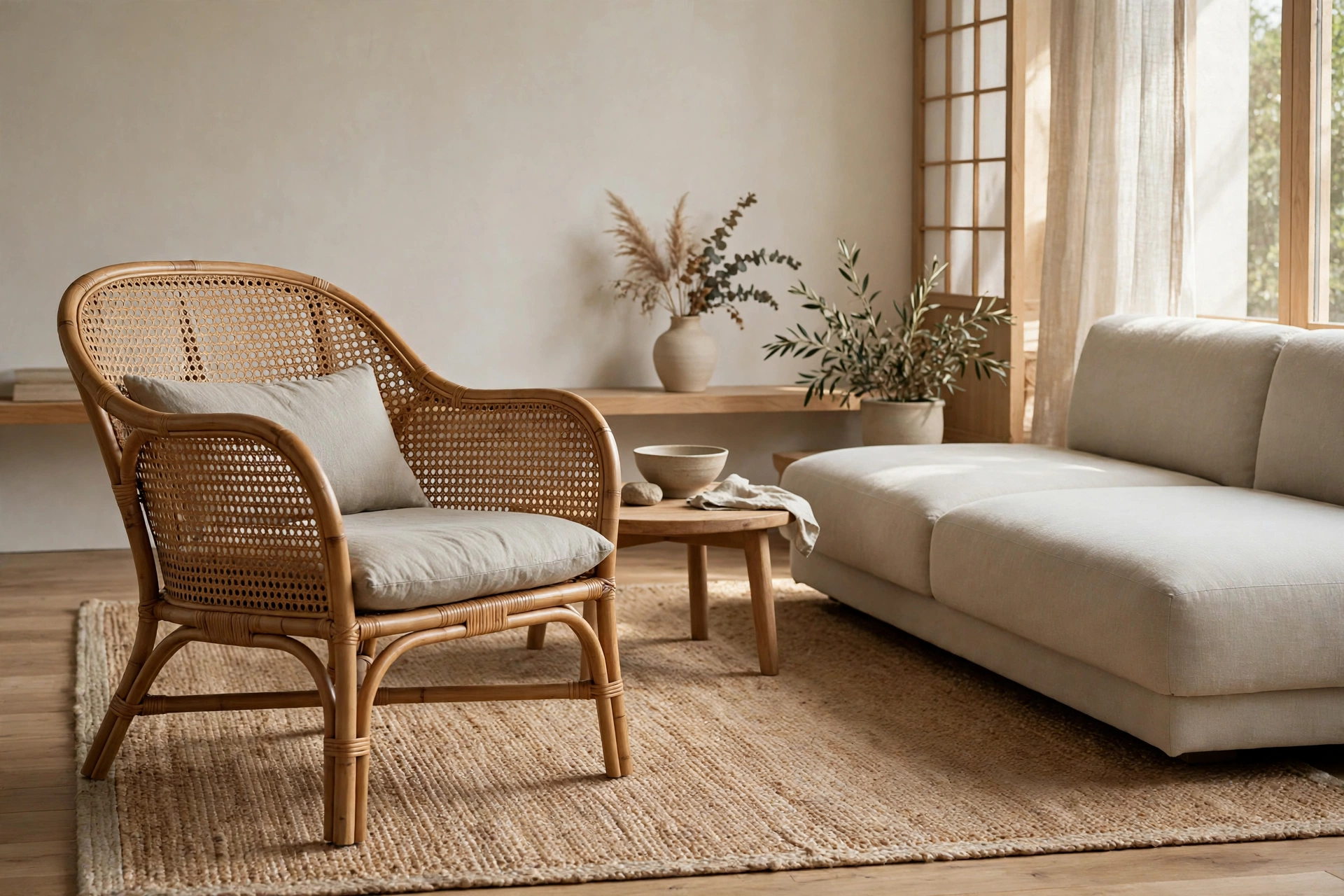
A woven rattan accent chair brings handcrafted texture and a whisper of the tropics into the mix — a nod to the natural-materials ethos both cultures share. Look for a rounded, embracing silhouette with a deep seat, and add a single linen cushion in a muted tone for comfort. Position it at a slight angle to the sofa to create a conversational triangle with the coffee table. The open weave keeps the chair visually light, so it won’t crowd a small room, and the honey-toned cane warms up the cooler neutrals around it beautifully.
13. Stone Decor Accents
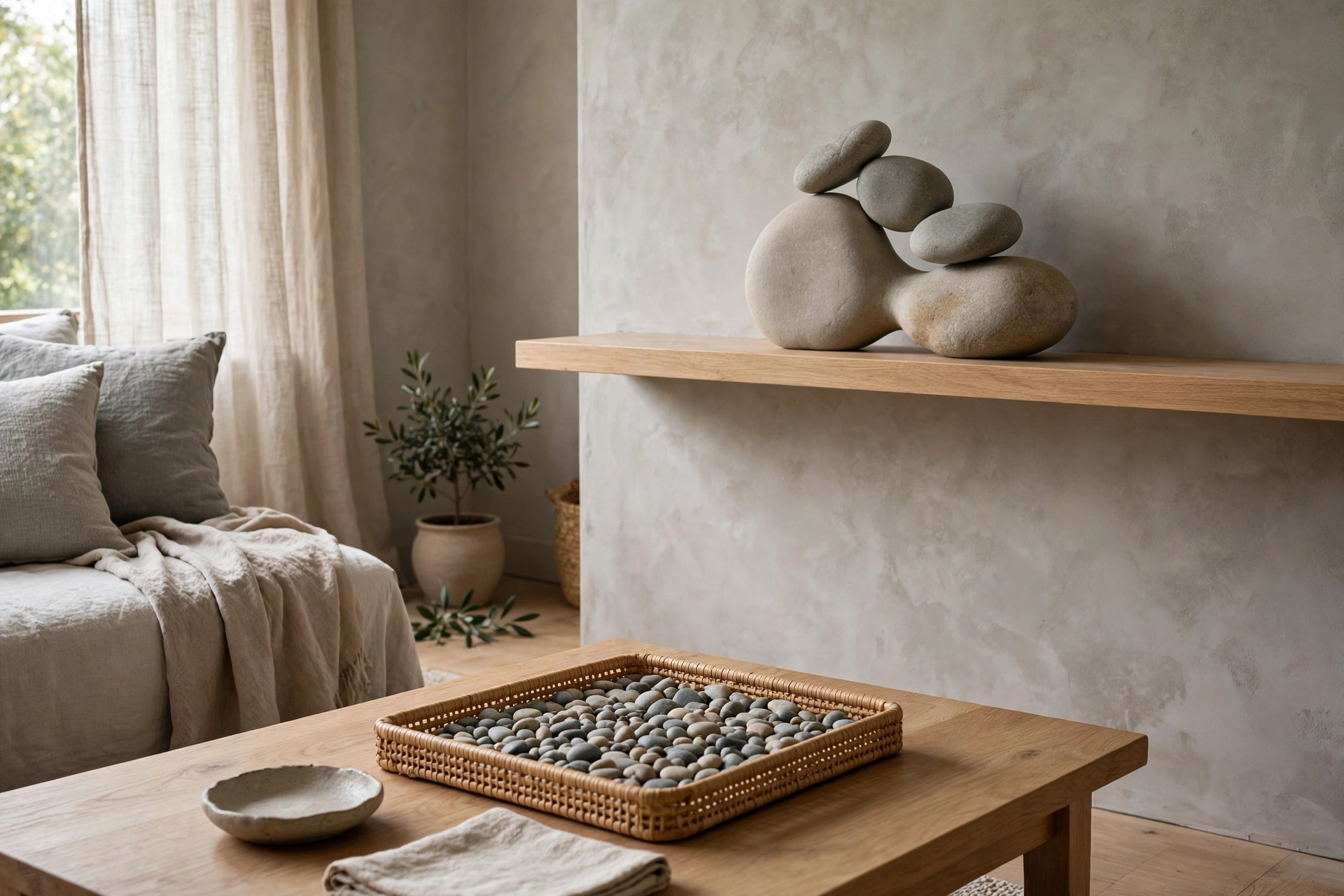
Bring the outdoors in with natural stone: a smooth river-stone sculpture on the shelf, a pebble-filled tray on the coffee table, or a single rough-hewn stone bookend. Stone adds weight and permanence — a grounding counterpoint to all the soft textiles and light woods. Keep the palette tonal: grey, sand, and warm beige stones that echo the room’s neutrals. One or two pieces are plenty; like everything in Japandi, restraint is the luxury. The cool touch of stone against warm linen is a small sensory contrast — the kind of detail that makes these Japandi living room design ideas feel thoughtfully composed rather than decorated.
14. Warm Layered Lighting
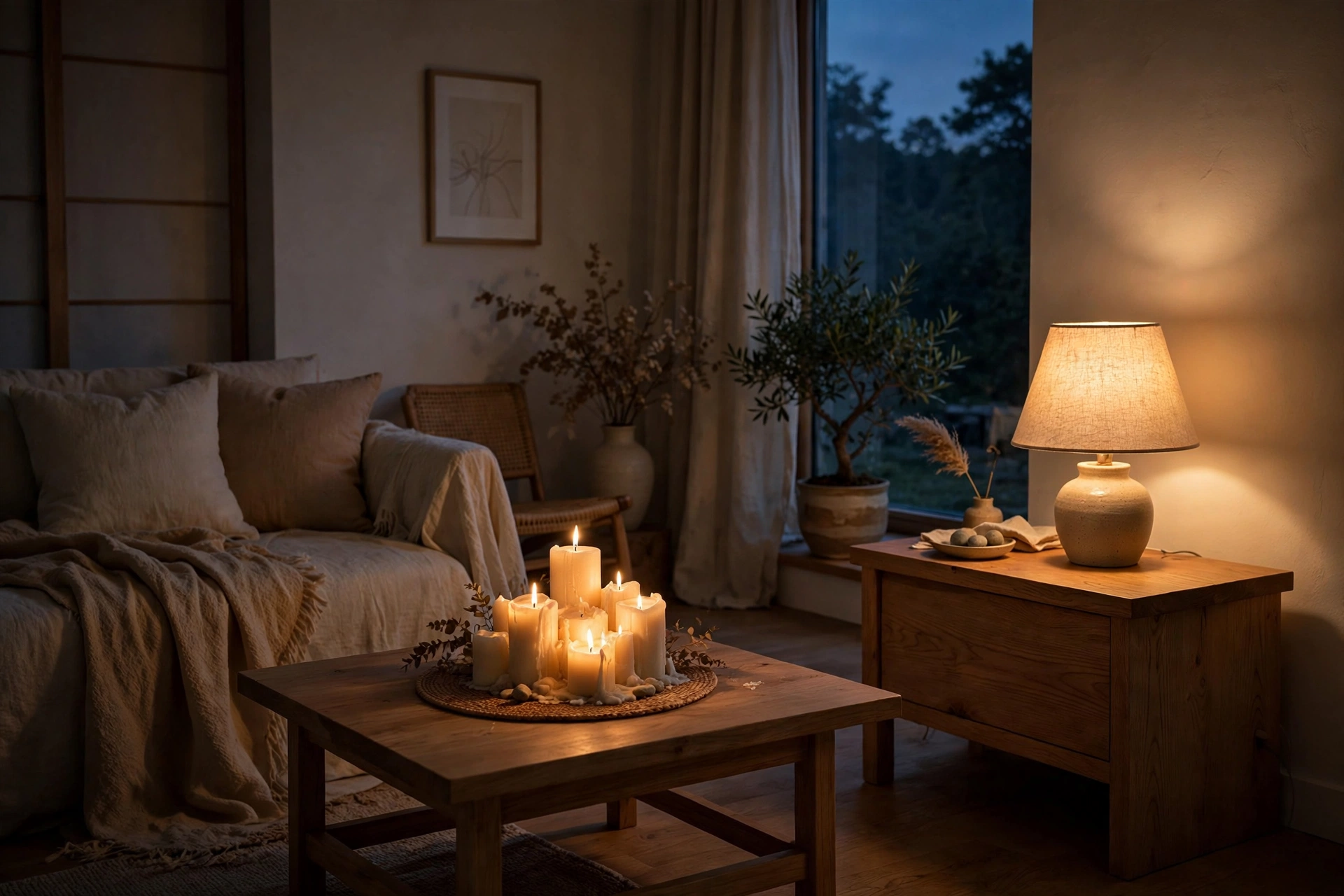
Overhead lighting is the enemy of calm. Build your evening glow in layers instead: a small ceramic or linen-shaded table lamp on a side table, a cluster of unscented pillar candles on the coffee table or hearth, and the paper floor lamp from idea four. Keep every bulb at 2700K or warmer, and put the main lamps on dimmers so you can dial the room down as the night deepens. The goal is pools of warm light with soft darkness between them — that chiaroscuro effect is what makes a Japandi room feel like a retreat after sunset.
15. Mindful Negative Space
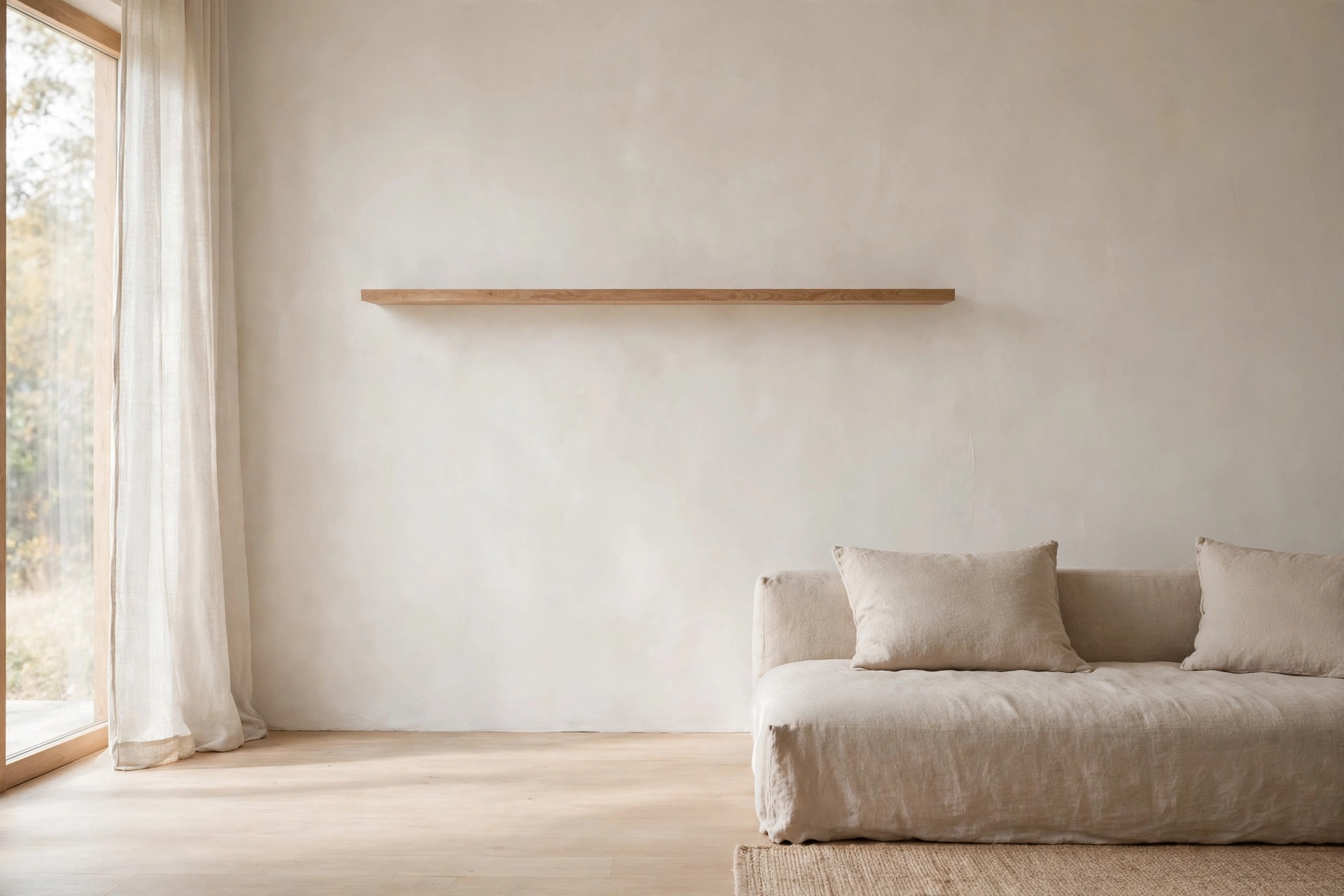
The most powerful Japandi idea costs nothing: leave space empty on purpose. Resist filling every surface and corner. Keep the coffee table two-thirds clear, leave one shelf completely bare, and let a stretch of wall or floor stay unadorned. Negative space gives each object room to be appreciated and lets the eye — and the mind — rest. Walk through your room once a week and remove one thing that doesn’t earn its place. This ongoing editing is the real secret behind these japandi living room design ideas: calm isn’t bought, it’s curated by subtraction.
Frequently Asked Questions
What is Japandi style in interior design?
Japandi blends Japanese minimalism with Scandinavian functionality. From Japan it takes simplicity, natural materials, and the wabi-sabi love of imperfection; from Scandinavia it takes warmth, coziness (hygge), and light woods. The result is a calm, uncluttered look that still feels inviting and livable — the very heart of these japandi living room design ideas.
What colors work best in a Japandi living room?
Stick to a soft neutral base — warm whites, oatmeal, greige, and sand — layered with natural wood tones. Add depth with muted accents like clay, sage, or charcoal in small doses. The palette should feel like nature: calm, tonal, and quietly warm.
How do I make a small living room look Japandi?
Japandi is ideal for small spaces. Choose low-profile furniture to open up sightlines, keep the palette light, and embrace negative space rather than filling every corner. One statement piece, like a slat wall or large artwork, adds character without clutter.
Is Japandi expensive to achieve?
Not necessarily. The style favors fewer, better pieces — so you buy less overall. Natural materials like jute, linen, and rattan are affordable, and much of the look comes from decluttering and restraint, which cost nothing. Invest where it counts: the sofa and good lighting.
Keep Exploring
Found a favorite among these Japandi living room design ideas? Keep the calm going — browse our living room decor collection for more serene styling guides, from cozy neutral palettes to small-space layouts that make every square foot feel intentional. Your most peaceful room is just one idea away.
You may also enjoy long narrow living room design ideas, Scandinavian living room design ideas, and our guide to 13 Japandi bedroom design ideas for a calm, clutter-free retreat.





[…] style never really goes out of fashion. While trends come and go, a living room that feels warm, welcoming, and genuinely lived-in always feels like home. These farmhouse living room design ideas capture […]