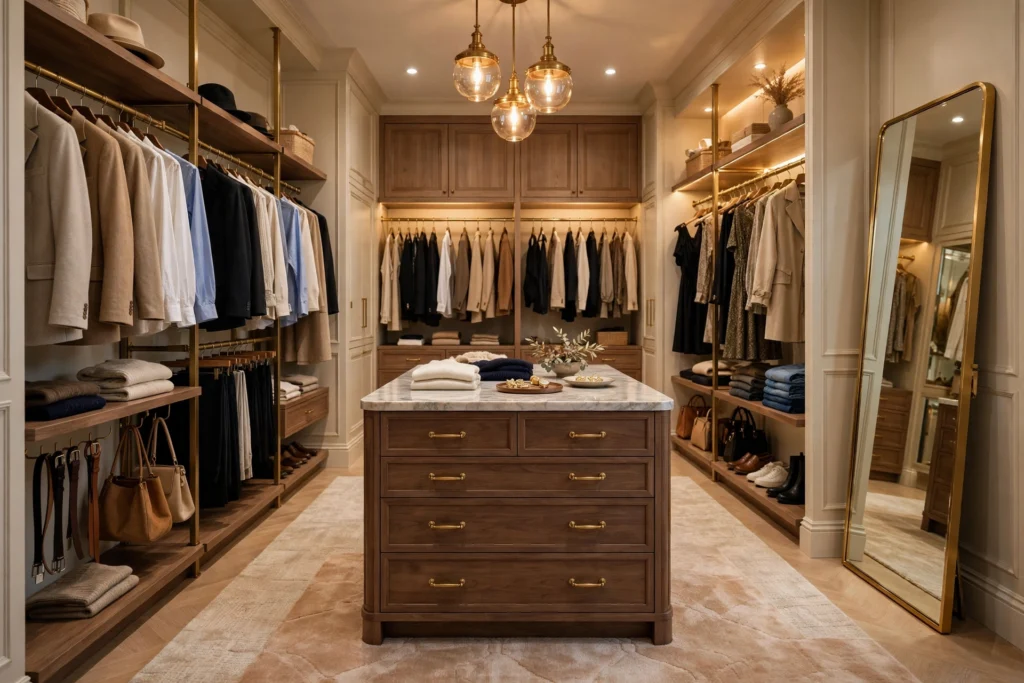

A walk-in closet is the one room in the house that’s entirely yours. No guests judge it, no family meetings happen there — it’s a private dressing room, a personal boutique, and the launch pad for every morning. It deserves better than a wire shelf and a single bulb.
The best walk-in closet design ideas balance serious storage with a little luxury: everything visible, everything reachable, and lighting that makes getting dressed feel good. Here are fifteen ideas to build a closet that’s as functional as it is beautiful.
1. Plan the Layout Around Your Wardrobe
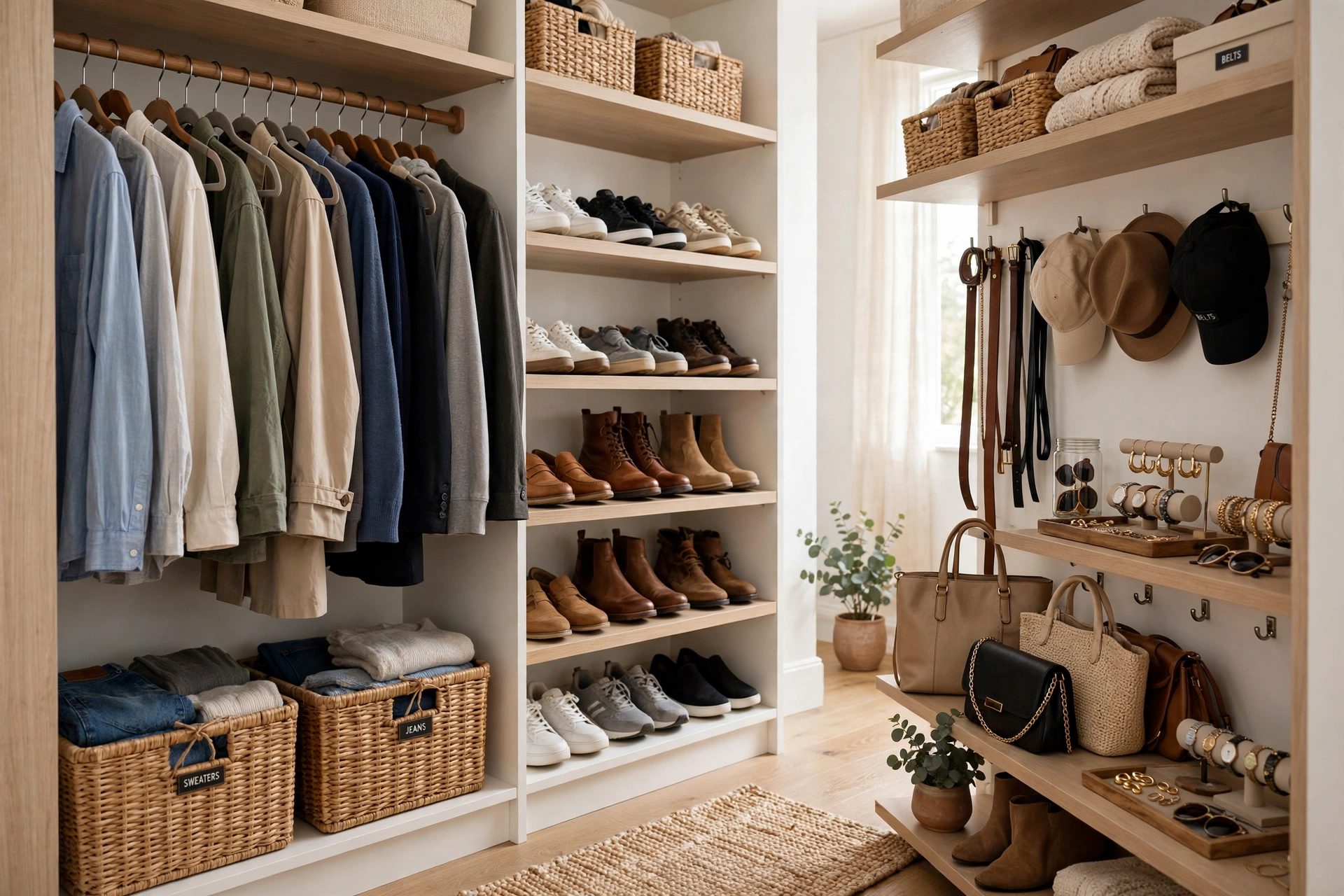
Before buying a single shelf, audit what you actually own: how much hangs long, how much hangs short, how many shoes, bags, and folded items. Your wardrobe’s real proportions should dictate the layout — a closet designed for someone else’s clothes will never feel right.
The classic winning formula is double-hang sections for shirts and pants, one long-hang zone for dresses and coats, drawers for the small stuff, and shelving up top for the rarely used. Measure your tallest hanging item and give it an honest long-hang bay. Apartment Therapy’s guide to stylish walk-in closet ideas makes the same point designers always make: a closet planned around your actual wardrobe beats a generic system every time.
2. Double Up Hanging Space With Double Rods
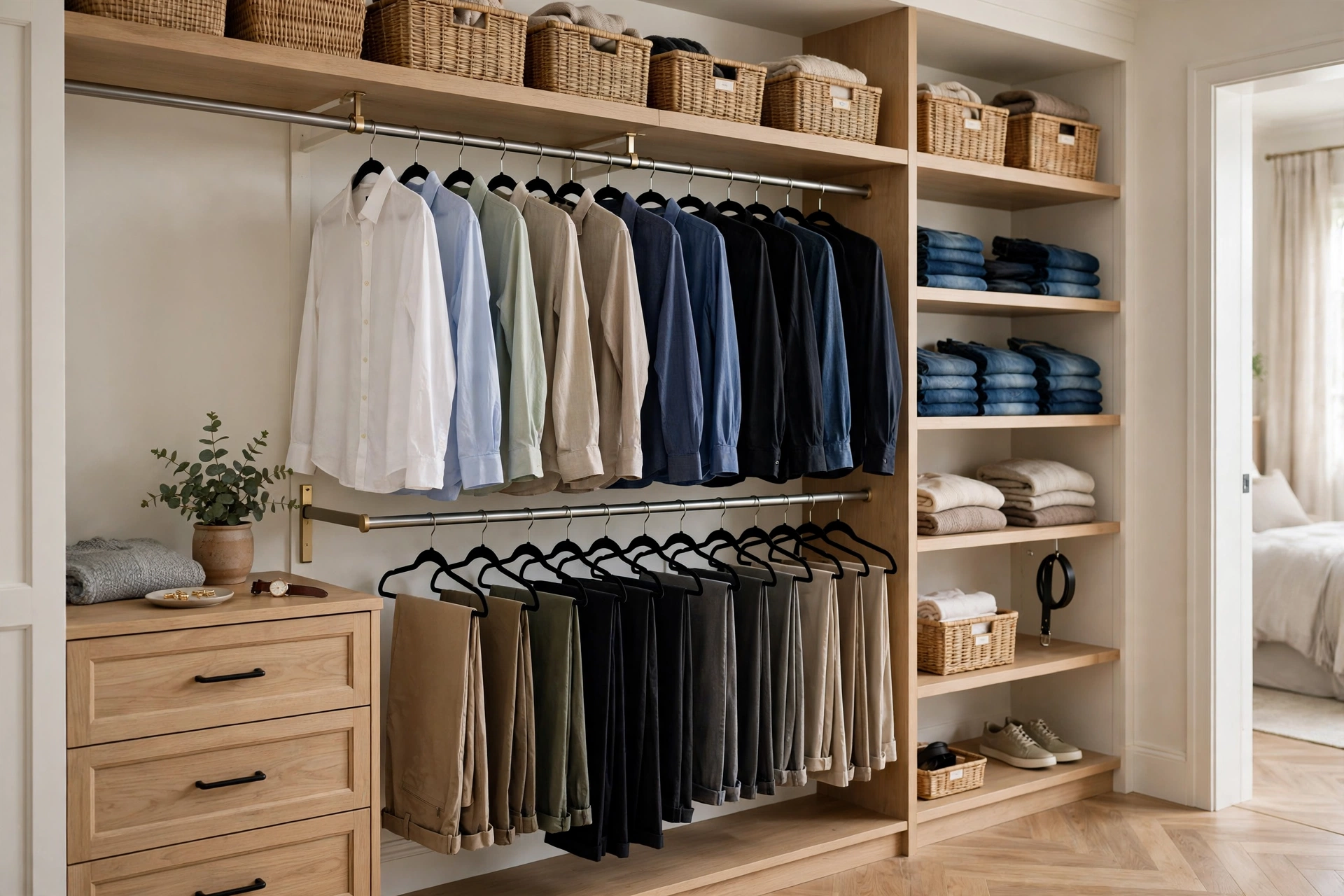
The single highest-impact upgrade in any walk-in closet is double hanging: two rods stacked vertically in the same bay, one for tops and one for pants or skirts. It roughly doubles your hanging capacity in the same wall space, and it works for almost every wardrobe except one that’s all long dresses.
Install the top rod at about 80 inches and the lower rod at 40 inches, and use slim velvet hangers so clothes don’t slide or bulk up. Keep a small step stool nearby for the top rod — a closet you can’t comfortably reach is a closet you won’t use. This one change alone can rescue a closet that feels hopelessly overstuffed.
3. Light It Like a Boutique
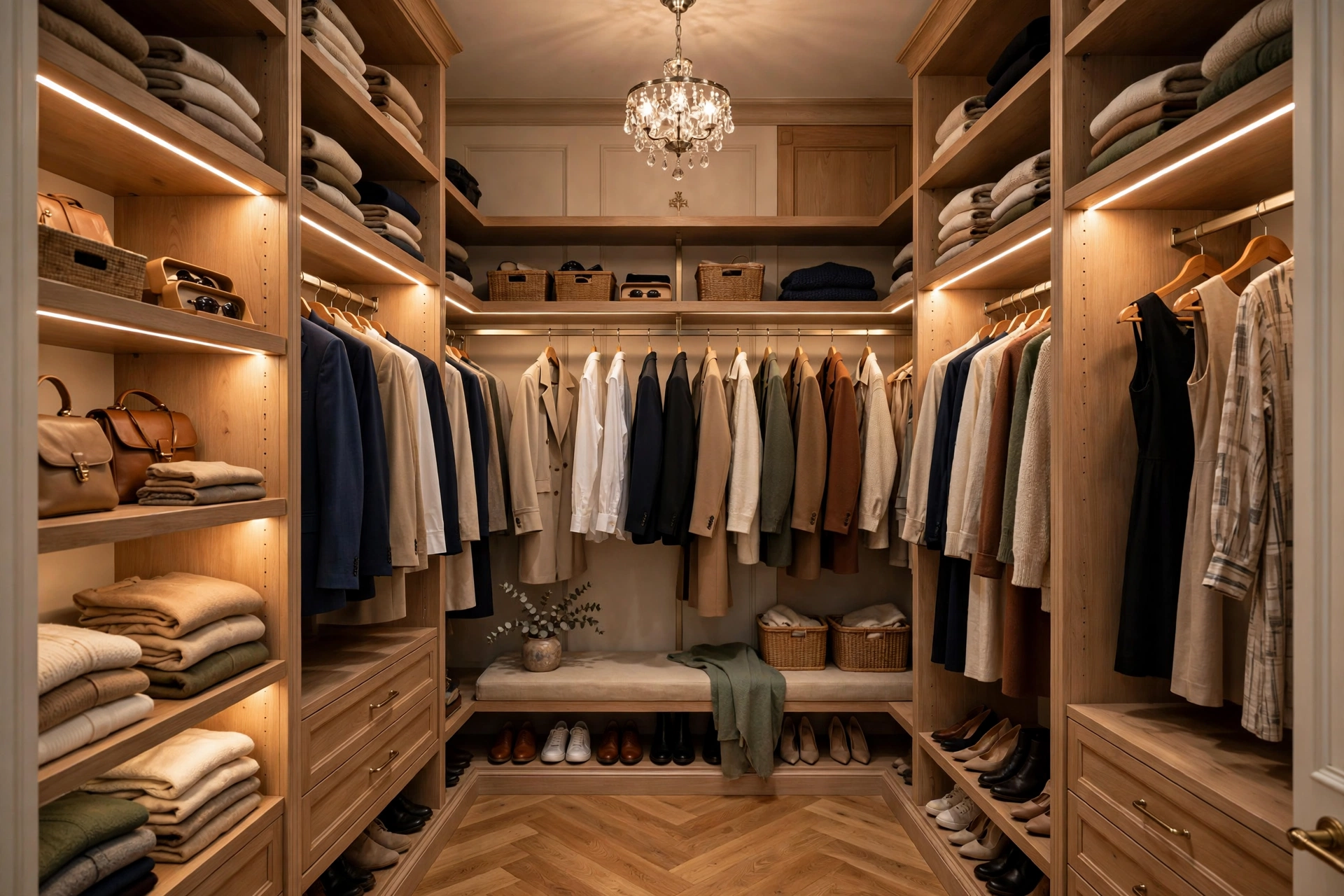
Closets get the worst lighting in the house, and bad lighting is why clothes look wrong at 7 a.m. Upgrade to layered, warm light: LED strips under every shelf, puck lights in dark corners, and one statement fixture — a small chandelier or a pretty flush mount — in the center for personality.
Around 3000K keeps colors true without the dressing-room harshness of daylight bulbs. Put the lights on a motion sensor so they greet you hands-free, which feels wonderfully luxurious for almost no cost. Good lighting also makes the closet feel bigger and more finished, which matters in a room you visit every single day.
4. Add a Center Island With Drawers
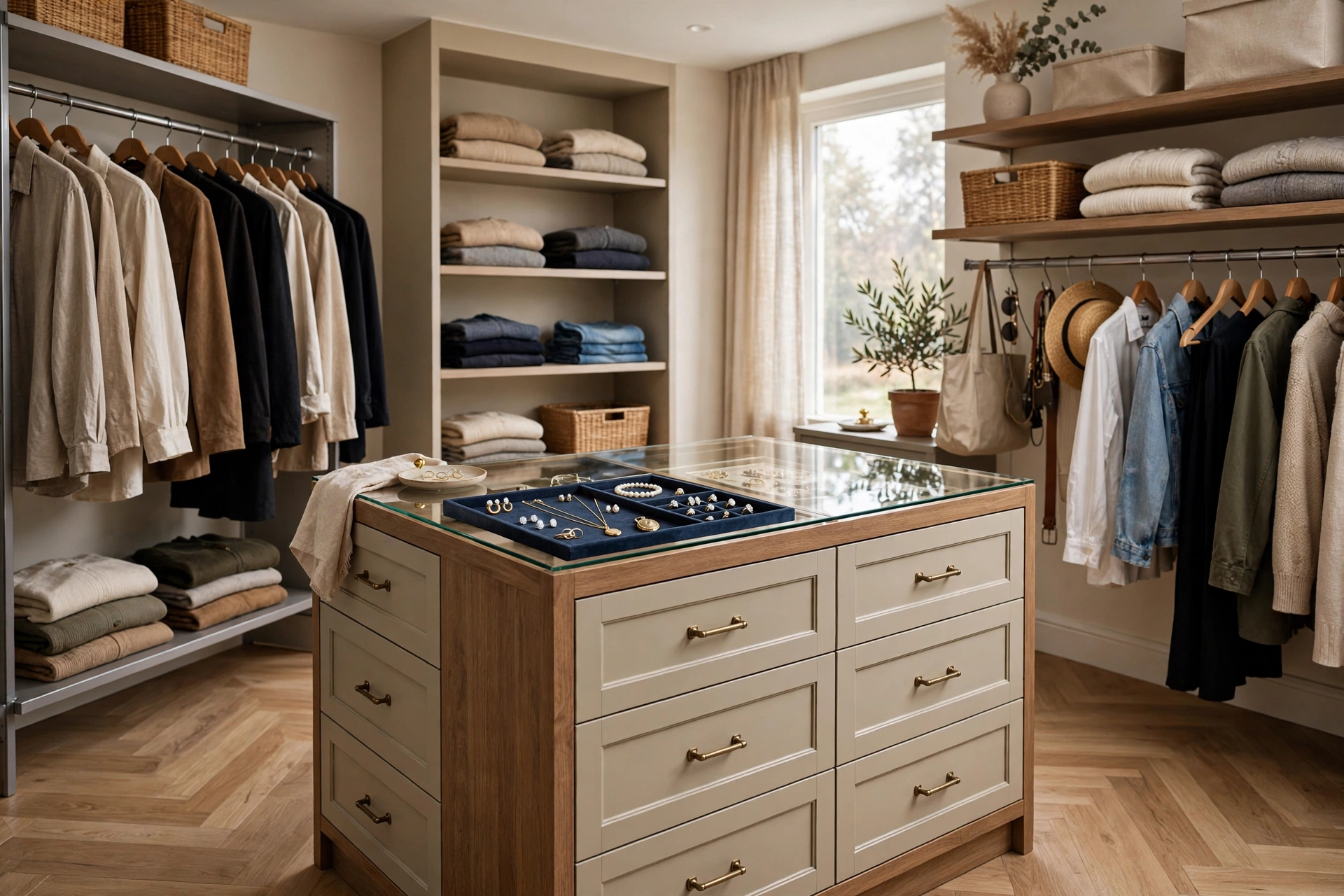
If your closet has the floor space, a center island is the ultimate upgrade: drawers for jewelry, watches, and accessories, a glass top for display, and a surface for laying out tomorrow’s outfit. It’s the piece that turns a big closet into a true dressing room.
Keep the island shallow enough to walk around comfortably — you need at least 30 inches of clearance on each side. The top drawer can hold a velvet jewelry tray, the middle drawers sunglasses and belts, the bottom ones scarves and seasonal accessories. For more storage-first thinking in tight spaces, our 15 Small Bedroom Design Ideas That Make Tiny Rooms Feel Huge applies the same zone-by-zone logic to the bedroom beyond the closet door.
5. Display Shoes Like a Collection
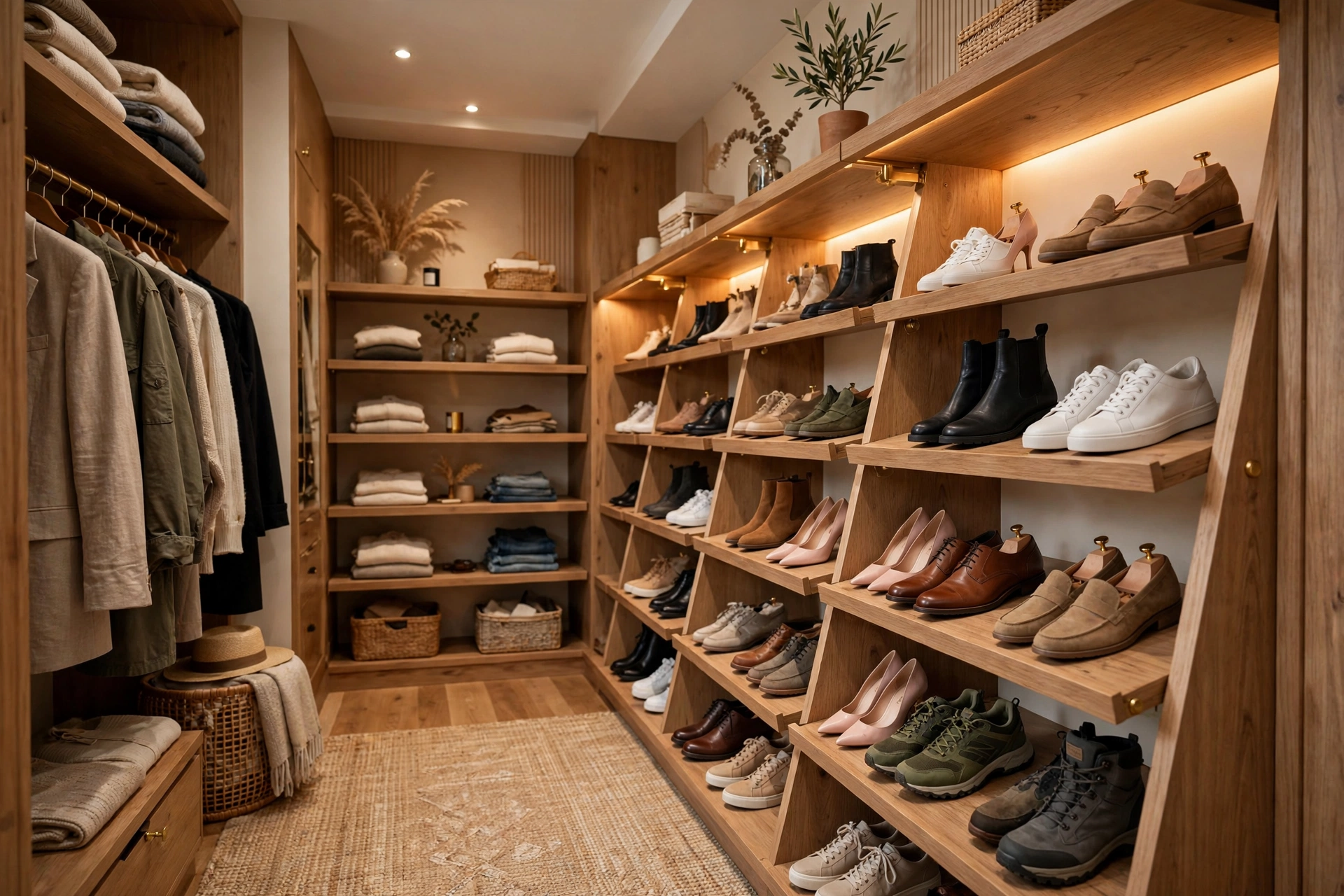
Shoes deserve better than a pile on the floor. Angled shoe shelves with a small lip keep pairs visible and easy to grab, while clear-front boxes stack neatly for the rarely worn. Display your favorites boutique-style on open shelving — seeing them is what gets them worn.
Organize by type and then by color: heels together, sneakers together, boots together. Keep daily shoes at hip height and special-occasion pairs up high. And be honest during the seasonal swap — shoes you haven’t worn in a year are taking up prime real estate that your current rotation could use.
6. Use Matching Hangers Throughout
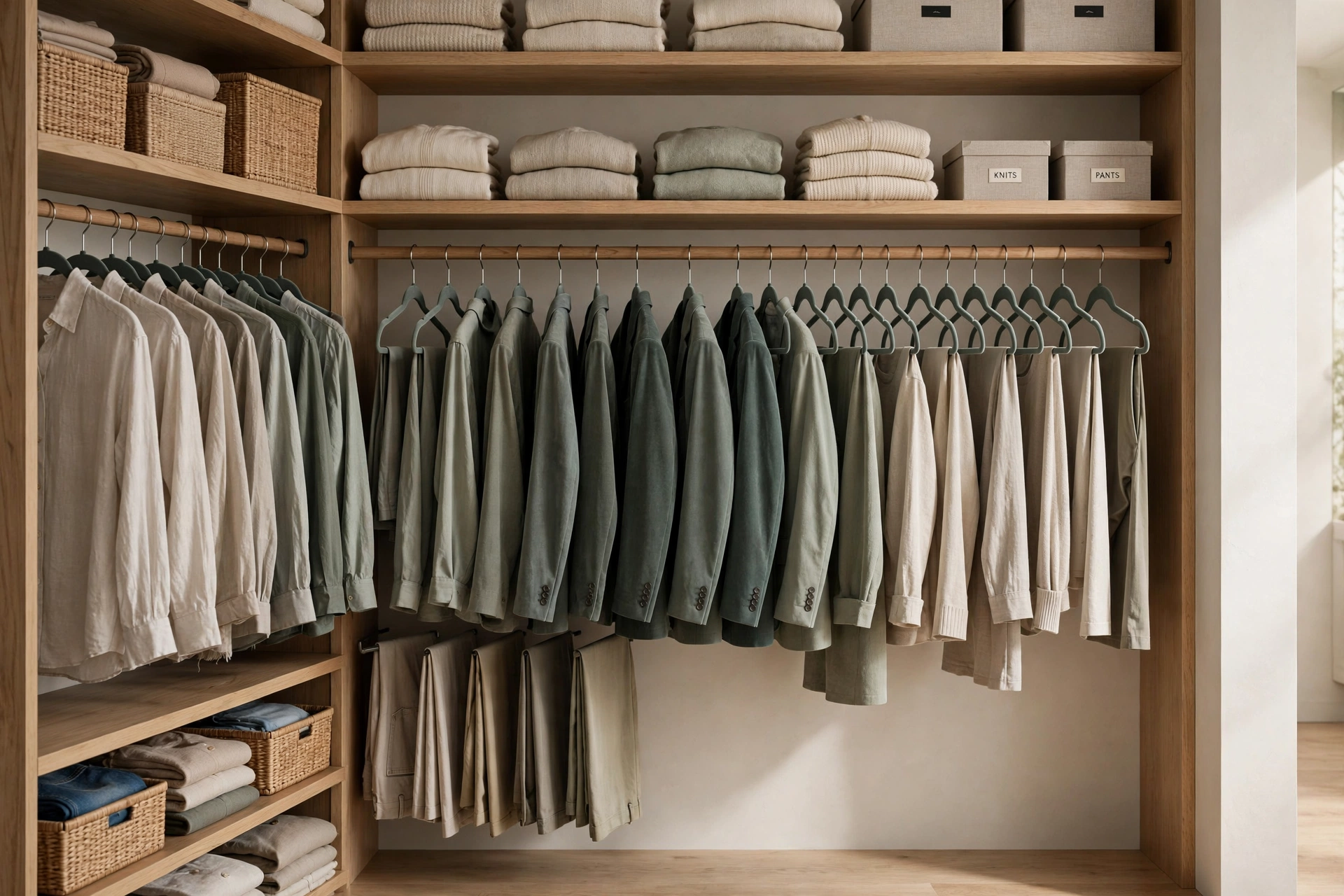
Mismatched hangers — wire from the dry cleaner, chunky plastic, a stray wooden one — make even an organized closet look chaotic. Switch to one style of slim, non-slip hangers in a single color and the whole closet instantly looks calmer and more spacious. Slim hangers also fit more clothes per rod.
Velvet flocked hangers are the crowd favorite: slim, grippy, and gentle on shoulders. Keep a small stash of sturdy wooden hangers for heavy coats and structured blazers. The Spruce’s roundup of closet shelving ideas shows how small uniform details like this compound into a closet that looks professionally designed.
7. Zone by Category and Color
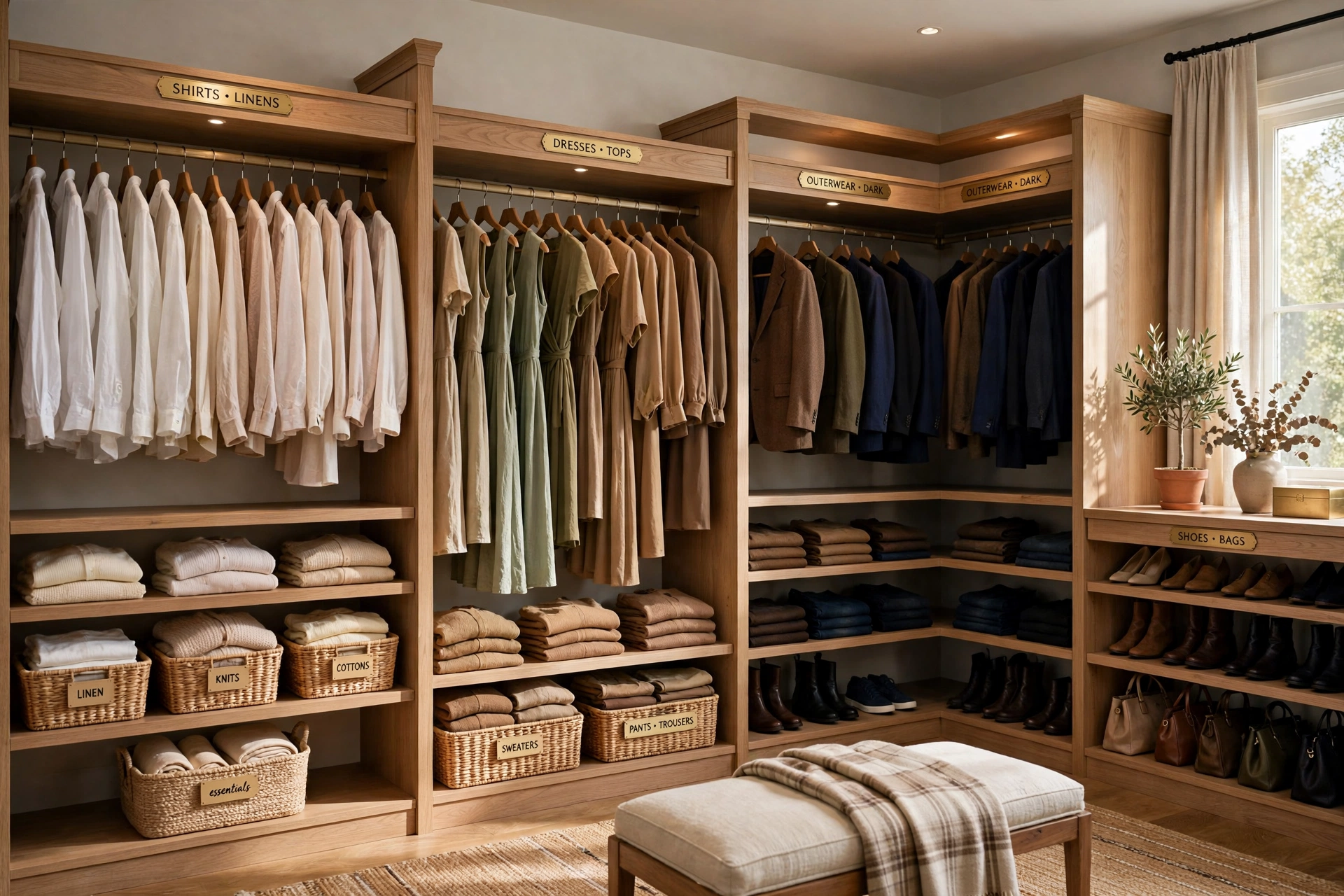
The boutique look comes from zoning: all the blouses together, all the denim together, bags in one spot, scarves in another. Within each zone, arrange by color — light to dark — and the closet becomes shoppable at a glance. You’ll get dressed faster and actually wear what you own.
Keep the zones you use daily at eye level and the aspirational stuff (evening wear, ski gear) up high or in the back. Seasonal rotation keeps the prime zones relevant: when the weather turns, the off-season categories move to top shelves or storage bins. A zoned closet is a self-maintaining closet.
8. Add a Full-Length Mirror
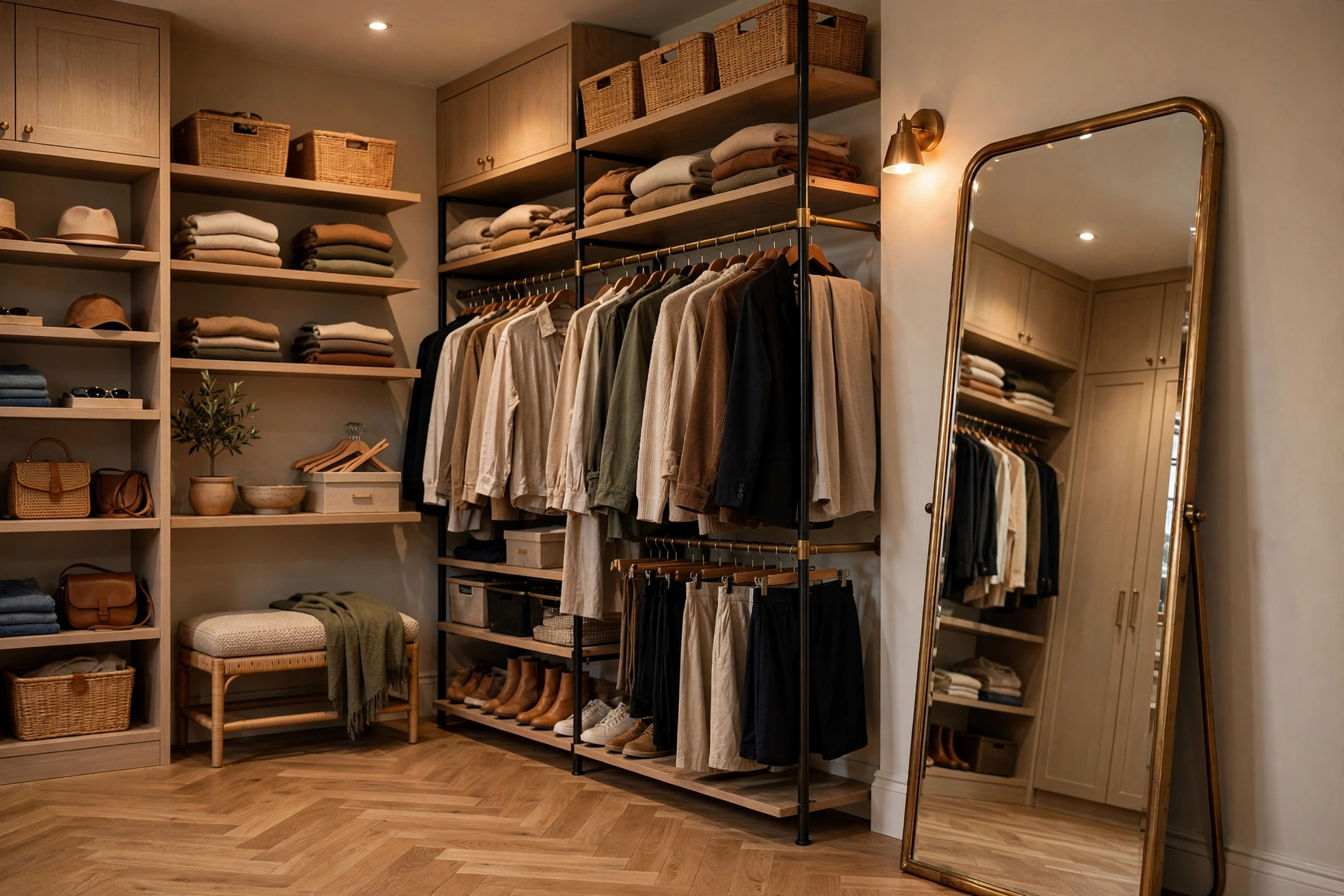
You can’t get dressed well if you can’t see yourself. A full-length mirror is non-negotiable in a walk-in closet — and if wall space is tight, mirrored cabinet doors do double duty, bouncing light around while hiding clutter. Position the mirror where the light is best so you’re judging outfits in honest light.
A leaning floor mirror in a pretty frame also works and adds a decorative moment. For couples sharing a closet, two mirrors prevent the morning bottleneck. It seems obvious, but an astonishing number of walk-in closets skip the mirror and force their owners to walk back to the bedroom for every outfit check.
9. Build a Vanity Nook
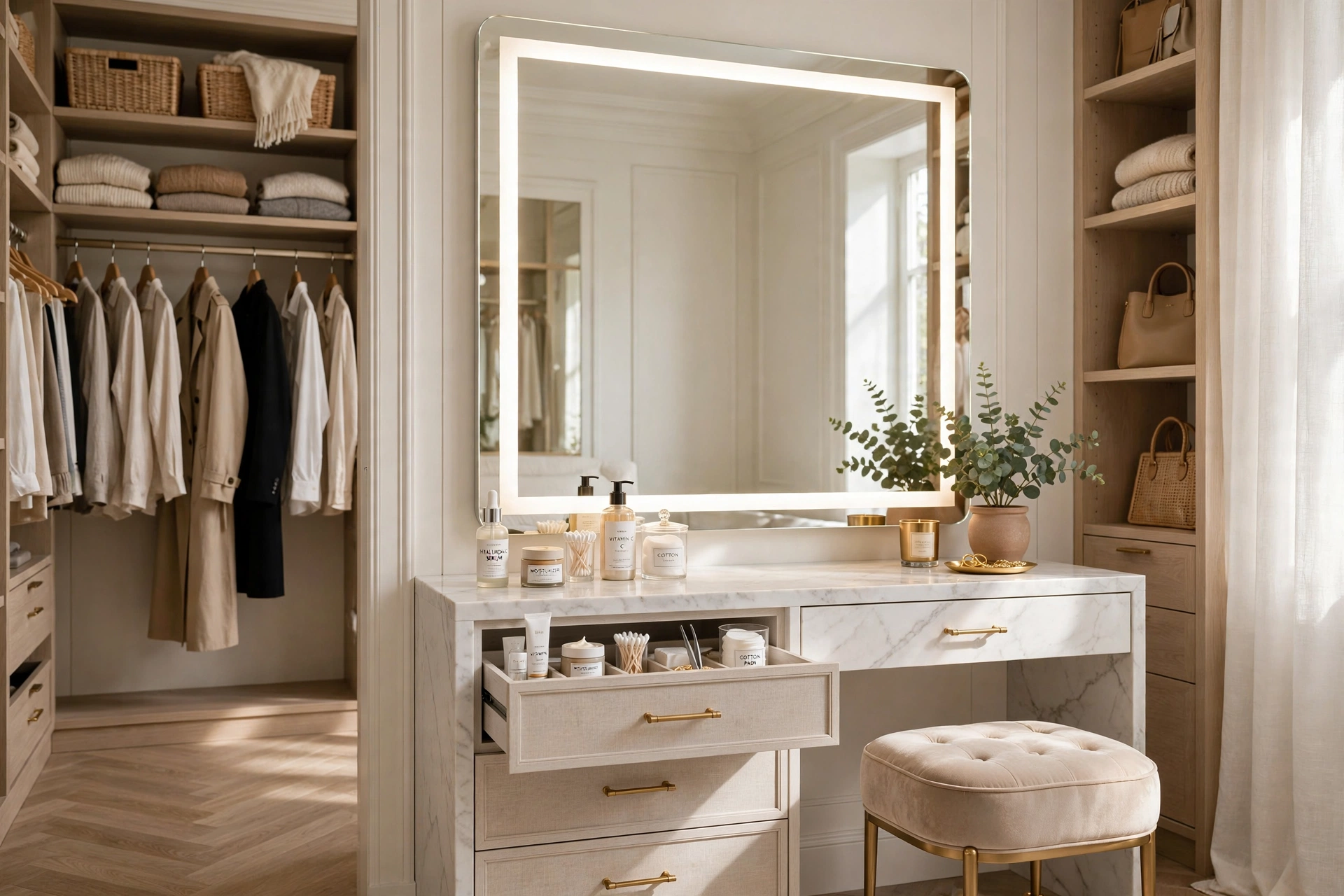
Carve out even a small corner for a vanity and the closet becomes a true getting-ready suite: a narrow desk or floating shelf, a lighted mirror, a comfortable stool, and drawers for skincare and makeup. Mornings compress into one room — dress, groom, done.
You don’t need much space: a 30-inch-wide nook is enough for the essentials. Good task lighting matters more than size — a mirror with built-in LEDs or a pair of sconces at face height beats any overhead light for makeup. This is the corner that makes a walk-in closet feel like a luxury hotel suite rather than a storage room.
10. Go Vertical With Floor-to-Ceiling Storage
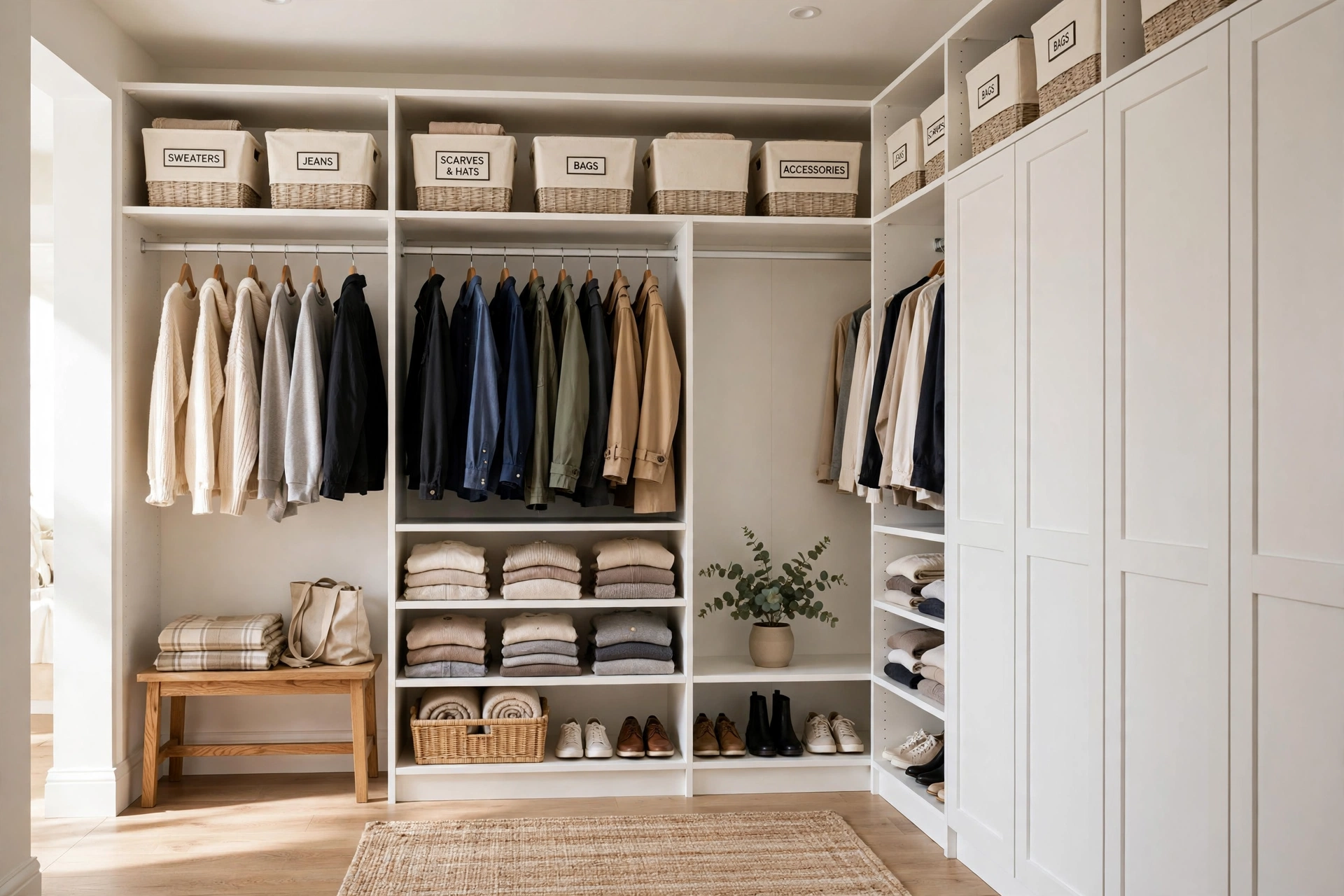
Most closets waste the top two feet entirely. Take storage all the way to the ceiling with high shelves for off-season bins, luggage, and the things you touch twice a year. Below them, keep everything you use weekly within easy reach — the golden rule is that daily items live between knee and eye level.
Keep a slim folding step stool tucked in the closet so the high shelves stay usable, and label the top bins so you don’t have to climb up to remember what’s in them. Floor-to-ceiling storage also makes the closet feel custom and architectural rather than assembled from parts — it’s the difference between a closet and a dressing room.
11. Corral Accessories in Clear Dividers

Accessories are the first things to disappear into closet chaos. Drawer dividers, clear acrylic organizers, and small trays give belts, sunglasses, watches, and jewelry a visible home each. When you can see everything, you wear everything — and you stop buying duplicates of things you already own.
Dedicate one shallow drawer to the daily rotation and deeper storage to the rest. A velvet-lined tray on the center island or vanity holds today’s watch, rings, and earrings. Small, consistent homes for small things are what separate a closet that stays organized from one that slides back into chaos within a month.
12. Add a Rug and a Seat
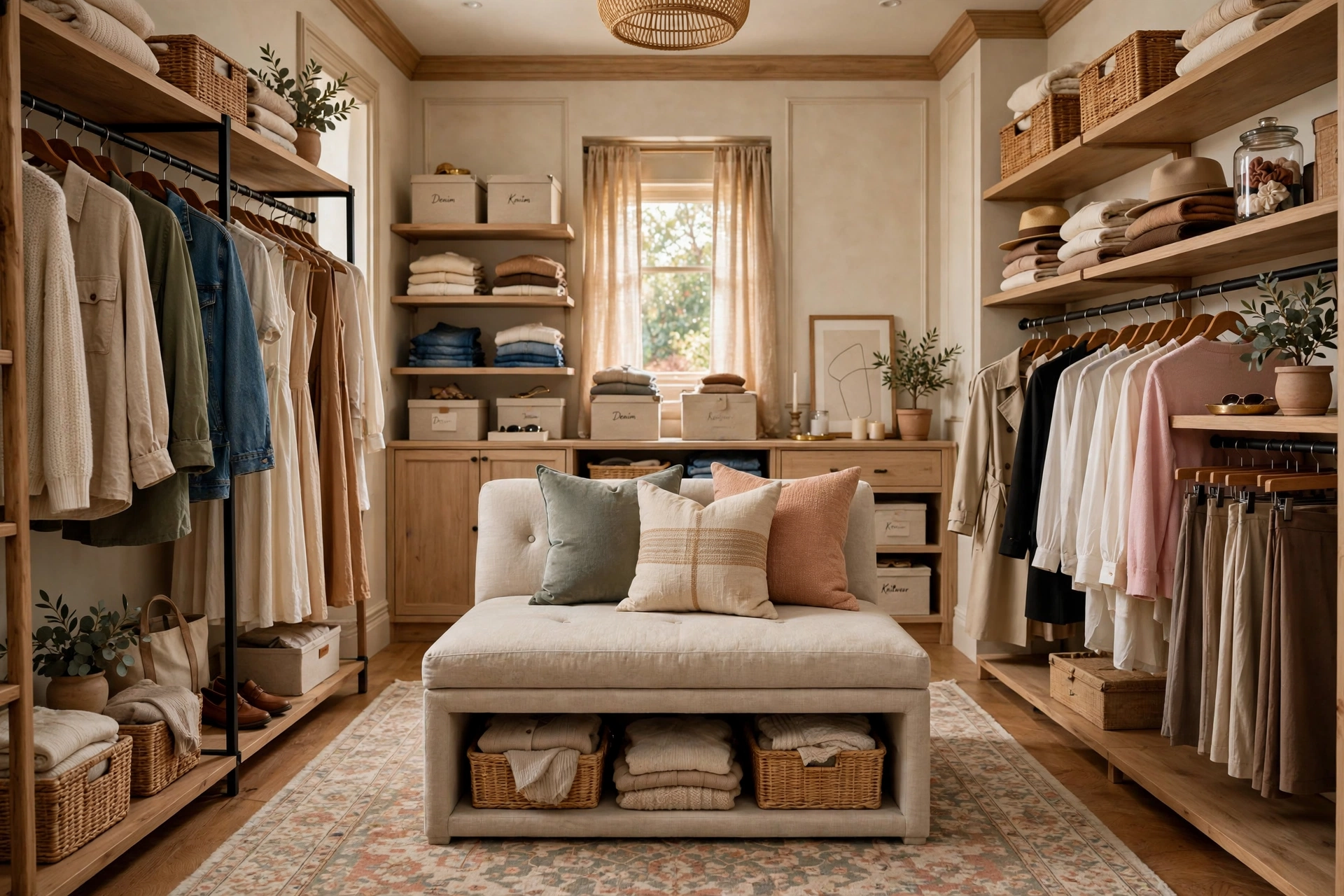
A walk-in closet should feel like a room, not a corridor. A soft rug underfoot makes barefoot mornings pleasant and adds warmth and color, while a small bench, ottoman, or upholstered stool gives you somewhere to sit while putting on shoes. Both signal that this space is meant to be enjoyed.
Choose a low-pile rug that’s easy to vacuum and a seat with hidden storage for an extra win — shoe horns, spare hangers, and off-season accessories tuck inside. These two additions cost little but change the whole feeling of the room from utilitarian to indulgent.
13. Paint It a Color You Love
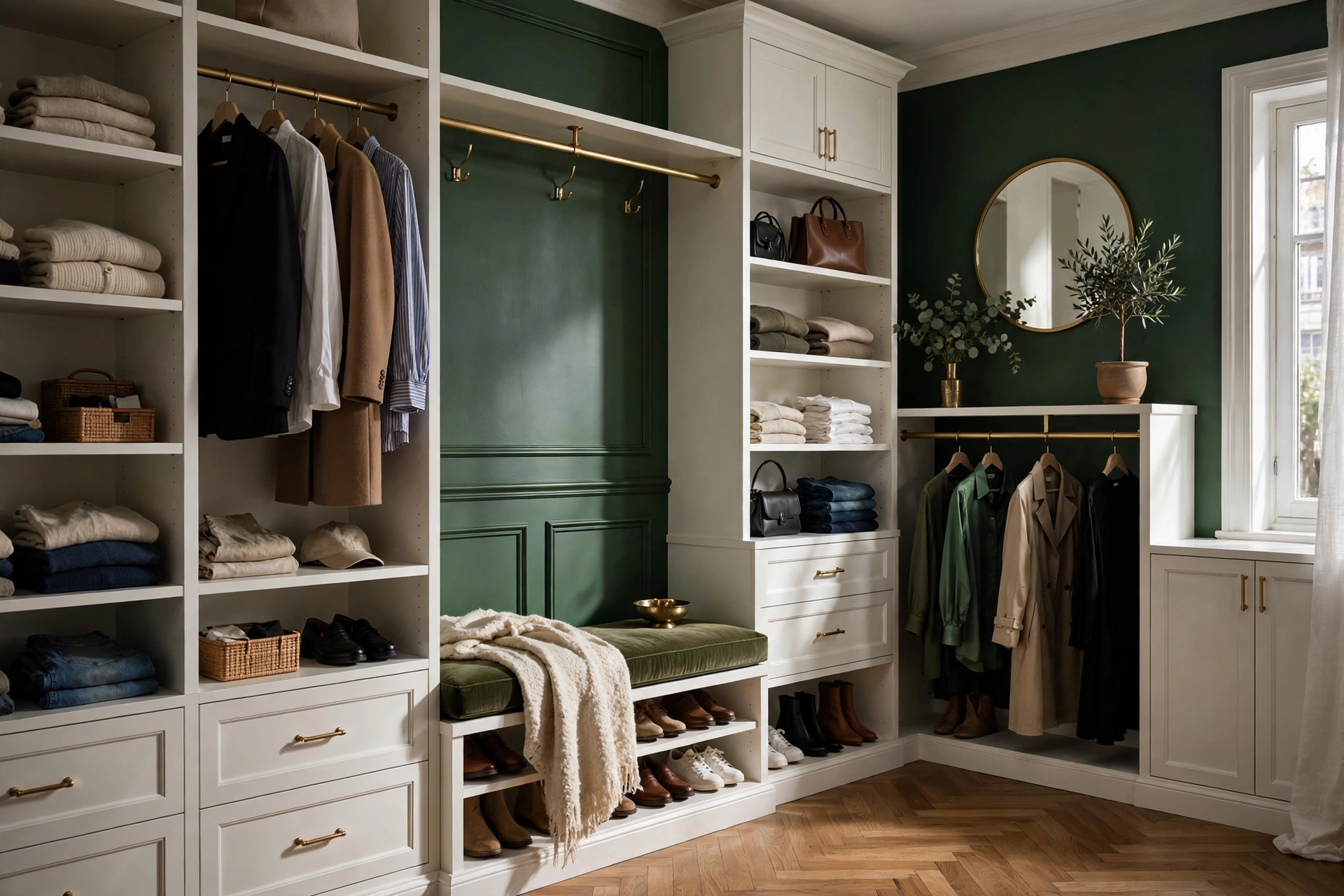
Closets are small, private, and seen only by you — the perfect place for a bold color you’d never commit to in the living room. Deep green, inky navy, warm terracotta, or a moody charcoal on the walls makes clothes pop and the space feel intentional and jewel-box-like.
If full color feels risky, paint just the back wall or the ceiling, or add peel-and-stick wallpaper inside the closet for a renter-friendly version. Light-colored built-ins against a dark wall look especially sharp. A closet with personality is a closet you’ll keep organized — pride of ownership is a real organizing force.
14. Install Pull-Out Hampers and a Donate Bin

Dirty clothes need a home inside the closet, not on the floor beside it. Built-in tilt-out or pull-out hampers keep laundry sorted and out of sight — one for lights, one for darks. And add a permanent donate bin: a bag or basket where anything that doesn’t fit, flatter, or get worn goes immediately.
The donate bin is the secret to a closet that never overflows. When the bin is full, it goes to donation — no second-guessing, no “maybe” pile migrating back to the rod. Our bedroom furniture design ideas cover pieces that integrate this kind of hidden storage beautifully into the bedroom itself.
15. Keep a Small Repair and Care Kit
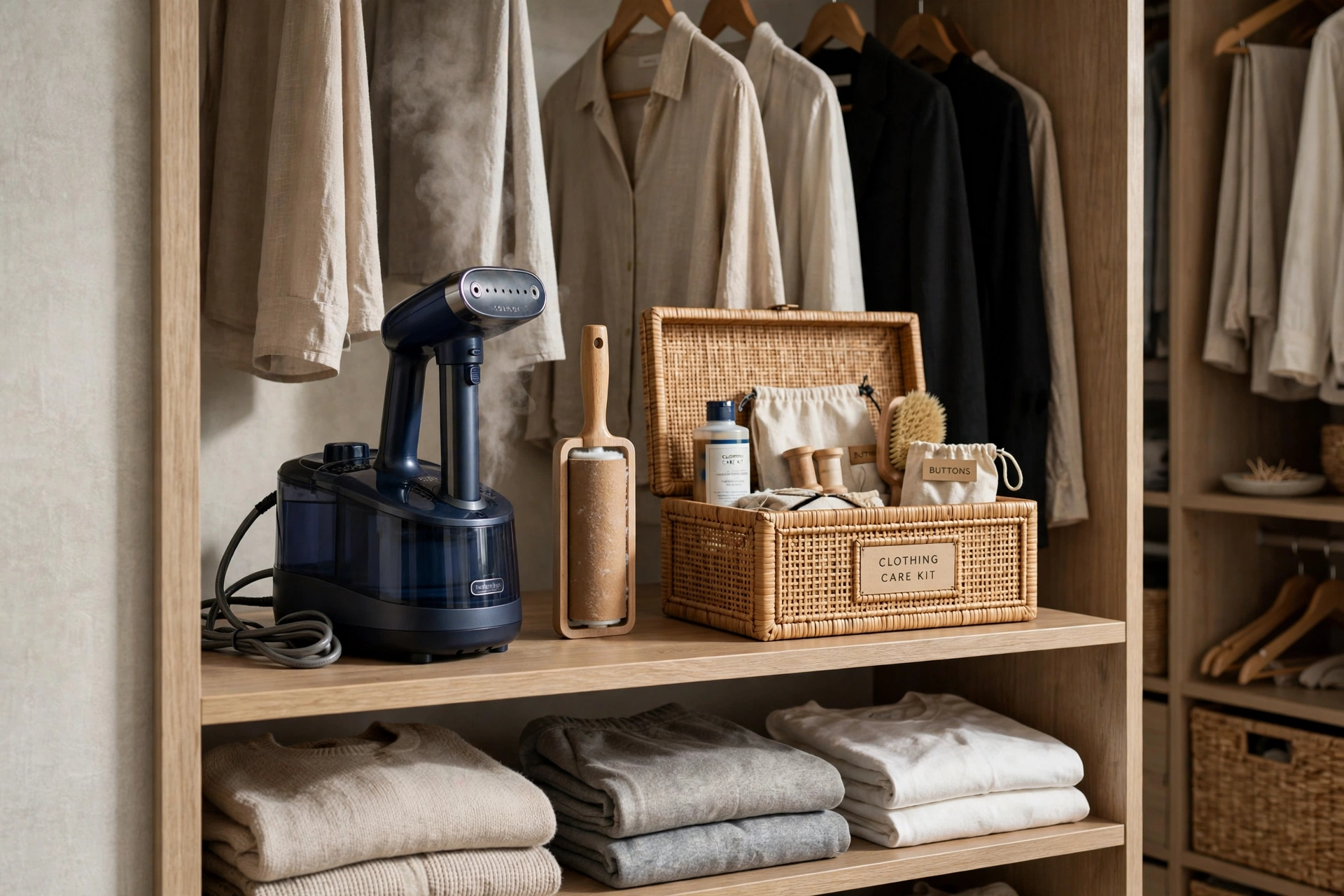
A well-dressed closet includes maintenance: a small kit with a lint roller, a steamer, spare buttons, a needle and thread, a shoe brush, and wrinkle-release spray. Hang the steamer on a hook, keep the kit in a drawer or a pretty box on a shelf, and clothes stay looking new with almost no effort.
Steam a wrinkled shirt the night before instead of discovering it at 7 a.m. Brush shoes after wearing and they’ll last years longer. This final layer is what makes a walk-in closet feel truly complete — not just storage, but care. And for clever ways to squeeze function from every corner, our 15 Closet Office Design Ideas for a Smart Small Space Workspace shows how the same small-space thinking turns any nook into something hardworking.
Frequently Asked Questions
How do I design a walk-in closet layout?
Start by auditing your wardrobe: count hanging vs folded items, shoes, and accessories. Give double-hang rods to shirts and pants, one long-hang bay to dresses and coats, drawers to small items, and high shelves to off-season storage. Keep daily items between knee and eye level, and leave at least 30 inches of walkway clearance around any island.
What lighting is best for a walk-in closet?
Layered, warm light: LED strips under shelves, puck lights in dark corners, and one decorative ceiling fixture, all around 3000K so colors read true. Motion-sensor switches make it hands-free. Good lighting is the single biggest upgrade for both function and feel — it makes the closet look bigger and getting dressed easier.
How can I make a small walk-in closet feel bigger?
Use slim matching hangers to fit more per rod, take storage to the ceiling, add mirrored doors to bounce light, keep the palette light, and zone ruthlessly so every inch earns its place. A rug and good lighting make even a compact closet feel like a boutique rather than a cupboard.
Should I hire a pro or DIY my closet system?
It depends on budget and complexity. Modular systems from home stores handle most closets well and are very DIY-friendly. Hire a pro for awkward architecture — sloped ceilings, deep corners, integrated lighting — or when you want a fully custom built-in look. Either way, plan the layout on paper first; the system is only as good as the plan behind it.
How do I keep my walk-in closet organized long-term?
Zone by category and color, give every accessory a divided home, keep a permanent donate bin for the one-in-one-out rule, and do a quick seasonal rotation. The maintenance habit matters more than the initial build: five minutes of put-away each night beats a yearly overhaul.
Keep Exploring
A great walk-in closet is finished the moment getting dressed feels effortless — everything visible, everything reachable, everything with a home. Start with the layout and the lighting, add the zones and the small systems, and let the boutique details follow.
For more storage-first thinking, explore our bedroom decor ideas — because the best bedrooms are the ones where everything, from the closet to the nightstand, has its place.

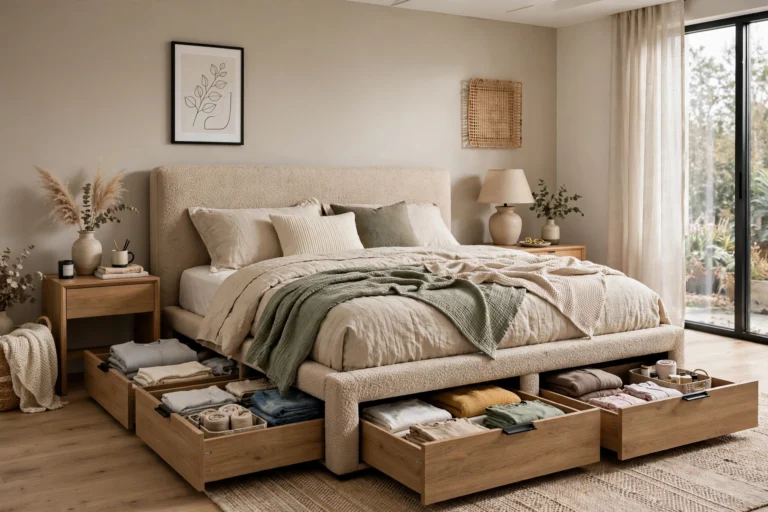




[…] A modular closet organizer system of double rods, shelves, and drawers transforms a reach-in into a mini walk-in. Measure first, then choose components that fit. For dream-closet inspiration, see our 15 walk-in closet design ideas. […]