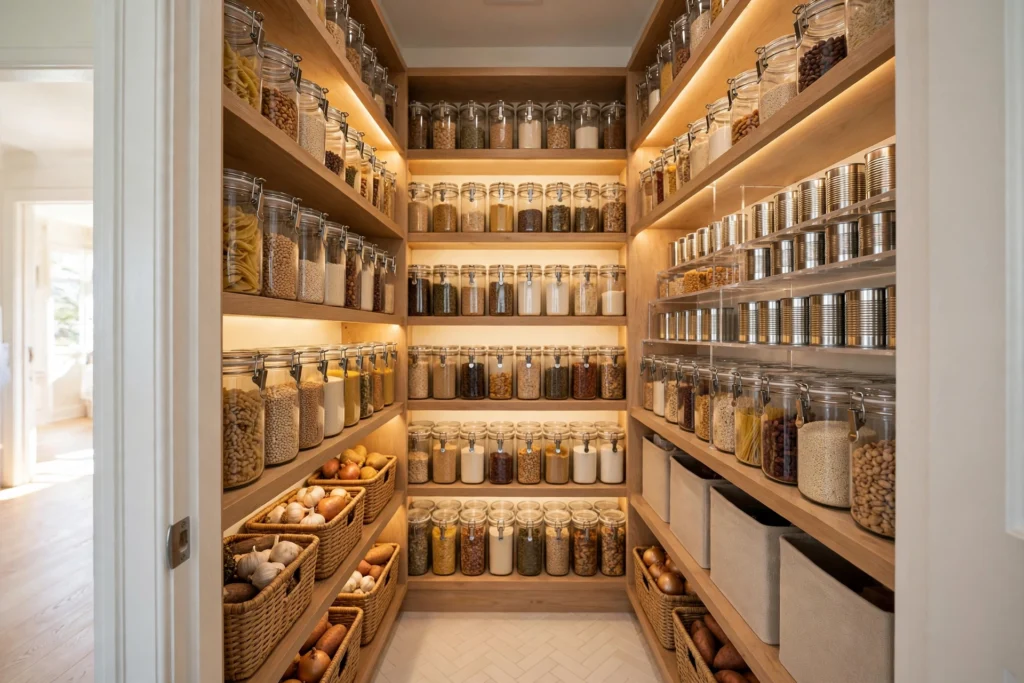

A small pantry punches far above its weight when every inch is put to work. The difference between a chaotic jumble of half-empty boxes and a pantry that feels twice its size is rarely more square footage — it’s smarter systems. Shelving that reaches the ceiling, doors that double as storage walls, and containers that stack like building blocks can turn even a broom-closet-sized pantry into the hardest-working corner of your kitchen.
These small pantry design ideas are built for real kitchens with real grocery hauls. From slim pull-out cabinets that squeeze storage out of thin air to zoning systems that end the “where did the flour go?” hunt forever, here are fifteen ways to make a tiny pantry hold more, stay tidy, and look good doing it.
1. Install a Slim Pull-Out Pantry Cabinet
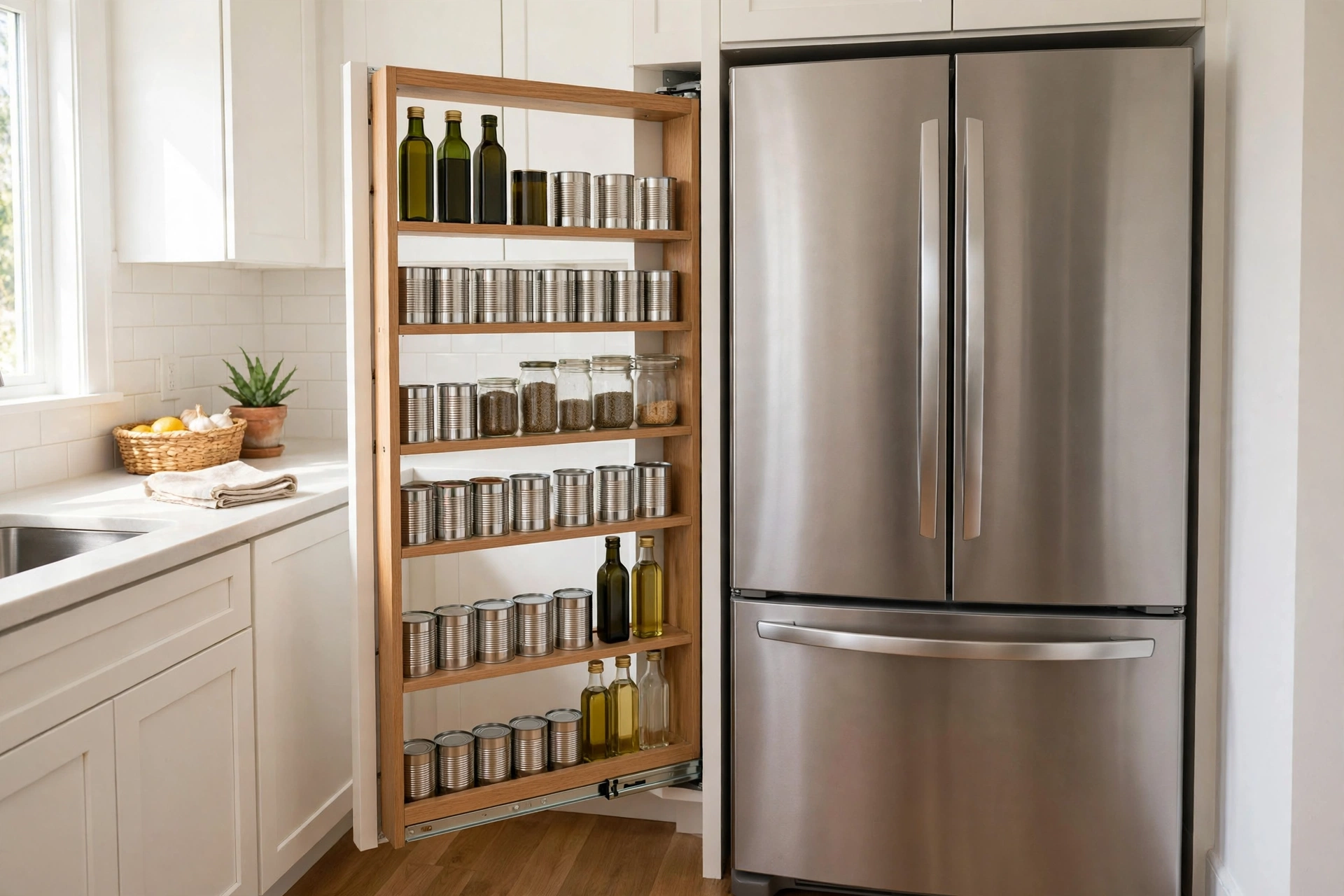
The slimmest gaps in a kitchen — the six inches beside the fridge, the dead space next to the oven — can become surprisingly roomy storage with a pull-out pantry cabinet. These tall, narrow units glide out on smooth tracks to reveal shelves of cans, bottles, and jars, then disappear flush with your cabinetry. The Spruce’s roundup of hidden storage spots designers add to small spaces calls the vertical pull-out pantry the ideal fix for kitchens with no room for a walk-in.
Measure your gap carefully and choose a unit with full-extension slides rated for real weight — a pull-out stuffed with cans is heavier than it looks. Two slim pull-outs flanking the range can hold every oil, spice, and sauce you cook with daily. It’s storage carved out of space you were already paying for.
2. Add an Over-the-Door Rack
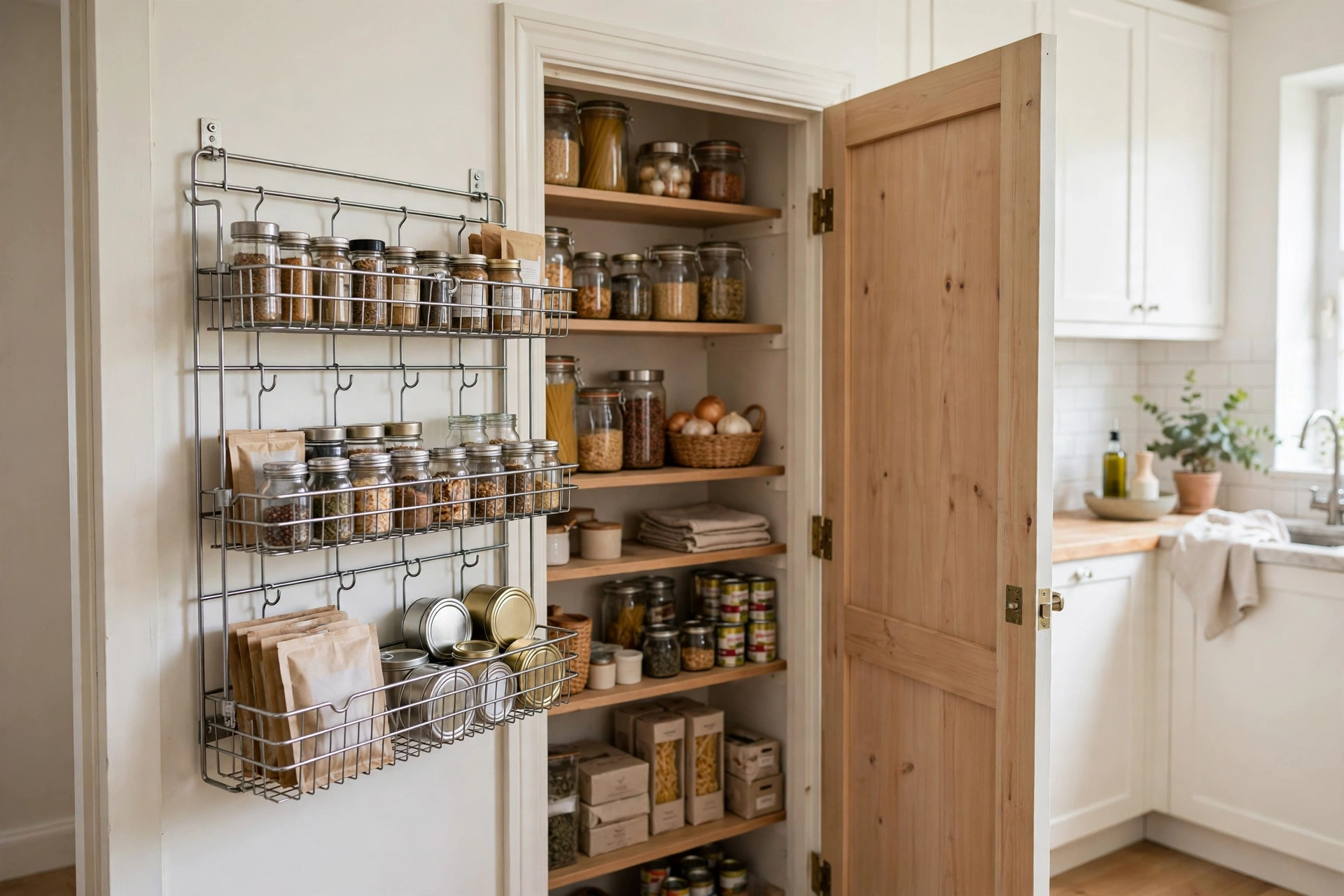
The inside of the pantry door is prime real estate that most pantries waste completely. A sturdy over-the-door rack or a mounted wire organizer turns that flat surface into three or four extra shelves for spices, packets, foil boxes, and small jars. Choose a rack with adjustable baskets so tall bottles fit on one tier and short tins on another.
Check the door’s swing clearance before you buy — a deep rack can bang into shelves inside a shallow pantry. Shallow-profile racks (under 4 inches deep) work in almost any pantry. This is the single fastest small pantry upgrade: no tools beyond a couple of screws, and it can add the equivalent of an entire shelf.
3. Create Zones by Category
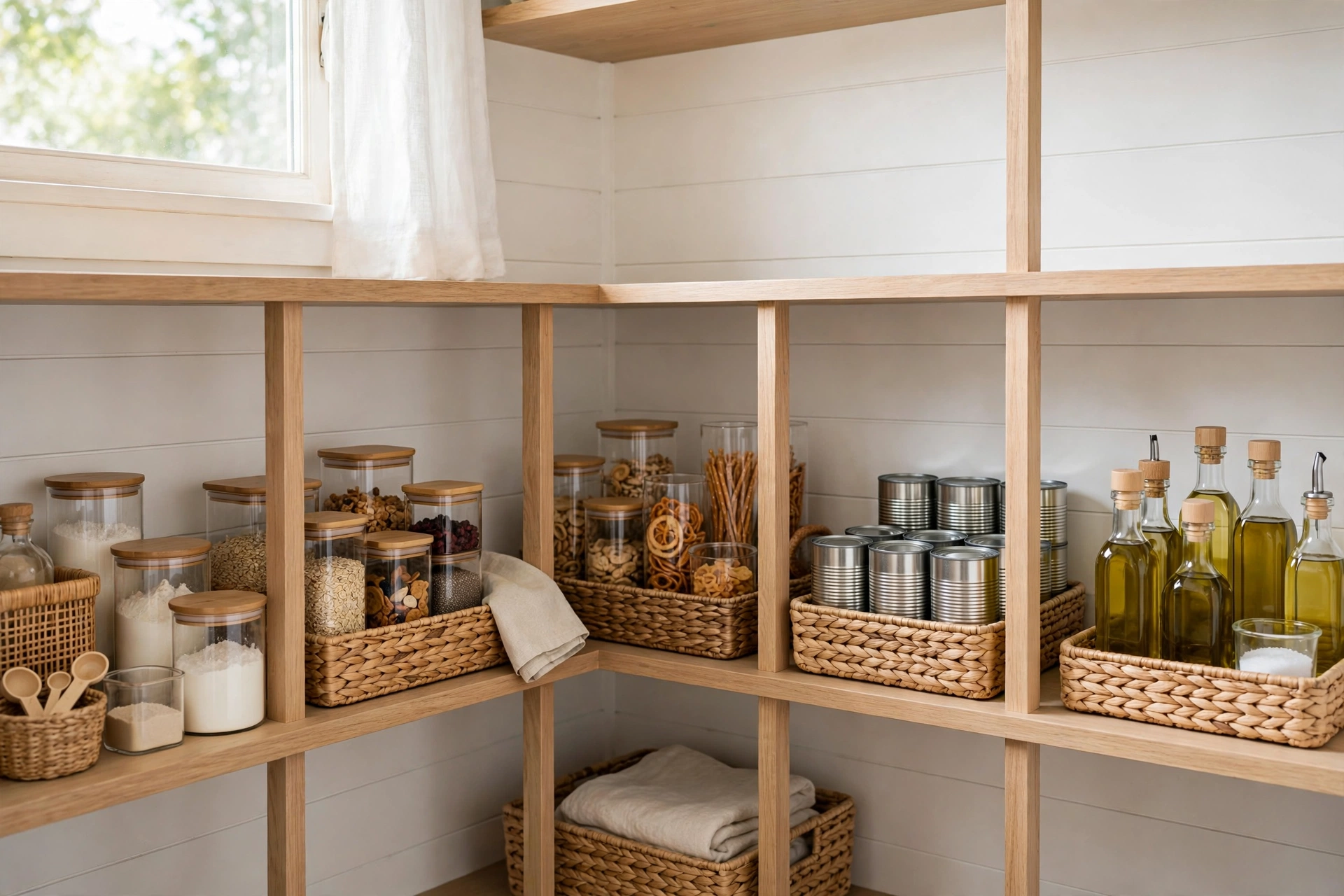
An organized pantry is really just a small warehouse with good departments. Divide your shelves into zones — baking, breakfast, snacks, canned goods, oils and vinegars, backstock — and keep each zone’s items together, front to back. When everything has a department, you stop buying a third bag of flour because you couldn’t see the two you had. Apartment Therapy’s collection of pantry organization ideas puts grouping similar items together at the top of the list for exactly this reason.
Keep daily-use zones at eye and chest level, and push backstock and bulky items to the top shelf and floor. One basket per zone makes the system portable — pull the “baking” basket to the counter when you need it, then slide it back. Zones are the idea that makes every other idea on this list work harder.
4. Decant Into Matching Containers
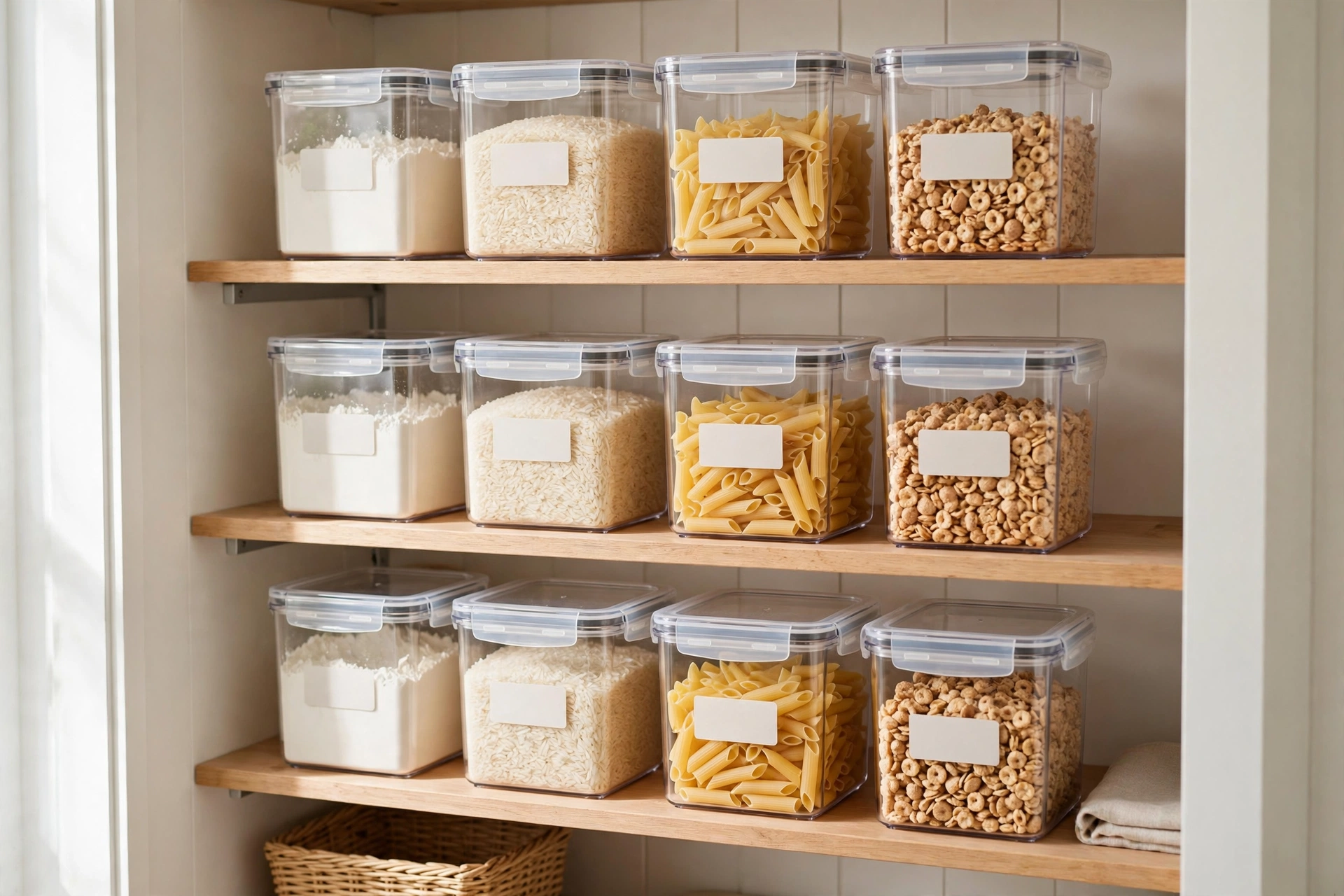
Boxes and bags come in every shape imaginable, which means shelved groceries waste air. Decanting dry goods — flour, sugar, rice, pasta, cereal, snacks — into square or rectangular airtight containers turns irregular packaging into neat, stackable blocks. Square containers tessellate with almost no wasted space, unlike round ones.
You don’t need to decant everything to get the benefit; start with the bulkiest offenders (cereal boxes, chip bags, flour sacks) and keep the rest in their packaging corralled in baskets. Clear containers let you see levels at a glance, and a simple label on each one keeps the household from playing guessing games. Bonus: airtight containers keep pantry staples fresher far longer than opened bags.
5. Use Tiered Shelves and Risers
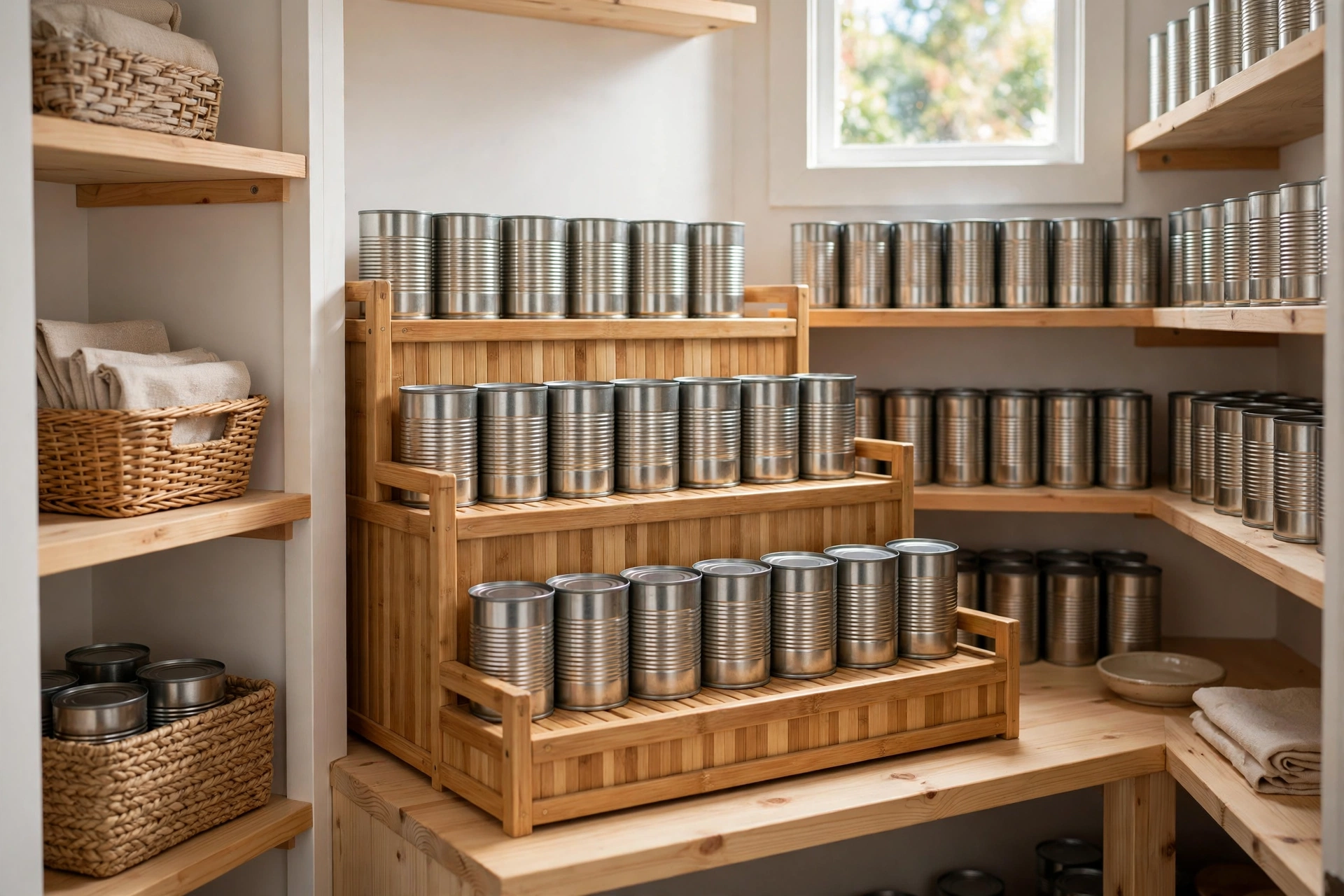
Deep pantry shelves are notorious for hiding cans in a dark second row that nobody sees until they expire. Tiered shelf risers — stepped platforms that lift the back row above the front — solve it completely. Every can and jar becomes visible, and nothing gets lost behind its taller neighbors.
Use them for canned goods, small jars, and spice bottles; keep the tallest items at the back of the top tier. Inexpensive bamboo or metal risers expand or contract to fit your shelf width. For the deepest shelves, a two-tier riser plus a rule of “one deep only” (never stack cans two-deep) keeps the whole shelf readable at a glance.
6. Hang Baskets Under Shelves
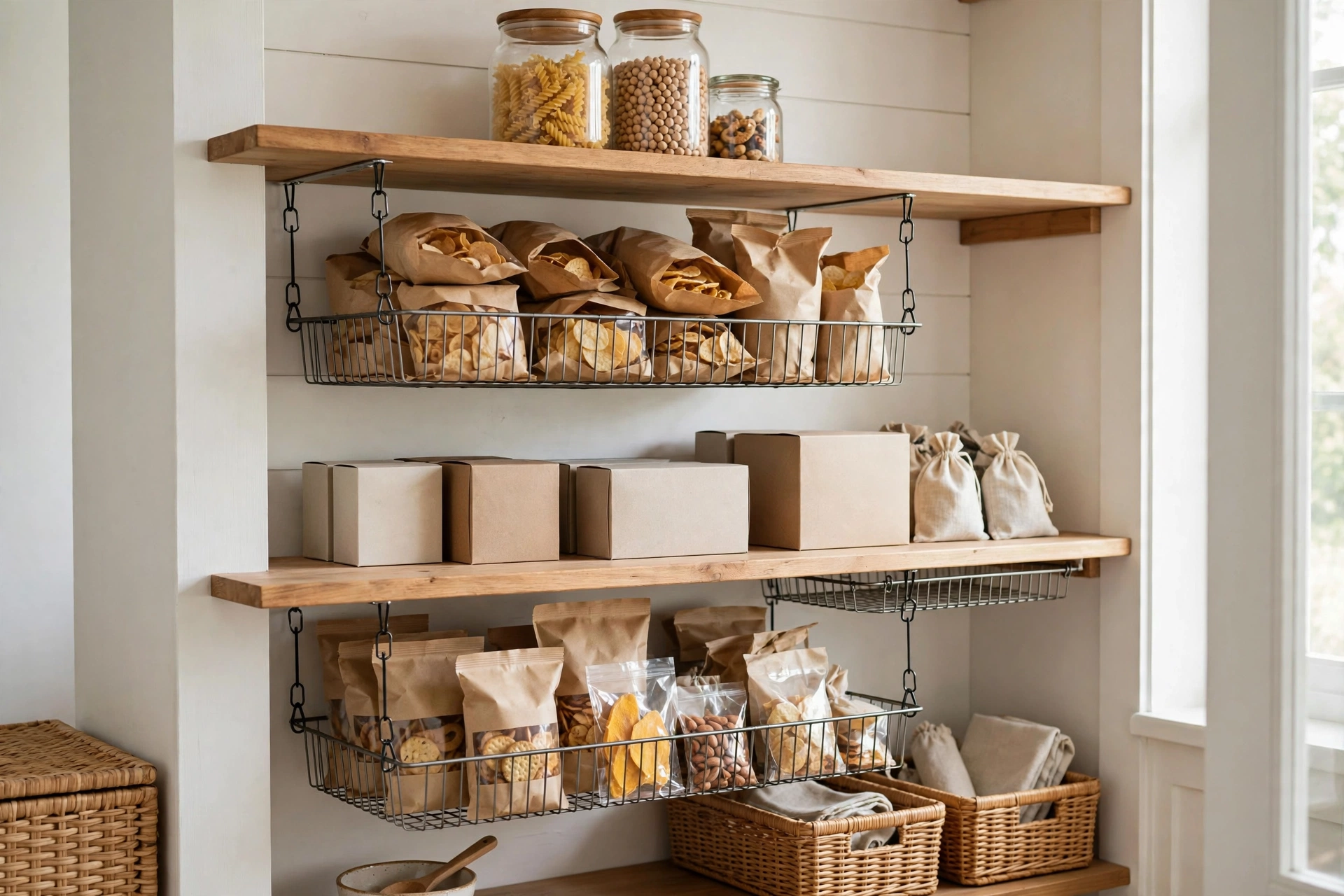
The underside of a shelf is wasted space in most pantries, but clip-on or screw-mounted under-shelf baskets grab it effortlessly. These wire baskets slide onto the shelf above and create a bonus tier for packets, snack bags, produce bags, and other light items that would otherwise clutter the shelf below.
Keep under-shelf baskets to lightweight items — they’re not rated for cans or full jars. They’re perfect for the snack layer: granola bars, fruit pouches, tea boxes. Because they use air rather than shelf space, you can add three or four to a small pantry and gain the equivalent of a whole extra shelf without changing a thing.
7. Turn a Cabinet Into a Spice Wall
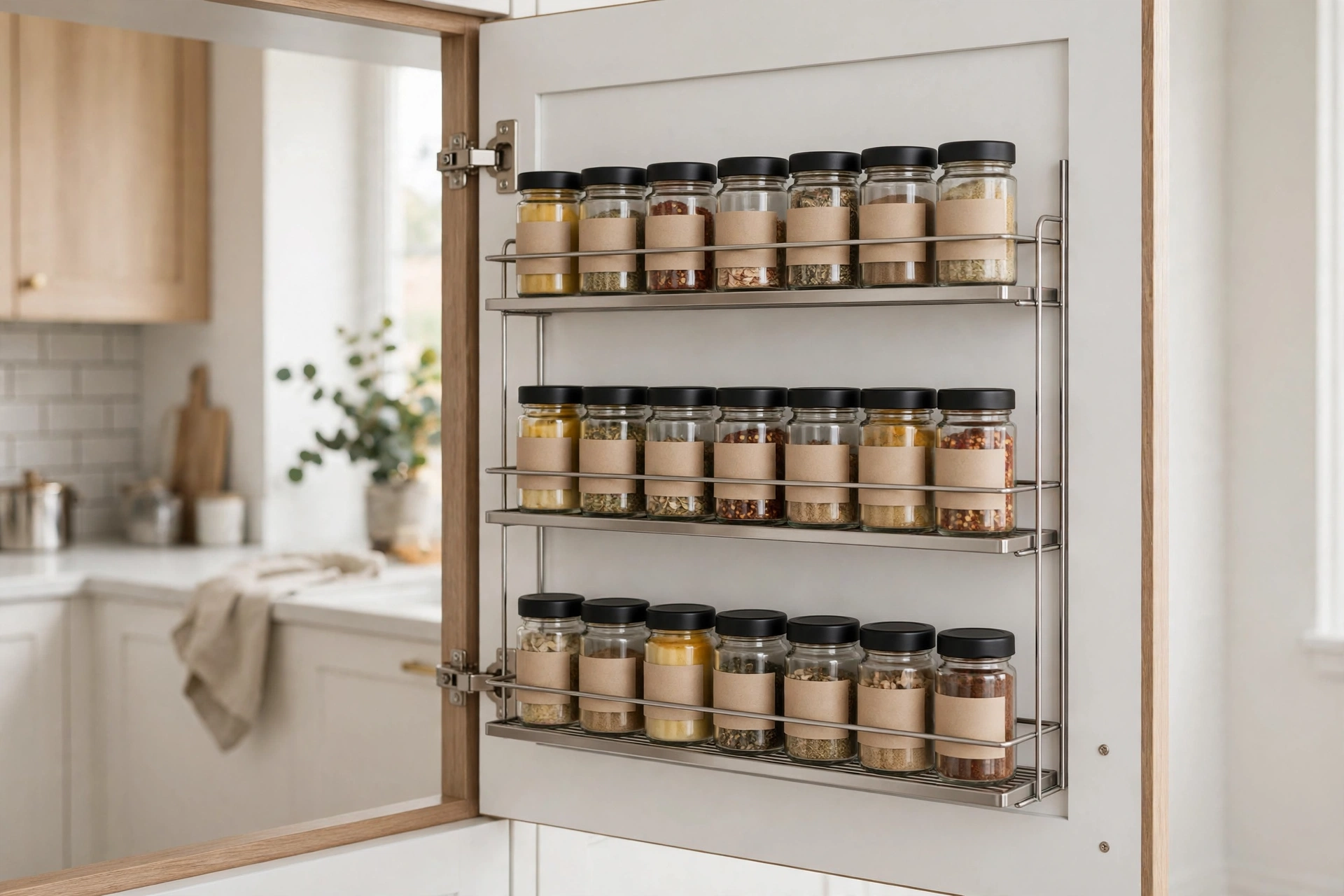
Spices multiply quietly until they’re a drawer you can’t close. Give them a dedicated home: the inside of a cabinet door fitted with slim racks, a narrow wall-mounted shelf, or a tiered organizer on a single pantry shelf. The goal is one visible layer — when every spice is visible at once, you stop buying duplicates.
Alphabetical order sounds fussy, but it genuinely speeds up cooking; at minimum, group by cuisine or by frequency of use. Small uniform jars with labels look beautiful and take up less room than the mismatched bottles spices arrive in. A well-run spice station is one of the highest-satisfaction upgrades in any small pantry.
8. Add a Rolling Kitchen Cart
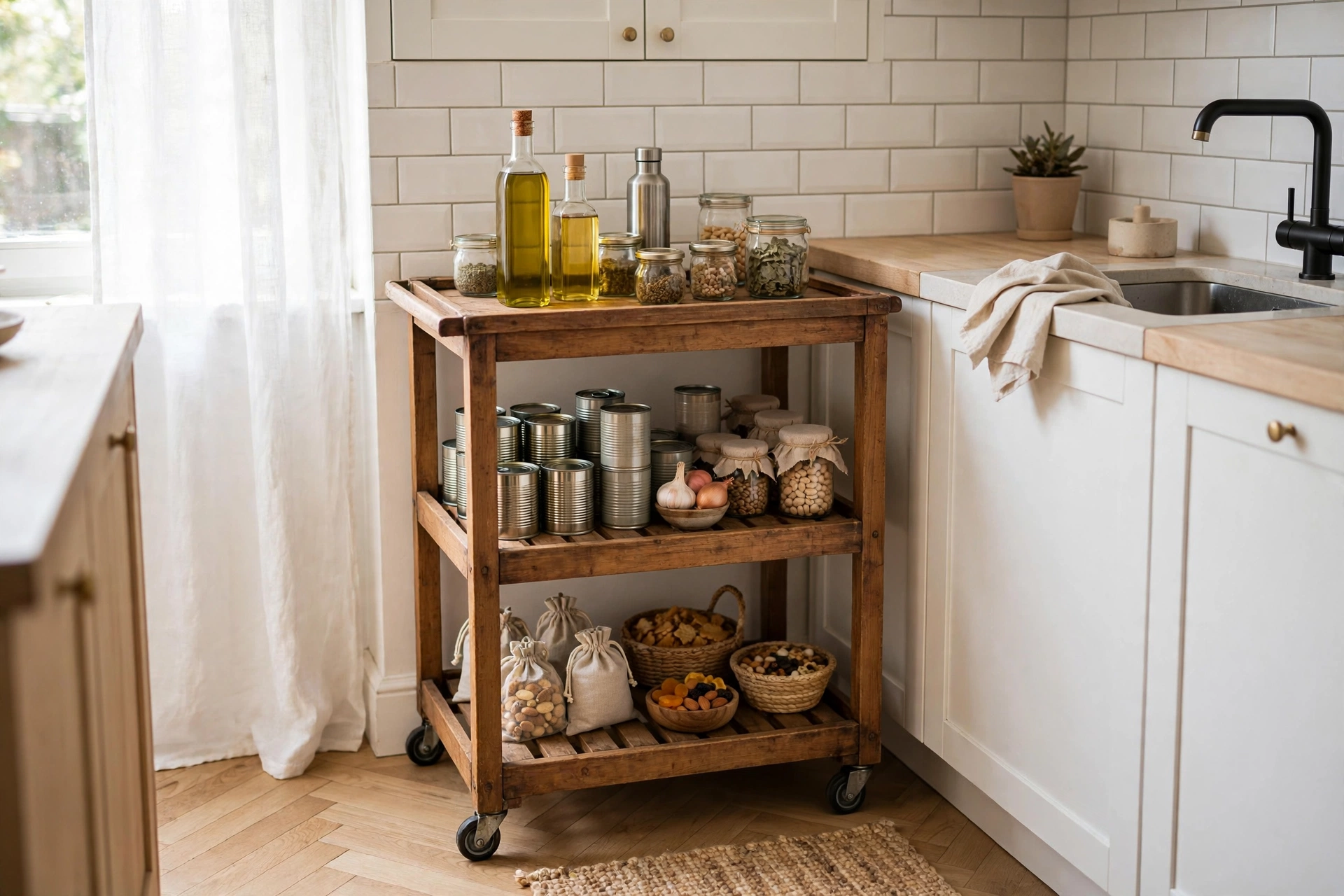
No built-in pantry at all? A rolling kitchen cart becomes one. Choose a sturdy three-tier cart — wood or metal — and dedicate it to pantry overflow: oils and vinegars on top, canned goods in the middle, snacks and backstock below. It slides into a gap beside the counter when not needed and rolls to wherever you’re working. Our kitchen island design ideas include more mobile and small-footprint island inspiration that pairs beautifully with a cart pantry.
Look for a cart with a solid top so it doubles as extra prep space, and lockable casters so it stays put while you cook. In the smallest kitchens, a cart pantry tucked into a closet or hallway becomes a satellite station for bulky items. It’s the most flexible pantry on this list — it moves with your needs.
9. Go Vertical With Tall Narrow Shelving
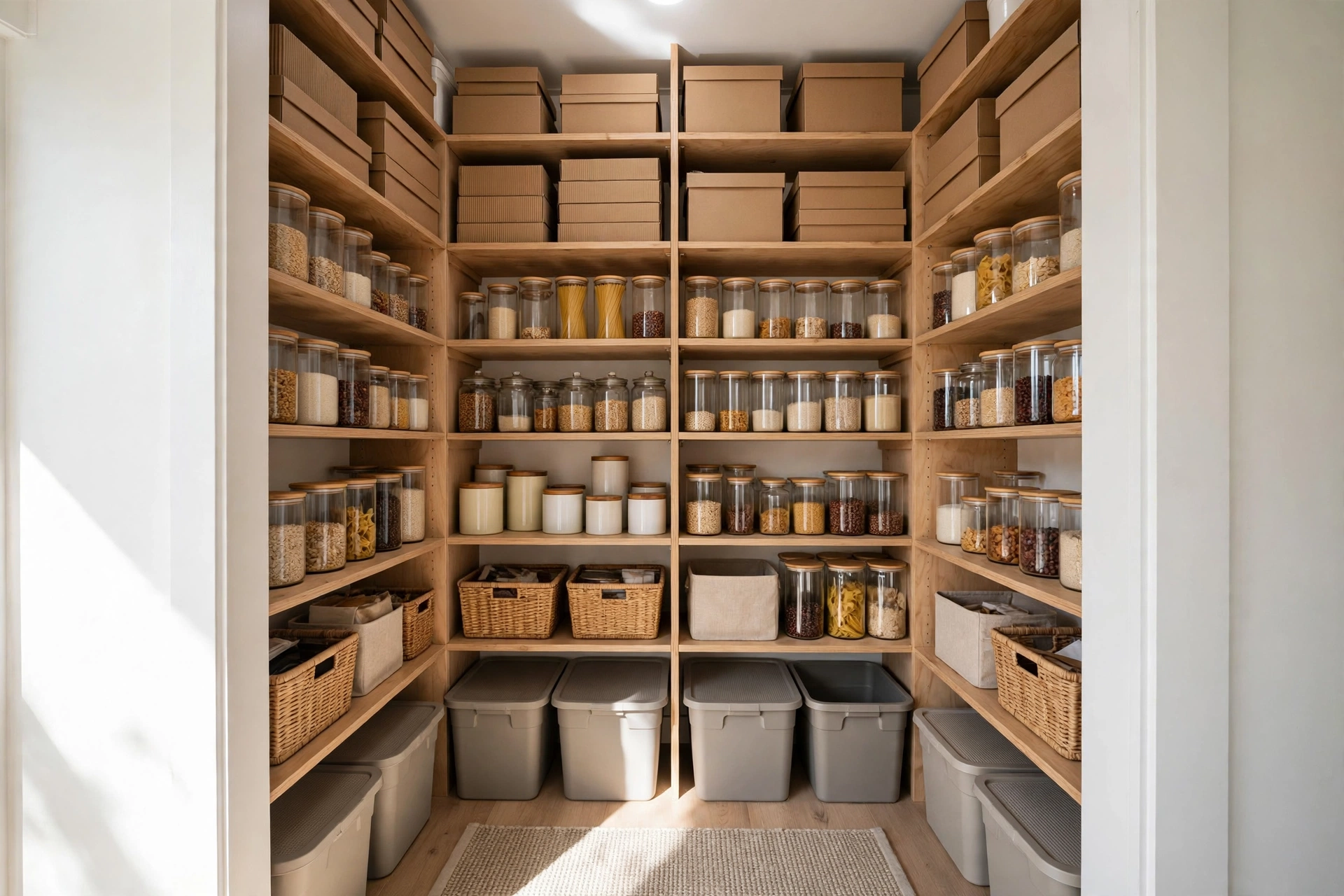
Small pantries almost always have unused air above eye level. Take shelving all the way to the ceiling and treat the top zone as backstock territory: bulk paper goods, backup oils, the second bag of rice, seasonal baking supplies. A small folding step stool kept on the pantry door or nearby makes the high shelves genuinely usable.
Below, keep the working shelves at a comfortable reach and reserve the floor for heavy, bulky items in large bins — cases of water, pet food, big bags of potatoes. When the vertical space is fully claimed, a closet-sized pantry can hold what used to spill across the whole kitchen.
10. Install Pull-Out Drawers in Deep Cabinets
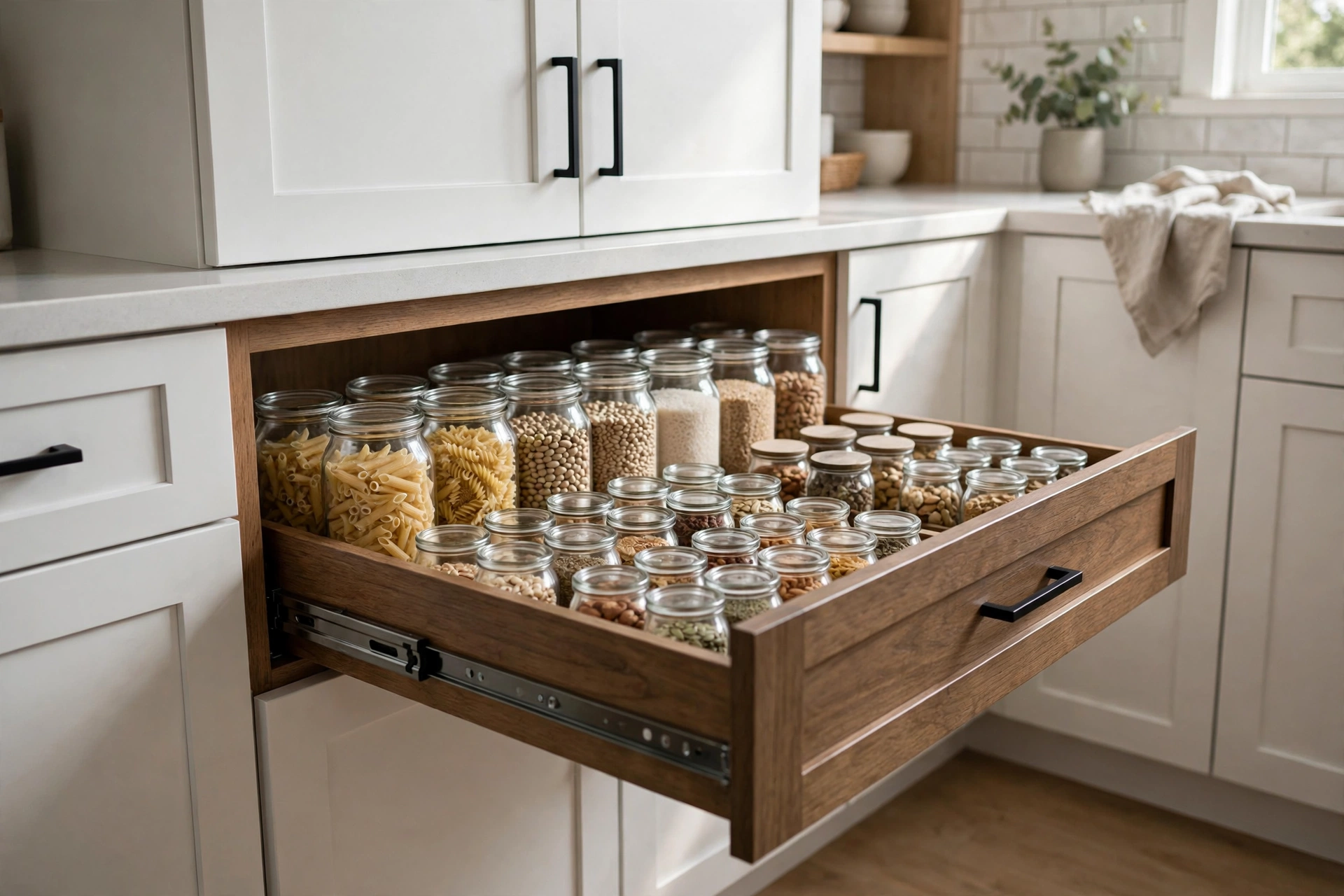
Deep lower cabinets are where pantry items go to be forgotten — things slide to the back and vanish. Pull-out drawer inserts retrofit into existing cabinets and bring the entire shelf gliding out to you, so the back row is as accessible as the front. No more kneeling with a flashlight to find the chickpeas.
Measure the cabinet interior and choose inserts with high sides (to keep tall items from toppling) and soft-close slides. Two or three pull-outs in the cabinet nearest the stove can hold all your cooking oils, sauces, and canned tomatoes. It’s a modest investment that pays off every single day.
11. Use Lazy Susans for Corners and Deep Shelves
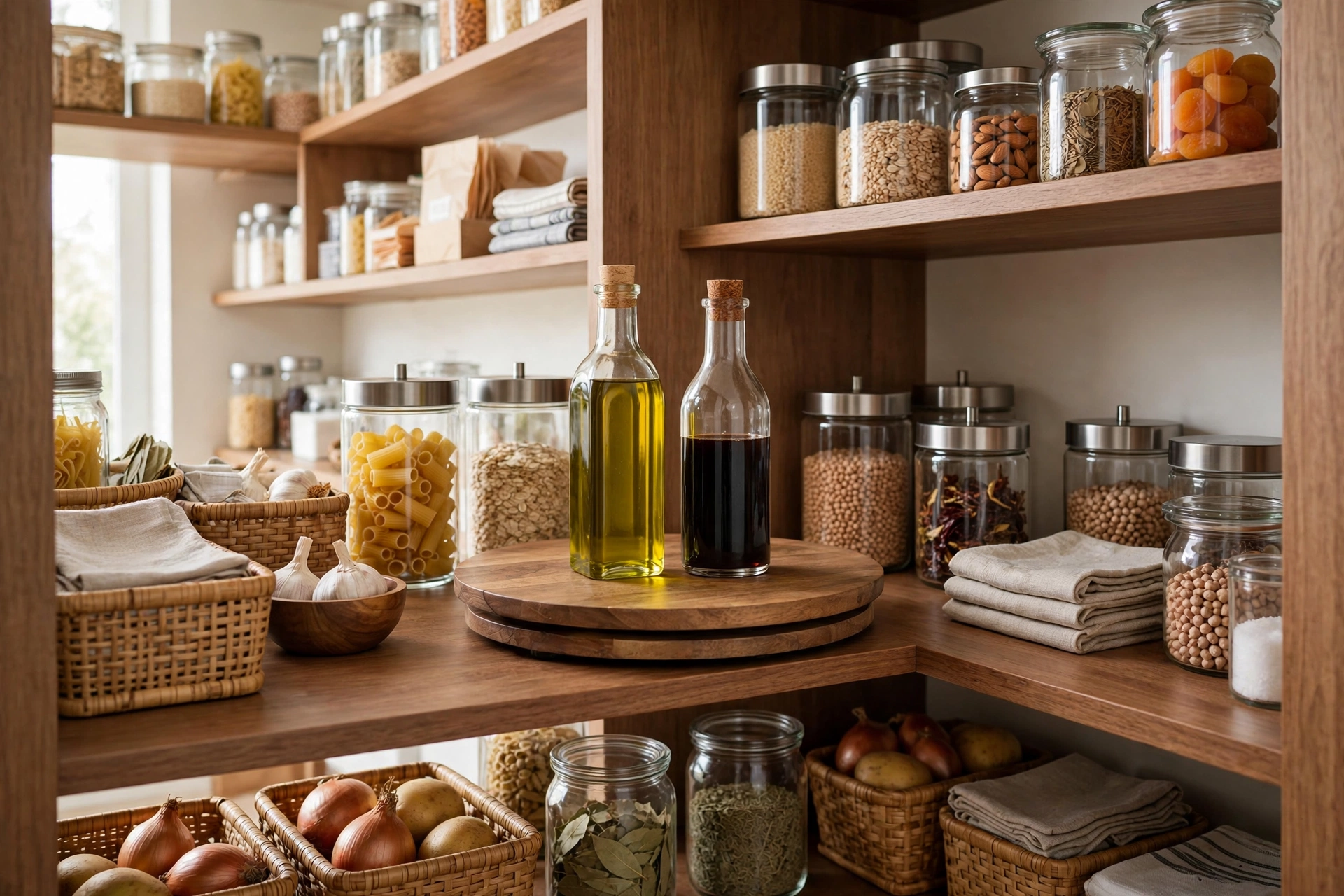
Corners and deep shelves are the Bermuda Triangle of pantry storage — items drift in and never come out. A turntable (lazy Susan) fixes that by rotating the whole back row to the front with one spin. Use them for oils, vinegars, condiments, vitamins, and small jars.
Choose turntables with a raised rim so bottles don’t walk off the edge, and size them to the shelf — a 10-inch turntable fits most pantry shelves, while a two-tier version doubles capacity for small items. In a tiny pantry, one turntable per shelf turns dead corners into the most-used spots in the room.
12. Label Everything
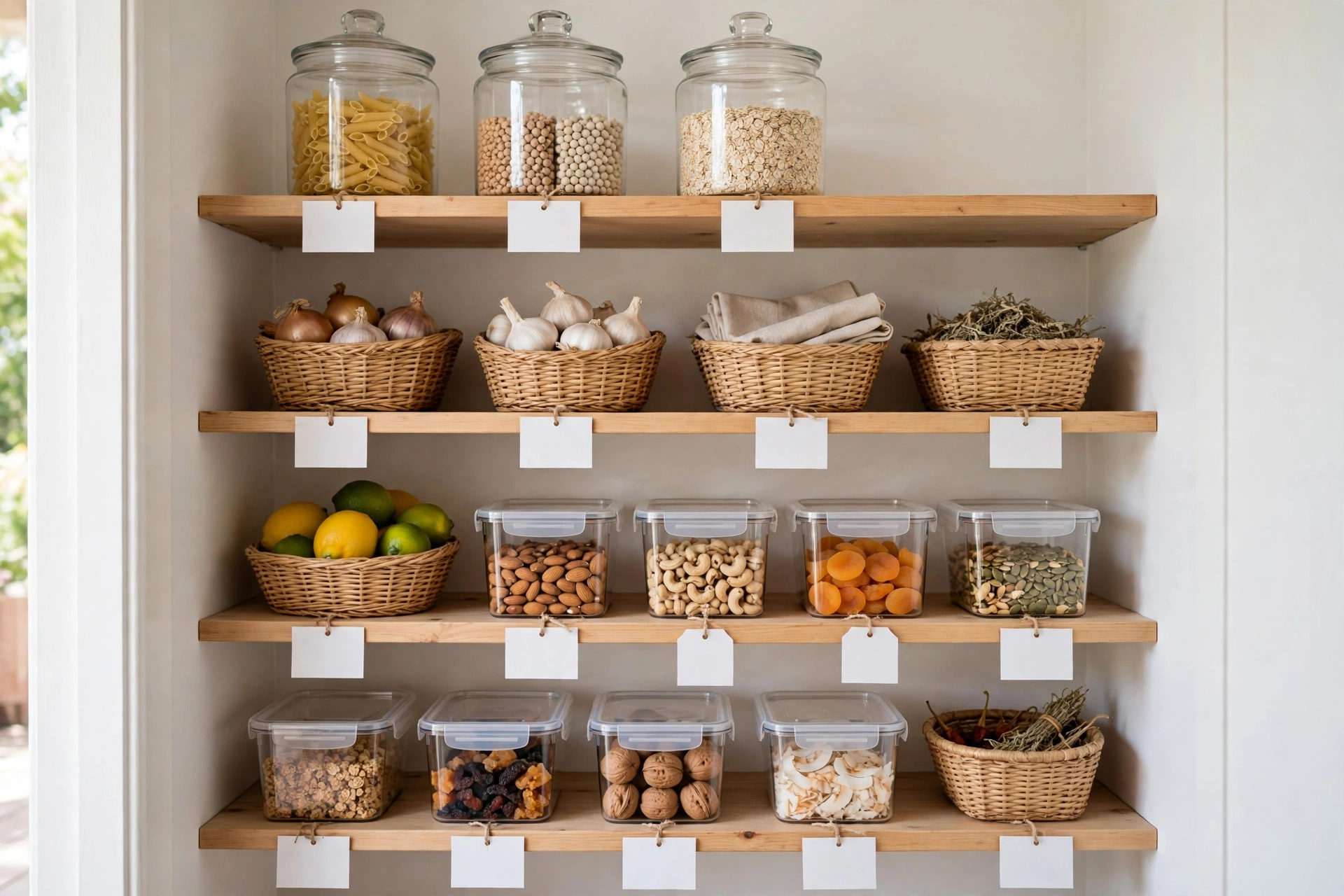
Labels are the difference between an organized pantry and an organized pantry that stays organized. When every bin, basket, and container says what it holds, the whole household puts things back in the right place — including the people who never read the organizing blogs. A label maker, chalkboard labels, or simple masking tape and a marker all work.
Label shelves too, not just containers: a small tag marking each zone (“baking,” “snacks,” “cans”) makes the system self-explanatory for guests and kids. Keep labels short and generic enough to survive grocery changes — “pasta” outlives “penne,” and “snacks” outlives any specific brand. Five minutes of labeling saves hours of re-sorting later.
13. Light the Pantry Well
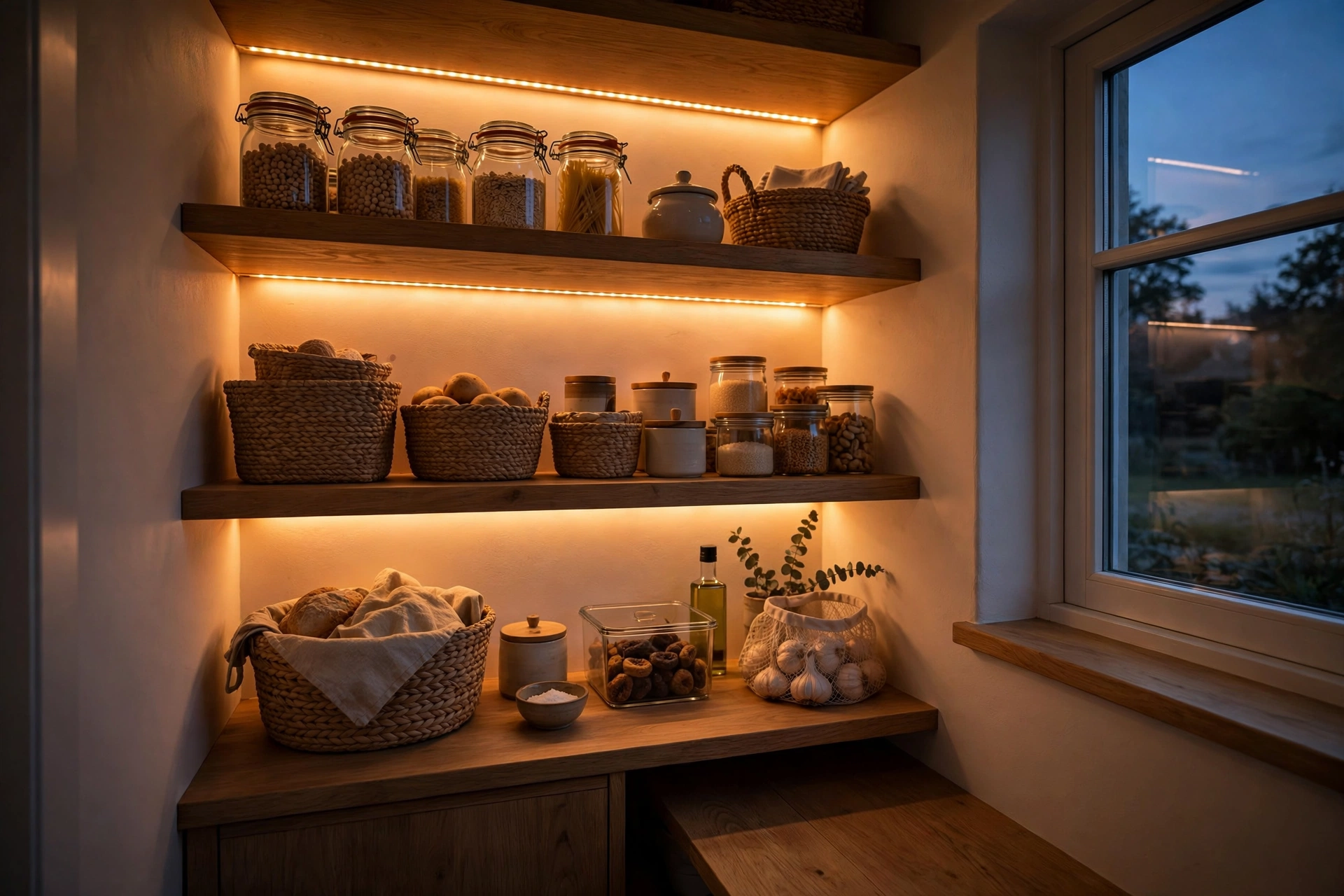
Most small pantries are dark boxes, and dark shelves hide chaos. Good lighting — a battery-powered motion-sensor LED strip under each shelf, or a hardwired puck light — makes every item visible and the whole space feel bigger. Motion sensors are the magic touch: the light comes on when the door opens and turns off when you leave.
Stick-on LED strips are renter-friendly and take minutes to install; aim for warm white (3000K) so food looks appetizing rather than clinical. Light the vertical faces of the shelves, not just the top, so labels and container fronts are readable. A lit pantry gets maintained; a dark one gets abandoned.
14. Repurpose a Closet or Nook
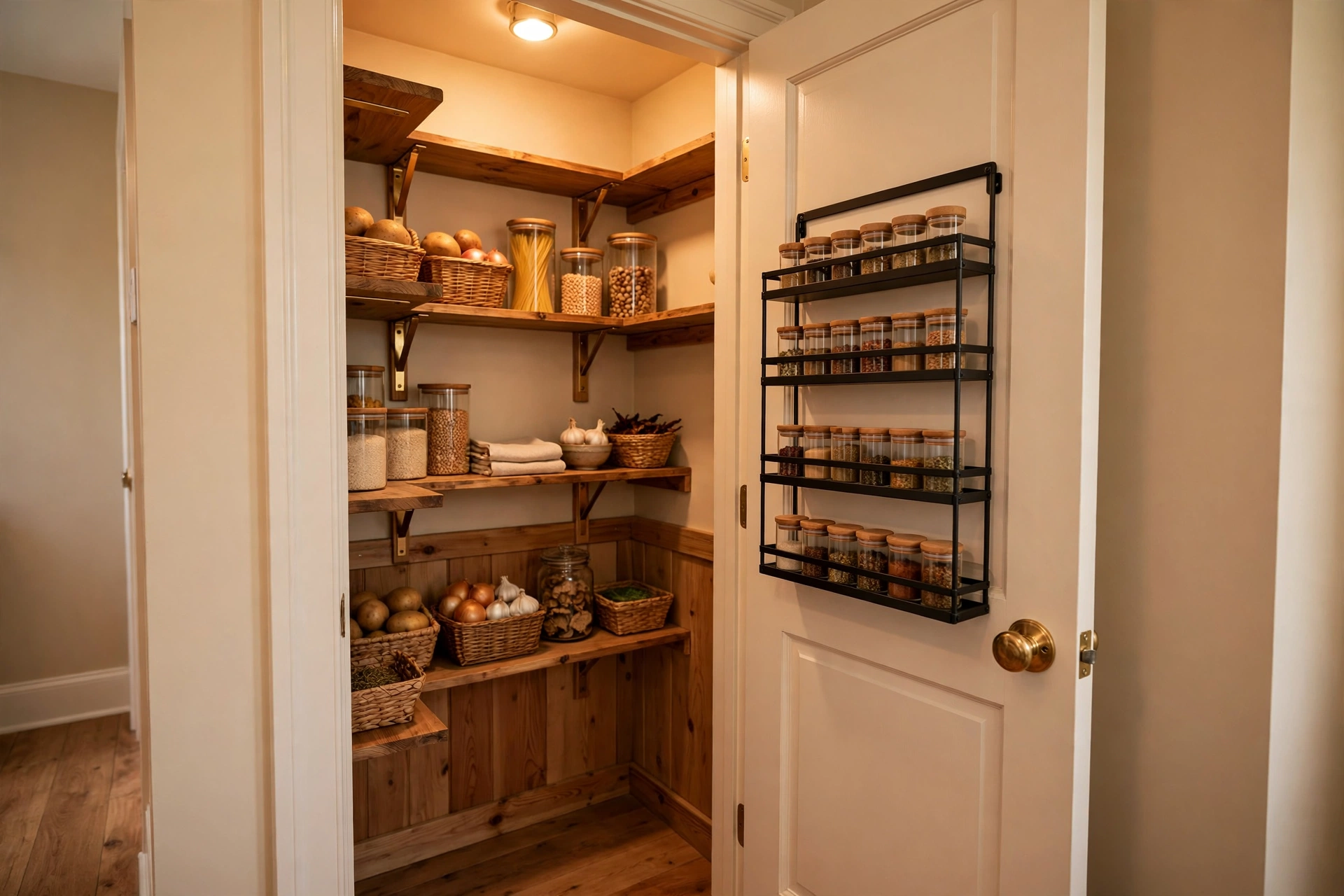
The best small pantry is sometimes not a pantry at all — it’s a repurposed closet, a dead hallway nook, or the awkward space under the stairs. A coat closet near the kitchen becomes a walk-in pantry with a few adjustable shelves and a door rack; a shallow hallway niche becomes open pantry shelving with pretty containers that double as decor.
Paint the interior a light color, add the lighting from idea 13, and treat it like a real pantry — zones, labels, and all. Freestanding shelf units work in rentals where you can’t drill. Some of the most charming pantries are the ones that were never meant to be pantries.
15. Keep a Running Inventory
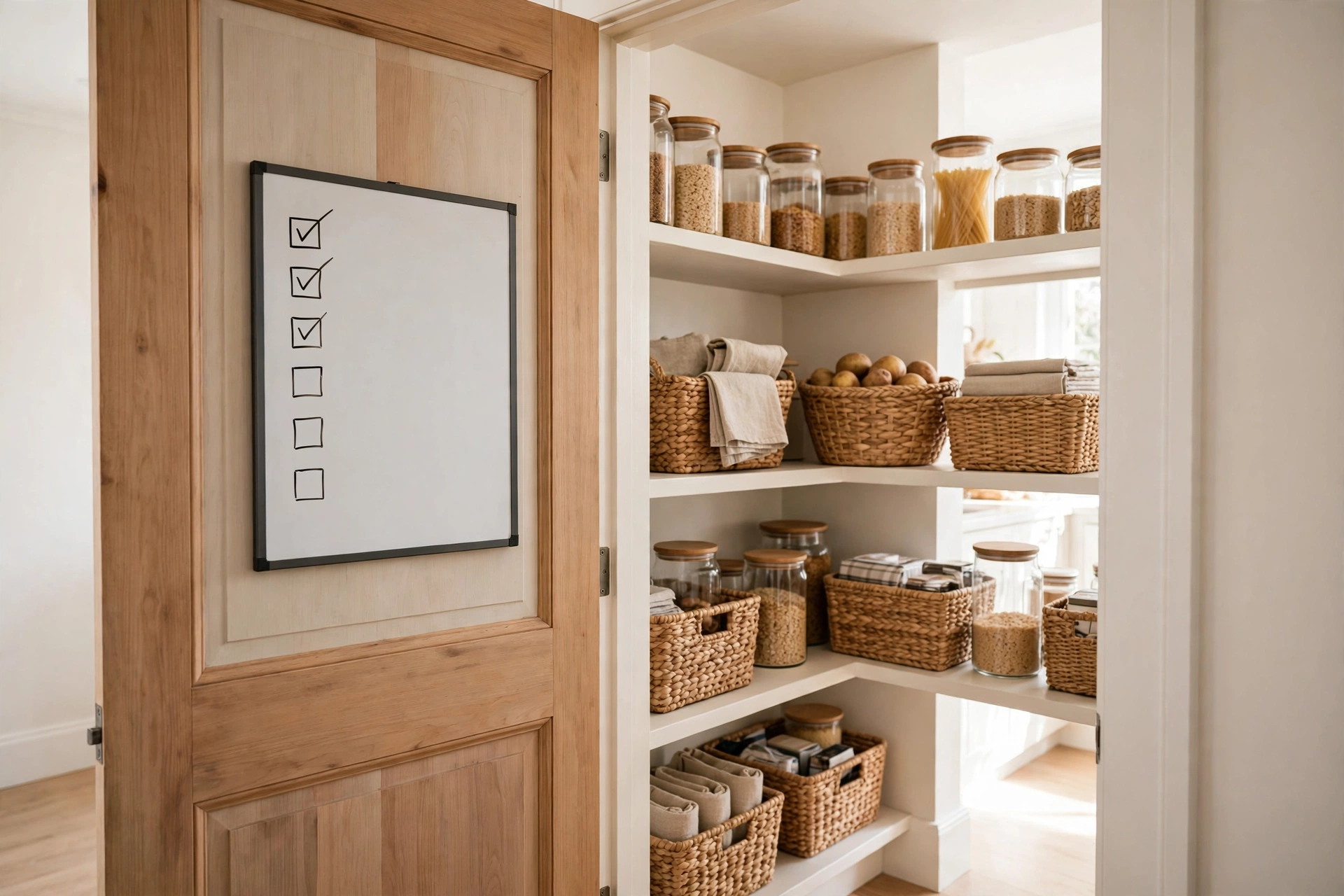
The final idea is a habit, not a purchase: keep a simple running inventory of your pantry staples. A whiteboard on the pantry door, a note on your phone, or a magnetic notepad on the fridge — when you use the last of something, write it down. Grocery trips get faster, duplicate buying stops, and nothing expires unnoticed in the back.
Pair the inventory with a quarterly “shop your pantry” week, where you plan meals around what you already have before buying more. The smallest pantries stay organized longest when inflow is controlled — and an inventory is how you control it. This is the idea that makes the other fourteen permanent.
Frequently Asked Questions
How do you organize a very small pantry?
Start by emptying it completely, then zone the shelves by category (baking, snacks, cans, oils), decant bulky dry goods into stackable square containers, and add door racks, tiered risers, and under-shelf baskets to multiply the storage. Finish with labels and good lighting. Our small-space kitchen design ideas apply the same maximize-every-inch thinking to the whole kitchen.
What is the best way to store cans in a small pantry?
Tiered shelf risers so every can is visible, plus a strict one-deep rule — never stack cans two rows deep or the back row gets forgotten. For deep shelves, pull-out drawers or turntables keep back cans reachable. Group by type (tomatoes, beans, soups) so you can see at a glance what you’re low on.
Should I decant everything in my pantry?
No — decant the bulky, irregularly packaged dry goods where it buys real space: cereal, flour, sugar, rice, pasta, snacks, pet food. Leave small or oddly-shaped items in their packaging inside labeled baskets. Decanting is a space strategy, not a moral obligation; start where the payoff is biggest.
How do I make a small pantry look good?
Uniform containers, consistent labels, baskets in one material family, and warm lighting do most of the visual work. Keep the palette calm — clear containers, wood or woven baskets, white labels — and hide the visual noise (packaging, plastic bags) inside bins and drawers. A pretty small pantry is just an organized one with matching containers.
Can you add a pantry to a kitchen that doesn’t have one?
Yes — a rolling cart, a repurposed closet or armoire, a slim pull-out cabinet in a dead gap, or open shelving on a bare wall all create pantry storage where none existed. For more ideas on working without a traditional pantry layout, see our galley kitchen design ideas, which are all about thriving in tight footprints.
Keep Exploring
A great small pantry is finished the moment you can find anything in ten seconds and put it back in five. Start with the zones and the door rack — the two fastest wins — then layer in the containers, risers, and lighting as you go.
We hope these small pantry design ideas have you looking at your own cramped shelves with new optimism. For more ways to make compact kitchens work harder, explore our kitchen storage ideas — because the tiniest pantry, organized well, can out-perform a big messy one every time.

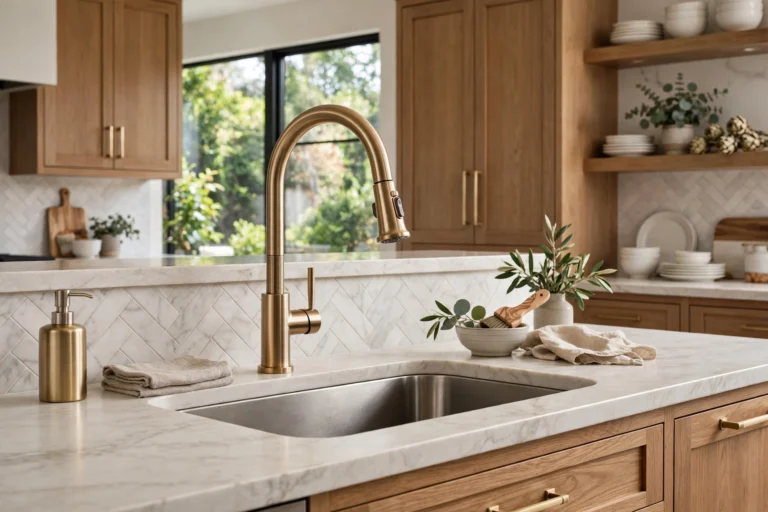
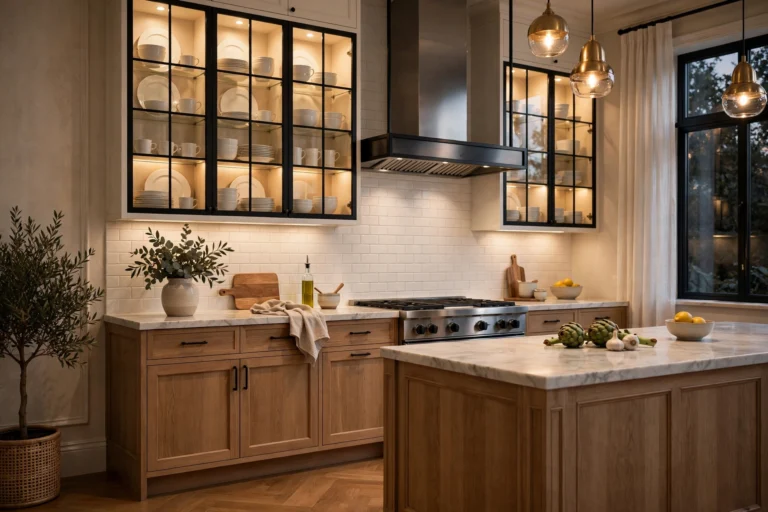
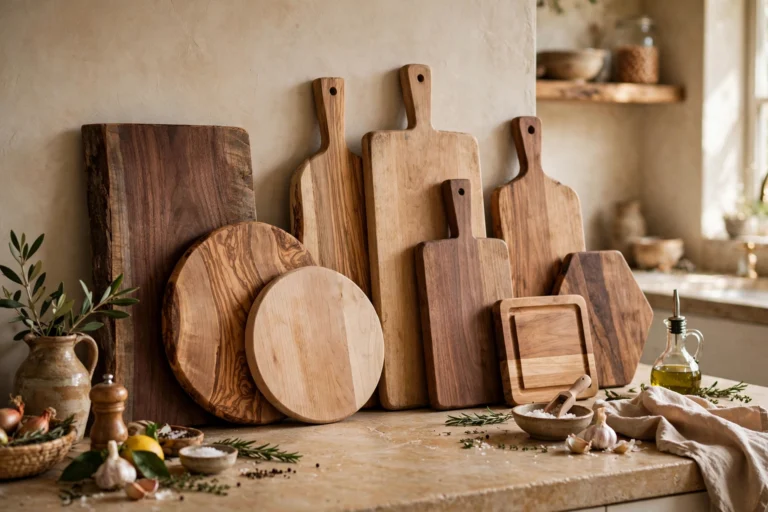




[…] move — frame the niche during renovation. For more space-squeezing inspiration, see our 15 small pantry design ideas that maximize every […]
[…] a home. Compact footprints benefit from the same principles as smart small-pantry planning (smallPantry design ideas that maximize every inch) — pull-outs, dividers, and vertical zones that keep even the tallest shelves accessible. Finish […]