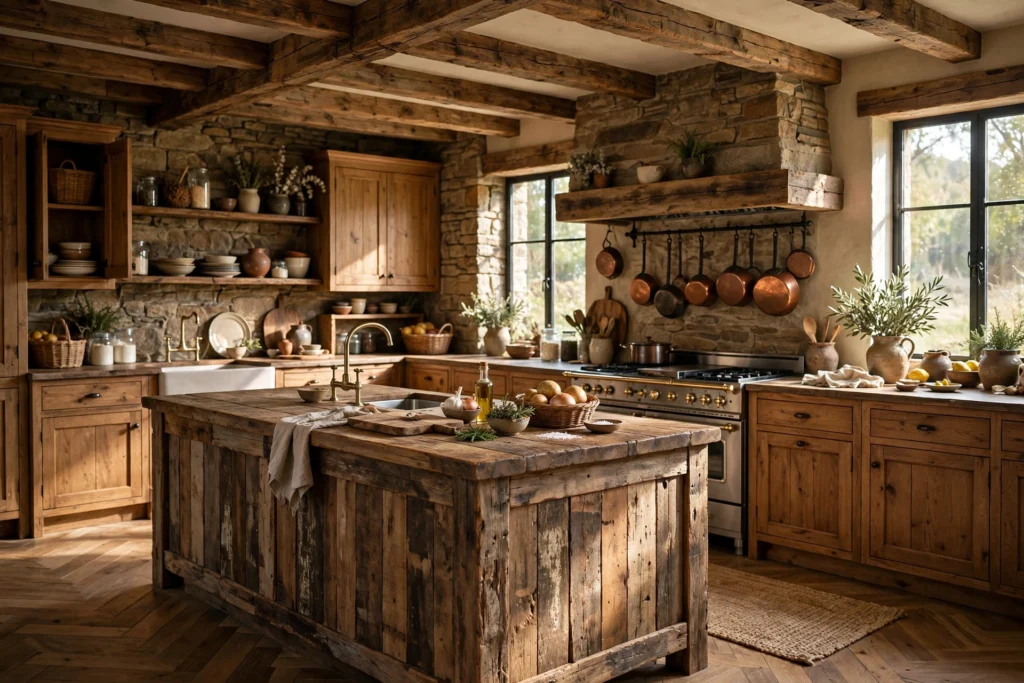

A rustic kitchen feels like a deep breath at the end of a long day. It is the smell of woodsmoke and fresh bread, the creak of a wide-plank floor, and cabinets that look better with a few honest scratches on them. This is a style that does not ask for perfection — it asks for warmth, texture, and materials with a story. These rustic kitchen design ideas show how to layer in that warmth.
You do not need a log cabin in the mountains to get the look. Layered wood tones, natural stone, aged metals, and a few handcrafted details can bring rustic warmth to any kitchen, from a city apartment to a suburban new build. Here are fifteen rustic kitchen design ideas to get you started.
1. Show Off Exposed Wood Beams
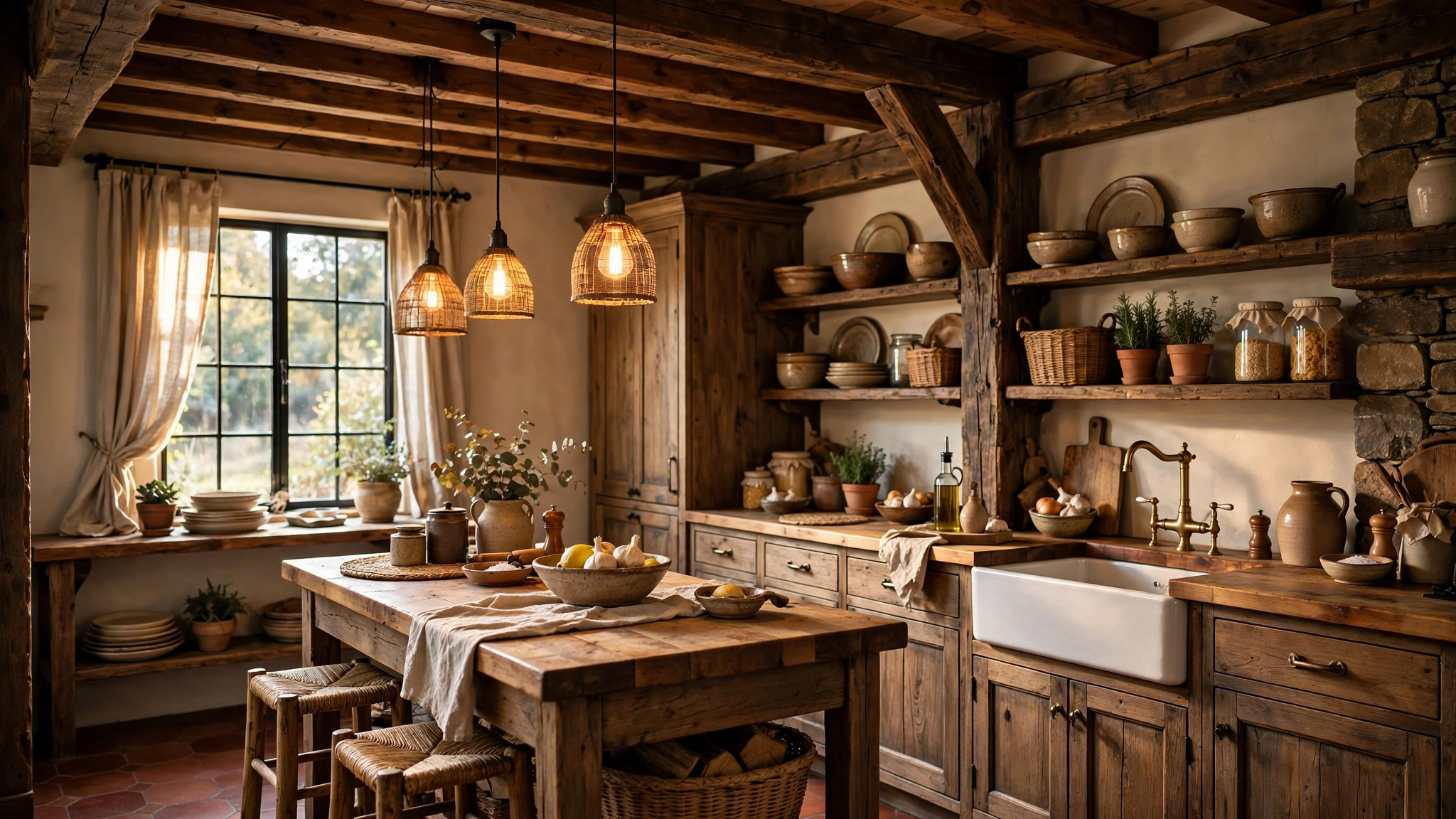
Nothing announces rustic quite like wood beams overhead. Whether they are structural timbers in an old house or faux beams added to a flat ceiling, they draw the eye upward and give the kitchen instant architectural soul. Dark-stained beams against a lighter ceiling create the most striking contrast.
If your ceiling cannot take real timber, box beams made from reclaimed barn wood are light, affordable, and convincing. Stain them in a walnut or weathered gray tone and run them across the room’s shorter dimension to make the space feel cozier. Keep recessed lights off the beams themselves — instead, let the beams frame your pendants and downlights.
2. Build Around a Reclaimed Wood Island
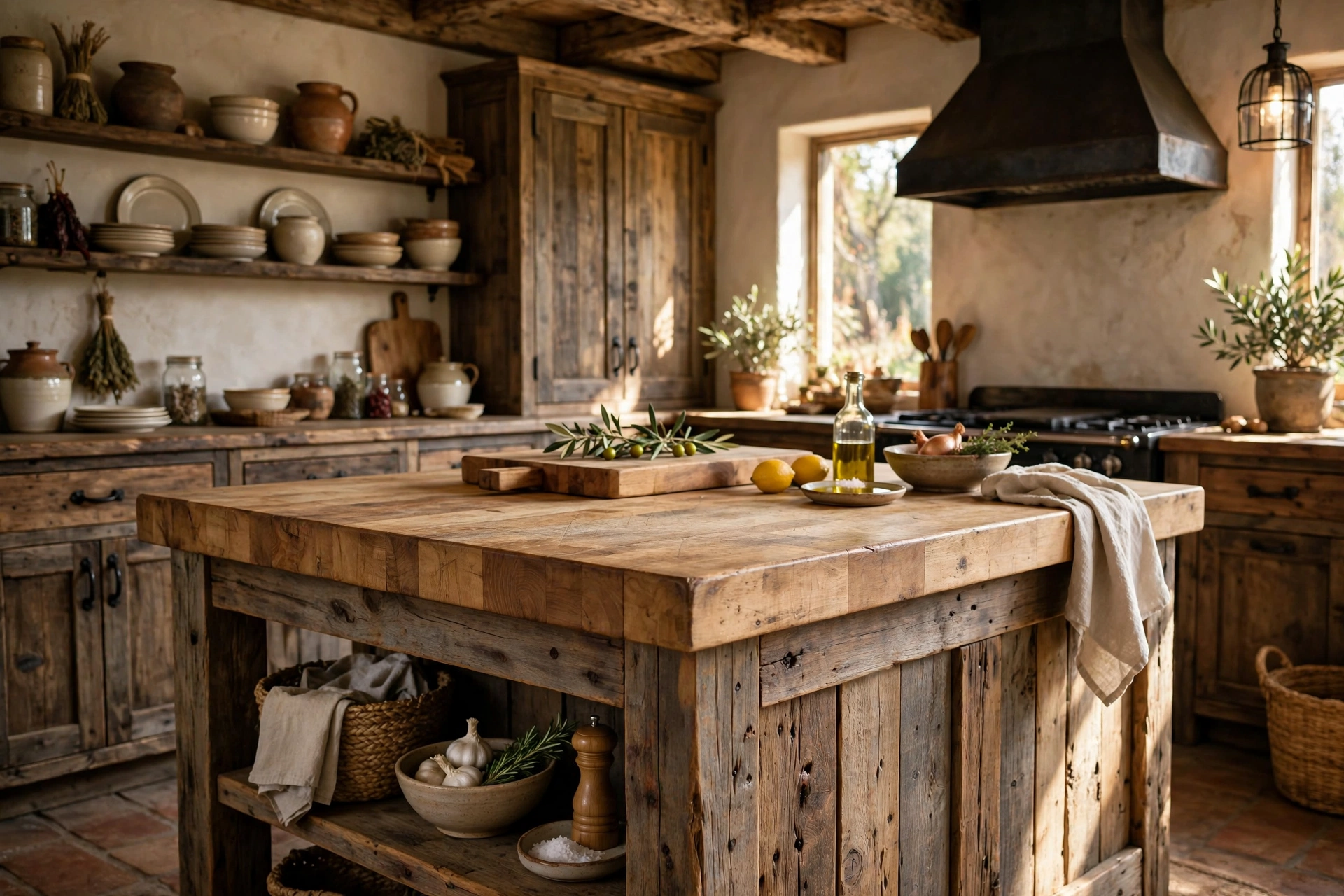
The island is the workhorse of the modern kitchen, and in a rustic kitchen it should look like it has been working for a hundred years. A reclaimed wood island — built from salvaged barn boards, a vintage workbench, or thick butcher-block planks — becomes the room’s natural gathering point.
Pair the chunky base with a honed stone or butcher-block top so it stays practical for chopping and rolling dough. For inspiration on styles and proportions, HGTV’s guide to rustic kitchen islands is a great browse. Finish with a couple of worn leather or oak bar stools, and leave the wood’s knots and nail holes visible — they are the whole point.
3. Make a Stone Range Hood the Focal Point
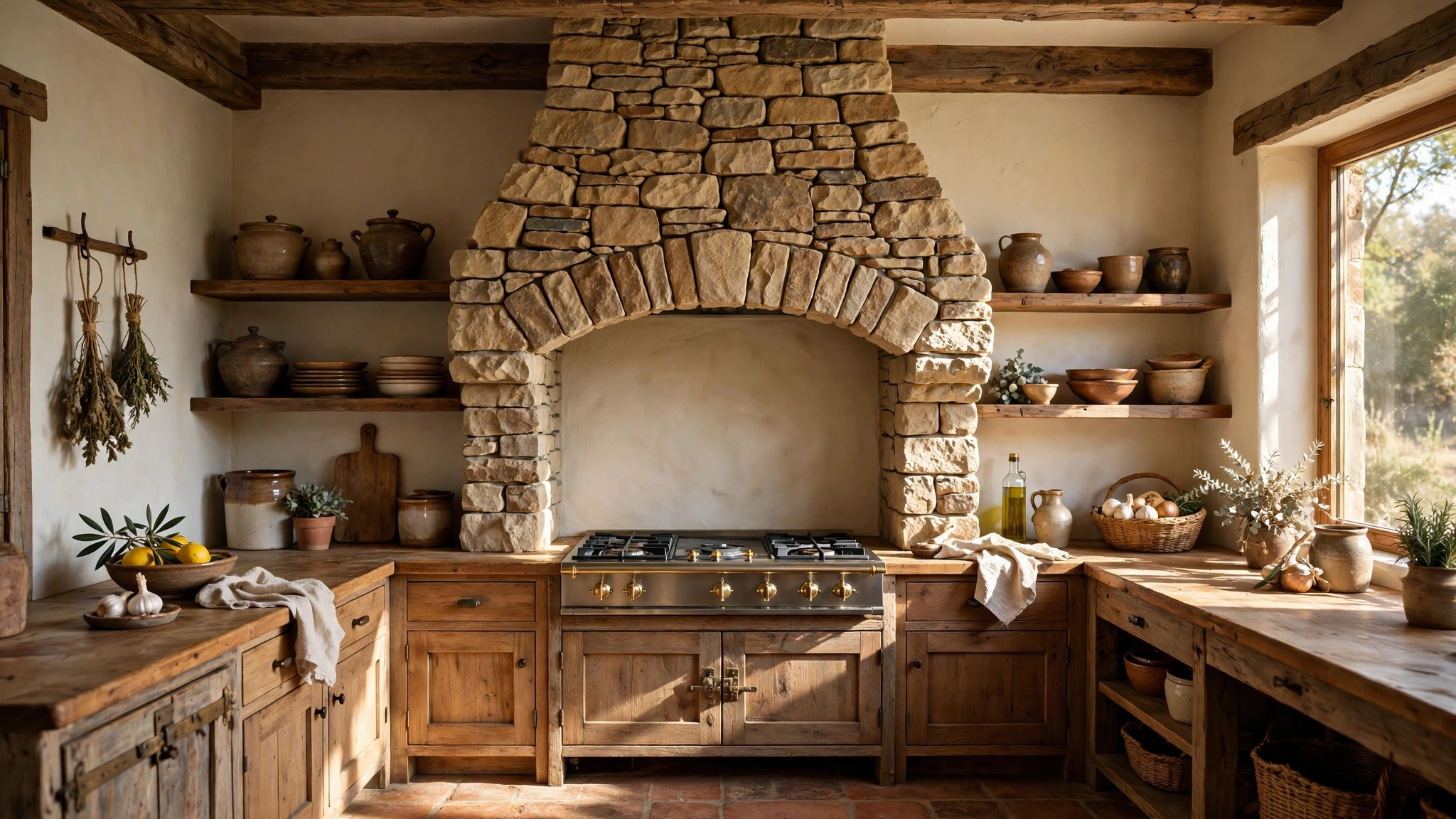
A massive stone range hood gives a rustic kitchen the same gravity a fireplace gives a living room. Stacked stone, rough-cut limestone, or even a plastered hood with a stone-look finish turns the cooking zone into the room’s anchor and hides the ventilation hardware beautifully.
This is a bigger-commitment project, so plan it early in a remodel. The hood should feel proportional to the room — in a smaller kitchen, a slimmer plaster hood with a rustic wood mantel shelf achieves the same effect without overwhelming the space. Style the mantel shelf with copper pots or dried herbs for a lived-in finish.
4. Fit an Apron-Front Sink
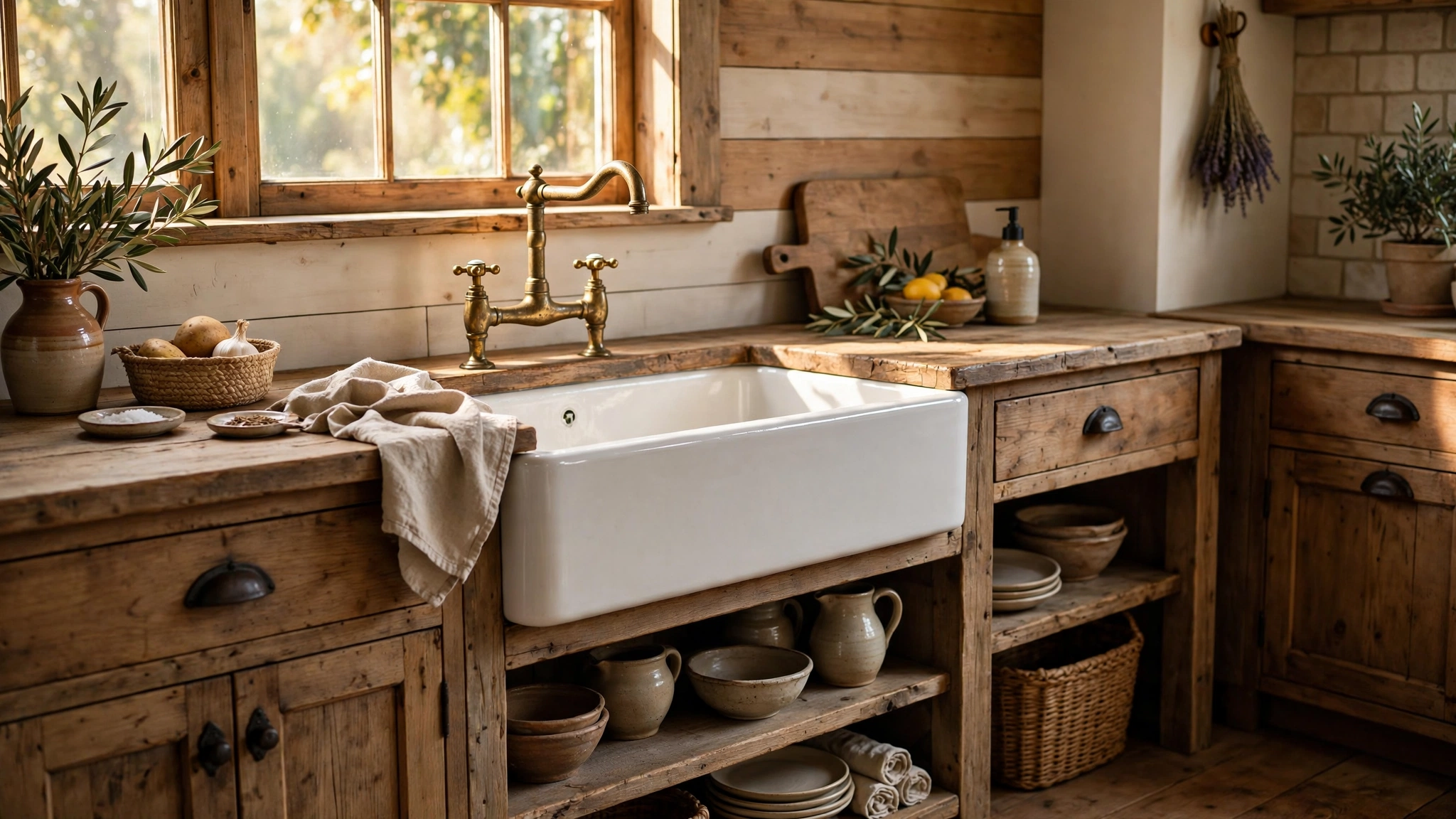
The deep apron-front sink is the rustic kitchen’s hardest worker. Its big basin swallows sheet pans and stockpots, and the exposed front panel — in fireclay, hammered copper, or distressed stone — becomes a design feature rather than just plumbing.
Hammered copper is the showstopper choice: it develops a rich living patina and has natural antimicrobial properties. Fireclay in cream or soft white is the classic, easier-care option. Whichever you choose, pair it with a bridge faucet in oil-rubbed bronze or unlacquered brass, and plan the cabinet below around the sink’s apron before you order cabinetry.
5. Style Open Wooden Shelves
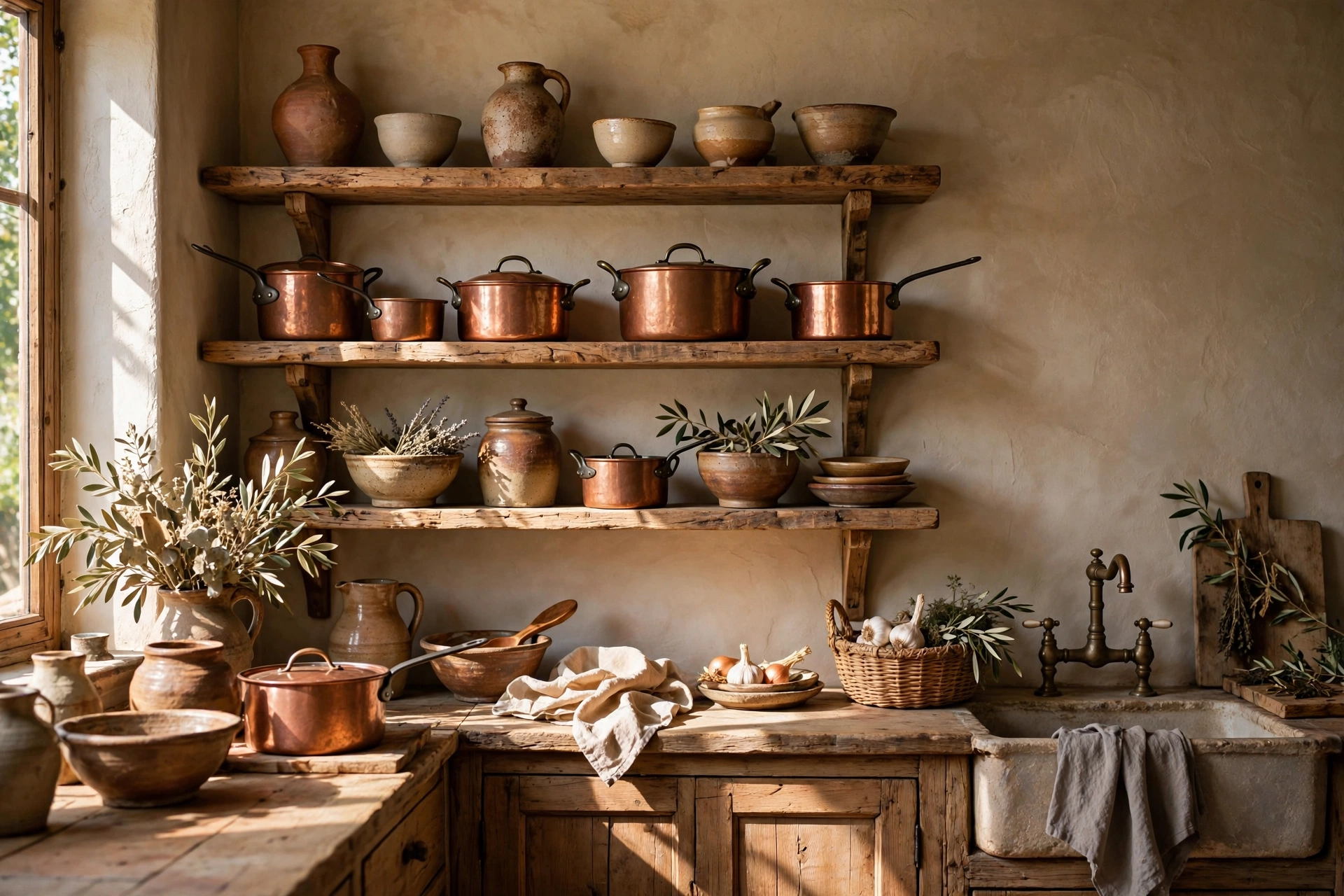
Upper cabinets can make a kitchen feel closed in; thick wooden shelves keep it airy and let your everyday dishes do the decorating. In a rustic kitchen, shelves made from reclaimed planks on black iron brackets hit exactly the right note.
Style them the way a farmhouse cook would: stacks of stoneware bowls, ironstone pitchers, copper saucepans, and jars of dried beans and grains. Keep the styling to things you actually use so the shelves stay functional and never look staged. One trailing plant or a bundle of dried lavender softens the wood without fuss.
6. Lay Wide-Plank Wood Floors
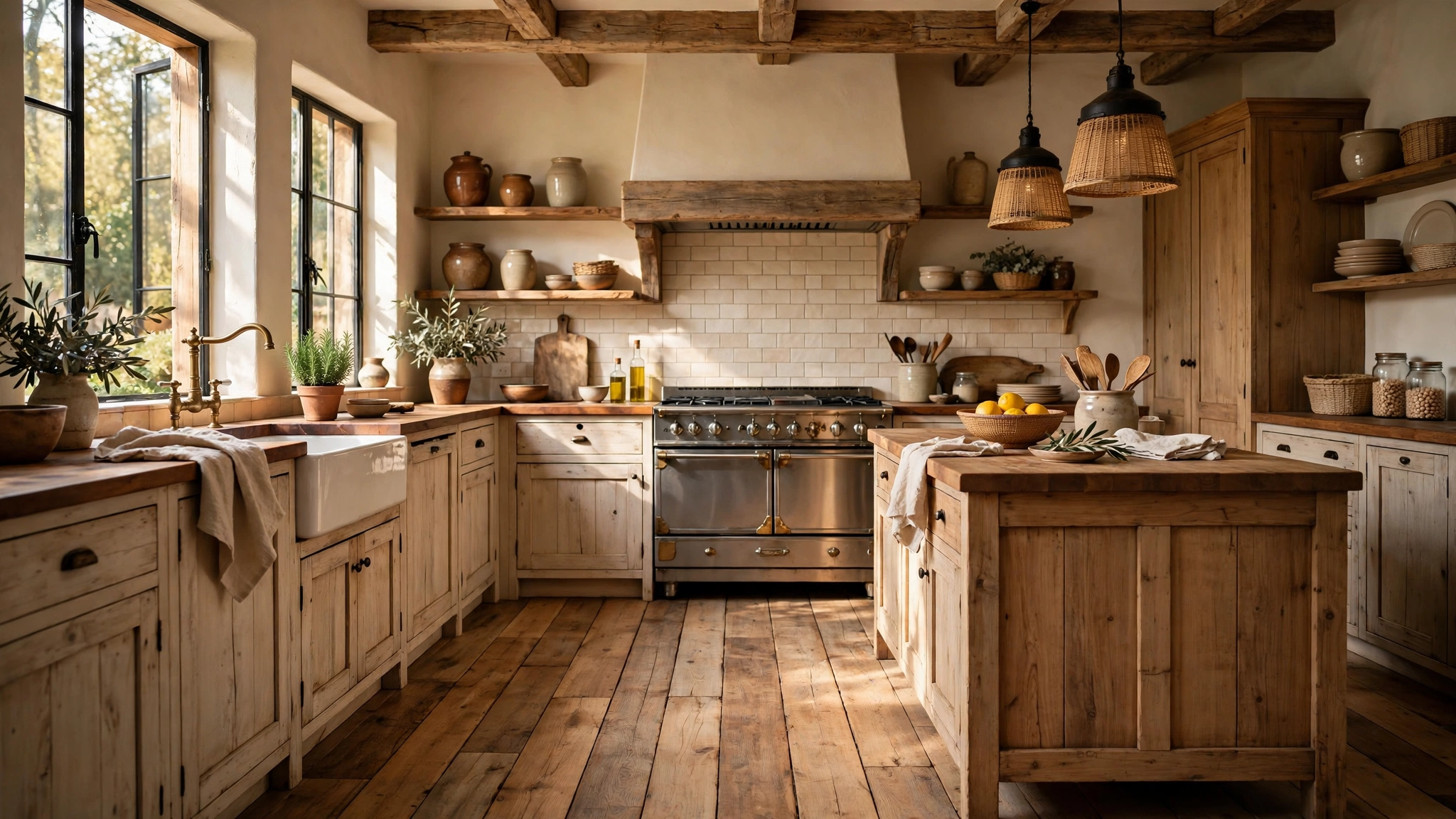
A rustic kitchen starts from the ground up, and wide-plank wood floors set the tone for everything above them. The broader the plank, the more relaxed and farmhouse the room feels — look for planks six inches or wider with visible grain and a matte finish.
In a busy kitchen, engineered oak or hickory gives you the look with better moisture resistance than solid pine. A medium stain with a matte polyurethane finish hides crumbs and wear while staying easy to clean. Run the planks lengthwise through the room to draw the eye toward the far wall and make the space feel larger.
7. Cook on a Classic Cast-Iron Range
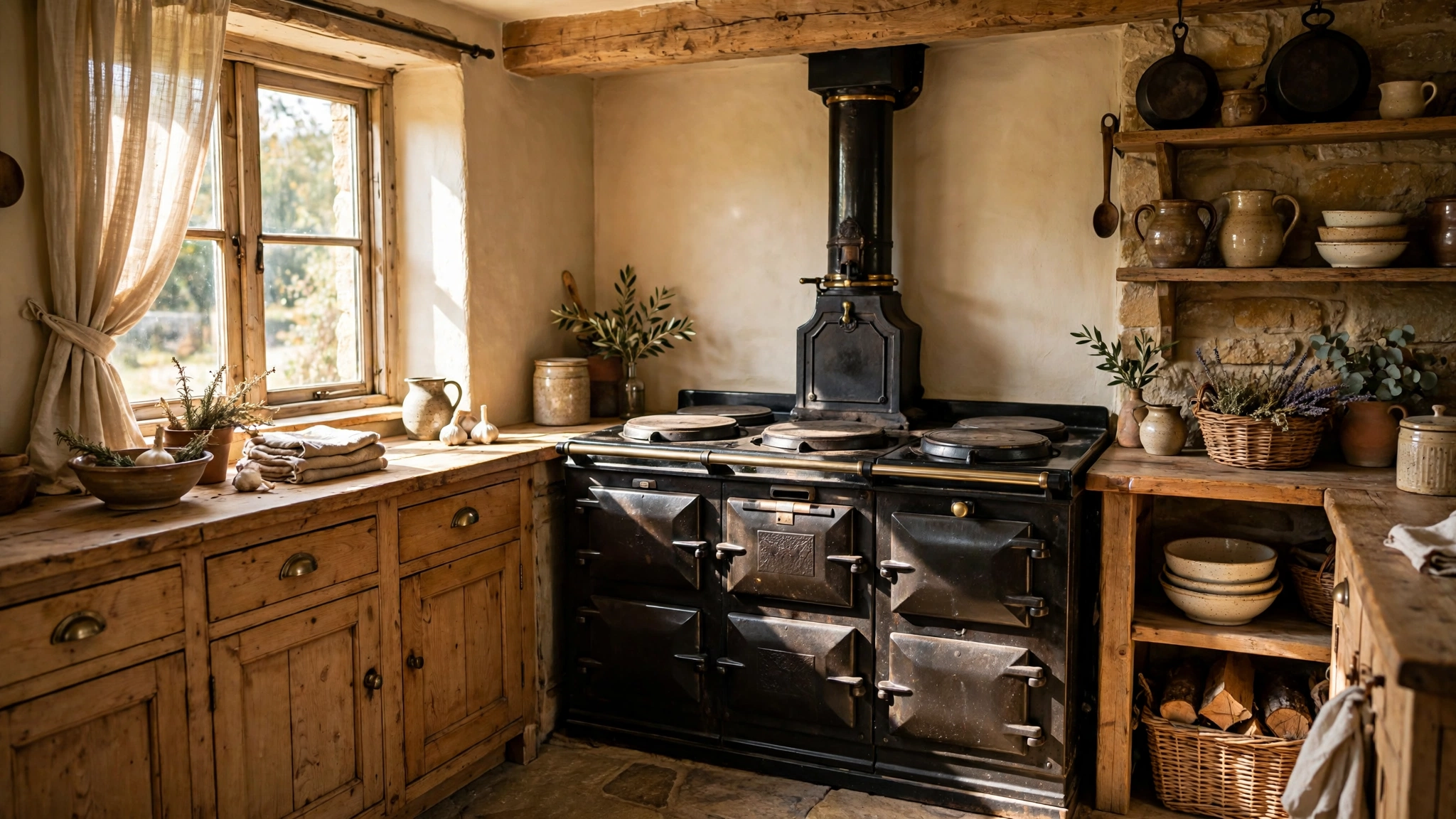
Few things say rustic like a big cast-iron range with real heft. Whether it is a restored antique cooker or a modern range styled with vintage details — chunky knobs, a plate rail, an enamel finish in cream or forest green — it becomes the hearth of the kitchen.
If replacing the range is not in the cards, dress your existing one the rustic way: hang a black iron pot rail above it for cast-iron skillets, lay a worn runner on the floor in front, and flank it with open shelving. A big kettle permanently parked on the back burner completes the picture and keeps hot water ready.
8. Hang Rustic Pendant Lights
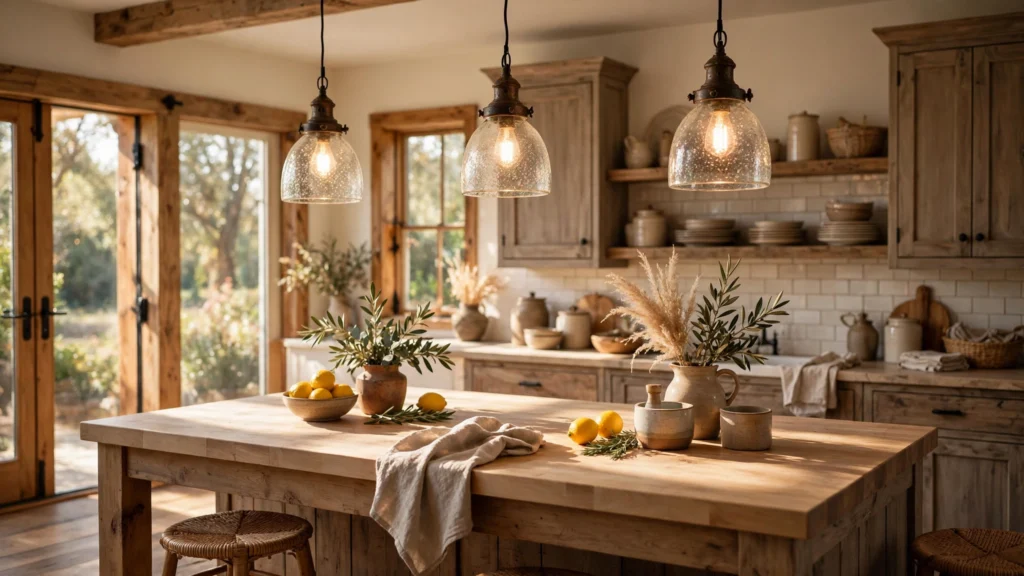
Overhead lighting in a rustic kitchen should feel handcrafted, not showroom. Seeded-glass pendants in black iron cages, hammered copper domes, or simple tin shades with a warm bulb all cast the golden, uneven light that makes wood and stone glow.
Hang two or three pendants over the island at staggered heights for a collected-over-time look, and keep the bulbs warm — 2700K or lower. For more ideas on pairing fixtures with natural materials, Bob Vila’s rustic kitchen ideas cover lighting alongside wood and stone choices. Put pendants on a dimmer so the kitchen shifts from bright prep mode to candlelit dinner mode.
9. Display Copper Pots and Pans
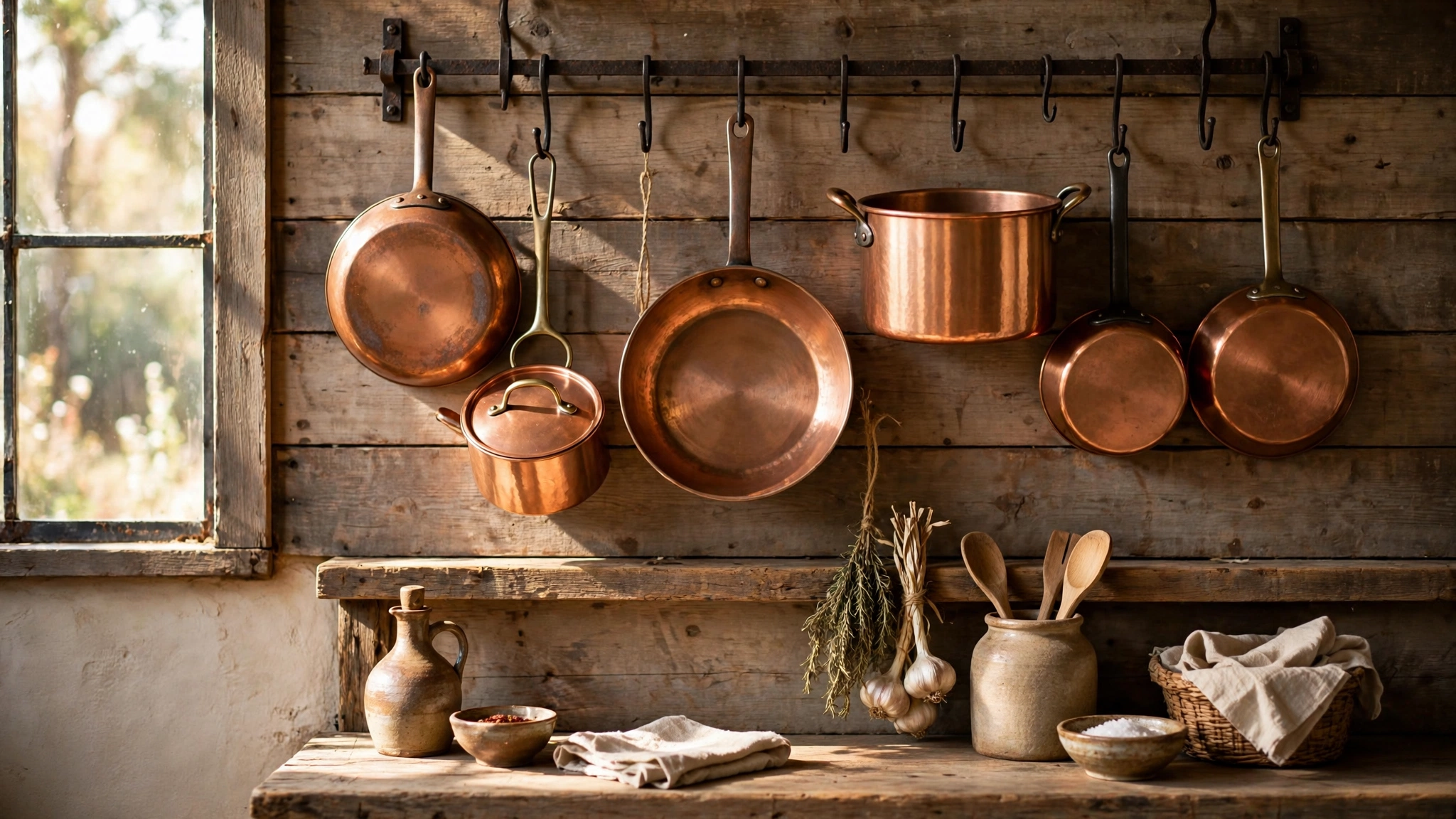
Copper is rustic’s jewelry. A rail of gleaming copper pots against a stone or plaster wall brings warmth, craft, and a little old-world luxury to the kitchen — and it keeps your most-used pans within arm’s reach.
Mount a black iron rail with S-hooks on the wall beside the range or hang a pot rack from the ceiling over the island. Copper needs occasional polishing if you want it bright, or let it mellow to a deep brown patina for a more aged look. Either way, use the pans: copper that actually cooks in looks a hundred times better than copper that just hangs.
10. Choose a Natural Stone Backsplash
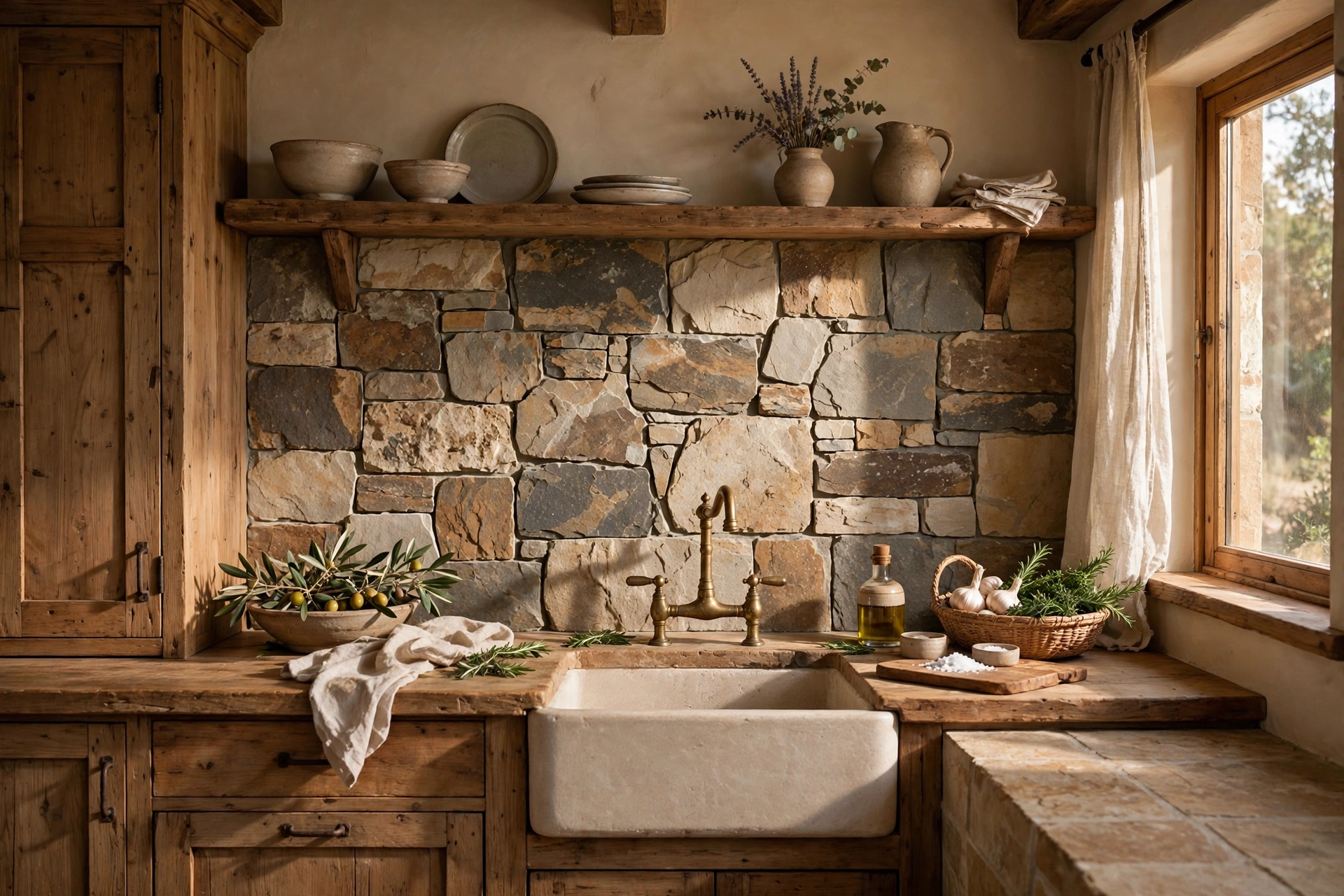
Tile is fine, but a natural stone backsplash — stacked ledger stone, tumbled travertine, or rough slate — gives a rustic kitchen a texture that no ceramic can match. The uneven surface catches light and shadow all day long, which is exactly what makes the room feel alive.
Because stone is porous, seal it well, especially behind the range. If full stone feels heavy, run it only behind the cooktop as a feature panel and use a simple limewash plaster on the remaining walls. That single hit of stone is often all the room needs.
11. Carve Out a Cozy Breakfast Nook
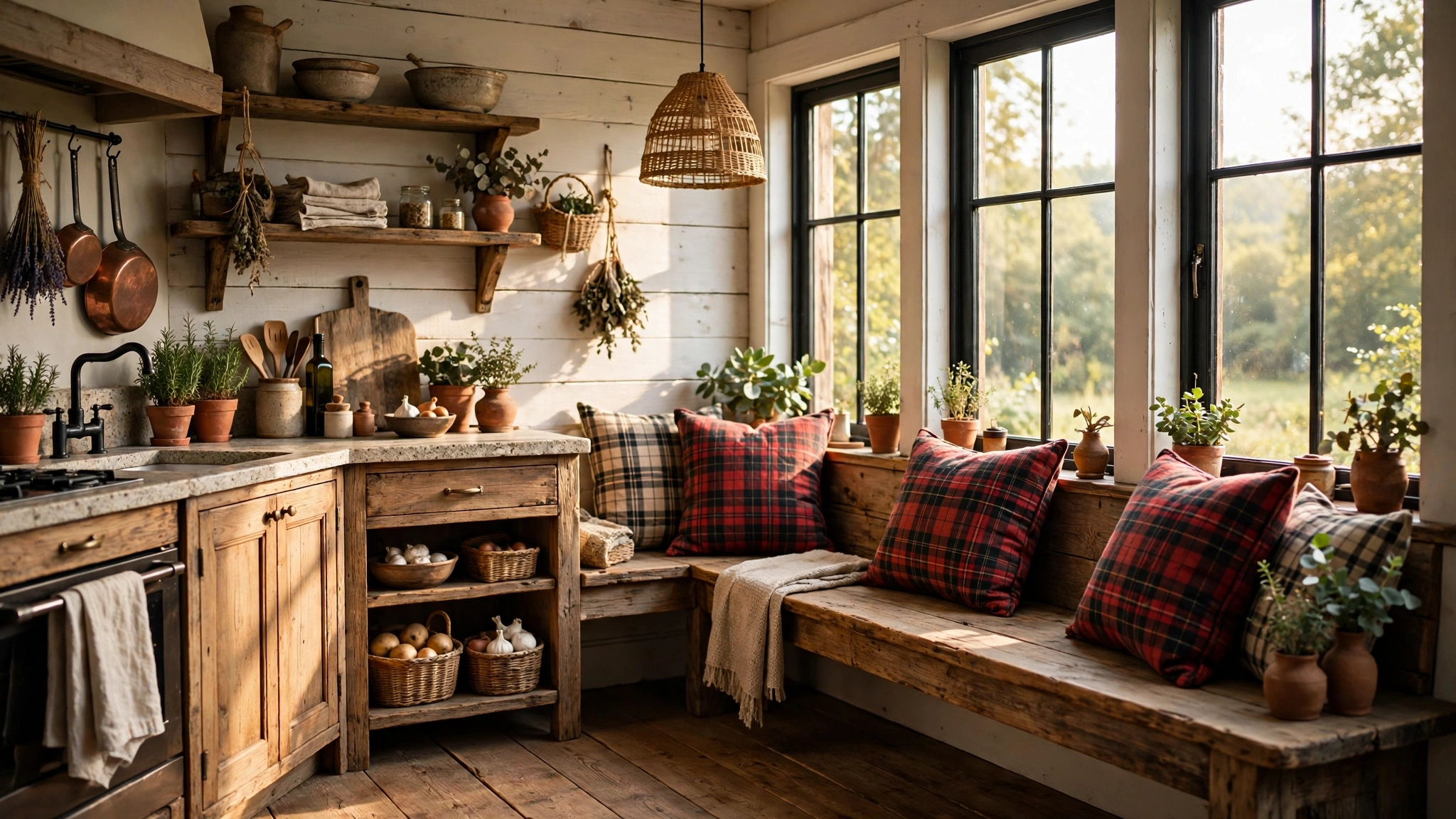
A rustic kitchen needs a spot for slow weekend breakfasts, and a corner nook with a wooden bench delivers. A built-in L-shaped banquette in knotty pine, topped with plaid or ticking-stripe cushions, turns an unused corner into the most fought-over seat in the house.
A round pedestal table in worn oak keeps the footprint small and traffic flowing. Under-bench storage swallows table linens and seldom-used platters. Hang a single wrought-iron pendant above the table, and add a sheepskin throw over the bench for the full cabin effect.
12. Stock a Walk-In Pantry
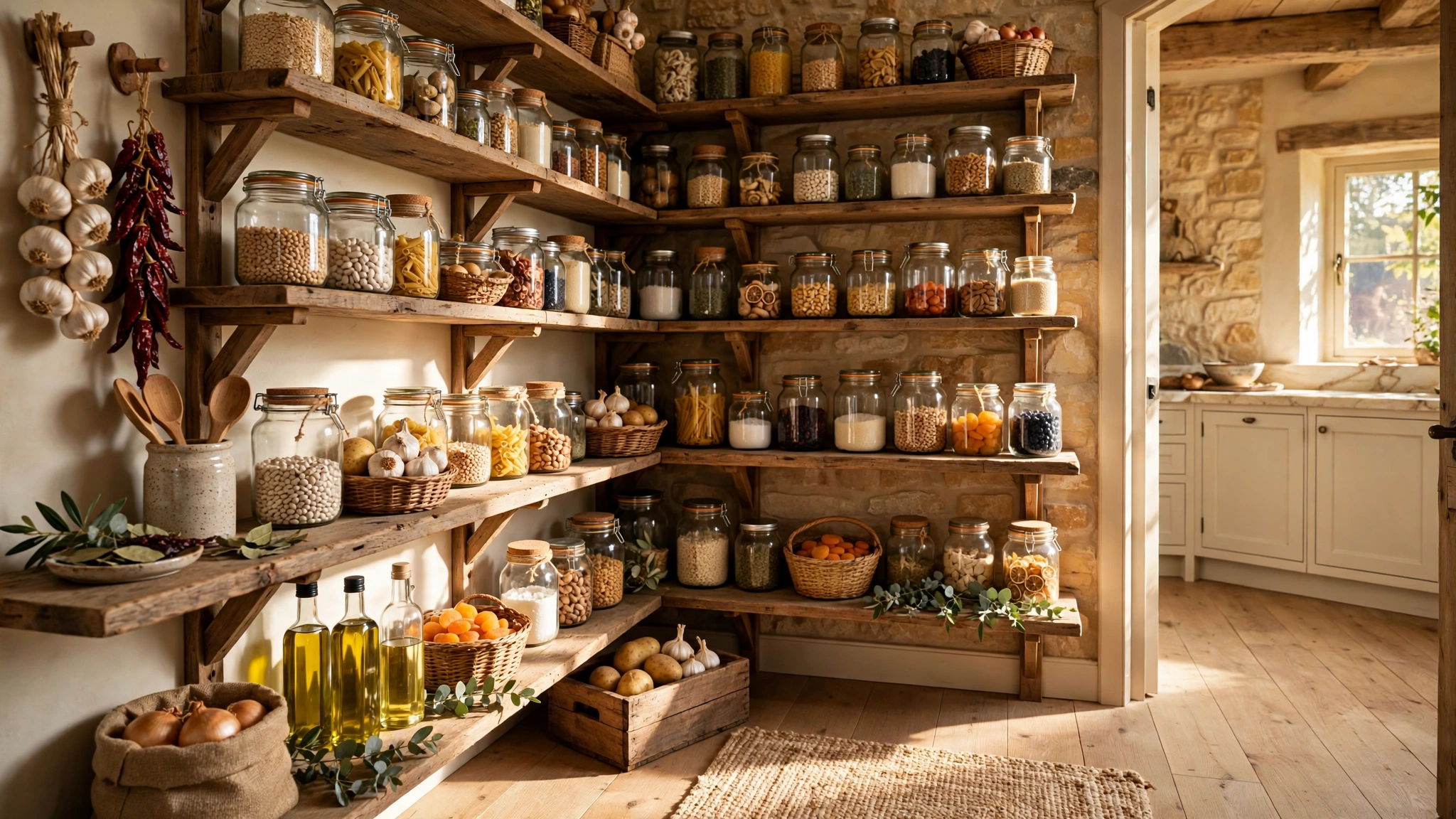
Before refrigerators, the pantry was the kitchen’s engine room, and a rustic kitchen deserves one. Even a shallow closet fitted with open wooden shelves — stocked with glass jars of flour, grains, preserves, and spices — adds function and old-fashioned charm.
Keep the shelving simple: solid pine boards on brackets, spaced to fit your tallest jars. Label everything with kraft-paper tags for that general-store look. If you have no closet to convert, a tall freestanding pine hutch or pie safe does the same job and doubles as furniture.
13. Lean Into an Earthy Palette
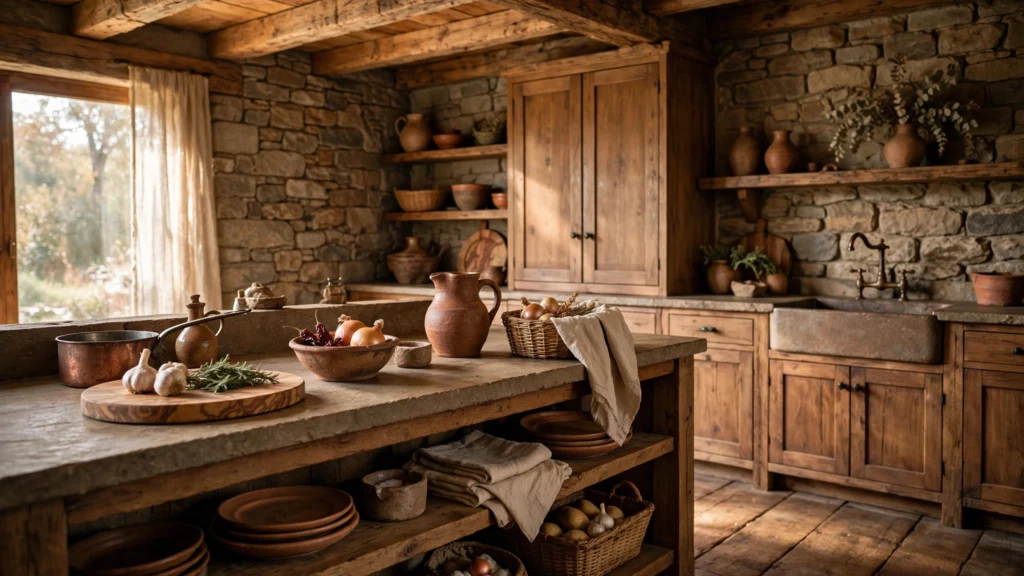
Rustic color is pulled from the landscape: warm browns, moss greens, clay reds, wheat golds, and the gray of weathered wood. Paint the walls a warm putty or sage, keep the trim in a creamy off-white, and let the wood and stone supply the deeper tones.
One saturated accent keeps the palette from going flat — a forest-green island, a brick-red runner, or ochre linen curtains. Keep the ceiling light so the beams read as a feature rather than a lid. Test paint colors in the room’s actual light, because warm bulbs shift every color toward amber.
14. Work In an Antique Piece
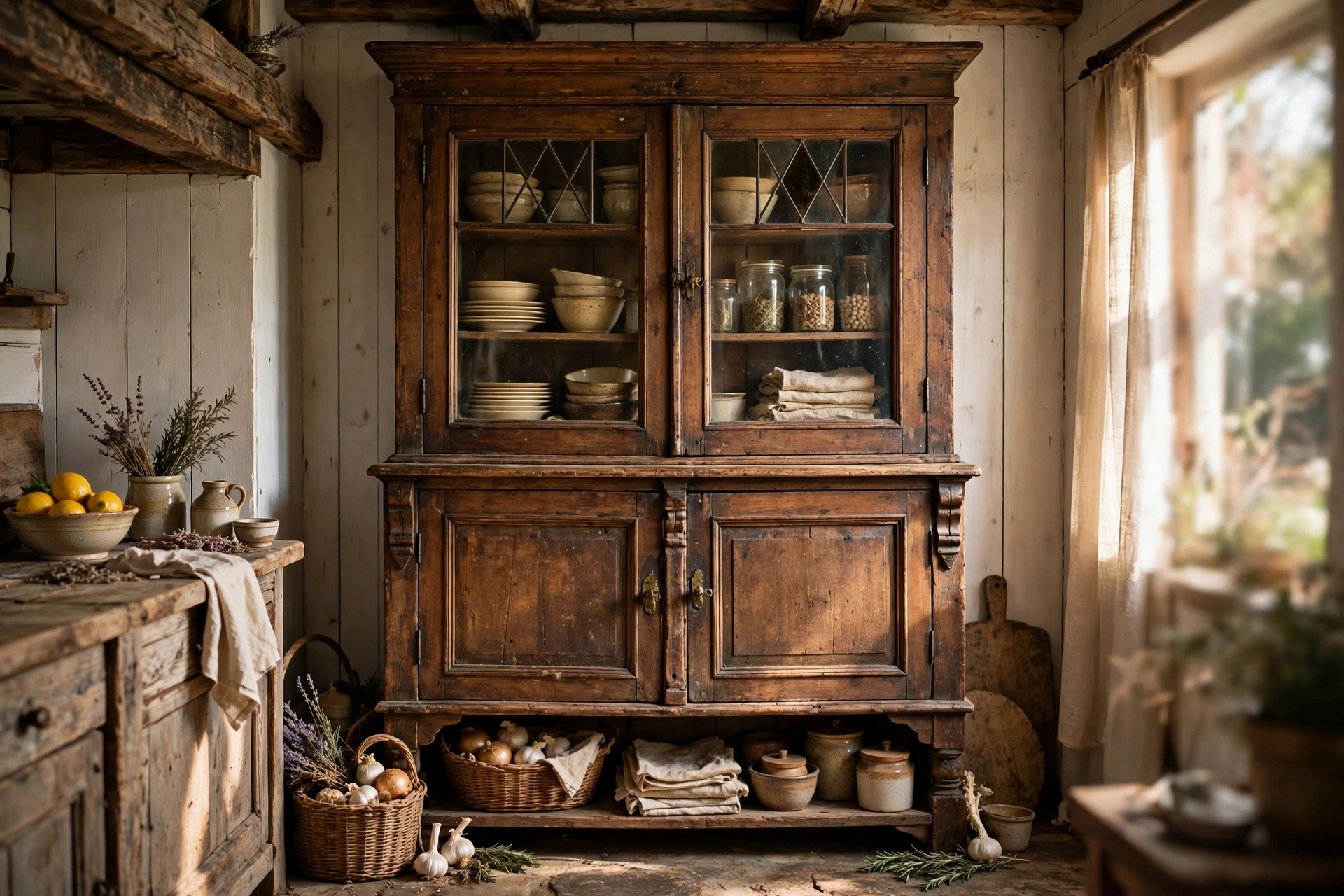
A rustic kitchen should not look like everything arrived on the same delivery truck. One genuine antique — a pine hutch, a farmhouse table used as an island, a pie safe, an old church pew as a bench — gives the room a past and makes everything else look more authentic.
Shop with measurements in hand and a clear job for the piece: the hutch holds serving dishes, the table becomes the island, the pew seats the nook. A coat of clear wax, not paint, preserves the patina that makes old wood glow. One good antique beats five reproductions every time.
15. Layer Warm, Glowing Light
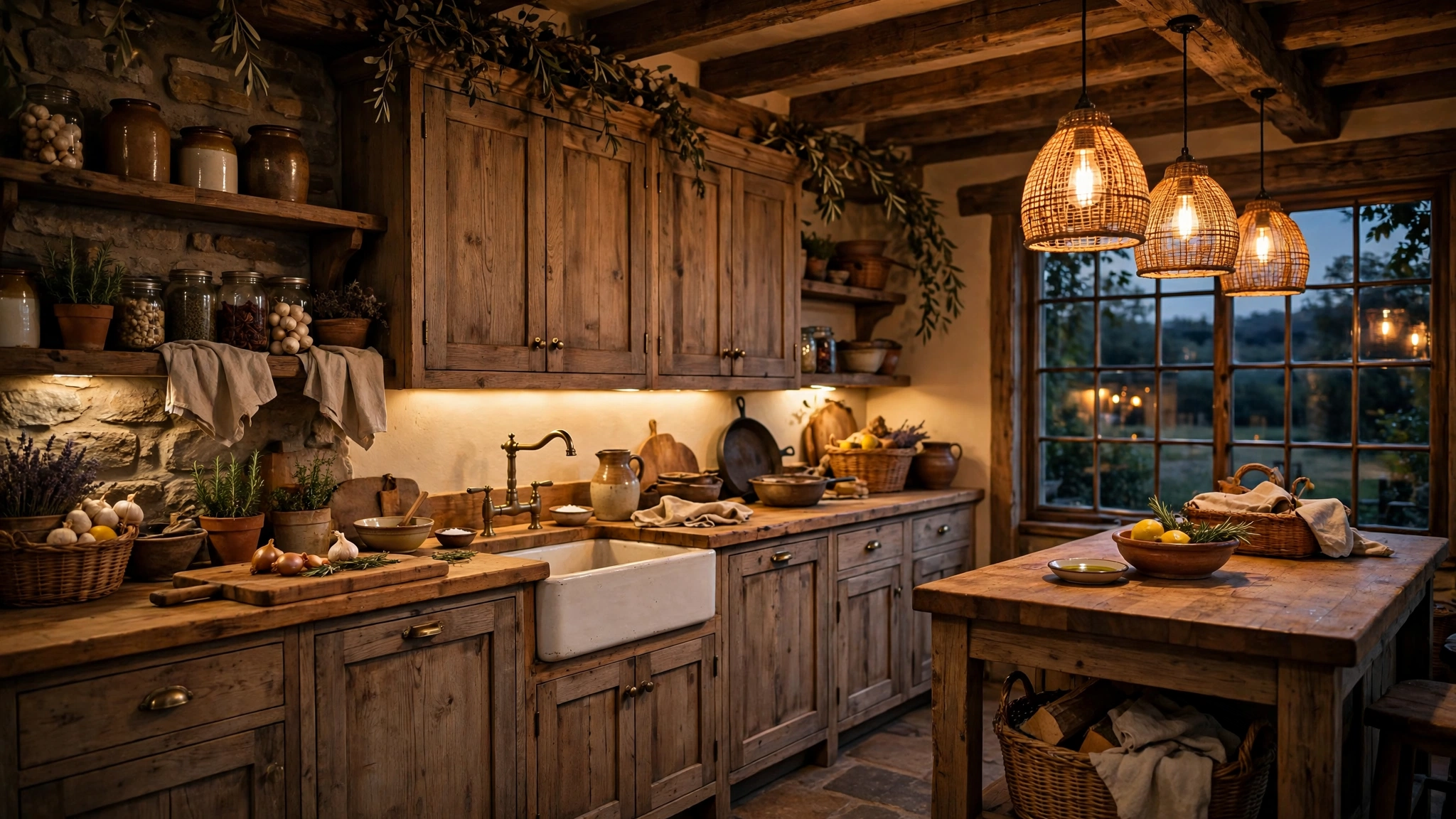
The difference between a rustic kitchen and a dark kitchen is light — layered, warm, and plentiful. Combine pendants over the island, a wrought-iron chandelier or flush mount in the center of the room, sconces flanking the sink, and under-cabinet strips so the counters glow.
Choose bulbs at 2700K for that firelight warmth and put every circuit on a dimmer. In the evening, drop the overheads low and let the under-cabinet lights and a few candles on the table do the work. This layered glow is what makes wood grain, stone, and copper look their richest — and what makes everyone linger.
Frequently Asked Questions
What makes a kitchen look rustic?
Honest, natural materials are the foundation: wood with visible grain, natural stone, aged metals like copper and black iron, and handcrafted details. Exposed beams, a chunky wood island, open shelving, and an earthy palette pull the look together. Texture matters more than any single item — layer rough against smooth and old against new.
What is the difference between rustic and farmhouse kitchens?
They overlap, but rustic leans wilder and more cabin-like — think log beams, rough stone, and weathered wood — while farmhouse is tidier and more cottage-inspired, with painted cabinets, shiplap, and gingham. A rustic kitchen can include farmhouse pieces, but it always keeps a rougher, more natural edge.
What colors work best in a rustic kitchen?
Earthy, landscape-inspired colors: warm browns, moss and sage greens, clay reds, wheat golds, and weathered grays. Creamy off-whites keep the room from feeling dark. Let wood and stone provide most of the color, and use paint for one or two grounded accents.
Is rustic kitchen design expensive?
It can be either. Reclaimed wood, a stone hood, and a copper sink are investment pieces — but many rustic moves are budget-friendly: paint in earthy tones, open shelves from pine boards, secondhand furniture, and vintage finds from flea markets. Start with paint, lighting, and textiles, then save for the big-ticket pieces.
How do I keep a rustic kitchen from feeling dark?
Layer warm lighting at several heights, keep walls and ceilings light so the wood reads as a feature, and add reflective touches like copper, brass, or seeded glass. A light-colored floor or rug under the table also bounces light around. Rustic should feel cozy, never gloomy.
Keep Exploring Rustic Kitchen Design Ideas
A rustic kitchen comes together the way a good stew does — slowly, with layers. Start with the bones: floors, beams, and the island. Then add the seasoning: copper, stone, warm light, and one good antique. If you love the warmth of natural materials, our 15 modern farmhouse kitchen design ideas share the same love of wood and craft with a slightly tidier hand, and the 15 cottage kitchen design ideas lean softer and more romantic. For a dose of green, the 15 sage green kitchen design ideas pair beautifully with rustic wood tones. Build it layer by layer, and it will only get better with age.

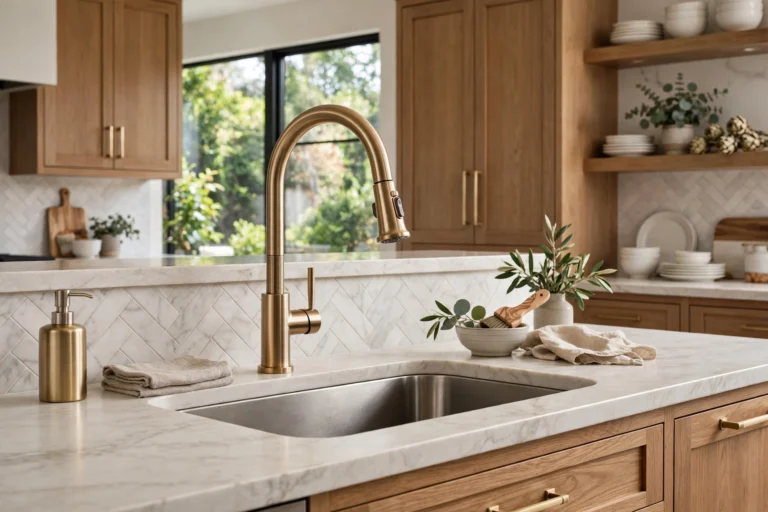
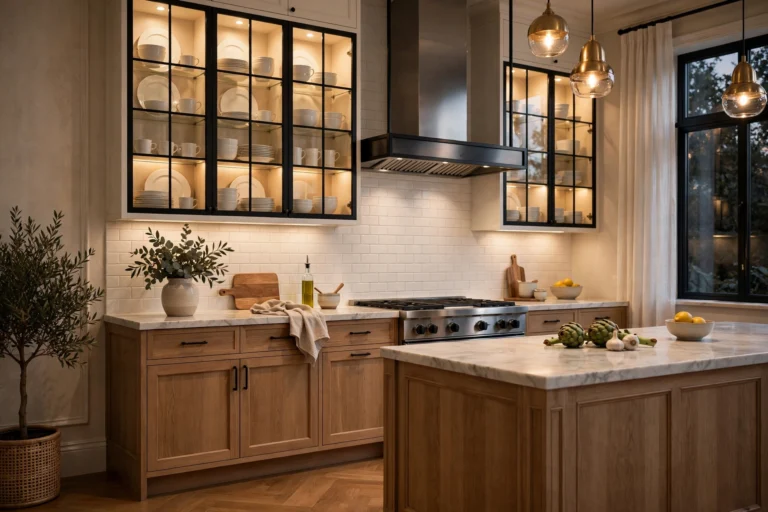
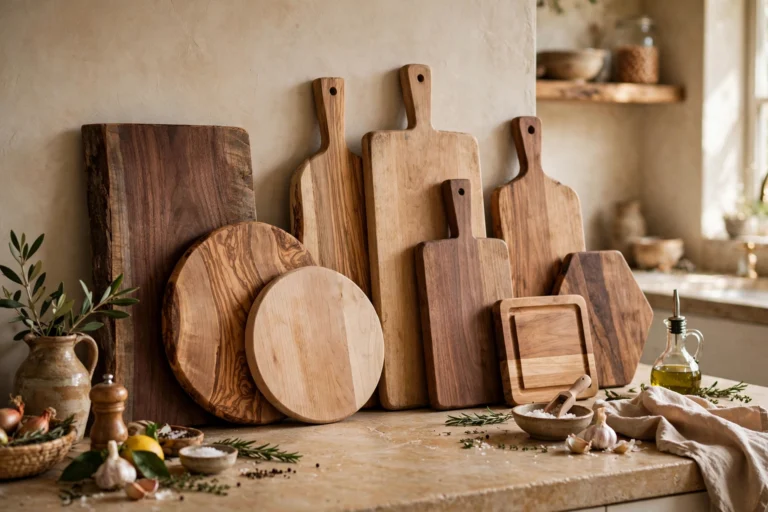




[…] in a rustic room. Refinish only what’s structurally necessary; the patina is the point. Our rustic kitchen design ideas apply the same honest-materials philosophy to the hardest-working room in the […]
[…] and let the wood’s grain do the talking. The same honest-materials philosophy runs through our rustic kitchen design ideas, which this sideboard would feel right at home […]
[…] wooden boards, copper pots, and dried herbs — materials that echo the shelf’s organic feel. Our rustic kitchen design ideas show how to build a whole warm kitchen around this kind of honest […]