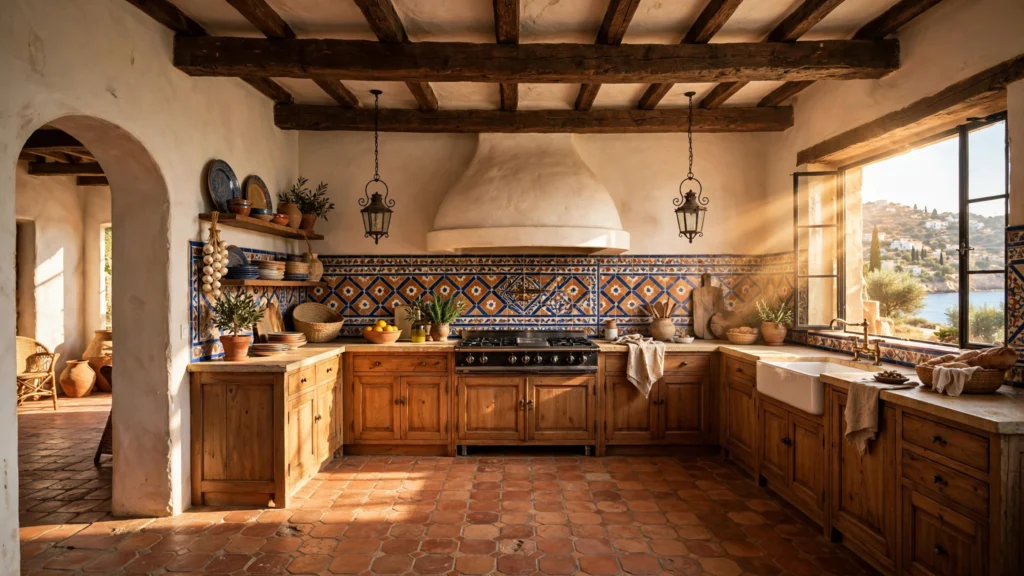

There is a reason Mediterranean kitchens never feel cold, no matter how much stone and tile they contain. The style was built over centuries in sun-drenched farmhouses along the coasts of Spain, Italy, and Greece, where every material was chosen for how it glowed in late-afternoon light. Terracotta, plaster, warm wood, and hand-painted tile do the heavy lifting — no stark white boxes, no chilly minimalism, just rooms that hold the day’s warmth long after sunset.
You don’t need a villa in Tuscany to get this look. Mediterranean warmth comes from a handful of honest materials and architectural gestures — an arch here, a patterned tile there, wood with visible grain — and most adapt beautifully to ordinary kitchens. These mediterranean kitchen design ideas are practical and layerable, so you can start with a single weekend project or plan a full renovation around them.
1. Lay Terracotta Floor Tiles for Instant Warmth
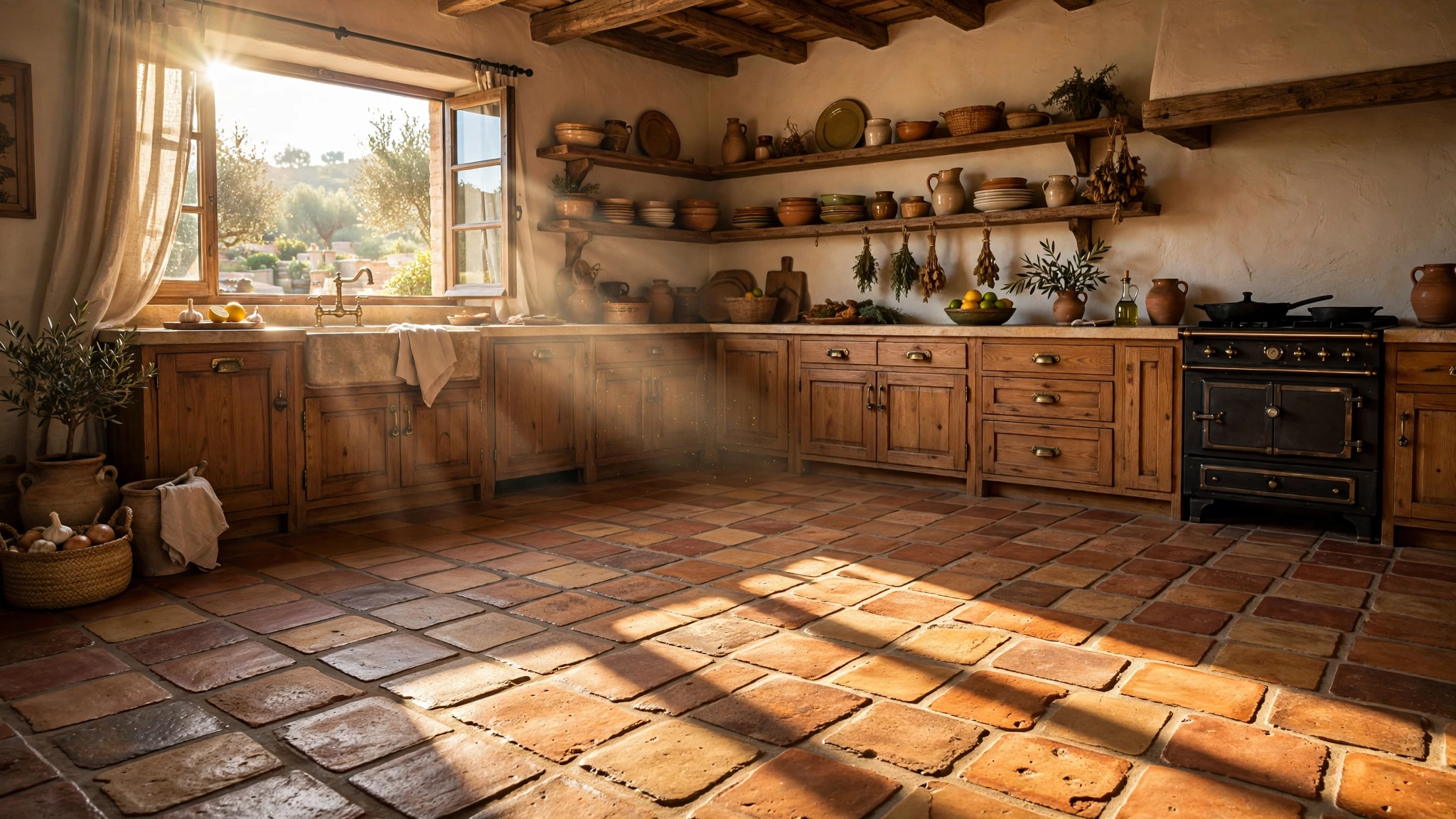
Nothing says Mediterranean like a terracotta floor. The burnt-orange clay tiles — classic saltillo or handmade Italian cotto — bring an earthy glow that flat ceramic can never match, catching sunlight beautifully and feeling warm underfoot. For authenticity, choose tiles with irregular edges and tonal shifts over perfectly uniform imitations, and lay them in a simple grid or running bond so the material stays the star.
Terracotta is porous, so sealing is non-negotiable in a kitchen. Use a penetrating sealer made for clay tile — two coats before grouting, one after — and plan to reseal high-traffic zones every couple of years. If real clay feels like too much maintenance, porcelain terracotta-look tiles are widely available — choose pillowed edges and four or five shade variations per box.
2. Add Arched Doorways and Plastered Niches
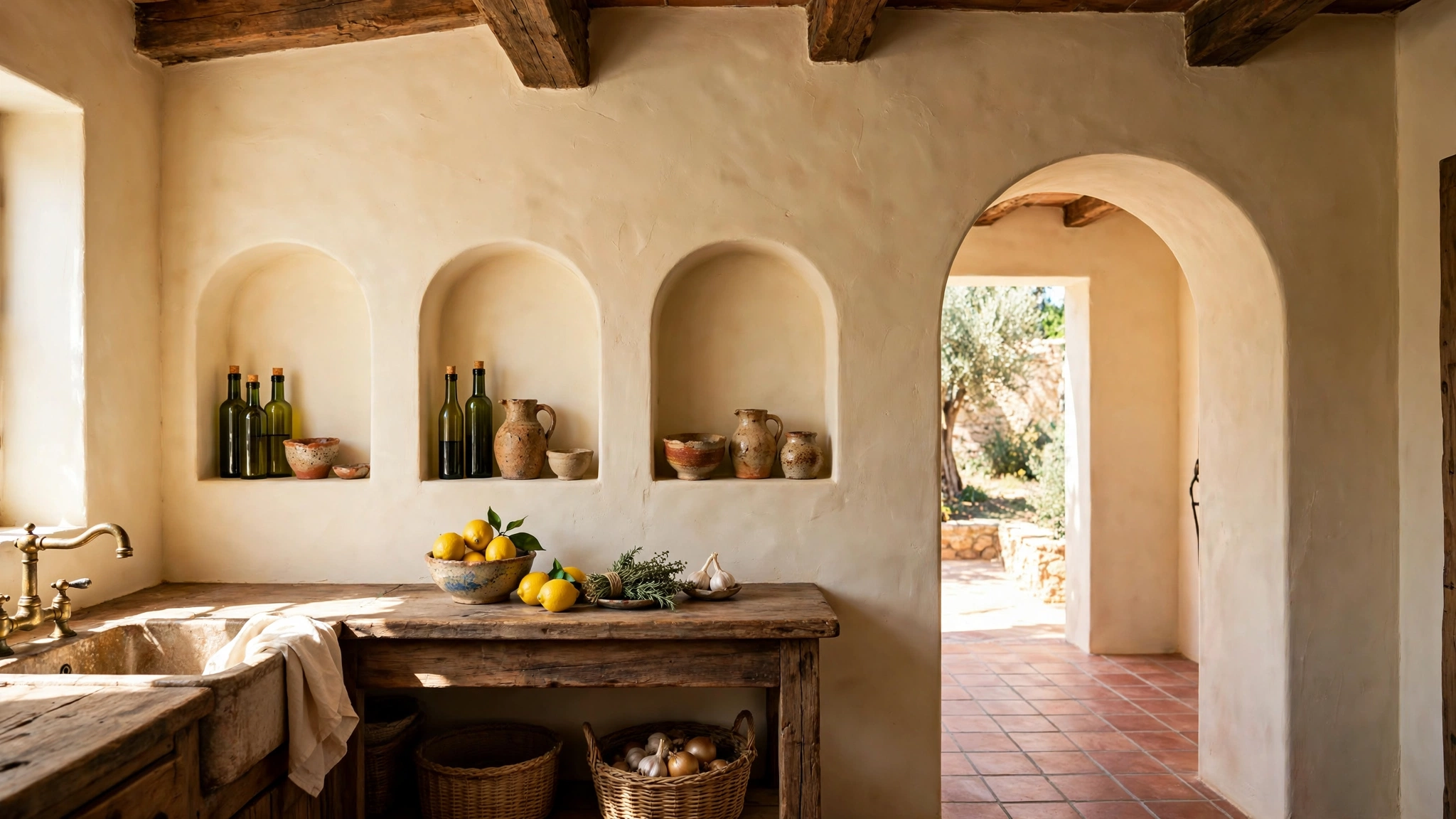
Arches are the signature silhouette of Mediterranean architecture, and even one arched opening can transform a kitchen’s character. If you have a cased doorway between the kitchen and dining room, reframing it as a soft arch immediately reads as old-world. Where structural changes aren’t possible, create the effect with arched niches: shallow plastered recesses beside the range or above a coffee station, perfect for olive oil bottles, ceramics, or a potted herb.
The key to believable arches is the finish. Smooth the curve with plaster or a lime-based skim coat rather than crisp drywall edges, and paint the niche interior a shade deeper than the surrounding wall — warm ochre inside a cream kitchen, for example. Keep proportions generous: a broad, low curve feels authentically Mediterranean, while a narrow, tall arch looks fussy.
3. Choose a Patterned Encaustic Tile Backsplash
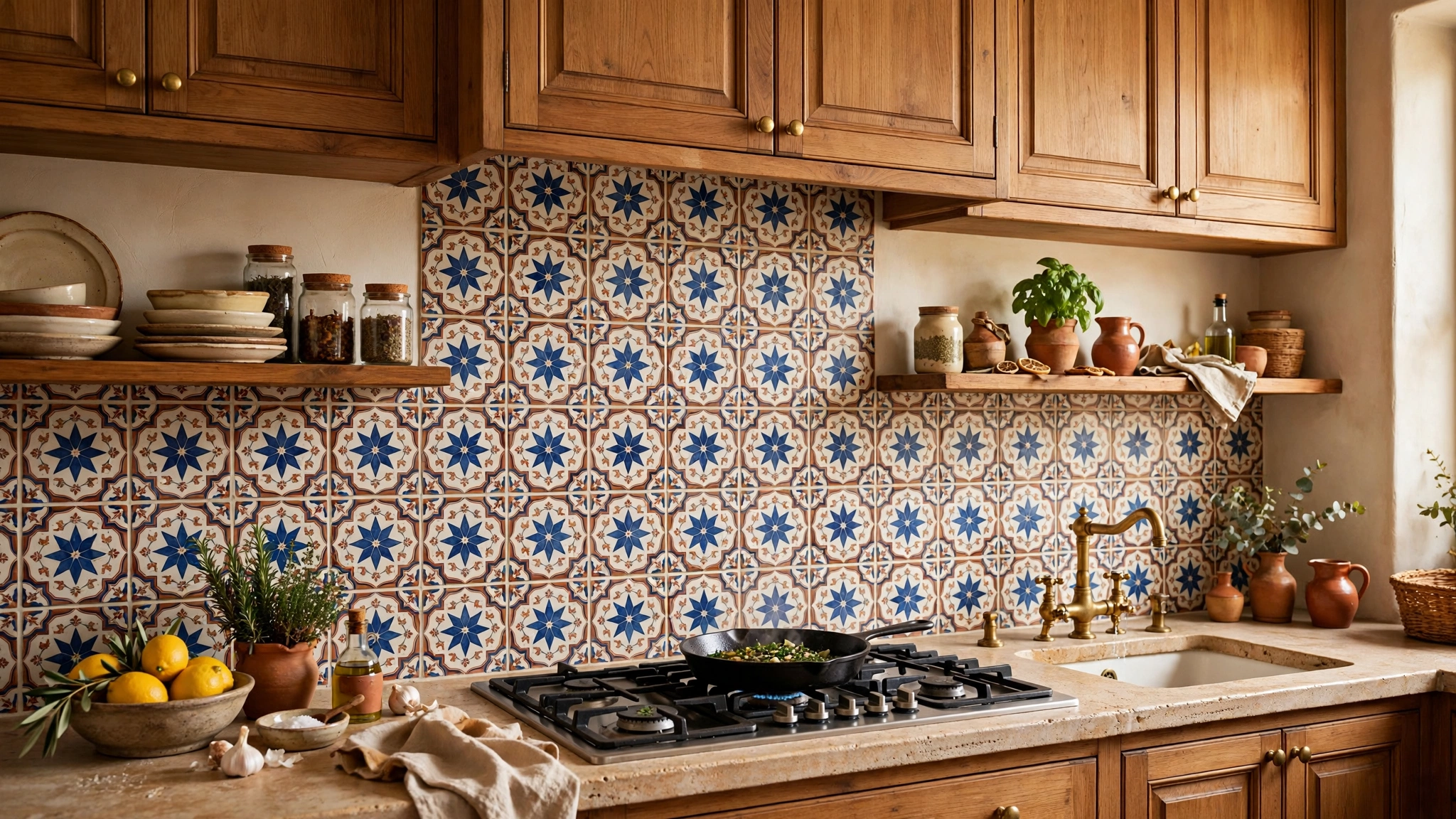
A patterned encaustic-style backsplash is the fastest way to inject Mediterranean soul into an existing kitchen. The classic motifs — eight-pointed stars, scrolling florals, Mediterranean crosses in cobalt, terracotta, and cream — trace back to the cement tiles of old Spanish and Portuguese homes. Run the pattern across the full cooking wall, or contain it to the range wall as a framed panel with plain plaster on either side.
Real encaustic cement tiles are gorgeous but porous and need sealing, so many homeowners choose glazed ceramic or porcelain versions that wipe clean and never stain. Either way, keep the rest of the palette quiet — warm white walls, simple wood cabinetry, no competing patterns. One bold tile statement per kitchen is the rule: let the backsplash be the jewelry.
4. Expose or Add Rustic Wood Ceiling Beams
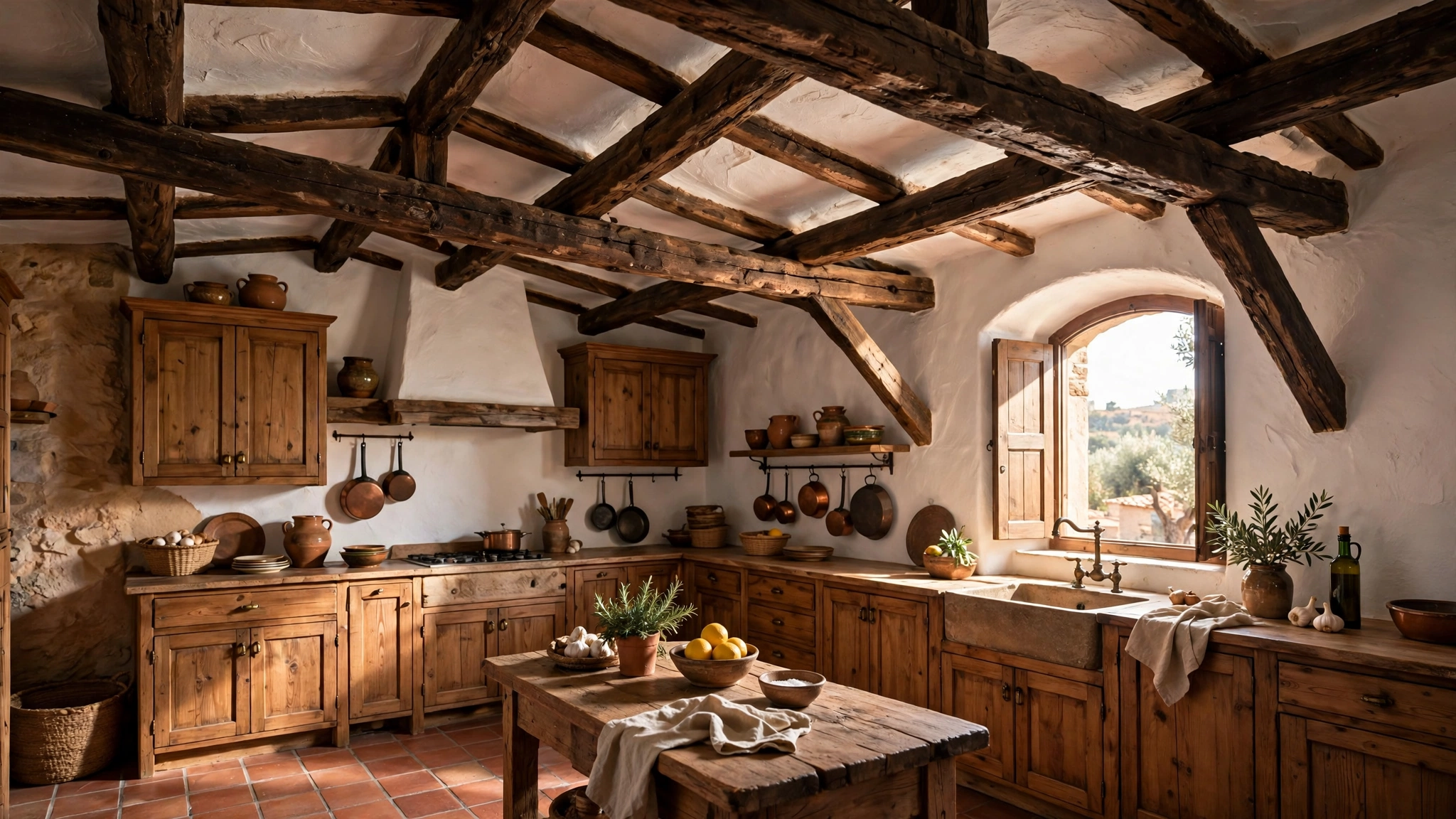
Dark, hand-hewn wood beams crossing a plaster ceiling are pure Mediterranean farmhouse. If your ceiling hides structural joists, exposing and refinishing them is the most authentic route — sand them back, stain in warm walnut or oil them to deepen the grain, and leave the plaster between in a soft whitewash. For standard flat ceilings, lightweight faux beams in wood veneer or hollow-box construction deliver the same rhythm with far less fuss.
Proportion matters more than quantity. Beams should feel substantial — six to eight inches deep — and run across the room’s shorter dimension. Space them four to five feet apart so the ceiling reads as calm bays rather than a busy grid. In small or low-ceilinged kitchens, run beams only over the island or dining zone.
5. Make the Range Hood a Plastered Focal Point
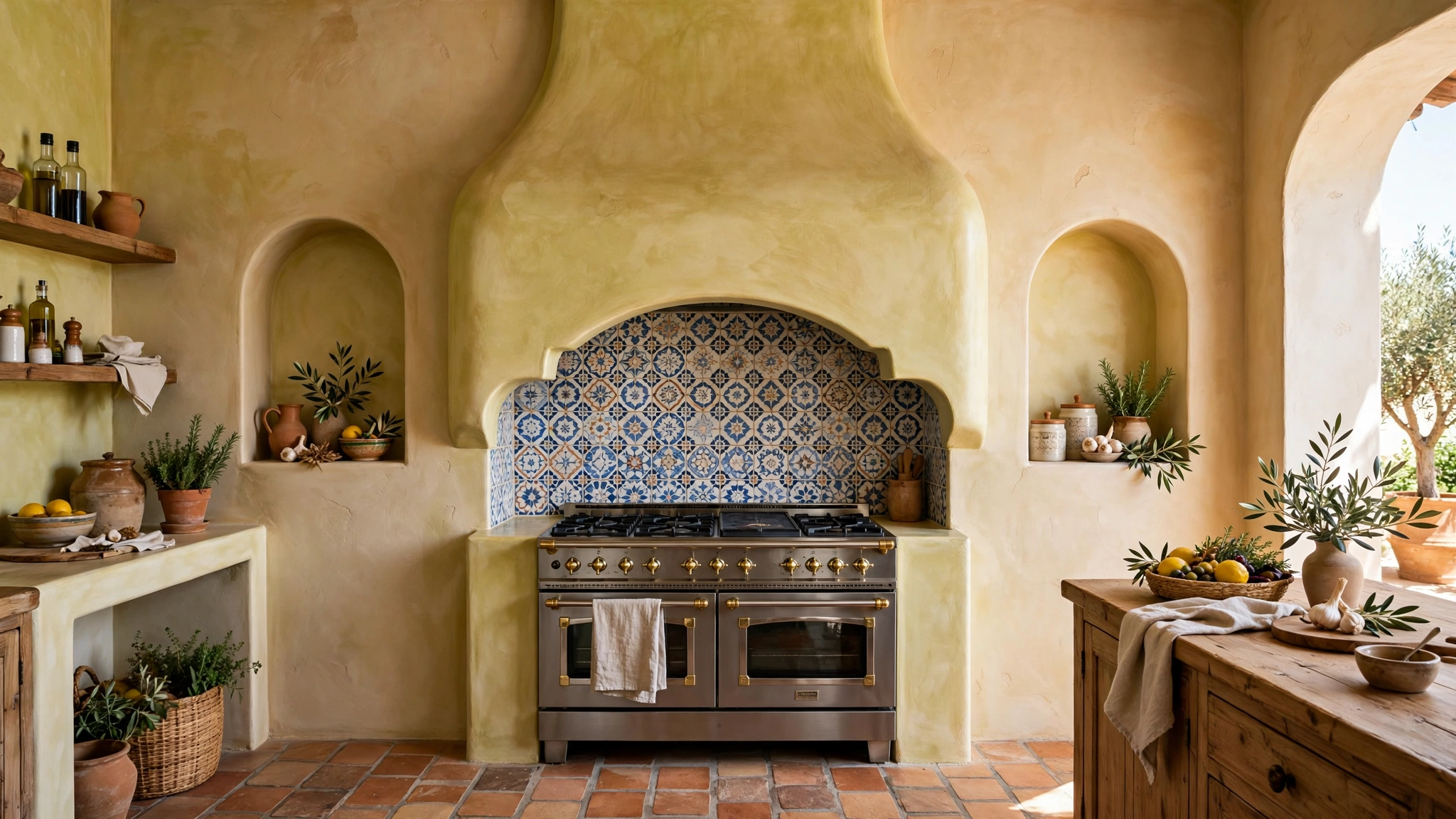
In Mediterranean kitchens the range hood is treated as sculpture, not appliance. A plastered hood — built out in a soft curve or tapered chimney form and finished in limewash — becomes the room’s anchor the way a fireplace anchors a living room. Pair it with arched niches on either side and patterned tile beneath for a composed cooking wall that looks centuries old.
Have the hood built to your exact dimensions, then finish it in the same plaster tone as your walls so it reads as architecture, not appliance. A gentle arch cut into its lower edge echoes the room’s doorways. Choose a quiet insert with the right CFM for your cooktop — the working parts disappear entirely, leaving only the sculptural form.
6. Style Open Shelving With Handmade Ceramics
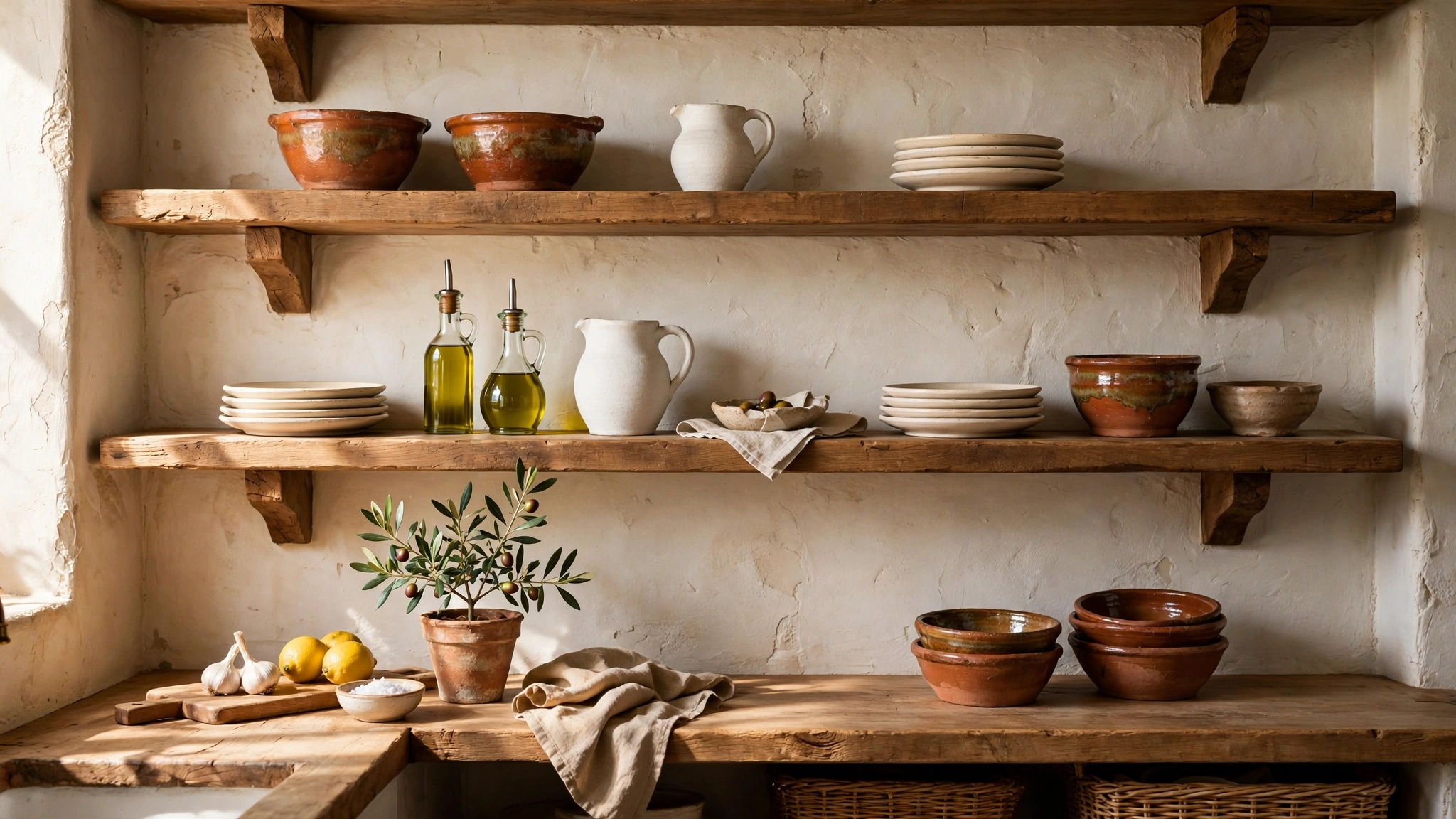
Mediterranean kitchens show their dishes rather than hiding them, and open shelving is the natural stage. Replace a run of upper cabinets with two or three thick wood shelves — reclaimed oak, chestnut, or warm-stained pine — and fill them with handmade ceramics: glazed terracotta bowls, stoneware pitchers, olive oil cruets, everyday plates in cream and sand. The slight irregularity of artisan pottery is what makes the shelf feel collected, not decorated.
Keep the styling practical so the shelves earn their keep: daily dishes at arm’s height, items grouped in odd numbers, breathing room between clusters so the display reads airy, not cluttered. Aim for roughly seventy percent functional dishware to thirty percent decoration — a trailing pothos or olive branch in a jug adds the living green the palette needs.
7. Bring In Wrought Iron Lighting and Details
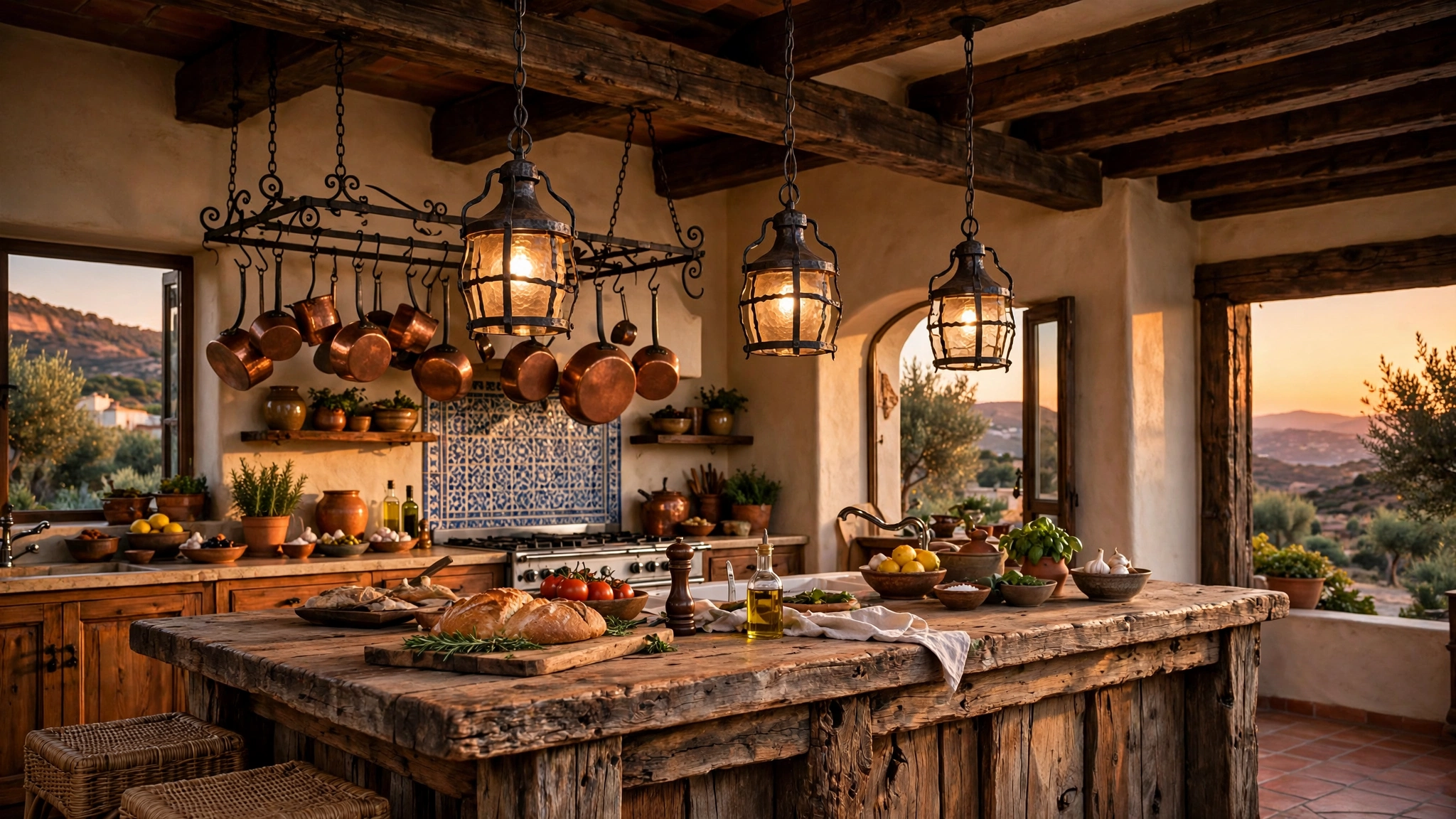
Wrought iron is the jewelry of the Mediterranean kitchen — dark, hand-forged, slightly imperfect. A pair of iron pendants over the island, a scrolled pot rack hung from the beams, or simple iron shelf brackets all add old-world craftsmanship without overwhelming the room. Look for visible hammer marks and a matte black or oil-rubbed bronze finish; that handmade texture is what separates the real feel from mass-produced lookalikes.
Use iron sparingly — two or three moments, such as pendants plus cabinet latches, are plenty. Too much black metal tips the room toward heavy Tuscan cliché instead of sunlit coastal farmhouse. Pair iron with warmth on every side: pendants over a wood island, the pot rack against plaster, copper or brass accents softening the darkness.
8. Install a Fireclay or Copper Farmhouse Sink
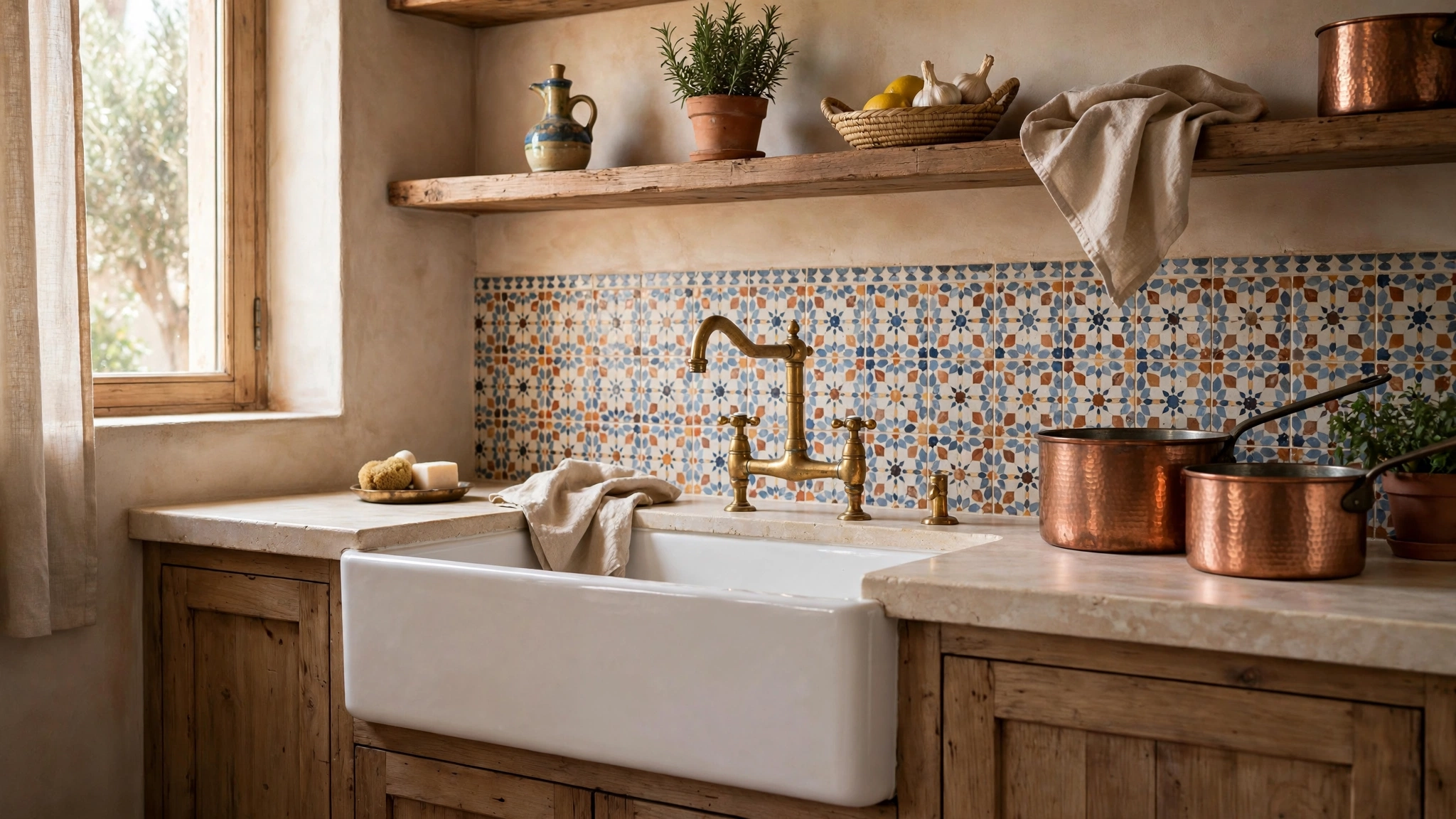
The sink is a workhorse, so make it a beautiful one. A deep fireclay apron-front sink in warm white is the classic Mediterranean choice — its thick walls and generous basin handle paella pans and baking sheets with ease, and the exposed front becomes a design feature. For a bolder statement, a hammered copper farmhouse sink develops a rich living patina that deepens beautifully beside terracotta and wood.
Plan the cabinetry around your choice: farmhouse sinks need a dedicated sink base and proper support framing, since a filled fireclay sink is extremely heavy. Pair it with a bridge or gooseneck faucet in unlacquered brass or aged bronze — polished chrome feels too modern here. Keep the surrounding countertop simple (honed stone or butcher block) so the sink stays the focal point.
9. Paint With an Olive and Ochre Palette
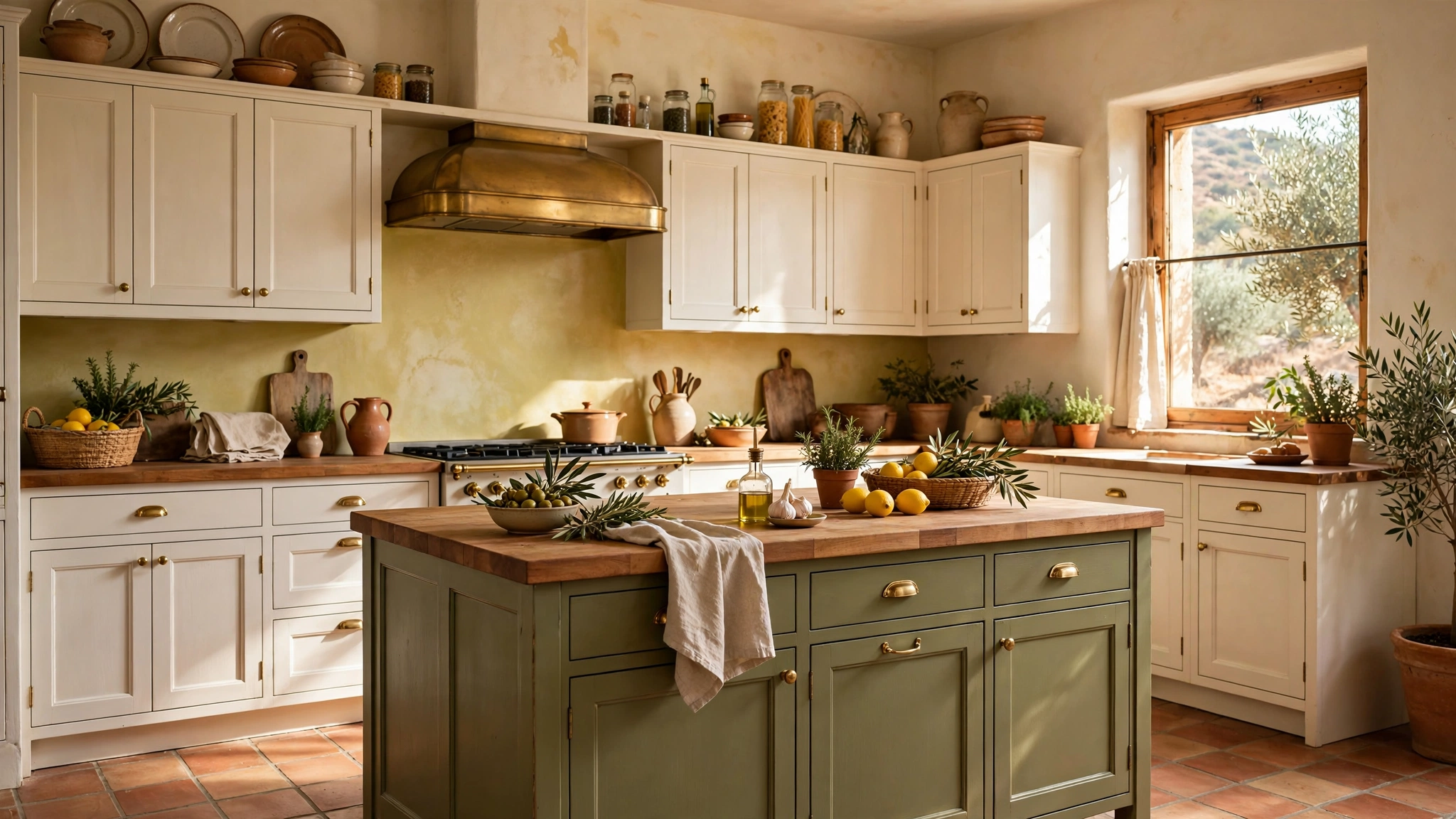
Color does heavy lifting in a Mediterranean kitchen. Build the palette from the landscape: olive and sage greens for a painted island or cabinetry, warm ochre and marigold for an accent wall or plastered hood, creamy plaster whites for the field color that lets everything breathe. These sun-baked tones flatter wood, terracotta, and tile at once — which is why the style feels so cohesive when layered.
Put the strongest colors where they carry impact with the least risk: an olive island with warm white perimeter cabinets, or ochre inside arched niches and on a pantry door. Test paint in morning and evening light — these palettes shift dramatically with the sun. Use matte or eggshell finishes; flat paint mimics old plaster far better than satin.
10. Build an Arched Cooking Alcove for the Range
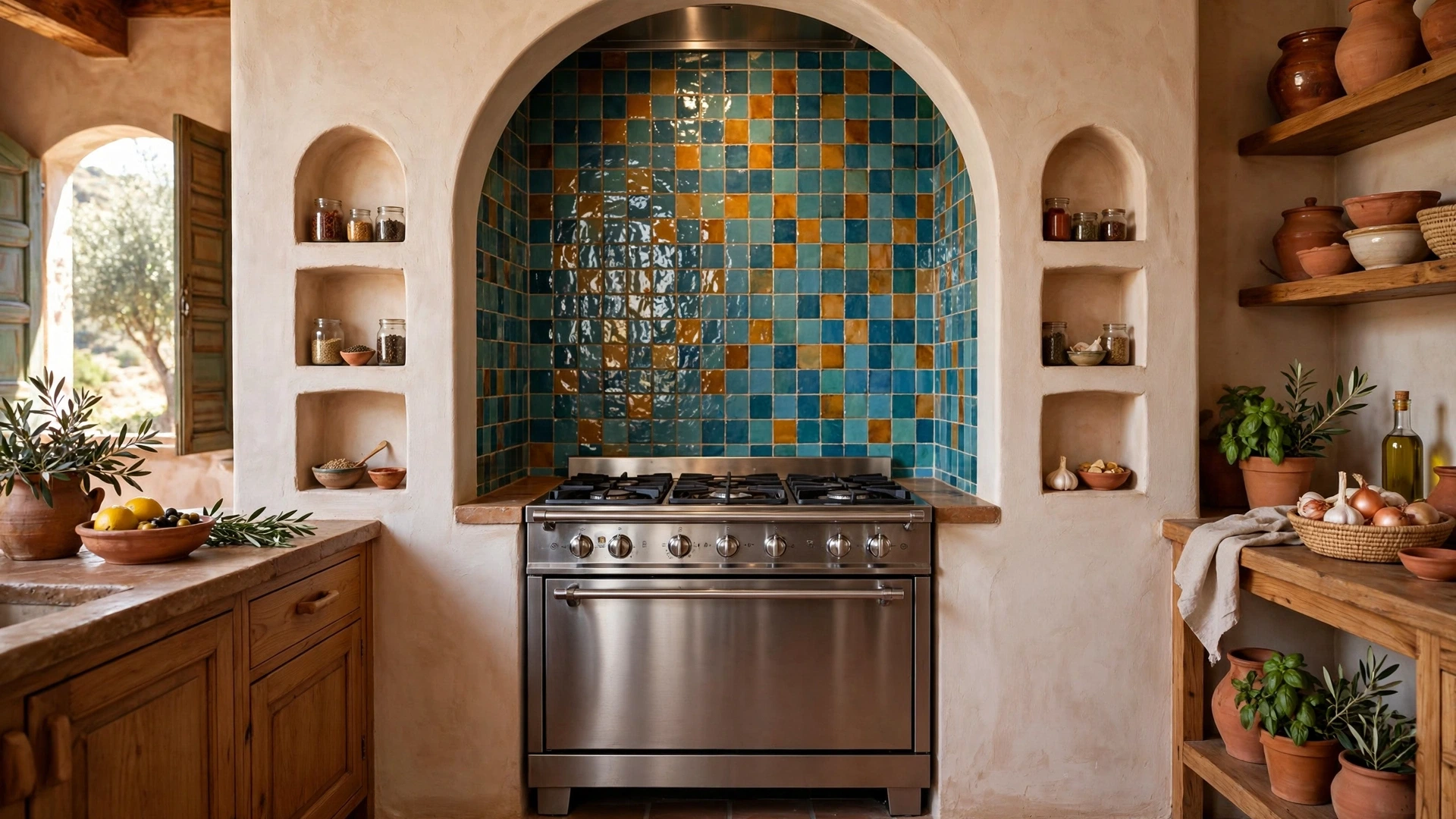
Set the cooker inside its own arched alcove — a recessed, plastered niche deep enough to house the range and its landing zones. Borrowed from the inglenook fireplaces of Mediterranean farmhouses, this frames cooking as the heart of the home and gives even a standard 30-inch range a sense of occasion. Tile the alcove interior in handmade-look zellige or small encaustic squares so it glows with pattern and reflected light.
Plan carefully: allow six inches of clearance on each side of the range, ventilate with a properly sized hood insert, and run heat-resistant tile or stone on every interior surface. Flank the alcove with open shelving or shallow spice niches carved into the plaster cheeks, and the whole wall becomes composed, functional architecture.
11. Center the Room on a Rustic Wood Island
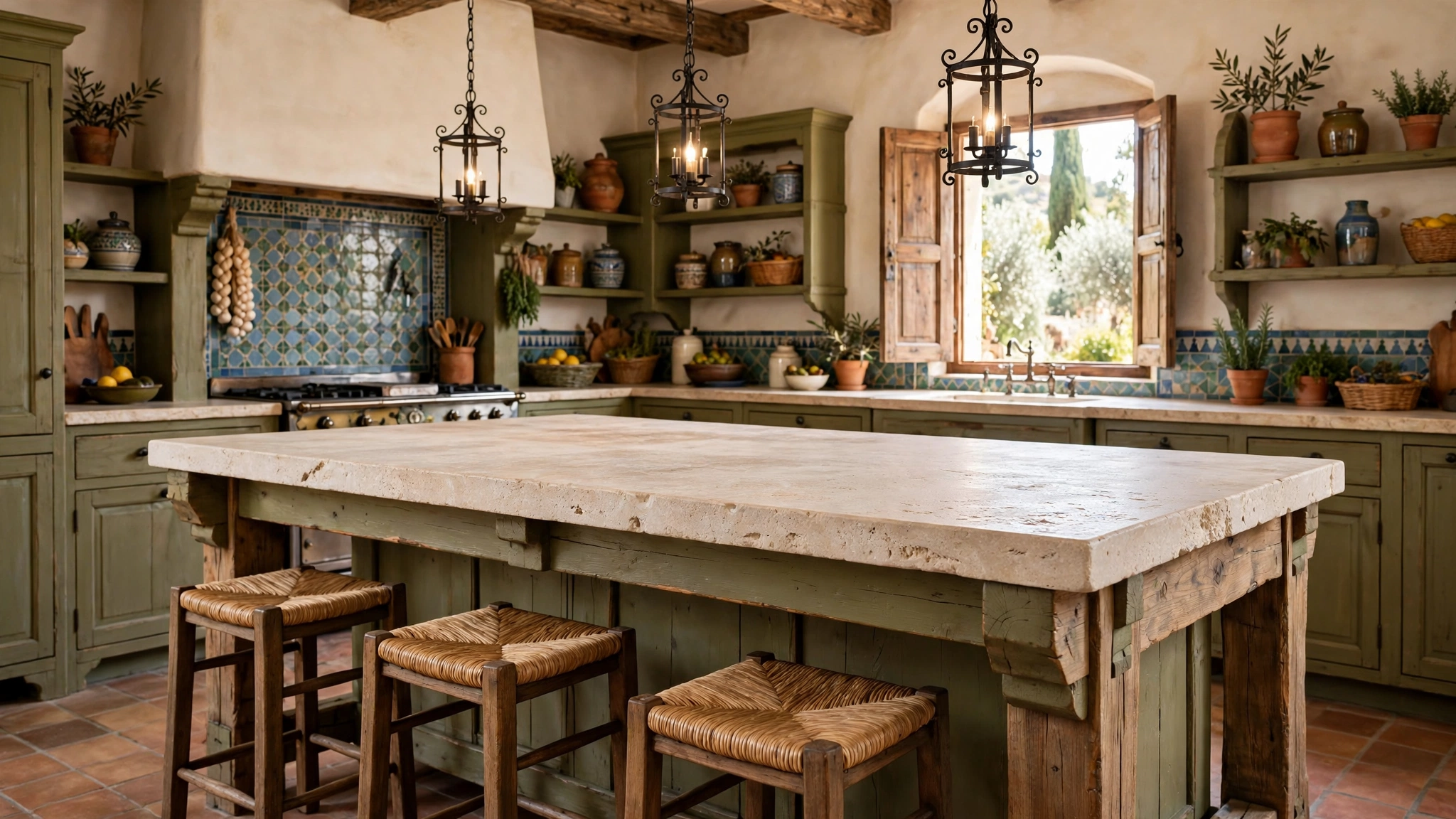
A chunky wood island grounds a Mediterranean kitchen the way a farmhouse table grounds a dining room. Look for a substantial piece — thick plank top, visible joinery, a lower shelf for baskets — in oak, chestnut, or reclaimed timber with a warm natural finish. It’s where dough gets rolled and everyone gathers. Size it generously but leave at least 42 inches of clearance on all working sides so the kitchen still flows.
Top it for beauty and practicality: a honed limestone or travertine slab keeps the Mediterranean material story going and hides etching better than polished marble, while a butcher-block section at one end makes a dedicated prep zone. Paint the base a contrasting tone — olive under a wood top — and add backless stools that tuck fully underneath.
12. Tile a Floor-to-Ceiling Feature Wall
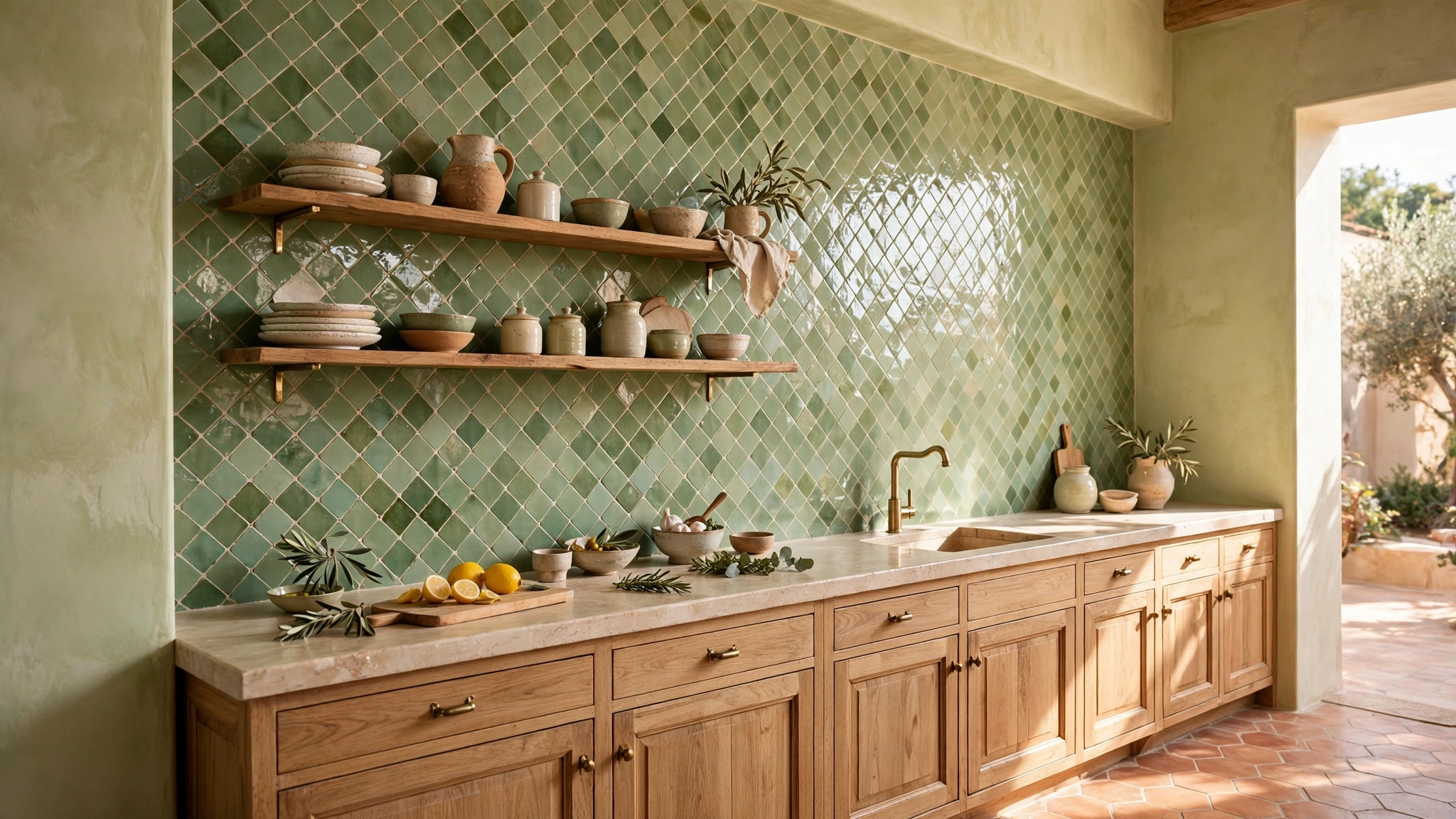
For maximum drama, take tile beyond the backsplash and run it floor to ceiling on a single wall. Glossy zellige in warm white, soft sage, or variegated terracotta creates a shimmering handmade surface that shifts with the day’s light — the slight unevenness of each tile is the entire point. Or run a full wall of patterned encaustic behind open shelving, turning storage into art with dishes silhouetted against the pattern.
Commit fully or not at all: a half-height wainscot with drywall above looks unfinished, while a confident floor-to-ceiling run reads as intentional architecture. Keep adjacent walls in quiet plaster or limewash, and repeat one tile color elsewhere — a sage zellige wall echoed in the island paint. Order all the tile at once and have the installer blend boxes while laying, since handmade-look tile varies box to box.
13. Finish Walls in Textured Limewash or Plaster
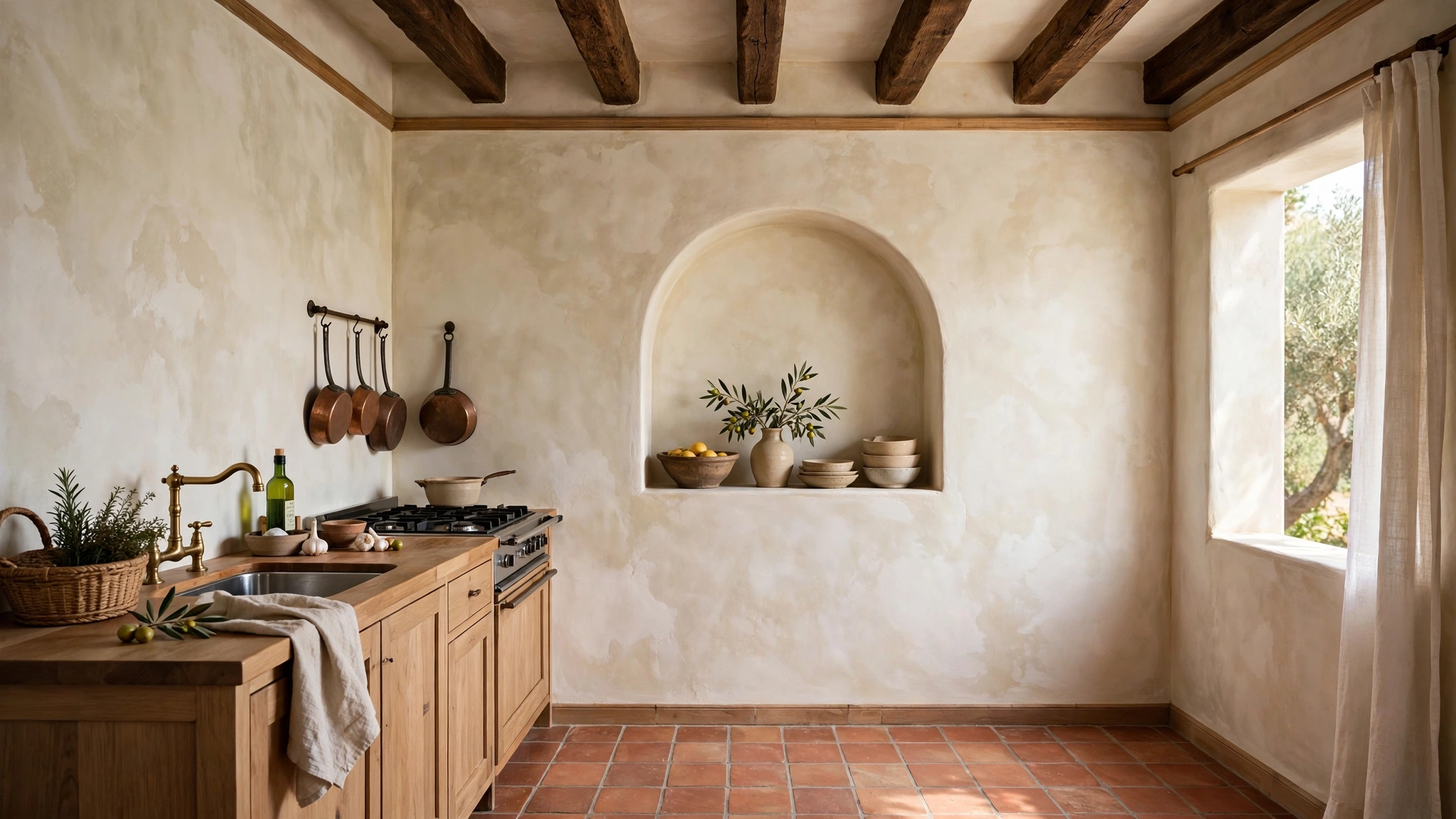
Flat painted drywall is the enemy of old-world warmth; textured plaster is its best friend. Limewash — traditional paint made from crushed limestone — gives walls a soft, cloudy movement flat paint can’t replicate, like the aged plaster of a centuries-old villa. Apply it in thin, crisscrossed layers, and the wall develops subtle tonal shifts that glow in natural light.
Choose warm-spectrum colors: creamy whites with a hint of umber, pale ochre, a whisper of terracotta. In a working kitchen, use interior-grade limewash and add a clear matte topcoat in splash zones behind the sink and range — traditional limewash alone isn’t scrubbable. The texture forgives imperfect walls, ideal for older homes. Pair plastered walls with simple wood trim or none at all; elaborate moldings fight the rustic simplicity.
14. Choose a Vintage-Style Range Cooker
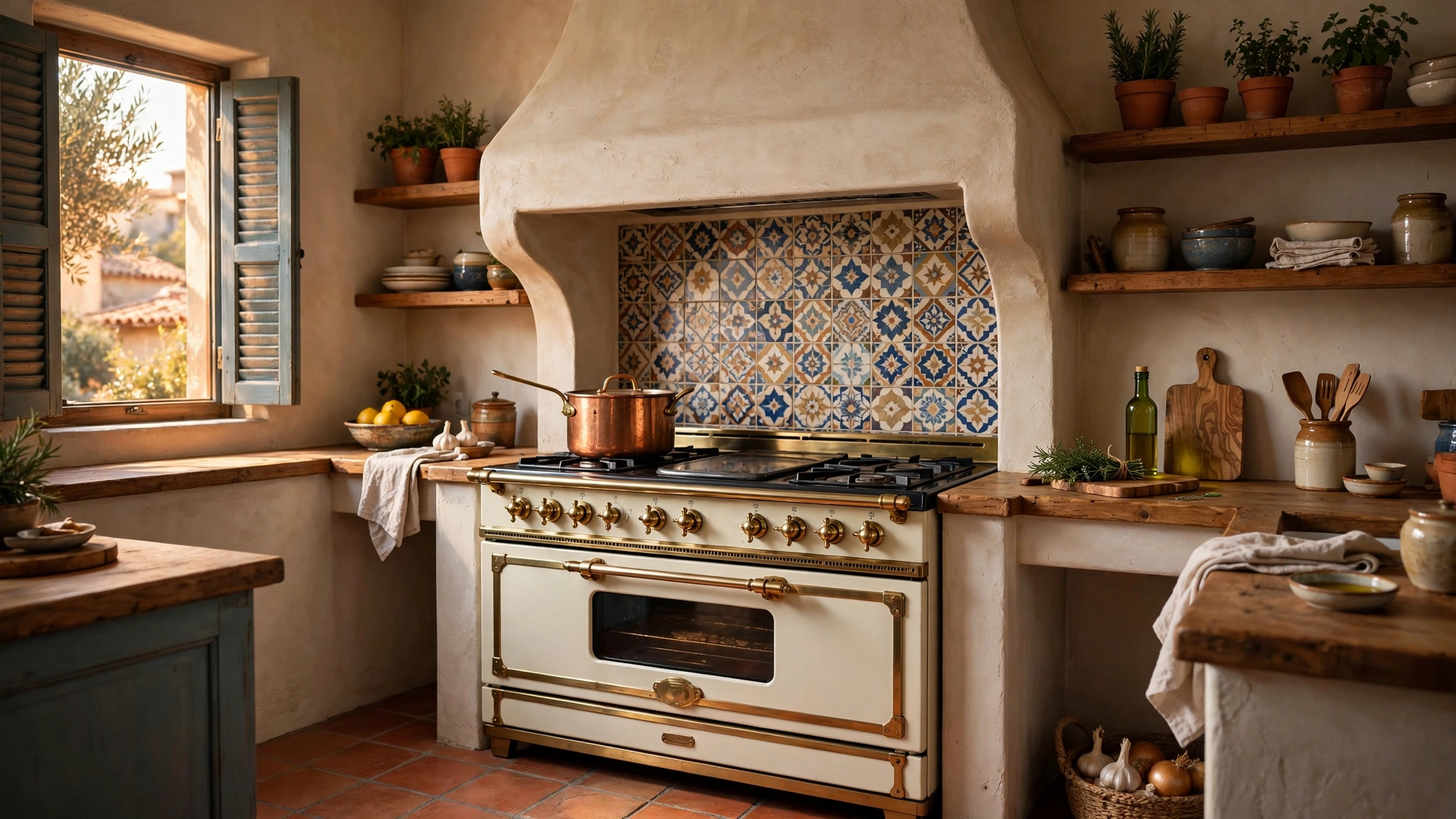
Nothing anchors a Mediterranean kitchen like a proper range cooker with old-world detailing: a wide freestanding cooker in cream, olive, or matte black with brass or copper trim, chunky knobs, and multiple ovens. The visual weight of a 36- or 48-inch range gives the cooking wall real gravitas against plaster and tile.
Check practicalities first: these ranges are heavy, need proper clearances, and often require upgraded gas or electrical service — involve your contractor early. If a full range cooker isn’t in the budget, capture the spirit with a standard slide-in in a warm finish plus brass hardware, set against a plastered hood and patterned backsplash; the surrounding architecture does most of the work. Keep the cooktop clear — a beautiful range deserves to be seen.
15. Create a Sunlit Breakfast Nook With Natural Textures
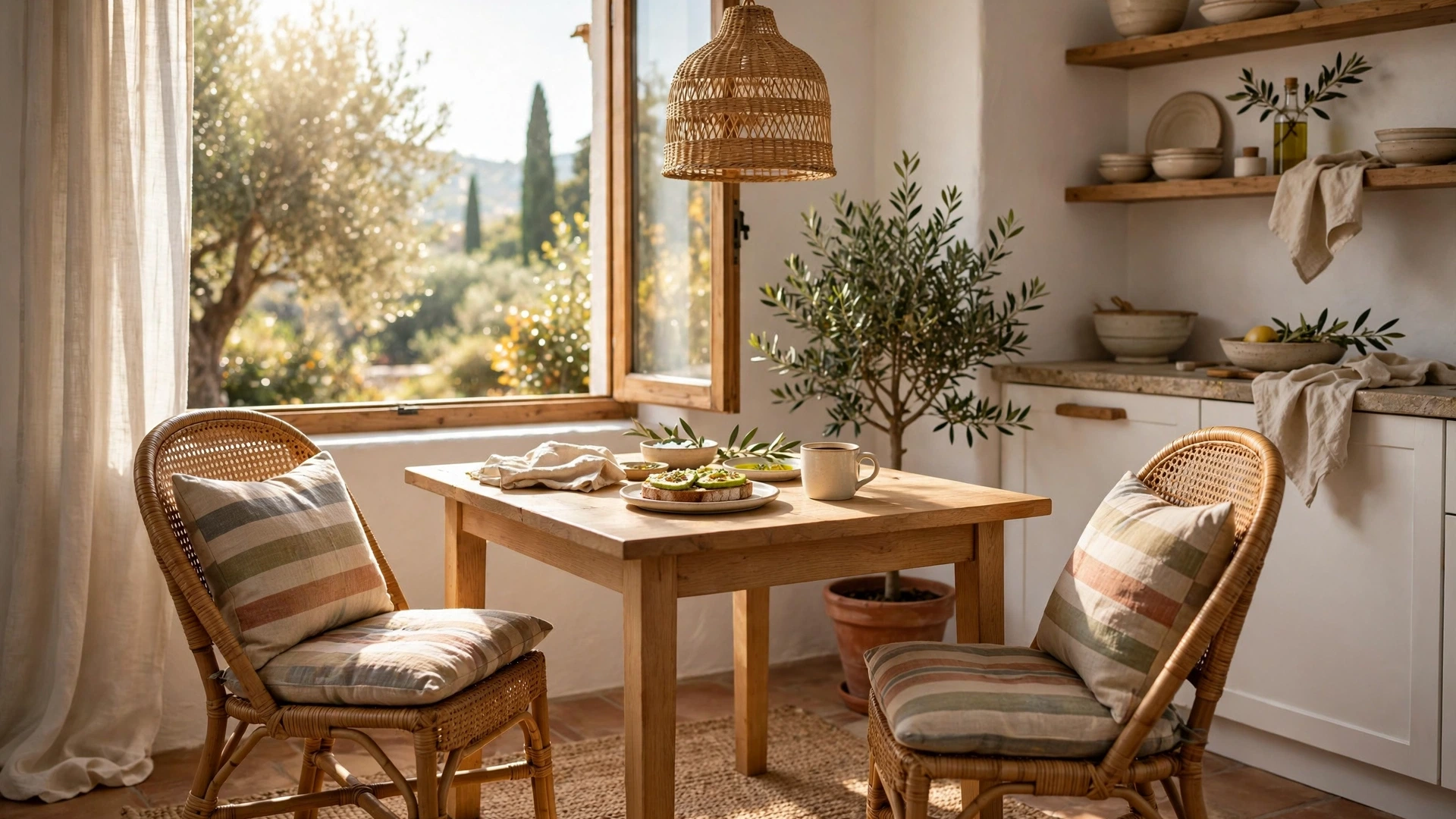
Every Mediterranean kitchen deserves a corner for slow mornings. Carve out a breakfast nook near the sunniest window — a built-in plastered bench or simple wood table with rattan chairs, dressed in washed linen cushions in sand, olive, and faded terracotta stripes. A potted olive tree or citrus plant in a terracotta pot beside the table brings the outdoors in better than any accessory.
Keep materials honest and touchable: a jute rug underfoot, a linen runner, ceramic tableware. Built-in benches are worth it in small kitchens — they tuck tight to the wall and often hide storage; top them with a thick cushion in outdoor-grade fabric so coffee spills wipe away. Hang a wrought iron or rattan pendant low over the table to define the zone, and you’ll have the spot that draws everyone in — the entire point of a Mediterranean kitchen.
Frequently Asked Questions
What defines a Mediterranean kitchen style?
Warm, natural materials and old-world architectural details from coastal Spain, Italy, and Greece define it: terracotta or stone floors, plaster or limewash walls, arched doorways and niches, patterned encaustic or zellige tile, warm wood beams and cabinetry, and wrought iron accents. The palette stays earthy — ochre, olive, cream, burnt orange — and the feeling is sun-soaked and handcrafted, never sleek or minimal.
How can I get a Mediterranean look on a budget?
Start with high-impact, low-cost changes: paint the island olive or sage, swap hardware for aged bronze or iron, and add a patterned tile backsplash — one wall of tile transforms the room. Open shelving with affordable terracotta and stoneware, a limewash accent wall, and a jute runner deliver the feeling without structural work. Save arches, plastered hoods, and terracotta floors for a later renovation phase.
Does a Mediterranean kitchen work in a small space?
Absolutely. Light plaster walls and a single patterned backsplash add character without bulk, open shelving keeps things airy, and a built-in banquette saves floor space versus a table and chairs. Use beams and arches selectively — one arched niche, not a full beamed ceiling — keep the palette light and warm, and let one strong material, like a terracotta floor or zellige wall, carry the story.
How do I maintain terracotta floors and plaster walls in a kitchen?
Seal terracotta floors with a penetrating sealer before grouting and reseal high-traffic areas every one to two years; clean with a pH-neutral stone cleaner, never vinegar or harsh detergents, which erode the sealer. For limewash or plaster walls, choose interior-grade formulas and add a clear matte protective coat in splash zones near the sink and range. Both materials age gracefully — small patina marks only add to the old-world character.
Keep Exploring
A Mediterranean kitchen isn’t built in a single renovation — it’s layered over time, one honest material at a time. Whether you start this weekend with a patterned tile backsplash and a coat of olive paint, or plan the full vision with terracotta floors and a plastered range hood, each of these fifteen ideas moves your kitchen closer to that sun-soaked, old-world warmth. Pick the one that speaks to you, live with it for a while, and let the room tell you what it wants next.
If you love this sun-warmed, collected look, keep exploring: our cottage kitchen design ideas full of cozy charm, the modern farmhouse kitchen design ideas full of warm character, and the sage green kitchen design ideas that feel fresh and timeless.





[…] charm, browse our 15 cottage kitchen design ideas, and for old-world European warmth try the 15 Mediterranean kitchen design ideas. If you love the timeless white base that vintage details shine against, the 15 white kitchen […]