
The kitchen is the hardest-working room in the house — and usually the loudest one, visually speaking. Open a random cabinet and you’re met with a jumble of gadgets, mismatched containers, and small appliances competing for counter space. These Japandi kitchen design ideas take the opposite approach: fewer things, better made, and arranged with intention, so the room where you start every morning feels as calm as the bedroom you just left.
Japandi — the fusion of Japanese minimalism and Scandinavian warmth — translates beautifully to kitchens. From Japan it borrows clean lines, natural materials, and the discipline of keeping only what you use; from Scandinavia it takes pale woods, soft light, and the belief that everyday rituals (yes, even washing dishes) deserve a beautiful setting. The result isn’t a showroom you can’t cook in — it’s a working kitchen where everything has a place and the visual noise is turned all the way down.
The fifteen Japandi kitchen design ideas below are practical for real cooking, not just for photographs. Each one stands alone, but together they build a kitchen that stays serene on a Tuesday night, not just on moving-in day.
1. Flat-Panel Light Oak Cabinetry
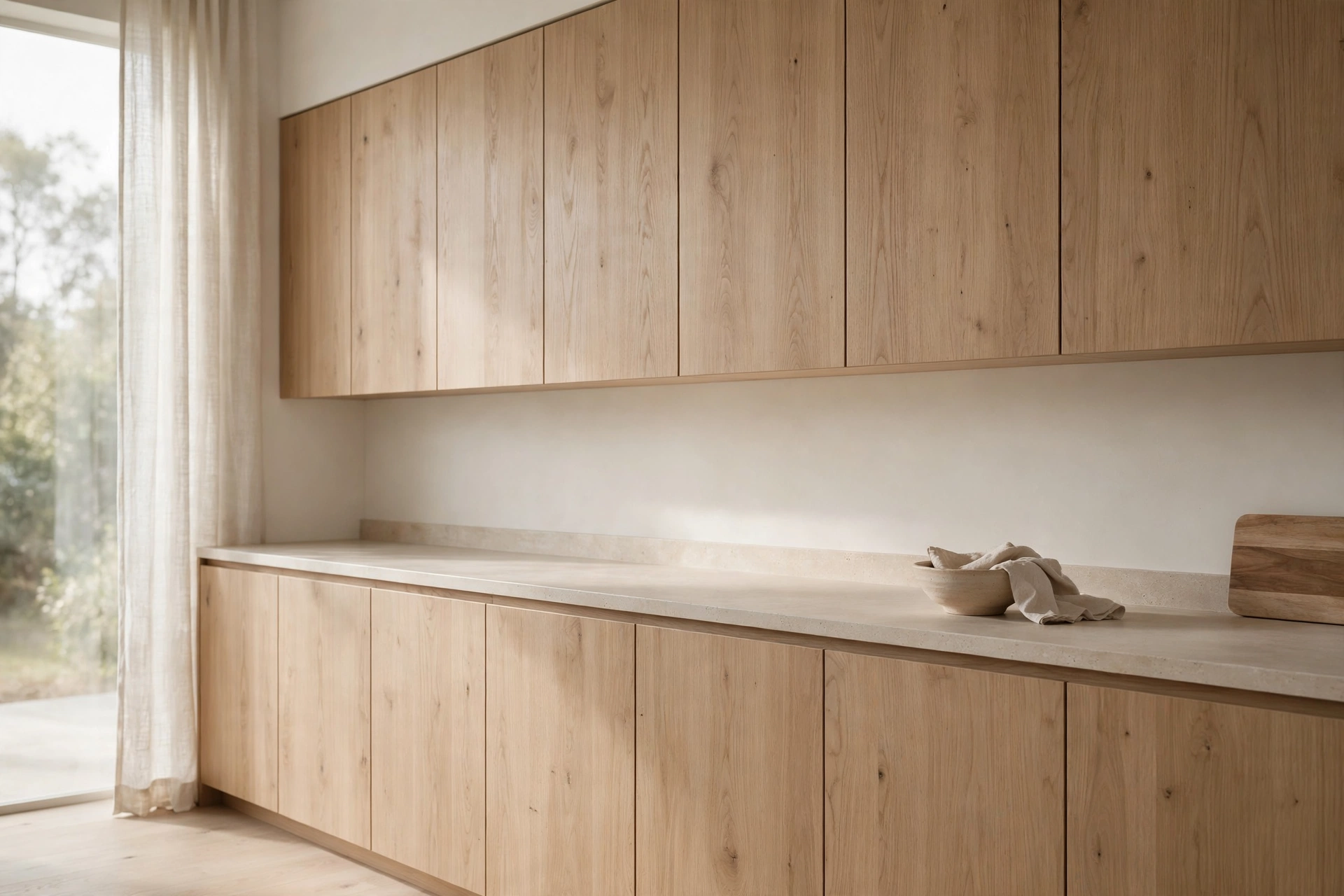
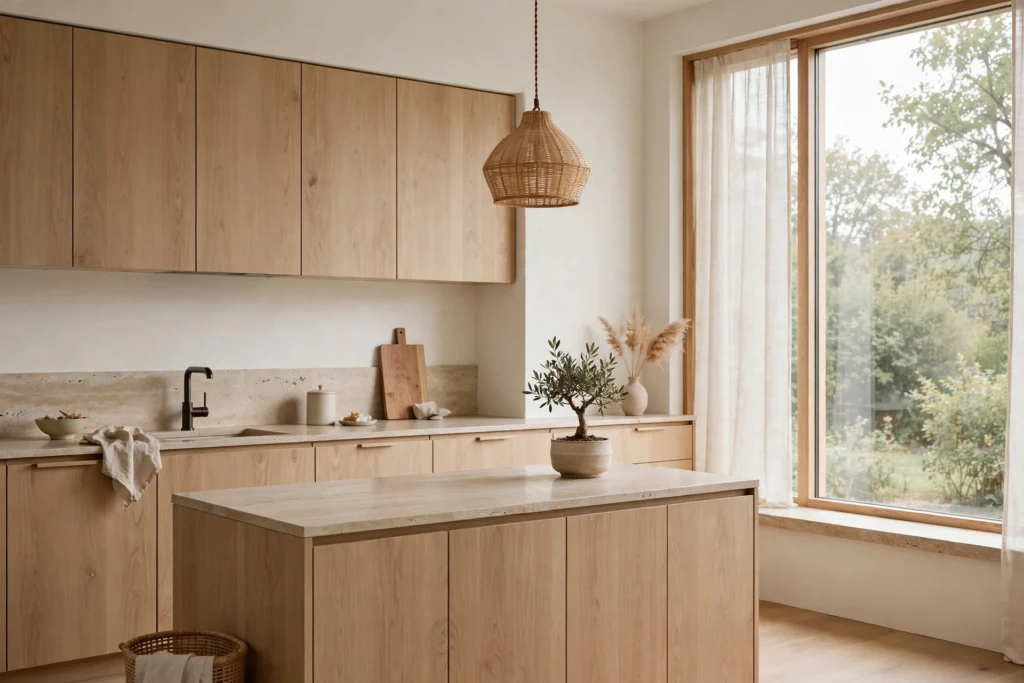
The fastest way to calm a kitchen is to simplify its largest surface: the cabinets. Choose flat-panel (slab) doors in light oak or ash with a clear matte finish that lets the grain show through — no raised panels, no busy profiles, no dark stains. The unbroken planes of pale wood immediately quiet the room, and the natural variation in the grain keeps it from feeling flat or sterile. Keep the layout simple too: full-height runs with minimal breaks read as one continuous, restful surface. If a full replacement isn’t in the budget, refacing existing boxes with oak-veneer slab fronts delivers most of the effect for a fraction of the cost.
2. Handleless Cabinets with Push-to-Open Hardware
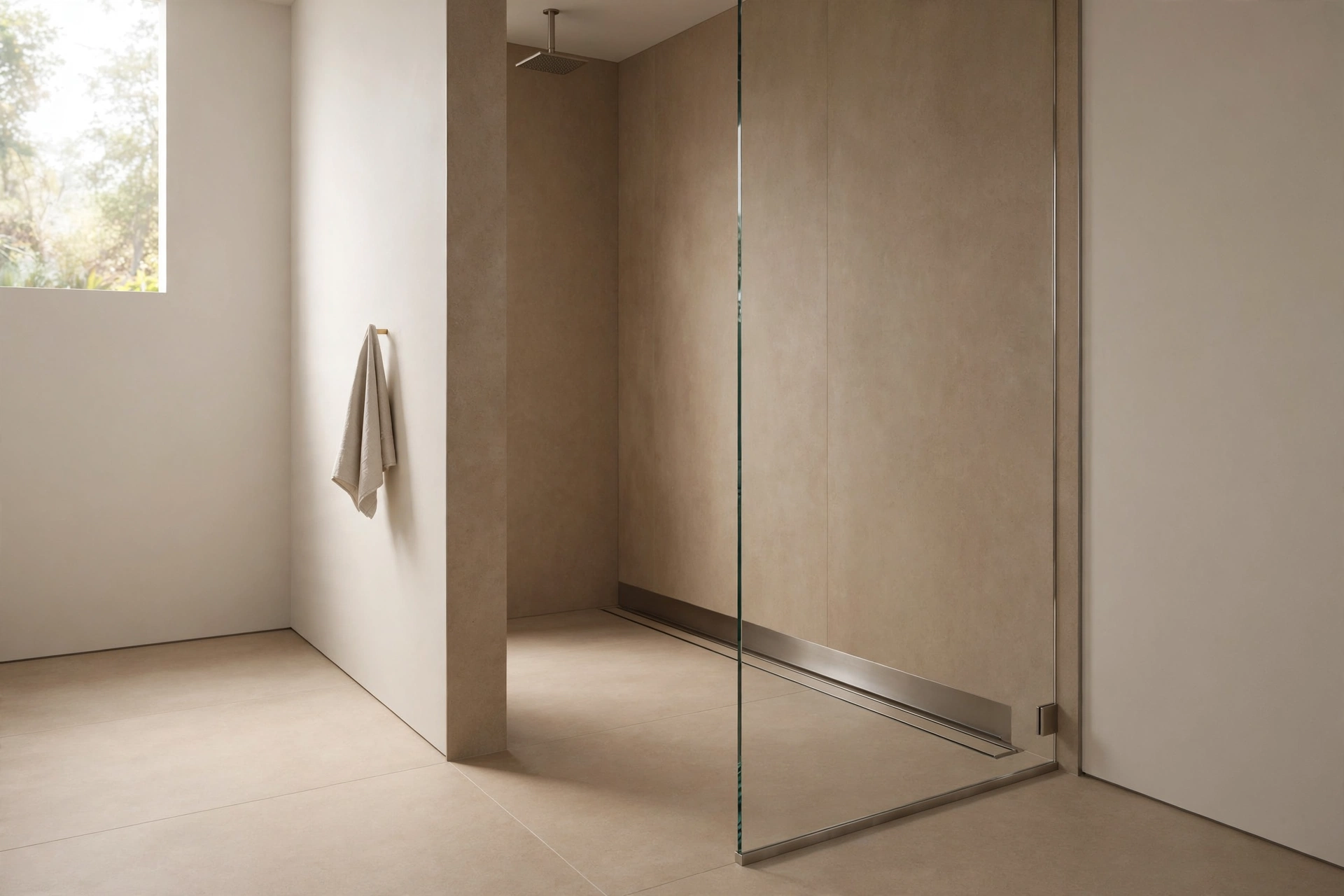
Handles are small, but dozens of them create surprising visual clutter. Go handleless with push-to-open latches or discreet integrated finger pulls routed into the top edge of each door. The result is a seamless wall of wood where nothing interrupts the eye — one of the simplest Japandi kitchen design ideas with the biggest payoff. Push latches work best on base cabinets and drawers; for wall cabinets, a slim recessed channel along the bottom edge gives you grip without hardware. One practical note: matte finishes show fewer fingerprints than you’d expect, but keep a soft cloth handy near the most-used drawers.
3. Warm White and Wood Two-Tone Palette
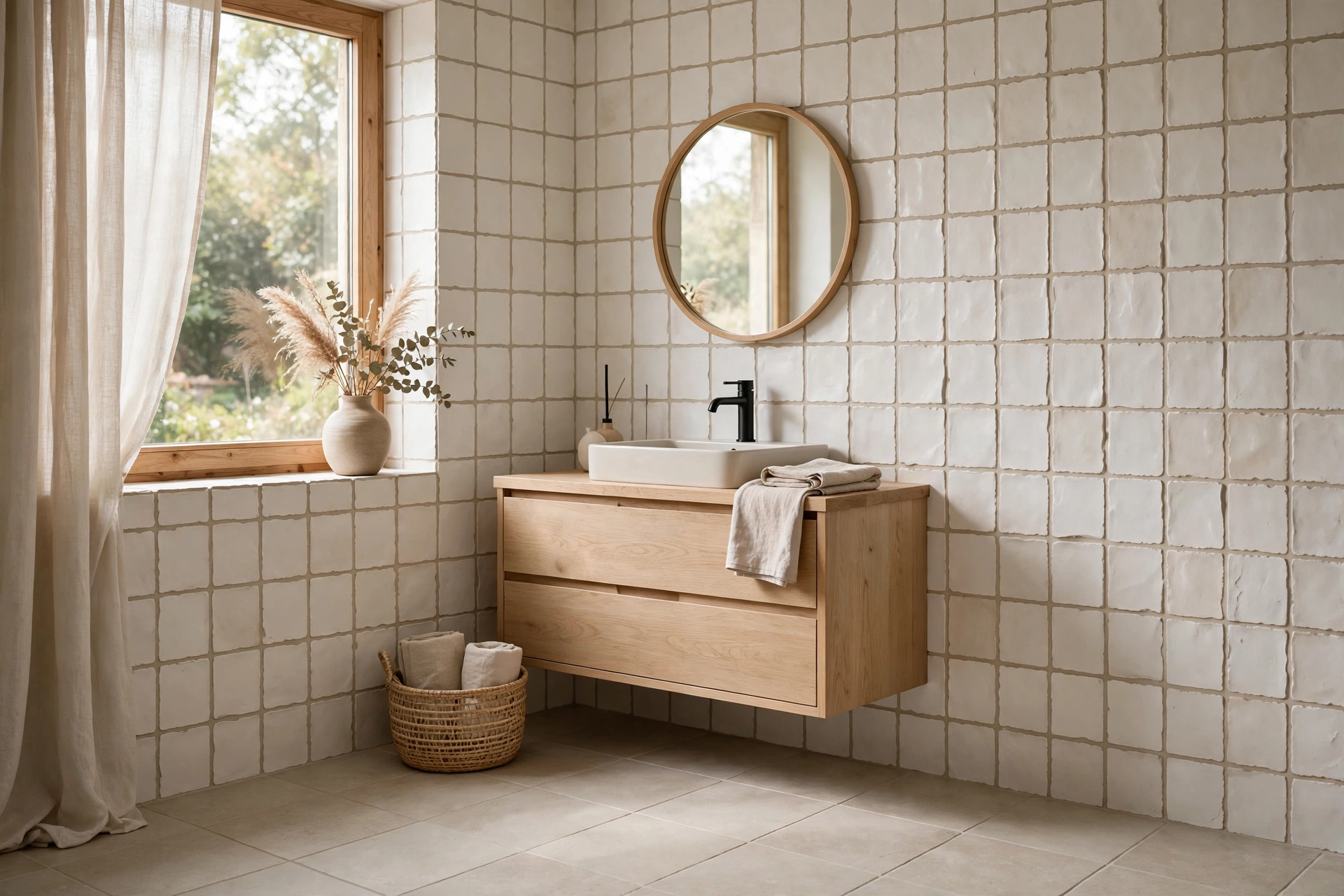
A full-wood kitchen can feel heavy; an all-white one can feel cold. The Japandi answer is a calm two-tone: warm white uppers (or walls) paired with light oak lowers, or vice versa. The contrast is gentle — both tones sit in the same warm family — but it’s enough to give the room structure and keep it from feeling one-note. Paint walls and ceiling in a warm off-white with a creamy undertone, avoiding blue-white shades that read as clinical. If you already have white cabinets, adding a single oak element — open shelves, an island, or even just oak drawer fronts on the island — pulls the whole room into Japandi territory.
4. Natural Stone or Butcher-Block Countertops
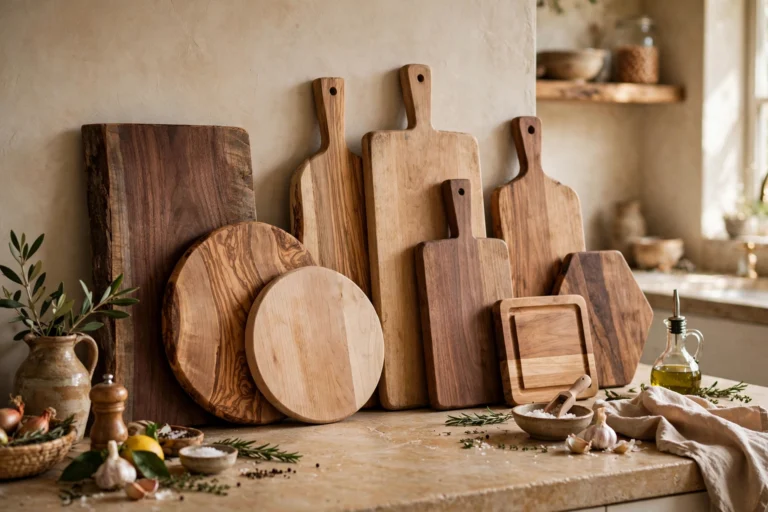
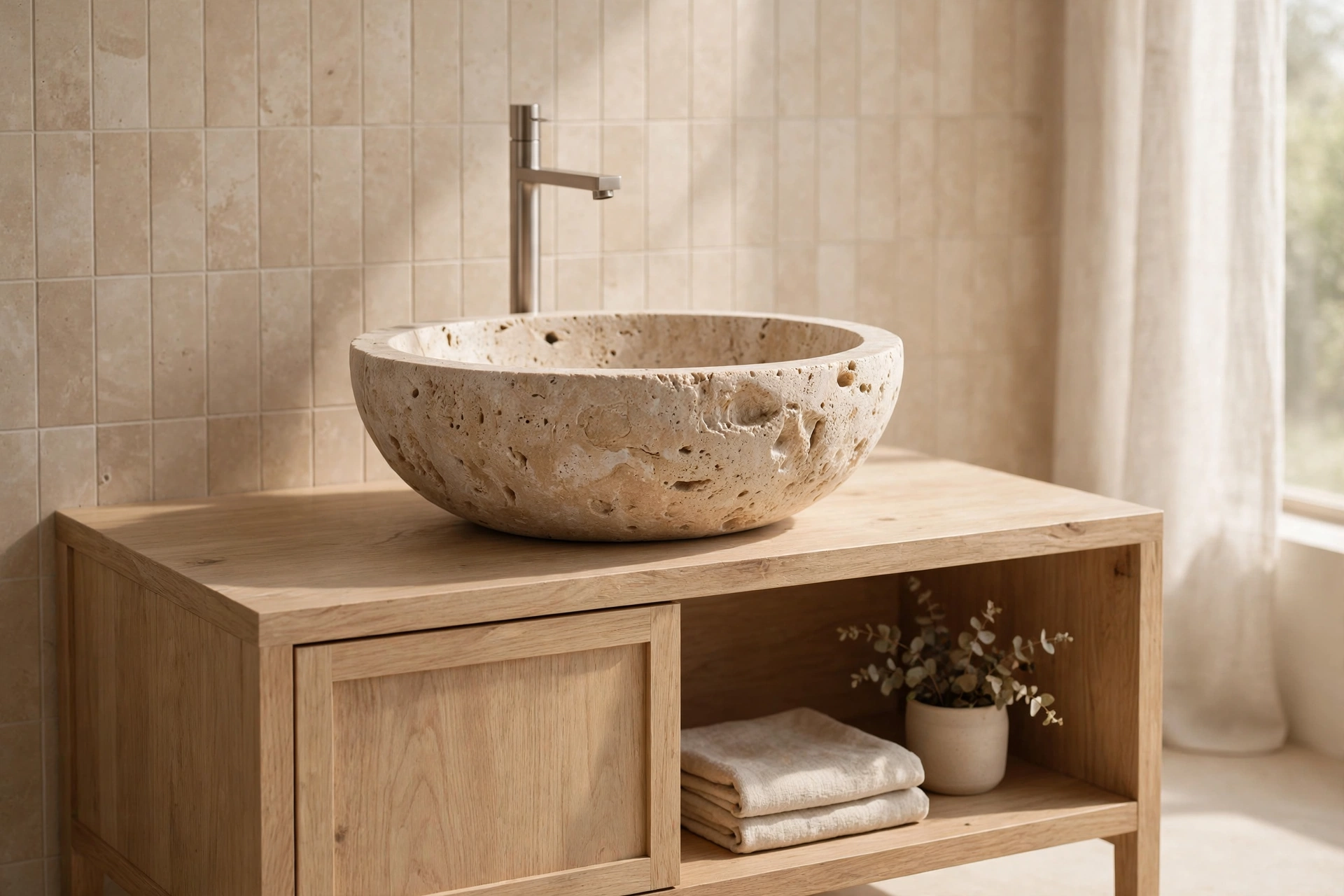
Countertops are the kitchen’s workbench, and Japandi favors honest, touchable materials. Honed marble, soapstone, or a light granite with soft movement brings natural pattern without the busyness of heavy veining; a thick butcher-block top in oak or ash is warmer and wonderfully practical for a baking zone. Avoid high-gloss polished finishes — the soft, matte surface is what keeps the room calm. Whatever you choose, keep the palette quiet: whites, warm grays, and pale beiges that let the wood cabinetry be the star. Seal natural stone properly and embrace the small marks of use; in the wabi-sabi spirit, a little patina is character, not damage.
5. Minimal Open Oak Shelving
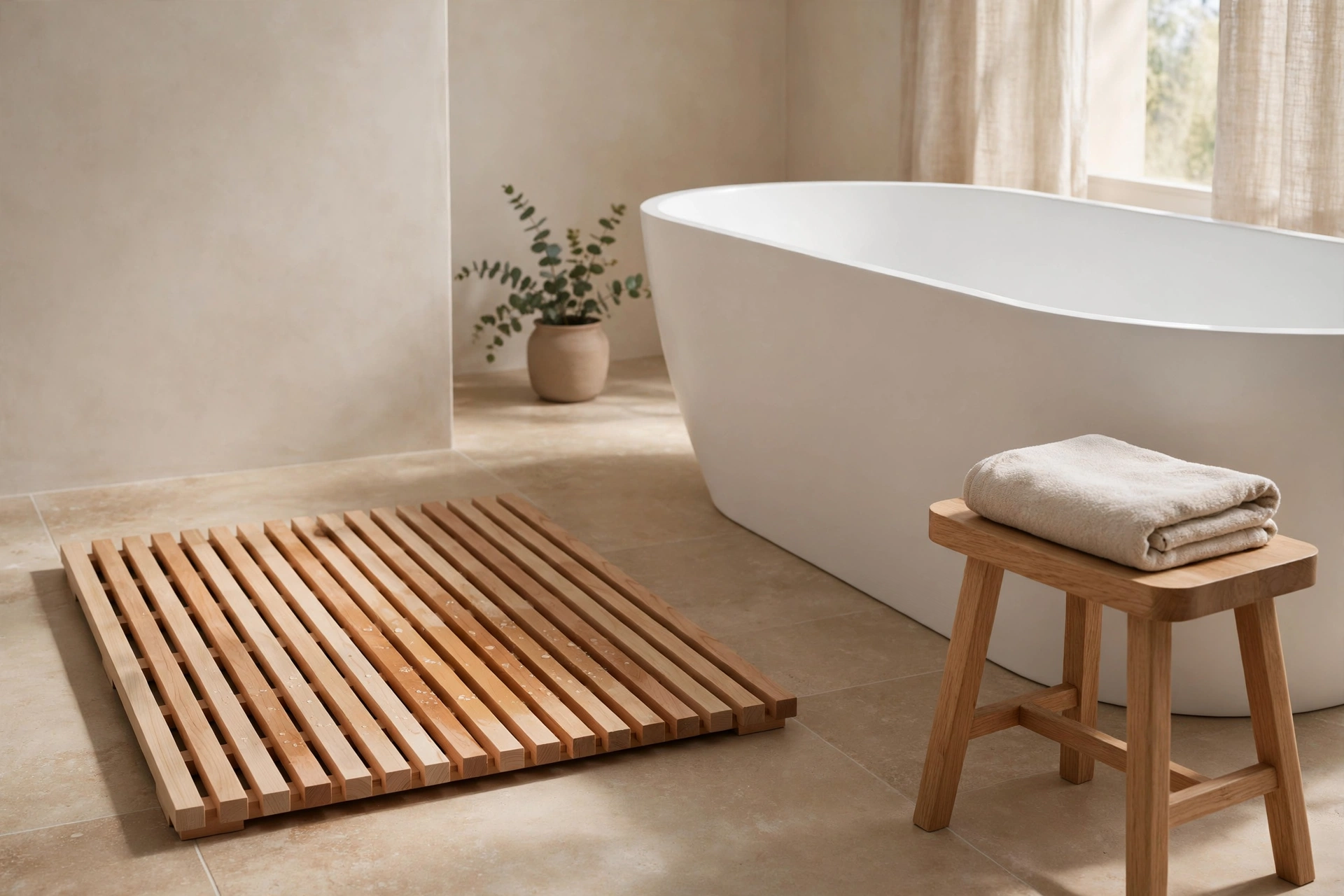
A short run of open shelving — one or two oak shelves, not a whole wall — adds airiness and a place for the beautiful everyday things. The key is ruthless curation: matching everyday bowls, a row of clear glass jars with dry goods, and one handmade ceramic piece. That’s it. Style in odd numbers, leave generous empty space between groups, and never let the shelves become overflow storage. Mount them away from the stove to avoid grease, and choose a spot you see often — beside a window is ideal — so the shelves read as a quiet display rather than a cupboard with its doors off. If open shelves stress you out, a single shelf is plenty.
6. One Metal Accent, Used Sparingly
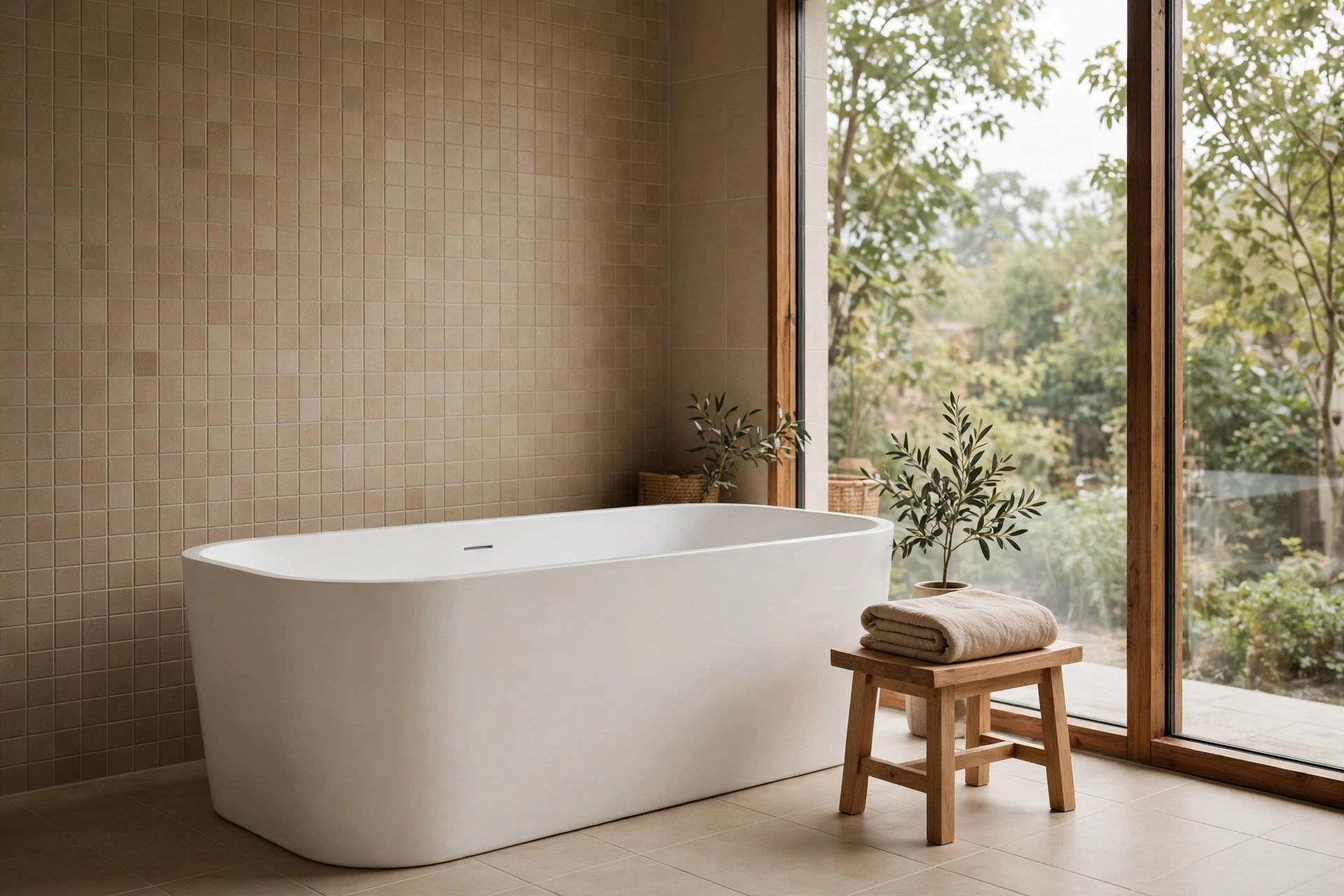
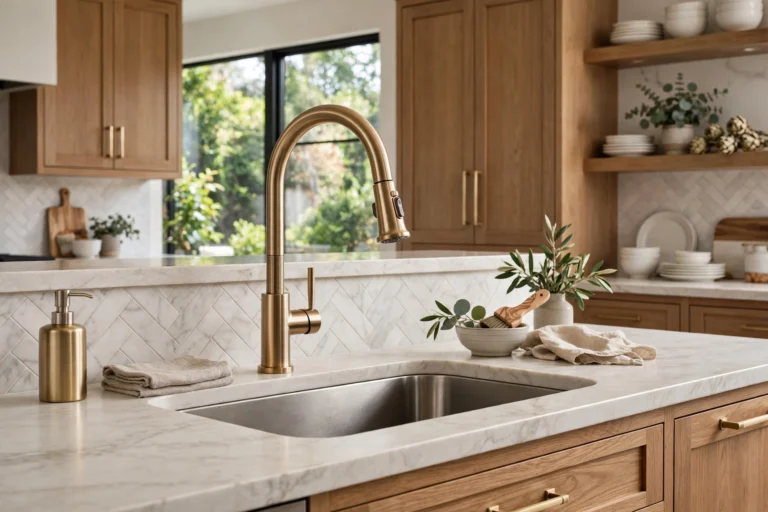
Japandi kitchens are mostly wood, stone, and linen — which is exactly why a single metal accent sings. Choose one finish and use it consistently: matte black for faucets, cabinet latches, and pendant cords, or brushed brass for the faucet and a pair of pendant lights. The restraint is the point — one metal, repeated three or four times, ties the room together without introducing visual noise. Avoid mixing chrome, nickel, brass, and black in the same sightline; that’s four competing voices in a room designed for quiet. If your appliances are stainless steel, treat that as your metal and keep everything else warm and matte.
7. Large-Format Neutral Tile Backsplash
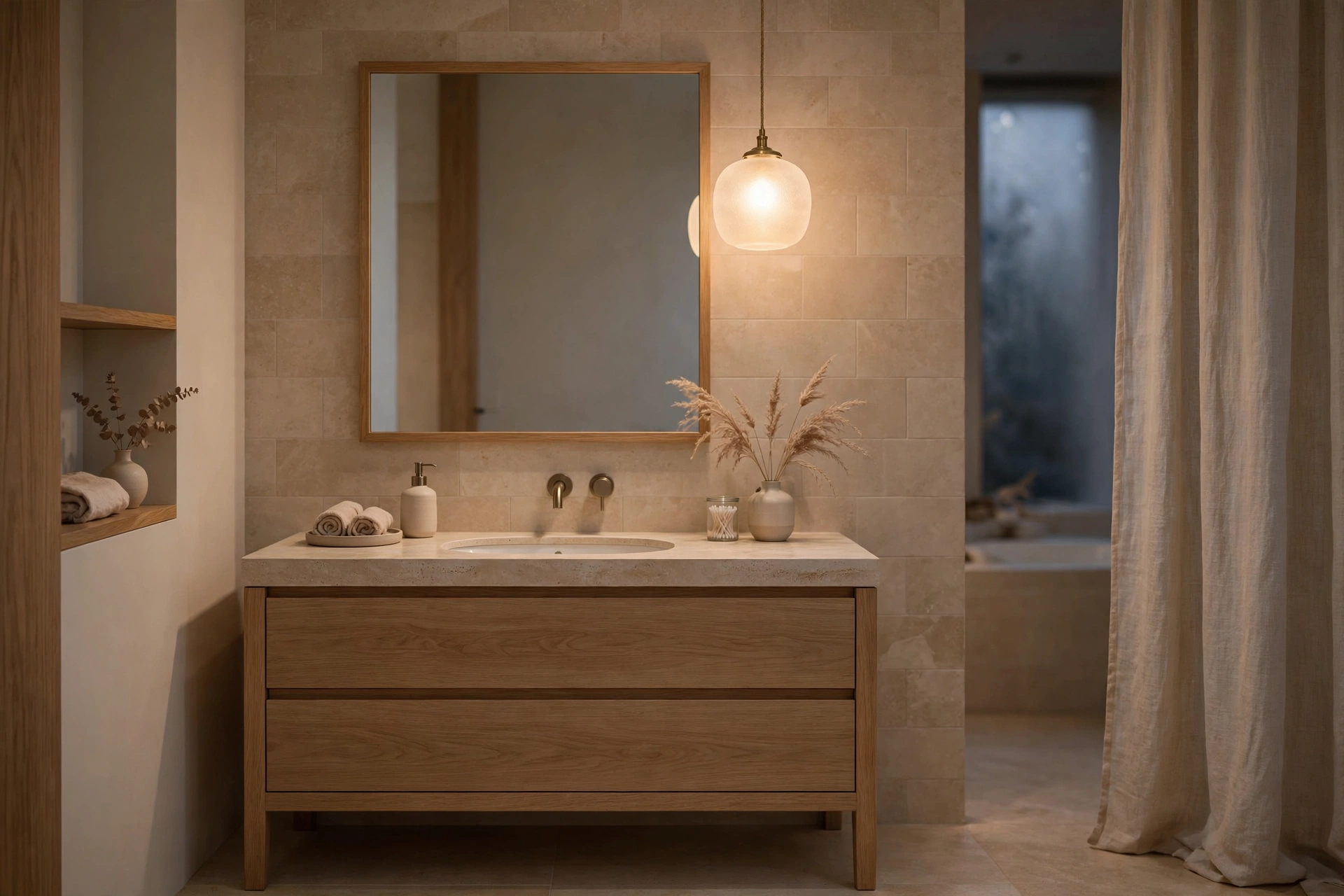
Small mosaic tiles mean hundreds of grout lines — visual static in a calm kitchen. Instead, choose large-format tiles (30×60 cm or larger) in a warm white, soft greige, or pale zellige-look glaze, laid in a simple stacked pattern. Fewer grout lines mean a quieter wall and far easier cleaning. Handmade-look tiles with slight variation in tone add the wabi-sabi warmth that flat ceramic lacks; just keep the color within your neutral palette. Run the tile from counter to ceiling behind open shelves or the range for a full, intentional look, and use a grout color close to the tile so the lines nearly disappear.
8. Concealed Appliances Behind Paneling
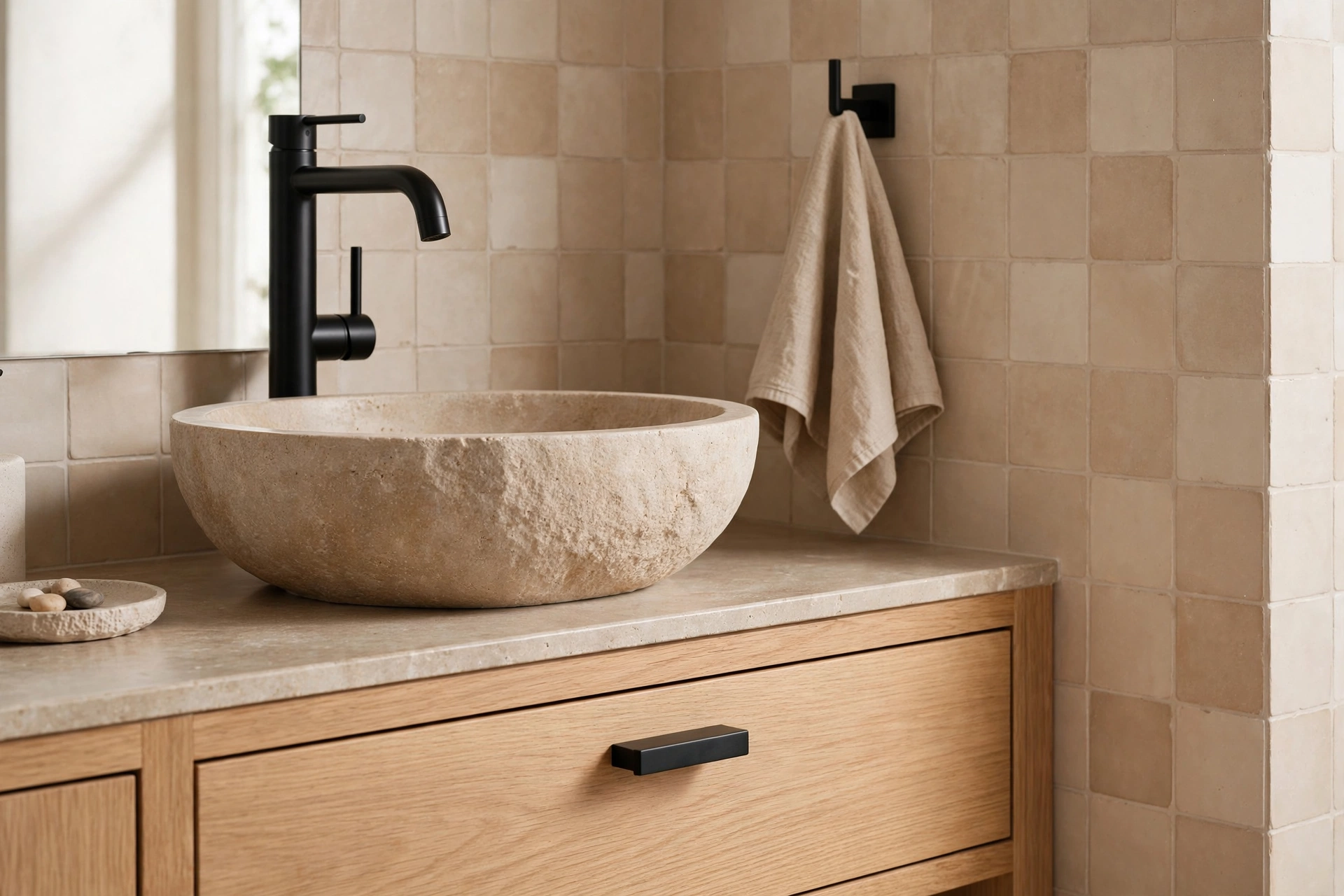
Nothing breaks kitchen calm faster than a wall of mismatched appliance fronts. Where budget allows, integrate the big ones: panel-ready dishwasher and refrigerator fronts in the same oak as your cabinets make them vanish into the run. For the microwave, skip the countertop model entirely — tuck it into a tall cabinet niche or a dedicated drawer unit. Smaller appliances follow the same logic in idea #11’s appliance garage. You don’t need to hide everything; even paneling just the dishwasher and fridge removes the two largest visual interruptions and lets the wood do the talking.
9. A Single Low Wooden Island
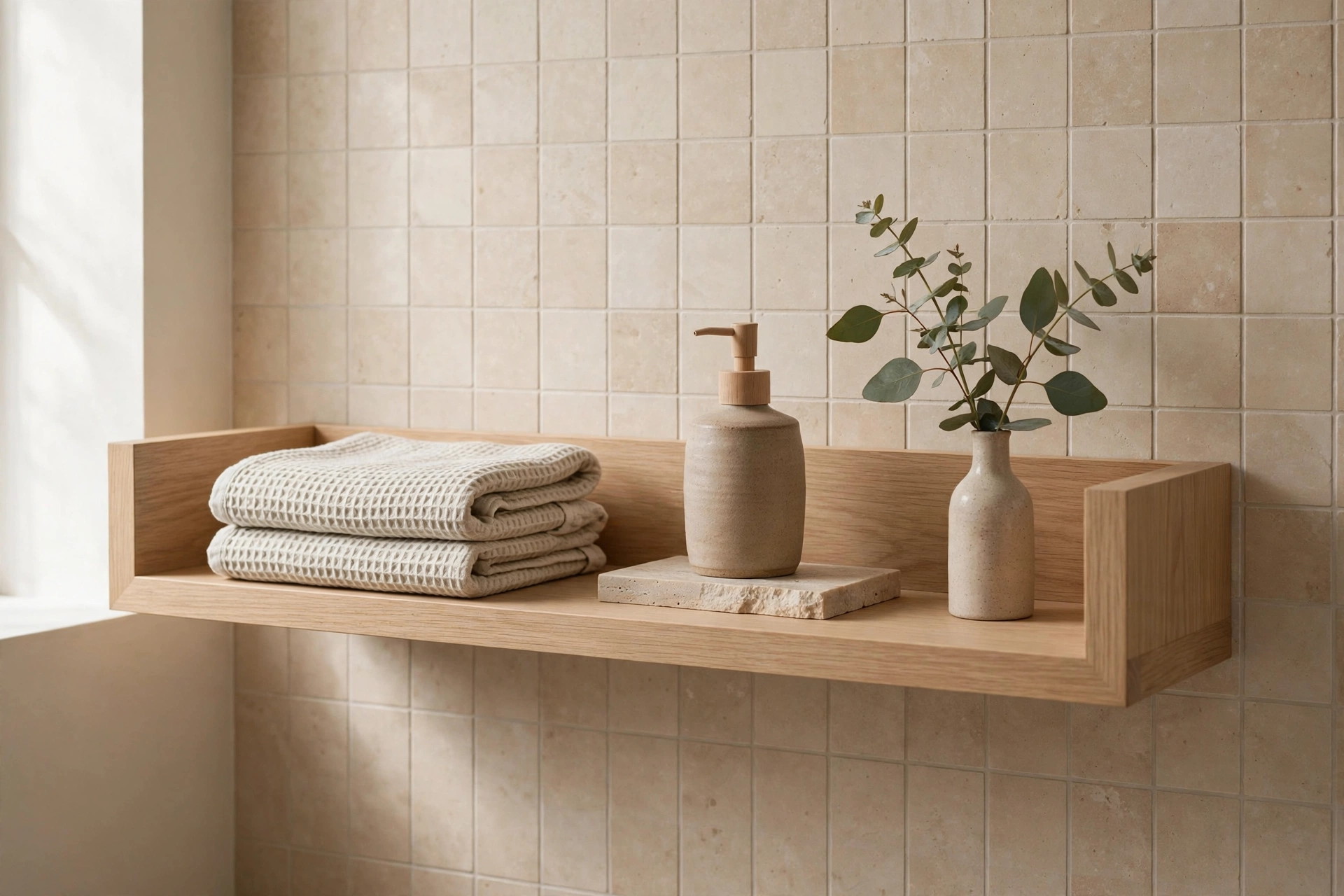
If your layout allows an island, make it one confident piece rather than a cluster of functions. A simple oak island — clean slab sides, no raised bar, no fussy corbels — anchors the room and adds the work surface every cook wants. Keep it low and visually light: open shelving on one side for cookbooks and ceramics beats more closed cabinets, and a waterfall edge in the same wood (not stone) keeps it feeling like furniture. Resist loading the island with the sink, the cooktop, and seating all at once; in Japandi design, the island’s breathing room is as important as its storage. One pendant light or a pair, centered, is all the adornment it needs.
10. Washi Paper Pendant Lighting
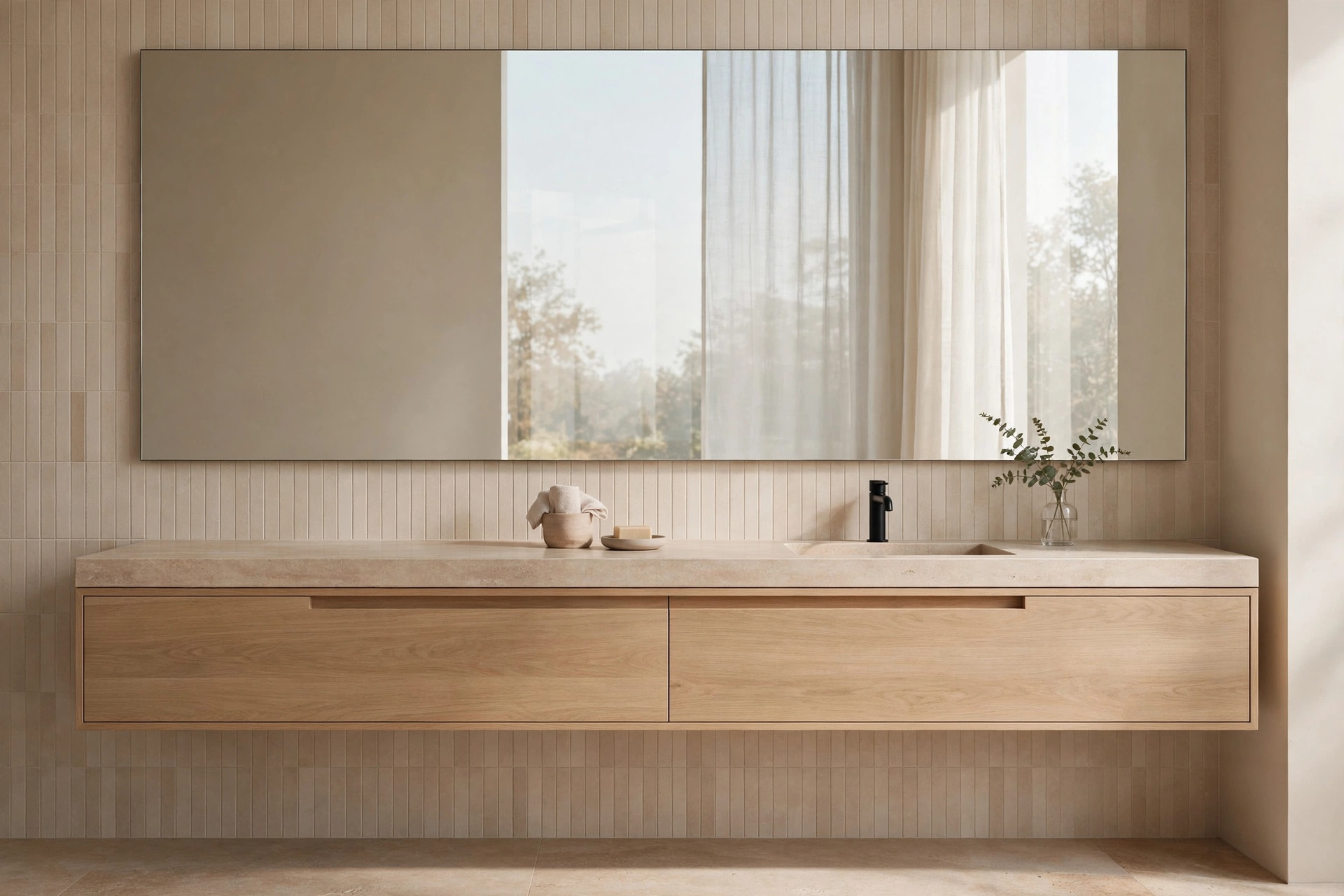
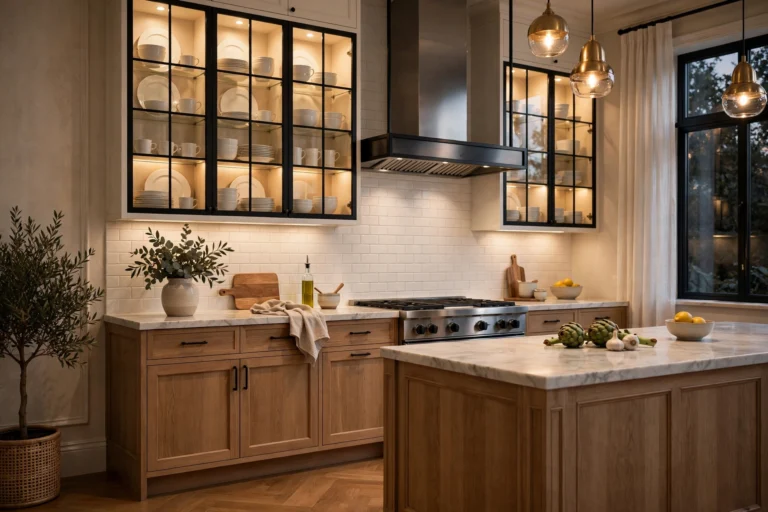
Overhead spots can make a kitchen feel like a laboratory. Instead, hang one or two washi paper pendants over the island or dining zone — their soft, diffused glow flatters wood, stone, and faces alike, and the handmade paper brings an unmistakable Japanese craft note. Choose a simple globe or lantern form, sized generously (one large pendant beats three small ones), and fit warm 2700K bulbs. Keep task lighting where it belongs: discreet LED strips under wall cabinets handle chopping and reading recipes, so the pendants are free to set the mood. Dimmers on both circuits let the kitchen shift from prep mode to evening calm.
11. Clutter-Free Counters with an Appliance Garage
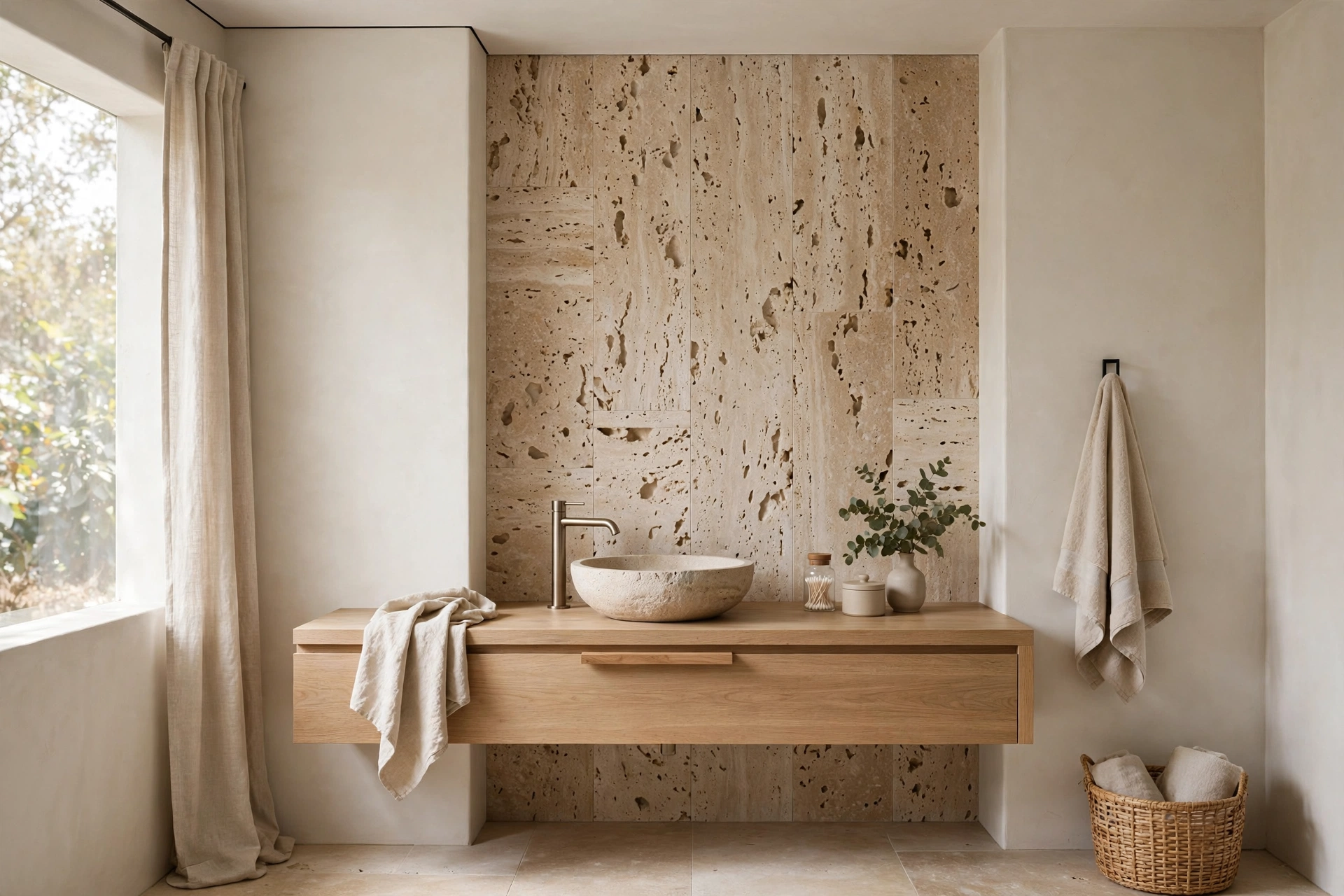
Here’s the unglamorous secret behind every serene kitchen photo: the small appliances live behind closed doors. Build or retrofit an appliance garage — a tall cabinet with a retractable or pocket door housing the toaster, kettle, and coffee maker, with an outlet inside so they never migrate to the counter. Give everything else the same discipline: cooking oils in one cabinet near the stove, spices in a drawer insert, utensils in a single crock. The rule is simple and absolute — when you’re done, the counters hold nothing except perhaps a cutting board and one ceramic piece. A kitchen that resets to empty in two minutes stays calm all week.
12. Wabi-Sabi Ceramic Dishware
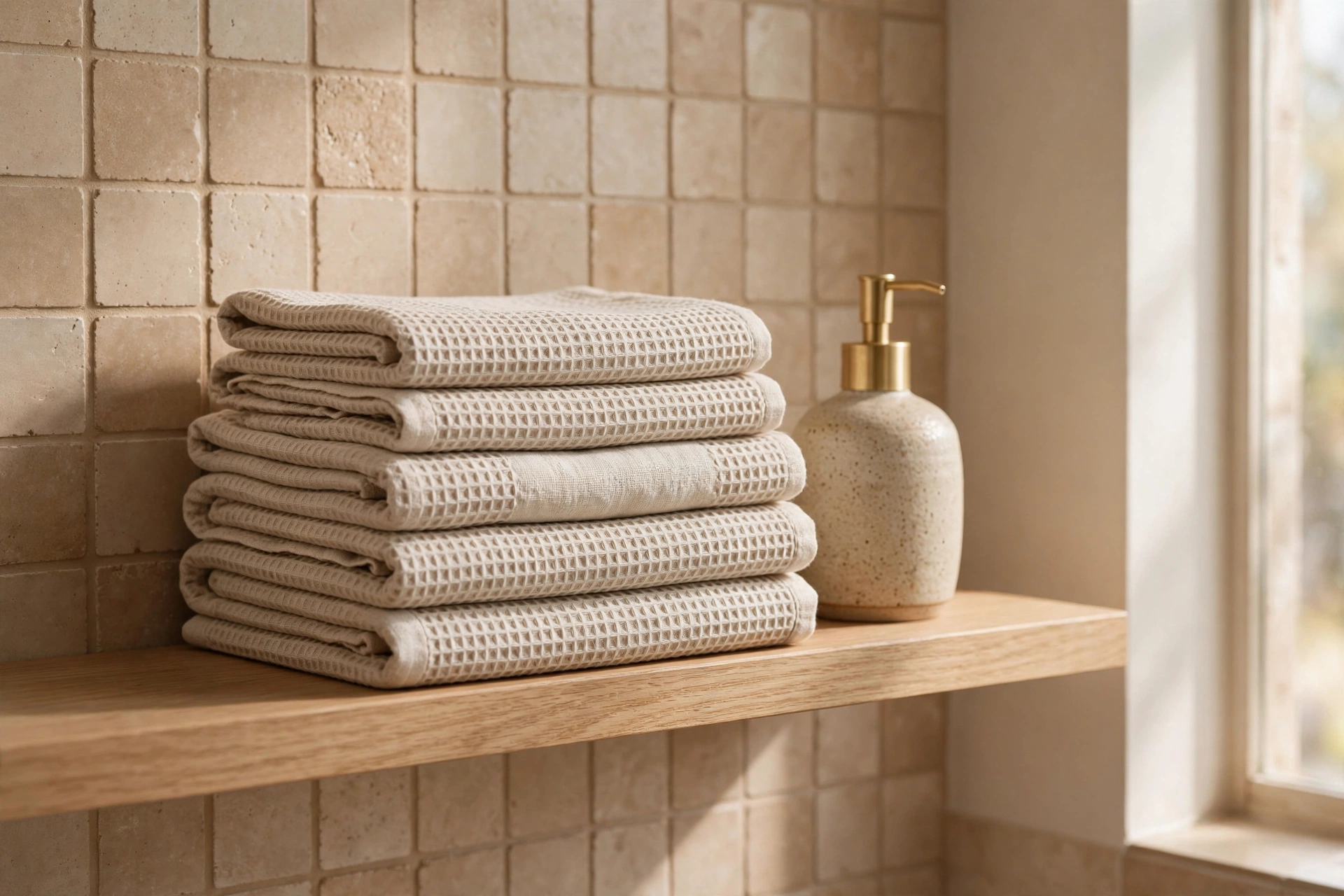
Japandi warmth lives in handmade details, and nowhere more than in the dishes you touch daily. Replace a few mass-produced pieces with handmade stoneware: rice bowls with uneven rims, mugs with visible throwing lines, a serving platter in a matte earthy glaze. You don’t need a full set — even six handmade bowls mixed with simple white plates changes how the table feels. Display a small stack on your open shelf (idea #5) so they’re seen and used, not saved for occasions. These imperfect objects are wabi-sabi in daily life: they make the minimalism feel human, warm, and quietly luxurious.
13. Natural Fiber Runner Rug
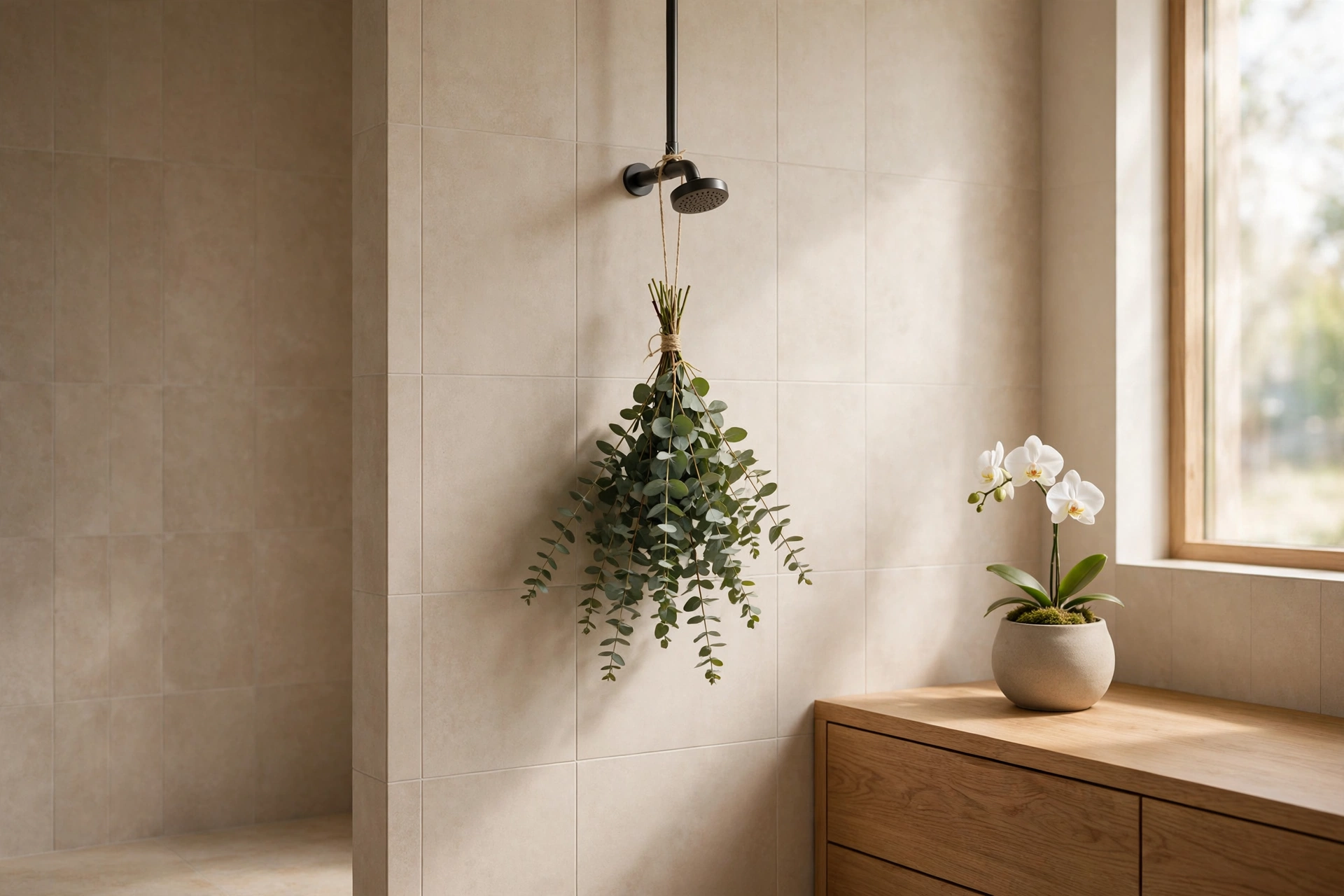
Kitchens are hard surfaces wall to wall, so a runner adds the softness Japandi needs. Choose a low-pile, washable rug in jute, flat-weave cotton, or a natural-look indoor-outdoor weave — long enough to run the length of the main work zone, in oatmeal, greige, or a subtle stripe. It quiets footsteps, warms cold tile underfoot, and adds the textural layer that keeps minimalism from feeling stark. Practical rules: washable is non-negotiable near cooking zones, low pile won’t trip or trap crumbs, and a rug pad keeps it from sliding. Skip bold patterns; the rug’s job is texture, not a focal point.
14. One Sculptural Branch or Plant
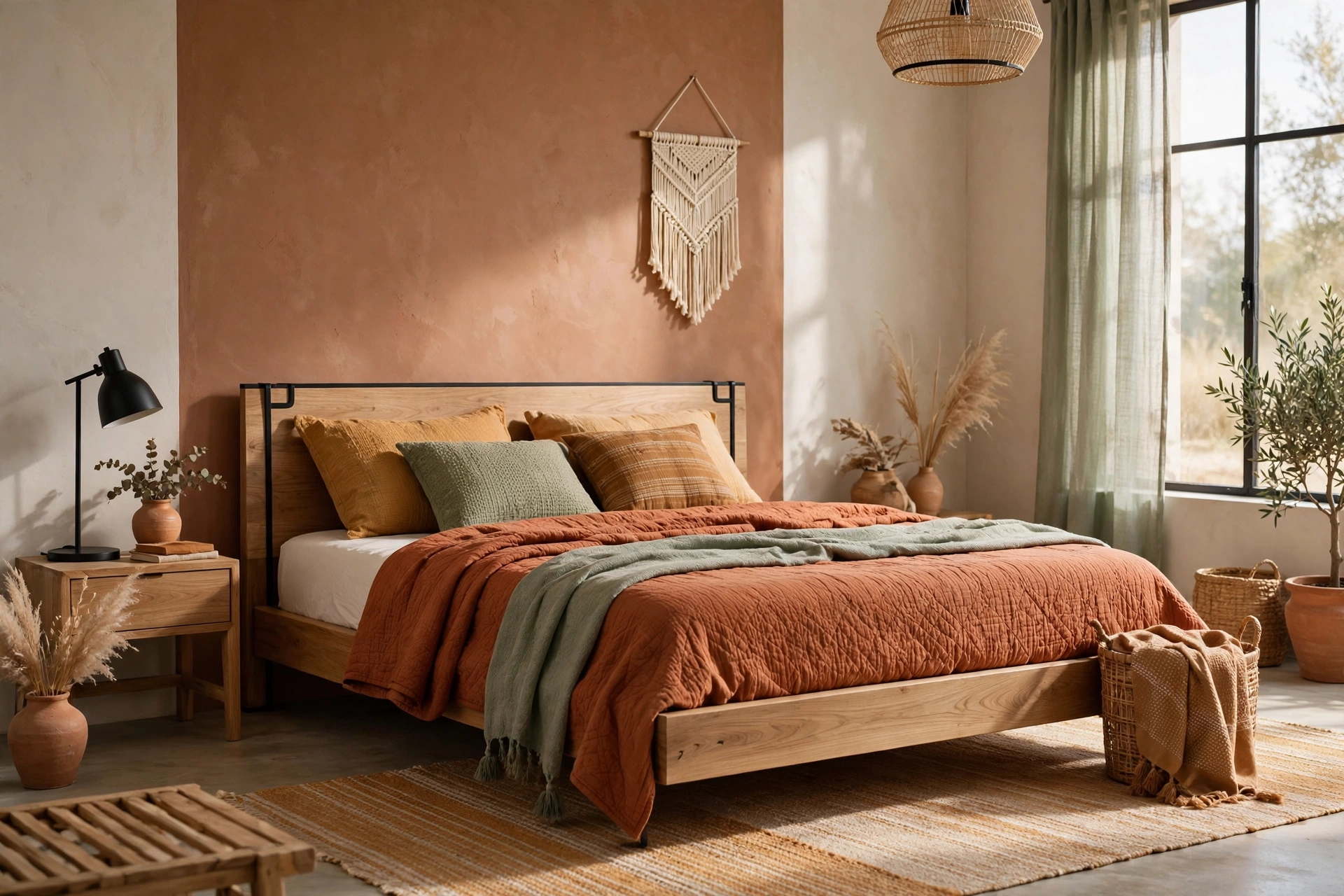
A kitchen needs one living thing — exactly one. A single sculptural branch in a tall handmade vase, a small olive tree in a clay pot on the windowsill, or a pot of fresh herbs you actually cook with. The key is singularity and intention: one green moment, placed where you’ll see it while you work, in a vessel that earns its place. Avoid the crowded windowsill herb garden that turns into a maintenance chore; one thriving rosemary plant beats six struggling ones. Wipe leaves occasionally and keep the vessel simple — matte ceramic or raw clay — so the plant is the only voice.
15. Mindful Negative Space and the Daily Reset
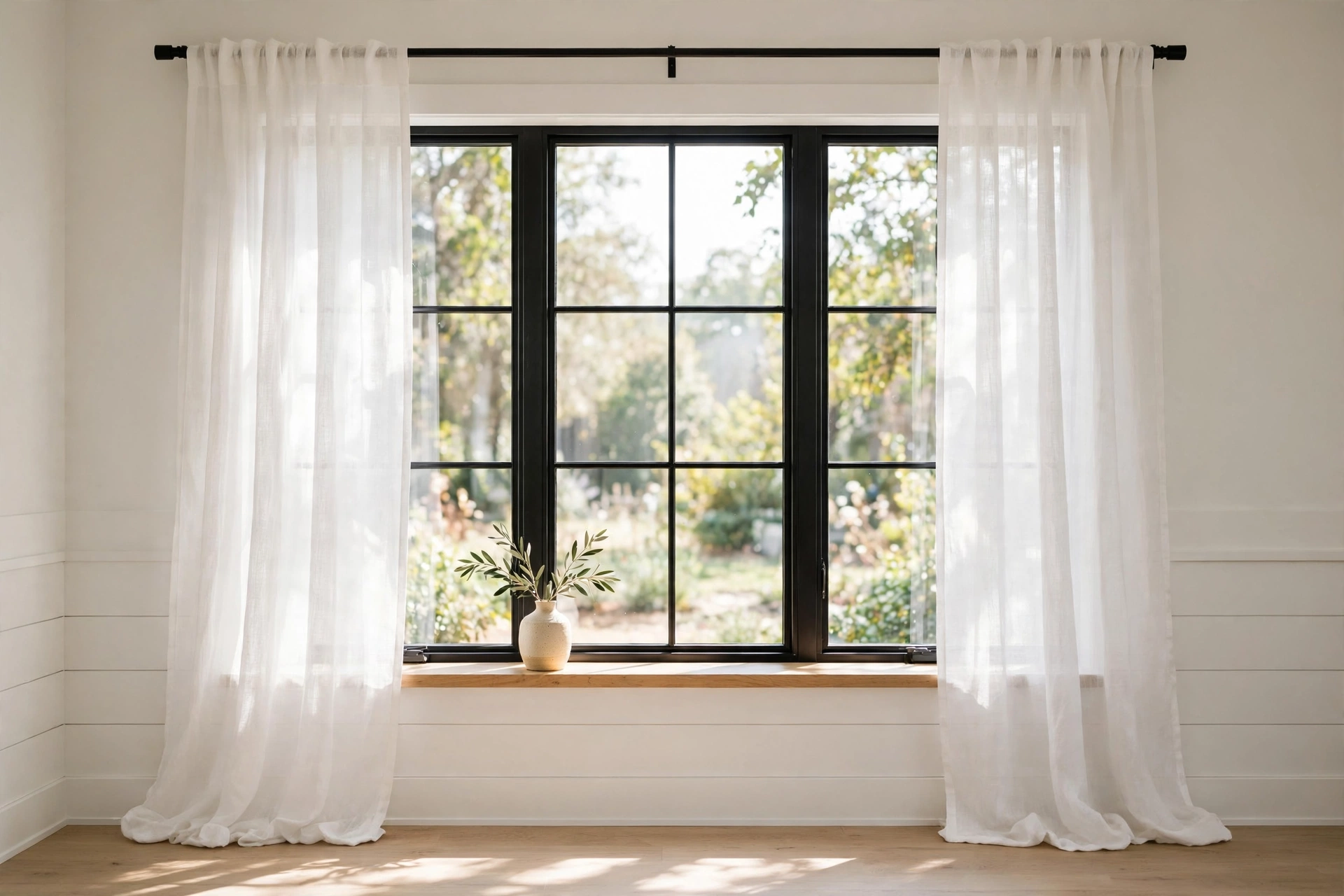
The most powerful of these Japandi kitchen design ideas costs nothing: leave space empty on purpose. An uncluttered stretch of counter, one completely clear shelf, a drawer with room to spare — negative space lets the materials breathe and makes the kitchen feel larger than its footprint. Protect it with a two-minute nightly reset: dishes away, counters wiped, appliances garaged, one look around. This tiny ritual is the real engine of a calm kitchen; without it, even the most beautiful design slides back into chaos within a week. Calm isn’t a finish you buy once — it’s a habit you keep.
Frequently Asked Questions
What is Japandi style in a kitchen?
Japandi blends Japanese minimalism with Scandinavian warmth. In a kitchen that means flat-panel natural wood cabinets, a warm neutral palette, honest materials like stone and linen, handleless fronts, concealed appliances, and strict clutter discipline — a calm, functional space where everything has a place. It’s minimalism you can actually cook in.
What colors work best in a Japandi kitchen?
Warm neutrals: warm white, oatmeal, greige, soft clay, and mushroom, paired with light natural woods like oak or ash. Add one restrained metal accent — matte black or brushed brass. Avoid stark cool whites, glossy finishes, and saturated colors; everything should sit in the same warm tonal family.
Can I create a Japandi kitchen on a budget?
Yes — start with the free wins: declutter ruthlessly, clear the counters completely, and rearrange what you own. Then make high-impact, low-cost changes: a washi paper pendant light, a natural fiber runner, matte cabinet paint in warm white, and a few handmade ceramic pieces. Reface cabinet fronts in oak veneer instead of replacing them, and add push-to-open latches for the handleless look without new doors.
How do I keep a Japandi kitchen clutter-free when I actually cook every day?
Build systems, not willpower: an appliance garage for the toaster and kettle, drawer inserts for utensils and spices, and a designated home for every tool. Follow the two-minute nightly reset — everything back in its place before bed. The one-in-one-out rule helps too: when a new gadget arrives, an old one leaves. A kitchen designed around hidden storage stays calm even with daily cooking.
Keep Exploring
If these Japandi kitchen design ideas sparked something, keep the calm going — browse our kitchen decor collection for more serene palettes, smart small-space layouts, and natural-material inspiration. Your most peaceful kitchen is one thoughtful change away.