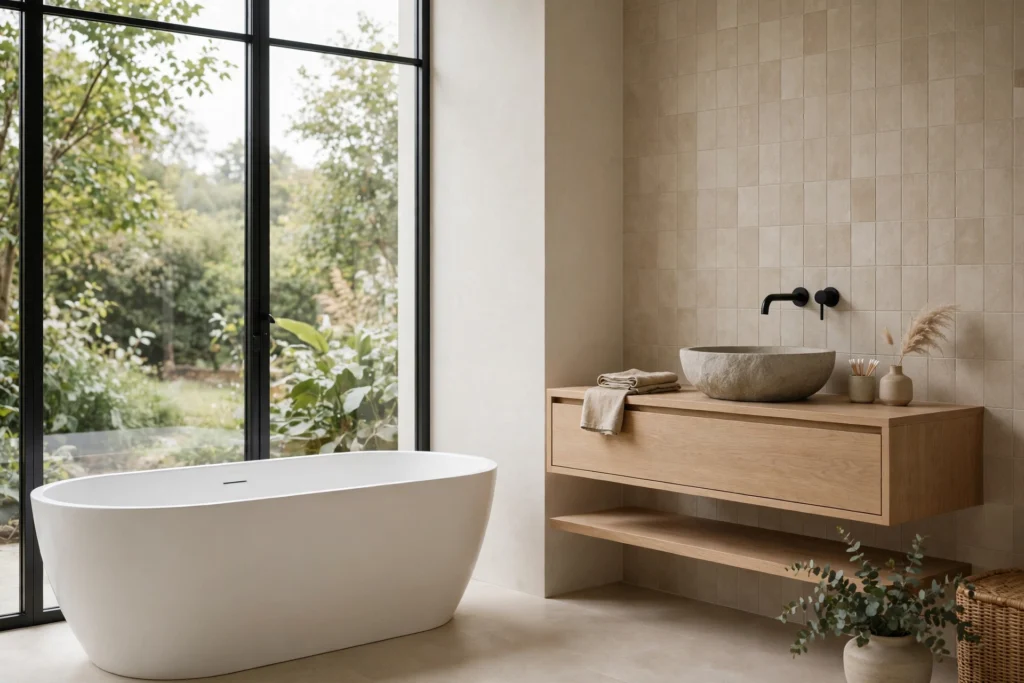

The bathroom is the one room in the house where calm isn’t a luxury — it’s the whole point. And no design style understands that better than Japandi. These Japandi bathroom design ideas bring together Japanese minimalism and Scandinavian warmth to turn even the most ordinary bathroom into a space that feels like a quiet spa retreat: natural stone underfoot, warm wood against soft neutrals, and nothing you don’t need.
What makes the Japandi bathroom different from a plain minimalist one is that it never feels cold. Japanese design contributes restraint, natural materials, and an appreciation for imperfection; Scandinavian design adds hygge — that sense of warmth and comfort — through pale woods, soft textiles, and light. The result is a bathroom that is uncluttered but inviting, simple but rich in texture.
The fifteen Japandi bathroom design ideas below work whether you’re renovating a master bath or refreshing a small powder room. Each one is practical and specific, and layered together they build the serene, spa-like atmosphere that defines this style.
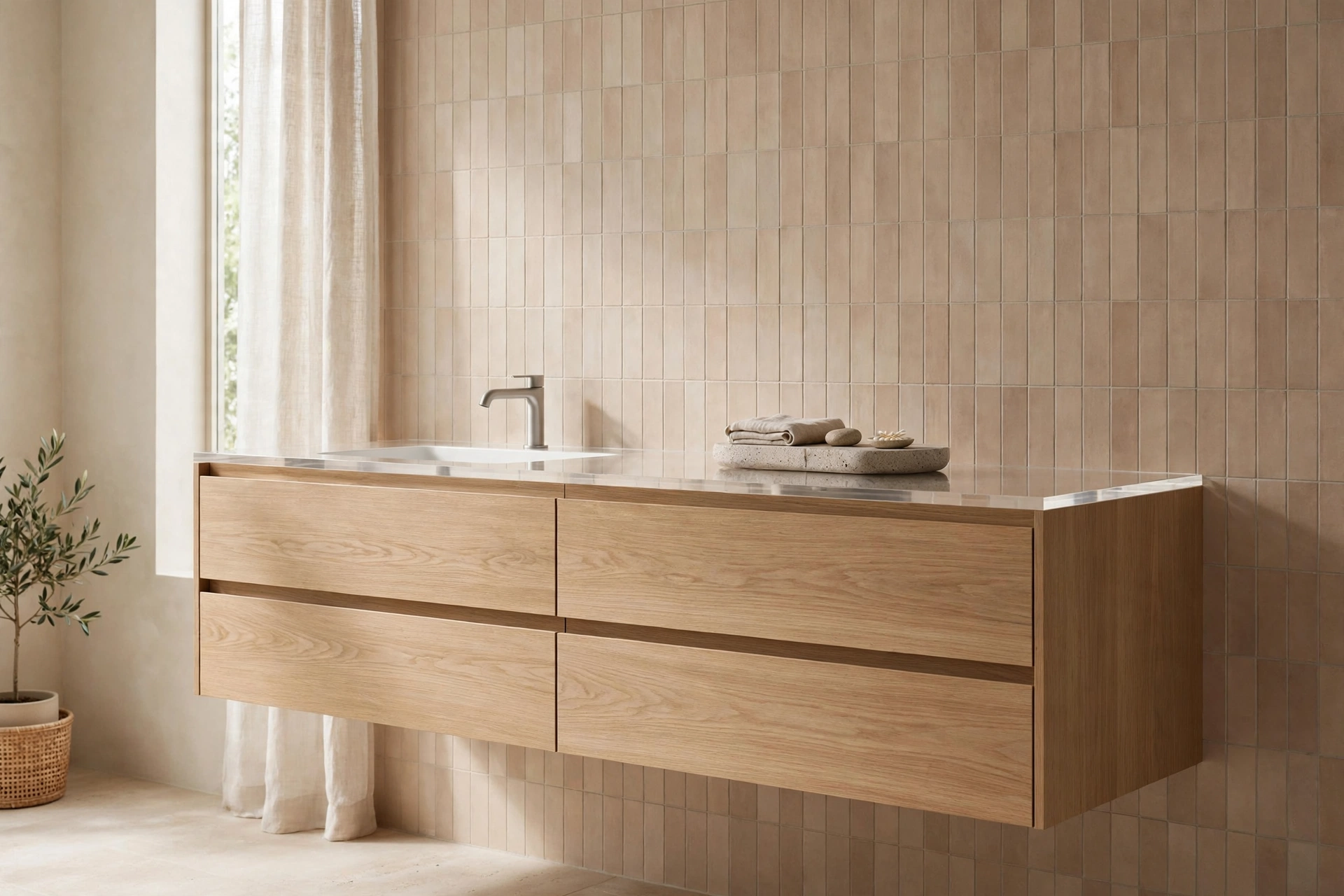
1. Floating Oak Vanity
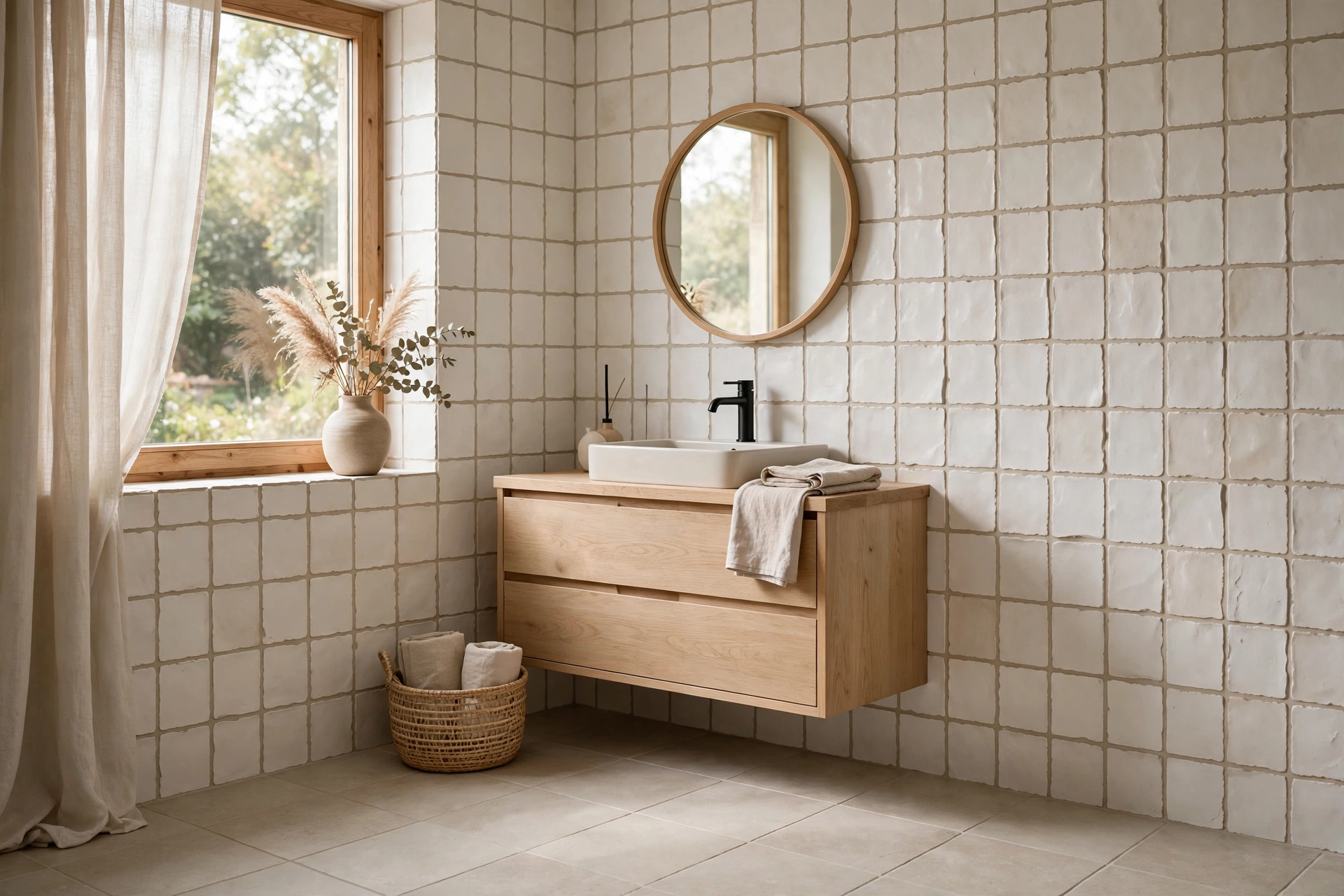
Anchor the room with a floating vanity in light oak or ash. Wall-mounting the vanity frees up floor space, which makes the bathroom feel larger and keeps the floor easy to clean — both very much in the Japandi spirit. Choose a simple slab-front design with push-to-open drawers (no visible hardware) and a clear matte finish that shows the wood grain. Keep the top nearly clear: a single stone tray holding soap and a small vase is the Japandi maximum. Pair it with a white or light-gray integrated sink so the wood stays the star. In a small bathroom, a floating vanity is one of the highest-impact Japandi bathroom design ideas because it visually opens the floor plane.
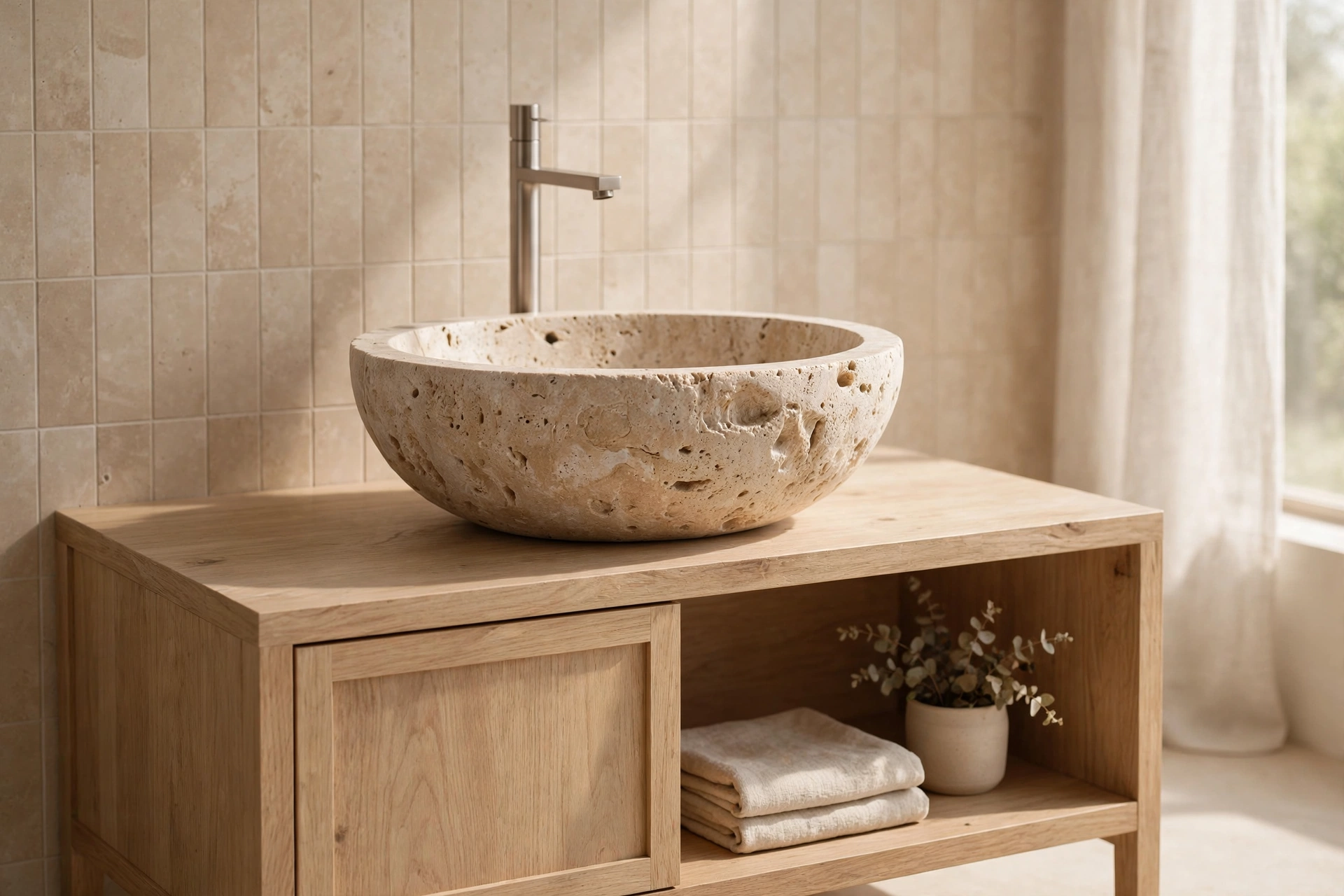
2. Stone Vessel Sink
A vessel sink carved from natural stone — travertine, river stone, or honed marble — brings the Japanese love of raw materials straight to the vanity. Unlike glossy ceramic basins, a stone vessel has subtle color variation and a matte, tactile surface that feels crafted rather than manufactured. Choose a simple bowl or rectangular form in a warm neutral tone (sand, greige, soft white) so it sits quietly within the palette. Mount it on the oak vanity with a tall, minimal faucet in brushed nickel or matte black. Seal the stone properly at installation; a good impregnating sealer keeps it stain-resistant for years without changing its natural look.
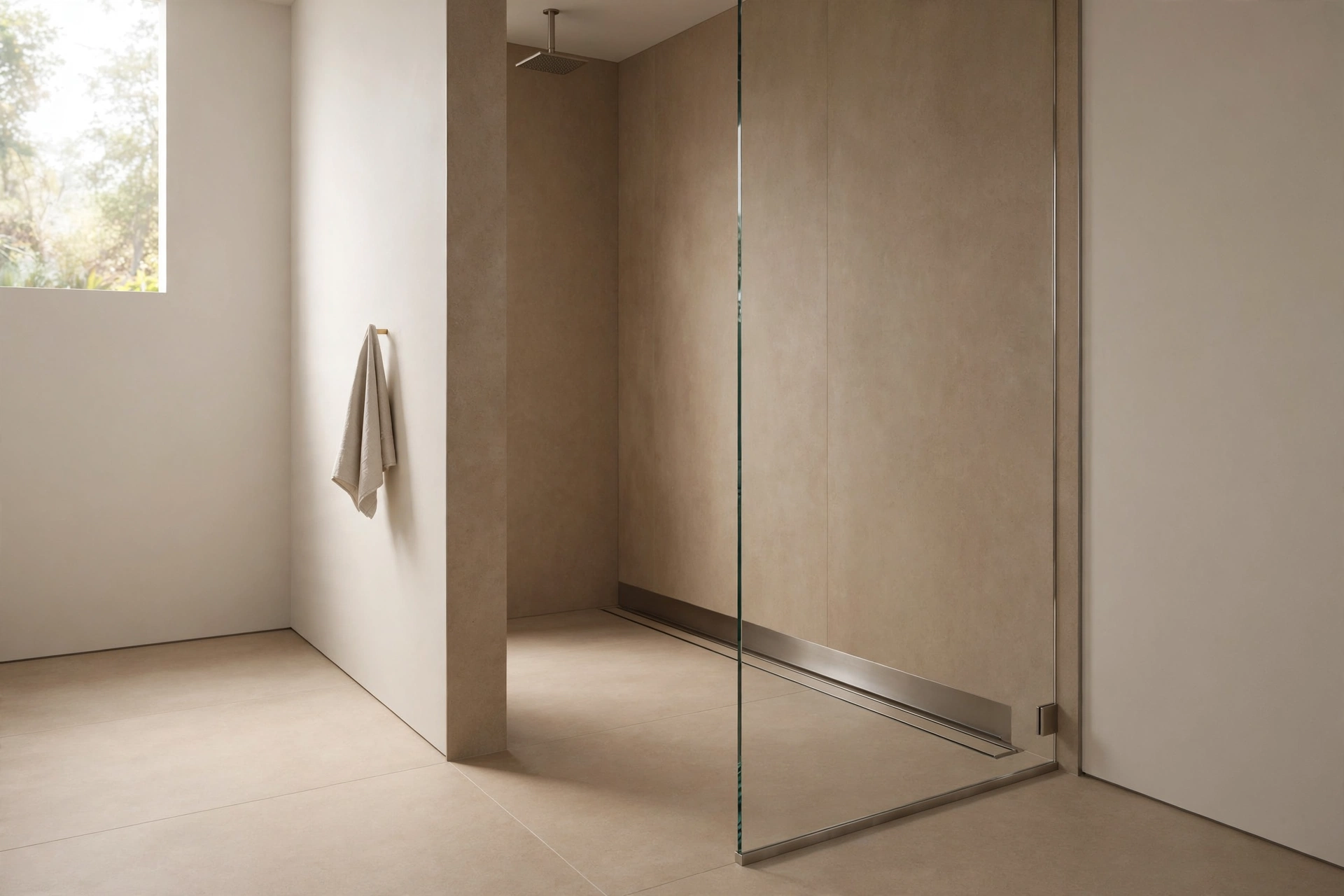
3. Walk-In Curbless Shower
Nothing says spa like a walk-in shower with no curb and no door. Removing the threshold creates one continuous floor plane, which makes the bathroom feel twice as large and gives it that seamless, resort-like flow. Use large-format tiles in a warm neutral — or better, continue the same tile from the bathroom floor straight into the shower — so there is no visual break. A single fixed glass panel keeps water in without chopping up the space, and a linear drain set against the wall looks cleaner than a center drain. This is one of the most transformative Japandi bathroom design ideas, and it also happens to be excellent for accessibility.
4. Warm Neutral Tile Palette
Japandi bathrooms live in warm neutrals: warm white, beige, greige, soft clay, and mushroom. Choose matte or honed tiles rather than glossy ones — the soft, light-absorbing surface is what gives the room its calm, spa-like glow. A classic combination is warm-white wall tiles with a greige floor tile, tied together by grout in a matching tone (contrasting grout lines create visual noise, which Japandi avoids). For texture without pattern, consider handmade-look zellige tiles in a soft neutral. Keep the palette to two or three tones maximum so the room stays restful.
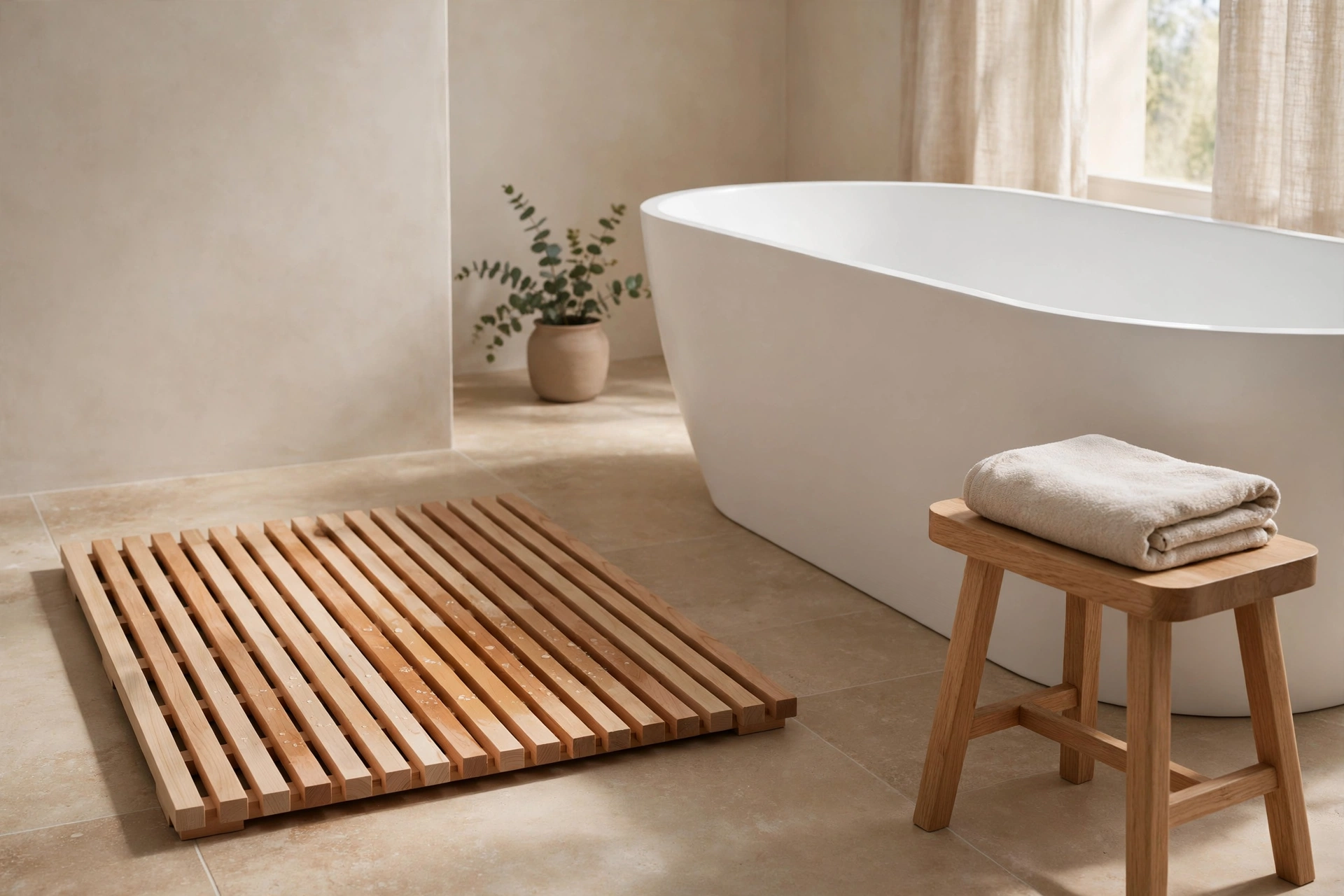
5. Hinoki Wood Bath Mat
Swap the soggy fabric bath mat for a hinoki wood bath mat — a staple of Japanese bathrooms. Hinoki (Japanese cypress) is naturally antimicrobial, quick-drying, and releases a subtle citrus-wood scent when wet, so stepping out of the shower feels like a small ritual. The slatted design lets water drain straight through, which means no mildew and no laundry. Choose an unfinished hinoki mat and let it age naturally; it will deepen to a warm honey tone over time. Teak is a good alternative if hinoki is hard to find. Either way, this small swap is one of the easiest Japandi bathroom design ideas to try today.
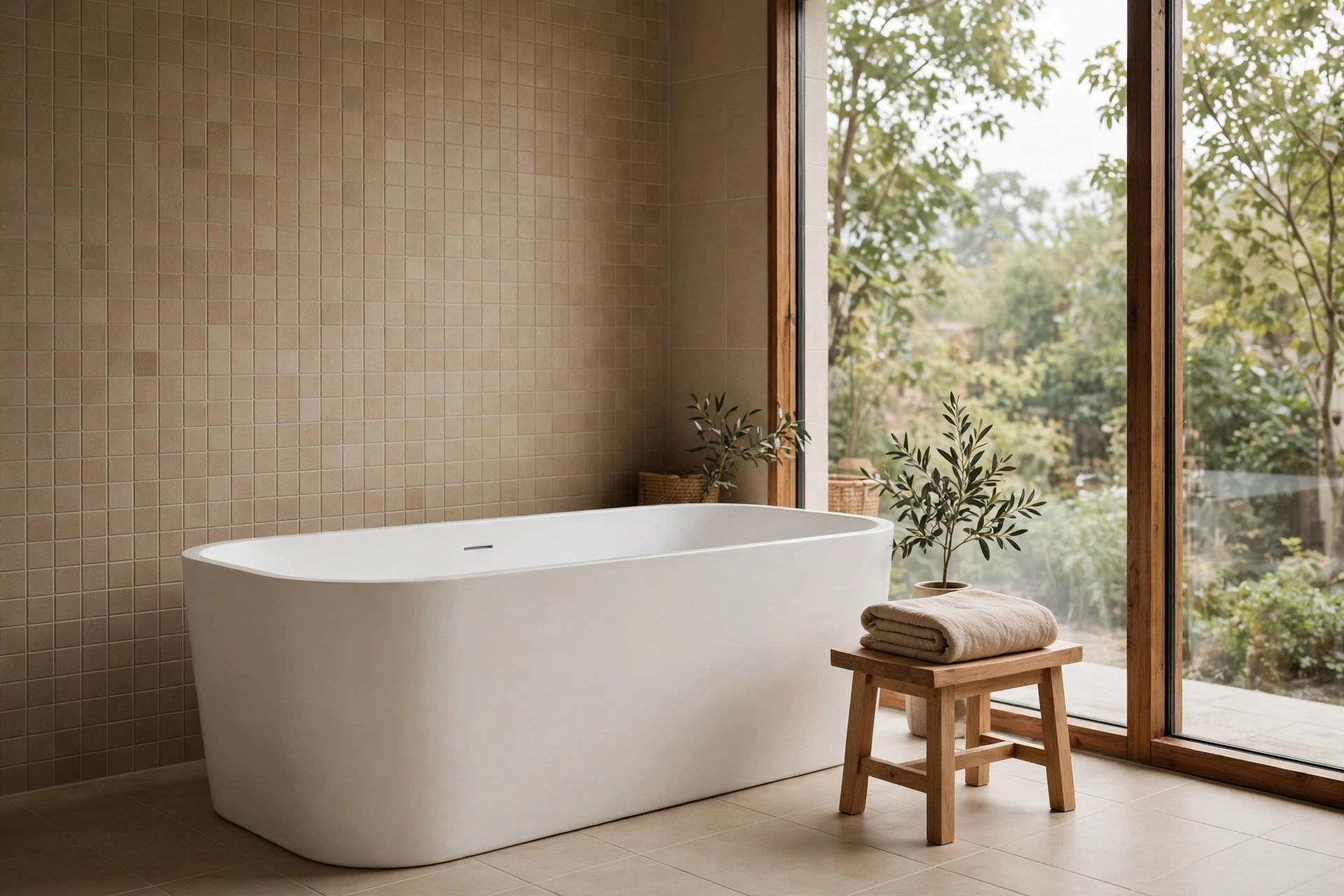
6. Freestanding Soaking Tub
If space allows, a freestanding soaking tub is the centerpiece of a Japandi spa bathroom. Choose a deep, compact tub with clean lines — matte white solid-surface or natural stone composite — and position it where it gets the best light, ideally near a window. Keep the surround clear — a single wooden bath stool beside the tub holds one folded towel. The tub’s sculptural simplicity does all the visual work. In smaller bathrooms, skip the tub entirely rather than squeezing in a cramped one; a generous walk-in shower serves the Japandi calm far better than a tub you can barely fit into.
7. Soft Diffused Lighting
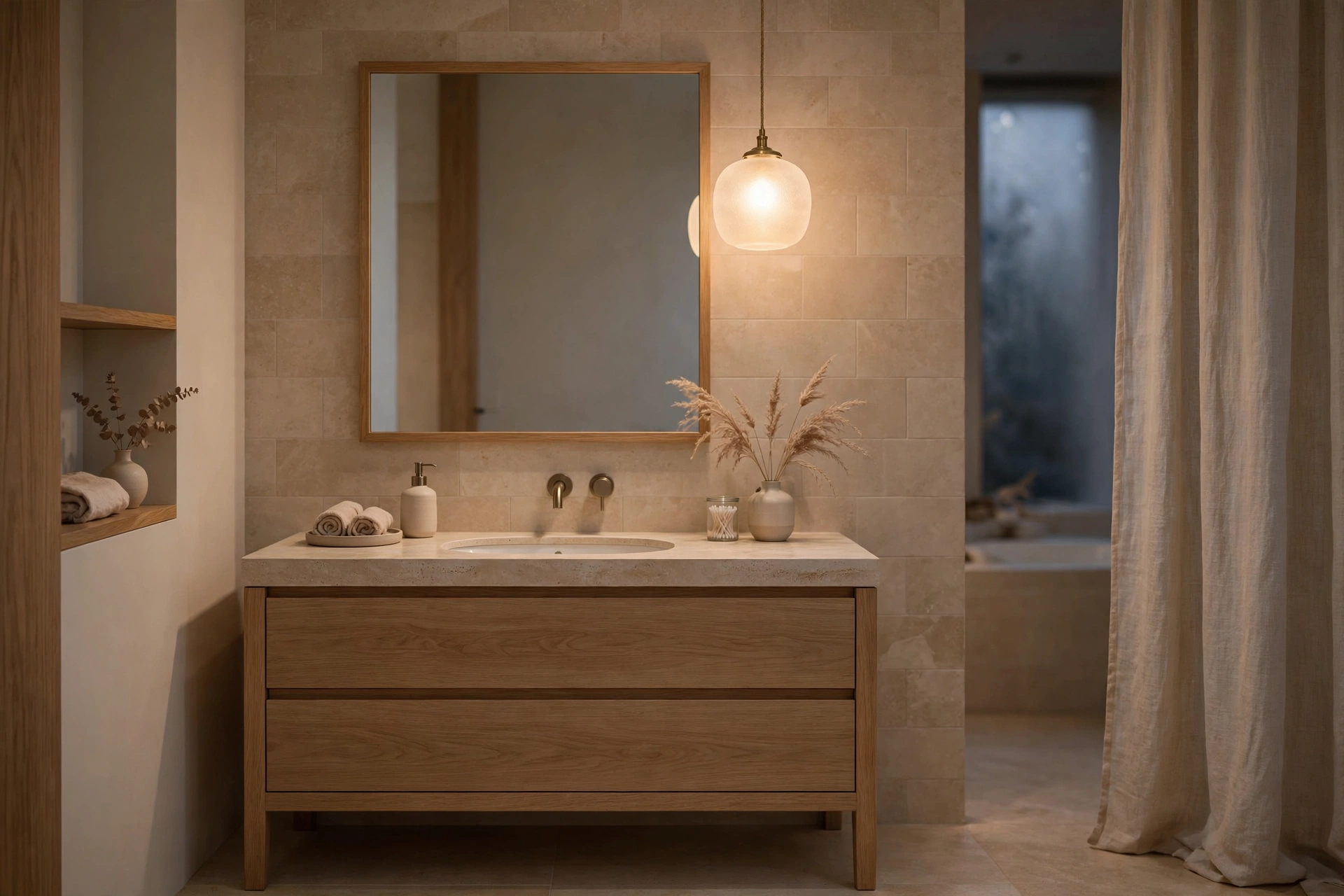
Harsh overhead lighting kills the spa mood instantly, so layer soft, diffused light instead. A frosted-glass or washi-style pendant hung at the vanity casts a flattering, shadow-free glow for the mirror — mount it at eye level rather than overhead to avoid unflattering shadows. Add a dimmable 2700K ceiling light for general illumination, plus a small waterproof LED strip under the floating vanity for a soft night-time glow. Put everything on dimmers. In a Japandi bathroom, you should be able to dial the light down to candle-level calm in the evening.
8. Minimal Matte Fixtures
Every visible fixture should be quiet and consistent. Choose one finish — matte black, brushed nickel, or brushed brass — and use it for the faucet, shower trim, towel hooks, and cabinet pulls. Mixed metals create visual chatter that fights the Japandi calm. Keep the forms simple: a single-lever tall faucet with clean lines, a slim rain showerhead, nothing ornate. Matte finishes are preferable to polished chrome because they don’t throw harsh reflections. This is a small detail with an outsized effect — when every fixture speaks the same quiet language, the whole room feels considered and calm.
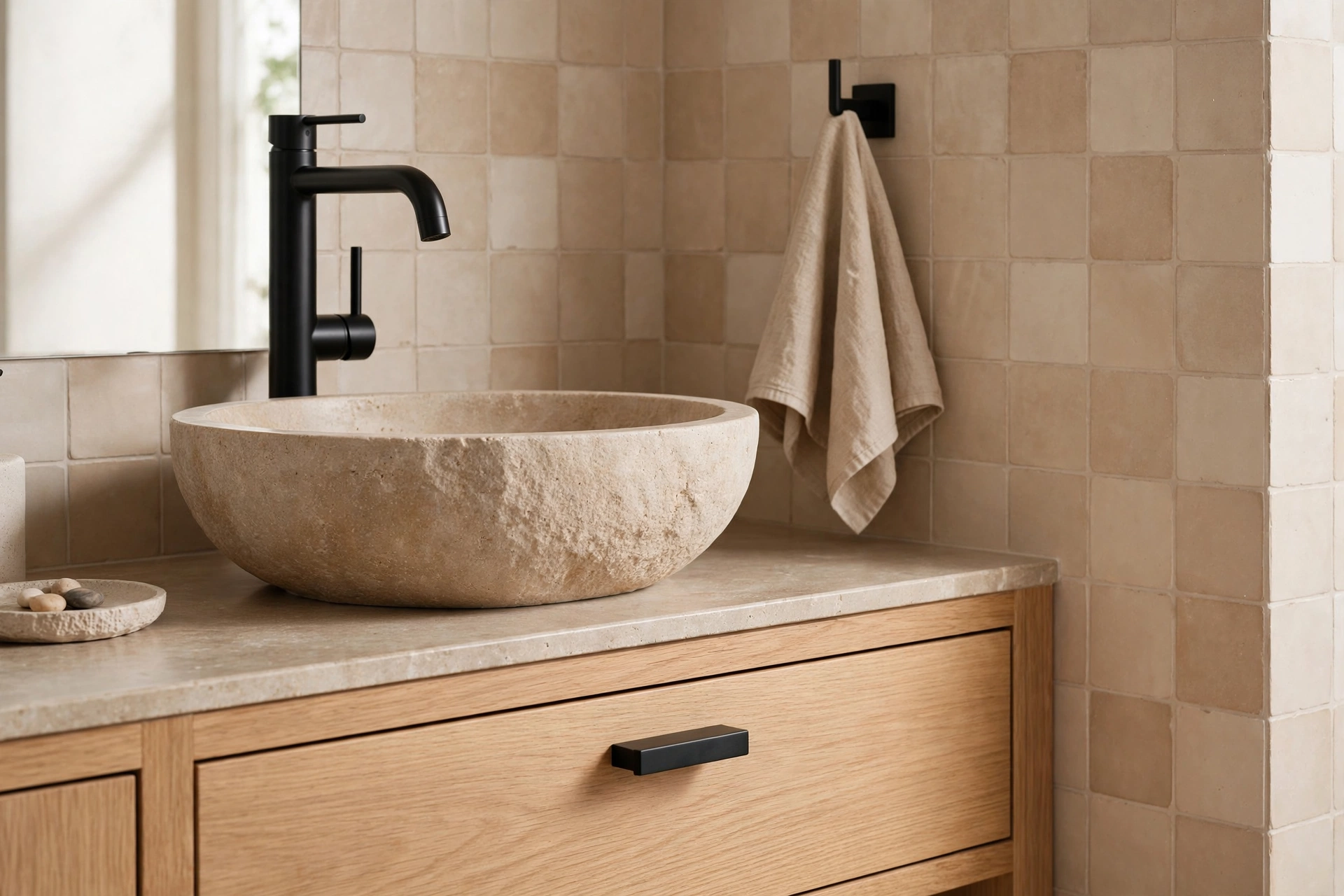
9. Open Oak Shelving
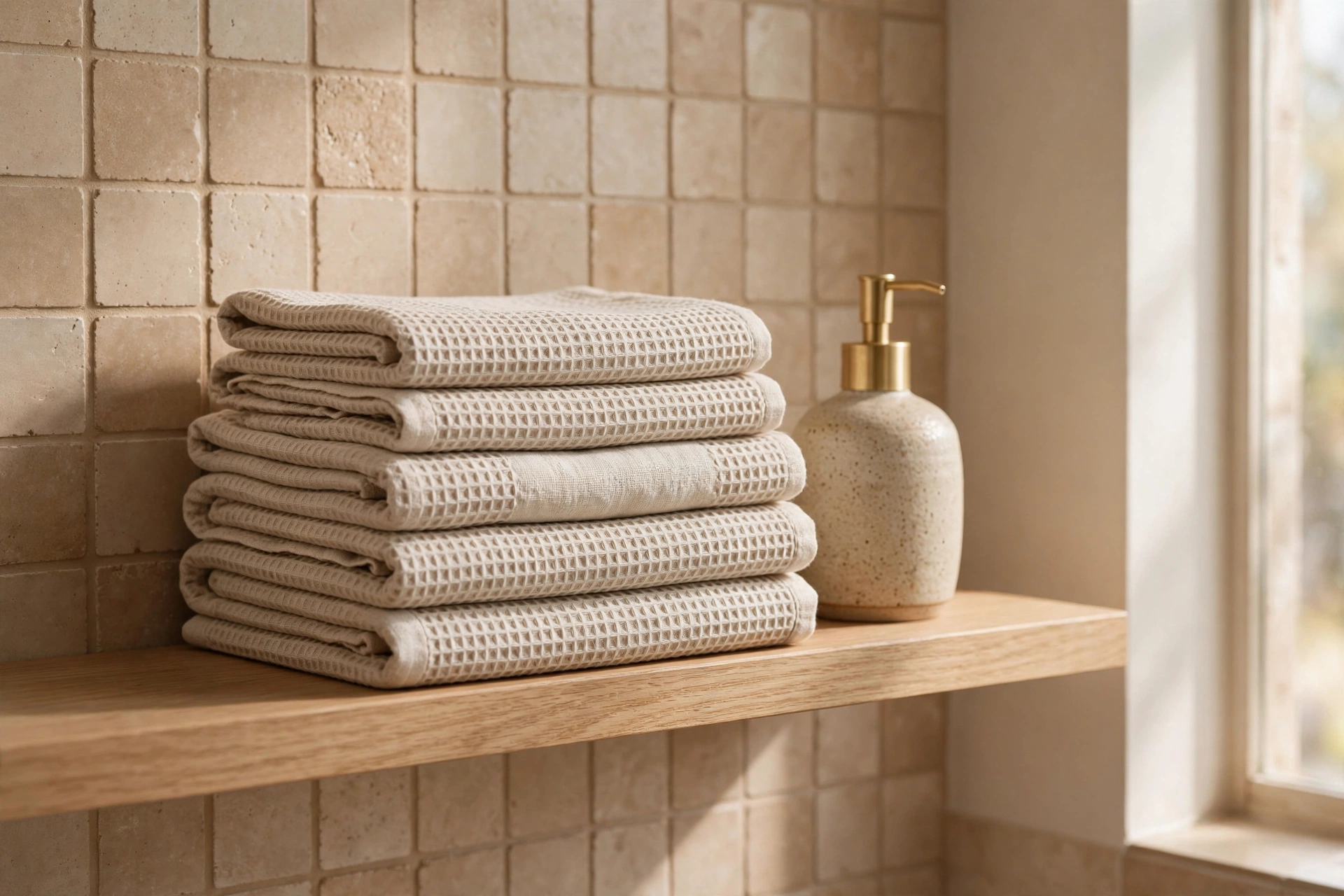
Replace a bulky mirrored medicine cabinet with one or two open oak shelves beside the mirror. The key is ruthless curation: each shelf holds two or three beautiful, useful things — a folded waffle towel, a stone tray with a ceramic soap dispenser, a small vase with a eucalyptus stem. Everything else lives behind closed doors. The open shelf is a display of intention, not storage; if an item isn’t beautiful enough to display, it doesn’t belong there. Mount the shelves in the same light oak as the vanity so the wood reads as one continuous material story through the room.
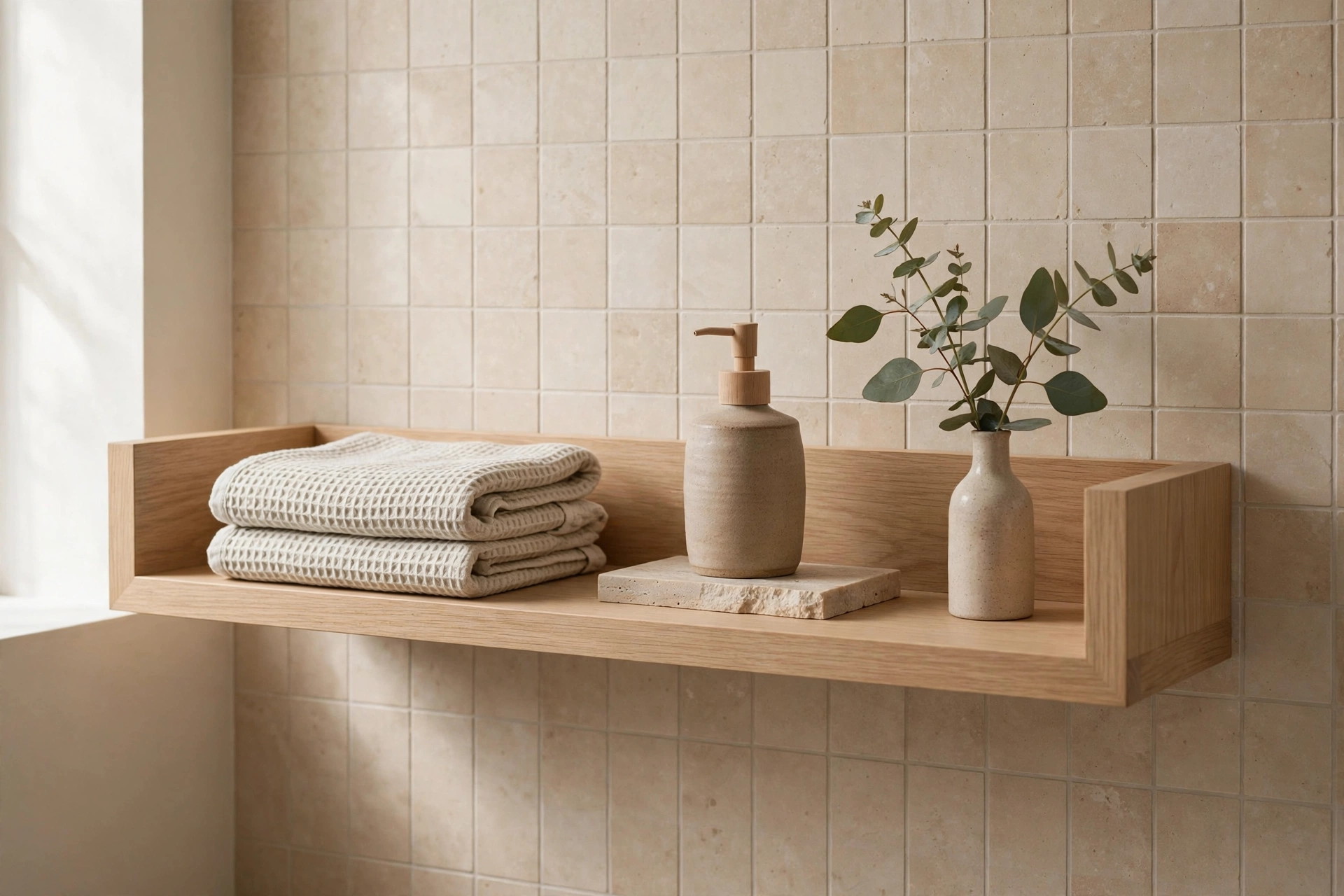
10. Large Frameless Mirror
A large, frameless mirror does double duty in a Japandi bathroom: it bounces natural light deep into the room and visually doubles the space. Choose a single generous mirror — ideally spanning the full width of the vanity — over a pair of small decorative ones. Skip ornate frames entirely; a thin black edge or no frame at all keeps the look clean. A backlit mirror with a warm 2700K halo builds that soft vanity light right in. Keep the mirror spotless — in a minimal room, water spots and toothpaste specks are the first things the eye finds.
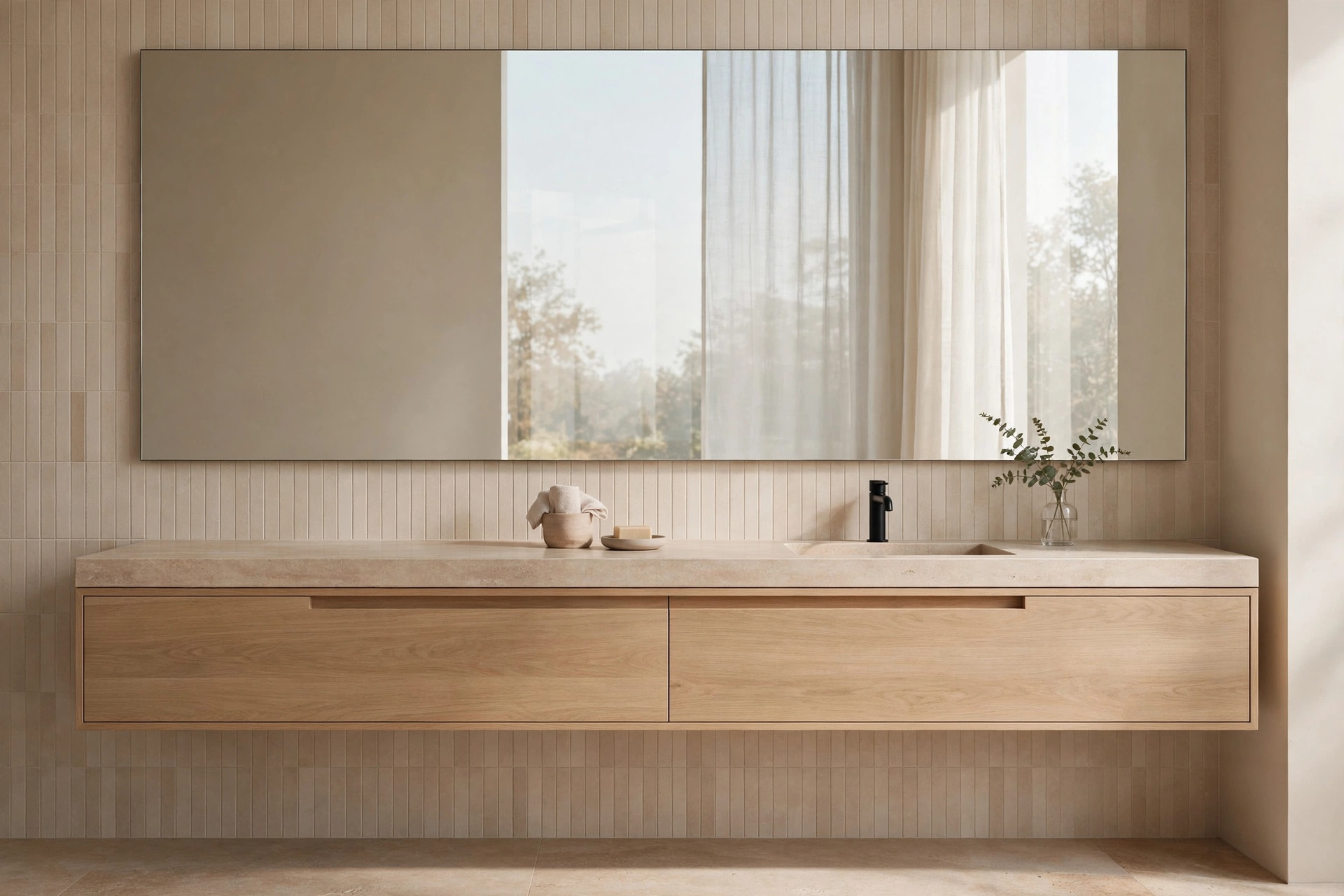
11. Natural Stone Accent Wall
Give the bathroom one moment of drama: a single accent wall in natural stone. Tumbled travertine, split-face slate, or large-format stone-look porcelain behind the vanity or inside the shower adds the raw, earthy texture that Japanese design loves. Keep it to one wall only — the restraint is what makes it powerful — and let the other walls stay in quiet plaster or warm-white tile. Seal natural stone properly, especially in the shower. This single textured surface becomes the room’s focal point and grounds all the soft neutrals around it.
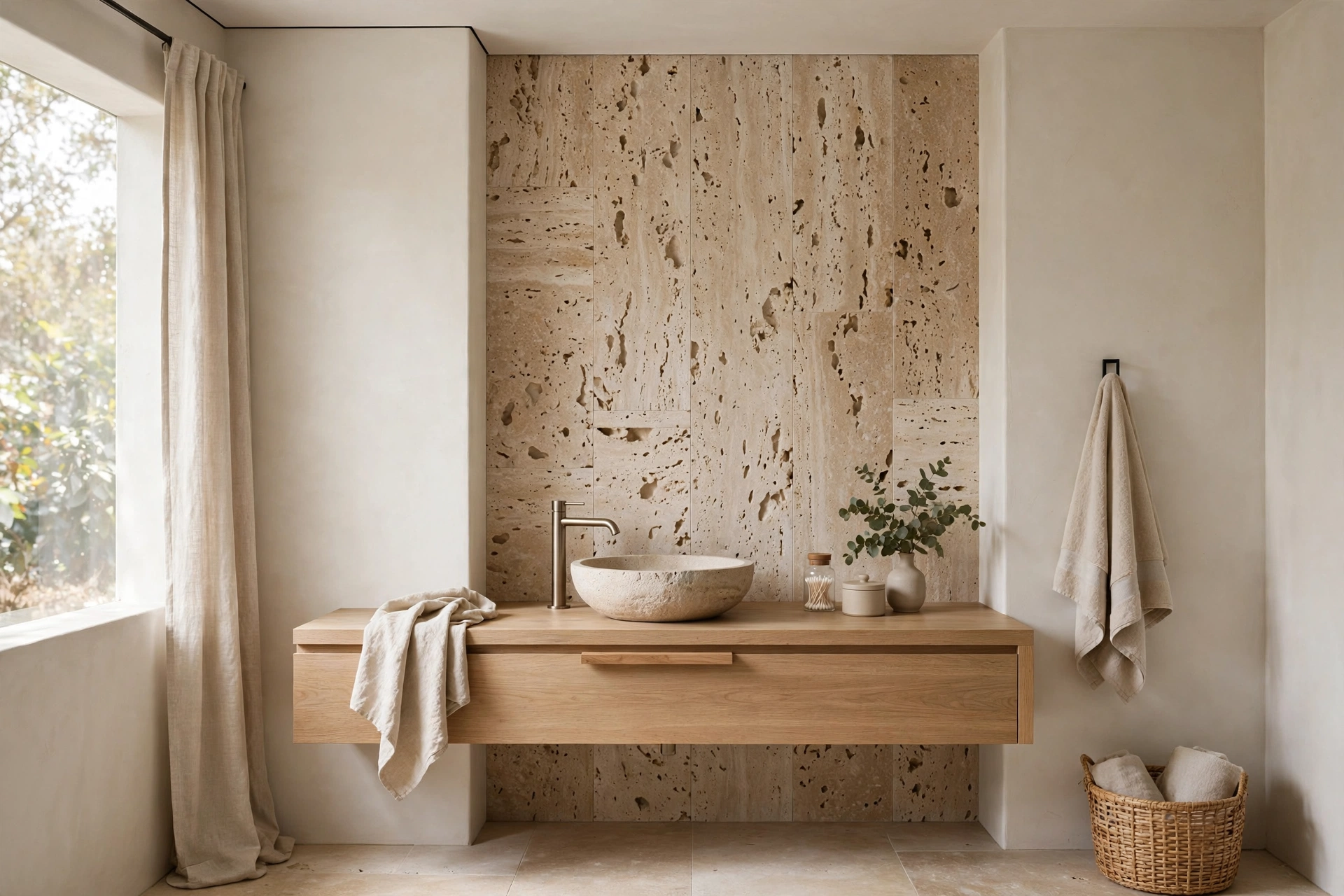
12. Waffle-Weave Linen Textiles
Japandi softness comes from natural textiles, and in the bathroom that means waffle-weave towels in undyed or oatmeal tones. Waffle cotton and linen dry quickly, get softer with every wash, and their visible texture adds the tactile richness the style depends on. Display one neatly folded stack on the open shelf and keep the rest hidden away. Choose a bathrobe in the same natural palette and hang it on a single wooden hook — not a chrome multi-hook rack. Avoid bright white towels; the slightly warm, natural tone of unbleached linen sits far more comfortably in a Japandi palette.
13. One Sculptural Plant
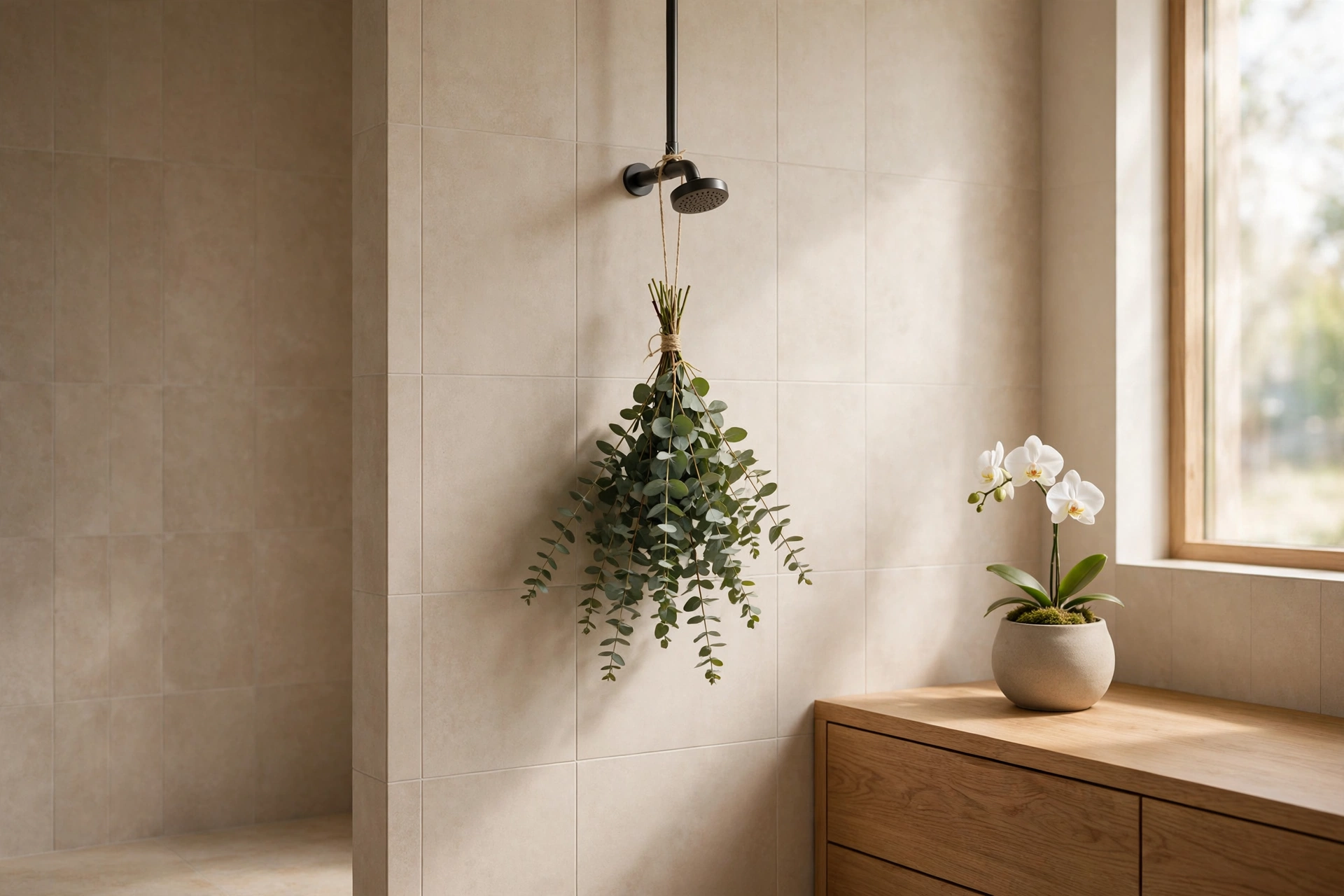
A single plant is all a Japandi bathroom needs — one, chosen well, beats a shelf of struggling succulents. Eucalyptus is the classic choice: its silvery-green leaves love bathroom humidity, and a fresh bundle hung from the showerhead doubles as aromatherapy (the steam releases its scent). Alternatively, a single orchid in a handmade ceramic pot on the vanity adds an elegant, sculptural note. Keep the pot simple matte stoneware so the plant is the star. If your bathroom has no window, choose a high-quality preserved eucalyptus bundle; it needs no light and lasts for months.
14. Hidden Storage Everywhere
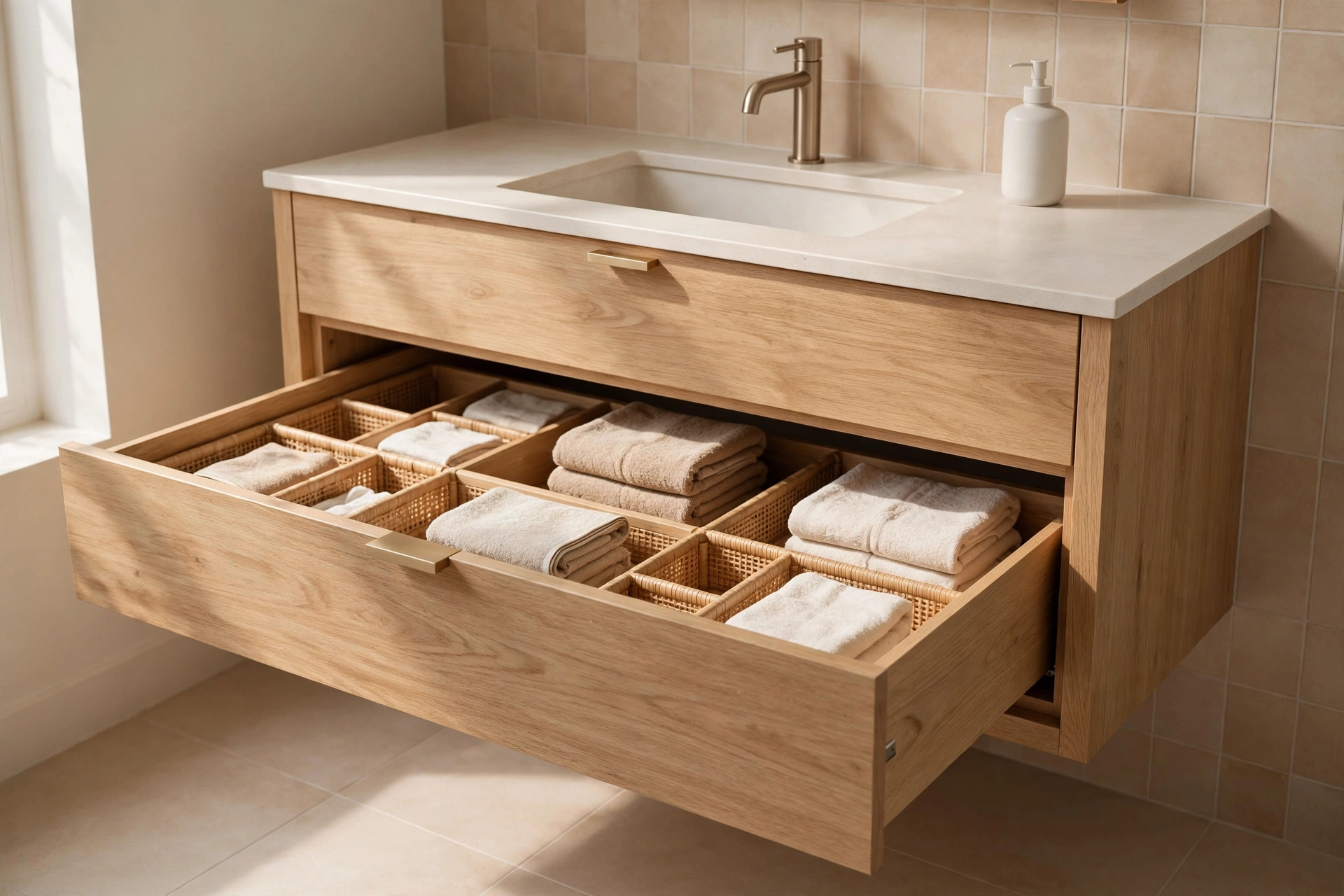
Japandi calm collapses the moment clutter appears, so every toiletry needs a hidden home. Choose a vanity with deep drawers, add drawer organizers, and use lidded baskets inside any linen cupboard. Adopt a strict surface rule: the vanity top holds the soap dispenser and one small object — nothing else. Daily items live in the top drawer, not on the counter. The one-in-one-out habit seals it: when a new product enters the bathroom, an old one leaves. Of all these Japandi bathroom design ideas, this invisible one is what makes the visible ones work.
15. Pebble Shower Floor
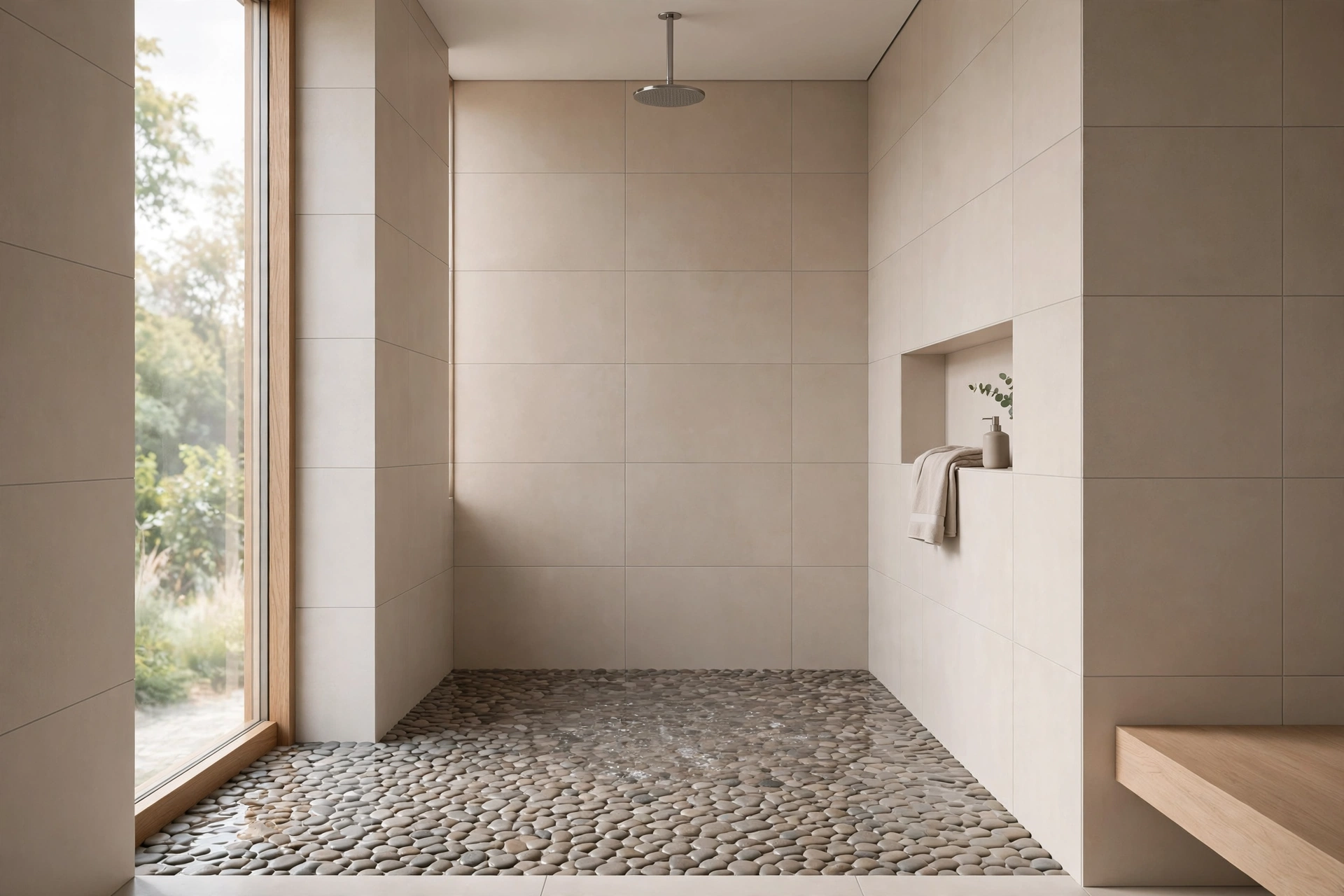
Finish with texture underfoot: a pebble-tile shower floor. Smooth, flat river pebbles set in a warm gray grout give a gentle foot massage, drain beautifully, and bring an unmistakable natural-spa feeling that flat tile never can. Choose pebbles in a consistent tonal range and make sure they are sealed and set on a well-sloped bed so water never pools. Paired with the curbless shower from idea three, the pebble floor completes the illusion that you’re showering in a Japanese onsen rather than a suburban bathroom.
Frequently Asked Questions
What exactly is a Japandi bathroom?
A Japandi bathroom fuses Japanese minimalism with Scandinavian warmth. From Japan it takes restraint, natural materials like stone and wood, and an appreciation for imperfection; from Scandinavia it takes hygge coziness, pale woods, and soft, light-filled simplicity. The result is a spa-like bathroom — uncluttered and serene, but warm rather than stark.
What colors work best in a Japandi bathroom?
Warm neutrals: warm white, beige, greige, soft clay, mushroom, and oatmeal. Tiles, stone, and textiles should all sit within this warm family, with grout matched to the tile tone. Avoid stark whites, cool blue-grays, and saturated colors. Wood tones (light oak, ash, hinoki, teak) count as part of the palette and add the warmth that keeps the room from feeling sterile.
Can I use real wood in a humid bathroom?
Yes, with the right species and care. Teak, hinoki, and properly sealed oak all handle bathroom humidity well — they’re the traditional choices in Japanese bathrooms. Use wood for vanities, bath mats, stools, and shelving, but keep it out of direct constant water contact (inside the shower, use stone or tile). Ensure good ventilation — an extractor fan or an openable window — and the wood will age beautifully for years.
How do I make a small bathroom feel Japandi?
Japandi is ideal for small bathrooms because restraint makes tiny spaces feel larger. Mount a floating vanity to open the floor, use one continuous tile from floor into a curbless shower, choose a large frameless mirror to double the light, and keep the palette to two warm neutrals. Hide everything behind closed storage and display only two or three beautiful objects — in a small Japandi bathroom, what you leave out matters more than what you put in.
Keep Exploring
If these Japandi bathroom design ideas have you dreaming of slower mornings and quieter evenings, keep the serenity going — our bathroom decor collection is full of calm palettes, natural materials, and small-space layouts to inspire your own spa-like retreat. Your most peaceful room is waiting.





[…] feels like a retreat, that same calm-first thinking works everywhere else in the home. Explore small bathroom layouts that maximize every inch, smart bathroom storage ideas that keep surfaces serene, and layered […]
[…] style is what happens when a bathroom stops pretending to be a spa and starts acting like a working space. Poured concrete underfoot, blackened steel framing a glass […]
[…] your layout allows it, a freestanding soaking tub positioned under or near a window is the ultimate coastal bathroom statement — it turns bathing […]
[…] signature scent trick. The steam releases the essential oils, filling the shower with a spa-like fragrance — no diffuser or candle […]
[…] with deep drawers rather than doors; drawers organize toiletries far better in a small footprint. Our japandi bathroom design ideas use the same floating-fixture thinking for an equally serene […]