A traditional swinging door can eat up nearly a square yard of usable floor space, which is a luxury no small bathroom can afford. These bathroom pocket door ideas solve that problem beautifully: the door glides away into the wall, freeing room for vanities, towel rails, and comfortable movement. Because the door never sweeps into the room, even the tightest layouts suddenly feel calmer and more open. If you are rethinking your entryway, these bathroom door decor ideas for style and function pair perfectly with the sliding options below.
Pocket doors do more than save space — they change how a bathroom feels. With the right finish, glass, and hardware, a pocket door becomes a design feature rather than just an opening. From frosted glass panels that borrow light to bold paint colors that anchor the room, the ideas ahead work for remodels, retrofits, and brand-new builds alike. Each one is practical first and pretty second, so your door slides smoothly for years.
1. Free Up Swing Space

The biggest win of a pocket door is reclaiming the swing zone. A standard hinged door sweeps a nine-square-foot arc through the room, forcing you to keep that area clear of vanities, storage towers, and hampers. When the door slides into the wall instead, every one of those inches becomes usable again — room for a taller vanity, a wider linen cabinet, or simply space to move without sidestepping. This matters most in en-suites and hall bathrooms under five feet wide, where the door swing often hits the toilet or sink. Start here before any other change.
2. Choose a Barn-Style Pocket Door
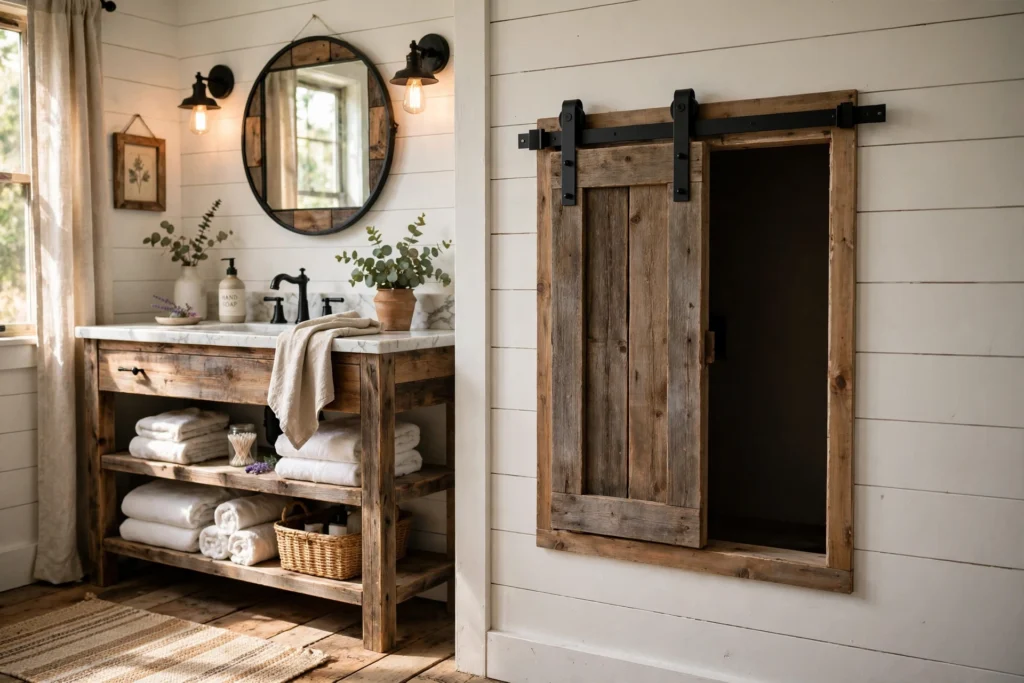
A barn-style look on a true pocket door gives you farmhouse charm without the wall-eating rail of an exposed barn door. The slab keeps its classic Z-brace or plank detailing, but instead of rolling on an exterior track, it vanishes into the wall cavity for a clean finish. This is ideal when you love rustic texture but lack the bare wall space a surface-mounted barn door demands. Paint it a soft white or weathered gray to keep a small bathroom bright. The visual weight of barn detailing reads beautifully against simple subway tile and warm wood vanities.
3. Try a Frosted Glass Pocket Door

Frosted glass turns a pocket door into a light-sharing feature. It pulls daylight from an adjacent hallway or bedroom into a windowless bathroom while keeping silhouettes completely private. Choose a satin-etched or acid-frosted finish rather than stick-on film for a richer, more permanent look. Fluted or reeded glass is even better, scattering light softly with texture that reads high-end. Pair the door with warm lighting inside the bathroom so the glow reads inviting rather than clinical. This single swap can make a dark interior bathroom feel twice as airy without sacrificing modesty.
4. Go Bold With a Painted Pocket Door

A pocket door does not have to blend in — paint it a confident color and it becomes the bathroom’s focal point. Deep navy, forest green, or matte black all look striking against crisp white tile, while soft sage or dusty blue keep things calm. Because the door is only partly visible when open, you get a dose of color without overwhelming a small space. Use a moisture-resistant enamel paint and add a clear sealer on the edges that take the most handling. This guide to bathroom door options and their trade-offs is a useful reality check before you commit to any style.
5. Use a Mirrored Pocket Door

A full-length mirror mounted on the pocket door’s room-facing side does double duty: it disappears when open and becomes a vanity mirror when closed. In tiny bathrooms where wall space for a mirror is limited, this trick is genuinely transformative. The reflection doubles the sense of space, bouncing light into dark corners. Choose a slim, frameless mirror panel adhered with mirror-rated mounting tape and clips so it sits nearly flush. Make sure the mirror faces out of the bathroom when the door is open if you share the adjacent room — that way you get an extra dressing mirror too.
6. Pick Space-Saving Hardware

Pocket door hardware is engineered for slimness, but choosing well makes the door feel premium. Flush pulls that sit inside the slab keep the door sliding fully into its pocket, while edge pulls — little spring-loaded tabs on the leading edge — let you fish the door out of the wall easily. A round or rectangular flush lock gives real bathroom privacy without protruding. Spend a little more on solid metal rather than plastic hardware; it glides quieter and survives daily use. Matte black or brushed brass finishes also let the hardware echo your faucets and towel bars for a coordinated look.
7. Improve Privacy and Sound

The classic complaint about pocket doors is sound leakage, but smart details fix most of it. Choose a solid-core door slab instead of hollow-core — the added mass noticeably damps noise. Brush seals along the leading edge and jamb close the air gaps that carry sound, and a full-perimeter gasket kit makes a pocket door feel surprisingly close to a standard one. A pocket door will never seal as tightly as a hinged door, so set expectations honestly. This honest look at pocket door downsides lays out where the trade-offs really sit.
8. Retrofit a Pocket Door in an Existing Wall
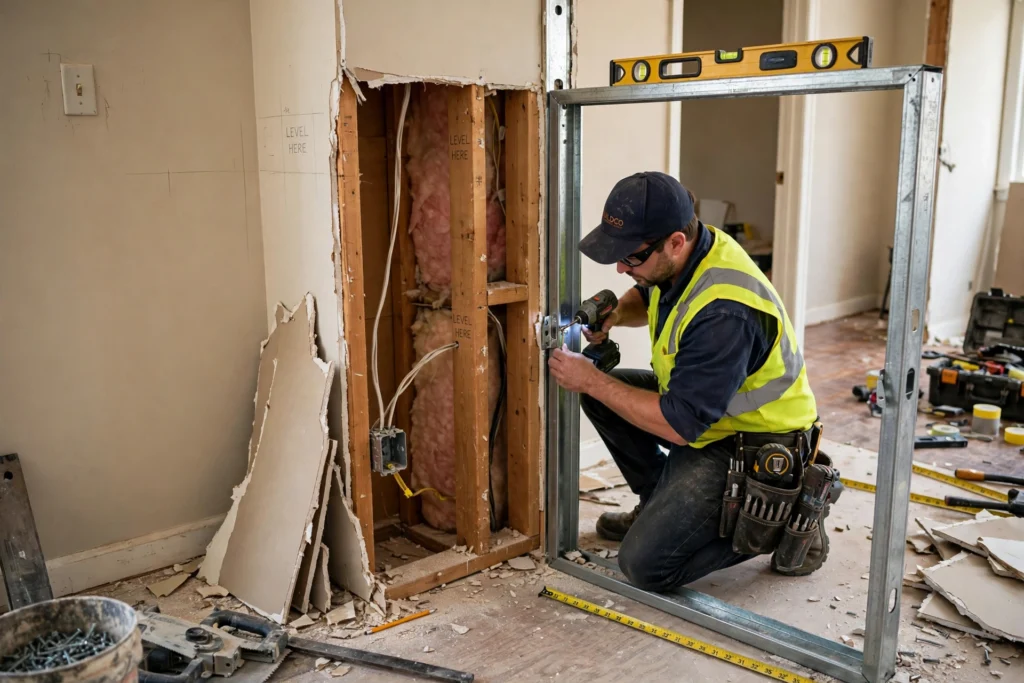
Retrofitting a pocket door into a finished wall is very doable with a conversion kit. You remove one side of drywall, take out the old door frame, and install a steel-and-wood pocket frame in the opening before re-drywalling. The catch is space: the pocket needs a wall cavity at least as wide as the door plus room for the track. Plan on a weekend of work and expect dust, so seal off the bathroom doorway during demolition. If you are not comfortable reframing, this is a half-day job for a carpenter. The result looks completely original — nobody will know it was a retrofit.
9. Plan Around Plumbing and Wiring

The one wall a pocket door cannot slide into is one packed with plumbing or electrical. Before cutting anything, map the wall cavity: supply lines, drain stacks, and vent pipes are common inside bathroom-adjacent walls. Wiring is less of a dealbreaker — circuits can often be rerouted or switched to low-voltage LED runs that fit around the pocket. Use a stud finder with deep scanning and, if in doubt, cut a small inspection hole before committing. If the only available wall is load-bearing, consult a professional about header support. A little detective work here prevents expensive mid-project surprises.
10. Style the Door Frame Trim

Because the pocket frame is hidden inside the wall, your trim choices define how the opening looks. Slim, flat-profile casing gives a crisp modern feel and makes a narrow doorway feel wider, while a slightly wider traditional casing suits classic tile and wainscoting. Paint the trim the same color as the wall to make the opening visually recede, or match it to the door for a tailored, furniture-like look. Do not forget the head jamb above the opening — it is the one visible piece of the pocket system and deserves a clean, finished edge. Small trim decisions carry outsized visual weight here.
11. Add Soft-Close Mechanisms

Soft-close hardware is the quiet luxury upgrade pocket doors deserve. Small hydraulic dampers catch the door in the last few inches of travel, pulling it shut gently and holding it closed instead of slamming or drifting open. Many kits are now retrofittable, clipping onto the existing track without removing the door. For bathrooms shared with bedrooms, no more middle-of-the-night door slams. Pair soft-close with a solid flush pull so the door glides open just as smoothly. It is a modest cost for a daily dose of calm.
12. Use Pocket Doors for En-Suites
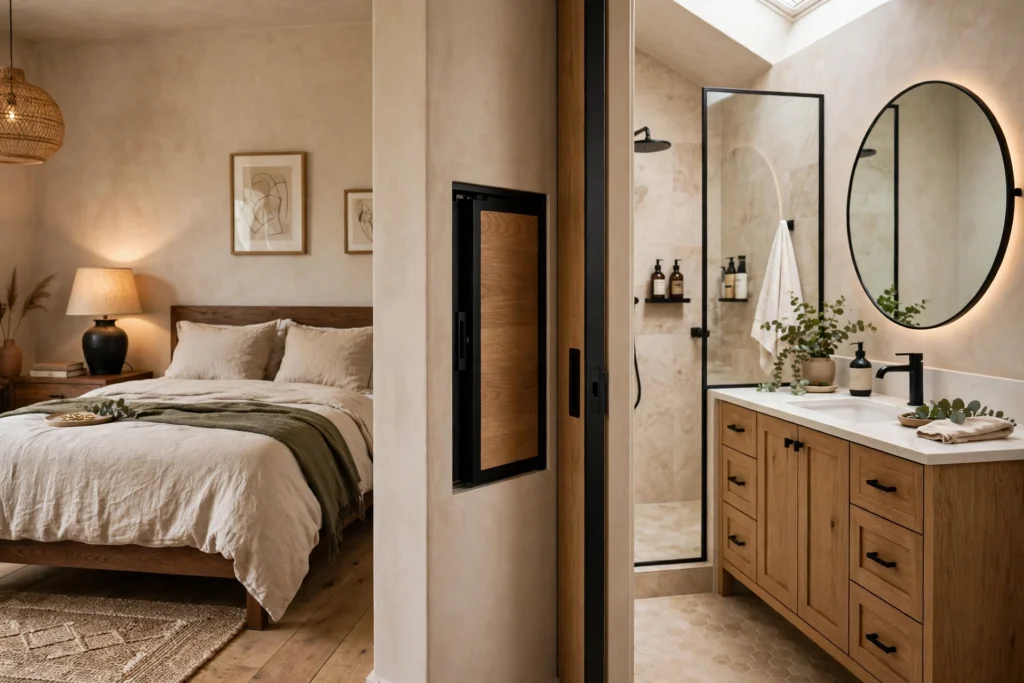
En-suites are the perfect pocket-door application. The door usually opens into a bedroom where a swinging door wastes prime furniture space, and closing it into the wall keeps the bedroom layout completely flexible. Choose a finish that suits the bedroom side, since that is where you will see it most — a warm wood tone or the same color as the bedroom trim works beautifully. Add a proper privacy lock on the bathroom side. For layout ideas that maximize every inch of compact layouts, these small bathroom design ideas show how door choice interacts with the rest of a tight plan.
13. Try Double Pocket Doors
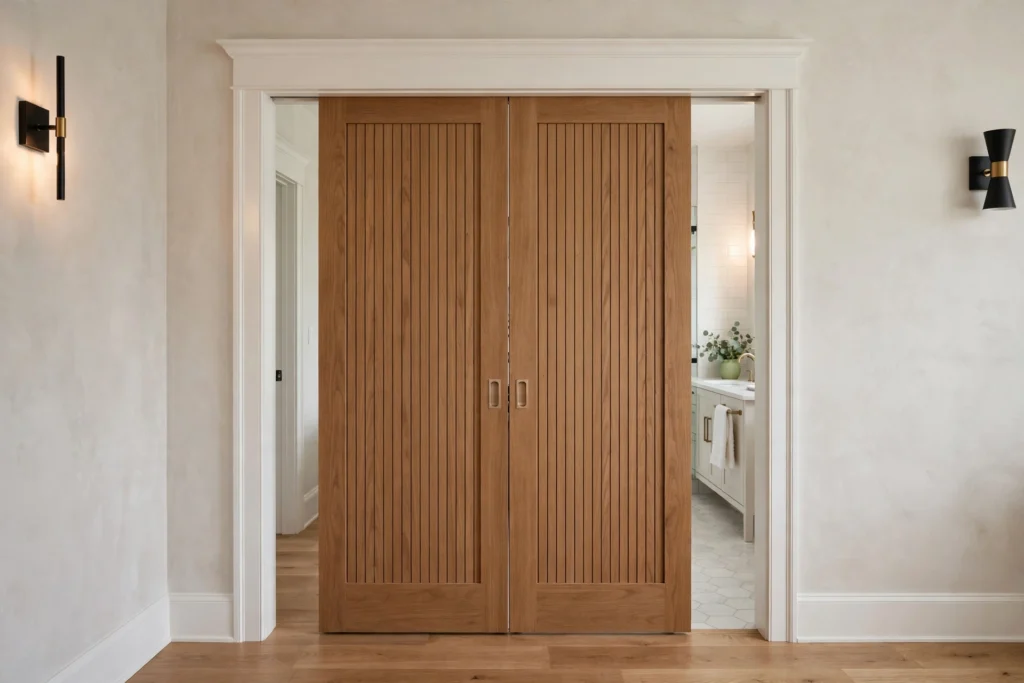
Double pocket doors — two slabs that meet in the middle — are perfect for wider openings between a bathroom and a dressing area or master suite. Each door needs only half the travel distance, so the pockets fit walls that are too short for a single full-width slab. Both doors open wide to let light flow; closed, the meeting stiles get a discreet flush lock. Style them symmetrically with matching panels or glass inserts for a tailored look. This is the most architectural option in this list and suits larger primary bathrooms beautifully.
14. Keep the Track Maintained

A pocket door only glides like a dream when its track stays clean. Once or twice a year, vacuum the visible track at the head of the opening and wipe it with a damp cloth to remove dust and hairspray residue that make wheels grind. Check that the hangers are tight and the door hangs plumb — most adjustment screws are reachable at the top of the door without removing anything. Avoid oiling the track unless the manufacturer says to, since oil attracts grime. These five-minute habits prevent the stuck-door headaches pocket doors are famous for and keep the mechanism whisper-quiet.
15. Match the Door to Your Decor

Your pocket door should feel like it was always part of the design. In a modern bathroom, a flat slab with hidden pulls keeps lines clean; in a farmhouse space, add simple panel molding or a faux plank finish. Match the door’s undertone to your vanity or flooring — warm white doors with warm tiles, crisp white with cool stone. Even the hardware finish matters: echo your faucet metal for a considered, designer look. These shower door ideas for style and privacy follow the same principle of tying every glass and metal choice back to the room’s palette.
Frequently Asked Questions
Are pocket doors a good idea for bathrooms?
Yes, especially in small bathrooms where a swinging door wastes floor space. Choose a solid-core slab with flush privacy hardware and perimeter seals to address sound concerns. The main limitation is the wall cavity — it must be free of plumbing and wiring. For tight en-suites and hall baths, the space savings far outweigh the installation effort.
Can you retrofit a pocket door into an existing bathroom wall?
You can with a pocket door conversion kit, which replaces the old frame with a steel pocket frame inside the wall. You will need to open the drywall on one side and have enough cavity width for the door slab plus track. It is a manageable DIY project or a quick job for a carpenter.
Do pocket doors lock?
Yes — pocket doors use flush-mounted privacy locks that sit recessed in the door’s edge so the slab still slides fully into the wall. These are typically thumb-turn latches with an emergency release on the outside. They provide genuine bathroom privacy, though they engage less firmly than a hinged door’s strike plate.
How much wall space does a pocket door need?
The pocket requires a wall cavity at least as wide as the door slab itself, plus a few extra inches for the track and frame — roughly double the doorway width in total. That wall cannot contain plumbing, and any wiring must be rerouted. Double pocket doors split the requirement across two shorter wall sections.
Are pocket doors hard to maintain?
Not at all with light upkeep. Vacuum and wipe the top track once or twice a year, check that hangers stay tight, and avoid oil unless the manufacturer recommends it. Most issues — grinding, drifting, or rubbing — trace back to dust buildup or loose adjustment screws, both quick fixes.
Keep Exploring
Pocket doors prove that the smallest design decisions often make the biggest difference. A door that disappears into the wall hands your bathroom back its floor, its light, and its breathing room — then rewards you every time it glides shut without a sound. Pick the finishes and hardware that match your style, give the track a little yearly attention, and enjoy a bathroom that feels bigger than its footprint.