Few upgrades change a kitchen’s personality like a Dutch door. That simple split down the middle lets you swing the top open for sunshine, conversation, and fresh air while the bottom half quietly holds its ground against pets, toddlers, and cooking chaos. These kitchen dutch door ideas work in farmhouses, cottages, and even modern homes — the format is older than the kitchen itself, but the styling options feel endlessly fresh. Whether your kitchen opens to a garden, a mudroom, or the rest of the house, there is a Dutch door look here that balances connection with control.
The magic of the Dutch door is its split personality: open on top for light and airflow, closed on the bottom for a barrier that never feels harsh. It is the friendliest kind of privacy — you can chat with guests, watch the kids, and smell the rain while the mess of a working kitchen stays respectfully hidden.
1. Go Classic White With Divided Glass
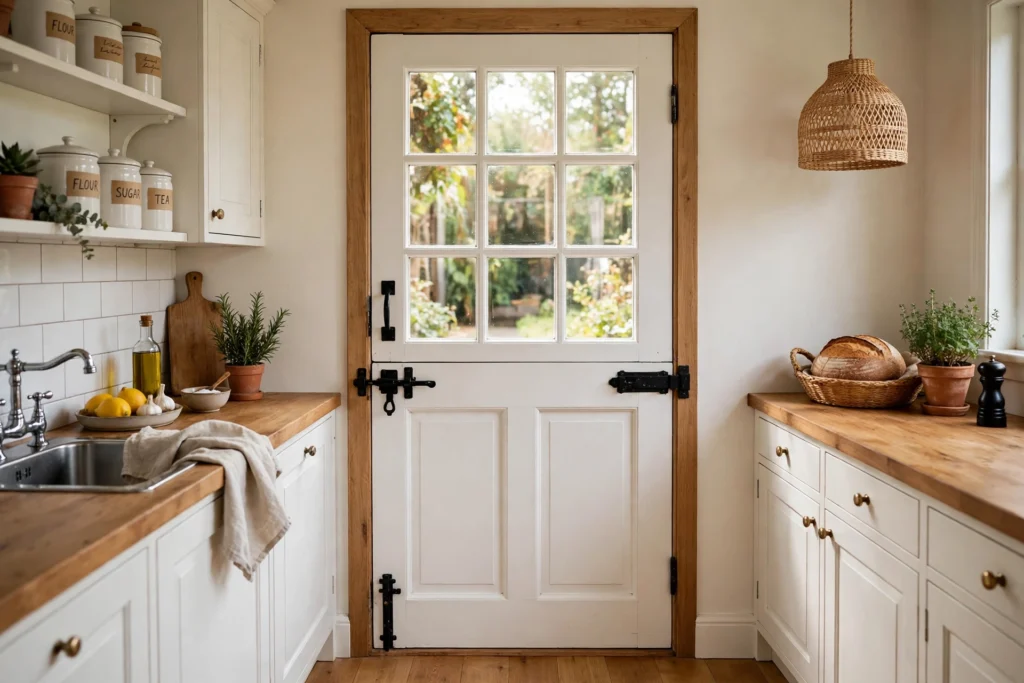
A crisp white Dutch door with divided-lite glass in the top half is the timeless starting point. The white paint bounces light around the kitchen, the divided panes add cottage character, and the solid lower panel keeps the working side of the kitchen out of sight when you want it to be. Pair it with matching white trim so the door reads as part of the millwork rather than an afterthought. This look fits farmhouse, coastal, and traditional kitchens equally well. Keep the glass clean with a simple vinegar spray, and choose a satin paint finish that wipes down easily after cooking splatters.
2. Choose a Bold Paint Color
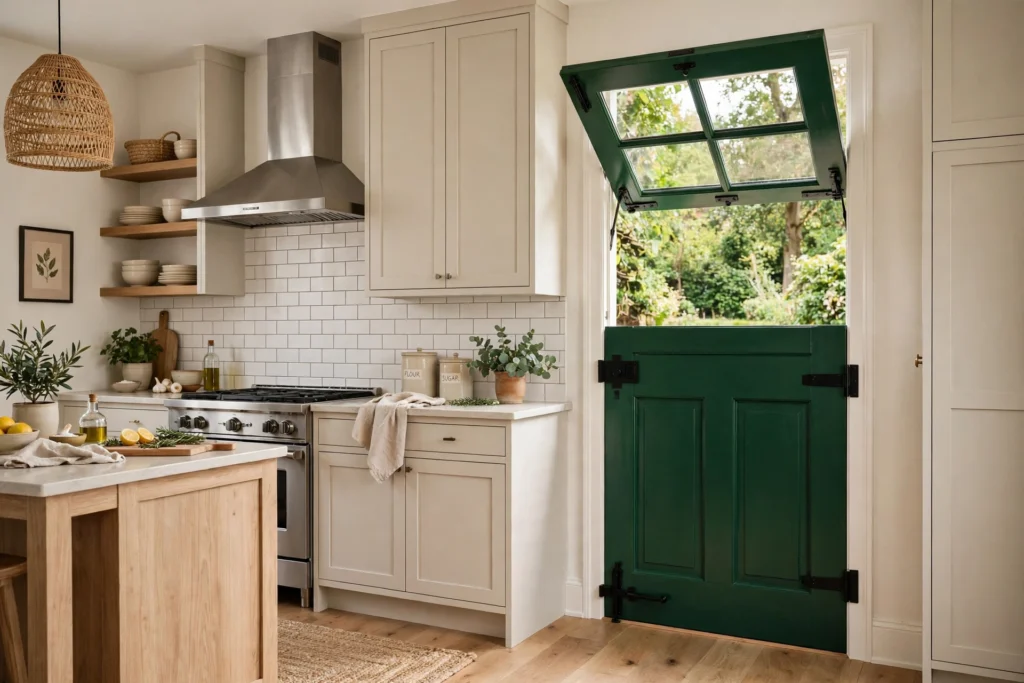
Paint the door a confident color — deep forest green, navy, or even cheerful red — and it becomes the kitchen’s signature moment. A bold Dutch door anchors an otherwise neutral kitchen and gives you a focal point that costs far less than new cabinets. Match the color to a shade already in your palette, like the island or bar stools, so it feels intentional. These modern farmhouse kitchen ideas full of warm character show how a strong painted moment can carry a whole room.
3. Add a Half-Window View to the Outdoors
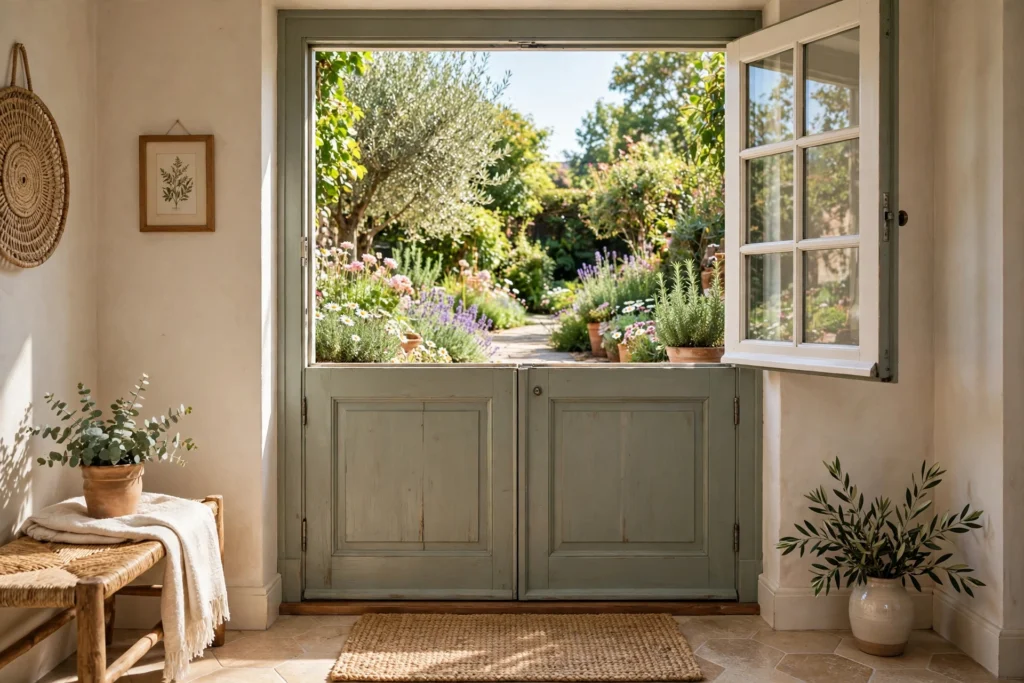
When your kitchen Dutch door leads outside, make the top half mostly glass. A full-lite or half-lite upper panel turns the door into a picture window you can also open — garden views, kids playing, daylight pouring in while you prep dinner. Tempered glass keeps it safe, and a retractable screen handles bug season. On the interior side, hang a small wreath or a magnetic herb-drying rack on the solid lower panel for a touch of charm. The indoor-outdoor connection makes even a small kitchen feel larger, and the open top half is perfect for passing snacks straight to the patio.
4. Use It as a Pantry Door

A Dutch door makes the ideal pantry entrance. Keep the bottom closed and you get a visual boundary that says “not now,” while the open top lets you spot what you need without opening anything. Chalkboard paint on the lower panel turns it into a grocery list and menu board in one — the whole family learns to write down what they finish. Glass in the upper half lets pantry light spill into the kitchen or vice versa. It is a small move with daily payoff: better airflow into a pantry that used to get musty, and a door that actually earns its keep.
5. Style It With Chalkboard Paint

Give the solid lower half a coat of chalkboard paint and your Dutch door doubles as the family’s message center. Menus, shopping lists, kids’ artwork, a running joke — it all lives right where you cook. Chalk markers give cleaner lines than dusty chalk and wipe off with a damp cloth. Keep the upper half in a solid coordinating color so the door doesn’t feel visually heavy. Seasonal refresh: change the drawing with the holidays.
6. Try a Weathered Wood Finish

For rustic kitchens, skip the paint and let the wood speak. A Dutch door in reclaimed barn wood or a weathered stain adds texture and warmth that no painted surface can match. Each half shows the grain differently when one is open, which only adds to the charm. Seal it well — kitchen humidity is real — with a clear matte polyurethane on the kitchen-facing side. Black iron hardware completes the look. The natural variation hides fingerprints and smudges far better than glossy paint, making this the lowest-maintenance finish of the bunch.
7. Pair It With Black Hardware

Hardware is the jewelry of a Dutch door. Matte black hinges, a black rim latch, and a chunky black handle give a white or colored door graphic contrast and a modern edge. Because a Dutch door needs double the hardware — two latches, two hinges sets, a bolt to join the halves — the finish choice is doubly visible, so invest in something you love. Interior-rated black hardware resists the kitchen’s humidity fine if you wipe it down occasionally. For more ways hardware transforms a space, these cottage kitchen ideas full of cozy charm lean on the same black-and-white contrast trick throughout the room.
8. Divide Kitchen and Living Space

In an open floor plan, a Dutch door between the kitchen and living area is the best of both worlds. Swing the top open for conversation and light while the bottom half keeps cooking mess, smells, and noise politely contained. It preserves the open feel buyers love while giving the cook a real boundary. This is the Dutch door’s superpower: it lets a kitchen be open and closed at the same time, which no standard door or cased opening can do.
9. Add a Built-In Shelf Ledge
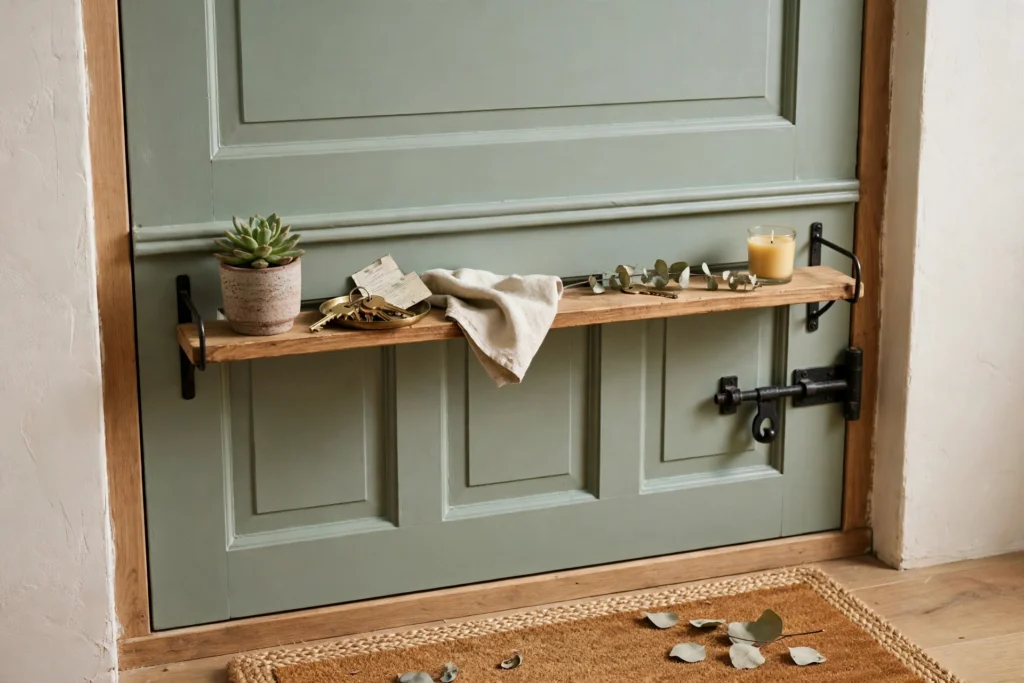
A narrow shelf screwed to the top of the lower half is a Dutch door classic — it becomes a serving ledge, a place for coffee cups, or a display spot for small plants. When the top is open, the ledge is at the perfect pass-through height for handing plates to the dining area. Stain or paint it to match the door, and add a small lip so items don’t slide. Designers who love this detail often pair it with window-like trim above, and galleries like these Dutch door inspiration photos show how a ledge turns the door into furniture.
10. Keep the Top Half Open While Cooking
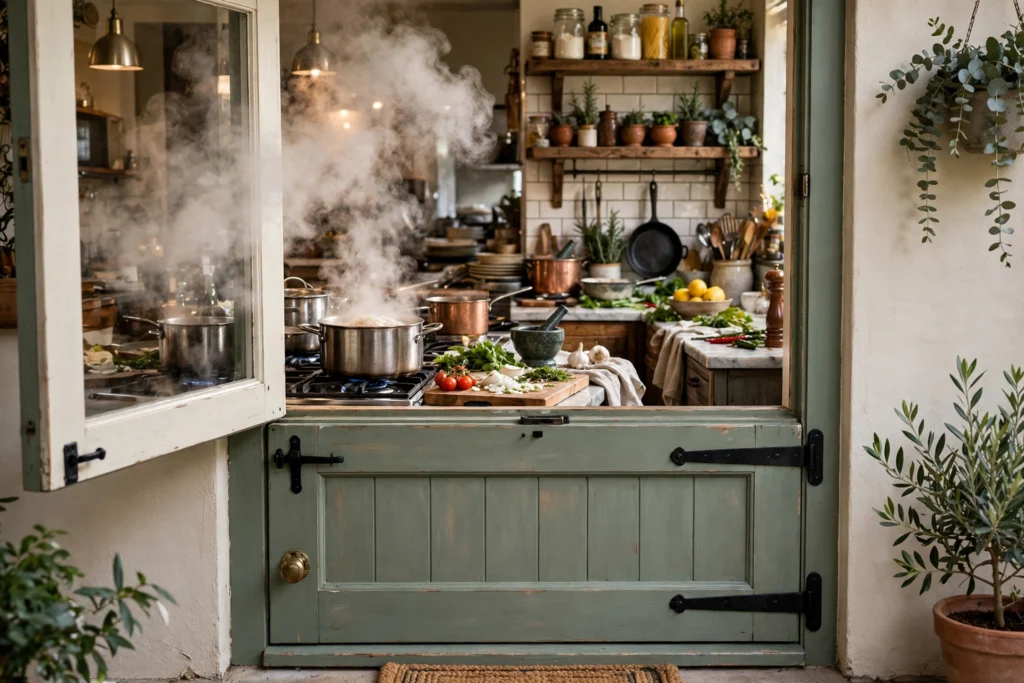
The most practical of all kitchen dutch door ideas is also the simplest: leave the top half open every time you cook. Steam, smoke, and cooking smells vent out instead of lingering, daylight floods the workspace, and you stay connected to the rest of the house. A hook-and-eye latch or a magnetic catch holds the top panel back against the wall. This single habit makes a windowless kitchen far more pleasant and reduces how hard your range hood has to work. In older homes, it is the easiest ventilation upgrade you will ever make — no ductwork, no electrician.
11. Use Frosted Glass for More Privacy
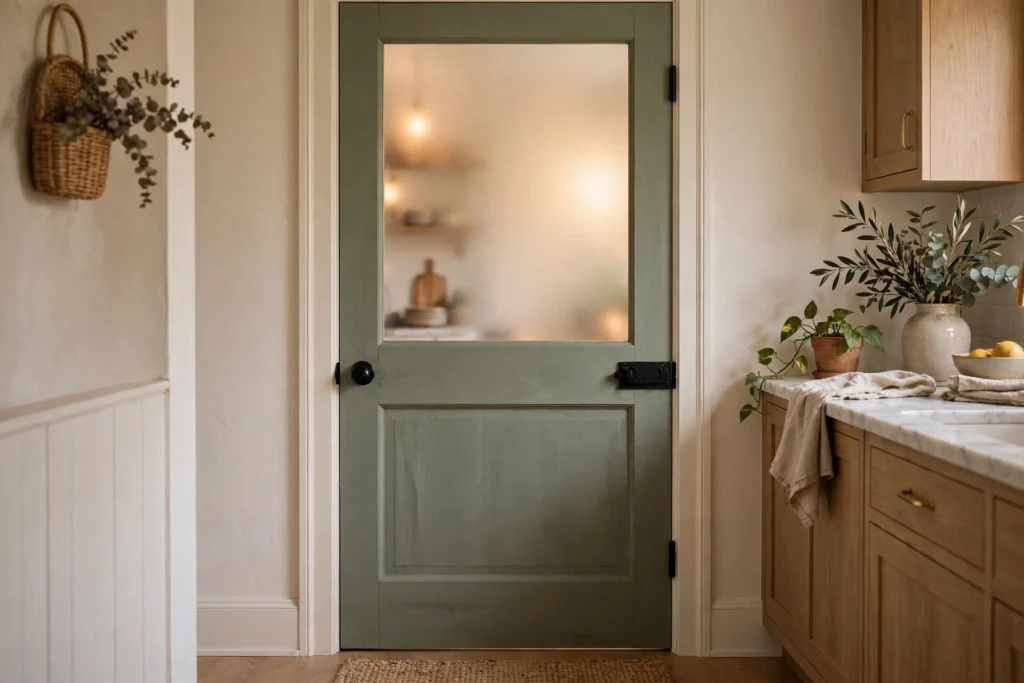
When you want light without the sightline — say the door opens to a hallway or a neighbor’s view — frosted glass in the upper half is the answer. It glows softly when backlit, blurring the other side into a luminous haze. Frosted or reeded glass still lets the top open for air, so you lose nothing functionally. This works beautifully in modern kitchens too: pair frosted glass with a flat-panel door and minimal hardware for a Scandinavian feel. Cleaning is simple — the frosted side faces the less-trafficked direction and hides smudges far better than clear glass.
12. Frame It With Statement Molding

Treat the doorway like a piece of architecture. Wide flat casing, a chunky header, or even a shallow pediment makes the Dutch door feel original to the house rather than added later. Paint the trim the same color as the door for a built-in look, or contrast it — white door, dark trim — for drama. The investment is modest (lumber and paint) but the effect is outsized: guests will assume the door has always been there. Guides on every door style confirm the Dutch door’s farmhouse credentials, and good trim makes yours look intentional.
13. Make It a Pet-Friendly Barrier
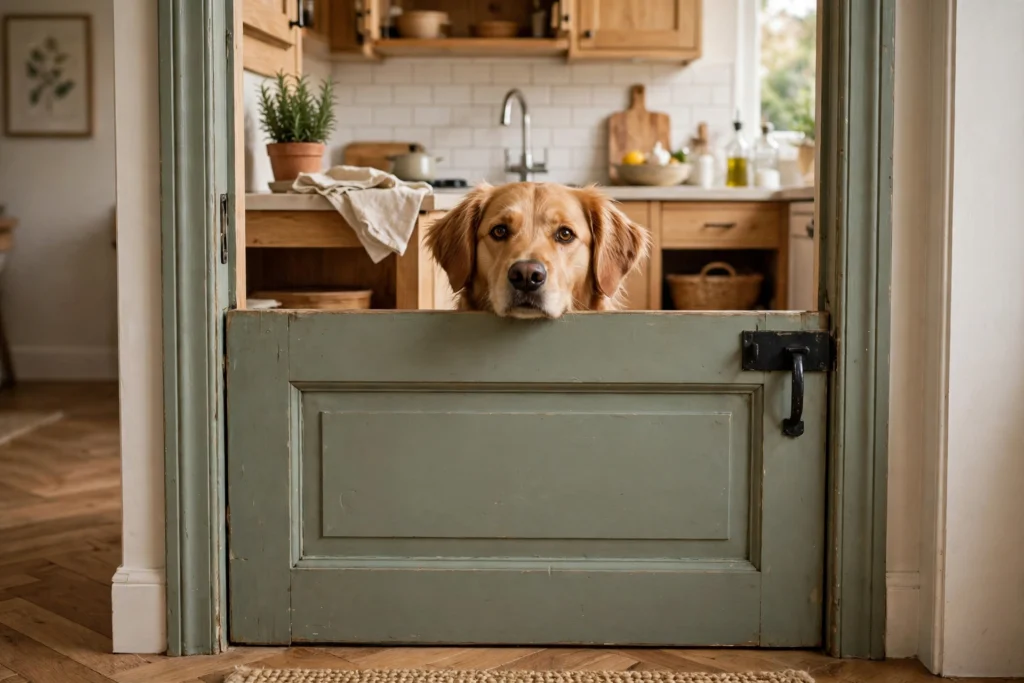
Dog owners, this one is for you. A Dutch door with the bottom half closed keeps an enthusiastic dog out of the kitchen while the open top lets them see and smell you — no whining at a closed slab door. Add a sturdy baby-gate-style latch the dog can’t nose open, and choose a scratch-resistant finish on the lower panel. Cats will still jump it, fair warning, but for dogs and toddlers it is the perfect compromise between togetherness and boundaries. Bonus: the top half opens wide enough to pass a treat through without inviting the whole dog in.
14. Add a Screen Insert for Summer

Swap the upper glass panel for a screen insert in warm months and your kitchen gains a breezy pass-through with zero bug risk. Screened uppers are a farmhouse tradition — they let cooking heat escape and evening air drift in while dinner simmers. Most Dutch doors accept an interchangeable sash, so the swap takes minutes each spring and fall. Pair it with a ceiling fan and you may never run the range hood on low again. For kitchens that face a garden or porch, this is the closest thing to cooking outdoors without leaving the house.
15. Match It to Your Cabinet Color
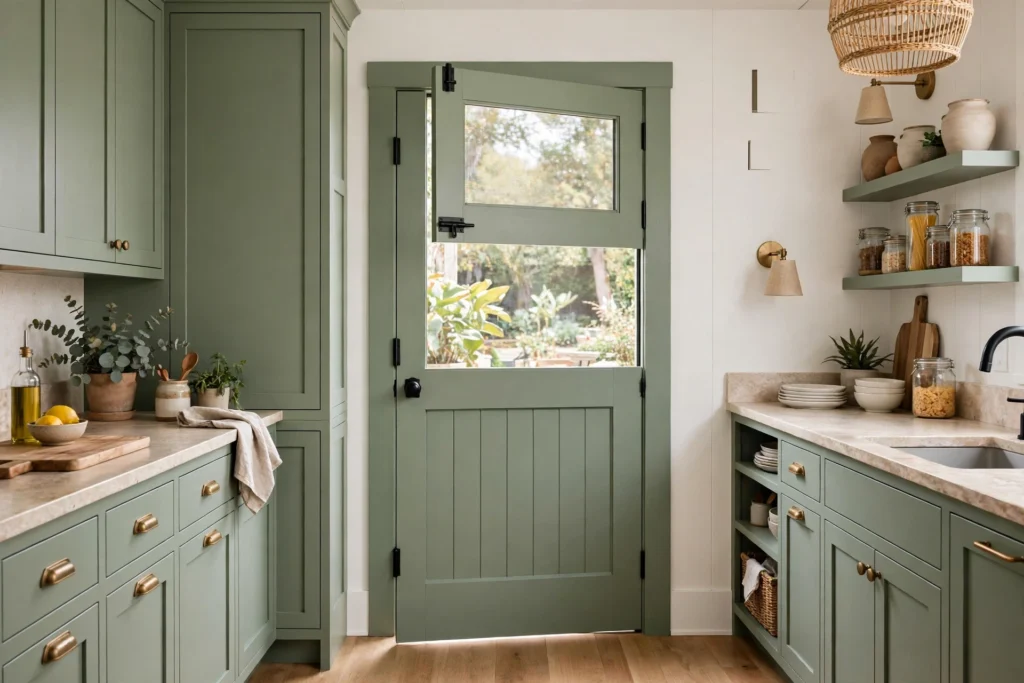
The most seamless look: paint the Dutch door the exact color of your cabinets. The door disappears into the kitchen’s palette, reading as another cabinet face rather than a separate element. This works especially well with colored cabinetry — a sage, navy, or charcoal door that matches the lowers looks custom and expensive. The result is a kitchen that feels designed top to bottom, where even the doorway participates in the color story instead of interrupting it.
Frequently Asked Questions
Are Dutch doors good for kitchens?
Yes — they are one of the best door choices for a kitchen. The split design lets in light and air while keeping pets, toddlers, and cooking mess contained. They work as exterior doors, pantry doors, and dividers between the kitchen and living space, and they suit farmhouse, cottage, and modern styles with the right finish.
How much does a kitchen Dutch door cost?
A pre-hung Dutch door typically costs between $400 and $1,200, with custom sizes, glass inserts, and premium wood pushing higher. Installation adds $200 to $500 depending on whether the existing frame needs modification. Painting or hardware upgrades can be done later to spread the cost.
Can I turn a regular door into a Dutch door?
Often, yes. A solid-core slab door can be cut horizontally and re-hung with additional hinges and a joining bolt, which many carpenters will do for a few hundred dollars. Panel doors cut less cleanly, and hollow-core doors usually aren’t worth converting. An exterior Dutch door should be bought purpose-made for weather sealing.
Do Dutch doors let in drafts?
A well-fitted Dutch door seals nearly as well as a standard door, but the center seam is the weak point. Quality Dutch doors use interlocking astragals and weatherstripping at the split. If yours drafts, add self-adhesive weatherstripping along the seam and check that both halves latch firmly into the frame.
What paint finish works best on a Dutch door?
Use a satin or semi-gloss interior paint — both wipe clean of cooking grease and fingerprints, and the slight sheen highlights the door’s crisp lines. Prime bare wood first, sand lightly between coats, and allow a full cure before heavy use. Avoid flat finishes in kitchens; they mark too easily.
Keep Exploring
A kitchen Dutch door is a small change with an outsized payoff: more light, better air, a friendlier boundary, and a whole lot of charm. Pick the idea that matches your kitchen’s style — classic white, bold color, weathered wood — and build from there. Even the simplest version, a painted split door with black hardware, will have guests asking about it within minutes.
Once the door is sorted, keep refining the room around it. If the new door draws the eye upward, these kitchen ceiling ideas for a bolder look up top keep the design story going overhead — beams, paint, and lighting that pair beautifully with a statement door.