Living room record player ideas are the fastest way to give a modern living room genuine vintage charm. A turntable on a console instantly becomes the warmest corner of the room — a place where music sounds richer, conversations linger, and the furniture tells a story. Unlike most decor trends, a record corner earns its floor space twice over: it is both beautiful to look at and genuinely used every week.
Whether you own a vintage belt-drive turntable, a modern direct-drive deck, or you are buying your first player, living room record player ideas range from full mid-century listening stations to small single-shelf setups that fit beside the sofa. The fifteen ideas below cover placement, consoles, vinyl storage, speaker setup, cable management, styling, and the acoustic basics that make a record corner sound as good as it looks.
1. Mid-Century Console as Your Turntable Hub

A low mid-century console is the classic home for a turntable, and for good reason. The platter sits at a comfortable browsing height, the closed cabinets swallow sleeves and accessories, and the tapered legs give the whole setup a light, lifted feel. Look for a console at least forty-eight inches wide so the turntable, a small amplifier, and a stack of frequently played records all fit without crowding.
Place the turntable on the left or right third of the top surface, never dead center — this leaves room for a lamp or plant and keeps the tonearm side away from passing elbows. Slide a cork or leather mat under the deck to dampen vibration from foot traffic. If you thrift the console, check that the top is level with a phone app; an unlevel deck can cause tracking problems over time.
2. Corner Listening Nook with a Reading Chair

Tuck your record setup into an underused corner and pair it with a comfortable reading chair to create a true listening nook. The corner placement keeps the turntable out of high-traffic paths (fewer bumps, fewer skips) and naturally forms an intimate triangle between chair, player, and speakers. A swivel chair works beautifully here — you can turn toward the deck to flip a record, then spin back to face the speakers.
Add a small rug under the chair to anchor the zone and absorb sound reflections off hard floors. A floor lamp with a warm bulb behind the chair gives you reading light that doubles as ambient glow for evening listening sessions. Keep a low crate of “now playing” records beside the chair so flipping sides never breaks the mood.
3. Vinyl Storage Wall with Flip-Through Bins

Records are happiest stored upright, and a flip-through wall turns your collection into decor. Use low wooden crates or cube shelving with dividers every ten to twelve inches so sleeves stand vertical without leaning and warping. The standard twelve-inch LP format defined the album era — read more about its history on Wikipedia’s LP record page — and sleeves this size make satisfying, readable spines when lined up.
Sort by genre or by mood rather than alphabetically; you will browse more and play more. Leave one bin or cube partially empty so new arrivals always have a home. Cap shelf stacks at about forty records per section to keep the weight manageable, and keep the storage away from radiators and sunny windows, since heat is vinyl’s worst enemy.
4. Floor-Standing Speakers Flanking the Console
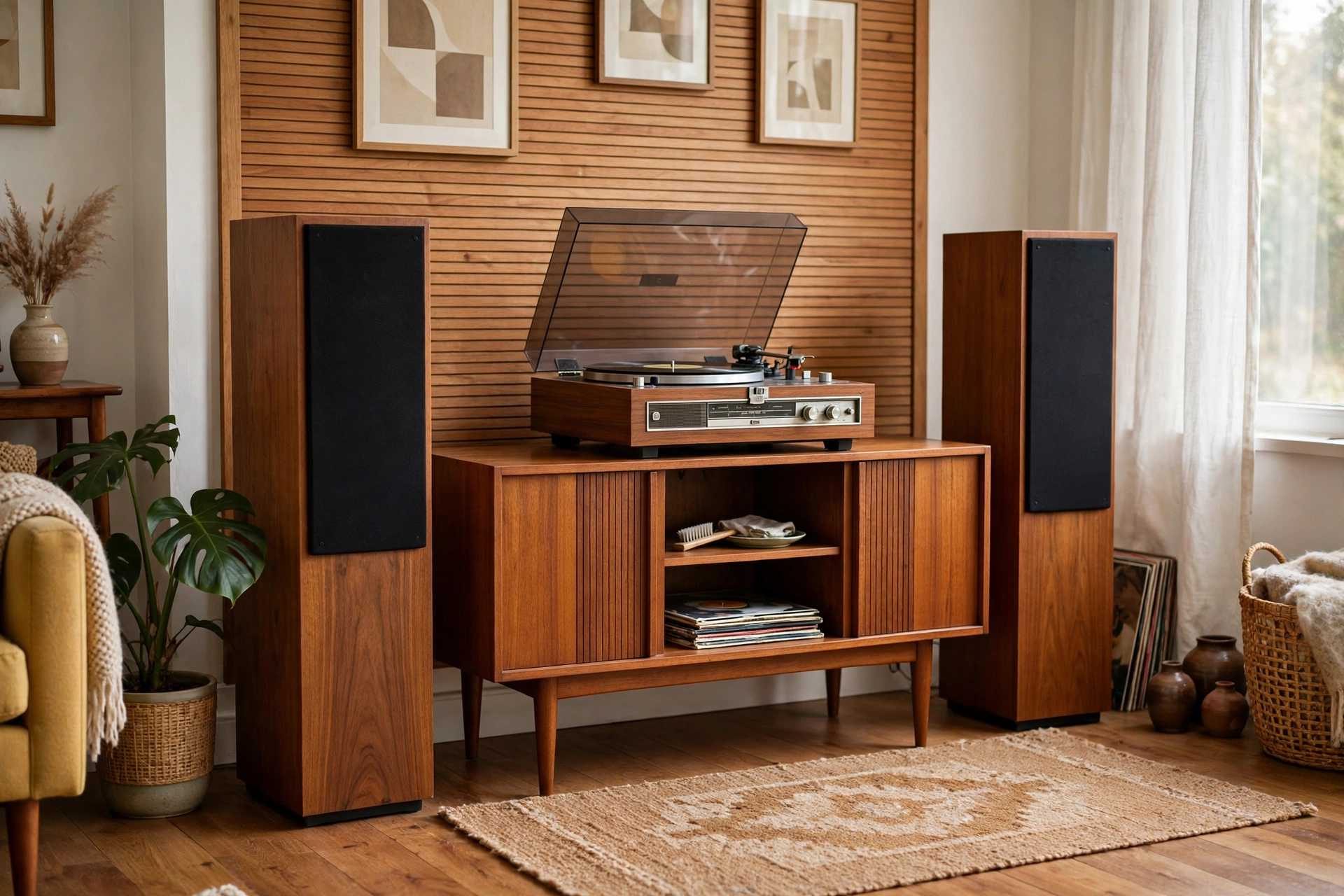
A pair of floor-standing speakers flanking your console is the fastest route to room-filling sound. Position them roughly as far apart as you sit from them — if your chair is eight feet away, aim for six to eight feet of separation — and angle each speaker slightly inward so the tweeters point at your listening spot. This simple triangle setup improves stereo imaging more than any cable upgrade.
Keep the speakers at least a foot away from the back wall to avoid boomy bass, and make sure the turntable itself is not on the same surface as a speaker; speaker vibration is the number-one cause of skipped records. If space is tight, bookshelf speakers on stands beside the console achieve the same effect. Match wood tones between speakers and console for a cohesive vintage look.
5. Vintage Sideboard Turntable Station

A thrifted sideboard makes a characterful turntable station that no flat-pack can match. Look for solid-wood pieces from the sixties or seventies with sliding doors — the doors hide the less attractive gear (power strips, Wi-Fi streamers) while the top stays clean. The phonograph’s long history, from Edison’s cylinders to the modern turntable revival, is worth a read on Wikipedia’s phonograph page if you love the story behind the machine.
Sand and oil the top of a worn sideboard before placing your deck; a smooth, level surface protects the stylus from vibration. Line the inside of one cabinet with felt to create a dedicated home for your record brush, stylus gauge, and spare sleeves. Style the remaining top space with a brass lamp and a small stack of records for that collected-over-decades feel.
6. Floating Shelf for a Minimal Turntable Display

In a small living room, a floating shelf turns the turntable into wall art. Mount a deep solid-wood or butcher-block shelf (at least fourteen inches deep) into wall studs with heavy-duty brackets rated for fifty pounds or more — turntables are heavier than they look. The shelf should sit at about thirty inches high, matching standard console height for comfortable record changes.
Mount a second, narrower shelf above for a rotating display of five or six favorite album covers, swapped monthly. Run the cables down through a paintable cord channel so the floating effect stays clean. This approach works best with a compact modern turntable rather than a heavy vintage deck, and it keeps the player completely safe from toddlers and wagging dog tails.
7. Turntable on a Living Room Side Table

No console? A sturdy side table does the job beautifully and costs far less. Choose a table with a solid top and four legs (avoid glass or wobbly pedestal bases), at least twenty inches square so the turntable’s feet all sit fully on the surface. Position it at the end of the sofa within arm’s reach — flipping a record without getting up is one of life’s small luxuries — and flank the console with a handy living room side table on the opposite end for symmetry.
The lower shelf of the side table becomes perfect vinyl storage for your current rotation, ten to fifteen records within easy grab. Add felt pads under the turntable feet to protect the tabletop and dampen vibration. If the table has a drawer, dedicate it to your cleaning kit: record brush, microfiber cloth, and stylus cleaner always within reach.
8. Plants Softening the Vinyl Corner
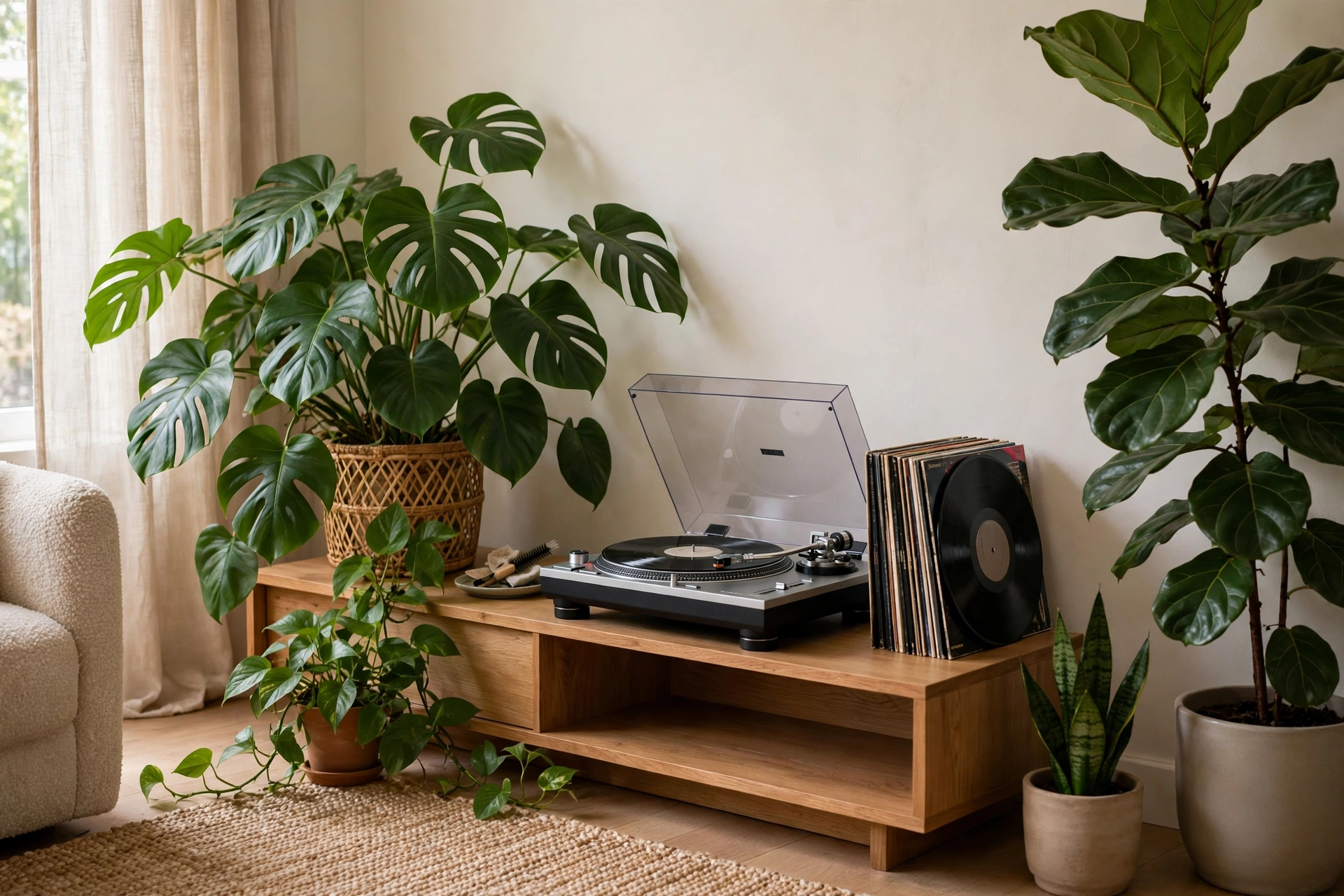
Greenery is the secret ingredient that keeps a record corner from feeling like an electronics display. A tall plant beside the console — a fiddle-leaf fig, olive tree, or snake plant — softens the hard edges of speakers and shelving and fills the vertical space above low furniture. Trailing plants like pothos on the shelf above the turntable add movement without crowding the deck.
Keep plants at least a foot from the turntable itself; watering accidents and vinyl do not mix, and leaves brushing a spinning record are a real hazard. For more ways to layer greenery through the room, explore our living room plant decor ideas for lush greenery. A terracotta pot echoes the warm tones of wood consoles and vintage sleeves, tying the whole corner together.
9. Dark Academia Listening Corner

For a moody, library-like atmosphere, style your record corner in the dark academia palette: deep green or charcoal walls, a worn leather chair, brass lighting, and walnut or mahogany furniture. The turntable becomes one more beautiful object in a room of beautiful objects, and the dim lighting makes evening listening sessions feel cinematic. Browse our dark academia living room design ideas with moody charm for the full room treatment.
Choose album covers with classic art — jazz, classical, and seventies rock pressings look made for this aesthetic — and display a few in brass frames. A green banker’s lamp on the console gives task light for reading liner notes without harsh overhead glare. Keep the palette restrained: two dark tones, brass, and leather is all you need for the effect.
10. Hidden Cable Management for a Clean Setup

Nothing ruins a vintage vignette faster than a tangle of black cables. Start at the power source: mount a small power strip to the back of the console with adhesive strips so plugs sit hidden behind the furniture. Bundle the turntable’s RCA cables and ground wire together with reusable Velcro ties, keeping them separated from the power cord to avoid the low hum that comes from signal and power running parallel.
Run the speaker wire along the baseboard using paintable cord covers, or tuck it under the rug if the speakers sit close to the console. Label each plug with a small piece of masking tape — future you will be grateful during dusting or rearranging. A setup with invisible wiring looks twice as expensive and takes under an hour to achieve.
11. Warm Lighting for the Listening Corner

Lighting sets the mood for a record corner more than any other detail. Overhead lighting is the enemy of atmosphere, so layer two warm sources instead: a table lamp on the console (2,700 Kelvin or warmer) and a floor lamp or wall sconce near the listening chair. The glow should be strong enough to read album spines but soft enough to feel like evening.
A small clip-on LED aimed at the turntable platter is a practical luxury — it makes cueing the needle easy in dim light without flooding the room. Dimmable bulbs let you shift from bright afternoon browsing to low evening listening with one twist. Avoid placing any light where its reflection lands on the vinyl surface, which can distract while you cue.
12. Framed Album Art Gallery Wall
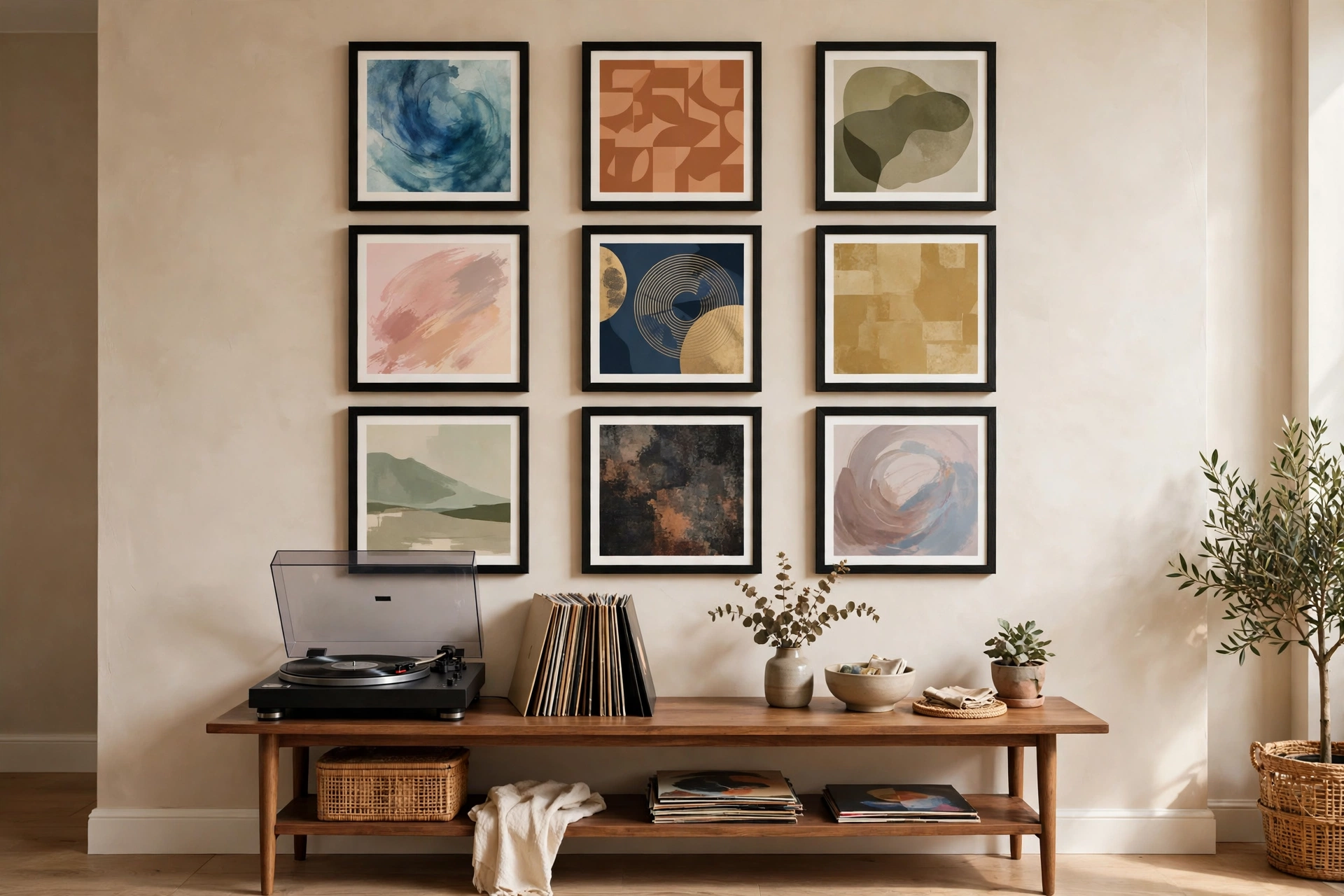
Album covers are twelve inches of ready-made art — frame your favorites and hang a gallery wall above the console. Use simple black or natural-wood twelve-inch frames (record-specific frames are sold cheaply online) and arrange five to nine covers in a tight grid, hung with the center at eye level. A grid looks intentional and calm; a salon-style scatter looks eclectic and collected.
Rotate the covers seasonally or whenever your listening habits change — the wall becomes a visual diary of what you are actually playing. Keep the frames out of direct sunlight, which fades cover art quickly. Mix in one or two concert posters or vintage music prints at a different size to break the grid’s rigidity without losing cohesion.
13. Coffee Table Vinyl Display
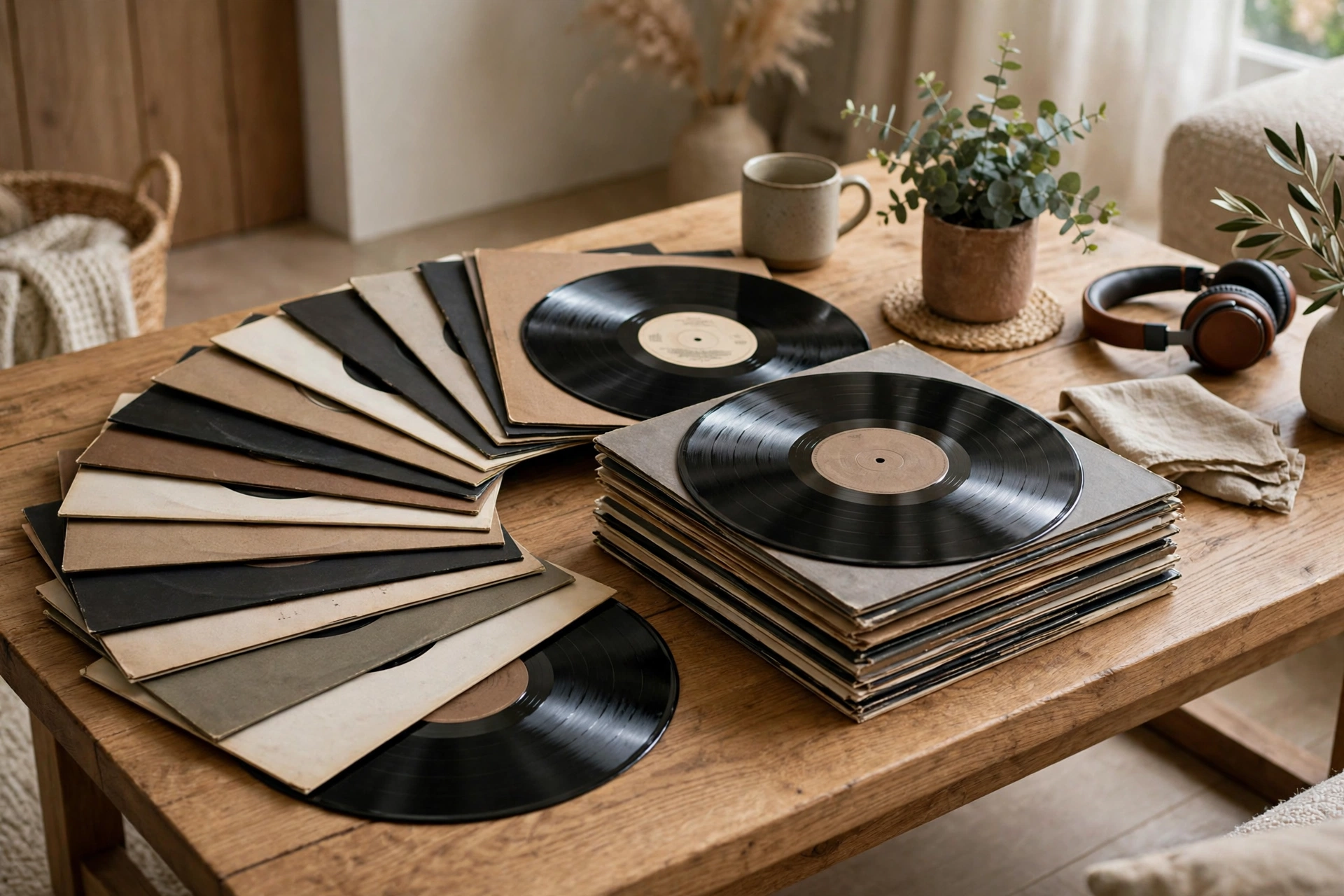
Let the coffee table join the music setup by styling it as a vinyl display. Fan three or four favorite records across the tabletop, lean one open gatefold sleeve against a small stack of coffee-table books, and keep a “now spinning” sleeve propped where guests can see it. This turns your collection into a conversation starter and makes choosing the next record a social moment.
Protect the tabletop with a felt mat under any stack, and never leave records out of their sleeves for long — dust settles fast in a living room. A lidded wooden box on the coffee table holds the records currently in rotation, keeping the display tidy between listening sessions. Guests will flip through it the way they flip through photo albums.
14. Smart Acoustic Placement in the Living Room

You do not need acoustic panels to make a living room sound good — soft furnishings do most of the work. A rug between the speakers and your chair tames the harsh reflections of bare floors, and heavy curtains on the nearest window cut the flutter echo that makes vocals sound thin. Bookshelves full of records along a side wall act as natural diffusers, scattering sound pleasantly.
Avoid placing the turntable against the same wall as a subwoofer, and never put the deck on a hollow, resonant surface like a thin IKEA shelf without damping — a fifteen-dollar isolation platform or even a dense foam pad under the turntable makes an audible difference. Small placement tweaks cost nothing and often improve the sound more than new equipment.
15. Seasonal Styling Refresh for the Record Corner
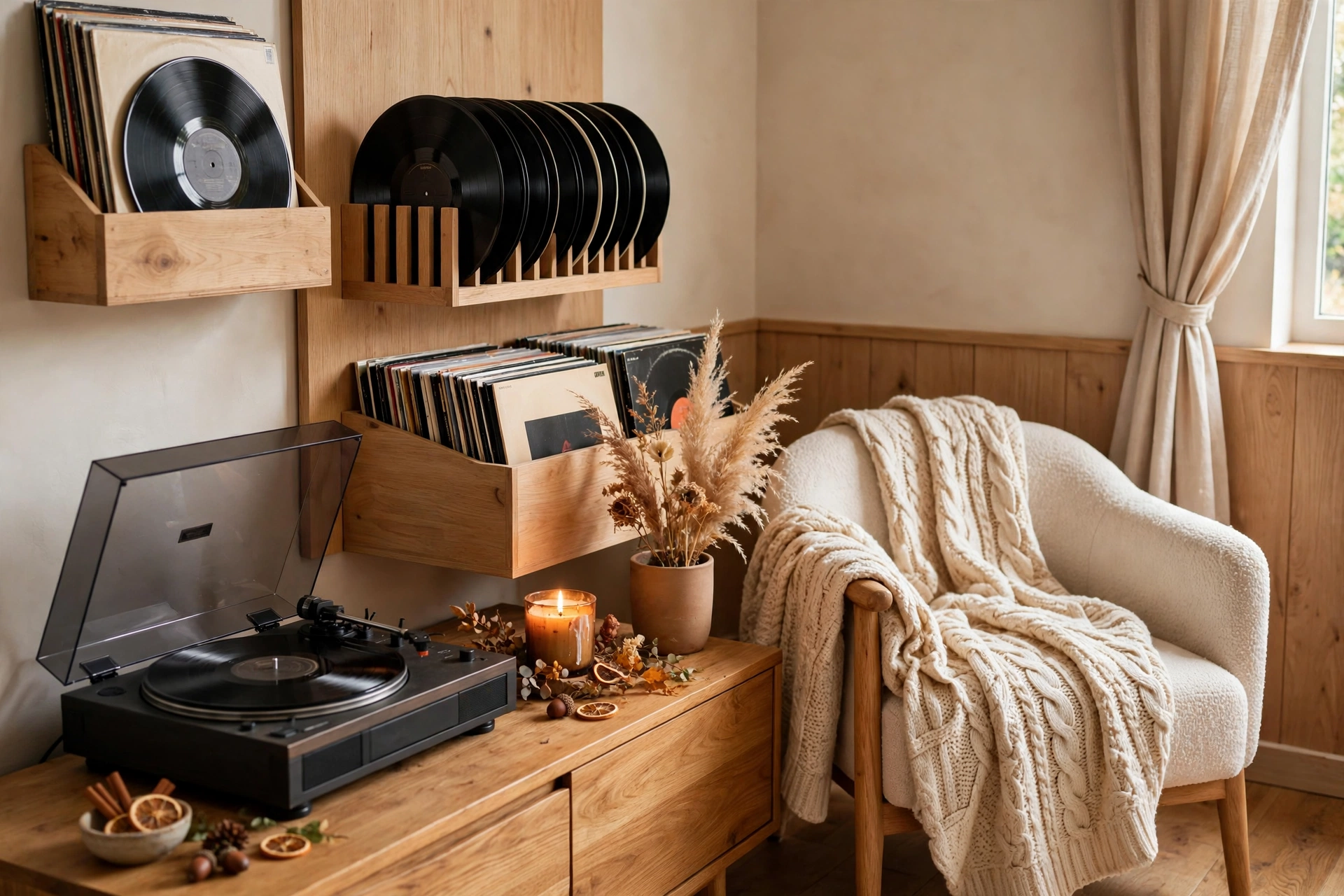
Treat your record corner like a mantel and refresh it with the seasons — it takes fifteen minutes and keeps the setup feeling alive. In autumn, drape a plaid throw over the listening chair and lean a harvest-toned album cover on the display shelf. Winter calls for a candle (safely away from the turntable) and deep-jewel-toned sleeves. Spring and summer mean lighter covers, a small vase of fresh stems on the console, and the plant corner at its lushest.
Keep the turntable, speakers, and record storage untouched — only swap the decorative layer: throws, small art, candles, and displayed covers. Photograph each seasonal version; after a year you will have a lookbook of your own corner’s evolution. This habit keeps the record player a living part of the room rather than a static museum piece.
Frequently Asked Questions
Where is the best place for a record player in a living room?
Place the turntable on a low, stable console or sideboard away from high-traffic paths and out of direct sunlight. Keep it near your listening chair but separated from the speakers — speaker vibration is the main cause of skipping. A corner nook works well because it protects the deck from bumps while creating an intimate listening zone.
Do vibrations from speakers damage records on the turntable?
Vibrations will not usually damage records, but they cause skipping, muddy bass, and stylus wear over time. Keep speakers off the same surface as the turntable, place the deck on a solid, level stand, and add an isolation mat or platform under the player if your floors transmit footstep thumps.
How should you store vinyl records in a living room?
Store records upright in cubes, crates, or dividers — never stacked flat, which warps them. Keep them away from heat sources, radiators, and sunny windows, and avoid overpacking shelves so sleeves slide out easily. Inner sleeves protect the vinyl itself, so replace torn paper inners with anti-static ones.
Can a record player sit on the same shelf as a speaker?
It is best to avoid it. Speaker vibration travels through shared furniture and into the stylus, causing feedback and skipping, especially at higher volumes. If space forces them together, place a dense isolation platform under the turntable and keep the volume moderate — or move the speaker to a separate stand beside the shelf.
How do you hide cables in a turntable setup?
Mount a power strip to the back of the console, bundle audio cables with Velcro ties, and keep signal cables separated from power cords to prevent hum. Run speaker wire along baseboards in paintable cord covers or under a rug. Label every plug so future rearranging stays simple.
Keep Exploring
A living room record corner rewards you every single day — the ritual of choosing a record, dropping the needle, and sinking into the chair is the opposite of background streaming. Start with a stable surface and good speaker placement, then let the styling grow around your collection. Your vinyl deserves a corner as warm as it sounds.