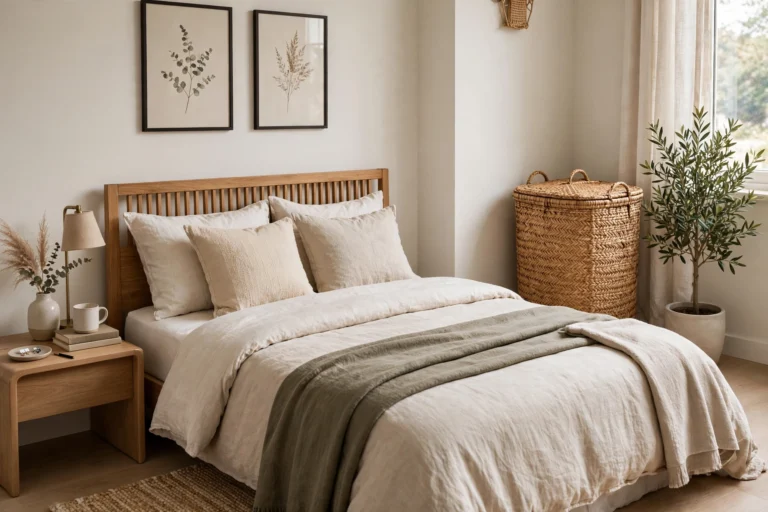
Bedroom dog bed ideas solve a dilemma every dog owner knows: your pup wants to sleep near you, but a lumpy old blanket on the floor does nothing for your decor. A well-chosen dog bed gives your dog a warm, defined sleeping corner while keeping your bedroom looking intentional and stylish. Support, sizing, washability, and placement all affect how well your dog actually sleeps.
From orthopedic memory-foam beds for senior dogs to crate-as-nightstand setups that double as furniture, the fifteen ideas below cover every breed size, bedroom layout, and style preference — with the practical details that turn a simple dog bed into a cozy pet corner you are both happy with.
1. Classic Plush Donut Bed in a Quiet Corner

The donut bed is the workhorse of bedroom dog beds: a round, cushioned ring with a soft center that supports curled-up sleeping. Choose a bed roughly equal to your dog’s nose-to-tail length when curled — most medium dogs fit a 30-inch donut, small breeds a 24-inch one. Place it in a low-traffic corner away from doors and drafty windows, where your dog can still see you.
Pick a removable, machine-washable cover in a neutral tone that echoes your bedding palette, so it reads as decor rather than an afterthought. Anchor the corner over one of our bedroom rug ideas so the bed sits on something soft and does not slide across hard floors.
2. Orthopedic Memory-Foam Bed for Senior Dogs

Older dogs with stiff joints deserve real support, and a memory-foam orthopedic bed delivers it. Look for a minimum three-inch foam base for medium and large breeds — thinner pads bottom out under heavier dogs. CertiPUR-US certified foam is worth seeking out, since it is made without harsh chemicals that could irritate sensitive senior noses.
A waterproof liner between the foam and the washable cover is non-negotiable for older dogs, protecting the foam from accidents and drool. Size up generously, since arthritic dogs sprawl more than young ones — add four to six inches to the usual nose-to-tail measurement. Keep the bed at floor level near your own bed so no climbing is required.
3. Bolster Bed with Raised Pillow Edges

Dogs that rest their chin on everything will love a bolster bed — the raised padded rim acts as a built-in pillow. Choose a rectangular bed at least as long as your dog stretched out, since many bolster sleepers alternate between curling and sprawling. The bolsters should be firm enough to hold their shape when leaned on, not so soft they collapse.
Washability matters here because chins and paws hit the bolsters hardest; pick a cover that unzips fully and survives hot washes. Match the fabric to your duvet color family — charcoal beside gray bedding looks deliberate, while a clashing print screams “pet corner.” For heavy chewers, skip exposed piping or button details.
4. Crate Turned Into a Cozy Den
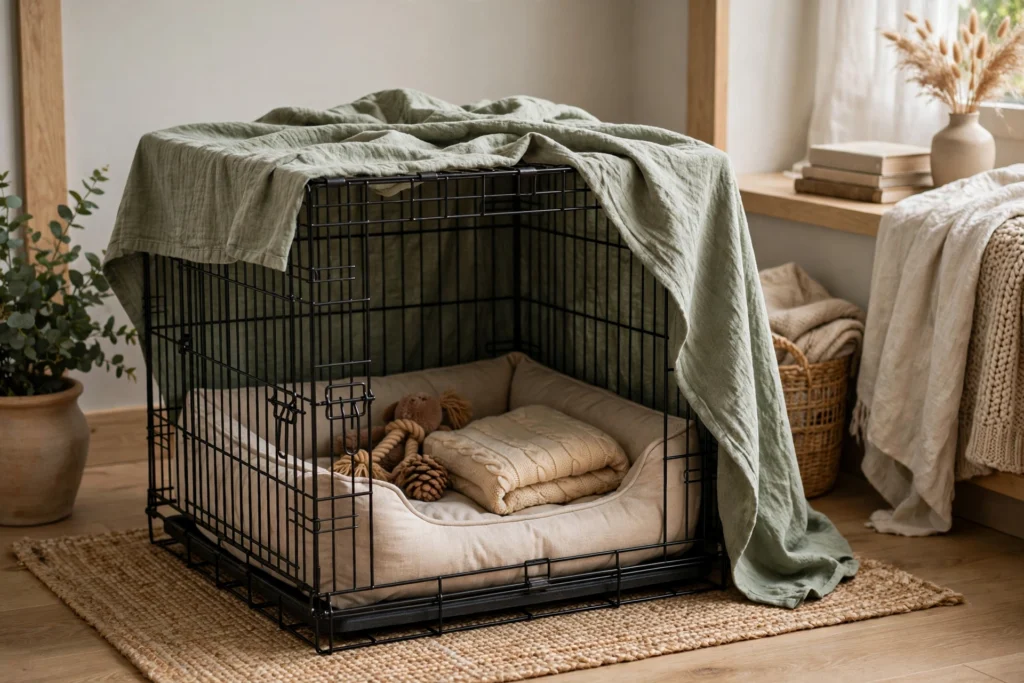
A wire crate does not have to look institutional. Size it so your dog can stand, turn, and lie down comfortably — too large feels insecure, too small is cruel. Line it with a fitted crate pad, then drape a breathable cover over the top and sides, leaving the door end open for airflow.
Dogs are den animals by nature — see Wikipedia’s overview of the domestic dog for more on their denning instincts — so this setup taps into behavior they already have. Add a soft nightlight nearby, keep water just outside the door, and never use the crate as punishment. Position it against a bedroom wall so two sides feel sheltered.
5. Raised Cot Bed for Warm Sleepers

Some dogs run hot and pant through summer nights on plush beds. A raised cot — a taut fabric panel on a metal or PVC frame — lets air circulate underneath and keeps your dog several degrees cooler. These beds are also excellent for allergy-prone dogs, since the elevated surface collects less dust and dander than a floor cushion.
Choose a frame rated well above your dog’s weight, with a replaceable mesh or canvas cover for easy cleaning. The cot’s minimalist look suits modern and Scandinavian bedrooms far better than a bulky cushion. In winter, layer a folded blanket on top to convert the cooling cot into a cozy nest.
6. Nook Bed Tucked Under a Window Bench
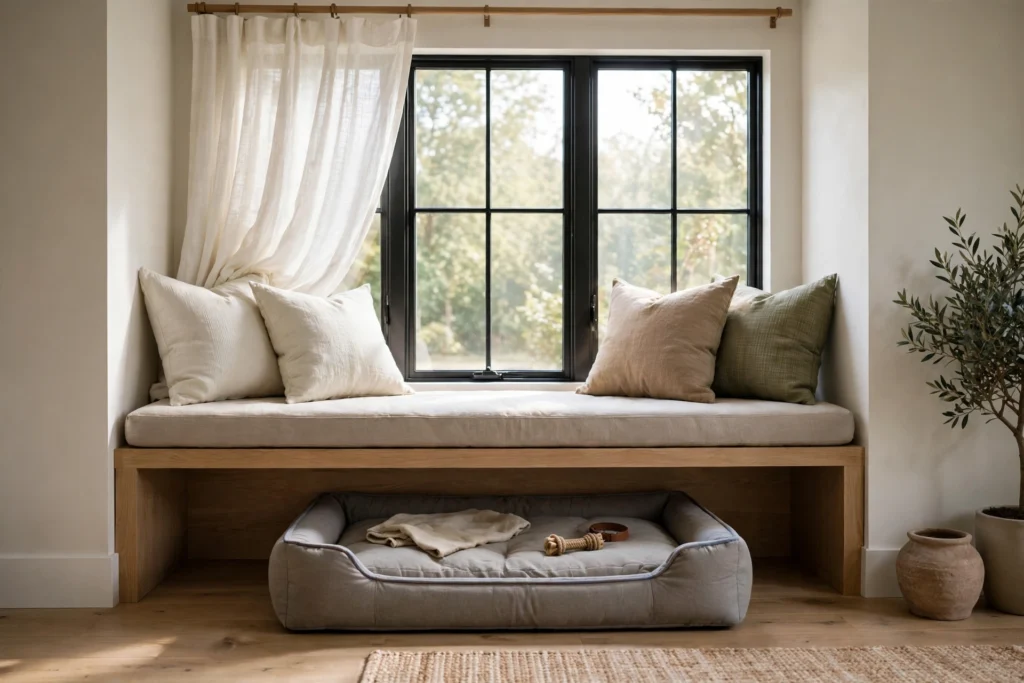
If your bedroom has a window bench or bay-window ledge, the space beneath it is a ready-made dog nook. Measure the opening, then find a low-profile rectangular bed that slides in with an inch or two to spare on each side — too tight and the bed bunches, too loose and it looks lost.
Keep the nook draft-free: windows leak cold air, so add a draft stopper or choose a bed with raised sides on the window-facing edge. This spot gets lovely morning light, which most dogs adore. Soften the surrounding corner with one of our bedroom plant ideas, keeping greenery on the bench above and out of chewing reach.
7. Wicker Basket Bed with a Washable Cushion

A sturdy wicker or rattan basket lined with a thick cushion brings cottage and coastal charm to the dog corner. Choose a basket with low sides your dog can step over easily — deep laundry-style baskets frustrate small and senior dogs. Line the bottom with a non-slip mat so the cushion stays put, then add a plush, washable pad cut to fit.
Wicker looks beautiful but is chewable, so this suits calm adult dogs rather than teething puppies. Check seasonally for splinters or broken weave. In a neutral bedroom, a natural seagrass basket with a cream cushion blends seamlessly. Refresh the cushion cover seasonally for an easy style rotation.
8. Crate-as-Nightstand Dual-Purpose Setup

Short on space? A sturdy furniture-style crate can pull double duty as your nightstand. These crates come in side-table heights with a flat, finished top that holds a lamp, a book, and your phone charger. Your dog gets a den; you get a nightstand — one footprint instead of two.
Check the weight rating of the crate top before loading it with a heavy lamp, and keep cords tucked behind so curious noses cannot reach them. Inside, a fitted pad and a cover over three sides keep the den cozy. This works best for small to medium dogs, since furniture crates top out around 30 inches.
9. Flat Mattress Pad Right Beside Your Bed

Some dogs simply want to be as close to you as possible, and a flat, low-profile mattress pad beside your bed gives them that spot without the bulk. Choose a pad two to three inches thick with a non-slip base so it stays put when your dog circles before lying down. Match its cover to your sheets or duvet for a coordinated look.
This is the easiest bed to keep clean — shake it out daily and toss the cover in the wash weekly. It also works beautifully for multi-dog households: line up two pads along the bedside and each dog gets a defined space. Keep the pad clear of your walking path to avoid midnight stumbles.
10. Cave-Style Hooded Bed for Burrowers

Terriers, dachshunds, and other burrowing breeds feel safest in an enclosed, cave-style bed with a hooded top. The hood traps body heat and muffles light and sound, which anxious dogs find deeply calming. Look for a hood that holds its shape — wire-framed or structured designs stay open instead of collapsing.
Because hooded beds enclose warmth, choose breathable cotton or sherpa rather than synthetic fleece for hot sleepers. The enclosed shape reads as a sculptural pouf, especially in textured fabrics like bouclé. Wash the whole bed regularly, since enclosed spaces trap odor faster — a fully machine-washable design is worth the extra cost.
11. Round Calming Bed with Raised Rims
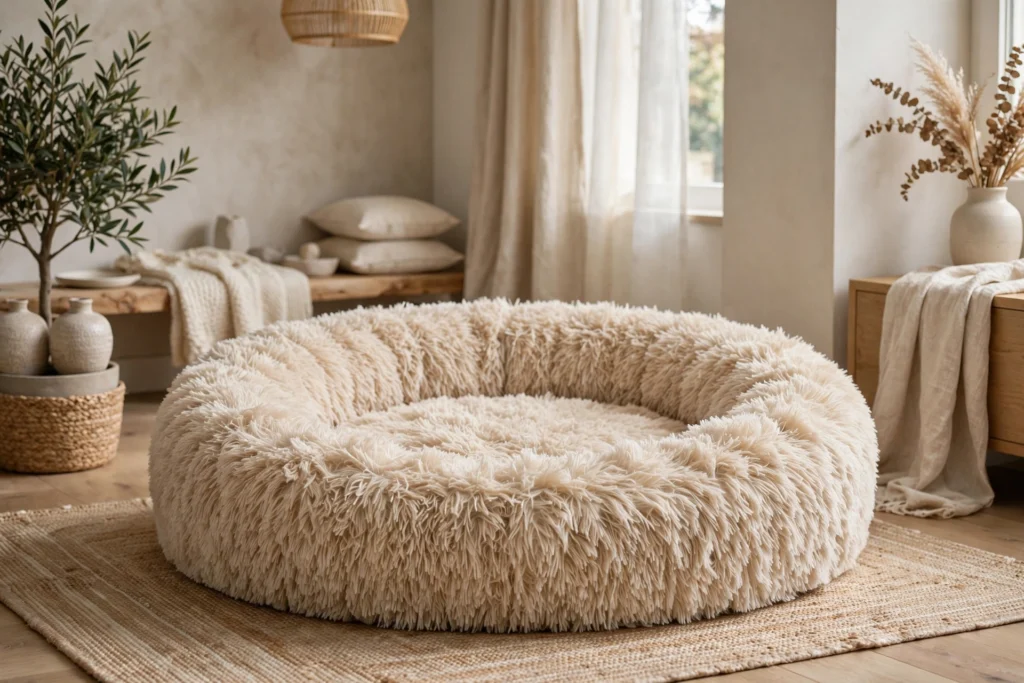
Calming beds — the round beds with long, shaggy faux fur — genuinely appeal to dogs that knead and nest before sleeping. The raised rim supports the head and neck while the soft center invites digging and circling. Choose a diameter that lets your dog curl fully inside the rim; when in doubt, size up.
The long pile looks luxurious but traps hair and dust, so vacuum weekly with an upholstery attachment and wash the cover on gentle. In a minimalist bedroom, a calming bed in cream or oatmeal faux fur blends in surprisingly well. Keep one spare cover on hand — favorite beds get the most wear and the most washing.
12. Waterproof Bed with Washable Covers for Puppies

Puppies and newly adopted dogs have accidents, and a waterproof bed saves your floors and your sanity. Look for a bed with a waterproof membrane laminated inside the cover plus a separate waterproof liner around the inner cushion — two layers of protection, since one always seems to fail at 2 a.m.
Choose a simple rectangular shape with minimal seams, since crevices collect grime and chew marks. Washable pet textiles have come a long way — see Wikipedia’s article on pets for context on how central pets have become to modern homes. Once house training is solid, graduate to a prettier permanent bed and keep this one as a travel spare.
13. Upholstered Daybed That Matches Your Bedding
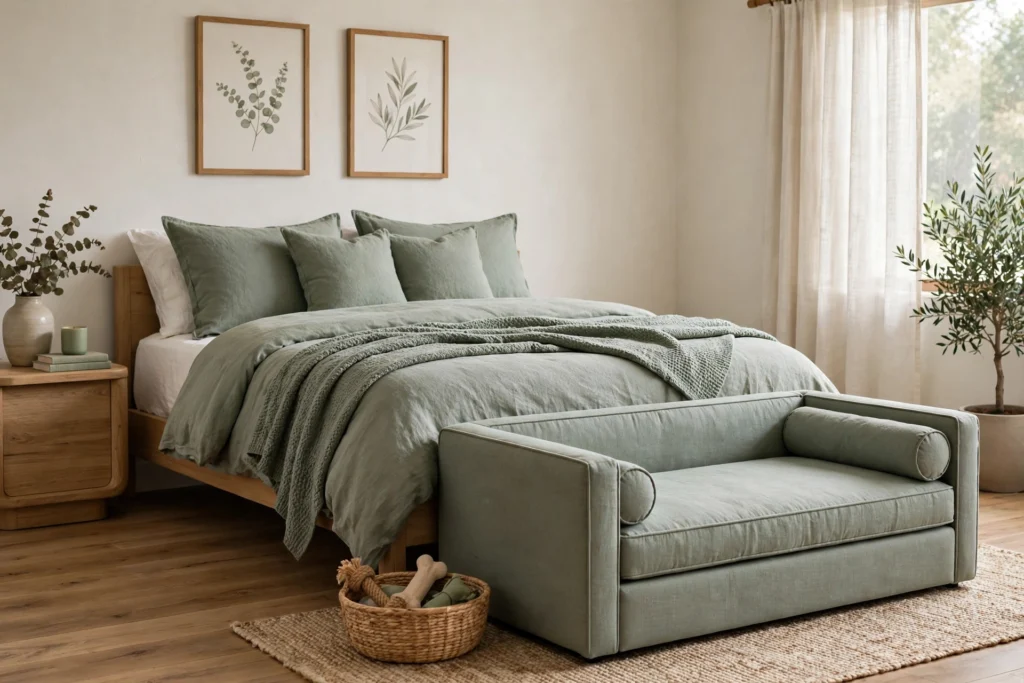
For the ultimate in bedroom coordination, choose a small upholstered dog daybed in a fabric that mirrors your bedding — a miniature version of your own bed. Pet furniture makers now offer daybeds in performance fabrics that resist stains, odors, and claws while looking like proper furniture. Match the leg finish to your bed frame for a truly intentional pairing.
This is the priciest option on the list, but it earns its keep in style-forward bedrooms. Drape a folded throw over one corner for extra coziness, or browse our bedroom throw blanket ideas to find one that ties the dog bed and your bed together.
14. Flat-Fold Travel Bed for Small Bedrooms
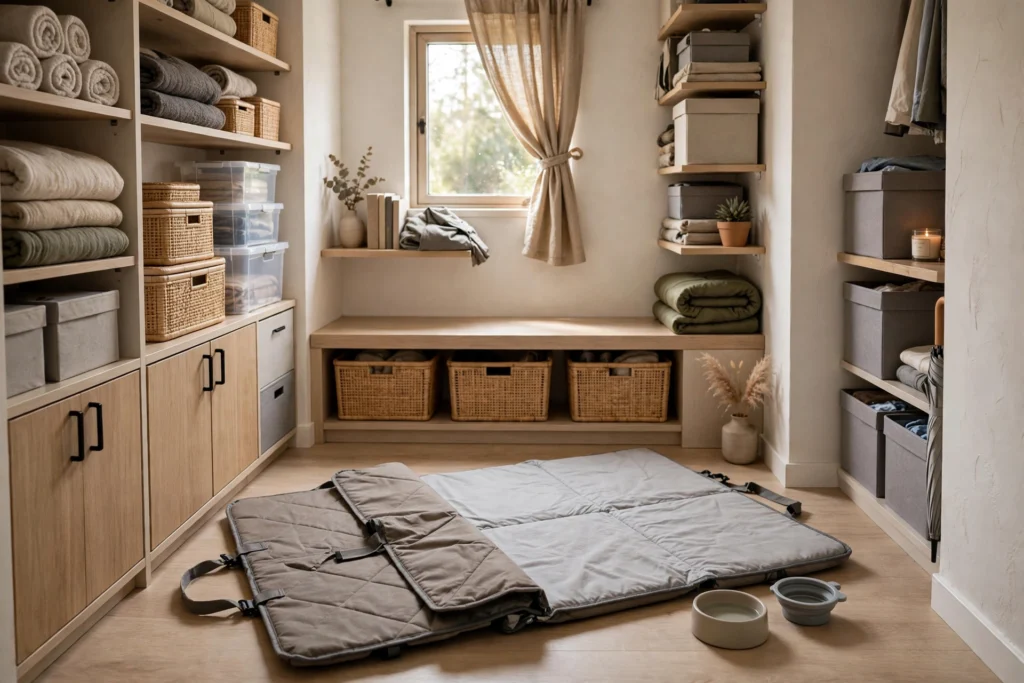
Tiny bedroom? A flat-fold bed — a padded mat that rolls or folds away — gives your dog a proper sleeping spot that disappears by day. Choose a bi-fold or tri-fold design with a carry handle; unfolded, it should still be long enough for your dog to stretch fully. Memory-foam foldables are far more comfortable than the old thin travel mats.
Store the folded bed under your own bed or in the closet each morning, and a small bedroom stays clutter-free. These beds double as car and guest-room beds, making them the best value pick here. Add a washable fitted cover and launder it weekly, since a thin bed shows dirt faster than a plush one.
15. Built-In Under-Bed Drawer Dog Nook
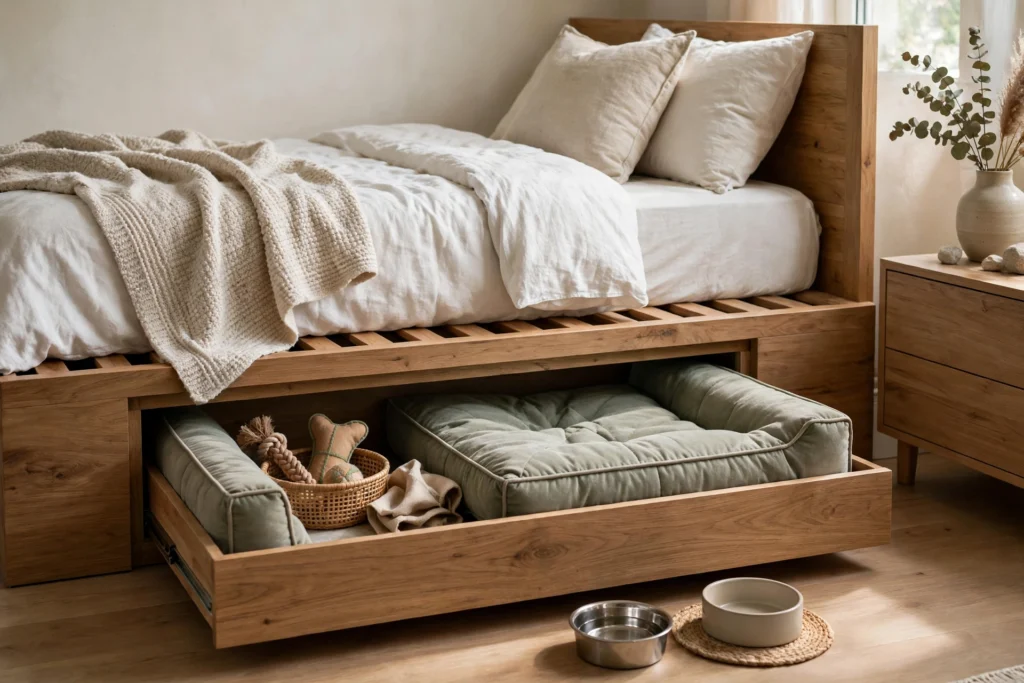
If you are handy, convert a deep under-bed storage drawer into a permanent dog nook: remove the drawer front, line the cavity with a custom-cut cushion, and trim the opening with molding for a built-in look. The result is a den fully integrated into your bed frame — invisible when you want it to be, utterly charming when noticed.
Measure carefully: the opening must clear your dog’s standing shoulder height with room to spare, and the cushion should be high-density foam cut to fit exactly. Leave the nook open-fronted for airflow, and choose a cushion cover that matches your bedding. A weekend project — and the most seamless of all bedroom dog bed ideas.
Frequently Asked Questions
Where should I place my dog’s bed in the bedroom?
Put the bed in a quiet corner where your dog can see you but stays out of foot traffic — beside your bed or against a nearby wall works best. Avoid drafty windows, heating vents, and the path to the bathroom. Dogs sleep most soundly in a consistent, sheltered spot they recognize as their own.
What size dog bed does my dog need?
Measure your dog from nose to tail in their favorite sleeping position, then add four to six inches. Curlers can use a round bed matching that length; sprawlers need a rectangular bed at least as long as their full stretch. When between sizes, always size up — a cramped bed goes unused.
How often should I wash my dog’s bed?
Wash the removable cover every one to two weeks, and the inner cushion or liner monthly. Dogs that shed heavily, drool, or spend time outdoors need weekly cover washes. A waterproof liner underneath the cover keeps the inner cushion fresh much longer between deep cleans.
Are orthopedic dog beds worth it for young dogs?
For healthy young dogs, a quality standard bed is usually enough — save the orthopedic foam for seniors, large breeds prone to joint issues, or dogs recovering from injury. Large-breed puppies do benefit from firm support while their joints develop. For young dogs, prioritize washability over foam grade.
How do I keep a dog bed from smelling?
A washable cover laundered weekly is the single biggest factor. Add a waterproof liner to protect the inner cushion, vacuum the bed between washes, and sprinkle baking soda on the cushion for fifteen minutes before vacuuming to neutralize odor. Replace non-washable inserts yearly.
Keep Exploring
A dog’s bedroom corner should feel as considered as the rest of the room — supportive, washable, and styled to blend with your decor. Pick the bed type that matches your dog’s sleep style, size it generously, and place it somewhere calm and draft-free. Small choices, like a cover that echoes your bedding, turn a pet necessity into a design detail you will both love.