Bedroom murphy bed ideas are a game changer for anyone whose bedroom pulls double duty as an office, guest room, or living space. A murphy bed is a wall-mounted fold-down bed that pivots upright into a cabinet when not in use, freeing nearly all its floor footprint during the day. The modern wall bed looks like a handsome wardrobe by day and a proper full-size bed by night.
Whether you are furnishing a studio or carving a guest room out of a home office, bedroom murphy bed ideas range from simple vertical-fold cabinets to desk-and-sofa combos with built-in lighting. The fifteen ideas below cover the styles and practical details — mattress limits, safety locks, and layouts — that make a wall bed look great and work hard.
1. Classic Vertical-Fold Cabinet in Wood Tones

The classic vertical-fold murphy bed is the most familiar form: the mattress folds up head-first into a tall cabinet that reads as a wardrobe. Warm wood tones — white oak, walnut, or honey-stained pine — make the closed cabinet look like quality bedroom furniture rather than a disguised bed, which matters because you will see it closed far more often than open.
A queen unit needs roughly 65 inches of wall width and 87 inches of height, plus the bed’s full length of clear floor space in front when folded down. Keep the swing zone free of thick-edged rugs and nightstands. Style the cabinet top with a tray, a small plant, and one piece of art so it anchors the room like any other furniture.
2. Murphy Bed with a Fold-Down Desk Combo

A murphy bed with a built-in desk is the ultimate work-from-home solution: by day it is a proper desk, and by night it becomes a bed. The best designs keep the desk surface level as the bed pivots down, so your laptop, lamp, and coffee mug stay exactly where you left them.
Look for a desk depth of at least 20 inches and confirm the mechanism’s weight rating covers your gear. Mount a slim LED bar under the shelf above the desk so the work zone is properly lit. This combo is the most popular of all bedroom murphy bed ideas for small bedrooms that double as offices — genuinely two rooms for the price of one.
3. Sofa-and-Bed Combo for Day-to-Night Living

The murphy bed and sofa combination turns a bedroom into a sitting room by day. The sofa base stays fixed while the bed folds down over it — or the sofa front flips away to become part of the bed frame. Either way, you get genuine seating and a real bed without moving furniture.
Choose the sofa section in a performance fabric if the room doubles as a family hangout, and keep seat cushions firm enough for comfortable sitting. The transition takes seconds once practiced, making this ideal for guest rooms that serve as reading rooms most of the week. Add a slim console behind the sofa for lighting and remotes so the space feels finished.
4. Built-In Side Shelving Around the Cabinet

Flanking a murphy bed cabinet with matching bookshelves or wardrobes turns it into a convincing built-in wall. The symmetry makes the bed disappear: the whole assembly reads as custom millwork, with the center cabinet simply the tallest section. Use the side shelves for books, folded blankets, and baskets that corral small-bedroom clutter.
Align shelf heights with the cabinet’s horizontal lines — a valance across the top ties everything together. If mixing pieces from different makers, match the finish closely or deliberately contrast it. This is also a smart way to reclaim the display storage a bed wall would swallow, so explore our bedroom storage bed ideas for more ways to keep a small room organized.
5. Horizontal-Fold Bed for Low Ceilings

A horizontal murphy bed folds sideways from the wall, so the cabinet is long and low instead of tall and narrow — perfect for low ceilings, sloped attic walls, or a window you refuse to block. Closed, it looks like a sideboard, and the top becomes a genuinely useful display shelf.
Horizontal units fit full and twin mattresses most comfortably, though queen options exist. Because the bed pivots on its long edge, you need clear floor space along the cabinet’s full length rather than far into the room — measure this carefully in narrow bedrooms. Style the top with a runner, a pair of lamps, and art hung just above to complete the credenza illusion.
6. White Shaker-Style Cabinet for a Clean Look

A white shaker-style murphy bed cabinet suits farmhouse, coastal, and transitional bedrooms where bright and airy is the goal. The recessed panel fronts match standard shaker cabinetry, so the closed bed blends with white wardrobes or a whitewashed dresser. This is the safest choice if you plan to sell — it photographs beautifully and appeals to the widest buyers.
White shows scuffs readily, so choose a catalyzed or baked-on finish and keep a touch-up pen in the drawer. Add brushed nickel or matte black bar pulls that echo the room’s other hardware. Against pale walls, ground the cabinet with a textured rug and warm-toned bedding so the room does not feel washed out.
7. Murphy Bed with Integrated Reading Lights

Wall-mounted reading lights turn the murphy bed area into a proper nighttime retreat. Mount a pair of swing-arm sconces on the wall beside the cabinet, positioned to land above pillow height when the bed is open — about 50 to 55 inches from the floor. Because they are at the wall, there is no fumbling for a nightstand lamp in the dark.
Some cabinets include integrated LED strips in the headboard panel, which is even better: the light travels with the bed. If yours does not, a dimmable plug-in sconce with a cord cover solves it in minutes. Warm 2700K light keeps the sleep area restful. Good lighting separates a wall bed that feels like camping from one that feels like a bedroom — see how studio apartments on Wikipedia handle day-night transitions in a single room for more layout inspiration.
8. Upholstered Panel Fronts for Softness

Upholstered fronts replace the hard cabinet face with fabric panels — linen, bouclé, or performance velvet — so the closed bed feels like an upholstered wall rather than a box. This is the most bedroom-appropriate of all bedroom murphy bed ideas: the soft surface absorbs sound and adds warmth no wood cabinet can match.
Choose a performance fabric rated for abrasion (30,000 double rubs or more) since the panels get touched every time the bed opens. Removable slipcover-style panels are smartest because they can be laundered. Tufted or channel-stitched designs hide the seams between cabinet doors. Pair with layered bedding in complementary tones so the open bed and closed wall feel like one continuous design.
9. Desk That Stays Level: Pivot Mechanism Tips

Not all desk-bed combos are equal — the pivot mechanism separates the good ones from the frustrating ones. The best designs use a linkage that keeps the desk perfectly level through the fold-down arc, so your coffee stays upright and your monitor never slides. Cheaper units require clearing the desk before folding, which defeats the purpose.
Test in a showroom if you can: load the desk with a laptop and a full mug, then fold the bed down and back up. Check the weight rating — 50 pounds handles a monitor arm and peripherals, while 25 pounds is laptop-only. Keep cables tidy with adhesive clips so cords never snag the mechanism. A smooth, level pivot is the detail you will appreciate every single day.
10. Safety Locks and Anti-Tip Anchoring
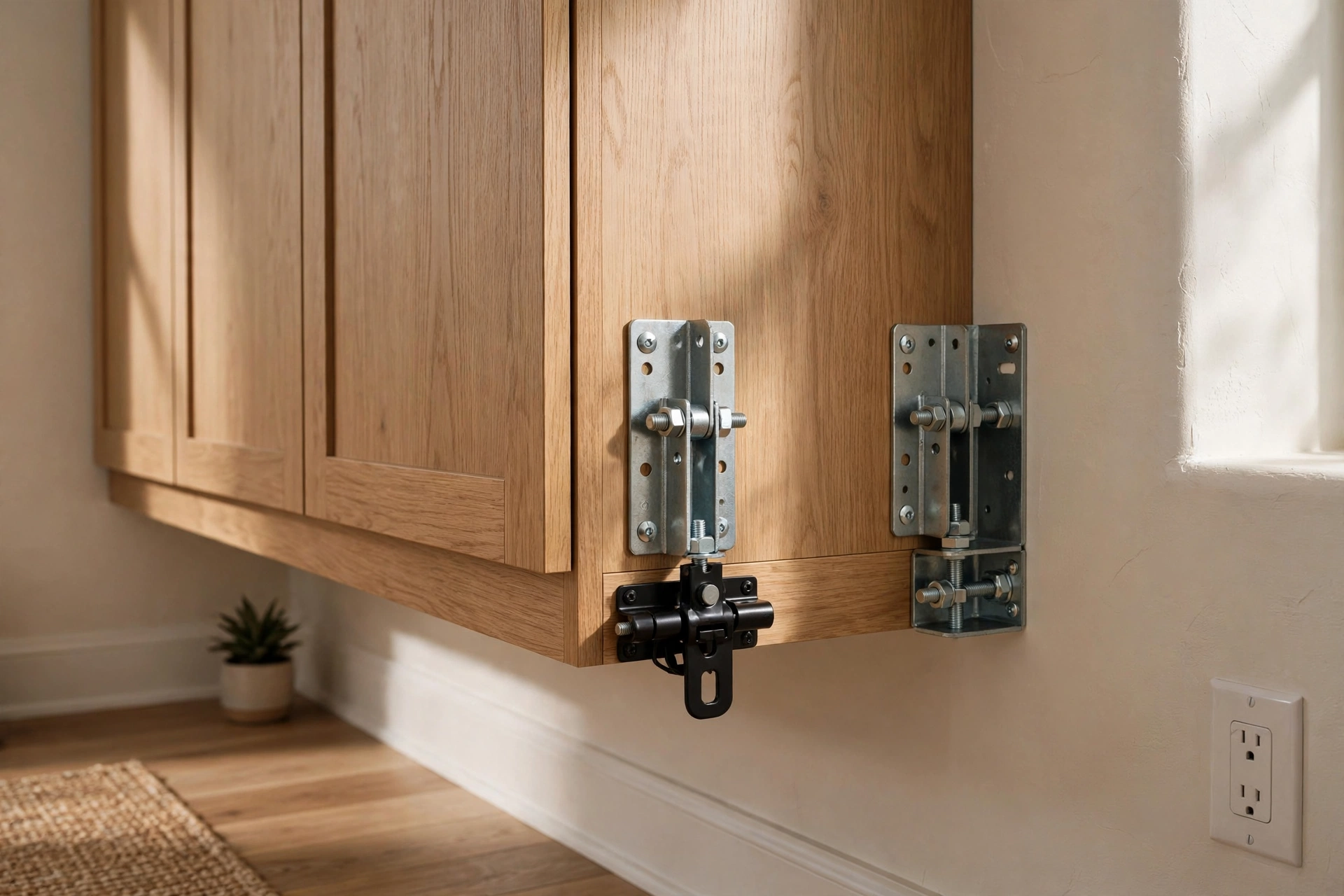
A murphy bed is heavy, and proper anchoring is non-negotiable — every unit must be lag-bolted into wall studs, never drywall anchors alone, and never freestanding. Locate at least two studs with a stud finder first, and use the supplied lag bolts, which are sized for the unit’s loaded weight. This single step eliminates tipping risk.
Equally important is the locking mechanism: quality beds include a leg lock that holds the bed open and a latch that keeps it closed, so it cannot unfold on its own. If you have children, confirm the unit has a child-safety lock and teach the rule that the bed is never a toy. Re-check the anchor bolts once a year — houses settle, and a quarter-turn keeps everything rock solid.
11. Mattress Thickness and Weight Limits

The mattress makes or breaks a murphy bed: too thick and the unit will not close; too heavy and the pistons strain. Most manufacturers specify a maximum thickness of 10 to 12 inches and a weight cap of 60 to 90 pounds — read the manual before buying, since exceeding either voids warranties and can damage the mechanism. A 10-inch medium-firm hybrid is the sweet spot: supportive, light, and thin enough to fold.
Keep bedding slim — many owners leave a fitted sheet and thin duvet strapped on with the retainer straps, skipping the nightly bed-making ritual. Skip the 4-inch topper unless the manual explicitly allows the extra height. Memory foam works well in wall beds because it flexes through the fold without spring-back.
12. Day Styling: Making the Closed Bed Disappear

The closed murphy bed occupies the room’s prime visual real estate all day, so styling it well matters as much as choosing it. Treat the cabinet face like a feature wall: hang one large piece of art or a mirror on the center doors (use lightweight pieces with hangers rated for the door’s movement), or arrange a gallery ledge on the valance above.
When the bed opens at night, the decor needs somewhere to go — this is why the cabinet top and side shelves earn their keep. A leaning floor mirror beside the unit bounces light around and makes the small bedroom feel larger. Keep the day look minimal: three objects on top, one art piece, done. If you are still short on places to tuck things away, our bedroom under bed storage ideas show how to hide the overflow in the room’s dead zones.
13. Night Styling: Bedding That Folds Away

Nighttime is when the murphy bed proves itself, and fold-proof bedding is the secret. Use the retainer straps most units include to hold the fitted sheet, flat sheet, and a slim duvet against the mattress so the whole bed folds up made. A duvet in a washable cover beats a heavy comforter because it is lighter and compresses better.
Choose a cohesive palette that looks intentional when the bed is open: two sleeping pillows plus two euro shams fill a queen without excess bulk. Keep a lidded basket nearby for the throw pillows that come off before folding — the basket doubles as a nightstand of sorts. In the morning, the fold-up takes under a minute and the room is a living space again.
14. Layouts for Narrow and Awkward Bedrooms
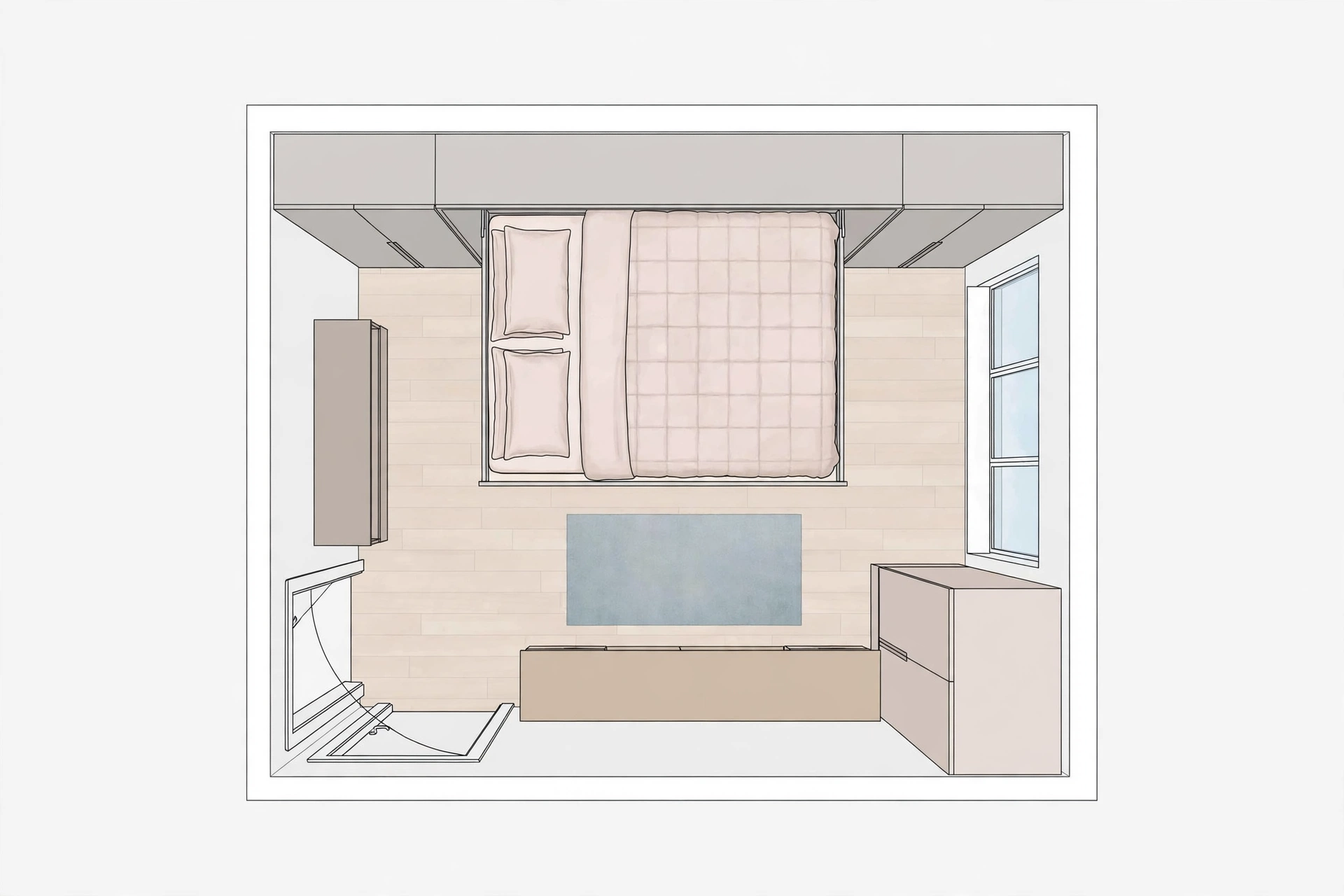
Small bedrooms rarely offer a perfect blank wall, so plan around the bed’s swing. In a narrow room, place a horizontal-fold unit on the long wall so the open bed projects the least distance into the room. In an L-shaped room, tuck the cabinet into the short leg of the L and let the open bed extend into the main area — by day the alcove reads as a wardrobe wall.
Leave at least 24 inches of walking space on one side of the open bed, and keep the swing zone clear of dressers, doors, and heating vents. A 5-by-7-foot rug under the open bed’s footprint defines the sleep zone and protects the floor from the legs. Sketch the open and closed footprints on paper first — this prevents the most common regret: discovering the open bed blocks the closet door. For more small-room floor plans, browse our apartment bedroom ideas for layouts that squeeze function from every square foot.
15. Budget-Friendly Freestanding-Style Wall Beds
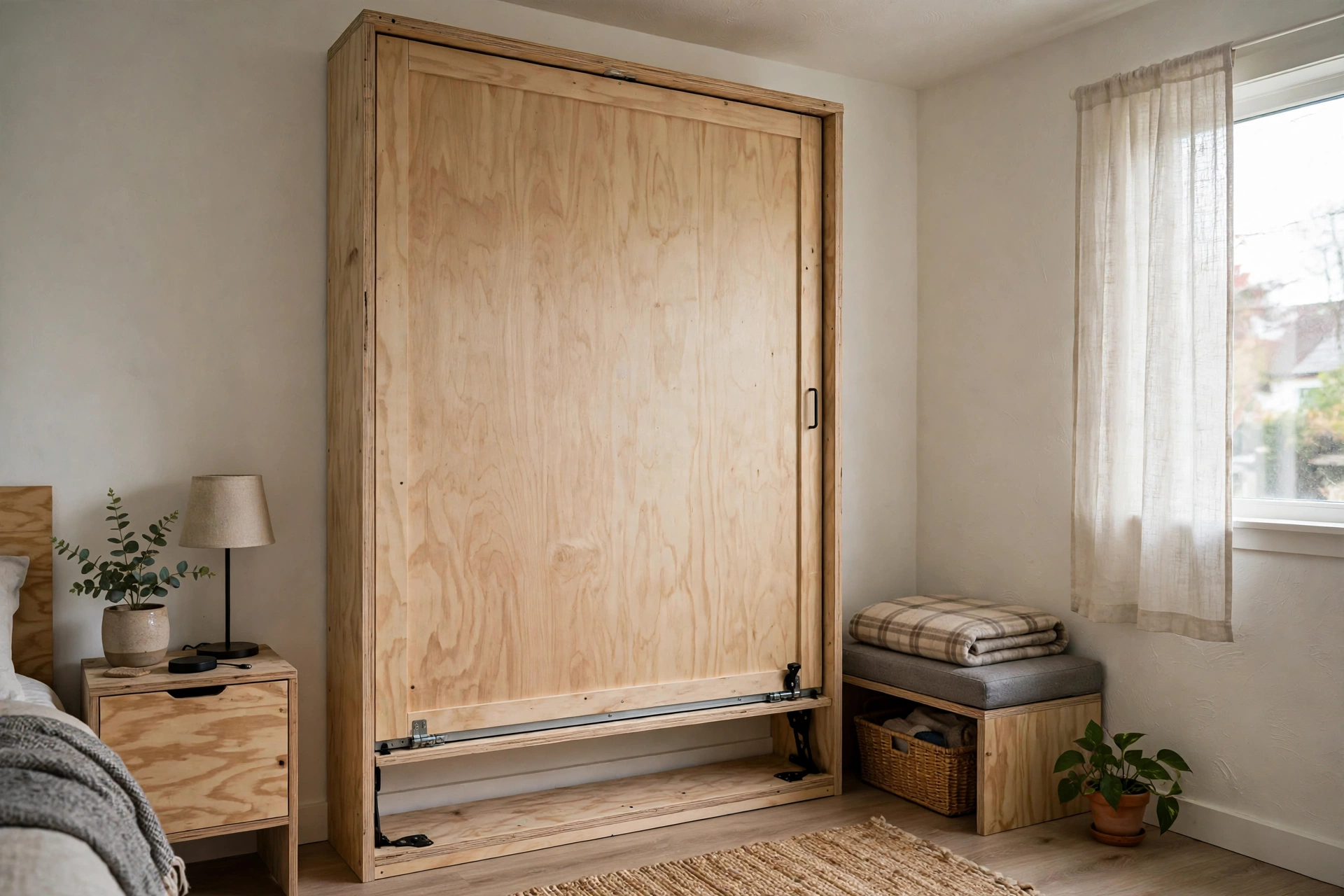
A proper murphy bed is an investment, but the price spectrum is wide: basic vertical-fold kits start at a fraction of designer built-ins. DIY-friendly kits supply the piston mechanism and hardware while you build the cabinet from plywood or MDF — the mechanism is the engineered part, and the cabinetry is straightforward woodworking. The concept stretches back to the bed’s early-1900s origins (see Wikipedia’s murphy bed page for the full history).
If DIY is not your thing, flat-pack wall beds from major retailers offer the look at mid-range prices with weekend assembly. Either way, do not economize on anchor hardware or the mattress spec — those determine safety and comfort. A budget wall bed with a good mattress sleeps better than an expensive one with a cheap, too-thick slab.
Frequently Asked Questions
Are murphy beds comfortable for everyday sleeping?
Yes — with a quality mattress within the manufacturer’s thickness and weight limits, a murphy bed sleeps just like a regular bed. The key is buying the mattress to the unit’s spec (usually 10–12 inches) rather than whatever is on sale, and using the retainer straps so bedding stays put.
How much wall space does a murphy bed need?
A queen vertical-fold unit needs about 65 inches of wall width and 87 inches of ceiling height, plus the bed’s full length of clear floor space in front. Horizontal-fold queens need a longer wall but less projection. Always add clearance on each side and verify studs where anchors will land.
Can you use a regular mattress on a murphy bed?
You can, as long as it meets the unit’s thickness and weight limits — most allow 10 to 12 inches thick and 60 to 90 pounds. A medium-firm hybrid around 10 inches is the most popular choice. Avoid extra-thick pillow tops unless the manual permits them, since an oversized mattress prevents closing.
Are murphy beds safe with kids in the house?
They are safe when lag-bolted into wall studs and fitted with the manufacturer’s locks that hold the bed open and closed. Choose a model with a child-safety latch, teach children never to play with the mechanism, and re-check anchor bolts annually. Never install with drywall anchors alone.
Do murphy beds damage walls or floors?
Installed correctly into studs, a murphy bed leaves only bolt holes, easily patched like any anchor point. Legs may scuff floors over time, so use felt pads and avoid dragging the unit. The pivot hardware bears the folding weight, so the floor takes no more load than a standard bed frame.
Keep Exploring
A murphy bed rewards the small bedroom twice: real floor space by day and a real bed by night. Pick the fold direction that suits your walls, respect the mattress limits, anchor into studs, and style the closed cabinet like the furniture it is. Done well, guests will never guess the wardrobe is a bedroom for years to come.