Bedroom shoe storage ideas solve one of the most common clutter problems in the home: shoes piling up by the closet door, the bed, and the bedroom doorway. Bulky, oddly shaped, and worn daily, shoes are harder to organize than almost anything else in the wardrobe.
Whether you have a tiny reach-in closet, a generous walk-in, or no closet at all, these bedroom shoe storage ideas span over-the-door organizers, rolling under-bed drawers, and tilt-out cabinets. The fifteen approaches below cover every space and budget, with the measurements and placement tips that make each one actually work.
1. Over-the-Door Shoe Organizer
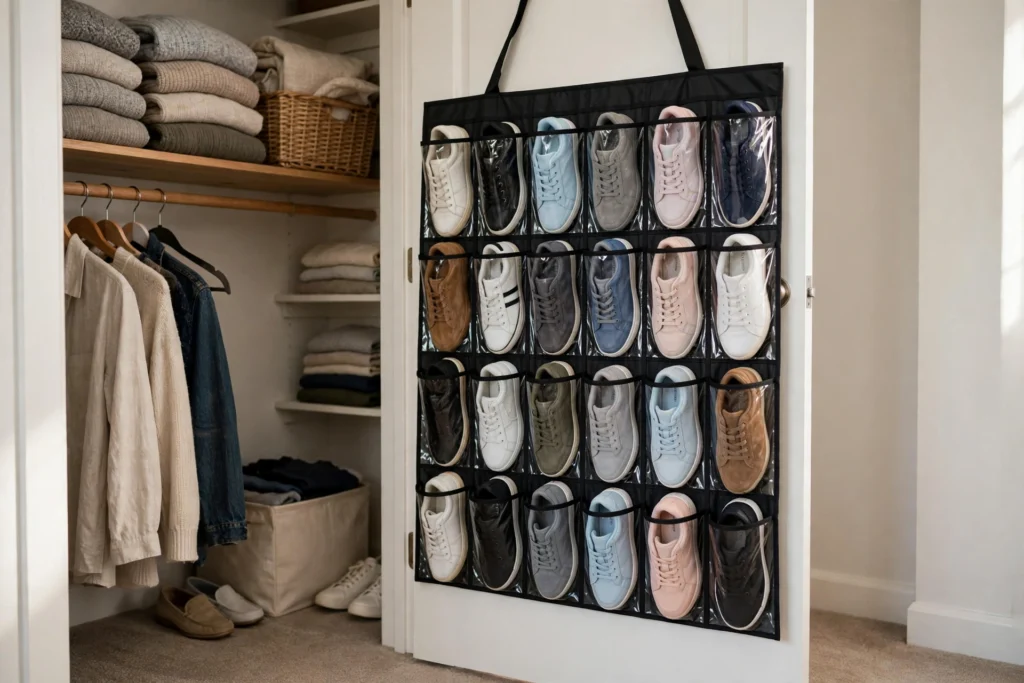
The classic over-the-door organizer remains the fastest way to add serious shoe capacity without touching your floor plan. A standard pocket organizer holds twelve to thirty-six pairs, depending on pocket depth and shoe size, and clear or mesh pockets make every pair visible at a glance.
Choose a model with breathable fabric pockets rather than solid vinyl, which traps moisture and odor. Hang it on the inside of the closet door so shoes stay hidden, or on the bedroom door if closet space is tight. Most organizers attach with slim over-door hooks that clear standard door frames — check the gap above your door first, and add adhesive foam pads behind the hooks to stop rattling.
2. Rolling Under-Bed Shoe Drawers
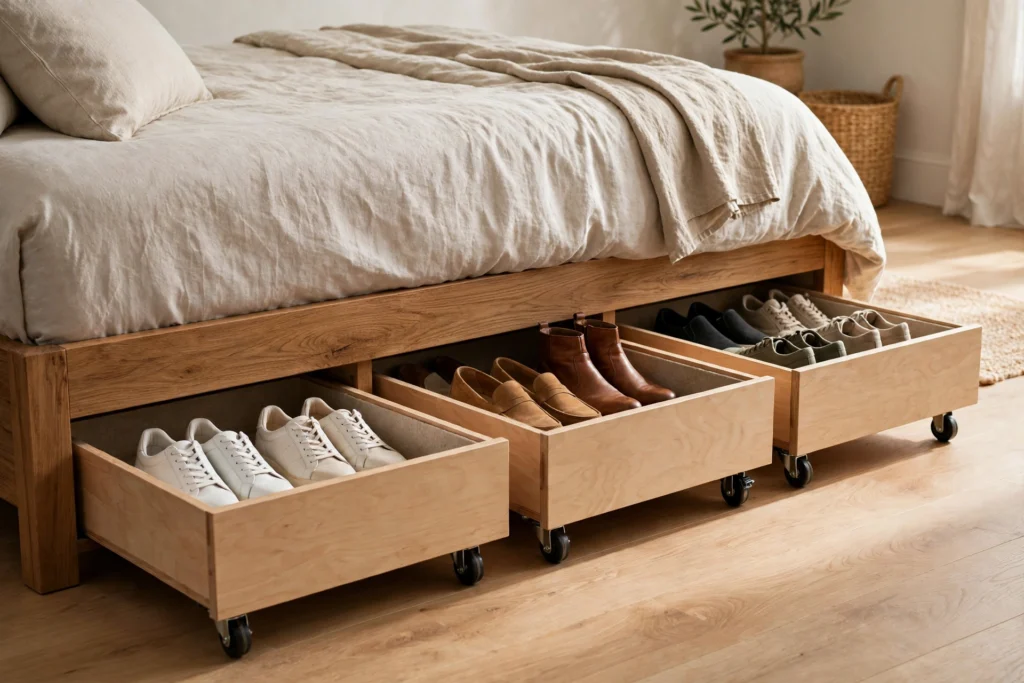
The space under your bed is prime real estate for shoes. Low-profile rolling drawers — typically four to six inches tall — slide into that dead zone and hold eight to sixteen pairs while keeping dust off.
Look for drawers with smooth-rolling casters and a clear or mesh top so you can spot pairs without pulling everything out. Measure your bed-frame clearance before buying; many platform beds offer only five inches. Cedar-lined drawers add odor control for well-worn pairs. For more ways to use this hidden zone, explore our bedroom under-bed storage ideas for hidden space.
3. Clear Stackable Shoe Boxes

Clear drop-front boxes turn a closet shelf into a tidy shoe boutique. Uniform boxes stack securely toward the ceiling, and the transparent front means no more digging through piles to find a match.
Choose ventilated boxes with small air holes — sealed plastic traps humidity and odor. Standard boxes fit up to men’s size twelve; look for XL versions for larger shoes or boots. Label each box with a small photo or name tag for grab-and-go mornings. Footwear has come a long way from simple leather wraps — see the history of the shoe on Wikipedia for how today’s silhouettes evolved.
4. Open Cubby Tower Shelf

A vertical cubby tower converts one square foot of floor into ten or more shoe slots. Five-to-ten-tier towers fit neatly beside a dresser or inside a walk-in closet, and angled shelves keep pairs visible.
Freestanding towers work in any room and move easily when you rearrange. For a built-in look, anchor the tower to the wall and paint it to match your trim. Leave the bottom cubbies taller — about eight inches — for high-tops and ankle boots, and keep everyday pairs at eye level for the fastest mornings.
5. Tilt-Out Cabinet Shoe Rack
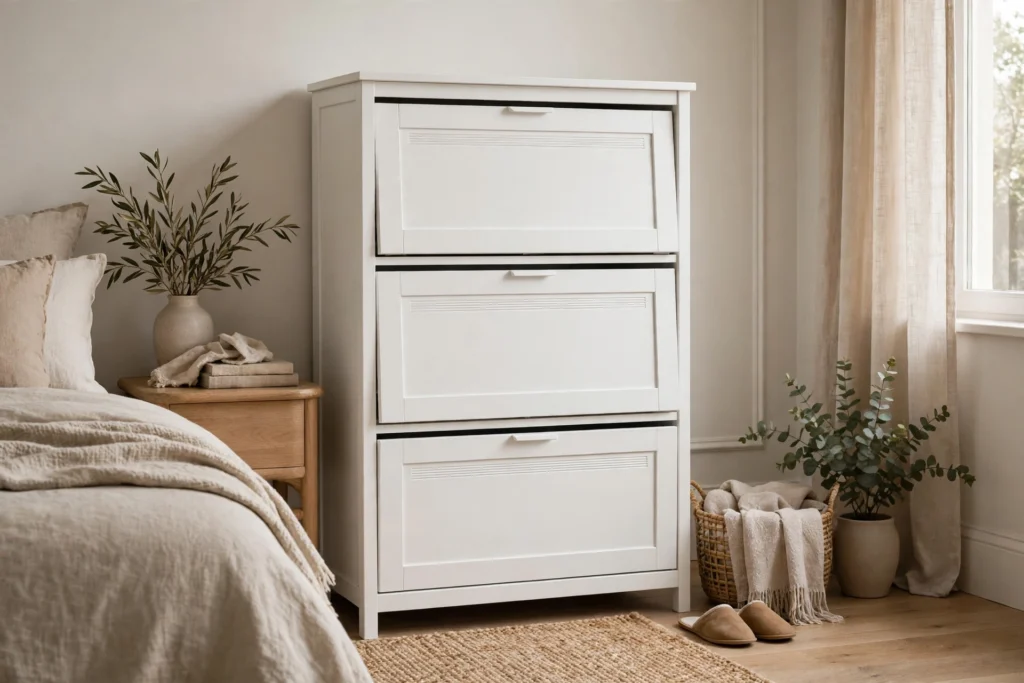
A tilt-out cabinet hides shoes behind furniture-grade fronts that look like an ordinary dresser or nightstand. Each compartment tilts forward on hinges, holding three to six pairs per drawer without the visual clutter of open shelves.
Place one at the bedroom entry as a landing zone for the day’s shoes, or use a taller unit inside the closet for bulk storage. Ventilation slots or a small gap at the back prevent odor buildup. If the rest of your wardrobe needs the same treatment, our bedroom closet ideas for style and smart organization cover shelving, zones, and layouts.
6. Hanging Closet-Rod Shoe Shelf

Fabric hanging shelves hook straight onto the closet rod — no tools, no hardware, five minutes to install. Most models offer five to ten divided compartments that cradle one or two pairs each.
These shelves shine in rental bedrooms where drilling is off-limits, and they collapse flat when not needed. Reinforce the top hooks with zip ties if the unit sways under heavier shoes. Dedicate one compartment per family member in a shared closet, or sort by occasion — work pairs up top, weekend shoes in the middle, gym shoes at the bottom.
7. Storage Bench at the Foot of the Bed

A storage bench at the foot of the bed does double duty: seating for putting shoes on, and hidden storage for the shoes themselves. Lift-top models swallow eight to twelve pairs, while open-cubby versions keep favorites grab-ready.
Choose a bench height of eighteen to twenty inches so it works comfortably as a perch. Upholstered tops add softness to the room; wood or rattan versions suit airier styles. Pairing the bench with a frame that hides even more is smart — our bedroom storage bed ideas for small space function show how to maximize every inch.
8. Rotating Shoe Carousel
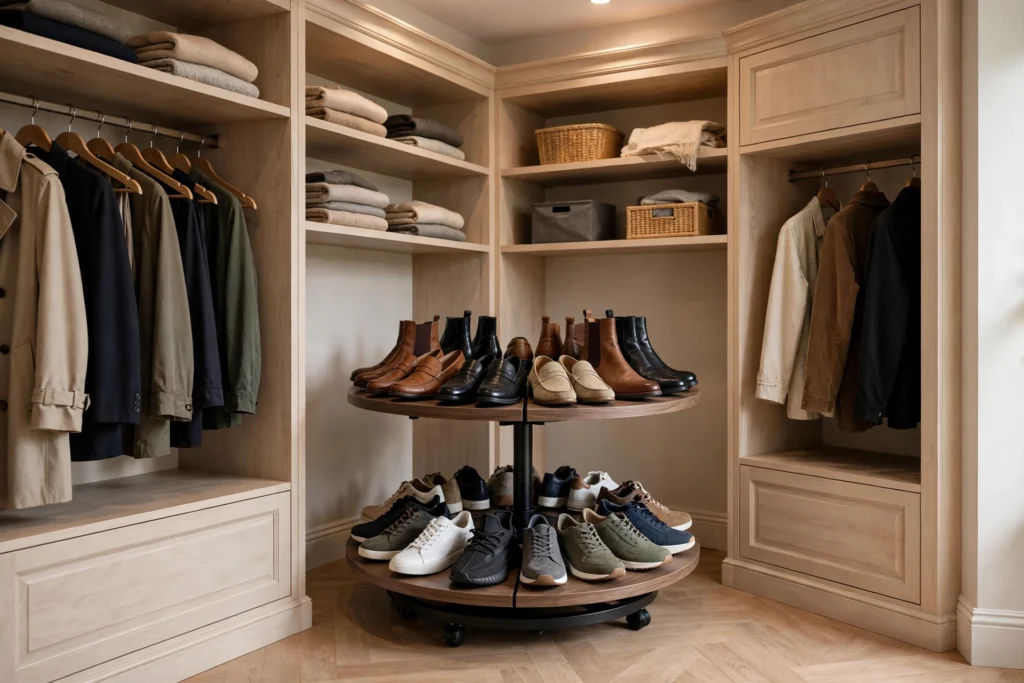
A rotating shoe carousel — essentially a lazy Susan for footwear — brings every pair to you with one spin. Two-tier spinners hold twelve to twenty-four pairs in a footprint barely wider than a laundry basket.
Carousels are perfect for deep closet corners where pairs go to disappear. Smooth ball-bearing rotation matters; cheap models wobble under a full load. Place the shoes you wear most on the top tier and reserve the lower ring for occasion pairs. In a walk-in closet, position the carousel where the door swing won’t clip it.
9. Wall-Mounted Floating Shoe Racks

Floating shoe racks mount individual pairs to the wall at a slight angle, turning a sneaker collection into display art. Most brackets hold one pair each and install with two screws into a stud or drywall anchor.
This approach frees every inch of floor and closet space, making it ideal for collectors and small rooms. Space brackets about twelve inches apart horizontally so larger shoes don’t collide. Arrange pairs by color for a gallery effect, and keep a step stool nearby if you mount rows above shoulder height.
10. Adjustable Closet Shelving for Shoes

Dedicated shoe shelves at the bottom of the closet keep pairs visible, ventilated, and off the floor. Slanted shelves — tilted about fifteen degrees — display shoes like a store while preventing them from sliding.
Adjustable systems let you reconfigure shelf heights as your collection changes; give flats four inches and heels or boots eight to twelve. Line shelves with washable mats to protect the finish from dirty soles. The fitted wardrobe is a fairly recent invention — read about how the modern closet evolved on Wikipedia to understand why these zones work so well.
11. Boot Trays and Tall Boot Storage
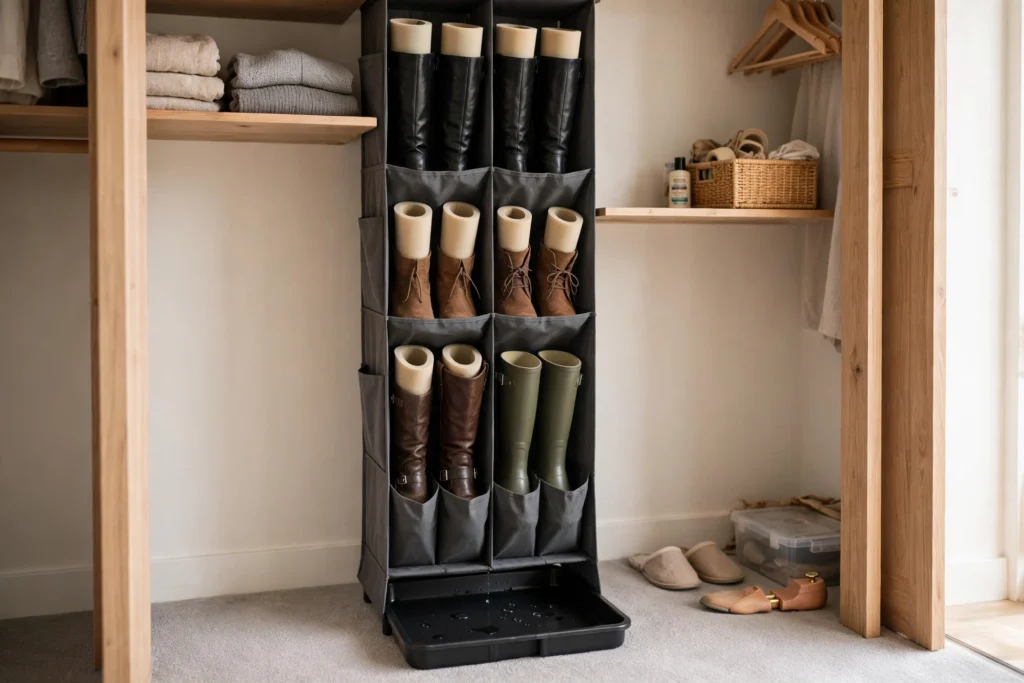
Boots demand vertical space that standard shelves don’t offer. Reserve a tall closet section — at least eighteen inches high — for knee-high boots, and use boot shapers or pool noodles to keep shafts upright and crease-free.
A waterproof tray underneath catches rain, snow, and mud before it reaches your flooring. In small bedrooms, a narrow tall cabinet with a drip tray at the base handles four to six pairs of boots in under two square feet. Store off-season boots up high and rotate them down when the weather turns.
12. Slim Pull-Out Shoe Cabinet

A slim pull-out cabinet — sometimes called a shoe cupboard — slides out like a drawer to reveal tilted shelves inside. At just six to ten inches deep, it squeezes into gaps between the dresser and wall that would otherwise go unused.
Most models hold nine to eighteen pairs across two or three pull-out tiers. Soft-close glides keep the motion quiet for shared bedrooms, and a mirrored or paneled front lets the unit blend with existing furniture. Measure your gap carefully; these cabinets need about an inch of clearance on each side to glide freely.
13. Seasonal Shoe Rotation System
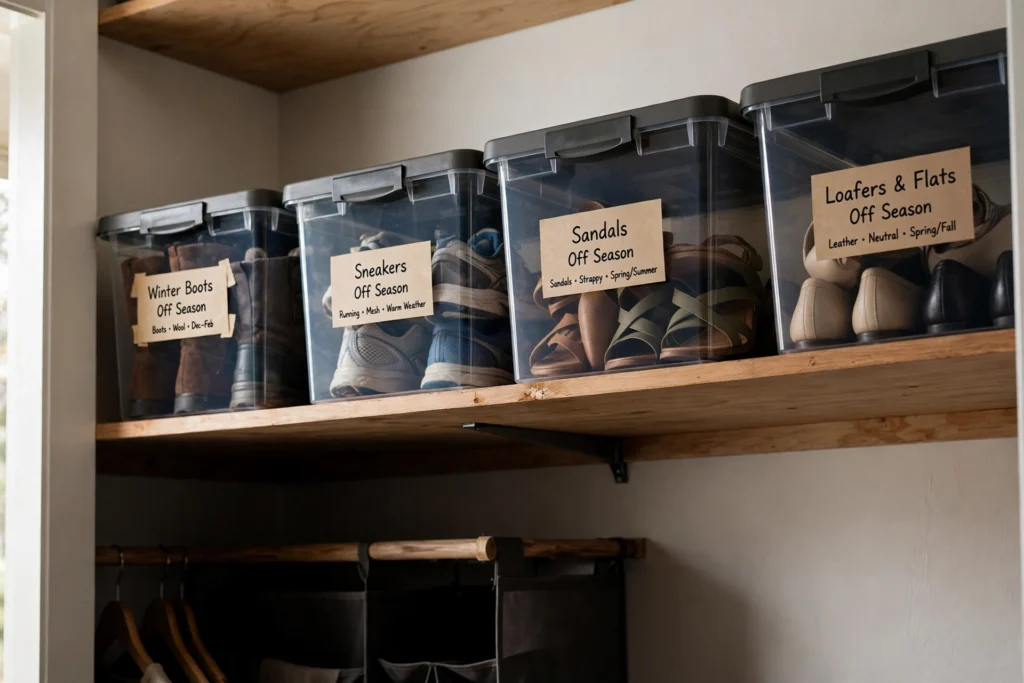
Not every pair needs to be within reach year-round. A seasonal rotation system stores off-season shoes in labeled bins on the closet’s top shelf or under the bed, freeing prime space for what you’re actually wearing.
Use clear bins with snap lids, and toss in a cedar block or silica packet to control moisture during long storage. Photograph the bin contents and tape the photo to the lid — you’ll find pairs instantly next season. Rotate twice a year, and use the swap as a natural moment to donate pairs you never reached for.
14. Divided Drawers for Flats and Sandals

Low-profile shoes — flats, sandals, loafers, and slippers — fit beautifully in divided dresser or nightstand drawers. Adjustable drawer dividers create one slot per pair so nothing stacks into a tangled pile.
Line the drawer with a washable liner to protect the wood from sole grime, and add a sachet of baking soda or dried lavender for freshness. This method keeps delicate shoes dust-free and out of sight, which suits minimal bedrooms. Reserve one drawer near the door for the three pairs you wear on repeat.
15. DIY Crate or Ladder Shoe Rack
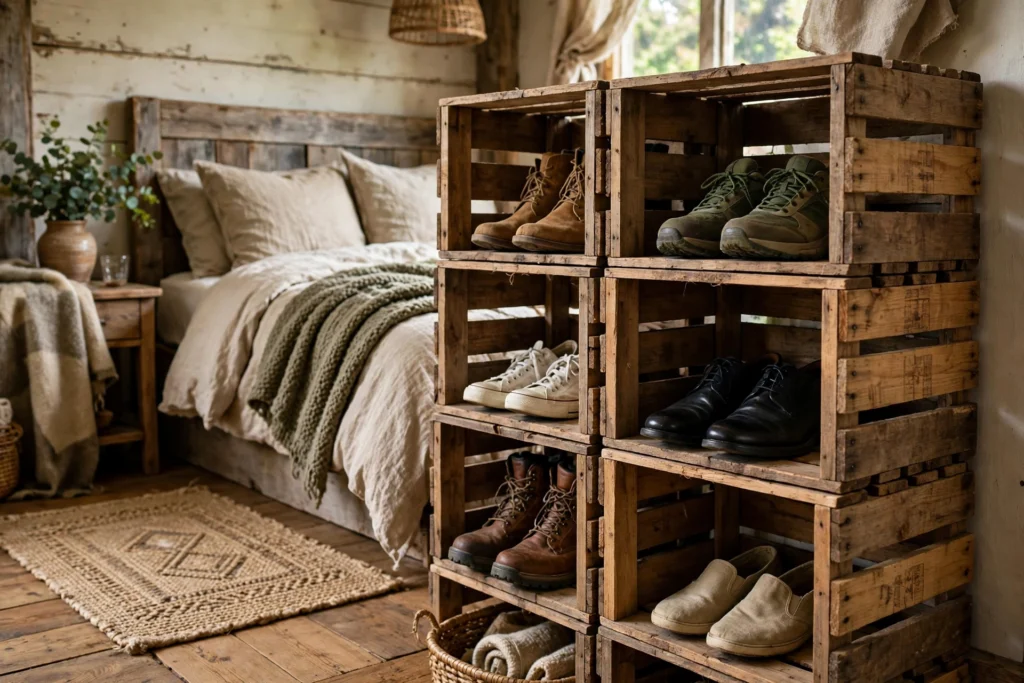
For a weekend project with real character, build a shoe rack from wooden crates or a repurposed ladder. Stack two or three crates on their sides and secure them with brackets for instant cubbies; a leaning ladder with added planks becomes a tiered display.
Sand and seal the wood to protect both the rack and your shoes from splinters and rough spots. This is the most budget-friendly of these bedroom shoe storage ideas, and it suits rustic, farmhouse, and eclectic bedrooms especially well. Stain the crates to match your bed frame for a pulled-together look.
Frequently Asked Questions
How many pairs of shoes fit in a typical bedroom closet?
A standard reach-in closet with a single shelf and rod comfortably holds twenty to forty pairs once you add dedicated shoe storage — an over-door organizer, a floor-level shelf, and stackable boxes. Walk-in closets can handle sixty or more with a cubby tower or carousel. The real limit is how ruthlessly you edit: most people regularly wear fewer than fifteen pairs.
How do you store shoes in a bedroom without a closet?
Choose furniture that hides shoes in plain sight: rolling under-bed drawers, a storage bench at the foot of the bed, or a tilt-out cabinet that looks like a dresser. Wall-mounted floating racks work when floor space is tight, and a slim pull-out cabinet fits into narrow gaps. Keep daily pairs near the door and the rest out of sight.
Are over-the-door shoe organizers bad for doors?
They can be if the hooks are too tight — cheap metal hooks may scratch paint or prevent the door from closing fully. Choose organizers with slim, padded hooks sized for interior doors, and stick felt pads where hooks contact the door. For heavy collections, distribute weight across a closet-rod hanging shelf instead of loading one door with thirty-plus pairs.
How do you keep stored shoes from smelling?
Airflow is everything: choose ventilated boxes, mesh pockets, and open shelving over sealed containers. Let shoes dry fully before storing them, rotate pairs so none are worn two days running, and add cedar blocks, activated charcoal bags, or baking soda sachets to enclosed storage. Washable shelf liners and a quarterly wipe-down of the storage area keep odors from settling in.
What is the best way to store boots in a bedroom?
Give boots the height they need: reserve an eighteen-inch-tall closet section or a dedicated boot cabinet, insert boot shapers to hold shafts upright, and set everything on a waterproof tray. Ankle boots fit on taller cubby shelves; knee-high and over-the-knee styles need full vertical clearance. Store off-season boots up high and rotate them down as the weather changes.
Keep Exploring
Great bedroom shoe storage ideas share one trait: they match the system to the space. A tiny room thrives on under-bed drawers and a storage bench; a generous walk-in earns a carousel or cubby tower. Start with the pairs you wear every week, give each one a ventilated home, and rotate the rest seasonally. Mornings get calmer, floors stay clear, and your shoes last longer when they’re stored — not piled. Pick one idea, set it up this weekend, and enjoy the clutter-free payoff.