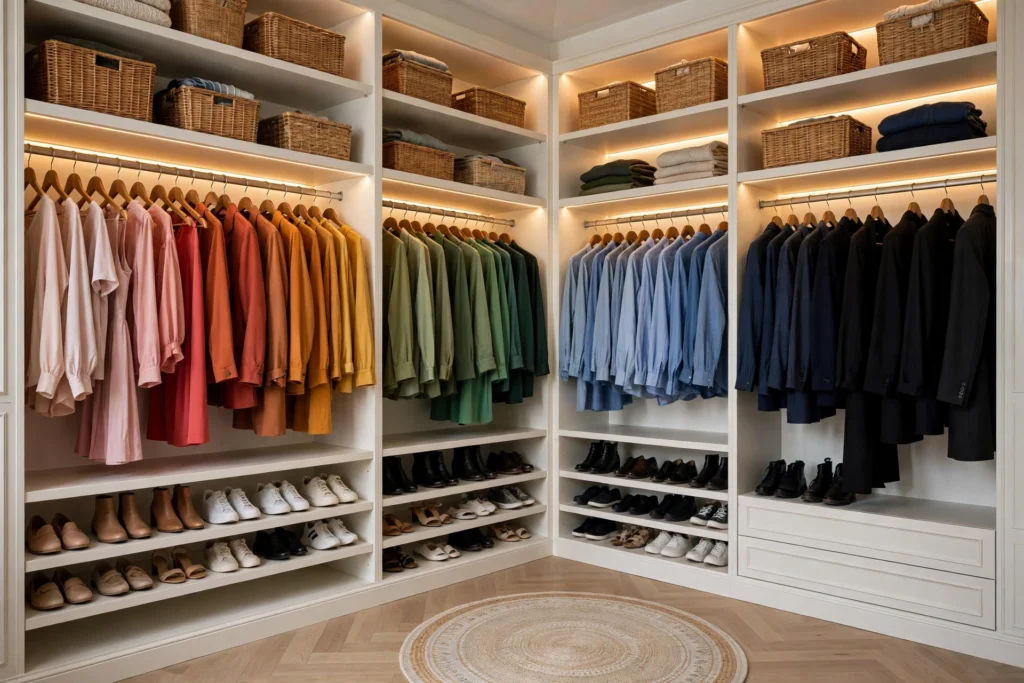

A bedroom closet should make getting dressed feel easy, not like digging through a cave. Whether you have a spacious walk-in or a single reach-in rod, the right bedroom closet ideas blend smart organization with a touch of style — so the space works beautifully every morning. Small structural upgrades and clever storage choices can double what your closet holds without moving a single wall.
The best closets are designed around how you actually dress: everyday pieces at eye level, shoes easy to grab, and seasonal items tucked away but findable. This guide covers 15 bedroom closet ideas — from decluttering foundations to boutique-worthy styling — plus practical answers to the questions everyone asks before a closet overhaul.
1. Start With a Ruthless Declutter
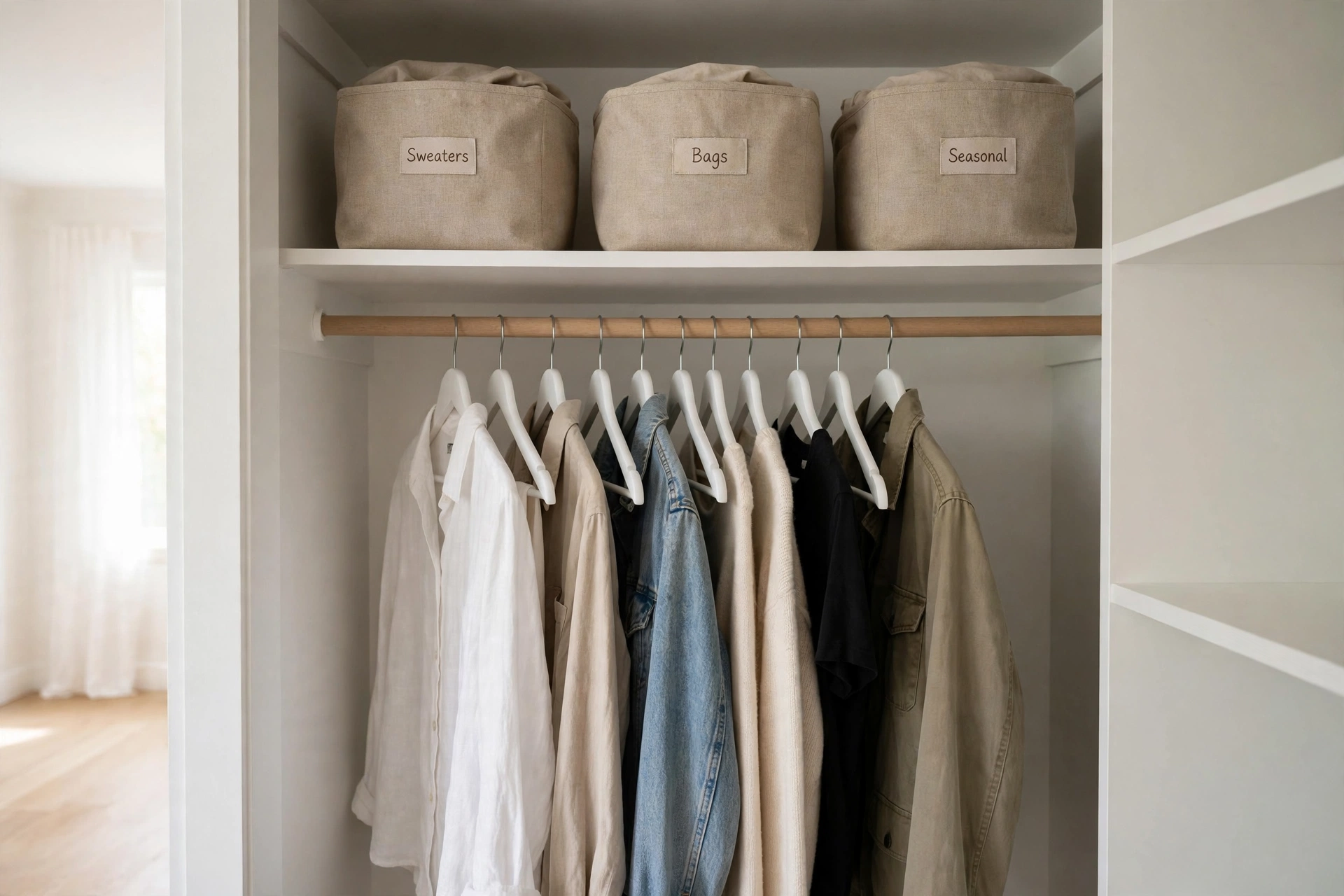
No organizer, bin, or shelving system can fix an overstuffed closet. Before buying a single product, pull everything out and sort into keep, donate, and toss piles. Try the hanger trick: turn all hangers backward, and after three months, anything still backward goes. Be honest about duplicates, worn-out basics, and aspirational sizes. A closet holding only what you actually wear needs far less storage — and stays organized with less effort. Donate good pieces promptly so bags do not migrate back inside. This reset is the unglamorous foundation every other idea on this list depends on, and it costs nothing. Declutter first, and the storage solutions you choose afterward will actually fit.
2. Double Your Hanging Space
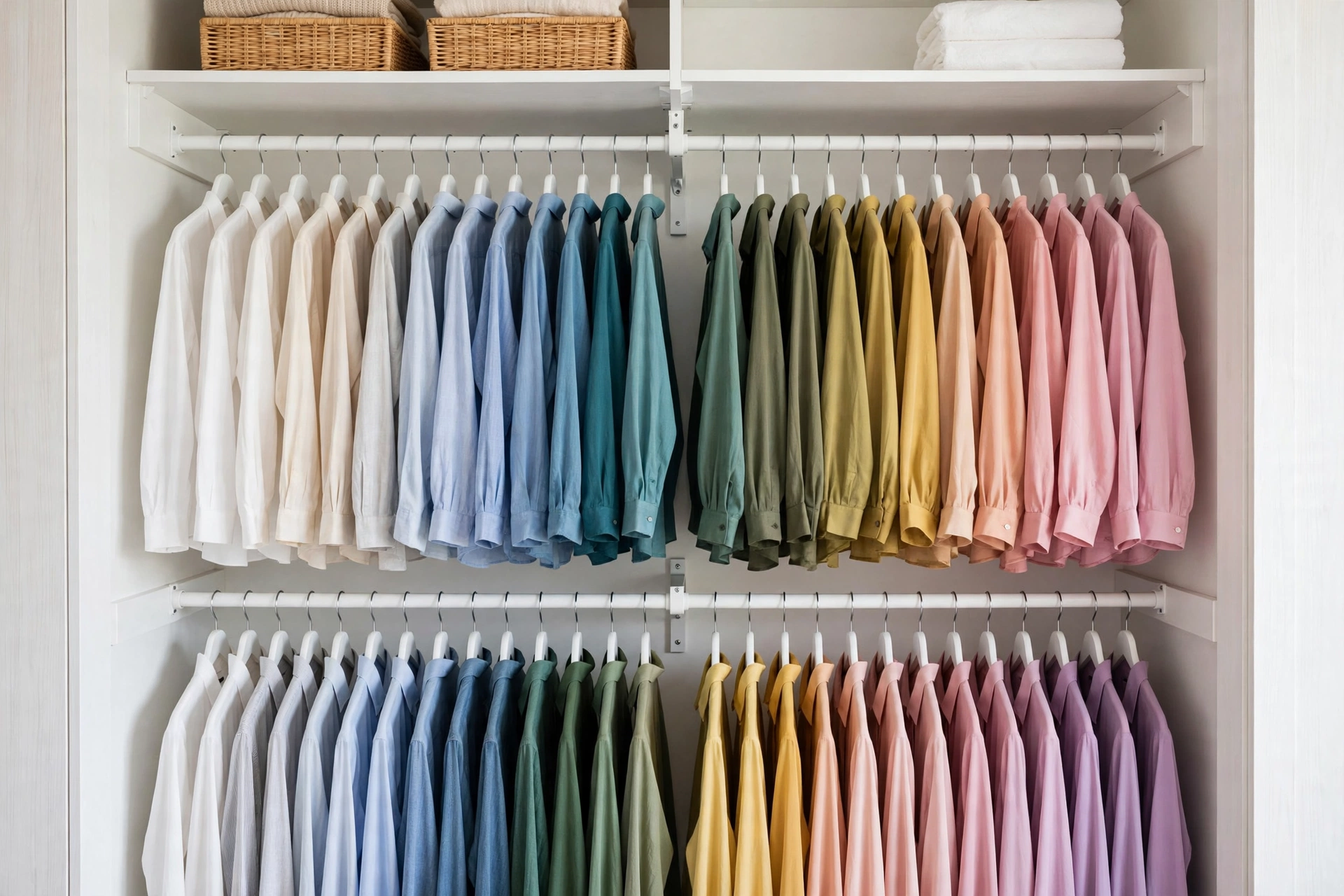
Most closets waste the vertical space below short garments. A double-hang setup — two rods, one high and one low — instantly doubles capacity for shirts, blouses, pants, and skirts. Keep one tall section free for dresses and long coats. Freestanding double-hang racks or tension-rod add-ons make this a renter-friendly upgrade with no drilling. Position the upper rod around 80 inches high and the lower rod near 40 inches so both rows clear typical garment lengths. Group clothes by category and color within each row so the doubled space still reads tidy. This single change often eliminates the need for additional storage furniture entirely.
3. Add Shelving Above the Rod
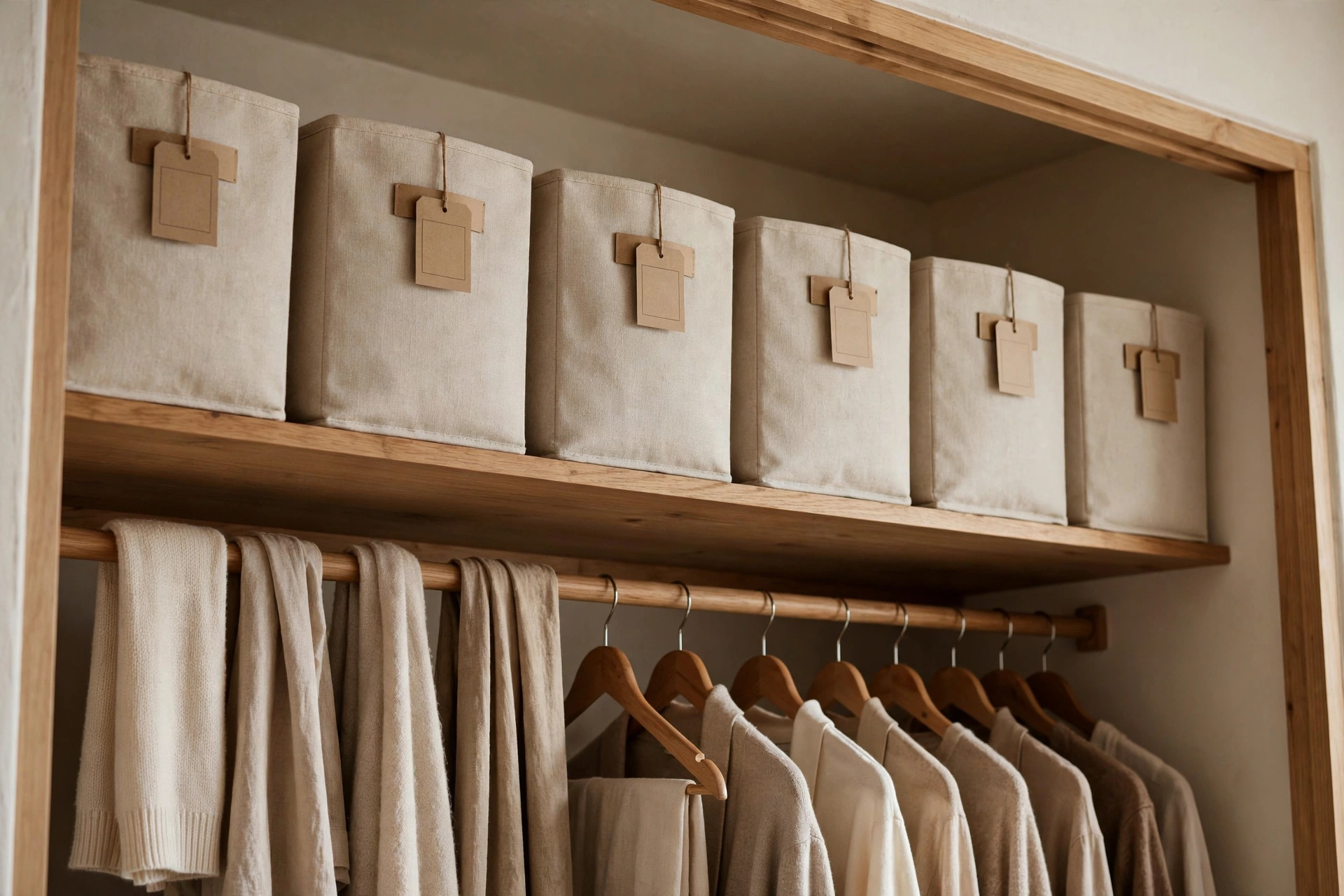
That shelf hovering above your hanging rod is prime real estate — use it deliberately. Reserve it for lesser-used items: off-season clothes in labeled bins, spare bedding, and travel bags. Uniform fabric bins in a light color keep the high shelf looking calm from below, and labels mean you will not have to drag everything down to find one thing. If your closet lacks an upper shelf, a simple melamine board on brackets adds one for under twenty dollars. Keep heavier items toward the studs for safety. A well-used top shelf frees the eye-level zone for daily pieces, which is where organization actually pays off every morning.
4. Go Open and Boutique-Style
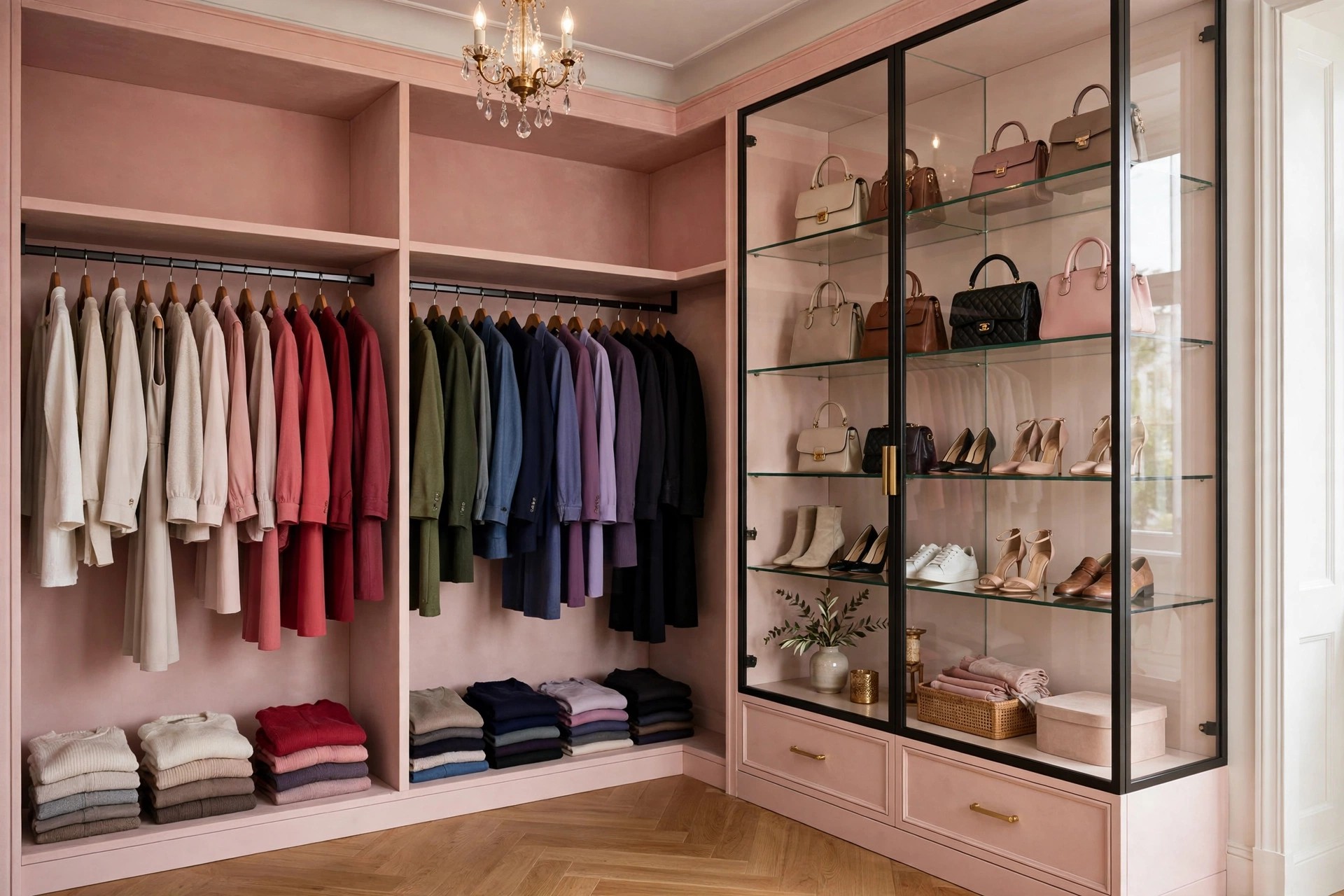
Removing closet doors and styling the interior like a boutique display turns storage into decor. Paint the interior a soft, flattering color, add a small rug or runner, and arrange clothes by color so the open closet reads like a curated shop. Glass-front doors are a middle ground if you want dust protection with display appeal — Boutique-style closet ideas show how open shelving styled with bags, shoes, and jewelry makes a small closet feel special. Keep the open look working with regular editing: visible storage only works when everything inside earns its place. Add a curtain on a tension rod if you want to hide it all in seconds.
5. Install Pull-Out Drawers for Foldables
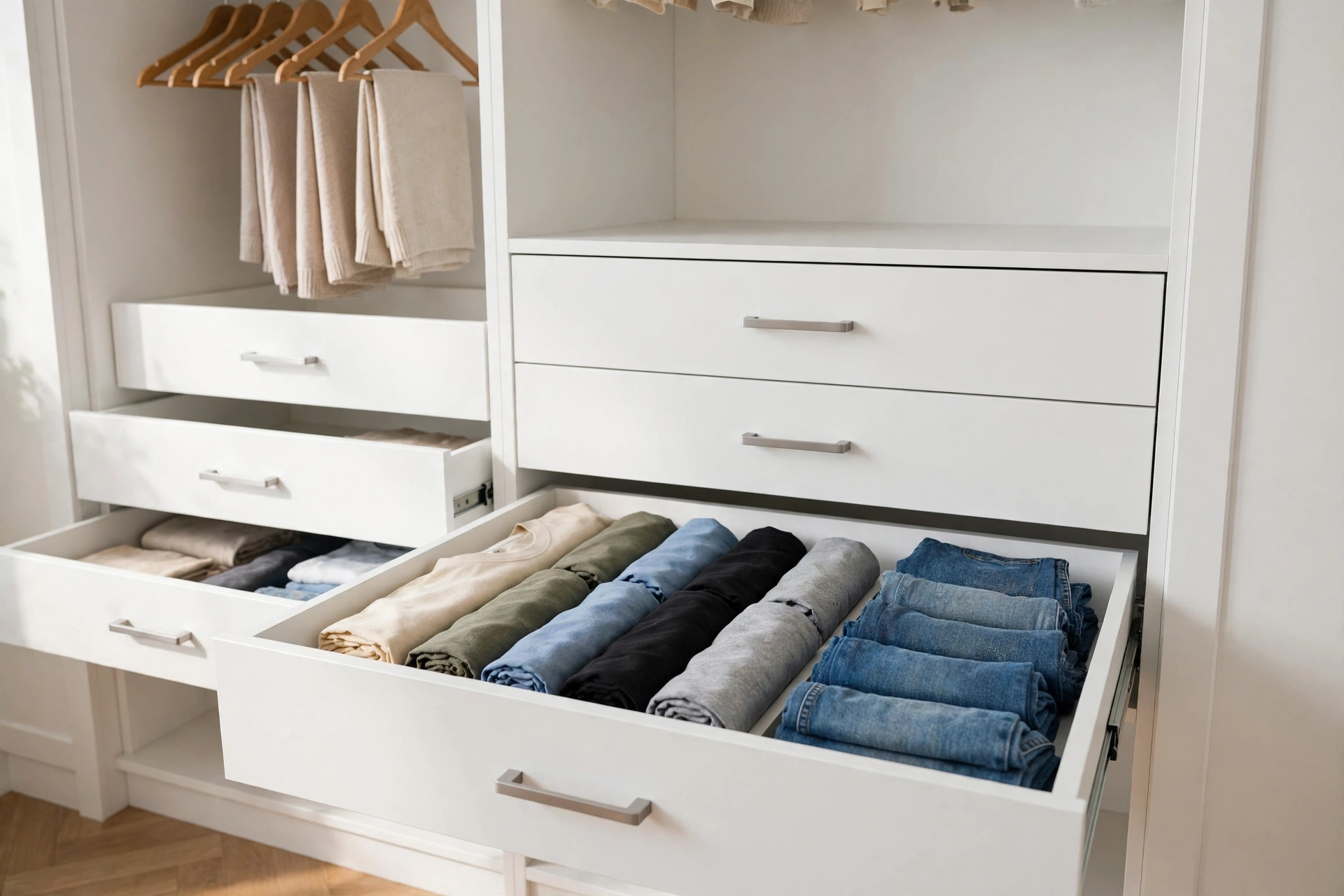
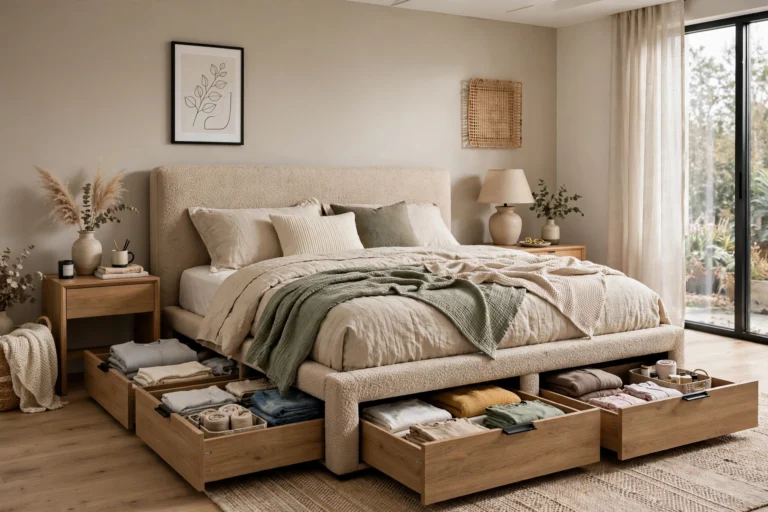
Folded clothes stacked on deep shelves inevitably become archaeological digs. Pull-out drawers, wire baskets, or even shallow dresser units inside the closet keep foldables visible and reachable. Dedicate drawers by category — tees, denim, workout wear — and file-fold items vertically so every piece is visible at a glance. A small dresser slipped under the hanging rod converts dead floor space into six drawers of storage. If built-ins are out of budget, freestanding stackable drawers work nearly as well. Drawer dividers keep stacks from migrating into chaos. This is the upgrade that makes a closet feel truly custom.
6. Create a Dedicated Shoe Wall
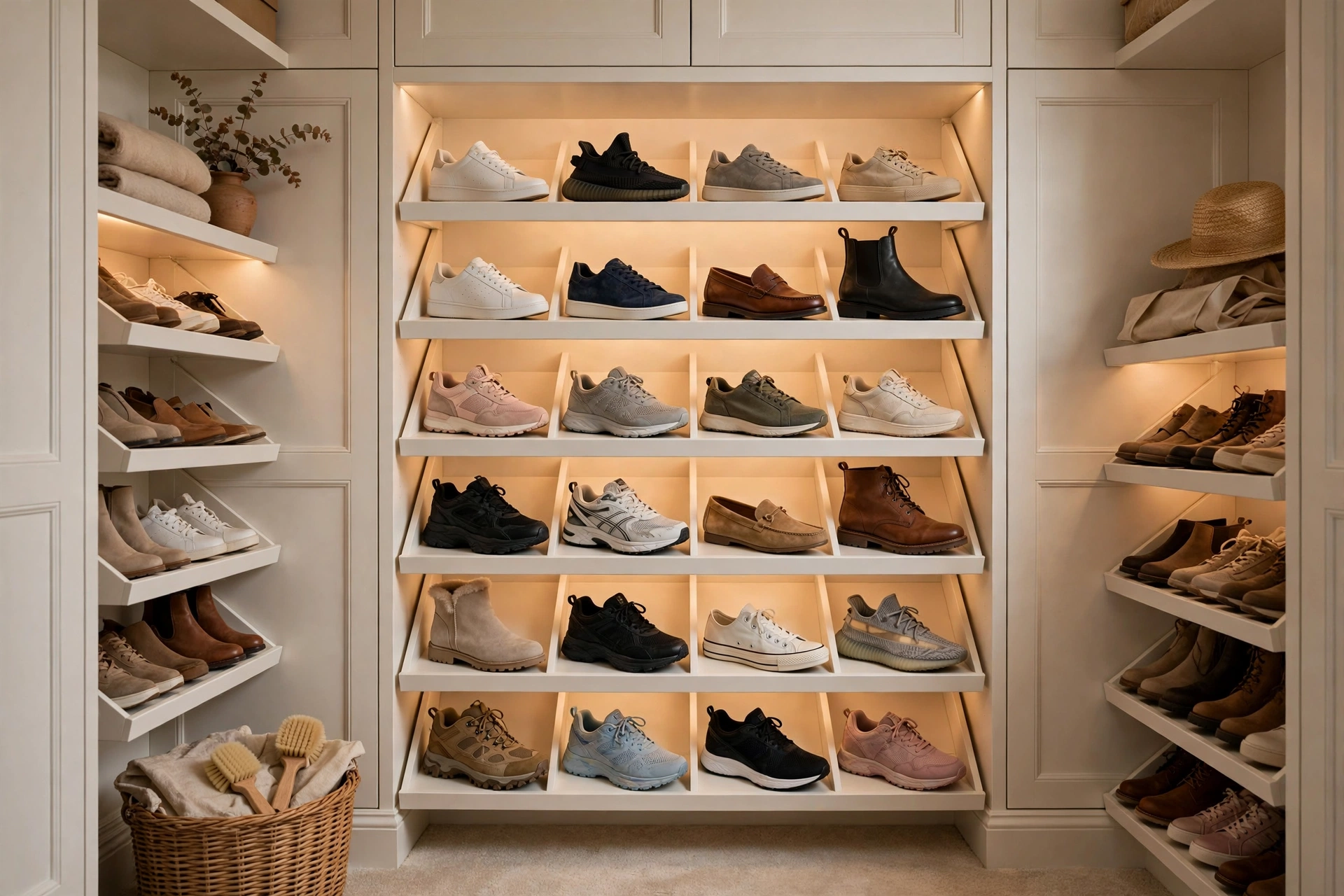
Shoes scattered on the closet floor waste space and get damaged. Dedicate one wall or shelf run to footwear: slanted shelves for heels, cubbies for sneakers, and clear-front boxes for special pairs. Arrange by frequency of use — daily pairs at hip height, occasion shoes up high. A tiered floor rack under the hanging rod uses space that would otherwise sit empty. For small closets, over-the-door pocket organizers or wall-mounted rails hold surprising numbers of pairs. Keep one pair of everyday shoes by the bedroom door instead of in the closet to reduce daily traffic. Small bedroom design ideas that make tiny rooms feel huge pair storage strategy with space-saving layout tips.
7. Use Clear Bins for Visibility
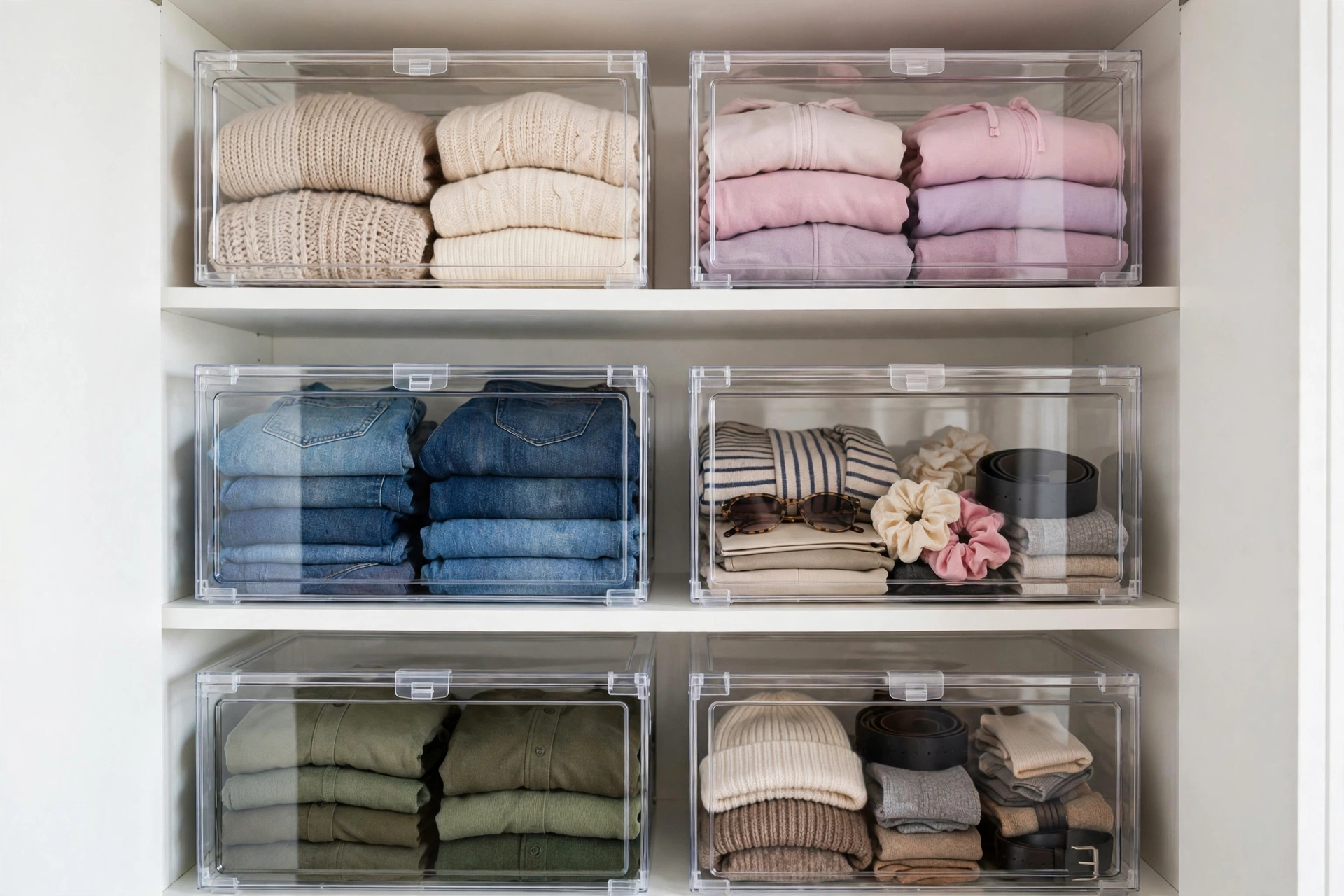
Opaque bins hide clutter — and also hide the thing you need. Clear-front boxes and bins let you see contents without unstacking, which is the difference between an organized closet and a performative one. Use them for accessories, off-season pieces, and anything you reach for seasonally. Choose stackable sizes in one or two footprints so they nest neatly on shelves. Add simple labels anyway, because a bin of black leggings all looks the same. Acrylic drawer inserts inside closet drawers serve the same purpose for small items. Visibility is the secret to maintenance: when you can see what you own, you put things back where they belong.
8. Add a Full-Length Mirror Inside
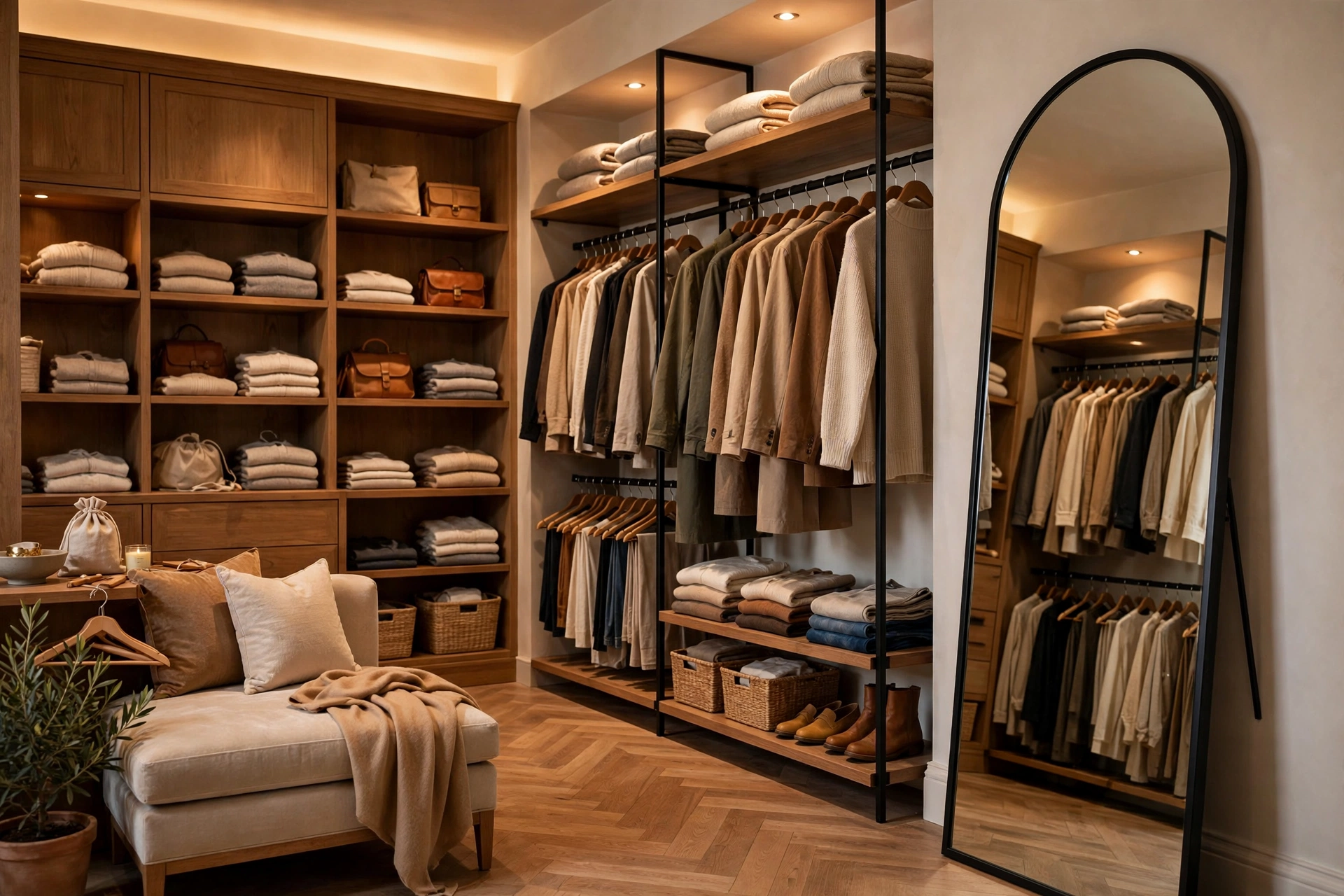
A full-length mirror mounted on the inside of the closet door — or on a free wall in a walk-in — turns the closet into a proper dressing area. Check proportions and outfits in the same spot where you choose them, and the mirror bounces light into dark corners, making the space feel larger. Choose a slim, shatter-resistant mirror for door mounting, and make sure the door still closes fully. In a walk-in, lean a large arched mirror against the wall for a boutique feel. Position it near your best light source for the most flattering view. It is a small addition that changes how the whole closet functions.
9. Light It Like a Dressing Room
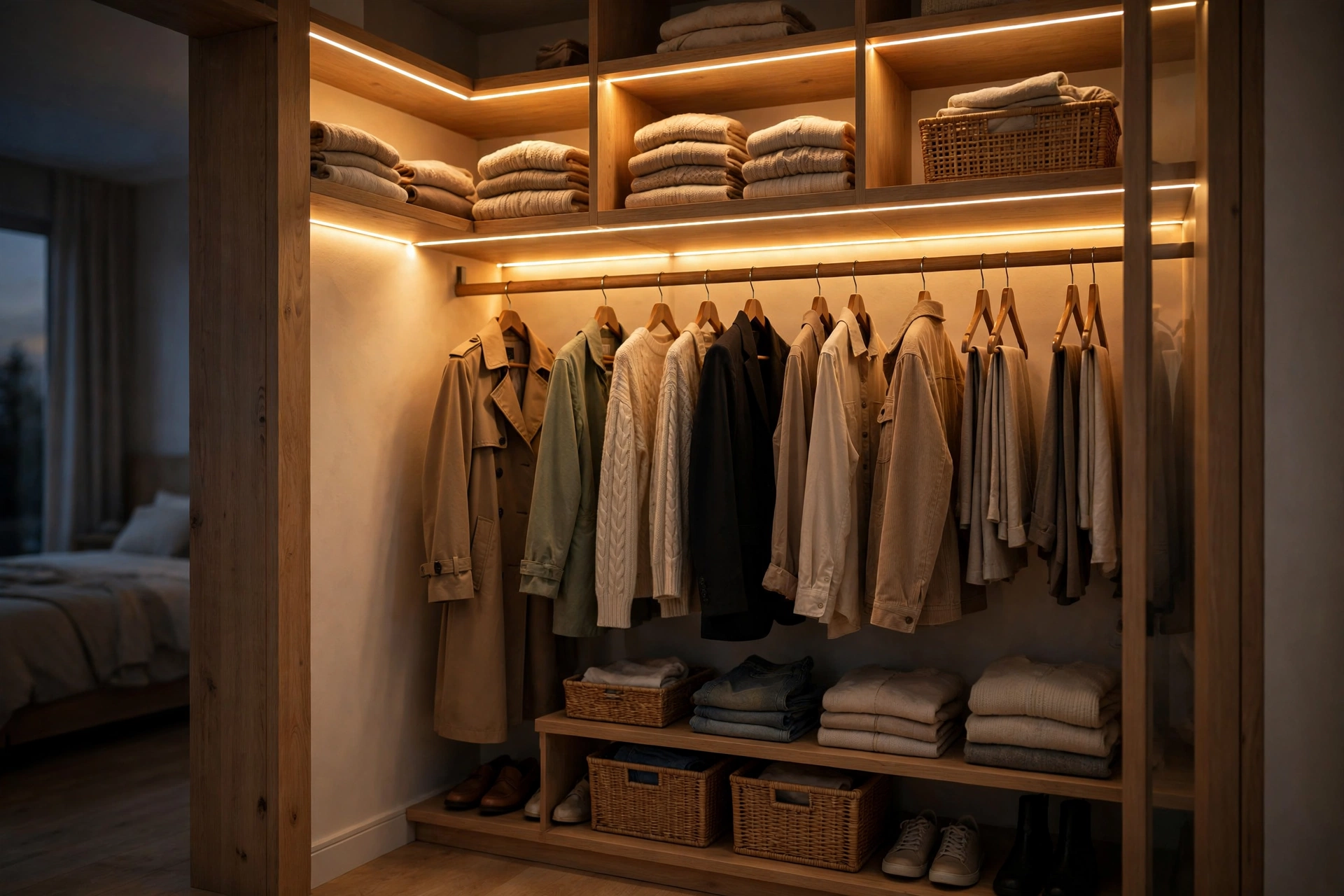
Most closets are lit by a single sad bulb, which makes color-matching and finding things harder. Battery-powered LED puck lights or motion-sensor strip lights under shelves transform visibility for very little money and zero wiring. Place strips along the front edge of shelves and above the hanging rod so light falls on clothes, not on your eyes. Warm white around 3000K flatters both skin and fabric. For a walk-in with budget to spare, a small chandelier or flush-mount fixture makes the space feel like a true dressing room. Good lighting is also the cheapest way to make a dated closet feel renovated.
10. Corral Accessories With Dividers
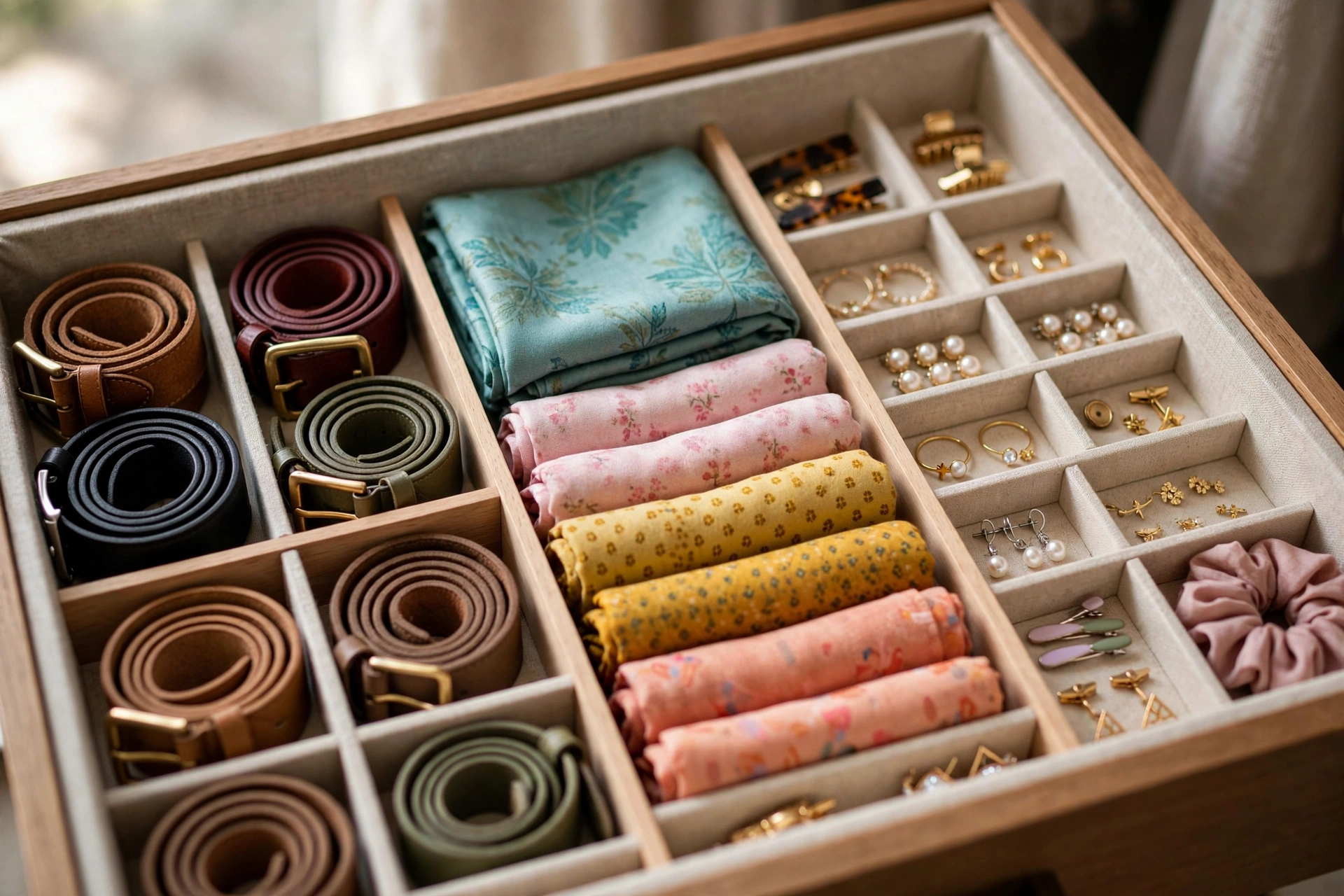
Belts, scarves, ties, and handbags need homes, or they migrate everywhere. Drawer dividers create neat grids for rolled belts and folded scarves. Pull-out valet hooks on the closet wall give tomorrow’s outfit a staging spot. A row of S-hooks on the hanging rod holds handbags by their straps without crushing them. For jewelry, a slim wall-mounted organizer or a tray inside a shallow drawer keeps tangles away. Assigning every accessory category its own zone takes an afternoon and pays off daily — no more digging through a drawer of knotted necklaces. Small, specific homes beat one big catch-all every time.
11. Make the Most of the Closet Door
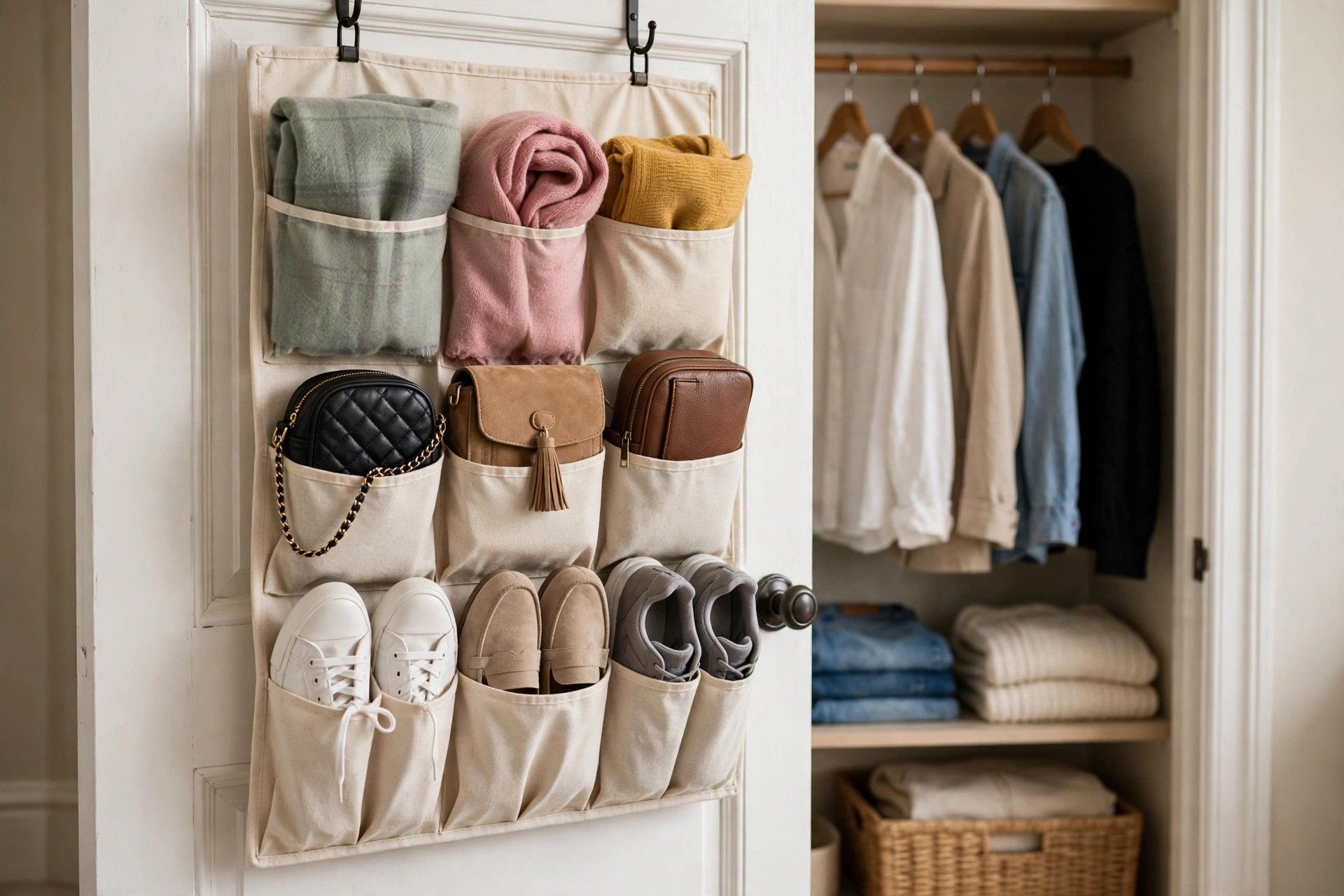
The back of the closet door is free storage most people ignore. Over-the-door racks hold shoes, accessories, or cleaning supplies without a single screw. Slim wall-mounted hooks handle robes, pajamas, and tomorrow’s outfit. A full-length mirror doubles as a door upgrade, as covered above. If you have bi-fold doors, replace them with a curtain to gain a few inches of usable depth and easier access. For reach-in closets, door-mounted organizers effectively add an entire extra shelf of storage. Just keep the weight reasonable so hinges do not sag, and make sure hooks clear the frame when the door closes.
12. Go Vertical With Floor-to-Ceiling Storage
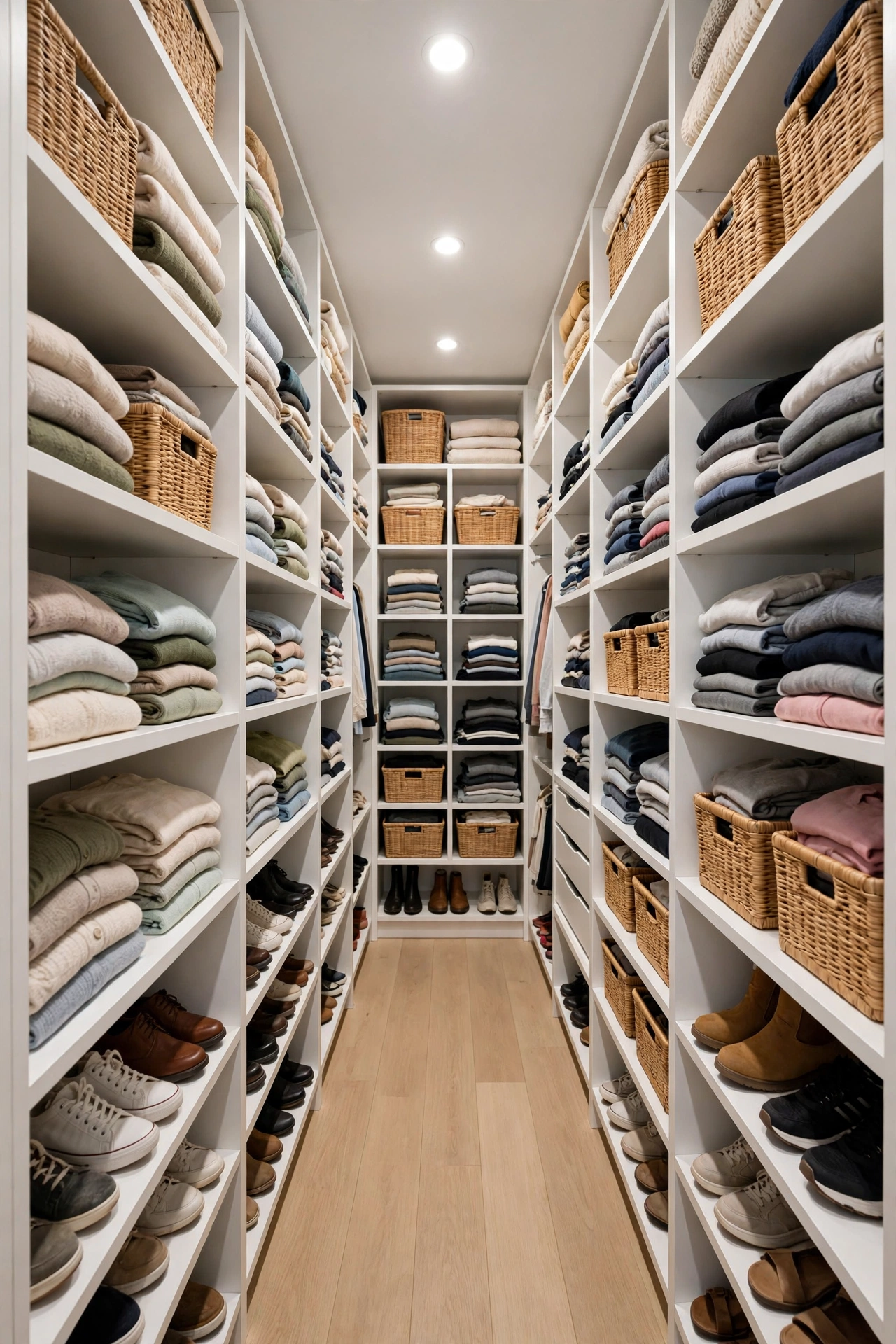
Closets usually have more height than their single rod and shelf suggest. Floor-to-ceiling shelving on one or both side walls multiplies storage without expanding the footprint. Tall, narrow cubby units fit awkward corners and swallow accessories, bags, and folded knits. Adjustable systems let you reconfigure as your wardrobe changes — high shelves for luggage, mid shelves for daily wear. If you are handy, painted plywood shelving is far cheaper than custom built-ins and looks nearly as good with trim and a fresh coat of paint. Use the very top for true long-term storage only, since reaching it should not be a daily chore.
13. Style the Back Wall With Paint or Wallpaper
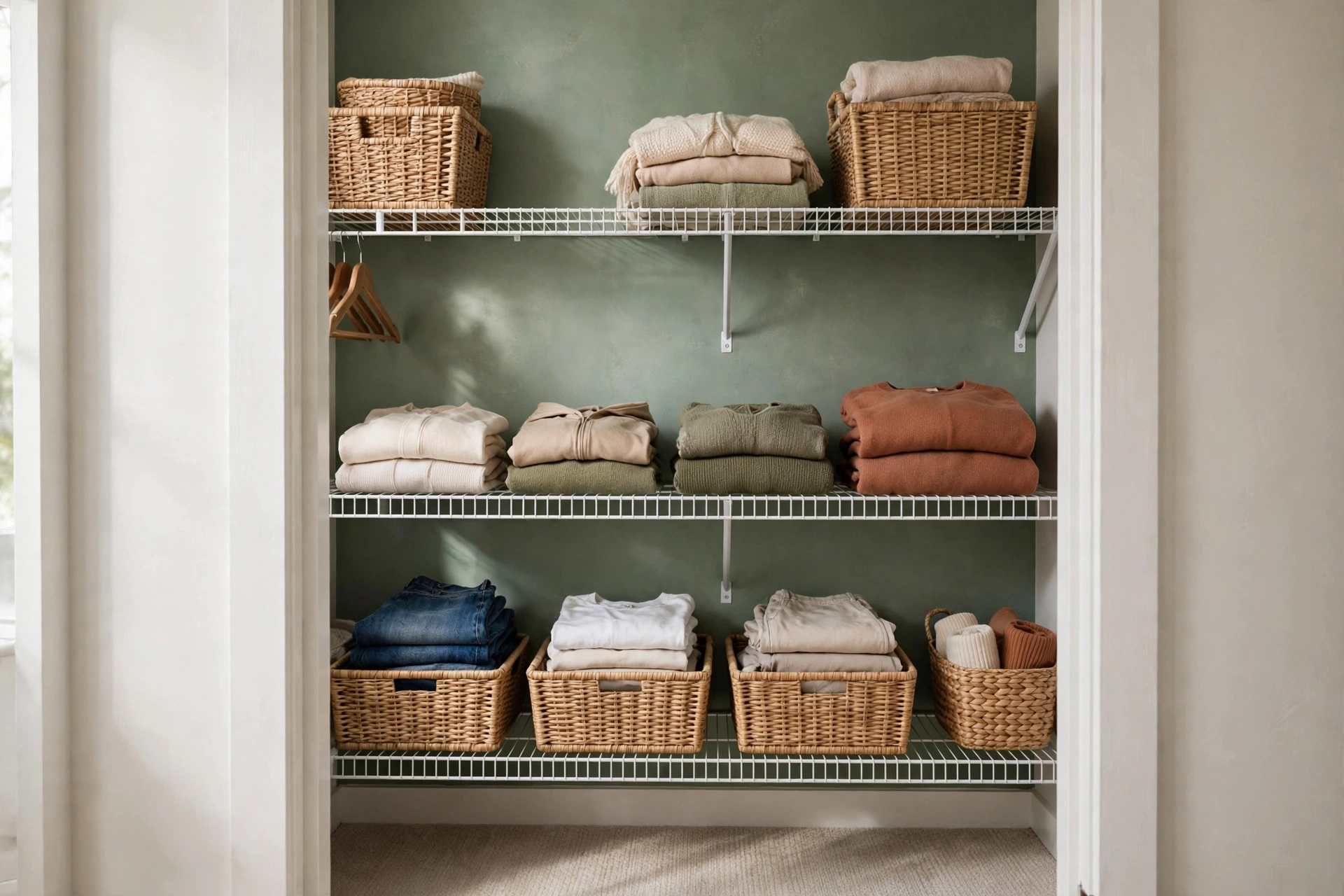
A pretty interior makes you want to keep the closet tidy — psychology working in your favor. Paint the back wall a soft, flattering shade like warm white, blush, or pale sage, or apply peel-and-stick wallpaper in a small-scale print. Removable wallpaper is renter-friendly and peels off cleanly when you move. A finished back wall elevates even basic wire shelving, making the whole closet feel intentional. Coordinate the color with your bedroom so the open closet reads as part of the room’s design. This cosmetic upgrade is quick, and bathroom closet design ideas carry the same functional storage thinking if you are styling linen and utility closets too.
14. Build a DIY Closet System on a Budget
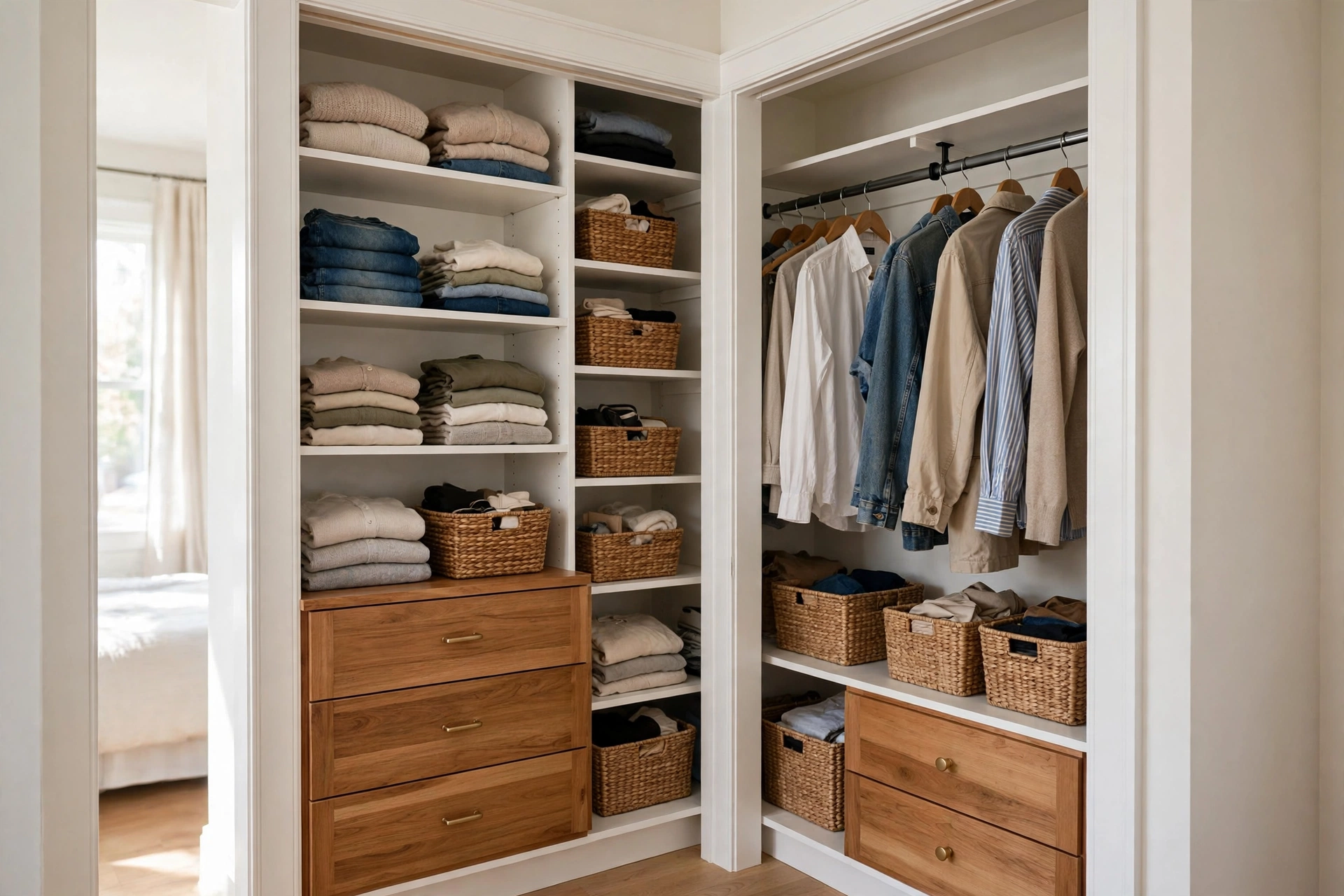
Custom closet systems are wonderful — and expensive. A DIY approach with off-the-shelf components gets you most of the way there for a fraction of the cost. Combine a closet kit’s uprights and shelves with your own plywood drawers, or hack freestanding dressers and bookcases into a built-in look with trim and paint. Mock up your layout with painter’s tape on the walls before drilling a single hole. DIY closet ideas show how far simple materials like melamine, MDF, and hardware-store shelving can go. Weekend projects like curtained open closets, wallpaper accents, and floating organizers deliver big impact with basic tools. Measure twice, level everything, and paint before installing for the cleanest finish.
15. Keep a One-In-One-Out Maintenance Rule
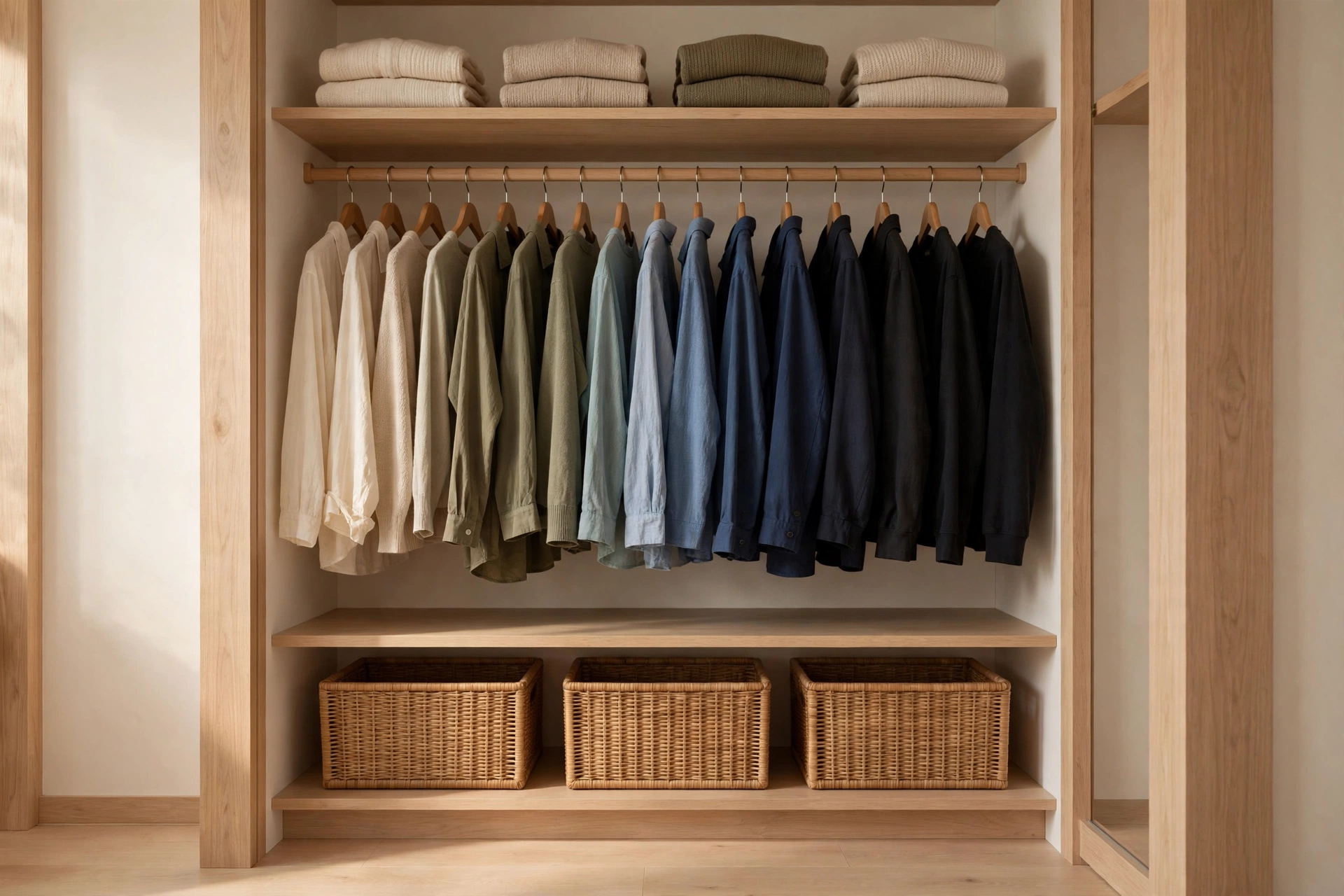
The best-organized closet in the world fills up again without a maintenance rule. Adopt one-in-one-out: every new piece that enters means one leaves. Keep a small donation bag hanging in the closet so castoffs leave immediately instead of migrating back to shelves. Do a five-minute reset weekly — rehang strays, refold the t-shirt drawer, return shoes to their spots. Seasonally, rotate the wardrobe: store off-season clothes in labeled bins on the high shelf and bring current pieces to eye level. This rhythm keeps the systems you built working with almost no effort. An organized closet is not a project you finish; it is a habit you keep.
Frequently Asked Questions
How do I organize a small bedroom closet?
Maximize vertical space first: double-hang rods, shelves above the rod, and tall narrow units in corners. Use the door back for shoes or accessories, and choose slim velvet hangers to fit more garments on the rod. Store off-season clothes elsewhere — under the bed or in labeled bins on the top shelf. Keep only current-season, frequently worn pieces at eye level. A small closet organized around your actual routine holds far more than a big closet stuffed randomly.
What is the best way to organize clothes in a closet?
Group by category first — tops, bottoms, dresses — then by color within each group so you can find things fast. Hang delicate and structured pieces; fold knits to prevent stretching. File-fold drawer items vertically so everything is visible. Keep daily outfits at eye level and between hip and shoulder height, with occasion wear higher and off-season lower or elsewhere. The “best” system is the one you will actually maintain, so match complexity to your habits.
Should I use wire or wood closet shelves?
Wire shelving is cheaper, lighter, and easier to install, and it works fine for hanging-heavy closets where shelves hold light items. Wood or melamine shelves look better, support more weight without sagging, and will not leave lines on folded knits. For a closet you see daily, wood’s finished look is worth the extra cost. For hidden linen or utility closets, wire is perfectly practical. Line wire shelves with shelf liner if you store folded clothes on them.
How do I make my closet look nice and organized?
Start by decluttering, then create visual calm: matching hangers, uniform bins, and a limited color palette for storage products. Paint or wallpaper the interior for a finished feel, add warm LED lighting, and arrange clothes by color. Keep surfaces — the top of dressers, shelf edges — mostly clear. A full-length mirror and a small rug make a walk-in feel like a dressing room. Pretty systems get maintained; ugly ones get abandoned, so invest in the look, not just the function.
What should I not keep in my bedroom closet?
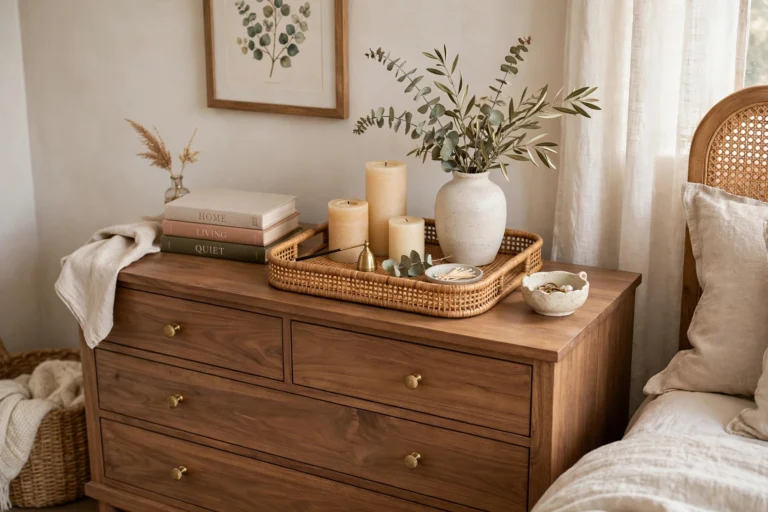
Move out anything you do not wear or use: off-season sports gear, memorabilia boxes, old electronics, and “someday” clothes that no longer fit. Sentimental storage belongs in labeled bins elsewhere, not competing with daily outfits. Keep the closet reserved for current wardrobe, shoes, and accessories plus a small staging zone for tomorrow’s outfit. Bedroom dresser decor ideas for a stylish organized space show how to make bedroom surfaces pull double duty so the closet can breathe.
Keep Exploring
A closet that is both stylish and smart does not require a renovation — just honest editing, vertical thinking, and systems matched to your habits. Whether you go boutique-open with paint and lighting or build a budget DIY system from off-the-shelf parts, these bedroom closet ideas prove that small, deliberate upgrades compound into a space that genuinely makes mornings easier.
Keep the momentum going through the rest of the bedroom. Browse more Bedroom Decor inspiration for storage-smart furniture, calming layouts, and finishing touches — because a restful bedroom starts with a closet that works as hard as you do.





[…] you have, the style for the room you want, and edit the shelves until every spine earns its place. Then give the rest of the room's storage the same smart treatment with our bedroom closet ideas…, where everything has a home and the doors still […]