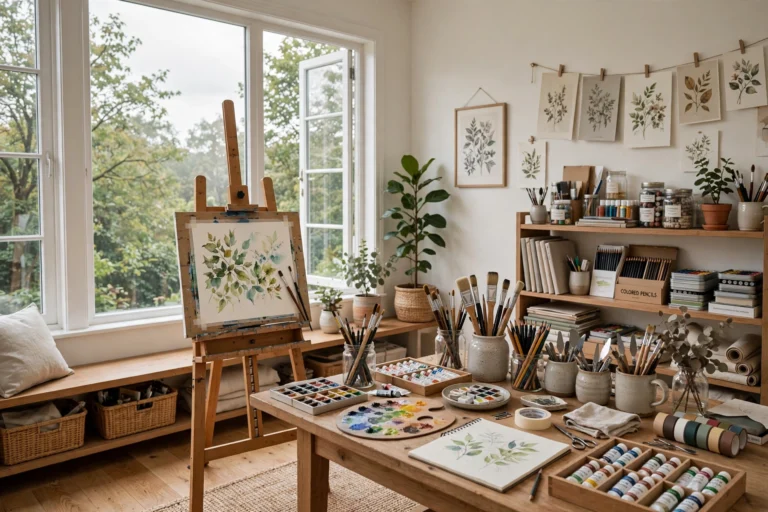

That dead corner between your walls is not wasted space — it is one of the most useful zones in your entire home. The best corner home office ideas turn tight, awkward square footage into a focused, good-looking workspace without swallowing the rest of the room. Corners feel naturally enclosed and quiet, so your brain registers them as a dedicated work zone. Whether you are working with a sunny window nook, a sliver of bedroom wall, or an empty living-room corner, there is a layout that fits. These fifteen corner home office ideas show you how to maximize every inch of space while keeping the room open, organized, and inviting.
1. L-Shaped Corner Desk for Maximum Surface Area
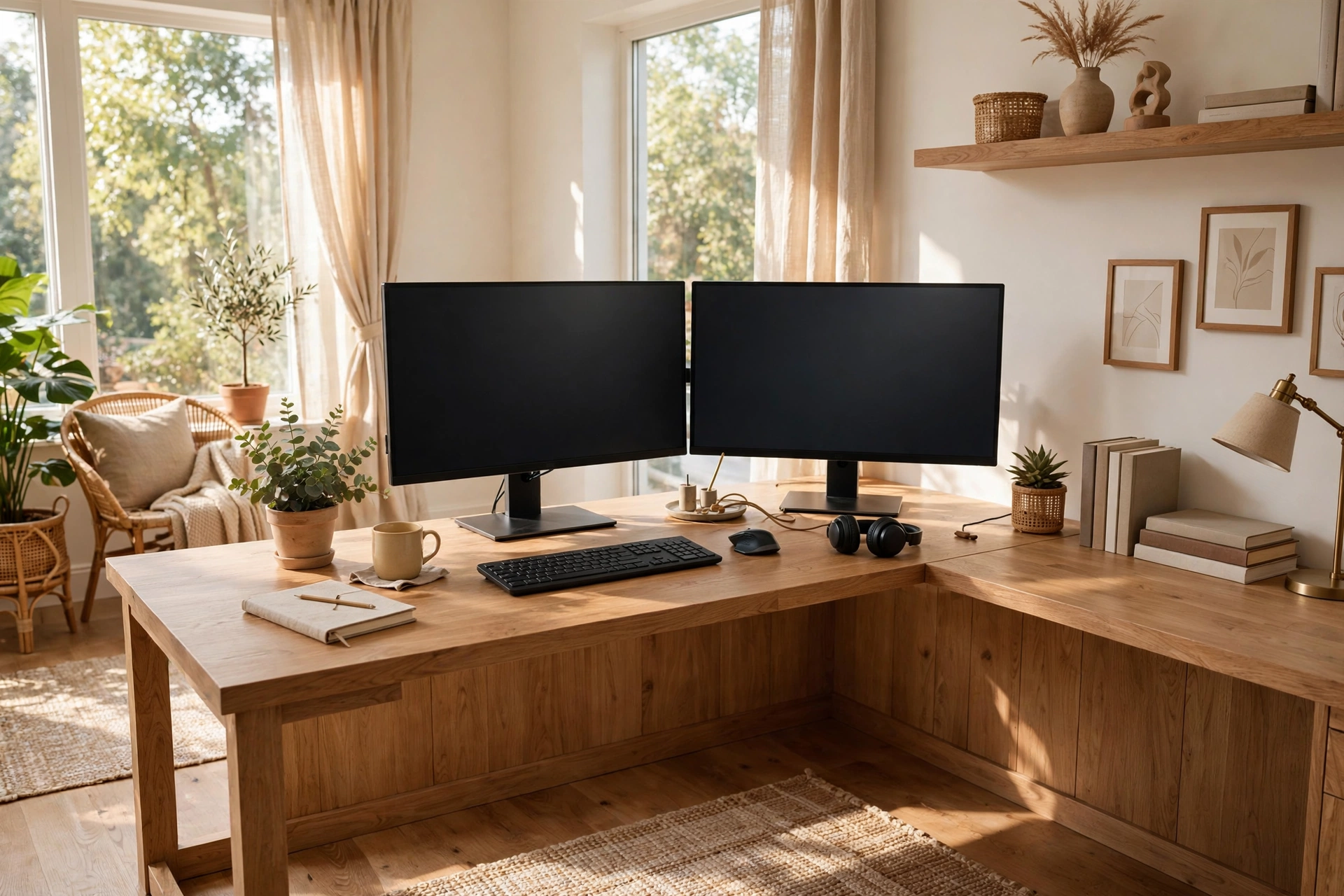
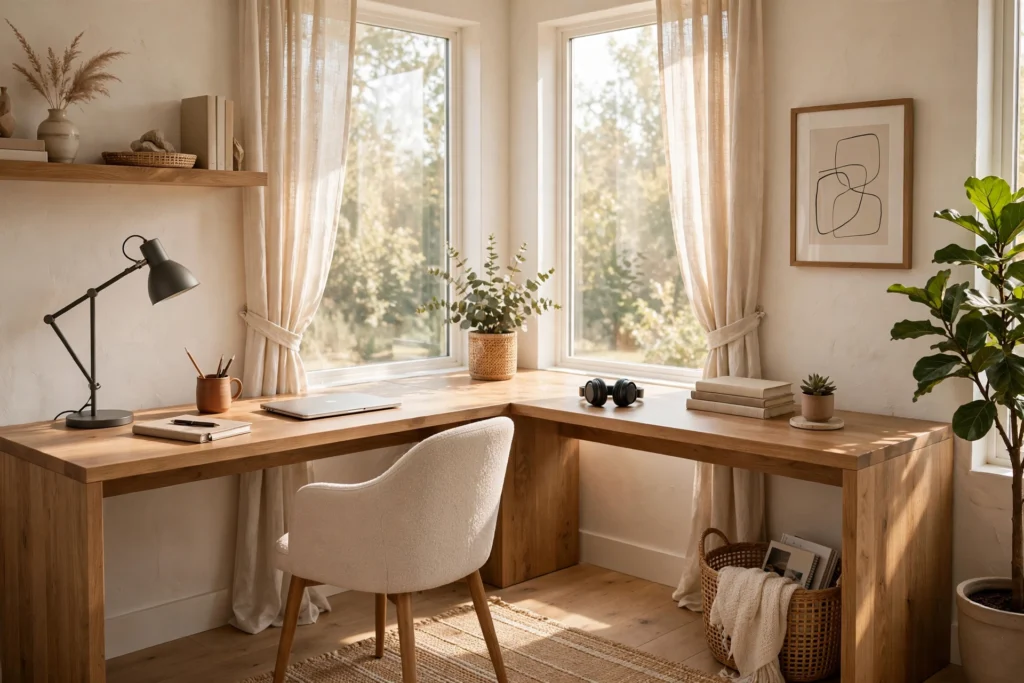
An L-shaped desk is the undisputed champion of corner offices because it wraps both walls and nearly doubles your usable surface in the same footprint. One arm can hold your monitor and keyboard while the other becomes a writing, printing, or project zone, so work never piles up on itself. Choose a model with a shared corner leg and a swivel chair that moves easily between the two arms. Using both walls also gives you twice the vertical space above for floating shelves, a monitor arm, or a corkboard that keeps notes and inspiration within arm’s reach.
2. Floating Corner Desk That Saves Floor Space
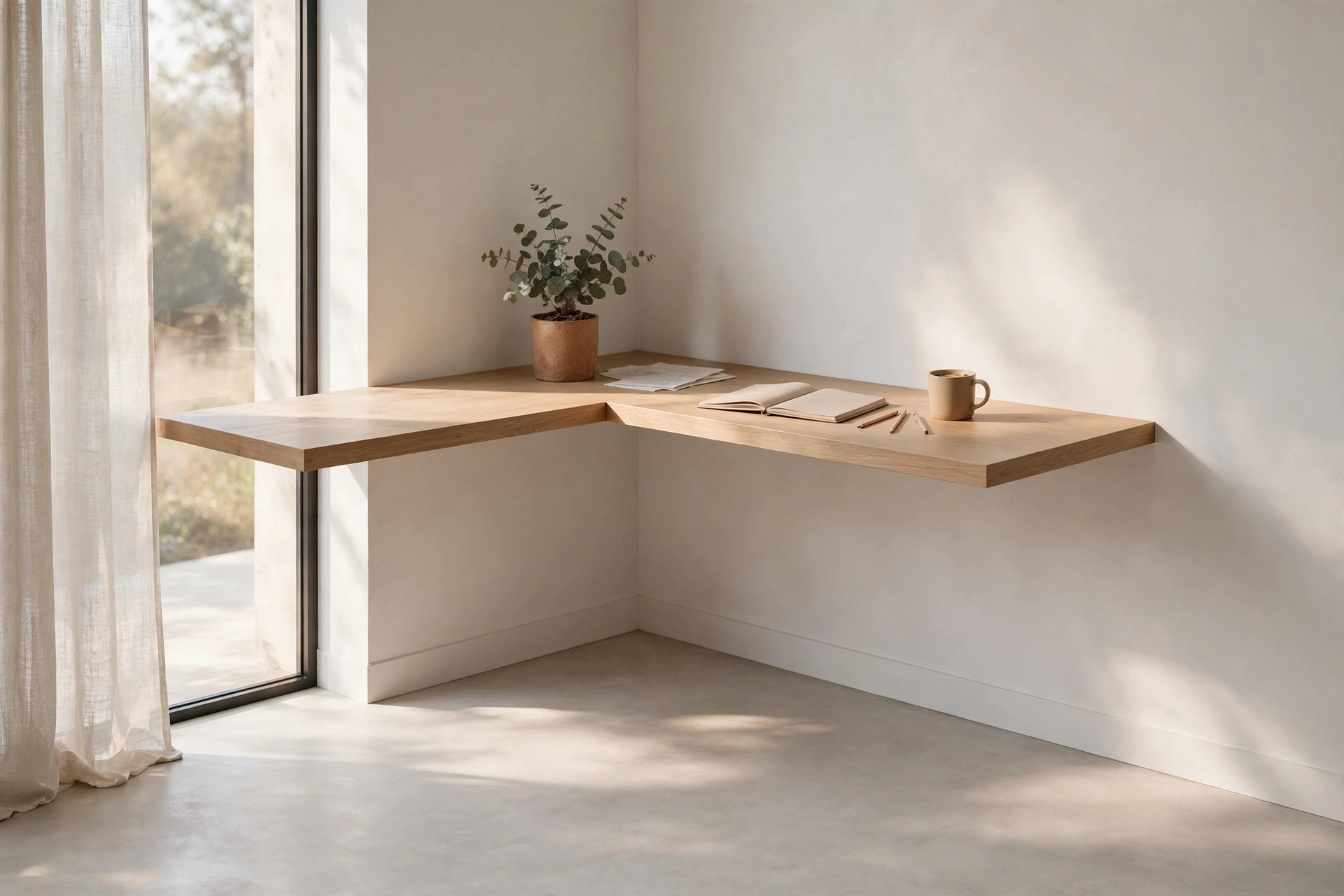
A floating corner desk attaches directly to the walls, leaving the floor completely open underneath — a trick that makes even a tiny corner feel bigger. The area below can hold a slim filing cabinet, a storage ottoman, or simply stay empty for an airier look. Mount the worktop at your ideal sitting height and add a cable tray beneath to keep cords off the floor. Pair it with a chair that tucks fully under the desk. This setup is especially brilliant in bedrooms and hallways, where every centimeter of visible floor matters.
3. Corner Desk by the Window for Natural Light
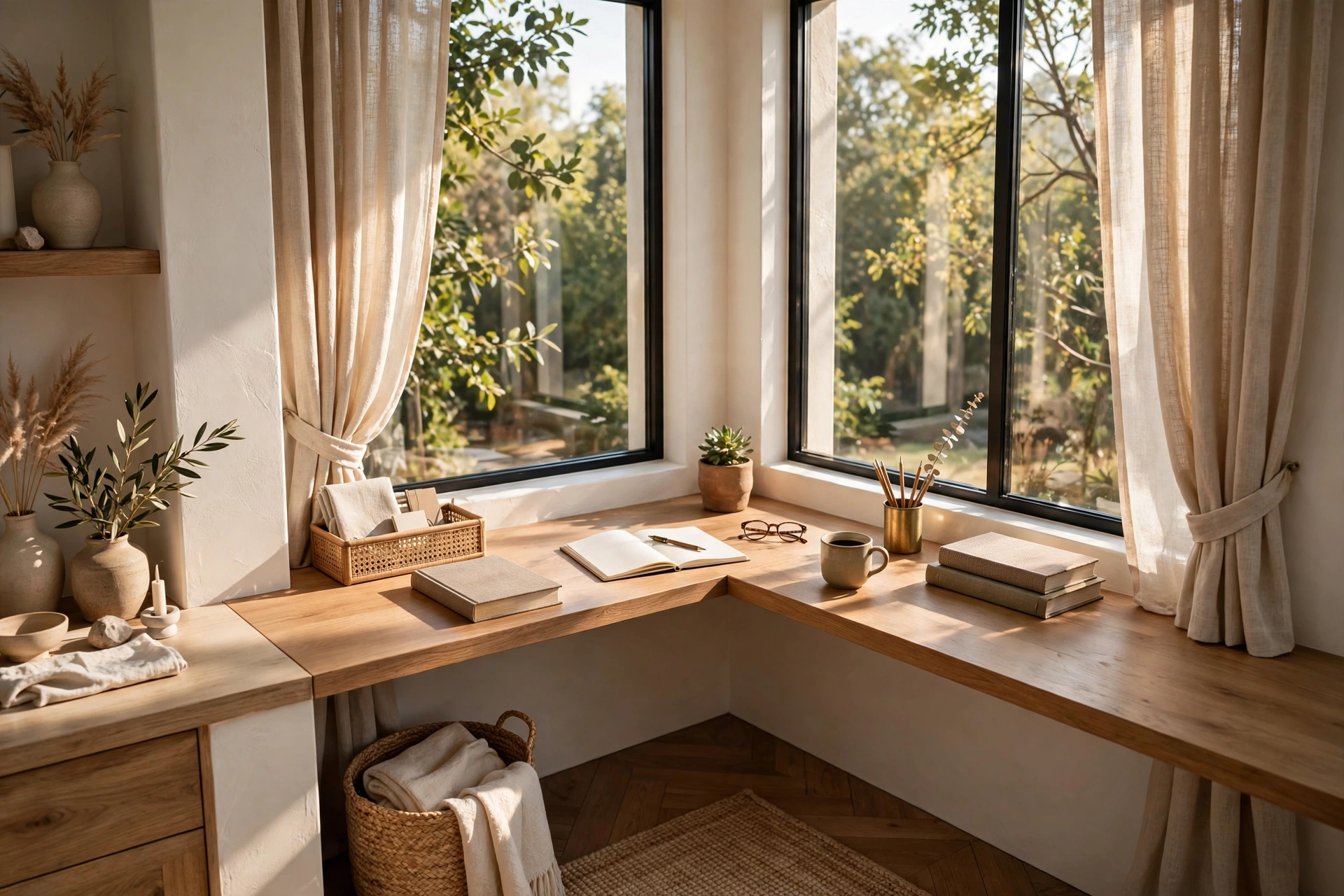
Placing your desk in a corner with a window gives you two big wins at once: the enclosure of the corner and the mood boost of daylight. Position the desk so the window sits to one side of your screen rather than directly behind it, which avoids glare while still bathing the workspace in light. Add a slim plant on the sill and a sheer curtain to soften harsh midday sun. Few corner home office ideas improve both productivity and wellbeing as reliably as this one.
4. Corner Shelving Tower for Vertical Storage
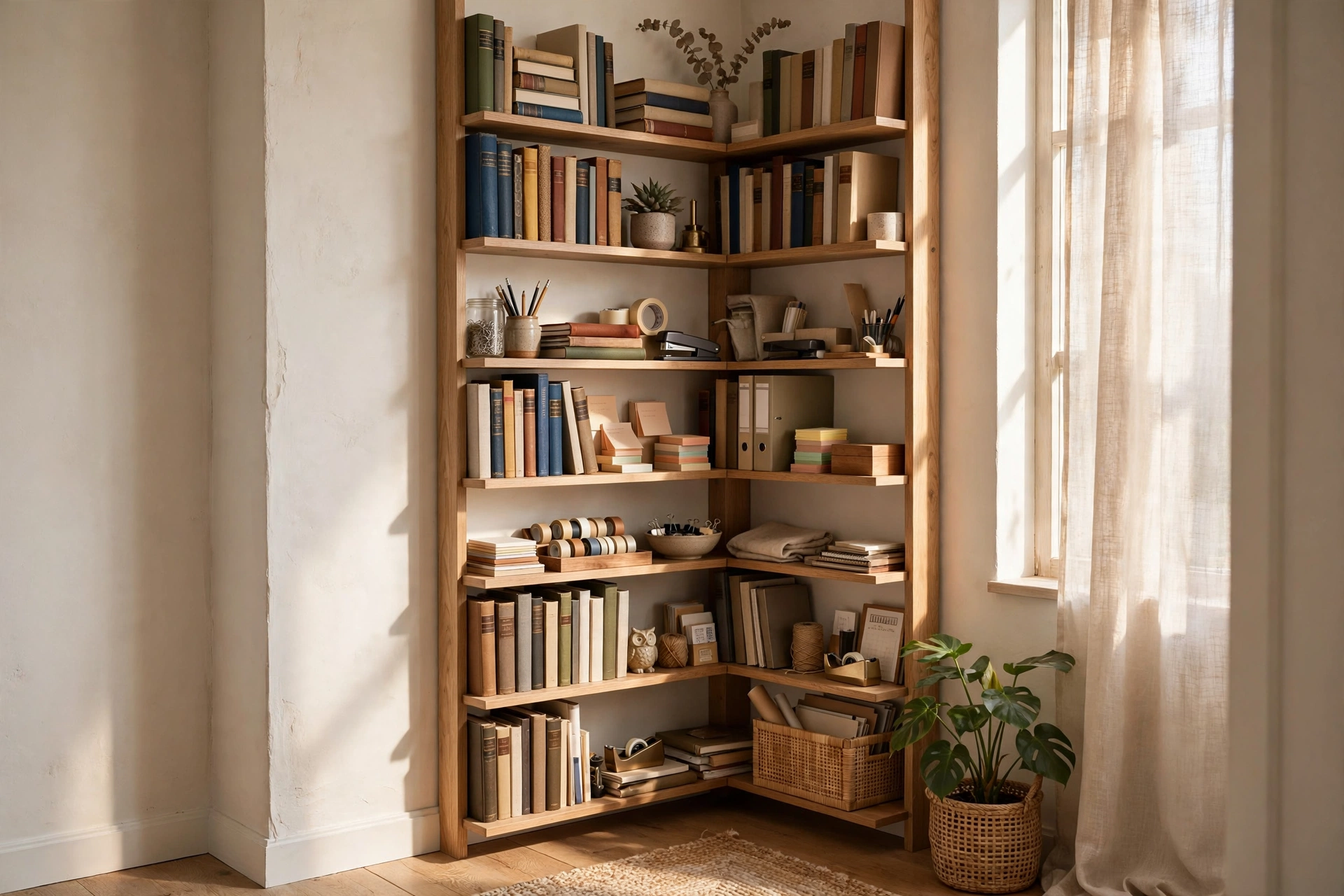
When floor space is scarce, build upward. A corner shelving tower — whether a freestanding corner bookcase or wall-mounted shelves stacked high — turns dead vertical space into serious storage. Dedicate the top shelves to reference books and archives you rarely touch, the middle shelves to daily tools and binders, and the bottom to a printer or storage boxes. Leave one shelf intentionally open for a framed photo or a small plant so the tower feels styled, not cluttered. Anchor it to the wall for safety and keep heavy items low.
5. Cozy Reading and Office Corner Combo
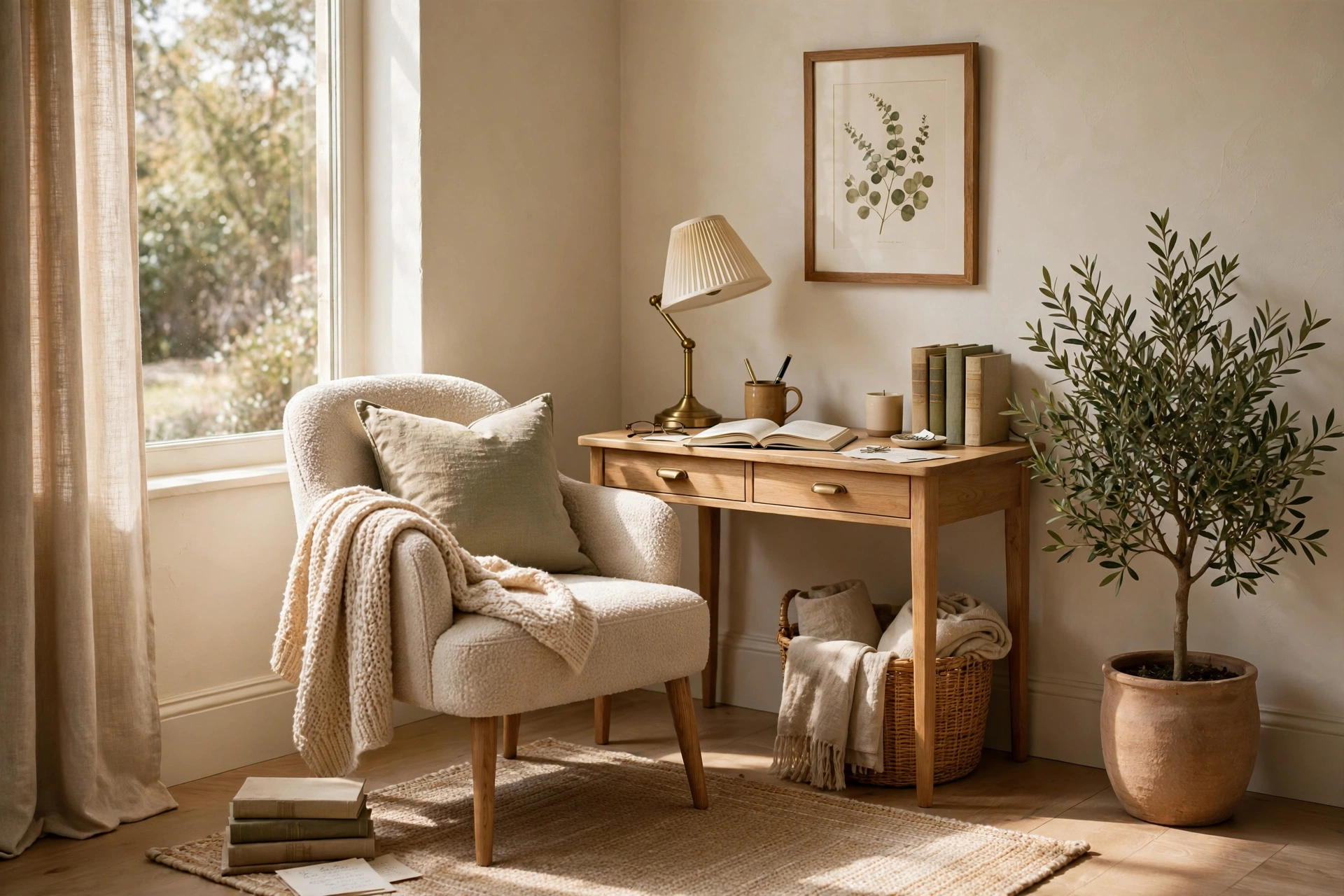
Not every corner office has to be all business. Pair a compact writing desk with a plush armchair, a floor lamp, and a soft throw to create a corner that shifts between focused work and relaxed reading. The desk handles work by day; by evening, the chair and lamp turn the same corner into a reading spot. A small side table shared between the two zones holds your coffee without crowding the desk. Cozy home office ideas before you plan the layout.
6. Two-Person Corner Workstation
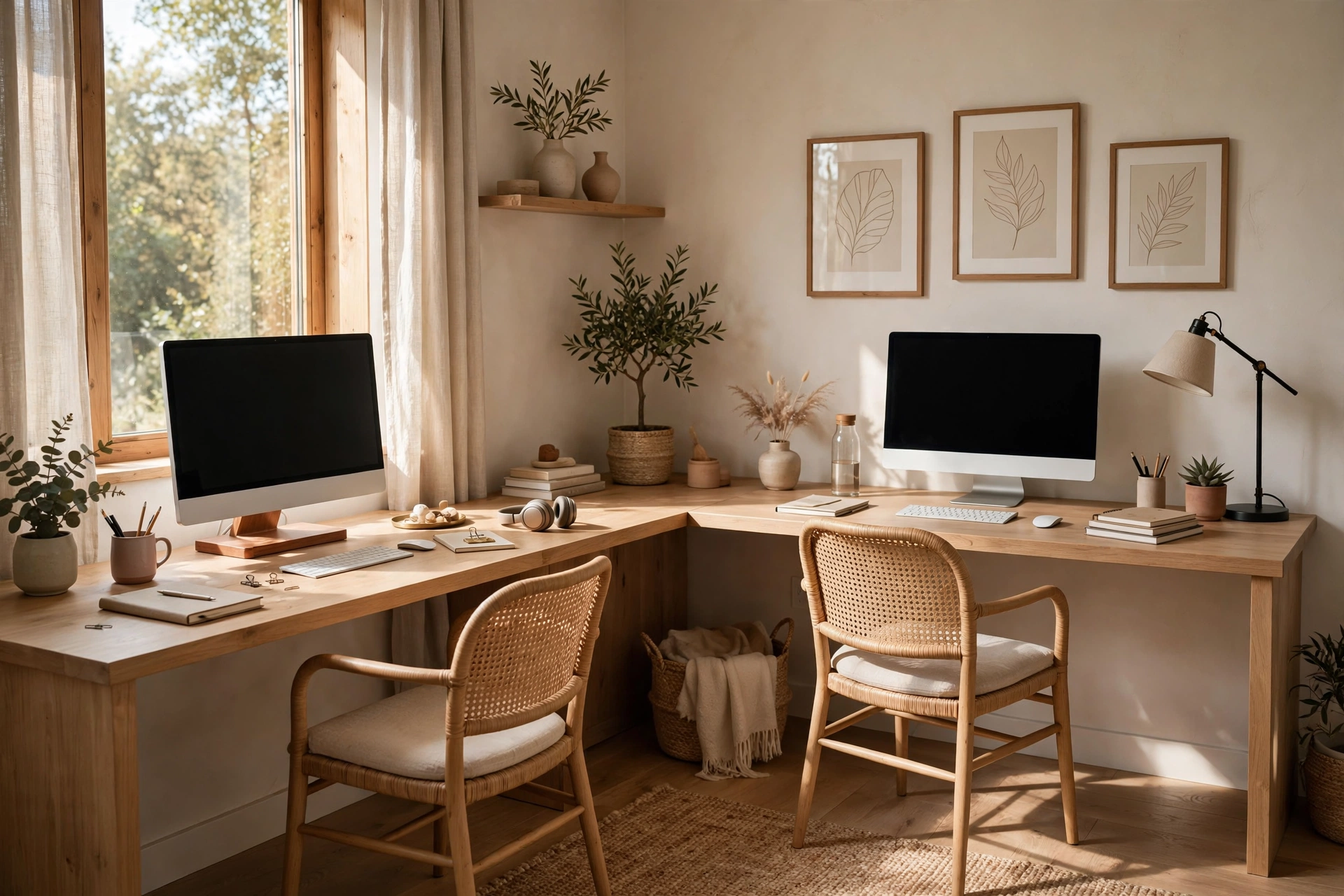
Two people working from home does not require two rooms. Set two desks back to back or at right angles in the corner, each person facing a different wall, so you both get the enclosure of the corner without staring at each other’s screens. Acoustic desk dividers or a shared center storage unit reduce noise and visual distraction. Keep cables separated with labeled cord sleeves, and give each person their own task lamp. This layout works beautifully for couples, roommates, or a parent supervising homework beside their own workstation.
7. Corner Desk With a Pegboard Wall
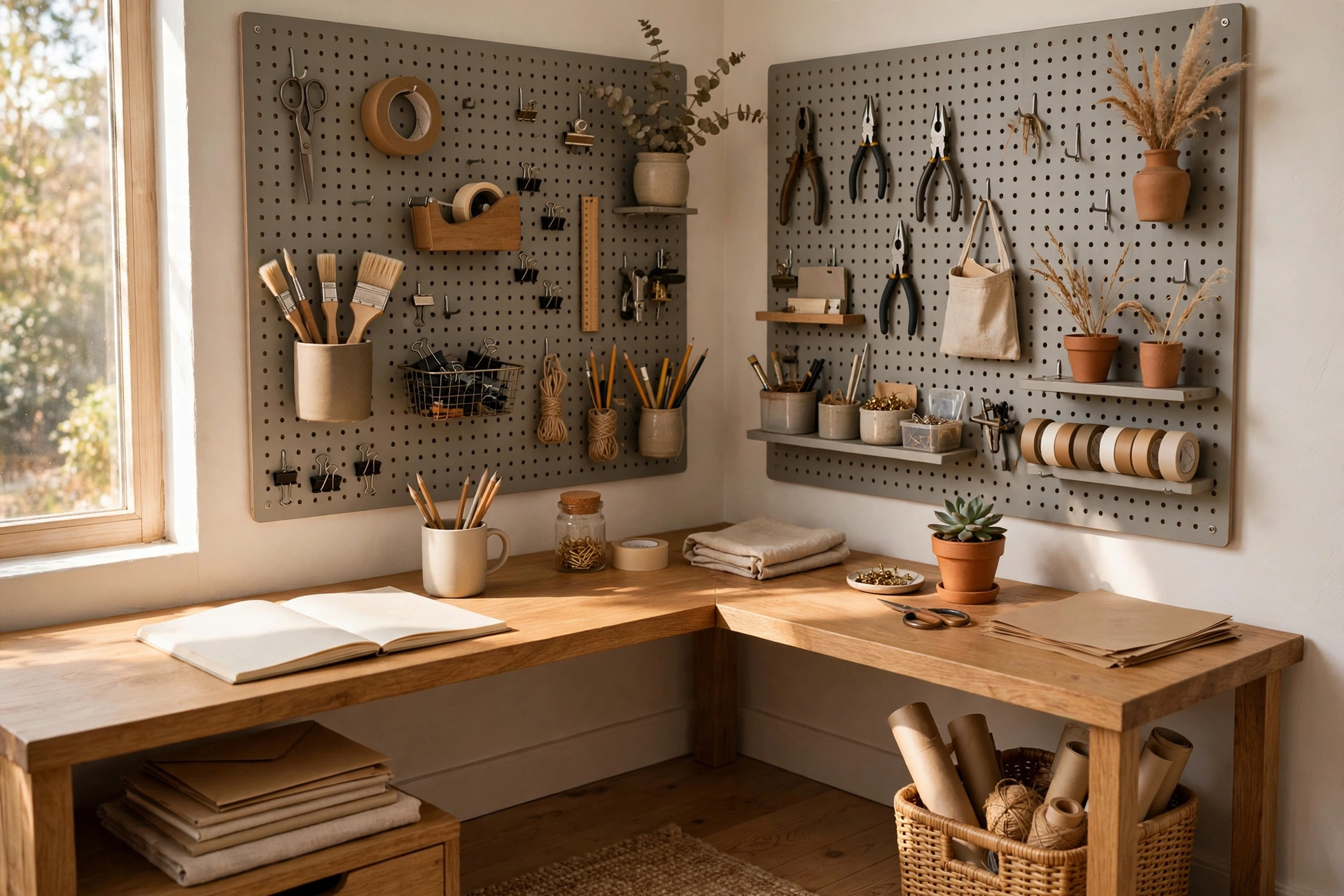
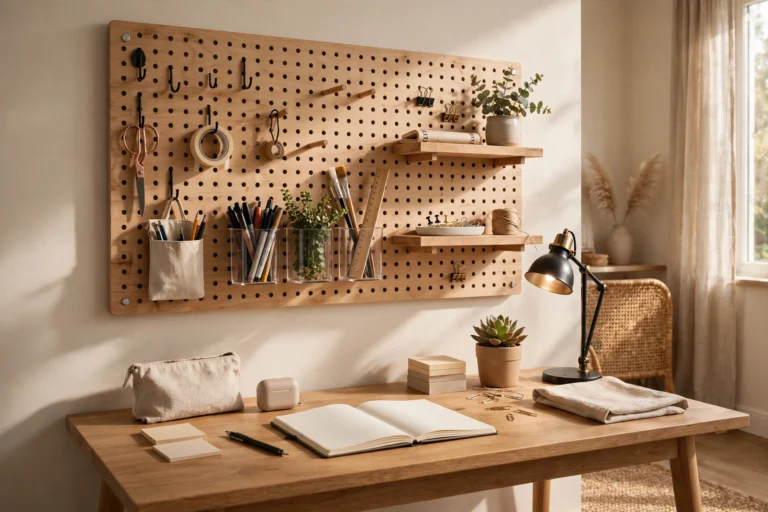
A pegboard on the corner walls above your desk is one of the smartest small-space upgrades you can make. It holds scissors, headphones, cables, planners, and craft tools on vertical wall space that would otherwise sit empty, freeing your desk surface for actual work. Hang two pegboards at right angles to follow the corner, and mix hooks, small shelves, and magnetic cups for a system you can rearrange anytime. Paint the boards the same color as the wall for a built-in look, or make them a contrasting accent that doubles as decor.
8. Minimalist White Corner Setup
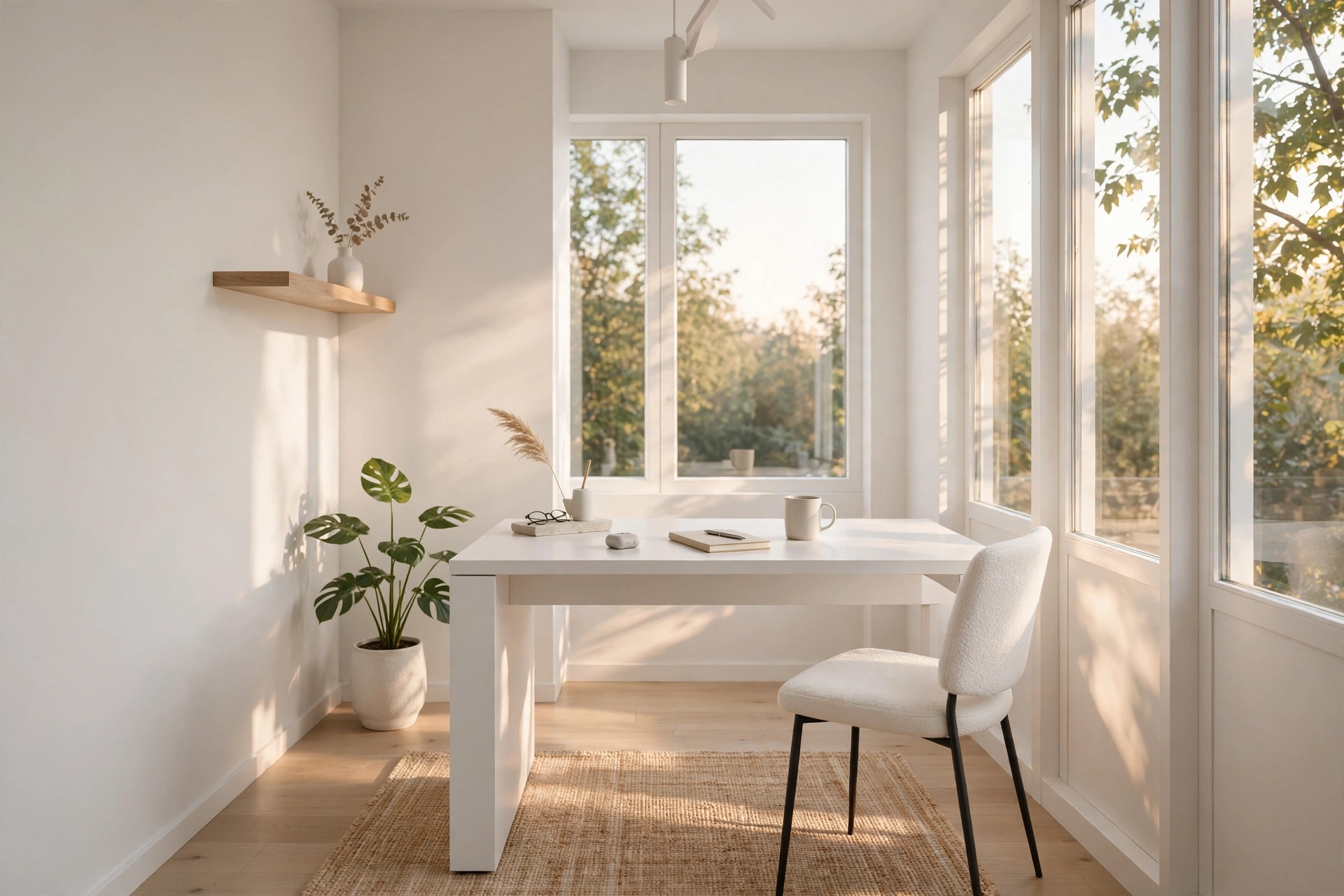
A minimalist white corner setup uses a light palette to make a small workspace feel twice its size. Choose a simple white or pale-wood desk, a slim ergonomic chair, and hidden storage like a drawer unit or wall cabinets painted to match the walls. Keep visible items to the essentials — a monitor, a lamp, and one small plant — and route every cable through an under-desk tray. White walls bounce natural light deeper into the corner, reducing the cave-like feeling tight corners can have. The result is a calm, uncluttered zone.
9. Corner Office Carved Out of the Bedroom
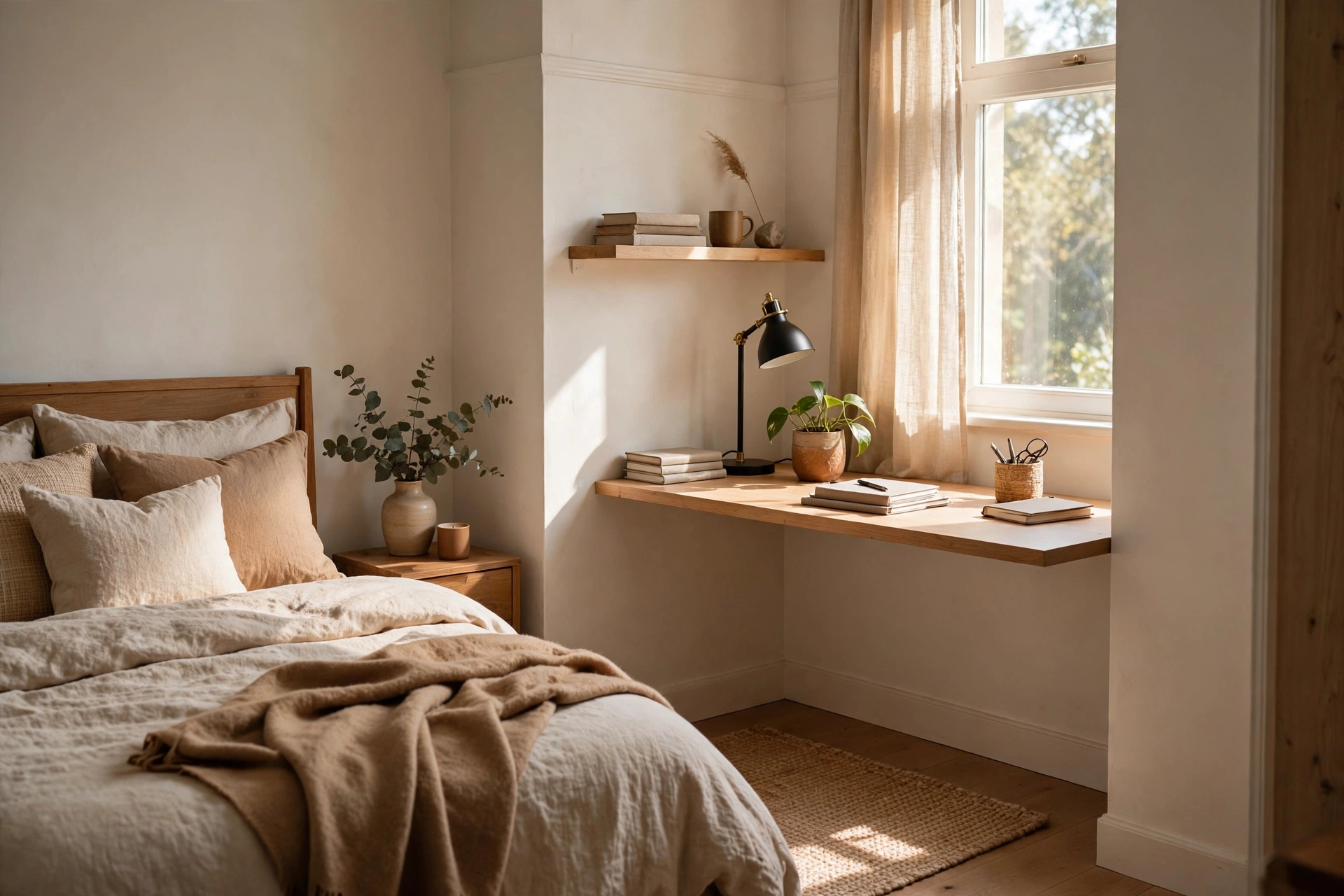
Your bedroom can host a proper office corner without ruining its restful feel. Tuck a compact desk into the corner farthest from the bed, and use a rug or a change in wall color to visually separate the work zone from the sleep zone. A small folding screen or open bookshelf acts as a divider and extra storage in one. Set a hard rule: the laptop closes and slides into a drawer at the end of the day, so work does not follow you to bed.
10. Corner Office in the Living Room
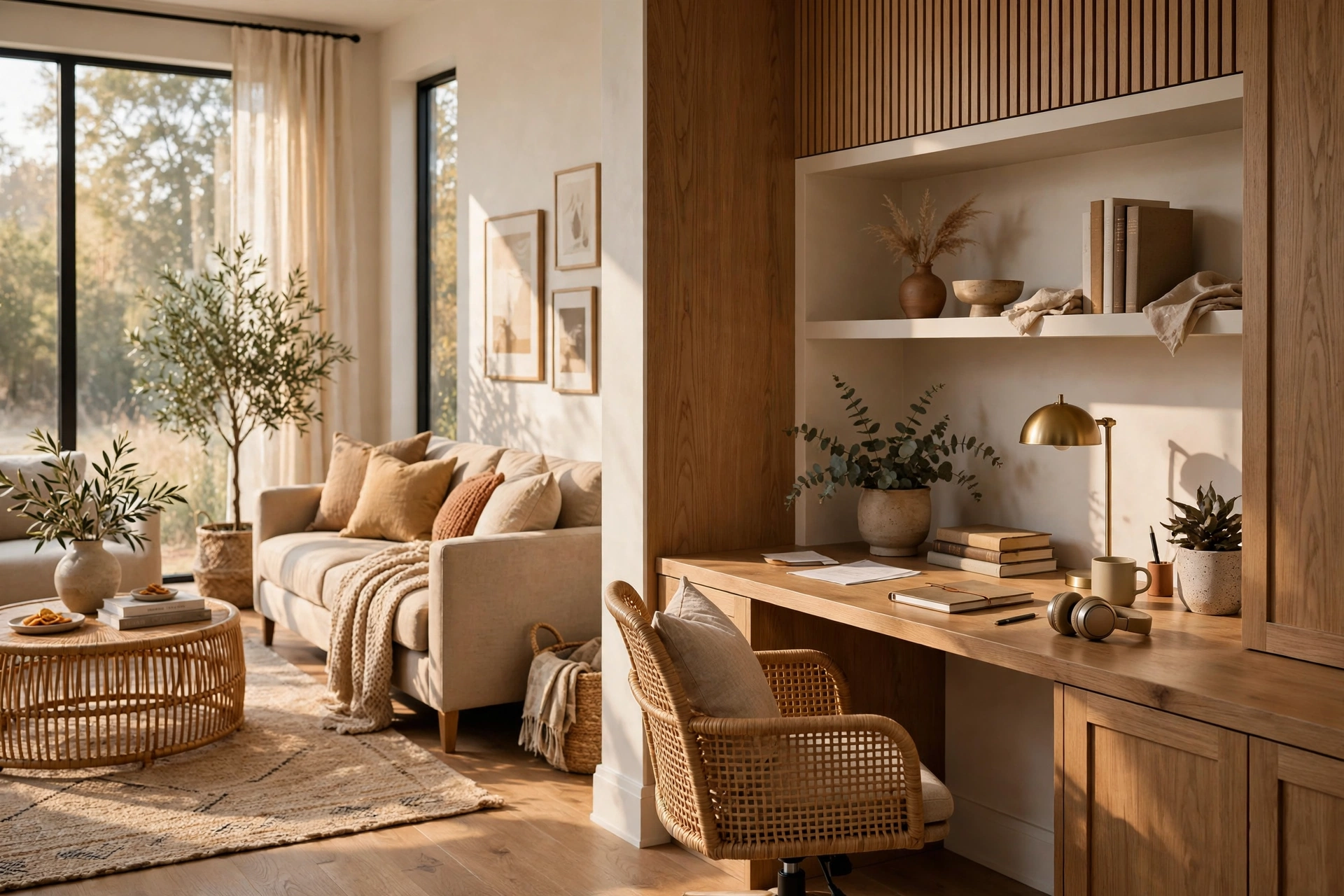
An empty living-room corner can become a stylish workstation that blends with your decor instead of clashing with it. Choose a desk with furniture-quality looks — warm wood, tapered legs, a design you would be proud to display — and pick a chair that reads as an accent chair rather than office equipment. Hide the printer and files in a matching cabinet so the corner looks like a styled vignette when you are off the clock. A gallery wall above the desk makes the corner feel intentional.
11. Corner Standing-Desk Setup
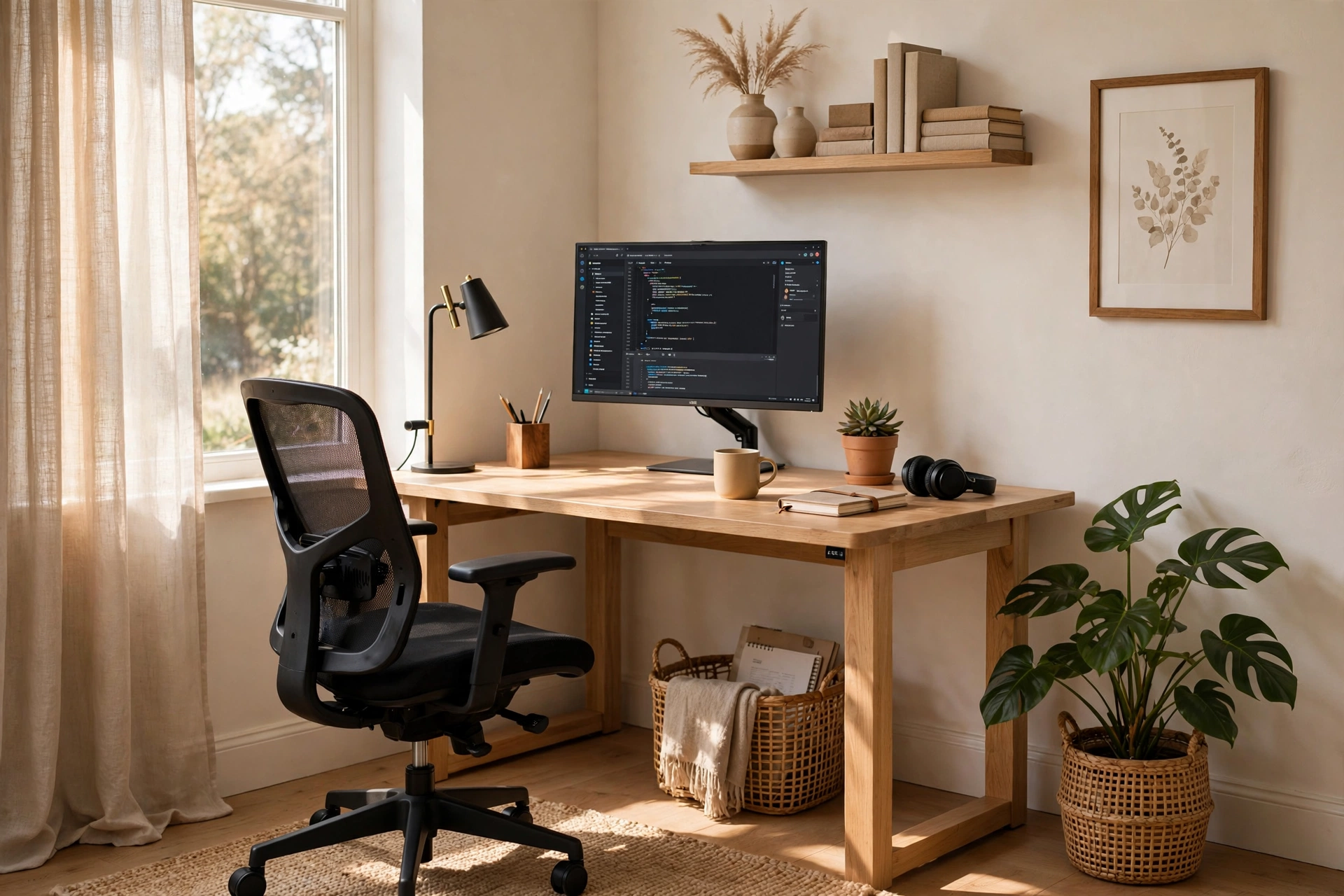
Corners work brilliantly for standing desks because the walls on two sides give you places to mount shelves, whiteboards, and monitor arms without crowding the floor. A corner sit-stand desk lets you alternate between sitting and standing through the day. Add an anti-fatigue mat for comfort and a wall-mounted whiteboard for brainstorming. Cable management matters even more here since the desk moves — use a flexible cable spine from desk to wall. Home office desk setup ideas for ergonomic layouts that pair well with height-adjustable frames.
12. Corner Desk With Built-In Storage
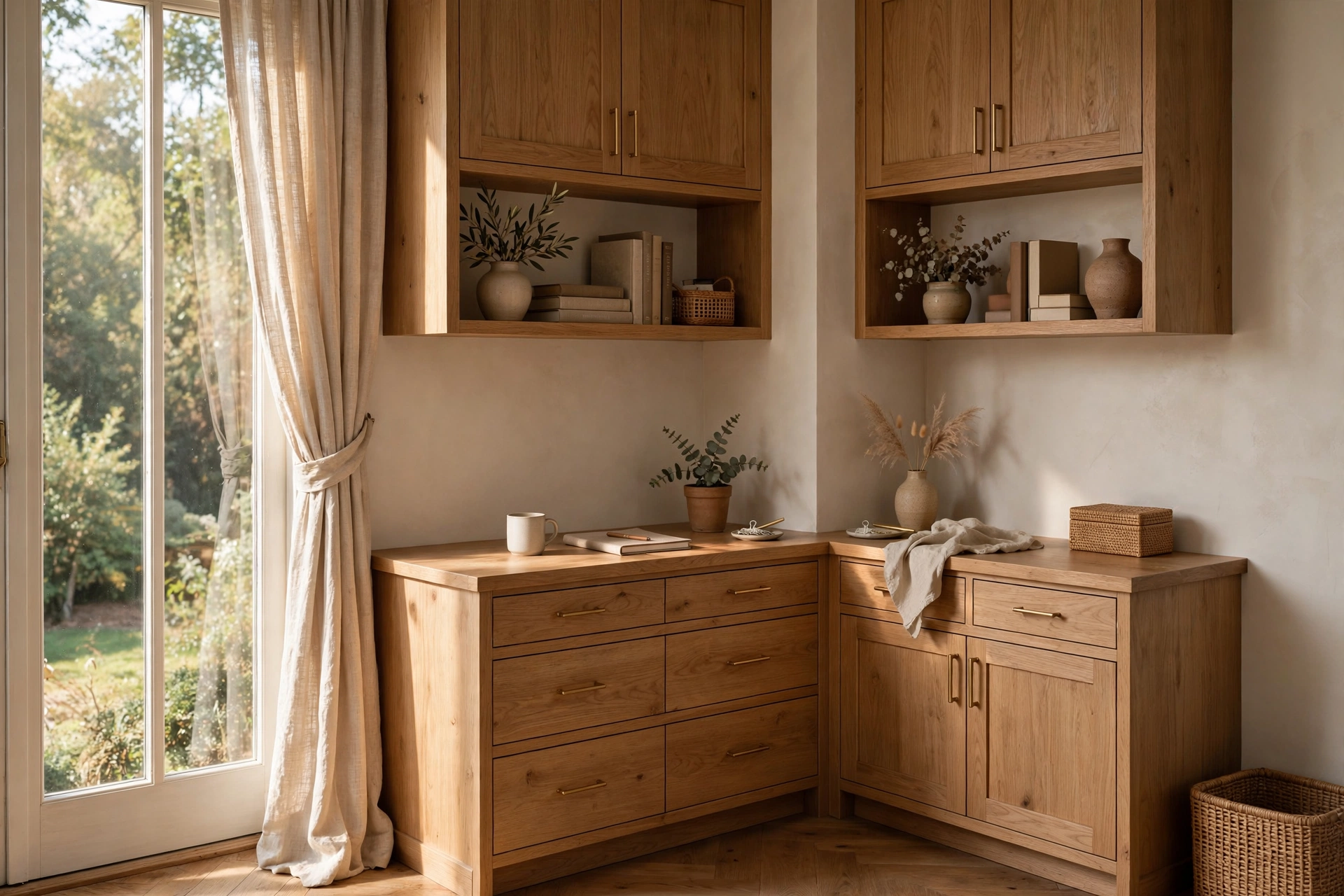
Built-in storage is the difference between a corner that works and a corner that just holds a desk. Look for a corner desk with integrated drawers, a hutch, or side cabinets so files, chargers, and supplies live exactly where you use them. If your desk lacks storage, flank it with a rolling drawer unit on one side and a vertical file cabinet on the other, matching finishes so the trio reads as one built-in piece. Label every drawer so the system stays easy to use.
13. Warm Wood Corner Nook
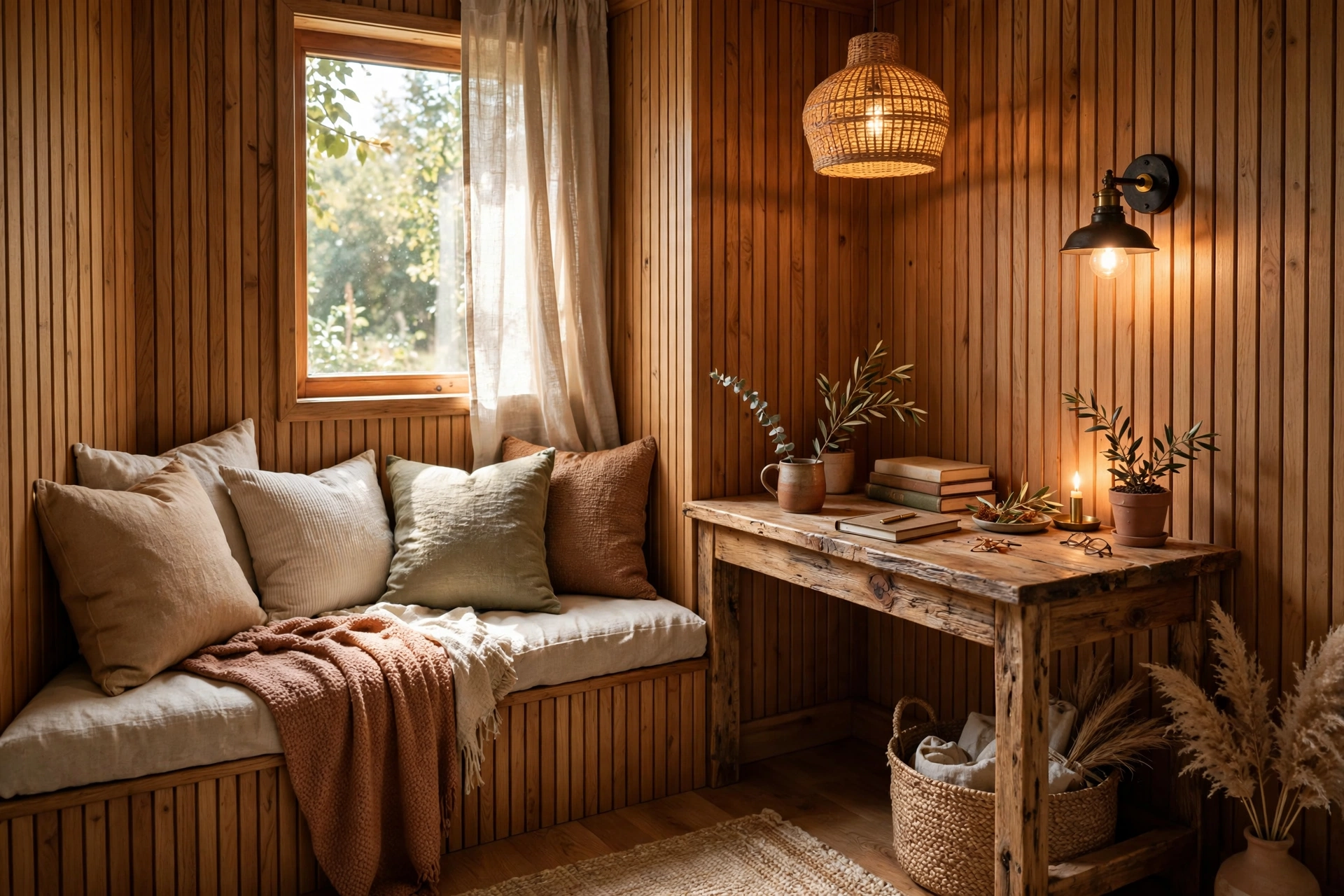
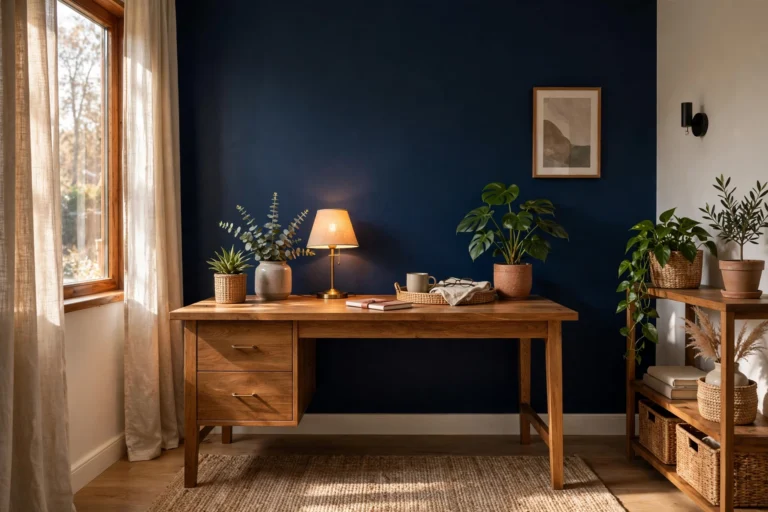
Warm wood tones turn a cold corner into a nook you actually want to spend eight hours in. Choose a desk in oak, walnut, or warm bamboo, and echo the finish with a wooden shelf, a corkboard frame, or a woven basket or two. Layer in a warm-toned desk lamp and a textured rug to soften the acoustics and the atmosphere. Wood pairs beautifully with green plants and brass accents. Even a budget flat-pack desk gains character when you style it with natural materials instead of plastic accessories.
14. Corner Office With Greenery
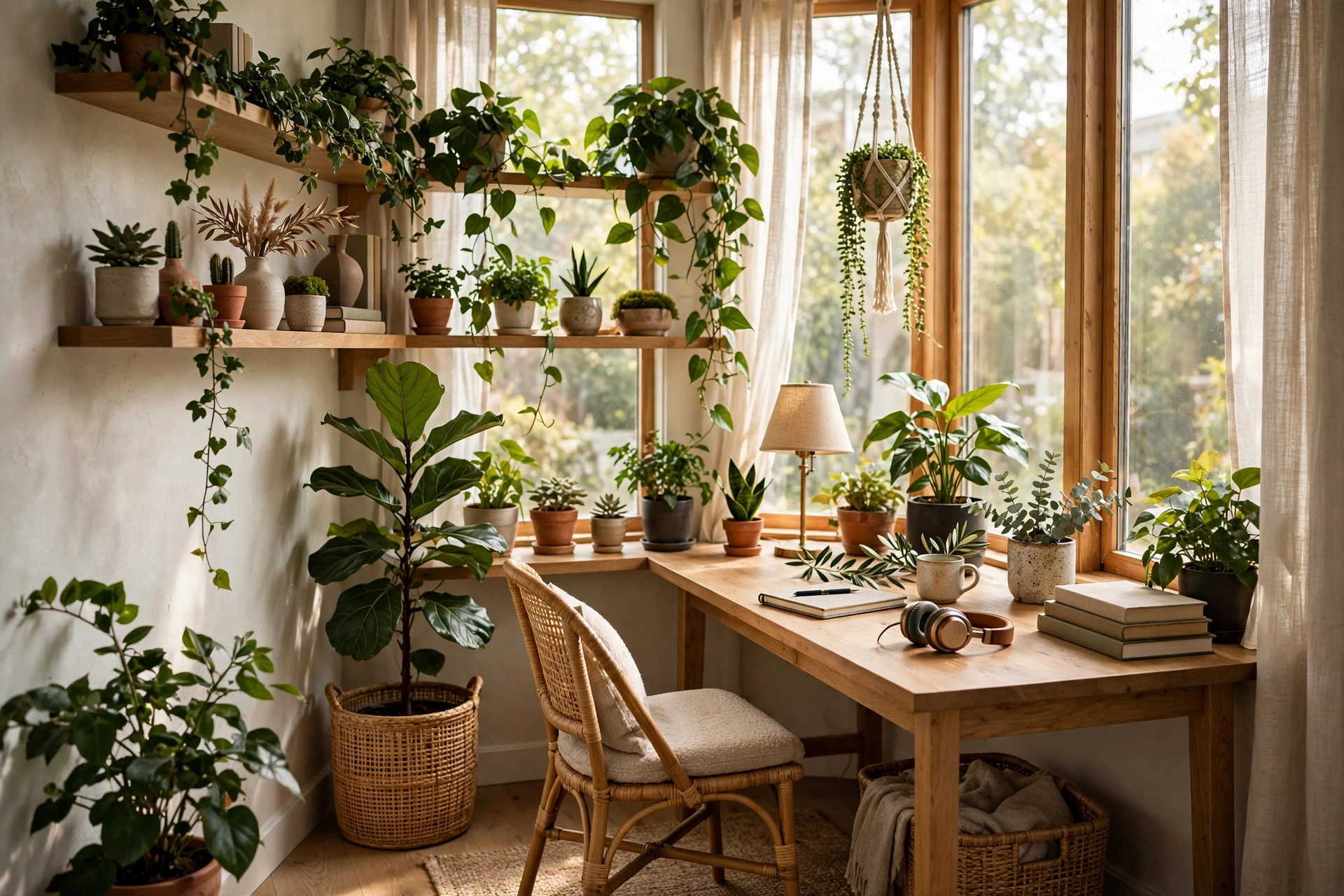
Plants transform a corner office from sterile to alive, and corners are ideal spots because two walls give you twice the surface for hanging planters. Place a tall floor plant like a snake plant or ZZ plant in the corner behind your monitor, add a trailing pothos on a floating shelf, and keep a tiny succulent on the desk. Plants soften hard lines, improve air quality, and give your eyes a restful focal point during screen breaks. Choose low-maintenance varieties so the greenery stays lush.
15. Fold-Down Wall-Mounted Corner Desk
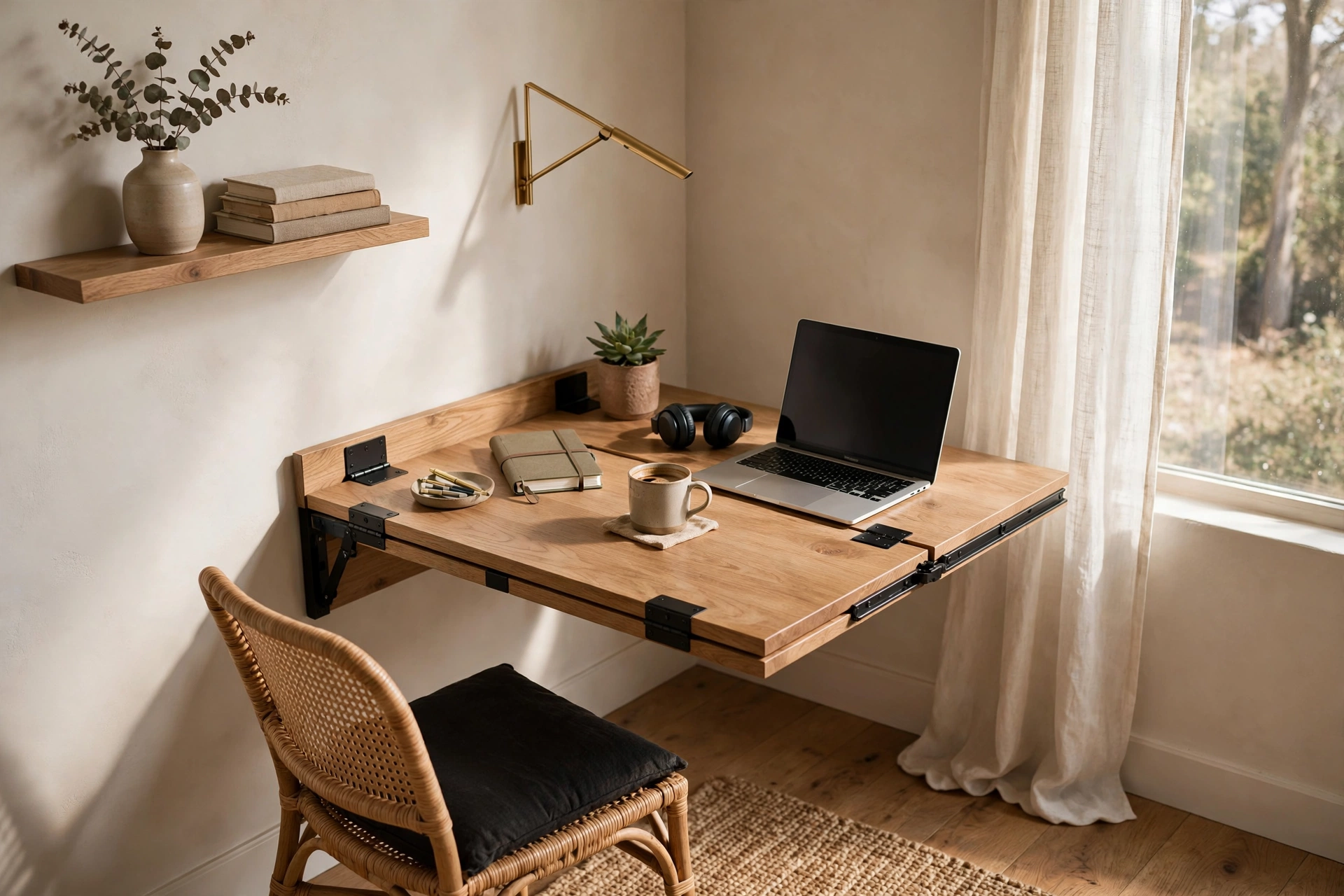
When the corner must serve double duty, a fold-down wall-mounted desk is the ultimate space saver. Mounted at sitting height on the corner, it opens into a full work surface and folds flat against the wall when the workday ends, freeing the corner for exercise, play, or hosting. Choose a model with built-in cable grommets and a lip that keeps items from sliding when you fold it. Tiny nooks — Closet office ideas — prove that a full office can vanish into almost nothing.
Frequently Asked Questions
How do I set up a corner home office in a small room?
Start by measuring the corner precisely, including baseboard depth and outlet positions, then choose a desk that fits the walls with a few centimeters to spare. Mount as much as possible — floating desks, wall shelves, and pegboards free up floor space that a small room cannot afford to lose. Keep the color palette light, hide cables in a tray, and use a rug to define the work zone. Add one good task lamp plus a plant for warmth.
What size desk works best in a corner?
For a single-user corner office, a desk measuring 120 to 140 centimeters wide on the main arm works well, with a depth of at least 60 centimeters for a monitor at a healthy viewing distance. L-shaped models typically span 120 centimeters per arm, which suits most corners. If space is truly tight, a floating desk as narrow as 90 centimeters can still hold a laptop comfortably. Always leave 80 to 90 centimeters of clearance for your chair to push back.
How can I get good lighting in a corner workspace?
Corners tend to be the darkest part of a room, so layer three light sources: daylight from a nearby window where possible, a focused task lamp on the desk, and ambient light from the room’s main fixture. Place your task lamp on the opposite side from your dominant hand to avoid shadows while writing. Warm-white bulbs around 3000K keep the corner cozy without feeling yellow, and a light-colored desk surface reflects light upward.
How do I keep a corner office from feeling cramped?
The secret is editing what the eye sees: use a light wall color, keep the floor visible with floating furniture, and store everything that is not in daily use behind closed doors or in drawers. Follow these tips for maximizing a small home office for more space-stretching tricks. A mirror on one wall doubles the sense of space, and vertical storage draws the eye upward instead of crowding the worktop.
Can I build a corner home office on a budget?
Absolutely. A solid-core door slab on two drawer units or wall-mounted brackets makes a sturdy, spacious corner desk for very little money. Shop secondhand for chairs and shelving, and use a pegboard for cheap, flexible wall storage. Good lighting matters more than expensive furniture — a single quality task lamp beats a premium desk. A light, fresh coat of paint on the corner walls makes the whole setup feel intentional.
Keep Exploring
A corner office rewards the planner: measure first, build upward with shelves and pegboards, and let natural light do the heavy lifting wherever the corner allows. The fifteen ideas above share one principle — every surface should earn its place, from the desk arms you work on to the walls above them. Pick the layout that matches how you actually work, from a sprawling L-shaped battle station to a fold-away nook.
Small office design ideas for layout inspiration, then revisit your own corner with fresh eyes. Small adjustments — a warmer lamp, one more shelf, a plant in the dead corner behind your monitor — often deliver the biggest daily payoff.