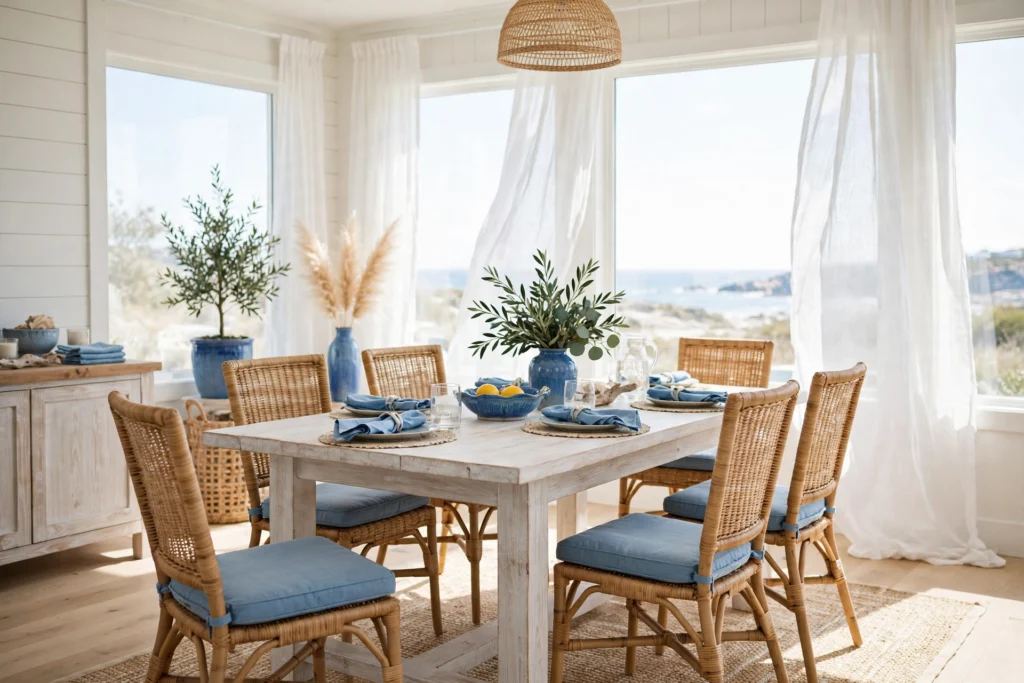

A coastal dining room should feel like a deep breath — light, airy, and touched by the sea. These coastal dining room ideas capture that breezy charm with whitewashed woods, woven textures, sea-inspired blues, and sunlight-friendly styling that works whether you live steps from the beach or miles inland.
Coastal style is at its best when it suggests the seaside rather than shouting it — no need for anchor motifs everywhere. Here are fifteen ideas for a dining room that feels like an endless summer afternoon.
1. Choose a Whitewashed Wood Table
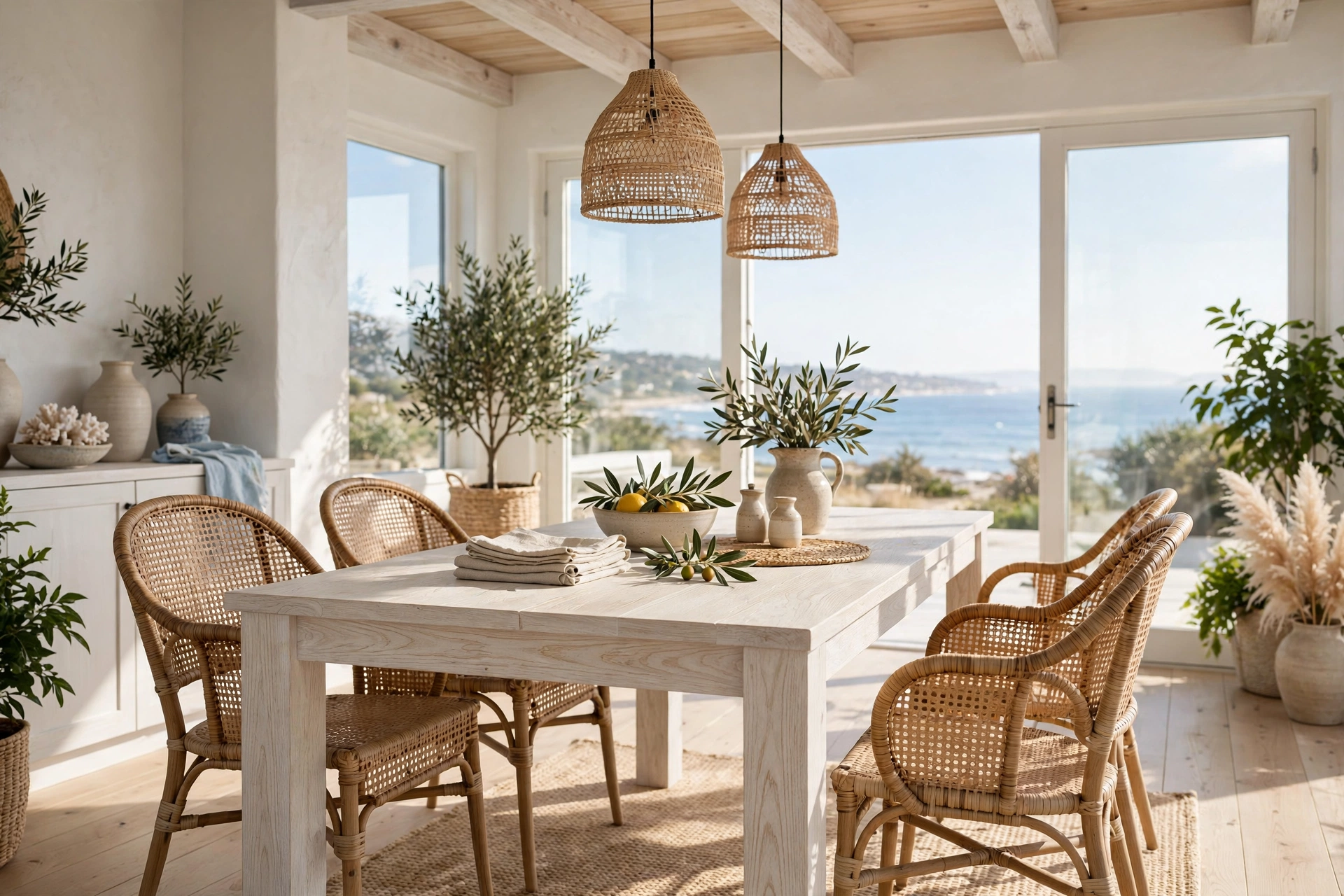
The coastal dining table is light in both color and spirit. A whitewashed oak, bleached pine, or pale reclaimed-wood table reflects light instead of absorbing it, and its casual finish forgives the dings of daily family meals. A simple plank or trestle design keeps the look relaxed; turned legs add a touch of traditional charm.
Size the table to leave at least thirty-six inches of clearance on all sides so chairs pull out easily. If you love the look but own a dark table, a whitewash glaze is a weekend project that transforms it completely. Pair it with lighter chairs so the whole arrangement feels buoyant.
2. Seat Everyone in Rattan or Wicker
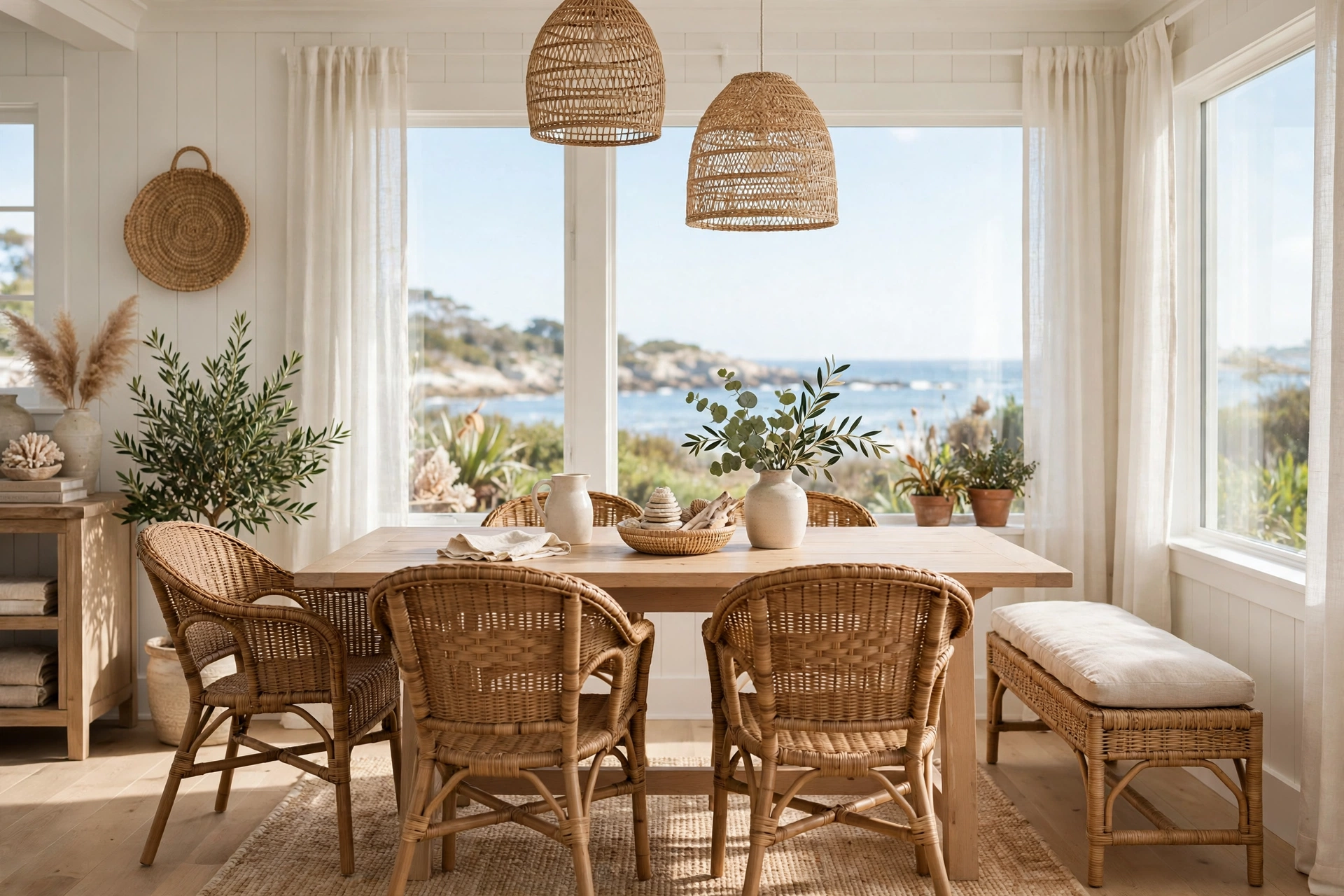
Rattan and wicker dining chairs are coastal classics for good reason — their open weaves let light pass through, keeping the room visually airy even around a full table. Choose dining-height armchairs for the heads of the table and simple side chairs elsewhere, or mix a woven bench on one side for casual flexibility.
Look for sturdy frames with tight weaves; cheap wicker loosens quickly under daily use. Cushions in washable white or striped outdoor fabric add comfort without fuss. For a breezy take on the connected living space, see our 15 coastal living room design ideas for a breezy retreat.
3. Build a Blue-and-White Palette
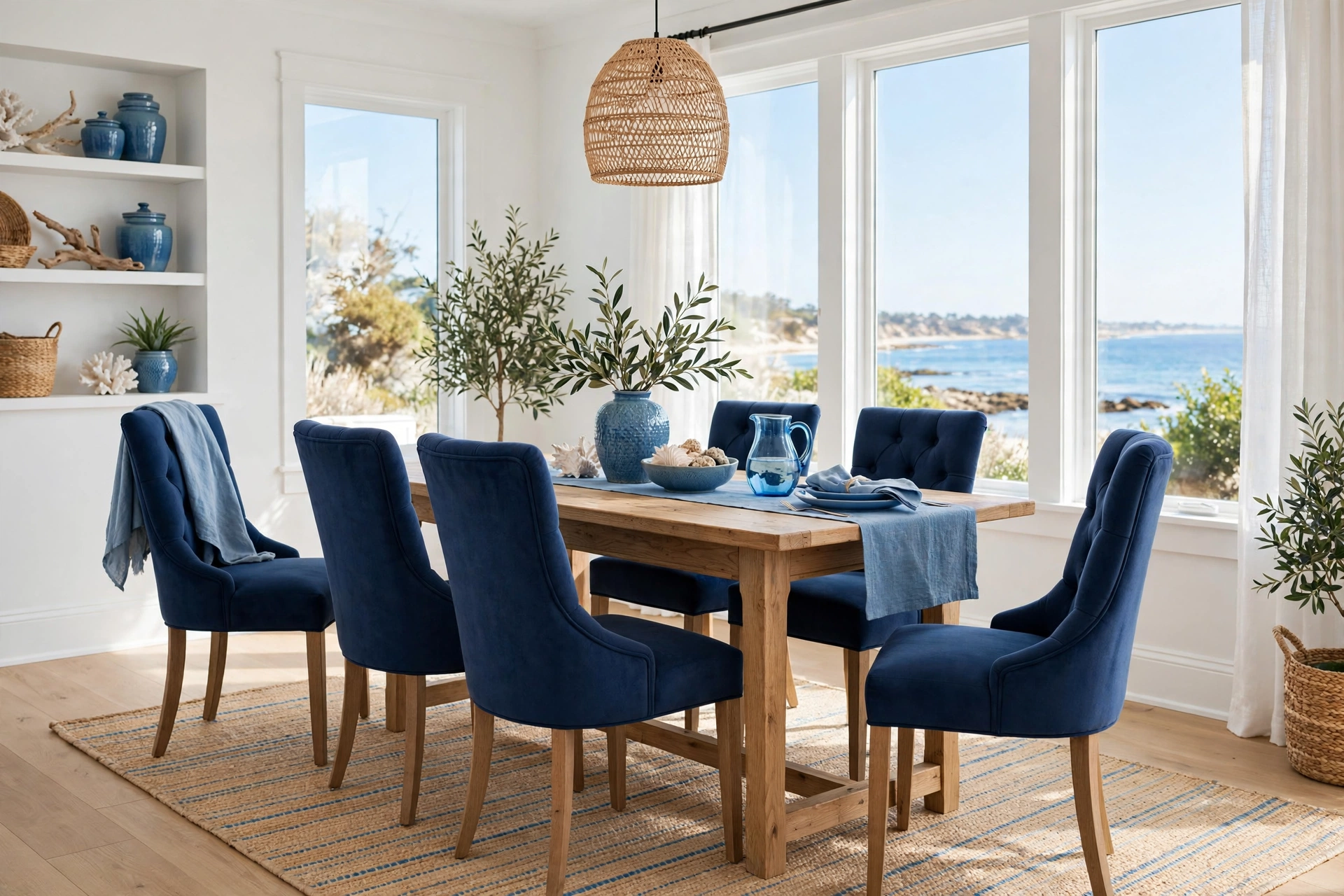
The coastal palette starts with crisp white and layers in sea blues — navy, chambray, aqua, and sea glass green. Keep the big surfaces (walls, table, rug) light and neutral, then bring the blues in through chairs, art, and textiles. This keeps the room fresh rather than theme-park nautical.
Add warmth with natural wood and woven textures so the blues do not feel cold. The Spruce’s coastal decor guide shows how designers balance these tones across whole homes. One deep navy accent — upholstered host chairs, say — grounds the airiness beautifully.
4. Add Shiplap or Beadboard Walls
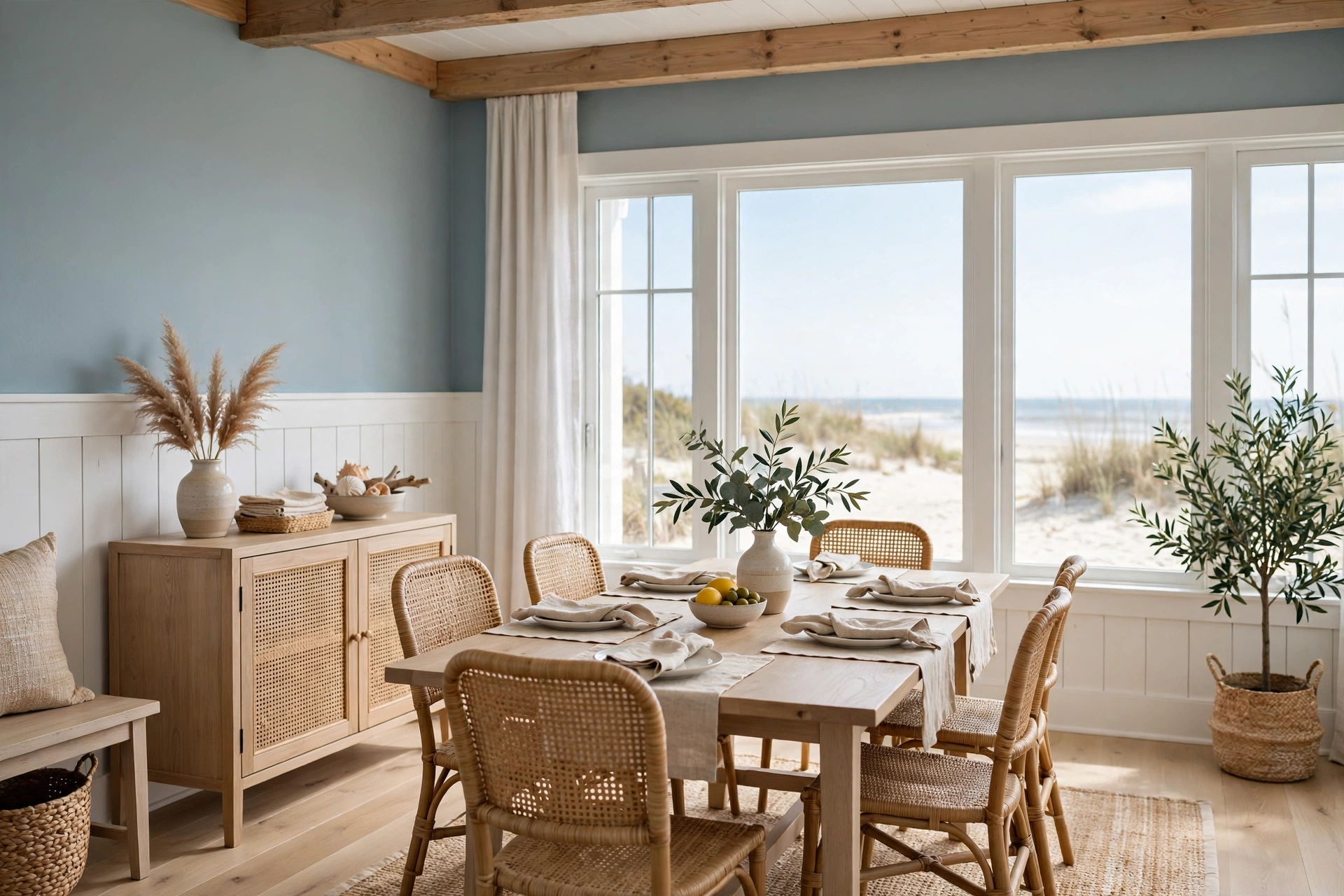
Wall paneling gives a coastal dining room its beach-cottage bones. White shiplap or beadboard on one or all walls adds texture and a subtle rhythm that flat drywall lacks. Run it floor to ceiling for full cottage character, or as wainscoting below a soft blue upper wall for a more tailored look.
The Spruce’s wainscoting ideas include a coastal dining room pairing white molding with grasscloth for exactly this breezy-yet-polished effect. Paint the paneling in a satin finish so it wipes clean — dining rooms earn their splatters.
5. Ground It with a Jute Rug
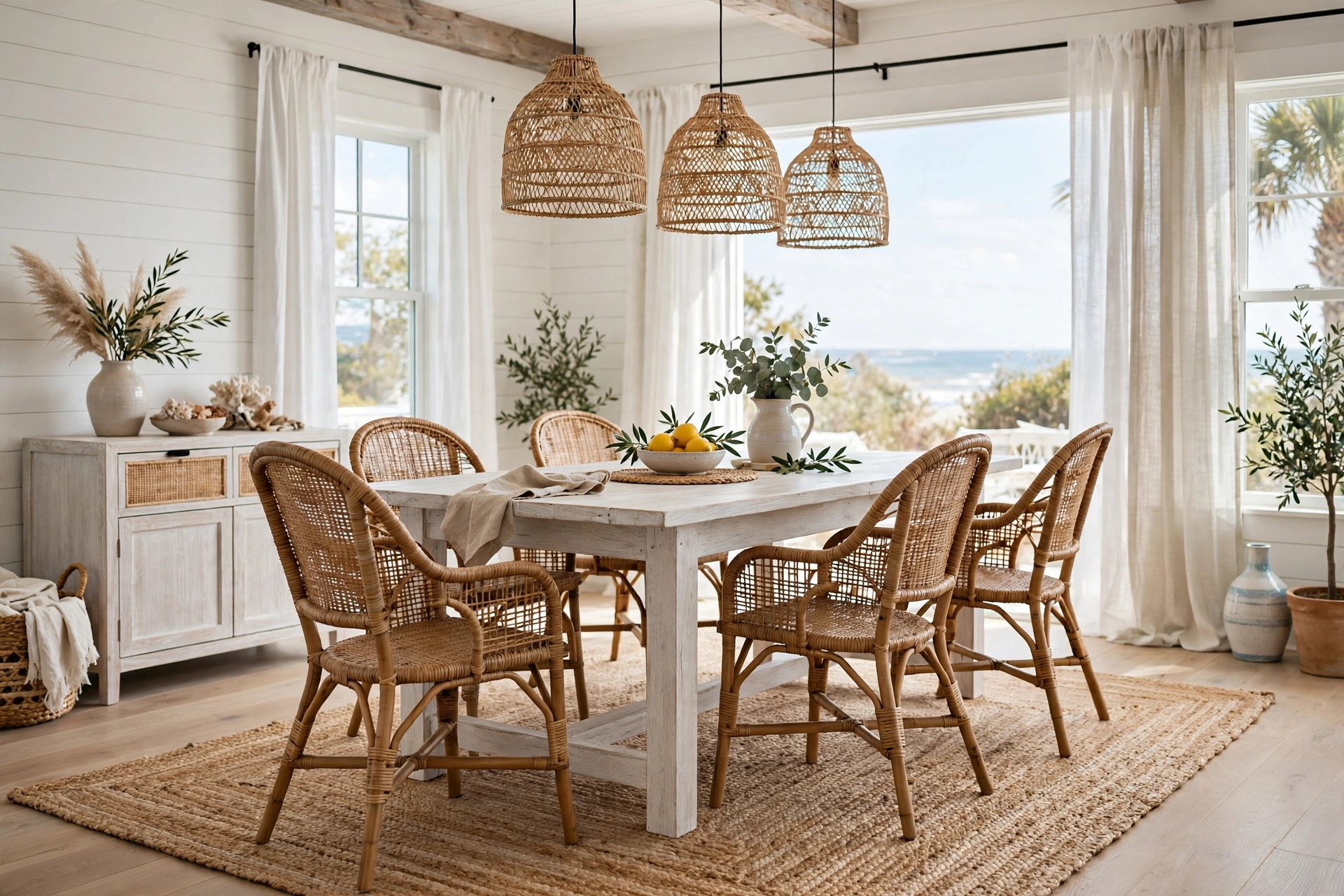
A natural-fiber rug in jute or sisal is the coastal dining room’s foundation — nubby, sandy-toned, and forgiving of crumbs. Choose a rug large enough that chairs stay on it when pulled out (add at least twenty-four inches beyond the table on every side). A flat weave cleans more easily than a chunky one under a dining table.
Layer a smaller patterned rug — a faded blue stripe or simple border — over the jute for color and softness underfoot. If you have hard floors you love, even a large jute runner under a narrow table adds the texture the style needs.
6. Hang a Driftwood or Beaded Chandelier
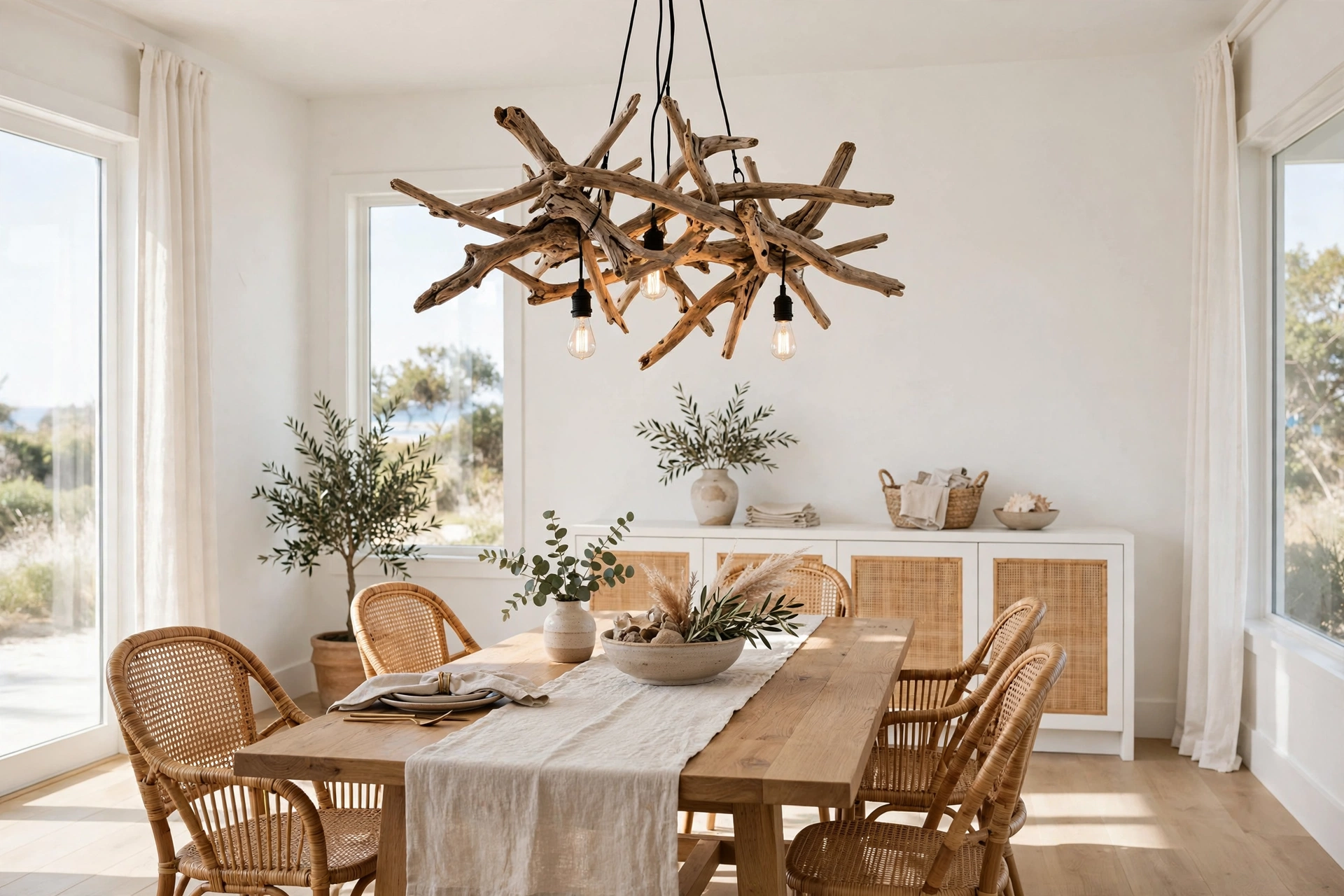
The light fixture is the coastal dining room’s jewelry. A driftwood chandelier, a beaded fixture, or a simple rattan pendant brings organic texture overhead and casts the beautiful shadows these materials are known for. Hang it so the bottom sits thirty to thirty-six inches above the tabletop.
Scale matters: the fixture should be about half to two-thirds the table’s length. Put it on a dimmer so bright family dinners and moody evening gatherings both work. If your ceiling is low, a flush-mount woven fixture gives the texture without the drop.
7. Dress Windows in Sheer Linen
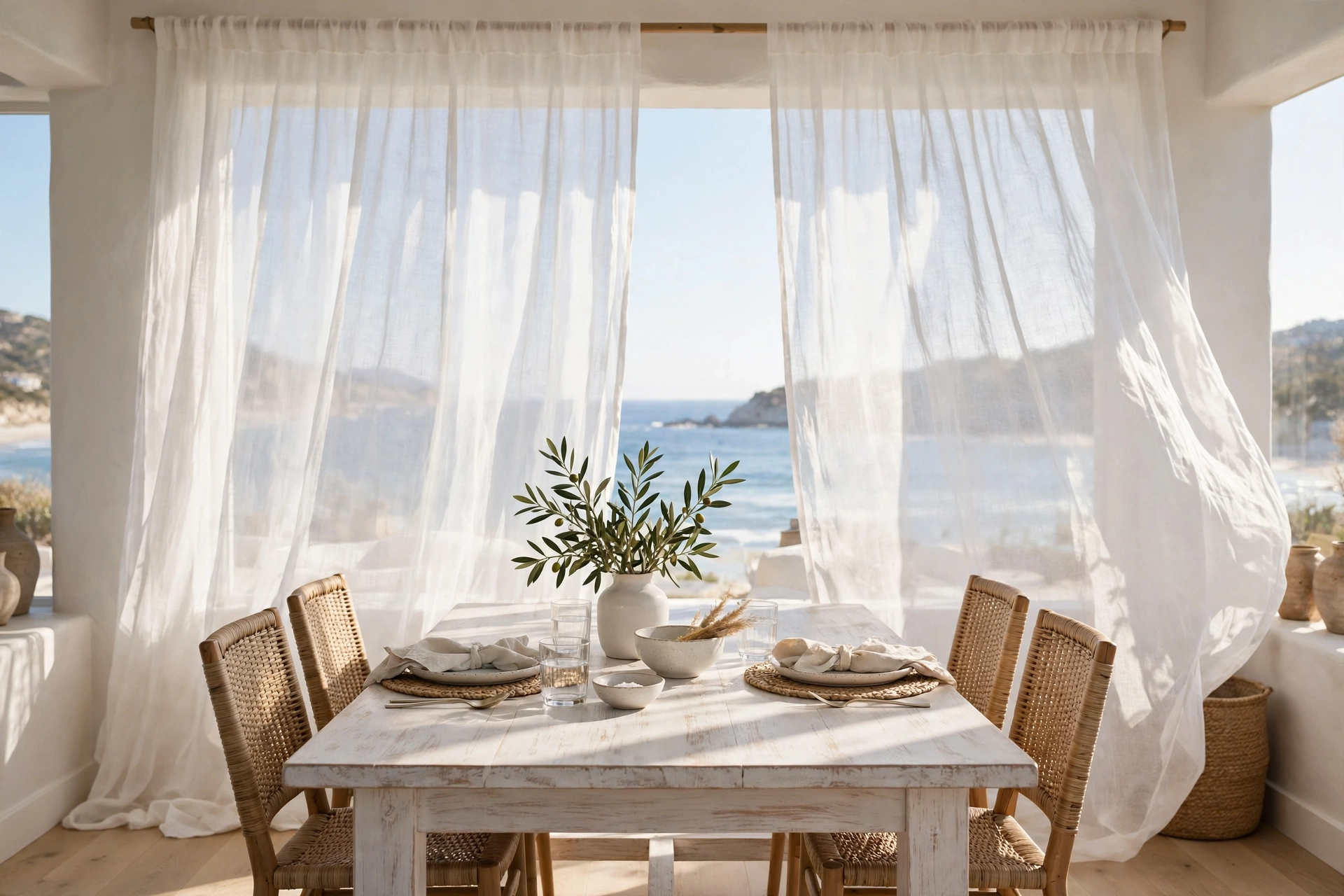
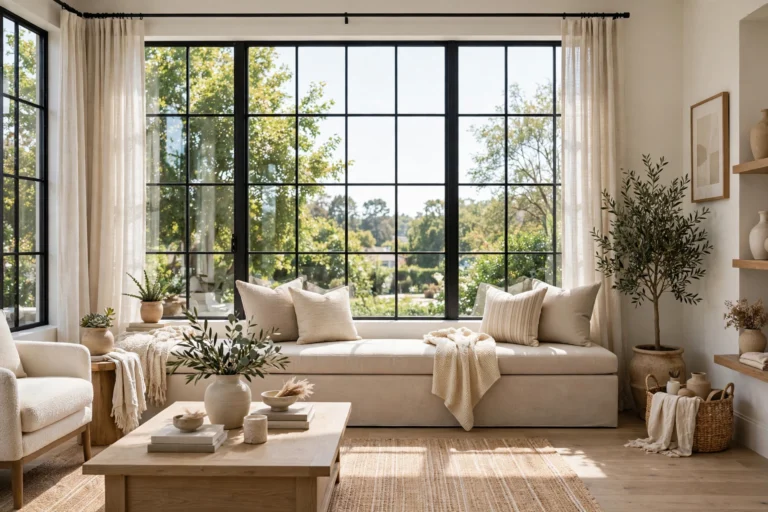
Coastal rooms live on natural light, so window treatments should filter, not block. Sheer white or ivory linen panels soften the sun into a glow while keeping the view. Hang them high and wide so the windows feel expansive, and let them just kiss the floor.
Skip heavy valances and dark hardware — slim white or driftwood rods disappear into the look. If privacy is a concern, add a simple natural woven shade underneath; it reads as texture, not as a blackout solution. For more light-and-airy kitchen inspiration nearby, see our 15 coastal kitchen design ideas.
8. Hang Serene Seascape Art
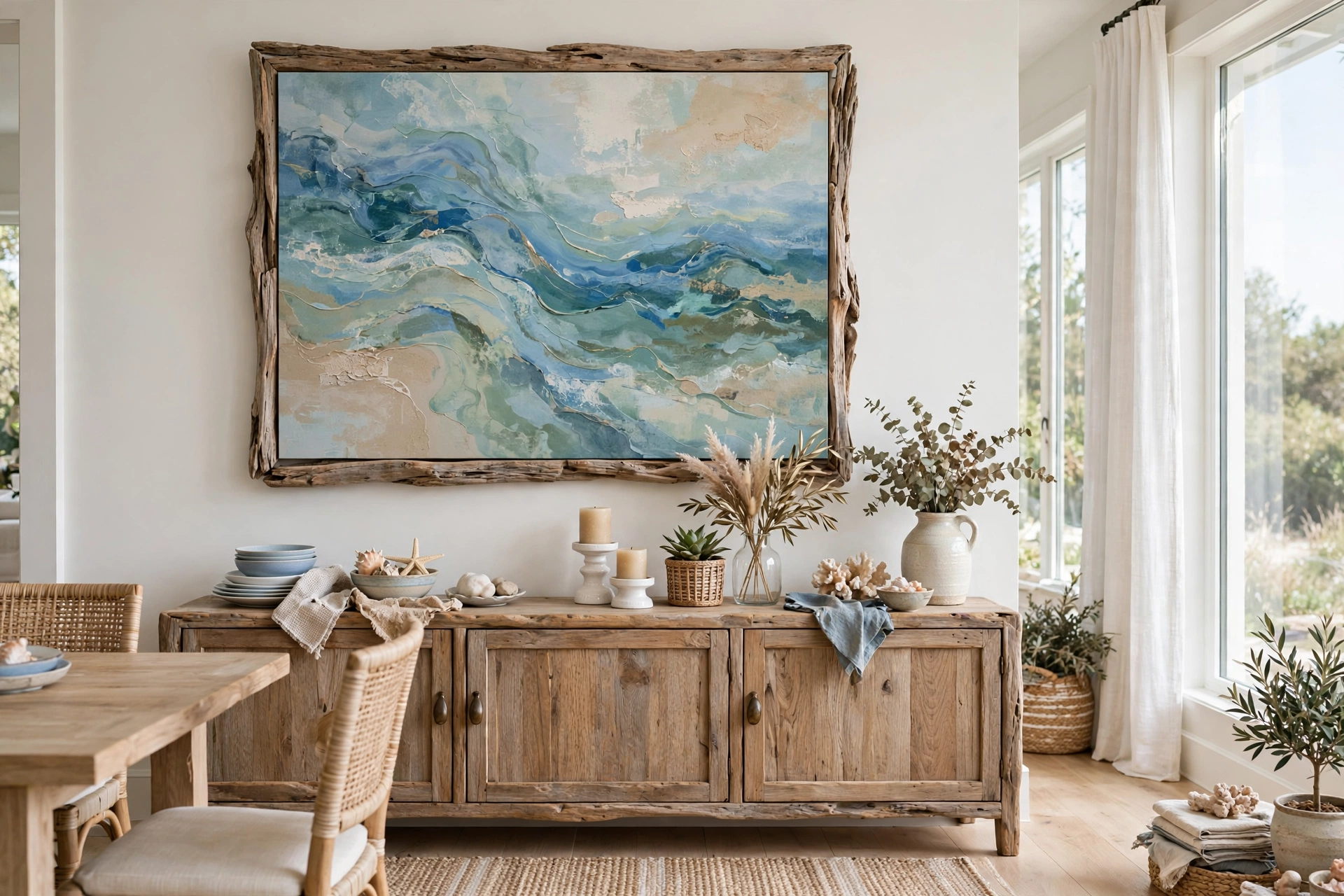
One large piece of coastal art beats a wall of small beach clichés. Choose an abstract seascape, a misty shoreline photograph, or a vintage nautical chart in a simple white or driftwood frame. The art should feel calm and a little abstract — suggestion, not souvenir shop.
Hang it low enough to enjoy from seated eye level, roughly fifty-seven inches to the center. A pair of smaller prints flanking a sideboard works when one large piece is not available. Keep the frames consistent so a mixed collection still feels intentional.
9. Try Slipcovered Dining Chairs
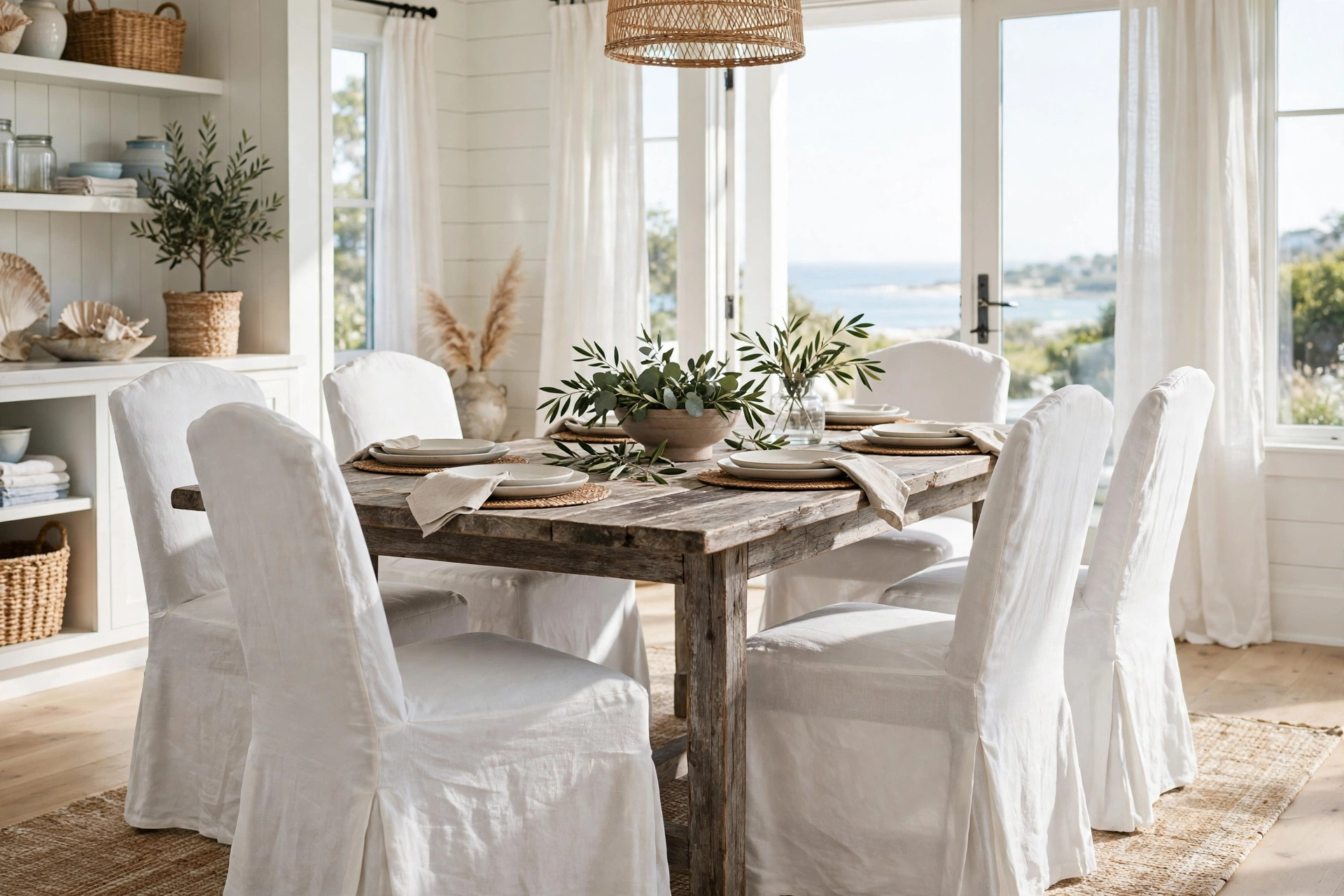
Slipcovered dining chairs in white or natural linen bring relaxed elegance to a coastal table and survive real life — pull the covers off and wash them. Parsons-style chairs with tailored slipcovers read more polished; skirted slipcovers on simple wood frames read more cottage.
Mix slipcovered host chairs with woven side chairs for a collected look that does not try too hard. This is also the easiest way to lighten a heavy inherited dining set: slipcovers hide dated upholstery completely.
10. Style a Weathered Wood Sideboard
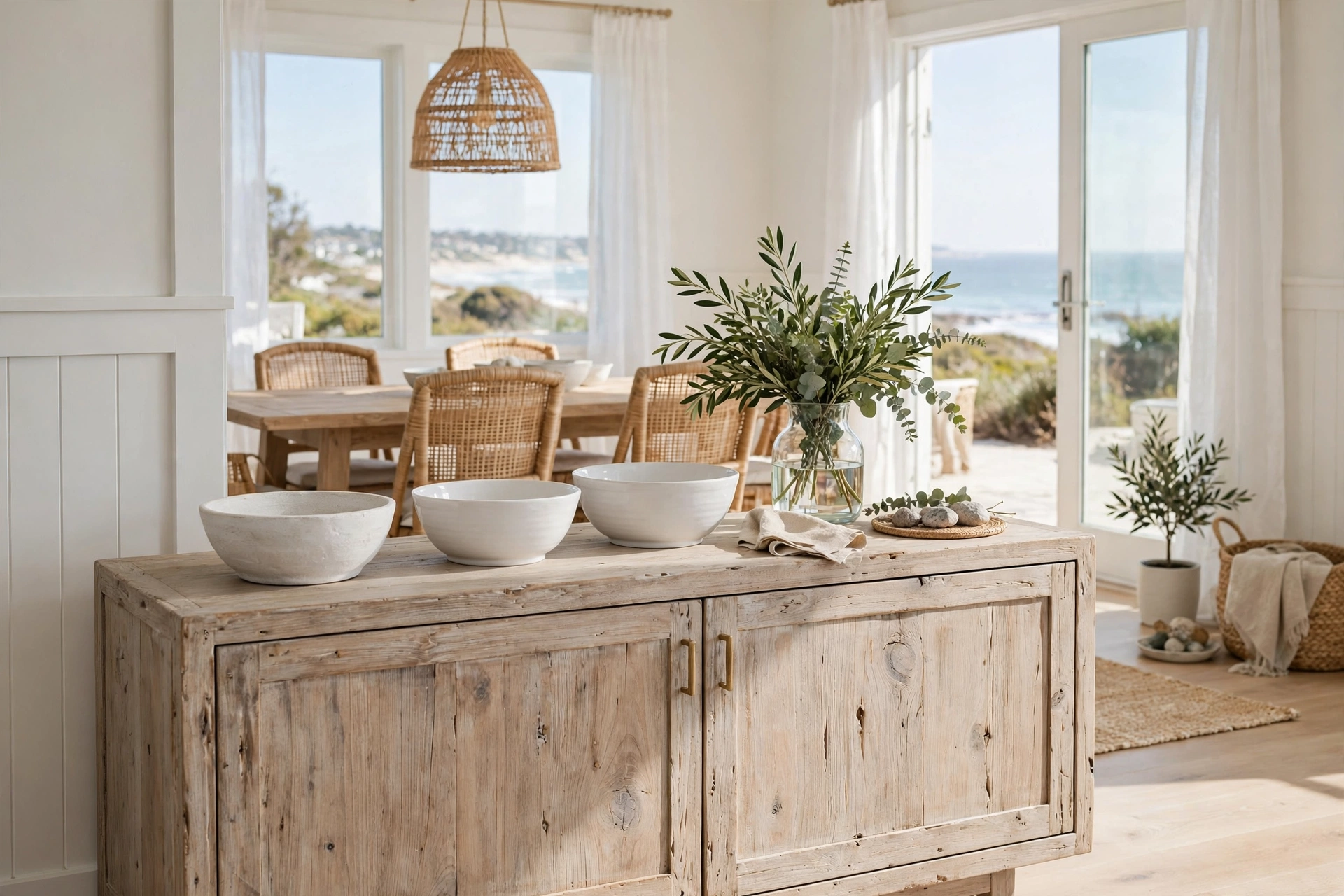
A weathered wood sideboard or buffet gives a coastal dining room its storage and its styling stage. Look for sun-bleached finishes, wire-brushed oak, or a vintage piece with honest wear. Style the top with restraint: a stack of white serving bowls, a glass vase of greenery, a pair of candlesticks.
Keep one section clear for serving during gatherings — a sideboard that cannot hold a platter is just decoration. For a modern counterpoint to all this texture, see our 15 modern dining room design ideas with effortless style.
11. Create a Sea-Glass Centerpiece
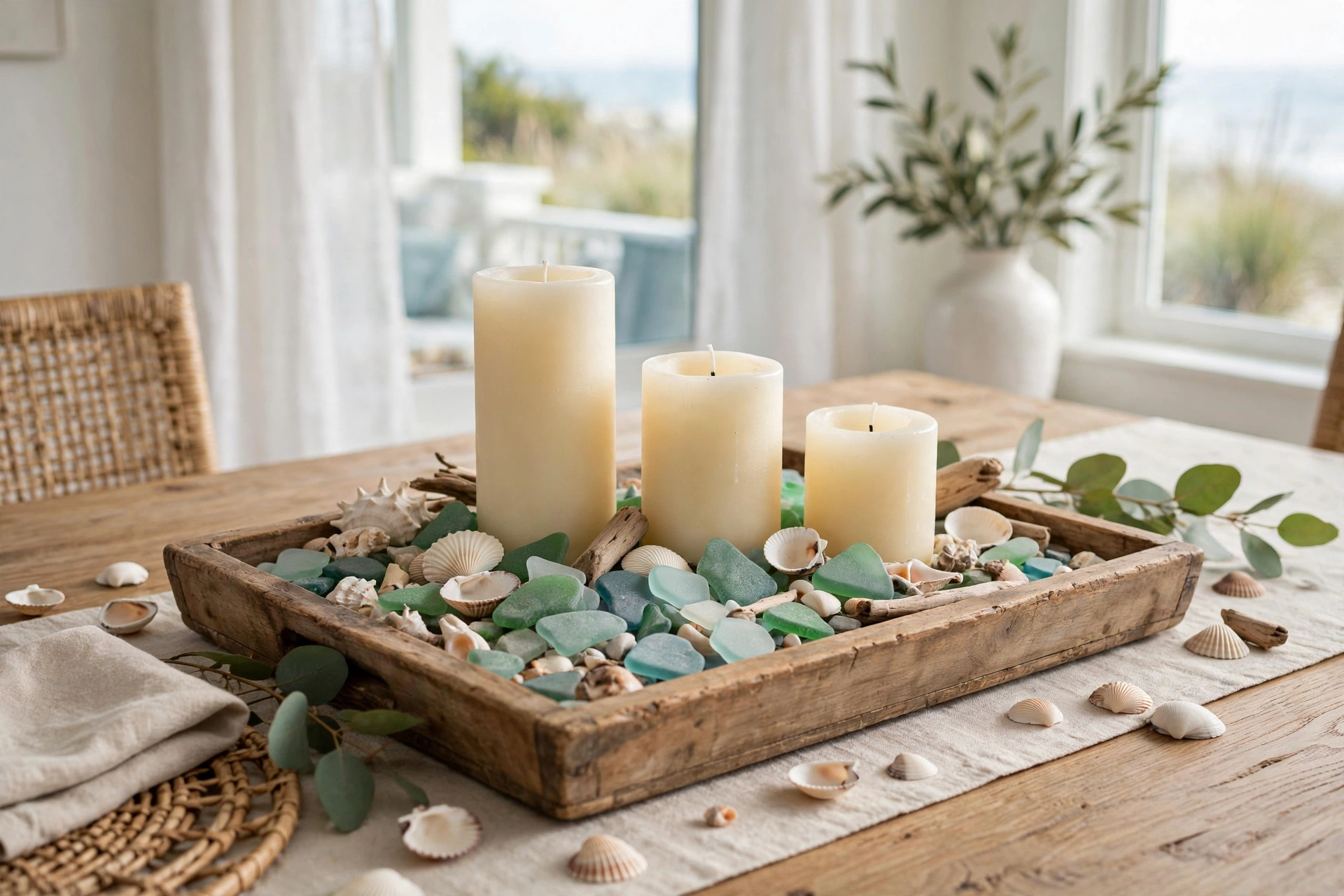
The coastal centerpiece should feel gathered, not arranged. A low wooden tray or shallow bowl filled with sea glass, shells, and a few pillar candles makes a centerpiece guests can see over — the cardinal rule of table styling. Vary the heights slightly and keep everything below eye level when seated.
Change it with the seasons: add driftwood in winter, fresh greenery in spring. Avoid anything tall or fussy; coastal centerpieces should look like the beach brought them in. A simple linen runner underneath ties it to the table.
12. Display Dishware on Open Shelves
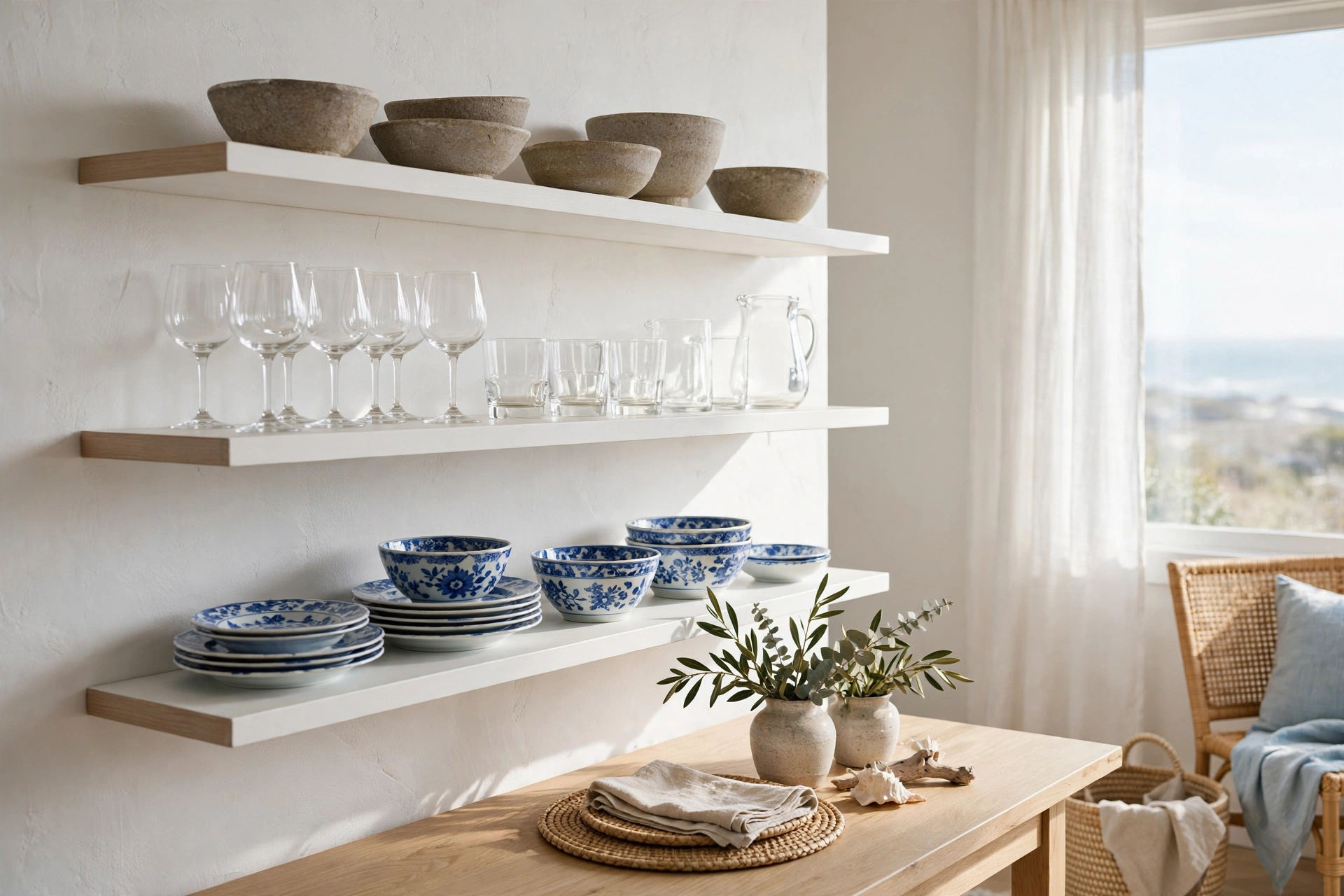
Open shelving with white stoneware, clear glass, and a few blue-and-white pieces turns everyday dishware into coastal decor. Install simple white or wood shelves on one wall and style them with stacks of bowls, pitchers, and glasses in your palette — useful and beautiful at once.
Edit ruthlessly: open shelves look styled with breathing room and cluttered without it. Group items in odd numbers and vary heights. If full open shelving feels like too much commitment, a single shelf above the sideboard gives the same effect in miniature.
13. Bring In Living Greenery
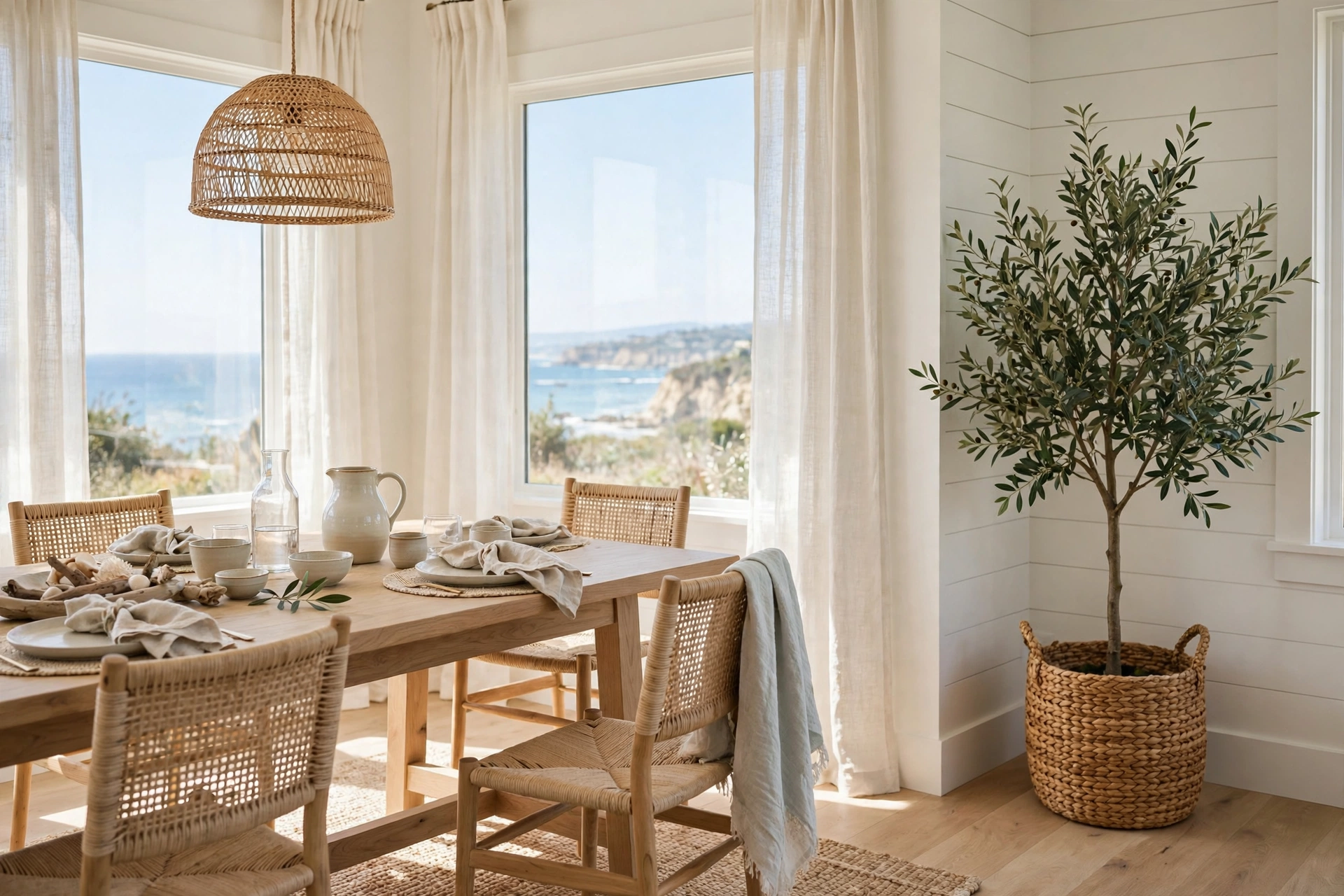
Plants keep a coastal dining room from feeling sterile. An olive tree in a woven basket, a fiddle-leaf fig in the corner, or simple eucalyptus stems in a glass vase all add the living green the palette needs. Coastal style favors sculptural, Mediterranean plants over fussy tropicals.
Choose low-maintenance varieties if your thumb is not green — olive trees and snake plants forgive neglect. Keep planters natural: woven baskets, white ceramic, or weathered terracotta. One large plant makes more impact than a crowd of small ones.
14. Consider a Round Table
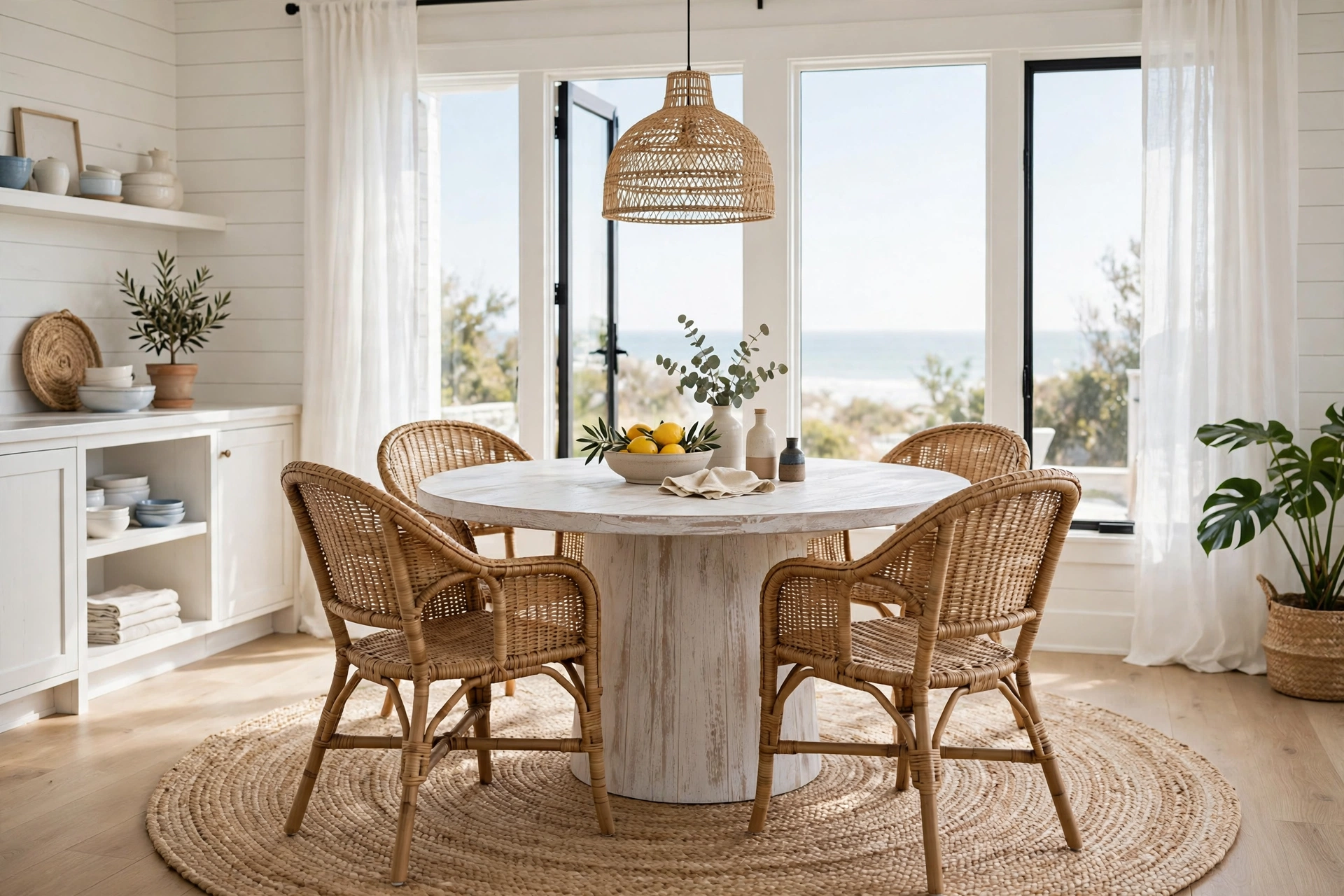
Round dining tables suit the coastal ethos — no head of the table, easy conversation, and a softer footprint in the room. A round whitewashed or light-wood table with four to six woven chairs feels inherently relaxed and works beautifully in smaller dining rooms or breakfast nooks.
A round rug underneath echoes the shape and defines the zone in open-plan spaces. Center a single pendant or a small cluster of rattan pendants above it. Round tables also improve flow in tight rooms since there are no corners to navigate around.
15. Blur the Indoor-Outdoor Line
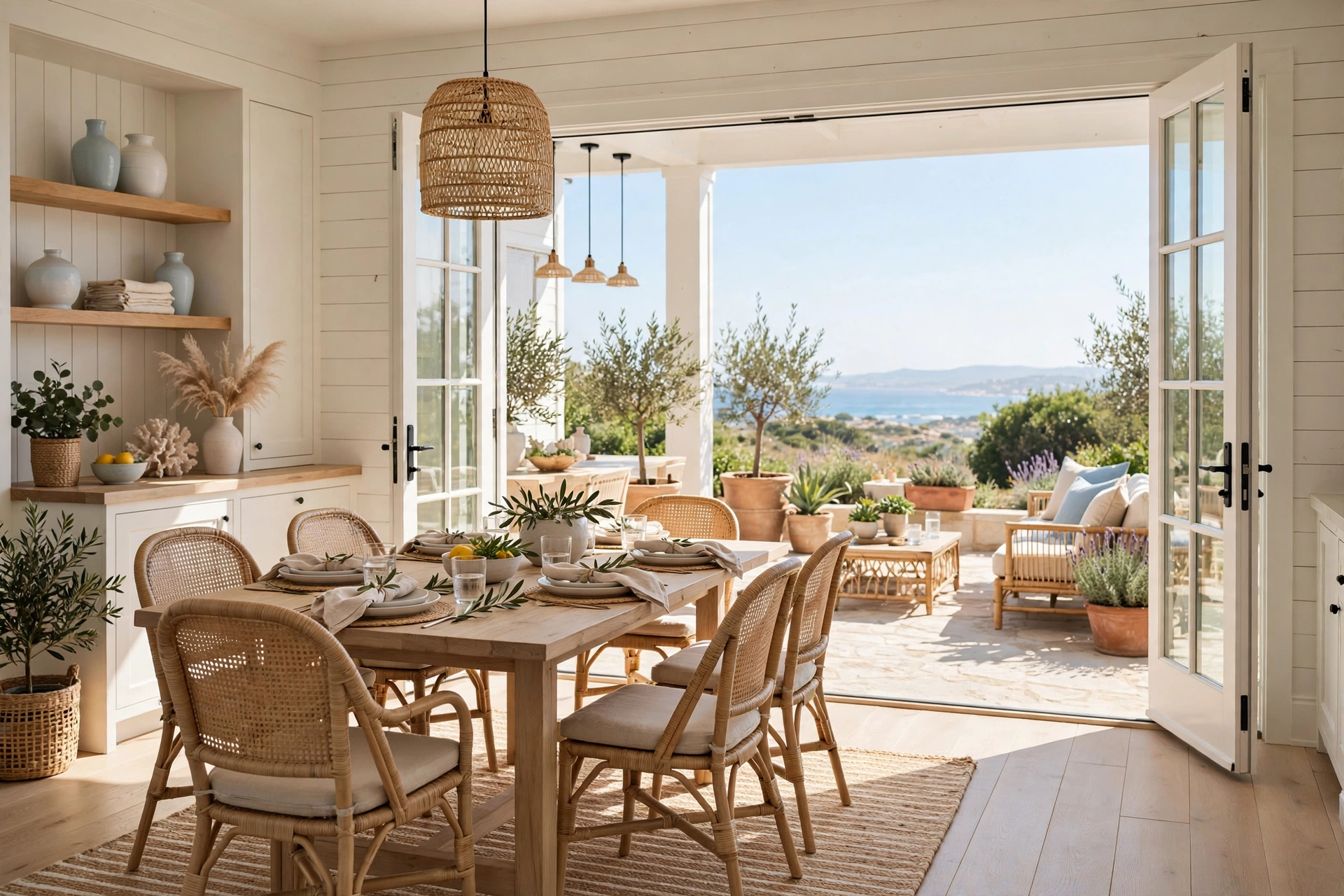
The ultimate coastal dining room opens to the outside. If you have French doors or sliders, treat the patio as an extension of the room — continue the palette outdoors with similar textiles and let the doors stand open whenever weather allows. Even without direct access, a large mirror opposite the windows doubles the light and the view.
Style the transition zone simply: a woven outdoor rug, a potted olive tree by the door. The goal is a room that feels like the breeze just walked through it, whether or not it actually did.
Frequently Asked Questions
What colors work best in a coastal dining room?
Crisp white as the base, layered with sea blues (navy, chambray, aqua), sandy neutrals, and sea-glass green accents. Natural wood and woven textures warm the palette so it never feels cold. Keep large surfaces light and bring color in through chairs, art, and textiles for a fresh, balanced look.
How do I make a coastal dining room not look kitschy?
Skip literal motifs — anchors, rope knots, and “beach” signs — and lean into the feeling instead: light woods, woven textures, sea blues, and natural light. Choose abstract or serene art over themed decor. The rule is suggestion, not decoration: if it looks like a souvenir shop, edit it out.
What kind of rug is best under a coastal dining table?
A flat-weave jute or sisal rug in a natural tone is the classic choice — durable, sandy-colored, and forgiving of crumbs. Size it so chairs remain on the rug when pulled out, adding at least twenty-four inches beyond the table on all sides. Layer a smaller patterned rug on top for color if you like.
Can a coastal dining room work without ocean views?
Absolutely — most coastal dining rooms are nowhere near the coast. The style is about light, texture, and palette, not location. Maximize natural light with sheers, use the blue-white-sand palette, and bring in woven textures and greenery. The feeling of the seaside comes from the design choices, not the zip code.
What lighting suits a coastal dining room?
Natural-textured fixtures: driftwood chandeliers, beaded pendants, rattan shades, or woven flush mounts. Hang the fixture thirty to thirty-six inches above the table and put it on a dimmer. Layer in candles or small lamps on the sideboard for evening warmth. Keep metal finishes light — white, natural, or aged brass.
Keep Exploring
A coastal dining room is really a mood you can walk into — sunlit, unhurried, and easy on the eyes. Start with the big moves (a light table, woven chairs, sheer curtains), then layer in the blues and textures that make it yours. The style forgives imperfection beautifully; a little wear only adds to the charm.
Keep the palette honest and the styling simple, and your dining room will feel like a seaside escape every day of the year — no plane ticket required.





[…] variety of fruit for a curated look, or mix tones of the same color family for a painterly effect. Coastal dining room decorating approach with breezy charm pairs beautifully with lemons and limes; in autumn, swap in persimmons and pomegranates. Replace […]