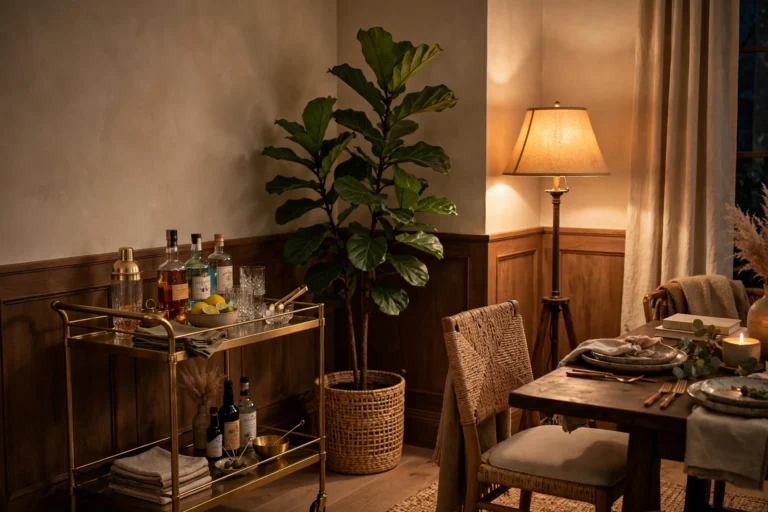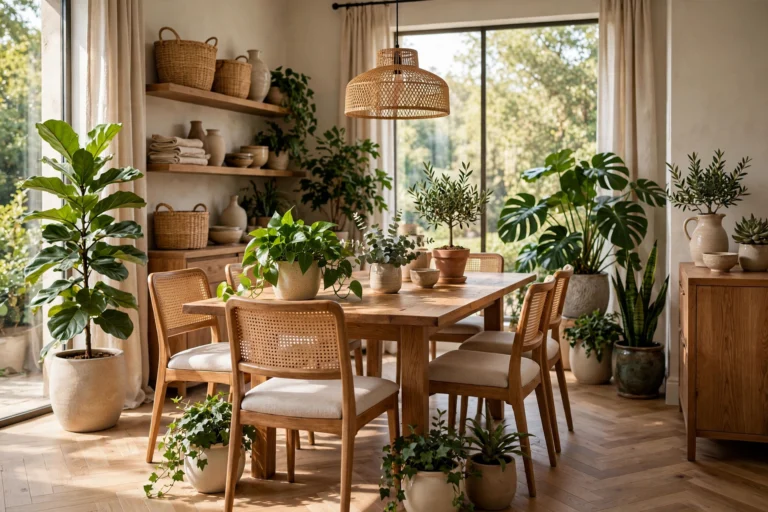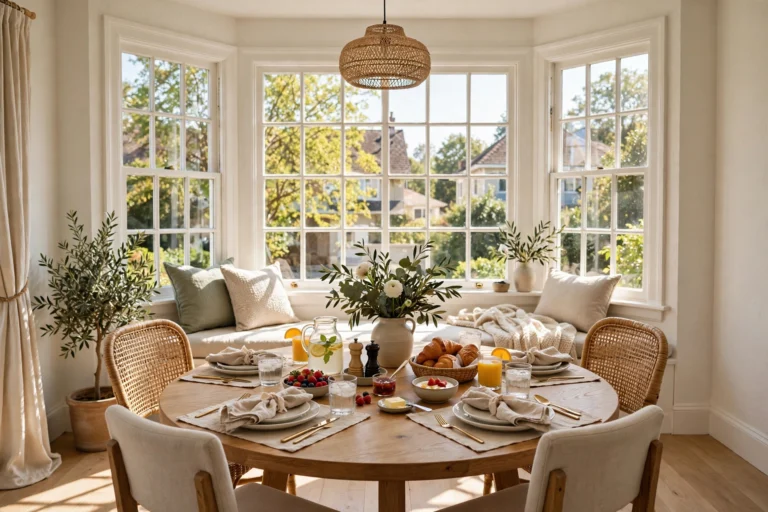

The wall clock is the hardest-working decor in the dining room: it fills a big blank wall, adds a sculptural focal point, and quietly answers the only question every host gets asked — what time is it. Yet most dining rooms either skip the clock entirely or hang one sad, tiny face that disappears against the wall. These dining room wall clock ideas treat the clock as both art and appliance, with styles from farmhouse to mid-century to sleek modern. For the rest of the wall story, our dining room wall decor ideas for warm inviting gatherings cover everything the clock does not.
Start with scale, because it is where most people go wrong. A clock should be proportional to its wall: on a large blank wall, think 24 to 36 inches in diameter; above a sideboard, choose a face roughly two-thirds the furniture’s width. Hang the center of the clock at eye level — about 57 to 60 inches from the floor — so it reads naturally from the table. And consider sound: the word clock comes with centuries of ticking history, but a loud tick ruins a quiet dinner, so look for a silent sweep movement unless you love the sound.
1. Go Oversized With a Farmhouse Clock
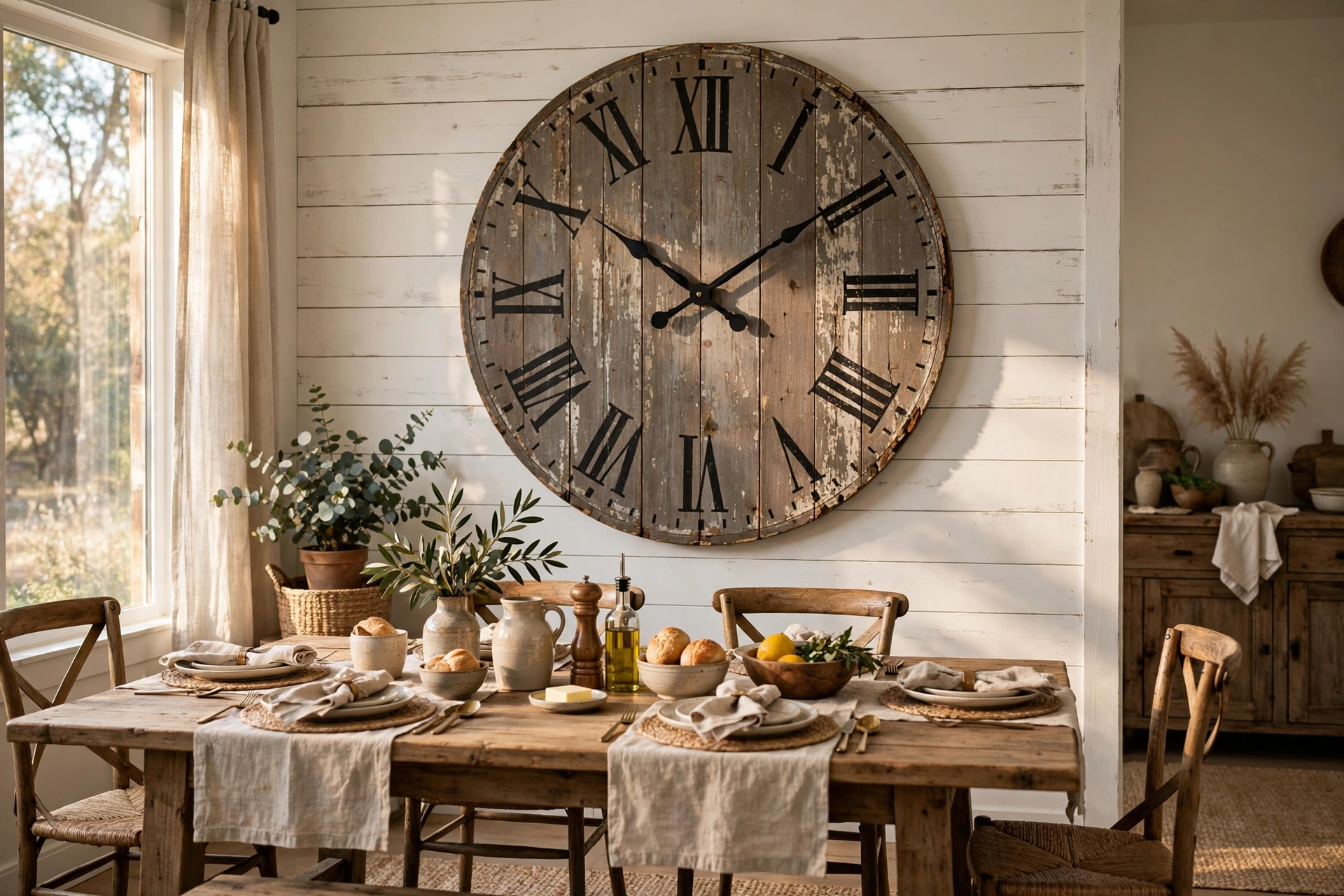
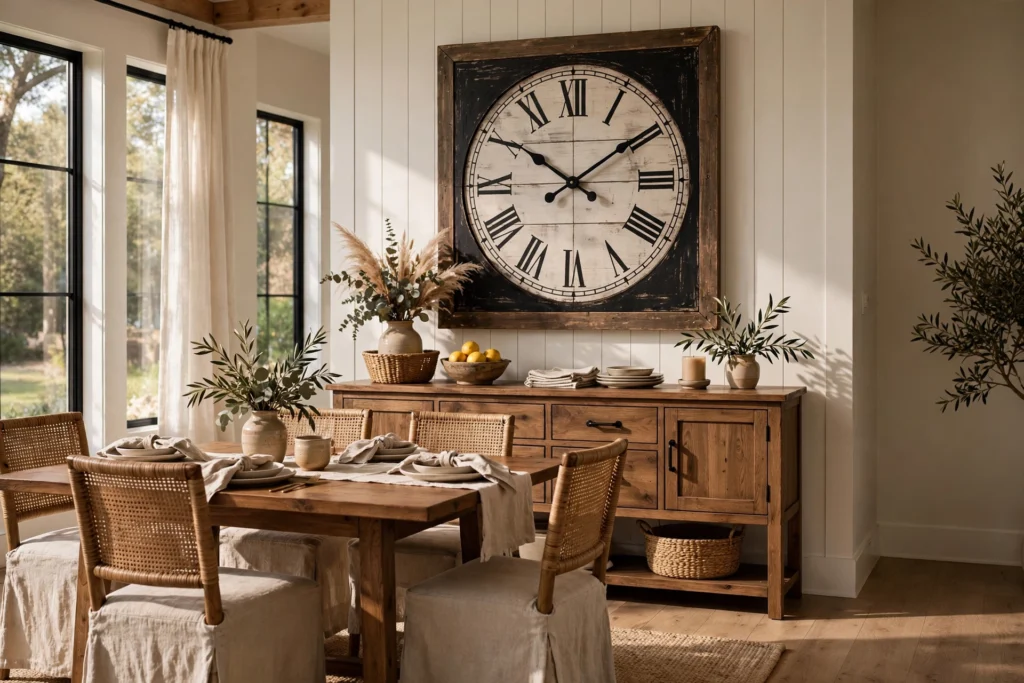
An oversized farmhouse clock — 30 inches or more, with Roman numerals and a distressed wood frame — is practically made for the dining room. It fills the wall above the sideboard or on the room’s longest blank stretch with one confident piece, and the rustic texture warms up the room’s harder surfaces. The large face stays readable from every seat at the table, which is the whole point. Keep the surrounding wall simple so the clock owns the space; one big clock plus one small plant or candle grouping is a complete vignette.
2. Choose a Slim Modern Clock
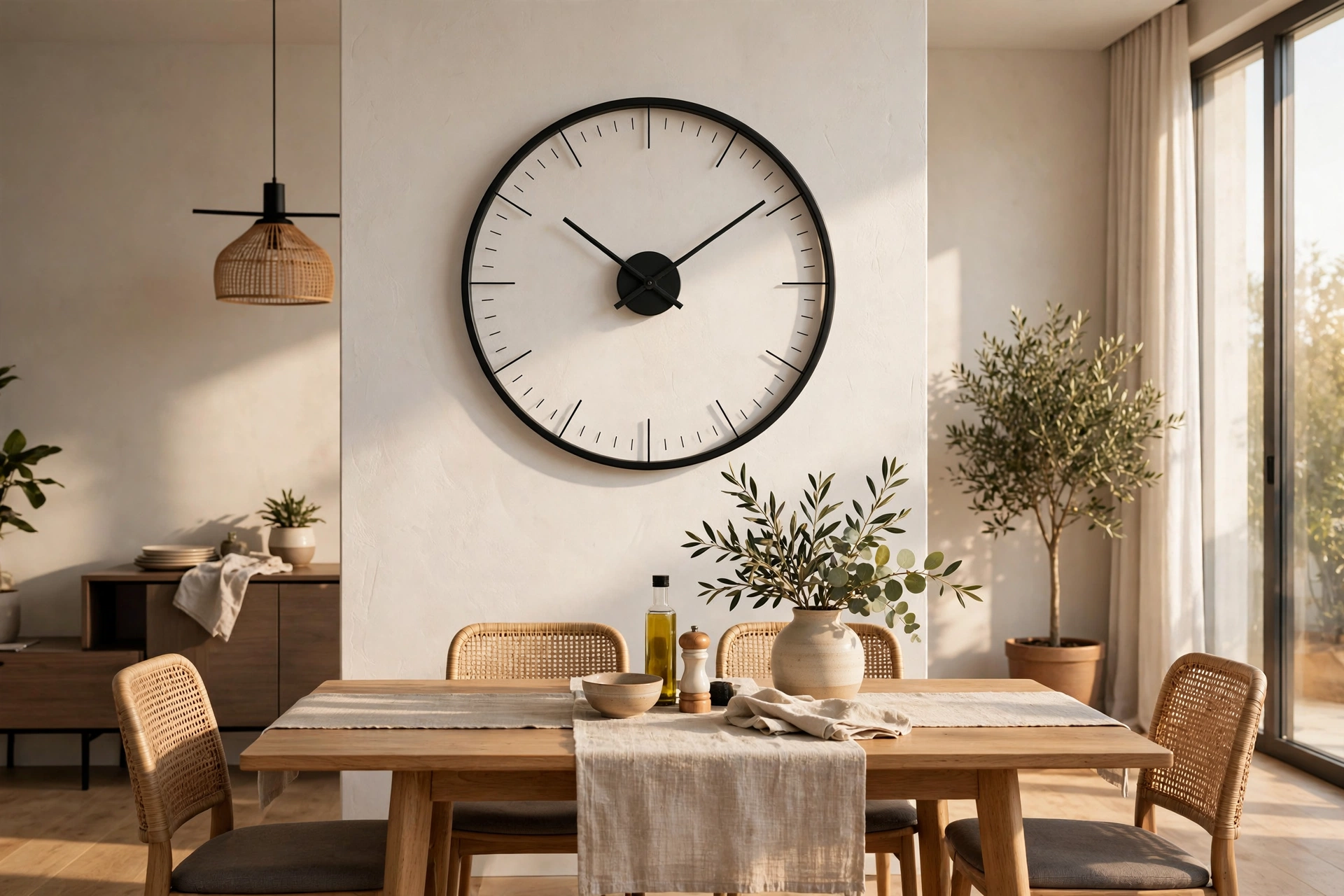
In a contemporary dining room, a slim, minimal clock with a thin metal rim and simple baton markers disappears into the design in the best way. Look for faces in matte black, brushed brass, or white, with no numerals at all — just clean markers and elegant hands. The understated design lets the clock function without competing with art or lighting. Hang it on a wall that already has visual interest, like beside a gallery arrangement or near the window, where a bolder clock would fight for attention.
3. Hang a Vintage Station Clock
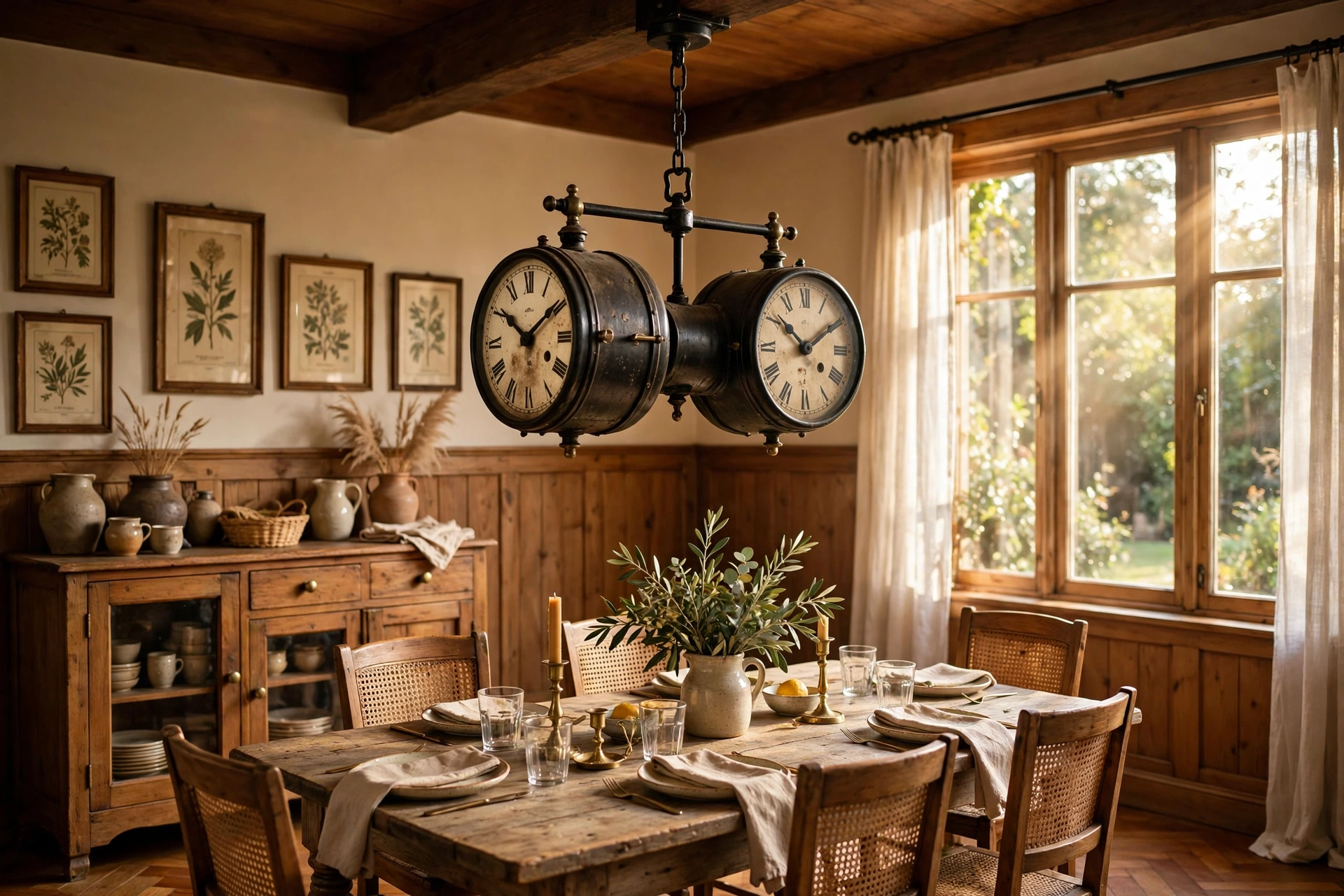
A double-sided vintage station clock, the kind that once hung in railway terminals, brings instant character to traditional and eclectic dining rooms. The classic black-and-white face with bold numerals reads clearly across the room, and the aged metal housing adds patina that new clocks cannot fake. Hang it perpendicular to the wall on a bracket so both faces show, ideally where it is visible from the table and the kitchen. Authentic vintage pieces are pricey, but good reproductions capture the look for a fraction of the cost.
4. Anchor a Gallery Wall With a Clock
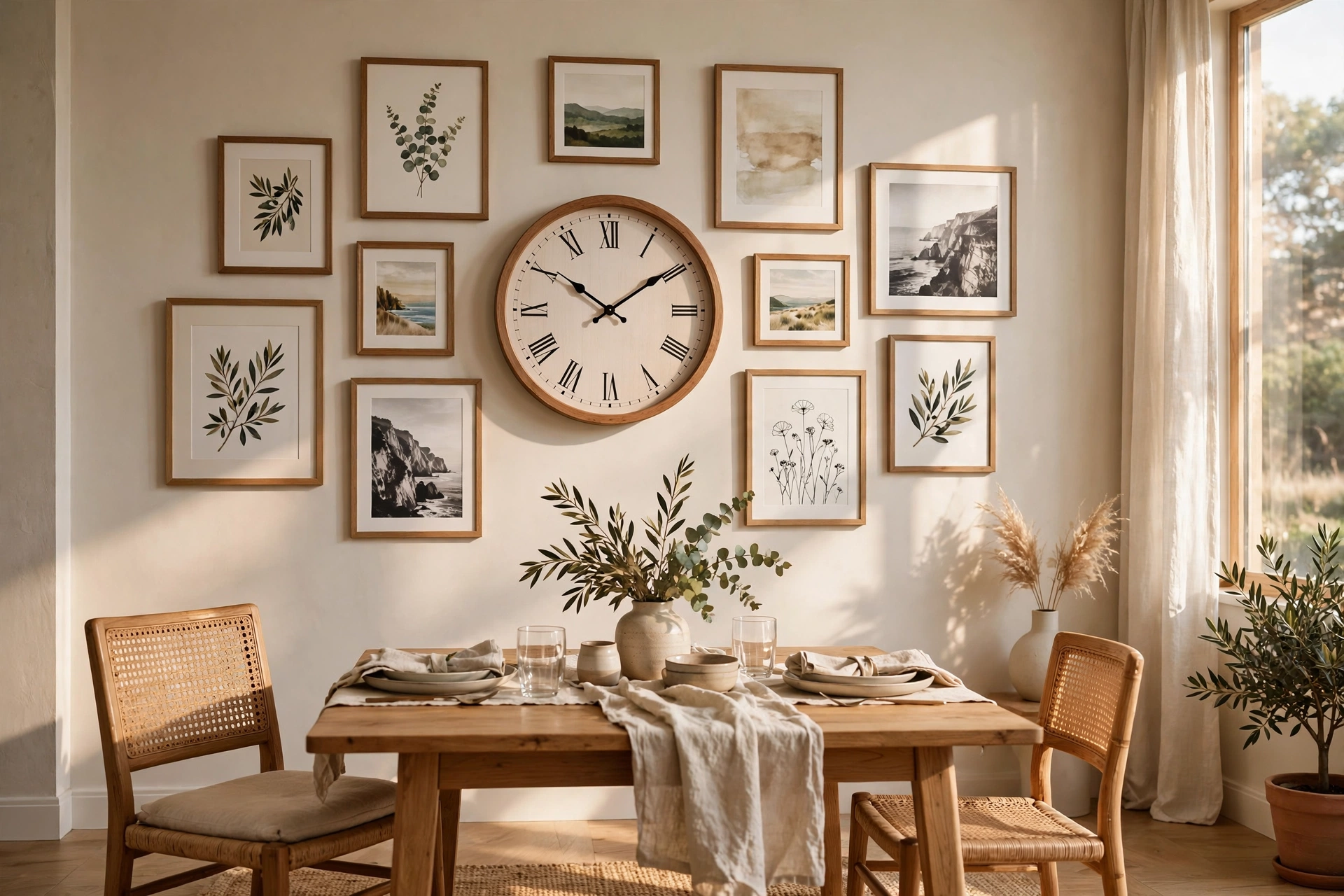
A clock makes a brilliant anchor for a dining room gallery wall because its round shape breaks up all the rectangles. Build the arrangement around a medium clock — 16 to 20 inches — placing it slightly off-center and surrounding it with framed art, small mirrors, and prints. Keep one element round (the clock) and everything else rectilinear for contrast, and maintain consistent spacing of two to three inches between pieces. The clock gives the gallery a functional heart: guests glance at the art and catch the time without thinking about it.
5. Center It Above the Sideboard
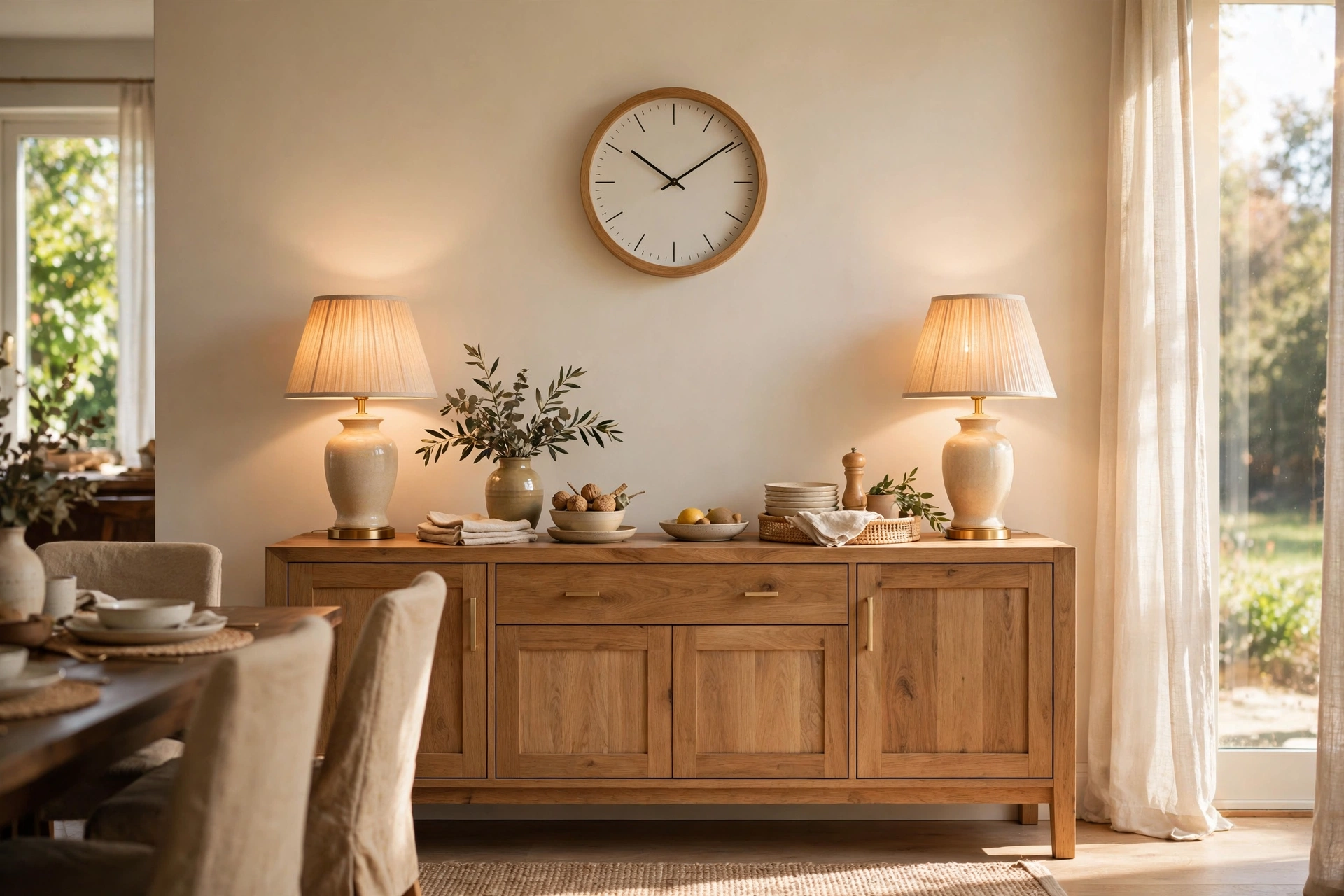
The wall above the sideboard is the dining room’s natural focal point, and a clock centered there creates perfect symmetry. Choose a clock about two-thirds the width of the sideboard and hang it 6 to 10 inches above the furniture’s top edge. Flank the sideboard with matching lamps or plants to complete the composition — the clock becomes the crown of a balanced vignette. This placement also puts the time exactly where the host sees it while serving.
6. Let It Star on the Accent Wall
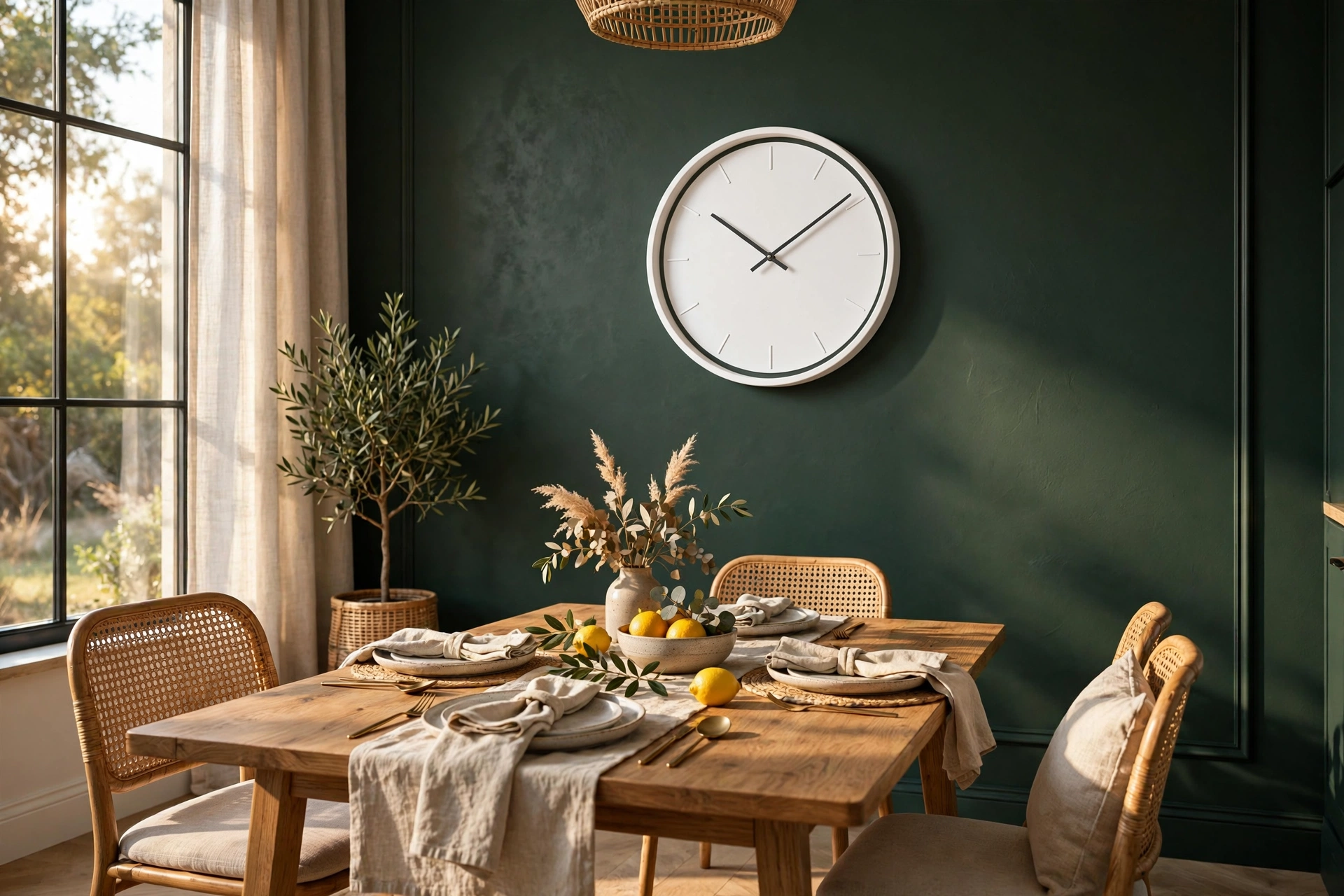
A bold accent wall and a statement clock are a power couple. The colored or patterned wall gives the clock a dramatic backdrop, and the clock gives the accent wall a purpose beyond color. For maximum contrast, choose a clock face that pops against the wall — white or light wood on a dark wall, black metal on a pale one. Keep the rest of the wall bare; the clock-plus-wall combination is already a complete statement.
7. Try a Mid-Century Sunburst Clock
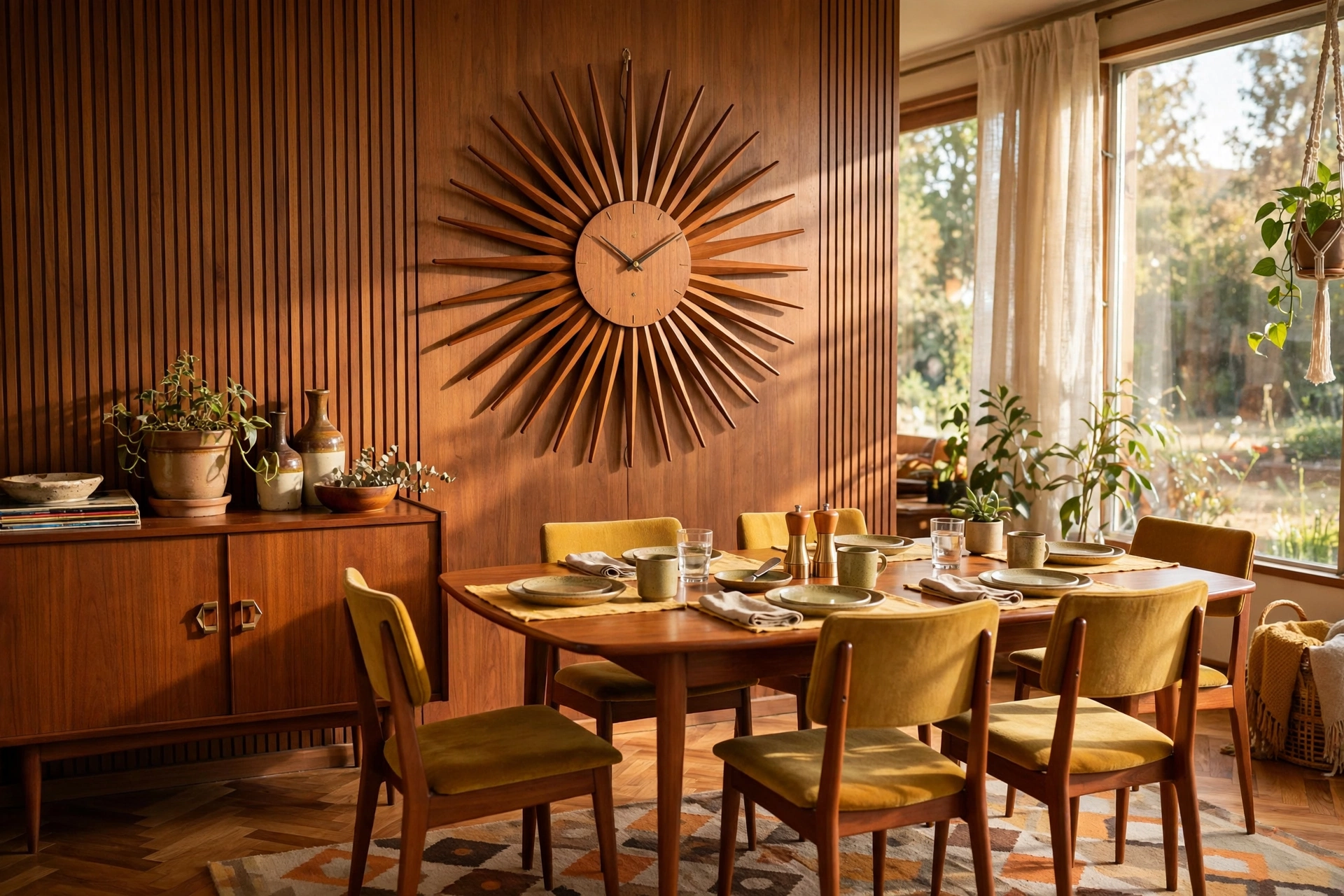
The sunburst clock — radiating wood or metal rays around a central face — is pure mid-century joy and a perfect dining room accent. It reads as sculpture first and timepiece second, which makes it ideal for design lovers who want the wall to feel artful. Hang it where it catches natural light so the rays cast subtle shadows and the piece feels alive. Authentic mid-century sunbursts are collectible, but quality reproductions nail the look.
8. Add Rustic Charm With a Wood Clock
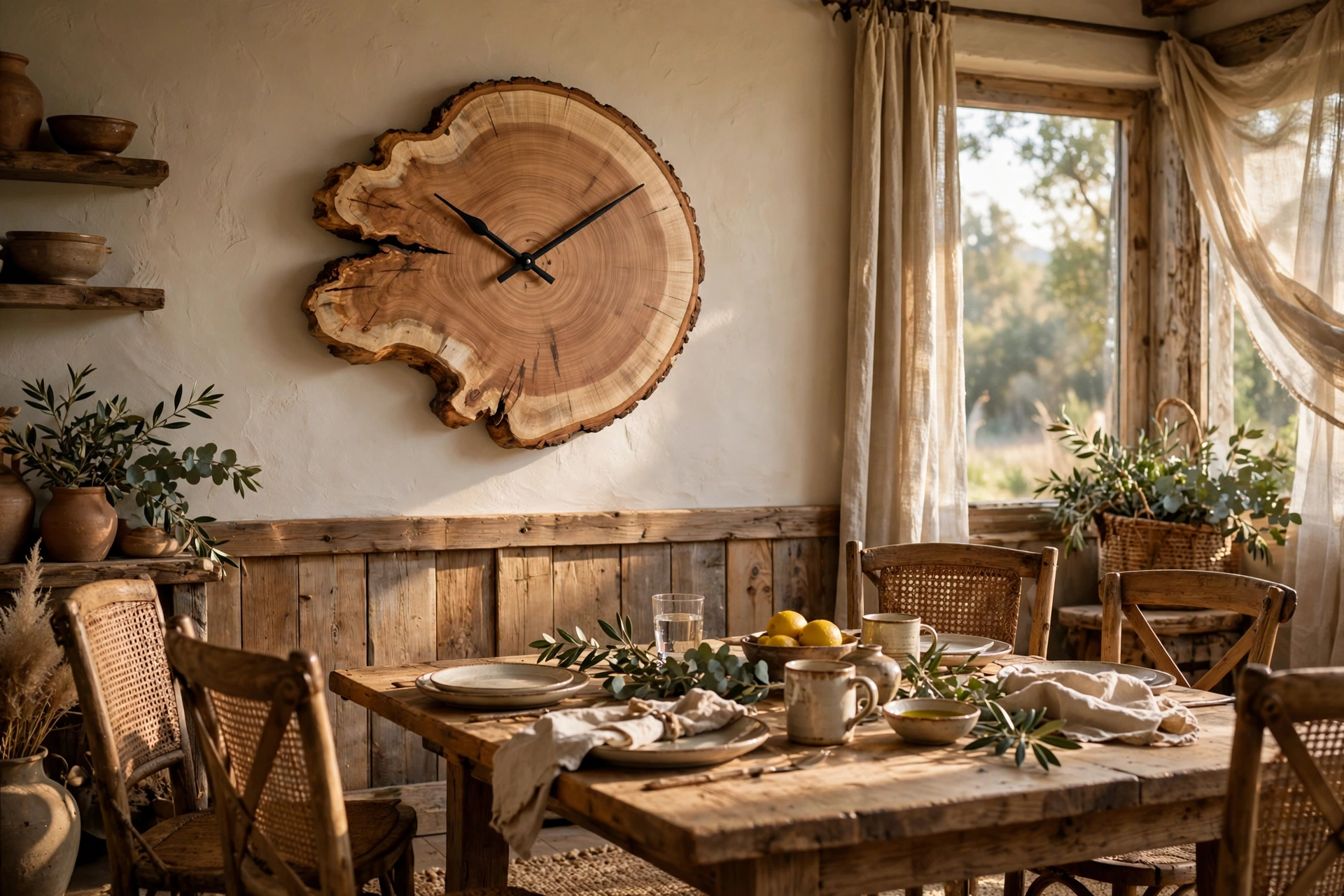
A clock with a natural wood face — live-edge slab, reclaimed planks, or simple light oak — brings organic warmth to rustic, farmhouse, and Scandinavian dining rooms. The wood grain becomes the decoration, so the face can stay simple with minimal numerals or markers. Each piece is one of a kind, which suits dining rooms styled with other natural materials like linen, stone, and woven textures. Seal the wood properly if the dining room gets humid, and keep the clock out of direct sun to prevent the finish from fading unevenly.
9. Pick a Chalkboard-Face Clock
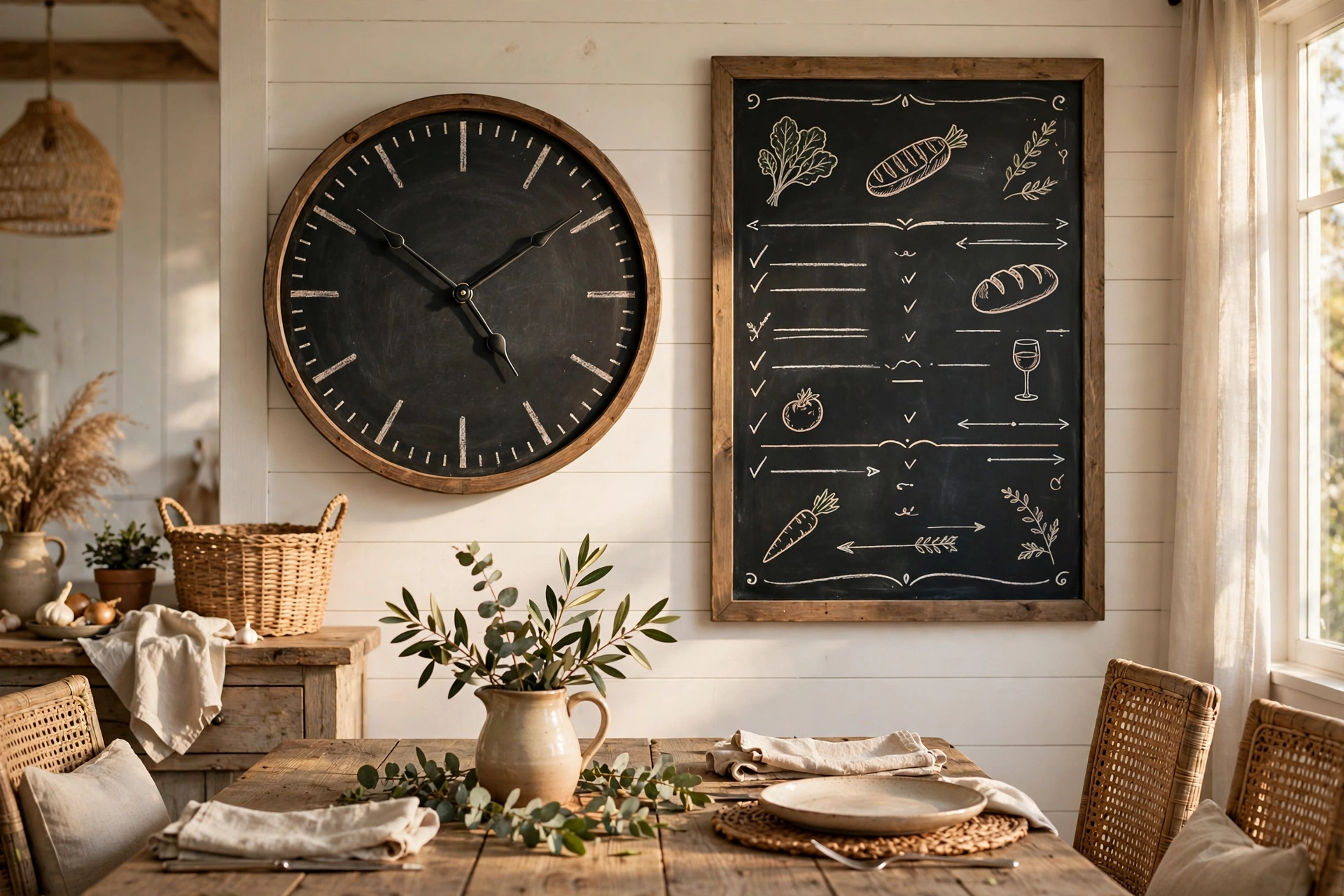
A clock with a chalkboard face does double duty: it tells time and carries the night’s menu, a welcome note, or a doodle from the kids. Write the dinner menu in chalk markers for parties, or leave an inspirational quote for everyday. The black face suits farmhouse, industrial, and eclectic rooms, and the ever-changing message keeps the wall feeling alive. Use liquid chalk markers for crisp lines that erase cleanly with a damp cloth.
10. Go Bold With Roman Numerals
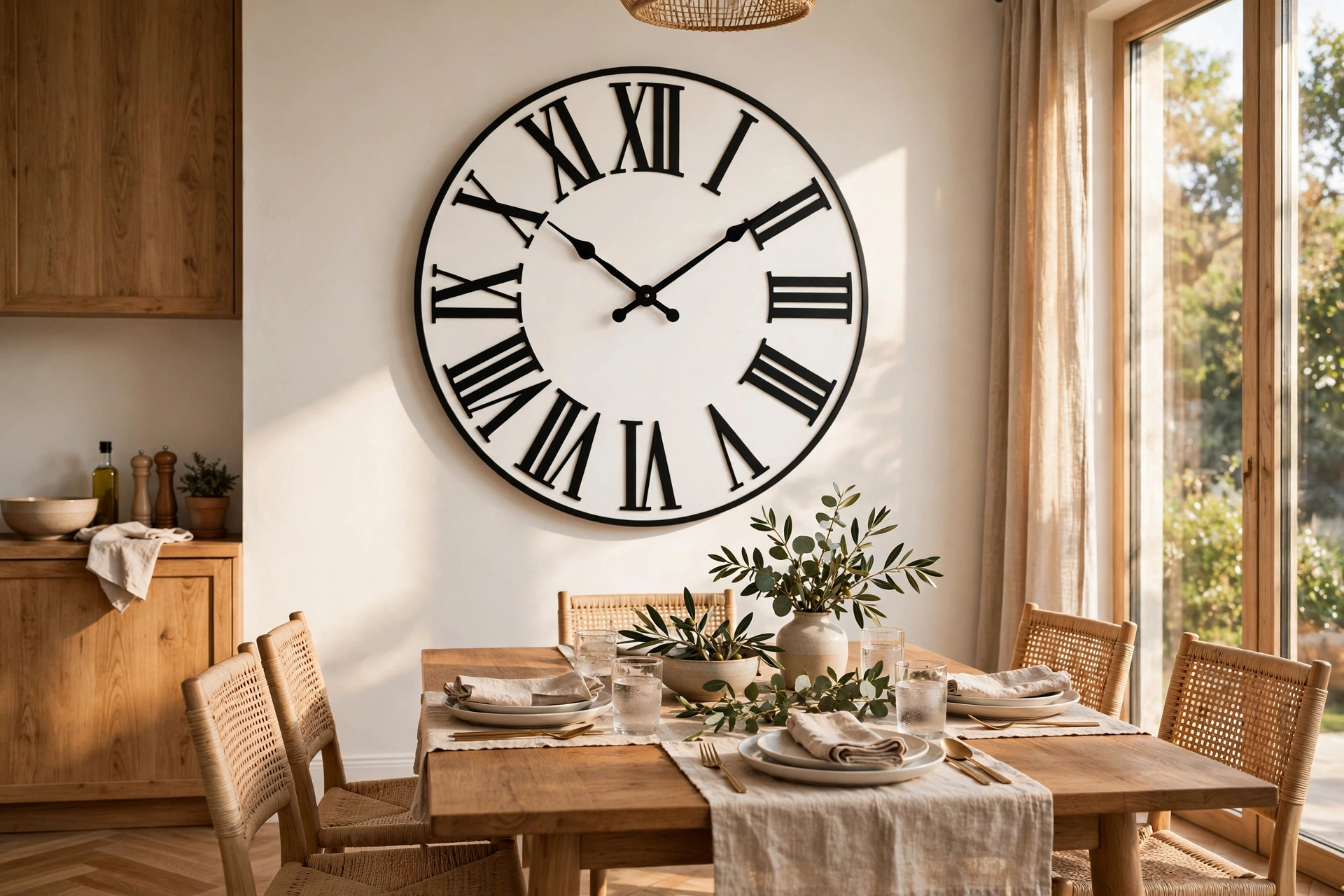
Roman numerals add instant gravitas to a dining room clock, giving even a simple face a classic, established feel. Oversized Roman numerals in black on white, or brass numerals on a dark face, read clearly from across the table while looking undeniably elegant. This style bridges traditional and transitional rooms effortlessly — it is at home above a mahogany sideboard or a sleek modern buffet. If the numerals feel too formal alone, soften the look with a wood or rattan frame.
11. Choose an Industrial Metal Clock
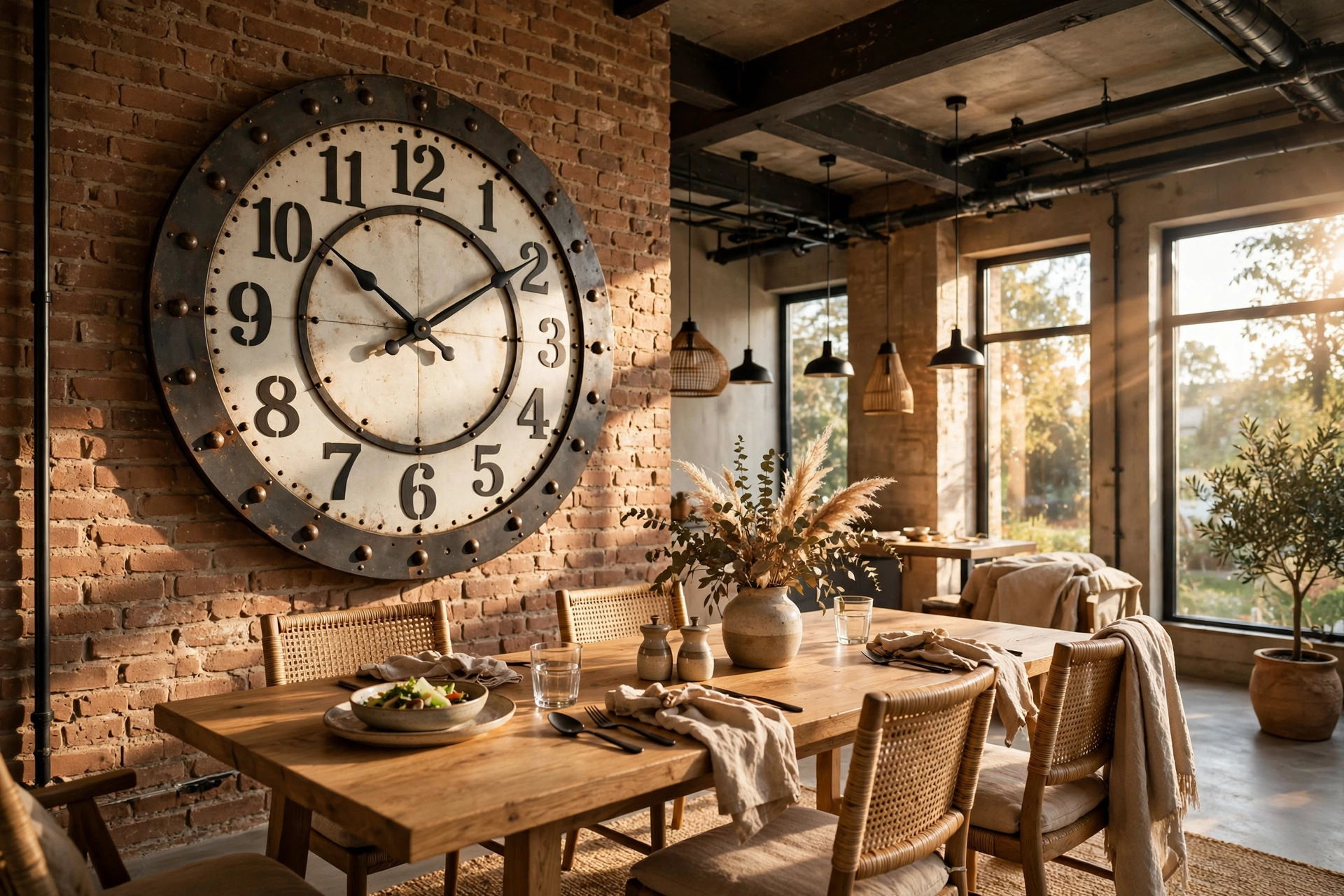
For loft-style and industrial dining rooms, a metal clock with rivets, exposed gears, or a distressed steel finish fits right in. These clocks often run large — 24 inches and up — with bold Arabic numerals and a utilitarian face that echoes factory clocks. The metal finish picks up the room’s other hard materials: pendant lights, chair frames, table bases. Look for a face with good contrast so it stays readable; dark face with light numerals works best in dim dining rooms.
12. Pair the Clock With Wall Sconces
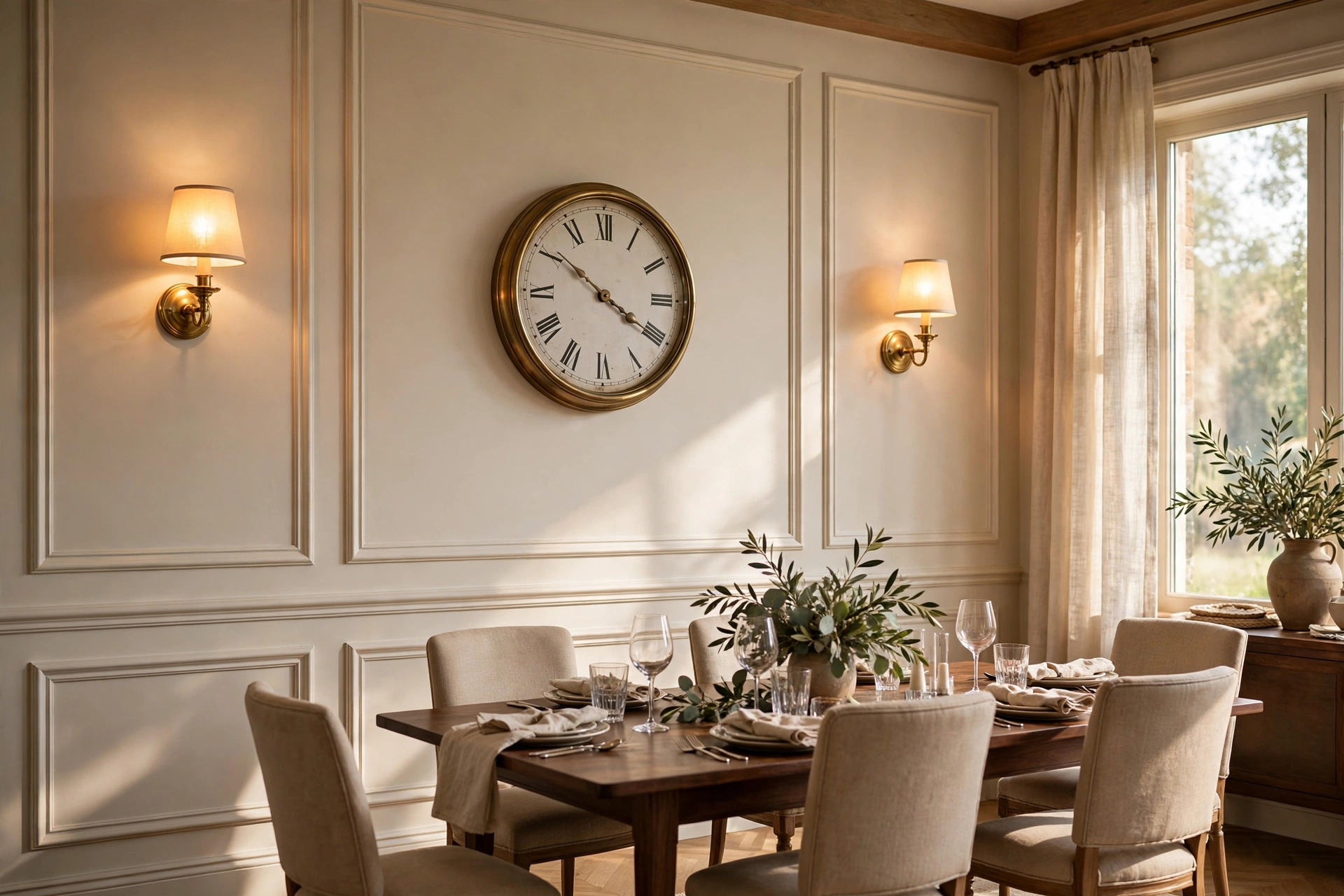
Flanking a clock with two wall sconces creates a formal, balanced composition worthy of the dining room’s best wall. The sconces add warm light that makes the clock readable after dark and gives the whole arrangement a jewelry-like glow. Choose plug-in sconces if you want to avoid wiring, and mount them 6 to 12 inches from the clock’s edge at the same height as its center. Brass sconces with a traditional clock, black cone sconces with a modern one.
13. Try a Glass or Mirrored Face
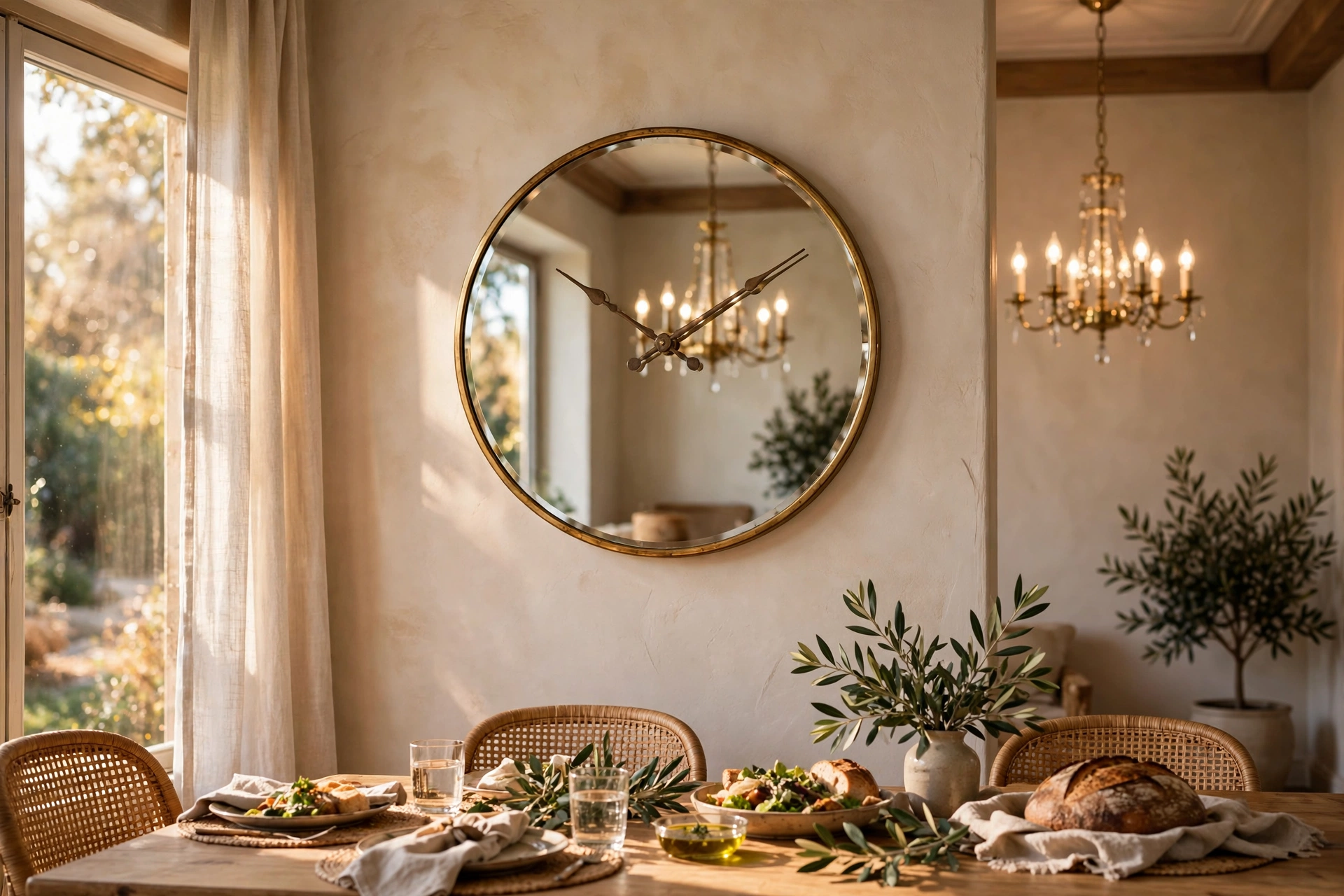
A clock with a mirrored or glass face brings glamour and light to the dining room while staying visually light. The reflective surface bounces the chandelier’s glow and makes the wall feel brighter, which is a gift in dining rooms with small windows. Mirrored clocks suit glam, Hollywood Regency, and contemporary rooms; keep the frame simple — thin brass or chrome — so the reflection is the star. Wipe the face regularly since dining rooms collect a fine film of cooking residue.
14. Balance a Long Wall With Perfect Placement
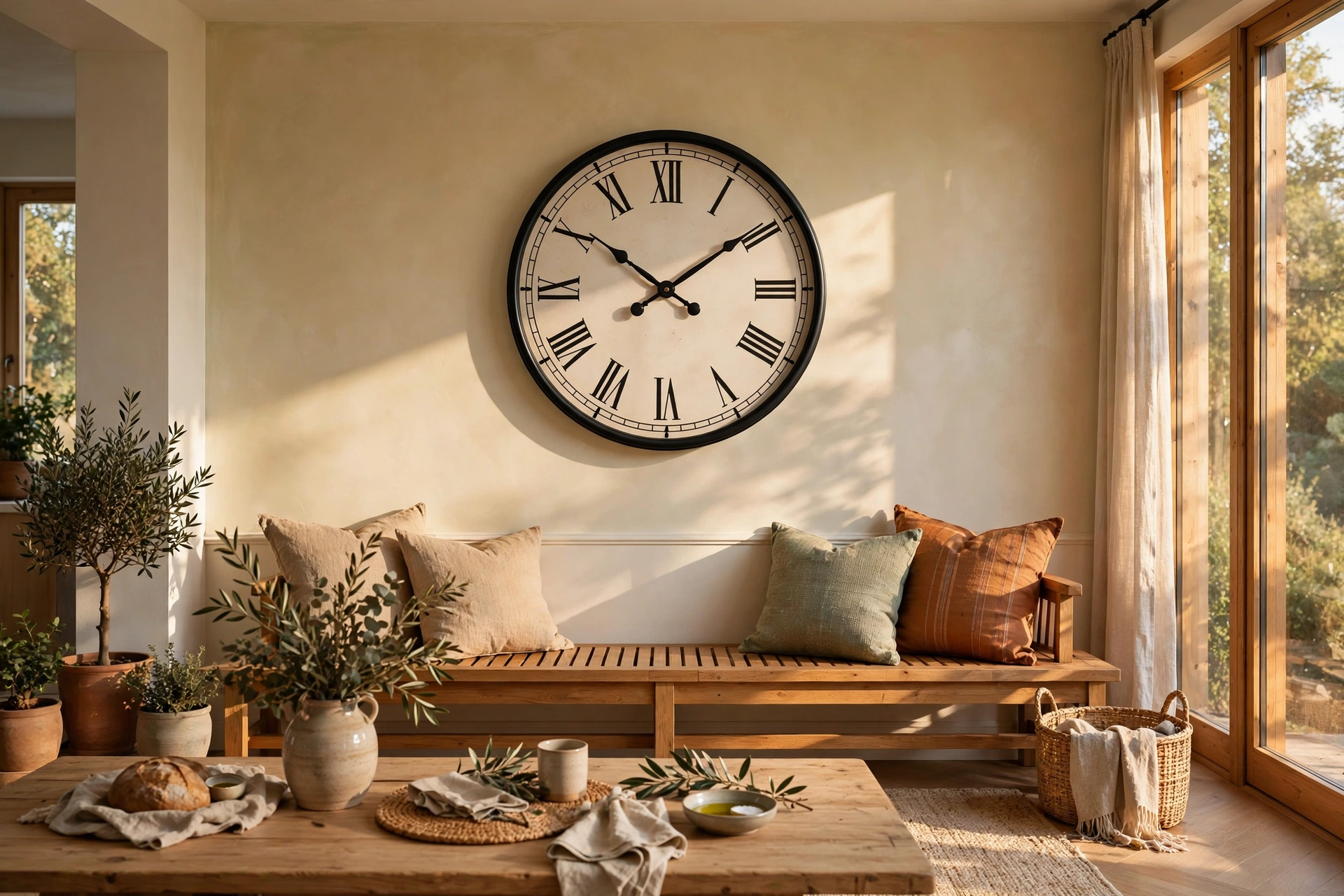
Long dining room walls defeat small decor, but a clock placed with intention can anchor the whole stretch. Center a large clock on the wall’s midpoint, then balance it with lower, wider elements — a sideboard, a bench, a row of art — so the composition reads as one unit. The Spruce Magazine guide to styling clocks reminds us that scale and moderation matter: one clock per room, sized to the wall, beats a collection of small timepieces. Step back to the far end of the room to check the balance before you drill. If the wall still feels empty, widen the composition with art rather than adding a second clock.
15. Choose a Silent Movement for Peaceful Dinners
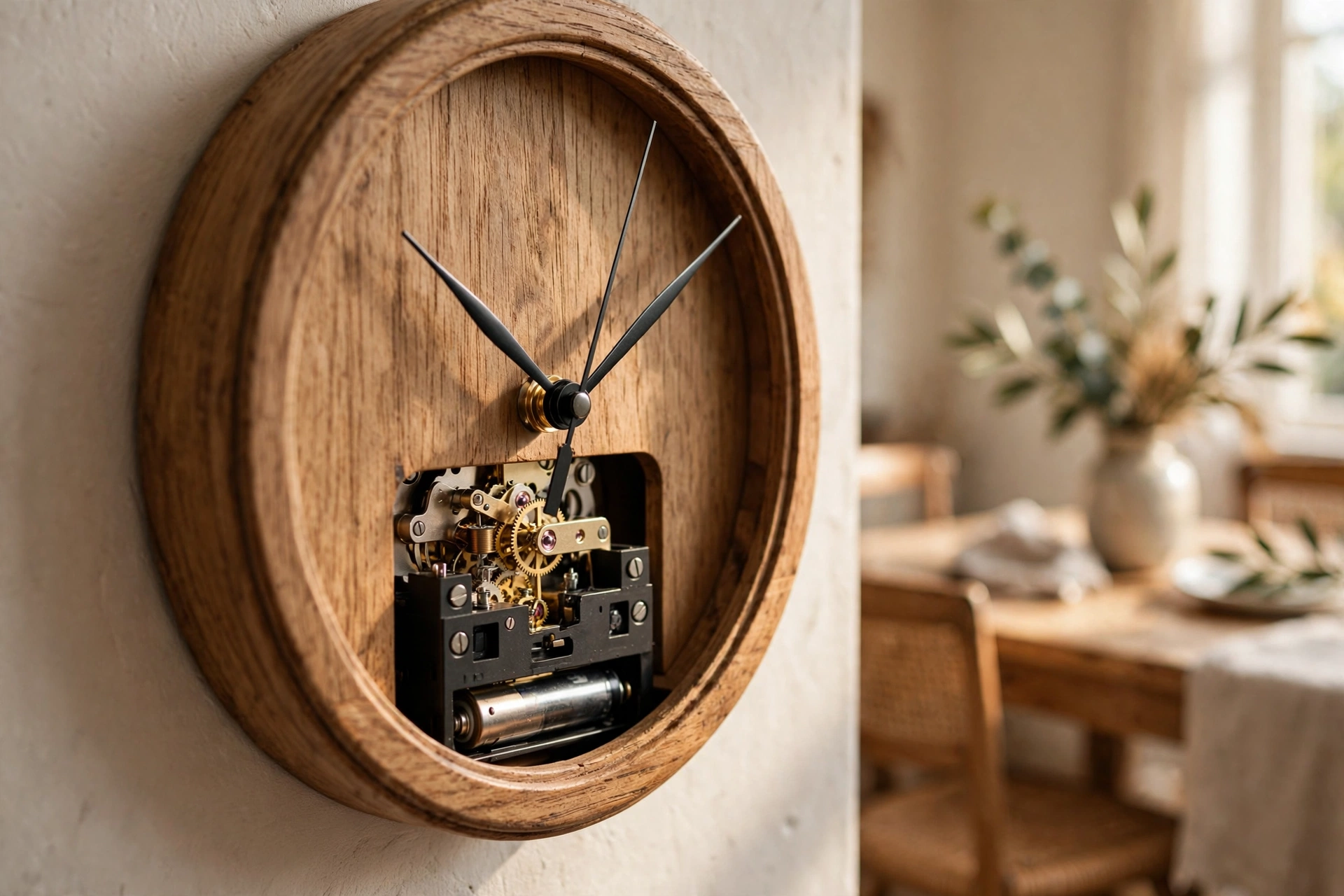
The final idea is not about looks at all: choose a silent sweep movement and protect the peace of your dining room. Traditional ticking movements mark each second with an audible click that fades into background noise by day but dominates a quiet dinner. Silent movements glide continuously with no tick, running on a standard AA battery for a year or more. When shopping, check the product specs for “silent,” “sweep,” or “non-ticking” — and read reviews, since some “silent” clocks still hum. For more layered lighting to pair with your quietly ticking-free wall, our dining room lighting ideas from chandeliers to sconces complete the atmosphere.
FAQ
What size wall clock is best for a dining room?
For a large blank wall, choose 24 to 36 inches in diameter; above a sideboard, pick a face about two-thirds the furniture’s width. As a rule, the clock should be clearly readable from the farthest seat at the table.
Where should I hang a clock in the dining room?
The wall above the sideboard is the classic spot, centered and hung 6 to 10 inches above the furniture. A large blank wall also works, with the clock’s center at eye level (57 to 60 inches from the floor).
Are wall clocks still in style for dining rooms?
Absolutely — wall clocks have moved firmly back into decor as statement pieces, not just utilities. Oversized faces, sculptural mid-century designs, and vintage station clocks all feature heavily in current dining room styling.
How do I stop a wall clock from ticking loudly?
Buy a clock with a silent sweep movement, which glides without ticking — check specs for “non-ticking” or “silent.” If you already own a ticking clock you love, you can often swap the movement for a silent one; replacement movements cost under twenty dollars and install with basic tools.
Can I hang a clock on a wallpapered or accent wall?
Yes, and it often looks fantastic — the patterned or colored wall makes the clock pop. Choose a face color that contrasts with the wall for readability. Use the right hanger for the wall type, and consider a French cleat or two anchor points for heavy clocks so the weight distributes evenly. Our living room wall clock ideas for timeless style show more placement inspiration across rooms.
Keep Exploring
A clock is one piece of the dining room wall puzzle, and it looks best when the lighting supports it. Once your clock is hung, make sure the room glows after dark — layered light turns a nice dining room into an unforgettable one.