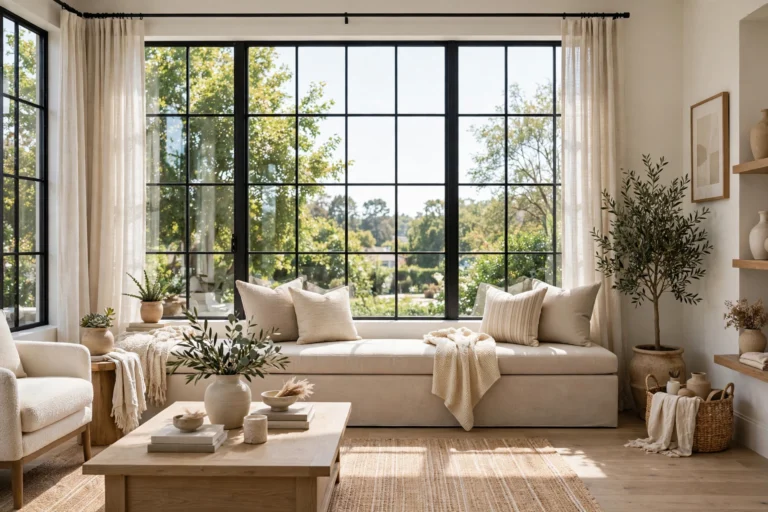

A daybed is the Swiss Army knife of living room furniture: a deep, comfortable lounge seat by day and a real bed for overnight guests by night. In small living rooms and studios it can even replace the sofa entirely, freeing up space while adding sleep capacity you did not have. These living room daybed ideas cover styling, placement, and the best designs for every room size. If you are planning the whole layout around one, our living room layout ideas for every room shape will help you place it perfectly.
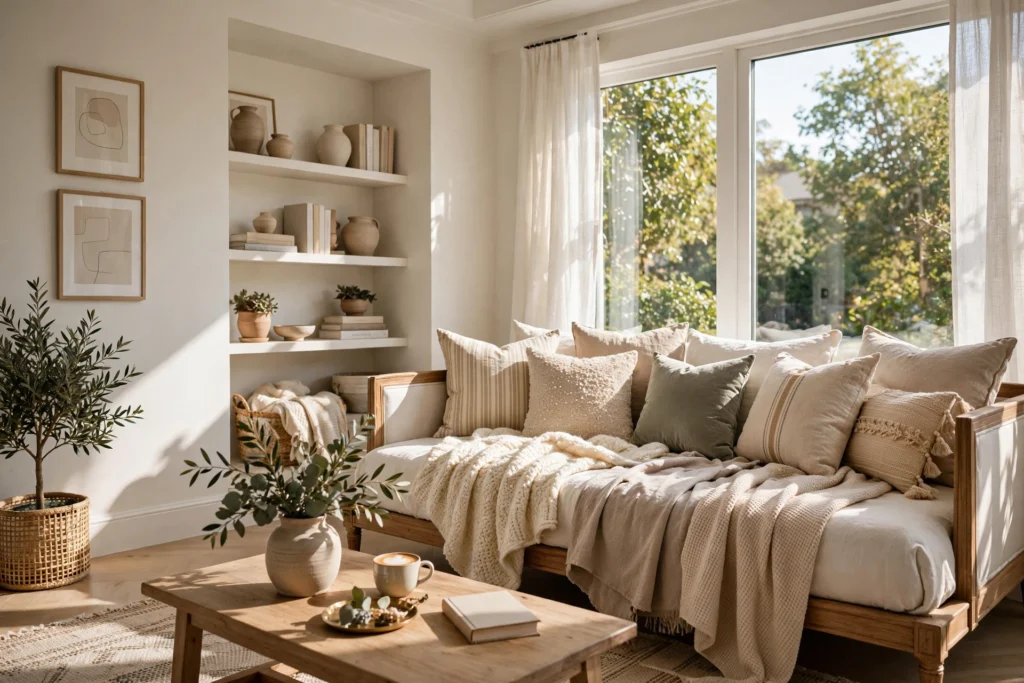
The secret to a daybed that works in a living room is styling it like a sofa, not a bed. That means structured back pillows instead of sleeping pillows, a throw draped casually rather than a turned-down duvet, and bedding in upholstery-like fabrics. Choose a twin-size frame (around 38 by 75 inches) for most rooms, and always check that the mattress is comfortable for sitting — medium-firm foam or hybrid works best for double duty.
1. Replace the Sofa in a Studio
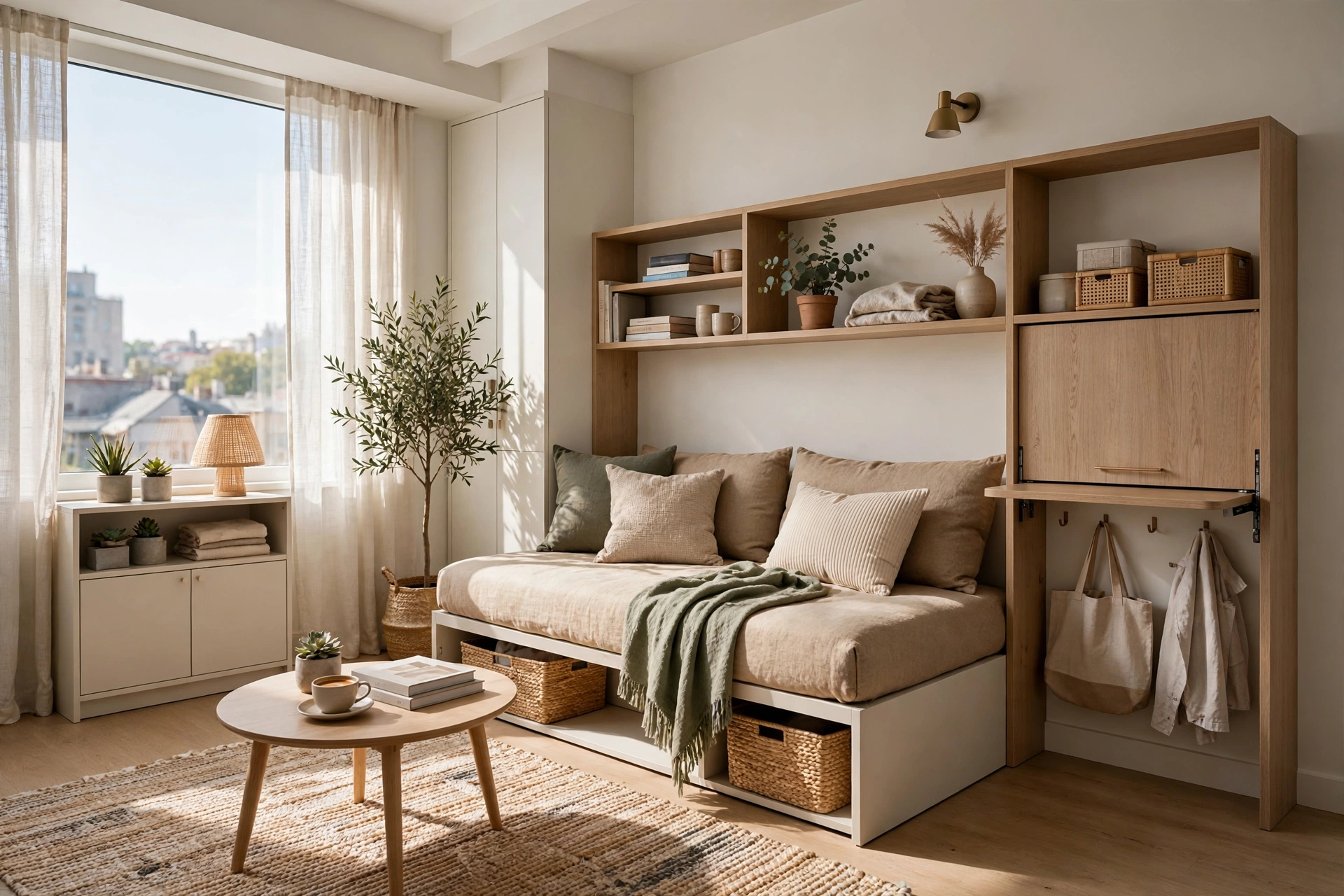
In a studio apartment, a daybed against the longest wall does the job of both sofa and bed without the visual bulk of a sleeper sofa. Style it with large back cushions and bolsters so it reads as a deep lounge sofa during the day, and keep proper bedding in a nearby basket for instant conversion at night. Choose a frame with clean lines and legs that show floor underneath — visual lightness matters in one-room living. This single piece can make a 400-square-foot studio feel like it has distinct living and sleeping zones, especially with a rug defining the “living room” side.
2. Build a Reading Nook Under the Window
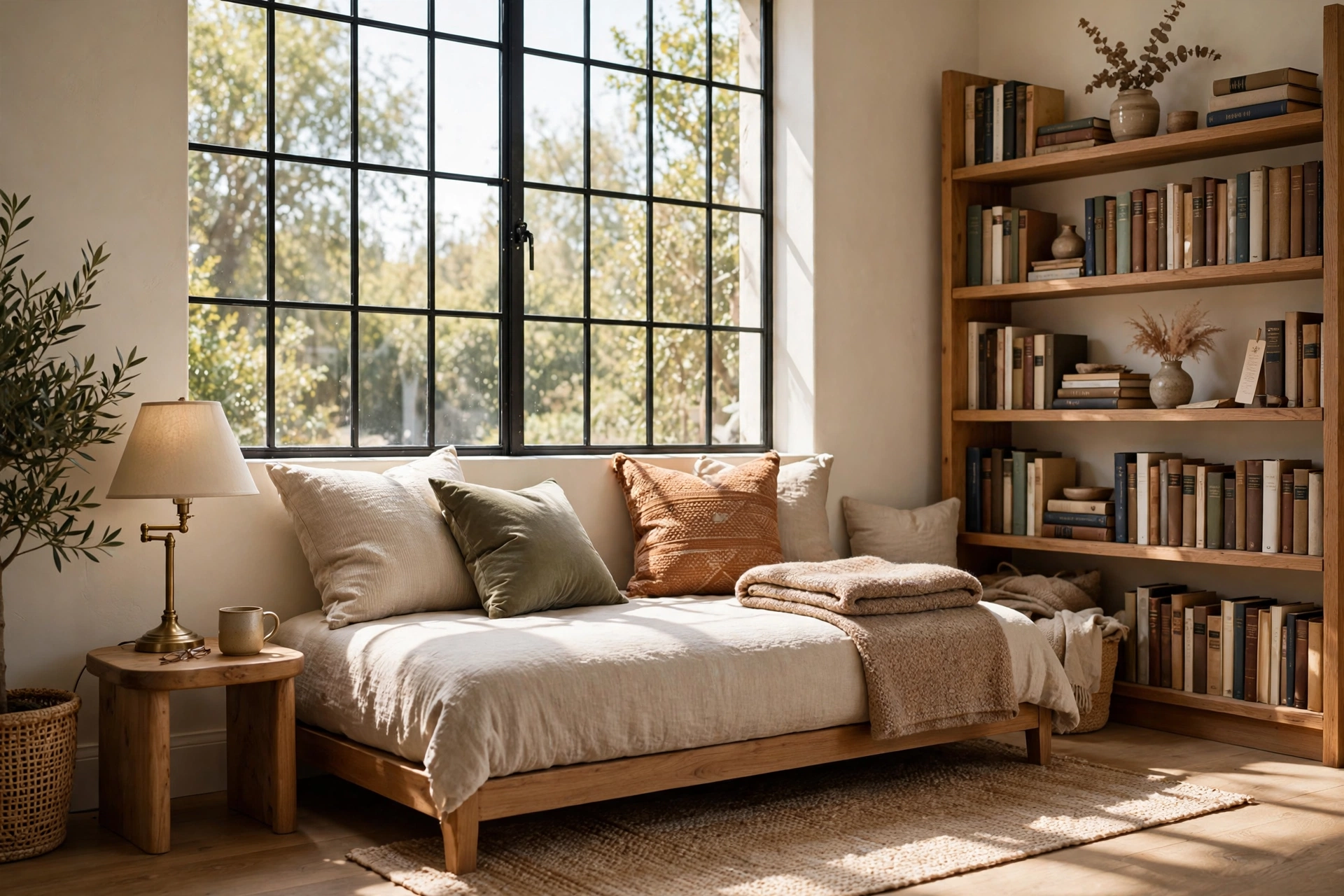
A daybed under a big window is the reading nook of dreams: natural light, a view, and room to sprawl. Add a bookshelf or wall-mounted shelves within arm’s reach, a good reading lamp for evenings, and a soft throw for naps that “accidentally” happen. Keep the bedding simple and textured — linen or washed cotton in a calm color — so it looks like upholstery. This setup works in large living rooms with an underused window wall and in small ones where the daybed is the main seat. Guests will fight over this spot; consider it fair warning.
3. Choose a Daybed With a Trundle
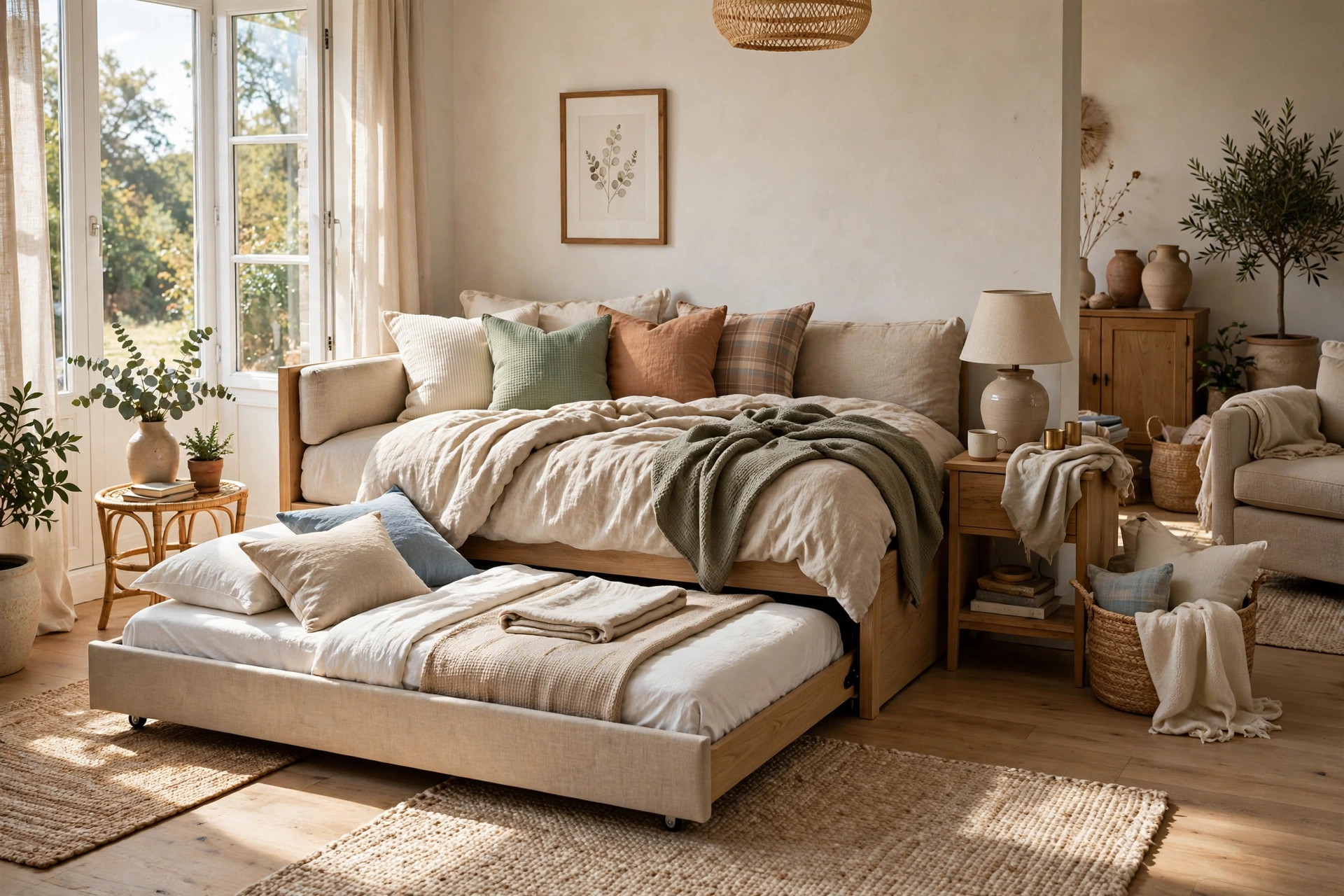
A trundle daybed sleeps two in the footprint of one — the pull-out second bed hides underneath until needed. This is the ultimate guest solution for living rooms in homes without a spare bedroom: one comfortable bed every night, two when family visits. Look for trundles on smooth-rolling casters and a pop-up mechanism if you want the two beds to sit at equal height. Store the trundle bedding inside the trundle itself so setup takes sixty seconds. During the day, nobody suspects the seating hides a second bed. It is the most generous of these living room daybed ideas for hosts.
4. Maximize Storage With Drawers Underneath
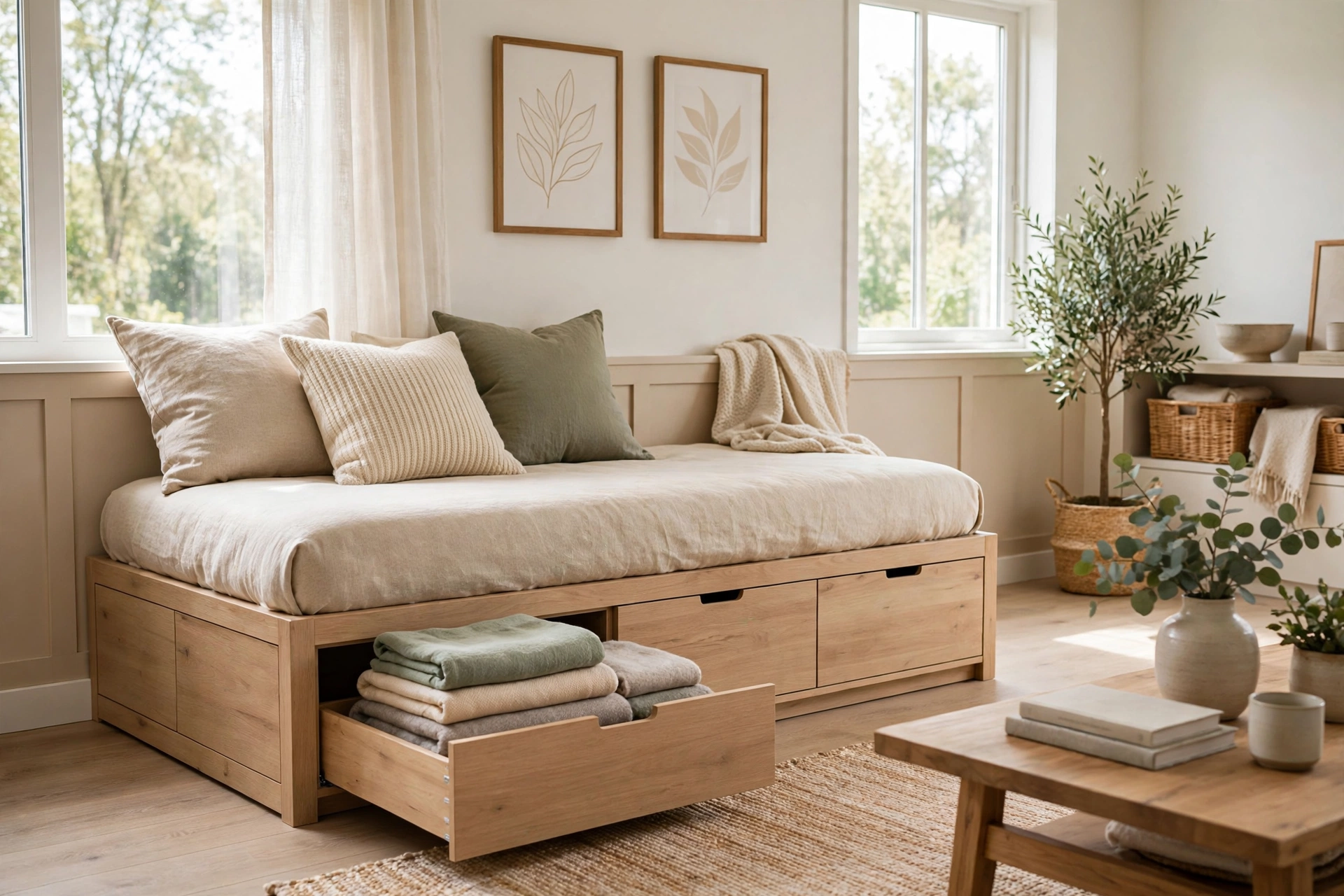
Daybeds with built-in drawers turn dead under-bed space into serious storage — blankets, board games, out-of-season clothes, or kids’ toys. In small living rooms, this can replace a whole dresser. Choose drawers that glide smoothly and sit flush; cheap ones stick and ruin the look. Style the top like a sofa with structured pillows so the storage function stays invisible. This is the daybed to buy if your living room also serves as the guest room and the storage room — which, in many homes, it does. Measure your rug first so drawers clear it when opened.
5. Camouflage It Like a Sofa
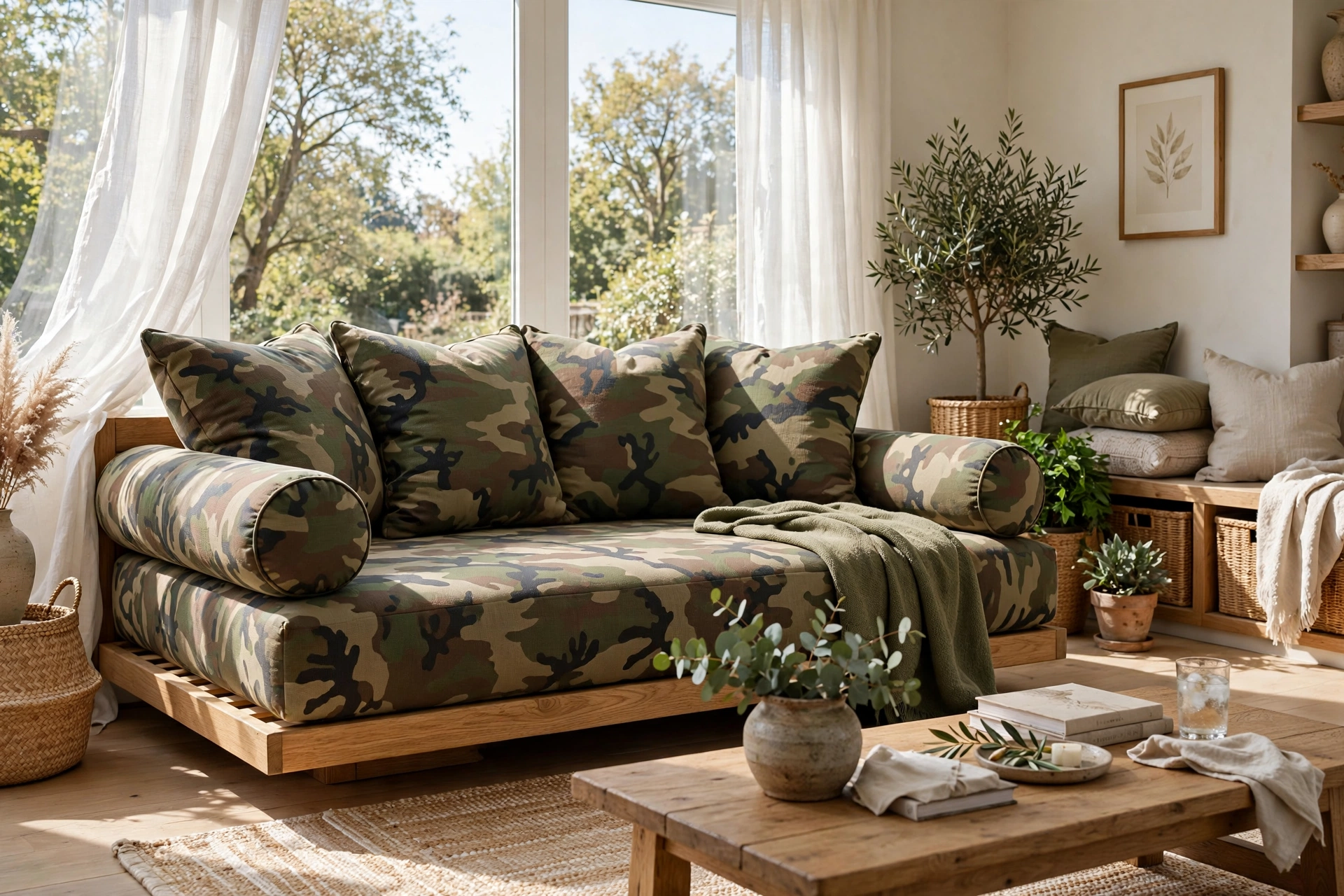
The difference between “bed in the living room” and “gorgeous daybed lounge” is styling. Pile large square back pillows (24-inch) along the wall side, add two or three decorative throw pillows in front, and finish with a folded throw across one corner — never a bedspread tucked hospital-tight. Use upholstery-weight fabrics and a tailored look; avoid ruffles and obvious bedding prints. A tray on one end with a candle and books completes the sofa illusion. The Spruce’s daybed ideas for small spaces show this camouflage technique in real rooms worth copying.
6. Drape a Canopy for Drama
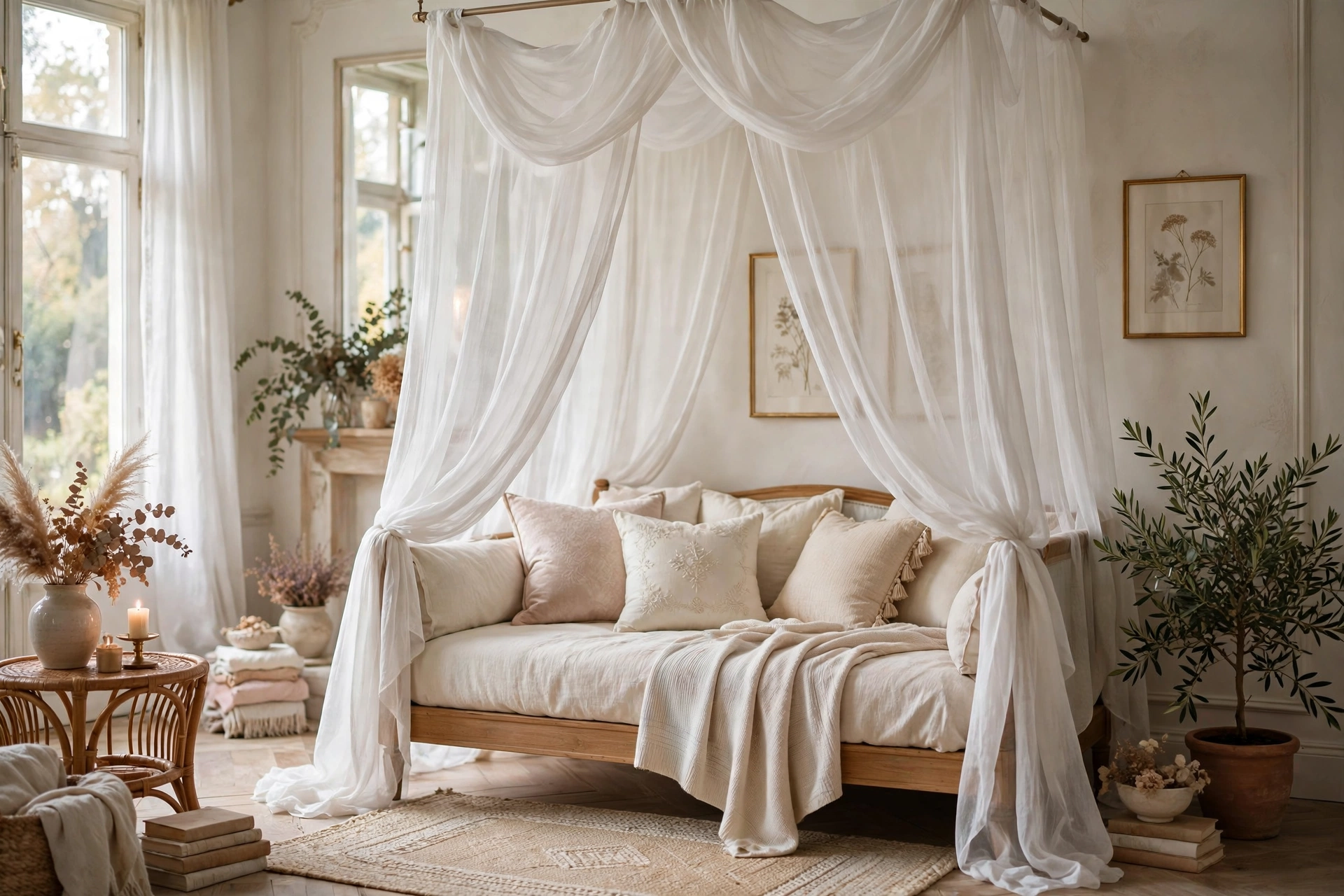
A canopy transforms a daybed from practical to magical. Hang sheer curtains from a ceiling-mounted track or a four-poster-style frame for a romantic, boho, or old-Hollywood feel. Sheers keep it light and airy; heavier drapes create a true cocoon. Tie the panels back during the day so the daybed still functions as seating, and close them for movie nights or guest privacy. This works best with ceiling height of nine feet or more — low ceilings plus canopy equals cramped. Keep the fabric washable, since it will collect dust, and choose a color that echoes your curtains for cohesion.
7. Go Coastal With a Rattan Daybed
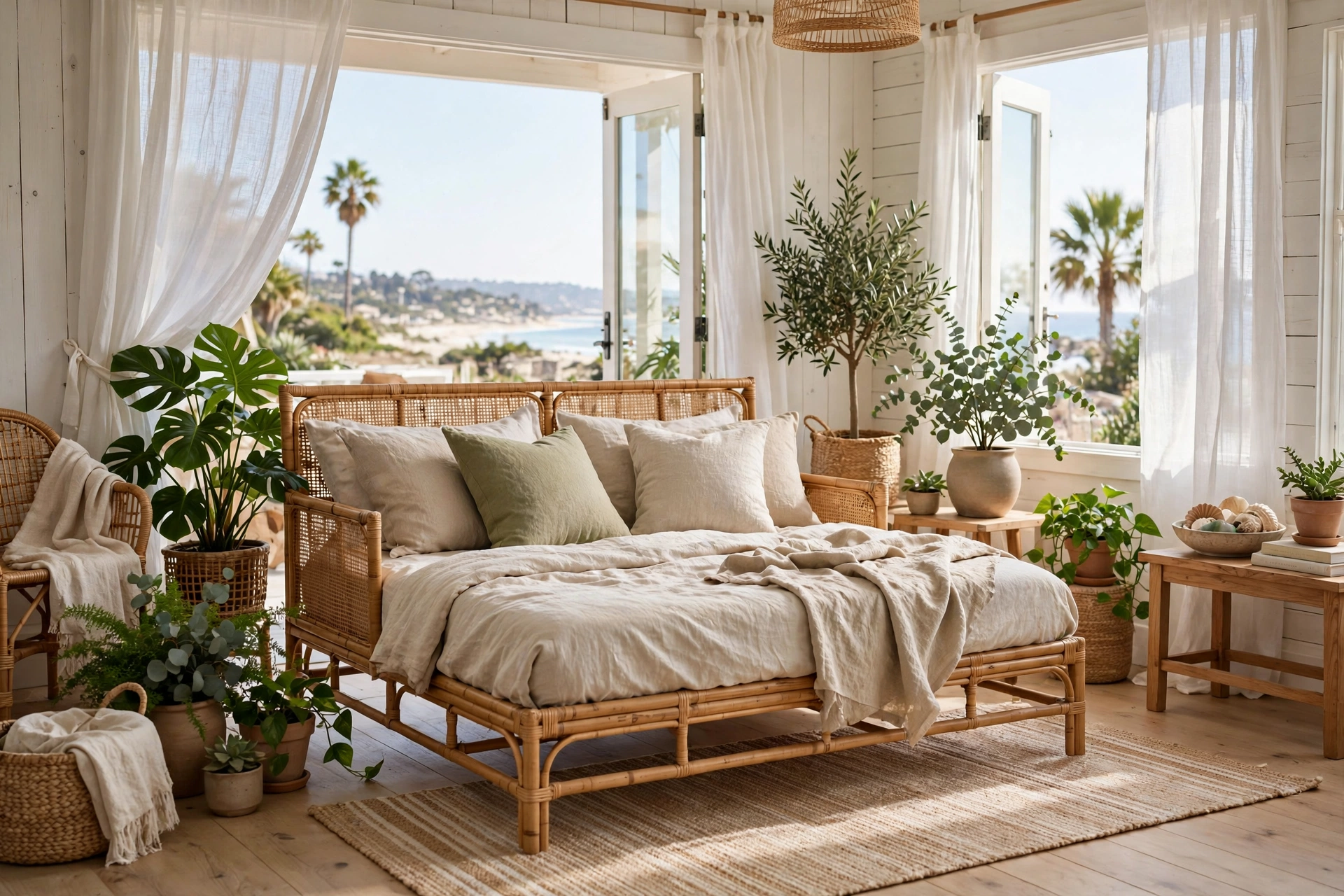
A rattan or cane daybed brings instant vacation energy — think breezy, textural, and relaxed. The open weave keeps it visually light, and the natural material pairs beautifully with linen bedding, jute rugs, and leafy plants. Style it with white and sand tones plus one ocean-blue accent for the coastal look, or layer global textiles for boho. Real rattan needs a dry spot away from direct harsh sun; good synthetic weaves handle sunrooms. This is the daybed that makes the whole living room feel like a retreat, even on a Tuesday.
8. Use It as a Room Divider
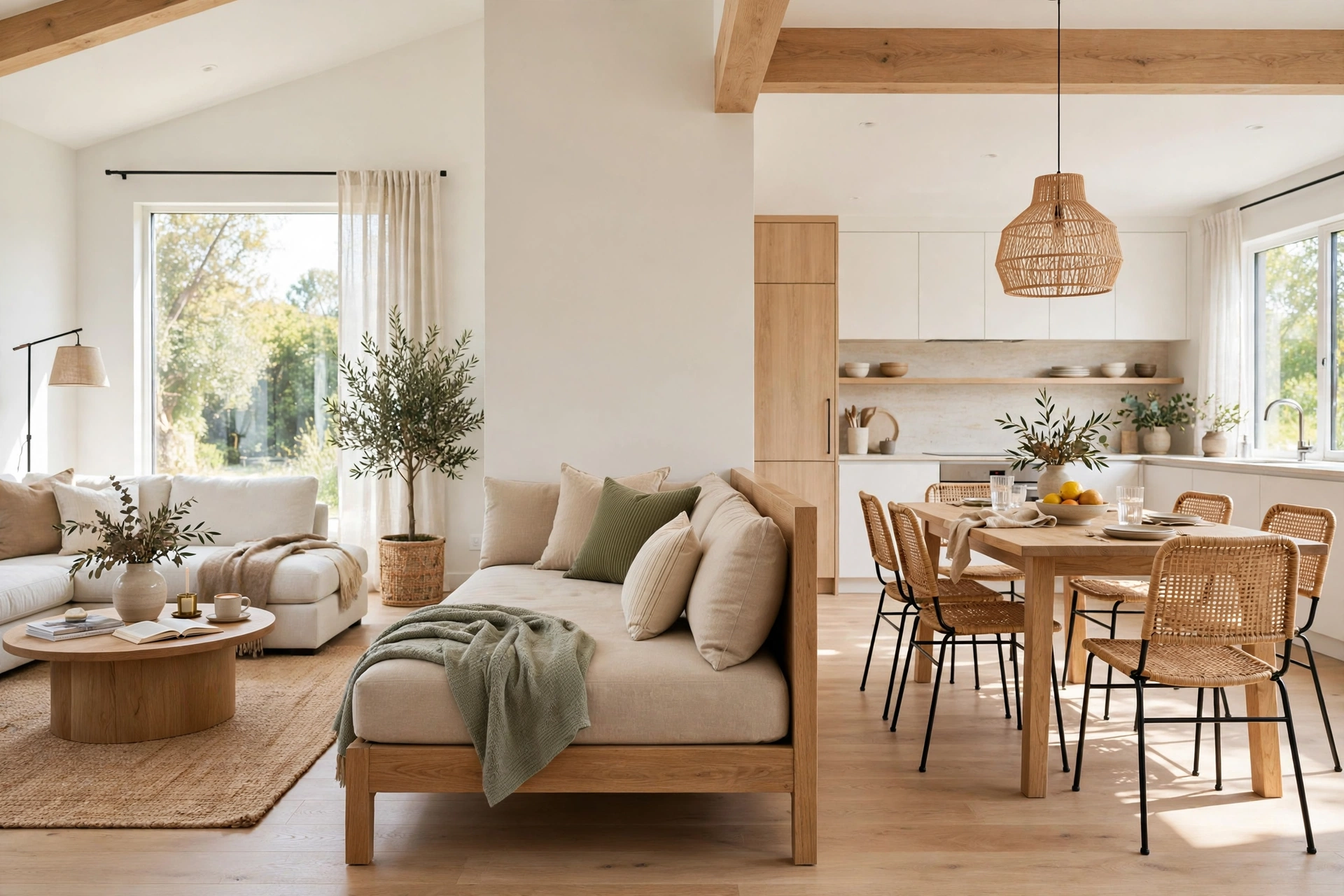
Place a daybed perpendicular to the wall in an open-plan space and it becomes a soft room divider — living zone on one side, dining or work zone on the other. The low back keeps sightlines open while clearly marking the boundary. Style both sides, since both will be seen: back pillows facing the living area, a slim console or bookshelf against the back facing the other zone. This trick shines in studios and great rooms where a sofa with its back turned would feel like a wall. A rug under the daybed anchors the “room” it defines.
9. Pick a Leather Daybed for Modern Edge
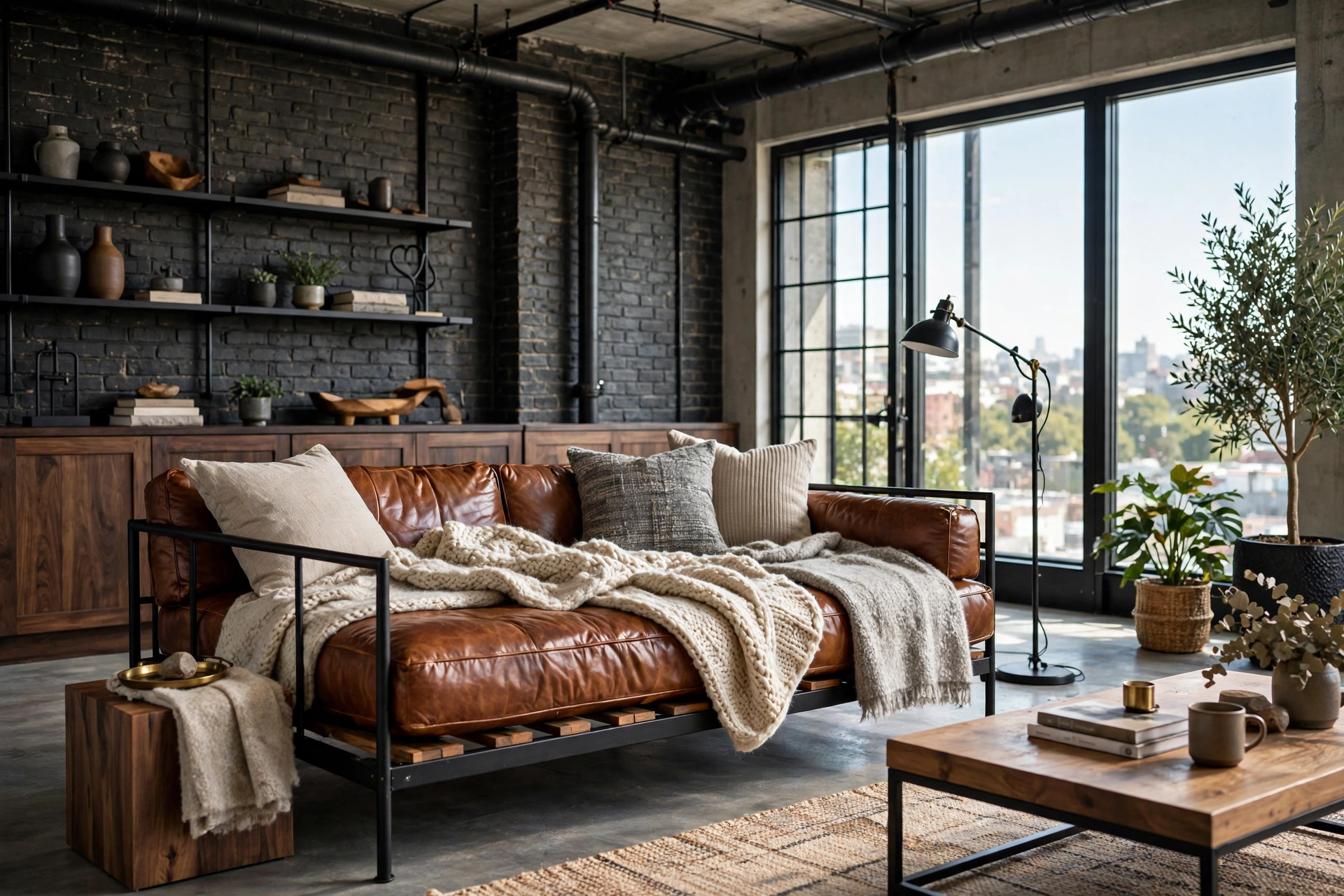
A leather daybed — in cognac, black, or tan — brings tailored, modern polish that works in industrial lofts and contemporary living rooms. The material reads as furniture, never as bedroom, which solves the camouflage problem automatically. Leather wipes clean, handles pets better than fabric, and develops a gorgeous patina. Style it with wool throws and linen pillows to soften the look, and keep it conditioned away from direct sun. It is the most grown-up of these living room daybed ideas and the easiest to keep looking sharp with minimal effort.
10. Pair It With a Bookshelf Reading Corner
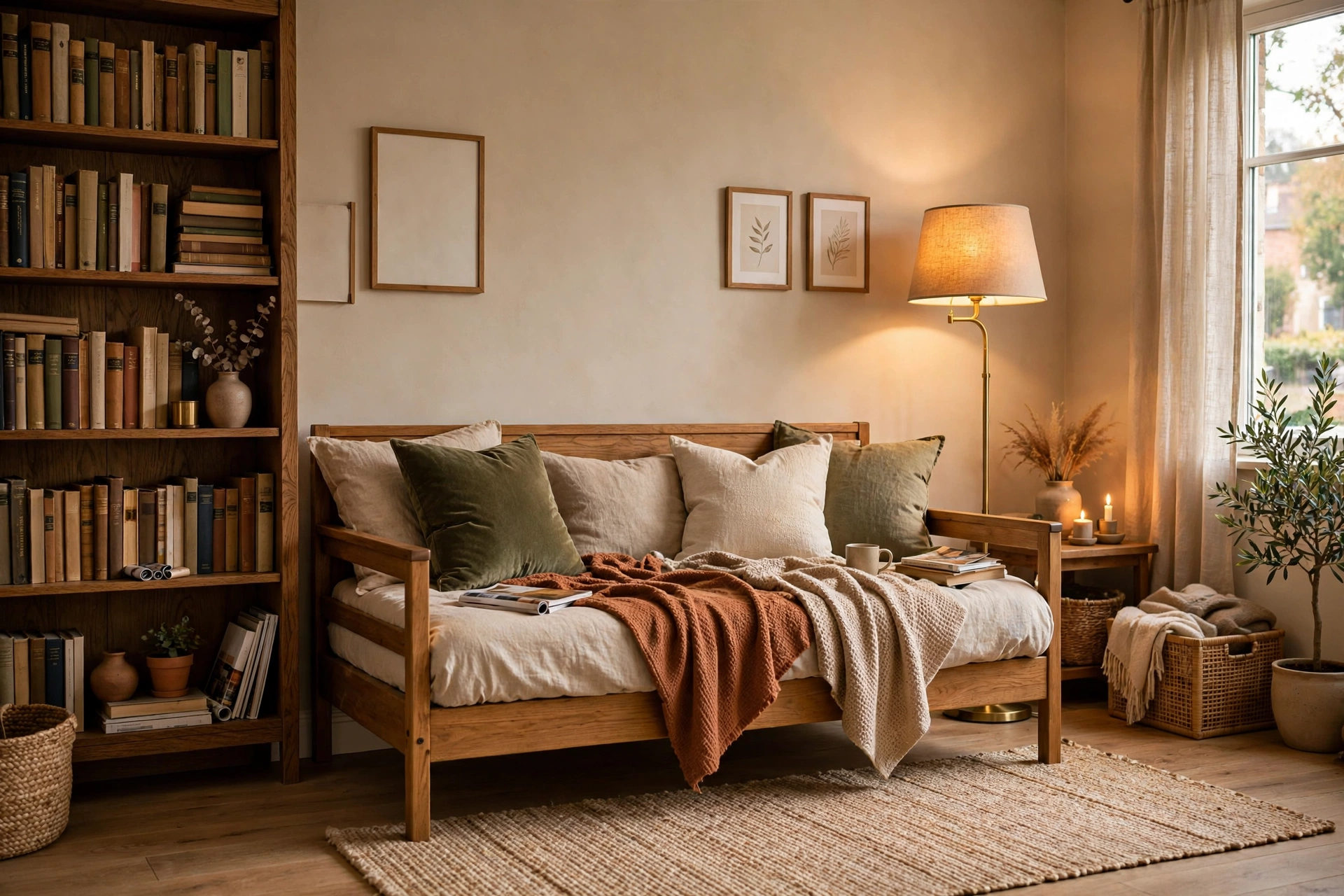
Flank one end of the daybed with a bookshelf and you have a library corner that happens to seat naps. The vertical bookshelf balances the daybed’s horizontal sprawl and gives the arrangement architecture. Add a floor lamp with a warm bulb at the other end for evening reading. Keep the shelves styled but real — books you actually read, a few objects, a small plant. This corner becomes the room’s intellectual heart and the most fought-over seat in the house. In small living rooms, a tall narrow bookshelf takes almost no floor space while adding tons of function.
11. Style a Sunroom Daybed
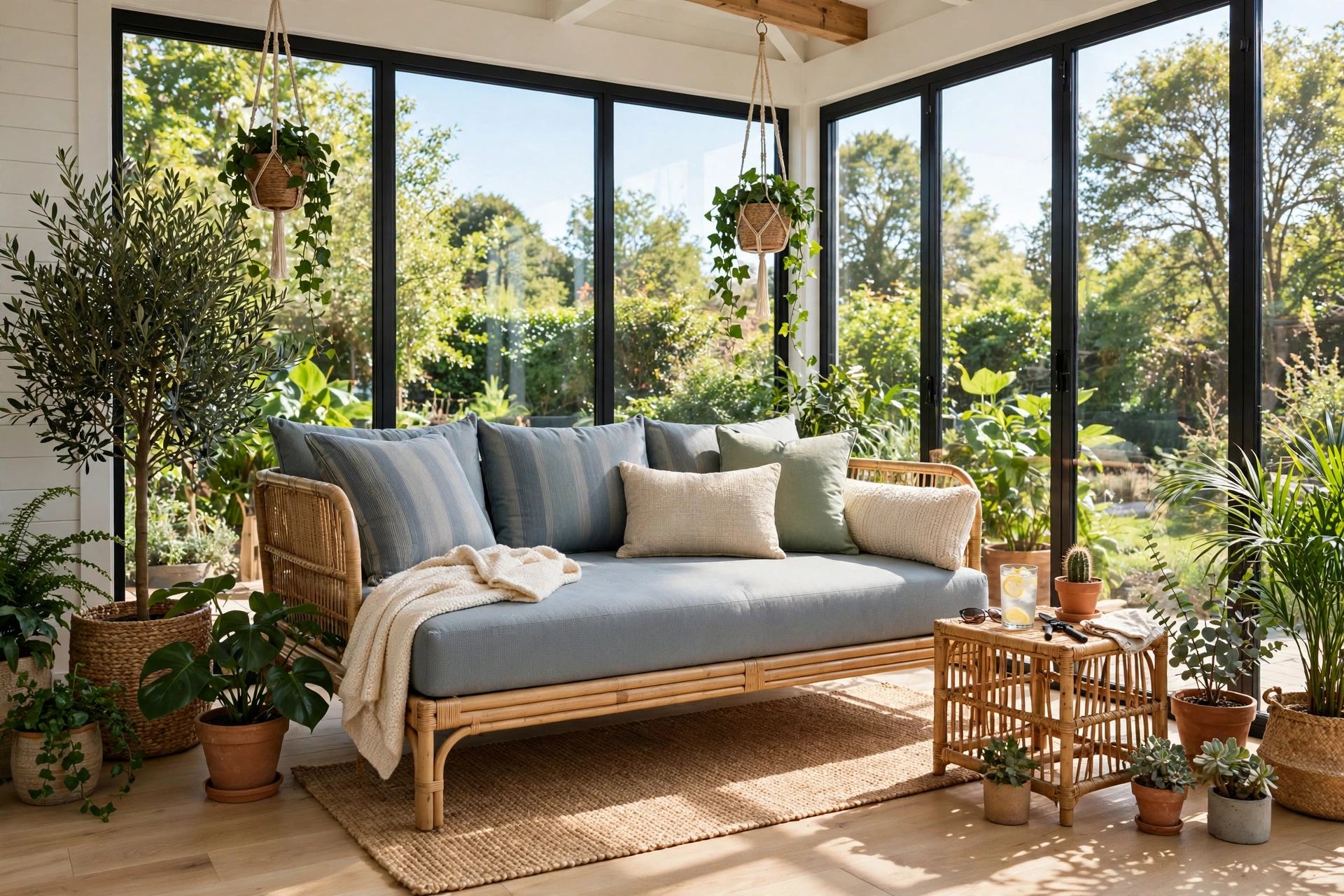
If your living space flows into a sunroom or enclosed patio, a daybed there extends the living room beautifully. Choose weather-resistant fabrics and a frame that handles humidity — teak, powder-coated metal, or quality synthetic wicker. Layer washable cushions and throws for the indoor-outdoor feel, and add outdoor-safe lighting for evenings. This daybed becomes the nap headquarters of the house and a guest overflow bed in mild weather. Keep a waterproof cover handy for unexpected weather if the space is not fully sealed. It blurs the line between inside and out in the best way.
12. Convert a Twin Bed With Bolsters
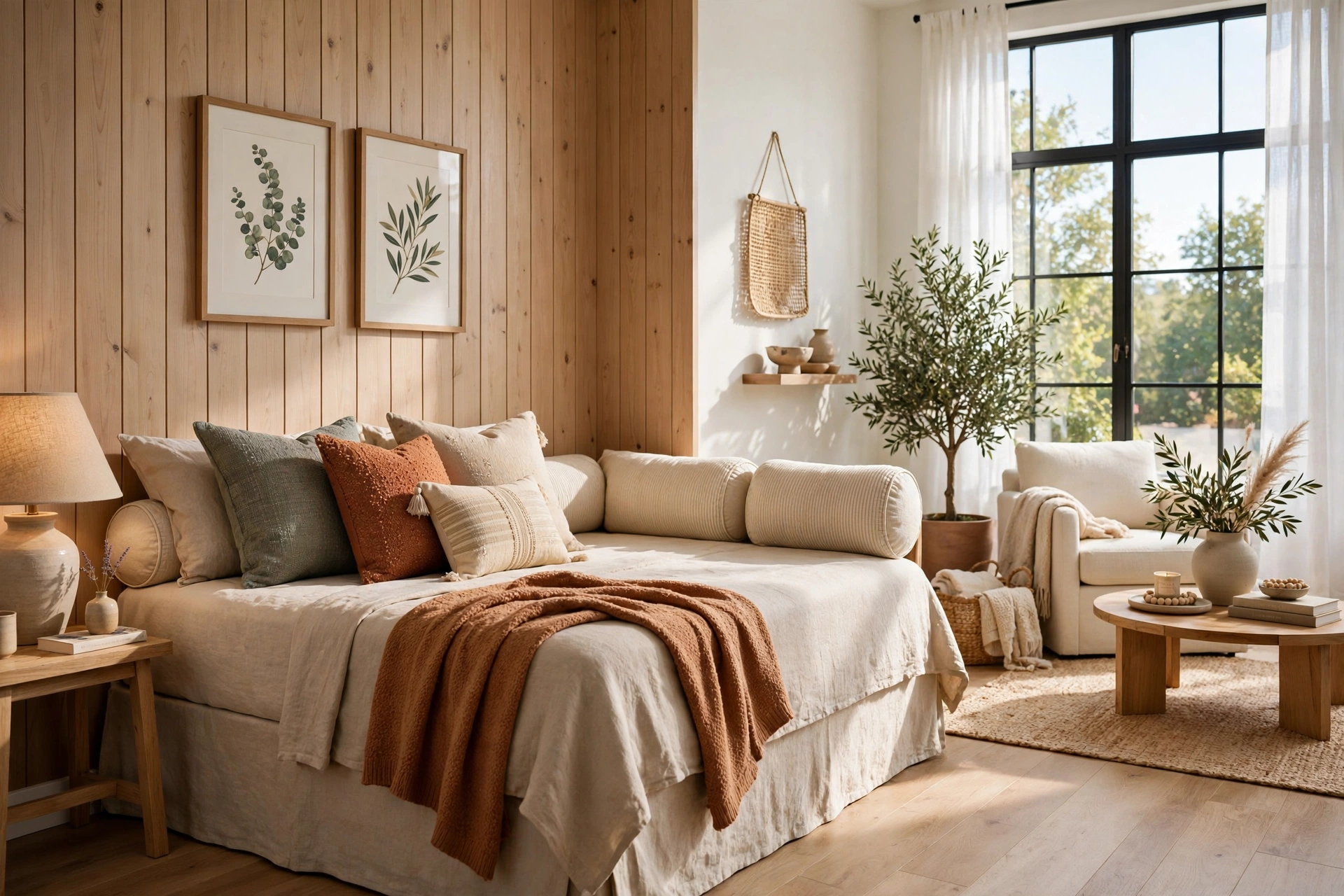
Already own a twin bed? Push it against the wall, add a row of large bolster pillows along the back, top with a tailored coverlet or quilt, and you have a daybed for the cost of pillows. This is the budget king of living room daybed ideas — perfect for a first apartment, a guest corner, or testing whether daybed life suits you before investing. Use a bed skirt or a frame with a finished look; an exposed metal frame screams “bedroom.” The bolsters are doing all the visual work here, so invest in good ones: firm, full, and in an upholstery-like fabric.
13. Tuck One Under a Sloped Ceiling
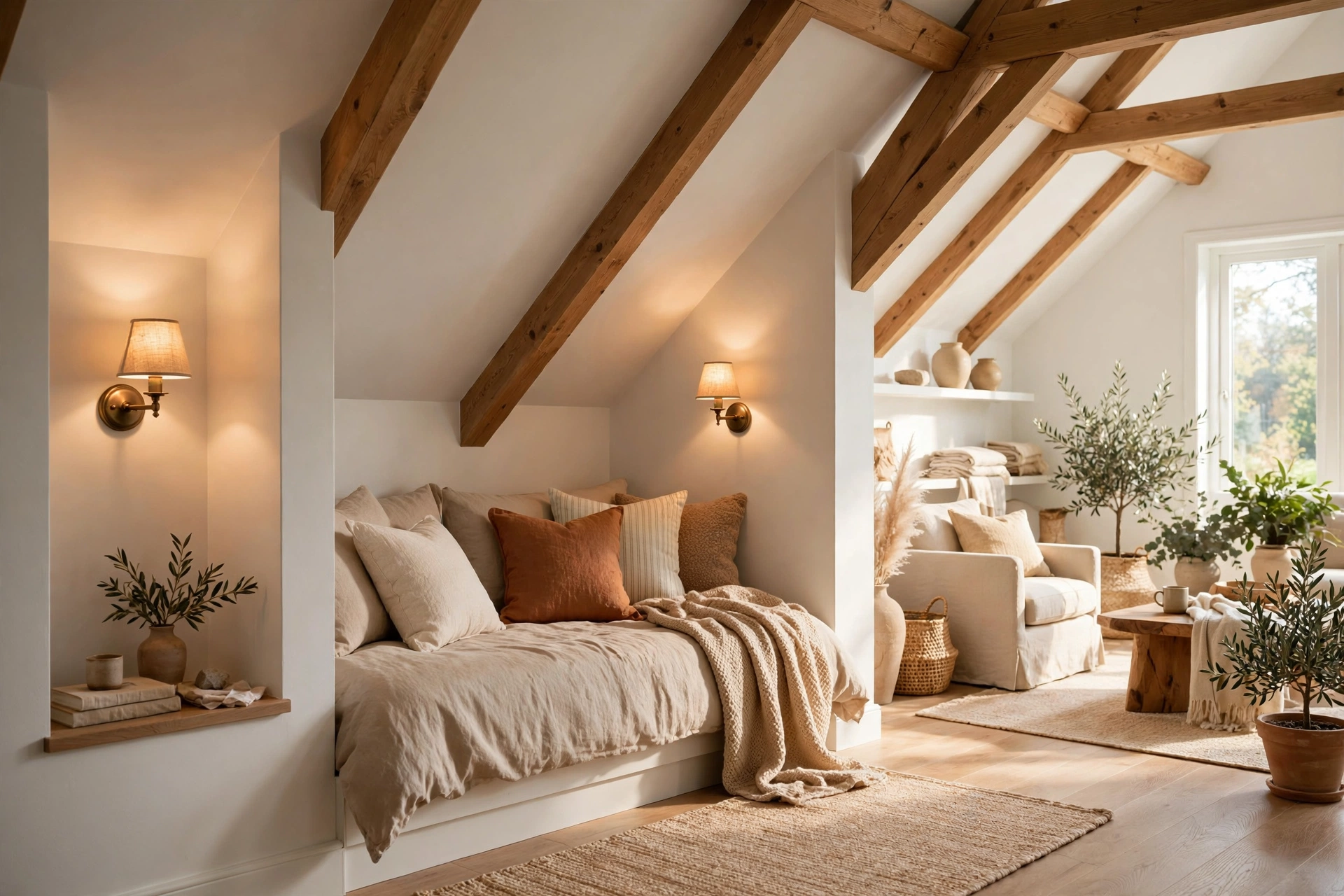
That awkward space under a sloped ceiling or eave — too low for standing furniture — is daybed-sized by nature. A low daybed slides right in, turning wasted square footage into a cozy lounge or guest bed. Add wall-mounted sconces (no floor space needed), a small floating shelf for books, and bedding in light colors to keep the low space feeling airy. This is a game-changer for attic living rooms, loft bedrooms that function as living space, and any room with architectural quirks. Measure the lowest point to ensure sitters can perch comfortably.
14. Make It the Family Hangout Spot
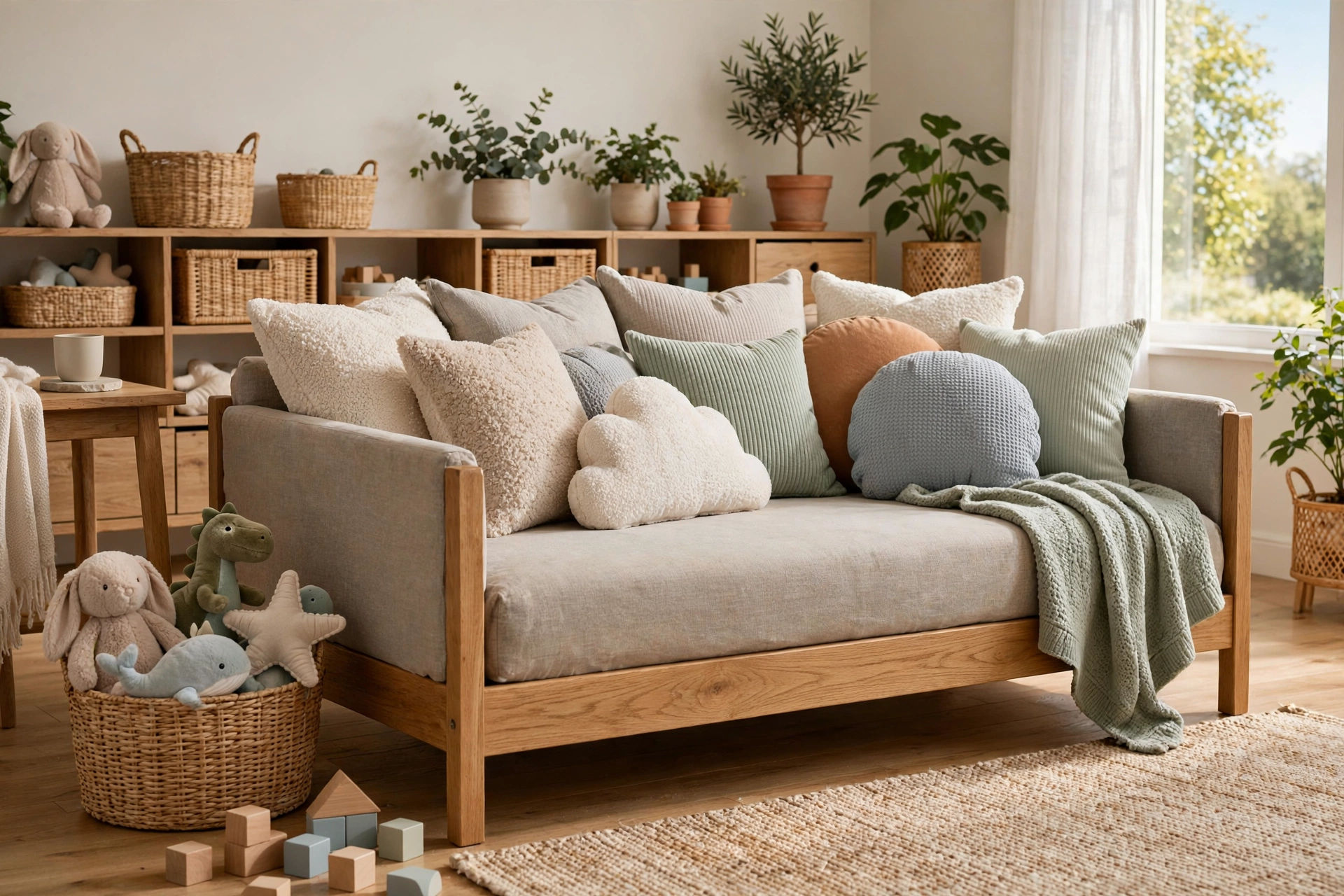
In a family living room, designate the daybed as the kids’ and teens’ headquarters: durable fabrics, tons of pillows, and permission to sprawl. It becomes the gaming seat, the homework sprawl, the fort foundation, and the sleepover bed — all in one. Choose machine-washable covers in a forgiving color or pattern, and a sturdy frame that survives jumping. Keep a basket of throws nearby for fort-building. Adults get the sofa; kids get the daybed; everyone has territory. When guests come, strip the kid evidence, add fresh pillows, and it converts to a proper guest bed in minutes.
15. Keep It Minimalist With a Platform Daybed
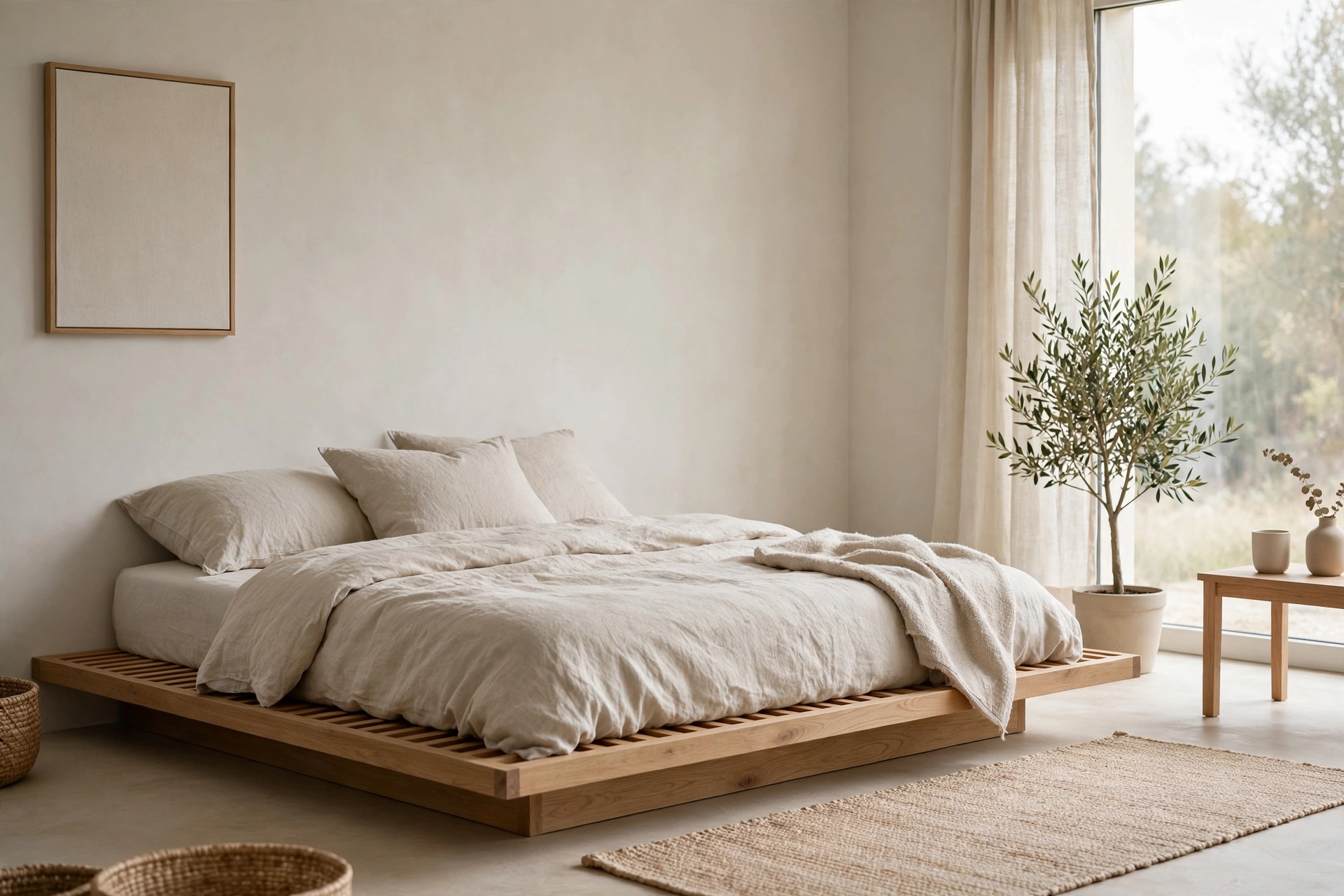
A low platform daybed — simple wood frame, clean lines, no frills — suits minimalist, Japandi, and Scandinavian living rooms perfectly. The low profile keeps the room feeling open and calm, and the simplicity lets beautiful bedding do the talking: textured linen, a single wool throw, two perfect pillows. Under-platform clearance stays clean and uncluttered — resist stuffing it with storage unless the drawers are built in and seamless. The daybed’s multifunctional design is the whole point here: one quiet piece doing the work of a sofa and a bed without visual noise.
FAQ
Can a daybed replace a sofa in the living room?
Yes, especially in studios and small living rooms. A twin-size daybed offers deeper, more lounge-friendly seating than most sofas and adds a real bed for guests. The key is styling: structured back pillows, upholstery-like fabrics, and no obvious bedding. In large living rooms, a daybed works better as a secondary lounge piece alongside a proper sofa.
How do I make a daybed look like a couch?
Use large 24-inch back pillows along the wall, layered throw pillows in front, and a folded throw instead of a spread bedspread. Choose tailored, upholstery-weight fabrics and avoid ruffles or bedroom prints. A tray with books and a candle on one end completes the illusion. The goal is “deep chaise lounge,” not “unmade bed.”
What size daybed fits a living room?
Twin size (about 38 by 75 inches) is the standard and fits most living rooms, offering generous seating without dominating. In very small rooms it can be the main seat; in larger rooms it works as a secondary lounge. Always leave at least 30 inches of walkway in front for comfortable passage, and check that trundle or drawer models clear your rug.
Are daybeds comfortable for everyday sitting?
Yes, with the right mattress — medium-firm foam or hybrid mattresses hold their shape for sitting while staying comfortable for sleep. Avoid ultra-soft mattresses that hammock. Add firm back pillows for lumbar support during long sits. Many people find a well-set-up daybed more comfortable than a shallow apartment sofa. For small-space strategies, our small living room design ideas cover more dual-purpose seating.
Daybed vs sleeper sofa — which is better for guests?
A daybed wins for frequent guests: the mattress is always ready, there is no unfolding mechanism to fight, and daily sitting does not wear out a fold-out mechanism. Sleeper sofas win when you need a true sofa silhouette in a formal living room. For comfort, a quality daybed mattress beats most sleeper-sofa mattresses easily.
Keep Exploring
A well-styled daybed is the hardest-working seat in the house — lounge, reading nook, and guest bed in one footprint. Style it like a sofa and nobody will know its secret. Once yours is dressed, pile on the comfort with our living room throw pillow ideas for instant color and comfort, because a daybed is only as inviting as its pillows.