
You touch your kitchen faucet dozens of times a day — more than any other fixture in the house — yet it is often the last thing chosen in a remodel. That is backwards. The faucet is the visual anchor of the sink wall, the tool you use for everything from filling pasta pots to rinsing lettuce, and one of the few kitchen elements guests actually notice up close. These kitchen faucet ideas cover every configuration and finish worth considering, so the hardest-working fixture in your kitchen also becomes one of the best-looking.
Start with how you actually use the sink. A faucet is simply a valve controlling water flow, but modern kitchen faucets layer on pull-down sprayers, touch activation, and precision engineering that would impress an aerospace engineer. Before falling for a silhouette, check three practical specs: the spout height and reach (it must clear your tallest pot and reach all corners of the sink), the number of mounting holes in your sink or counter (one, three, or four dictates your options), and your water pressure (low pressure makes some sprayers feel weak). Get those right, and the style choice becomes pure fun.
1. Choose a High-Arc Pull-Down Faucet
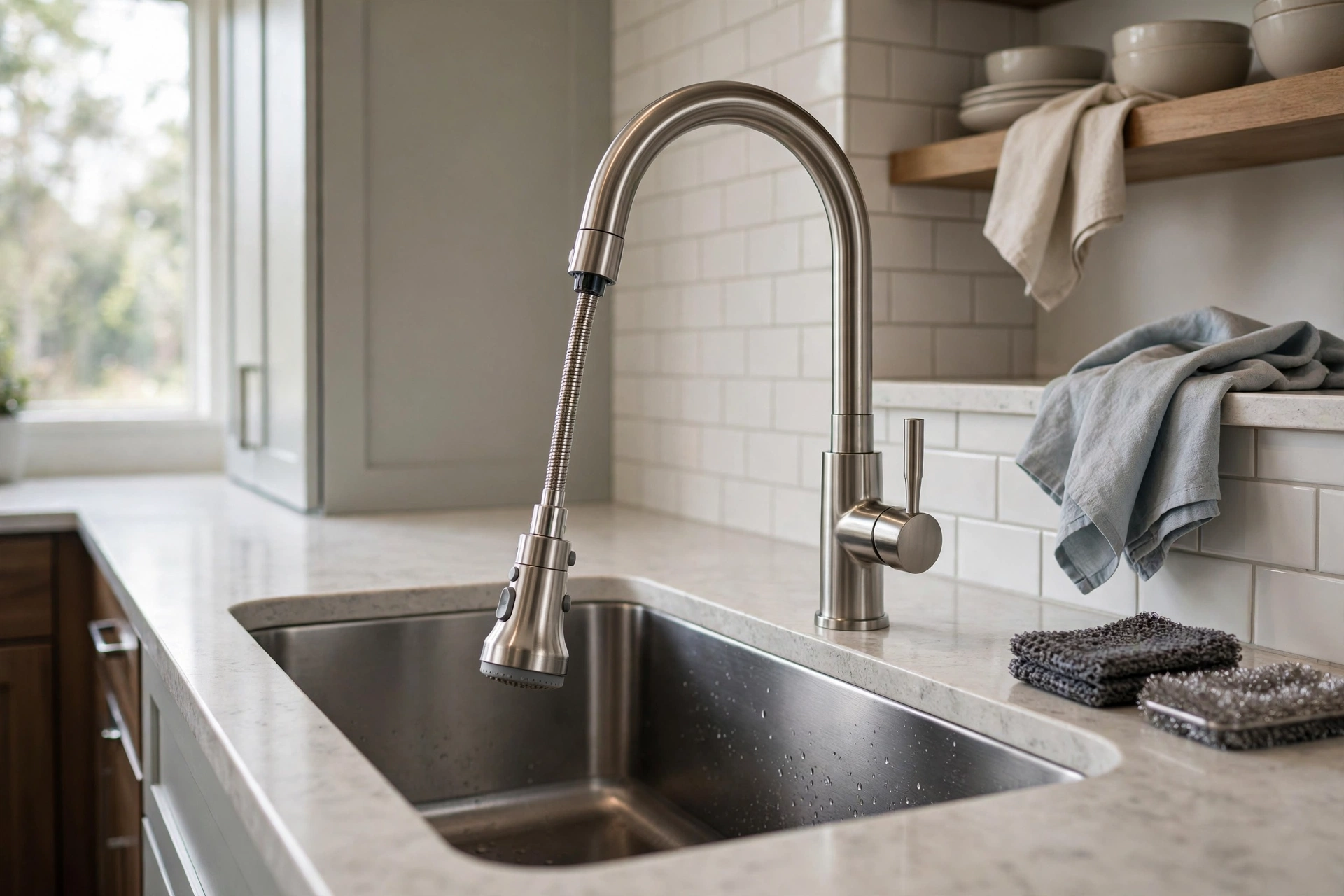
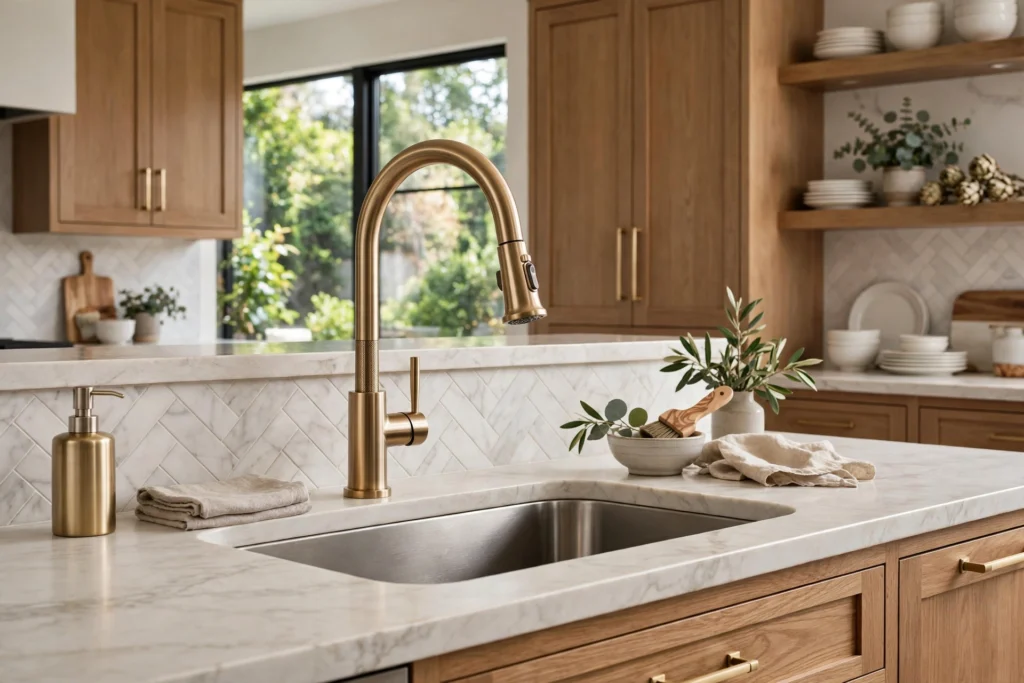
The high-arc pull-down is the modern default for good reason. The tall, curved spout clears stockpots and vases with ease, and the spray head pulls down on a hose to rinse every corner of the sink, fill pots on the counter, and blast produce clean. Look for a model with a magnetic docking system — the spray head snaps back crisply instead of drooping over time — and a toggle that switches between stream and spray without holding a button. This is the most versatile configuration on the list and suits nearly every kitchen style.
2. Go Classic with a Bridge Faucet
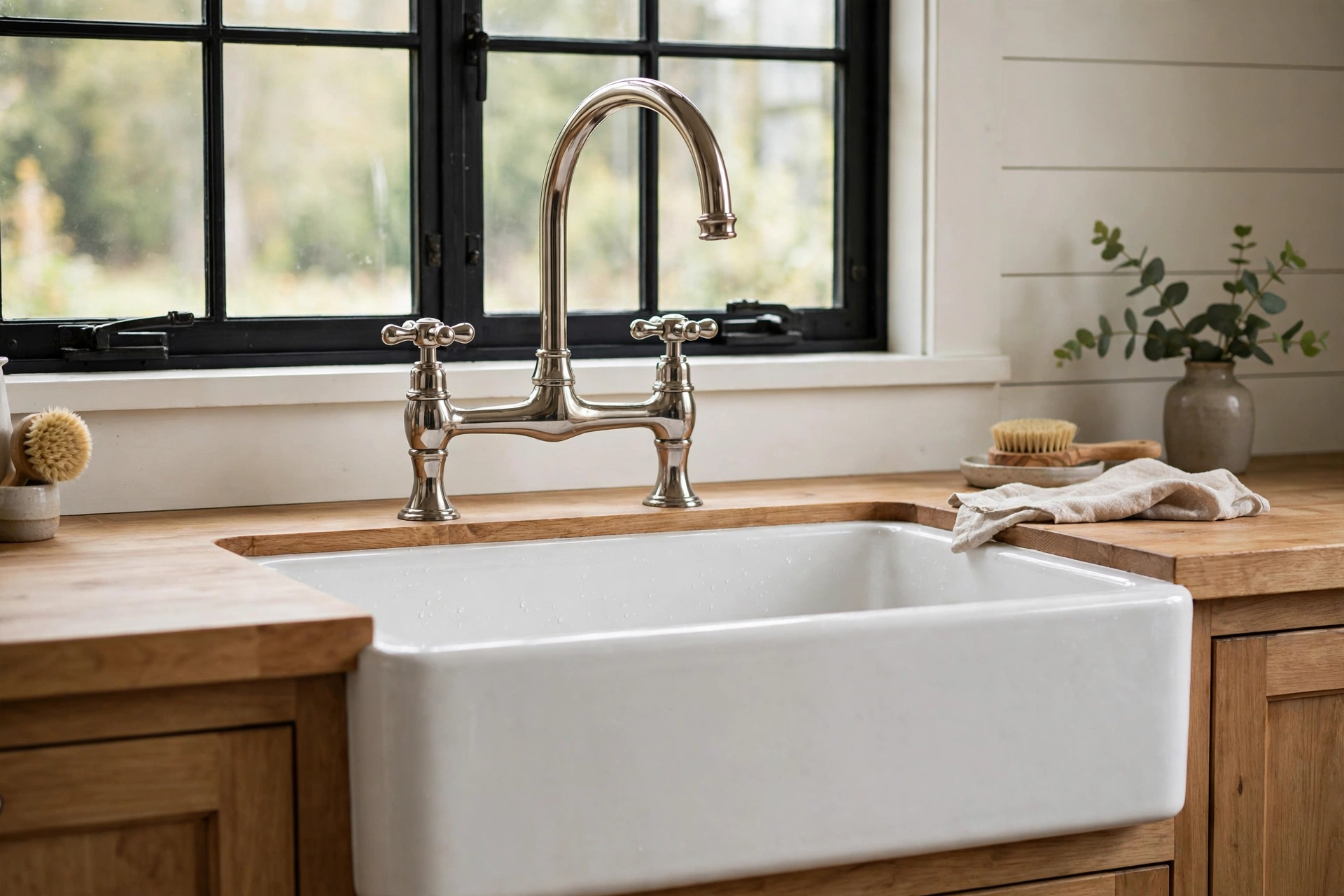
Bridge faucets — with their exposed horizontal pipe connecting hot and cold handles to a central spout — bring vintage soul to farmhouse, cottage, and traditional kitchens. The visible plumbing reads as honest craftsmanship, and the wide stance makes a confident statement on a fireclay apron-front sink. Many bridge faucets now include a pull-down sprayer hidden in the spout, so you get period looks with modern function. Pair with cross handles for full vintage effect or lever handles for a slightly cleaner take. Our kitchen sink ideas with farmhouse charm show bridge faucets in their natural habitat, and the pairing never misses.
3. Try a Commercial-Style Spring Faucet
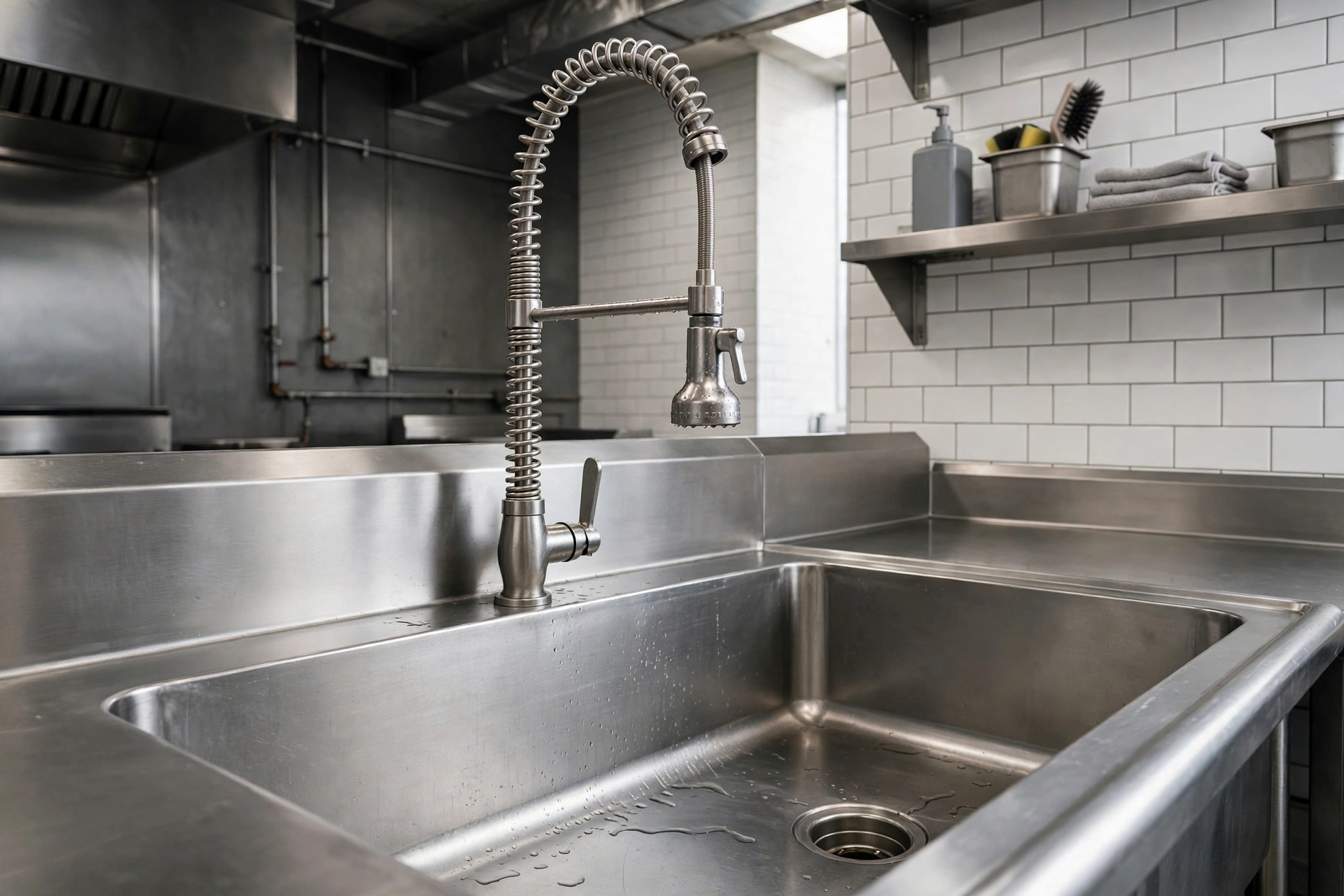
With its exposed coil spring and industrial silhouette, the professional-style faucet brings restaurant-kitchen drama home. The tall spring supports a flexible hose with serious reach, making it brilliant for big sinks, pot filling, and enthusiastic rinsing. This style demands scale — it looks best over a large single-bowl sink in a kitchen with some visual heft; over a tiny bar sink it overwhelms. The industrial look suits modern, loft, and transitional kitchens, especially paired with stainless appliances.
4. Keep It Clean with a Single-Handle Faucet
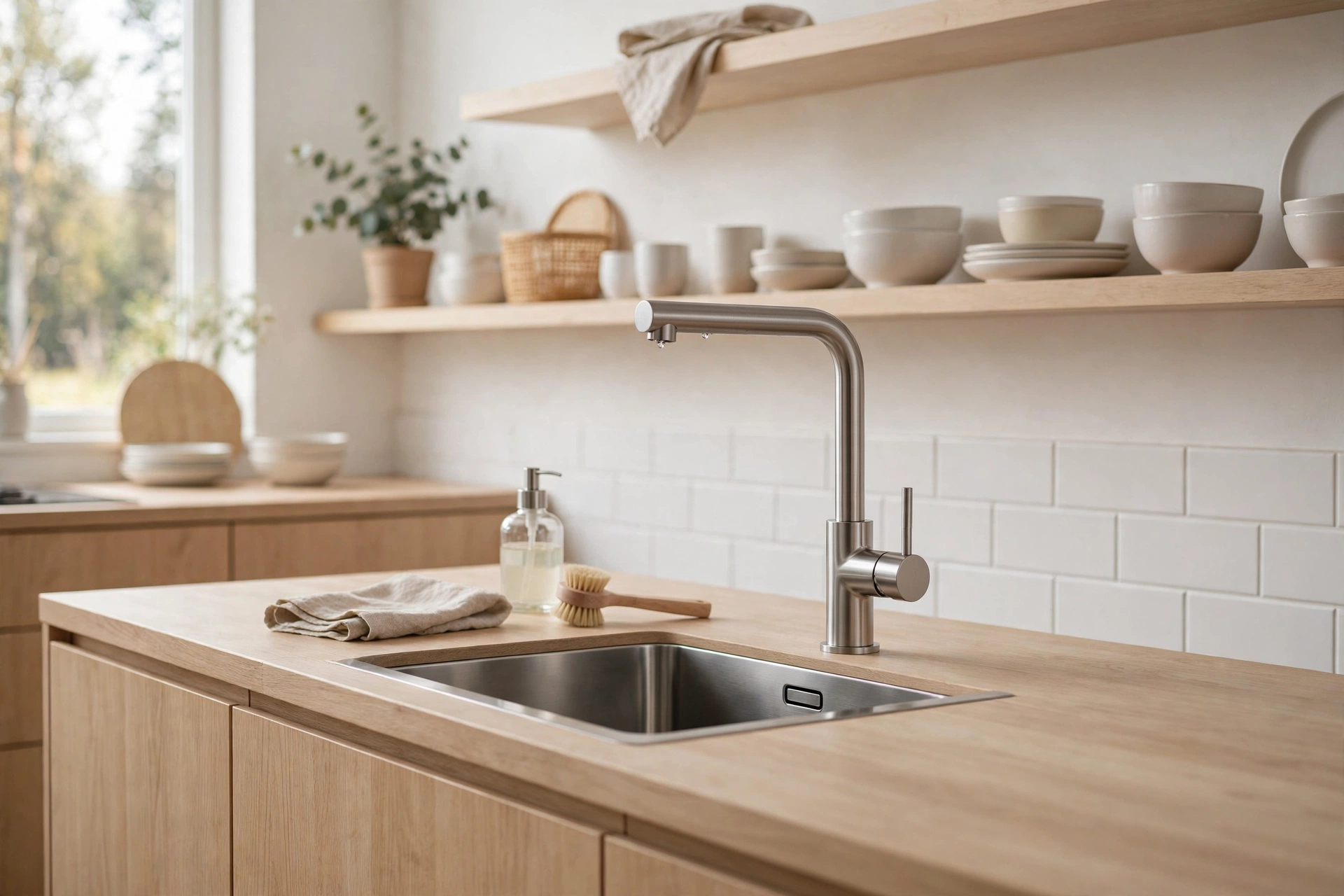
Single-handle faucets are the minimalist’s choice: one lever controls both flow and temperature, the profile stays slim, and there is only one handle to wipe down. The simplicity suits contemporary and Scandinavian kitchens, small sinks where a wide-spread faucet would crowd, and anyone who wants the cleanest possible sightline. Look for a lever with smooth ceramic-disc operation — it should glide, not grind — and check that the handle’s full range of motion does not hit the backsplash. Single-handle does not mean single-function; most come with pull-down sprayers and multiple spray modes.
5. Make It Touchless
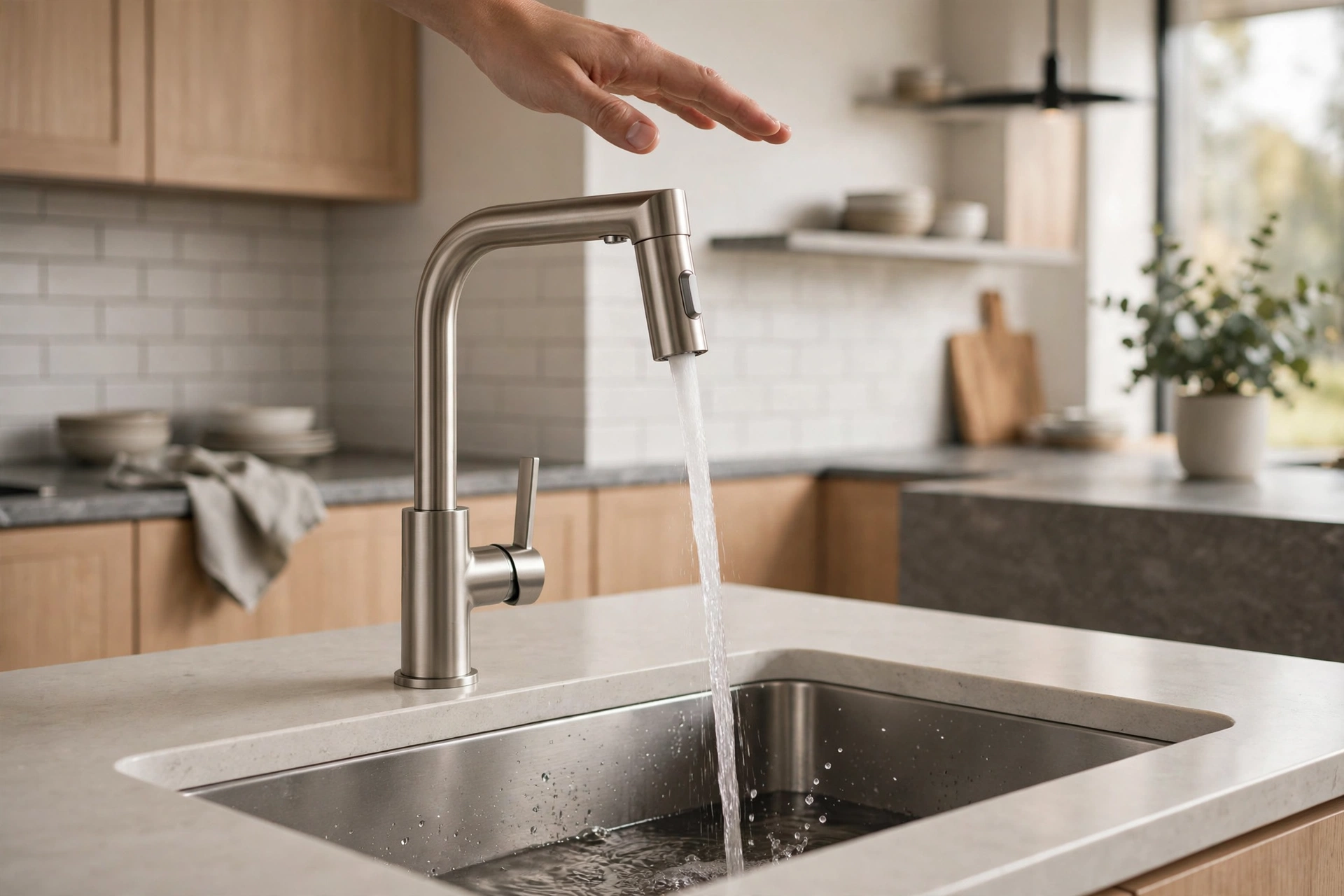
Touchless faucets use a motion sensor to start and stop water flow — wave a hand, get water — which is genuinely life-changing when your hands are covered in raw chicken or bread dough. Beyond convenience, touchless operation cuts down on germ transfer and water waste, since the flow stops the moment you move away. Most models include a manual override handle for precise temperature control and for times you want continuous flow. The sensor needs power — battery packs last a year or two, while AC adapters are fit-and-forget — so factor that into installation. Touchless is one of those features you do not know you need until you have it.
6. Go Bold in Matte Black
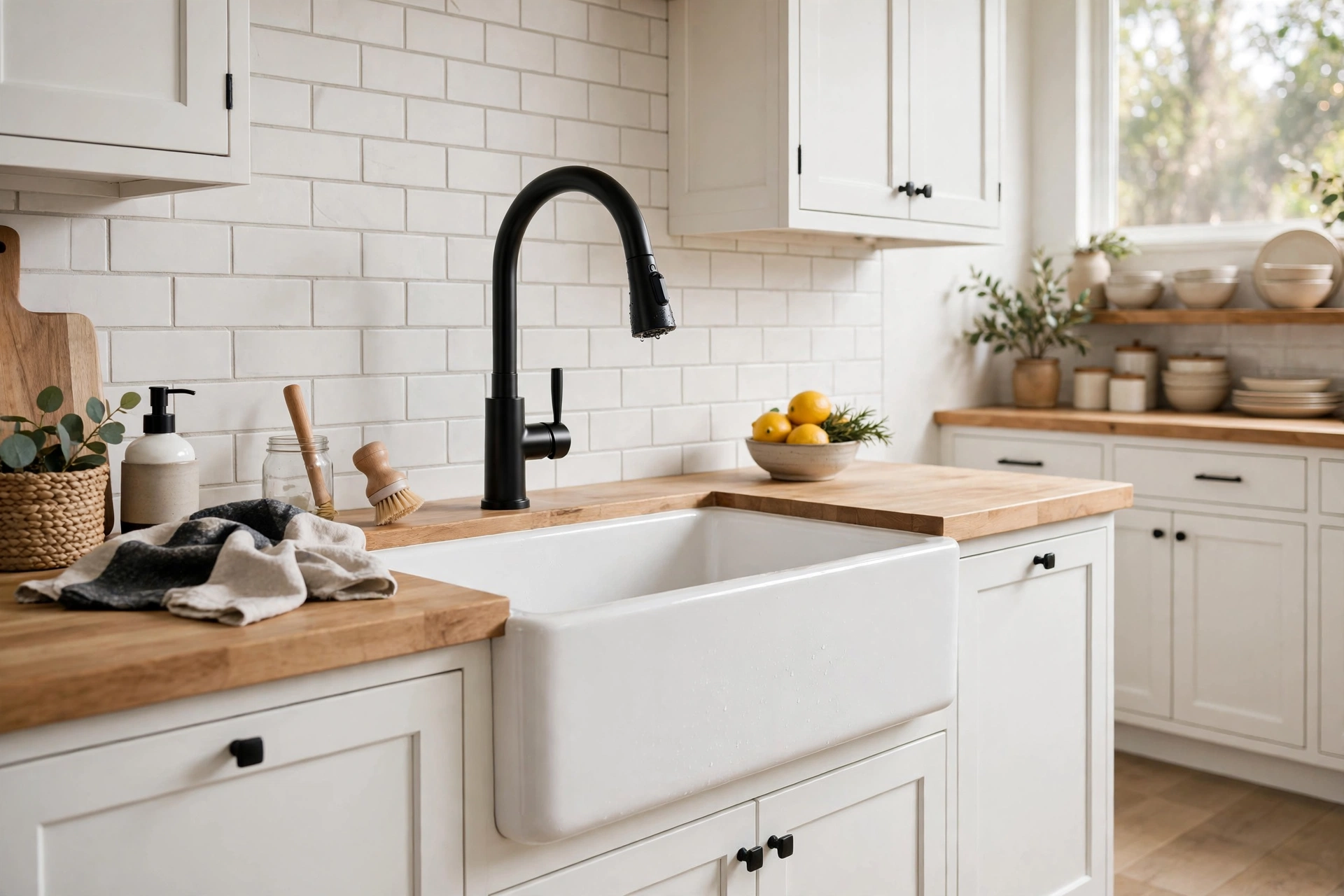
Matte black faucets remain one of the strongest finish trends in kitchens, and they earn it. The dark finish grounds the sink area, hides water spots better than chrome, and coordinates with black hardware, window frames, and lighting for a cohesive look. It works across styles — modern, farmhouse, industrial, transitional — which is rare for a statement finish. Choose a quality PVD or powder-coated finish; cheap black coatings chip and show brass underneath.
7. Warm Up with Brushed Brass or Gold
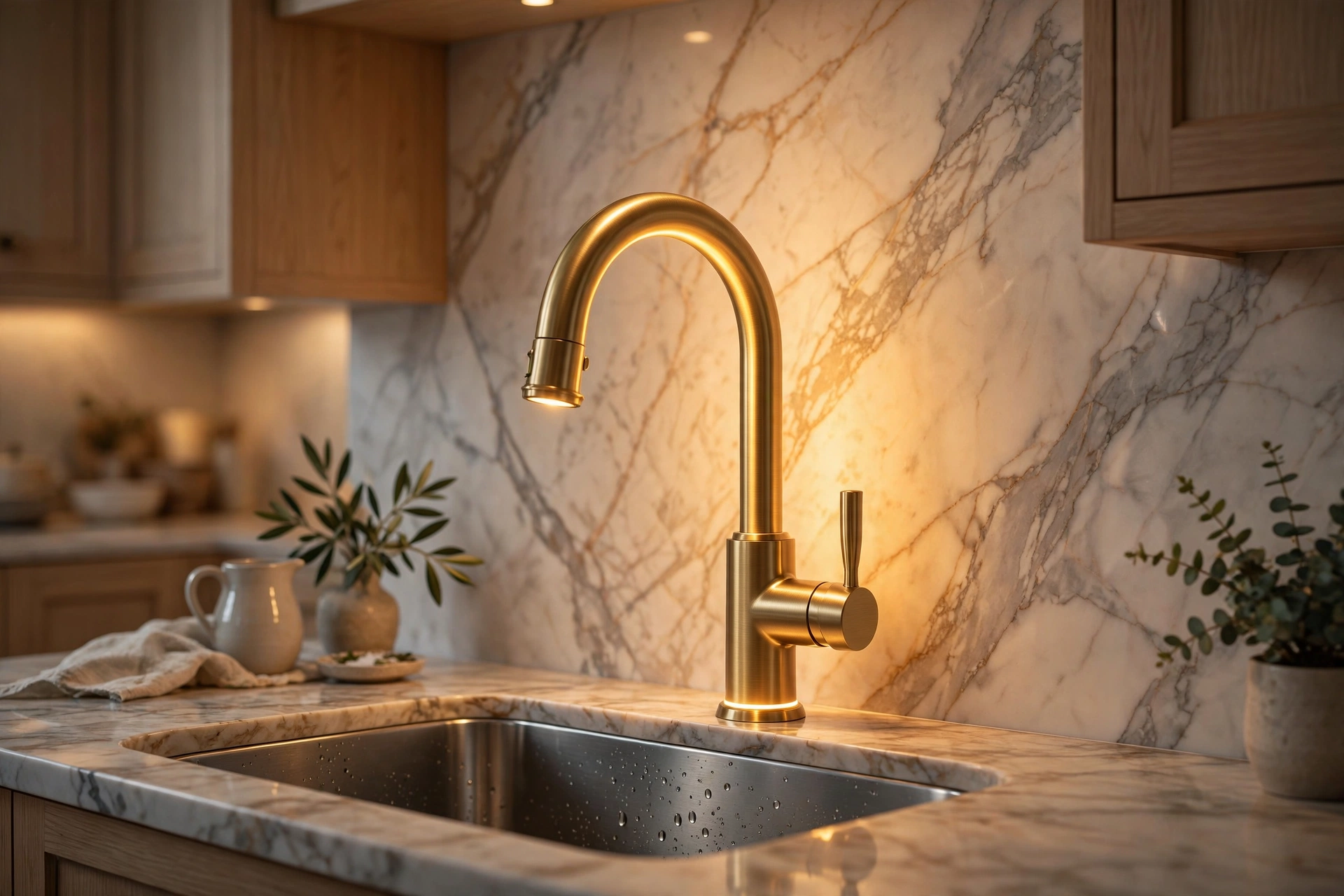
Brushed brass and champagne bronze bring warmth and luxury to the sink wall. The soft metallic glow flatters marble, white cabinetry, and warm wood tones, and it feels special in a way chrome never quite manages. Brushed finishes hide fingerprints and water spots far better than polished gold, making them the practical choice for a hardworking sink faucet. Coordinate with cabinet hardware and lighting in the same finish family — mixed metals can work, but the faucet should relate to at least one other metal in the room. Solid brass construction ages gracefully; plated zinc can wear through on high-touch areas.
8. Stay Timeless with Polished Chrome
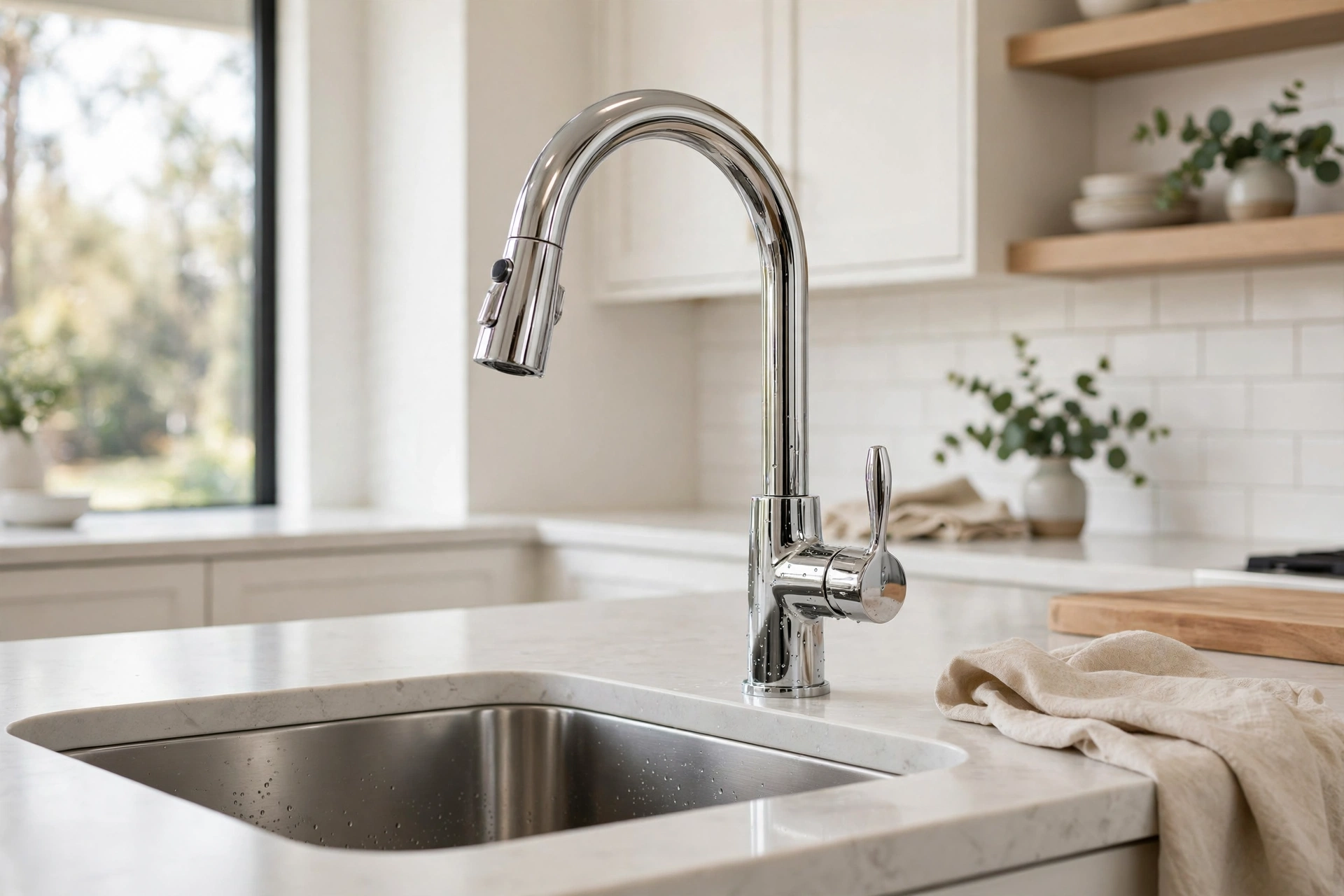
Polished chrome is the cockroach of faucet finishes — it survives every trend cycle. It matches stainless appliances effortlessly, suits every style from ultra-modern to traditional, costs less than specialty finishes, and wipes clean in seconds. If you are renovating to sell, chrome is the safe, broadly appealing choice. The only real downside is maintenance visibility: chrome shows every water spot and fingerprint, so it needs frequent wiping to look its best. In hard-water areas, keep a squeegee or microfiber cloth handy. For a forever kitchen on a budget, chrome remains unbeatable value.
9. Consider a Wall-Mount Faucet
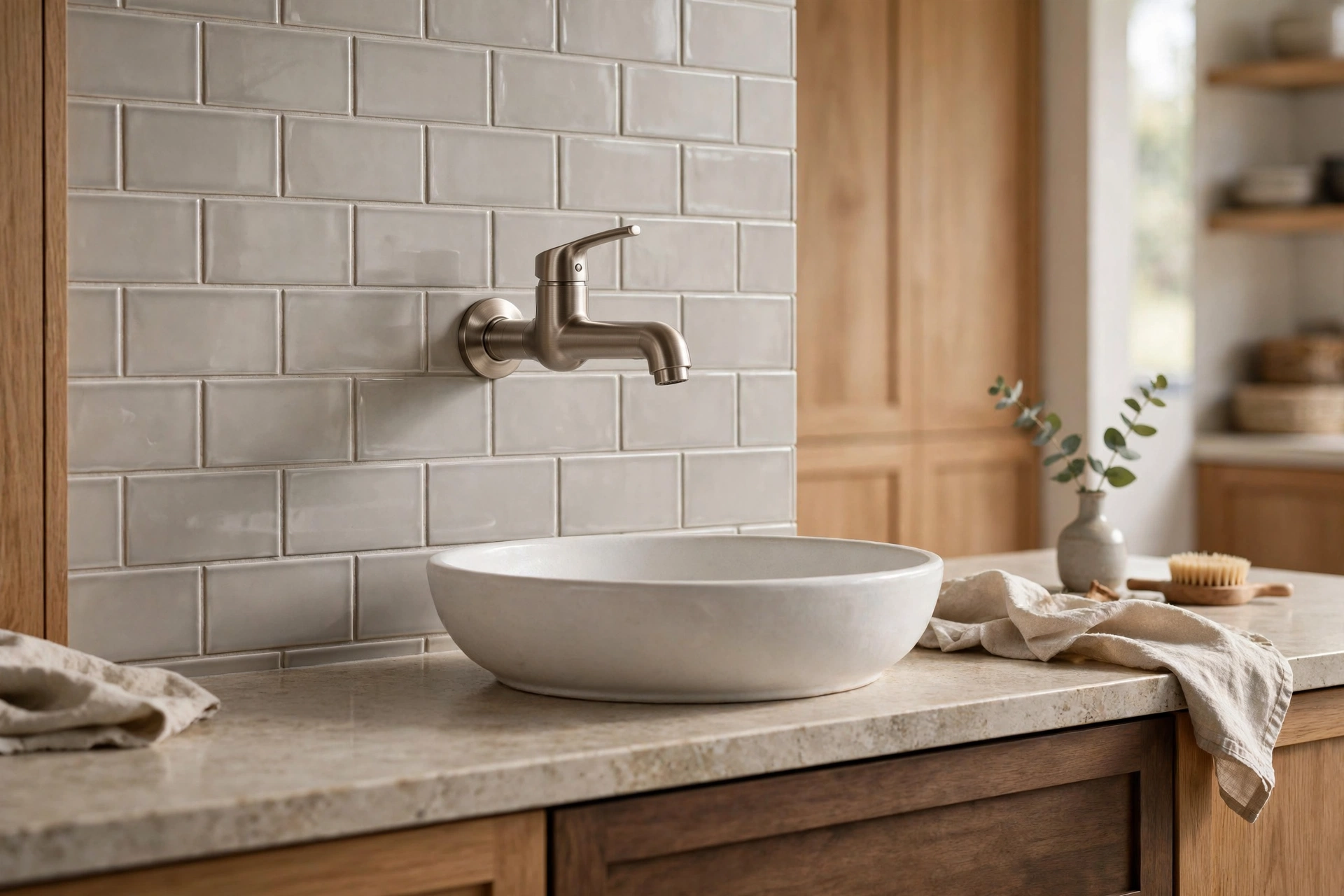
Wall-mount faucets free the counter and sink deck entirely — the spout emerges from the wall or backsplash above the sink, leaving the countertop clean and uncluttered. The look is strikingly architectural and suits modern, minimalist, and vessel-sink setups beautifully. Installation is the catch: water lines must be roughed in inside the wall at the correct height during construction or a major remodel, and the spout reach must be calculated precisely so water lands in the sink, not on the counter edge. Get the measurements right and a wall-mount faucet is one of the most dramatic upgrades in this roundup.
10. Add a Pot Filler to Match
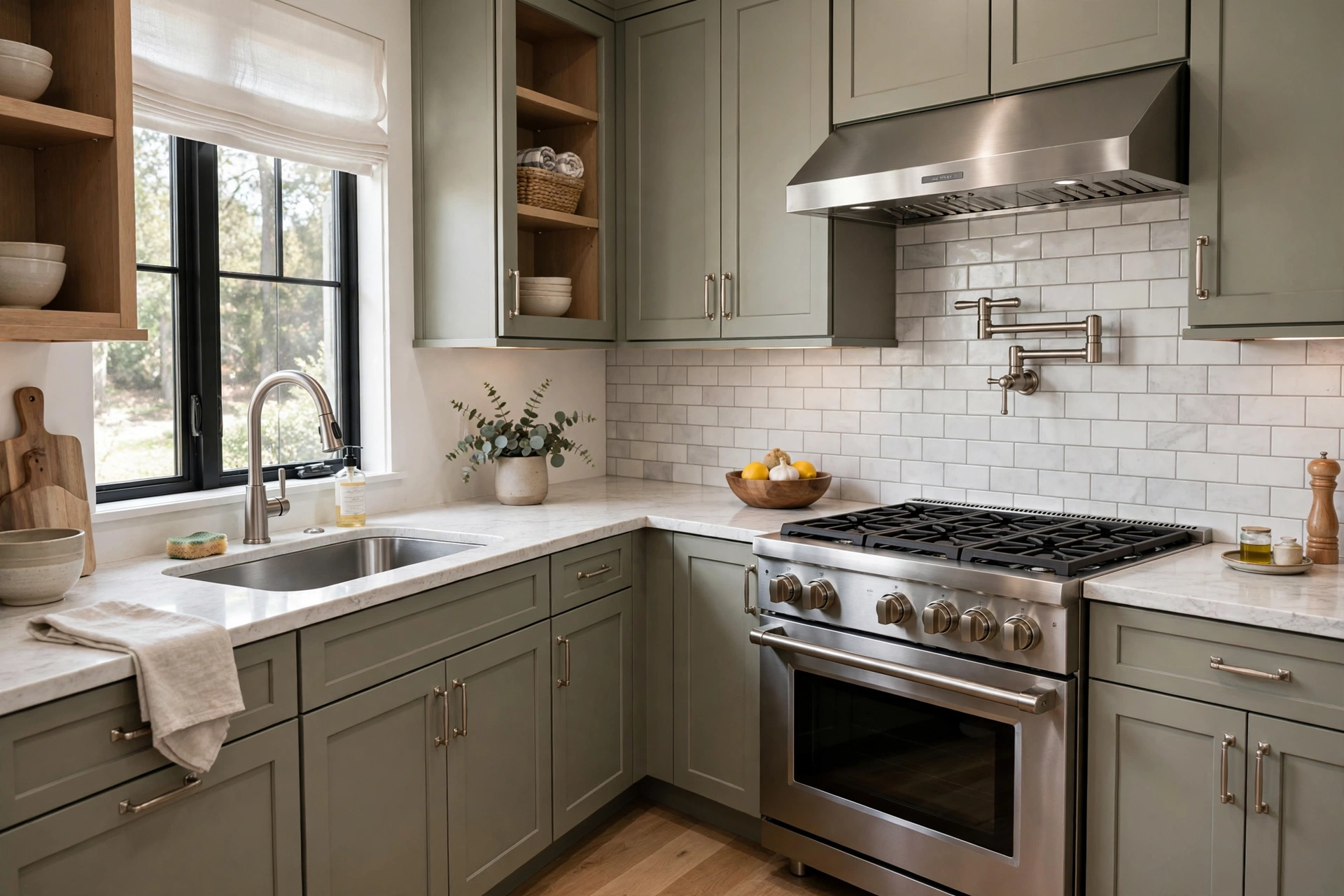
If your main faucet choice is settled, consider its stove-side sibling: a matching pot filler above the range. Many faucet lines offer a coordinating pot filler in the same finish and handle style, creating a designed, intentional pair across the kitchen’s two water zones. The pot filler handles the heavy lifting of filling stockpots at the stove while the main faucet owns the sink — together they split the kitchen’s water work sensibly. Match the finish exactly and echo the handle style; the two fixtures should clearly belong to the same family. It is a luxury touch that daily cooks appreciate more than almost any other.
11. Choose a Pull-Out Over a Pull-Down for Low Arcs
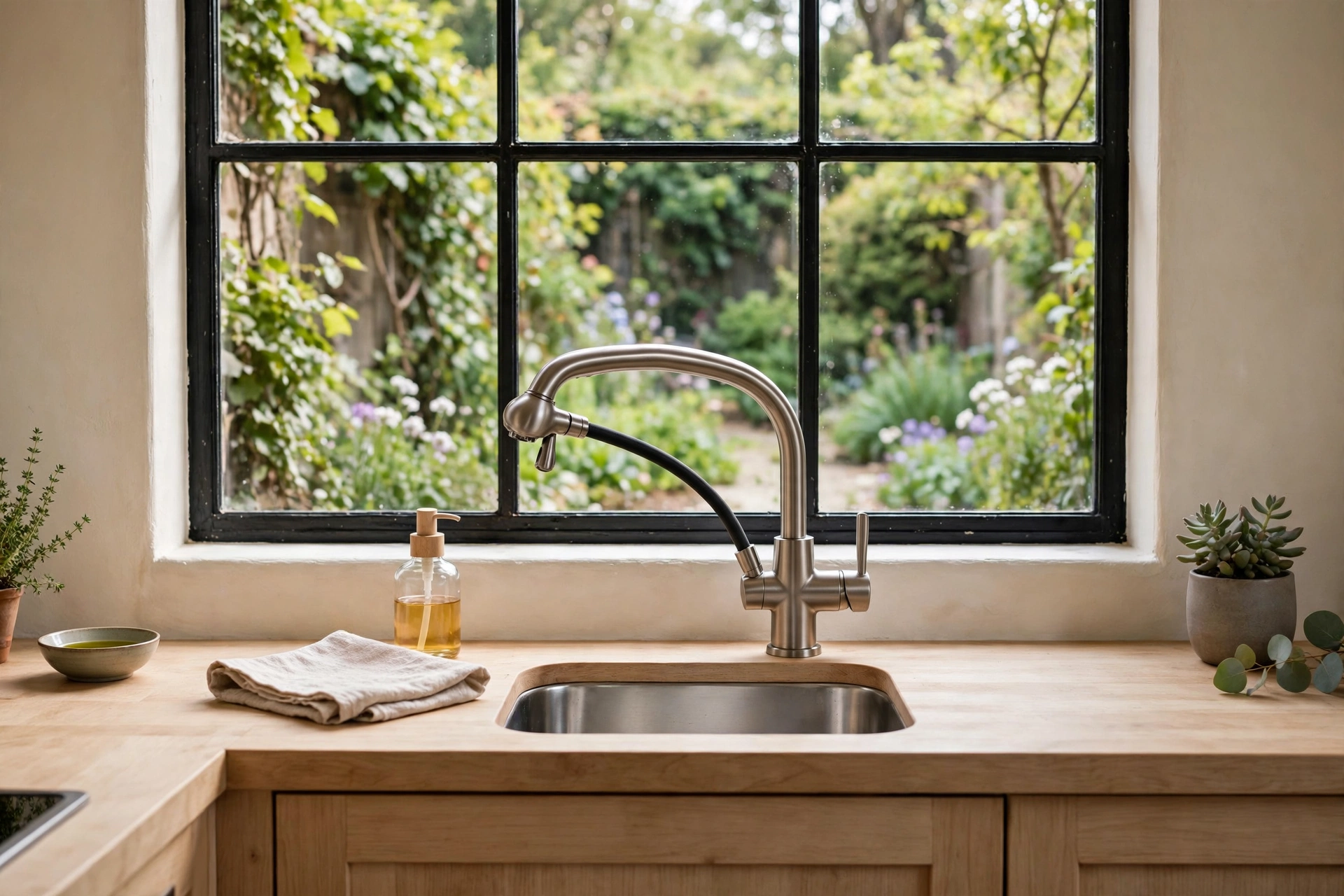
Pull-out faucets — where the spray head pulls toward you rather than down — suit low-arc and compact installations where a tall high-arc would feel oversized. The lower profile works under cabinets and windowsills, in galley kitchens, and over shallow bar sinks. You sacrifice some pot-clearing height, but gain a faucet that fits spaces a pull-down cannot. Many pull-outs offer the same spray modes and magnetic docking as their taller cousins.
12. Match the Faucet to Your Sink Style
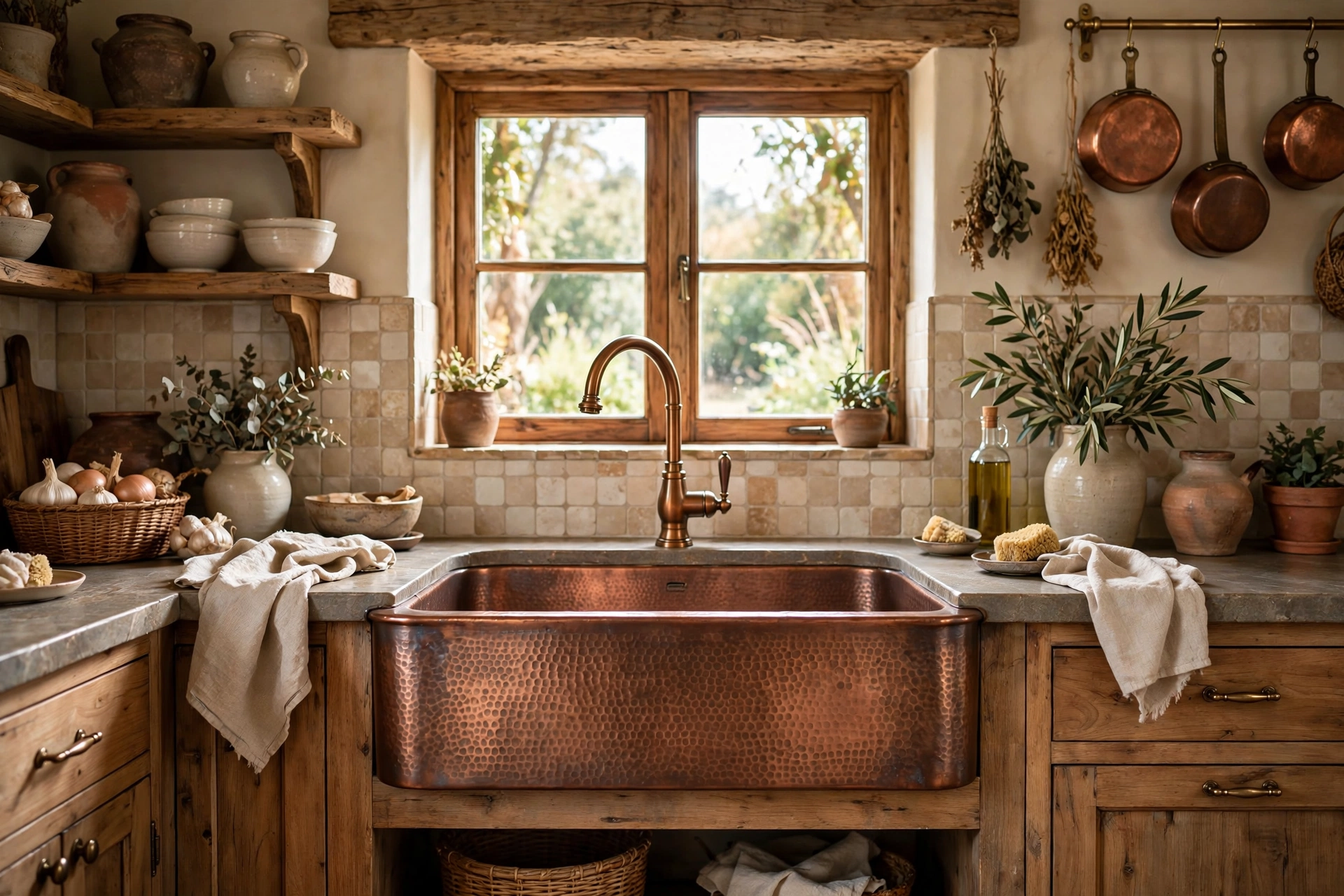
Faucet and sink should be chosen as a pair, not as strangers. An apron-front fireclay sink begs for a bridge or traditional high-arc faucet; a sleek undermount stainless sink suits a modern single-handle or spring model; a hammered copper sink wants warm brass or oil-rubbed bronze. Scale matters too — a petite bar faucet looks lost over a 36-inch workstation sink, while a massive commercial spring overwhelms a small prep sink. When in doubt, buy the sink and faucet from the same design family or at least the same finish. Our kitchen countertop decor ideas for a clutter-free styled look show how the sink zone anchors the whole counter’s styling.
13. Look for Water-Saving Aerators
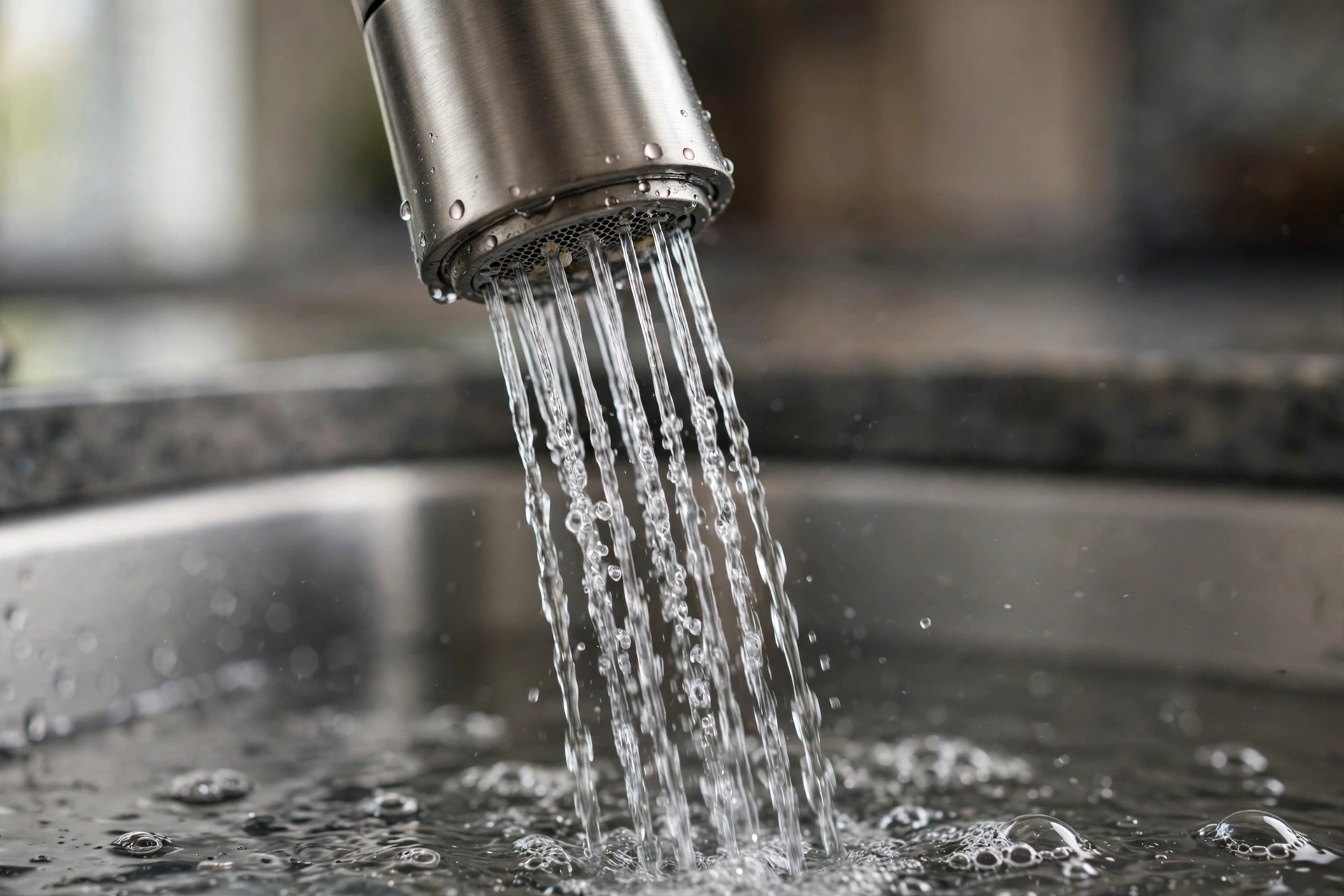
A good faucet saves water without you noticing. Modern aerators mix air into the stream, maintaining strong rinsing pressure while cutting flow to 1.5 gallons per minute or less — down from the old 2.2 gpm standard. Look for WaterSense-labeled models, which are independently certified for efficiency and performance. The practical benefit is lower water and water-heating bills with zero change in how the faucet feels. If you love an older faucet design, you can often retrofit a low-flow aerator onto the existing spout for a few dollars. Efficiency is the rare upgrade that pays you back every month.
14. Coordinate with the Backsplash
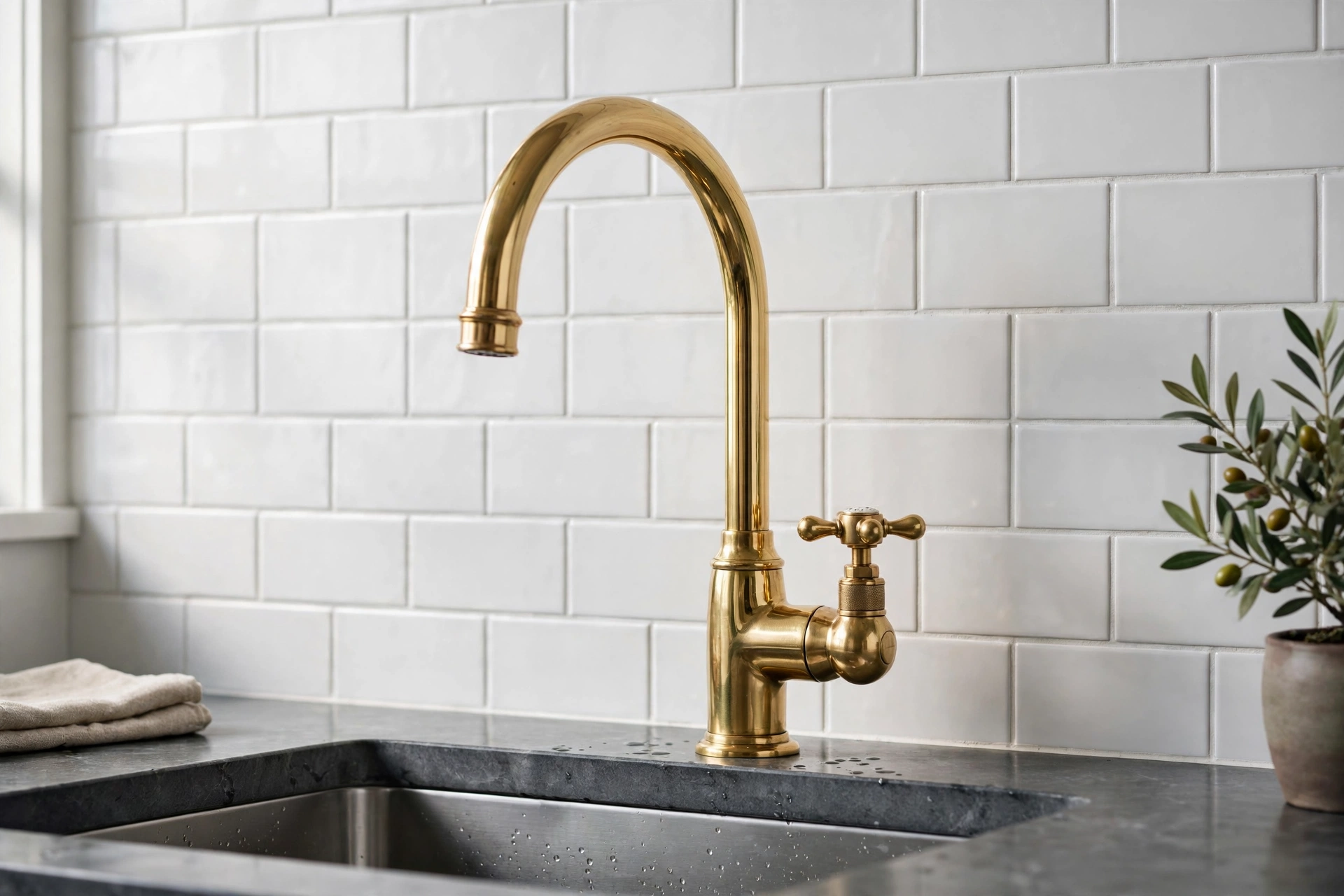
The faucet lives against the backsplash, so the two should flatter each other. A statement faucet — matte black, brushed brass — pops against simple white subway tile or quiet stone; an ornate handmade tile backsplash pairs better with a quieter chrome or stainless faucet so the two do not compete. Consider the faucet’s reflection too: polished finishes mirror the backsplash, doubling its visual impact. Our kitchen backsplash ideas for a stunning focal point are worth browsing alongside faucet shopping — choosing them together avoids the common mistake of a faucet that fights its backdrop. The Spruce’s kitchen fixture guides at thespruce.com also show strong faucet-and-tile pairings if you want visual inspiration.
15. Invest in a Reputable Brand with a Real Warranty
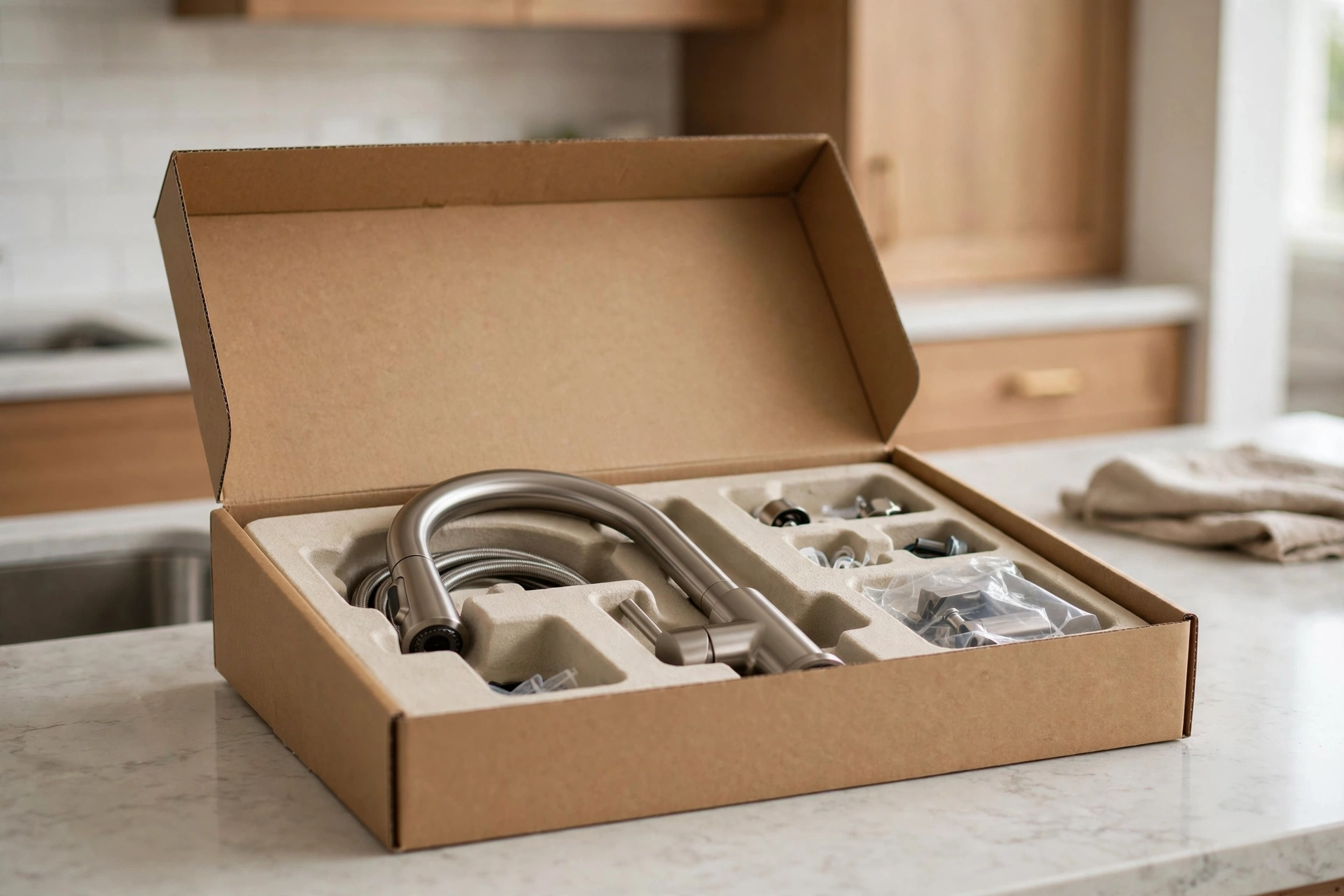
A faucet is a decade-plus purchase, so brand matters more here than in most decor choices. Established manufacturers offer lifetime finishes, readily available replacement cartridges, and customer service that actually answers — all of which matter when a ten-year-old faucet needs a ten-dollar part. Check the warranty terms before buying: the best cover finish and function for life to the original owner. Avoid no-name faucets with no parts support; when the cartridge fails in year three and no replacement exists, the whole faucet becomes landfill. Spending a bit more upfront on a supported brand is the cheapest faucet you will ever own.
FAQ
What is the most popular kitchen faucet style right now?
The high-arc pull-down in a single-handle configuration remains the best-selling style, thanks to its versatility — it clears tall pots, rinses the whole sink, and suits most kitchen styles. Matte black and brushed brass/gold are the dominant finishes, with polished chrome holding steady as the timeless, budget-friendly choice.
How do I know if a faucet will fit my sink?
Count your sink or countertop mounting holes: one hole suits single-handle faucets, three holes suit widespread or bridge styles (or a single-handle with an escutcheon plate covering the extra holes). Also check spout height against overhead cabinets or windowsills, and spout reach against your sink’s bowl positions.
Are touchless kitchen faucets reliable?
Modern touchless faucets from reputable brands are quite reliable — the sensors are well-tested and most models include a manual handle as backup. Battery packs typically last one to two years; AC adapters eliminate battery changes entirely. As with any faucet, buy from a brand with real warranty support.
Can I install a kitchen faucet myself?
If you are replacing like-for-like (same hole configuration, accessible shut-off valves), a confident DIYer can usually do it in an hour or two with basic tools. New configurations, wall-mount installations, or any work involving supply-line changes are plumber territory. Always shut off the water at the valves — and confirm it is off — before disconnecting anything.
How long should a kitchen faucet last?
A quality faucet with ceramic disc valves should last 15 to 20 years or more with minimal maintenance. The finish warranty matters as much as the mechanism — lifetime finish warranties from major brands protect against tarnishing and corrosion. Cheap faucets with plastic internals may fail within a few years, which is why brand and warranty deserve real weight in the decision.
Keep Exploring
The faucet you choose is the one you will touch, see, and rely on more than anything else in the kitchen — so choose it like it matters, because it does. Get the configuration right for your sink and your cooking, pick a finish that makes you happy every morning, and buy the quality that lasts decades. Do that, and this small fixture pays you back thousands of times over, one effortless pot-fill and rinse at a time. Keep refining the details around it, and the whole sink wall will feel as considered as the rest of your kitchen.